Politics
Naomi Osaka’s Postpartum Journey Showed Me I Wasn’t A Bad Mother

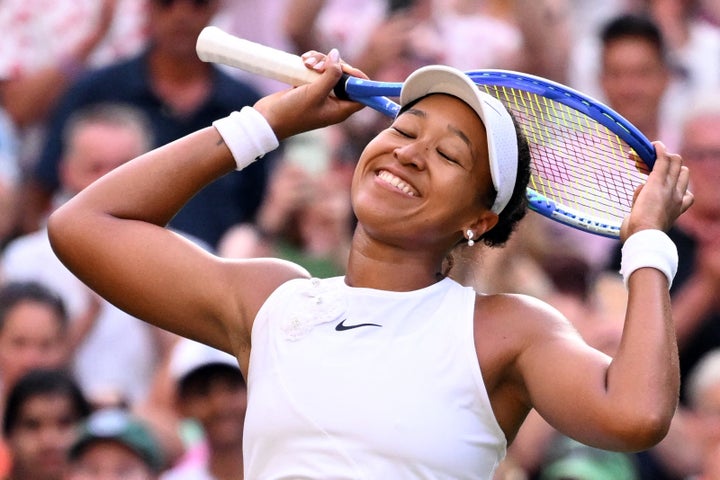
There is no doubt that Naomi Osaka is blossoming again. During media day ahead of the Mubadala Open in Washington, D.C., this week, she spoke with renewed confidence about trusting herself. And she should. Osaka has put together one of the strongest stretches of tennis since becoming a mother.
This is despite struggling with a bout of postpartum depression she called “extremely bad” in her documentary, Naomi Osaka: The Second Set.
She said: “…During those early months, I felt like a shell of myself at all moments of the day. I no longer knew who I was anymore. It felt like everyone else had moved on and they were living in colour. Meanwhile, my world was stuck in grey.”
Call it a parasocial relationship, but as Osaka continues to reclaim herself after childbirth, I find myself celebrating far more than her victories on the tennis court. Every outfit, every hard-fought match, every smile with Taylor Townsend is a reminder that Black mothers, like Osaka, like me, can make it through postpartum depression.
July is National Minority Mental Health Awareness Month, a reminder that while conversations around mental health have become more common, too many Black women continue to suffer in silence. We are less likely to be diagnosed and treated for postpartum depression and anxiety despite facing higher rates of stress, barriers to care and cultural expectations that tell us to just keep “locking in”.
Before my daughter was born, I knew motherhood would change me. I expected sleepless nights, breastfeeding and shifting personal dynamics. But I didn’t expect the world to feel dull or to look in the mirror with tears in my eyes because a stranger was staring back at me.
Not just because my body was different, but because who I was had changed forever. It felt like the brightest parts of me were gone. The self-confidence I’d worked to garner dissipated.
My favourite metaphor for motherhood is the flamingo. After giving birth, flamingos lose their vibrant pink colour because every nutrient in their bodies is redirected toward feeding their babies. It can take up to a year before their feathers regain their signature colour. The flamingo survives, but it is transformed.
That was motherhood for me. But it took me much longer than a flamingo to get my colour back.
There are whole stretches of time from my daughter’s earliest years that I cannot remember. My husband will show me pictures, and it’s as if someone removed pages from a photo album. Those missing memories still grieve me because I know I was physically there, yet I cannot access that time. I desperately want to revisit them, but they are simply gone.
That is what postpartum anxiety and depression can do to the mind. It’s not simply mood swings, but a change in the brain’s cognitive ability and health.
People often assume Black women go untreated because we don’t have access to care. That wasn’t my story. I had a therapist. I had physicians. I had family and friends who loved me. I had a husband who wanted to support me.
I was consumed with social media videos where mothers of all races and ages make it seem like motherhood comes naturally, and that women simply “figure it out.” So when I found myself anxious, disconnected and emotionally exhausted, I convinced myself I just wasn’t cut out for motherhood.
My daughter did not in fact have the right mama, I decided. She had a broken one.
The truth is, motherhood in America asks an extraordinary amount of women, particularly Black women. I wish we could be like the flamingo, where all of our efforts go to feeding our babies. In reality, breastfeeding our children barely scratches the surface of the labour and anxieties that come with our new role.
The disproportionate rates of Black maternal death reflect the constant threat of neglect and violence Black women face before and during childbirth. Once our children are earthside, we have less means to navigate skyrocketing child care costs and soaring inflation. The recent death of Nolan Wells, a young Black boy who went missing and then was found dead, is every mother’s worst nightmare.
Black children go missing without urgency from law enforcement, and too many are never found – or are found too late. Among all of this, his mother, Christine Wonsley, is receiving hate mail and online harassment, a case study in vilification of Black mothers.
All of these factors would drive any sane person insane.

KIRILL KUDRYAVTSEV via Getty Images
When Osaka reflected on her return to tennis after motherhood, she gave voice to feelings I hadn’t been able to name, saying, “I struggled with constant fear and anxiety, and an overall lack of self-confidence in every decision I made.” Before she ever put words to it, though, I thought I could see it in her – the sadness behind her eyes, the uncertainty, the search for herself.
As I watched her compete, I realised I wasn’t simply following one of the greatest athletes of her generation. I was watching another Black mother work through postpartum struggles to find her new colours. In her vulnerability, I finally recognised my own reflection.
I had language for feelings buried beneath guilt and unrealistic expectations. And Osaka’s healing journey made room for me. I started taking anti-anxiety medications, going to the gym and finding community with other mothers who understood that motherhood could be both beautiful and incredibly lonely.
Little by little, I got my colour back. I became more confident in my role, not just as a mother, but as a friend, wife and my own person.
That is why Naomi Osaka’s comeback matters so much.
We often talk about representation in terms of Black women breaking barriers and shattering glass ceilings. We talk less about representation in healing. Watching another Black mother survive something we’ve endured gives us permission to believe survival is possible for us, too – and to seek the help that makes it possible.
Julienne Louis-Anderson is a Black mother who writes about the intersection of culture and politics with education and human development. She is also a Public Voices Fellow of The OpEd Project in partnership with the National Black Child Development Institute.
Do you have a compelling personal story you’d like to see published on HuffPost? Find out what we’re looking for here and send us a pitch at pitch@huffpost.com.
You must be logged in to post a comment Login