
Politics
Neurodivergent Job Interviews: Why AuDHD Talent Is Being Filtered Out Of The Hiring Market”


Since last July, Edward James Herath, a brand and strategic comms consultant, has taken part in more than 120 job interviews. The feedback is often the same: he’s “too direct,” “too honest,” “abrupt,” or “confrontational.”
Herath, 39, who is diagnosed with autism and ADHD (AuDHD), believes his literal and questioning demeanor is costing him jobs.
He finds interviews particularly difficult because of their “indirect, passive-aggressive, and theatrical communication style,” he tells HuffPost UK. He believes they measure how he performs under pressure rather than his ability to do the job, and his real self – someone who cares deeply about his relationships and career – doesn’t come across.
“There’s a strong emphasis on reading between the lines and softening language,” he says. For someone who values clarity, that’s a difficult tone to strike.
Hearth is by no means alone in this struggle. Research suggests neurodivergence is widely seen as a barrier to employment. A 2024 Zurich survey of 1,000 neurodivergent adults in the UK found more than half believed recruitment processes were designed to filter them out, while over a third said interviews had triggered panic. A 2025 UK survey also found that 40% of young people believe being neurodivergent was a hindrance in the hiring market.
The consequences are significant for employers, says Sharawn Tipton, Chief People Officer at Greenhouse. She says traditional hiring often favours similarity over talent, despite evidence that diverse teams perform better. Neurodivergence, she says, is “no different than height or personality.”
“When you think about neurodiversity, it’s really around understanding that the mind works differently for everyone,” she says. “Different ways of thinking and communicating are things that help companies innovate faster.”
Job interviews are a game, but the rules aren’t clear for everyone
Christal Castagnozzi, a psychologist with ADHD and autism who specialises in neurodivergence, says traditional interviews prioritise skills like eye contact and quick verbal responses. Executive functions like memory and processing speed are suddenly tested too.
“Neurodivergent folks will struggle in all of these areas, especially when we are put on the spot,” she says. “You’re literally being judged while standing in front of someone. That’s a neurodivergent person’s worst nightmare.”
For many, interviews become less about competence and more about navigating unwritten social rules, according to Elise Minkin, a neurodivergent career coach. She tells HuffPost UK that interviews can feel like “a game” where not everyone knows how to play.
“There’s this kind of secret code that a lot of neurodivergent people feel like they were never told,” she says.
Even common questions, such as why someone wants the job, can cause trouble.
“Obviously for a paycheque,” she says. That’s the true answer – and one which someone with neurodivergence would be inclined to say. “But of course it’s not what the interviewer wants to hear,” she added.
Office environments are not always comfortable spaces for neurodivergent people. Those with autism may struggle to concentrate under harsh fluorescent lighting. Flickering or humming lighting can also be distracting and even sometimes painful.
The location may also affect performance. Some candidates may communicate better over Zoom, where they can make notes, comfortably take more time to answer questions, or use a sensory fidget tool off-screen, which have been shown to help reduce anxiety and increase concentration for people with ADHD and autism.
Without flexibility, neurodivergent candidates “can’t always show up as their best self,” Minkin says.
Many neurodivergent candidates face the difficult decision over whether to disclose their condition up front. Tipton recommends those who want to do this to ask to be connected with anyone at the company who can offer support, such as an employee resource group (ERG).
“You can ask the company, what do you do?” she says. “Because interviewing is a two-way street, and you want to make sure you’re going to an environment where you’re going to thrive and the company is going to be able to support you.”
Those who don’t may result to masking, which is a term for suppressing natural behaviours to appear more socially typical.
“I’m not at all a fan of masking,” Austin says, citing its mental and physical toll. But she acknowledges the decision is personal.
Castagnozzi believes the responsibility should not fall on candidates at all, and adjustments should be built into hiring by default.
“This should just be a best practice,” she says. “Even someone that is not neurodivergent, or does not know that they are neurodivergent just yet, may benefit from accommodations, especially during a stressful time.”
Conversations are brewing on social media
Under the Equality Act 2010, employers in the UK must make reasonable adjustments for disabled applicants. Similar protections exist in the US and Canada.
But reasonable adjustments are often applied inconsistently or denied altogether. Many neurodivergent people are speaking publicly about their experiences, sharing frustrations and finding solidarity.
Darcie, who has autism and ADHD, shares her experiences with her 14,000 TikTok followers. She says that receiving interview questions 15 minutes in advance is a reasonable adjustment that helps her organise her thoughts.
In a TikTok posted in January, she described a recent interview where an employer initially agreed to provide the questions. But when she arrived, they backtracked, which undermined her confidence.
In the comments, viewers shared their own thoughts, with many agreeing that the way the company behaved was a “red flag.” Some urged Darcie to take the employer to court for discrimination, noting that reasonable adjustments are a legal requirement.
“This is really bad,” one said. “Definitely report this if you can.”
Viewers who also had ADHD and autism said they often made the same requests to potential employers, with mixed results.
“There really should be no excuse for employers not to do this when requested,” one viewer wrote. “For most jobs it shouldn’t be based on how quickly you can answer on the spot anyway.”
Some employers worry adjustments provide an unfair advantage. But Kristin Austin, VP of Culture and Community Health at Rewriting the Code, disagrees, arguing they actually improve fairness.
“If the goal is truly for people to show up at their best, why would you not give them those resources?” she says. “Are you evaluating my ability to think under pressure, or my ability to do the job?”
Software engineer Shea Belsky has experienced hiring from both sides. He says neurodivergent job-seeking experiences vary widely, making it difficult to generalise. Sometimes he has had a good experience, and sometimes he hasn’t. But meaningful change, he adds, must come from company culture, and that’s something he always strives to be a part of.
“It has to be baked into an organisation’s DNA,” he says. “We want people to feel like they can come and be their authentic selves.”
For Herath, and many others, the hope is to be assessed on their ability rather than arbitrary, performative skills. Until hiring models evolve more broadly, interviews may continue to filter out the very talent that can make a difference.


The post Reform’s war on the fun police appeared first on spiked.

A Channel 5 pundit didn’t mince her words on Monday when asked her reaction to the bizarre image Donald Trump posted that basically depicted himself as Jesus Christ.
Marina Purkiss described the president with a fairly harsh slur ― at least in religious circles ― saying he is the “Antichrist.”
During a segment on the Jeremy Vine Show, Purkiss admitted to being shocked by the image the president posted.
“I’m just gonna say this, right? I am a person that was raised a Catholic — I did all the sacraments, I read the book, you know,” she said, adding that while she has lost her “faith,” she still finds Trump’s post “deeply, deeply offensive.”
Then she went scorched earth on the president.
“How dare you? That is blasphemous. The picture is blasphemous, it’s a huge disrespect. That in itself is the breaking of a commandment,” Purkiss said.
After noting that Trump had, by her count, “broken eight of the 10 commandments,” Purkiss declared, “This guy, in my opinion, is the Antichrist.”
“No wonder he doesn’t like the Pope,” she added.
The image was removed from Trump’s account late on Monday morning. The president then told reporters he thought the picture showed him as a doctor.
Trump’s post came while his current war with Iran has been heavily criticised by Pope Leo XIV, the Catholic Church’s first American-born pontiff.
Although his team has previously posted images depicting Trump as Superman, on Mount Rushmore and even as the Pope, the Trump-as-Jesus post seemed to be a bridge too far with many people on social media who called it “blasphemous” and “deranged.”
In fact, Purkiss wasn’t the only prominent person to describe Trump with the “A-word” label.
Axios co-founder Jim VandeHei didn’t call Trump the “Antichrist” when he appeared on “Morning Joe” Monday, but he warned the president that posting memes suggesting he’s Christ could alienate his supporters.
“I think he is playing with fire with the base. And if you look at where his standing is, like, he should be worried,” VandeHei said. “I’m surprised his advisers didn’t say, ‘Come on, man. Like, at some point you’re pushing this too far. Your favorable ratings are already relatively low.’”
Subscribe to Commons People, the podcast that makes politics easy. Every week, Kevin Schofield and Kate Nicholson unpack the week’s biggest stories to keep you informed. Join us for straightforward analysis of what’s going on at Westminster.

The Bank of England has warned that supermarkets across the UK could bring in surge pricing to extract more profit from people’s need to eat.
Supermarkets may be planning to increase the amount shoppers pay for food when demand is high, which is already the situation for people using corporations like Amazon and Uber.
Computerised displays could pave the way for price hikes in supermarkets like Morrisons, which will soon have these price labels in all 497 of its stores.
Speaking of the possibility of ‘surge pricing’, Clive Black, of investment bank Shore Capital, told the Times:
Whether that is in the interest of shoppers or shareholders is a moot point.
The thing is, people buying food aren’t really shoppers. That’s like saying people buying electricity or water are ‘shopping’, when these are essentials.
Supermarkets prioritise excessive profit
‘Greedflation’ has already defined the cost of living crisis with companies using energy inflation and tax rises as cover for huge profits.
Lidl’s operating profit rose by nearly 300% — from £79 million in 2021 to £314 million in 2025.
Similarly, Aldi’s operating profit rose from £289 million in 2020 to £435 million in 2025, representing a 51% increase over five years (including the Covid years).
This isn’t down to people switching to cheaper options. Tesco’s operating profit leapt 72% — from £1.8 billion in 2020/21 to £3.1 billion in 2024/25. Sainsbury’s operating profit has risen slightly over the same period.
It’s greedflation, and now supermarkets want more through increased prices during high demand despite most people working during the same time periods, meaning they will be buying food at similar times.
What’s the solution?
There is a solution to the wealth extraction. Supermarkets should be not-for-profit because they are only middle-manning between the agriculture sector and humans who need food. One option is for non-profit food distribution centres (but with a fun name) to offer food largely delivered via automated vans.
That’s a major way an administration could tackle the cost of living crisis.
Featured image via Unsplash
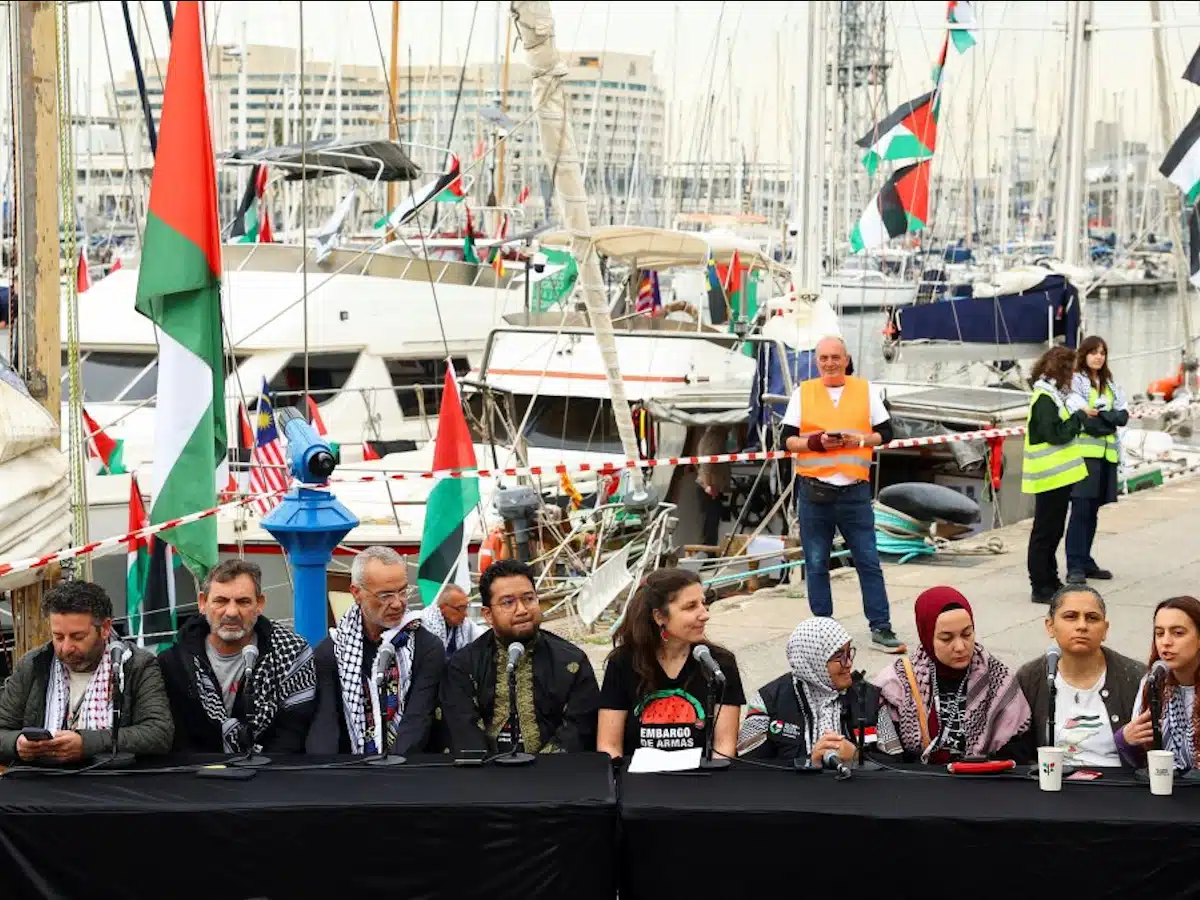
The historic second Global Sumud Flotilla has departed from Barcelona. The flotilla aims to break Israel’s illegal, decades-long siege on Gaza and deliver much-needed humanitarian aid.
Described by organisers as ‘the largest civilian-led flotilla mission in history,’ the convoy of over 70 vessels departed from Port Moll de la Fusta on Sunday 12 April 2026.
In a press release, organisers have described the urgency of their mission:
From family loss and displacement, to the collapse of governments and international institutions, to the deliberate destruction of Gaza’s hospitals, coastlines, fisheries, farmland, and water systems, [we come] to the collective decision that civil society must now move where states have failed.
1,000 set sail on the Global Sumud Flotilla
The flotilla carries a solidarity contingent of nearly 1,000 healthcare and humanitarian workers from more than 70 countries, alongside journalists and notable public figures.
Following a major international press conference, Global Sumud Flotilla organisers stated that the activists’ mission seeks to transform ‘cumulative grief into a coordinated global escalation of solidarity on land and sea.’ They also described the flotilla as:
a direct civilian intervention against genocide, siege, ecocide, forced starvation, and the global systems that sustain them.
Zionist lies exposed
The press conference hosted speakers from Gaza, Lebanon, Indonesia, North Africa and Europe, alongside global humanitarian networks.
Speakers exposed the Zionist ‘ceasefire’ lie and denounced consistent Israeli-blocked aid passages, which necessitate the urgent civilian mission.
They also recounted the IOF’s consistent, targeted murder of humanitarian and medical workers, inhumane weaponisation of starvation, and mounting regional Zionist impunity across Gaza, the West Bank, Lebanon, Iran and beyond.
The Global Sumud Flotilla Steering Committee stated previously that ‘We Refuse To Wait‘ and reiterated this widespread feeling of urgency once again:
Families who have lost everything, doctors who have worked inside collapsing hospitals, organizers who have watched governments enable mass death, and movements rising across continents all arrived at the same conclusion: waiting costs Palestinian lives.
The flotilla now moves as part of a wider global escalation to confront siege, impunity, and the political systems that make both possible.
Urgent humanitarian missions converge
The Global Sumud Flotilla convoy is joined by Greenpeace’s Arctic Sunrise and Open Arms boats, bringing globally recognised civil society actors into the mission’s fold.
Arctic Sunrise said that they offer ‘strategic maritime support, technical expertise, and transit safety coordination.’ Meanwhile, ‘Open Arms expands the mission’s humanitarian protection framework, emergency response capacity, and civilian safeguarding architecture.’
This ethos was replicated by Amnesty International’s legal and political warning to Mediterranean states and surrounding actors urging them to ensure safe passage.
Amnesty’s lawyers urge ‘against any repeat of unlawful interceptions, arbitrary detention, or abuse of civilian activists.’
Land and sea campaigns for the Global Sumud Flotilla
The 2026 sea mission is being coordinated in time with We Rise, a land campaign of comparable magnitude to achieve shared objectives in challenging Zionist impunity.
Global Sumud Flotilla describe We Rise as:
a synchronized international campaign designed to escalate political, economic, and social pressure through coordinated land mobilizations as the [GSF] fleet advances.
The campaign includes port shutdowns targeting weapons supply chains; public square art and cultural interventions; and boycott and divestment escalations.
Additionally, organizers detailed two overland convoys galvanizing solidarity across North Africa and Asia and breaking Israel’s illegal siege by land.
The flotilla now moves not as a single maritime action, but as the sea anchor of a widening international uprising.
Past flotilla missions abused
Amnesty International’s warning to neighbouring states follows on from Zionist crimes against the 2025 Global Sumud Flotilla mission – the largest of its kind until now.
In 2025, IOF operators firebombed vessels with drones in Tunisian territory. IOF navy goons also illegally boarded Global Sumud Flotilla vessels in international waters. They detained activists and subjected them to systemic and cruel abuse.
Physical and mental abuse of detained Global Sumud Flotilla humanitarian activists was reported and corroborated by many of those held hostage in Israeli prisons. They reported inhumane treatment, psychological torture such as sleep deprivation, and sexual humiliation.
Multiple victims, mainly Palestinians, reported sexual violence by IOF soldiers and Israeli prison guards. There is undeniable evidence that it is explicit Zionist policy. The UN’s Commission of Inquiry confirmed these grave, repeated sexual crimes n mid-March 2026.
The abuses inflicted on the 2025 captives is only outmatched by Zionist crimes against the 2010 Gaza Flotilla, comprised of six boats, which the IOF navy illegally raided.
During the raid, Zionist forces executed nine humanitarian activists, mainly from Türkiye, and injured another 30, one of whom later died from his wounds.
The UNHRC’s 2011 report stated that Israel’s actions were illegal, “disproportionate” and “betrayed an unacceptable level of brutality,” with evidence of “wilful killing.”
Zionist forces confiscated or destroyed photographic evidence to cover their crimes—parallel with their unprecedented murders of journalists at scale today.
Featured image via Global Sumud Flotilla

!function(n){if(!window.cnx){window.cnx={},window.cnx.cmd=[];var t=n.createElement(‘iframe’);t.display=’none’,t.onload=function(){var n=t.contentWindow.document,c=n.createElement(‘script’);c.src=”//cd.connatix.com/connatix.player.js”,c.setAttribute(‘async’,’1′),c.setAttribute(‘type’,’text/javascript’),n.body.appendChild(c)},n.head.appendChild(t)}}(document);(new Image()).src=”https://capi.connatix.com/tr/si?token=19654b65-409c-4b38-90db-80cbdea02cf4″;cnx.cmd.push(function(){cnx({“playerId”:”19654b65-409c-4b38-90db-80cbdea02cf4″,”mediaId”:”d1d14b72-5e7f-4fa2-a549-0dd12657787c”}).render(“69dd32bee4b00247ba9cfb0e”);});
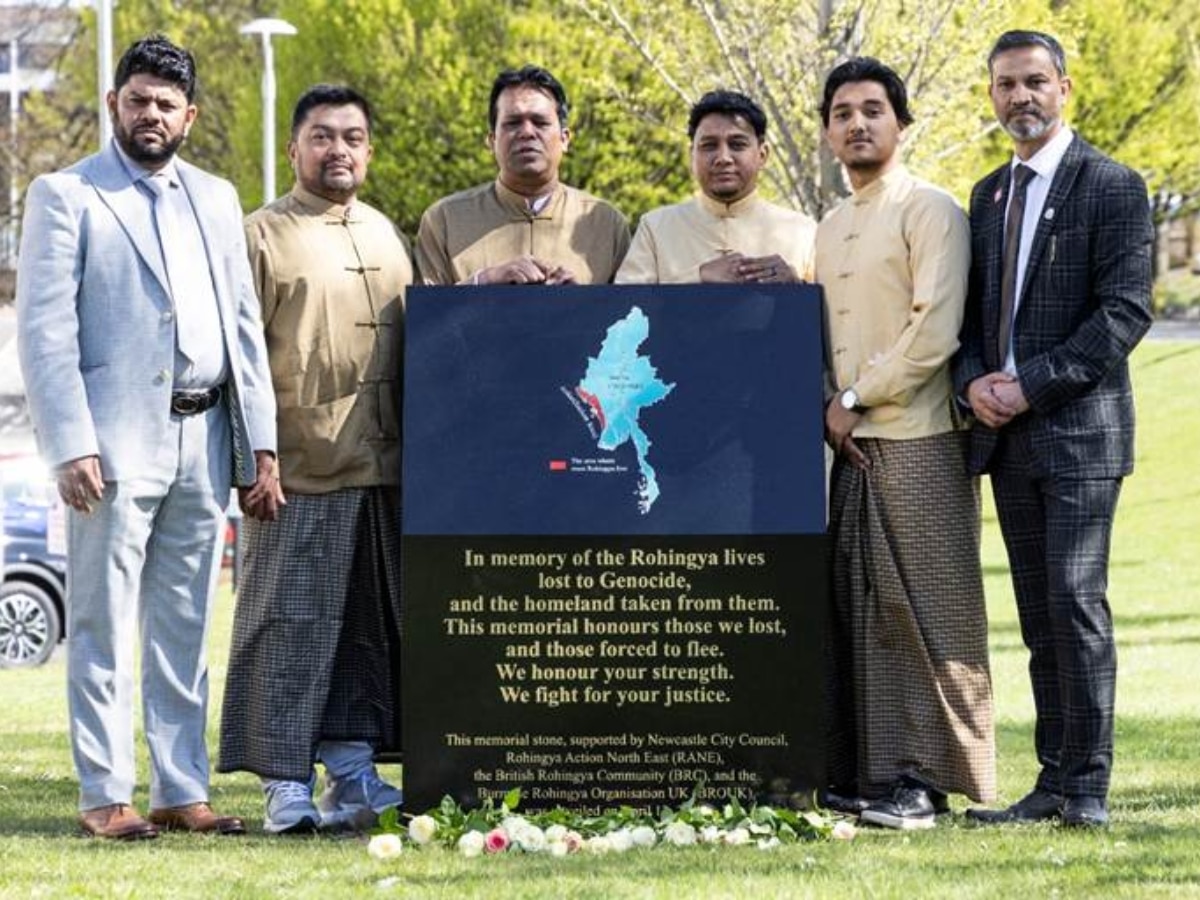
Newcastle upon Tyne made history on 12 April as Newcastle upon Tyne became the first city in the world to unveil a permanent memorial dedicated to the victims of the Rohingya genocide.
The landmark memorial, located in Newcastle City Council’s Peace Garden, was officially unveiled following a civic ceremony at the council chamber and a procession led by the lord mayor. The initiative, led by Independent Newcastle councillor and human rights advocate Habib Rahman, represents a powerful commitment to remembrance, justice, and global awareness.
Rahman, formerly the city’s first Muslim and Black lord mayor, hosted the formal civic event. It featured contributions from a distinguished group of speakers, including:
- Councillor Karen Kilgour, leader of Newcastle City Council.
- Ann Schofield, of Rohingya Action North East.
- Tun Khin, president of the Burmese Rohingya Organisation UK.
- Nur Huda, chairman of the British Rohingya Community.
- Dr M Nazrul Islam, acting high commissioner of Bangladesh to the UK.
- Genocide experts, historians and human rights activists Dr Maung Zarni and Dr Nat Brinham.
- Ruby Moe, Amnesty International UK country coordinator for Myanmar.
- Richard Kotter, chair of Amnesty Newcastle.
- Sirazul Islam, born in Kutupalong refugee camp, Cox’s Bazar, Bangladesh, now a trainee corporate lawyer and an activist.
- Rohingya campaigner Shaukat Ahmed MBE.
- Alice Gaparay, of the North East Rwandan Association.
- Mohammed Wafi, of the Palestinian Community North East.
The procession to the Peace Garden was led by the Lord Mayor of Newcastle, Cllr Henry Gallagher and Mayor of Sunderland, Cllr Ehthesham Hoque, who formally unveiled the memorial.
Rohingya memorial born from collaboration
Developed through a collaboration between Newcastle City Council, Rohingya Action North East, the British Rohingya Community, and the Burmese Rohingya Organisation UK, the memorial stands as a permanent tribute to the Rohingya genocide victims and survivors.
Rahman said:
This is a historic moment not just for Newcastle, but for the global community. Today we honour the lives lost, the resilience of survivors, and send a clear message that genocide must never be ignored or forgotten. This memorial stands as a permanent reminder of our shared responsibility to speak out against injustice and to uphold human dignity.
The Rohingya people have endured decades of persecution, culminating in a campaign of mass violence, displacement, and atrocities that forced over a million people to flee their homes. The memorial seeks to ensure their suffering is formally recognised and remembered.
Tun Khin, president of the Burmese Rohingya Organisation UK, said:
For the Rohingya community, recognition matters deeply. For too long, our suffering has been denied, ignored and pushed aside while the world failed to act. Generations of Rohingya have endured violence, displacement and loss without acknowledgement or justice.
This memorial is a powerful symbol that our pain is acknowledged, that our voices matter and that the truth cannot be erased.
We are deeply grateful to councillor Habib Rahman for his leadership and determination in making this memorial a reality, and we thank Newcastle City Council for this powerful act of solidarity with the Rohingya community.
This is an important step towards recognition and justice that the Rohingya people have long been denied. It sends a clear message far beyond this city- that Rohingya people everywhere are not forgotten.
Nijam Uddin, representing the British Rohingya Community, added:
This memorial is a place of reflection, dignity, and education. It honours those we have lost and gives strength to those who continue to live with the trauma of genocide. It also serves as a vital tool to educate future generations so that such atrocities are never repeated.
We extend our sincere thanks to councillor Habib Rahman for his vision and drive, and to Newcastle City Council for their support and commitment to recognising the Rohingya people’s suffering.
The British Rohingya Community, the Burmese Rohingya Organisation UK, and Rohingya Action North East jointly funded the memorial.
Beyond remembrance, the initiative also reinforces the importance of education, awareness, and continued advocacy for justice and accountability. Permanent memorials play a crucial role in:
- Honouring victims.
- Acknowledging survivors.
- Educating future generations.
- Challenging denial and historical revisionism.
As visitors gather at the Peace Garden in the years to come, the memorial will stand as a lasting testament to the Rohingya people’s place in history and a call to action for the international community.
Featured image supplied
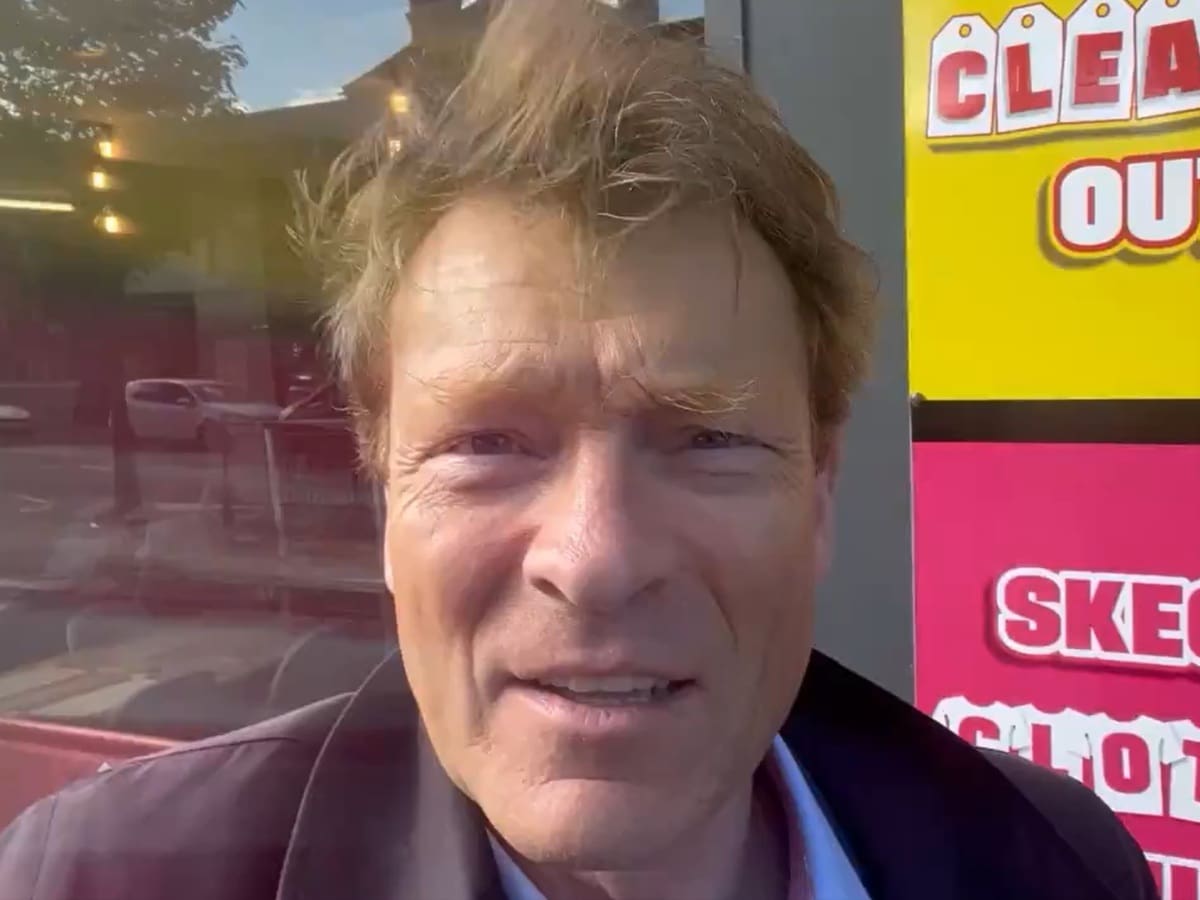
Reform UK’s deputy leader Richard Tice is trying to just shrug off a tax scandal surrounding one of his companies despite experts saying laws were clearly broken.
The company in question is property investment firm Quidnet REIT Limited. Alongside Tice, there are two other directors, Nicholas Tribe and John Purcell, both of whom Tice has other business interests with.
Experts at Tax Policy Associates have insisted they are “confident that the company failed to withhold around £120,000 of tax”.
And this wasn’t optional tax as they asserted:
From 2020 to 2022 it paid around £600,000 of dividends to Mr Tice and his offshore trust. Quidnet was required by law to withhold approximately £120,000 of tax from those dividends and pay it to HMRC. But we believe it’s clear from the company’s accounts and public filings that Quidnet did not pay this tax.
They added:
Mr Tice has refused to answer the question directly, instead saying that he paid income tax on the dividends. That’s not an answer: the company was legally required to pay tax; the law doesn’t permit REITs to opt to defer their tax obligations.
In other words, the allegation is that Quidnet REIT Limited broke the law.
For Tice, however, it was just a “technicality”, he told the Sunday Times, who originally reported the story.
Meanwhile, Reform’s home affairs spokesperson, Zia Yusuf, called the issue “a minor administrative error” and a “non-story”. Yusuf seemed to minimise the alleged law-breaking by claiming “it does look like HMRC netted off in the same way”.
“Richard Tice has not committed tax evasion nor tax avoidance.”
Reform’s Zia Yusuf says allegations surrounding Richard Tice about his tax are a “non-story,” and states “the Sunday papers are coming after senior Reform figures,” as the election period looms.@TrevorPTweets pic.twitter.com/SqtQdNlYEt
— Sky News (@SkyNews) April 12, 2026
Richard Tice: Reform millionaires think rules are for other people
We already knew Tice was a fan of tax havens and using loopholes to avoid hundreds of thousands of pounds in corporation tax. He has made it clear that he thinks it’s completely normal and acceptable to do so.
Reform leader Nigel Farage, meanwhile, openly stated that he had bought a house in Clacton. But amid claims he had avoided more than £44,000 in stamp duty by putting the £885,000 property in his partner’s name, he backtracked. He insisted his partner had paid for it upfront with her own money (which the BBC said wasn’t a believable claim).
In Farage’s case, it wouldn’t have been illegal to give money to his partner so the house was in her name, but doing so to pay a lower stamp duty would have been highly hypocritical considering his boisterous criticism of Labour’s Angela Rayner for doing the same thing. Farage had said at a Reform conference that Rayner’s decision “screams of entitlement”.
It screams to a government that, despite all the promises that this would be a new different kind of politics, is as bad, if not worse, than the one that went before.
In reality, it looks like the wealthy white men leading Reform — who want tough laws for ordinary people on issues like immigration and benefits — also feel entitled to bend the rules when it comes to their own business. And it’s becoming clearer and clearer that they would make British politics even murkier than it already is.
Pakistan have reportedly used fighter jets and intelligence to thwart an alleged plan by Israel to shoot down the jet carrying Iran’s highly-qualified negotiators attending talks with Donald Trump’s relatives and golf buddies.
Israel’s plans to kill Iran’s top surviving team in order to thwart talks were already known, but supposedly shelved under pressure from the US. However, Pakistani intelligence believed that Israel would attempt to shoot down the negotiators’ plane either en route to, or returning from, the talks in Pakistan.
The Pakistan air force used recently-supplied Chinese J-10C fighters for the escort mission. This led to claims that China’s air force also participated in the escort, but this does not appear to have been the case.
The Times of India also reports that Pakistan’s intelligence services spoofed flight-tracking data and ran decoy flights to deceive Israeli forces.

Iran’s delegation flew to Pakistan in a plane dubbed the ‘Minab 168’ in honour of the schoolchildren murdered by the US at the start of the US-Israel illegal war on Iran. All of Iran’s negotiators hold PhDs. Trump’s delegation consisted of his son-in-law, a golfing buddy, and an estate agent.
Viral image: Iran’s Islamabad delegation features four PhDs—Ghalibaf, Araghchi, Ahmadian, and Hemmati—signaling a technocratic, expertise-driven team.
In contrast, the U.S. side—JD Vance, Steve Witkoff, and Jared Kushner—appears driven more by political proximity. pic.twitter.com/ArxVa2OM0n
— Ramy Abdu| رامي عبده (@RamAbdu) April 12, 2026
Israel has a track record of murdering, or attempting to murder, peace negotiators in an attempt to thwart truce talks, including its notorious bombing of the capital of US ally Qatar and its 2024 assassination of Ismail Haniyeh in his Tehran hotel room.
Featured image via the Canary

The loss of radical bookshops does not just stifle the spread of radical ideas. What replaces these spaces is isolation. Yet across the UK, radical booksellers are now fighting back.
The far right in the North East
Increasingly, political life is pushed online, where it can connect, but just as easily fragment. Without physical spaces, it becomes harder to build trust, confidence, and solidarity. And in that vacuum, disillusionment can be redirected. People who are rightly angry about declining living standards are bombarded with online propaganda that encourages them to blame migrants or trans people, rather than billionaires and corporate power.
Here in Newcastle upon Tyne, the far right has been protesting every Saturday for months. Organised neo-Nazis travel in from across the country, attempting to convince people already deprived of community, services, and quality of life that migrants are to blame.
Their short-term aim is to recruit, radicalise, and normalise anti-migrant sentiment. The long-term vision is grounded in fantasies of mass deportations and race war. At the same time, Reform UK looks set to gain ground in upcoming local elections. Like elsewhere in Britain, the far right is growing.
Many of us have tried to understand this moment by looking to history, particularly the rise of fascism in the early 20th century. For me, one lesson stands out sharply: fascist movements did not only fight their opponents in elections or on the streets. They systematically destroyed the physical infrastructure that made left-wing organising and ideas possible.
Fascist tactics
In Italy, from the outset, Benito Mussolini’s forces targeted trade union halls, socialist presses, and meeting spaces. They understood that these were the places where people gathered, built relationships, spread ideas, and developed collective power.
The same pattern unfolded in Germany. The Nazi Party dismantled the institutional and cultural life of the left, crushing unions and banning socialist literature. When they consolidated power, socialist organisers were quickly driven underground, imprisoned, or killed. By that point, it was too late. The only movement capable of halting fascism without mass death and destruction was already disempowered.
Today’s far right doesn’t even need to carry out that same level of coordinated destruction. Decades of neoliberalism have done much of the work already. Rising rents, weakened unions, the erosion of public life, and the dominance of multinationals, have hollowed out the spaces that once sustained collective organising. ‘Third spaces’ have steadily disappeared. The Alliance of Radical Booksellers lists no less than eight now-closed radical bookshops in Newcastle in its UK map of historical radical bookshops. Today there are none.
Bookshops fight on
Shops like Housmans in London, Bookhaus in Bristol, and Lighthouse Bookshop in Edinburgh remain strong as hubs for organising, education, and community-building: hosting meetings, distributing radical literature, and connecting movements. New community-owned radical bookshops are opening across the country, as communities gather to resist neoliberalism’s regime of isolation.
Newcastle once had its own versions of this. Days of Hope (affectionately known as “Haze of Dope”) was the city’s last radical bookshop. It closed in the 1986, before I was even born. Like others of its kind, it was more than a retail space. It was a base for socialist political education, for organising, and for building relationships that extended beyond individual campaigns. That absence has been felt ever since.
A new radical bookshop in Newcastle
That’s why a collective I’m part of is crowdfunding to launch Books From Below – a new radical bookshop and community space in Newcastle.
The aim isn’t nostalgia but necessity. In a city with such a strong history of struggle, but also limited access to spaces that can sustain it, the need is urgent. Instead of leaving space for far-right voices to dominate, we can fill our streets, our conversations, and our communities with radical ideas. Then we can build the collective power to turn them into reality.
All radical bookshops start this way, with ordinary people pooling what they’ve got to create something for everyone. If we can do this here in Newcastle, so can anyone in any other town or city that still doesn’t have a radical bookshop.
This isn’t just about books. It’s about collectively rebuilding infrastructure: places where people can meet face-to-face, share ideas, and organise collectively to win against the far right.
For this, we need places that are visible, accessible, and rooted in our communities. In an age of not just mass inequality but also an increasingly empowered far-right, we need radical bookshops and other left-wing community spaces more than ever.
Featured image via the Bookseller
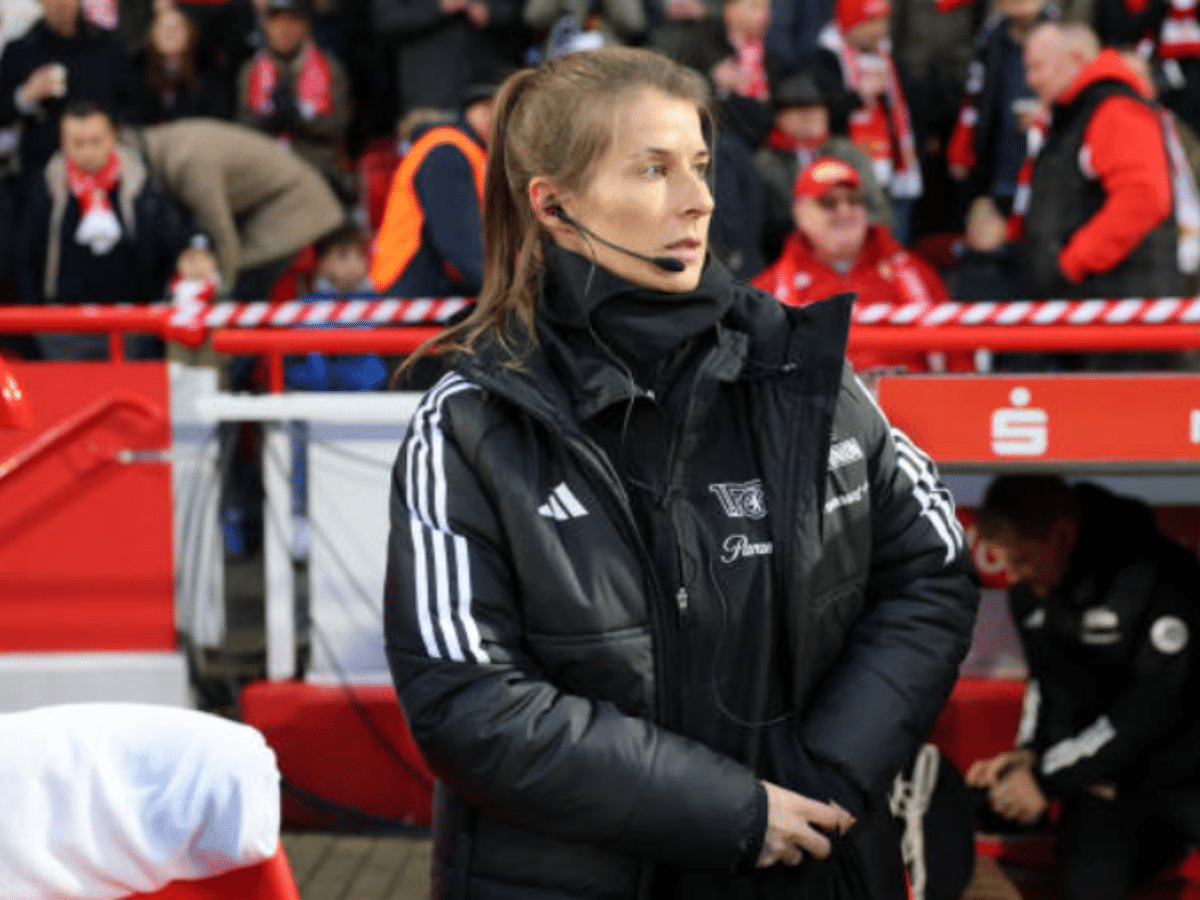
The moment Union Berlin announced Marie‑Louise Eta as interim head coach, German football crossed a threshold it had never approached, let alone stepped over. Eta, 34, became the first woman to lead a men’s team in the Bundesliga, a milestone that reverberated far beyond Köpenick. But this wasn’t a ceremonial appointment or a symbolic gesture. It was a decision forged in crisis, urgency and the cold reality of a season slipping away.
Union Berlin have a task on their hands
Union’s slide has been stark. A 3–1 defeat to Heidenheim pushed the club to the brink of a relegation fight they had spent months pretending they weren’t part of. The table still shows them in mid‑pack, but the performances and the mood tell a different story. The club’s hierarchy finally said it out loud.
In a statement to CBS Sports, sporting director Horst Heldt said:
We have had a hugely disappointing second half of the season so far and will not allow ourselves to be blinded by our league position. Our situation remains precarious and we urgently need points to secure our place in the league.
Heldt didn’t stop there. He pointed directly to the numbers that had become impossible to ignore:
Two wins from fourteen matches since the winter break do not give us the confidence that we can still turn things around with the current set‑up.
That set‑up included Steffen Baumgart, a coach known for energy and emotional charge, but whose tenure unravelled as Union’s form collapsed. His exit was swift. The decision to elevate Eta was even swifter.
Eta’s rise has been steady, methodical and built on substance rather than noise. She holds a UEFA Pro Licence, has been a key figure in Union’s youth development, and in 2023 became the first female assistant coach in the Bundesliga. She even stepped in during a touchline ban earlier this season, guiding the men’s team through a matchday in a small preview of what was to come.
Eta steps up
I am delighted that the club has entrusted me with this challenging task.
It was a typically understated response, delivered without fanfare. She also acknowledged the stakes with the same clarity the club had shown:
Given the points gap in the lower half of the table, our place in the Bundesliga is not yet secure.
The BBC described her appointment as “a historic moment for German football,” noting that no woman had ever led a men’s team in any of Europe’s top‑five leagues. Eta, who has long been respected internally for her tactical detail and calm authority, now finds herself at the centre of a story far bigger than Union’s league position.
A club at a crossroads
Union’s season has been defined by inconsistency, defensive fragility and a loss of identity. The team that once thrived on structure and collective discipline has looked increasingly disjointed. The BBC highlighted the pressure that had been building for weeks, with results deteriorating and confidence draining.
Eta inherits a squad that knows the stakes. The next match against Wolfsburg, is more than a fixture. It’s a test of nerve, clarity and belief. Five games remain. The margins are thin. The pressure is immense.
Eta has never framed herself as a pioneer, but the significance of her appointment is impossible to ignore. German football has long been conservative in its coaching pathways. The Bundesliga, for all its innovation on the pitch, had never entrusted a men’s team to a woman. Until now.
But Eta’s focus is narrower, sharper, more immediate. She has a team to stabilise, points to win, and a season to salvage. The symbolism will take care of itself.
The task ahead
Union Berlin have gambled not on novelty, but on competence. On a coach who has earned trust inside the club. On a leader who brings clarity at a moment when everything around her feels uncertain.
Five matches.
A fragile squad.
A historic appointment.
And a league watching closely.
Whether Union survive or not, the Bundesliga will never look the same again. Eta has stepped into the spotlight not because she sought it, but because she was ready for it.
Featured image via the Canary

(VIDEO) Harlan Goode Delivers Show-Stopping Australian Idol Grand Finale

Senate Bill Faces Delay Over Stablecoin Yield Debate

The Best Modern MCU Show Leans R-Rated, Isn’t Trying To Sell Toys


-

 Politics3 days ago
US brings back mandatory military draft registration
-

 Fashion3 days ago
Weekend Open Thread: Veronica Beard
-
 Sports3 days ago
Man United discover Nico Schlotterbeck transfer fee as defender reaches Dortmund agreement
-

 Tech6 days ago
How Long Can You Drive With Expired Registration? What Florida Law Says
-

 Politics1 day ago
World Cup exit makes Italy enter crisis mode
-

 Crypto World4 days ago
Canary Capital Files SEC Registration for PEPE ETF
-

 Business3 days ago
Tesla Model Y Tops China Auto Sales in March 2026 With 39,827 Registrations, Beating Cheaper EVs and Gas Cars
-

 Crypto World5 days ago
Bitcoin recovers as US and Iran Agree a Ceasefire Deal
-

 Politics4 days ago
Malcolm In The Middle OG Turned Down ‘Buckets Of Money’ To Appear In Reboot
-

 Fashion6 days ago
Let’s Discuss: DEI in 2026
-
 NewsBeat21 hours ago
Pep Guardiola and Gary Neville agree over Arsenal title problem that benefits Man City
-

 Business3 days ago
OpenAI Halts Stargate UK Data Centre Project Over Energy Costs and Copyright Row
-

 Business2 days ago
Ireland Fuel Protests Enter Day 5 as Blockades Spark Shortages and Government Prepares Support Package
-

 Crypto World1 hour ago
The SEC Conditionalises DeFi Platforms to Be Avoided for Broker Registration
-

 Politics4 days ago
LBC Presenter Mocks Trump Over Iran War Failures
-

 Crypto World3 days ago
Federal judge blocks Arizona from bringing criminal charges against Kalshi
-

 Tech4 days ago
A version of Windows 10 released a decade ago is now eligible for additional security patches
-
 NewsBeat2 days ago
JD Vance announces ‘no agreement’ with Iran over nuclear weapons fear
-

 Business3 days ago
IMF retains floor for precautionary balances at SDR 20 billion
-
Business3 days ago
Coreweave CSO Venturo sells $5.5m in class a common stock
You must be logged in to post a comment Login