
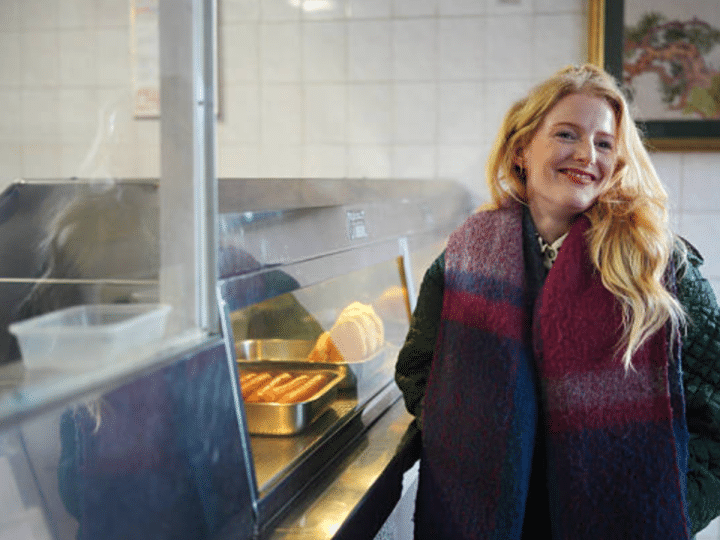
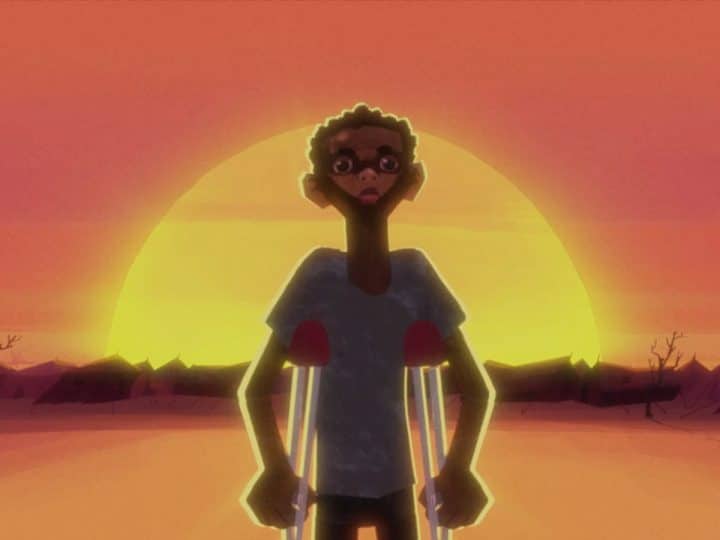
A new animated film from Save the Children highlights how children’s lives are being torn apart by war, with life-long consequences, as the laws designed to keep them safe are repeatedly broken. British-Sudanese comedian Ola Labib narrates the 2-minute animation. It takes inspiration from the story of a family in Sudan living with the long-term effects of explosive weapons.
It follows two brothers, Ali, 13 and Nour, 10 [names changed to protect identities]. They were playing football outside their home in Khartoum when a bomb exploded nearby, changing their lives forever. Ali lost his leg instantly, while Nour suffered severe injuries that left him paralysed.
Launching on the third anniversary of the conflict in Sudan, Walk Twice exposes the rising impact of explosive weapons on children’s lives as bombs and drones increasingly strike schools, homes, and hospitals – places that should be protected under international humanitarian law.
The toll of explosive weapons
Analysis by Action on Armed Violence reveals that the number of casualties from explosive weapons in Sudan doubled in 2025 compared to 2023, the year the war began. They found evidence for 2,627 people killed and injured by blasts in 2023, rising to 4,478 in 2024 and 5,440 in 2025.
The number of civilians harmed per attack rose from around 19 in 2023 to 26 in 2025 – a 37% increase. This reflects the growing use of wide-area explosive weapons in populated areas, where civilians gather. Most casualties occur in residential districts, markets and other dense urban spaces.
Labib said:
Stories like Ali’s are devastating - and as world leaders continue to flout international law, we risk seeing more children injured and suffering in this way.
Ali’s story really hit home for me. I lost my second cousin during the war in Sudan - he was around the same age as the brothers. Not everyone has that personal connection, but empathy shouldn’t depend on personal experience.
Any child lost or injured to war is one too many. This must never be something we just accept. It must never become normal. That’s why I’m joining Save the Children’s campaign that urges the UK government to fight for the right to childhood in Sudan.
A moving portrayal of displacement and loss, the film follows the desperate journey taken by Ali, Nour and their mother across large swathes of Sudan, seeking treatment amid collapsing health systems and ongoing insecurity.
Eventually they reach a displacement camp in Gedarif. And the film also captures the hope and quiet resilience of children affected by blast injuries. Following their upheaval, Save the Children provided the family with essential supplies, psychosocial support and mobility aids including an electric wheelchair for Ali.
Speaking about the difference Save the Children’s support has made, Ali said:
When Save the Children came and gave me this wheelchair, my self-confidence grew. It motivated me not to give up, and it made me think that the future is worth pursuing and that nothing is impossible.
A worldwide threat
While prompted by the anniversary of the conflict in Sudan, the film also highlights the growing threat to children in wars around the world, including Gaza and Ukraine.
A report by Save the Children reveals that explosive weapons are now killing children on a scale never seen before. More than 60% of child casualties in war zones now come from explosive weapons. Between 2020 and 2024, nearly 50,000 children became casualties of war.
Save the Children is urging the public to write to their MP and urge the UK government to do everything it can to protect children in Sudan. This should include urgently pressuring all warring parties and their international backers to end the violence, prioritise children’s safety and hold those who harm children accountable.
Alison Griffin of Save the Children said:
Every day we are watching the laws that were designed to protect children in conflict be openly ignored – not only by armed groups, but by governments that have a duty to protect them. No child should have to learn to walk twice. We cannot let this become the new normal.
Without urgent action from global leaders, including the UK government, we are on a dangerous path towards a world where conflict is a lawless free-for-all, and nothing is off limits.
Standing up for international law isn’t a choice. It’s an obligation.
Save the Children works in war zones around the world, providing life-saving care for injured children through pop-up hospitals. The charity also supports children’s long-term recovery, from safe spaces to play and learn to an innovative partnership with Imperial College London developing prosthetic limbs that can be remoulded as children grow.
Find out more about Save the Children’s work supporting children injured in war here.
Featured image via Save the Children
By The Canary
Source link








 (@ThatKid1871)



 WATCH: Chaos in Israel as hundreds of thousands of bees swarm across the country!















































You must be logged in to post a comment Login