Politics
Politics Home Article | How Will SEND Reforms Work?



(Alamy)
5 min read
The government has set out highly-anticipated plans to overhaul the special education needs and disabilities (SEND) system, pledging that, under “decade-long reforms”, children with additional needs will “get the rights they deserve”.
Under the plans, announced by Education Secretary Bridget Phillipson on Monday, only those children with the most severe and complex needs will receive an education, health and care plan (EHCP). This is the current legal document that identifies the specific needs and sets out tailored support.
In practice, it means fewer children will be given ECHPs than would have been under the current system.
There is a cross-party agreement that the current SEND system is not sustainable, as it is putting extreme pressure on councils and resulting in long waits for parents trying to secure support for their children. The Labour government pledged to fix the system when it was elected in July 2024.
Speaking to reporters today, Phillipson said the changes would be a “really careful and phased transition” and would be a “decade-long reform”.
“I know that parents’ confidence is low in the system. That’s why the fact we’re taking our time to get this right is essential,” she said.
Why is SEND being reformed?
SEND has been a growing talking point in Westminster in recent years as pressure on the system has increased to extreme levels.
Under the current rules, pupils requiring extra support can be issued an EHCP, a legal document that identifies the specific needs and sets out tailored support.
Since 2018, the number of pupils with EHCPs has increased by almost 80 per cent, while funding to deliver the service has failed to keep pace, putting local government finances under significant pressure.
Nearly 80 per cent of local authorities told a recent Local Government Association survey that they would become insolvent in the next few years without reforms to the system.
At the same time, some parents are waiting months and sometimes years to secure support for their children.
What has the government announced?
Speaking today, Phillipson stressed that EHCPs for children with the most complex needs will remain.
However, fewer children will be granted EHCPs overall under the reforms.
The Department for Education estimates that around one in eight children and young people who currently have an EHCP will shift to new support between 2030 and 2035.
Instead, three layers of support will be available to those with additional needs, set out as “Targeted”, “Targeted Plus” and “Specialist”, the latter of which will be the basis of EHCPs.
The government has pledged £4bn over three years to improve SEND support in mainstream education settings.
Millions of children will also have access to a new, digital ‘Individual Support Plan’ (ISP), which will be put on a statutory footing, provided by the school and developed alongside parents.
The ISP will set out what support a child with additional needs requires from the school, and could include support from health professionals.
Phillipson insisted that the changes were about “improving” support, not removing it”.
The reforms announced on Monday will not come into effect until 2030 at the earliest.
The government is hopeful that the period of transition, in which the focus will be on training and investment to build capacity in the system, will allow for a smooth changeover.
What is the reaction so far?
The government had originally planned to publish the planned SEND reforms last year.
However, as PoliticsHome reported at the time, there was nervousness within government about a potential Labour MP backlash similar to the rebellion that forced Prime Minister Keir Starmer to abandon plans to reduce welfare last year.
In a bid to ensure Labour MPs feel that their concerns and points of view are being listened to throughout the process, Phillipson and minister Georgia Gould have held many meetings with Labour MPs in recent months to discuss the reforms.
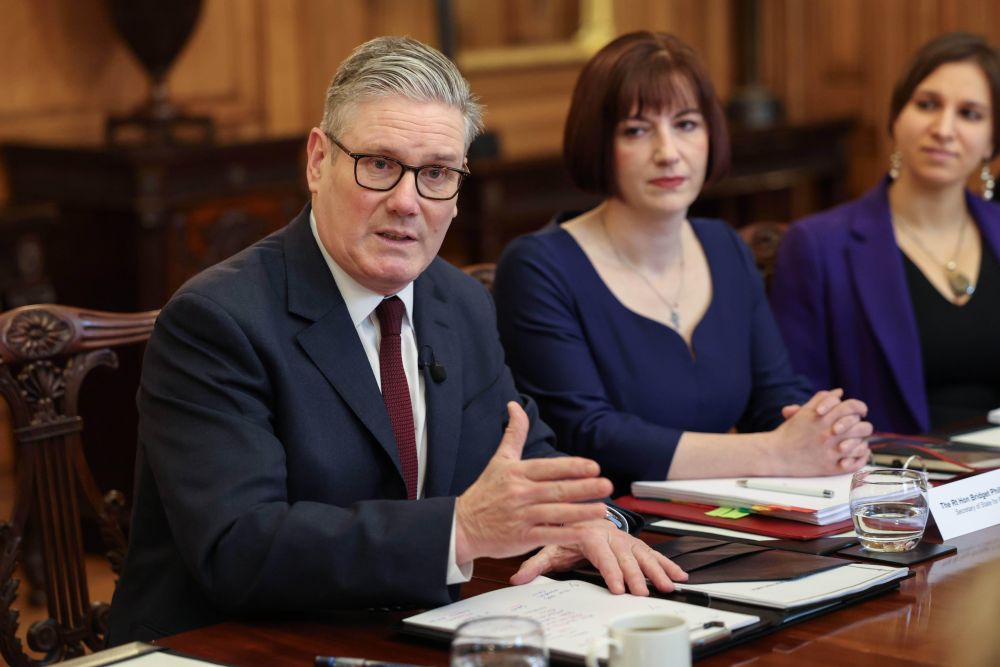

Asked by PoliticsHome on Monday what message she had for MPs worried about the changes, the Education Secretary said: “This is a once-in-a-generation opportunity to deliver a better system for children”.
“Opportunities like this really only come around once, and it’s a big responsibility on all of us to reassure parents, to explain the process of change that we’re embarking upon, and it’s a responsibility that I take incredibly seriously.”
Labour MPs will now take time to study the proposals in detail, while ministers will hope that they can win the support of as much of the Parliamentary Labour Party as possible.
One government source told PoliticsHome that they are not seeing this as the end of the conversation, and the Labour MP outreach that Phillipson has carried out in recent months will continue.
Paul Whiteman, general secretary of school leaders’ union NAHT, said that he was “cautiously optimistic” that the White Paper published today “contains the foundation of a successful new approach to SEND education”.
However, there are concerns that the funding announced may not be adequate.
Matt Wrack, general secretary of teachers’ union NASUWT, said that it was “absolutely ridiculous to suggest that SEND provision can be adequately overhauled with this low level of funding”.
Dani Payne, head of education and social mobility at the Social Market Foundation think tank, said that it was “good to see government take on an area that is both complex and politically challenging”.
“The government’s planned approach, of prioritising mainstream inclusion for pupils with SEND and strengthening universal support offers, is the right one.”
