

Politics
Politics Home Article | How Will SEND Reforms Work?


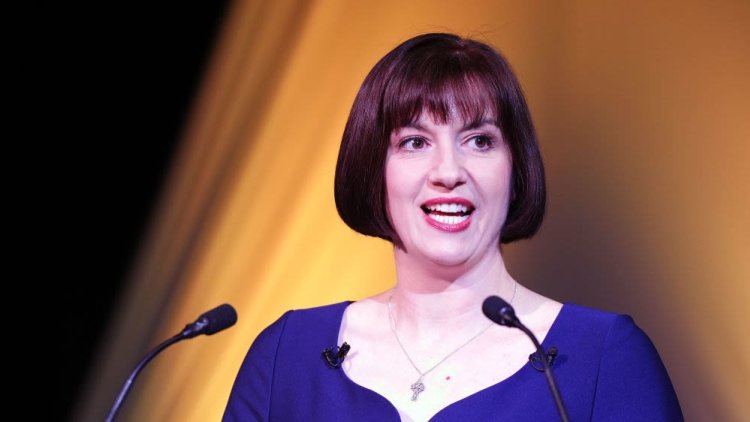
(Alamy)
5 min read
The government has set out highly-anticipated plans to overhaul the special education needs and disabilities (SEND) system, pledging that, under “decade-long reforms”, children with additional needs will “get the rights they deserve”.
Under the plans, announced by Education Secretary Bridget Phillipson on Monday, only those children with the most severe and complex needs will receive an education, health and care plan (EHCP). This is the current legal document that identifies the specific needs and sets out tailored support.
In practice, it means fewer children will be given ECHPs than would have been under the current system.
There is a cross-party agreement that the current SEND system is not sustainable, as it is putting extreme pressure on councils and resulting in long waits for parents trying to secure support for their children. The Labour government pledged to fix the system when it was elected in July 2024.
Speaking to reporters today, Phillipson said the changes would be a “really careful and phased transition” and would be a “decade-long reform”.
“I know that parents’ confidence is low in the system. That’s why the fact we’re taking our time to get this right is essential,” she said.
Why is SEND being reformed?
SEND has been a growing talking point in Westminster in recent years as pressure on the system has increased to extreme levels.
Under the current rules, pupils requiring extra support can be issued an EHCP, a legal document that identifies the specific needs and sets out tailored support.
Since 2018, the number of pupils with EHCPs has increased by almost 80 per cent, while funding to deliver the service has failed to keep pace, putting local government finances under significant pressure.
Nearly 80 per cent of local authorities told a recent Local Government Association survey that they would become insolvent in the next few years without reforms to the system.
At the same time, some parents are waiting months and sometimes years to secure support for their children.
What has the government announced?
Speaking today, Phillipson stressed that EHCPs for children with the most complex needs will remain.
However, fewer children will be granted EHCPs overall under the reforms.
The Department for Education estimates that around one in eight children and young people who currently have an EHCP will shift to new support between 2030 and 2035.
Instead, three layers of support will be available to those with additional needs, set out as “Targeted”, “Targeted Plus” and “Specialist”, the latter of which will be the basis of EHCPs.
The government has pledged £4bn over three years to improve SEND support in mainstream education settings.
Millions of children will also have access to a new, digital ‘Individual Support Plan’ (ISP), which will be put on a statutory footing, provided by the school and developed alongside parents.
The ISP will set out what support a child with additional needs requires from the school, and could include support from health professionals.
Phillipson insisted that the changes were about “improving” support, not removing it”.
The reforms announced on Monday will not come into effect until 2030 at the earliest.
The government is hopeful that the period of transition, in which the focus will be on training and investment to build capacity in the system, will allow for a smooth changeover.
What is the reaction so far?
The government had originally planned to publish the planned SEND reforms last year.
However, as PoliticsHome reported at the time, there was nervousness within government about a potential Labour MP backlash similar to the rebellion that forced Prime Minister Keir Starmer to abandon plans to reduce welfare last year.
In a bid to ensure Labour MPs feel that their concerns and points of view are being listened to throughout the process, Phillipson and minister Georgia Gould have held many meetings with Labour MPs in recent months to discuss the reforms.
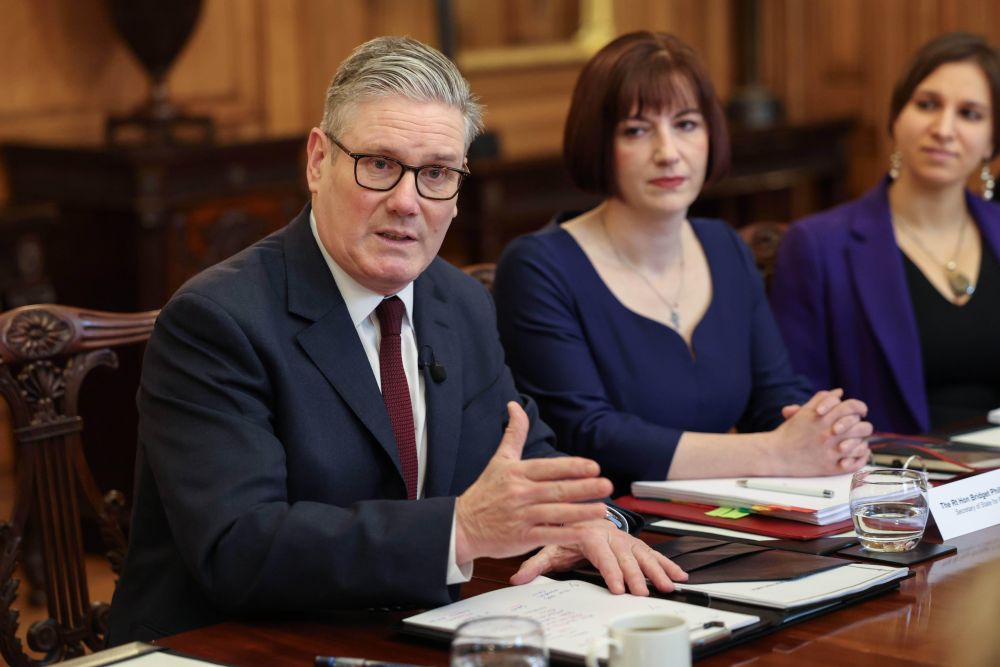
Asked by PoliticsHome on Monday what message she had for MPs worried about the changes, the Education Secretary said: “This is a once-in-a-generation opportunity to deliver a better system for children”.
“Opportunities like this really only come around once, and it’s a big responsibility on all of us to reassure parents, to explain the process of change that we’re embarking upon, and it’s a responsibility that I take incredibly seriously.”
Labour MPs will now take time to study the proposals in detail, while ministers will hope that they can win the support of as much of the Parliamentary Labour Party as possible.
One government source told PoliticsHome that they are not seeing this as the end of the conversation, and the Labour MP outreach that Phillipson has carried out in recent months will continue.
Paul Whiteman, general secretary of school leaders’ union NAHT, said that he was “cautiously optimistic” that the White Paper published today “contains the foundation of a successful new approach to SEND education”.
However, there are concerns that the funding announced may not be adequate.
Matt Wrack, general secretary of teachers’ union NASUWT, said that it was “absolutely ridiculous to suggest that SEND provision can be adequately overhauled with this low level of funding”.
Dani Payne, head of education and social mobility at the Social Market Foundation think tank, said that it was “good to see government take on an area that is both complex and politically challenging”.
“The government’s planned approach, of prioritising mainstream inclusion for pupils with SEND and strengthening universal support offers, is the right one.”



The Supreme Court’s tariff decision left the door wide open for Democrats to hammer President Donald Trump for violating the law. This time, they’re not taking the bait.
Instead, Democratic campaigns are leaning into an argument they have been making for months: Trump’s tariffs are coming out of voters’ pockets. Some Democrats can’t help but hit the tariffs as “unlawful,” but they’re pivoting quickly back to affordability.
“The decision is a significant development, but prices are still high for folks across the country, and the administration is determined to keep them high,” said Rep. Suzan DelBene (D-Wash.,) chair of the Democratic Congressional Campaign Committee. “We are laser focused on affordability and holding Republicans accountable for raising prices on families across the country.”
She said Democrats’ message would have been the same, regardless of how the Supreme Court ruled.
It’s a striking shift from the party’s strategy in 2024, when candidates took every opportunity to warn voters that a second Trump term would create lawlessness and threaten America’s democracy. Even after the nation’s highest court struck down a key plank in the president’s policy agenda, Democrats are eschewing talk of legal intricacies or executive overreach for a focus on the cost of living.
In Washington and in battlegrounds around the country, Democratic lawmakers, governors and candidates are folding the Court’s check of Trump’s executive authority into their continued argument that tariffs are raising the price of groceries and household expenses. Congress is newly considering legislation on refunding tariff revenue to American small businesses, though Speaker Mike Johnson threw cold water on its chances of advancing.
Even Democrats who are pushing a more aggressive message — that Trump “stole” from voters’ pockets — are tying it to affordability for American households, not abuse of power from the White House.
“Donald Trump stole your money with his illegal tariffs — and you paid higher prices on everything from housing to groceries,” Sen. Elizabeth Warren (D-Mass.) said on social media.
Voters remain overwhelmingly pessimistic about the economy, even as job growth and inflation numbers improve. Democrats targeting vulnerable incumbent Republicans from Colorado to Minnesota think they’ve found a winning message: Tariffs are making your life unaffordable, whether they’re legal or not.
“People aren’t going to care whether that’s under an IEEPA regulation or Section 122,” said Gabe Horwitz, senior vice president at center-left group Third Way. “The fact is, the Trump administration continues to push tariffs that hurt consumers.”
Democratic operatives point to a series of off-cycle victories late last year in New Jersey, Virginia and elsewhere, where candidates made cost-of-living central to their pitch. And a torrent of polling suggests Trump’s tariffs are unpopular with the electorate. In a November POLITICO Poll, a 45 percent plurality of Americans said higher tariffs are damaging the U.S. economy — in both the short and long term.
“Prices are increasing, and any time Trump gives us an opportunity to say something happened in the news today — and that is another point of proof that he’s making things more expensive — is a good day for Democrats,” said Andrew Mamo, a Democratic strategist involved in 2026 congressional races, including the Texas Democratic Senate primary. “Every time there is an event that we can bring back to affordability is good.”
There’s also a growing push to send tariff revenue back to consumers, which Democrats believe plays perfectly into their affordability message.
Reps. Steven Horsford (D-Nev.) and Janelle Bynum (D-Ore.), who both represent battleground districts, introduced legislation Friday that would require Customs and Border Patrol to refund tariffs collected over the past year to small and independent businesses. A group of Democratic senators — led by Sens. Ron Wyden of Oregon, Ed Markey of Massachusetts and Jeanne Shaheen of New Hampshire — introduced a similar bill Monday with the backing of Senate Minority Leader Chuck Schumer.
The legislation is likely a nonstarter in the GOP-controlled Congress, but gives Democrats a way to put pressure on Republicans.
“When someone takes money that wasn’t authorized and does it in a way that harms you, they’ve stolen from you, and that is what the Trump administration has done for the last year,” Horsford said in an interview.
It follows calls from several Democratic governors — and 2028 contenders — who quickly seized on the debate about refunds in their responses to last week’s court decision.
Gov. JB Pritzker of Illinois demanded the federal government refund families $1,700 per household. California Gov. Gavin Newsom told reporters that Trump has an “obligation” to return the money to consumers who paid more for goods as a result of the tariffs.
“He took hundreds of billions of dollars from working folks — from the ag community, from small businesses — for this vanity play, this illegal action,” Newsom said Friday.
At least one Democrat in a key Senate race is also embracing the demand for a tariff refund. Former Sen. Sherrod Brown, who is trying to unseat Jon Husted, said on Xthat he wanted a refund for every Ohio household and that Husted supported the tariffs “at every turn.”
Providing direct relief to consumers is resonating beyond highly engaged Democratic online circles more so than pointing out the illegality of Trump’s tariffs, said Parker Butler, a Democratic digital strategist and managing partner at Luminary Strategies.
“Pointing out the fact that, ‘See, look, Trump did something illegal’ — obviously that’s worth doing, because he did do something illegal,” said Butler, who ran KamalaHQ in 2024 and now leads digital for James Talarico’s Senate campaign in Texas. “But unfortunately, I don’t think that’s going to permeate outside these sort of online political bubbles. If you want to actually break through beyond that bubble, which is what Democrats need to be doing, you can say, ‘Trump owes you money. He’s been illegally taxing you for nearly a year.’”
Trump has only doubled down on his tariff plans in the wake of the court decision, saying Friday that he would use Section 122 of the Trade Act of 1974 to impose a 15 percent global tariff. But that would expire after 150 days unless Congress extends it — a vote that could squeeze vulnerable members just months before the November midterm.
Vulnerable Republicans and GOP strategists who quietly cheered the Friday court decision are worried that they’re heading into a heated, economy-focused election on their back foot.
Meanwhile, Democrats see the president’s insistence on keeping his tariff program alive as fuel for their affordability message.
“We can’t communicate episodically. We need to be communicating constantly,” said Will Robinson, a Democratic consultant and ad-maker. “I think the theoretical thing about the Supreme Court and tariffs is less impactful than what’s actually going on in the grocery basket.”
Brakkton Booker and Jordain Carney contributed reporting.
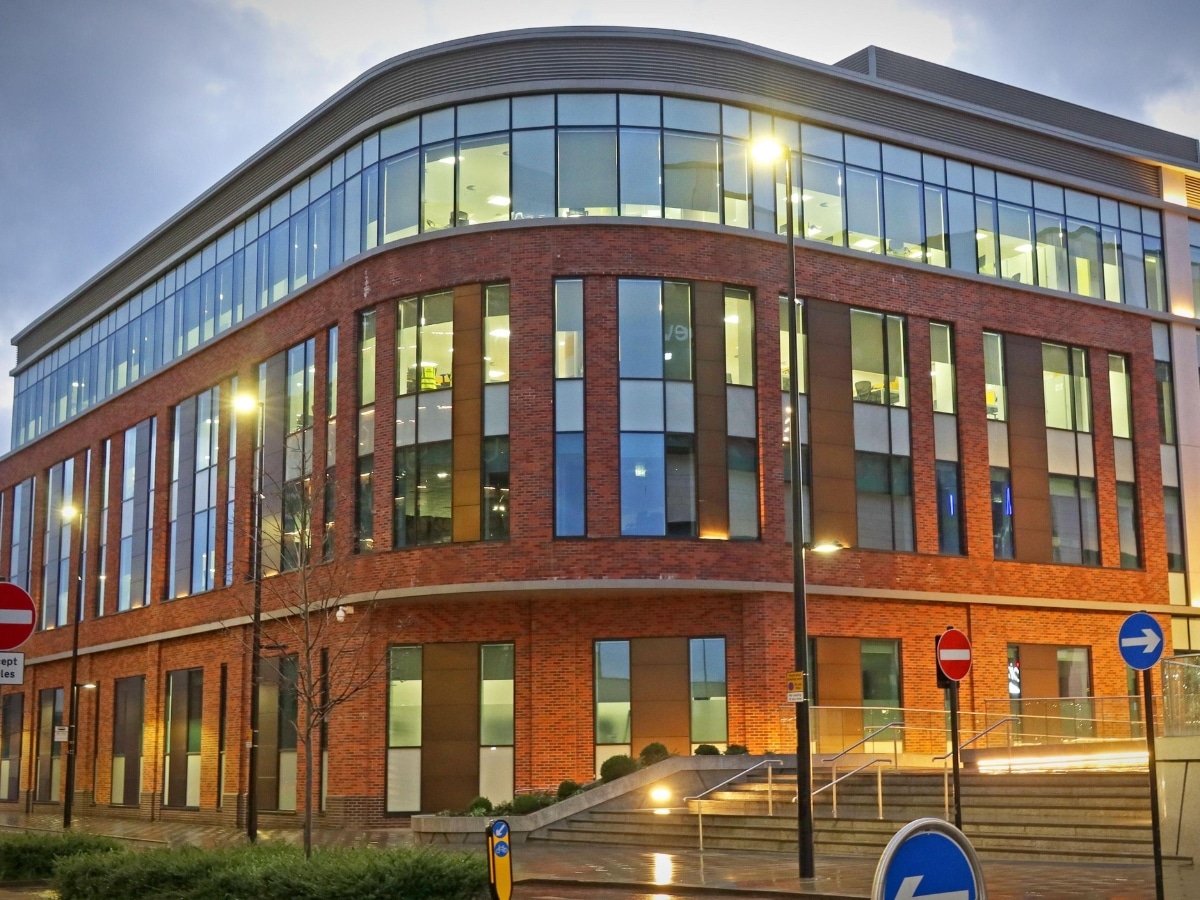
As headlines swirl around Warrington’s finances, one thing is clear: the numbers are large, complex, and increasingly hard to ignore.
- £354 million – the amount Warrington Borough Council is asking the government to borrow through Exceptional Financial Support.
- £178.9 million – the projected budget gap over the next four years.
- £708 million – the long-term cost of that borrowing over 20 years, including interest.
For Independent Cllr Stuart Mann, however, this isn’t about headline figures. It’s about what those figures mean for people.
Speaking to the Canary, Mann said:
This isn’t abstract, I live here. My family lives here. I pay council tax here. These decisions affect me too.
How Did Warrington Get Here?
Over the past decade, the council adopted a commercial investment strategy. The intention was straightforward: borrow at relatively low interest rates, invest in property and other ventures, generate income, and use that income to protect frontline services. In theory, it was about financial self-sufficiency. In practice, borrowing at scale brought risk. As a result, some investments underperformed, markets shifted and interest rates rose. All the while, the debt remained.
As concerns mounted, the Government commissioned a Best Value Inspection into Warrington. The inspection did not simply examine the balance sheet. It looked at governance, scrutiny, risk management and organisational culture. It raised concerns about the scale of borrowing, the level of exposure to risk, weaknesses in oversight, and the need for stronger financial discipline.
Following that report, government envoys were appointed to oversee improvement at the council. According to early assessments, even if the council attempted to dispose of its commercial assets quickly – effectively a “fire sale” – potential losses could be in the region of £275m. There wasn’t a simple reset button, the exposure was already there. There has also been significant leadership change since the commercial strategy was developed. The former leader and deputy leader have left. The former Chief Executive and previous Section 151 officers are no longer in post.
But, Mann says,
Change in personnel doesn’t solve structural issues. What matters now is whether governance is genuinely stronger.
Where is the oversight?
More recently, under the oversight of the government envoys, an expert review of the council’s Minimum Revenue Provision (MRP) policy was carried out. MRP is the amount a council must legally set aside each year to repay borrowing. The review found that Warrington had not been setting aside enough. Correcting that added tens of millions of pounds per year in recurring pressure to the budget. It wasn’t new spending, it was correcting how the council was paying down existing debt, but that correction has had major consequences.
As the council nears its full meeting on the 2nd March where the budget will be proposed by the Labour group in charge, the papers show
– A four-year budget gap of £178.9 million
– A £117.9m shortfall next year alone before savings
– A £354m Exceptional Financial Support request
– And a £708m long-term repayment cost over 20 years
Cllr Mann pointed out that a long-term perspective is crucial here, and one that Labour appear to be ignoring:
That £708 million figure is the one that really lands, because it’s not just about this year. It’s about the next two decades.
To help balance the books, council tax is proposed to rise by 7.48%. For a typical Band D household, that represents several hundred pounds more per year once police and fire precepts are included, pushing annual bills comfortably beyond £2,000 for many families. All in, a typical household will be around £400 worse off after the tax increase.
That’s without taking into account the ever-decreasing value for money for local council tax payers. Compounding things further, we must then factor in energy bills, food prices, mortgages and everything else rising simultaneously. After all, this cost of greed crisis is increasing the burden on households, whilst the richest see their wealth grow.
Cllr Mann says he is particularly frustrated by attempts in some quarters to suggest Warrington residents are somehow “better off” or insulated from the impact.
That kind of smoke and mirrors narrative doesn’t reflect the emails I’m receiving; it doesn’t reflect the conversations I’m having in supermarkets or at school gates. People do not feel better off.
Additional concerns about the council’s narrative
In recent weeks, suggestions have been made that volunteers could help fill gaps created by service reductions. On this, Mann is again clear in his response.
I’ve been a volunteer long before I became a councillor, and I’ll continue long after. Volunteering is about caring for your community. It is not a substitute for properly funded public services.
We are already asking residents to absorb higher bills and reduced services. We cannot then quietly expect them to step in and backfill roles that exist to protect people and keep communities safe.
We are asking households to take a double hit financially. We must not pretend goodwill can absorb a third.
Here Mann argues that expecting goodwill to absorb the consequences of financial misjudgment is unfair. An imbalance that is deeply uncomfortable both for local councillors and for local residents. Mann recently held a ward surgery that he describes as unusually sobering.
“Normally, someone comes in about a pothole or litter and you feel confident you can push for it to be resolved. This time, there was a different tone. Behind every request was the question – is there even the money?”
He says for the first time since being elected in 2024, he struggled to offer reassurance.
“I could log the issue. But I couldn’t confidently promise the outcome in the same way. And that’s hard.
The Best Value Inspection identified governance weaknesses. The envoys stepped in. The MRP review exposed underprovision. Now residents are feeling the impact.
Warrington needs solutions, not gimmicks and sticking plaster policies
Like any sensible adult, Mann accepts the legal necessity of setting a balanced budget. However, he argues that the £178.9m budget cap creates uncertainty around even the basics. Without Exceptional Financial Support from the Labour government, the situation would be even more severe. But he believes this moment must be about more than balancing numbers. Mann argues that rebuilding trust must now be the priority.
This can’t just be about balancing spreadsheets. It has to be about embedding stronger governance, stronger scrutiny, and real financial discipline.
Because while the crisis may have begun in commercial strategy and accounting policy, its consequences are now being felt in homes and communities across Warrington. And as he puts it:
If this moment doesn’t lead to lasting change in how our town is governed and how risk is managed, then the people of Warrington will quite rightly ask what it was all for.
Featured image via the Canary
As Skwawkbox predicted last week, Peter Mandelson, Keir Starmer’s former senior adviser and ambassador, has been arrested on suspicion of misconduct in public office. After the arrest of former prince Andrew, it was inevitable.
Mandelson arrested – but no justice for victims and survivors
But both arrests are for sharing trade and financial secrets with Israeli spy and serial child rapist Jeffrey Epstein. Police are not looking into whether Mandelson was in any way involved in Epstein’s rape of children or his human trafficking – which included sending women to the UK for Andrew. As ever, power considers money far more significant than the lives and well-being of ordinary people.
Neither arrest should be allowed in any way to distance Starmer from his own guilt. He appointed Mandelson as his senior adviser and UK ambassador to the US, despite knowing that Mandelson was still in close contact with Epstein. He also ran the Crown Prosecution Service during its decision not to prosecute serial rapist Jimmy Savile and others, or intelligence operatives linked to torture, while pursuing innocent sub-postmasters and postmistresses, autistic hackers and innocent journalist Julian Assange.
And Starmer has his own very large basket of dirty laundry of covering up for abusers and sex pests in ‘his’ party – many of whom were directly involved in, or closely linked to, criminality. It is a habit he still shows no sign of breaking.
But the victims of Epstein and those he enabled will only have justice when the powerful are on trial for the abuse they suffered – not just a whitewashing of rape and paedophilia by focusing on ‘white collar crime’.
For more on the Epstein Files, please read the Canary’s article on how the media circus around Epstein is erasing the experiences of victims and survivors.
Featured image via the Canary

Muslim adults in the UK are twice as likely to experience food insecurity as the wider population. This is according to new national research which Muslim Aid commissioned ahead of Ramadan.
The survey of more than 1,000 Muslim adults reveals clear inequality in how hardship affects people across Britain.
Muslims facing food insecurity
59 percent of Muslim respondents said they had worried about running out of food in the past year, compared with 29 percent nationally.
44 percent said they had experienced days where they went hungry because they could not afford food, more than double the national figure of 19 percent.
The findings come as national data from The Food Foundation shows food insecurity remains persistently high, with millions of households affected even as headline inflation has fallen.
Food insecurity is not always visible. It can mean skipping meals, cutting portion sizes, choosing cheaper and less nutritious food, or deciding between heating and eating. A Muslim diabetic survey respondent from London reported:
I have to feed my daughter bread at home and for her school lunch. I cannot afford to buy healthy food. Most [meal] times I eat my daughter’s leftovers.
Another Muslim interviewee, a student from the West Midlands, said:
I have siblings who live with me and hearing them complain about wanting what the other children can eat hurts me as they don’t deserve to live like this. I study in college and I feel a lack of engagement due to hunger and lack of nutrition.
For many Muslim and minority households, food insecurity can also mean going without culturally appropriate food. One man told Muslim Aid he was living off one tinned item a day from food banks as he couldn’t afford halal food, while another said they had become vegetarian for the same reason.
Uniting communities to tackle food poverty
Through interfaith partnerships, Muslim Aid has delivered more than 167,000 culturally appropriate meals and now supports 109,000 people of all backgrounds every week from its West London depot.
To coincide with the research, Muslim Aid is supporting a Ramadan Community Cooking and Wellbeing Project in Tower Hamlets on Tuesday 24 February, in partnership with Well One and The Felix Project.
The initiative will bring together local women, particularly from a Bengali background, to prepare and distribute 500 nutritious, culturally appropriate meals across the borough, alongside education promoting healthier cooking during Ramadan.
Bangladeshi households are consistently among the ethnic groups most likely to experience food insecurity in the UK. In boroughs such as Tower Hamlets, where there is a large British Bangladeshi population, the pressures the survey identifies are not abstract statistics but lived realities.
The project aims to strengthen solidarity between communities facing the same economic pressures and provides a counter-narrative to rising division and anti-migrant sentiment.
Lucy Rae, Muslim Aid UK programmes lead, said:
Our research has found that those of all faiths and none are more comfortable turning to charities than other sources when enduring desperate food poverty.
However voluntary action cannot be an ongoing substitute for the structural reforms needed to end a crisis disproportionately impacting Muslims across the UK.
Muslim Aid is calling on the government to:
- Introduce a national food poverty strategy with clear targets to reduce reliance on emergency food.
- Reform social security to guarantee basic living standards.
- Address ethnic disparities in poverty through targeted, data-driven policy.
- Increase funding to tackle homelessness and improve housing affordability.
Muslim Aid is urging coordinated action so that fewer families are forced into food insecurity, hunger and hardship.
Full findings and policy paper are available here.
Founded in 1985, Muslim Aid is a faith-based international charity supporting people affected by conflict, disaster, and poverty around the world.
Featured image via the Canary

The UK Israel lobby has resurrected the anti-semitism scam it used against Jeremy Corbyn and the left. It involves all the same usual, ugly suspects and is, again, coordinated with its ‘mainstream’ media allies.
Only this time the target is the Green party and its members – and the political context makes the smear a laughing stock.
What smears are Israel carrying out now?
The Mail, Telegraph and others, predictably, are all too ready to amplify the shrill accusations and showcase the pearl-clutching as a string of Israel lobbyists target the Greens. If such a thing is possible, it has started even more wildly and desperately than the first time around. The Mail screams that the Greens are about to vote on a motion that would “make it party policy to back Hamas terror attacks” and would “EVEN brand leader’s mother a racist”. More honestly, the Torygraph admits who is behind it all, blaring that:
Israel condemns ‘hateful and racist’ Greens.
Both – happily the Telegraph is paywalled – then roll out the all-too-predictable string of Israel lobby groups. These say they are, oh shock and horror, appalled that the Greens’ conference is about to vote on a motion that would recognise support for racist Israel as, oh woe, racist. Worse, it would recognise the legal right of Palestinians to resist “by all available means”, including with arms.
Pay attention
The dishonest framing is quite something to see. The Mail’s is worse, but it’s quite a close-run thing. It claims that the motion would be:
saying that the Palestinians have a right to armed struggle and we should support it.
Not quite. The Palestinians already have an internationally recognised legal right to resist occupation, including taking up arms. This remains true even though UK courts under Keir Starmer have, shamefully, tried to tell juries they must ignore international law. This even means that, while Palestinians have the absolute right to armed resistance, Israel has no right to use violence against them because, as international law expert Ralph Wilde told Al Jazeera, “There’s no defence against defence”:
But how dare the Greens hold a vote to uphold international law, eh? The very idea is anti-semitic! At least – without mentioning the international law bit, of course – that’s what the string of Israel lobbyists would have us believe.
Enter Corbyn
Israel lobbyist and anti-traveller hate-communicator John Mann ranted that it’s so anti-semitic it makes even Corbyn look “moderate”. He got so frantic he seemed to be finding every possible way to say the same thing over and over and wanted the Greens to go back to building windmills instead of worrying about international law:
It’s a support for terrorism and overt racism against Jews. There is no ambiguity. It’s from the extreme margins of politics.
This is well beyond anything that happened during Labour under Jeremy Corbyn. This makes Corbyn look like a moderate.
The crank element that even Corbyn was worried about has entered the Greens en masse. It’s also about as far away as from Green politics of the past as is possible.
Greens used to be about stopping fossil fuels and nuclear power and building wind farms. Now hate is bringing members surging into the Green party.’
Israel-funded lobby group the (misnamed) ‘Campaign against Antisemitism’ (CAA) has boasted of its role in Starmer’s unlawful ban on anti-genocide group ‘Palestine Action’. It screeched that the Greens must not just reject the motion but expel its movers:
The Green Party seems poised to recycle history’s worst hatreds. Not only should this motion be refused consideration, but those who proposed it should be expelled from the Party.
Board of Deputies
The Zionist ‘Board of Deputies’ (BOD) says that it exists to promote Israel’s interests. Unsurprisingly, it howled that the motion is “hateful and racist” and claimed it called for the “destruction of Israel”.
And both the lobby groups and the rags targeted Palestinian artist Lubna Speitan for daring to propose the motion. But that’s not news, that attack has been going on for weeks, since the Israel lobby first got in a twist about it:
Green Party has now been reported to UK “counter-terror” police over “anti-Zionist elements” in the party
Read article below by British-Palestinian Green Party member Lubna Speitan who co-authored Motion A105, which, if adopted, would make Greens an explicitly anti-Zionist party https://t.co/oxFgyAgIbI
— Matt Kennard (@kennardmatt) February 13, 2026
But this is not 2017-19, when so many in the UK were terrified of being called ‘anti-semitic’ for opposing Israel’s crimes against the Palestinians or standing up for Palestinians’ legally-recognised right to resist occupation. That terror made Corbyn’s Labour terrified of calling Antisemitism Scam 1.0 the scam that it was. Instead, from Corbyn down, they gave in to the Israel lobby’s narrative and demands, turning on those who spoke up.
Now, the UK and the world have watched almost two and a half years of Israel’s genocide in Gaza. We have seen the exposure of its constant, shameless, self-entitled lies – about 7 October 2023, about bombing hospitals, shelters, tents, aid trucks, ambulances, about starving Gaza and targeting children. And journalists. And their families.
Now, we know that if Israel or its fans are speaking, they are lying. We know that standing up against Zionism’s hate, racism and murder is not anti-semitism. It is to be human and decent. We have seen that thousands of Jewish stand against the slaughter and against Israel and its crimes.
So for all the lobby’s pearl-clutching and wishing it so, so all the amplification of media and politicians, nobody who matters is fooled. Even the racists aren’t fooled – they just act like they don’t know they’re lying. We do. It won’t be ‘deja vu all over again’ and they can cry into their (culturally stolen) hummus.
Well done to Lubna Speitan and all who support the motion. Well done to the Greens too, if they pass it as they should.
Featured image via the Canary
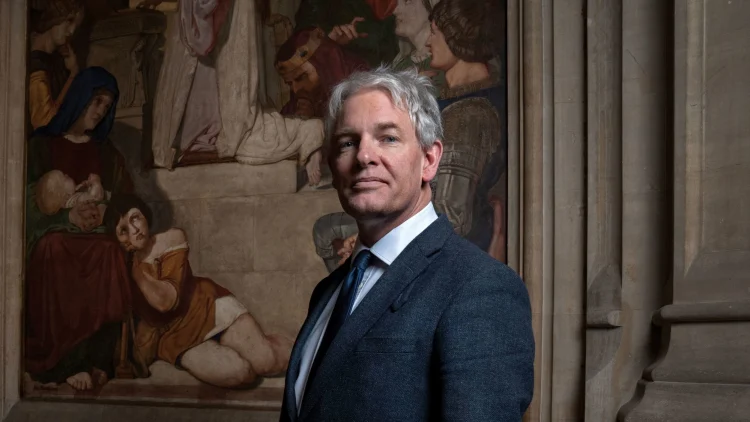

Danny Kruger (Photography by Tom Pilston for The House)

13 min read
Ex-Tory MP Danny Kruger reveals to Sienna Rodgers his plans as Reform UK’s head of preparing for government, from election readiness to pronatalist ambition – and why he fears for Britain if his party makes ‘a mess of it’
A mop of grey hair can be seen bobbing over boxes piled high in a room with walls stripped bare, leaving only hooks missing their pictures. As a pair of podcast hosts stumble out, we shuffle in. Danny Kruger is being kicked out of his parliamentary office.
The Reform MP for East Wiltshire is likely destined for a pokier alternative, somewhere harder to find on the estate. This is his belated punishment, handed down by the whips, for defecting from the Conservatives in September to Nigel Farage’s insurgent party. He was the first sitting MP to make the big leap.
Now tasked with heading up Reform UK’s preparations for government, Kruger says he has “the most exciting job it’s possible to be doing in politics”. So, if there were a general election tomorrow, would his party be ready to govern?
“We’ll be ready when we have to be. There’s not going to be a general election tomorrow,” he replies. “We are getting ready at pace. I would like more time, because I think we will benefit from having our ideas kicked around by more people with expertise.”
With characteristic impishness, he summarises: “The answer to your question is, we’ll be ready when we have to be, but we’ll be readier the later it is.”
His own attention is geared towards the Civil Service, which will see a major headcount reduction under Reform plans. Kruger sets out a private sector-style vision: more people brought in from the outside; ‘high-flyers’ better-paid, with a performance-related element; some recruited for short periods, say six months, to work on a specific task.
Reform will prioritise “people with actual domain expertise” over “these posh generalists who float about from department to department making policy at the moment”, says the Eton-educated MP some would describe as a posh generalist himself.
“A lot of change is coming. Yes, more political appointees, whether they’re spads or civil servants, and a culture which prioritises delivery and genuine subject matter expertise.”
Would his party work with the new cabinet secretary, Antonia Romeo, dubbed “queen of woke” by some conservatives?
“I’m not going to get into individuals, although it’s true to say we are looking at individuals to see who in the current system we expect to work successfully with,” Kruger says. “To get to the top of the Civil Service, it’s quite a bad sign, really. You would have had to really conform to a very, very strict orthodoxy of belief and practice.”
Asked whether a clear-out will therefore be required, he says he is consulting with current and former civil servants to spot talent – or lack thereof – among permanent secretaries (perm secs) and director-generals (DGs).
“Sometimes name me names – ‘Who do you think is good and bad?’ – but mostly, ‘What proportion of the senior civil service, the top 200 perm secs, DGs, do you rate?’” Their answers are “depressing”, he reports.
So, what proportion of the current crop do they categorise as “good”? Kruger spots a journalist’s trap and refuses to give a percentage. “But it’s bad,” he adds.
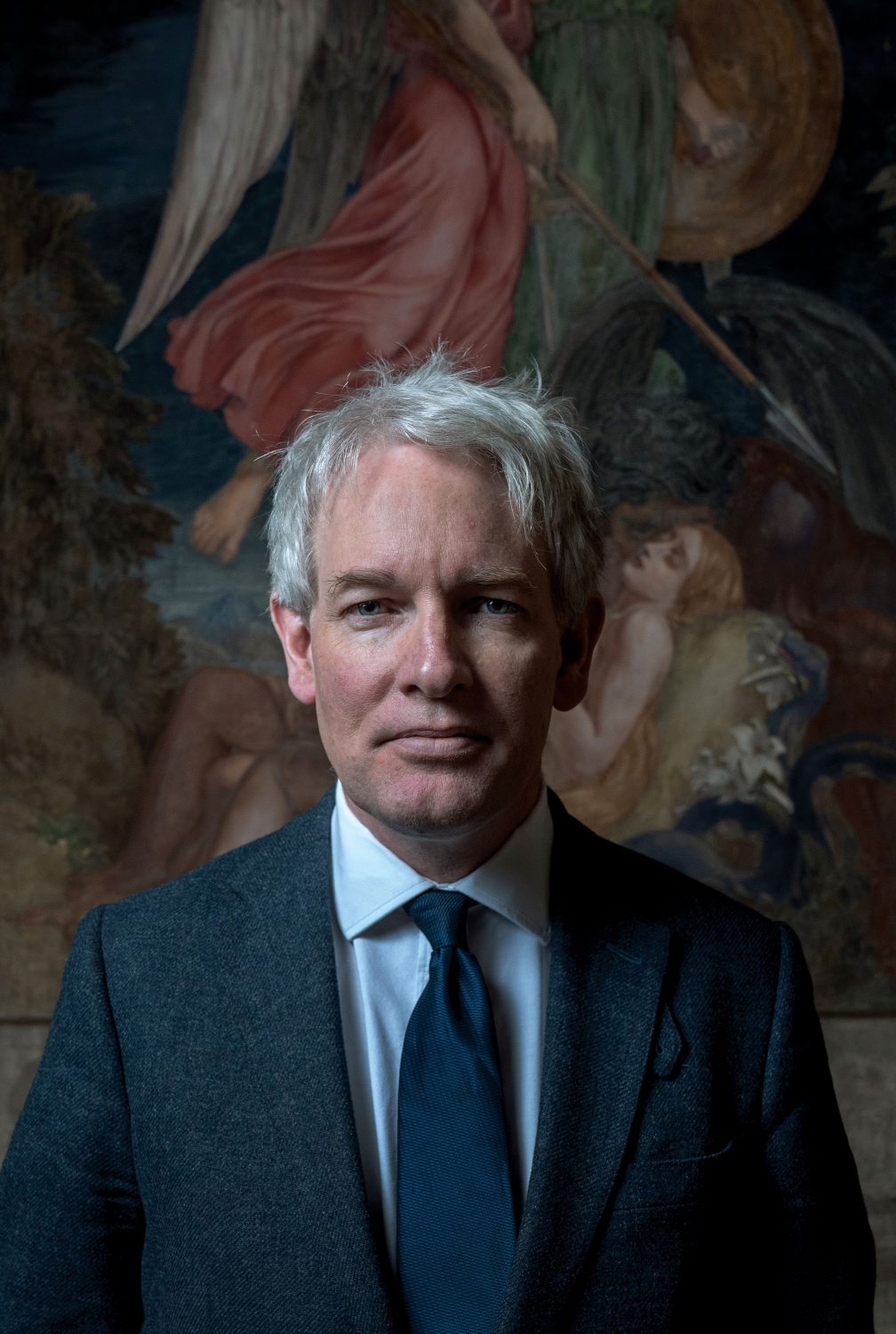
This all sounds very Dominic Cummings, the former chief of staff to Boris Johnson, and an old friend of Kruger. The prospect of him joining the project is dismissed, however.
“I don’t think there’s any chance of Dominic coming on board. Neither does he want to, nor would Nigel have him. I think he’s put himself out of consideration for direct work in government,” Kruger says.
“I don’t talk to him much because he’s not in the Reform camp, but I read his stuff, and I’ve always thought he was wise and prescient.”
Cummings has warned that Britain is sliding towards civil war, claiming that we are “only random viral posts away from riots and prairie fires getting out of control”. Does Kruger agree?
“Yeah,” he replies. The left portrays Reform as “rabble-rousers” who incite division, which could become violence. “The total opposite is the case. The only chance of unity for our country is Reform,” the MP continues. “If we don’t win, or if we win and then make a mess of it, I do fear for our country.”
Life as a small-c conservative has been a pain of late, including under recent Tory administrations. “We fight the long defeat, as Tolkien said. We’re always losing,” as Kruger puts it.
Yet he fully believes that the winds are changing now. The mood of the country has shifted, and those in power, still embracing “the cult of the independent individual” without “any obligations beyond self-gratification”, are lagging behind.
“We’re all realising how empty that philosophy is and how destructive it is of society,” he says. “The Reform slogan is family, community, country. We’re talking about the associations that give us meaning and identity and security and a sense of belonging. I think that’s where the country is now going – away from a doctrine of total liberal individualism.”
“I’ve been hoping for a return to IDS all these years, but I found that in Nigel – he is my IDS”
Kruger, 51, made his start in politics at the Centre for Policy Studies think tank and then as an adviser in the Conservative Party’s policy unit, initially under Iain Duncan Smith. After a stint as the Telegraph’s chief leader writer, he started writing David Cameron’s speeches – including, most memorably, the “hug-a-hoodie” one. He insists his politics have not budged over the years, however.
“I remain quite proud of that speech,” he says, explaining that it was actually very conservative, advocating proper punishment of criminals as well as love for young people at risk of crime. (His embrace of words like “love” is not unusual for politicians driven by their faith – Kruger became a Christian in his 20s, after meeting his wife, Emma – and should not be mistaken for softness of politics.) He left Cameron in 2008 to work full-time on the youth crime prevention charity he co-founded.
“I’ve always been a social conservative. The bits of Cameronism that I approved of, like the Big Society, I still approve of. I was always a Brexiteer.”
He is “probably less of a neocon”, though: “I supported the Iraq War – I regret that.” He regrets, too, supporting parts of the Covid response before later becoming a strong lockdown critic.
“I was the token right-winger in the Cameron team. I was probably most at home, in all of these Tory leaders I worked for, with IDS, in the 2003 era. So, I’ve been hoping for a return to IDS all these years, but I found that in Nigel – he is my IDS.”
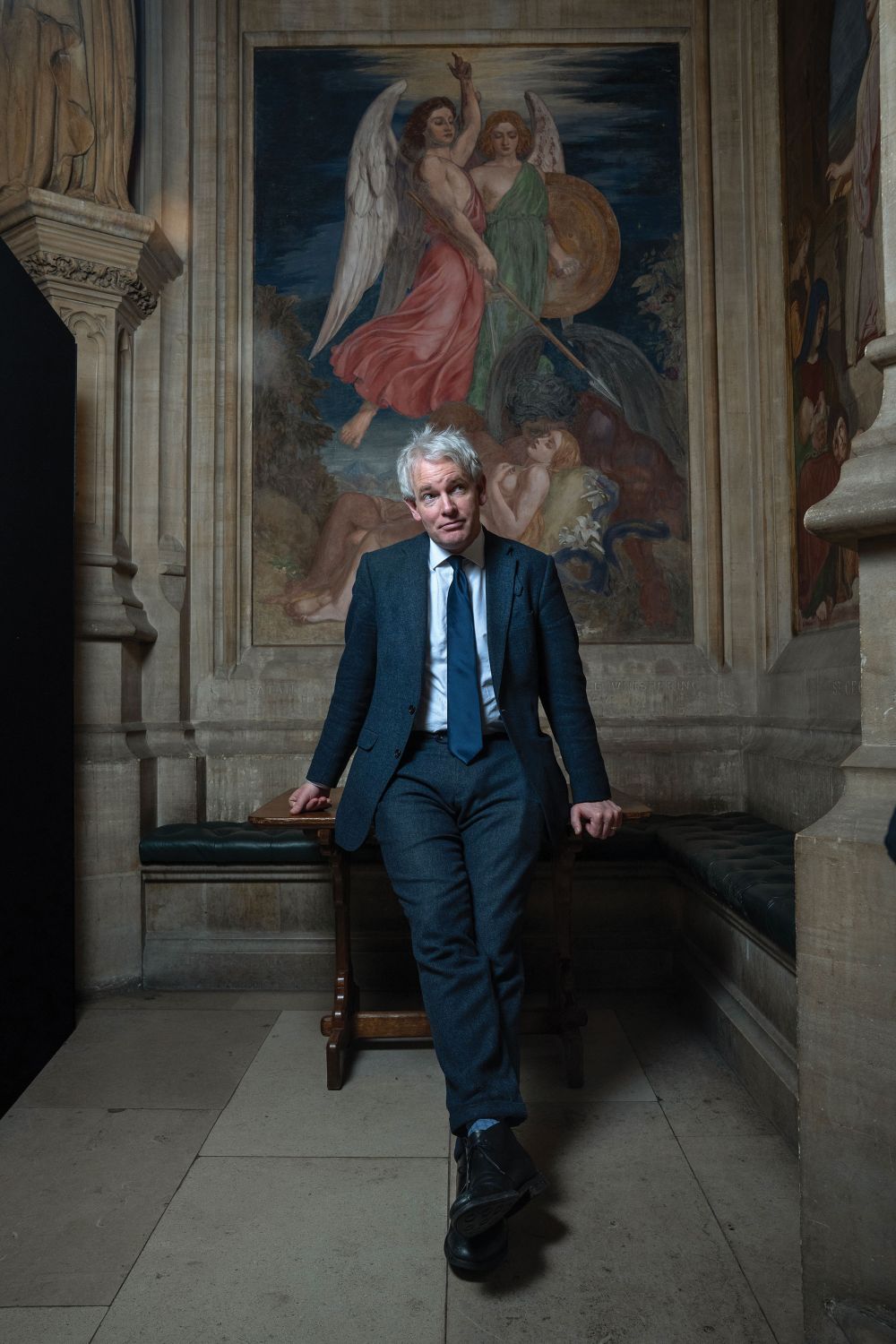
Kruger has been prominent over the last year not only because of his defection but also his opposition to assisted dying.
“My expectation is that they’re going to run out of time,” he says of Kim Leadbeater’s bill currently before Parliament. “While I oppose the bill, and I will oppose any assisted dying bill because I don’t think it’s possible to craft a safe one, you could craft a much safer one than this.” He does not accept that peers have been filibustering to kill the bill.
Kruger’s mother, Bake Off star Prue Leith, has been one of the celebrities at the fore of the pro-assisted dying campaign. They made a documentary together about the subject, through which they came to better understand each other’s views.
“It’s been a bit difficult sometimes, because it matters a lot to both of us, and we haven’t been prepared to stop. She’s committed to the campaign; I’m committed to resisting it. But, no, overwhelmingly, I salute my mum for not minding that I am leading, or one of the leaders of, the campaign to stop her getting her way,” he says. “Neither of us is budging. That’s OK.”
The other big social reform put before MPs recently was the decriminalisation of abortion at any point during pregnancy, via an amendment by Labour MP Tonia Antoniazzi. Unlike the assisted dying legislation, it passed the Commons easily.
“I thought it was a real shame that we did that – as a country, as a Parliament. Again, totally understand the argument for it, but it has sent a very, very strong signal that it is acceptable to abort a viable baby at nine months,” Kruger says. He also argues it has put vulnerable women at further risk of coercion by abusive partners. (Advocates of decriminalisation naturally disagree on both points.)
“The fact it happened the same week as the assisted dying bill just struck me as a very, very dark episode in our national life.”
In Kruger’s 2023 book Covenant, which outlines his conservative communitarian philosophy, he describes sex as being a private act done almost in public, when it should really be a public act done in private. What role does he believe a political party can have in undoing the sexual revolution, or resetting our sexual culture?
“A limited but important one,” he replies. He is clear that every government policy is “critically important to the way families form” and confirms that Reform UK is looking at switching our tax system to be based on households rather than individuals.
“Marriage traditionally was the means by which sexual relations between men and women were regulated, and I think we are suffering from having a totally unregulated sexual economy,” he says.
“I’m not interested in your love life, or anything about your personal life – that is your business. But I am interested in the framework in which you make your decisions, and I’d like the framework to be more pro-social. If you want – most people do want – to settle down with one person to have children, we should make that easier.”
While he is against the 2022 introduction of no-fault divorce, because the landmark change “basically means that your vows don’t matter”, he does not commit to overturning it. “I don’t know whether we’d be able to reverse it,” he says. “I don’t think that would be party policy, to change that.”
It may not include this one, but – with Reform UK figures concerned about our low birth rate – the party is developing a suite of fertility-boosting policies, he confirms: “Yes, we have a pronatalist ambition. We want people to have more children, and we think the government should get behind that wish.”
Expect more from Reform on childcare, for example: “Clearly, the system is totally dysfunctional. There’s a massive disincentive for parents to be able to organise their finances around their actual lives. It’s broken.”
Kruger must be serious about getting into power: he appears to position himself as less right-wing now that he has joined Reform than he did as a Tory.
Asked about his past interest in dismantling the welfare state in favour of the ‘Big Society’, he maintains that the latter was “the best aspect of the Cameron government – except the referendum, of course” and criticises welfare dependence, before pointing out that “we don’t want to dismantle the public services that people rely on”.
Is he remembering his call for “a period of creative destruction in the public services”, which forced him to stand down as a 2005 Tory candidate? “Yes, yes, I don’t want to walk into that one,” he smiles.
“Let’s not pretend otherwise: there is a clear affinity of worldview between the Maga movement and Reform”
As we discuss the British shibboleths that Reform cannot afford to be seen as having any wish to meddle with, Kruger rejects any notion of switching away from the current NHS funding model. Instead, he expands on his view that the real problem is that this country is very sick. He talks of “the principle that there’s often better alternatives than a pharmaceutical prescription or a medical treatment” – so, is he against obesity jabs?
“I’m no expert. I don’t want to wade into a debate where I don’t have the expertise – that doesn’t stop me always, but on this occasion…” Another smile. “Instinctively, I’m suspicious of a solution that seems so easy.” He is “not a caveman” and is “very pro-tech”, yet “shortcuts feel to me to be dangerous. But who am I to object?”
On the subject of Reform’s electoral vulnerabilities, The House probes Nigel Farage’s closeness with President Trump. Is that a challenge for the domestic audience?
“Clearly, Donald Trump is not wildly popular in the UK, and the fact that we have and Nigel has a personal friendship with him, might not be advantageous,” he says.
“On the other hand, I think it reflects well on Nigel that he’s stood by Donald Trump, including when Trump was down, and that relationship is very, very useful, potentially, to the United Kingdom and to a Reform government. And let’s not pretend otherwise: there is a clear affinity of worldview between the Maga movement and Reform.”
Kruger clarifies: “The US is a very different place. We don’t want to mirror their politics. We don’t want to follow everything that the current administration is doing in the UK, far from it. But the US and the Republicans are the best friends this country could have.”
The Reform MP seems genuinely comfortable in his new home. He claims not to know whether more Conservative MPs will follow suit, saying it is “a very personal decision” and “not for me to decide who Nigel would want to have anyway”.
He delivers the pitch anyway: “If you’re an authentic conservative, your patriotic duty is to join Reform – unless you’ve got some massive personal problem with some policy we’ve got, or people. But you shouldn’t.”
So, if Farage’s party forms the official opposition or government, which jobs does he have his eye on? The Department for Work and Pensions, perhaps?
“I would like to start putting in my bids for jobs now, but I won’t. Who knows what Nigel will want from each of us?” Kruger replies, acknowledging that “yeah, social policy is where I feel most expert”.
Could he be in the Cabinet Office – Reform’s Pat McFadden? “The Oliver Letwin of the operation! Again, we don’t know what the structures of government are going to be, what roles will exist, what departments we’ll have. I think there needs to be some machinery of government changes.”
The cabinet, he says, “will look smaller” and Farage has confirmed that the jobs will not all go to MPs, “so there might not be room for me”.
That would seem rather harsh, considering what a significant step he took in defecting. “I might have screwed up by then. My normal trajectory is to do something catastrophic and blow myself up. So, let’s see what I do next.”
Politics
“l will always be that person who arrived here knowing no one”: Lord Dubs reviews ‘Paddington: The Musical’


Paddington Bear: Played by Arti Shah (on-stage performer) and James Hameed (voice/remote puppeteer) | Image by: Johan Persson

4 min read
I went to the theatre vaguely expecting a heartfelt tale of a lost bear, but what I found was something far more profound – and oddly personal
In my 50-year political career, I have sat and listened to words that moved me, uplifted me, entertained me and inspired me, but nothing quite like the words spoken in the Savoy Theatre by a three-foot bear wearing a red hat and a blue duffle coat. Even the best barn-storming political speeches are soon forgotten, and, to use an old adage, become fish-and-chip paper the following day.
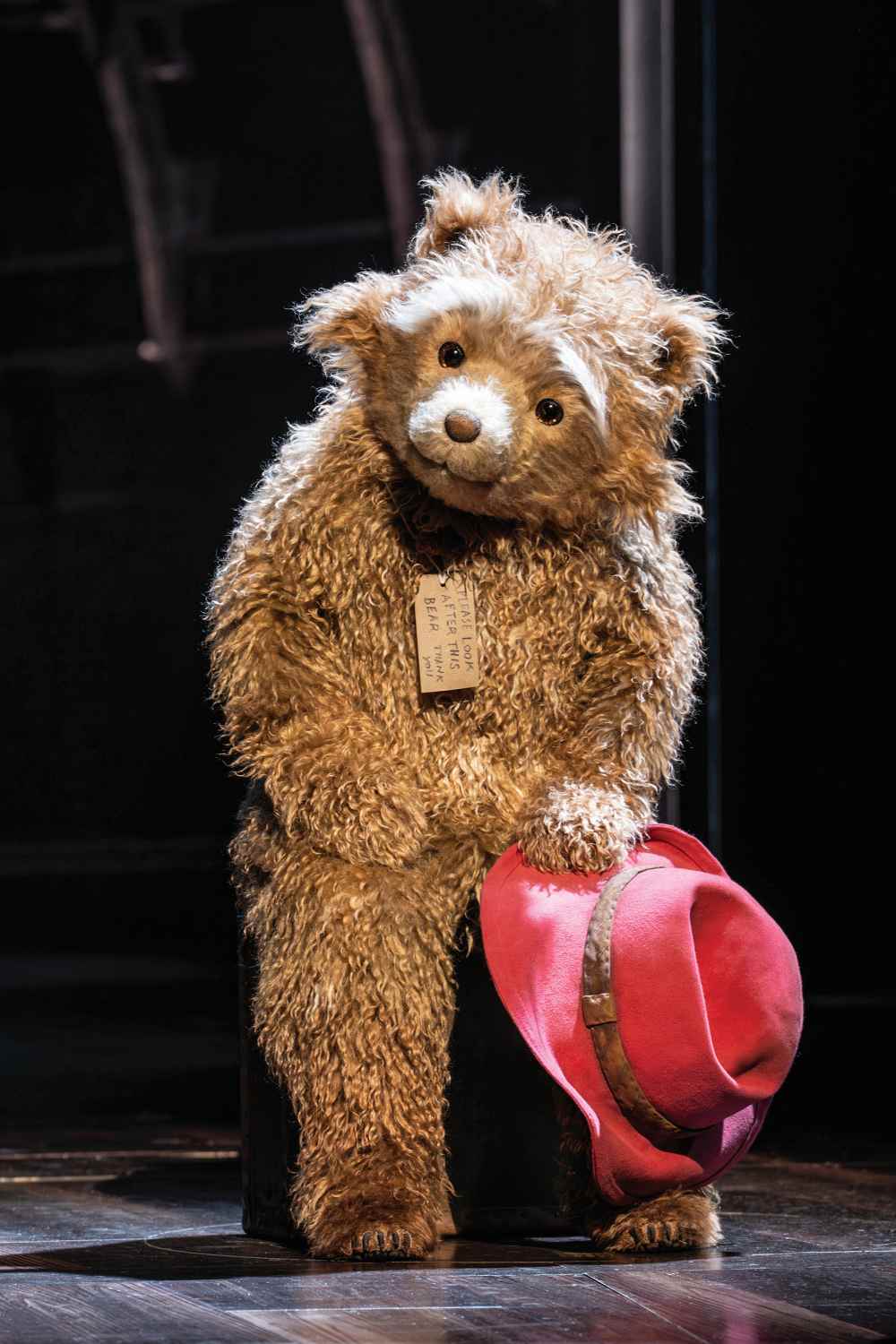
But Paddington does something that we politicians dream of being able to do: he reaches into the hearts and minds of those watching on. And he does it day after day to audiences of thousands who, judging by the performance I was lucky enough to watch, file out wiping tears from their eyes, perhaps a little changed by what they’ve just seen.
I don’t recall the books by Michael Bond having made it onto our bookshelves, so I may have been among just a handful in the audience who really didn’t know what to expect of Paddington the Musical. I vaguely knew it would be a heartfelt tale of a lost bear, but what I found was something far more profound, and oddly personal.
We politicians sometimes make the mistake of using five words when one will do, of dressing our arguments in complicated conceits, of enjoying the sound of our own voices a little too much. Paddington, on the other hand, keeps things simple. “Kindness,” as the musical tells us, “isn’t complicated.” At a time when some like to try to blame refugees, which is of course what Paddington is, for every ill imaginable it’s a message we don’t hear often enough.
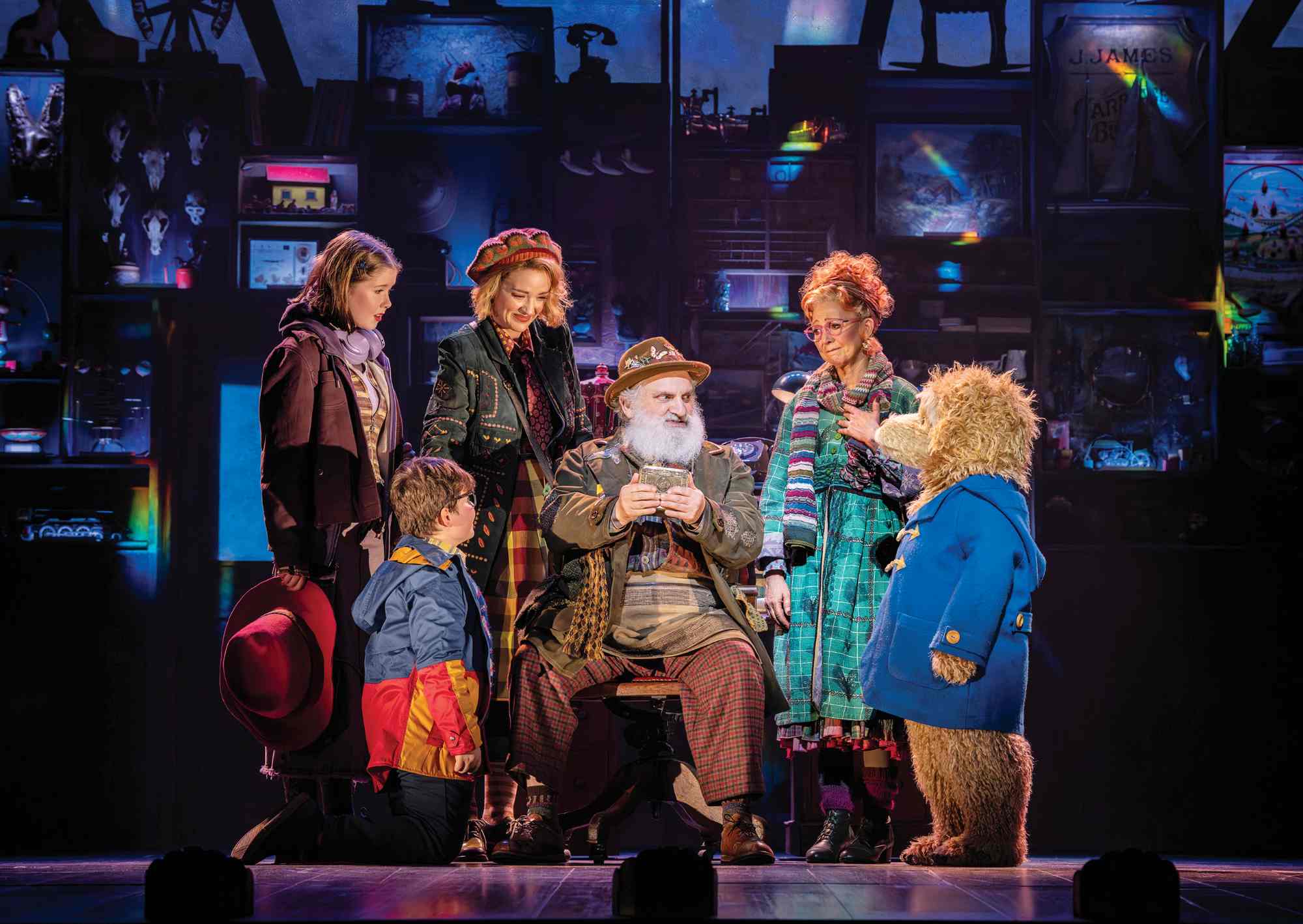
There is a small part of me that will always be that person who arrived here by train knowing no one
Like Paddington, I arrived as a child at a mainline London station as a refugee with a nametag around my neck, hoping to find a way to fit into my new home and feeling somewhat out of my depth. Paddington’s journey involved crossing continents; in that sense, it mirrors the journey of many of the refugees of today rather than my own.

But the story is at pains to remind us of the many layers of migration that have enriched our communities, embodied on stage by Mr Gruber, who we learn arrived from Hungary as a six-year-old boy (the same age I was, and one suspects for the same reason), and Tanya, whose Caribbean warmth and welcome stands in stark contrast to the officious authoritarian figure who tries to object to Paddington settling into his new home. To paraphrase this official, who carries a clipboard and blows his whistle: “You let one bear in, and they’ll all want to come.” (Who does that remind you of?)

It is Tanya, and her son Tony, who introduce another theme that runs throughout the show – a love of London borne of its diversity and tolerance. “There are so many different people in London you can always fit in.” As the cast danced on stage, across the backdrop flashed images of London’s famous sites, from Buckingham Palace to St Paul’s Cathedral, including the magnificent towers of Battersea Power Station, where many years ago I was once the MP.
Even after a life spent in the UK, most of it in London, there is a small part of me that will always be that person who arrived here by train knowing no one.
But in the Savoy Theatre, thanks to Paddington, I was reminded that my story is not to so very different from that of thousands who live here, and that’s exactly what makes me a Londoner, and proud.
Lord Dubs is a Labour peer
Paddington: The Musical
Directed by: Luke Sheppard
Original music and lyrics by: Tom Fletcher
Venue: Savoy Theatre – until February 2027

Think tank Global Trade Alert has warned that the UK is set to be one of the worst hit by a 15% tariff imposed by US President Donald Trump. After seeing his tariff-wargame shut down by the Supreme Court on Friday, Trump has responded by putting a uniform global tariff in place.
The analysis shows the proposed global tariff would be higher than the rate already agreed in the US-UK trade deal. In other words, allies of the US would pay more – while countries like China and Brazil would effectively get a discount on the rates previously applied against them.
Donald Trump’s new 15% global tariff will most greatly benefit countries he has singled out for heavy criticism, including China and Brazil. Long-standing US allies including the UK, the EU and Japan will suffer the largest hit from the new levy. https://t.co/pc8NuchWea pic.twitter.com/h6ZpbPrOr6
— Financial Times (@FT) February 22, 2026
Trump’s ego takes a knock, so retaliation must follow
We wrote on Friday about the US President’s recent setback as the Supreme Court slapped him down over his ridiculous tariff agenda:
The ruling won 6-3. It states that Trump cannot use the excuse of a national emergency to legally impose sweeping, country-specific import taxes.
It immediately invalidates the broad tariffs that Trump imposed last year on nearly all imports. This included so-called “reciprocal tariffs” on many countries, and many additional levies which Trump claimed were due to the fentanyl crisis.
This whole incident follows the Trump playbook: he didn’t get what he wanted, so it’s round two. Only this time, the fallout isn’t targeted – it’s shared. Originally stating a 10% tariff, the president changed his mind and increased it to 15%. Because at the end of the day, Trump only looks out for Trump.
As a result, countries previously targeted by the US, including Canada and Mexico, are set to see savings, while those that have aligned more closely with US interests are expected to be left facing negative consequences when the tariffs are applied.
Andy Haldane, President of the British Chamber of Commerce, told the BBC:
The perversity of what happened of the weekend was that those who got good deals, the allies, have been most disadvantaged.
However, US trade representative Jamieson Greer has insisted that trade deals negotiated with allies would still stand. According to the BBC, the UK’s trade department have been contacted for comment.
Greer told CBS on Sunday:
The deals were not premised on whether or not the emergency tariff litigation would rise or fall. These deals are going to be good deals.
We expect to stand by them. We expect our partners to stand by them.
Nevertheless, others have pointed out that this tariff is unlikely to have any legal weight behind it:
Trump CANNOT legally impose a 15% global tariff because the US doesn’t meet the clear emergency economic conditions envisioned by Section 122. If Trump tries to invoke it, it would certainly face immediate legal challenges, economic pushback, and potential congressional scrutiny. pic.twitter.com/k39Isv99Gb
— Jon Cooper 🇺🇸 (@joncoopertweets) February 21, 2026
Tariff fatigue and confusion
As our own HG wrote on Friday, the President has no qualms about throwing his weight around for his own interests and political agendas:
He has also threatened to deploy his masked ICE goons to disrupt voting – talk about a dictatorship.
Trump doesn’t like being told no – by anyone, let alone the legal system. Before the judgment, Trump said, “We’ll figure something out”. Of course, he will have no intention of following the ruling. When has he ever followed the law? He’s been accused of being a child rapist and is named thousands of times in the Epstein files. He’s hardly going to care about a few import taxes.
As predicted, Trump once again abuses his power to defend his own ego. Meanwhile, other countries scramble to keep up with every U-turn and sudden shift from the far-right US leader. Meanwhile, American citizens might pay the highest price, as Trump’s tariffs send the cost of goods skyrocketing.
As this X account pointed out below:
Despite the Supreme Court’s ruling, Trump says he’ll impose a 15% global tariff via his executive powers.
Once again, foreign countries won’t be paying the cost. You will. pic.twitter.com/DqM6DFbNMv https://t.co/DqM6DFbNMv
— Robert Reich (@RBReich) February 22, 2026
Trump, harming everyday people? Who knew.
Featured image via the Canary
Equity, the performers’ union, has announced it is boycotting the government’s survey in relation to BBC Charter renewal. It says it’s:
unfit for purpose in either detail or scope.
The union points to the survey’s complete absence of workforce consideration or representation, despite longstanding collective agreement arrangements with multiple trades unions which cover tens of thousands of BBC workers.
Equity is also encouraging its members to boycott the survey.
The union’s key criticisms of the survey are:
- Limited themes covered by questions.
- Public responses are to be aggregated by artificial intelligence software.
- Simplistic “agree or disagree” framing.
- Word limits where free text boxes exist, with limits of 50, 250 or 350 words for responses (many questions are almost 200 words long themselves).
- Airbrushing of workforce.
The BBC Charter
The Royal Charter is the constitutional basis for the BBC. It sets out the BBC’s objectives and purposes, as well as how it is governed and regulated.
The government’s survey launched just as parliament went into Christmas recess on 16 December 2025, with the consultation period closing on 10 March 2026. Although Equity is boycotting the survey, the union has actively engaged with other Charter renewal activity.
This includes sharing with the Department for Culture, Media and Sport (DCMS) a formal written submission covering the union’s policy proposals for the BBC – most of which sit outside the scope of the survey – as well as meeting with DCMS officials, BBC representatives and third parties.
Paul W Fleming, Equity’s general secretary, said:
Is the government setting out to do a W1A-esque satire of the Charter Renewal process? Its aim may be to ensure the BBC is accountable, yet this survey seems designed to actively avoid finding out what people think about the broadcaster and its future.
Not only is it restrictive, blinkered, and unfit for purpose in both detail and scope – it is contemptuous of the wide and varied BBC workforce, including directly employed, freelance and commissioned workers.
Creative workers will be dismayed at the missed opportunity to really delve into the purpose, position and possibilities for the BBC. And the fact that responses may be processed using artificial intelligence only adds insult to injury.
For these reasons, Equity is boycotting this survey, and we are encouraging our members to boycott it as well.
There needs to be an expansive consultation into the future of our public service broadcaster which genuinely seeks and listens to the views of the public, including the workers whose careers depend on the BBC.
Equity’s recommendations
Beyond the limitations of the survey, Equity intends to share with DCMS its key demands for a revitalised BBC. Chief among these is the recognition of trade unions as essential partners of the broadcaster to ensure good jobs – for employees as well as freelancers – to drive growth across the UK.
Equity is also asking for:
- A Workforce Covenant recognising that BBC commissioning and operational decisions must respond to the needs of the workforce as well as audiences, and imposing a legal duty to conduct workforce impact assessments and implement mitigation measures.
- A fair distribution of BBC investment across the nations and regions, starting with the Midlands.
- Workforce representation on the BBC Board.
- A substantial and guaranteed level of investment in audio drama series.
- A continuing or returning drama series that films for more than six months of the year in each of the UK’s Ofcom-defined reporting areas.
- An enforceable commitment to abide by an ethical and rights-based approach to AI, including seeking artists’ agreement to any use of generative AI and consulting relevant unions in that regard.
Survey questions
The 32 survey questions are available here: Britain’s Story: The Next Chapter – BBC Royal Charter Review, Green Paper and public consultation – GOV.UK
None of the questions ask about worker representation in the running or decision making of the BBC. The one question about workplace standards (question 5) does not allow a written response, restricting respondents to simplistic tick box answers.
The only direct reference to “those working for the BBC” is in relation to pay, which appears to be a reference to ‘talent’ salaries, ie a tiny minority of highly paid people (question 6).
Featured image via the Canary

There’s something particularly hard about hearing your child has been left out by their friends – perhaps it was a one-off where they sat alone at lunch, or maybe it’s the more pervasive kind of social exclusion where they’re left wondering: why don’t my friends want to play with me anymore?
Whatever it is, as a parent, you probably want to scoop them up and make sure nobody can ever hurt their feelings. But this isn’t possible – and actually, it’s how we support and guide them through these moments that ultimately helps them learn how to cope when future troubles strike.
If your young child’s going through something similar, we spoke to Kemi Omijeh, a BACP registered child and adolescent therapist, about how parents can best support their kids through these tricky social times.
1. Listening to them is crucial
When a child tells you they were left out, listening can be enough in some instances – “we shouldn’t underestimate the impact of listening, particularly active listening,” Omijeh told HuffPost UK.
“This means being fully present to hear what your child is sharing and offering them emotional validation and support.”
It can be very tempting to problem-solve and offer reassurance, but the therapist notes we run the risk of not giving our child’s emotions the time and space they deserve, and also not giving them the opportunity to process and resolve the challenge themselves.
She advises you could offer emotional validation instead, by saying:
- “That sounds really hurtful/sad/upsetting”
- “I can see why you’d feel upset/angry/left out”
- “It makes sense that you wanted to join in.”
2. Show curiosity
If your child opens up to you about feeling left out, gently show curiosity. You could say something like, “I wonder how that made you feel?” or, if they’re visibly upset: “I can see that you are sad telling me this story, were you able to share your sadness with anyone at school?”
“By focusing on emotional validation and giving them the emotional language to express themselves, your child can feel heard, understood, and emotionally held,” said Omijeh, and the experience may pass without needing intervention.
But if you support them through this moment, and the issue persists over a significant amount of time and it begins to impact your child’s day to day activities and emotional wellbeing, an intervention may well be needed – whether that’s speaking to their school or the parents of your child’s friends.
3. Focus on boosting their emotional literacy
To help your child have healthy and appropriate responses to life’s events, Omijeh suggests we can help build on their emotional literacy – the ability to understand, express and cope with emotions.
“In the context of feeling left out or not being chosen, we want to support our children to develop an internal sense of worth, language to express their emotions and advocate for themselves, and the ability to seek solutions where possible,” says the therapist.
Children who have a strong sense of self are less likely to take rejection personally, she adds, so it’s important to work on affirming and celebrating who they are and their interests. Expanding their social world by looking at clubs and special interest activities they enjoy can be helpful in achieving this.
You can also help build their self-esteem by giving specific and positive feedback about the positive things you observe them doing. So, for example: “You’re so thoughtful” or “I noticed that you helped your sister with that task, how helpful”.
You could also help your child explore and practice what they might say in a scenario where they feel left out by their friends. Role playing with toys can support this.
If they keep being left out, what’s the best course of action?
The therapist advises parents to pay close attention to the frequency and patterns of being left out, and then consider the context and ask these questions:
- Is this happening occasionally, or daily?
- Is it one peer, or the wider group?
- Is there teasing, humiliation, or power imbalance?
- Is my child withdrawing more generally?
- Is the school aware? Is it being addressed?
“Gather information with those questions in mind, without interrogating your child; instead create a safe, ongoing dialogue,” she suggests.
“Support your child’s agency and voice by asking them what they think might help?” The therapist adds it’s OK if your child doesn’t have a solution, but it’s important they are asked the question.
Once you’ve acquired all the information you need, speak to the school or childcare setting, focusing on the facts and the impact on your child. You can then invite the school to share their observations and work together to come up with a support plan.

The 2026 Met Gala dress code has officially been announced

Sebi chief Tuhin Kanta Pandey flags big PMS overhaul, to examine new RBI funding rules

Mexican billionaire Ricardo Salinas remains bullish on bitcoin after plunge


-

 Crypto World7 days ago
Can XRP Price Successfully Register a 33% Breakout Past $2?
-

 Video4 days ago
XRP News: XRP Just Entered a New Phase (Almost Nobody Noticed)
-

 Fashion3 days ago
Weekend Open Thread: Boden – Corporette.com
-

 Sports7 days ago
GB's semi-final hopes hang by thread after loss to Switzerland
-

 Politics2 days ago
Baftas 2026: Awards Nominations, Presenters And Performers
-
 Tech7 days ago
The Music Industry Enters Its Less-Is-More Era
-

 Sports5 hours ago
Women’s college basketball rankings: Iowa reenters top 10, Auriemma makes history
-

 Politics6 hours ago
Nick Reiner Enters Plea In Deaths Of Parents Rob And Michele
-

 Business6 days ago
Infosys Limited (INFY) Discusses Tech Transitions and the Unique Aspects of the AI Era Transcript
-

 Entertainment5 days ago
Kunal Nayyar’s Secret Acts Of Kindness Sparks Online Discussion
-

 Video7 days ago
Financial Statement Analysis | Complete Chapter Revision in 10 Minutes | Class 12 Board exam 2026
-

 Tech6 days ago
Retro Rover: LT6502 Laptop Packs 8-Bit Power On The Go
-
 Sports5 days ago
Clearing the boundary, crossing into history: J&K end 67-year wait, enter maiden Ranji Trophy final | Cricket News
-

 Business1 day ago
Mattel’s American Girl brand turns 40, dolls enter a new era
-

 Business1 day ago
Law enforcement kills armed man seeking to enter Trump’s Mar-a-Lago resort, officials say
-

 Entertainment5 days ago
Dolores Catania Blasts Rob Rausch For Turning On ‘Housewives’ On ‘Traitors’
-
 NewsBeat14 hours ago
‘Hourly’ method from gastroenterologist ‘helps reduce air travel bloating’
-

 Politics7 days ago
Eurovision Announces UK Act For 2026 Song Contest
-

 Business6 days ago
Tesla avoids California suspension after ending ‘autopilot’ marketing
-

 Tech1 day ago
Anthropic-Backed Group Enters NY-12 AI PAC Fight