

Politics
Politics Home Article | “We seek not power, but the transfer of power to the Iranian people”

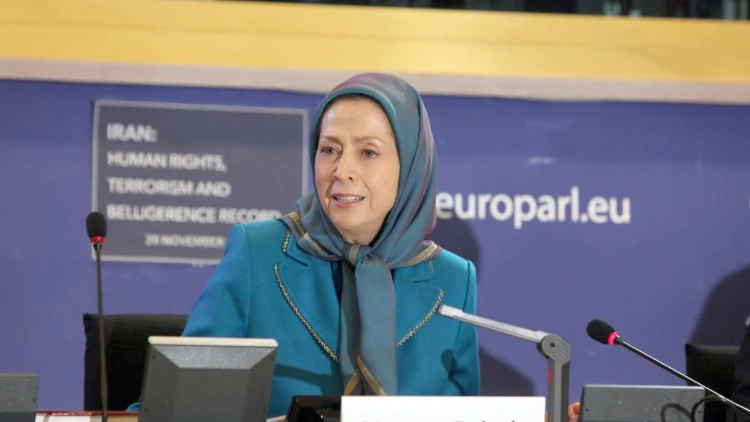

Maryam Rajavi, President-elect of the National Council of Resistance of Iran
As conflict and instability intensify, Maryam Rajavi, President-elect of the National Council of Resistance of Iran, sets out a proposed path from regime collapse to elections, and insists the country rejects both theocracy and monarchy as competing forms of dictatorship
No country in the past 5 decades has been the source of crisis and tension in the region and the world as much as Iran. What is the reason and what is the solution?
Maryam Rajavi (MR): The religious dictatorship in Iran does not belong to the twenty-first century. It is a medieval regime that has neither the capacity nor the will to respond to the demands of its people. The people demand its overthrow, and it can only survive through internal repression, the export of terrorism, and warmongering.
We have always said this regime is unreformable and is seeking to obtain a nuclear bomb, and that if this regime were to abandon these policies for even one day, it would be rapidly overthrown by the Iranian people.
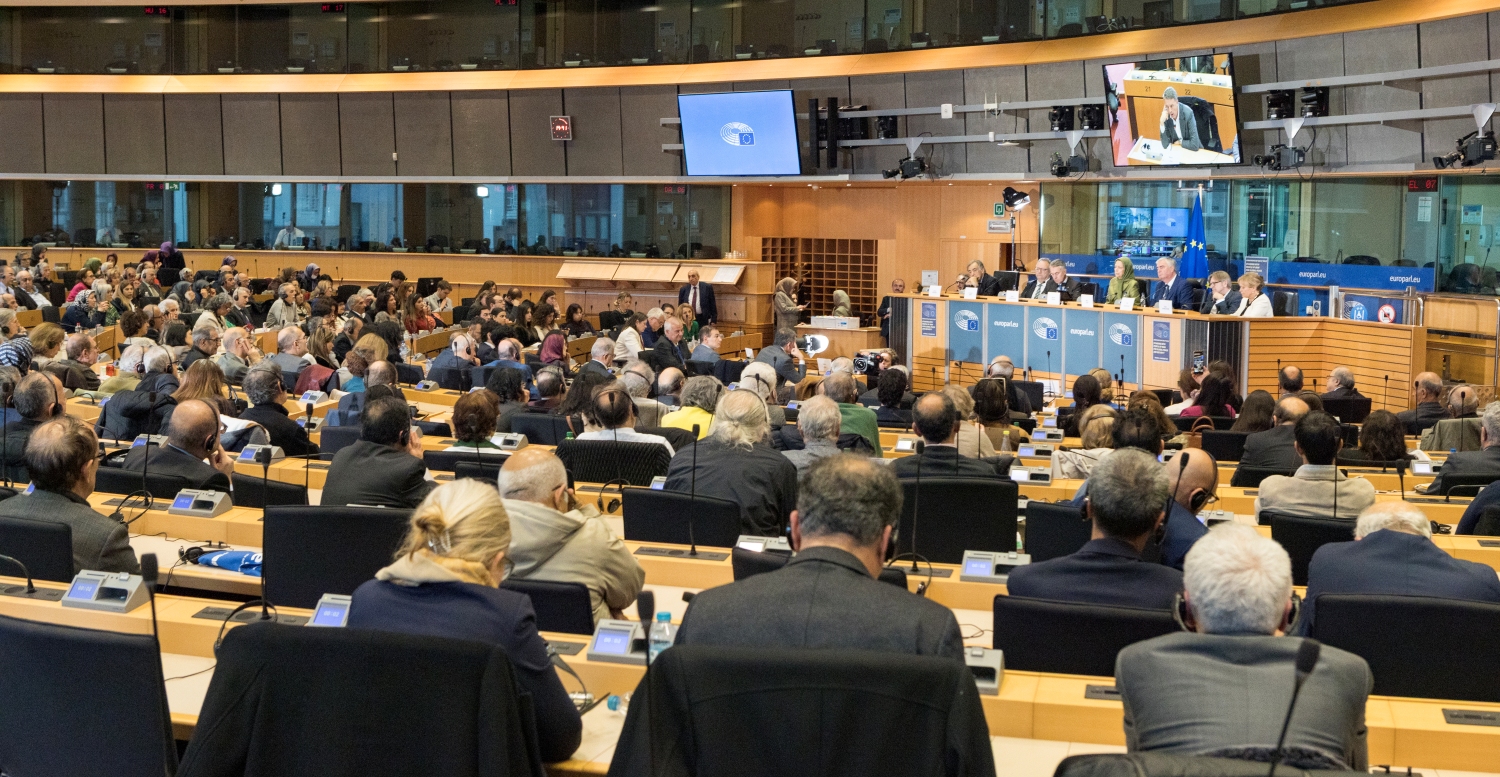
More than two decades ago, I declared in the European Parliament that the solution for Iran lies neither in appeasement nor in foreign war, and I emphasised that appeasement would lead to war – something that has unfortunately come to pass today. Moreover, the current war and the one in June 2025 have shown that foreign war will not bring about regime change. The overthrow of this regime will be achieved by the people and the resistance.
When the regime falls, what will be the next step?
MR: The National Council of Resistance of Iran (NCRI), which is a coalition of democratic forces (opposed to both the Shah and theocracy), has presented a clear roadmap in previous years. The provisional government will begin its work immediately after the overthrow, within the framework of the NCRI’s Ten-Point Plan.
The main task of this government is to hold free elections for a Constituent Assembly within a maximum of six months. Subsequently, the provisional government will resign, and the people’s elected representatives in this assembly will appoint a new government. This assembly will draft the constitution of the new republic.
The Council’s Ten-Point Plan emphasises free elections; individual and social freedoms; complete gender equality and freedom of women to choose their own attire, education and employment; separation of religion and state; autonomy for oppressed nationalities; the dissolution of the Revolutionary Guards and all repressive institutions; the abolishment of the mullahs’ sharia law and the death penalty; a non-nuclear Iran; and peace and coexistence. The provisional government will guarantee the orderly and peaceful transfer of sovereignty to its rightful owners, the Iranian people.
We are not seeking power nor even a share of power. Our goal is to transfer power to the Iranian people
What actions is your resistance currently carrying out inside Iran, and what role did it play in the January uprising?
MR: The People’s Mojahedin Organisation of Iran (PMOI/MEK) is the principal component of the NCRI. It has an extensive network inside the country. The PMOI’s resistance units carried out 4,092 anti-repression operations last year. On 23 February, 250 MEK fighters launched an assault on Khamenei’s headquarters in Tehran, the most heavily protected area in all of Iran.
The PMOI’s resistance units played a key role in organising the uprising and directing its slogans. With their assistance, some cities or neighbourhoods were liberated for several hours or one to two days. In many instances, they led the fight against the repressive forces. They carried out 630 operations against the repressive forces to protect the demonstrators, which contributed greatly to the expansion of the uprising. Two thousand members of the resistance units disappeared during the uprising, and it is still unclear how many were arrested and how many were killed.
In recent days, four MEK members have been executed in Iran. What is the message of these executions?
MR: On 30-31 March and 4 April, six PMOI members, who, along with many more of the organisation’s affiliates, had been sentenced to death, were brutally executed, reflecting the regime’s fear of this resistance.
These criminal executions, carried out in the middle of a war, show that the regime’s primary concern is the uprising and the organised resistance inside Iran. If you look at the regime’s judiciary statement on the execution of these six PMOI members, it explicitly states that they were involved in the uprising and working toward the overthrow of the system.
Currently, a large number of political prisoners face execution on similar charges. The death sentences of several others have been confirmed by the regime’s Supreme Court, and they face execution at any moment.
What evidence is there of the Iranian people’s support for the National Council of Resistance of Iran?
MR: While there is no possibility of a free public opinion survey, the first indicator of popular support is the extent of the resistance. The NCRI is the most enduring coalition in Iran’s history, having continued its resistance against the regime for 45 years without a single day’s pause. More than 100,000 members of the resistance have been executed.
The NCRI, based on PMOI’s intelligence network in Iran, has exposed the most confidential secrets of the regime, including the nuclear sites at Natanz, Arak and Fordow. None of this would have been possible without broad popular support. That is precisely why the regime’s first demand from foreign countries is the restriction of the NCRI and the PMOI.
All members of the movement, and even those who participate in its programmes abroad, are described by the regime as “mohareb,” which, under the regime’s law, can be punished by execution. The regime has organised an extensive demonisation campaign against the resistance at a cost of hundreds of millions of euros.
Why is Reza Pahlavi and a return to monarchy not an appropriate solution?
MR: He represents a deposed regime that ruled through the torture and killing of opponents and notorious secret police called SAVAK, and his father fled the country as millions of Iranians chanted “Down with the Shah.” Not only has he failed to condemn his father’s crimes; he also has taken pride in them.
His platform for the future is the restitution of monarchical dictatorship. He labels oppressed nationalities as separatists and calls for their suppression. The Iranian people have shown through their demonstrations, with the chant “Down to the oppressor, be it Shah or Leader,” that they are strongly opposed to any form of dictatorship – whether monarchical or religious. They want a government based on their own free vote.
Are you a candidate for the presidency in a reformed Iran?
MR: Today, I think only of liberating my compatriots from the religious dictatorship. My main duty is to restore hope and trust in my compatriots and to heal the wounds that this anti-human regime has inflicted on our society. As I have repeatedly emphasised, we are not seeking power nor even a share of power. Our goal is to transfer power to the Iranian people.
More than 1,200 global dignitaries, including former heads of government, ministers, Nobel laureates and lawmakers, endorsed the NCRI’s provisional government and Maryam Rajavi’s Ten-Point Plan.



The following is a statement from the Peace & Justice Project. It concerns the actions of insurer Allianz relating to pro-Palestine activists.
The Peace & Justice Project condemns Allianz and its abhorrent use of legal intimidation against pro-Palestine activists it alleges targeted the company over its insurance of Israeli weapons manufacturer Elbit Systems in Britain.
Allianz is claiming nearly £300,000 total in a civil suit against two groups of activists it alleges damaged the company through separate Palestine Action protests in Guildford and London in 2024 and 2025.
In December 2025, Allianz had requested a lower sum before tacking on a further £200,000 in symbolic damages which the six activists have branded a “protest licence fee”, raising the total to £289,604 plus legal representative costs.
The increased demand came after activists wrote to Allianz’s lawyers asking them to wait for criminal proceedings to conclude before continuing their civil case.
Renée Eshel, a tutor who is one of the Allianz6, said:
Allianz ordering us to civil courts while our criminal cases are pending indicates they are using intimidatory fear tactics to bully us into submission and to deter future activists from exposing their complicity in war crimes through Israel’s genocide of the Palestinian people.
The defendants cannot afford legal representation in the civil case, where the standard of proof required is lower than in criminal proceedings. The Allianz6’s lives would be torn apart if forced to pay the enormous symbolic damages, with the money taken from savings and future salaries – potentially causing lifelong financial distress, despite Allianz reporting a 2025 operating profit of £15.2bn.
Featured image via the Canary
By The Canary
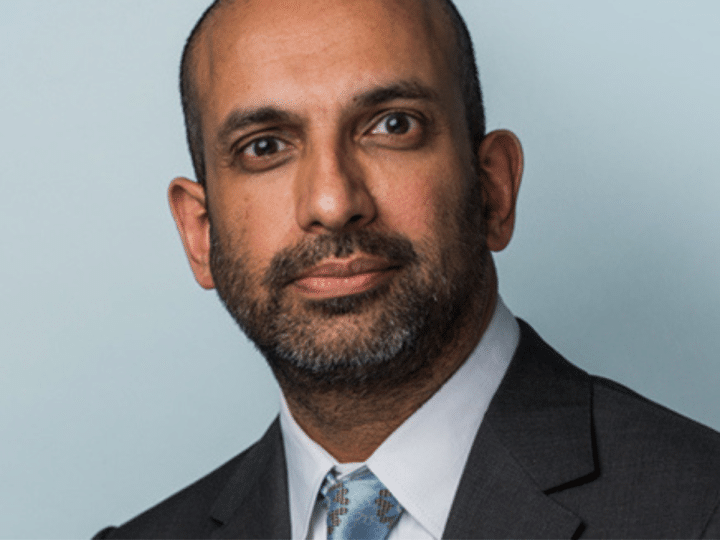

Barrister Rajiv Menon has defeated a judge’s attempt to prosecute him for doing his job of defending Palestine Action activists.
Menon was charged with contempt of court for reminding jurors in his closing speech of their legal right to acquit according to conscience. Mr Justice Johnson had ordered this information to be withheld.
In 2024, Judge Saini threw out an attempt to imprison a pensioner for holding up a sign reminding jurors of this ‘jury equity’ right during a different trial. He derided the idea that informing someone of the law could possibly be contempt of court.
However, this has not stopped the Starmer regime and “rogue judges” from continuing to treat the law as an inconvenience to be prevented and prosecuted.
The appeal court’s ruling this morning is a slap to the Starmer regime and its war on our rights to protect Israel.
Defend our Juries has summarised the Menon case, its outcome and its significance on X.
If a jury decides that the person who stands accused of a crime made the morally correct choice in their actions, the jury can find them “not-guilty”, even if the evidence shows that they did carry out the actions they are on trial for
This has been a legal principle since 1670. pic.twitter.com/TlqD6tBoNC
— Defend Our Juries (@DefendOurJuries) May 12, 2026
The court of appeal ruled today that Mr Justice Johnson had no jurisdiction to refer Rajiv Menon KC directly to the High Court. This was unlawful.
It is no coincidence that this attempt to silence a barrister is connected to activists who disrupted Israel’s genocidal war crimes. pic.twitter.com/oxJWDkwmH0
— Defend Our Juries (@DefendOurJuries) May 12, 2026
Rogue judges are attempting to remove any mention of this principle to jurors, blocking their lawful rights.
Labour is attempting to heavily restrict jury trials, preventing access to fair justice.
The attack on juries is an attack on everyone.
Join us: https://t.co/cE6tKTcXBg pic.twitter.com/9hBzv23PJy
— Defend Our Juries (@DefendOurJuries) May 12, 2026
The regime suffered another blow this week with the refusal of a jury to convict anti-genocide activist Majid Freeman. The government has ordered a retrial and is likely to attempt the same tactic of banning mention of jury equity, despite the clear legal precedent.
The Starmer regime is a police state and a rogue one.
Featured image via Garden Court Chambers
By Skwawkbox


For those living in the UK and looking to create a Safety Net for their families back home (in India), the planning process should include both the day-to-day Health Care Costs that come with common chronic/acute Health Conditions and the catastrophic Financial Impact associated with Critical Illnesses. Although generic Health Insurances generally cover the Cost of Hospitalisation in the event of a Health Condition, generic Health Insurance does not account for the Financial Impact created when a Critical Illness is diagnosed (lost income & ongoing rehabilitation, experimental treatments, etc.). Therefore, Critical Illness Plans India (also known as CI Insurance India) provides an added layer of Protection by providing a lump sum payment upon diagnosis of a covered Critical Illness, which can be used as immediate Liquid Money, as well as for any expense incurred at such time.
Decoding the Core Features of a Superior CI Plan
When considering Critical Illness Plans India from the UK, it is essential to not only look at the Premiums and Sum Insured amounts, but to also focus on the following specifics:
Comprehensive/Defined list of covered ailments: The policy should have a comprehensive list of Illnesses (typically covering 15-30+) that are classified as Major types, i.e. Cancer, Heart, Neurological, Organ Transplant. Ultimately, it is mandatory to review the specific Medical Definitions of the various ailments listed in the Policy Document. Many policies have restrictive definitions, which could delay or deny the payment in case of Critical Illness Diagnosis due to having been diagnosed with an ailment that is not specifically defined.
Payment Structure with Lump Sums: It features upon diagnosing a covered illness that matches the policy’s severity level (e.g. Stage 1 cancer), an insurance provider will pay the entire sum to you as a lump sum with no further tax liability when your claim is paid out as per its terms and conditions. This is considered the most beneficial aspect of having these types of products.
Providing Partial Payments: The best Critical Illness (CI) policies in India provide for initially paying out a portion of the sum (25% – 50% depending upon how many years a person has had coverage) for early (or intermediate) stages of any critical illnesses; such as cancer in situ (early stage) where these patients will require added support to assist with the financial impact during the time they must recover from their critical illnesses.
Survivorship Clause: The majority of critical illness plans include a “Survivor Clause” which generally states that once a person has been diagnosed, they will receive their full amount provided they live for a particular number of days after that diagnosis. Receiving the payouts sooner (or at all) if diagnosed early can be very beneficial for those patients, as it will help them start to recover financially.
Waiver of Premium Payments: Upon having a valid claim, the insurance provider should not charge premium payments for the rest of your family’s life while assisting them through recovery.
Lifelong Renewal Options: When purchasing critical illness products, look for companies that offer options for lifetime renewals. This assures you that as your parents/mother/father continues to age, these options will remain in force.
Leading Providers in the Indian CI Market
Numerous insurers in India have strong critical illness plans in place that support NRIs from the UK. These insurers are those that have strong digital infrastructures and a market reputation.
HDFC ERGO (Critical Illness Plan) – Offers comprehensive coverage, policy wordings, and an advanced digital claims experience, which makes this policy a great selection for NRIs.
ICICI Lombard (Critical Illness Protector) – Has a range of plans that include staged payouts and a solid service network. They would make great critical illness plans for NRIs in the UK.
Bajaj Allianz (Critical Illness Care) – Very well established and provides critically structured plans with staged payouts for certain illnesses.
Max Bupa (now Niva Bupa) and Star Health both provide critical illness riders and standalone critical illness plans. Both have received positive feedback for their high level of customer service.
Conclusion
For NRIs living in the UK, planning ahead for potential critical illnesses is a vital step in protecting family well-being in India. Choosing the right critical illness plans in India ensures your family is financially prepared, allowing them to focus on care and recovery rather than the burden of medical expenses during a health crisis.
Within the framework of NRI health insurance, a thoughtfully selected critical illness insurance policy in India provides a lump-sum benefit that gives families true financial agency. This support enables access to the best possible treatment options while also covering ongoing living expenses, ensuring stability and dignity regardless of the diagnosis outcome.

You might have heard of post-dinner “fart walks,” linked to better cardiovascular health, steadier blood sugar, and better ageing.
Perhaps it would be unkind of me to compare the term to Italy’s time-honoured tradition of ‘passeggiata’ strolling. But some research suggests the benefits are similar.
What is a ‘passeggiata’?
The word literally translates to “stroll”.
It’s an evening walk that some Italians make between about 5pm and 8pm. Some people take it multiple times a day, and certain roads may be more associated with the walk than others.
A passeggiata can be as short as 15 minutes or go on for hours. It’s not usually rushed and might not have a clear “point”: it’s just about the joy of moseying about together.
You might stop and talk to a neighbour or meet up with friends.
Just don’t mistake it for a strict exercise regime, orthopaedic surgeon Dr Gbolahan Okubadejo told Real Simple.
″[Italians] stroll through town or along a beachfront promenade. It’s communal, slow-paced, and intentionally not a workout.”
What are the health benefits of the passeggiata?
We already know that, in general, walking is great for our health. One paper found that people who walk 7,000 steps a day saw a 47% risk reduction in all-cause mortality, with a reduced likelihood of developing heart disease, cancer, type 2 diabetes, dementia, and depression.
But that’s not the only benefit here, especially if you take your passeggiata after your evening meal.
A 2016 study involving people with type two diabetes found that 10-minute strolls after each meal seemed to help to regulate their blood sugar better than walking in half-hour blocks. (All walking can be good for blood sugar, though.)
Walking can also make digesting your dinner easier.
Taking an evening walk can be useful for improving your sleep, too.
Then, there are the benefits of “mindful walking,” which can lower your stress, and/or socialising, which is linked to a longer life and a healthier heart.

Every day, my inbox gets clogged by endless marketing, promotional and publicity emails that make it hard to quickly assess which emails are important and which ones aren’t.
When I started noticing the same marketing email addresses land in my inbox each week, I decided to take action. The Federal Trade Commission requires companies to provide an easy way to opt out of email communications and to honour those requests in a timely manner under the CAN-SPAM Act. In reality, opting out can mean hunting for obscured unsubscribe buttons that are barely legible.
But there’s one quick way to clear up a cluttered inbox that doesn’t involve any scrolling: I used a common Gmail hack to review every subscription my email address was subscribed to to see what I could cut. I recommend that you do the same.
Here’s how: Copy and paste this link in your browser and simply replace the word “inbox” in the link https://mail.google.com/mail/u/0/#inbox with the word “sub.” It should read https://mail.google.com/mail/u/0/#sub. From there, you can see all your subscriptions and unsubscribe from listservs that no longer serve you. Gmail helpfully lists your subscriptions by the number of emails the subscription has sent you, so you can see your biggest culprits.
When I tried this for myself, I focused on the subscriptions that had sent me over 20 emails recently, and discovered marketing listservs that I had no memory subscribing to on my list. Unsubscribing from all these unwanted mailing lists was quick, easy and satisfying.
And the bonus from doing this is that you will free up valuable storage space. Just know that on this Gmail page, the company states that “it can take senders a few days to stop sending messages” once you unsubscribe.
Going forward, another subscription clutter hack is to stop using the exact same email address to sign up for newsletters. Instead, try using an email address alias that Gmail provides. If you add a plus sign after your email address username, all Gmail will still go to that address.
For example, you can do janesmith+beauty@gmail.com and janesmith+news@gmail.com when you sign up for something, and the emails will still go to janesmith@gmail.com. The difference is that with a specific email address for your beauty subscriptions, like janesmith+beauty@gmail.com, you can create a label and filter rule to clearly sort how certain subscriptions to this email address appear, which inbox they go to, and how these emails get deleted or archived.
Or you can stop using your personal email address when subscribing to newsletters. One way to do this is to use iCloud’s Hide My Email feature, which will generate a random email address when you sign up for services in Apple Mail.
The one Gmail subscription tip I don’t whole-heartedly recommend is using third-party unsubscribe tools because of the potential privacy risks, as seen by a 2019 settlement between email unsubscriber Unroll.me and the FTC over allegations that the company deceived users about how it accessed and used personal emails.
“I’d suggest thinking deeply before granting any third-party tool access to your inbox,” said Thorin Klosowski, a security and privacy activist for the Electronic Frontier Foundation. “Any tool designed to unsubscribe you would likely need full access to your inbox to do its job, and unless you’re going to read the company privacy policy, it’s hard to say what it might do with any information it collects.”
“Instead, I’d recommend sticking to the tools already built into your email provider or email app,” he continued. It’s also potentially safer to do this within Gmail or your email provider over “clicking to unsubscribe” on a spammy email you think is suspicious. Software company DNSFilter actually found in 2025 that one in every 644 “unsubscribe” links went to a malicious site.
Reviewing your current email subscriptions on your own takes a few seconds, but it’s not hard to do, and you won’t risk your digital privacy.

Alamy

2 min read
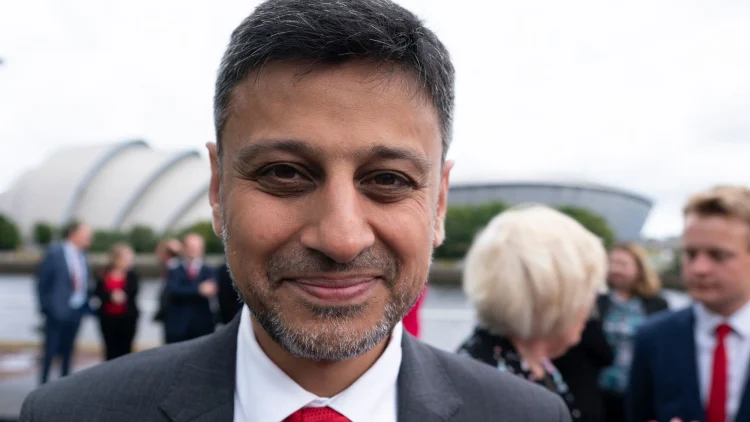
Zubir Ahmed, a junior minister in the department of health and social care, has resigned from government saying he has “irrevocably” lost confidence in the Prime Minister.
The Scottish Labour MP for Glasgow South West has said the “lack of values-driven leadership” at the centre of government has “undermined” his ministerial work in the health deparment.
Ahmed is the fourth minister to resign from the government so far. He was preceeded by faith and communities minister Miatta Fahnbulleh, Home Office minister Jess Phillips and Justice minister Alex-Davies Jones.
The former minister is a close ally of Health Secretary Wes Streeting, who is expected to run for the Labour leadership if Keir Starmer steps down and a contest takes place.
This latest resignation plunges the government into further chaos, taking the number of MPs calling for the Prime Minister’s resignation to 90.
Ahmed said the election results in the Scotland last week were “as intolerable as it was avoidable”.
In the letter, first published by The Guardian, he wrote: “The noise created at the centre of government you lead, inadvertently became the midwife for the delivery of an incompetent fifth term SNP government, and one which will now inflict more division and decay on my constituents of Glasgow South West.”
“Throughout the entirety of my surgical career, I have been guided by the principles of precision, clarity, candour and above all else an aspiration for excellence.
Those are the principles that I have attempted to bring to Parliament and to my ministerial office. And it is those principles that sadly lead me to conclude that yur continuation in office is wholly untenable.”
Calling for fresh leadership, he added: “I will forever be grateful for your decency and tireless work in turning our party around, in inhibiting in us all a sense of national duty before party. You also once said out work is urgent. I now ask you for the sake of that urgency and that national duty, to step aside and set a timetable for an expedient and orderly transition to new leadership that commands the confidence of our country.”

Barry Keoghan has opened up about why we won’t be seeing him in the new season of Peaky Blinders.
Earlier this year, the Oscar nominee played Tommy Shelby’s grown-up son Duke in the stand-alone Peaky Blinders movie The Immortal Man.
However, in the upcoming reboot of Peaky Blinders, set around a decade after the events of the Immortal Man, the character of Duke has been recast for a second time, with Jamie Bell taking over the role in the upcoming episodes.
During a new interview with Variety, Barry explained that he “loved making the movie”, describing the process as an “incredible” one, he confirmed it was his decision not to carry on in the role of Duke, but would not share any more about his reasoning.
“I pick projects quite specifically,” he said. “I carefully, cautiously pick because I just want to enjoy, and I want to heal, I want to tell, I want to find, I want to explore. I want to discover all of those things while I’m making a movie with people who are like-minded.”

Joining Jamie in the new episodes will be Stranger Things star Charlie Heaton will also be joining the line-up in a lead role, along with James Bond star Lashana Lynch and Downton Abbey’s Jessica Brown Findlay.
He is the third actor to play Duke Shelby after Barry, who took it over from Bafta rising star winner Conrad Khan during the show’s original run.
An official synopsis for the new season of Peaky Blinders previously teased: “Britain, 1953. After being heavily bombed in WWII, Birmingham is building a better future out of concrete and steel.
“In a new era of Steven Knight’s Peaky Blinders, the race to own Birmingham’s massive reconstruction project becomes a brutal contest of mythical dimensions.
“This is a city of unprecedented opportunity and danger: with the Shelby family right at its blood-soaked heart.”
Creator Steven Knight also enthused: “I’m thrilled to be announcing this new chapter in the Peaky Blinders story.
“Once again it will be rooted in Birmingham and will tell the story of a city rising from the ashes of the Birmingham blitz. The new generation of Shelbys have taken the wheel and it will be a hell of a ride.”

Sir Ian McKellen has revealed he finally got the chance to watch himself in Cats – and he doesn’t quite understand what all the hate was about.
The six-time Olivier winner was among the star-studded cast of Tom Hooper’s ill-fated adaptation of the classic stage musical, which was savaged by critics upon its release in 2019.
Back in 2024, Sir Ian claimed that he’d still not had the chance to watch Cats all the way through, but during a more recent interview with Magic, he revealed he’d recently been won over by the movie when he caught it by mistake.
“The other day, I did chance upon myself singing in the film of Cats,” he recalled. “And I played through the song and I thought, ‘well, that’s better than what most people thought of the film – what was wrong with that?’.”

When the interviewer pointed out that she “didn’t hate Cats”, he responded: “Who knows – maybe other people will be allowed to discover it.”
“But,” the Oscar nominee continued. “I did make the mistake of reading the comments after.
“I’m my own worst, or best, critic. There are very, very few performances I’ve given that I would give a big tick to.”
During an interview with USA Today, Sir Ian said that he and co-star Dame Judi Dench had a “lovely time” making Cats.
He claimed at the time: “I haven’t actually seen the complete version of the film – I saw it before we had ears and tails put on.
“It probably would’ve been better if they hadn’t had those additions.”
Sir Ian was previously full of praise for Cats when he told his social media followers that he’d watched a “final cut” in December 2019.
The Lord Of The Rings star wrote on Facebook: “A confession: I’ve never been a fan of cats. Dogs for me every time, to look at and be friends with. But I’ve just seen the final cut of the imminent Cats movie and I’m a convert.”
Other members of the Cats cast have been less effusive about the film, with James Corden and Rebel Wilson raising eyebrows at the 2020 Oscars when they appeared on stage dressed as their characters to mock the movie’s special effects – getting on the wrong side the Visual Effects Society in the process.
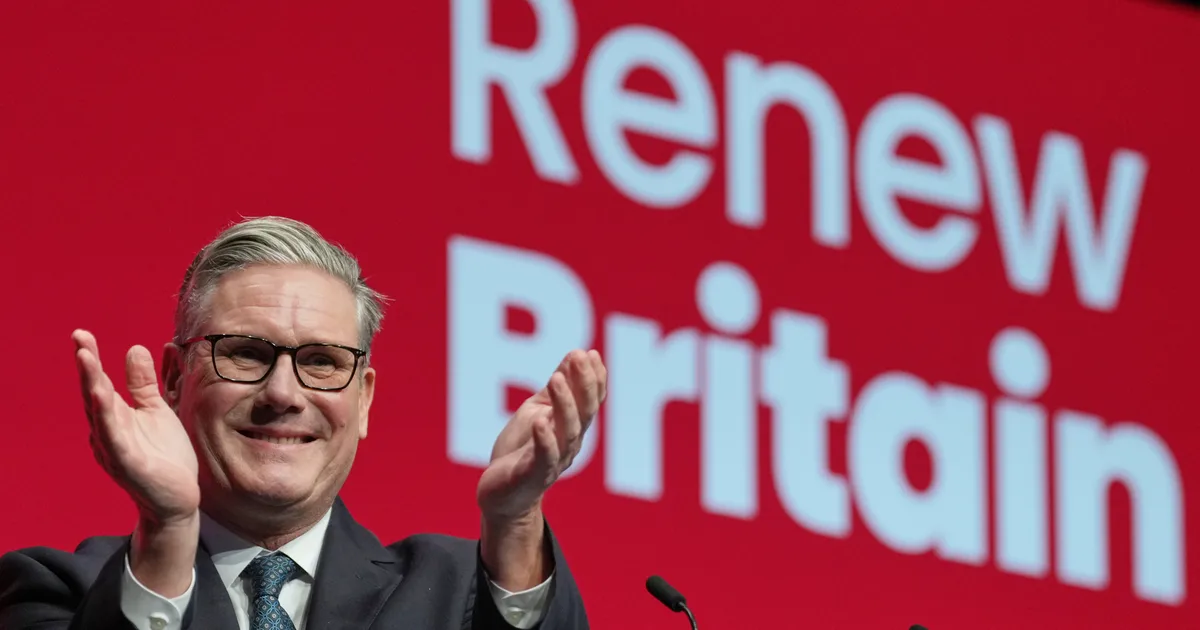
More than 100 Labour MPs have signed a letter of support for Keir Starmer amid rising calls for him to quit.
It comes after more than 80 MPs called on the prime minister to resign, while three ministers quit and urged Starmer to set out a timetable for his departure.
According to the Guardian, the statement said: “Last week we had a devastatingly tough set of election results. It shows we have a hard job ahead to win back trust from the electorate.
“That job needs to start today – with all of us working together to deliver the change the country needs.
“We must focus on that. This is no time for a leadership contest.”
The party has been in turmoil after voters gave it a beating in the elections in England, Wales and Scotland last week.
Rebellious MPs claim this proves the electorate clearly do not want Starmer to stay in office.
However, the prime minister has insisted he will not walk away from office.
He told his cabinet this morning: “The Labour Party has a process for challenging a leader and that has not been triggered.”
The only way for MPs to trigger a leadership contest is for 20% of the Parliamentary Labour Party to back a clear challenger – that works out to 81 MPs.
No one in parliament has yet challenged the prime minister, even though his expected rivals – including health secretary Wes Streeting – are circling.
Subscribe to Commons People, the podcast that makes politics easy. Every week, Kevin Schofield and Kate Nicholson unpack the week’s biggest stories to keep you informed. Join us for straightforward analysis of what’s going on at Westminster.
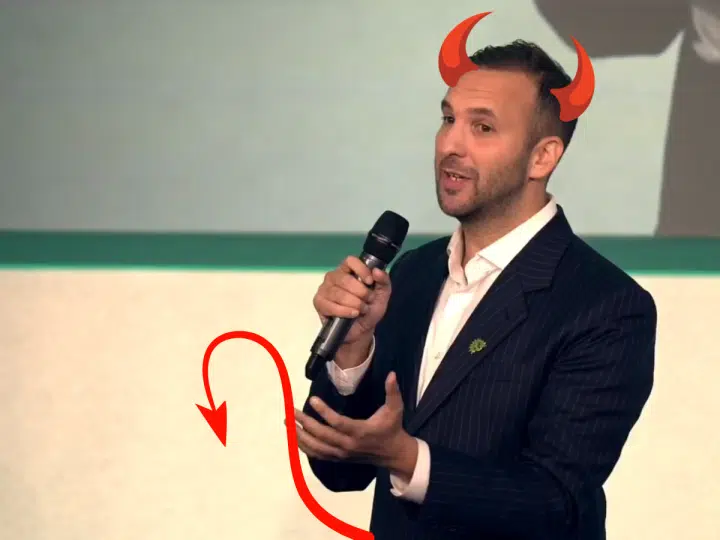

Zack Polanski may have underpaid council tax on his houseboat in London, but he “apologises sincerely for the unintentional mistake”.
The Times originally broke the story, which hinged on the supposition that Polanski and his partner had spent the last three years living, primarily, on a houseboat in the Lee Valley Marina in Waltham Forest.
If the boat was their main residence, the pair should have been paying council tax on it. This appears not to have been the case. However, if it wasn’t their main residence, Polanski shouldn’t have been registered to vote in the area. In fact, this could even be a breach of electoral law.
The Green leader’s team told the Times that he only lived on the boat “occasionally”. They also said that Polanski’s council tax was “included in the rent he pays his landlord” on the property (likely) in Hackney. This is irrelevant to any potential tax on the boat itself.
Zack Polanski and some Nancy Drew shit
Dan Neidle, founder of Tax Policy Associates, broke down further points in the case:
- Mr Polanski was registered to vote at a bungalow next to the Marina. Nine people were registered at that address – most of them didn’t live there, but lived on boats moored at the marina, and used the bungalow as a postal address (presumably given the practical difficulty of getting post delivered to a boat).
- Mr Polanski is currently registered to vote in Hackney, but doesn’t appear to have been registered there during the three years he owned the boat – at that time he was solely registered to vote at the marina (which is in Waltham Forest).
- He told The Times that he rented a room as a lodger at an unstated other property (believed to be in Hackney).
- A local launderette collected Mr Polanski’s laundry every two-to-three weeks (and local sources have told us that it was an amount of laundry suggesting regular occupation, not just occasional visits).
- We understand from local sources that Mr Polanski was frequently seen in the area around the marina.
Another narrowboat at the marina was at one point registered for council tax. Mr Polanski’s boat never was.
Pointing out that Neidle is a card-carrying Labour Party member here would be a cheap shot. It’s also irrelevant – he’s right about the tax parts.
We will, however, gladly poke the absolutely sterling detective work here. It seems to have involved walking around the marina asking launderette owners about the politician’s very literal dirty laundry. That’s some real-life Nancy Drew shit.
The gotcha…
Polanski’s team originally gave two responses.
First, they said that he “stays there only occasionally”. That contradicts the other known facts. It also suggests Mr Polanski breached electoral law, by registering to vote somewhere where he was not in fact resident. That’s potentially a criminal offence. We don’t think that’s what happened – we think his team misled The Times.
We’d be terribly interested whether “the other known facts” includes the reckonings of the launderette owner and the passersby in the Marina area. Just, you know, out of purely academic interest.
While we’re at it, the same also goes for whether calling the boat “our amazing home” in an advert counts as admission of residence. Or if that’s, you know, a turn of phrase in an advert.
That being said, and for the avoidance of doubt – if Polanski owes council tax, he should damn well pay it. However, he’s already said that he intends to:
Until relatively recently, Zack was living on a houseboat, which came with its own unique practical circumstances and considerations. He has immediately taken steps to pay any council tax he may be found to owe.
Zack apologises sincerely for the unintentional mistake.
For security reasons, we do not comment publicly on Zack’s address. There have recently been two serious incidents which have been reported to the police and are under investigation.
Selective reporting at the BBC
Likewise, Neidle also wrote that:
Discussions of politicians’ tax mistakes are often accompanied by calls for police investigations and prosecutions. In this case, and most others, such calls would be misplaced. There is no reason to believe that Mr Polanski’s failure to pay council tax was intentional or dishonest.
Somehow, the likes of the BBC managed to quote Polanski saying the underpayment was unintentional, but left out the same statement from Tax Policy Associates. It’s funny, that.
In a similar vein, the national broadcaster left out the amount that Polanski underpaid by. This is odd, because the Beeb was very much concerned with the £40,000 that Labour’s Angela Rayner missed on her stamp duty. Fortunately, that information was also available in Neidle’s analysis:
We expect the boat and mooring would be in Band A, meaning a total council tax for three years of around £4,000.
Again – £4,000 isn’t nothing, we’re glad it’s getting paid if it needs paying, etc etc.
However, it’s also a hell of a lot less than Farage’s tens-of-thousands tax dodge, i.e., buying his Clacton house in his partner’s name. Or Farage’s £5m undeclared ‘gift’ for security purposes. Or Farage getting paid for GB News work via a company he owns in order to avoid income tax.
Sound the alarms
It’s not so much the content of the Times story, or even the BBC’s recount of it, that’s pissing us off.
Rather, it’s the fact that the establishment media are desperately scraping the barrel for a smoking gun on a desperately inoffensive, lib-turned-leftist, Zionist-turned-anti-Zionist politician.
Meanwhile, commentators from Kuenssberg to Starmer have tried to compare him to far-right Farage for being… popular? Sound the alarm, somebody please – the devil has entered British politics.
If Polanski were any more of a picturesque caricature we’d genuinely think he was fictional. Did you know he’s meant to have lived on a houseboat with his boyfriend until recently?
Featured image via the Canary

Linthorpe Road cycle lane in Middlesbrough now fully removed

Mark Zuckerberg New META AI Predicts the Price of Bitcoin by The End of 2026

After 32 Years, ‘The Crow’ Remains the Iconic Gothic Revenge Thriller Against Which All Others Are Judged

Manchester United reach agreement with Casemiro over contract clause amid transfer speculation

US brings back mandatory military draft registration

Steven Gerrard disagrees with Gary Neville over ‘shock’ Chelsea and Arsenal claim | Football

XRP Ripple Believe IT or NOT, XRP USE CASE ONLY FLARE Delivers, SBI LEADS with XRP CANTON SOLANA ETH

$30,000 XRP BUYBACK WON’T HAPPEN! – DTCC IS JUST ONE XRP SWITCH – BRAD SAYS IT ALL CONNECTS TO XRP!

Tom Lee: Bitcoin is Headed to $200,000 And It’s Happening NOW!
-
 Crypto World4 days ago
HarrisX Poll Found 52% of Registered Voters Support the CLARITY Act
-

 Fashion4 days ago
Weekend Open Thread: Marianne Dress
-

 Crypto World5 days ago
Upbit adds B3 Korean won pair as Base token gains Korea access
-
 NewsBeat5 days ago
NCP car park operator enters administration putting 340 UK sites at risk of closure
-

 Fashion23 hours ago
Coffee Break: Travel Steam Iron
-

 Fashion2 days ago
What to Know Before Buying a Curling Wand or Curling Iron
-

 Tech2 days ago
Auto Enthusiast Carves Functional Two-Stroke Engine from Solid Metal
-

 Politics18 hours ago
What to expect when you’re expecting a budget
-

 Politics3 days ago
Politics Home Article | Starmer Enters The Danger Zone
-
 Business3 days ago
Ignore market noise, India’s long-term story intact, say D-Street bulls Ramesh Damani and Sunil Singhania
-

 Tech1 day ago
GM Agrees To Pay $12.75 Million To Settle California Lawsuit Over Misuse Of Customers’ Driving Data
-

 Crypto World6 days ago
BlackRock CEO Larry Fink Discusses a New Asset Class
-

 Entertainment5 days ago
Sarah Paulson Called Out For Met Gala ‘Hypocrisy’
-
 Sports6 days ago
NBA playoff winners and losers: Austin Reaves is not loving Lakers vs. Thunder matchup, but Chet Holmgren is
-

 Entertainment6 days ago
Bold and Beautiful Early Spoilers May 11-15: Steffy Revolted & Liam Overjoyed!
-

 Entertainment5 days ago
General Hospital: Ric & Ava Bombshell – Ric’s Massive Secret Exposed!
-

 Crypto World6 days ago
Robinhood says Wall Street is building onchain
-

 Politics5 days ago
Simon Cowell Says He Was ‘Horrible’ To Susan Boyle During BGT Audition
-

 Sports5 days ago
UEFA Champions League final schedule, teams, venue, live time and streaming | Football News
-

 Tech7 days ago
Apple and Samsung are dominating smartphone sales so thoroughly that only one other company makes the top 10
You must be logged in to post a comment Login