

Politics
Politics Home | Getting cybersecurity on track: How to protect rail in the transition to Great British Railways



Credit: Adobe
As Britain’s railways move into public control under GBR, digitisation is transforming how the network runs. But with more connected systems comes greater cyber risk. With 1.7 billion passenger journeys a year, government and industry must embed cyber resilience into procurement, skills, incident learning, and cross-sector collaboration from day one.
Britain’s railways are changing more rapidly than at any point in a generation. The creation of Great British Railways (GBR) moves the operation of trains from private train operating companies into the hands of the state as franchises expire.
Earlier this year, we saw the first GBR rolling stock down in Brighton. But behind the red white and blue paint, the operation of trains is changing too, with increasing digitisation of passenger information systems and operational technology.
A modern rail system is a good thing – but it brings new cyber challenges. Around the world, cyberattacks on rail infrastructure have caused serious disruption, such as in Germany, Israel and Denmark. In the UK, we need to guard against weaknesses as we transition to GBR, with over 1.7bn passenger journeys a year. Suddenly, the risk is owned by government, not private companies.
Analysis commissioned by the Department for Science Innovation and Technology found a hypothetical systemic cyber incident on the rail network could result in a total economic cost of approximately £1.8 billion for a week’s period of disruption. Meanwhile, the National Cyber Security Centre (NCSC) continues to report a sharp rise in serious cyber incidents affecting the UK’s essential services and wider economy, underlining a growing risk to critical national infrastructure like rail.
As the network becomes more digital, keeping trains moving safely and reliably increasingly depends on the resilience of the cyber systems that protect them. The transition to GBR presents a series of new challenges from procurement to skills and it is vital that GBR equips itself to be fit for the future. In Fortinet’s recent report on this subject, four key recommendations emerged.
The first is to establish a national cybersecurity incident reporting and learning system for the rail industry. Too often, organisations learn only from incidents that happen within their own network. Yet cyber threats rarely respect organisational boundaries. The NHS’s patient safety reporting framework is a model for how lessons from incidents and near misses can be captured centrally and shared quickly across an entire sector. The transition to GBR presents an opportunity to embed that culture of continuous learning from the outset, helping operators identify systemic vulnerabilities before they become major disruptions.
Second, cybersecurity must become an integral part of procurement rather than an afterthought. In Great Britain, passenger rolling stock typically has a service life of around 30–35 years, with some fleets already over 30 years old, meaning that contractual choices made now will shape the network’s cyber risk profile for a generation. Decisions taken today about rolling stock, signalling systems and operational technology will shape the railway for decades to come. If cybersecurity expertise is absent when those decisions are made, vulnerabilities can become locked into infrastructure with long asset lifecycles that are difficult and expensive to remedy later. Great British Railways offers the chance to make “secure by design” the default principle for procurement, ensuring resilience is built into every new system from the beginning rather than bolted on afterwards.
Third, the sector must address the growing cyber skills challenge. The National Skills Academy for Rail (NSAR) estimates that up to 75,000 workers could be lost to retirement or attrition by 2030, with acute shortages already emerging in areas such as digital signalling, data, and systems engineering. Yet the future railway depends on professionals who understand both operational rail systems and modern cyber risk. Those hybrid skills remain in short supply. A dedicated rail cyber skills taskforce could help coordinate training, attract new talent and ensure the workforce develops alongside the technologies it will be responsible for protecting.
Finally, we need stronger collaboration across critical national infrastructure. The convergence of information technology and operational technology means that cyber resilience can no longer be considered in isolation by individual organisations. Transport operators, infrastructure managers, technology suppliers and Government all have a role to play in identifying emerging threats and sharing best practice. Trusted cybersecurity partners should be a central part of that collaboration. Building on NCSC Information Exchanges, sector specific working groups for major transport modes (rail, aviation, maritime and road) should coordinate cyber risk assessment, set shared resilience standards, run joint exercises and report regularly to ministers on emerging threats and recommended actions. This should, in time, be extended to critical national infrastructure sectors such as energy and health.
The Cyber Security and Resilience Bill, being debated in Parliament today, is an important step forward in setting a modern and updated legal framework, but it is only the start. By pairing clear statutory duties with an industry-wide learning culture, secure-by-design procurement, a skills pipeline that reaches every region and an open door between Government and industry, we can turn GBR into a global benchmark for safe, digital transport.
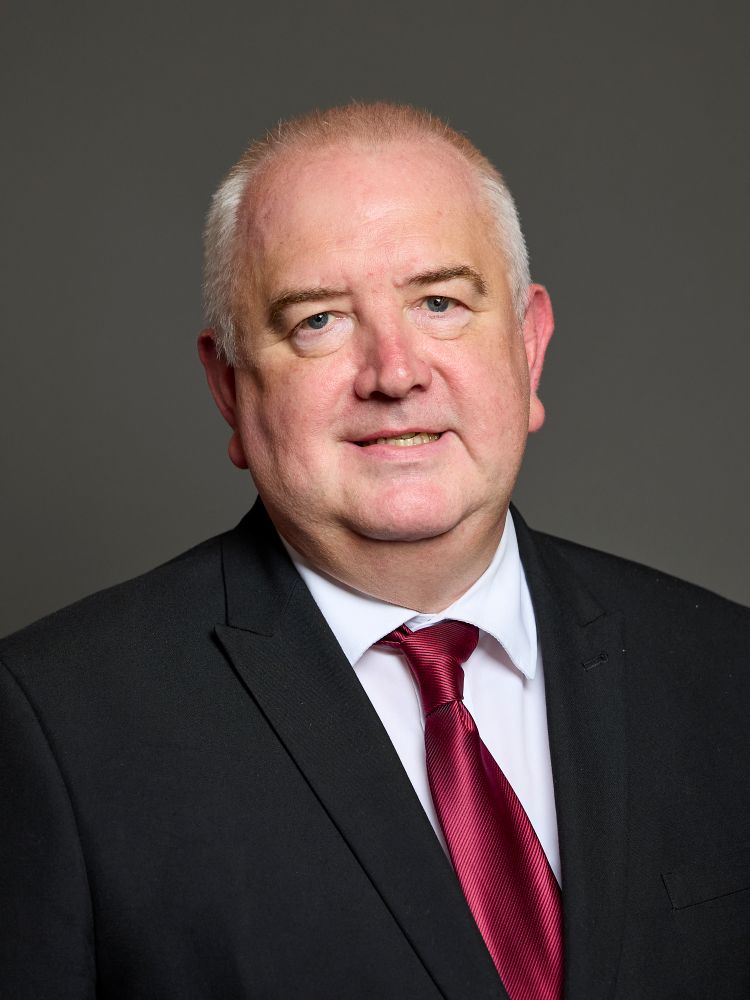
Martin Rhodes, Member of Parliament for Glasgow North.

Chris Parker MBE, Director of Government Strategy at Fortinet.


Lebanon — On the road to Tebnine we passed through the village of al-Mashouk. On one side of the road, which fell sharply into the valley below, was the empty shell of a modern building that had contained four stories — now above and below the carriageway. The bomb, which had destroyed it, had been powerful enough to set fire to homes and businesses on the other side of the street. Also writing off a Civil Defence fire appliance parked nearby.
South Lebanon health sector
This area — south of the southern city of Tyre — is sparsely populated with many remote low-income farming communities. It is the kind of rural area that has been hit particularly hard by the ongoing financial crisis that has crippled Lebanon since 2019. So, the people here rely on humanitarian organizations to fill the gaps in primary health care.
This building had been home to several specialist clinics and numerous offices. It had been a hub for mobile healthcare where ambulances and mobile clinics, often staffed by volunteers, were coordinated to serve the locality. A place where programs for mental and physical health education were formulated along with vaccinations, maternity care, dentistry and other specialist services. It was also run by the Hezbollah-affiliated Islamic Health Authority, which had sealed its fate.

This organisation was established in 1984 during Lebanon’s nightmarish civil war. It has a charitable status recognised nationally and internationally. It runs an estimated ninety-five clinics across the south and Bekaa Valley — and is seen as a key component of the social work that cements the popularity of Hezbollah in poorer areas.
The Israelis claim that such projects, and their associated buildings and ambulances, are being secretly used by Hezbollah to transport and store weapons — making them a military target. As with similar accusations made against hospitals in Gaza, no evidence has been produced. There was certainly no sign of any military equipment among the furniture and patient records strewn among the rubble of this particular bomb site.
South Lebanon — central war-zone
Twenty kilometres along the road we reached our destination. The town of Tebnine sits in the centre of South Lebanon. Just one kilometre away, across the valley, the Israelis occupy the hilltops. Post-ceasefire, the town shakes several times a day as the occupiers demolish villages on their side of the yellow line with hundreds of tons of explosives.
The Tebnine Governmental Hospital serves the Bint Jbeil district, which saw the fiercest fighting right up until the recent ceasefire. Its staff, who continued their life-saving work through one hundred and ten days of intense bombardment, are the stuff of local legend.
The visibly damaged hospital stood amid the rubble of multiple airstrikes. The security guard’s booth — by the entrance — was burnt out along with a vehicle used for delivering blood and documents. The outside walls were peppered with the shrapnel of multiple blasts, and the solar panels lay smashed upon the roof. Most people here agree that the presence of international Red Cross staff was possibly what prevented it from being targeted for direct hits.
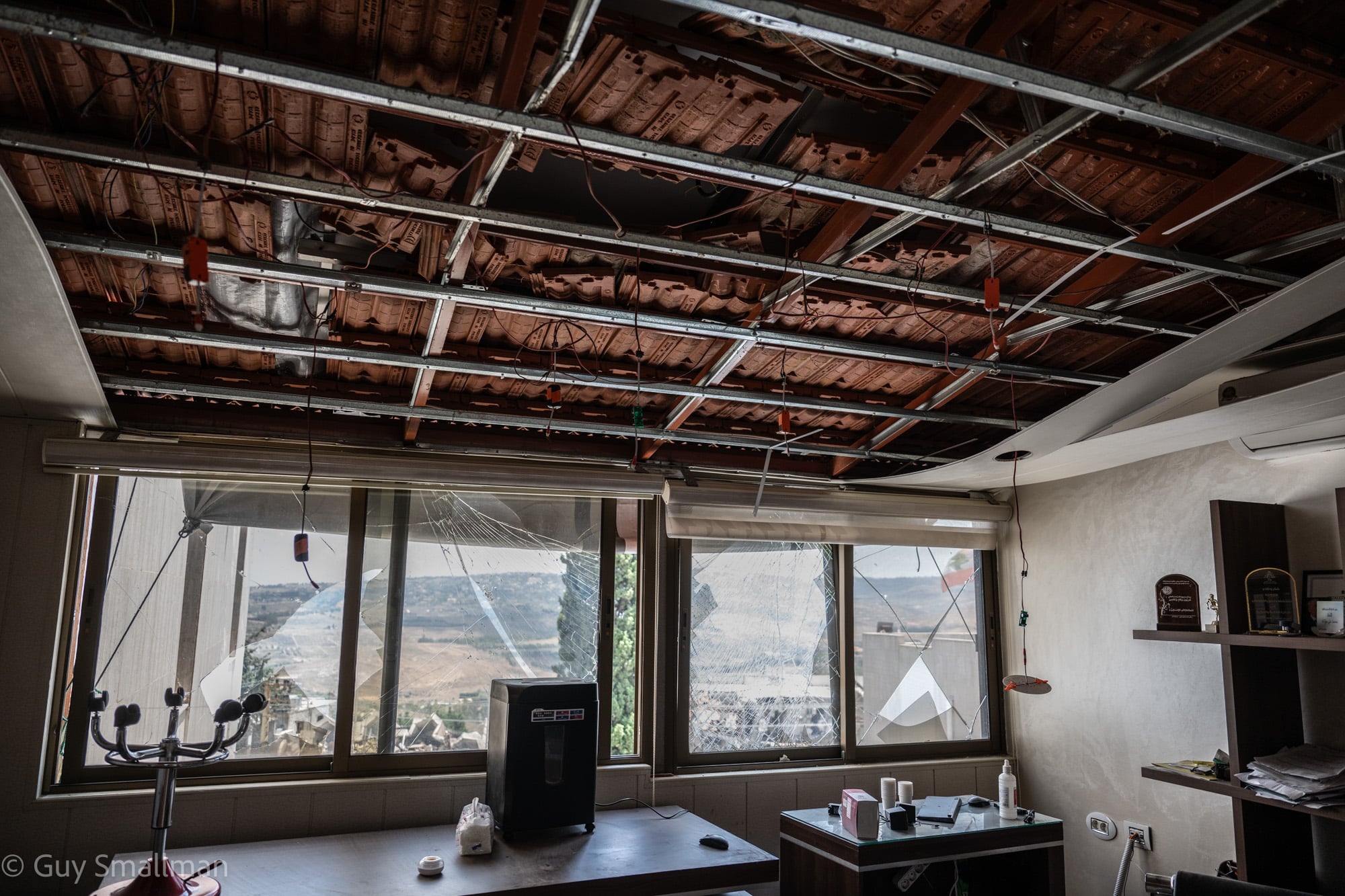
Inside, administrator Mohammad Awarke showed us around destroyed offices scattered with glass from their smashed windows. Rooms and corridors had temporary perspex walls constructed to replace the demolished concrete. He explained how a dedicated team of builders had operated twenty-four hours a day during the onslaught. Replacing walls and windows with plastic to keep out the clouds of smoke and dust that billowed all around the building during the war.
The damage inside had extended way past the waiting areas into the emergency departments, ICU, operating theatres and MRI unit. Outside, multiple ambulances had been damaged beyond repair by the strikes.
The countdown to war
Mohammad explained that intense preparations had been made in the run-up to the war restarting on March 1st:
For about fifteen months between 2024 and 2026 the atmosphere pointed towards another war coming — daily attacks, daily strikes, daily targeting, drones, and so on. During those fifteen months, we were already working with the consequences of war: the wounded arriving from the attacks and the bombardments. So, we prepared stores for this next phase.
We also had support from the International Committee of the Red Cross. They were helping us and were present with us in the hospital. Their team was here, assisting us. The Ministry of Health was also helping.
It is hard to imagine the exhaustion endured by the staff as the three months of carnage commenced and intensified with no end in sight. All the nearest medical facilities were either damaged or evacuated, leaving this one alone to face wave after wave of casualties. He continued:
From the very beginning of the war on the first of March, our position was clear. We knew that we were staying in the hospital, standing firm to serve our people and our community in this area. During those hundred and ten days, we received around two thousand people. Between martyrs and the wounded, around one thousand four hundred and fifty were wounded, and the rest were martyrs.
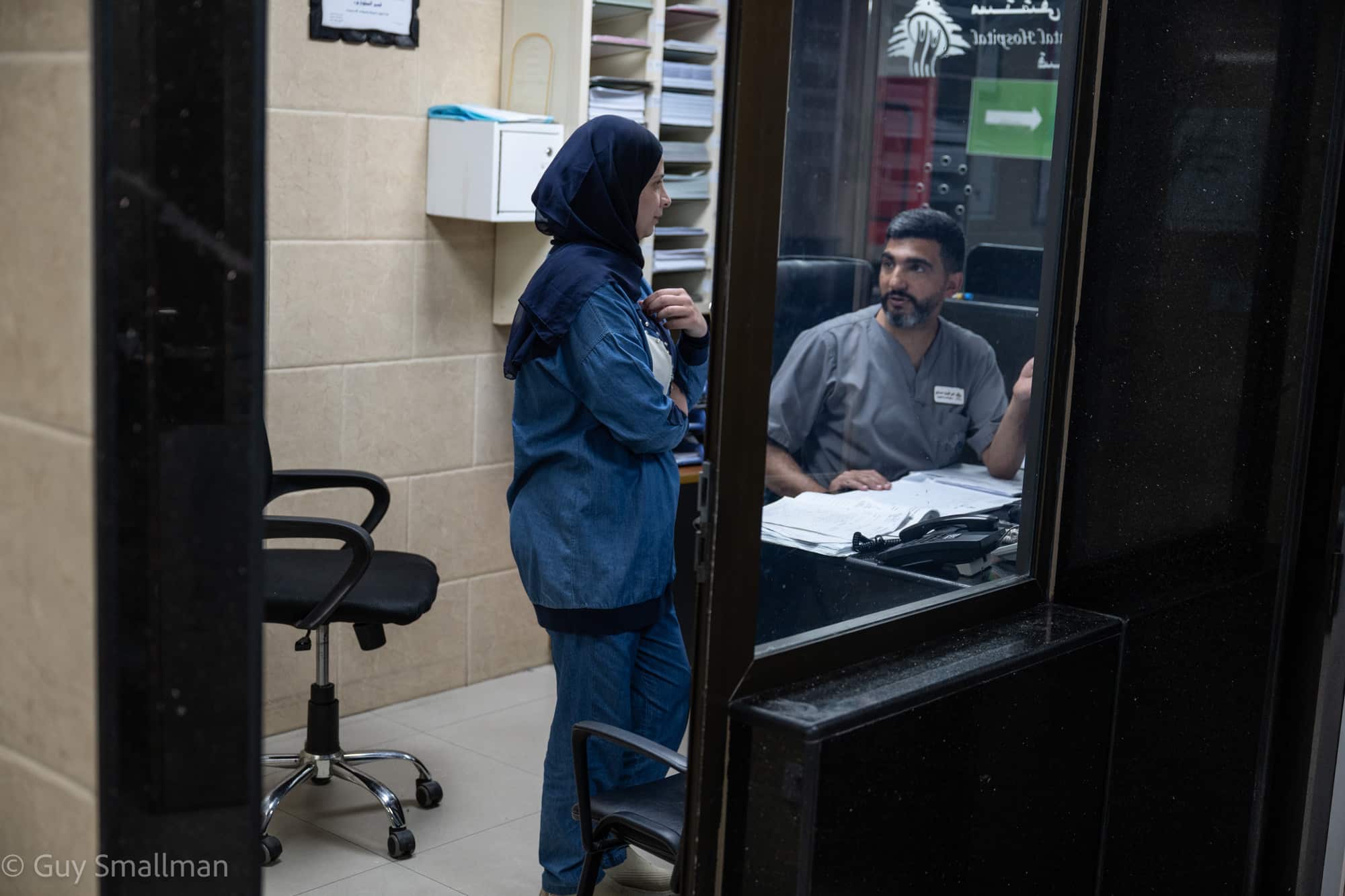
As the war had rolled on the hospital had started to run low on essentials of every description. Mohammad explained:
In terms of supplies. Medical supplies, food and so on. We had some stock. But a hundred and ten days is a long period. The Red Cross helped us with some medical items, also with diesel for the generator. The Lebanese Army was providing us with water because we had a problem with that. We usually get it from the state. But that supply was cut off. So the army brought us water every day. The South Council also brought us food and other supplies. These were the people and organisations who stood by our side.
Doctors and nurses targeted
On the relentless explosions endured by the staff and patients he said:
There was around fourteen airstrikes next to the hospital, all within a hundred metres. It sustained a lot of damage, but we kept going. The strikes were heavy and extremely close. If you walk around the hospital, you can see the destruction. Equipment destroyed, ceilings collapsed, glass shattered.
During the closest strikes we had over thirty injuries among the medical staff. The nurses and doctors. Some of those injuries happening four or five at a time, mostly from flying glass. Thankfully all those injuries were minor. But one young man from the Red Cross was martyred.

Volunteer paramedic Hasan Badawi had been with the Lebanese Red Cross since 2012. On April 13th he had been answering an emergency call with a colleague at the village of Beit Yahoun. Their ambulance was clearly marked. They were both in uniform. There is no way that they could have been mistaken for anything other than civilian first responders doing their duty.
As Hasan had been taking a stretcher from the back of the vehicle a drone had attacked. He was killed and his colleague seriously injured. He was the eighty-ninth humanitarian worker killed since the war had restarted in March. His colleague was also badly injured.
Hasan had two children with another on the way. He had called his pregnant wife the day before he was killed, saying that the bombing was everywhere but he would not leave his colleagues and patients.
The Israelis have offered no explanation for this atrocity. Outcry from the International Red Cross and the government in Lebanon has received the usual response that the incident is “under investigation”.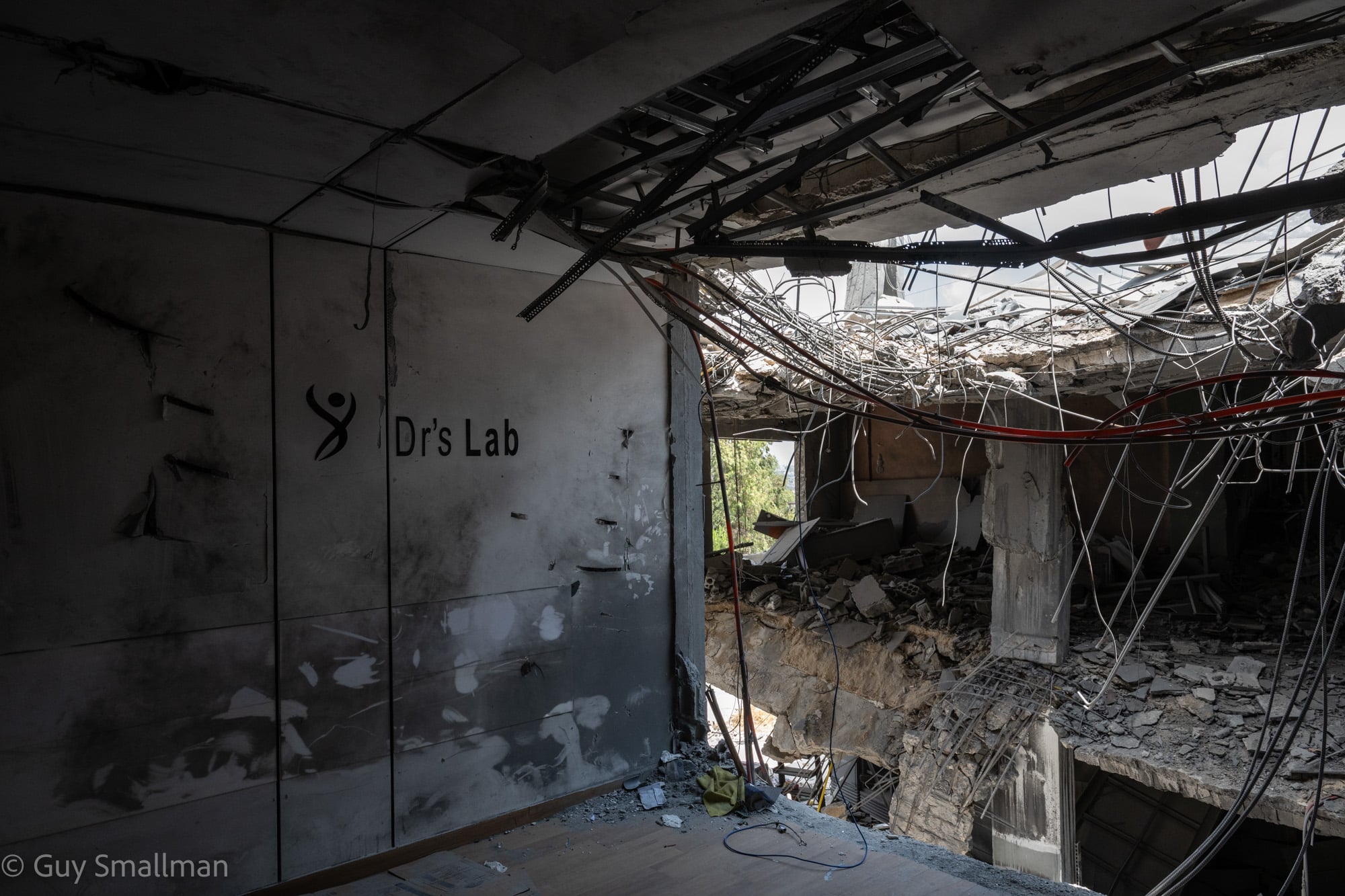
Warcrime after warcrime
Before leaving Tebnine, we visited the scene of yet another destroyed health centre just yards from the hospital. Across the street and around a hundred yards up the hill stood what was left of the ‘Dr’s Lab for medical analysis’ building. A large three-story facility which had contained a number of laboratories dedicated to the task of processing medical samples. It had clearly taken a direct hit from a bomb which had penetrated the roof and exploded in the rooms of the basement floor destroying everything above.
Yet another war crime against civilian medical infrastructure. Funded and facilitated by hypocritical Western democracies that supply the weapons while looking away from the consequences.
Images supplied by Guy Smallman
Video supplied by Tebnine Government Hospital
By Guy Smallman
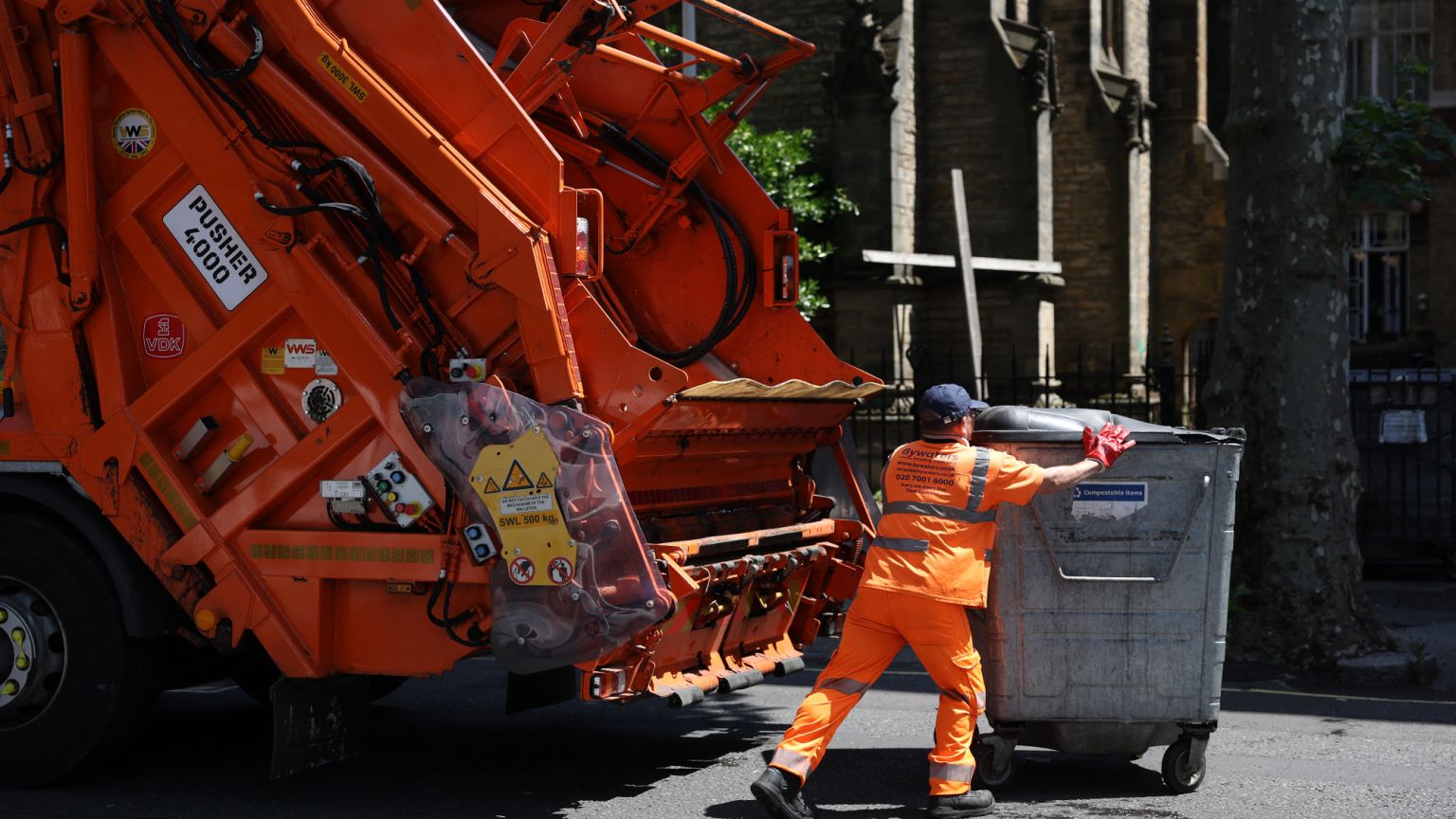
Beware a prime minister in search of a legacy. Fresh off imposing a social-media ban on British teenagers, Keir Starmer appears determined to inflict another dreadful parting gift on the nation.
This week, the Labour government announced plans to end ‘pay discrimination’ by ensuring all work that is of ‘equal value’ receives equal pay. On the surface, this might sound harmless or even progressive. In practice, it is anything but.
Listening to equalities minister Seema Malhotra announcing the reforms, you might get the impression that workplace discrimination in 21st-century Britain is on a par with segregation in 19th-century Mississippi. Apparently, racist employers – both in the public and private sectors – are paying some people less, purely on the basis of their skin colour or because they have a disability.
If you’d not heard before that such evil practices were happening in the UK, that’s because they are not. Indeed, it has long been illegal to pay people differently on the basis of race, sex, disability or any other protected characteristic. Certainly, any major employer would risk catastrophic fines and penalties if it were found guilty of racial discrimination. Nevertheless, to combat this allegedly rampant unfairness, the government has floated the idea of creating an Equal Pay Regulation and Enforcement Unit and expanding ‘equal pay’ rules that currently apply to sex to cover ‘race and disability’, too.
A clue as to what this really means is buried in a consultation document, published on Tuesday. New legislation, it says, will ‘enable claims for pay discrimination where work is not materially similar but is “rated as equivalent” or of “equal value”, for race and disability’. The jargon can’t disguise what is very bad news indeed.
We need only look at the unhappy state of affairs at Birmingham City Council to see how damaging the equal-pay regime has already been when applied only to sex. In 2012, 175 workers – predominantly women – took the council to court over claims that they were being paid less than male employees. The basis of this claim was that female-dominated jobs, like cleaners, were paid less than male-dominated jobs, like refuse workers. They didn’t argue the work was actually the same, only that it was of ‘equal value’, and that they had therefore been subjected to sex-based discrimination. The Supreme Court, citing the Equality Act 2010, agreed with the claimants. This landed Birmingham with a £750million bill.
Finally, unable to cover the costs of the payouts, Birmingham declared bankruptcy in 2023. One of the most notorious consequences of this was the rolling bin strikes, which began last year and are still ongoing. For months on end, hundreds of tonnes of rubbish were left uncollected to rot on the streets of the UK’s second city.
The concept of ‘equivalent work’ could soon do to Brighton and Coventry what it has done to Birmingham. As of December 2025, the GMB union claimed it had won over £1 billion on behalf of its members from settling equal-pay cases with six local councils, including Glasgow, Leeds and Sheffield.
The private sector is not immune, either. Leigh Day, the same law firm that successfully bankrupted Birmingham, was also partly successful in suing Asda and is now taking legal action against Tesco. In both cases, the supermarket giants stood accused of illegally paying warehouse workers (mainly men) more than workers stacking shelves or working at checkouts (mainly women). Asda could be forced to pay £1.2 billion should the equal-pay claims succeed fully, while Tesco could be on the hook for as much as £4 billion.
It ought to go without saying that neither Birmingham nor Tesco is alleged to have paid men more than women for performing the same work. What they have done is pay higher wages for certain jobs that are less desirable and more demanding. Refuse work and warehouse work both require employees to work unsociable hours – often very early in the morning or through the night – and are more physically intensive. The fact that more men have taken up these posts than women is not a sign of sexism or discrimination. It merely reflects those employees’ choices and personal circumstances.
You might now be thinking, why should I shed a tear for Tesco or Asda, or for Birmingham’s bureaucrats? But it shouldn’t surprise you to learn that these equal-pay claims quickly rebound on workers. Birmingham’s refuse workers, for instance, were forced to take a pay cut, partly to ‘equalise’ their pay with female staff and to cover the staggering costs of the backpay from the successful equal-pay claims. This then prompted them to go on strike, causing the entire city to suffer. The refuse workers clearly felt their reduced pay package no longer reflected the value of their work.
Expanding these equal-pay provisions to race and disability would undoubtedly lead to an explosion in employment-tribunal claims. Worse, it could set off a bomb under the economy, as firms go bust and councils declare themselves bankrupt. And it could even prove damaging to race relations, encouraging employees to view themselves as members of competing identity blocs, rather than as workers with shared interests.
Keir Starmer, whether he cares or not, is playing with fire with this parting equal-pay shot. It marks yet another contribution to the disastrous legacy of this most useless of prime ministers.
Hugo Timms is a staff writer at spiked.

On 7 July, Nigel Farage stepped down as the MP for Clacton. Skipping forwards, Farage is now running to reclaim the seat he just gave up, and his only real opponent is a man who pretends to be an intergalactic dustbin.
As you’d expect, the rest of the world is now obsessed with this story:
I love this Japanese TV News report about Count Binface taking on Nigel Farage in the Clacton by-election: Farage has managed to make himself look bad globally. — Wokerati Marty (@WokeratiMarty) July 14, 2026

 pic.twitter.com/xubtDfTzVP
Farage big in Japan
The clip above features the following subtitles:
This is Face, whose trademark is a trash can mask and a cape. The number of people hoping for his election is greater than that for Man Farage.
As we reported, this is true when you look at the national polling, in which “Man Farage” trails behind “White Lord Binface”:
I just like the fact that 13% of the people polled can't decide. pic.twitter.com/ghxVShMUqh
— Jonathan Pie (@JonathanPieNews) July 11, 2026
We do think the Greens should have run in this by-election. It would have given them weeks of national attention, and allowed them to further prove that they’re the true anti-establishment party (something the public largely already believes). At the same time, though, the above situation is very funny.
Farage clearly hoped this by-election would reaffirm the idea that he’s the prime minister in waiting. Instead, he’s proven that the public prefer Binface to him.
Binface is making waves beyond Japan too. In the following video, Turkish-American streamer Hasan Piker silently watches Binface’s ITV interview:
Following the video’s conclusion, a stony-faced Piker says he’s now glad the UK banned him from entry. Which is fair enough, honestly.
As we reported, Piker believes he was barred from the UK due to his opposition to Israel’s genocide. So the UK isn’t just an international laughing stock; it’s also the forerunner of Western authoritarianism.
Other international coverage of the Farage VS Binface bin fight includes:
- The Australian – “Farage v Count Binface: the clash that perfectly sums up British politics“.
- Wall Street Journal – “Nigel Farage Wanted a Political Showdown. Now He’s Fighting a Trash Can“.
- France 24 – “Farage vs Count Binface: hard-right leader’s UK poll gambit“.
- South China Morning Post – “Farage vs Count Binface: how UK hard-right leader’s poll gambit could backfire“.
The list goes on and on, because Farage has made himself an international joke. We’ve potentially got weeks of this left too; i.e. things could get even funnier.
Victory conditions
If Farage wins in Clacton, all he’ll have proven is that he can beat a bin an election. This should have been a given. And as such, it won’t do anything to diminish the humiliation he’s heaped upon himself.
Featured image via the Canary
By Willem Moore
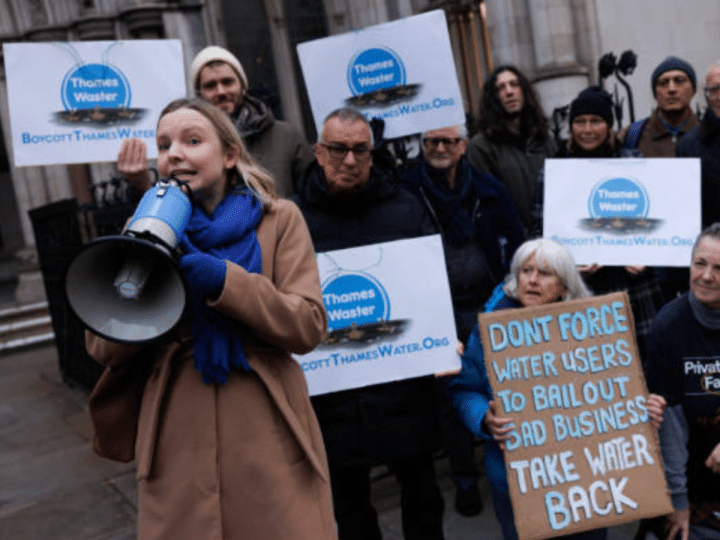
Thames Water’s shareholders are panicking as the prospect of public ownership threatens to bring their gravy train to an end.
The company is now sitting on £18.5 billion of debt, up from £16.8 billion a year ago. Instead of accepting responsibility for years of failure, the profiteers at the top are desperately trying to recapitalise the business to retain their cash cow.
Thames Water is the UK’s biggest water company, charging 16 million customers for access to water whilst failing to invest in crumbling infrastructure which has resulted in sewage leaks polluting rivers and waterways.
Signalling just how much money these greedy shareholders are reluctant to part with, the company increased its underlying profits by £191 million in a single year.
However, the company’s mountain of debt and years of underinvestment show exactly how badly British consumers have been short-changed. It only strengthens the case for nationalisation, and Thames Water is where that process should begin.
BREAKING: Thames Water is due to run out of money by the end of the year, as it remains in discussions with creditors, regulators and government to recapitalise the business.
Its annual results revealed it's £18.5bn in debt pic.twitter.com/pjq8J5No5E
— Sky News (@SkyNews) July 15, 2026
Thames Water and privatisation
The private ownership of the country’s water companies has meant higher bills for consumers, with profits going to shareholders rather than being reinvested into maintaining pipes and infrastructure to ensure people get good quality water.
Moreover, Thames Water’s flagrant breaches of sewage regulations have polluted our waterways, rivers and even oceans with sewage.
This has led to resounding calls to take it back into public ownership, with Thames Water being a prime example of how badly the privatised model has failed.
However, now it is getting closer to nationalisation being a sure thing, those who have been reaping the profits are doing whatever they can to keep their hands on the purse strings.
Windsor MP Jack Rankin says when companies fail, investors & creditors should lose their money.
That's what should happen with Thames Water. But Ofwat is still locked in negotiations with them.
Keep the pressure on. Write to Ofwat and tell them to reject the creditors:… pic.twitter.com/UIKGs0dQUE — We Own It (@We_OwnIt) July 15, 2026
For instance, it was only in recent weeks that Environment Secretary, Emma Reynolds, rejected a plea from 100 investors to Ofwat for a £10 billion bailout to rescue the failing company. Had it been granted, the bailout would once again have forced taxpayers and consumers — who are, in large part, the same people — to foot the bill.
You can’t polish a turd, as they say
Those who have been making pretty decent money despite its abysmal management insist that Thames Water’s performance is improving. They point to an 18% reduction in pollution compared to a year prior and a 17% improvement in meeting Ofwat’s common performance commitment targets.
However, the company still hits just 55% of the targets it should meet, proving these improvements remain nowhere near good enough.
The future where targets are finally met becomes far more achievable when an essential service serves the public, not shareholders chasing profits.
Bath MP Wera Hobhouse says Thames Water customers have been let down 'time and again' by the failing firm.
Its creditors want permission to pollute outside the rules until 2030. Ofwat's Board is still deciding whether or not to agree. Can you take 2 mins to email the Board,… pic.twitter.com/Tb5iSNbWPA
— We Own It (@We_OwnIt) July 14, 2026
Thames Water claims to be doing better
Thames Water’s chief executive, Chris Weston, has insisted that these improvements show the company is “turning around”.
He told the Guardian:
While we have a lot more to achieve, the progress we have made in turning the company around has meant we are now performing better and are in a strong position to accelerate the delivery of the biggest upgrade of our infrastructure in 150 years.
This upgrade will, over time, address asset resilience issues and translate into sustained improvements in the services we provide for our customers and impact on the environment.
But fixing problems of its own making doesn’t prove Thames Water has turned a corner. It is only starting to address a failure to meet even half of its responsibilities.
After all, it is hardly like there has been any public show of humility or public apology. Instead, the company treats these problems like they were inevitable. (But hey, look at how its leadership is making it better.)
Like they say, you cannot polish a turd. It remains, no matter what you do to make it look more appealing. The same is true for the privatisation of our water companies.
Privatisation has hurt ordinary people and reduced our access to clean water. These environmental and health issues will only grow worse with water-hungry AI data centers cropping up across the UK.
After his recent victory in Makerfield, Andy Burnham has talked about “greater public control”. But as long as private shareholders remain, the ultra-wealthy will continue to rip us off.
Years of chronic neglect and corporate mismanagement have already done enormous damage. The government should take the industry into public hands now, before things get even worse.
Set an example of Thames Water
Thames Water is not the only offending privatised water company. They are all guilty of failing in their responsibilities to consumers and in maintaining the critical infrastructure.
If the state brings Thames Water into public ownership, it will do more than hold the biggest player to account. It would send a message to every other water company: deliver value for money or risk losing your monopoly.
If they wish to continue being work-shy, then they lose out, which is fair enough, frankly. Shareholders do not have a permanent claim over these lucrative monopolies. The state can and should step in and take them back.
At least then, those astronomical profits could benefit everyone, rather than the handful of people who have had their hands in our pockets for far too long.
Featured image via the Canary
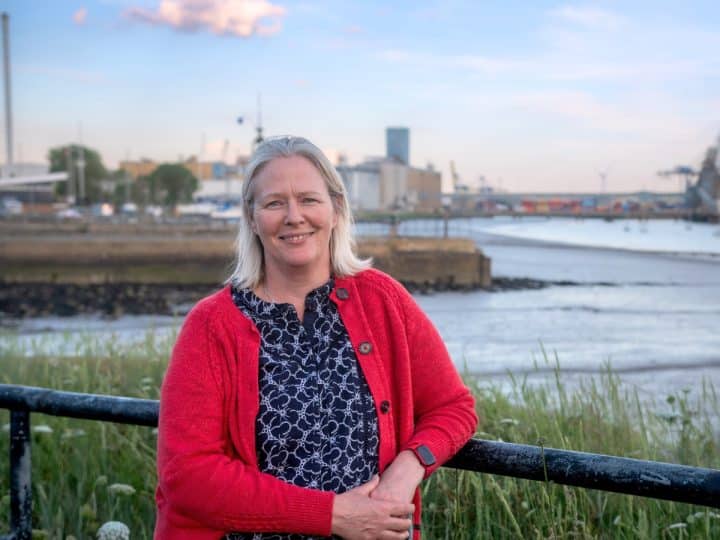
The Green Party candidate for the upcoming Grays Riverside by-election, Pauline Weir, has made her priority clear: securing a seat on the Corporate Oversight and Scrutiny Committee to hold the current administration accountable.
Weir stated:
If I am elected, I shall insist that this mandate from the Riverside electorate means I replace one of the Reform UK councillors on the Corporate Oversight and Scrutiny Committee.
When Reform UK took control of the council in May, it took the chair and control of all of Thurrock’s Oversight and Scrutiny committees. But as Weir points out, given the history of Thurrock, the one that concerns her most is the Corporate Scrutiny committee:
This committee has nine Reform UK councillors, and the only two Conservatives on the council. How is this scrutiny?
Since 2025, the Serious Fraud Office has been investigating a scheme by which the Conservative-led Thurrock Council invested millions into solar farms between 2016 and 2020. It used a bond scheme sold by the UK-based Rockfire Investment Finance Plc.
Says Weir:
The residents are still paying the price. The council voted to increase council tax by 9.99% in 2023, after the reckless gambling of the council with our residents’ money.
Council Tax has continued to rise since, with external auditors unwilling to sign off the council’s books.
The by-election in Grays Riverside on 23 July resulted from the resignation of a Reform Councillor elected in May this year. Weir says:
We got within 17 votes of taking a seat in Riverside in May. We are the only party that stands a realistic chance of providing at least some scrutiny for the residents of this ward.
Featured image via South West Essex Green Party
By The Canary
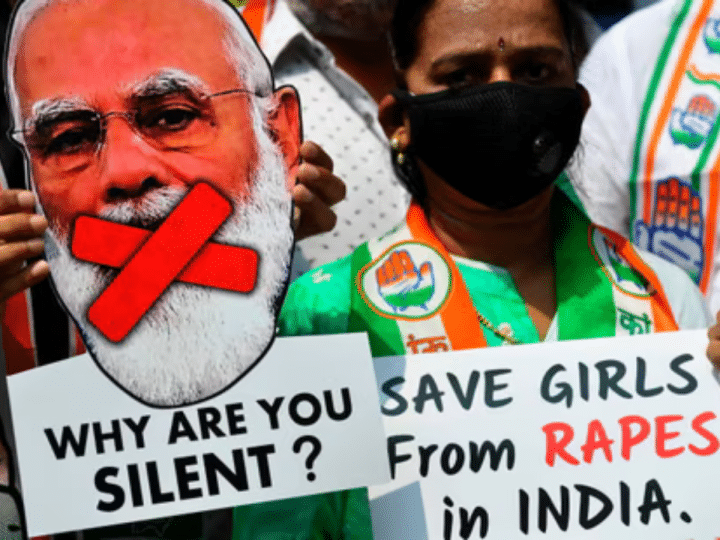
Since the Bharatiya Janata Party (BJP) of India’s Prime Minister Narendra Modi came to power in the state of West Bengal two months ago promising women’s safety, the state has witnessed at least eight serious incidents of violence against women and girls.
One of the latest was the horrific murder and gang rape in Baruipur. An 11-year-old Muslim girl was abducted while out buying a friend’s birthday present, and subjected to the most inhuman torture, including a group rape. While still alive, she was tied up in a sack and thrown into a pond to drown.
One of the suspects, who was also a key witness and had pointed to the role of a BJP leader in the crime, has already been killed in an ‘encounter’ (extra-judicial killing by the police).
Chief Minister Suvendu Adhikari, well known for his anti-Muslim hate speech, has shockingly likened protests in the aftermath of the crime to the “anti-CAA agitations”. These were in fact peaceful campaigns against an Islamophobic citizenship law but were criminalised and attacked by state-sponsored mobs, leading to the arrests and incarceration of Muslims.
India: Sexual violence sweeps the country
The South Asia Solidarity Group is outraged and deeply disturbed at the Indian government’s silence and inaction about sexual violence and attacks on women and girls across the country.
In the same week as the Baruipur gang rape, three dozen men in several hotels over several days sexually assaulted a 13-year-old girl in Sri Ganganagar, Rajasthan. These are only two cases which have been publicised in the news media or on social media. Many more go unreported.
At the same time, the internet is awash with AI-generated sexualised images of Muslim women, while rapists are praised and felicitated.
Hindu supremacy
The skyrocketing violence against women and girls, particularly those who are Muslim and oppressed caste, is a sign of the creeping imposition of the Manusmriti. This is an ancient Sanskrit legal text known for its misogyny and violence against women and oppressed castes, with which Hindu supremacists want to replace India’s Constitution.
Meanwhile, in a bitter irony, one can still read the BJP’s slogan popularised by Modi, Beti Bachao, Beti Padhao (Save Daughters, Educate Daughters) on the back of buses and trucks on India’s highways.
What we demand
We stand in solidarity with the survivors and the families of the girls and women who have been murdered, and demand accountability, transparency and justice. This can never be replaced by mob lynchings and ‘encounter’ killings.
In relation to the Baruipur murder and rape, we fully support the demands of feminist organisations in West Bengal, including:
- A time-bound, impartial investigation into the rape and murder of the minor girl from Baruipur
- An independent investigation into the state murder of a prime witness of the case and the circumstances surrounding it
- An investigation into the role of the police, which includes possible negligence and undue advantage given to the criminals
- An independent investigation into the role of all politically influential persons involved in this case
- Withdrawal of all cases against activists speaking out for justice in the case, and the protection of the right to protest democratically
- Security, legal aid and a speedy and transparent process of justice for the family of the victim
Our demands are cosigned by the following feminist and diaspora organisations in the UK, US and Canada:
- Million Women Rise
- Imkaan
- Sikh Women’s Aid
- Women from OWAAD (Organisation of Women of African and Asian Descent)
- பொழில்|Poḻil: Lankan Feminist Grove
- Birmingham Black Sisters
- Network of Eritrean Women
- Congolese Women of UK
- African Rainbow Family, Manchester
- Centre for Women’s Justice
- Healing Justice London
- Project Salama
- DEWA (Deaf Ethnic Women’s Association)
- Women Together
- Samba Sisters Collective
- Black and Brown Rainbow
- Biographies for Education
- Hindus for Human Rights UK
- South Asia AHEAD
- UK Indian Muslim Council
- South Asian Liberation Movement
- Periyar Ambedkar Study Circle
- Stop JCB Campaign
- SALAM (US)
- Canadian Forum for Human Rights and Democracy in India (CFHRDI)
- Canadians Against Oppression and Persecution (CAOP)
- CERAS (Centre sur l’asie du sud) (Canada)
Featured image via Indranil Mukherjee/ AFP/ Getty
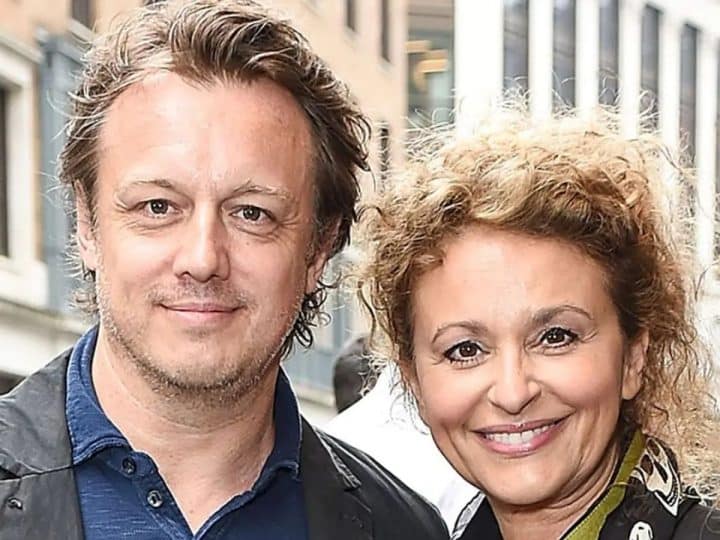

Right-wing rags the Daily Mail and Metro have been forced to issue “full apologies” and pay “substantial damages” to actress Nadia Sawalha and her filmmaker husband, Mark Adderley.
The papers had smeared the couple with atrocious and completely false smears claiming they had made antisemitic statements.
The pair announced their court victory in a joint video statement this morning.
View this post on Instagram
Sawalha and Adderley ‘push back’
The couple said their victory showed that the smears had put them and their family in danger, but the win showed that it is possible and vital to “push back against a legacy media that will go to any lengths to try and destroy lives and reputations with false allegations”.
Their lawyer, Zillur Rahman, of Rahman Lowe law firm, said the pair had triumphed over “serious and damaging allegations”.
These were serious and damaging allegations which falsely suggested that our clients supported terrorism and promoted antisemitic conspiracy theories for simply calling out Israeli war crimes, and opposing Zionism.
Our clients have consistently opposed racism in all its forms. We are pleased that both publishers have now accepted the falsity of these claims, issued public apologies, and agreed to pay substantial damages.
Newspapers backtrack
The Daily Mail’s apology reads:
An article “Loose Women star Nadia Sawalha claims ‘dark forces’ are at work after husband suspended from the Green Party over ‘antisemitic’ YouTube rant” (30 April) said that Mark Adderley had shared videos celebrating the ‘courage’ of Hamas as well as conspiracy theories blaming Jews for the September 11 and Bondi Beach attacks.
While Mr Adderley does have strong views about Israel and Zionism, he did not make these statements suggesting support for terrorism or hatred of Jews.
The article also said that Mr Adderley and his wife, Ms Sawalha, run a YouTube channel, and that Ms Sawalha fully supported her husband, which may have suggested that she endorsed the statements and videos wrongly said to have been shared by him.
These allegations were false and we apologise to Mr Adderley and Ms Sawalha for the error and distress caused.
The Metro’s statement is essentially identical:
An article “Nadia Sawalha hits back at ‘lies’ after Loose Women axe claims” (8 May) said that Mark Adderley had shared videos celebrating the ‘courage’ of Hamas as well as conspiracy theories blaming Jews for the September 11 and Bondi Beach attacks.
While Mr Adderley does have strong views about Israel and Zionism, he did not make these statements suggesting support for terrorism or hatred of Jews.
The article also said that Mr Adderley and his wife, Ms Sawalha, run a YouTube channel, and that Ms Sawalha fully supported her husband, which may have suggested that she endorsed the statements and videos wrongly said to have been shared by him.
These allegations were false and we apologise to Mr Adderley and Ms Sawalha for the error and distress caused
This is not the end…
The win is reminiscent of the repeated wins by Labour party left-wingers over right-wing rags during Jeremy Corbyn’s leadership of the party. Those lies had the same aim — remove or silence those who speak out against Israel, its crimes and its land theft.
Adderley and Sawalha said that they have other cases still ongoing and issued a warning to lying hacks.
We have a number of other cases pending. If you lie about us we will NOT take it lying down.
Featured image via the Canary
By Skwawkbox
Politics
The House | The pardon for Ruth Ellis is welcome but domestic violence law needs further reform


3 min read
The family of Ruth Ellis, the last woman to be executed in Britain, has received a measure of justice from this government.
Members of her family petitioned Justice Secretary David Lammy to recognise that had she been tried now, rather than in 1955, she would not have been convicted of murder, let alone executed. Last week, on Lammy’s recommendation, she was granted a conditional pardon by the King. I was pleased to have played a small part in the process by asking about her case in the Commons.
Ruth’s pardon asks that we reflect on what has changed in the past 71 years – but also what hasn’t. Women still face an unequal situation in the courts, and the law on homicide is currently under review. Ruth’s case offers insight into what needs to change.
My interest in her case goes back to my previous career as a crime historian. My research demonstrated the unfairness of certain ostensibly neutral standards of legal defences. Men who killed women were more likely to be successful in arguing that they had been ‘provoked’ than women who had killed men.
There is no doubt that Ruth shot and killed David Blakely on 10 April 1955. Arrested immediately, her trial took place two months later and lasted just over a day. She was hanged within three weeks. Her trial did not hear the reasons why she killed Blakely nor about the circumstances leading up to that night.
Ruth was 28 and mother to two children. She had worked as a model and as a nightclub hostess. The media made much of her ‘scandalous’ past. Blakely, by contrast, was the public-school educated son of a doctor.
After the verdict, however, it became clear that Blakely had been violent towards Ruth. While pregnant, he punched her so hard that she miscarried. On another occasion, her brother said she was “hobbling on two sticks” after Blakely beat her up. She was, in short, a victim of domestic violence.
Since 1955, the law has changed for the better. Only two years after Ruth’s hanging, Parliament passed a law allowing the defence of ‘diminished responsibility’. In 2009, it was made easier for someone in a similar position to Ruth to claim the defence of ‘loss of control’. This allows a murder charge to be reduced to manslaughter when someone kills while in fear of serious violence. This informed Ruth’s conditional pardon and posthumous life sentence.
Ruth’s pardon matters for two reasons. Most immediately, it lifts a weight from her family’s shoulders. They now have affirmation that their grandmother was not a callous murderer but a woman pushed beyond her limits.
More widely, it sends a strong message about the need to better understand the causes and consequences of abuse. We know more about coercive and controlling behaviour and abusers are being prosecuted. However, there is still more to do.
In June, the Law Commission launched a consultation on possible changes to the homicide law. Evidence of the need for change comes from an independent review by Clare Wade KC, and recent academic research that examined 110 homicide cases heard between 2010 and 2024 involving ‘loss of control’ defences.
The research suggests that the need to prove an ‘explosive’ loss of control is at odds with the experiences of women suffering domestic violence and that men are better able to make use of the defence than women. There are parallels with the situation that Ruth faced in 1955. Ostensibly neutral guidelines have given greater advantages to men than to women. The Law Commission’s review addresses this.
I hope it will lead to greater fairness in the courts and better outcomes for today’s victims of domestic violence.
Pam Cox is Labour MP for Colchester and was co-author of ‘Victims and Criminal Justice: A History’
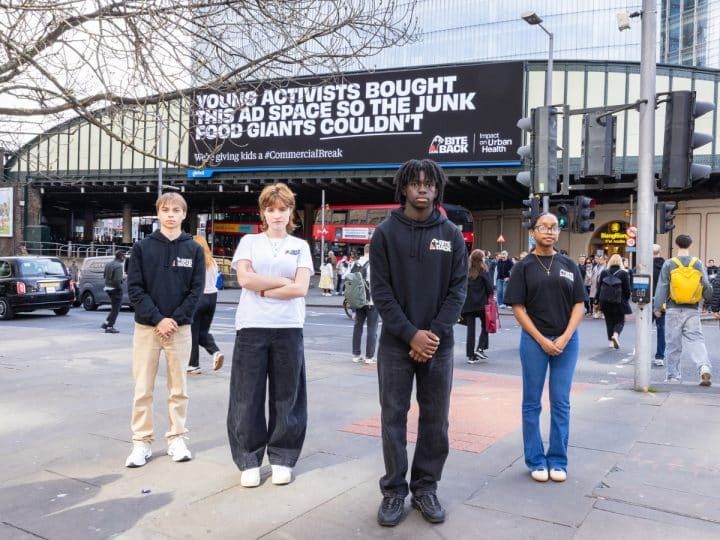
The Health and Social Care Committee has just delivered one of parliament’s strongest calls yet for action to protect children from junk food marketing. And Bite Back’s young campaigners are urging the incoming government to seize the moment.
After a year-long inquiry, MPs have concluded that children’s health has been undermined by unhealthy food environments and decades of industry influence. They’re recommending stronger protections including action on outdoor junk food advertising.
The report echoes the evidence given directly to the Committee by Bite Back campaigners Jayda and Alice. They told MPs how children and young people are surrounded by junk food marketing every day.
With a new prime minister taking office shortly, Bite Back says the Committee has handed the new government a ready-made roadmap for improving children’s health. The charity is calling on ministers to move quickly. And it wants them to begin with a national ban on junk food advertising in outdoor spaces.
Bite Back campaigner Jayda said:
Children and young people are surrounded by junk food marketing every single day. Whether it’s on billboards, at bus stops or on the journey to school or even online, it’s almost impossible to avoid.
In 2025 I had the opportunity to give evidence to this Committee, so I’m really pleased to see MPs recognising what young people are experiencing.
We also saw first-hand how coordinated the food and advertising industries can be when they pushed back against Bite Back’s Commercial Break campaign. The campaign simply called for children to get a break from junk food adverts. Young people are becoming increasingly aware of these commercial pressures and deserve better.
This report is an important step towards creating healthier environments for children and young people. Now the government must act quickly rather than delay. Children’s health should always come first, ahead of industry lobbying.
Bite Back campaigner Alice said:
The government needs to put children’s health ahead of industry lobbying, and a really important first step would be banning junk food advertising in outdoor spaces.
We need to make it easier for children and young people to grow up in places where healthier food is supported instead of unhealthy food being promoted everywhere.
In 2025 we had the opportunity to give evidence to this Committee, and it’s encouraging to see MPs recognising what young people shared with them. They listened. Now the new prime minister needs to listen too.
D’Arcy Williams, chief executive of Bite Back, said:
The Health and Social Care Committee has sent one of the clearest messages parliament has delivered in years: if we want healthier generations, we must create healthier environments for children and young people.
For too long, we’ve expected children to navigate a food environment stacked against them. Our young campaigners have shown how junk food advertising dominates bus stops, billboards and high streets, while our research has highlighted the concentration of unhealthy food marketing and fast-food outlets around schools.
That is not an accident, it is the result of a system that has consistently put commercial interests ahead of children’s health.
In 2025, through our award-winning Commercial Break campaign, young people reclaimed outdoor advertising space to show what our streets could look like without junk food adverts.
The response from the advertising industry demonstrated just how difficult it can be to challenge the status quo. That’s why government leadership matters.
The Committee has now laid out a clear roadmap – one that also urges the government to protect the policy process from further food industry interference tactics.
The incoming government has an opportunity to show real leadership by introducing a national ban on outdoor junk food advertising, strengthening protections for children in and around schools, and ensuring that every child grows up in an environment that supports their health rather than undermines it.
Young people have done their part. Parliament has listened. Now it’s time for the government to deliver.
Featured image via Bite Back / David Madden
By The Canary


Crewe (Alamy)

3 min read
In June, Andy Burnham set out his vision for the country. Bringing Manchesterism to Labour’s 2024 manifesto, he is putting “place before party” – building non-partisan consensus on local issues.
‘Place’ refers to the areas that make a community – where social ties are formed and strengthened.
Andy recognises that high streets should become “the new symbol of Britain’s renaissance”. Independent hospitality businesses are an essential part of that landscape.
They know their customer inside out, setting up shop to offer something new to their neighbours – without a financial model crunching the numbers, identifying your high street as the most lucrative option for the next branch.
Manchester has successfully supported a growing number of local bars and restaurants. The number of food and beverage spaces in the centre has doubled over the past 10 years.
Labour’s £20m Pride in Place strategy forms the building blocks for stronger communities. We’ve bolstered High Street Rental Auctions to give councils more powers to take over empty units. We’ve launched a £30m crackdown on rogue vendors taking advantage of deserted town centres, a dedicated High Street Organised Crime Unit and increased enforcement measures for trading standards.
These measures are welcome and necessary to turn our high streets around. However, as new sites become available, the government needs to support entrepreneurs to take them over and keep their doors open.
A quarter of pubs, bars and restaurants are losing money, according to new survey data. Without intervention, there will be fewer businesses left to revive the high streets at the centre of a place-based politics.
One of the levers available to provide immediate relief to the sector is VAT reform. The UK’s standard 20 per cent rate on food and beverages is the second highest in Europe – double that of Spain, France and Italy. There are growing calls from independent businesses to reduce VAT to 10 per cent.
There is a significant fiscal cost associated with this plan, which HMRC claim would create a deficit of £1bn. However, with 21 hospitality businesses closing each week, the Treasury must also consider the revenue losses happening in real time.
The industry is in a state of paralysis; businesses are unable to hire new staff or invest. Some have taken to limiting their opening hours just to stay afloat. They’re built up over decades but are closing down each week. That’s income tax, corporation tax and key youth employers lost to the Treasury.
Any intervention should also be ringfenced for independent hospitality. Currently, VAT applies equally to all businesses with an annual turnover of over £90,000. The scale of (and taxes levied against) many chains are fundamentally different to those set up by local people.
Beyond VAT, our business rates system disproportionately burdens bricks-and-mortar venues taxed on the rateable property value. Rateable values can be calculated using three different methods which have been known to generate different results. They often jump significantly between the three-year assessment periods and multipliers are set at a cliff-edge, meaning higher rates apply to the whole property once the threshold is reached.
The removal of Small Business Rate Relief and Retail Hospitality and Leisure Relief has left independents facing significantly higher charges than in previous years.
In our manifesto, we promised to replace business rates with something more progressive. We need a fairer system that allows small businesses to settle into our high streets and grows with them. Whether that means partial landlord liability or tapered rates similar to income tax, the case for reform is clear.
A place-based government means economic growth where it matters: in the areas which were decimated during austerity and for the people who care about their community. The unique struggles faced by independent hospitality businesses must be considered under this approach.
Connor Naismith is Labour MP for Crewe and Nantwich

Circle wins legal fight over Heka’s USDC minting and redemption account

Tebnine A&E: The heroic medics on Lebanon’s frontline

What are the easiest ways to accept payments online and in person?


-

 Fashion6 days ago
Loro Piana Fall 2026 Enters Houston’s Art Scene
-

 Fashion5 days ago
Weekend Open Thread: Nutriplenish Leave-In Conditioner
-
 Sports6 days ago
2026 Genesis Scottish Open Thursday TV coverage: Round 1
-

 Sports5 days ago
Super Eagles star Moses Simon opens up on Liverpool transfer regret
-

 Tech6 days ago
Character.AI enters the microdrama arena with its own productions, but there’s a twist
-

 Politics3 hours ago
Young campaigners urge incoming PM to act on outdoor junk food ads
-

 News Videos19 hours ago
XRP BOMBSHELL… XRP OMBOARDED FOR TRANSACTIONS!!!
-

 Tech1 day ago
Get Your ESP32 Sunny Side Up With This Solar Dev Board
-

 Tech18 hours ago
Dark Secrets Emerge When Jailbreaking LLMs
-

 News Videos7 days ago
Crypto Just Entered Its Most Important 6-Month Candle (Could Decide Everything!)
-
 NewsBeat6 days ago
Major update after Huntingdon train attack as man enters plea
-

 Tech6 days ago
Level Infinite Launches Gangstar Mirage City in India with Pre-Registrations
-

 News Videos2 days ago
how to make coin bank box with cardboard #scienceproject #money #diy #shorts
-
 Tech2 days ago
Cloudflare Precursor Watches Your Mouse and Keyboard To Decide If You Are Human
-

 Tech7 days ago
Entra passkey enrollment vishing targets Microsoft 365 users
-

 Crypto World7 days ago
DeFi Dashboard Zapper to Shut Down After 7 Years
-

 Crypto World6 days ago
Mark Cuban-Backed DeFi Dashboard Zapper Shuts Down After 7 Years
-
 Tech6 days ago
Claude’s New Reflect Dashboard Wants To Help You Log Off Of Claude
-

 Crypto World7 days ago
Fed minutes June 2026: officials split on rates
-
 Tech6 days ago
Hackers can use 9 of the most popular AI tools to assemble massive botnets
You must be logged in to post a comment Login