
Politics
Politics Home | Racist Debates Happening Now Weren’t Taking Place A Decade Ago, Warns Sajid Javid

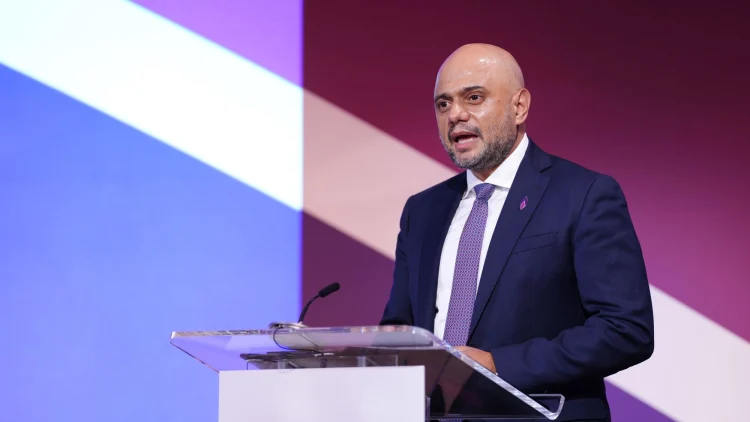
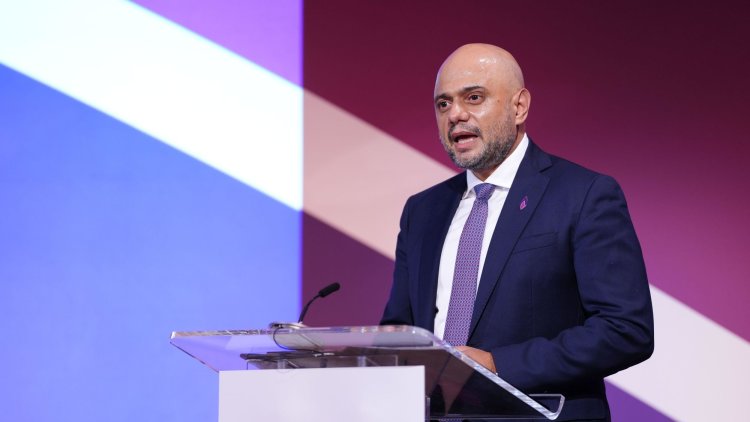
The former Chancellor Sajid Javid said progress on social cohesion in the UK could be lost (Alamy)

4 min read
Former cabinet minister Sajid Javid has said that division is on the rise in the UK.
Javid, a former Conservative MP of 14 years who served in six secretary of state roles, told PoliticsHome that debates about whether non-white politicians like him and former prime minister Rishi Sunak are British were not taking place a decade ago.
Last month, Sunak described himself as “British, English and British Asian” after right-wing podcaster Konstantin Kisin said last year that the senior Conservative MP was not English because he is a “brown-skinned Hindu”.
Sunak, who was the country’s first British Asian prime minister, warned that the UK was at risk of “slipping back” to a time of more undisguised racism.
Speaking on this week’s episode of The Rundown podcast from PoliticsHome, Javid said the fact that this sort of talking point was going viral online in the present day demonstrated how the UK was at risk of going backwards when it comes to social cohesion.
Asked whether he was surprised by it, the former chancellor said: “In a way, yes, because no one was asking questions like that, even a decade ago…
“Take Rishi as a great example. He became prime minister of our country, and someone dares question whether he’s British or not?”
“Obviously, it’s complete nonsense,” Javid added, “and I think questions like that often come from a divisive place, and that’s just the kind of division I think the vast majority of British people don’t have time for.
“But one of the challenges that we’re having in today’s world, and especially how people consume or get their news is that, if you’re only getting news from your echo chambers on your social media channels, and those channels are inevitably pushing out divisive content because that’s what gets the clicks, then that is one of the features of today’s society.”
In his new memoir, The Colour of Home, Javid explains how his parents came to the UK from Pakistan with little money and “became proudly British”.
Speaking on the podcast, the former Tory MP reiterated his belief that “Britain is the most successful multiracial democracy in the world”, but called on ministers to do more to protect the progress made since the racism he faced in his own childhood in 1970s Bristol.
One of the roles he has taken on since leaving Parliament in 2024 is heading up The Independent Commission on Community & Cohesion, along with Jon Cruddas, the former Labour MP for Dagenham.
“A good friend, but someone on a different side politically, but I think what we definitely agree on is the division, sadly, in the UK, broadly put, has been on the rise, as it has been in many countries,” he told PoliticsHome.
He said it will be looking at “what more can we do to bring people together to have less segregation, more integration”, but admits he could have done more during his time in office.
As communities secretary in 2016, Javid commissioned a report from Dame Louise Casey, which said there were “worrying levels of segregation” in the UK, leading him to publish a government green paper and integration strategy.
“I was just sort of getting going with it, and then Brexit happened”, Javid told PoliticsHome, bemoaning the fact that many priorities were jettisoned in the wake of Britain’s vote to leave the European Union, adding: “We basically lost focus on many things.”
Earlier this month, the Secretary of State for Housing, Communities and Local Government, Steve Reed, announced a new social cohesion strategy, which included a new anti-Muslim hostility definition designed to help tackle rising abuse towards Muslims, as well as new government powers to close extremist charities and an additional £5m for the Common Ground Resilience Fund.
“Cohesion underpins our economic strength, our democratic freedom and our national security. It is a fundamental part of the Britain we love. We have made our choice in place of division, we choose unity, and we know the people of Britain have made the same choice,” Reed said.
The Rundown is presented by Alain Tolhurst, and is produced by Nick Hilton and edited by Ewan Cameron for Podot
- Click here to listen to the latest episode of The Rundown, or search for ‘PoliticsHome’ wherever you get your podcasts.

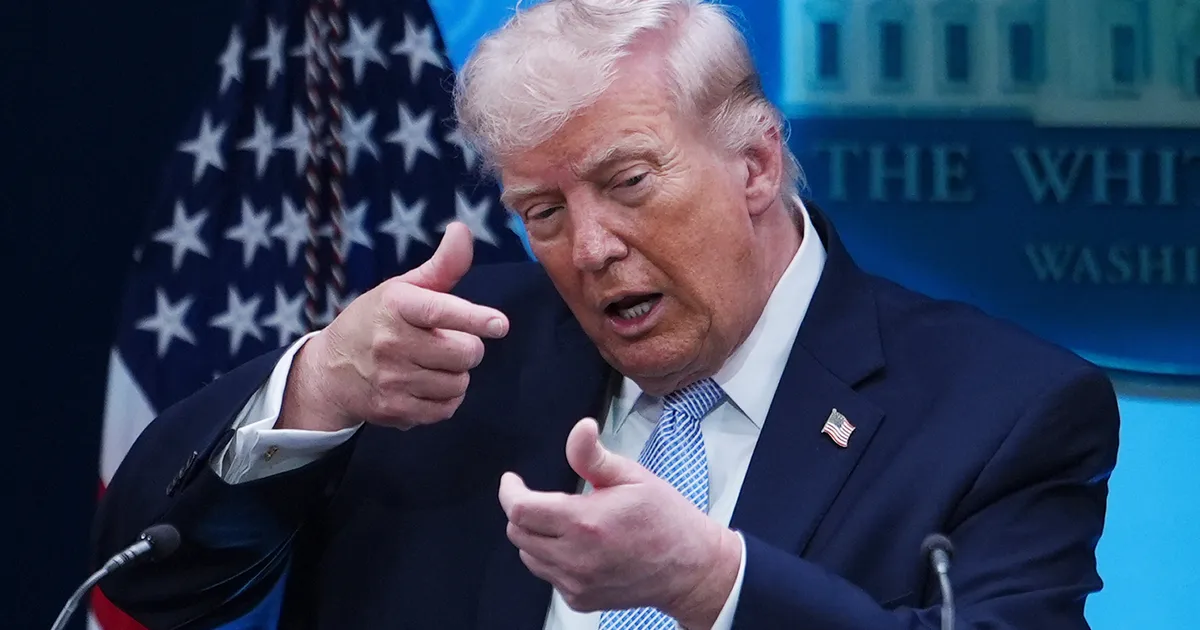
A senior BBC correspondent has demolished Donald Trump’s claims that America is winning the Iran war.
Jeremy Bowen, the corporation’s international editor, tore apart the US president’s declarations of victory as a two-week ceasefire in the conflict teeters on the brink.
Trump has accused Tehran of not sticking to an agreement to re-open the vital Strait of Hormuz waterway.
Meanwhile, Israel is continuing to launch missiles against Lebanon in another apparent violation of the ceasefire.
In an article for the BBC website, Bowen said leaked versions of an American 15-point plan to end the war “sound more like a surrender document than a basis for negotiation”.
He also said that despite the killing of Iran’s supreme leader at the start of the war, there has been no regime change in the country, despite what the president has claimed.
“With or without the active participation of the new supreme leader, Iran’s regime has demonstrated depths of resilience that took Trump by surprise,” Bowen said.
“Now Donald Trump’s representatives, led by his vice-president JD Vance, must negotiate with adversaries that they claim, incorrectly, to have defeated.”
He added: “The US and Israel have done immense damage to Iran’s armed forces as well as its military and civilian infrastructure. However, while the Iranian regime may be battered, it’s also intact.
“Regime change is not happening. Iran can still launch missiles and drones. That means that despite loud claims, the US and Israel have not translated tactical victories into strategic advances.
“Iran, on the other hand, has shown that the closing of the Strait of Hormuz gives it a strategic edge that Donald Trump either dismissed or did not understand when he listened to Israeli prime minister Benjamin Netanyahu’s arguments for going to war with Iran.”
Subscribe to Commons People, the podcast that makes politics easy. Every week, Kevin Schofield and Kate Nicholson unpack the week’s biggest stories to keep you informed. Join us for straightforward analysis of what’s going on at Westminster.
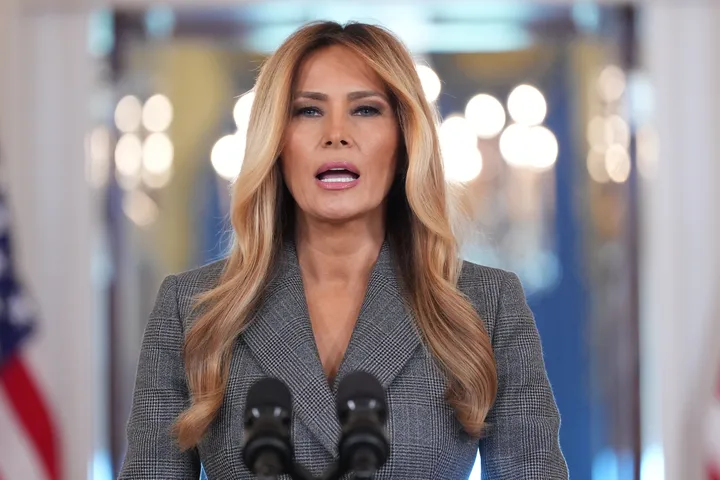
First lady Melania Trump called for Congress to hold a public hearing centred on survivors of Jeffrey Epstein’s abuse, in a press appearance where she also attempted to distance herself from the late sex abuser.
“Give these victims their opportunity to testify under oath in front of Congress with the power of sworn testimony,” she told reporters. “Each and every woman should have her day to tell her story in public, if she wishes, and then her testimony should be permanently entered into the congressional record.”
The demand is a major step for the first lady, given the friendship her husband, President Donald Trump, had with the disgraced financier. The White House has not immediately responded to HuffPost’s request for comment, though CNN reports that the president was not previously aware his wife would mention Epstein in her speech.
The Trump administration has faced a major backlash for its efforts to hinder the full, transparent release of the Epstein files. Under recently ousted Attorney General Pam Bondi, relevant documents would be released over multiple drops, with many items censoring powerful names while revealing survivors’ identities.
“First Lady Melania Trump is now shifting the burden onto survivors under politicised conditions that protect those with power,” more than a dozen Epstein survivors said in a Thursday statement.
“The Department of Justice, law enforcement, prosecutors and the Trump Administration, which has still not fully complied with the Epstein Files Transparency Act.”

Jacquelyn Martin via Associated Press
Trump made sure to clarify, for some reason, that she herself “is not Epstein’s victim,” and that the “disgraceful” sex abuser was not responsible for introducing her to Donald Trump. She also condemned what she called “fake images and statements” purporting to link her to Epstein.
“The individuals lying about me are devoid of ethical standards, humility and respect,” she said. “I do not object to their ignorance, but rather I reject their mean-spirited attempts to defame my reputation.”
The first lady named The Daily Beast as an example of an outlet that had to retract its claims about her ties with Epstein. But given that the story Trump is likely referring to was from February, it’s unclear why she is choosing to speak about it now.
“I have never had any knowledge of Epstein’s abuse of his victims. I was never involved in any capacity — I was not a participant, was never on Epstein’s plane and never visited his private island,” she said.

Davidoff Studios Photography via Getty Images
Trump did admit, however, that she exchanged an email at least once with Epstein’s now-imprisoned accomplice Ghislaine Maxwell. The October 2002 email in question was made public in February by the House.
“Dear G! How are you? Nice story about JE in NY mag. You look great on the picture,” her email to Maxwell read, with “JE” likely a shortened reference to Epstein. “I know you are very busy flying all over the world. How was Palm Beach? I cannot wait to go down. Give me a call when you are back in NY. Have a great time!”
Maxwell responded to Trump by thanking her for the message and calling her “sweet pea.”
“Actually plans changed again and I am now on my way back to NY,” she said. “I leave again on Fri so I still do not think I have time to see you sadly. I will try and call though. Keep well.”
On Thursday, Trump said her email to Maxwell “cannot be categorised as anything more than casual correspondence.”
“My polite reply to her email doesn’t amount to anything more than a [trivial] note,” she continued, after claiming that she was not friends with Epstein.
Republican Representative Thomas Massie, who alongside Democrat Ro Khanna has aggressively pushed for accountability and justice related to the Epstein files, said on Thursday that the job of asking survivors to testify before Congress falls on acting Attorney General Todd Blanche.
″[Khanna] & I already gave brave survivors a chance to tell their horrific stories on Capitol Hill,” Massie posted on X. “Pam Bondi wouldn’t even acknowledge them.”
The survivors said on Thursday that they have already shown “extraordinary courage by coming forward, filing reports and giving testimony,” and that asking them to do more is “a deflection of responsibility, not justice.”
“Survivors have done their part,” they said. “Now it’s time for those in power to do theirs.”
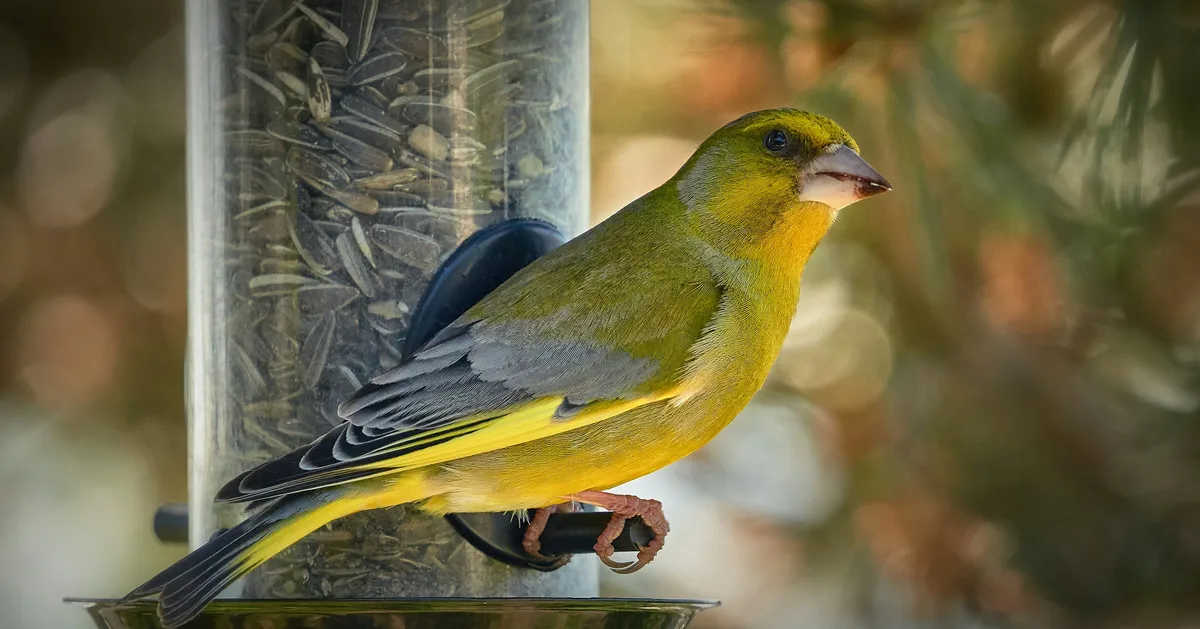
Birdfeeding feels like a pretty noble thing. The UK’s bird population has, after all, declined by almost a fifth since the ’70s, and it’s true that many sadly starve in the barren, colder months.
But the Royal Society for the Protection of Birds (RSPB) said that birdfeeding isn’t as straightforwardly good for all species as you might hope.
Following the results from this year’s The Big Garden Birdwatch, the charity saw that greenfinch populations seem to have declined by 67% since the programme began in 1979. They are now on the UK Red List in the Birds of Conservation Concern.
One of the reasons could be partly influenced by your birdfeeders, they said.
Why might bird feeders hurt some bird species?
Greenfinch populations are shrinking for many reasons, but one of the biggest ones is trichomonosis, a disease that spreads easily from bird to bird at feeders.
Speaking to HuffPost UK, an RSPB spokesperson said: “Our research shows that large numbers of birds congregating around feeders can increase the chances of disease transmission.”
This is especially likely in summer and autumn.
The spokesperson also shared that the researchers looked at whether feeding might increase competition for some birds.
“Competition between species is of concern and was considered as part of the review. Whilst there is growing evidence of negative interactions between willow tits and beneficiaries of supplementary feeding like blue tits and great spotted woodpeckers, the link with supplementary feeding is unclear,” they shared.
“More research is needed to determine if species-specific interactions may require a more regionally or locally targeted approach.”
The RSPB’s chief executive, Beccy Speight, added: “We’re not asking people to stop feeding, just to feed in a way that protects birds’ long-term health. By making small changes together, we can ensure garden feeding continues to be a positive force for nature.”
How can I make bird feeding safer?
The RSPB suggested two general rules: “feed seasonally. Feed safely.”
In practice, that means we should try to:
- Use multiple feeders. “We would recommend having several feeding areas in one garden, perhaps a suet feeder in one spot and a seed feeder in another,” to reduce the risk of transmission, a spokesperson stated.
- Steer clear of peanuts or seeds in your feeders from 1 May to 31 October, as that can lead to too many birds gathering in one place. “It’s okay to keep offering small amounts of mealworms, fat balls, or suet year-round,” the RSPB said.
- Clean your feeders. We’ve written before about how to clean your feeders properly: “If possible, place your feeders in a different spot after each clean to prevent the build-up of contaminated debris underneath,” too, said the charity.
- Move your feeders weekly. A spokesperson shared, “we advise moving individual feeders to a different spot each week (as well as being thoroughly cleaned), to avoid the build-up of any contaminated debris beneath (any existing debris should also be cleaned up).”
- Change their water daily. “Only offer water if you’re able to change it every day and make sure it’s tap water. Water baths should also be cleaned weekly,” the RSPB added.
- Get rid of flat-surfaced feeders, like bird tables. “Research has confirmed that there’s a higher risk of the disease spreading on flat surfaces, where contaminated food can collect for other birds to eat.”
And there are ways to help outside of changing how you use feeders, too.
Consider, for instance, planting bird-friendly food sources like sunflowers, teasels and ivy, which offer safer nutrition.
Everyone in Britain, from the chancellor of the exchequer to the parents of 17-year-olds currently being dragged around university open days, is concerned about student debt, tuition fees and interest rates. Fretting about the price of a degree has become a national pastime. Far less discussed is the value of higher education: what students will learn and how they might grow intellectually. Unlike tuition-fee increases, which are set by government ministers and policy wonks, educational standards are determined by universities themselves – and they are in freefall.
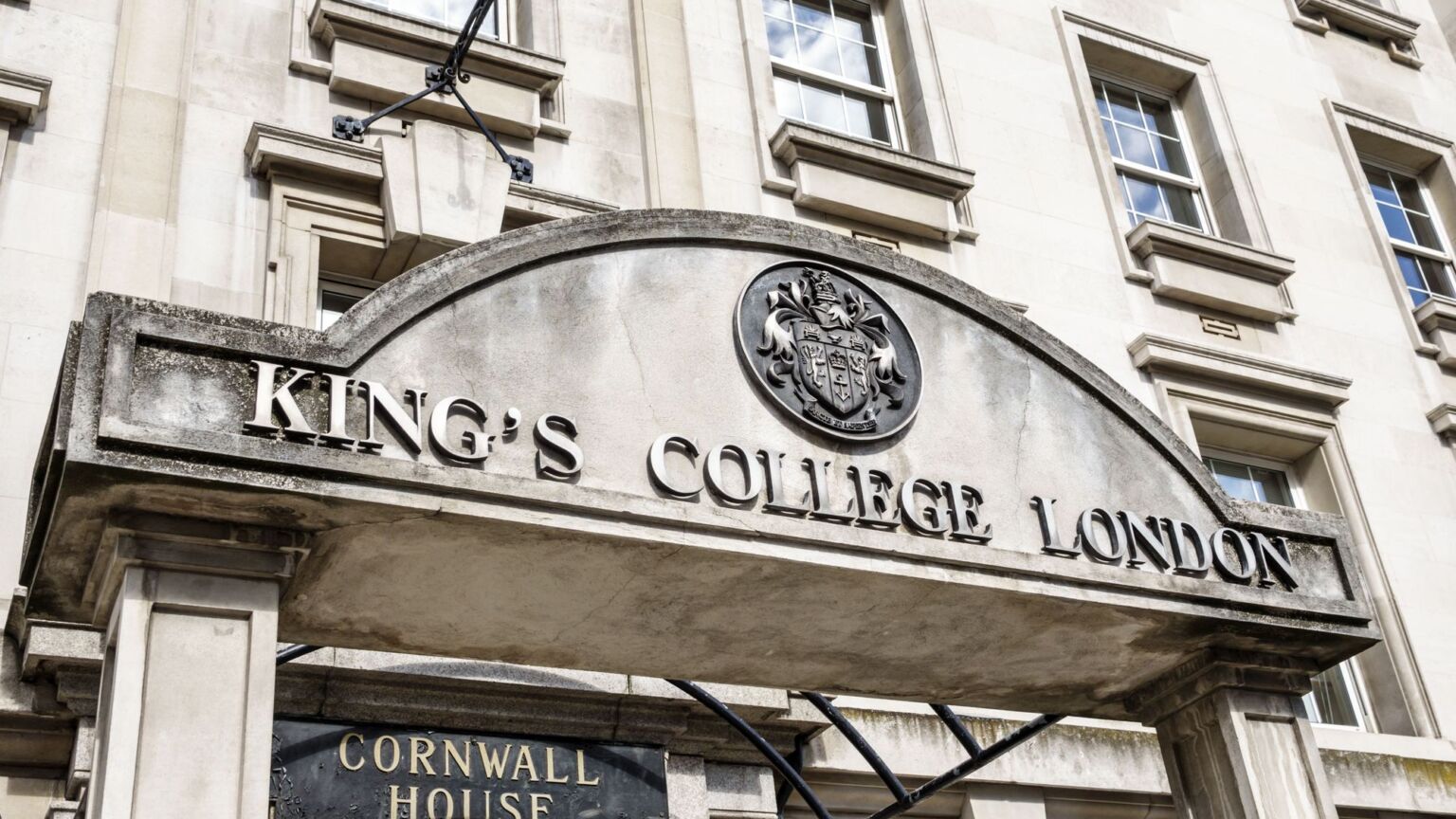
This week, King’s College London has hit the headlines after academics went public with their disagreement over an internal directive that they should cut the number of exams students are set and overlook grammatical errors when assessing work. At the same time, essay word counts will be lowered from 2,000 to just 1,300 words. You don’t need a degree to work out that the result of all of these changes will be lower standards. Passing will be easier when students are not expected to work so hard, take exams or worry about writing correctly.
But King’s is not the only institution to have lowered standards in this way. Oxford and Cambridge are among the other universities moving away from exams. At the University of the West of England, students can write field-trip reports or book reviews, design a book jacket, write a pitch or record a podcast. These are no doubt fun activities. Some, perhaps, are challenging. But crucially, success does not depend on students having read extensively, thought deeply and marshalled their ideas, either under time pressure or in a longer written form.
Unsurprisingly, this is reflected in grade inflation. More than 75 per cent of all students now leave university with a first-class or 2:1 degree, with the most dramatic increase taking place between 2010 and 2020. Chinese students studying in the UK have wryly labelled Britain’s higher-education system ‘easy in, easy out’, because not only is it easier to get accepted on to courses than in the US or China, but assessments are also less stringent. In other words, easy admission is followed by low expectations and easy-to-meet academic standards.
So, the academics at King’s College are absolutely right to decry ‘dumbing down’. But the fact that they had to take their complaints to the national press raises uncomfortable questions about who runs our universities. If lecturers themselves are not setting standards, expectations and assessment methods, then who is?
The answer becomes clear when we see the justification for cutting exams, lowering essay word counts and ignoring students’ grammatical mistakes. These changes are apparently needed to make higher education ‘diverse’ and ‘more inclusive’. Those now calling the shots in universities are not lecturers, then, but learning-support officers and diversity, equity and inclusion managers. Not subject experts, in other words, but bureaucrats. And their motivation is not academic, but political.
According to this managerial elite, the problem with exams is that they are a bit stressful. Writing essays can be overwhelming. Those now in charge think students are just too fragile to meet even the most basic demands. But the clincher seems to be the implication that more traditional assessment methods are racist. The learning and teaching bureaucrats at King’s think changes are needed in order to ‘validate diverse knowledge systems and lived experiences’. New forms of assessment should be ‘culturally responsive’ and take into account ‘language culture and identity’. Marking, meanwhile, should ‘embrace linguistic diversity’ and focus on ‘ideas not grammar’.
We need a reality check. It is not exams that are racist, but the patronising assumption that only white men can cope with writing essays under timed conditions. It is not grammar that is elitist, but the condescending notion that people with ‘diverse’ identities are incapable of mastering the finer points of the English language. For all their politically correct euphemisms, DEI managers see non-white students as ignorant and ineducable.
The idea that so-called non-traditional students have their own ‘knowledge systems’ and need to have their ‘lived experiences’ affirmed through the curriculum and assessment methods challenges the very idea of a university. Rather than being dedicated to the pursuit of truth and the transmission of knowledge, universities become places where multiple perspectives are affirmed, and none must be judged inferior. (Apart, that is, from the work of white males, which must only ever be condemned on the decolonised curriculum.) And rather than students being expected to employ reason and intellectual endeavour, they must have their experiences and emotional responses validated. This is not a university education but a therapy session.
Thankfully, there is at least one positive to take from the King’s College saga. Students have written an open letter criticising the new assessment regime, and lecturers have taken their accusations of ‘dumbing down’ to the press. Clearly, there are at least some people in our universities who still value excellence.
Joanna Williams is a spiked columnist and author of How Woke Won. Follow her on Substack: cieo.substack.com.
Warning: This articles contains spoilers for The Drama.
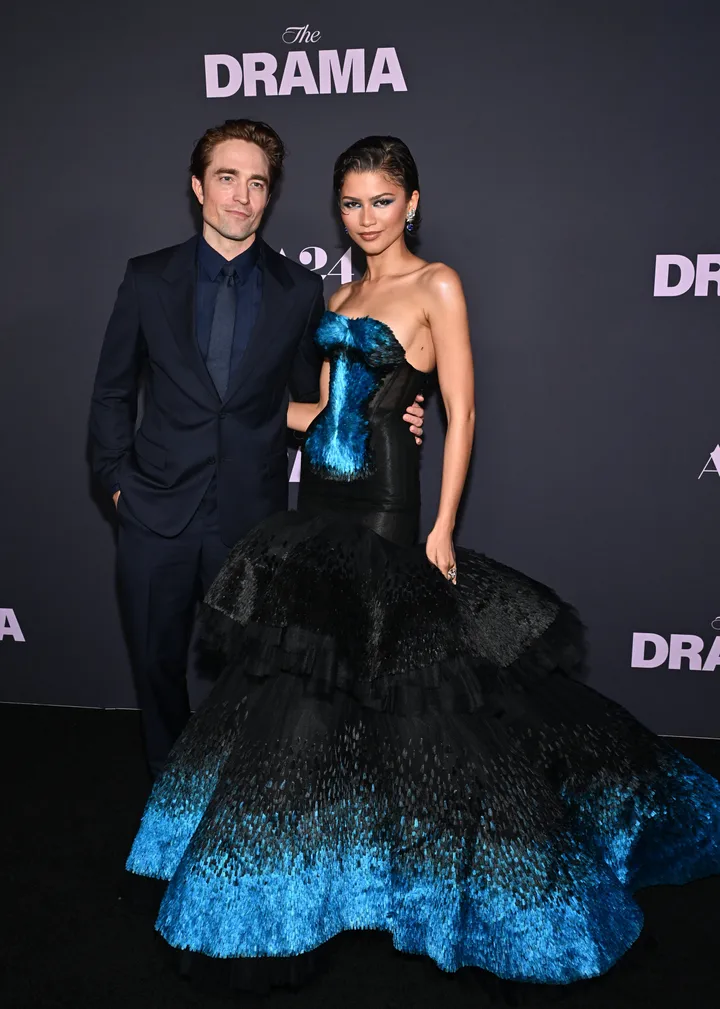
Going to see The Drama, the new flick starring Zendaya and Robert Pattinson, may initially feel like sitting down to a typical romantic comedy.
The film’s marketing revolves heavily around the idea of a gorgeous wedding, surrounded by loved ones, until the bride-to-be reveals a secret a few days before she and her fiancé are set to get married: When she was 15, she planned to carry out a school shooting.
After another mass shooting happened the same day, though, Zendaya’s character, Emma, ultimately didn’t go through with her plans.
Production company A24 has been coy about the big secret in all of its promotional materials, and viewers are given no forewarning as they settle into their seats about the subject matter that is about to play out onscreen.
The trailer suggests that Emma committed a serious faux pas — but one that might simply reflect a quirk of her personality.
In fact, the only way a moviegoer would know about the big twist is if they had already seen spoilers online, where critics have congregated to question the movie’s whole premise.

Melissa Alexander, whose two kids survived the 2023 Covenant School shooting that left three other children and three adults dead, knew about the plot twist going in.
Still, she walked out of the cinema before The Drama was finished. The film gave her a nightmare later that night.
Alexander saw the movie Friday night with another Covenant mum in a cinema less than a mile away from the Tennessee school, and the pair walked out about two-thirds of the way in, as Charlie is talking to his friends about Emma’s past.
In the scene, Charlie wonders aloud, given that mass shootings are such a prevalent problem in America, whether there may be a bunch of people who think about committing such a crime but never go through with it.
“There’s not just a bunch of normal people walking around thinking about doing something like this,” Alexander told HuffPost. “It’s a specific type of person. And to diminish it down to everyday people just really annoyed me.
“If somebody is watching this movie, who has some sort of ideations or thoughts about this, I think what it does for them is it helps to normalise it for them.”
An increasing number of Americans have first-hand experience with the terror of a mass shooting.
So far this year, there have been 32 shootings on campuses across the US, resulting in 15 deaths and 15 injuries, according to Everytown, a gun violence prevention organisation.
And there have been 99 mass shootings in America this year, which the Gun Violence Archive defines as at least four people shot, not including the shooter. Gun violence is the number one cause of death in teens and children; in 2024, then-U.S. Surgeon General Vivek Murthy declared gun violence a public health crisis.
Emma explains to Charlie she was bullied in school and got caught up in the “aesthetics” of mass shooters – a definition she never really parses. The movie shows Emma, wearing dark eye makeup, posing with a rifle in front of her webcam. But after a nearby shooting leaves one of her classmates dead, Emma abandons her plans and instead joins her fellow classmates in advocating for gun control.
Later on, it’s revealed that Emma becomes so involved in gun control activism that she’s arrested for harassing Walmart employees for selling guns.
For Alexander, Emma’s motivating factor – bullying – felt oversimplified and woefully unrealistic. The person who killed six people at the Covenant School was not exacting revenge against peers for bullying: They were 28 and killed three nine-year-olds.

Anna Moneymaker via Getty Images
“These people are mentally ill, and they don’t just grow up to be a beautiful Hollywood actress like Zendaya,” she said.“That’s not a normal trajectory or the way somebody matures.”
Gun control activists have been among the film’s most vocal critics. One of them, Mia Tretta, was shot during the deadly 2019 mass shooting at Saugus High School in Santa Clarita, California, and also survived the recent deadly shooting at Brown University. She is an advisor for Students Demand Action, an organization of students advocating for the end of gun violence.
Tretta chastised The Drama’s filmmakers for treating school shootings as a “plot point”.
“It’s a reality I lived through when I was shot at my school at 15 years old, and again as a terrified student at Brown this past December,” she said in a statement to HuffPost.
“Using a planned massacre as a rom-com hook isn’t ‘starting a conversation’, it’s exploiting a crisis. There are ways to show nuance without using trauma as a gimmick. Studios and stars have massive platforms, and they should use them to give dimension to survivors, not perpetrators.”
Fred Guttenberg, whose 14-year-old daughter Jaime was murdered in the 2018 Parkland high school shooting, hasn’t seen the movie yet, but told HuffPost that he had hope for it given Zendaya’s past acknowledgement of his own activism. The actress once shared a clip of Guttenberg speaking at a Parkland vigil on Instagram.
But Guttenberg remains wary of any effort to explain away a mass shooter.
“Once somebody makes a decision to commit the act of gun violence, I don’t feel the need to humanise them,” Gutenberg told HuffPost.
March For Our Lives, an organisation started by victims of the Parkland massacre, wrote on X that the marketing for The Drama — as a dark romantic comedy — is “deeply misaligned” with the reality of school shootings.
During the press tour, Zendaya has played into cutesy matrimonial tradition, donning “something old, something new, something borrowed and something blue”.
Zendaya has acknowledged in interviews that the movie has “many elements of a romantic comedy”, but called it “heartbreaking, disturbing to some, emotional, but also so much more than that”. Robert, meanwhile, has said it is “so romantic”.
Entertainment reporters appear to be helping preserve the film’s big twist, though, as the stars have not been pressed to answer for the controversy. Their discussions have instead focused more broadly on the relationship between Emma and Charlie, and the moral lines that people may draw – or not – when it comes to those closest to them.
“I think the movie is exploring more, like, your personal limit, and … the limits for how honest and how flawed you can be in your most private life,” Kristoffer Borgli, the 40-year-old Norwegian who wrote and directed The Drama, told the Popcorn Podcast.
There is little solid research into the minds of mass shooters. Two criminologists who spent a decade researching mass shootings told the US news show 60 Minutes that shooters often experience “horrific trauma” early in life, but can appear very normal in person, like “the kid sitting next to you in class”. They suggested overstigmatising shooters could lead people to believing there is nothing that can be done to help them.
Julia Moralez knows what it’s like to know someone before they reveal a horrifying secret. She knew the mass shooter who carried out the 2019 mosque shooting in Christchurch, New Zealand, that killed 51 people and injured 89 others. The shooter once lived with Moralez, who told HuffPost that when she knew him, he was “polite, kind and well-mannered”. But reports after the shooting revealed he was a white supremacist.
Moralez was initially interested in seeing The Drama, but once she read the spoiler online, she didn’t think she could.
“It seemed edgy for the sake of being edgy,” Moralez told HuffPost. “There were just things I didn’t like and felt exploitative to me personally. Even the title, The Drama, just making light of something that is a real-life situation for a lot of people … just doesn’t sit right with me.”
The film also goes against statistics that show mass shootings are typically carried out by boys and men. Emma’s gender is only briefly discussed in the movie when, during a class discussion on mass shooters, Emma corrects one of her classmates when they say that mass shooters are almost always boys. Emma chimes in and says that not only do girls do it sometimes, but mass shootings even happen outside of America, too.
But Moralez doesn’t see it that way.
“If you look at the numbers, it’s something that affects men,” Moralez said. “And I think that that’s something that needs to be looked at. And I think that twisting it to [be] a female issue, for the sake of a story, a good drama, is kind of belittling an issue that affects males, especially as someone who knows someone who shot and killed more than 50 people and live-streamed it.”
“I like Zendaya as an actor, but I’m kind of disappointed that she took this role because I don’t know, it just doesn’t seem right to me.”
Donald Trump’s apparent failure to foresee one of the main consequences of the war in Iran has been mocked by an LBC presenter.
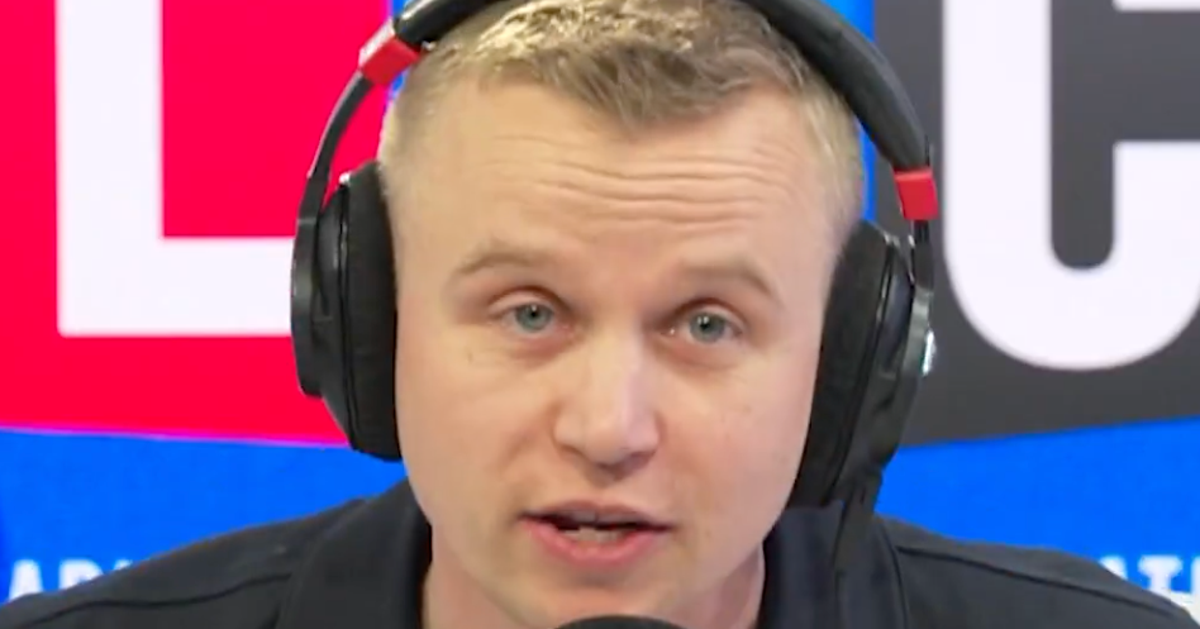
James Hanson said it “beggars belief” that the US president did not think Tehran would end up charging oil tankers for passing through the Strait of Hormuz.
The key waterway, which normally carries around one-fifth of the world’s oil and liquid gas supply, has been effectively closed by Iran since shortly after the start of the war.
Under the terms of a two-week ceasefire agreed on Tuesday night, Iran is supposed to have re-opened the strait.
But in a post on his Truth Social on Thursday, Trump said: “There are reports that Iran is charging fees to tankers going through the Hormuz Strait — They better not be and, if they are, they better stop now!”
In a follow up post, the president added: “Iran is doing a very poor job, dishonorable some would say, of allowing Oil to go through the Strait of Hormuz. That is not the agreement we have!”
In a monologue on his LBC show, James Hanson said: “Honestly, it beggars belief that the man still has not thought through the consequences of his actions.
“What did he think would happen when he started bombing Iran? Of course they were going to retaliate.
“Don’t get me wrong, I’m not defending what the Iranians are doing, not least because it’s blooming inconvenient for the rest of us who are paying more at the pumps as a result.
“But if you are the Iranians, of course the only way you are going to raise revenue to carry on fighting is by charging vessels for the right to pass safely through the Strait of Hormuz.
“This is why officials in the Pentagon warned successive presidents for the best part of half a century ’do not launch a war against Iran because they will retaliate by closing the Strait of Hormuz and that will be incredibly difficult to unpick.
“What did he think was going to happen?”
Subscribe to Commons People, the podcast that makes politics easy. Every week, Kevin Schofield and Kate Nicholson unpack the week’s biggest stories to keep you informed. Join us for straightforward analysis of what’s going on at Westminster.
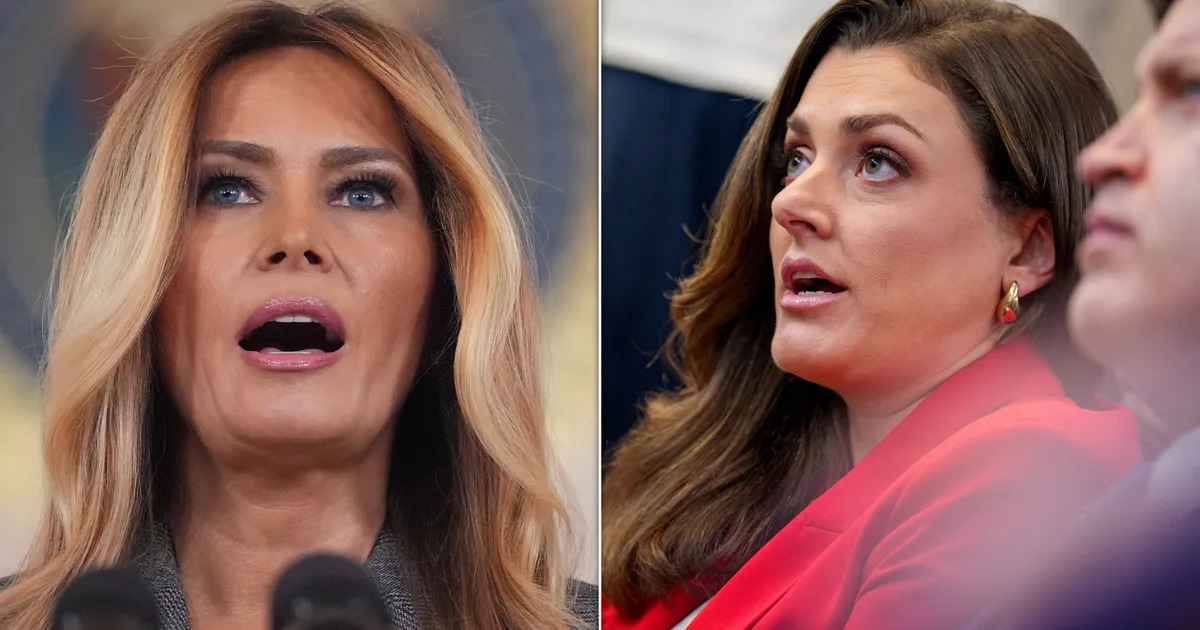
CNN senior White House correspondent Kristen Holmes offered some insight as to why first lady Melania Trump, seemingly out of the blue, attempted to distance herself from the late sex offender Jeffrey Epstein on Thursday.
“I’m told by a number of White House officials that they were just absolutely stunned, particularly by the timing of these remarks,” Holmes told CNN’s Erin Burnett on Thursday night. “It sparked rumors all across the White House campus that she was trying to get ahead of something that most people must not know about.”
Holmes added that some sources close to Trump told her they were less surprised by the first lady’s remarks because she had reportedly been growing frustrated with the online discourse about her alleged relationship with Epstein.
“She’s never actually come out and flat out denied it, and she wanted an on-the-record denial,” Holmes said.
President Donald Trump told MS NOW that he did not know about the first lady’s statement ahead of time. He added that “she didn’t know [Epstein].”
However, Holmes said a source inside the White House told her the president was indeed aware of the first lady’s statement in advance.
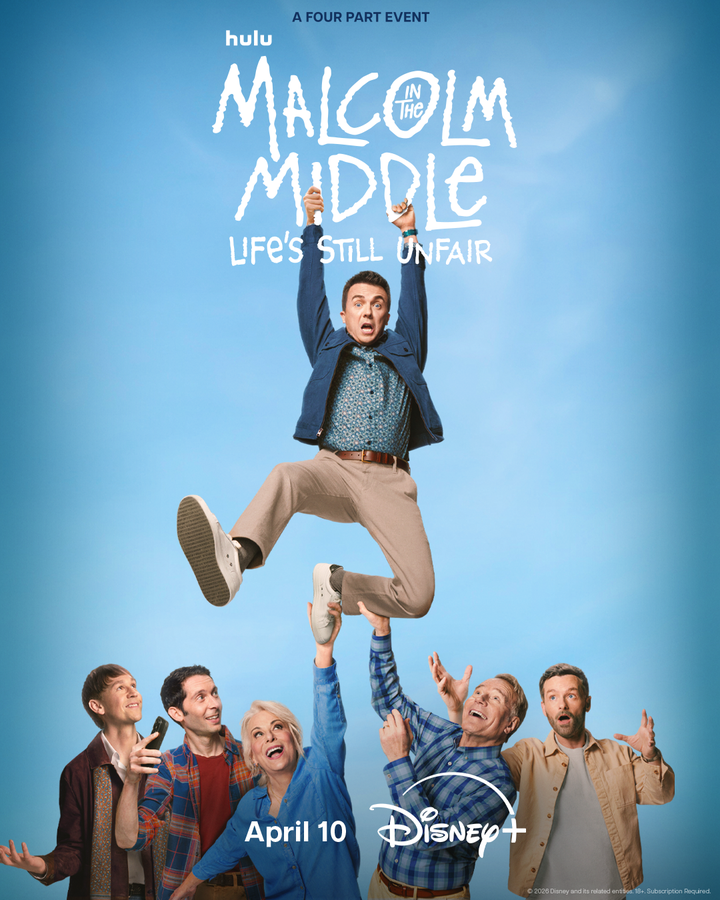
Former Malcolm In The Middle cast member Erik Per Sullivan evidently had no interest in returning for the show’s new revival.
As a child performer, Erik played Malcolm’s younger brother Dewey in all seven seasons of the family sitcom, which is about to be rebooted for a new generation.
However, in the show’s new iteration, the character of Dewey will be played by new addition Caleb Ellsworth-Clark, after the OG actor declined to return.
During a new interview with The Guardian, Malcolm In The Middle star Jane Kaczmarek made it clear that Erik was approached about coming back – and producers were more than willing to make it worth his while.
“They offered him buckets of money to come back, and he just said: ‘No thank you’,” Jane said, pointing out that Erik is happier focussing on his studies at Harvard, where he’s pursuing a master’s degree in literature.
Outside of Malcolm In The Middle, Erik went on to appear in Christmas With The Kranks and Finding Nemo during his career as a child actor.
It seems he has now retired from acting altogether, last appearing in the 2010 crime drama Twelve, at the age of 19.
Jane and her on-screen husband Bryan Cranston are both appearing in the revival, as are co-stars Frankie Muniz, Christopher Masterson and Justin Berfield.
Among the other new members of the cast are Keeley Karsten, playing Malcolm’s daughter Leah, while Anthony Timpano and Vaughan Murrae will play his younger brothers.

A synopsis for the four-part Disney+ series, titled Malcolm In The Middle: Life’s Still Unfair, reads: “Malcolm and his daughter are drawn into the family’s chaos when Hal and Lois demand his presence for their 40th wedding anniversary party.”
Malcolm In The Middle: Life’s Still Unfair is now streaming on Disney+. Take a look at the official trailer below:
It’s understandable to feel overwhelmed by the welter of bad news these days, what with the abundance of problems seemingly facing the UK. However, one can at least take some comfort in the knowledge that many of our woes have one common origin: our passive society. If we can correctly diagnose this as a principal source of our difficulties, we can at least begin to solve them.
We were reminded of the ascendency and dominance of our passive society this week with the lifting of the two-child benefit cap on universal credit, much to the horror of those who diligently save to provide for their own children, and much to the delight of the workless who don’t take responsibility for themselves or their families. While most Britons oppose lifting this cap, the voices of dissidents have been relatively muted, mindful that airing any opposition goes against the prevailing and deeply compassionate norm: that a paternal state ought to ‘lift children out of poverty’. The same paternalistic mentality underpins the tacit agreement that parents should not even be duty-bound to feed their own children, and that school breakfast clubs should perform this task instead.
This is but one area. Altogether, there is a widespread and lazy acceptance that it’s the state’s moral obligation to intervene when individuals are unable, or unwilling, to look after themselves. Indolence, apathy and the abnegation of personal responsibility are now the rule.
This has been the key factor in our mostly self-diagnosed, mostly inauthentic ‘mental-health crisis’. This was triggered by the lockdown years of 2020-21, which taught a generation of youngsters to be fearful of human contact and instilled in them the notion that not working for a living was normal. Yet those lockdowns were visited on a therapeutic society that had already taught its youth to think of themselves as fragile and vulnerable, as all on a spectrum of mental illness. The combined effect has been to reduce a whole generation to a state of passivity and dependence.
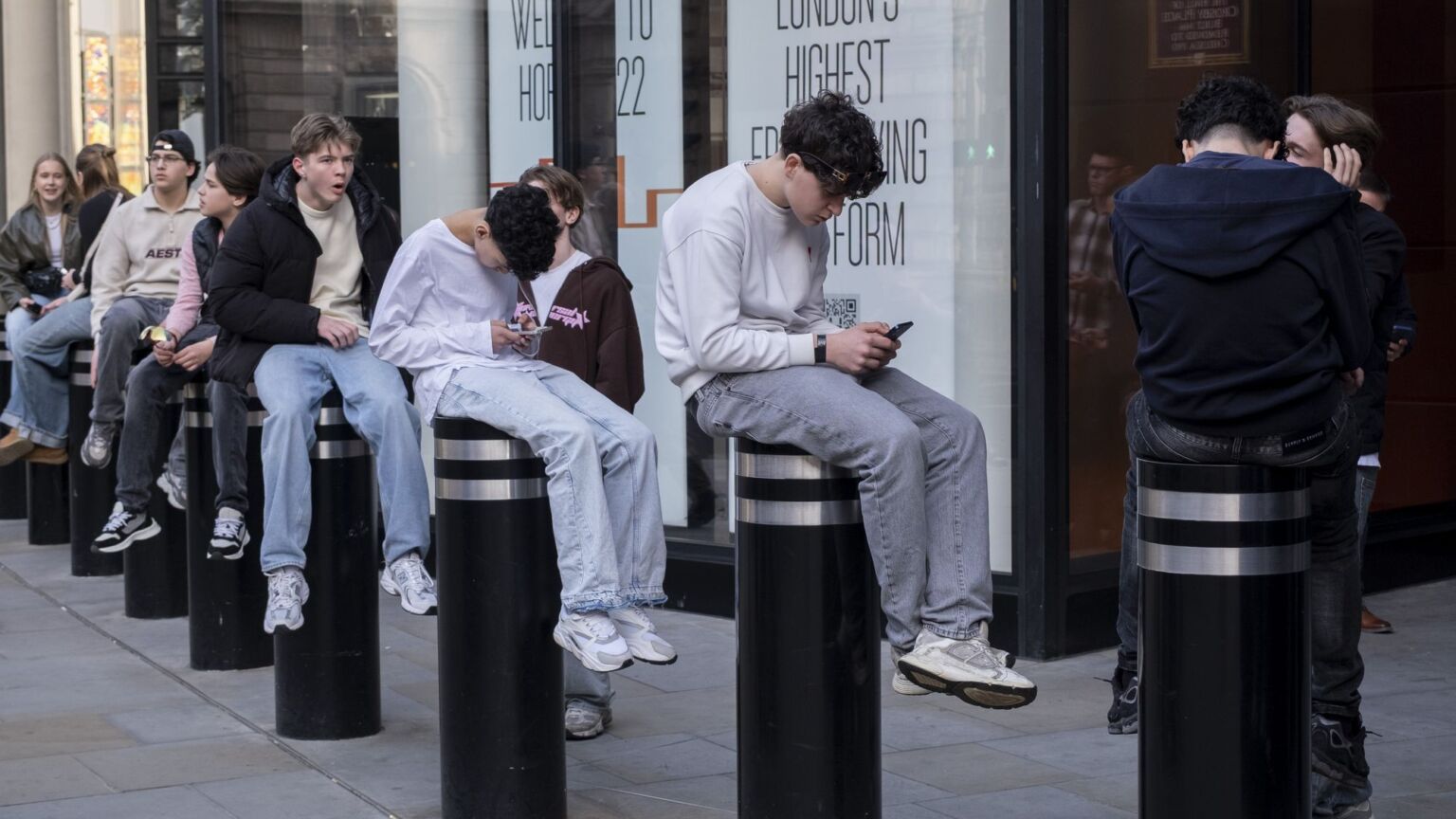
Admittedly, the proliferation of smartphones hasn’t helped the youth, or people of all generations, as entire swathes of Western society have today been reduced to zombies in the public domain. Thanks to smartphones, we have also become a society of cinematic rubberneckers, rather than active, intervening citizens.
Even in our response to smartphone enslavement, and the related problem of social-media overuse, we betray how passive our thinking has become. People talk of smartphone and social-media ‘addiction’, as if they cannot help but use these machines constantly, or to stop their kids from doing so. And so they demand the government step in, as if individuals have no choice on the matter, as if parents have no jurisdiction over their own children. Why not just put down that phone?
The same attitude is applied to obesity, which can only be solved by a crackdown on junk-food adverts or Ozempic injections, but less so by exercising self-control. You see the spectre of passivity rear its head ceaselessly on such subjects as screen violence, knife crime, vaping and alcohol abuse. In all cases, the response seems to be a resigned cry of ‘something must be done’ – ie, anyone else but me must do it.
Our collective repudiation of agency reached its logical conclusion this week, with the report that Waitrose had sacked one of its staff in south London for tackling a habitual shoplifter. Like the north London bus driver who was dismissed last February for punching a thief who had stolen a necklace from a passenger, this employee, Walker Smith, was fired because he did something many people in power today find bewildering: he acted of his own accord, of his free will, without permission and without official blessing.
If only more of us could be like Smith, able to exercise personal autonomy, perhaps this country would be in a better state than it is.
The stupidity of the educated
A graphic doing the rounds on X this week, originally fashioned by Stats for Lefties, contrasting the lower educational levels of Reform UK voters with the higher ones of those who vote Labour or Green, has caused much irritation and anger. And rightly so. There are few things less edifying than pompous progressives trying to win an argument by pointing to their superior qualifications. There’s nothing less likely to gain converts to your cause than insulting and belittling your opponents. You’d have thought those who traduced Brexiteers as knuckle-scrapping peasants 10 years ago would have learnt that lesson. Perhaps they’re too stupid to realise or remember.
Back then, many of the Remainer class seemed to assume that having an English degree qualified them as experts on the European Union. As for those who support Labour and the Greens today, they may be educated, but are they better-informed or wiser than the lower orders? If they think the Labour chancellor of the exchequer, Rachel Reeves, is doing anything but a catastrophic job, then they aren’t well-informed. If they think Zack Polanski’s policy of attempting to fleece this country’s 156 billionaires represents a coherent economic policy, and opening the borders, legalising hard drugs and placing a 55mph speed limit on motorways are signs of joined-up thinking, then they aren’t especially wise.
The conceit that being well-educated equates with sagacity surely raises the questions: Who was it that fell for the transgender delusion? Who was seduced by the madness of wokery in general, with all its McCarthyite fanaticism and reactionary racism? It wasn’t the ‘less-educated’.
Panel shows don’t have to be preachy
The panel show, Mock The Week, tested the patience of most of its viewers to despair before it was axed by the BBC in 2022. With its tedious Brexit monomania, and its creeping policy of shoe-horning ethnic minorities and female guests of manifestly lesser calibre, it deserved to be put out of its misery.
Its revival on the TLC channel, the first series of which concluded recently, is proof that comedy can survive and be revived in our post-Brexit, still woke-infested world. The latest outing wasn’t self-satisfied or aloof. There weren’t any deadweight guests there to make up an unspoken quota. I counted only two jokes about Nigel Farage. The ever-perceptive Ed Byrne has nurtured a witty persona as a beta-husband, while Ahir Shah has a wry perspicuity. Mercifully, there is no Nish Kumar or Rosie Jones.
It was, for the most part, a smart, good-natured and above all funny affair, with Dara Ó Briain remaining steadfast as its affable, cerebral and judicious host.
Makers of Have I Got News For You: take note.
Patrick West is a spiked columnist. His latest book, Get Over Yourself: Nietzsche For Our Times, is published by Societas. Follow him on X: @patrickxwest.

It’s extremely rare for a baby to be born on a plane – but that doesn’t mean it can’t happen. In fact, in the past week, a baby was born on board a Caribbean Airlines flight to JFK Airport in New York, just as the plane was landing.
Dubbed ‘skyborns’, there are thought to be less than 100 people born on flights globally. One study analysing data on all in-flight births on commercial airlines found there were 74 babies born on commercial flights between 1929 and 2018 – 71 of which were known to have survived.
Of the births analysed, 10% were born at 37-38 weeks, 16% were born at 34-36 weeks, 19% were born at 31-33 weeks and 12% were born prior to 32 weeks. To put that into perspective, a pregnancy is considered full-term at 39 weeks – so, all of them were early to some degree.
As the chance of going into labour is naturally higher after 37 weeks (or 32 weeks for those carrying twins), some airlines won’t let you fly if you’re near these dates. But policies differ between airlines. A medical certificate from a doctor or midwife confirming you’re “fit to fly” is typically required after 28 weeks of pregnancy.
So, what actually happens if you give birth on a flight?
First things first, labour can be a pretty long process (although for parents having subsequent children, it can certainly be quicker). Some expectant parents might be able to touch down before their baby’s arrival.
If contractions begin during a flight, the cabin crew should be made aware and they can then move the person to a more comfortable part of the plane. They will also alert the pilot, who will relay the message to air traffic control.
Per Flightright UK, the cabin crew will then make an announcement, calling on any medical professionals among the passengers for assistance. Cabin crew receive basic training on handling an emergency delivery but they aren’t trained midwives or doctors, so do not have the training to deal with complications.
The study charting ‘skyborns’ found in 45% of the births recorded on planes; physicians, nurses, the flight crew and other medical personnel provided medical assistance.
“In extreme cases, the pilot can initiate an emergency landing to provide the mother and newborn with professional medical care as quickly as possible,” added Flightright.
The aircraft might be diverted to a hospital, HuffPost UK understands, however there are other aviation safety considerations for the pilot, and an immediate diversion is limited by the route of the aircraft – for example, if it’s crossing an ocean.
Last year, a baby was born mid-flight from Dakar to Brussels, delivered by a cabin crew member, newly-graduated nurse and doctor (who were passengers).
At the time, Brussels Airlines shared a photo of the newborn baby, called Fanta, held by one of the cabin crew members who helped deliver her, saying: “It was a true reflection of teamwork, care, and the extraordinary moments that happen in the sky.”
Ethereum Network Activity Hits All-Time High While ETH Price Consolidates Near $2,100
Tom Sandoval Breaks Silence on West Wilson, Amanda Batula Scandal

Financial Literacy for Kids | Learn the basics of finance and budgeting


-

 Fashion7 days ago
Weekend Open Thread: Spanx – Corporette.com
-

 Business4 days ago
Three Gulf funds agree to back Paramount’s $81 billion takeover of Warner, WSJ reports
-

 Sports5 days ago
India men’s 4x400m and mixed 4x100m relay teams register big progress | Other Sports News
-

 Business6 days ago
Expert Picks for Every Need
-

 Tech2 days ago
How Long Can You Drive With Expired Registration? What Florida Law Says
-

 Business5 days ago
No Jackpot Winner, Prize to Climb to $231 Million
-

 Fashion4 days ago
Massimo Dutti Offers Inspiration for Your Summer Mood Board
-

 Fashion3 days ago
Let’s Discuss: DEI in 2026
-
Politics7 days ago
Wings Over Scotland | The quality of mercy
-

 Crypto World2 days ago
Bitcoin recovers as US and Iran Agree a Ceasefire Deal
-

 Business5 days ago
Akebia Therapeutics, Inc. (AKBA) Discusses Pipeline Progress and Strategic Focus on Kidney Disease Treatments at R&D Day – Slideshow
-

 Crypto World20 hours ago
Canary Capital Files SEC Registration for PEPE ETF
-

 Fashion7 days ago
Frugal Friday’s Workwear Report: Hammered Metallic Button Sweater Vest
-

 Politics6 days ago
The UK should not pay a penny in slavery reparations
-

 Tech4 days ago
Haier is betting big that your next TV purchase will be one of these
-

 Fashion7 days ago
Tory Burch’s Spring 2026 Campaign Goes on a Getaway
-

 Fashion7 days ago
Weekly News Update, 4.3.26 – Corporette.com
-
 NewsBeat6 days ago
Kemi Badenoch talks ‘spring cleaning’ Reform defections
-

 Tech4 days ago
Samsung just gave up on its own Messages app
-
 Fashion7 days ago
Philip Jones Kids Jewellery collection – Genuine 925 sterling silver
You must be logged in to post a comment Login