

Politics
Rachel Reeves delivers spring statement on the economy

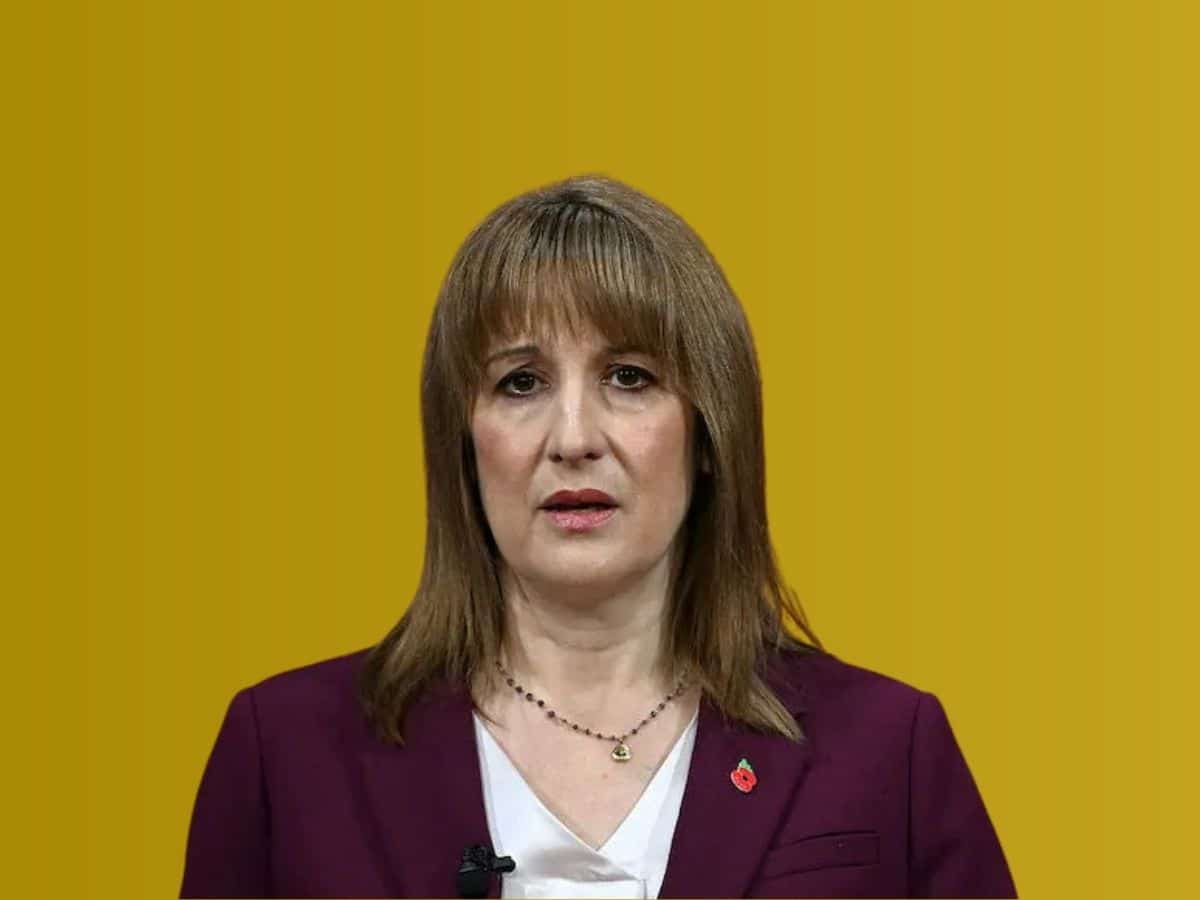
Today, 3 March, chancellor Rachel Reeves delivered her ‘spring statement’ on the progress of the UK’s finances. With clear pride, she spoke about growing the country’s economy following her autumn budget.
However, according to the Office for Budget Responsibility’s (OBR) accompanying report, the outlook is somewhat mixed.
Mixed outlook
Notably, the OBR collated its findings before the US and Israel mounted their illegal attack on Iran. This is already having a massive impact on the UK’s energy prices, among other knock-on costs.
For what it’s now worth, the government spending watchdog reported that:
- The government’s fiscal headroom — the emergency fund for economic shocks, like a sudden war in Iran — has increased to £23.6bn from £21.7bn.
- The economy should grow by 1.1% in 2026. That’s down from November’s original 1.4% forecast.
- However, inflation will likely fall faster than predicted, dropping past 2.3% over 2026. By the end of the year, it should reach as low as the Bank of England’s 2% target.
- Unemployment is predicted to reach 5.3%. That’s a hike from the previous 4.9% peak forecast.
The OBR stated that there are “significant risks” around its forecast, and added that:
Conflict in the Middle East, which escalated as we were finalising this document, could have very significant impacts on the global and UK economies.
Rachel Reeves — ‘The right economic plan’
Before the statement itself, the chancellor indicated that three major issues would “determine the course of our economy”. These, she claimed, were overcoming trade barriers, improving global relationships, and harnessing AI.
Reeves began her address to the Commons with that claim that:
This government has the right economic plan for our country.
She went on to state that the Bank of England indicated that inflation should fall faster because of
action that I took at the Budget.
The claims around inflation here are somewhat… flexible.. with the truth. The most recent figures showed 3% inflation in January, down from December 2025’s 3.4%. However, that’s still up from 2% in June 2024, immediately before Labour came to power.
Rachel Reeves — ‘Largely unchanged’
Rachel Reeves also dismissed the OBR’s downgrade of the growth forecast as “largely unchanged”:
The OBR has adjusted the profile of GDP so that it grows slightly slower in 2026, and faster in 2027 and 2028.
On that note, the spending watchdog’s long-term predictions do look fairly positive. Growth should rise to 1.6% in 2027 and 2028, and then dip slightly to 1.5% in 2029 and 2030.
This led the chancellor to claim that:
By the next election, after accounting for inflation, people are forecast to be £1000 better off per year.
Unfortunately, as the BBC explained:
She’s talking about a measure called Real Household Disposable Income (RHDI) per person. The Office for Budget Responsibility said today, external that measure had grown strongly in 2024-5 (broadly the first year after the general election). It has grew by 3.1%.
In 2025-26, RHDI per person is expected to grow by much less — only 0.1% — and then average 0.5% growth a year until 2029, when the next election is likely to happen.
The OBR says RHDI per person was £25,500 in 2023-24 and it does indeed predict that it will be a bit more than £1000 higher than that by the time of the next election, but you’ve already had most of that increase.
Objections from the opposition(s)
The chancellor wrapped up by voicing confidence that the UK can “navigate the challenges we face”:
The plan that I have been driving forward since the election is the right one: stability in our public finances, investment in our infrastructure and reform to Britain’s economy.
However, the other parties in the Commons were predictably less enamoured with Reeves patting her own back. The Lib Dems’ Daisy Cooper, citing Trump’s war on Iran, pushed for:
put a laser-like focus on getting a better trade and defence deal with Europe.
Meanwhile, Reform’s Robert Jenrick likened Reeves to a:
rogue landlord who keeps squeezing the tenant with higher and higher rent. All the while, the property is going to wrack and ruin.
As a reminder, Jenrick was a Conservative MP under the Liz Truss government, which nearly crashed the economy completely.
Lastly, Tory shadow chancellor Mel Stride called the address “not a Spring Statement” but a “surrender statement”. He pointed out that government borrowing is up (true), and also claimed the UK’s youth unemployment rate is:
the highest in Europe for the first time in a quarter of a century.
According to the latest figures from the Organisation for Economic Co-operation and Development (OECD), this is false. In fact, 13 EU countries had higher youth unemployment rates last year alone.
Rather, the UK’s youth unemployment rate was 15.3% in summer 2025. This was 0.1% above the EU average of 15.2%. Simple mistakes like this are likely why Stride is safer as the shadow chancellor than in a job where he actually has any power.
Overall, Reeves’ speech was self-congratulating, and optimistic in a manner than was mildly at odds with the OBR’s forecast itself. However, with the shadow of Trump and Israel’s war with Iran looming, any predictions now come with extremely heavy caveats.
Featured image via the Canary


NHS Humber Health Partnership (HHP) is being moved into special measures due to repeated and worsening failures. The partnership is now in Segment 5 of the National Oversight Framework (NOF), the lowest grade, indicating significant performance or governance challenges.
The partnership is responsible for five East Yorkshire and North Lincolnshire hospitals, including those in Hull, Cottingham, Goole, Grimsby and Scunthorpe. Northern Lincolnshire and Goole NHS Foundation Trust (NLG) and Hull University Teaching Hospitals NHS Trust (HUTH) also fall under the HHP’s watch.
Unions representing the hospital workers have voiced severe criticisms of HHP leadership. Peta Clark, Royal College of Nursing head of operations, stated that within the partnership’s hospitals:
Staff morale is extremely low. Many feel undervalued, unheard, and under relentless pressure, despite working tirelessly to keep services running.
Likewise, Brendan Cafferty — Unison regional organiser — said:
Frontline NHS staff want to deliver the best patient care possible to the people of Hull and beyond. They’re proud to work for the organisation.
But they deserve a senior leadership team that supports them to do that.
NHS — ‘Very challenging financial climate’
HHP revealed that 13 serious, preventable accidents — ‘Never Events’ — had happened to patients in its care between June 2024 and August 2025. For context, only 19 Never Events have occurred in total since August 2023 — the creation of the partnership. As such, last year’s accidents mark a serious escalation of safety worries.
The partnership stated that:
Patient safety is an absolute priority for our partnership and must be central to every service and way of working.
We have launched a new Learning Improvement and Safety Academy to address safety issues, learn from incidents and educate and train our workforce better to prevent incidents from happening again.
On the subject of HHP’s relegation to Segment 5, the partnership said:
This reflects the scale of challenges which the organisation has been managing for some time. These issues are not new and include long-term challenges around access to care, including A&E and waits for surgery.
All NHS organisations and other public sector organisations, including ours, are working to deliver services in a very challenging financial climate.
That ‘challenging financial climate’ is, in part, a consequence of the government underfunding our NHS. In January 2026, the Canary reported that:
according to the British Medical Association (BMA), there has been a real terms cumulative underspend of £425bn in public health spending since 2009/10.
Following that, Labour has pledged a 2.2% increase in health spending until 2028/29. But that’s completely undermined by the governing party mandating 4% ‘efficiency savings’. That actually represents a 1.8% cut, putting staff working long hours under increased pressure.
Improvement team
However, the money that is going into the NHS isn’t necessarily being put to best use either.
Back in July 2025, Lyn Simpson was appointed as interim chief executive of the partnership – for an annual salary of almost £280,000. In August, HHP also brought in five other senior staff and an external contractor to form an ‘improvement team’.
The improvement team costs an average of £78,000 a month to run. However, the hospitals under HHP’s aegis haven’t yet shown consistent improvement.
For example, Northern Lincolnshire and Goole NHS Foundation Trust climbed from 125th to 115th in the NHS league tables. Meanwhile, HUTH dropped seven places — from 123rd to 130th — between September and December.
These league tables measure access to services, patient safety and financial management. There are just 134 positions within the rankings.
The Israeli occupation consistently uses the pretext of ‘security’ needs to implement policies designed for permanent control, domination, and de facto annexation of the Palestinian territory. And very soon after it initiated its first attacks on Iran, on 28 February, the military acted swiftly to tighten its grip on Palestinians in the West Bank even further.
Israeli occupation using its attacks on Iran to increase its control over Palestinians in West Bank
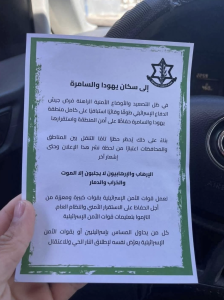
A Palestinian resident of Birzeit told the Canary that these flyers, from the Israeli occupation forces (IOF), have been scattered everywhere on the roads around Birzeit, and also in other areas of the West Bank.

Translated, it reads as follows:
Statement to the people of Judea and Samaria:
During this escalating security situation the IDF [ Israeli ‘Defense’ Forces] has made the whole area of Judea and Samaria [West Bank] into a security area, to maintain the security and stability of the region.
It is prohibited completely to move between places, from the moment of this publication until further updates.
Terrorism and terrorists bring death and destruction
The IDF is working with large enhanced forces to maintain security, stability, and public order.
You must follow these instructions.
Anyone who tries to harm the Israelis, or the IDF will be shot or jailed.
The closure of al-Aqsa mosque during Ramadan — under pretext of security concerns — is also an attempt to tighten control over Palestinian population
The Israeli occupation also lost no time in preventing Palestinians from entering and praying at al-Aqsa Mosque, Islam’s third holiest site, during this holy month of Ramadan. On the morning of 2 March, Israeli occupation forces (IOF) forced worshippers from the mosque and its compound, in occupied East Jerusalem. They have been unable to access or pray at the site for four consecutive days now, and it remains closed until further notice.
On the morning of 28 February, just hours after ‘Israel’ and the US first launched their strikes against Iran, the occupation’s authorities forced Palestinians to leave the mosque, citing ‘a state of emergency’. This has happened during the Muslims’ holiest month, Ramadan.
2014 was the first year since 1967 that the Israeli occupation had closed al-Aqsa. But since then, restrictions have tightened significantly for Palestinians. Traditionally, hundreds of thousands of Muslim worshippers gather at al-Aqsa to pray. But in recent years the Israeli occupation has been clamping down on Palestinians’ religious freedom, preventing many from accessing Islam’s third holiest site.
This year, at the beginning of Ramadan, the occupation had already decided to limit the number of Palestinian worshippers at al-Aqsa’s Friday prayers to 10,000. These Palestinians need to obtain a daily permit for each prayer, but only men over 55, women over 50, and children under 12 are eligible. But now, the Israeli occupation is further exploiting ’emergency’ pretexts to advance its control over the West Bank and East Jerusalem, and the Palestinians that live there. And this is why Israel completely shuts al-Aqsa mosque and its compound in the face of Muslims.
Judaisation of Jerusalem, while ‘Israel’ aims to make Palestinians invisible — there is also an imposed media blackout
‘Israel’ has also banned thousands of Palestinian citizens of Jerusalem from visiting al-Aqsa, for reasons unknown to them, and issued at least 12 arbitrary ban orders, during and before this Ramadan, against Palestinian journalists. This is to prevent them from reaching al-Aqsa, and censor their coverage of Zionist crimes there. The IOF claim, without any evidence, that they “pose threats to public order”. The occupation has also recently outlawed five digital news sites that cover Jerusalem, in its attempt to control the information flow from the media. Arrests have increased, and authorities have also banned Palestinian residents of Jerusalem from putting up decorations and festive lights for Ramadan. The Zionist regime wants to consolidate control over holy sites in the occupied territory such as al-Aqsa and the Ibrahimi mosque in Hebron. It also aims to make Palestinians invisible, hide their culture, heritage and identity, and Judaise Jerusalem. These measures come as the occupation’s police have for the first time, extended the hours of Jewish worshippers at al-Aqsa.
Throughout the occupied West Bank, ‘Israel’ is imposing policies to further its control over the Palestinian population. Its ultimate aim is the same, irrespective of the place. To make life as difficult and uncomfortable as possible for Palestinians, so they give up and leave their land.
Most recently, the Knesset approved new land registration rules that make it easier to steal Palestinian land, and expand illegal settlements. The occupation has also conducted large-scale military raids in the Northern occupied West Bank refugee camps, forcibly displacing all their residents — more than 40,000 people. Violent raids by the Israeli occupation forces (IOF) also take place in Palestinian homes throughout the West Bank, on a daily basis, for no reason except to control and intimidate the population.
Israeli occupation continuing to add more roadblocks and checkpoints in the West Bank
After October 2023, the IOF tightened its restrictions on freedom of movement even further in the West Bank. There are now more than 1180 military checkpoints, metal detector gates, earth mounds, and cement blocks which can be used at any time to close a road. Many are permanent. These not only block Palestinian access to villages and towns, sealing off these areas, but also prevent access to services and land. Now, with the Israeli occupation’s attacks on Iran, new checkpoints are being set up throughout the occupied West Bank under the guise of security, while others remain closed, restricting movement even further.

The Israeli occupation frames many of these measures as temporary responses to specific security threats. And it claims that checkpoints, permit systems, and expanded military authority are necessary to prevent attacks and protect civilians. But these ‘temporary’ measures have become entrenched. Restrictions on movement and land access have reshaped daily life for Palestinians. They go way beyond security needs, systematically undermining Palestinian life — limiting movement, access to land, and economic opportunity — while expanding Israeli occupation control over the West Bank and East Jerusalem.
What is called “security” is increasingly a pretext for occupation. Checkpoints, roadblocks, and permit systems fragment communities, make everyday life unpredictable, and entrench the Zionist regime’s control over territory Palestinians claim for a future state.
These measures are not a form of protection, but are tools to tighten control and make the possibility of Palestinian self-determination more remote than ever.
Featured image via TRT

!function(n){if(!window.cnx){window.cnx={},window.cnx.cmd=[];var t=n.createElement(‘iframe’);t.display=’none’,t.onload=function(){var n=t.contentWindow.document,c=n.createElement(‘script’);c.src=”//cd.connatix.com/connatix.player.js”,c.setAttribute(‘async’,’1′),c.setAttribute(‘type’,’text/javascript’),n.body.appendChild(c)},n.head.appendChild(t)}}(document);(new Image()).src=”https://capi.connatix.com/tr/si?token=19654b65-409c-4b38-90db-80cbdea02cf4″;cnx.cmd.push(function(){cnx({“playerId”:”19654b65-409c-4b38-90db-80cbdea02cf4″,”mediaId”:”3d94303f-5aed-4916-a235-e67952103a55″}).render(“69a75d80e4b0085f232a56d0”);});
In 2019 at Downing Street Boris Johnson, Dominic Cummings, and Peter Thiel – Palantir’s billionaire co-founder and chairman, met for an hour. There were no notes from this meeting. Palantir being awarded Covid contracts followed.
Liberal Democrat MP Martin Wrigley has been chasing these notes ever since, following up with multiple Freedom of Information (FOI) requests, appeals, and parliamentary questions. All have been denied. Even the documents explaining why the FOI was denied have also been denied – he told Politics Joe this week.
Palantir is taking over Britain. This is how | Martin Wrigley interview https://t.co/iQ9JcqudqV
— PoliticsJOE (@PoliticsJOE_UK) March 1, 2026
Starmer has continued this pattern of secret meetings. A February 2025 Washington meeting between Starmer, Peter Mandelson, and Palantir CEO Alex Karp has no notes and preceded the £240 million December 2025 contract between the Ministry of Defence and Palantir.
Palantir, named after the all-seeing orb from the Lord of the Rings, wants to see everything. But when it comes to its own meetings, it seems they prefer the lights off.
However, Labour have recently said they will answer Wrigley’s questions about Starmer’s secret meeting with Palantir, pointing to previous statements and promising “further details.”
The UK Parliament’s Intelligence and Security Committee could begin releasing documents relating to Lord Mandelson’s appointment and role as US ambassador soon. A UK government spokesperson said officials were “proceeding at pace to publish the first tranche of documents in early March” and “working closely” with the ISC to fulfil their requests.
Successful lobbying by Palantir
Wrigley said the sales and marketing operations of AI companies like Palantir were so slick that “you’re probably buying the brochure, not the product.” He pointed to their accounts: vast sums on lobbying and sales, while the core business barely breaks even.
“Palantir… put an awful lot of money into lobbying and sales efforts,” Wrigley noted; he wasn’t invited to a lavish Palantir party thrown recently, adding dryly: “I wonder why.”
The Mayfair drinks reception saw CEO Louis Mosley confronted outside by Declassified UK journalists asking whether Palantir technology used in Gaza was now being sold to the British army. Mosley declined to answer and hurried inside.
We asked Palantir’s UK boss about his controversial military deal with Britain.
At a swish drinks reception in central London, Palantir celebrated its £240m contract with the MoD to sell them its AI battlefield technology👇 pic.twitter.com/t7HeZJPNpj
— Declassified UK (@declassifiedUK) February 21, 2026
From Epstein’s Island to the UK government
Thiel exchanged over 2,000 messages with convicted sex offender Jeffrey Epstein from 2014 until Epstein’s final arrest in 2019. Novara Media reported that:
During this period, Epstein was a significant limited partner investor in Thiel’s venture capital firm Valar Ventures – to the tune of approximately $40m.
Also central to this picture is Mandelson, whose lobbying firm Global Counsel worked for Palantir. It was Mandelson who introduced Starmer to Palantir CEO Alex Karp at that February 2025 Washington meeting, the one with no notes that preceded the £241 million MOD contract.
Mandelson’s own extensive contacts with Epstein are now the subject of a police investigation. Global Counsel no longer exists.
Total UK government contracts now exceed £670 million – spanning the NHS, the Ministry of Defence, police forces, the Cabinet Office, and even the navy’s nuclear-powered submarines. The NHS contract alone is worth £330 million over seven years, giving one US company access to the health data of 67 million Britons.
As the ISC prepares to release documents, the question is whether sunlight will finally reach Palantir’s dealings. The 2019 meeting produced no notes. The 2025 meeting produced no notes. The documents coming may not mention Palantir at all – but maybe they will lift the veil completely.
Featured image via the Canary

Rogue nuclear powers Israel and the US have illegally attacked Iran, killing at least 787 people there so far since Saturday 28 February. They have also killed 40 people in Lebanon and two in Iraq.
As the US-Israeli genocide continues in Gaza, this latest offensive looks set to continue despite increasing disruption to a region that plays a key role in the global energy industry.
US and Israel hit hospitals and schools, wounding thousands
The Iranian ambassador to the UN has said his country’s retaliations will continue until the US-Israeli attacks stop. And he clarified that:
If any base in a neighbouring country is used to attack and invade other countries, that would be a legitimate target.
Iran’s response has killed six US soldiers so far, along with 11 people in the apartheid state of Israel. With Iran targeting US assets in authoritarian Gulf states, a further eight people have also died in Kuwait, the United Arab Emirates, Bahrain, and Oman. Temporary closures to gas and oil facilities as a result, meanwhile, have sent prices soaring.
Al Jazeera has reported that US-Israeli attacks have:
The US and Israel have nuclear weapons. Iran doesn’t.
One official excuse for the unprovoked, illegal attack on Iran is its nuclear ambitions. However, the director general of the International Atomic Energy Agency has told NBC News the organisation does not believe Iran has nuclear weapons and had not “seen elements of a systematic and structured program to manufacture nuclear weapons” there.
Israel, on the other hand, has had such weapons of mass destruction for decades now. As the Canary reported previously:
Israel is the only country in the Middle East which has nuclear weapons. But it has not signed the Treaty on the Non-Proliferation of Nuclear Weapons (NPT) and refuses to place its nuclear facilities under the watch of UN inspectors. This is unlike Iran, whose facilities are monitored constantly and which, as a non nuclear-weapon state which is a signatory to the NPT, has also agreed not to seek or acquire these weapons…
Israel is not only believed to possess 90 nuclear warheads, but also to have produced enough plutonium to produce 100 to 200 more nuclear weapons. And according to new research from the Stockholm International Peace Research Institute (SIPRI), it is actively modernising its nuclear arsenal.
The US, meanwhile, has over 5,000 nuclear warheads.
The International Campaign to Abolish Nuclear Weapons (ICAN) has clarified that:
A single nuclear warhead could kill hundreds of thousands of people, with lasting and devastating humanitarian and environmental consequences.
This perhaps explains why the US and Israel are happy to attack Iran but not countries like Russia, China, or North Korea, which actually do have nuclear weapons. It also helps to explain why the US and Israel feel they can get away with committing war crimes against countless nations which don’t have nuclear weapons.
Featured image via the Canary

NHS Humber Health Partnership (HHP) is being moved into special measures due to repeated and worsening failures. The partnership is now in Segment 5 of the National Oversight Framework (NOF), the lowest grade, indicating significant performance or governance challenges.
The partnership is responsible for five East Yorkshire and North Lincolnshire hospitals, including those in Hull, Cottingham, Goole, Grimsby and Scunthorpe. Northern Lincolnshire and Goole NHS Foundation Trust (NLG) and Hull University Teaching Hospitals NHS Trust (HUTH) also fall under the HHP’s watch.
Unions representing the hospital workers have voiced severe criticisms of HHP leadership. Peta Clark, Royal College of Nursing head of operations, stated that within the partnership’s hospitals:
Staff morale is extremely low. Many feel undervalued, unheard, and under relentless pressure, despite working tirelessly to keep services running.
Likewise, Brendan Cafferty – Unison regional organiser – said:
Frontline NHS staff want to deliver the best patient care possible to the people of Hull and beyond. They’re proud to work for the organisation.
But they deserve a senior leadership team that supports them to do that.
NHS: ‘Very challenging financial climate’
HHP revealed that 13 serious, preventable accidents – ‘Never Events’ – had happened to patients in its care between June 2024 and August 2025. For context, only 19 Never Events have occurred in total since August 2023 – the creation of the partnership. As such, last year’s accidents mark a serious escalation of safety worries.
The partnership stated that:
Patient safety is an absolute priority for our partnership and must be central to every service and way of working.
We have launched a new Learning Improvement and Safety Academy to address safety issues, learn from incidents and educate and train our workforce better to prevent incidents from happening again.
On the subject of HHP’s relegation to Segment 5, the partnership said:
This reflects the scale of challenges which the organisation has been managing for some time. These issues are not new and include long-term challenges around access to care, including A&E and waits for surgery.
All NHS organisations and other public sector organisations, including ours, are working to deliver services in a very challenging financial climate.
That ‘challenging financial climate’ is, in part, a consequence of the government underfunding our NHS. In January 2026, the Canary reported that:
according to the British Medical Association (BMA), there has been a real terms cumulative underspend of £425bn in public health spending since 2009/10.
Following that, Labour has pledged a 2.2% increase in health spending until 2028/29. But that’s completely undermined by the governing party mandating 4% ‘efficiency savings’. That’s actually represents a 1.8% cut, putting staff working long hours under increased pressure.
Improvement team
However, the money that is going into the NHS isn’t necessarily being put to best use either.
Back in July 2025, Lyn Simpson was appointed as interim chief executive of the partnership – for an annual salary of almost £280,000. In August, HHP also brought in five other senior staff and an external contractor to form an ‘improvement team’.
The improvement team costs an average of £78,000 a month to run. However, the hospitals under HHP haven’t yet shown consistent improvement.
For example, Northern Lincolnshire and Goole NHS Foundation Trust climbed from 125th to 115th in the NHS league tables. Meanwhile, HUTH dropped seven places – from 123rd to 130th – between September and December.
There league tables measure access to services, patient safety and financial management. There are just 134 positions within the rankings.

Met Police Chief Sir Mark Rowley has told the BBC that he ‘can see why women don’t trust the police’. His interview comes as we mark the fifth anniversary of the murder of Sarah Everard, murdered in 2021 by a serving police officer in the Met. Referring to ‘several ghastly cases of police officers committing awful offences against women’, Rowley agrees they were undoubtedly intrinsic in the flailing public trust in the Metropolitan Police.
Women and girls face increasing levels of sexual abuse driven by the entitlement, misogyny, and harmful attitudes held by too many men in Western societies. That trauma often damages their ability to feel safe or to trust others.
However, Rowley actually appears to minimise the scale and diversity of abuse that women experience. After all, for marginalised women that threat can be even greater. Black and brown women not only endure sexual violence but also face racist abuse that compounds and deepens the trauma they must navigate in their daily lives. We also have our LGBTQ+ community who we must also not forget in this critical issue.
Sarah, remembered five years on.
I understand why women don’t trust the police, says Met chief on Sarah Everard anniversary – BBC News https://t.co/t6nnBXybbB
— Vernal Scott (@vernalscott) March 3, 2026
All women matter, not just white women
In March 2021, Met police officer Wayne Couzens identified himself to Sarah Everard before making a false arrest. He then proceeded to kidnap, rape and murder Everard, even using police handcuffs to make her submissive. He had also been found to have indecently exposed himself on two recorded incidents.
Since her murder, officials have conducted reports and inquiries into the institution. Campaigners have also made widespread calls for reform to address the terrifying risks women face when interacting with police officers. Nevertheless, it hasn’t escaped our attention that Sir Rowley’s interview today makes no mention or reference to the other institutional issues that we know are rife within the UK’s biggest police force.
After all, we mustn’t forget the report in 2023 conducted after Everard’s murder at the hands of a Met police officer, which found the force are institutionally racist, misogynistic and homophobic. Given how these behaviours often interplay for abusers, Rowley’s lack of acknowledgement suggests they have learned little respect for the experience of women.
Our own Alex/Rose Cocker wrote in October about racist and misogynistic attitudes in the Met, after a BBC Panorama revealed an apparently ‘hidden culture’. As Cocker astutely pointed out, there is nothing ‘hidden’ about it:
Rory Bibb, the Panorama reporter, spent seven months in the custody suite of Charing Cross police station as a designated detention officer. In that time, Bibb recorded a vast array of truly heinous and discriminatory remarks and actions from the officers around him. His sterling work resulted in the suspensions of eight bigot cops and one other staff member.
adding:
The Met’s bigotry has only been driven underground if you have the luxury of never having to deal with an officer whilst you yourself are marginalised in any way. Its discrimination can only be considered hidden if we automatically discount the Met’s victims as credible witnesses.
Two Met Police officers have been sacked after being found guilty of gross misconduct over the stop and search of two black athletes.
The police followed them as they travelled home from training in their car with their baby son.
Read more: https://t.co/1E2j6M7s0o pic.twitter.com/I2vV63j0ZI
— Sky News (@SkyNews) October 25, 2023
‘The Met Police’s problems extend beyond a systemic hatred of women’
Joe Glenton wrote for the Canary later that month about a Met police officer who avoided a custodial sentence despite spying on a 14-year-old girl. Instead, his conviction of voyeurism and making indecent images of a child was given a suspended sentence of 13 months. He wrote:
The Met’s problem’s extend beyond a systemic hatred of women. On 2 October a BBC Panorama documentary showed how racism and far-right ideas thrived in the force.
The BBC reported:
The evidence of misogyny and racism challenges the Met’s promise to have tackled what it calls “toxic behaviours” after the murder of Sarah Everard by a serving police officer.
Panorama’s secret filming shows officers making sexualised comments to colleagues and sharing racist views about immigrants and Muslims.
What sort of deterrent is this when pretty much every abuser wants to believe they won’t get found out? The lack of a serious sentence when he was in a position of trust in his community speaks to a woeful underappreciation by the Met for the long-term harm these abuses inflict on those victimised.
Five years since Sarah Everard was raped and murdered and a Sky News investigation has found there have been widespread criminal investigations into officers for rape and sexual offences since then, across forces in England and Wales. Including the Met.https://t.co/yCBvHWyUxy
— Amanda Lees (@amandalees) March 3, 2026
Met Police — little sign of change or progress for women
Former victims’ commissioner Dame Vera Baird added her voice this morning. She argued on Sky News that women’s safety and confidence haven’t improved much at all since Everard’s horrifying murder. Alarmingly, she also pointed out that applicants to the Met with a caution on their record seem to be perfectly acceptable:
Former victims commissioner Dame Vera Baird tells @SophyRidgeSky that she doubts the safety of women, and the confidence of women has moved forward much at all since Sarah Everard’s murder.https://t.co/N5m5d2cuKJ
📺 Sky 501, Virgin 602, Freeview 233 and YouTube pic.twitter.com/lNz1NnmivK
— Ridge & Frost (@RidgeandFrost) March 3, 2026
The Angiolini inquiry referenced by Baird was released in December last year, and highlighted ‘massive and continuing failures’ in the Met’s handling of violence against women and girls (VAWG). We wrote at the time:
Racism and misogyny shouldn’t be conflated here. However, last month’s report illustrates the ways in which the police can work directly counter to efforts at reform, both within and without their organisation. The solution to VAWG cannot, and must not, be built around the expectation that the police can resolve this issue.
Time and again, we have seen that the police are part of the problem.
I mean, it’s hard to argue against an independent third party stepping in to fix this serious issue within the force. Especially when they were clearly more than happy to ignore Prince Andrew’s abuse:
Dai Davies, former head of Royal protection and commander at the Met Police, says ‘there are a lot of questions for the Met’ as the Epstein files suggest the force provided security for the former prince Andrew and Jeffrey Epstein after the latter was convicted for sex offences. pic.twitter.com/iL38QZNkrE
— BBC Radio 4 Today (@BBCr4today) February 23, 2026
Deal with the root issue, not just the inevitable abuse
If the Epstein Files teach us anything, it is that sexual abuse often follows where powerful men go. Therefore, it isn’t a stretch to imagine that men attracted to the Met are doing so because they want to feel powerful. That is why it is essential that the scrutiny they receive is far reaching and cannot ignore cautions or any indication that abuse is possible as Dame Vera Baird underscored.
The harm that men have the potential to inflict is far reaching and life-changing for victims and survivors. The greater good and preventing that harm should always be the priority but evidently hasn’t been for far too long.
That might lead to a recruitment issue as there aren’t the number of suitable applicants. On the other hand, it might finally prompt the long overdue national conversation about harmful male attitudes in the UK.
Featured image via MyNewsDesk

Ahead of the Spring Statement tomorrow, the Trades Union Congress (TUC) released new analysis. It shows that a million 18-20 year olds (85%) already earn above the youth minimum wage. This, the TUC claims, renders the youth rate not only unfair, but also “obsolete” as only 1 in 7 receives it.
Youth minimum wage increasingly irrelevant
740,000 young people (63% of those in work) are paid at or above the adult national minimum wage. So the youth rate doesn’t apply to them at all.
Given the majority of employers already pay young people a fair wage, “doomsday” warnings about the impact of equalising rates are “scaremongering and misleading”, says the TUC. Needless to say, the millionaire Scrooges at Reform are leading this cry and want to pay young people even less.
At the moment, adults 21 and over must get a minimum of £12.21 per hour. The youth minimum wage, for those aged between 18 and 20, is £10 per hour.
This speaks to a fundamental issue of fairness. Young people, the TUC says:
pay the same bills as everyone else, and deserve a fair wage for their work.
Unions find that many businesses report they don’t want to deal with this unfairness. And they want to avoid the administrative burden of changing workers’ pay as they get older.
Closing the gap
Labour’s manifesto promised to remove discriminatory age bands. In fact, successive governments have reduced the gap between the adult rate and youth rate. And yet this has had no negative impact on employment.
Reform and the Conservatives have both called for youth rates to stay in place. But the process of equalising youth minimum wage rates actually began under the previous (Conservative) government. First as 23–24-year-olds became entitled to the adult rate in 2021, and then as 21–22-year-olds joined them in 2024. Further increases since the election have been following this trend.
Despite scaremongering at the time, the Low Pay Commission found previous equalisations happened:
without an increase in unemployment and underpayment.
The Low Pay Commission is the independent body responsible for balancing youth employment with equalising the minimum wage. It’s been doing this effectively for 26 years. The TUC argues it should be trusted to continue its evidence-based approach to finishing the job.
The inherent unfairness of the youth rate became worse over recent years as it fell significantly behind the adult rate. Between 2010 and 2024, the 18-20 rate fell from 83% to just 75% of the full minimum wage.
There is now a small gap remaining – the 18-20 rate from April 2026 will be 85% of the adult rate.
The UK is behind similar countries in still having a youth rate. Countries such as France, Germany and New Zealand do not have lower rates for adults aged 18 and above.
Especially given that even when the youth minimum wage goes, workers under 21 will still be cheaper to hire, as employer National Insurance Contributions only apply to workers aged 21 or over.
Real solutions
The government is right to be sensitive to young people’s unemployment levels. But we need real solutions, not scaremongering about the minimum wage.
The TUC has consistently argued sluggish consumer demand is keeping the UK economy in the slow lane.
Industries which have a greater proportion of minimum wage jobs, like hospitality and retail, need customers with money in their pockets.
It is also important to recognise that recent rises in youth unemployment have been offset by falls in youth economic inactivity rates.
To tackle rising youth unemployment the government should bring forward stronger employment rights, an ambitious jobs guarantee and quality apprenticeships.
TUC general secretary Paul Nowak said:
Young people pay the same bills as everyone else and deserve a fair wage for their work.
Youth rates are not only unfair, but they’re also increasingly obsolete as most businesses hardly use them.
Youth unemployment is a serious issue that deserves real solutions, like stronger employment rights, an ambitious jobs guarantee and quality apprenticeships – not doomsday scaremongering and misleading claims about the minimum wage.
The Low Pay Commission are the trusted experts and should be trusted to finish the job, setting out a plan to abolish the minimum wage youth rates this parliament.
The government promised to deliver change. Rowing back in the face of unsubstantiated business lobbying – at real cost to young people’s living standards – would be exactly the wrong approach.
Featured image via the Canary
!function(n){if(!window.cnx){window.cnx={},window.cnx.cmd=[];var t=n.createElement(‘iframe’);t.display=’none’,t.onload=function(){var n=t.contentWindow.document,c=n.createElement(‘script’);c.src=”//cd.connatix.com/connatix.player.js”,c.setAttribute(‘async’,’1′),c.setAttribute(‘type’,’text/javascript’),n.body.appendChild(c)},n.head.appendChild(t)}}(document);(new Image()).src=”https://capi.connatix.com/tr/si?token=19654b65-409c-4b38-90db-80cbdea02cf4″;cnx.cmd.push(function(){cnx({“playerId”:”19654b65-409c-4b38-90db-80cbdea02cf4″,”mediaId”:”b020c36c-0e4a-4946-b8b2-2d32966a556f”}).render(“69a72556e4b076ac5d6407d2”);});
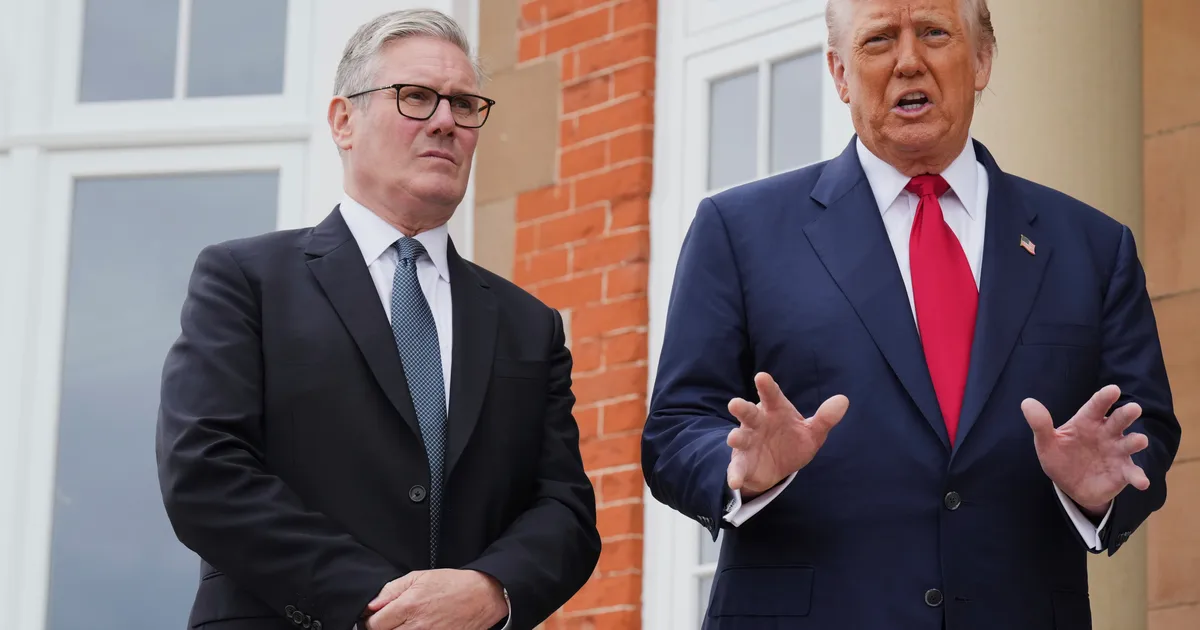
Donald Trump has mocked Keir Starmer over the UK’s response to the US-Israeli bombing of Iran.
The American president said “this is not Winston Churchill that we’re dealing with” after Starmer initially refused to let the US use British bases to launch their attacks.
The PM eventually changed his mind after Iran began bombing countries across the Middle East, putting British lives at risk.
Trump’s Oval Office comments mark a new low in the so-called “special relationship” between America and the United Kingdom.
Referring to the UK military base at Diego Garcia, he said: “That island… It’s taken three, four days for us to work out where we can land there, it would have been much more convenient landing there as opposed to flying many extra hours, so we are very surprised.
“This is not Winston Churchill that we’re dealing with.”
Earnings call transcript: Cricut beats Q4 2025 EPS forecast, stock rises

Woman Linked to David Harbour Asked to Leave Lily Allen Producer’s Party

NHS Humber Health Partnership moved into special measures


-

 Politics5 days ago
ITV enters Gaza with IDF amid ongoing genocide
-

 Fashion4 days ago
Weekend Open Thread: Iris Top
-

 Politics15 hours ago
Alan Cumming Brands Baftas Ceremony A ‘Triggering S**tshow’
-

 Tech3 days ago
Unihertz’s Titan 2 Elite Arrives Just as Physical Keyboards Refuse to Fade Away
-

 NewsBeat6 days ago
Cuba says its forces have killed four on US-registered speedboat | World News
-
Sports4 days ago
The Vikings Need a Duck
-
 NewsBeat3 days ago
Dubai flights cancelled as Brit told airspace closed ’10 minutes after boarding’
-
 NewsBeat6 days ago
Manchester Central Mosque issues statement as it imposes new measures ‘with immediate effect’ after armed men enter
-

 NewsBeat2 days ago
‘Significant’ damage to boarded-up Horden house after fire
-
 NewsBeat3 days ago
The empty pub on busy Cambridge road that has been boarded up for years
-

 NewsBeat3 days ago
Abusive parents will now be treated like sex offenders and placed on a ‘child cruelty register’ | News UK
-

 Entertainment2 days ago
Baby Gear Guide: Strollers, Car Seats
-

 Business6 days ago
Discord Pushes Implementation of Global Age Checks to Second Half of 2026
-

 Business5 days ago
Only 4% of women globally reside in countries that offer almost complete legal equality
-
 Tech5 days ago
NASA Reveals Identity of Astronaut Who Suffered Medical Incident Aboard ISS
-
 NewsBeat3 days ago
Emirates confirms when flights will resume amid Dubai airport chaos
-
Politics3 days ago
FIFA hypocrisy after Israel murder over 400 Palestinian footballers
-

 Crypto World5 days ago
From Crypto Treasury to RWA: ETHZilla Retreats and Relaunches as Forum Markets on Nasdaq
-

 NewsBeat1 day ago
Is it acceptable to comment on the appearance of strangers in public? Readers discuss
-

 Tech3 days ago
Viral ad shows aged Musk, Altman, and Bezos using jobless humans to power AI