
Politics
Rachel Reeves shows she CAN act over private landlords but only for war



Labour’s disgraced chancellor Rachel Reeves has finally shown she is capable of doing something about the scandal of private landlords impoverishing millions. But only to try to reduce public outrage about Donald Trump’s illegal war on Iran, which her boss has continually enabled.
The Guardian reported that Reeves is “considering” mandating a one-year, England-only rent freeze on private rents as the public suffers under inflation caused by the Trump-Netanyahu war of aggression. It’s an entirely inadequate and feeble gesture, but it shows that where there’s a will, there’s a way.
If Reeves and Starmer had any interest in alleviating the burden on ordinary people, they could have done it all along.
The government will discuss the proposals among ministers, who are leaning toward agreeing out of self-interest and fear of losing their jobs at the ballot box. There’s nothing like decisive and timely action and this is not timely or decisive. However, it exposes the utter callousness and corporatism of the Starmer regime.
The Guardian went to the right-wing corporate lobby for comment — the head of the Centre for Policy Studies — who of course said it was a bad idea. However, he did also say Starmer’s government should build more houses, which of course it should.
Featured image via Pixabay
By Skwawkbox

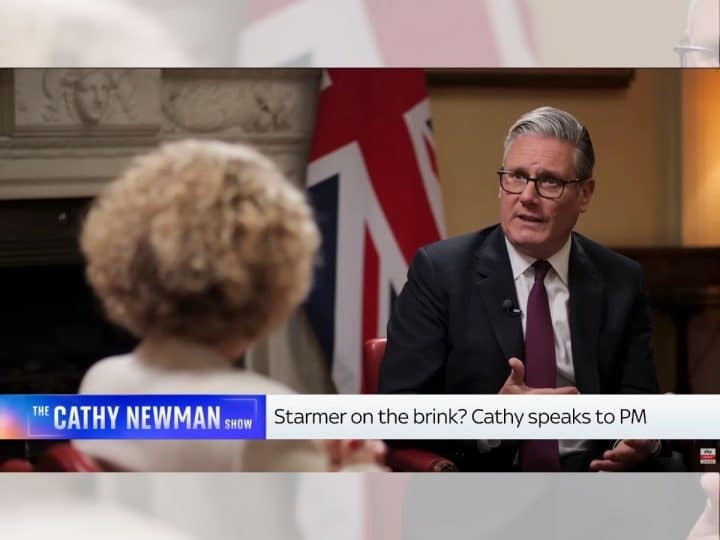

PM Keir Starmer stands accused of multiple instances of misleading Parliament. This is why his opponents tabled a vote to try and force a probe into his behaviour – a tactic Starmer himself once deployed against then-PM Boris Johnson:
Keir Starmer, "What my political opponents are doing tomorrow is a political stunt"
Cathy Newman, "It's a stunt you pulled in opposition against the last, Conservative, government"
Keir Starmer, "The reason they're doing it is because they don't believe what we're doing as a… pic.twitter.com/QXUdZJ86jZ — Farrukh (@implausibleblog) April 27, 2026
Stunted ambitions
Dan Hodges of the Daily Mail is known for having a mixture of very bad and very good opinions (mostly trending bad, to be fair). On the issue of Starmer’s many deceptions, he’s been trending spot-on, and has handily compiled the following list:
Here are the 7 separate occasions Keir Starmer misled the House, misled the country or broke the Ministerial code over the Mandelson affair > Daily Mail > https://t.co/4t2NVwTNh4
— (((Dan Hodges))) (@DPJHodges) April 28, 2026
In summary, Hodge’s list includes Starmer misleading Parliament by telling the House that:
- Due process was followed when Mandelson was hired as ambassador to the US (it wasn’t).
- Pressure was not applied to civil servants vetting Mandelson (it was).
As I’ve been saying. Keir Starmer lied to the House last Wednesday. It’s not even a debatable point any more. He sad no pressure was applied “whatsoever”. And it was. https://t.co/T0AJSjMtVT
— (((Dan Hodges))) (@DPJHodges) April 27, 2026
Starmer also:
- Selectively presented quotes from civil servant Olly Robbins to give a false impression of the evidence he’d given (making a similar point in a Sunday Times interview).
- Almost certainly breached the ministerial code by holding secret meetings with Palantir. As we reported, Starmer claimed this meeting wasn’t a ‘meeting’ despite officials referring to it as a “meeting”. It later emerged that Starmer himself also referred to it as a “meeting”.
- Claimed that no one could have foreseen that anyone would want to inspect his then-chief of staff Morgan McSweeney’s phone. We later learned that Downing Street met to discuss the potential for this happening before McSweeney’s phone was conveniently ‘stolen’.
- Pushed for Mandelson to get the ambassador position without “proper vetting”.
Boris Johnson
In 2022, then-PM Boris Johnson was having his own transparency crisis. As the Guardian reported at the time:
MPs will vote on Thursday on a Labour motion that would trigger an investigation by the House of Commons privileges committee into whether Johnson misled parliament over a string of lockdown-busting parties in Downing Street.
Starmer urged Conservative MPs to seize the opportunity to get rid of Johnson and “bring decency, honesty and integrity back into our politics”.
Johnson would eventually give the investigation the go-ahead, leading to his downfall. Given this, you can see why Starmer would want to avoid allowing any such probe to go ahead.
Starmer also described Johnson as:
a man without shame
While we don’t disagree with the sentiment, Johnson did at least agree to an investigation. This means Starmer is even more shameless than Johnson by his own standards.
Case to answer, Starmer
As Hodges has shown, there’s a strong argument for probing Starmer’s behaviour. Despite this, the man himself is whipping his party to prevent them voting for transparency:
If this was during the Corbyn years, the Papers tomorrow would show Starmer mocked up as Stalin https://t.co/v85y2iGqdo
— Philip Proudfoot (@PhilipProudfoot) April 27, 2026
Starmer might cling on for another day with tactics like this, but the writing is on the wall.
Featured image via Sky News
By Willem Moore

Madonna and Sabrina Carpenter have announced that the wait is almost over before fans get to stream their new duet at their leisure.
On Monday afternoon, the pair confirmed that Bring Your Love would get its official release later this week, and would be available to stream from 11pm on Thursday 30 April.
“We’ve got something to say about it,” they teased on Instagram, quoting the song’s lyrics.
Following her surprise performance at Coachella, Madonna immediately released Confessions II cut I Feel So Free to streaming services, which will serve as the album’s opening track.
She also teased more songs from the album during a surprise appearance at her producer Stuart Price’s DJ set at the West Hollywood club The Abbey over the weekend.
Confessions II will be released worldwide on Friday 3 July.
Politics
Politics Home | No 10 Was “Uninterested” In Mandelson Security Vetting, Says Ex Foreign Office Chief
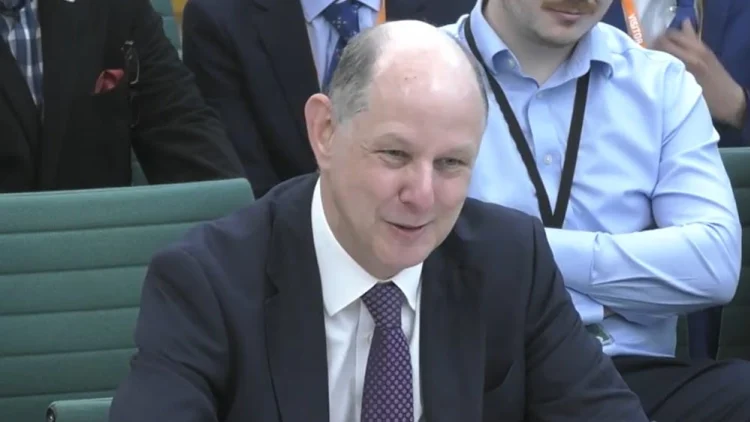

Former foreign office permanent secretary Philip Barton appeared before MPs in parliament on Tuesday. (Alamy)

4 min read
The former head civil servant in the Foreign Office has told MPs that Downing Street showed an “uninterested” attitude towards the security vetting of Lord Mandelson.
Speaking to the Foreign Affairs Select Committee on Tuesday morning, Sir Philip Barton also said he felt at the time of Mandelson’s appointment as UK ambassador to the US that it “could become a problem” given the peer’s links to paedophile financier Jeffrey Epstein.
Barton, who left his post shortly after Labour entered government, said there was pressure from No 10 to complete Mandelson’s appointment as soon as possible, but sought to stress that there was no pressure on the “substance” of Mandelson’s vetting.
Asked whether he would agree with his successor in the Foreign Office, Sir Olly Robbins, who last week told the same committee that No 10 was “dismissive” about Mandelson’s vetting, Barton said: “I wouldn’t use the word dismissive, the word I would use is uninterested.”
He said that there was a lack of “interest” in issues highlighted by the vetting process.
“No one said to me: ‘Look, Philip, the Prime Minister knows there’s some risks around this, can you really, really make sure that the vetting is done rigorously?’” he told MPs.
“It is always rigorous anyway”, he continued. “But that wasn’t the sort of thing being communicated. The sort of thing was: ‘Fine, he needs vetting, make sure it’s done in time’.”
Barton is the latest senior figure to intervene in the saga surrounding Prime Minister Keir Starmer’s decision to appoint Mandelson as UK ambassador to Washington.
Opposition parties have accused Starmer of misleading Parliament over whether due process was followed in the appointment process, as well as the question of what pressure Downing Street put on the Foreign Office to formalise Mandelson’s appointment.
Later today, MPs will vote on whether to refer the Prime Minister to the Privileges Committee on the question of whether he has misled Parliament.
Last week, Robbins — who was sacked by Starmer as Foreign Office permanent secretary over his role in the affair — said UK Security Vetting felt the Mandelson case was “borderline” and was “leaning towards recommending that clearance be denied”, but that the Foreign Office deemed the risks manageable. He sought to stress that Mandelson did not ‘fail’ vetting.
However, in evidence that put more pressure on Starmer’s judgement, Robbins said the Foreign Office had faced “constant pressure” from the No 10 private office to process Mandelson’s appointment as soon as possible.
Speaking this morning, Barton said there was “pressure to get everything done as soon as possible” because No 10 wanted Mandelson in place in time for the start of the second Donald Trump presidency, adding that “the die was cast”. However, he sought to stress to MPs that there was no pressure on the substance of that vetting case.
Barton also denied that he received a call from Morgan McSweeney, who was then the chief of staff to Starmer, urging him to complete Mandelson’s appointment quickly.
“I didn’t receive any direct calls from the chief of staff during my time as permanent under secretary,” said Barton.
“I’ve really racked my brains, and I cannot recall Morgan McSweeney swearing in a meeting at me.”
This is a reference to reports that McSweeney told Barton to “just fucking approve” Mandelson’s appointment to Washington.
Barton admitted to the committee that he felt “conflicted” over not being consulted on Mandelson’s appointment, adding he believed it is “reasonable” to expect the head of the diplomatic service to be consulted.
“On the face of it, it is reasonable for the head of the foreign office to be involved in the thinking around what is our major, top, bilateral ambassador post,” said Barton.
“On the other hand, given clearly the Prime Minister was deciding to make a political appointment, it is also reasonable that civil servants would not be directly involved in discussions around what is a political appointment. Because, in the end, that is a matter for elected politicians.”
Barton also said he felt it was “off and insufficient” that the Cabinet Office said Mandelson didn’t require security vetting before being appointed.
He told MPs that people around Trump felt “blindsided” by the decision to appoint Mandelson, rather than continue with Karen Pierce as UK ambassador to the US.
Jun Du and Oleksandr Shepotylo argue that, with the UK and EU set to impose major new tariffs on steel imports, the UK would benefit from seeking to coordinate its trade defence policy with the EU.
In March 2026, the UK government announced its new Steel Strategy. From July, tariff-free quotas for steel imports will be cut by 60% and a 50% tariff will apply to above-quota imports — matching US tariffs imposed last year. The US first raised steel tariffs to 25%, then doubled them to 50%. The UK was exempted from the doubling of the rate under the Economic Prosperity Deal.
The UK’s aim is to shield domestic producers from a global market awash with overcapacity, now estimated at 602m tonnes and forecast to reach 721m by 2027. But the policy matters well beyond the steel sector itself. It is being implemented at precisely the moment the UK–EU relationship is being renegotiated, and at the moment the European Commission is proposing to double its own out-of-quota steel tariff to 50% and cut tariff-free quotas by nearly half. Around 80% of UK steel exports are destined for European markets, so the EU decision is potentially more consequential for UK producers than the US one. How the UK should position itself within – or outside – that emerging European regime is a live question, and the evidence now exists to answer it.
In a new paper from the Centre for Business Prosperity at Aston University, we estimate the effects of the 2025 US steel and aluminium tariffs using large-scale product-level trade data and employ the Kiel Institute’s general equilibrium model for the policy impact evaluation.
US steel imports fell by around 20%, aluminium by around 10%, and the doubling of tariffs doubled the trade shock. But the costs did not remain at the border, with 70-80% of the tariff hit passed through to downstream buyers, including the firms that use steel as an input. US consumer prices for the covered products rose by approximately 27% for steel and 32% for aluminium.
The impact on UK exports was far from uniform across products. Aerospace components alone account for 43% of UK steel and aluminium exports to the US, and absorbed the shock almost entirely through volumes, with prices held firm by long-term contracts and certification requirements. Automotive inputs followed a similar pattern. Commoditised products, such as hot-rolled coil and steel plate, by contrast, adjusted by cutting their margins by 21-23%, with foreign exporters accepting lower profits to hold on to market share.
There is also evidence that the tariffs chilled new trade relationships without destroying established ones. The probability of a new bilateral, UK-US export relationship forming fell by 0.8 percentage points, while exit rates among existing exporters were essentially unchanged. The damage is done quietly, in the trade that never begins.
These findings matter for the UK because the government is about to impose a tariff of the same magnitude on its own border. The 300,000 workers in downstream steel-using industries (automotive, aerospace, construction, fabricated metals) outnumber the 30,000 in primary steelmaking by ten to one. It is the downstream industries who will absorb the cost, through higher input prices and, ultimately, through prices in the shops. This is a cost-of-living issue as much as an industrial one.
The government is three months from implementing a 50% above-quota tariff with no published impact assessment. The pass-through estimates, the scale of downstream exposure, and the chilling effect on new exporters ought to feature in any serious evaluation.
The more striking finding for the UK–EU debate comes from the general equilibrium modelling. Under current conditions (the UK on a 25% US tariff, most competitors on 50%), preferential access to the US market is worth approximately £482m a year. That is a real gain. But it is structurally fragile: it exists only while the differential holds, it is subject to US review, and it could be withdrawn at any point.
More importantly, the modelling shows what happens when the EU acts. When the EU imposes its own steel tariffs alongside the US, the UK’s gain edges down. Coordinated European trade policy provides a cushion the UK cannot replicate alone.
The UK-EU ‘reset’ has so far delivered limited economic results, and the Prime Minister and Chancellor have made clear that they want to pursue greater alignment with the single market at the next UK-EU summit, in the hope of delivering greater economic benefits.
Much of the discussion around alignment focuses on regulatory standards: SPS, product safety, emissions trading. Trade defence policy is at least as consequential, and inseparable from the regulatory alignment now being discussed for industrial goods such as cars and chemicals. The steel evidence suggests that, in a world of escalating tariff conflicts between major blocs, a key question for a medium-sized economy is whether it can afford to conduct trade defence policy alone, absorbing the costs without the benefit of collective action. The chilling effect on new trade relationships means the answer is being shaped now, invisibly, in the export links that never form.
The case for coordination, though, does not rest solely on cushioning against shared losses. The UK and the EU have complementary strengths in technology, scale and industrial capability that, combined, could build competitive advantage rather than merely defend against disruption. In a geoeconomic landscape where the US, China and the EU are all reshaping trade around strategic interests, the opportunity is to develop joint approaches to competitiveness. That means shared investment in low-carbon steel production and coordinated standards that create scale advantages, alongside trade instruments designed to build industries rather than simply protect them. This is a different proposition from alignment as damage limitation and is the conversation the reset ought to be having.
None of this is to dismiss the strategic case for domestic steel capacity — with production at its lowest since the 1930s, there is a legitimate argument for maintaining capability for defence, infrastructure and the energy transition. But our results price that choice: they show what downstream sectors and consumers will pay for tariff-based protection, so that the strategic decision can be made with its costs in view.
Steel is an unusually clean test case. What it reveals is that the costs of going it alone are quantifiable, and that the gains from coordination could extend well beyond loss reduction — if the ambition is there to pursue them.
By Jun Du, Professor of Economics at Aston Business School and Founding Director of the Centre for Business Prosperity, and Oleksandr Shepotylo, Associate Professor at Aston Business School. The paper, ‘Steel and aluminium tariffs: impact assessment for the US, UK, and broader markets’, is co-authored with Yujie Shi and Lisha He.
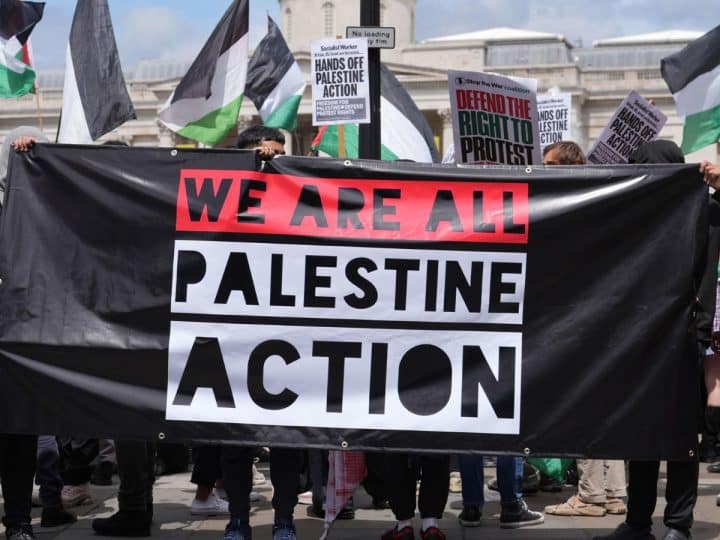

A judge at the Court of Appeal (Civil Division) has just rejected the government’s attempt to overturn the High Court’s decision that its ban on Palestine Action is unlawful.
Palestine Action ban is STILL unlawful
Home Secretary Shabana Mahmood’s lawyers had tried to argue that the government’s rigged process for reversing proscriptions was adequate and therefore the case should never have gone to the High Court for judicial review. The judge not only rejected this but also granted two further bases for founder Huda Ammori to apply for judicial review against the ban.
A stunning victory for Ammori and the anti-genocide movement.
Featured image via the Canary
By Skwawkbox
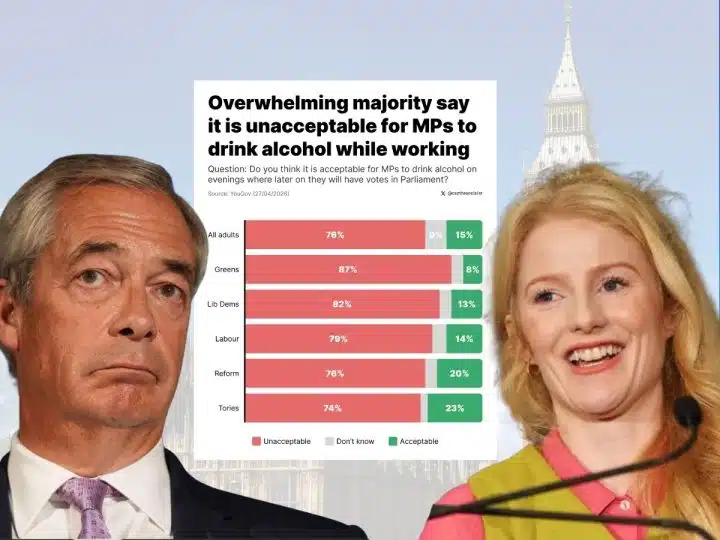

Green Party MP, Hannah Spencer, divided Britain with comments she made to Politics JOE that MPs and journalists are getting drunk in the House of Commons.
Spencer’s intervention split the country into two camps:
- The MPs and journalists who angrily argued it’s fine for them to be drunk at work — that it’s good, even
- The 76% of the British public who think it’s anything but good
With Green MP Hannah Spencer criticising fellow MPs for drinking alcohol ahead of evening votes in Parliament, the British public likewise disapprove – 76% brand this unacceptable, including 52% "completely unacceptable"
Link in replies pic.twitter.com/Dd09whJnzB
— YouGov (@YouGov) April 27, 2026
Spencer’s remarks on MPs puts the public at odds
Perhaps the most amazing thing about the above is that there’s broad consensus across voters for different parties.
On most issues, this is not the case, demonstrating just how out of touch many politicians are.
The overwhelming majority of people say it is unacceptable for MPs to drink on evenings where later on they will have votes in Parliament. pic.twitter.com/mKvIEdIvgx
— cez (@cezthesocialist) April 27, 2026
This week the Canary reported that MPs from Labour, Reform and Conservatives had all come forward to defend their right to get smashed at work. More have jumped on the bandwagon since then, including Scottish Labour MP, Chris Murray.
a hundred grand a year and you can’t work out the difference between drinking on the job and having a pint after work. absolutely stealing a living from the taxpayer https://t.co/KPjCQecCQT
— enter shakira𓅮 (@BARFJAMiN) April 27, 2026
Labour MP, Sam Rushworth, meanwhile, called Spencer a liar.
This would be much more damning if your colleagues hadn’t spent the last 48 hours defending their right to drink on the job. https://t.co/Q8pFslElDy
— Samantha
 (@arcuaria) April 27, 2026
There’s a problem with Rushworth’s argument — namely that we’ve all read many accounts of MPs being pissed at work. It goes beyond booze too.
Almost every single toilet in parliament tested positive for cocaine residue. No wonder all the MPs are furiously quote tweeting this. By the end of this year they’ll be on £110,000 per year.
It’s one big party and you’re not invited. https://t.co/yb0LJZcURk pic.twitter.com/T5vMZ0KfOx — Ashok Kumar |
(@broseph_stalin) April 27, 2026
Commentator Owen Jones said the following about the phenomenon of MPs lining up to attach themselves to this unpopular issue:
Genuinely astonished at MPs and commentators angrily piling on Hannah Spencer for criticising MPs’ drinking during votes.
Compelling evidence that the rise of the Green Party has sent them completely insane!
Many others have highlighted how ridiculous the arguments against Spencer have been. The X user, Very Brexit Problems, wrote:
Hannah Spencer getting shit for highlighting how many MPs stink of beer is mental.
Pilots can’t drink before a flight. Train drivers can’t drink before a shift. Surgeons can’t drink before they operate. Soldiers can’t drink before they’re handed a rifle. Bus drivers, paramedics, police on duty, HGV drivers, none of them can turn up to work smelling of booze without losing their job.
MPs vote on laws affecting 67 million people. Apparently some people are totally cool with them doing that wankered.
On the topic of journalists defending their right to get pissed with the politicians they’re supposed to be holding to account, many argued they’re being “performative”.
The UK's political culture relies on performative and aggressive stupidity to make sure nothing actually ever changes for the better. https://t.co/qlF7ePXWyX
— Marl Karx (@BareLeft) April 27, 2026
Zoe Gardner, meanwhile, pointed out that we don’t have to go back too far to find an example of MPs mysteriously voting wrong.
This was in February — Zoe Gardner (@ZoeJardiniere) April 28, 2026
 https://t.co/Y3wlbzTI8m pic.twitter.com/VnlCbT0NHu
Backlash to the backlash
Since the initial backlash to Spencer, some right-wing commentators have actually realised this is a losing issue. Among them is Sophie Corcoran.
You don’t have to be left wing to think MPs shouldn’t be drinking on the job.
Most workers can’t do that. — Sophie Corcoran (@sophielouisecc) April 27, 2026
Their job is important and they should take it seriously.
We should hold them to higher standards than others – not lower.
Public service is about sacrifice – and that…
Green Party leader, Zack Polanski, meanwhile, has benefitted from being on the right side of this issue from the start.
Yeah man he is just really really good at this https://t.co/D62A1FeESs
— c.s lewisham by day j edgar boozer by night (@theskyeatnight) April 27, 2026
As the Green Party rises in the polls, the other parties have gone on the attack. The problem is many of the Greens’ ideas are very popular, which is why MPs keep finding themselves clumsily lining up against public opinion.
To be absolutely fair to them, however, these drunk MPs may not have their best thinking heads on.
Featured image via X/ Cez
By Willem Moore
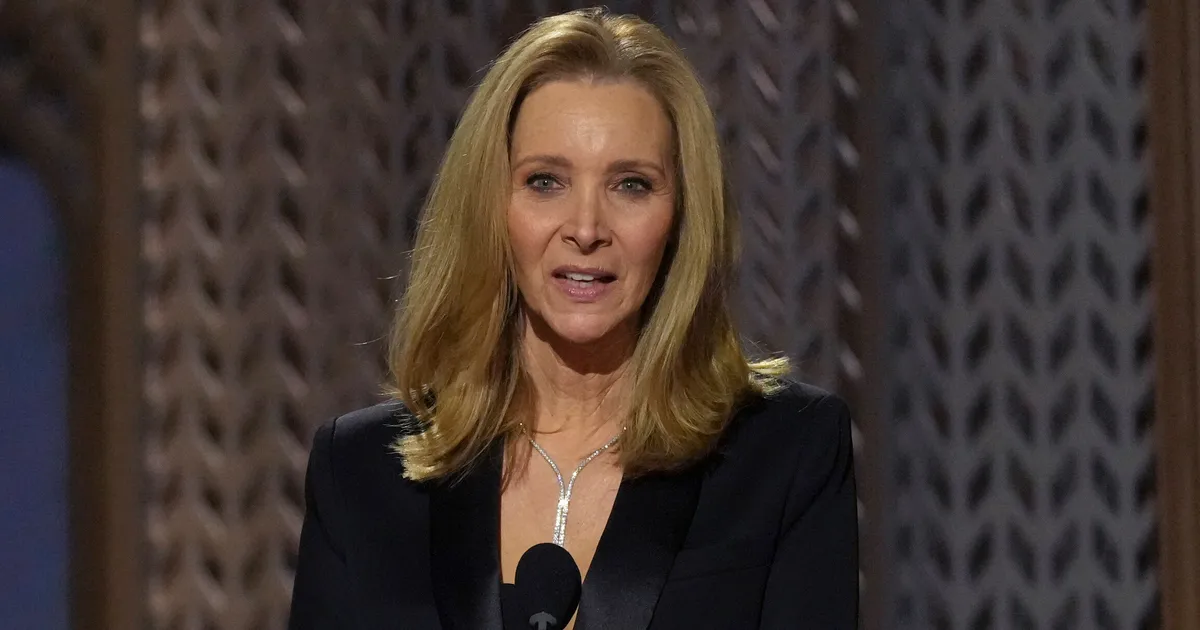
Lisa Kudrow has admitted there was some tension between the cast and crew of Friends.
During a recent interview with The Times, Lisa was asked about Friends’ enduring appeal, suggesting that the show “captured a kind of innocence” that Gen Z viewers might attract younger viewers looking back at a simpler time.
However, she conceded that not all of it was so innocent.
“There was definitely mean stuff going on behind the scenes,” the Emmy winner admitted, specifically referring to the derogatory treatment she and her co-stars could receive from the show’s predominantly-male writers’ room.
She recalled: “We were recording in front of a live audience of 400, and if you messed up one of these writers’ lines or it didn’t get the perfect response they could be like, ‘Can’t the bitch fucking read? She’s not even trying. She fucked up my line’.
“And we know that back in the room the guys would be up late discussing their sexual fantasies about Jennifer and Courteney. It was intense.”
She added: “It could be brutal, but these guys – and it was mostly men in there – were sitting up until 3am trying to write the show so my attitude was, ‘Say what you like about me behind my back because then it doesn’t matter’. ”
The Times’ piece also refers to a sexual harassment case from former Friends writing assistant Amaani Lyle – who complained about her colleagues’ sexualised jokes, often about the show’s female leads – in 1999.
At the time, the case was thrown out as it was ruled that vulgar and lewd comments were to be expected in a “creative workplace” where sexual humour was part of the show.
Former Friends writer Patty Lin published a book in 2023, in which she also spoke about the work culture behind the scenes, recalling how her mostly male colleagues would “constantly” talk about sex in an atmosphere that was comparable to “an endless cocktail party”.
She also spoke disparagingly about Friends’ central cast, claiming the actors would intentionally spoil takes if they didn’t like a joke that had been written for them.
“They all knew how to get a laugh, but if they didn’t like a joke, they seemed to deliberately tank it, knowing we’d rewrite it,” she alleged,
“Dozens of good jokes would get thrown out just because one of them had mumbled the line through a mouthful of bacon.”
She accused the stars of seeming “unhappy to be chained to a tired old show”, claiming that they were self-interested and that table reads often had a “dire, aggressive quality” as a result.
Meanwhile, in Lisa’s subsequent hit series The Comeback – which she co-created as well as starring in – her character Valerie Cherish encounters the writers on her sitcom making sexual jokes about her while paying them a surprise visit.
She said in 2010: “It’s worth mentioning that the writers who worked on The Comeback had experiences in many other writers’ rooms, and none of this seemed foreign to them. In fact, it made all the sense in the world to them.”


4 min read
The Representation of the People Bill is a transformative piece of law. But the work to make our democracy safer and more inclusive does not end at legislation.
Soon to join the ranks of six historic Representation of the People Acts, which introduced landmark changes including votes for women and votes at eighteen, this Labour government’s Representation of the People Bill 2026 is set to take yet another leap towards a fairer, more representative, and more secure electoral system.
I stood proudly on the manifesto commitment to extend the right to vote to 16 and 17-year-olds, and now I am even more proud to see this set in motion. It is a common-sense change, keeping pace with our evolving world and its increasing social and digital interconnectedness. When, at the age of sixteen, young people can already pay taxes, join our Armed Forces, and learn about any political issue with just a few clicks, it is only right that they have a say in decisions that will be deeply consequential for their future.
My Luton South and South Bedfordshire constituency is a young one, filled with engaged and enthusiastic voices who deserve to be heard. Through my ongoing engagement with many young constituents on this issue and others, their desire to participate and highlight the issues that matter most to them is clear. We must grant this opportunity, also reaping the resulting benefits of increased participation and earlier political engagement across society.
Legislation is only one piece of the puzzle, though. Beyond this Bill, I look forward to seeing the government work with schools and youth organisations to promote genuine understanding of our elections, democracy, and the key issues facing our country.
At a recent roundtable discussion I held, young people from my constituency made it clear that practical help to encourage sustained youth participation would be a vital part of these reforms. They suggested more time dedicated to education about democracy in the classroom, a need for trusted and unbiased information about political parties, and training to resist rising misinformation online.
The young people I spoke to had insightful contributions on issues ranging from youth employment and the cost of living to climate change and reproductive health. We must continue to push for work beyond this Bill to deliver viable and lasting pathways to participation, ensuring they can be heard.
As well as encouraging broader voter turnout, a key pillar of this Bill is ensuring that our elections are truly open to a whole breadth of candidates. As only the 539th woman elected to the House of Commons, I take the work to ensure that more women and those from all backgrounds feel confident to put themselves forward to represent their communities incredibly seriously.
Unfortunately, this has not been the case in recent years due to rising abuse and intimidation. At the last general election, the Electoral Commission found that over half of candidates felt they had experienced harassment, intimidation, or abuse, with women twice as likely and ethnic minority respondents three times as likely to report serious cases. I have seen this in my constituency, where groups of men in cars shouted abuse at and intimidated young female Muslim councillors who were out campaigning. This is completely unacceptable and has the concerning effect of deterring many passionate, talented women from standing in elections.
I wholeheartedly welcome the tougher measures and protections proposed in this Bill, including giving courts the power to treat hostility towards electoral candidates, staff and campaigners as an aggravating factor and the introduction of police contact forms so candidates can be made aware of concerns for their safety. These measures will be a vital deterrent for those who seek to damage our democracy or intimidate those who uphold it, ensuring that a wide plurality of voices can participate, and everyone can see themselves represented.
As a member of the Speaker’s Committee on the Electoral Commission, I was particularly pleased to see that this Bill is set to repeal the power of the government to impose a strategy and policy statement on the Electoral Commission. I opposed this measure when introduced by the previous Conservative government due to the clear risk of undermining the Commission’s independence and allowing political interference.
Delivering these practical measures to bolster our democracy, alongside the landmark progressive step to enfranchise 16 and 17-year-olds, is exactly the kind of work I am proud our Labour government is carrying out. As elected representatives, it is our duty to safeguard and work to improve the system, ensuring it instils early the importance of participation, upholds the integrity of and trust in our elections, and keeps pace with our ever-changing world.
Rachel Hopkins is Labour MP for Luton South and South Bedfordshire
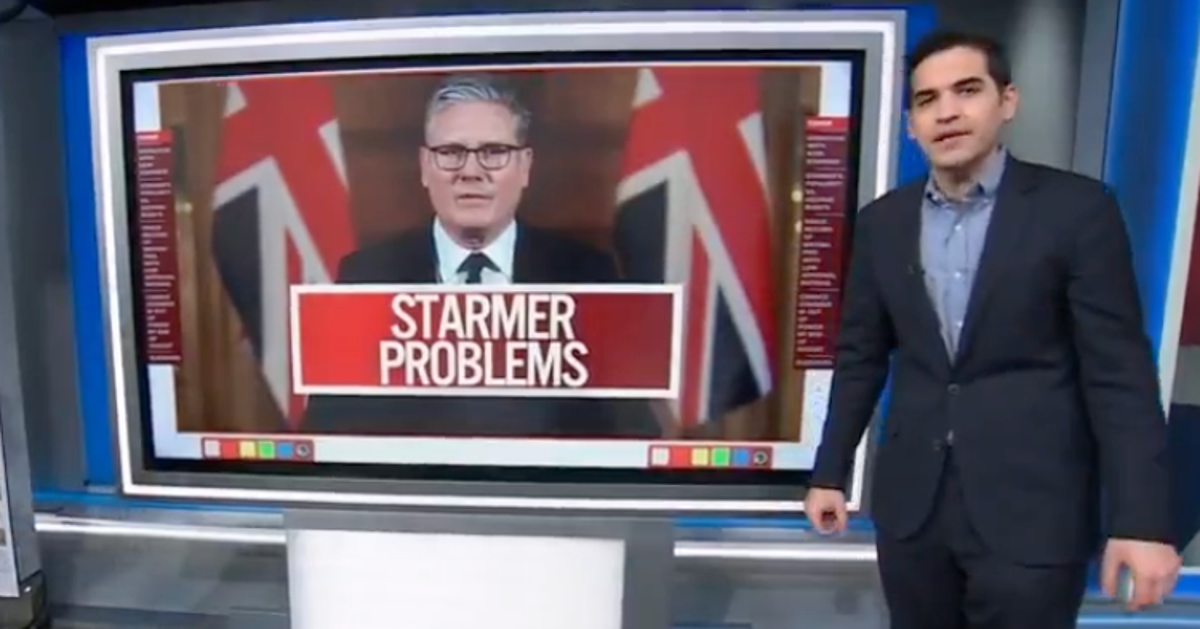
An American pollster has eviscerated Keir Starmer over his “downright atrocious” popularity ratings with British voters.
CNN’s Harry Enten said the prime minister was even more unpopular than George W Bush or Richard Nixon ever were in the United States.
His comments came as Starmer fights for his political life over the Peter Mandelson scandal.
Enten said: “If you think things are bad here in the United States, let’s just go over the pond to the UK, because things are just downright atrocious over there for Keir Starmer.
“Just take a look here – Britons satisfied with Keir Starmer. Overall, 18%. You can’t even drink or smoke any more when you’re 18%. If you’re below that line, that’s not good.
“How about his own party, the voters who voted him in back in 2024. Less than 50% of Labour Party voters back in 2024 actually are satisfied with the job Keir Starmer is doing.
“When less than 50% of your own party voters are satisfied with what is shaking, you know you’re in bad, bad shape.”
Enten said Starmer was even more unpopular that Bush, who had the lowest ever popularity ratings for a US president at 20% when he left office in 2008.
He said: “Well I’ve got news for you; 20% is low, but it’s higher than 18%. Keir Starmer is less popular right now than the least popular American president ever.
“And Richard Nixon of course was coming in at about 24% just before he resigned office. So Keir Starmer is less popular than Richard Nixon was when he was forced out by Watergate.
“Keir Starmer – a very unpopular man. A lot of people want to put a lot of things in their tea when they look at Keir Starmer over in the UK.”
The pollster went on to point out that every other British prime minister who was as unpopular as Starmer either lost the next election or resigned from office.
“He’ll try and climb out of that hole, climb that ladder, but that ladder is going nowhere – he is on a highway to political hell,” Enten said.
He added: “The bottom line is this. Keir Starmer in massive political problems right now. Chances are, based upon history, he will either be forced out by the end of August or the voters will force him out at the end of general election.”
Subscribe to Commons People, the podcast that makes politics easy. Every week, Kevin Schofield and Kate Nicholson unpack the week’s biggest stories to keep you informed. Join us for straightforward analysis of what’s going on at Westminster.

You know your body better than anyone – but what happens when no one listens? Welcome to Ms Diagnosed: a HuffPost UK series uncovering the reality of medical gaslighting. With new stats showing that 8 in 10 of women have felt unheard by medical professionals, we’re sharing the stories of seven whose lives were nearly lost to the gap between their symptoms and a system that refused to listen. As the UK introduces Jess’s Rule – a new mandate for GPs to ‘rethink’ after a third visit – we’re exploring why the medical system is still failing women and how we can start to fix it.
I was driving home from Nottingham Trent University to Leicester, where my family lived, when I suddenly experienced double vision.
I was on a high-speed road, and I was terrified. I knew I couldn’t drive like this. Somehow, I managed to pull over and I called my dad, asking him to come and get me.
That was one of the scariest things that had ever happened to me; I still shiver to think what could have happened. And the worst part is, there’s a chance it could have been avoided. I later learned that I had Multiple Sclerosis (MS) – but when I’d gone to my GP with another major MS symptom around nine months’ previously, she’d told me there was nothing wrong.
I first started experiencing MS symptoms around my early twenties; but I had no idea, then, what they meant. I remember my brother once commenting that I was veering to the side, even though I thought I was walking straight – but it’s only in hindsight I realise this was likely down to MS.
The first symptom that actually alarmed me happened in 2008, when I was 22. I was in my teacher training year at university, and one night I woke up in the early hours, on the floor by the bathroom in my student accommodation.
I had absolutely no idea what had happened. I’d gone to bed at around 9:00pm that night, because I was scheduled to teach the next day. I’d clearly passed out; but I didn’t know how or why. I had bruises on my knee, presumably from where I’d fallen – and I was scared. Nothing like this had ever happened to me before.
The next day, I went back to Leicester and my mum and I went straight to my GP. I was a confident 22-year-old; the only reason I took my mum with me was because I was worried I’d pass out again. But the GP acted as though I was a child.

After I’d explained what had happened the night before – and how out of character passing out like that was for me – the GP looked over my head at my mum, who was standing behind me. “There’s nothing to worry about here,” she said. “We’re not concerned.”
Then, she uttered the words I still can’t believe I heard. “You know, at university, the students drink a lot.”
“I can absolutely guarantee that’s not what happened here,” I said, perplexed.
“No,” said my mum, just as appalled. “She’s training to be a teacher. She was going to teach at 8:30am the next morning. She wouldn’t have been drinking alcohol.”
But the GP didn’t take it any further. She asked some very generic questions, but she didn’t take any blood tests or do any real follow-up. She just said, “There’s nothing wrong.”
As I left the GP’s office, I felt utterly dismissed, as well as upset. I knew myself, and I knew how seriously I was taking my teacher training year. I’d made a point of going to the GP, because I knew, deep down, something wasn’t right; but she’d played on every stereotype she knew and had passed up an opportunity to take me seriously.
But I couldn’t stay angry at her. “At the end of the day, I suppose I’m grateful she doesn’t think there’s anything wrong,” I eventually thought – and I got on with my life. That is, until I experienced double vision on a high-speed road nine months later.
After that driving incident, I knew there was something serious going on. I went to my optician, assuming it was an issue with my eyes. They ran tests, but couldn’t find any issues. Unlike the GP, though, they knew they couldn’t just leave things unanswered; so they sent me to an Ear, Nose and Throat Specialist.
At this point, life became a conveyor belt of referrals. I had an MRI, sight tests, colour vision tests – and I never, at any point, thought it could be MS. I thought I had a condition that would be treated, and that would then go away.
But I had other tests, too, focusing on strength and balance. Now, I realise those tests fit with suspicion of MS; but nobody mentioned this at the time, and I certainly had no idea.
I was eventually diagnosed in 2009, age 23. The neurologist spun his computer screen around, and all of a sudden he was talking me through a brain scan. He told me it was MS; but I had no idea what MS was. He was pointing at lesions, but the language and terminology he was using was so technical; I couldn’t follow anything.
I did hear the word ‘chronic’, though, and I knew what this meant. That I’d be on treatment ‘for life’; that I’d have this condition ‘for life’. That the symptoms I’d experienced so far – the passing out, the double vision – could be the tip of the iceberg.
“Will I still be able to teach?” I eventually asked him. I didn’t ask the second part of my question: ”…Or are you effectively telling me my life’s over?”.
He said I could continue teaching so long as adjustments were made; and I’m still teaching today. I’m also married, and a mother. My life certainly wasn’t over; but it has changed completely.
In those early days after my diagnosis, I felt completely lost – but I managed to find the MS Trust website, which was a source I trusted and which I found immensely helpful. I still work closely with the MS Trust today.
I’m still on treatment to repress my symptoms – which, these days, are something called ‘foot drop’, which affects my walking; fatigue; and word-finding.
Physically, I can’t do what I once could. It’s become the norm that I fall asleep at around 8:30pm; and I sometimes wonder how long I can continue teaching. I want to be an active mother, and I am – but my injections of medication are part and parcel of our family life.
Then again, this doesn’t bother my daughter in the slightest – she’s always happy to play ‘nurse’ and to bring me a tissue or cuddle if I need it. And, while it took me a long time to tell people about my diagnosis – I think because I didn’t want to be seen as ‘different’ – now, I’m very open about it. If I can help even one person get a correct diagnosis of their own, meaning they can get started with treatment, it’ll be worth it.
Because that’s the scariest thing about MS; it’s an invisible illness. If you don’t get it investigated, you won’t get a diagnosis. It’s not like a broken arm which is there for all to see. Once you get an MRI; well, then, it’s black and white. But you have to get the MRI in the first place, and that’s not always easy.
So my advice for anyone else in a similar position to the one I was once in – being told by their GP that they’re fine when they know they’re not – is that it pays to be pushy. You know you better than anyone else. People might dismiss what you’re saying; but it’s your life. Get a second opinion; be ‘pushy’ until you feel you’ve been listened to.
Because I don’t think there’s such a thing as being ‘too pushy’ when it comes to your health and wellbeing.
For more information and support on living with MS, visit www.mstrust.org.uk

Israel approves its first-ever regulated stablecoin

Hypocrite Starmer calls transparency vote a ‘stunt’

Bundesliga games abroad unlikely, but for how long?

Manchester United reach agreement with Casemiro over contract clause amid transfer speculation

US brings back mandatory military draft registration

Steven Gerrard disagrees with Gary Neville over ‘shock’ Chelsea and Arsenal claim | Football


-

 Fashion4 days ago
Weekend Open Thread – Corporette.com
-

 Tech17 hours ago
Register Renaming | Hackaday
-
 Crypto World3 days ago
Hyperliquid $HYPE Rally Builds Momentum as AI Sector Enters Prove-It Phase
-

 Politics6 days ago
Making troops accountable for war crimes threatens US alliance, ex-SAS colonel warns
-

 Politics6 days ago
Disabled people challenge government SEND proposals over segregation concerns
-

 Business4 days ago
Patterson-UTI Energy, Inc. (PTEN) Q1 2026 Earnings Call Transcript
-

 Business6 days ago
Rolls-Royce Voted UK’s Most Iconic Trade Mark as IPO Register Hits 150
-
 Crypto World7 days ago
Five Value Stocks with Recovery Potential in 2026: PayPal (PYPL), Nike (NKE), and More
-
 Sports2 days ago
IPL 2026: Ruturaj Gaikwad registers slowest fifty of the season, enters all-time unwanted list | Cricket News
-

 Politics6 days ago
Starmer handler McSweeney to be dragged from shadows by Foreign Affairs Committee
-

 Politics13 hours ago
Drax board avoid their own AGM, accused of greenwashing & environmental racism
-

 Crypto World7 days ago
New York sues Coinbase, Gemini over prediction market offerings
-

 Politics6 days ago
Zack Polanski responds to home secretary’s taser threat
-
Politics6 days ago
Wings Over Scotland | How To Get Away With Crimes
-
Entertainment7 days ago
Sydney Sweeney cameo cut from “The Devil Wears Prada 2”, source explains why (exclusive)
-
 Business6 days ago
HCL Tech share price tank over 9% after weak Q4. JPMorgan, HSBC & 3 others cut target price
-

 Crypto World6 days ago
Crypto’s great hope in Senate’s Clarity Act still has a path to survive tight calendar
-

 Politics6 days ago
‘Iran is still a nuclear threat’
-

 Fashion7 days ago
Kilkenny Design New Beauty Arrivals for Spring 2026
-
 Sports5 days ago
Tim Bradley names the current best in the world: “Better than Inoue and Usyk”
You must be logged in to post a comment Login