Politics
School staff to strike in support of victimised union rep Tom Barker
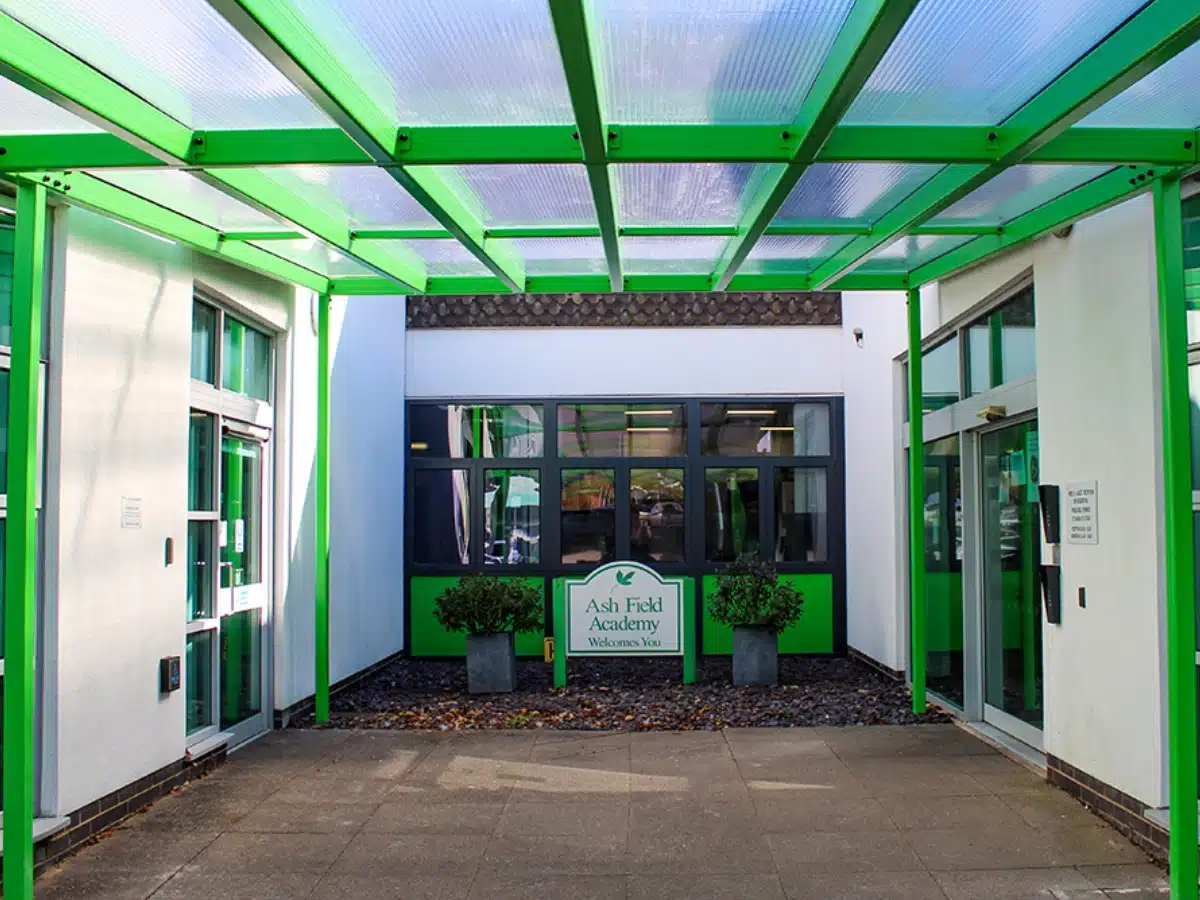
UNISON members at Ash Field Academy, a SEND school in Evington, Leicester, have voted overwhelmingly to take strike action to demand the reinstatement of their elected representative, Tom Barker.
In a formal industrial action ballot which closed on 18 March, 87% of voting members supported strike action. This is due to the suspension of Barker, their workplace steward, who has been suspended since October 2025, and the attack this represents on their trade union rights. The turnout easily cleared the legal 50% participation threshold.
For more than four months, UNISON’s Leicester City branch has been campaigning for Barker’s reinstatement. Discovery Schools Academy Trust (DSAT), the multi-academy trust which runs the school, claims it’s still investigating his case. Although DSAT has changed the allegations it claims to be investigating since the initial suspension.
More than 400 trade unionists, including UNISON’s new general secretary Andrea Egan and MP Zarah Sultana, have signed an open letter demanding Barker’s reinstatement.
Background to Barker’s suspension
During the 2024/25 academic year, UNISON, which represents the vast majority of Ash Field’s support staff, repeatedly raised concerns relating to health and safety. This situation worsened when DSAT, despite UNISON’s strenuous objections, cut several further staff via a hugely rushed redundancy process. UNISON members voted for strike action over the staffing situation, with that ballot closing on 20 October 2025.
On 30 October, DSAT leaders suspended Barker from his duties, citing allegations against him. Originally they said that the suspension was due to an incident that allegedly took place on 29 October. However, Barker obtained emails via a Subject Access Request. And these showed that, as far back as December, the independent investigating officer had reported that there was no case to answer and recommended lifting the suspension. But DSAT failed to act on this.
Many UNISON members at Ash Field signed a statement describing his suspension as “a bad-faith attack on…. UNISON members” and a “reprisal for [members] voting for industrial action”.
On 12 January 2026, DSAT leaders asserted that Barker’s suspension was to protect the integrity of an investigation into a grievance. This investigation concluded in February, yet DSAT didn’t reinstate Barker.
The external investigators into the two previous allegations found no case to answer. But the trust has since appointed a new investigator from a separate organisation to investigate again. And Barker, after 4 months out of work, has been resuspended.
UNISON Leicester City continues to call for Barker’s reinstatement, and for DSAT to cease this union-busting activity. Sam Randfield, UNISON Leicester City’s branch secretary, stated at a public meeting in February:
It was clear at the time of the suspension, and it is even clearer today, that this was an act of bad faith towards UNISON and Tom himself. The case against Tom is practically non-existent. There is no reason to keep him suspended for this long.
What has happened to Tom is appalling, and is as clear a case of trade union victimisation as I have ever seen. In voting for strike action so overwhelmingly, our members have made a clear statement that they will not tolerate union-busting in their workplace.
There is a quick and easy way for DSAT to end this dispute and avoid strike action. They simply need to lift Tom’s suspension and reinstate him to duty. That is the one and only demand our members are making.
Featured image via the Canary
Politics
Gaza: Doctors under Attack wins BAFTA despite BBC censorship only to be censored again
The BBC has once again been exposed as being entirely at odds with the interests of the British public after Gaza: Doctors Under Attack won a BAFTA at the 2026 ceremony.
The previously censored documentary won in the current affairs category — a result that further highlights how biased the licence-funded broadcaster has become in service of a foreign state committing genocide.
After the BBC attempted to block Gaza: Doctors Under Attack from being broadcast, Channel 4 stepped in to ensure it aired.
The BBC justified its decision at the time and said:
We have come to the conclusion that broadcasting this material risked creating a perception of partiality that would not meet the high standards that the public rightly expect of the BBC.
Nevertheless, the broadcaster showed little willingness to learn and continued censoring large parts of the acceptance speech. More specifically, it removed references to the vast and unforgivable number of Palestinian women and children killed, as well as references to the targeting of hospitals in Gaza.
Gaza documentary winners’ speech censored
However, this is far from the first time BBC executives have made highly questionable decisions that damaged both the corporation’s credibility and its privileged position as a national broadcaster tasked with delivering impartial, honest coverage to licence fee payers.
Its blatant censorship at the BAFTAs earlier this year fuelled unnecessary tensions between disabled and Black communities. It also reinforced the view among critics that the BBC is less interested in reporting current affairs than in shaping them within British society.
Cowardly BBC remove parts of the BAFTA acceptance speech delivered by the team behind "Gaza: Doctors Under Attack", after the filmmakers publicly criticized the broadcaster for refusing to air the documentary. pic.twitter.com/nCsqqzP5mW
— PalMedia (@PalMediaOrg) May 10, 2026
This represents an impressively foolish own goal for the national broadcaster, which licence fee payers continue to fund despite reporting that many believe runs directly against the public interest.
In his acceptance speech, executive producer Ben De Pear challenged the BBC asking whether their acceptance speech would face censorship like this award-winning documentary had been.
Clearly the BBC, this time, wanted to somewhat save face — but still, for good measure, censored anything substantial regarding Israel’s genocide in Gaza. That becomes far easier to understand when we recognise just how prolific pro-Israel bias has become, once again prompting renewed questions over whether this broadcaster should fundamentally change its business model.
After all, it clearly is not working as the BBC confuse, incite and manipulate British audiences.
Navia: ‘We refused to be silenced and censored’
This is the acceptance speech the BBC would have you believe occurred, as in the video above:
Journalist Ramita Navia:
This award means so much to us. These are the findings of our investigation that the BBC paid for but refused to show. But we refused to be silenced and censored. And we thank you. And we thank Channel 4 for showing this film.
Exec producer, Ben De Pear:
We also want to dedicate this award to Jabba Badwin and Osama Al-Ashi, the two journalists on the ground who made this film for us. So, I’d like a round of applause for them please.
Just a question to the BBC. Given that you dropped our film, will you drop us from the BAFTA screening later tonight? Thank you. Bye.
From Navia’s powerful and principled speech, these sections were omitted:
Israel has killed over 47,000 children and women in Gaza. So far, Israel has bombed and targeted every single one of Gaza’s hospitals.
It’s killed over 1,700 Palestinian doctors and health care workers. It has imprisoned over 400 in what the UN now calls the medicide. These are the findings of our investigation that the BBC paid for but refused to show. But we refuse to be silenced and censored.
We thank Channel 4 for showing this film. Right now, there are over 80 Palestinian doctors and healthcare workers being held in detention centers that Israeli human rights groups describe as torture camps.
We dedicate this award to them.
What does terrorism mean to you? If it’s no double-tap killings of paramedics, journalists, and today a 12 year old girl, then what is it?
Westerners, where is your humanity? Cameraman: @aliezzedine7 pic.twitter.com/ntXIwz4s6H
— courtneybonneauimages (@cbonneauimages) May 9, 2026
Sometimes, it is far better to look at what someone omits than what they choose to say. The BBC is making clear that whilst it cares about saving face publicly, it will always shield the indefensible genocide and expansionist agenda waged by Zionists in Israel.
Gaza: Doctors Under Attack is awarded the BAFTA for Current Affairs — BAFTA (@BAFTA) May 10, 2026
#BAFTATVAwards with @pandocruises pic.twitter.com/jZI9Mrsjx2
The BBC has done this before
Let’s face it, impartiality is pretty much impossible. The BBC makes that pretty apparent.
It may claim its reporting is impartial, but its editorial choices — what it broadcasts and what it omits — makes that partiality increasingly obvious. Instead, wouldn’t it be better if they were at least honest about its Zionist tendencies, and its clear politicised coverage in the interests of war criminals wanted by the International Criminal Court.
The Canary wrote extensively about the BAFTA incident in February this year, making clear that the blame for the harm caused lays firmly at the feet of the BBC. It wasn’t the responsibility of disabled and Black communities to unpick, unravel and make sense of what happened.
‘Sinners’ star Wunmi Mosaku weighs in on what happened to her co-stars, Michael B. Jordan and Delroy Lindo, at the BAFTAs last weekend. pic.twitter.com/HLAyitiB7h
— Entertainment Tonight (@etnow) March 2, 2026
The BBC should rely on Zionist funding not licence fee
First, the BBC tried to pit embattled communities against each other and now it stands completely at odds with the public through its shameful coverage of Zionist Israel and its many, many flagrant and murderous breaches of international and humanitarian law.
Therefore, it can no longer be denied that the BBC does not work in the interests of British people. Instead, it works for the establishment which has pushed many of the BBC‘s viewers into poverty, struggle and deprivation.
Consequently, this leaves people feeling hopeless and searching more desperately for honest, accurate reporting. It has also never been more urgent that the public understands who is actively working against their interests.
The BBC has not been living up to its remit for many years. Even when called out for its nefarious censorship as De Pear did yesterday, it still cannot resist cutting pertinent information. As a result, it is time for TV licences to end and the BBC to start earning its funds.
Right now, it is only earning its funding from a country committing genocide, and its Zionist stooges in Starmer’s cabinet.
Featured image via Getty Images for BAFTA/ John Phillips
Politics
The Prime Minister’s new EU clothes
Joël Reland reacts to Keir Starmer’s speech on the direction of the Labour Party following their poor performance in the local elections. He argues that, despite promising to put “Britain at the heart of Europe”, the Prime Minister continues to uphold the status quo on Brexit.
The status quo isn’t working, so here’s some more of the status quo. As an epitaph for Keir Starmer’s administration, his speech today could hardly have been neater.
In the run-up to the speech, it was widely briefed that EU affairs would be at its heart. As a political strategy for a downtrodden Labour Prime Minister, this made intuitive sense. Labour is losing more votes the Greens, Lib Dems and nationalist parties than to Reform and the Conservatives.
As Patrick Maguire wrote in the Times, a bolder offer on Europe is one thing which might give some discontented Labour MPs pause for thought: a unifying vision which suggests their leader has both a plan to boost the ailing economy and to win back the liberal-left voters who are deserting the party in droves.
Some predicted Starmer might even take the opportunity to review his manifesto red lines of no single market, customs union or free movement. A last hail Mary for a Prime Minister with nothing else left to lose.
The early parts of the speech suggested this might be the case. Sleeves rolled up, Starmer laid out his analysis of the troubled state of the UK: “The status quo isn’t working… Incremental change won’t cut it”. He went on, “I will set a new direction for Britain… This Labour government will be defined by rebuilding our relationship with Europe, by putting Britain at the heart of Europe.”
Then came the crunch. The moment where Starmer had to set out the detail of this vision, of what Britain at the heart of Europe means in practice. At which point he offered up a single policy, “an ambitious youth experience scheme”, which was already committed to a full year ago and has been under negotiation for most of the time since.
The implications of this are unambiguous. Starmer has no plan to change the status quo. Nothing new was brought onto the agenda, and the Prime Minister’s focus is on concluding the handful of agreements committed to at last year’s UK-EU summit, with a vague promise of new agreements to come at the next summit this summer.
The most charitable reading is that Starmer is laying the necessary groundwork for a successful second summit. The reality is that, if he wants to use that event to announce the conclusion of deals to take the UK closer to the single market (on agrifoods and emissions trading), a deal is also going to have to be reached on ‘youth experience’ – the EU’s number one negotiating interest.
And negotiations on the latter have proved fraught, due to disagreements over participant numbers and the level of tuition fees which EU students should pay. Starmer’s words today may be a sign that the UK is about to compromise on those points so he has some other ‘wins’ to sell at the next summit. That could also open up the space for the two sides to commit to negotiations on enhanced cooperation in a handful of other new areas (perhaps vehicles, medicines or digital policy).

But the problem remains that this is exactly the kind of incrementalism which Starmer so derided earlier in his speech. His plan maintains Boris Johnson’s Brexit deal as its centrepiece: a deal which places the UK not at the ‘heart’ of Europe, but as its appendix – outside of all the key economic and political institutions.
Starmer might hope to improve economic ties in a few limited sectors, but the structural reality of the UK’s position will remain unchanged, and the boost to GDP is likely to be nothing more than a few fractions of a percent by the end of the next decade.
Some commentary has argued that Starmer left the door open to ditching his red lines before the next election, by not explicitly committing to maintain them when questioned by a journalist in the Q&A. But the Prime Minister will not get the chance to drop the red lines unless he can convince his own MPs that he is worth sticking with for the months to come.
And today’s speech will not have helped the case. It speaks to a Prime Minister who lacks the vision – or courage – to take the steps necessary to address the problems which he identifies.
EU policy is not the reason why Labour MPs have lost faith in Starmer and nor, in all likelihood, would a change in approach have been enough to save his ailing premiership. But today it served as a test case for whether an embattled Prime Minister has a plan for how to turn things around. It’s a test which he failed to pass.
By Joël Reland, Senior Researcher, UK in a Changing Europe.
Politics
A historic humiliation for Welsh Labour
‘I ddim ond dweud y gair “Ffarwél”.’ The closing line of Myfanwy, one of the greatest poems in the Welsh language, reads: ‘I can only say the word, “Farewell”.’ It serves as a fitting eulogy to the Welsh Labour Party, which has just been trounced in Welsh Senedd elections.
This is a pivotal moment. The Labour Party has dominated Welsh politics for over a century. It has won a majority of parliamentary seats in every election since the end of the First World War, and has been the largest party in all of Wales’ devolved governments since the Senedd, the Welsh parliament, was created in 1999.
But last Thursday – a day that will go down in Welsh history even more than Llanelli beating the All Blacks in 1972 – not only did Welsh Labour get booted out, but the long-suffering Welsh public also bid a fond farewell to Eluned Morgan, the Welsh first minister. She is the first head of government to lose her seat while still in office in British history.
This was a devastating result for Labour. The Daily Mirror described it as ‘savage’, Labour’s own deputy first minister, Huw Irranca-Davies, admitted that it was a ‘catastrophic result’. Even the Guardian recognised it as a ‘historic defeat’.
Welsh voters were clearly in no mood to wave Labour off without a good kicking. ‘People have had enough’, one voter told me. ‘For years we have been taken for granted if not treated with disdain’, said another. ‘Good riddance to bad rubbish’, said a third.
On a high turnout of 52 per cent, 36 per cent voted for Plaid Cymru, while 26 per cent chose Reform UK, leaving the former with 43 seats and the latter with 34 seats in the 96-seat Senedd. Though falling short of a majority, Plaid Cymru will now lead the Senedd with a significant mandate, and its leader, Rhun ap Iorwerth (born Rhun Jones), the ex-BBC Wales chief political correspondent, will become first minister.
Despite every trick the Welsh Labour government played to strengthen its hold on power, from boundary changes to a lower voting age to EU-style proportional representation, it picked up just nine seats on 11 per cent of the vote.
The magnitude of Labour’s loss cannot be overstated. The voting public has been aware of Labour’s electoral games, not to mention the whiff of corruption, for years, but has excused it because the governing party in Westminster – usually the Tories – was deemed even worse. But now, with a Labour government in Westminster no better at representing voters’ aspirations, the public has turned. After years of being sidelined by English Tories and screwed by Welsh Labour, they have chosen either the nationalist identity politics of Plaid Cymru or the populist anger of Reform.
Plaid Cymru’s success at this election was less a positive vote for Welsh independence than it was a tactical, anti-populist ‘stop Reform’ vote. In many ways, it was a vote to continue Welsh Labour’s technocratic governance in another guise.
Though it didn’t win, Reform still performed impressively. Hitherto, it had only one sitting Senedd member (a result of a defection from the Tories). So its current tally of 34 seats – almost one-third of the chamber – is a remarkable achievement.
But let’s be clear, this was, first and foremost, a slap in the face to Labour. This, lest we forget, was a party rooted in the Welsh valleys and founded by Welshman Keir Hardie in 1900. The Labour movement at the time exemplified and encouraged the autodidactic ambitions of the working class. Education was a way of fighting back against a patronising Westminster establishment. The famous story of Archie Lush, an unemployed miner who travelled to Oxford in 1927 to meet his prospective university tutor at Balliol College will suffice:
‘He gave me a long list of books to read before I came up. When I told him I had read so-and-so, he just didn’t believe me. And he said, “Well, where would you get these books?”… And I said, “Tredegar Workmen’s Library”. Well, that convinced him that I couldn’t possibly [have read them]… But I had read them, and I was able to tell him what was in them…’
But no more. During the 21st century, Welsh Labour has presided over the complete destruction of education in Wales, devaluing and running down the working class in the process. Aided and abetted by Plaid Cymru Senedd members, Labour has delivered the lowest educational outcomes for young people anywhere in the UK. A fifth of primary school leavers in Wales are functionally illiterate.
But then Labour has long since ceased to be the party it once was. It represents the views of metropolitan liberals, not the interests of a diminished trade-union movement, let alone an industrial working class. It has revelled in its distance from its roots. Welsh Labour, like the Labour Party as a whole, is now a party of suits with no connection to their historical base and oblivious to the ‘lived experience’ of those whom Labourites call ‘working people’.
Labour’s estrangement from its roots was writ large in last week’s elections. In Keir Hardie’s constituency of Merthyr Tydfil (now redefined as Pontypridd Cynon Merthyr), Labour won just one seat to Reform’s two and Plaid’s three. In ex-Labour leader Neil Kinnock’s constituency of Islwyn (now known as Casnewydd Islwyn), Labour won just a single seat compared with two for both Plaid and Reform. The same happened in Michael Foot and Aneurin Bevan’s old stomping ground of Blaenau Gwent Caerffili Rhymni.
This is seismic stuff. And it has been a long time coming. Ordinary people lent their vote to Labour at the last General Election only to see Starmer’s government continue the Tories’ betrayal. And now these two sides of the same lanyard class, which has long held its working-class voters in contempt, are paying the price. Neither the Tories, with just seven seats, nor Labour could get into double figures.
But Plaid Cymru is not the answer. It’s just the Labour Party with added leeks. Don’t ask the party’s leading figures what a woman is (although Rhun ap Iorwerth might translate a word for you), as it has a manifesto commitment to gender self-ID and is ‘proud of [its] record in having led the campaign to establish Wales’s first transgender clinic’.
Now Plaid Cymru faces running a principality that, thanks to Labour, is on its knees. Hospital waiting times are around 65 per cent higher than they are in the UK as a whole; educational performance is below the OECD average and the lowest in UK; GDP per head is around 75 per cent of the national average and child poverty is running at over 30 per cent. The list goes on.
As a minority government, Plaid Cymru finds itself in an invidious position. If it allies with Labour, the very party the public just voted out, to push its policies through, it will inevitably reveal what a bunch of charlatans Plaid Cymru really are.
The olive branch offered by Anthony Slaughter, leader of the Wales Green Party (who is ‘open to conversations’ with Plaid Cymru) might be more appealing. But it will be of no benefit to the Welsh public, who will still feel that its votes have been taken for granted. It should go without saying that the Greens’ preference for restricting growth, reversing Brexit and creating a ‘green jobs’ workforce doesn’t bode well for the people of the principality. Draught-stripping your doors with EU grants isn’t the productivity that Wales needs.
Last week’s results were unquestionably a political earthquake. But the ground hasn’t yet swallowed up the old parties, nor settled enough to allow the new ones to grow. In many ways, Reform has bought itself some time by not winning this time. If it is shrewd enough, it will watch and learn from Plaid’s mistakes as this leeked-up version of Labour tries to impose its unwanted campaigns on an already riled-up public.
Austin Williams is the director of the Future Cities Project. Follow him on X: @Future_Cities
Politics
‘The BBC is doomed’ – spiked
spiked is funded by readers like you. Only 0.1% of regular readers currently support us. If just 1% did, we could grow our team and step up the fight for free speech and democracy.
Become a spiked supporter and enjoy unlimited, ad-free access, bonus content and exclusive events – while helping to keep independent journalism alive.
Politics
The House Opinion Article | What is the Education System for?

4 min read
With 1 in 8 young people Not in Education, Employment, or Training (NEET), too many young people are being failed by our education system. We must equip young people with the skills to thrive in the modern world.
I believe this is not down to a lack of skill or commitment amongst our dedicated teachers across the country, but due to a curriculum and assessment regime that focuses too much on exams and not enough on empowering a love of learning, and the value of practical and ‘soft’ skills.
You don’t need to take my word for it- teachers agree. 73 per cent believe that the curriculum does not teach the soft skills needed for employment.
Previous curriculum reforms have led to a fixation on learning by rote and exams and have not put enough emphasis on the skills young people need to thrive- like leadership, teamwork, and resilience.
Now is the time to pause and create a modern approach to education to fit the modern world.
High quality careers education and work experience will be key to this. It should be deeply imbedded into the curriculum. Done well, it can break down barriers to opportunity, help tackle NEET, and drive economic growth.
The evidence supports this. Young people in schools and colleges with the highest-quality careers provision are 8 per cent less likely to become NEET. That effect is magnified in the most disadvantaged schools, where the highest-quality careers provision is associated with a 20% reduction in NEET rates.
Young people agree that current careers provision is not sufficient. A recent longitudinal study has highlighted that young people do not feel they are getting adequate careers advice, particularly if they want to pursue non-university routes into work.
Many schools see work experience and careers guidance as additional to, rather than, core responsibilities and too often work experience becomes ‘join your parents at work week’. To maximise the value of work experience, young people must get an opportunity to see environments that truly open new horizons.
The Labour government have talked a good game about the importance of skills – to people, to employers, and to what we want to achieve as a country – and I am proud to have supported some welcome initiatives that have already been introduced.
As Alan Milburn reviews the causes of our NEET numbers, I urge him to consider the role of careers education in tackling youth unemployment.
This could be through practical steps such as making it mandatory for schools to work more closely with colleges or other experts to standardise careers education in the school/college transition. Another practical action the Government could take is the creation of an online platform for young people which clearly sets out who to contact for careers advice, and keeps a virtual record of what they have done so far.
I would also like to see the Gatsby Benchmarks, which are an evidence-based framework that defines good careers guidance, better incorporated into the curriculum, particularly now they are on a statutory footing and a clear focus on soft skills in the new V-levels.
Employers need to have confidence that they can take on young people straight from school. This is particularly vital for increasing opportunities for apprenticeships.
Recent evidence suggests that one of the barriers for employers to take on apprentices is a skills shortage amongst young people. This is particularly stark amongst tradespeople, with 71 per cent highlighting that a skills shortage is stopping them from expanding.
The APPG for Apprenticeships, which I chair, will be looking into this matter further, through an inquiry that will consider if current skills policy is helping to deliver for the industrial strategy.
There is both a moral and economic imperative to act. We cannot write off so many of our young people before they even have a chance to start their careers. And in the long-term, failing to tackle youth unemployment will cost millions through missed tax revenue.
The current system has led to a crisis of NEET young people. There is an opportunity to change the system to correct this – now is the time to act.
Politics
Celtic 3-1 Rangers: Maeda’s overhead kick keeps title race alive
Celtic overturned an early deficit to beat Rangers 3-1 at Celtic Park, with Daizen Maeda producing a moment of real quality — an overhead kick that sealed the win and kept Celtic within a point of the Premiership leaders.
The result hands momentum back to the Hoops with two games to go.
Celtic vs Rangers: How the game unfolded
Rangers started the brighter side, they struck early, with a period of pressure which paid off inside the opening ten minutes when Mikey Moore reacted quickest after a blocked shot to put the visitors ahead. That early goal gave Rangers the initiative and forced Celtic to chase the game.
Celtic respond before half
Celtic steadied and found an equaliser before the break. A well-weighted pass created space on the right, the cutback was finished by Hyun‑Jun Yang to level the score. VAR checked for offside but the goal stood, and the match reset with everything to play for.
Maeda takes over
Celtic raised the tempo after the interval. Kieran Tierney’s work down the left produced a dangerous delivery and Maeda got in front of his marker to prod Celtic ahead.
The game was still in the balance then Maeda produced the moment that will be replayed for weeks. From around 15 yards, he flicked up a partially blocked cross and executed a perfect overhead kick into the top corner, leaving Jack Butland with no chance. It was a finish of great technique and timing.
Rangers search for answers
After going behind, Rangers had spells of possession but struggled to turn control into clear-cut chances. Substitute Bojan Miovski came closest late on when he struck the bar, but Celtic defended the lead without being seriously threatened.
Title race significance
Celtic’s win narrows the gap to the top to a single point. With two fixtures remaining, an away trip to Motherwell and a final-day showdown against leaders Hearts, the title is still very much in Celtic’s hands. If they win both games, they reclaim the crown. The result injects belief and puts pressure back on the teams above them.
Managers and mood
Martin O’Neill’s side showed resilience, coming from behind and scoring at decisive moments. The manager highlighted the team’s effort and the importance of momentum as they head into a crucial mid-week fixture.
Rangers’ boss Danny Røhl acknowledged recurring issues in key moments and stressed the need for defensive sharpness and learning from the run of results. Both managers framed the match as a lesson: Celtic for finishing strongly, Rangers for tightening up in the small moments that decide big games.
Key impacts
Maeda’s moments of magic with two goals, the second an overhead kick that changed the tone of the derby and the title race, gave Celtic all the momentum. This win gives them belief and a clear path, two wins from two would be enough.
Rangers’ problems continue. Having started brightly, their early defensive lapses and then missed chances to respond after going behind. This concludes three straight defeats which underline a season that has petered out.
Close of play
This was a derby decided by a moment of individual brilliance and a team that refused to fold. Celtic leave Celtic Park with their title hopes very much alive. Rangers on the other hand, leave with questions to answer about concentration and consistency. The closing fortnight of the season just got a lot more interesting.
Featured image via PA
By Faz Ali
Politics
Aged ‘Black’ Garlic Could Help To Slow Muscle Ageing
“It’s important to recognise your more annoying traits, and mine is that I keep banging on about sarcopenia, or age-related muscle loss.
In my defence, the process, which begins as early as your 30s, has been linked to a higher risk of falls, dementia, and even a shorter lifespan. It’s part of the reason strength training is so important as we age.
We’re expected to lose half of our muscle mass by 80 if we don’t work to keep the tissue healthy. But a recent study found that a chemical made by old garlic might be a useful addition to your workout routine.
How can garlic help maintain muscle mass?
This study looked specifically at aged, or “black”, garlic.
S-1-propenyl-L-cysteine, or S1PC, which is a compound found in aged garlic, seems to improve communication between mice’s fat cells and their brains. That communication appears to improve muscle strength over time.
This research found that SIPC activated liver kinase B1 (LKB1), which leads to the secretion of extracellular nicotinamide phosphoribosyltransferase (eNAMPT).
eNAMPT is key to creating NAD+, a coenzyme crucial for cell health and metabolism. Greater NAD+ levels have been linked to better ageing.
And eNAMPT can also travel through the bloodstream to reach an area of the brain called the hypothalamus. Once there, it seems to improve muscle function.
This study showed that humans who were given aged garlic-derived S1PC had greater amounts of eNAMPT in their blood. And mice given the same compound saw reduced frailty across 31 health markers.
“We anticipate that S1PC is likely to have a broader anti-ageing effect that warrants detailed investigation,” said study author Dr Shin-ichiro Imai.
The researchers hope this will keep older people stronger for longer
Another study author, Dr Kiyoshi Yoshioka, said: “During my clinical experience as a physical therapist, I was often frustrated to see older adults lose physical function and vitality simply because they had no specific disease requiring medical treatment. This gap in proactive care has driven my research.
“We hope our findings will help improve fitness and muscle strength in older individuals by the simple inclusion of a nutraceutical as part of the daily diet.”
But the journey isn’t expected to end there.
“We have succeeded in expanding the current understanding of how different organs coordinate responses during ageing. Further research is needed to determine improvements in muscle function in humans and to evaluate the long-term effects of S1PC,” said Dr Imai.
“The presence and possible role of LKB1 in the brain also needs evaluation.”
Politics
What’s Making Teenagers Anxious? Therapists Share Their Thoughts
What Kids Are Carrying is a HuffPost UK series focusing on how the nation’s youngest generation is *really* feeling right now – and how parents and caregivers can support them.
Anxiety is one of the most common issues young children and teenagers are bringing to therapy, according to therapists.
Just like there are myriad reasons why young children are increasingly anxious – from over-exposure to screens, to neurodivergence, to absorbing anxiety of ‘grown-up problems’ like money worries – for teens, there are a number of factors driving their anxiety. But therapists are witnessing some key trends.
“Adolescence is a challenging time, and the move towards increased independence while still only having recently left an era of play and imagination can bring with it increased anxiety,” said therapist and BACP member Amanda MacDonald.
“Teens will be aware of exams coming up, and other factors surrounding their immediate world, together with an awareness of global concerns such as conflicts and the environment.
“All this is going on at a time when they are working out who they are, and forming friendships based on this developing sense of identity.”
A 2025 survey by BBC Radio 5 Live and BBC Bitesize, which polled 2,000 kids aged 13-18, found two-thirds (69%) of all participants reported feeling anxious at least some of the time. Pressure around exams and grades was the biggest worry.
Counselling Directory member Debbie Keenan suggests teen anxiety is often driven by a mix of developmental pressure, expectations and uncertainty.
“Recurring themes include academic performance, social comparison, questioning identity/sexuality and fear of failure,” she noted.
Therapists also noticed the Covid-19 pandemic seems to have “significantly amplified” anxiety as teens experienced disrupted routines, isolation, and a prolonged sense of threat. Keenan noted this may have “sensitised their nervous systems and reduced their capacity to cope with stress”.
How parents can support anxious teens
When your child is struggling, you probably want to jump in and solve all their problems for them, but experts suggest the best way parents can support is to simply be there, be curious and listen without judgement.
Connection is key. “Check in with them to see how they are doing, and get a sense of what is happening in their life,” advised MacDonald. Sometimes it can help to do these check-ins while you’re doing something else together – gaming, shopping or driving in the car, for instance.
Joseph Conway, psychotherapist and mental health trainer at Vita Health Group, previously suggested that “side-by-side talking” can help teens, especially boys, feel comfortable enough to open up.
“Pick an activity they enjoy, such as football, baking, crafting, or gaming, to create a safe-space for conversation,” he said.
“Shared activities give boys room to open up without feeling scrutinised, or having the intensity of eye contact.”
Another helpful tip from Keenan is to explore your teen’s “window of tolerance”.
“The window of tolerance is the range in which a person can think, feel, and learn effectively,” she explained.
“When anxiety pushes them outside this window, they may become hyperaroused (panic, avoidance, irritability) or hypoaroused (shutdown, numbness).”
Support starts with helping teens recognise these states and teaching regulation skills. This might look like slow breathing, grounding, mindfulness or co-regulation exercises “to bring them back into their window of tolerance”, Keenan said.
What not to do when supporting your teen with anxiety
Counselling Directory member Bella Hird stressed that it’s key for parents to resist all urges to tell their teen “there is nothing to worry about”.
“Never in the history of mankind has anyone ever calmed down when told to ‘calm down’,” she said.
Counselling Directory member Mandi Simons agrees that teens benefit more from being listened to without judgement or minimisation.
Discussing what to do instead of saying “there’s nothing to worry about”, Hird suggested the internal narrative of “I am not worried about this but I want to understand your worry” can be helpful for parents to take on board.
“The experience of not being heard or understood is only going to add to the experience of anxiety,” she explained. “If you can show them you are willing to truly understand their anxiety and sit with them in it, you will be modelling that anxiety is not something to be feared and just simply our minds and bodies picking up on data that something is amiss.”
She added that sometimes, studying the “data” may throw to light an understanding that can be really helpful, for example a belief that might be challenged or a “worse case scenario” that isn’t that bad after all.
“Once you have allowed space to explore the anxiety you can together find ways to support,” she added.
Of course, if your teenager is no longer getting involved with the things they enjoy, or seems to have low or irritable moods that go on for longer, making contact with a mental health professional can help.
When anxiety fuels school avoidance
Therapists are noticing there are a growing number of children struggling to attend school because of anxiety, particularly since the Covid-19 pandemic.
A survey by youth mental health charity stem4 found more than one-quarter (28%) of 12- to 18-year-olds hadn’t attended school in 2023-24 because of it, according to the Guardian.
If your teen is struggling with anxiety and it’s preventing them from going to school, Hird suggested that open communication with the school is important, “but make sure that the goal remains the wellbeing of the child and that you don’t fall into the trap of becoming anxious that you won’t find a suitable solution”.
“You will,” she added. “This is where counselling or coaching can be particularly useful for a parent.”
Charity Young Minds recommends for parents to tell their teenager’s school about the specific things they are finding difficult and also asking their teacher(s) about anything they’ve noticed. Getting a note from your child’s GP, CAMHS or another mental health professional can also be helpful to show why your child isn’t at school.
“If you and your child have already identified some things that might help, ask for specific changes,” adds the charity. “If you’re not sure where to start, ask what changes the school can offer…” You can also ask for these changes to be formalised in an Individual Education Plan. It might also be helpful to schedule check-ins with the school so you can assess how your child is getting on.
Keenan noted that some of the effective strategies she uses, in collaboration with parents/caregivers, include: reassurance, gradual and gentle exposure back to school, validating anxiety without reinforcing avoidance, addressing underlying learning or social issues, and strengthening coping skills so teens feel safer tolerating distress rather than escaping it.
Macdonald acknowledges that while it can feel very concerning for parents who may feel worried for their child’s future, “for some young people this may pass, and they may just need a bit of time to have some adjustments made”.
For other young people, when attending school feels impossible, compassion is key.
“Your teen is in distress, and it may be at that time they need more space than a day or two at home will provide,” she concluded.
“There are young people who have taken paths other than traditional ‘bricks and mortar’ education, and who thrive in a different setting.”
Help and support:
- Mind, open Monday to Friday, 9am-6pm on 0300 123 3393.
- Samaritans offers a listening service which is open 24 hours a day, on 116 123 (UK and ROI – this number is FREE to call and will not appear on your phone bill).
- CALM (the Campaign Against Living Miserably) offer a helpline open 5pm-midnight, 365 days a year, on 0800 58 58 58, and a webchat service.
- The Mix is a free support service for people under 25. Call 0808 808 4994 or email help@themix.org.uk
- Rethink Mental Illness offers practical help through its advice line which can be reached on 0808 801 0525 (Monday to Friday 10am-4pm). More info can be found on rethink.org.
Politics
Oil, banks and arms make huge profit from the war on Iran
Big Oil, Big Banks and arms companies are profiting massively from the war on Iran.
Iran War — Oil
While most people face higher bills, oil giants are making a lot of money. Shell has reported its first quarterly profits. They are up £982 million on the year before. That’s after BP, which actually doubled its profit for the same period. Further, the French giant TotalEnergies had its profits increase by almost a third.
The price of oil has jumped partly because of the closure of the Strait of Hormuz. Yet the UK only gets around 2% of its oil via that route. It’s the market that is raising the price due to companies selling it at the highest price they can, which is very high because of the disruption.
Big oil profits underscore the need to move away from fossil fuels and volatile international markets. Instead, the UK should bring in a publicly owned Green New Deal.
Banks
Big Banks are also profiteering from the war. The Big Six banks — Goldman Sachs, Bank of America, Wells Fargo, Morgan Stanley, Citigroup and JP Morgan — all saw huge profits in the first quarter, at around £36 billion. That’s up £12 billion on the average from the year before.
In the UK, Lloyds Bank has increased profits by more than 30% over the same period. Barclays also saw increased profit before tax.
Arms
As well as big banks and oil, arms companies are expecting to cash it in. BAE systems expects increased profits this year and Lockheed Martin, Boeing and Northrop Grumman had their highest orders as of the first quarter.
Function of war on Iran
War has long been profitable for the ruling class. Indeed, the US DOJ is investigating £1.9 billion in insider trading from the Trump regime over the war on Iran, Forbes reports.
The oligarchy use war to justify their position in power, because they aren’t actually improving people’s lives.
Featured image via FreePress
By James Wright
Politics
Labour lose Bradford to no overall control
Labour has lost Bradford District Council to no overall control, as no party secured a majority.
Reform won 29 seats, up from zero at the last election, but fell shy of the 44 seats needed for a majority. The party won 26% of the vote.
Labour only won 15 seats, meaning it lost a shocking 27.
One of the people to lose her seat was Bradford council leader, Susan Hinchcliffe. She lost her seat in the Windhill and Wrose ward. She had been the leader of the council for a decade.
Reform UK councillors Sally Jane Birch, Stephen Broadbent and Chris Howlett won the ward. This means the ward went from three Labour councillors to three Reform councillors overnight.
The Tories won 18 seats, which is three more than in the previous election, and the Greens won seven, meaning the party lost three. Finally, ‘Independents and others’ lost two seats compared to the previous election.
All three results are in for the Little Horton Ward
Talat Sajawal (Your Bradford Independent Group)
Taj Salam (Your Bradford Independent Group)
Noor Elahi (Your Bradford Independent Group) pic.twitter.com/Yq3C7Frr5M— Bradford Council (@bradfordmdc) May 9, 2026
Labour’s controversial candidates
Daniel Devaney was the party’s candidate for the Clayton and Fairweather Green ward in Bradford. Before the election, he said he was stepping down, wasn’t “really bothered” and was going on holiday. He was upset about public outrage over social media posts.
He claimed he was standing down as a candidate. However, he was one of three councillors whom voters elected for Reform UK in that ward.
This lines up with stories from up and down the country, where Reform has fielded abusive, racist, and completely innapropriate candidates for public office.
Demographic differences
However, Bradford was one of the places where we expected the Green Party to be more successful.
In other constituencies, we have seen a higher proportion of Green Party and Independent votes in areas with a higher proportion of voters who are Muslim and not white, due to the Greens’ stance on Palestine.
Around 61.1%% of people in Bradford are white, whereas 32.1% are Asian, Asian British or Asian Welsh. Similarly, 30.5% described themselves as Muslim.
These demographics are similar to those in Blackburn, where Reform also made huge gains.
Luckily for Reform, Bradford has plenty of bins to collect and potholes to fill. Did they really think they’d be stopping the boats?
Feature image via Michael Broomhead/X
By HG
-
Crypto World3 days agoHarrisX Poll Found 52% of Registered Voters Support the CLARITY Act
-
Crypto World4 days agoUpbit adds B3 Korean won pair as Base token gains Korea access
-
Fashion3 days agoWeekend Open Thread: Marianne Dress
-
Tech7 days agoImage AI models now drive app growth, beating chatbot upgrades
-
NewsBeat4 days agoNCP car park operator enters administration putting 340 UK sites at risk of closure
-
Politics2 days agoPolitics Home Article | Starmer Enters The Danger Zone
-
Business2 days agoIgnore market noise, India’s long-term story intact, say D-Street bulls Ramesh Damani and Sunil Singhania
-
Tech1 day agoAuto Enthusiast Carves Functional Two-Stroke Engine from Solid Metal
-
Crypto World6 days agoUAE Free Zone Deploys Blockchain IDs to Verify Registered Firms
-
Tech7 hours agoGM Agrees To Pay $12.75 Million To Settle California Lawsuit Over Misuse Of Customers’ Driving Data
-
Crypto World4 days agoRobinhood says Wall Street is building onchain
-
Crypto World5 days agoBlackRock CEO Larry Fink Discusses a New Asset Class
-
Entertainment7 days ago
Serena Williams hits Met Gala in metallic dress after GLP-1 reveal
-
Entertainment7 days agoSkai Jackson Responds To AI Baklash After Viral Snapchat Photos
-
Tech5 days agoApple and Samsung are dominating smartphone sales so thoroughly that only one other company makes the top 10
-
Tech5 days agoI tested the Xiaomi 17 Ultra’s camera and I don’t think I’ll ever go back to an iPhone
-
Politics6 days agoMet Gala 2026: Madonna’s Dramatic Red Carpet Look Steals The Show
-
Fashion5 days agoThe Best Work Pants for Women in 2026
-
Sports7 days agoEverton v Man City LIVE: Haaland’s two-word response as visitors collapse to hand Arsenal advantage in Premier League title race
-
Crypto World4 days ago
The FOMO Is Back: Why Bitcoin’s Latest Rally Has Analysts Flashing Warning Signs

You must be logged in to post a comment Login