
Politics
Something Very Bad Is Going To Happen Reviews: Critics Heap Praise On Netflix Horror

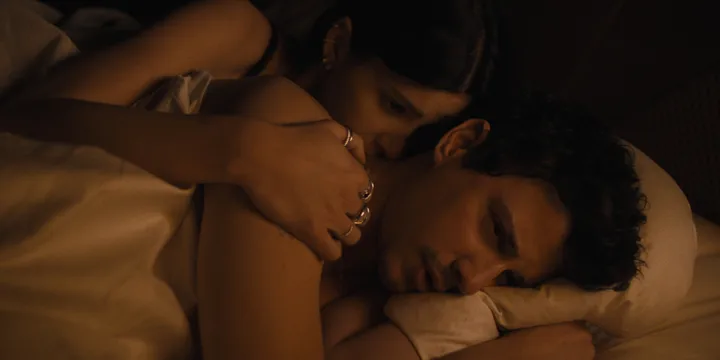
If you’re a fan of a binge-able series with a central mystery that slowly starts to unfold, Netflix has a new addition you’re going to love.
Something Very Bad Is Going To Happen is an unsettling new series directed by Haley Z. Boston (best known for her unsettling work in the horror genre) and executive produced by Stranger Things creators The Duffer Brothers.
The show centres around a young couple – played by The White Lotus’ Adam DiMarco and Emmy nominee Camila Morrone – gearing up for their wedding, but as the big day approaches, a series of sinister events begins to unfold.
And that’s pretty much all the plot that the streaming giant wants us to know before settling down to watch the new series, which arrived on the platform on Friday.
Reviews so far have been pretty positive, with some of the more impressed critics calling the show “fresh and original”, a “masterclass” in tension and “one of the best Netflix horror shows of all time”.
The praise hasn’t been unanimous though, and while most would agree that it’s worth giving Something Very Bad Is Going To Happen a whirl if you’re intrigued by its premise, some have taken issue with the show’s pacing and the way it’s been shot.
Here’s a selection of what critics have said about the new miniseries…
“The plot is deftly crafted as it chronicles the tumultuous seven-day period before their vows, from unsettling beginnings through genuinely frightening revelations to a conclusion that will satisfy, although you may not want to watch with your dinner on your lap […] While those in the market for jump-scares galore may be disappointed by the relative restraint here, the show is a masterclass in slowly building a sense of tension and anxiety while not being afraid to bring in the blood and gore when required.”
“I am not good with horror. Either it is Too Much – too bloody, too insistent, too preposterous – in which case I roll my eyes and become irate, or it is Too Effective – too uncannily at odds with reality, too nicely judged, too convincing – in which case I end up hysterical on the sofa and unable to sleep for four days […] Something Very Bad Is Going to Happen has me firmly in the latter camp.”
“[A] thrillingly creepy romantic horror show […] The show excels at casting a spell through odd details, nasty red herrings, disturbing clues. And underlying them all is an unexpectedly sincere exploration of what true love can or should feel like, pitched right on the knife’s edge between sentimentality and cynicism.”

“Just about anyone who has experienced the build-up to a wedding ceremony knows that the final week can be exhilarating and hopelessly romantic—but also filled with anxiety, misgivings, and extended family drama. Something Very Bad… shines a blood-spattered spotlight on these rituals with precise and insightful cruelty.”
“It’s macabre and unsettling and filled with people dying in a particularly alarming way (if you faint at the sight of blood, give this a miss), but there’s a knowingness to it all, a gleeful smorgasbord of genre tropes.”
“Something Very Bad Is Going to Happen includes a well-crafted storyline packed with fun twists and shocking reveals. It makes a promise from the get-go that something very bad is going to happen, and it follows through. While I can’t reveal the specific ‘very bad’ thing, I can tell you it’s worth the wait […] Something Very Bad Is Going to Happen will go down in history as one of the best Netflix horror shows of all time.”
“Despite some flaws and untapped potential to push its impressive themes a little further, Something Very Bad Is Going to Happen brings something fresh and original that’s absolutely worth your time.
“Without going into specific details, so you can experience it for yourself, episode four is a game-changer and sets the stage for a truly gripping series of events that takes the show in a new and unexpected direction. The final episode is also phenomenal.”

“Ever witnessed a wedding where a happily ever after just doesn’t seem on the cards? Netflix’s blood-soaked new horror series takes that fear to the extreme, shouting from the rooftops with every title card, that Something Very Bad Is Going to Happen by the end of its eight episodes. You can’t say you weren’t warned…”
“Ultimately, I quite liked the show Something Very Bad becomes once Boston and her team put their cards on the table. But that show is different enough from the initial presentation, and takes long enough to reveal itself, that I’m not convinced Something Very Bad is best served by its chosen format.”
“By the third aimless episode, I felt more dread about having five more instalments to go than I did about anything that was happening to the characters […] The back half of the season is better overall. The ending isn’t revelatory, in the sense that it doesn’t quite complete Something’s thoughts on matrimony or family or inherited attitudes toward either, but it’s clever and kind of exhilarating.”
“There’s wit here. Some snappy edits draw out the specific horror of Rachel’s situation […] but the overwhelming feeling is frustration. Potential lost to plod. The percussive soundtrack – dum, dum, dum, what’s around the corner? Is it a scary nephew? – started to drive me crazy in a good way. The greige colour palette – I was watching under optimal conditions: in bed at night with my screen brightness all the way to 11 – started to drive me crazy in a bad way. It all makes for a very long engagement.”
“It’s a tedious axiom at this point to complain about Netflix’s allergy to good lighting set-ups […] But the drab and colourless look of Something Very Bad undermines everything else about it, neutering horror and drama alike.”
“Camila Morrone’s compelling performance in Something Very Bad Is Going To Happen isn’t enough for us to get past the cartoonish supporting characters, the foreboding with little payoff, and a plot that just seems to consist of little more than tense moments.”
All eight episodes of Something Very Bad Is Going To Happen are streaming on Netflix now.

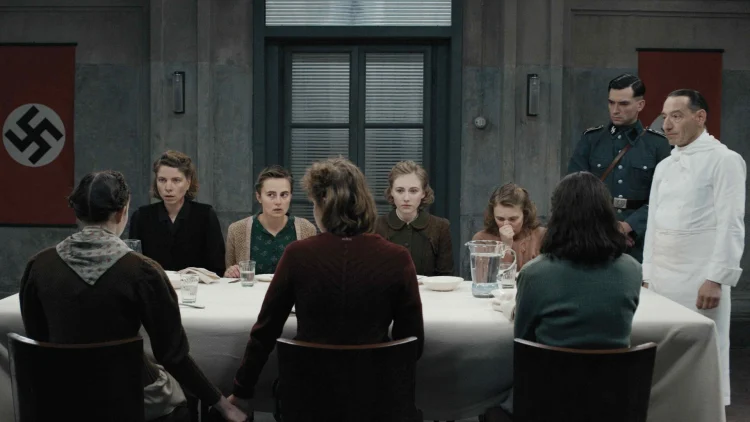
‘The Tasters’ | Image by: Luca Zontini /Busch Media

3 min read
A tense and atmospheric tale of a group of German women forced to eat Hitler’s food to check for poison, don’t watch it late at night by yourself as I did…
As our TV screens fill with images of war, it was perhaps not the right time for me personally to preview The Tasters. Though ostensibly telling the story of seven young East Prussian women coerced into being food tasters for Adolf Hitler in 1943, it is actually a tense portrayal of the cost of war for both its victims and its perpetrators.
At one level, it’s a moving tale of love, hurt, betrayal and loss in a small, deprived landscape where the toll of war on ordinary family members is achingly deep.
On another, it’s about friendship and courage surviving amid coercion, suspicion and fear. Reminiscent of the plight of the ‘comfort women’ of Japan, these seven local women are conscripted into sampling all of the food on Hitler’s vegetarian-only menu before he eats it, to ensure he’s not poisoned. This all happens in a cauldron of supressed violence. The women begin to rely on and support each other, sharing risks and hidden secrets.
The tension holds throughout, with longing for missing husbands, food and normality, and with distrust and threat lurking in every scene
The film draws on Italian author Rosella Postorino’s 2018 novel At the Wolf’s Table – a fictionalised account based on the (unsubstantiated) claims of the late Margot Wölk – the veracity of which have been questioned by some German historians. It tells the story a group of women kept at the ‘Wolf’s Lair’ (Hitler’s Eastern Front headquarters), only one of whom survives the war to tell the tale.
Their story is the frame on which the Italian director Silvio Soldini tells a wider story of the struggles endured by German women as their men fight for their country. They are daughters, mothers, sisters and widows. On the one hand they represent the universal plight of women in a conflict in which they’ve had little say in its beginning, its end or how it unfolds; on the other, the film also touches on the moral ambiguity of when the struggle to survive becomes complicity.
This German language film is an Italian, Belgian and Swiss co-production, starring the scene-stealing, entrancing Elisa Schlott, with fellow German actor Max Riemelt playing the troubled SS lieutenant Albert Ziegler. The pair form an unlikely and risky alliance.
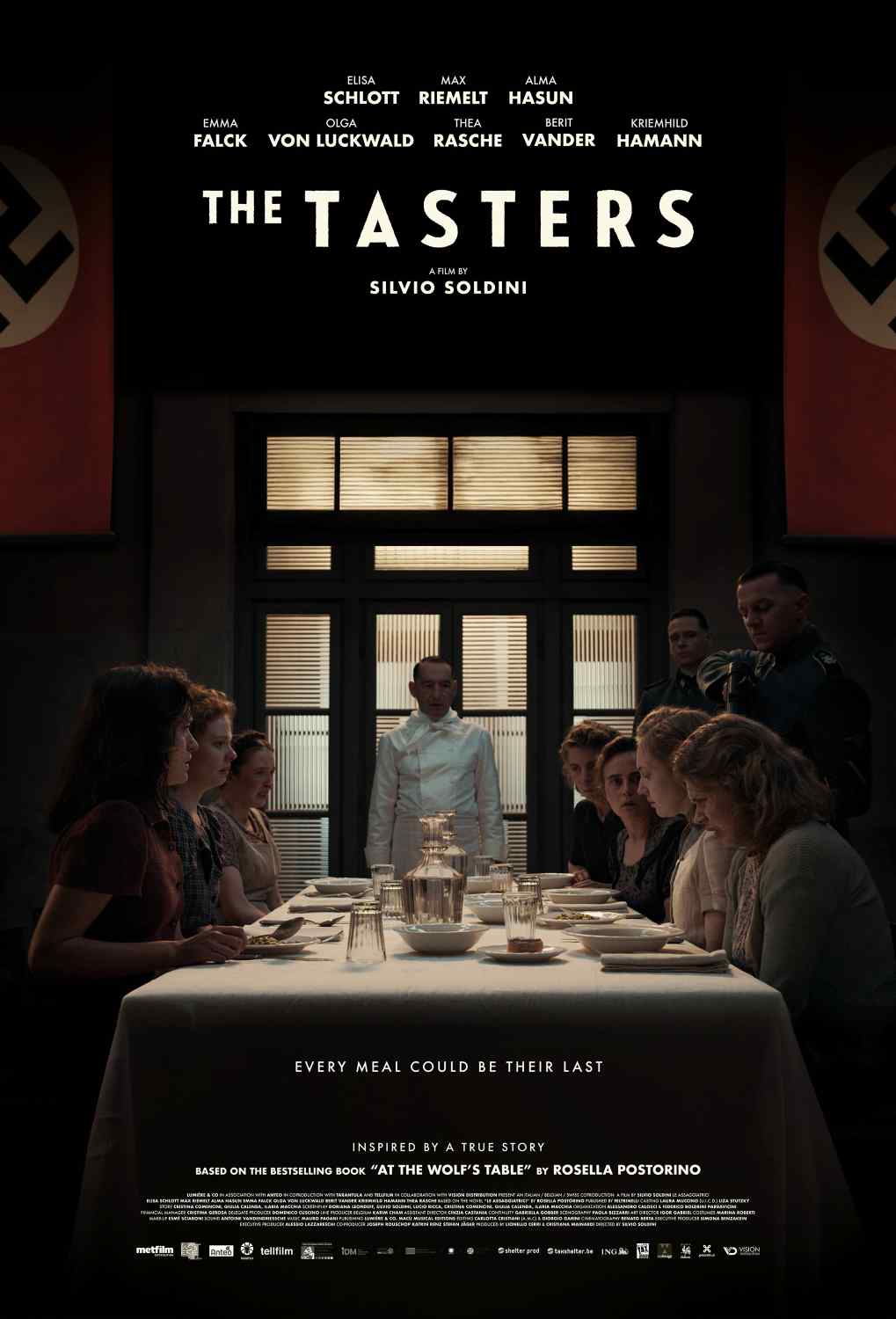 It doesn’t make for easy viewing as the tension holds throughout, with longing for missing husbands, food and normality, and with distrust and threat lurking in every scene. Its somewhat languid, sombre, atmospheric cinematography and taut dialogue are also engaging and slightly hypnotic.
Whilst the film is a jarring personal reminder that these events took place only a short time before I was born (in Germany as it happens), it is reassuring to acknowledge that for all the awfulness of the events portrayed, Germany is now a thriving democracy, a strong ally of Britain, and a country realistic about the traumas of conflict but also the harms which can necessitate intervention. But don’t watch by yourself late at night as I did…
Baroness Hayter is a Labour peer
The Tasters
Directed by: Silvio Soldini
Venue: Selected cinemas
Caption Contest (Mona Reeves-a Edition)
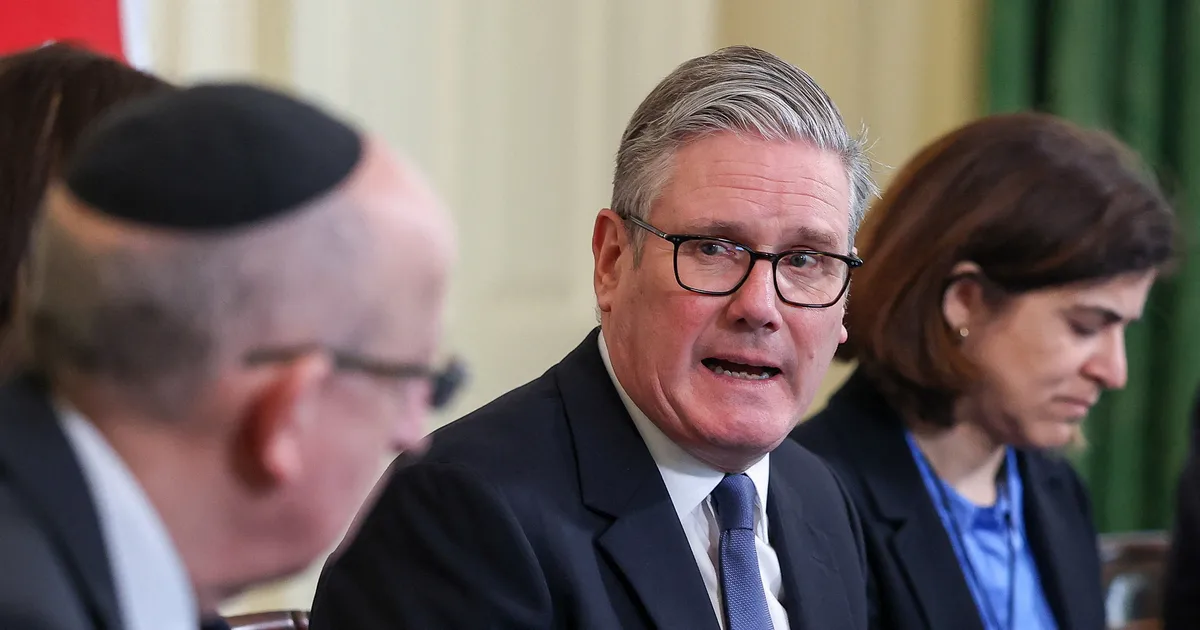
The pre-written obituaries for Keir Starmer’s time in Downing Street are unlikely to be published this year.
Labour MPs from across all wings of the party have told HuffPost UK that the under-fire prime minister will survive what promises to be a catastrophic set of election results on May 7 – and see in 2027 in No.10 as well.
Voters will go to the polls in Scotland, Wales and England in what will be the biggest test of public opinion since the general election in 2024.
Even previously-defiant Labour MPs now accept that they will be catastrophic for the party.
The SNP will comfortably win the Scottish Parliament election, with Labour in a fight with Reform UK to be Holyrood’s official opposition party.
For the first time since devolution was established in 1999, Labour will no longer run the Welsh government. A YouGov poll this week suggested that Plaid Cymru will win, with Labour a distant third behind Reform.
A similar trend will be seen in local councils across England, where Labour could lose up to 2,000 seats as Reform and the Greens enjoy big gains.
And yet, despite all that, the long-expected challenge to Starmer’s leadership is not expected to materialise.
There are three main reasons for this.
The first is the fact that Parliament will be prorogued – effectively shut down – from the end of April until May 13, when the King’s Speech sets out the government’s legislative plans for the year ahead.
This will buy Starmer some time, and mean that much of the post-elections anger and thirst for retribution from the Parliamentary Labour Party will have dissipated by the time MPs meet up again.
“No.10 have pulled off a masterstroke by removing the opportunity for people to properly organise against the prime minister,” one MP told HuffPost UK.
The second reason is that there is a war on, which has undoubtedly cooled many MPs’ desire for a change of prime minister.
Even the PM’s critics acknowledge that he has handled the conflict in Iran well, and – for the moment at least – finds himself on the same side as the public on the extent to which the UK should get involved.
“Why on earth, with everything going on in the world at the moment, would we want to respond by have a leadership contest?” one MP told HuffPost UK.
“This isn’t the time to be getting rid of Starmer, it’s a time to circle the wagons.”
The third, and perhaps the main, reason why the PM’s position is more secure than it has been for months is that none of his main rivals are in a position to mount a challenge.
Even supporters of Angela Rayner agree that her decision to make a speech criticising the government and warning Starmer that he is “running out of time” was a mis-step.
“She’s annoyed lots of MPs,” one backbencher said. “It’s also made a lot of us think about the prospect of Angie being prime minister in the middle of a war, which is giving us pause for thought.”
Andy Burnham remains stymied by the fact that he is not even an MP, while Wes Streeting told The Guardian’s podcast this week that now was not the time to be contemplating a change of personnel in 10 Downing Street.
“We all know that there are lots of people in this country who voted for change, who are still demanding change and are finding us wanting because of some of the mistakes we’ve made and because they’re not yet feeling change in their own lives,” he said.
“We all know this. Keir knows this. But look at the scale of the challenges we inherited when we came in. There was never going to be an overnight transformation.
“We are beginning to see this country moving in the right direction. He’s only been prime minister for 20 months. Give the guy and the government a chance.”
Another senior Labour figure said there was a more practical reason why Starmer is safe, at least for now.
“The right of the party know none of their candidates can win, and the soft left are already getting everything they want, so why bother changing leader?,” he said
Ed Miliband’s decision to let the New Statesman follow him around for four months for an in-depth article on what makes him tick has not gone unnoticed among his MP colleagues.
Many of them are now convinced it is a case of when, rather than if, he decides to make a bid for Starmer’s job.
But few expect that to be this year – and even if he did, he would face significant opposition from within the PLP.
“The feeling I get from speaking to colleagues is that the prime minister is safer now than he has been for a long time,” said an MP, “He’s steadied the ship in the last few weeks, and is handling the war in the Middle East well.”
Keir Starmer has made a virtue of his ability to prove people wrong, be it by winning the Labour leadership in the first place, surviving the disastrous Hartlepool by-election loss in 2021, or by delivering a landslide general election victory in 2024.
Most MPs believed last Christmas would be his last one as prime minister.
Remarkably, the smart money is now on Starmer still being in charge when the decorations are taken down again next year.

British actor Tom Blyth is speaking out in defence of his girlfriend, Daniela Norman, after her Oscars night ensemble was met with some criticism online.
Last week, Tom recapped his experience at the 2026 Academy Awards with a carousel of photos on Instagram.
Included in the mix were several shots of himself and fellow actor Daniela attending Vanity Fair’s after-party.
Daniela wore a sheer blue gown for the occasion, prompting a cheeky caption from Tom, who quipped in his post: “Feeling blessed by the excellent dogs, dawgs and nipples in my life.”

Axelle/Bauer-Griffin via Getty Images
See-through gowns have become a red carpet staple in recent years, with stars like Dakota Johnson, Florence Pugh and Olivia Wilde among those embracing the trend.
But that didn’t stop one of Tom’s followers from offering a scathing comment about Daniela’s ensemble.
“He looks handsome and elegant, but his girlfriend, on the other hand, looks incredibly vulgar, dressed completely inappropriately for the occasion,” they wrote.
And it didn’t take long for Tom to fire back at the user in question.
“Stfu,” he replied in the comments. “She wore a dress that she was excited by and she looked EXQUISITE in it.”

Taylor Hill via Getty Images
Though Daniela has yet to respond publicly to the criticism, she celebrated the end of Hollywood’s awards season with a series of images on Instagram that showcased her gown’s many details.
“Eeeekk what a night,” she wrote in the caption.
Tom, whose credits include The Hunger Games: The Ballad of Songbirds & Snakes and Plainclothes, and Daniela have been dating for about two years.
Though the couple haven’t said much publicly about their relationship, Tom shared some insight into their behind-the-scenes connection in an interview with Bustle published in January.
“My girlfriend and I call it sleepover time,” he said. “And it’s so nice because especially in today’s world when we’re rushing around and we’re all on our phones all the time, sometimes we have to be like, ‘Hey, let’s just put our phones away for a few hours’.”
“There’s no better feeling when you lay down to go to sleep and then you realise two hours have passed and you’ve just been doing pillow talk and just laughing,” he added.
“Even if you’ve been with someone for a year or more, it makes you feel that feeling of when you’re a teenager, getting to know someone for the first time.”

Zack Polanski has provided some much needed clarity to the issue of leasehold properties.
Showing he’s a Labour man through and through, Sadiq Khan is tackling the problem by acknowledging it exists while doing sweet eff-all to fix it:
Sadiq Khan just refused to commit to no more new build leasehold buildings in London.
Literally moments after banging on about how bad leasehold is and that it’s a feudal system.
The Labour hypocrisy knows no ends. What do they stand for other than to protect wealth & power?
— Zack Polanski (@ZackPolanski) March 26, 2026
Polanski speaks out
In response to Polanski, the group Free Leaseholders posted the following:
Well done. @MayorofLondon @SadiqKhan has a dire record on leaseholder liberation.
In his 2021 manifesto, he promised to lead the way on commonhold with a pilot scheme.
It never happened.
The promise then disappeared from his last manifesto.
Vested interests before the people. pic.twitter.com/d8ZyLuKL79
— Free Leaseholders (@FreeLeasehlders) March 26, 2026
The group explain the following on their site:
Leasehold is a long-term tenancy agreement where you pay for the right to occupy the property you live in, but you don’t truly own the flat itself or the bricks and mortar.
When you buy a home, you shouldn’t gain a landlord. But that’s the case for 5.3 million households like ours across England and Wales. We’re subject to ground rent to stay in our homes, crippling service charges, the constant threat of forfeiture if we don’t pay up, and have no control over how our homes are managed.
The leasehold system has turned our dreams of home ownership into a nightmare.
It dates all the way back to 1066 – and it doesn’t exist in most of the world and where it used to, they’ve worked out it’s no longer fit for purpose.
But for decades, governments have been pledging to abolish it but each time they’ve given in to pressure from powerful lobbies that benefit from leasehold.That’s why leaseholders across the country are coming together – we need to be louder than the vested interests. Together, we can call on politicians to stand their ground and end this broken system once and for all.
The group also said that leaseholds could “collapse the property market”:
Student loans are a government-backed, wealth-destroying scam.
Want another preying on the young?
Leasehold has made the first rung of the property ladder toxic.
“Buy” a flat and become a wage slave to a freeholder.
Leasehold will collapse the UK property market.
WATCH 👇 pic.twitter.com/Ck9ZlSGgDZ
— Free Leaseholders (@FreeLeasehlders) February 24, 2026
Lending credence to this idea, many of the homes which are currently losing value in London are – you guessed it – leaseholds:
had a quick look through this account and bascially every example is a leasehold lol https://t.co/K1JetQtxal
— sonny (@SonnyTLoughran) March 23, 2026
It’s almost as if people don’t want to buy something you can’t own.
Leasehold London
The problem with leasehold properties is they combine the cost of purchasing a house with the downsides of not actually owning one, as HG wrote for the Canary in January this year:
Most flats in the UK are leasehold, along with some shared ownership houses.
Freehold means a resident owning their property and the land it is built on. On the other hand, leasehold means owning the property for a fixed period, while still paying ground rent to the landlord, who either owns the building (such as a block of flats) or the land.
When the lease ends, ownership returns to the landlord.
In comparison, commonhold provides freehold ownership for flats or other interdependent buildings.
Labour now have a reputation for betraying the public’s trust on leaseholds, as HG added:
in the run-up to the 2024 General Election, Labour promised to:
act where the Conservatives have failed and finally bring the feudal leasehold system to an end.
Labour literally promised to end leasehold. Whilst we shouldn’t be surprised that Starmer has made yet another U-turn, a £250 cap is a shitshow when it should be zero. And yes, after 40 years, it will change to ‘peppercorn’, or zero. But why in 40 years and not now?
Then, as now, Zack Polanski called Labour out on the issue:
Time for Government to stop tinkering around the edges and scrap leasehold altogether. https://t.co/7963GGOzWM
— Zack Polanski (@ZackPolanski) January 27, 2026
Promote ownership or get owned
The constant betrayals from Labour politicians are why the Green Party are doing so well against the governing party.
Politicians like Keir Starmer and Sadiq Khan need to remember that much like this nation’s leaseholders, they don’t have the inherent right to remain in their offices forever.
Featured image via Barold
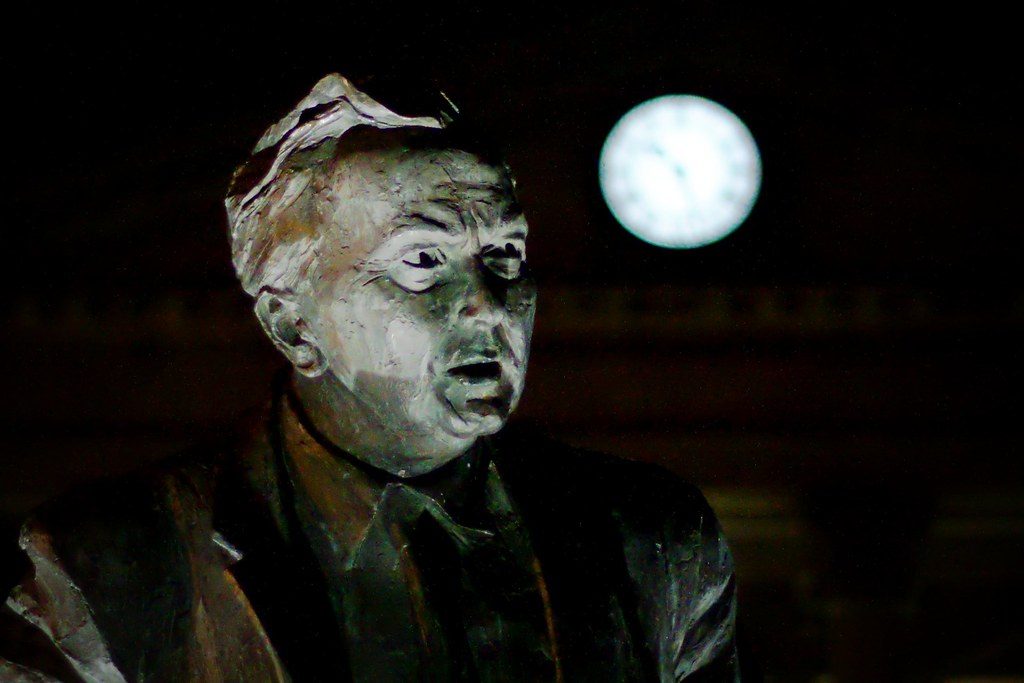
Adrian Lee is a solicitor-advocate in London, specialising in criminal defence, and was twice a Conservative parliamentary candidate.
“I see myself as the big black spider in the corner of the room. Sometimes I speak when I’m asleep. You should both listen. Occasionally when we meet, I might tell you to go to Charing Cross Road and kick a blind man. That blind man may tell you something, lead you somewhere.”
Harold Wilson in conversation with BBC journalists, Barrie Penrose and Roger Courtiour, 1976.
On the morning 16th March 1976, Harold Wilson announced to his Cabinet that he was resigning as Prime Minister. Wilson, physically looking like a man in his mid-seventies, had just turned 60 years old only five days earlier. The physical and mental decline of Harold Wilson, even by the standards of the time, was striking. In comparison, Sir Keir Starmer today is three and a half years older than Wilson at the time of his resignation. Tony Benn described the announcement as follows:
“I went to Cabinet at 11. Harold said, “Before we come to business I want to make a statement.” Then he read us eight pages, in which he said that he had irrevocably decided that he was going to resign…People were stunned but, in a curious way, without emotion. Harold is not a man who arouses affection…Nobody knew it was coming [but] there was still a remarkable lack of reaction. Jim Callaghan, who found it hard to conceal his excitement, said “Harold, we shall never be able to thank you for your services to the Movement.” I left Downing Street about 1. By then there was a huge crowd of people, hundreds of television cameras.”
Roy Jenkins noted bitterly in his diary: “Callaghan had been informed beforehand, but I had not, which was a clear indication of the way that Wilson’s preference had shifted.”
Later that day, Wilson appeared at a gloriously smoky press conference to confirm his decision and later still gave interviews for the evening news bulletins. He maintained that there was nothing unusual about his actions and that he had decided two years before in February 1974 that he would resign about this time. He reminded the public that in total, considering the Labour governments of 1964 to 1970 and periods out of office, he had spent eight years as Prime Minister and five years as Leader of the Opposition. It was time to let someone else have a go. All of this seemed fair enough, and yet there seemed to be one piece of the jigsaw puzzle missing.
The three-seat parliamentary majority that Wilson’s Labour Party received in the October 1974 General Election left the fate of Britain’s government hanging by a thread. With strong commitments to significantly expand the welfare state, Wilson and his Chancellor Denis Healey raised the top rate of income tax to an eye-watering 83 per cent in Labour’s first year back in government. Inflation peaked at 26 per cent in 1975, but still the revolution continued as the government had confidence in the “social contract” that they had negotiated with the Trades Union Congress to facilitate a voluntary incomes policy. In other words, the unions would attempt to restrain their members from advancing pay claims outside the limits set by government.
In social policy, the government established a Health and Safety Commission and a separate Health and Safety Executive to regulate the workplace. Meanwhile, Tony Benn, Secretary of State for Industry, was busy creating a new quango: the National Enterprise Boad (N.E.B), the aim of which was to pump taxpayer’s money into private companies in exchange for the state taking part of the equity. Benn made no secret of the fact that he viewed the expansion of the state into the realms of private business in the most positive light.
Wilson’s government was also determined to increase comprehensivisation across the secondary school sector, effectively ending grammar schools, and to bring into existence two new Acts of Parliament tackling racial and sexual discrimination. The latter would establish yet another highly expensive quango: the Equal Opportunities Commission. Whilst all this was going on, disquiet started being expressed by all social classes. Unemployment rose to over one million in April 1975, and those with investments started fretting about their savings. Wilson also suffered his first ministerial resignation when the formidable Joan Lestor M.P. resigned as Under Secretary of State for Education and Science on 9th March 1976 over proposed budgetary cuts.
In private, Wilson had been becoming increasingly paranoid regarding Security Services. He was convinced that British intelligence was working to undermine him and wished to remove him from office. Joe Haines, Wilson’s press secretary, recalled in his memoirs that on one occasion, Wilson lifted up a painting on the wall at No. 10 Downing Street and pointed to some electrical wires poking out of the wall. Wilson informed Haines that this was proof of MI5’s bugging. It transpired that the wires had nothing to do with a listening device, but were instead the remnant of a light that had once hung over the picture. Haines commented:
“He gradually began to suspect everybody. He suspected MI5, he feared a military coup, he thought the Soviets or anybody else might be spying on him and it got worse and worse I’m afraid.”
At one point, Wilson organised a visit to the U.K. by C.I.A. Director, and future U.S. President, George H.W. Bush, just to ask him if his agency was engaged in trying to replace him. Bush recalled many years later that during their meeting “He (Wilson) did nothing but complain about being spied upon.” How on earth had Wilson become obsessed with this subject? To understand this, one must go back a few decades.
Between 1947 and 1951 Harold Wilson had served as Overseas Trade Minister in Attlee’s government. During this time, Wilson made three official visits to the Soviet Union with the aim of selling Rolls-Royce jet aircraft engines to the Soviets in exchange for Russian timber. This plan was controversial with the British defence establishment and became a concern of the Americans during the Korean War. It was claimed that Soviet jet fighters shot down in that conflict showed that their engines had copied and modified the British design. During the 1950’s, when Labour was in Opposition, Wilson continued to visit the U.S.S.R. to further Anglo-Soviet trade. He was the first British politician to travel to that country following Stalin’s death and was a paid consultant to a company importing Soviet timber. Wilson even played cricket with Soviet officials on the banks of the Moskva River. In 1956, Wilson was granted a private audience with Nikita Khrushchev and later declared that “the West must not underestimate this man.” Later that same year, Wilson refused to condemn the brutal suppression of the Hungarian Uprising.
Files later discovered in the Soviet archives imply that Wilson was at some stage approached by the K.G.B. with the aim of recruitment, but that he ran a mile when approached. The K.G.B. file states that “The development did not come to fruition.” Unfortunately, Wilson had already come to the attention of MI5, who had opened a file on him under the pseudonym “Norman John Worthington”.
In 1961, a K.G.B. officer, Anatoliy Golitsyn, defected to the West. Golitsyn told his Western handlers that the K.G.B. planned to assassinate a leading pro-Western Social Democrat politician and replace him with a Soviet stooge. All eyes initially focused upon West Germany, and then on the 18th January 1963, British Labour Leader Hugh Gaitskell suddenly died at the age of 56. He had only shown the first signs of illness in mid-December 1962 and his cause of death was initially unknown. Porton Down eventually established that he had died of Lupus, a rare autoimmune disease. A few days before falling ill, Gaitskell visited the Soviet Embassy in London where he had been kept waiting for a visa for a forthcoming trip. He told colleagues that he been given several cups of coffee by Soviet Officials whilst he waited to be seen. Rumours started circulating that his successor, Wilson, was helped to power by the Soviets.
One of the chief protagonists of this theory was MI5 agent Peter Wright (later notorious for his memoir “Spycatcher”). With Britain in the doldrums in the mid-70s, the rumours circulated widely. Wilson’s paranoia was further fed by the emergence of two proto-paramilitary organisations in 1974: Unison, led by former Deputy Chief of Staff of N.A.T.O. General Sir Walter Walker and G.B.75, led by S.A.S. founder David Stirling. Both Walker and Stirling said that their organisations would only assist the civil authorities if order broke down in the U.K., but Wilson perceived this as a challenge to his authority and a sign of a possible military coup.
To this day, those on the Far Left are convinced that Wilson was ousted from 10 Downing Street by an establishment campaign of smears and threats. However, Joe Haines disagreed. He stated that Wilson was tired and sick of being in government and, when he returned to power in 1974, only ever intended to rule for another two years. Haines pointed out that Wilson was relatively poor and that he relished the chance of making money in the media in his latter years. He had signed a lucrative I.T.V. contract for a television series, A Prime Minister on Prime Ministers, and had started working on the text of the accompanying book.
It is likely that Wilson retired suddenly for practical reasons. He may also have feared the onset of the Alzheimer’s that finally killed him in 1995. However, the paranoid Harold Wilson was on display a few months after his resignation when he met with B.B.C. Reporters Barrie Penrose and Roger Courtiour in his Lord North Street home. He encouraged them to investigate the establishment plot to topple his government. The quote at the beginning of this article about “…the big black spider in the corner of the room” reveal the depths of his conspiracist beliefs.
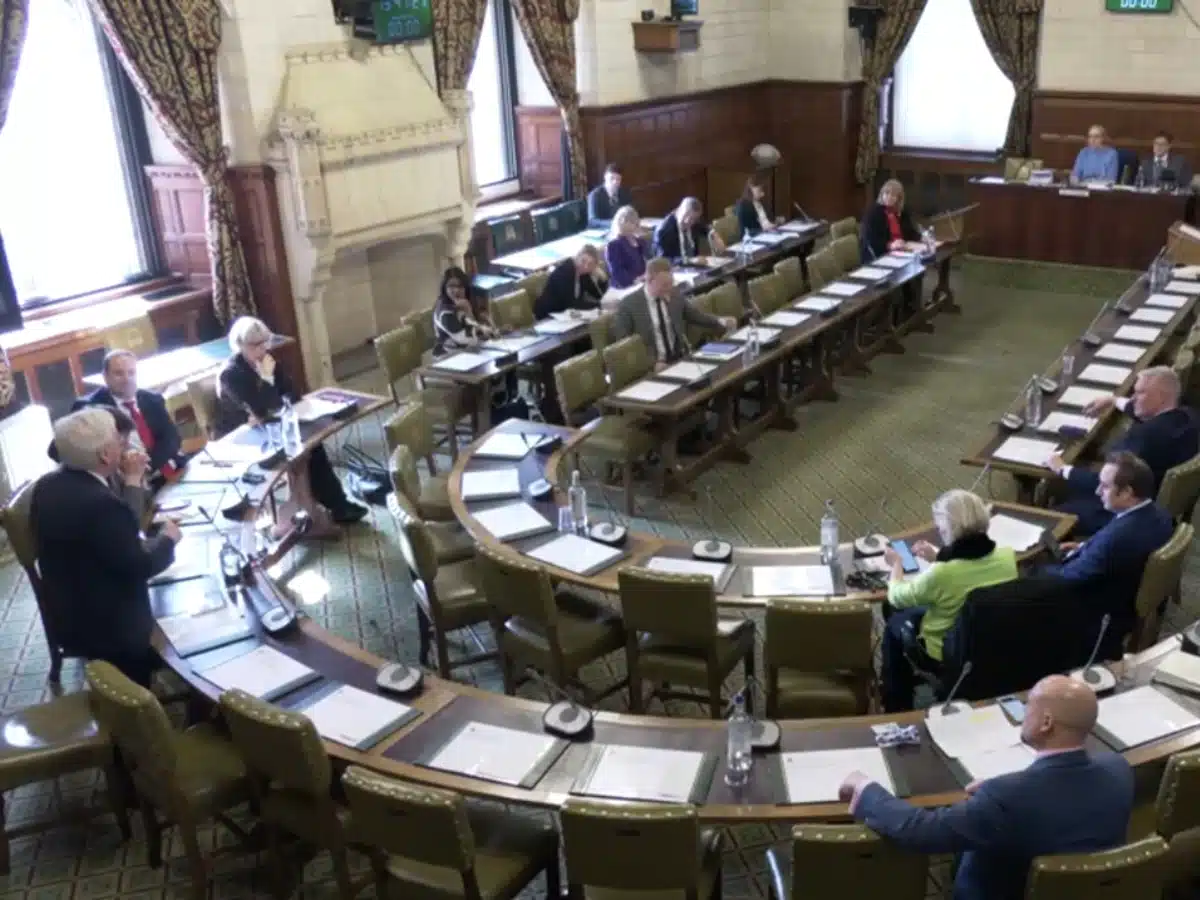
An impassioned parliamentary debate has shone a spotlight on a group of “not rare”, just “rarely diagnosed”, yet life-threatening chronic, genetic illnesses. However, despite poignant pleas for concrete action, the government has offered little more than warm words to the long ignored patient communities at the centre of the debate.
EDS and CCI debate takes place in parliament
On Thursday 26 March, a cross-party group of MPs turned out to Westminster Hall to call on the government to address the abysmal lack of NHS diagnosis and medical care services for people living with Ehlers-Danlos syndromes (EDS), hypermobility spectrum disorders (HSD), craniocervical and atlantoaxial instabilities (CCI and AAI).
The Ehlers-Danlos syndromes (EDS) are a group of 13 complex genetic tissue disorders. These conditions affect the entire body, often leaving people in daily pain, exhaustion, and isolation. The hypermobility spectrum disorders (HSD) are connective tissue disorders whose features overlap with the most common type of EDS, hypermobile EDS.
CCI and AAI involve excessive mobility at certain junctions in the neck. This can result in restricted blood flow, compression, and damage to nerves in the neck.
For the first time, parliamentarians spanning the political spectrum brought the lack of recognition for this severe and sometimes life-threatening assemblage of conditions into focus. Surprisingly, even Reform’s Lee Anderson took to the floor. Of course, there was a jarring disconnect in an MP who has vociferously punched down on disabled people speaking at a debate on chronic illness. Nevertheless, Anderson made the time to turn up for his constituents – including one whose story he amplified during the debate.
And of course, that striking contradiction isn’t solely the preserve of Reform. Plenty of speakers from other parties will have voted for the government’s benefit cuts. However, for a good hour and half, MPs refreshingly centred the lived realities of their chronically ill and disabled constituents.
The intersections between EDS and CCI
Labour MP Josh Newbury spearheaded the debate. The Crannock Chase MP emphasised how he brought the debate to draw attention to the intersection between EDS and CCI specifically.
He opened it with the story of his 31-year constituent Connor, who lives with both EDS and CCI, explaining that:
Some people living with EDS experience chronic joint dislocations, severe and persistent pain, and significant neurological complications. One of those complications in cases like Connor’s is CCI, whereby the skull no longer sits safely on the spine, placing pressure on the brain stem and spinal cord.
Recounting Connor’s words, Newbury detailed how:
He says that his head is quite literally falling off his body. Chillingly, that is not something that is picked up on a scan but not felt; rather, Connor feels his head shifting around dangerously every day, with all the pain that goes with that. He is also acutely aware that his symptoms continue to worsen.
Newbury hit quickly on this point that the NHS lacks necessary diagnostic equipment – specifically, upright MRI scanners:
in EDS, the instability comes from ligament laxity and is often positional, so that when someone is upright, the head is not adequately supported by the neck. That is often not visible when patients are lying flat in a standard MRI scanner, so their scans might appear normal despite ongoing neurological symptoms.
Yet gallingly, as the Canary’s Steve Topple recently highlighted:
senior practitioners advised the-then health secretary Jeremy Hunt in 2013 that upright MRI scanners were desperately needed in the NHS. He ignored them.
A postcode lottery
Many MPs drove home that care for EDS is also an unreliable postcode lottery. Labour MP Patricia Ferguson underscored research from Edinburgh University revealing that EDS patients in Scotland:
can wait up to 20 years for diagnosis
Fellow Labour MP Jayne Kirkham detailed the paucity in medical services in Cornwall:
One constituent described moving from Kent to Cornwall a few years ago and finding that the services for patients with EDS in Cornwall were “virtually non-existent”. They were initially able to access care at the dysautonomia clinic in Derriford in Devon, but that has since closed with no successor. That has meant that my constituent has spent nearly £1,000 since December on appointments and travel to see private consultants. Many constituents told me that physiotherapy has helped them, but they have experienced long waits and found that there is a shortage of professionals experienced in the condition in the duchy.
Meanwhile, DUP politician Jim Shannon put EDS and CCI diagnosis and care in the context of Northern Ireland’s lack of “detailed prevalence data”.
As it currently stands, the NHS has commissioned just two specialist diagnostic services for EDS in Sheffield and London.
No EDS-focused services for CCI patients
In CCI and AAI, the situation is even worse. Newbury said his constituent Connor has been having seizures and difficulty swallowing and breathing in “recent days”. In the process of making enquiries on his behalf, he relayed that he has:
been told that there is currently no established or commissioned NHS service for investigation, multidisciplinary discussion or surgery for CCI in patients with hypermobile EDS.
Multiple MPs spoke to the fact that the NHS simply doesn’t offer CCI surgery EDS patients need when it becomes quite literally life-threatening. As a result, it has forced patients to make expensive trips abroad for treatment. Many people living with CCI have to fundraise for this because they simply can’t afford the astronomical costs.
And even when patients pay-out for exorbitant air ambulances and private care abroad, Newbury pointed out there’s:
no aftercare, no consistent access to specialist imaging reviews and no co-ordinated rehab; many people are refused any of the care that would normally follow complex neurosurgery.
Psychologisation and harm: a history of misogynistic misdiagnosis
The debate highlighted how this gaping hole in diagnostic and care pathways often leads to clinicians gaslighting patients.
At the sharp end of this, clinicians all too often accuse patients of fabricating their illness, as Newbury brought attention to:
Many people have told me that they have been diagnosed with Munchausen syndrome, so they are not just dismissed but told that their condition is fictitious.
The psychologisation of a chronic, physiological conditions will be familiar to many in the EDS community and beyond. Clinicians have long treated EDS patients in a parallel fashion to myalgic encephalomyelitis (ME) patients – a commonly comorbid disease.
2025 research found that doctors had misdiagnosed 94.4% of EDS patients with psychiatric disorders. The study reviewed misdiagnosis across 429 patients.This included 67% who clinicians had diagnosed with ‘conversion disorder’. Most people will know this psychosomatic condition by its colloquial name steeped in misogynistic history: hysteria. Of course, this is no surprise given that EDS, like ME, occurs in women more often than men.
This shared history of medical harm is all the more reason why the NHS also needs to stop siloing care.
Labour MP Liz Twist highlighted this failure to join up specialisms in the context of the often multiple conditions patients live with:
EDS and HSD do not exist in a vacuum. Many patients find that the condition overlaps with other conditions, such as postural tachycardia syndrome, mast cell activation syndrome, myalgic encephalomyelitis, chronic fatigue syndrome and gut issues. Those overlapping conditions have an exponential impact on patients who are just trying to manage their everyday life. Under the current system, patients are bounced between different and disjointed secondary care specialties that do not communicate or understand the full breadth of the issue, having been forced to leave primary care practitioners who do not have the support they need to manage these complex patients.
Acknowledging much, committing to very little
Ultimately however, it was evident in the responding minister’s replies that the political will to tackle the dire lack of diagnosis and care, still isn’t there. Under-secretary for the Department for Health and Social Care (DHSC) Sharon Hodgson addressed constituents who’d contacted their MPs, stating:
I want those individuals to know that I hear them, and that I recognise the challenges they face and the uncertainty and distress that many describe.
Largely though, she went through the motions of listening, without actually hearing what they called for.
Dismissing the dangers many face and the surgical care some will need that has forced patients to seek care abroad, she said:
NHS England continues to strengthen clinically led pathways for people with hypermobility-related disorders, with an emphasis on non-surgical management, co-ordinated physiotherapy, and pain management and rehabilitation, as is consistent with the best available evidence.
On National Institute for Health and Care Excellence (NICE) guidelines, she stopped shy of agreeing to commission them, committing only to:
asking the NICE prioritisation board… if it will look at the Wales pathways that she suggested when it considers updating NICE guidance.
Of course, that might be useful if NICE actually had any guidelines on them to update in the first place.
The fact, as Hodgson herself acknowledged, CCI is not even “recognised as a distinct NHS diagnosis” got a:
we will look further into that.
Yet even this wasn’t a commitment to address this, but merely to:
improve pathway consistency by strengthening the existing framework
Whatever that actually means.
Hodgson made no firm promise to make even a strategy, let alone take concrete steps towards joined-up care. Repeatedly, she fell back only on the NHS’s 10-year plan. But critics have consistently branded this a wishlist, without funding and detail to make it reality. And speaking of under-resourced and unserious wishlists, Hodgson made reference to the pitiful research funding commitment in the ME Delivery Plan. The government evidently isn’t planning to put its hands in its pockets for more research funding into EDS or CCI either.
Hope alone isn’t enough, but the government couldn’t even give that
Overall, Newbury and the cross-party MPs present made heartfelt appeals on behalf of their constituents living with these devastating conditions.
MPs recognised their responsibility to ensure EDS and CCI patients across the country were made to feel seen and heard. And in sharing the stories of their constituents, they did just that.
They echoed EDS Support UK’s calls for genuine diagnostic and care pathways. And crucially, as Labour MP John McDonnell made abundantly clear – that means the government actually resourcing all this.
At one point, Newbury noted that “hope” was the “key word” of the debate, because it is:
something that so many people with the conditions do not have at the moment.
As a result, he poignantly argued that:
That is what we absolutely need to give them.
However, Newbury and other MPs realised that patients can’t simply live on that ‘hope’ alone. They need tangible action. But as ever for those living with under-recognised chronic health conditions – the government and NHS appear to be moving at a glacial pace.

We hope you love the products we recommend! All of them were independently selected by our editors. Just so you know, HuffPost UK may collect a share of sales or other compensation from the links on this page if you decide to shop from them. Oh, and FYI — prices are accurate and items in stock as of time of publication.
For decades, we’ve been programmed to think that sex toys should be shaped like (ahem) certain body parts and come in purple or black silicone. That’s it. We have to give it to them: those kinds of toys serve a specific purpose, and they get the job done.
But sometimes, the potential embarrassment of having a flatmate, family member, or even lover stumble across the spicy devices you’d like to have is simply not worth it. Considering more young people are living at home because of our crap housing market, the risk of that happening are kinda higher than ever.
Some folk simply aren’t into phallic or vulva-shaped toys either. So, if you ask us, it’s about time some new shapes were introduced into the mix.
The last few years have seen us obsessed with characters like Labubus, My Melody, Snoopy, and any wearable trinket imaginable, so it makes perfect sense that demand for cute sex toys has tripled year-on-year on Lovehoney alone.
Lemons, strawberries, avocados, and even gummy bears have taken over the sex tech world – and we’re not mad about it. As well as looking good enough to eat, we’re ever-thankful that these are a beginner-friendly option for some of the more shy solo players among us.
Whether you want something to leave out proudly on your bedside table, or you’re a sucker for cutesy things, these are the best cute sex toys to add to your collection.

Nancy Lem
When life gives you lemons, make love. Just don’t lose this in your fruit bowl.

So Divine Strawgasm
Dare we say: this will make you berries and scream?

Naughty Bits Muff Shroom Playful Massager
Honestly we have to give whoever names these toys huge props. You’d truly never know this was a vibrator, and it’ll have you sparkling like a fairy.

ROMP Pink Peach Rechargeable Clitoral Stimulator
We’re peachy keen on how this vibe looks, but even bigger fans of its suction power.

Lovehoney Rose
Forget flowers, we want a Rose sex toy! It’ll be around for much longer, but… we can’t say you’ll last quite as long.

Unihorn Mount’n Peak Licking Clitoral Vibrator
My Little Pony is all grown up. The only thing is, you’ll have to be brave enough to not be weirded out by a unicorn licking you.

Lovehoney Hot Summer Lay-On Vibrating Popsicle
If the heat doesn’t melt you, this vibe will. This shape is surprisingly versatile, so it’s easy to hold thanks to that cutie popsicle stick. You can even lie on it, if you’re into grinding. Just don’t insert it…

Satisfyer Seal You Soon
We never thought we’d say this, but this seal has everything you need. Vibes and suction? It’ll get you clapping!

Lovehoney Pocket Pal Clitoral Suction Stimulator
Forget Pingu, this suction toy will make you ‘noot’ at an alarming rate.

Satisfyer Mission Control
On a mission to take control of your orgasms? You won’t have to break the bank trying lots of toys, because this is loaded with the two major kinds of stimulation you’ll need to land on planet pleasure.

Satisfyer Cutie Heart
We heart the shape of this toy just as much as its versatility.

The I’m Every Woman singer was chatting to Jessie and Lennie Ware on their Table Manners podcast when Lennie asked her if she watched any British telly.
Lennie then pressed Chaka on what she was watching at the moment, to which she revealed: “You know what I love here is Chase, The Chase. I love something like that. I love to learn.”
But it’s not just Bradley Walsh’s quiz that Chaka is partial to.
It turns out the funk icon is also a fan of ITV’s arcade-inspired gameshow Tipping Point, hosted by Ben Shephard.
When Lennie jogged her memory on another of British TV’s quiz shows, she responded: “Oh I love that too! The thing that comes out… the thing… they slide down the end? Yeah, right, I like that too.”
The petition to get Chaka on Celebrity Gogglebox starts now.
Chaka isn’t the first American celebrity to fall in love with British TV, though.
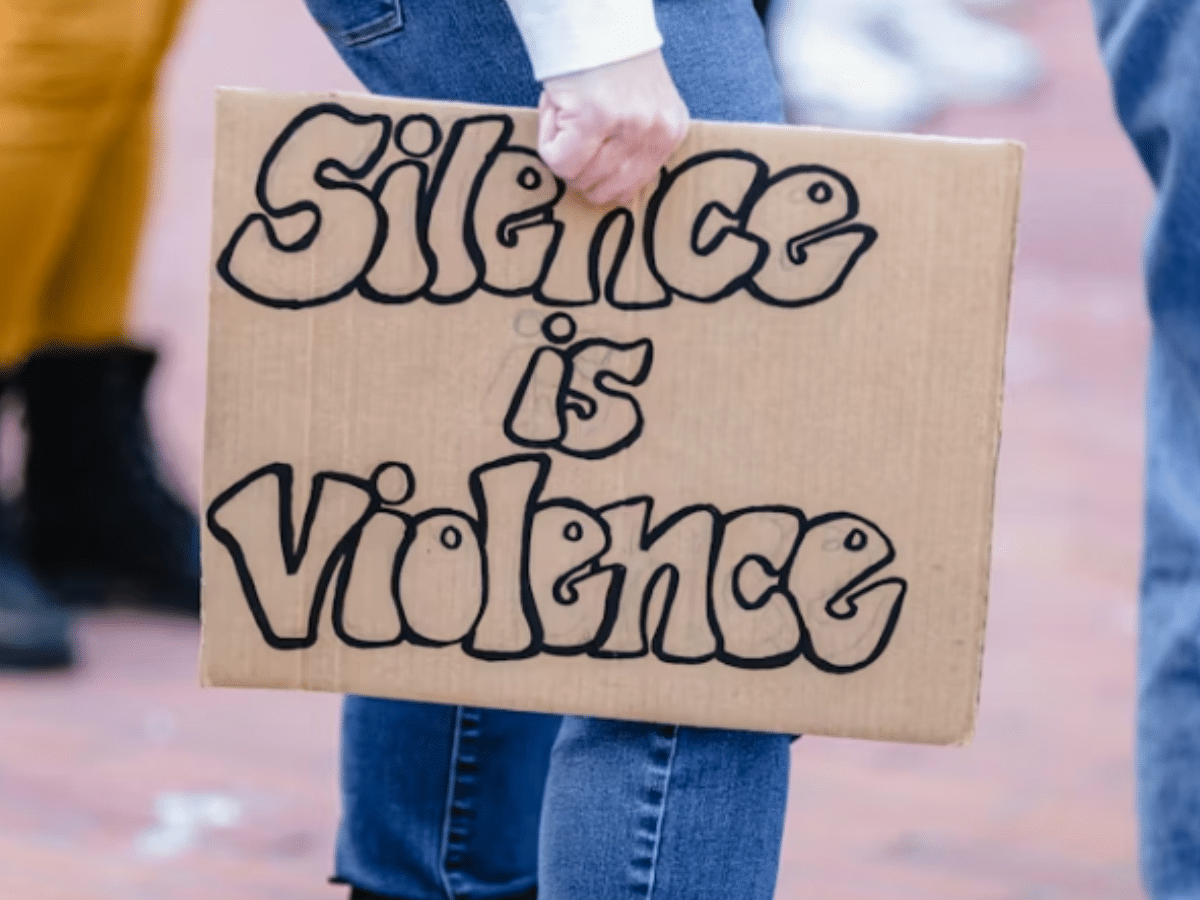
A Northern Irish politician, speaking on Good Morning Ulster, cited “precarious work” and “poverty wages” as issues. These contribute to North of Ireland having the worst rate of femicide across Britain and Ireland. During her television appearance, Sinn Féin MLA Deirdre Hargey said:
We need a different type of economy that actually supports women within the workplace, where there is well paid jobs and not precarious employment. Some of these women, they don’t have the finance, the independence, and that’s how some of these perpetrators try to encage them.
These issues have come to the forefront of public debate after two young women were murdered in March, as well as the conviction of a man who killed his pregnant partner in 2022.
Ellie Flanagan, 23 year-old, was murdered on 7 March by Martin McCarne—her mother’s husband. McCarney was charged with murder and “possession of an offensive weapon (three knives).”
The Police Service of Northern Ireland (PSNI) found 28 year old Amy Doherty murdered at an address in Derry on 21 March. They arrested a 30-year-old man arrested on suspicion of the crime.
Finally, on 23 March a jury determined that Stephen McCullagh had brutally killed partner Natalie McNally at her home in Lurgan three years ago. McCullagh stabbed, beat, and strangled McNally in a brutal attack. He attempted to conceal his crime by blaming it on Natalie’s ex-partner.
Hargey also discussed the issue of housing, with a lack of available properties ready for women wishing to escape domestic violence.
She urged solving:
…blockages in housing for women who are in situations where there is violence perpetrated against them.
Socialist feminist group ROSA North cited similar underlying causes leading to cruel and violent deaths of women and girls. They called for Stormont to focus on:
…ending poverty wages and rampant worker exploitation which disproportionately affects women.
Their statement referred to the need to challenge a capitalist system:
…which allows wealthy and powerful men to abuse ordinary people rampantly.
The group called for this as part of a broader cultural shift which:
…challenges the ideas, culture and norms underpinning the violence; that challenges the impunity abusers are imbued with [and] that challenges rape myths and culture…
The Six Counties (the de-colonial term used to refer to the North of Ireland) undeniably has a problem when it comes to ensuring the safety of women and girls. Official data from 2020 to 2025, shows that there were 30 cases of femicide. That’s a rate of 0.52 per 100,000 people for the period. In contrast, the rate is 0.45 in England and Wales, and 0.24 in Scotland. Most shocking is the comparison with the South of Ireland. There, the figure is 0.15.
For some reason Chief Constable of the PSNI Jon Boutcher thought the appropriate response to this was to defensively quibble over statistics. Rather than simply acknowledge the reality of the problem, he should pledge to improve the force’s approach to it.
On 26 March, Boutcher spoke of a statistical error in a 2019 BBC report that may have given a misleading impression regarding rates of domestic in the North of Ireland. Speaking before the Northern Ireland Affairs Committee in Westminster, he said that the BBC had cited 8 murders for the year 2017. In reality, only four murders had occurred.
That’s a moot point given the figures discussed above. Boutcher then went on to give a self-serving, rambling, and incoherent response to what the police might do to prevent femicide.
Boutcher instead focused on the rise of the manosphere — the cretinous online influencers who push a misogynistic worldview, instead of looking at the wholesale issue of femicide. While turds like Andrew Tate are undoubtedly a malign influence, their recent emergence doesn’t explain rising rates of domestic violence. Over the past 15 years rates remain appallingly high.
Hargey suggested the PSNI need to ask themselves:
Are we prioritising it as much as we could be?
She said it was “something we have been pushing the police on.” Like any social problem, the police are rarely the sole nor ultimate solution. They can however do more and invest greater funds to ensure women are protected.
Recognising the scale of the crisis, ROSA North called for everyone in society to be part of a movement combating gender violence. Citing MeToo, Ni Una Menos in Latin America, and Black Lives Matter, the group said:
Let’s look to them for the much needed inspiration to keep fighting for the radically different world we believe possible.
Featured image via the Canary

Netflix confirms it’s raising prices again

Luba Mushtuk Leaves Strictly Come Dancing In Pro Mass Exodus

Stem Cell Conditions and Indications: Who Can Benefit and Why It Matters

Smart energy pays enters the US market, targeting scalable financial infrastructure

Why Israel is blocking foreign journalists from entering

Bitcoin: We’re Entering The Most Dangerous Phase

MS NOW: Trump ‘may have hoarded classified documents’ for financial gain

RIPPLE STABLECOIN RLUSD TO FOLLOW USDT IN YIELD TO INSTITUTIONS #stablecoin #crypto #cryptocurrency

Financial Planning for Your 20’s | Ft. Feroze Azeez | #SanjayKathuriaPodcast
-
 Crypto World7 days ago
NIO (NIO) Stock Plunges 6.5% as Shelf Registration Sparks Dilution Worries
-
 NewsBeat2 days ago
Manchester United reach agreement with Casemiro over contract clause amid transfer speculation
-

 Fashion7 days ago
Weekend Open Thread: Adidas – Corporette.com
-

 Politics7 days ago
Jenni Murray, Long-Serving Woman’s Hour Presenter, Dies Aged 75
-

 Crypto World6 days ago
Best Crypto to Buy Now: Strategy Just Spent $1.57 Billion on Bitcoin During Fear While Early Investors Quietly Enter Pepeto for 150x Potential
-

 Crypto World6 days ago
Bitcoin Price News: Bhutan Sells $72 Million in BTC Under Fiscal Pressure, but the Smart Money Entering Pepeto Sees What the Market Does Not
-

 News Videos1 day ago
Parliament publishes latest register of MPs’ financial interests
-

 Sports4 days ago
Remo Stars and Kano Pillars Strengthen Survival Hopes in NPFL
-

 Sports4 days ago
Gary Kirsten Accuses Pakistan Cricket Board Of ‘Interference’, Mohsin Naqvi Responds
-

 Tech5 days ago
Give Your Phone a Huge (and Free) Upgrade by Switching to Another Keyboard
-

 Sports7 days ago
2026 Kentucky Derby horses, odds, futures, preview, date: Expert who nailed 12 Derby-Oaks Doubles enters picks
-

 Business5 days ago
No Winner in March 21 Drawing as Prize Rolls to $133 Million for Next
-

 Tech5 days ago
AI enters the chat: New Seattle dating app relies on tech to facilitate meaningful human connections
-

 News Videos4 days ago
Ch 9 Financial Management Part 1 | Detailed One Shot | Class 12 Business Studies Boards 2026
-
Business7 days ago
Columbia Sportswear enters $500 million credit agreement with JPMorgan Chase
-

 Tech6 days ago
Today’s NYT Connections Hints, Answers for March 22 #1015
-

 Business17 hours ago
Instagram, YouTube Found Responsible for Teen’s Mental Health Struggle in Historic Ruling
-
 Crypto World7 days ago
Small-cap Russell 2000 enters correction territory
-

 Business5 days ago
Will Duke Basketball Win It All? Duke Basketball Enters Second Round as Third Favorite to Claim NCAA Title
-

 Sports4 days ago
2026 Kentucky Derby horses, odds, futures, preview, date: Expert who hit 12 Derby-Oaks Doubles enters picks
You must be logged in to post a comment Login