
Politics
Starmer makes pathetic excuses for McSweeney


Keir Starmer is busy trotting out another set of excuses for yet another political scandal. Morgan McSweeney is the ex-Downing Street chief of staff who resigned in disgrace in February this year. McSweeney resigned to take the fall for the hiring of Peter Mandelson – a man that Starmer knew was a close associate of the international paedophile Jeffrey Epstein. Now, it’s emerged that McSweeney conveniently had his phone stolen not long after Mandelson got the boot.
Given the timeline, many have accused McSweeney of faking the incident to destroy any messages between himself and Mandelson. Given what we know about the ‘theft’, this is arguably more plausible than the official narrative, and yet Starmer has responded as follows:
Q: Critics say the theft and botched investigation of Morgan McSweeney’s phone stinks of a cover-up. Can you understand why people are suspicious about this phone being stolen just as the Mandelson scandal was unfolding? https://t.co/nDvTL34qZj
— Beth Rigby (@BethRigby) March 26, 2026
Is it really any more “far fetched” than what we know for certain – i.e. that Starmer hired Mandelson in the first place despite everything he knew about the man?
Starmer losing control
At this point, we know McSweeney reported his phone stolen in October 2025 – the month after Mandelson got shitcanned from his position as ambassador to the US. In what the BBC described as an “unusual step”, the police have released a full transcript of the call between McSweeney and the police:
Call handler: Police, what’s your emergency?
Caller: Oh, hello, someone just robbed my phone.
Call handler: Did they actually take it from you just now?
Caller: Yeah
Call handler: How did they get away?
Caller: So he’s on a bike. He’s come onto the pavement to grab my phone and cycled off on a bike.
Call handler: And where did this happen?
Caller: It happened in Belgrave Street* in Westminster.
*We now know that the incident took place in Belgrave Road, Westminster. The call handler inputs Belgrave Street and it provides a matching road name in Tower Hamlets, which is what is recorded in error. There are further references to locations near to Belgrave Street in Tower Hamlets later in the call, which compounds the issue.
Call handler: And whose phone are you using now?
Caller: I’ve got two phones. I’m using my personal one. That was my work one.
Call handler: Can I take the phone number for this phone you’re calling on?
Caller: Yeah, 07XXXXXXXXX.
Call handler: Thank you. And you said Belgrave Street, yeah?
Caller: Yeah, just kind of going back to the location.
Call handler: Don’t put yourself at any risk. It’s not worth it over a phone. I appreciate it’s frustrating.
Call handler: And which way did they go towards, this suspect on a bike?
Caller: He went. He travels north. I saw him for a few blocks.
Call handler: So where were you when you last saw him? Have you got any idea?
Caller: Yeah, so.
Call handler: Did you get up to Stepney?
Caller: Let me tell you where I got to. I’m just going back to where I can.
Caller: So he turned right. Sorry, he turned left. There’s a park on top of the road and he turned left there.
Call handler: Stepney Green Park, ok.
Caller: Yeah. He turned left there.
Call handler: Can you remember anything about his appearance?
Caller: Yeah, he was young. He was a black guy. He was on a bike.
Call handler: About how young?
Call handler: Just a guess.
Caller: Teens. Late teens.
Call handler: Was he skinny, tall, any idea?
Caller: Yeah. He was slim. He was about average height.
Call handler: Was it an e bike or pedal bike?
Caller: Pedal bike.
Call handler: Have you got a tracker on the phone at all?
Caller: I do. It’s a government phone.
Call handler: And it’s your work phone. What kind of phone is it?
Caller: It’s an iPhone.
Call handler: Do you know what model?
Caller: I don’t.
[PAUSE]
Call handler: Right, just bear with me a second.
Call handler: We would normally deploy to see you but at the moment, we are having extreme demand on police officers. So, I don’t know if you would prefer to make your way home and make a crime report over the phone or online tomorrow. I mean, I can complete one with you now. I can pass this down, you can wait, but I honestly do not know how long you’ll be waiting,
Caller: If I could complete it now that would be good.
Call handler: Ok.
Call handler: What’s your name, please?
Caller: My name is XXXXXXXXXX.
Call handler: XXXXXXXXXX? (repeats name back)
Caller: Yeah.
Call handler: And your date of birth, please?
Caller: It’s XXXXXX
Call handler: Is XXXXXXXXX (surname) all one word?
Caller: Yeah, (spells surname).
Call handler: And what’s your home address?
Caller: (Provides non-London address)
Call handler: So you live in XXXXXX?
Caller: Yeah.
Call handler: Are you staying anywhere while you’re in London?
Caller: Yeah.
Call handler: Sorry, it just takes a little bit longer to deal with an address outside of the Met. I do apologise.
Caller: It’s ok.
Call handler: And may I take an email for you please (name)?
Caller: Yeah, it’s [email protected] (personal email address)
Call handler: You’ll get a copy of the preliminary crime report through to that email.
Call handler: How would you like to be contacted by an investigating officer? By email or phone?
Caller: Phone, please. Or either, I’m not fussed.
Call handler: Have you got any finance apps on the phone?
Caller: No.
Call handler: You’ll need to change any passwords for any logins you do have on the phone.
Caller: Yeah, okay.
Call handler: You’re not vulnerable in any way. Are you?
Caller: No I’m not.
Call handler: Do you believe there was any CCTV near where the incident happened?
Caller: Might be. [Inaudible] away from location.
Call handler: Don’t worry. Don’t return. No, I’ll just put at the moment unknown. And obviously, if we find out more, we find out more.
Call handler: Are you willing to make a statement to support the investigation?
Caller: Definitely.
Call handler: So what time did he actually snatch the phone?
Caller: About two minutes before I rung you and I chased, and then I rang my office to get the phone tracked and then I rang you.
Call handler: Okay, cool. It would have been about 25 past that you were robbed.
Caller: A little before, about 23 minutes past, I think.
Call handler: 23? Little bit before? Okay.
[PAUSE]
Call handler: Just bear with me, I’m just trying to get this system to accept the address. Sorry about this. I won’t keep you much longer.
Call handler: If you do get any tracking updates, what you do is you give us call back if the phone is stationary.
Caller: Yeah.
Call handler: And we can review attending then. We can’t guarantee attending a moving phone at all, but if it’s been stationary for a few…
Call handler: It’s not accepting your address.
Caller: I can give you my London address?
Call handler: It’s alright. I’ve nearly got this to work.
Caller: Okay
Call handler: How long you staying in London?
Caller: So I come to London every week. I work in London.
Call handler: Oh, I see. Okay, that makes sense.
Caller: So I’ll be here till Thursday.
Call handler: Okay.
[PAUSE]
Call handler: As I was trying to say, I’ve got this sorted now, so I’ll be texting you a crime reference number in the next few moments. Along with the crime reference number will be a CHS reference number. If you need to give us a call back, you can call back giving that reference number from any device, and then we’ll be able to link it straight away to your crime report and review deploying. We will need to know a bit more details about the phone itself, so when you’re contacted by the investigating officer, or if you do get tracking details, you can call us back with the IMEI number, and the type of phone that it is that would be super helpful.
Caller: All right, thank you.
Call handler: All right, I’m just about to text you through the crime reference number now.
Caller: Thank you so much. You’ve been really helpful.
Call handler: No worries. All right, (name). You take care now, okay? Bye.
Caller: Bye bye.
If you’re confused as to why the Downing Street chief of staff called the police and not MI6, you’re far from alone. As Sky News reported, McSweeney:
was the prime minister’s chief of staff, so the PM’s most senior political advisor. His phone contained the contact details for and messages with Sir Keir Starmer, the cabinet, and the most senior British officials.
This is information that the foreign intelligence services of adversaries like Russia, China and Iran would be very interested in obtaining.
Why are we keeping James Bond on the payroll if not for instances like this?
It gets worse, too, because McSweeney also left out crucial information in his call to the police.
Starmer steps in
In the video above, Starmer says:
The phone was stolen. It was reported to the police. There’s a transcript of the call in which Morgan McSweeney gives his name, his date of birth, the details of the phone and the police confirm that it was reported.
Unfortunately, there are thefts like this. It was stolen. It was reported at the time, the police have acknowledged and confirmed that … and the idea that somehow everybody could have seen that some time in the future there’d be a request over the phone is, to my mind, a little bit far-fetched.
Starmer leaves out key details here, though:
Labour’s then Chief of Staff Morgan McSweeney gave the police the wrong road – an address in Stepney – and then encouraged them to believe he was indeed in Stepney. And this was a legendarily tech-savvy man who knew his duties to preserve all data on the Government phone? https://t.co/o9FGwtJ8NA
— Joe Rich (@joerichlaw) March 25, 2026
McSweeney also failed to inform the police that he was one of the most important people in the country from a security perspective, and that the loss of his phone could result in an international incident. But yes, as Starmer said, he did at least give his date of birth – so well done for getting that right, Mr McSweeney.
This wasn’t the only way in which shifty Starmer gave a false impression:
And again, Keir Starmer is deliberately trying to misled people. The whole point is that the phone was ‘stolen’ a week AFTER No.10 officials had discussed the possibility of parliament demanding to see the messages. https://t.co/EzQ7hSfjdu
— (((Dan Hodges))) (@DPJHodges) March 26, 2026
As Saul Staniforth highlighted, it’s hard to fathom that McSweeney should have left this to the Metropolitan Police:
Councils have strict protocols around this, so you would think that the government would be the same if not stricter. Unbelievable !
— Bee (@h_bee28788884) March 26, 2026
Others have noted that protocols around this sort of thing are much higher than the government is expecting us to believe:
I’ve now spoken to two former Government Spads. Both were senior, both lost their Government phones. In both cases their first approach was to the Government internal security services, who then brokered a liaison with the Met to ensure the issue was dealt with properly.
— (((Dan Hodges))) (@DPJHodges) March 25, 2026
Crazy! When my laptop was stolen in Oxford Circus while working for UN, police came asap, went through CCTV, identified professional thieves (2 of them) & took me to the police station to file the report. But McSweeney didn’t tell police he advised PM Starmer on his phone.👇 https://t.co/Qcl2yi4qVv
— Jane Samuels (@Jane_Samuels) March 25, 2026
It’s looking so bad for the government that even Labour MPs are calling bullshit:
I don’t believe McSwindle had his iPhone stolen. 🤷🏼♂️
— Karl Turner MP (@KarlTurnerMP) March 25, 2026
Defending the indefensible
Some are defending the government’s limp defence; among them is Huff Post editor Kevin Schofield. Schofield’s defence was so bad that it was quickly torn apart by GB News founder and human whoopee cushion Andrew Neil:
He wasn’t mugged. Even he doesn’t claim that. Making things up to bolster an untenable position is not a good look. Try and come up with something better. https://t.co/jlvuBCrOtb
— Andrew Neil (@afneil) March 25, 2026
Others have highlighted there may be other ways to access the WhatsApp messages between McSweeney and Mandelson, meaning there was no reason for the ex chief of staff to destroy his phone:
Peter Mandelson handed back his government iPhone when he was sacked as US ambassador last September. So presumably some of his WhatsApp conversations with Morgan McSweeney will be available to the government because they will be on an iPhone in their possession https://t.co/I4Xs2lwvWF
— Robert Peston (@Peston) March 25, 2026
Government have already confirmed they have handed all the messages on it to the police.
The medias latest conspiracy theory that Mcsweeney faked a mugging , 6 months previously, and despite police releasing reported theft details, is looking more stupid by the hour. https://t.co/bqjHPBvxOb
— Lou D🌹 🇬🇧 🇺🇦 (@louderry) March 25, 2026
There is a logic to this if all the WhatsApps materialise, but there’s something else to consider; who else was McSweeney communicating with, and what apps did he use to contact them?
Because his phone was ‘stolen’, we may never know.
And let’s be real; this whole affair stinks to high heaven.
Featured image via Sky News

Politics
Georgia L. Gilholy: Ministers must finally face up to facts and proscribe the IRGC as terrorists
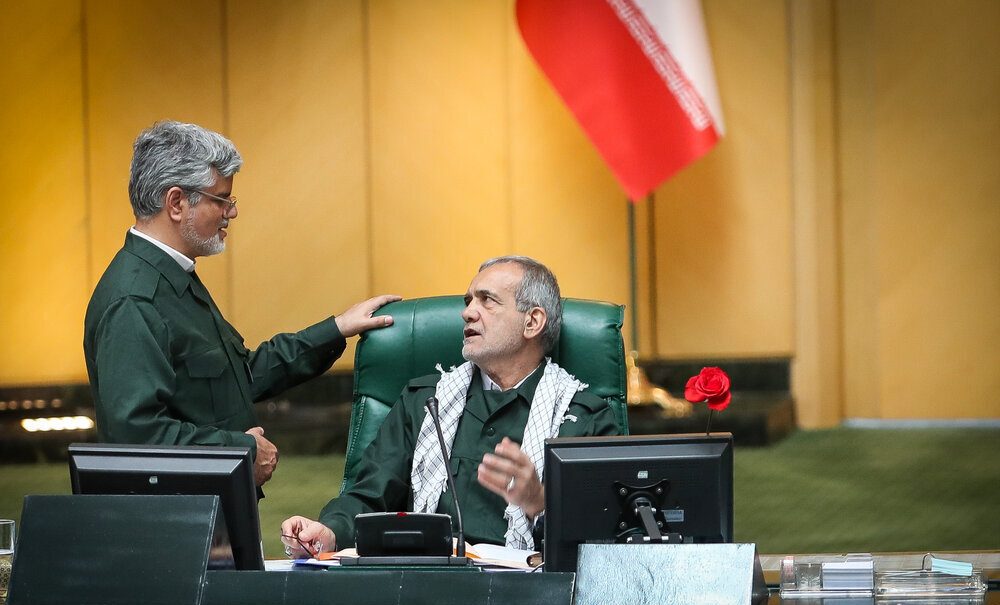
Georgia L Gilholy is a journalist.
Generally speaking, you will be hard pressed to find something that myself and Ed Davey agree on. But this week, the jolly but rather juvenile Liberal Democrat leader, told MPs that “Antisemitism and those who fuel it have no place in our society,” and urged the government to finally proscribe Iran’s Islamic Revolutionary Guard Corps (IRGC) as terrorists.
His remarks come mere days after four ambulances belonging to the Jewish Haztola volunteer service, which charitably helps local Jews and non-Jews in need of paramedics, were set on fire in Golders Green. Police understandably remain cautious about assigning a motive, but the Iranian terror proxy “Harakat Ashab al-Yamin al-Islamiya” quickly claimed responsibility for the attack- the latest in a long line of Islamist plots against Jewish organisations.
This is the grim backdrop against which Britain is still having an oddly timid argument about the IRGC, the financial and strategic backbone of the Islamic Republic’s global and domestic terror apparatus. It is this ideological army that has played a vanguard to Iran’s theocratic regime since the 1979 revolution, and which has played its part not only in overseas attacks but in the slaughter, rape and torture of much of the country’s own population.
For years now, British ministers and officials have warned that Iranian state actors and their proxies pose a real threat on our soil. MI5 director-general Ken McCallum said last year that the service had responded to more than 20 Iran-backed plots in the UK. The point is not that every alarming incident can be pinned on Tehran before the evidence is in. It is that the wider threat picture is already well established. Last Summer our security services foiled an alleged Iranian plot to bomb the Israeli Embassy in Kensington mere hours ahead of time. Earlier this month four Iranians in London were arrested on suspicion of spying on Jewish communities.
A new Labour Friends of Israel paper, launched in the House of Lords on Wednesday, puts the case starkly. The report, authored by senior United Against Nuclear Iran research analyst Jemima Shelley, correctly frames the IRGC as “Iran’s primary exporter of terrorism abroad” and the regime’s “iron fist against domestic dissent”. It also makes a point that ought to embarrass ministers: sanctions may “create friction”, but proscription “creates criminal liability and fundamentally alters operational ability” to root out this dangerous force.
The standard excuse is that the IRGC is part of the Iranian state, and that the Terrorism Act 2000 was not really designed for bodies such as this . Indeed, Joshua Rozenberg KC noted earlier this month that Jonathan Hall KC’s 2025 review concluded Parliament had never intended the 2000 Act’s proscription regime to apply to state entities, which is why Labour promised a new state-threats power instead. The trouble is that, almost 12 months after Yvette Cooper’s commitment to create that new power, there is still no timetable for legislation.
So the government is caught in the worst of both worlds. It says the existing law is the wrong tool, but has not yet produced the replacement tool it promised. This is despite the fact that Labour’s manifesto specifically pledged to ban the group. It is interesting that Sir Keir Starmer seems much more keen to allocate swathes of parliamentary time to the highly controversial Private Member’s Bill on assisted suicide-which was not part of his party’s election platform-than to a clampdown on specific element of the antisemitic, Islamist terror threat that he promised voters he would execute? Perhaps he simply cares much more about the former issue, than he does about the latter, regardless of public opinion?
Even now, Lord Blunkett is arguing that the government could immediately proscribe the IRGC’s external operations arm, the Quds Force, under existing terror laws, while bringing forward legislation to deal with the IRGC in full. He points to Canada’s example: ban the Quds Force first, then move wider later. That feels a great deal more serious than the government’s present position, which seems to consist mainly of saying the matter remains “under review”.
The political pressure is plainly building. On Thursday, The Telegraph reported that retired MI6, MI5 and GCHQ chiefs have taken the uncharacteristic step of publicly criticising Keir Starmer’s failure to proscribe the IRGC, calling it a “necessary step” and warning that continued hesitancy risks leaving Britain yet further “strategically exposed”.
There are, of course, some reasons ministers may hesitate. Proscription would carry diplomatic consequences. It could further narrow Britain’s room for manoeuvre with Tehran, and there are concerns about British nationals who have been arrested in Iran-generally on false charges-and about whatever residual value remains in maintaining channels. But these are arguments about costs, not arguments that the threat is unreal or that endless delay is sustainable.
But as the former intelligence chiefs reportedly argued, Britain’s leverage in today’s Tehran is already minimal, and ministers should have the honesty to say so. We are not calling the shots in the region, nor will we be capable of playing a serious role again if we continue to deplete our military and industrial capacity.
The Tories mulled over a ban and failed to deliver. Labour was happy to condemn that hesitation in opposition, but in power, its approach has been equally lacklustre.
For decades, Britain has tolerated violence intimidation from the IRGC and its proxies within our borders. In 2023, pro-democracy news channel Iran International, whose staff have suffered violent attacks from pro-regime partisans, abandoned its historic London studio because our police could no longer guarantee its safety in a “free” country.
Leaving the IRGC somewhat to its own devices in Britain makes a mockery of our country and puts real people’s lives in danger. The government must either proscribe what they can now and legislate fast for the rest, or explain their cowardice to the public.
Politics
Azeem Ibrahim: We have thousands of citizens in a war zone – Here’s how we welcome them home and fix the country

Dr Azeem Ibrahim OBE is the Chief Strategy Officer at the New Lines Institute for Strategy and Policy and author of A Greater Britain: Rethinking UK Grand Strategy and Statecraft
Let me be blunt about what is happening in the Middle East because our government has been anything but.
The joint American and Israeli campaign against Iran is not a skirmish. It is not a limited operation. It is a fundamental restructuring of the regional order one that has already shuttered Dubai International Airport sent Iranian drones over Gulf cities that once felt as safe as Zurich and left tens of thousands of British nationals asking themselves a question they never expected to ask is it time to go home? The answer for many of them is yes. The question for this government is whether it is ready to say yes and were ready for you.
Right now, it isn’t. And that needs to change urgently imaginatively and with the kind of political boldness that this moment demands.
I have spent the better part of two decades advising governments on security policy in Washington in Whitehall at the G7. I was an adviser to the 2021 Integrated Defence and Security Review. I know what a genuine strategic opportunity looks like and I know just as clearly when governments are about to sleep through one.
This is that moment.
There are an estimated 250,000 British nationals living and working across the Gulf states in Dubai, Abu Dhabi, Riyadh, Doha, Kuwait City, Bahrain, Muscat. They are not for the most part oligarchs or tax exiles. They are engineers keeping the lights on in Jeddah. Teachers in international schools in Dubai. Nurses architects project managers bankers. Hardworking British people who chose the Gulf for opportunity and the sunshine and who have over years sometimes over decades accumulated savings in a zero tax environment that the UK could only dream of.
Many of them want to come home. The war with Iran has focused minds in a way that even Covid never quite managed. What they need from the British government is not a Foreign Office travel advisory telling them to avoid non-essential travel. They need an active positive financially intelligent welcome. Here is what I am proposing and what I have reason to believe is already being considered in Treasury circles.
It’s a three-month Remittance Tax Holiday.
Any British national abroad who remits savings to a UK bank account during a defined window would be exempt from UK income tax and capital gains tax on those funds provided they invest a minimum of 25000 in one of two new government backed bonds. Two bonds. Both sovereign guaranteed. Both tax free on interest payments for subscribing investors. The first a British Defence Bond paying 4.0 per cent fixed over five years with every penny of proceeds ring fenced for defence procurement missiles ships autonomous systems the domestic manufacturing base that two decades of peace dividend eviscerated. The second a GB Housing Bond paying 4.5 per cent fixed over five years directed entirely at building the social and affordable homes this country so desperately needs.
After meeting the 25,000 minimum the remainder of what they bring back is theirs to spend on a house a business a savings account their children’s school fees. No strings. No bureaucratic labyrinth. No Whitehall working group deciding how they should allocate their own hard-earned money. The economics are compelling. If 250,000 British nationals each remit an average of 100000 a conservative figure for professionals who have spent a decade in the tax-free Gulf the total inflow is 25 billion. The mandatory minimum subscriptions alone guarantee 6.25 billion in bond proceeds. If investors go further and the tax equivalent yield of 4.5 per cent tax free is over 7 per cent gross for a higher rate taxpayer making it one of the most attractive retail savings instruments in living memory total bond capital could reach 12 to 15 billion. Split roughly equally between defence and housing that is a transformational sum for both national priorities.
Let us talk about defence first because this is where the urgency is most acute.
The 2026 Iran conflict has exposed the brittleness of NATO and Western munitions stockpiles in a way that should alarm every serious policymaker. The UK has deployed assets in support of operations across the region. Those stockpiles do not replenish themselves. The government has committed to 2.5 per cent of GDP on defence roughly 75 billion a year but that commitment is stretched across a thousand competing demands and the Treasurys conventional borrowing appetite is not infinite. A British Defence Bond changes the equation. It is not borrowed money. It is voluntary private capital offered by citizens who want to see their country strong in exchange for a guaranteed return. This is how Britain financed two world wars. It is time to dust off the model.
And then there is housing.
The GB Housing Bond is if anything even more timely. We have a chronic decades long failure to build enough homes. Every returning British national who brings capital back and eventually wants to buy a property will find a market in which demand already vastly outstrips supply. The Housing Bond funds the supply side social housing affordable homes brownfield development so that the returning wave of expatriates does not simply inflate prices further but lands into a market that is expanding to meet them.
These two bonds are not in competition. They are complementary instruments addressing two of the three greatest challenges Britain faces security and shelter. The third growth is addressed by the investment activity of returning nationals themselves.
I am aware that some will say this is too generous. That it rewards people who left. That it amounts to a tax break for the comfortable classes.
I disagree forcefully.
These are British citizens. They built careers abroad because Britain frankly did not give them the opportunities they deserved at home. They paid taxes in their host countries they contributed to those economies, and they did so as ambassadors for British expertise and British values. Now they want to come back. Penalising them for doing so slamming them with a tax bill on savings they accumulated abroad in a crisis not of their making would be not just economically foolish but morally wrong.
Britain has long had an uncomfortable relationship with its diaspora. We either ignore them or we treat their return as a tax opportunity. This policy proposes a third path genuine welcome mutual benefit and a clear national purpose. You come home you invest in the country the country invests in you.
The window will not stay open forever. The conflict in the Gulf is fluid. If Iran stabilises or if regional economies recover faster than expected the incentive for British nationals to repatriate their savings will diminish. The government has perhaps six months to seize this moment.
The bonds are ready to be designed. The statutory instruments are straightforward. NSI can build the subscription portal. HMRC can process the certifications. British embassies in Dubai Riyadh Doha and Abu Dhabi can set up the advice desks tomorrow.
What is needed is political will. A Prime Minister willing to stand up and say we see you we want you back and here is what we will build together.
Two bonds. A tax holiday. A homecoming.
It is the simplest most elegant most patriotic economic policy this government could announce. The question is whether anyone in Number Ten is bold enough to announce it.
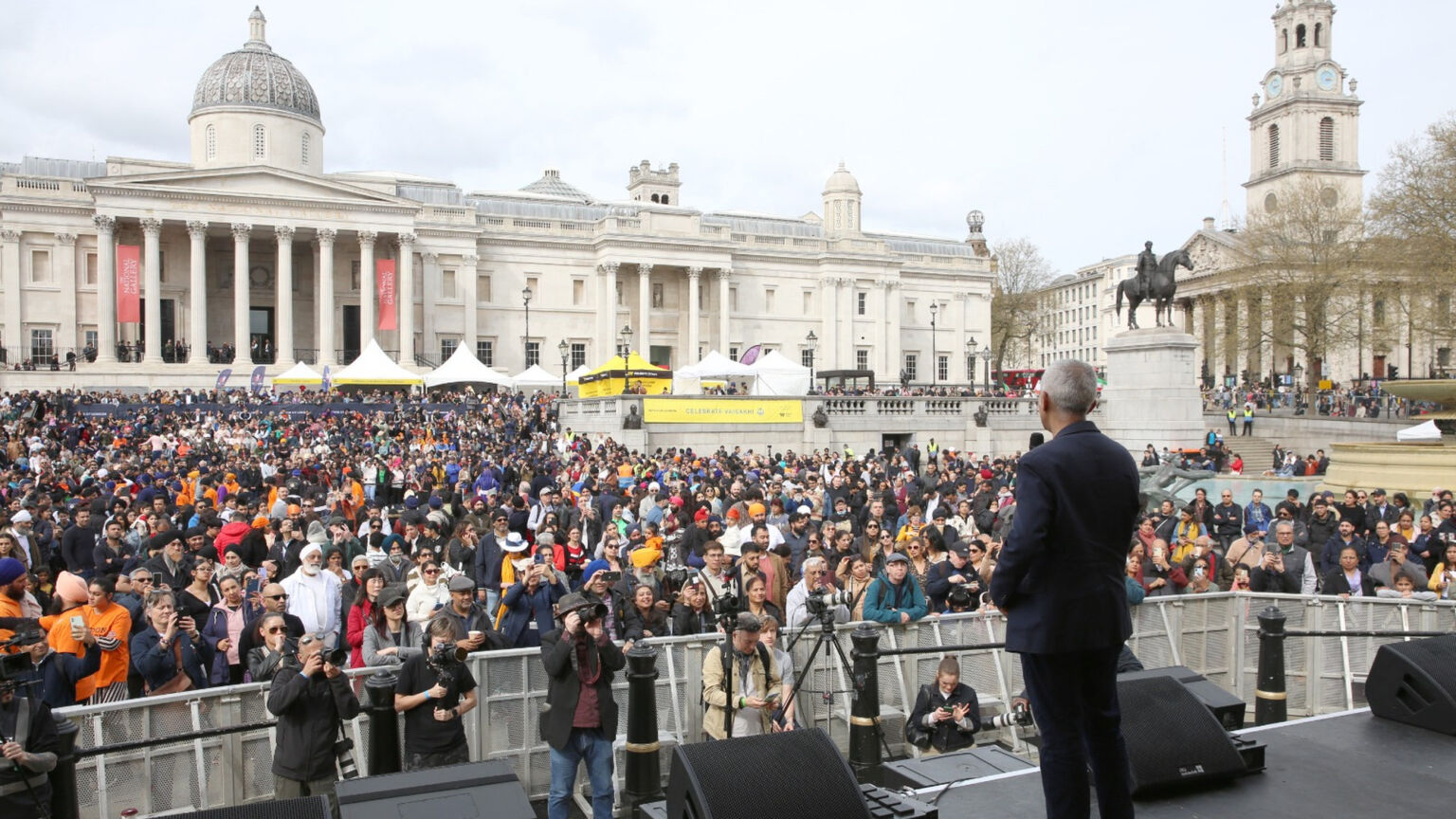
Whenever a public figure dares to criticise Muslims or Islam, you can bet that they will be met with two emotive responses. The first is that they will be accused of racism or ‘Islamophobia’. This option was the one taken by the UK prime minister last week when reacting to comments by the shadow justice secretary, Nick Timothy, who had described a mass act of worship in central London as an ‘act of domination’. Rather than address the substance of Timothy’s claim, Keir Starmer condemned the ‘utterly appalling’ remarks, suggesting that Kemi Badenoch and her Conservative Party had a ‘problem with Muslims’. In effect, he was smearing them as bigots.
The second response – equally evasive – is to indulge in deflective ‘whataboutery’. This was the path chosen by attorney general Lord Hermer. ‘Timothy and Badenoch’s comments beg the question – would they have a problem if I, as a Jewish man, were praying in public?’, he asked. ‘Or is it just Muslim prayer they find offensive, and contrary to “British values”?’ This line of inquiry was repeated and expanded ad nauseam, with many deeming it brilliant and original to hypothesise whether we should also be unsettled by Christians, Sikhs and Hindus engaging in mass worship on Trafalgar Square.
Of course, both responses betray an ignorance of the nature of religion. They fail to address the central concern raised by Timothy: that a variety of Islam practised in Britain today has become distinctly aggressive. The reason public displays of Christianity raise no eyebrows is because Christianity has been intrinsic to these islands for a millennium and a half, and the leaders of England’s established Church largely refrain from seeking the mass conversion of the country’s heathens. Moreover, Christianity, unlike Islam, does not divide the world into two spheres: that in which it reigns (The House of Peace) and that where it does not yet reign (The House of War). To put it more starkly, people simply aren’t worried about Christian, Jewish, Sikh or Hindu suicide bombers.
Shallow secularists are prone to make the argument that ‘You wouldn’t ban [insert other religion here]’ because they believe all religions are basically interchangeable. They have no understanding of differing religious systems or how they affect the behaviour of their adherents. As Jake Wallis Simons reminded us on spiked last week, Islam consists of many denominations, some more liberal than others. And it remains an uncomfortable truth that the Islam that prevails in Britain today is not a version that enthusiastically embraces difference. It is neither as eager to reciprocate tolerance, nor to ‘celebrate diversity’, as we might like.
This is something that lazy agnostics, timorous liberals and lofty humanists never seem to comprehend. Belligerent varieties of religions are just as dangerous as any political ideology that seeks power through domination. No ideology, sacred or profane, automatically deserves ‘respect’.
Jürgen Habermas: a free-thinker to the end
In the latter part of his life, Jürgen Habermas, the philosopher and polymath who died this month aged 96, was known in political circles as an enthusiastic champion of the European Union. This was perhaps inevitable, given that he had lived through the Nazi regime as a boy, and that like many left-wingers of the postwar generation, he believed a supranational European institution was the best way to dampen or ultimately transcend the poisonous virus of nationalism.
What was less well known was that he had become critical of the EU project in recent years. In 2015, in the midst of the Greek debt crisis, when asked by the Guardian if he agreed that his vision of a united Europe would end up actually abolishing democracy rather than saving it, he agreed. Habermas argued that EU institutions such as the European Council, European Commission and European Central Bank were pushing a programme of ‘technocratic hollowing out of democracy’, a result of their having adopted a ‘neoliberal pattern of market-deregulation policies’.
This was an argument left-wingers used to make more commonly, and less fearfully, when opposing what would become the EU. The Labour Party’s Tony Benn often said as much. So it shouldn’t surprise us that Habermas also came to express his misgivings along the same lines. It was consistent, too, with his philosophy. He consistently emphasised the need for open dialogue, rational debate and the unemotive pursuit of truth.
Lazy writing leads to lazy thinking
When faced with arguments they don’t like or can’t rebut, politicians usually seek refuge in reassuring clichés and weedy platitudes. We witnessed this in the collective response to Nick Timothy’s remarks by the Labour outrage machine, during which Keir Starmer hit the stock-phrase jackpot with his assertion that Islamic prayers in Trafalgar Square epitomised ‘the great strength of our diverse city and country’.
It is customary on these occasions to quote George Orwell, who in his 1946 essay, ‘Politics and the English Language’, condemned clichés as ‘prefabricated’ phrases used as substitutes for original thought. Yet as I discovered only recently, French novelist Gustave Flaubert drew an even firmer line almost a century before Orwell. Flaubert was so obsessed by what he saw as the corruption of the French language that in his 1857 classic, Madame Bovary, he placed in italics the lazy, stale phrases and clichés uttered by the protagonists that had been debased through overuse. As one ominous passage reads: ‘Emma sought to find out exactly what was meant in real life by the words felicity, passion and rapture, which had seemed so fine on the pages of the books.’
I get a similarly unsettling sensation whenever I hear vibrant, diverse, divisive, racist, systemic, structural and hate. Such second-hand, hollowed-out language seems to signify one thing only: that its users aren’t thinking for themselves at all.

 lead image
Dubai’s luxury property market is evolving rapidly, with global investors showing growing interest in homes that offer more than premium finishes and prestigious addresses. One of the clearest signs of this shift is the rising demand for branded villa communities, which combine private residential living with the design identity, service culture and lifestyle appeal of internationally recognised luxury names. These developments are becoming increasingly attractive to high-net-worth buyers who want exclusivity, strong long-term positioning and a more curated ownership experience. In a market known for innovation and ambition, branded villa communities are emerging as a standout segment because they align with what modern luxury investors value most: privacy, prestige, convenience and a distinctive sense of place.
A More Refined Definition of Luxury
Luxury in Dubai is no longer defined by size alone. Today’s premium buyer is more interested in the full living experience, including architecture, landscaping, wellness amenities, privacy and service standards. Branded villa communities respond to this shift by offering homes that feel intentionally designed around a lifestyle rather than simply built to a luxury specification. The presence of a recognised brand can influence everything from interiors and clubhouse design to concierge services and resident experiences, giving the development a stronger identity in the market. This matters to global investors because it creates a product that feels more complete, more memorable and more competitive than a conventional standalone villa in an upscale district.
Why Global Investors Are Paying Closer Attention
International investors are increasingly drawn to branded villa communities because they reduce uncertainty in a foreign market. A well-known brand can offer reassurance about the quality of planning, design execution, maintenance standards and overall positioning, which is especially valuable for buyers who may not be deeply familiar with every sub-community in Dubai. Beyond that, these developments often have a clearer narrative, making them easier to understand and more appealing from both an emotional and investment perspective. For many overseas buyers, the attraction lies in owning a luxury asset that carries a recognisable standard and can be more easily differentiated in a competitive market where prestige and perception play an important role.
Prestige Has Become Part of the Investment Case
Prestige has always influenced buying decisions in the luxury segment, but branded villa communities turn prestige into a more structured value proposition. Buyers are not just purchasing a large home in an attractive location; they are buying into a branded environment that signals exclusivity, quality and status. This symbolic value matters because it helps the asset stand out among other high-end properties and can strengthen its appeal at the point of resale. In Dubai, where premium supply continues to expand, product differentiation has become essential, and branded villas benefit from a clearer identity than many conventional luxury homes. That stronger positioning can make them more appealing to both current buyers and future purchasers.
Lifestyle-Led Demand Is Reshaping Luxury Buying
A major reason for the growth of branded villa communities is that luxury real estate decisions are becoming increasingly lifestyle-led. Buyers still care about capital appreciation and prime locations, but they are also placing more emphasis on wellness, privacy, service, security and the overall atmosphere of the community. The home is now judged as much by the environment it creates as by its physical specifications. For instance, the sustained demand for villas in Palm Jumeirah highlights how strongly luxury buyers continue to value beachfront privacy, iconic views and prime residential prestige. These same factors are also supporting the rise of branded villa communities, which package similar lifestyle benefits within a more structured and intentionally curated living environment. Interested investors can search for Palm Jumeirah villas on Bayut, a leading property portal in the UAE, to explore a wide variety of luxury residences.
Scarcity Strengthens Long-Term Appeal
Scarcity remains one of the most important drivers of value in the prime residential segment, and branded villa communities benefit strongly from limited supply. These projects are often launched in carefully controlled phases with fewer homes, lower density planning, larger plots and more private surroundings, making them feel distinctly exclusive. For affluent buyers, that rarity enhances desirability, while for investors it supports stronger long-term positioning by reducing direct competition. In a market where new luxury developments are regularly introduced, homes that feel harder to replicate tend to hold attention more effectively. A branded villa community can therefore offer both physical scarcity and conceptual scarcity, which together make it a more defensible luxury asset over time.
Service Standards Add Another Layer of Value
One of the clearest advantages of branded villa communities is the level of service they can provide. These developments often go beyond the standard amenities found in traditional gated neighbourhoods by incorporating concierge support, wellness facilities, private club environments, enhanced security and professionally managed shared spaces. This service dimension is especially attractive to international buyers who may not live in Dubai throughout the year and want their homes to remain well maintained and ready for use. For second-home owners and seasonal residents, the convenience of a professionally managed environment adds real value because it makes ownership simpler and more enjoyable. In this sense, branded villas appeal not only because of prestige, but because they deliver a more seamless luxury experience.
Golf and Resort Communities Reflect the Trend
The popularity of branded villa communities also reflects the broader strength of lifestyle-oriented luxury districts in Dubai, particularly golf and resort-style environments. Buyers in this segment consistently respond to low-density settings, landscaped surroundings and communities that offer more tranquillity and privacy than dense urban locations. For instance, the continued appeal of villas for sale in Jumeirah Golf Estates shows how strongly investors respond to landscaped surroundings, premium community planning and a lifestyle-led setting. These same qualities help explain why branded villa communities are becoming more desirable, since they similarly emphasise environment, exclusivity and a fully developed lifestyle concept rather than just the home itself.
Why Dubai Is the Perfect Market for Branded Villas
Dubai is particularly well suited to the growth of branded villa communities because it already attracts the exact buyer profile these developments target. High-net-worth individuals are drawn to the emirate for its safety, infrastructure, global connectivity, tax-efficient environment and reputation for luxury living, while the city itself has built a strong international image around ambition, design and premium experiences. This creates the perfect setting for branded residential concepts, especially in the villa segment where privacy and space are highly valued. Branded communities fit naturally into Dubai’s wider luxury narrative because they combine what the city already offers with a more structured, globally recognisable standard of upscale living that resonates strongly with international wealth.
The Long Term Appeal of Branded Villa Communities
From an investment perspective, branded villa communities align closely with where luxury demand is heading. Buyers are becoming more selective, more lifestyle-conscious and more interested in homes that combine privacy, design quality, service and identity in one product. Branded villas meet those expectations particularly well, which is why they are increasingly viewed as more than a short-term trend. They appeal to a wide pool of affluent end-users, second-home buyers and overseas investors, while also offering stronger differentiation in the resale market. As Dubai continues to attract global capital and expand its premium housing stock, branded villa communities are likely to remain one of the most compelling opportunities in the high-end segment because they reflect the future of luxury living rather than the past.
Frequently Asked Questions
Are branded villa communities in Dubai usually freehold?
Yes, many branded villa communities in Dubai are offered as freehold properties, especially when they are located in designated investment zones that allow foreign ownership.
Do branded villa communities offer better rental appeal?
They can, particularly among high-net-worth tenants who value privacy, prestige, premium amenities and professionally managed living environments.
Are branded villa communities mostly off-plan or ready?
Many branded villa projects in Dubai are launched as off-plan developments, although the market also includes ready luxury villas in established high-end communities.
Do buyers pay a premium for branded villas?
Yes, branded villas often command a premium because buyers are paying for brand association, curated design, elevated services and a more exclusive lifestyle offering.
Are branded villa communities a good option for second-home ownership?
Yes, they are often well suited to second-home buyers because they offer strong management standards, convenience, security and a more seamless ownership experience.
What factors should investors compare before buying in a branded villa community?
Investors should compare location, brand reputation, developer track record, community amenities, plot size, service model, payment plan and long-term resale potential before making a decision.
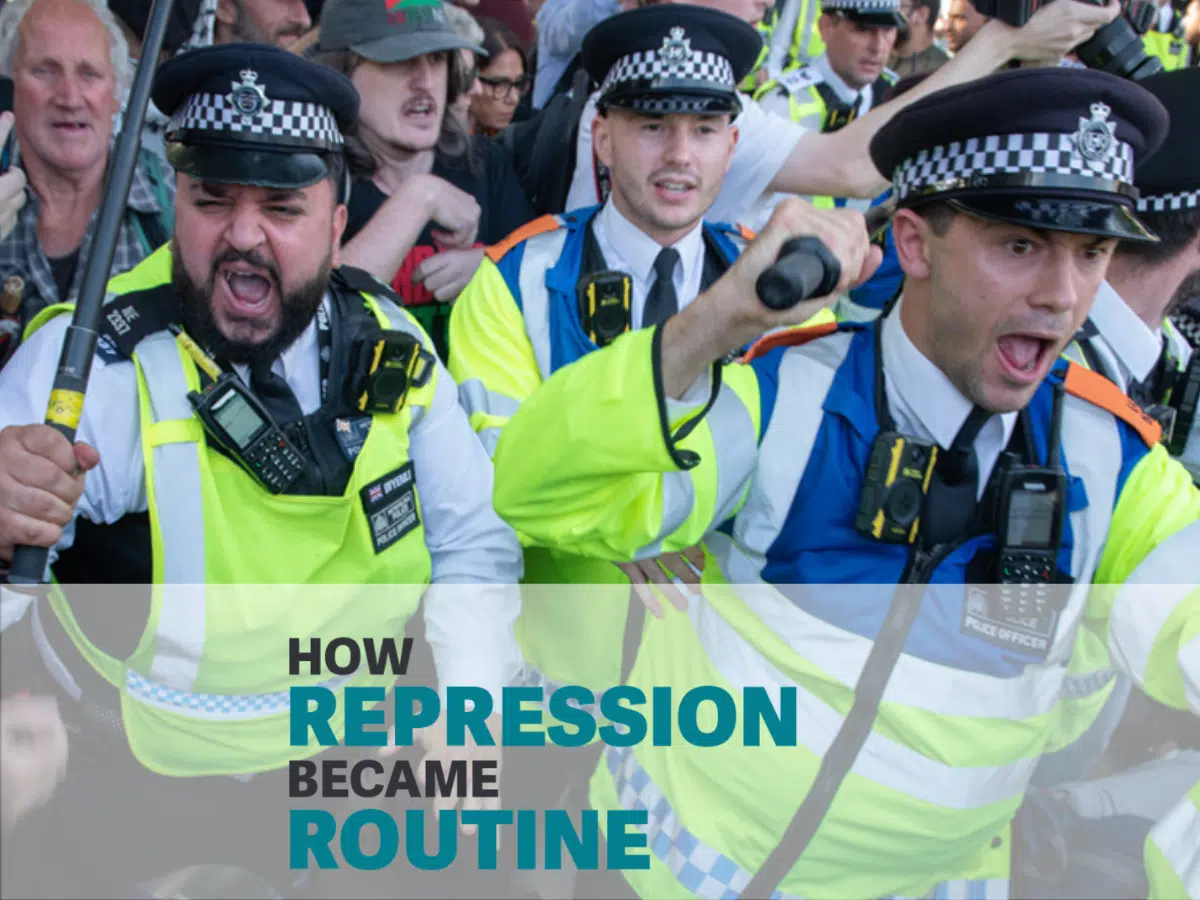
On 25 March, police monitoring group Netpol released its annual protest report. Building on the foundation of the 2024 report ‘This is Repression’ — the latest version is entitled ‘How Repression Became Routine’ (2025). What’s more, it makes for chilling, but sadly familiar, reading.
The Canary sent Skwawkbox out to report on the launch event itself. You can read his article here, which also serves to introduce the report. Likewise, you can read the full report here.
In this article, we’ll take a bit of a closer look at the report itself, along with its main findings.
Core findings
With the 2024 report already having concluded that Britain exists in a state of repression, Netpol stated that:
Between July 2025 and February 2026, Netpol conducted in-depth qualitative research within protest movements, drawing on interviews, testimonies, legal observer notes, court records, police and government data, media coverage and 21 Freedom of Information requests.
Our findings show that repression has become routine in British protest policing: new and overlapping laws, combined with a growing tendency to treat protest as a security issue, have normalised surveillance, heavy-handed policing, and punishment, with harm concentrated on marginalised groups. Protest is increasingly policed as a matter of threat management rather than democratic expression.
Netpol produced the 2025 report with the help of the Article 11 Trust. Back in 2020, the charity was set up with the aim of defending the rights to freedom of assembly, as set out under Article 11 of the European Convention on Human Rights.
The 2025 report broke its core findings down into five overarching points:
- Officers are exercising powers beyond and ahead of gaining the lawful authority to do so.
- The police are using layered legislation to confuse and control protestors.
- Security logics now dominate protest policing.
- The restriction of protests has spread out over a wider geographical area.
- The gap in police accountability is widening.
Power beyond authority
The new report highlighted the fact that police forces, and especially the Met, have made unlawful use of their powers. More specifically, they’re exercising powers like ‘cumulative disruption’ conditions before they’ve even passed through parliament.
Police already have powers to impose conditions on protests that cause “serious disruption to the life of the community”. These were put in place by the Public Order Act 1986.
However, the forthcoming Crime and Policing Bill proposes to amend this to allow police to consider ‘cumulative disruption’, ie. the effect of repeated protests. This would effectively allow officers to treat multiple minor protests in the same manner as larger ‘disruptive’ protests.
Netpol stated that it had seen evidence suggesting that:
these trailed powers are already being used, despite provisions not yet having been passed into law. In May, for example, the Met used Public Order powers to block International Jewish Anti-Zionist Network (IJAN) protests, citing the ‘cumulative impact’ of weekly protests. Similarly, in
November, the Met forced Palestine Solidarity Coalition (PSC) to change the route of its planned march, citing the “cumulative effect of [PSC] protests”.
Likewise, the report also found that police continued to use powers even after they’d been appealed. In particular, the monitoring group cited police use of the repealed ‘more than minor’ threshold for serious disruption.
Layered legislation
Next up, the police abuse of layered legislation. Forces across the country have access to a wide array of powers granted by multiple pieces of legislation. Officers are using these layered powers to confuse and control protesters – and also to maximise their intelligence gathering and data capture.
The report explained that:
Because these powers overlap, it is often unclear which rules apply and why, even before any enforcement action takes place.
As a case study, Netpol cited what it called the “34-60aa-50-35 dance”. This was a specific and targeted weaponisation of layered legislation noted by legal observers in Bristol. In sequence, it goes:
-
Section 60aa (Criminal Justice and Public Order Act 1994) requires the removal of face coverings and creates a pretext for stopping people without reasonable suspicion
-
Section 34 (Anti-social Behaviour, Crime and Policing Act 2014) provides authorisation for police to disperse protesters for up to 48 hours, effectively criminalising protesters for assembling once deemed as ‘likely’ to cause disorder. This, in turn, sets the precedent for the steps that follow.
-
Section 50 follows, criminalising non-compliance and providing an easy arrest mechanism while also acting as an intelligence-gathering model which allows police to identify movement actors.
-
Section 35 (Anti-social Behaviour, Crime and Policing Act 2014) is then evoked, allowing the police to clear out protesters once data collection has been completed.
Security logics
Chillingly, the report also found that national security and counterterrorism logics are now embedded in routine protest policing. This means that authorities are framing dissent is framed as an existential security threat. These ‘exceptional’ concerns allow them to ‘justify’ the use of repressive tactics.
Netpol stated that:
We have seen the unprecedented application of counter-terrorism legislation – in particular, the Terrorism Act 2000 – largely in response to Palestine solidarity protest, including to proscribe direct action group Palestine Action.
This legislation was ostensibly drafted to tackle extreme threats to national security. However, we’re now regularly seeing it weaponised against demonstrators going about what was once ordinary protest activity.
Even the National Security Act 2023 is now being used against protesters and journalists, marking the even greater application of national security powers against political dissent.
Geographical spread
Across Britain, the use of powers to restrict assemblies shot up by 230% over 2024 – 2025. What’s more, where this repression was once largely limited to London (and the Met), it’s now spreading.
In part, this is a reflection of the fact that the protest landscape itself is seeing a lower proportion of large-scale national marches. Instead, “sustained, local and site-based assemblies” are dominating the scene.
Until March 2025, the Met was the only force to impose wholesale restrictions on marches. However, this year’s restrictions on assemblies were far less localised. The report explained that:
This pattern indicates the widening geographical spread of public order policing through restrictions placed on static and sustained protests outside weapons factories, local government buildings and hotels homing refugees.
Widening accountability gap
Finally, whilst police powers have grown in number and scope, there’s been no corresponding growth in accountability. Instead, the public’s powers to scrutinise and restrain the police have grown weaker. Legislative and policy changes are also undermining accountability and routes to redress policy repression.
Meanwhile, pre-emptive approaches to policing are on the rise, enabled by vast surveillance networks. By its nature, these pre-crime tactics are opaque and difficult for the public to scrutinise.
Likewise, the danger for journalists and legal observers – the people documenting police repression – is increasing. This reduces accountability by eroding methods of evidence collection. The report stated that:
We spoke to one legal observer who had been stopped by the police on fabricated charges, noting that
police harassment had forced them to take a step back in 2025, while another was arrested at the national PSC demonstration in January 2025.We have also received a number of reports of police violence against legal observers, ranging from being caught in kettles, to being pepper sprayed, to being shoved into objects and vehicles. One legal observer told us that they no longer give too much thought to being pushed by police due to experiencing this kind of force as a regular occurrence over the summer of 2025.
Conclusion
Whilst the findings of the report detailed a chilling escalation of repressive policing, Netpol took care not to end on a hopeless note. Rather, they emphasised the fact that the public is resisting, and we have not yet given up—and the movement is growing:
Despite the trends identified in this report, repression has not yet silenced dissent. Instead, solidarity with protest movements throughout 2025 strengthened, with steadfast resilience shown by those protesting for Palestine and communities defending themselves against far-right and anti-migrant demonstrations.
Crucially, the ability to protest has been upheld by those who build and sustain the infrastructures of resistance, amid depleted resources and increasingly complex legal and political environments. However, with the passing of another year, the stakes of exercising the right to protest have once again increased. It is vital that we reject the idea that repression is inevitable before the dwindling space to dissent disappears.
The UK government, and the police along with them, have built a state in which repression has become routine. However, the public has—time and time again—met them head-on. The state is witnessing first-hand that we cannot be legislated into submission, and that we will not let go of our rights and freedoms without a fight.
Featured image via the Canary

On 24 March, the Green Left consolidated its role as a key force in Danish politics. It has grown from 15 to 20 seats in the Folketing. And this is a clear signal of rising support for green and progressive policies, another in a series of recent Green Party breakthroughs across Europe.
In November 2025, the Green Left won the local elections in Copenhagen, with Sisse Marie Welling becoming the Lord Mayor of Denmark’s capital. In late February in the UK, the Green Party resoundingly won the Gorton and Denton by-election in Greater Manchester. While in early March, the German Greens achieved a major regional victory in Baden-Württemberg, and won the Mayorship of Munich for the first time.
Green Left has been the official English name since 2022 of the Socialistisk Folkeparti, or SF. That translates directly to Socialist People’s Party. It campaigns on a range of issues, prioritising economic justice and care for the environment. It has been a full member of the European Green Party since 2014.
Ciarán Cuffe, co-chair of the European Green Party, said:
Our member Green Left becoming for the first time the second-biggest force in the Danish parliament shows that voters across Europe are turning to Greens for credible solutions on the issues that matter most: protection of nature, a society with less stress, and affordable energy from renewable sources that are not exposed to geopolitical shocks.
The Danish success confirms strong recent results for Green parties in the UK, Germany and the Netherlands.
Vula Tsetsi, co-chair of the European Green Party, added:
The series of successes starts to show a pattern of people voting for a green future across Europe. There is again a clear appetite among voters to put social welfare, climate and environmental action at the top of the political agenda.
Europeans support the strategy to invest in renewables to secure European energy independence. From Copenhagen to Lyon, from Manchester to Amsterdam, people are choosing a future that protects their health, their environment, and their bills.
Featured image via Green Left
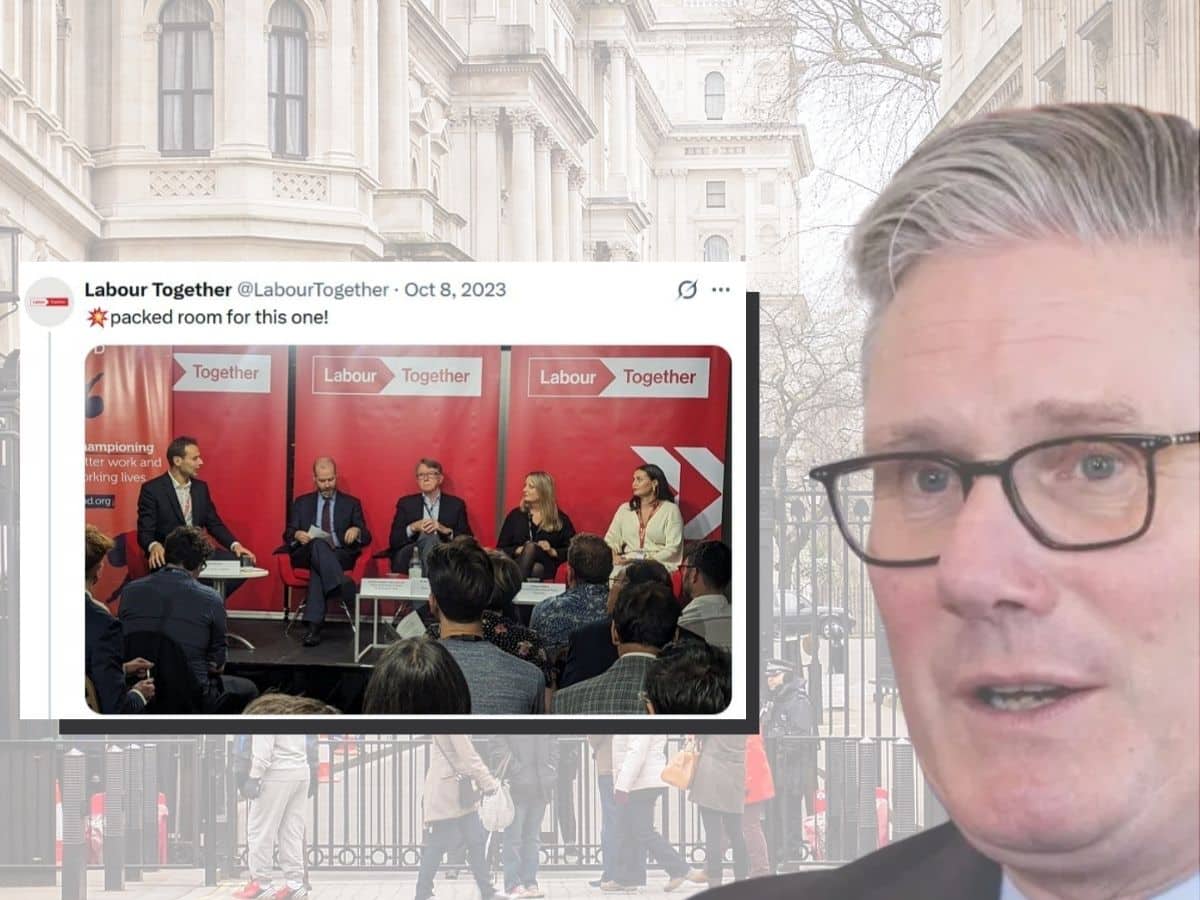
As we’ve reported, Labour Together have been the key drivers of the disastrous Keir Starmer government. Key members of the group also facilitated the disastrous return and exit of Peter Mandelson. And in a sign of just how disastrous it’s been for them, it seems the group is now trying to hide their connections to Mandelson:
Isn’t this strange… Labour Together deleted this post from X showing an LT event at 2023 Labour conference, addressed by Peter Mandelson, @jreynoldsMP and hosted by Josh Simons. This screengrab was taken two weeks ago, so only deleted since then. Would be a shame if it was… pic.twitter.com/PsgwzVF9eH
— The Fraud (@StarmertheFraud) March 25, 2026
The Frauds
The Fraud is a book written by investigative journalist Paul Holden. The book covers Starmer’s rise to power, aided as he was by Labour Together. In a passage serialised by the Canary, Holden wrote:
Labour fought the December 2019 general election with a base split by Brexit and a party divided against itself. It went down to a heavy defeat. After Jeremy Corbyn resigned the helm, Keir Starmer wasted no time in putting his own name forward for the role of new party leader. Starmer’s leadership campaign was a slick affair, launched and defined by a well-produced video that touted his leftist credentials and values. One campaign insider described how, from the outset, it was streets ahead of any contenders in terms of messaging, organisation, infrastructure, and funding.
Starmer could launch his candidacy so quickly thanks to years of preparation largely outside the public eye. This work was done by a political project operating through an organisation called Labour Together. The project had likely started preparing for a leadership contest before Starmer was even aware of its existence. Labour Together provided access to funders. It would also supply Starmer’s key officials including his Svengali, Morgan McSweeney, and many of his future shadow cabinet and cabinet ministers.
The Fraud covers the “illegal funding that made Starmer Labour leader“, as well as the “antisemitism crisis” which Labour Together concocted to smear their opponents.
For the crime of reporting accurately on their activities, Labour Together sent private investigators to spy on Paul Holden. It would later come out that Labour Together also spied on mainstream journalists, creating a national scandal that forced Labour Together director Josh Simons to step down from his ministerial position. Simons is one of the men pictured at the top alongside Peter Mandelson.
All in it together
At this point, it’s clear why Labour Together would want to distance themselves from long-time Epstein pal Peter Mandelson. At the same time, Labour Together’s image is so tarnished that Mandelson probably wants nothing to do with them either.
What a wretched group to have found themselves at the heart of government.
Featured image via the Canary

As reported by the Canary on 19 March 2026, a convoy of activists travelled to Cuba to protest the US blockade on the country. In a seeming act of revenge, US authorities have now harassed these activists upon their return to the states:
DHS detaining returnees from Cuba, taking their phones, photographing private journals.
Doing this after the successful delivery of tons of aid to Cuba? Sounds like someone’s embarrassed at the initiative taken by US citizens to help the Cuban people.https://t.co/HT8VAAeF27
— noah kulwin (@nkulw) March 25, 2026
Cuba Convoy
As Ed Sykes reported for the Canary:
Donald Trump’s second administration has massively tightened the longstanding US stranglehold on Cuba. His escalating campaign of terror has brought the island’s health system to its knees, putting thousands of lives at risk.
The US is preventing other countries from exporting fuel to Cuba. This is slowly causing the country to grind to a halt:
BREAKING: Cuba’s electrical grid has suffered a complete and total collapse.
It’s the first nationwide blackout since the US blocked the flow of oil to Cuba.
This was entirely caused by the US.
The US is strangling Cuba to death so it can come in & take control of the country. pic.twitter.com/QBjdvKlIuc
— Power to the People ☭🕊 (@ProudSocialist) March 16, 2026
Anyone in favor of the US stranglehold on Cuba should listen to this Newsmax interview with @RyanGrim, who just returned from there with harrowing stories.
His key question: why do Americans want to dictate who governs Cuba, while forcibly causing Cubans’ deaths from no fuel? https://t.co/BGJfUpKY4J
— Glenn Greenwald (@ggreenwald) March 25, 2026
Fuel is still reaching private companies, however, demonstrating that the US is pursuing a corporate takeover of its island neighbour:
The U.S. has sent about 30,000 barrels of fuel to Cuba’s private sector in 2026, despite a broader oil blockade targeting the Cuban government.
The policy, led by the Trump administration, aims to support private businesses while restricting state-run entities.
Shipments are… pic.twitter.com/jNRrWyLvlZ
— Clash Report (@clashreport) March 25, 2026
Sykes added:
Numerous social movements, humanitarian groups, trade unionists, and public figures have stepped up to try and scupper Trump’s plans, though.
These groups and individuals have built a coalition to send humanitarian supplies to Cuba, including medicine, food, and solar equipment. In particular, this aid seeks to support medical workers and their patients, while ensuring children have access to vital nutrition.
The first of the venture from the ‘Nuestra América Convoy‘ has already arrived on the island. And more will arrive in the coming days:
BREAKING 🇨🇺 The first delegation of the Nuestra América Convoy arrives to Havana. pic.twitter.com/WEaln5H84S
— Progressive International (@ProgIntl) March 18, 2026
Harassed
In the video at the top, musician and activist Lavish Mack explains:
Yo, this is Lavish and many other people from the Nuestra convoy. We just returned from Cuba and landed in Miami. We’re in the International Airport right now. 18 out of the 20 of us had our phones taken. We were all detained by Border Patrol and interrogated for, I think, about three hours about what exactly we were doing in Cuba, even though they know exactly what we were doing, which is delivering 30 tons of humanitarian, much-needed aid to the Cuban people.
Additionally, the last six people that they took were the Black people. And they just had us in there until Chris finally spoke up and was like, yo, this is a bad little look for y’all. We about to sue you. Then they started expediting and getting us through, but they took all of our phones.
The Chris in question was labour organiser Chris Smalls who famously took on Amazon. Smalls has also supported the people of Palestine:
Chris Smalls, a former Amazon Labor Union leader and prominent labor organizer who was recently abducted and abused by Israel, calls out unions that refuse to criticize Israel and announces a campaign to pressure the AFL-CIO and the ILA.💪 pic.twitter.com/KMHlcWiqIj
— Furkan Gözükara (@FurkanGozukara) August 19, 2025
In the Lavish Mack video above, another activist said:
But the other thing I want to add is that I asked for legal counsel many, many times. I said, can I have legal counsel? They said no. And I said, I hear you, but I would really like to have legal counsel. I said… I’m not going to lock the phone until I speak to legal counsel. You may be 100 percent right, but I’m going to feel more comfortable first. So I want to let you know that they said they have warrantless search powers. Maybe they’re right. Maybe they’re not. But that’s what they said.
A ‘just in case’ video posted by Lavish Mack states he’s been detained by Border Patrol while returning to the U.S. Another post on his account says his passport has been seized.
Mack is a musician and vocal supporter of Palestinian liberation. He is also a U.S. citizen. pic.twitter.com/wpj1beqqkj
— Talia Jane ❤️🔥 (@taliaotg) July 12, 2025
Full-on imperialism
As many have highlighted, the US has moved into a new phase in which its imperial ambitions are increasingly transparent:
They WILL run the Venezuela playbook on Cuba. Indict the political leadership, invade, install a pliant government that will let US business interests carve up the island. You can see it coming a mile away. https://t.co/cg9pSvnzsT
— Nathan J Robinson (@NathanJRobinson) March 26, 2026
It’s important that people in the West make it clear that we will not tolerate this from our leaders.
Solidarity to all those who are taking a stand.
Featured image via Instagram
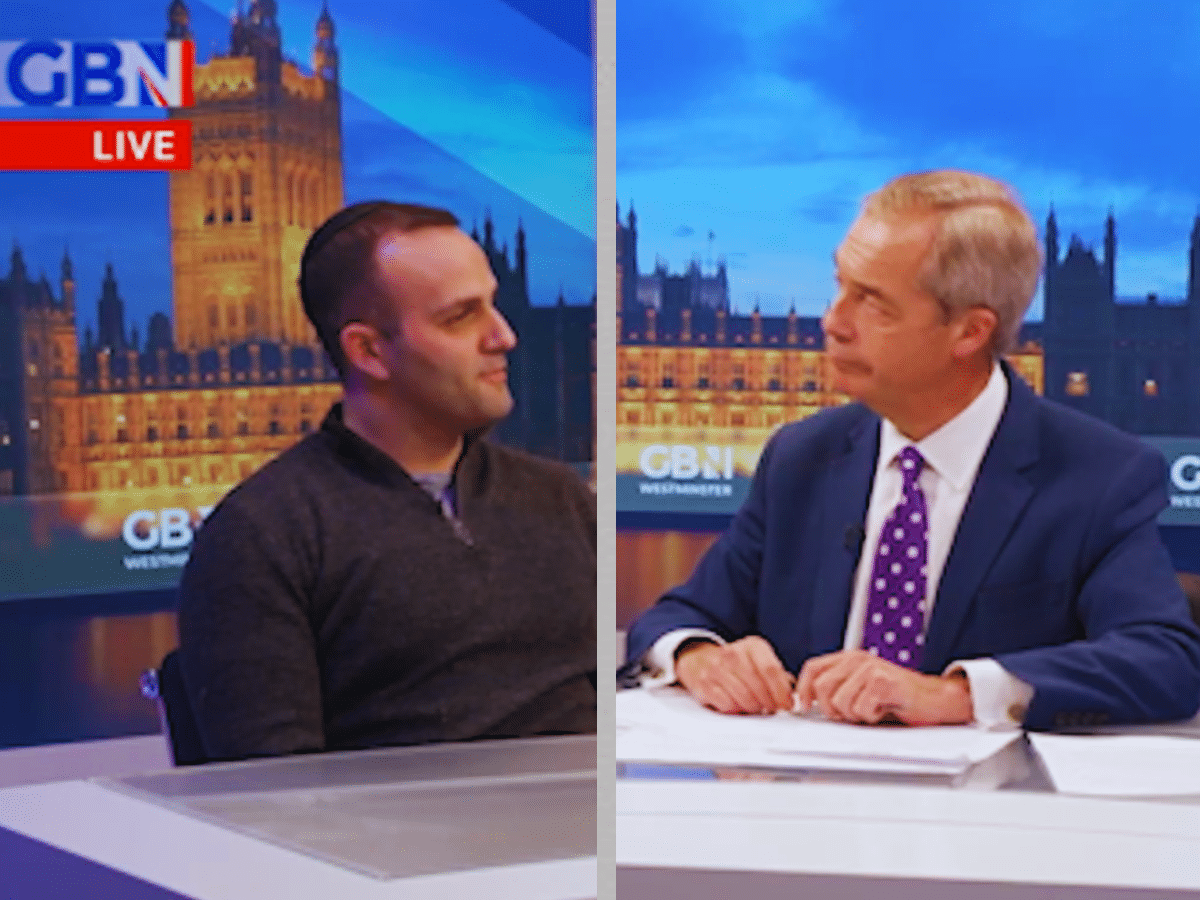
The man who was filmed verbally abusing a Palestinian Al Jazeera journalist in North London is a serving Met Police special constable and apparent fan of “Tel Aviv Tommy” Robinson.
The Al Jazeera film crew were harassed while reporting on the burning of four community ambulances in Golders Green on 23 March. The destroyed vehicles belonged to the Jewish emergency volunteer service, Hatzola.
The authorities are treating the ambulance attack as an antisemitic hate crime.
Declassified UK have now revealed that the vocal member of the angry mob filmed haranguing the film crew is none other than Special Constable David Soffer.
🚨SCOOP: Man filmed in Al Jazeera ‘intimidation’ mob is a serving Metropolitan Police officer@declassifiedUK has identified him as Special Constable David Soffer.
He was filmed calling a Palestinian journalist a “dog” and telling him to “go back to Qatar”. pic.twitter.com/RQeiFb52a8
— Martin Williams (@martinrw) March 26, 2026
Declassified reported that:
David Soffer – who also runs a reputation management firm according to records filed at Companies House – is seen making his way to the centre of the mob and insulting the cameraman.
A prolific user of X/Twitter, Soffer has publicly expressed his support for Israel.
The outlet said Soffer’s online footprint also suggests support for British fascist Tommy Robinson:
In 2024, the far-right activist Tommy Robinson posted an image on Twitter saying “Fuck Palestine”, adding: “The shithole is full of inbred Islamist parasites and terrorists.”
Soffer responded, saying that Robinson “is telling the truth” and that Israel will “justly finish” the war in Gaza.
Soffer verbally abuses the journalists in the footage. He calls one Palestinian journalist a “dog” and a “donkey” in Arabic and says “Go back to Qatar.”
The Met Police told Declassified UK:
We are aware that an off duty serving Met officer was involved in the altercation. The matter has been referred to the Department of Professional Standards for assessment.
Tommy fanboy cop
Journalist Matt Kennard said it’s easy to imagine the reaction if the roles were flipped:
Imagine if a Muslim off-duty police officer called a Jewish Chronicle reporter a “dog” and told them to “go back to Tel Aviv”
Would be front-page of every major newspaper. Starmer would have to make a statement. Let’s see if it’s even covered at all when it’s this way round… https://t.co/fCv7K4RpNd
— Matt Kennard (@kennardmatt) March 26, 2026
Other users have pointed to the Met police constable’s past appearances on white supremacist channel, GB News, which he also proudly advertises on his LinkedIn.
Seems like he’s also appeared on GB news pic.twitter.com/jCsaNjyi27
— mc (@mc8119551355572) March 26, 2026
The Met previously said of the altercation:
We’re aware of the footage showing the verbal altercation between local residents and journalists.
Freedom of the press is important and journalists must be able to do their job without being subject to intimidation or harassment.
Officers did intervene but we recognise that there was an extended period where the journalists were put in a difficult situation which led them to leave the area. Officers on duty in the area have been asked to be alert to any similar altercations in the coming days.
As the Canary wrote on 24 March, the British establishment quickly weaponised the ambulance attack against British Muslims—despite there being no evidence at the time of who carried it out:
With depressing predictability, politicians are using the antisemitic Golders Green arson as an excuse to roll out Islamophobic rhetoric. Never mind the fact that we have no idea who carried out the attack – the knee-jerk bigotry is already in full swing.
Now we know one of the most abusive members of the 23 March mob was a Tommy Robinson-supporting serving cop. The Met need to come down like a ton of bricks. We don’t hold our breath though.
Featured image via GB News, YouTube Channel

Iranian missiles could target these seven UK sites after Healey refuses to rule out attack

Chinese universities with military links bought Super Micro servers with restricted AI chips

UK Sanctions Xinbi to Isolate It From the Legitimate Crypto Ecosystem


-
 Crypto World6 days ago
NIO (NIO) Stock Plunges 6.5% as Shelf Registration Sparks Dilution Worries
-
 NewsBeat2 days ago
Manchester United reach agreement with Casemiro over contract clause amid transfer speculation
-

 Fashion7 days ago
Weekend Open Thread: Adidas – Corporette.com
-

 Politics6 days ago
Jenni Murray, Long-Serving Woman’s Hour Presenter, Dies Aged 75
-

 Crypto World5 days ago
Best Crypto to Buy Now: Strategy Just Spent $1.57 Billion on Bitcoin During Fear While Early Investors Quietly Enter Pepeto for 150x Potential
-

 Crypto World5 days ago
Bitcoin Price News: Bhutan Sells $72 Million in BTC Under Fiscal Pressure, but the Smart Money Entering Pepeto Sees What the Market Does Not
-

 News Videos1 day ago
Parliament publishes latest register of MPs’ financial interests
-

 Sports4 days ago
Remo Stars and Kano Pillars Strengthen Survival Hopes in NPFL
-

 Sports4 days ago
Gary Kirsten Accuses Pakistan Cricket Board Of ‘Interference’, Mohsin Naqvi Responds
-

 Tech4 days ago
Give Your Phone a Huge (and Free) Upgrade by Switching to Another Keyboard
-

 Business5 days ago
No Winner in March 21 Drawing as Prize Rolls to $133 Million for Next
-

 Sports7 days ago
2026 Kentucky Derby horses, odds, futures, preview, date: Expert who nailed 12 Derby-Oaks Doubles enters picks
-

 Tech4 days ago
AI enters the chat: New Seattle dating app relies on tech to facilitate meaningful human connections
-
Business6 days ago
Columbia Sportswear enters $500 million credit agreement with JPMorgan Chase
-

 Tech5 days ago
Today’s NYT Connections Hints, Answers for March 22 #1015
-

 News Videos4 days ago
Ch 9 Financial Management Part 1 | Detailed One Shot | Class 12 Business Studies Boards 2026
-

 Business10 hours ago
Instagram, YouTube Found Responsible for Teen’s Mental Health Struggle in Historic Ruling
-
 Crypto World7 days ago
Small-cap Russell 2000 enters correction territory
-

 Business5 days ago
Will Duke Basketball Win It All? Duke Basketball Enters Second Round as Third Favorite to Claim NCAA Title
-

 Business7 days ago
(VIDEO) BTS Drops ‘ARIRANG’ Album Today, Marking Epic Post-Military Comeback With Live Concert
You must be logged in to post a comment Login