
Politics
Sunday Telegraph editor publicly denies Israel’s genocide

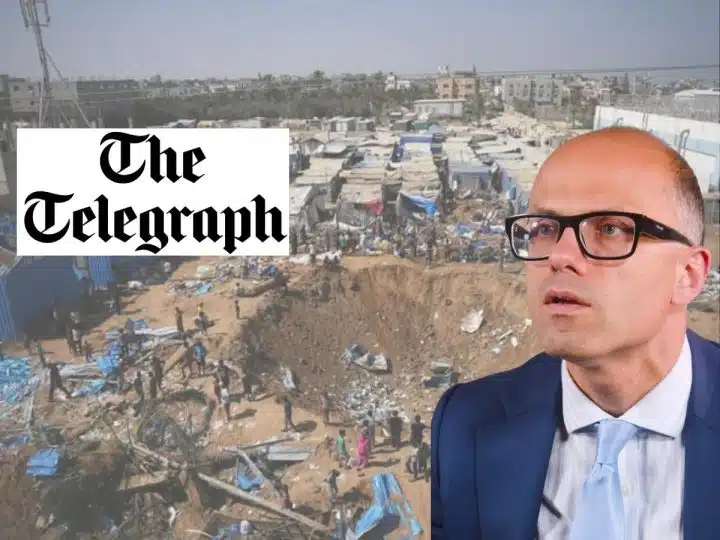

Responding to an article from Stephen Pollard, the editor of the Sunday Telegraph has publicly described Israel’s genocide as a “lie”. It comes as Nigel Farage’s Reform UK launched an attack on rivals Restore Britain over accusations of ‘antisemitism’:
Restore Britain has endorsed the monstrous lie that Israel is committing a genocide in Gaza – the opposite of the truth. The horseshoe theory of politics is being proved correct – a right-wing party has aligned itself with the far Left and extreme Islamists on this issue. It is…
— Allister Heath (@AllisterHeath) August 10, 2026
Israel’s Gaza genocide
Heath’s post finishes:
It is vital that retired actors, pro-Israel conservatives or observers of UK politics in Europe or America, including [Elon Musk] understand the truth about this party.
Restore’s talk of Gaza ‘genocide’ is as ridiculous as the Left’s
The issue for Heath and Pollard is that Restore politician Charlie Downes posted the following:

We’ve been heavily critical of Restore Britain, but Downes isn’t wrong to describe the situation as a genocide. He’s also not wrong to highlight the complicity of the British media.
Pollard’s piece opens with the following:
Genocide requires state intent. Instead, Israel deserves praise for the humanitarian care it has taken in its fight against terrorists
On the topic of “state intent”, Law for Palestine meticulously documented 500+ instances of “Israeli Incitement to Genocide”. They described this work in 2024 as follows:
Since the commencement of our investigative efforts on October 7th, 2023, Law for Palestine has meticulously amassed a compelling body of evidence exposing the proliferation of incitement to violence and genocidal intent perpetrated by Israeli officials and public figures, against Palestinians. Our documentation encompasses over 500 incitements of violence and genocidal incitement, appearing in the forms of social media posts, television interviews, and official statements from Israeli politicians, army personnel, journalists, and other influential personalities.
These reprehensible incitements have been categorized into significant thematic areas, including genocidal intent, forced displacement, and collective punishment. What makes this evidence all the more disconcerting is its origin, emanating from the upper echelons of the Israeli government, including the President, Prime Minister, Knesset members, military personnel, and law enforcement.
Nothing Pollard writes in his piece does anything to undo this reality. And speaking of reality, the Telegraph seems to exist on an entirely different plane of it than the rest of us:
Britain can’t stop climate change. Scrap net zero and embrace Mediterranean life https://t.co/AjtkLDpMsS
— Allister Heath (@AllisterHeath) July 29, 2026
Right VS Right
The Telegraph isn’t the only organisation attacking Restore Britain over alleged antisemitism. In an announcement given on Monday 10 August, Farage said that for Reform to work with Restore, his rivals would have to shed members like Downes. As GB Politics reported:
BREAKING: Reform UK leader Nigel Farage has ruled out any deal with Restore Britain unless Rupert Lowe expels Charlie Downes from the party
Nigel Farage has accused Charlie Downes of antisemitism after the Restore Britain spokesperson insinuated that Farage had been bought by Jewish supporters
These comments from Downes are less defensible, obviously. While it’s true that many people in the Zionist movement fund UK politicians, there are reasons why we highlight that they’re Zionists rather than Jews:
- Not all Jewish people are Zionists.
- Not all Zionists are Jewish.
Many non-Jewish American politicians are Zionists; the same is true of many non-Jewish European and British politicians. Many Western journalists are Zionists too, including the non-Jewish Allister Heath.
To be especially clear on what we’re talking about, Zionism is the ideology which dictates that Israel must exist as an expansionist colonial project in the Middle East. Both colonialism and expansionism are bad, which is why we oppose the ideology. When someone talks about opposing ‘Jews’, though, it seems like there’s something else at play.
Collaboration
With both Reform and the Telegraph attacking Restore, it does seem like there’s some degree of coordination. We’re not going to throw our support behind Downes, but we will acknowledge he was right about the genocide. And we’re far from the only people who hold that opinion:
'far left and extreme islamists' or as they're otherwise known, half the fucking country https://t.co/zXjQ7maymn pic.twitter.com/aurvI5hBII
— NJ (@NoJusticeMTG) August 10, 2026
Featured image via the Canary
By Willem Moore


Green Party leader Zack Polanski has taken aim at “absurd” editorial decisions by the BBC. In particular, Polanski slammed the Beeb for giving far more airtime to Reform UK than the Greens.
His comments come after tge BBC was seemingly ambushed on Newsnight by presenters last week. There, Polanski’s interviewers read anonymous texts from “senior” Reform figures live on air.
For context, Reform UK’s unelected spokesperson Zia Yusuf has appeared on BBC Question Time a whole 38 times. That’s more than the Green Party’s people have appeared collectively on the show.
After multiple such failures at the BBC, it’s quite clear which direction the corporation is pandering.
Polanski sets the record straight
Polanski made the fierce comments during a weekend interview with Iain Dale at the Edinburgh Fringe. Dale asked why Polanski had seemingly been appearing in the media less in recent months.
In comparison, Dale spoke of major media interest in preceding months. These included Polanski’s sweeping victory in the Greens’ leadership contest and the Greens’ historic Gorton and Denton by-election win.
Polanski said it was not “true that I disappeared” from the media by choice. He added:
I feel like the media has changed their technique towards me. …
On Wednesday I called a press conference, an emergency press conference.
It was a bit of a tactic that I’ve seen Nigel Farage do over and over again, where he says, ‘I’m having a press conference, I’m not telling you what it’s about’. The media get very excited when Farage does it.
An hour before, the BBC will spend an hour having lots of talking heads speculating what it might be. They’ll then stream it in full, including the Q&A, and then hours afterwards, probably including Newsnight, they’ll be talking about what happened.
This is where Polanski underscored the blatant double standards on display by the BBC:
The BBC this week, when I held a press conference – including a firefighter, a medic, someone who used to serve in the army, and Chris Packham, so I’d say it was definitely newsworthy and interesting – the BBC completely ignored it. They didn’t stream a single thing about it.
Dale suggested that Chris Packham’s involvement — as somebody who presents nature shows for the BBC — could’ve been the reason why the broadcaster didn’t cover the press conference. However, Polanski said he struggled to see why exactly that could be the reason, explaining that:
They did do an article later on in the day, but it didn’t even make the front page of their [website].
Polanski went on to explain the absurdity of BBC journalists’ failure to engage seriously with him:
Now my point here is not to whine, because actually I always think as a politician, you’ve got to just go, ‘OK, how can we find attention differently, how can we grab people differently?’
But my point is that much of those media organisations who a month ago or three months ago would have booked me, started to cancel on me, or not put me on their show. Then I would see these same presenters saying, ‘Oh, he has a visibility problem at the moment’, or ‘He’s disappeared’.
I was like, you were literally the person who just cancelled me today, and now you’re saying I have a visibility problem.
It’s hard to call that anything but absurd behaviour. Among other scandals, like parroting Zionist hasbara talking-points, it calls into serious question the BBC’s so-called “public service journalism“.
Chris Packham destroys Reform over its dodgy donors, live on the BBC
T-shirt-gate and a Newsnight ambush
Later in the show with Dale, Polanski further criticised the BBC’s coverage of an incident on Newsnight. (For the non-institutionalised among us, Newsnight is the BBC’s flagship politics and news programme.)
For context, Polanski inadvertently shared an image of a man wearing a T-shirt. On it was a guillotine with a now-infamous message about “making plans for Nigel”. (The phrase comes from an old XTC song.) Polanski realised his mistake and quickly deleted the post, only a ‘collaboration’ of 20 images on Instagram.
In typical melodramatic fashion, “free speech” Reform UK called the police about the Instagram post, which they alleged was “inciting murder”. The police quickly responded that there was no incitement.
Nonetheless, the diligent BBC dedicated an entire edition of Newsnight to this bonkers non-story. In essence, the BBC’s editorial policy, apparently, was to track onto a far-right media bin-fire. (In fairness, the BBC isn’t alone here — see vast pre-election scaremongering around Greens in May, across the media sphere.)
Newsnight rightly drew sharp criticism after one of their journalists, Nicholas Watt interrupted the broadcast to read out live reactions to the show from Reform UK. Watt simply read out text messages from unnamed, inflammatory Reform figures. This took up over three minutes of the show’s 30-minute run-time.
During those three minutes, Polanski was filmed live on air, forced to sit and listen. Meanwhile, the BBC’s Watt proudly showed off to the nation that he gets DMs from Nigel Farage. ‘Wow!‘ It was maddening.
Addressing this shameful and “absurd” Newsnight episode, Polanski told the Fringe crowd:
I talked about the climate crisis not being covered by the BBC, the fact that they went on about [T-shirt-gate] for three or four days, I think is pretty shocking.
At one point, wildfires were a story that was lower down [on the BBC website] than something about an Instagram [post].
I think, as soon as anyone takes a deep breath and goes, ‘what’s important in the world?’, that just seems like such an absurd editorial decision.
The team at the National approached the BBC for a response. None came by the time of writing.
(The article below is from 2024, by the way, when Polanski was deputy leader. Nothing changes.)
Newsnight Green Party snub shows the abysmal state of BBC general election coverage
Featured image via the Canary


The Oldspeak Bookshop in Long Melford has announced its intention to close. It follows the backlash which resulted from the business supporting ‘remigration’ — i.e. the policy of ethnically cleansing Europe of all People of Colour.
Hostility? I wonder why https://t.co/8sklJiF6Nk pic.twitter.com/4P8M2Tykua
— keewa
 (@keewa) August 9, 2026
Oldspeak Bookshop backs “remigration”
Remigration has become very unpopular with the European far-right in recent years (and also with Elon Musk, despite the man being a migrant himself). As we reported in July:
The UK group Remigration Now describes ‘remigration’ as follows:
Remigration is the act of returning immigrants and their descendants to their country of origin through both voluntary and mandatory measures.
They say ‘immigrants’, but what they mean is People of Colour. And you know they mean this, because there’s no campaign to deport anyone who has an Irish grandad or an Austrian nana (both of which this writer has).
Basically, then, remigration is just Nazi-grade racism with a fresh coat of paint. And everyone knows this stuff never ends with deportations.
Remigration, then, is textbook racism. As such, we’re very comfortable calling Oldspeak a ‘racist bookshop’.
Go anti-woke, go broke
Explaining their reason for closing down, the Oldspeak Bookshop has said:
Sadly, Oldspeak Bookshop is closing its physical shop doors.
Over time, it became increasingly difficult to maintain a welcoming environment due to the constant hostility I experienced. The uncertainty around which customers were genuine, made it hard for me to greet everyone warmly, and my customer service suffered.
To every one of you who has supported me, thank you from the bottom of my heart. I’m sorry for letting you down, but we can still stay connected!! I am remaining fully online and will be offering a wider range of harder-to-find books, imports, and similar.
They added:
I am also searching for premises in a friendlier location.
May we suggest 1940s Germany?
The Keewa account highlighted some of the texts that Oldspeak was selling:
Amid the Agatha Christies, you can find books by "Confidant of Christchurch Shooter" Martin Sellner, late "Culture Officer" for the BNP Bowden, " The Raw Egg Nationalist", and many more! pic.twitter.com/4ztU3iTLBq
— keewa
(@keewa) August 9, 2026
Keewa also highlighted the futility of the shop’s business plan:
How much passerby foot traffic were you expecting to receive at a location in a yard set back from the road, in a village of 4000 people in Suffolk? Enough to support a fringe bookshop? pic.twitter.com/a8Lzv4m44r
— keewa
(@keewa) August 9, 2026
The Oldspeak Bookshop backlash has continued even though the shop is closing. As you’d imagine, Oldspeak is taking it well:

Growth
The UK far right is growing, and that’s a problem. Given that, it’s important to know where the limits are, and to push back wherever we can. A bookshop that promotes ethnic cleansing being financially viable would be an alarming sign, so thank god they’re shutting their doors.
Featured image via the Canary
By Willem Moore


Manchester is preparing itself for another, albeit lower-profile, by-election, and the Green party is already ahead.
It’s true that the Green Party didn’t get the result it wanted in the Manchester mayoral by-election. Instead, Bev Craig, former Manchester City Council (MCC) leader and Burnham-Labour ally, took on the big job.
However, one consequence of that huge mayoral by-election is yet another in Manchester. Only this time, instead of two million Mancunians being offered the vote, it’s some 13,000 Burnage residents.
And despite their lack of a mayor — for now, anyway — the Green Party is prepping for another electoral fight. And this time, even more than before, the odds do seem to be in their favour.
Manchester’s lowest-ever election turnout results broken down
Bye-bye, by-election, bye-bye…
The Burnage ward by-election takes place to fill a gap in the shape of ex-councillor, now mayor, Bev Craig. She represented the seat in MCC until she became the new Greater Manchester Mayor.
That gap, of course, was created by our new PM Andy Burnham stepping down as mayor. That empty job, in turn, was created by ex-MP Josh Simons stepping down and sparking (not by accident) the whole leadership handover.
And that handover was necessitated, arguably, by the inept political vacuity of Keir Starmer. You could even stretch the causal chain back further to Gorton and Denton — yet another Manchester by-election, triggered by Starmer’s poor choice of allies. You might think that’s unrelated by this point — but wait.
As it happens, Burnage ward is in the Gorton and Denton constituency. So at the moment, its residents are represented in parliament by Hannah Spencer MP.
With potentially very strong odds for the Green party candidate, mayor Craig may be glad she got the promotion before re-election time came. It’s only 18 months before she has to stand again.
Labour and Reform dodge Manchester mayoral election community hustings
Who is the Green party’s hopeful candidate?
In an email shared with the Canary, the Manchester-wide party federation shared its candidate. It was both a mayoral by-election debrief and an announcement of next steps, including the Burnage by-election news.
Manchester’s Green Party branch says it has just selected a “wonderful candidate”, Daoud Nawaz, described by Manchester Green Party as:
a local resident with 15 years of political activism and grassroots campaigning.
In line with the party’s internal democracy practices, Nawaz was selected through internal, Manchester branch party elections. The branch states what platform Nawaz will run on:
Daoud’s priorities will include tackling speeding and dangerous driving, fighting for genuinely affordable housing, and protecting vital services for those who need them most, including older people, families and vulnerable residents.
In an early campaign video, Nawaz donned football boots and flashed a smile, with a simple message. He also took square aim at the right-wing media sensationalisation — touted by Tony Blair, naturally — of a so-called:
‘unholy alliance between the Greens and the Muslim vote’.
Instead, he’s doubled down on his platform of being a local champion. In the same video, Nawaz says:
I’m a local, I’ve got the same issues as you. …Local bins. Local schools. Local businesses. Local leisure facilities, like the local cricket club — which isn’t there anymore.
Like many of us who are local, we feel like we’re losing a sense of what Burnage is.
I want us to be more Burnage. Where accessibility is not optional. Where road safety’s not trapped in red tape. Where local voices around developments are listened to. Where businesses flourish. And where our youth aren’t left to fend for themselves when school’s out.
It’s hard to argue with a message like that — so far, so good.
View this post on Instagram
Where do local Greens stand now?
The Greens missed their target in the mayoral by-election. Only around 25% of the two million-odd voters actually turned out, making it a historically low turnout.
Unfortunately for those on the left, Reform claimed the second-place vote across Greater Manchester.
But the Greens nonetheless claim multiple symbolic and strategic gains during Geraldine Coggins’ campaign. In the same email announcing Nawaz’s candidacy, Greens stated:
Last week, with our wonderful candidate Geraldine Coggins, the Green Parties in Greater Manchester ran one of our largest ever election campaigns and achieved our best ever result in a mayoral election. Across all 10 boroughs, we delivered hundreds of thousands pieces of literature, knocked on thousands of doors, and built campaign teams that will be invaluable in future elections.
Speaking directly to the Canary, a Green Party spokesperson said:
The Greens have increased our vote share by nearly 80% from the same election just a couple of years ago and Labour’s vote has fallen by a quarter. This gives us a good springboard for future campaigns and the general election where we saw particularly strong votes in our target areas of Greater Manchester.
We are proud of the campaign fought by Geraldine, who fought this campaign in the unusual circumstances of a new PM in his honeymoon period. Geraldine spoke up for the many people in the region who feel Labour has run Greater Manchester for developers and big money, and not the people.
With the bigger Green vote, we hope the new mayor has heard clearly that voters expect her to deliver on affordable housing, rent controls, and to put people over profit.
When you add the recent experience of multiple local elections and by-elections across the city-region to this confidence, things already look strong for Nawaz. This is only aided by his colleague Hannah Spencer, Burnage’s vibrant, multiracial working-class community, and an already active Green base.
The ward will have its say on 10 September — one month away. Let’s see if the area is keen to replace its now-vacant Labour councillor with a progressive, Green party alternative.
Property and poverty dominate Manchester’s mayoral election politics
Featured image via the Canary
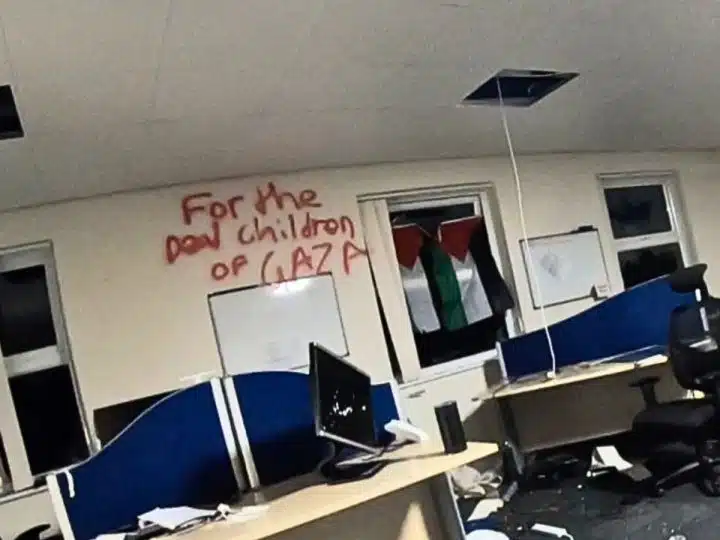

At approximately 3am on Sunday 9 August, a 2-person People Against Genocide (PAG) team broke into the Aberdeen facility of leading military tech and cyber warfare company, Ultra Intelligence & Communications (Ultra I&C).
Having entered the building, they barricaded themselves inside. The activists then set about dismantling equipment and computer equipment, in order to make it inoperable.
From inside the building, they also spray painted “For the dead children of Gaza” on the wall. And they obtained masses of documents from the weapons firm.
PAG has repeatedly targeted Ultra I&C facilities because it’s a key supplier to UAV Tactical Systems. UAV is a Leicester subsidiary of Elbit Systems, Israel’s biggest weapons maker. Elbit produces 85% of the Israeli military’s killer drone fleet, and 80% of its other weaponry and equipment.
Job listings for Ultra I&C’s Aberdeen site show that its work includes the manufacturing and maintenance of equipment. As well as working with Elbit, a data breach in 2024 confirmed that Ultra I&C, one of the main weapons companies operating in the UK, is also working directly with the Israeli military.
Previous actions against Ultra I&C
In June, PAG took action against the Ultra I&C Maidenhead facility. Four activists used modified suitcases, with lock-on devices, to barricade the plant, and shut it down.
Then, just a few weeks later, in July, PAG activists managed to get inside the Ultra I&C Tring plant. After barricading themselves inside, they destroyed satellites worth £3m. The Crown Prosecution Service claims these were about to be shipped to the Israeli military.
At the end of July, PAG visited the company’s Cambridge site, spray-painting slogans all over the walls in blood-red paint, telling it to “Drop Elbit”.
On 8 August, PAG targeted the Loudwater facility of Ultra Maritime, (also part of the Ultra group), at Knaves Beech Business Centre, Loudwater, High Wycombe. Activists smashed windows at the plant and covered the exterior walls in symbolic blood-red paint and graffiti.
The Aberdeen action coincided with the 20th anniversary of the action against Raytheon in Derry. Nine people broke into the facility to disrupt the supply of weapons for Israel to use against the Lebanese people in 2006. That action was part of a concerted local campaign in Derry against the factory. It resulted in Raytheon permanently shutting down in the area.
A spokesperson for People Against Genocide said:
Companies like Ultra I&C, which operate in our towns and cities, fuel and profit from the ongoing genocide in Gaza. Not only does Ultra I&C supply Israel’s biggest weapons firm, Elbit Systems, the firm also supplies the Israeli military directly. Previous actions have destroyed satellites made by the company, which were headed to Israel.
Since being appointed prime minister, the only message Andy Burnham has sent to the Israeli war machine is that it’s business as usual. His cabinet is full of Israeli stooges, and Britain is directly involved in the genocide in Gaza, which along with the pogroms on the West Bank, and the devastation of Southern Lebanon, is pushing the indigenous Palestinian people to the brink of annihilation.
That’s why we can’t expect anything from the government, and must take direct action in order to intervene and disrupt the genocidal supply chain ourselves.
By working for Elbit, and for the Israeli military directly, Ultra I&C are up to their necks in bloodshed. By occupying their Aberdeen factory today, we aim to intercede in their production of deadly weapons to prevent further Palestinian bloodshed.
We have to shut these weapons firms down. Free Palestine!
Featured image supplied
By The Canary
Politics
'I'll never bow down': Montana Democratic Senate nominee refuses to pave way for independent


Montana’s Democratic Senate nominee on Monday refused to drop her campaign to clear the way for an independent candidate, setting up a crowded race that is likely to help Republicans win in November.
Alani Bankhead made certain with hours to go before Monday’s deadline that she would not step aside to give independent Seth Bodnar — who is backed by former Sen. John Tester (D-Mont.) — a clearer run at Republican Kurt Alme.
“I’ll never bow down,” Bankhead said during a press conference ahead of the 7 p.m. Eastern Time deadline to drop out. “I am in this race to win it and I am staying through Nov. 3.”
Bankhead accused her opponents of being “hand picked” by the establishment while she won the Democratic Primary.
Her refusal to drop is no surprise. She told POLITICO earlier this month that it would take “a lighting bolt from God” to convince her to exit, and she’s cast Bodnar’s backing from Tester as proof that he’s more aligned with the establishment than she is.
It’s caused a significant headache for Democrats, who have had some success getting their candidates to drop out for independents in other deep-red states carried by President Donald Trump by wide margins in 2024. Democrats in Idaho, South Dakota and Nebraska have all dropped their bids, though legal challenges could still complicate some of those efforts.
But Montana is Democrats’ best shot of actually flipping a seat with an independent candidacy, and Bankhead remaining on the ballot is likely to complicate that path exponentially.
Polling has shown Bodnar in a competitive head-to-head position against Alme and closer than if Bankhead had a one-on-one contest. But with both on the ballot, Alme leads by more than 20 points. Democrats like Tester and former Gov. Steve Bullock have found success in the red-leaning state, but a split ticket all but cedes the race to the GOP and narrows Democrats’ path to a majority in the upper chamber.
Bodnar and his allies have upped their focus on Bankhead in recent days. A super PAC backing Bodnar has been hammering her on television while another group is posting signs around the state calling for her to drop out.
More than 20 local Democratic lawmakers recently called on Bankhead to drop out, as well as former Democratic Party leaders. But in the end, their argument wasn’t enough to change Bankhead’s mind.
Bodnar recently told reporters ahead of the Monday deadline that he, too, had no plans to drop — while publicly bashing Bankhead for the first time.
“On the Democratic side, millions of dollars of outside dark money poured into a primary to determine an outcome,” Bodnar said at a press conference. “Now they have a candidate who’s unvetted.”

Months of unusually dry weather have killed the grass that British farmer John Franklin’s sheep would normally graze on. Like other farmers, Franklin’s only contingency is to dip into the winter feed. He had been saving this feed for colder months, he told CGTN.
His 200-acre farm, which also runs a shop and cafe selling local produce, has lost a third of its income this year as crops fail to meet market specifications and yields drop.
He is not the only one. Research from the Energy and Climate Intelligence Unit (ECIU) suggests that the 2026 harvest is now likely to be one of the five worst since 1984
Climate-sceptical farmers can no longer ignore realities
In its latest study, latest, World Weather Attribution has reported that the June heatwave (where temperatures climbed to 37.7 degrees celsius) would have been unimaginable 50 years ago, adding that climate change is “unequivocally to blame.”
Martin Lines, CEO of the Nature Friendly Farming Network and a farmer from Cambridgeshire, said that even climate-sceptical farmers were facing the brutalities of climate change:
I’ve never known it this dry and hot on our farm. Even farmers I know who were sceptical of climate change are now saying they’re really worried about the future of their businesses and production, it’s just been completely brutal for our industry. And with high input costs because of the Iran war, planning crops for next year is a total nightmare. The nature-friendly practices we’ve deployed on the farm have helped our soils hold on to water for longer, but there’s only so much you can do to adapt to these sorts of extremes.
Consequences even for Clarkson
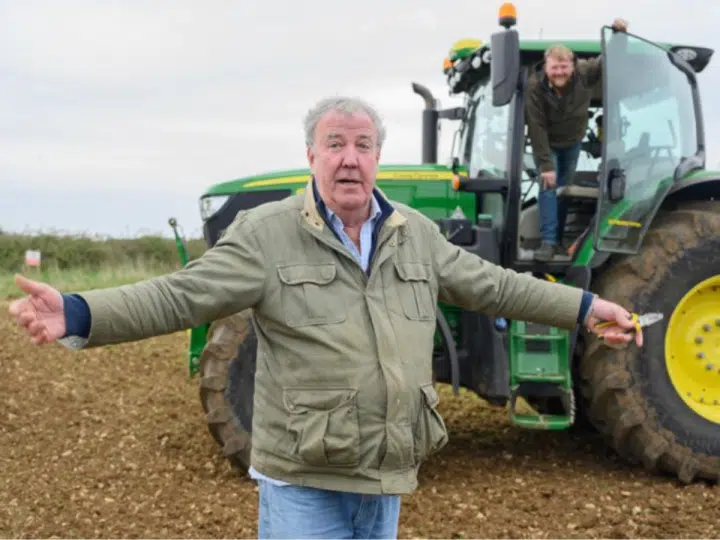
Jeremy Clarkson who has made a career out of dismissing climate worries as the preserve of “soup-throwing” activists and “Elton John-taxing” do-gooders, has found himself in an awkward position. His own Diddly Squat farm in Oxfordshire has not been immune to the same brutal conditions.
In his typical fashion, Clarkson wrote in the Times earlier this year:
I fully understand that a great many people are extremely worried about climate change and believe that unless we immediately give Israel to the Palestinians and throw soup over a few more paintings, the whole world will quickly become a blazing inferno. So understandably they fully support the concept of net zero and argue that the £7 zillion to implement it should be met by vigorously taxing Elton John and the nation’s bankers.
But even Clarkson might struggle to joke his way out of a parched field and shrivelled crop.
Featured image via the Canary
By The Canary
Politics
The House | We need to be frank about the breakdown of trust between ministers and civil servants
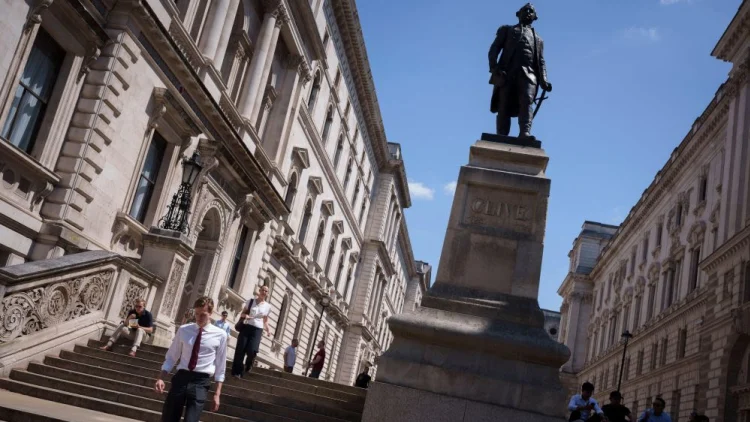

4 min read
I have spent a year trying to find out why political trust in Whitehall has deteriorated. The problems can be fixed – but first we need to be honest about them.
“I am concerned at what I see as a slow deterioration over time in the trust between ministers and civil servants”. So wrote David Normington, previously the top civil servant at the Home Office and, at the time, the first civil service commissioner.
That was almost a decade ago.
And yet we are still grappling – or rather failing to grapple – with the question of political trust in the civil service. Soon after Normington wrote the above in 2017, we saw a sharp deterioration in relations: see for reference anything from the antagonistic approach of Jacob Rees-Mogg and Dominic Cummings to Liz Truss’s attacks on the “Treasury orthodoxy”.
Recent attempts to improve the relationship have at best managed to stabilise it.
Rishi Sunak refused to condone his colleagues’ characterisation of Whitehall as “the blob”, and Keir Starmer began his premiership with a private note to civil servants assuring them, “you have my confidence, my support, and my respect.” Both are welcome. But five months later, Starmer was so frustrated with that same civil service that he accused too many of them of being “too comfortable in the tepid bath of managed decline”. It’s a phrase that has stuck around. I am sure that is in part because it is too clunky to ignore. But also in part because it was Starmer – the civil servant’s prime minister, as a former civil servant himself – who felt compelled to make the accusation. The much-hyped Labour reset of relations with the civil service had failed.
I have spent the past year trying to find out what is going wrong – why have the resets failed, and why do ministers not trust the civil service? To understand this, we’ve spoken to ministers, civil servants and special advisers to help us build a picture of how trust in the civil service is lost.
The vague, hand-wavey language we use around this relationship has to end
It is not the prettiest of pictures.
There are problems with underlying capability – both in policy advice and delivery.
But far more salient to politicians is how that capability is applied. We heard about a culture of overwhelming inertia and status quo bias where it feels impossible to get things done. We were told about a sense that the civil service lacks the professional curiosity it needs to address first-order questions and escape the trap of formulaic answers, compounded by the stifling of junior civil servants by their seniors. We heard about conflict aversion practiced to the extent that trade-offs don’t get surfaced at all, and about a civil service that leans back rather than leaning in to working alongside politicians. And we heard about a civil service that draws the line around what is ‘political’ so widely that it lacks the political judgement and understanding to properly advise ministers.
If all of that sounds very one-sided, it is. Trust is a two-way street. But in our system of elected politicians and a permanent civil service, it is the civil service that must earn the trust of the ministers they serve – or at least show themselves to be trustworthy.
It also sounds very negative. That is – again – intentional.
The vague, hand-wavey language we use around this relationship has to end. We all (ministers, officials, and anyone who has ever used the term “the blob”) need a proper way to describe what is going wrong. Otherwise we end up with either jibes about an amorphous mess of unelected bureaucrats, or meaningless platitudes about the need for ‘respect’. As we have seen, neither approach works. This mushy language means we are not pinpointing the real problems in the relationship, and so can’t do anything about them.
If you disagree with the above – great. Let me know, and let’s build a better picture together.
Hannah Keenan is an associate director at the Institute for Government
Let me open with an obvious point: Britain doesn’t have enough homes for its ever-growing population. Houses are in such demand that prices remain completely detached from average wages across most of the country; young adults are postponing family formation; and plenty of 20- and 30-year-olds are forced to live a sort of forever adolescence as they stay at home or live in the equivalent of student digs for years.
In response, we rightly hear how the crisis could be eased by an increased programme of house building across the nation. However, I submit we should also give far more attention to our existing housing stock – indeed, to many of the historic buildings this proud nation boasts.
Planning reforms are overdue, and we will need new developments to form part of any lasting solution to our low housing stock. Yet we run the risk of becoming so fixated on building afresh that we neglect the buildings we have. Across the country, Victorian and Georgian properties are falling into disrepair. I live in one – my own Victorian Glasgow tenement is undergoing ruinously expensive repairs at the moment (each of the eight owners has had to pay about 50 per cent of the value of their flats to fix them after decades of inattention from those in charge of the block).
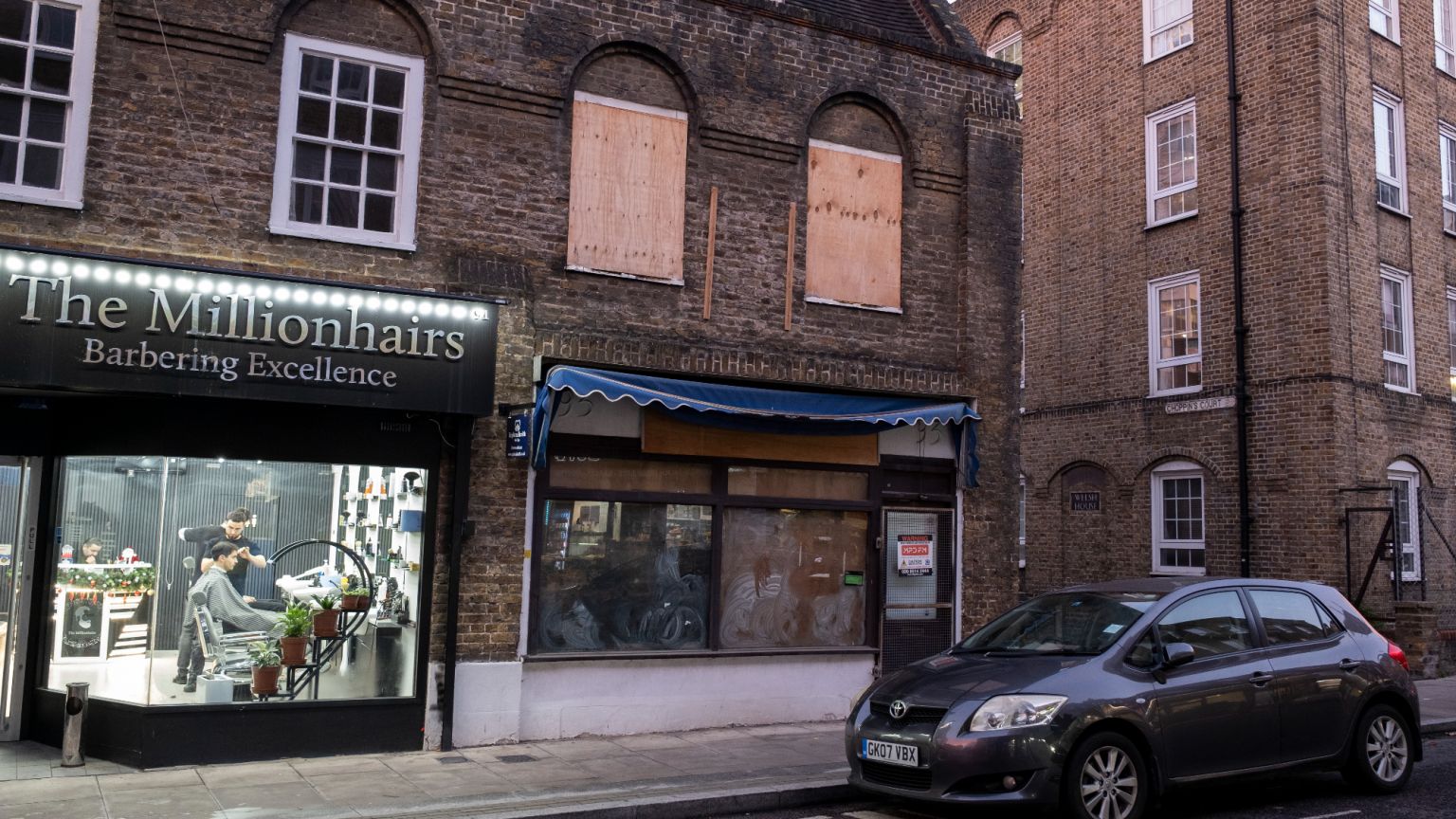
This disregard is visible on any high street in any market town up and down the country, as upper floors above shops remain pretty rotten looking. Council or previously council-owned estates are in a parlous state. Indeed, a recent parliamentary report suggested that bringing historic buildings – including vacant upper floors above shops, former mills and civic buildings – back into use could create as many as 670,000 homes. Meanwhile, around four million homes in England fail the Decent Homes Standard, and nearly 94,000 social homes sit vacant, many awaiting repairs, despite chronic housing shortages. We have become strangely comfortable allowing perfectly serviceable buildings to decay while insisting that the only answer is to pour more concrete on to green fields.
The pattern is unfortunately not limited to housing. Eight years after the first devastating fire that gutted it, Charles Rennie Mackintosh’s Glasgow School of Art is still behind hoardings, and recent headlines suggest it may stay that way. We don’t have the wherewithal or imagination to repair it, despite it arguably being Scotland’s Notre Dame.
We’ve also seen historic churches disappearing at an alarming rate in the UK – over 3,500 churches have closed during the past 15 years or so. There are almost 1,000 churches and chapels in England currently deemed ‘at risk’ because of historical neglect.
The closing down and / or dilapidation of our churches is as clear a symbol we have of Britain’s awkward relationship with its own architectural inheritance. Some of these closed churches have become cafés or libraries, which is fine in its own way. They at least continue to provide a sense of civic togetherness, a congregationalist element.
Some have been converted into mosques. Former churches now cater to Muslim congregations in Stoke-on-Trent, Blackburn, Ipswich and many more places besides. Bradford’s Islamic population is now catered for by a landmark ‘mega mosque’, a conversion of the historic, beautiful and gigantic Heaton Mount university site into the newly minted ‘Mustafa Mount’. It seems that newer non-native religious communities have a confidence that many traditional Christian institutions lack, unable as they are simply to maintain the buildings they already possess.
None of this shows us as a nation willing to conserve its inheritance. We have become willing – or at least passive enough – to accept the really quite rapid disappearance of buildings and attendant institutions that previous generations spent centuries creating. It’s an aesthetic loss, for sure – it’s also an erosion of the character of the places around it, and a weakening of the sense that Britain is a civilisation with something worth preserving.
Conservation is not an indulgence. It is a recognition of the fact that a civilisation will always inherit far more than it creates. As Burke famously argued, society is a partnership ‘between those who are living, those who are dead, and those who are to be born’. Our buildings are a clear expression of that partnership. They show off generational craftsmanship (much of which is also disappearing), reflect local traditions and give us a sense of permanence in a world beset with a feeling of ennui and transience.
It’s no coincidence that Victorian terraces, Georgian crescents and Scottish tenements are some of the country’s most sought-after homes (before we realised the state it was in, my wife and I were besotted by our beautiful flat with all its period features). And they were built to last in a way that modern homes are not, as an architect friend of mine assures me.
Perhaps top of all points in favour of looking after our historic homes, they are already there. We don’t have to carve up greater swathes of the country to house our ever-growing population. As we’ve seen, more than half a million extra homes are already there for the taking, if only we had the will to breathe some life back into them.
So can we please have a conversation about memory in tandem with a conversation on housing? A nation confident in its future (which I would argue we are not, but which we should and could be) will always build the homes it needs for its citizens. A confident nation will also cherish what previous generations have gifted it. In continuing to neglect our architectural inheritance, we should not be surprised when the generations who follow us inherit not only fewer homes, but also a poorer country, less rooted in itself.
James Dixon is a Glasgow-based novelist, poet and playwright.
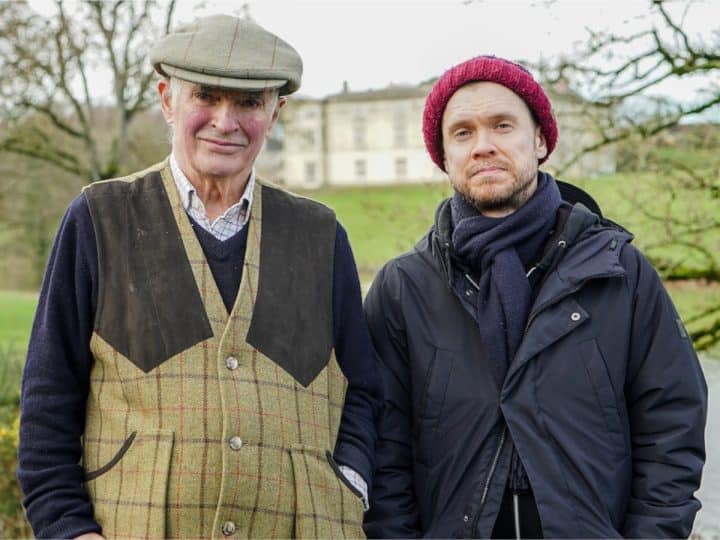

Gary Stevenson has been dismantling “childish” arguments against a wealth tax for years on YouTube. His Channel 4 documentary, How to Get Filthy Rich, packaged his arguments as a long-form show for a mainstream audience. Journalists focused on his clash with tax lawyer Dan Neidle, who called Gary’s annual wealth tax proposal “populist claptrap.” The sensationalism around the debate, however, belies a category error: a wealth tax and a land value tax target completely different things, and both can co-exist.
Comparing acres and Apple
In their discussion, Neidle accused Stevenson of being “unable to separate [his] emotional reaction to inequality with a rational assessment of the best tools for it,” only to then propose an inadequate tool for tackling inequality: the land value tax.
Through his non-profit Tax Policy Associates, Neidle has published a modelled land value tax that would progressively replace council tax and stamp duty over a decade, charging between 1.1%–1.7% of a property’s unimproved land value. His tax is a well-designed policy for a real problem: land wealth is absurdly concentrated in Britain, and taxing unimproved land value discourages the speculative land-banking that holds up the housing supply.
But for all the strengths of Dan’s proposal, taxing land is not appropriate for tackling the particularity of billionaire wealth in the 21st century. The idea of taxing land is, in fact, centuries old, pioneered by Henry George in the 1800s, and the logic, in many ways, is sound. The inequality of today’s economies, however, requires a different analysis.
The research of French economist Gabriel Zucman on billionaire wealth, distilled in his new book We Need To Tax Billionaires, underpins a lot of wealth tax proposals. Zucman’s account traces the growth in extreme wealth to appreciation in the companies people already control, more so than land holdings. Between March 2024 and March 2026 alone, global billionaire wealth increased by around 40%. Ultra-wealthy people, nowadays, typically hold their fortunes through personal holding companies that accumulate dividends and unrealised capital gains while reporting almost no taxable income, financing their lifestyles by borrowing against appreciating shares, rather than selling their assets, avoiding opportunities to be taxed.
To infinity, and beyond the taxman
Elon Musk is the clearest example of the mechanism that Zucman described, even if at one remove from British politics. Musk’s net worth is built almost entirely from his stakes in Tesla and SpaceX, with a tiny fraction held in cash. ProPublica’s analysis of leaked IRS data put his “true tax rate” against wealth growth at 3.27% between 2014 and 2018. Musk’s wealth is overwhelmingly not in land, so a land value tax, however well designed, could not affect it.
Research from the Resolution Foundation’s Wealth Tax Commission work shows this isn’t a quirk of Musk’s portfolio. For UK families with net wealth over £5 million per adult, wealth is far more dominated by business and financial assets than for families lower down the wealth distribution. The ultra-rich then hold proportionally less of their fortune in land than almost anyone else in the country. Land value tax is a real answer to a real problem, just not the one Gary Stevenson spent a whole documentary laying out.
Ground control to Gary Stevenson
Neidle’s rebuttal fails to engage with that distinction, arguing about methods of assessment, GDP growth and capital flight, but his criticisms were on the basis of poor analysis of the wealth of the ultra-rich. Even in terms of political pragmatism, though Neidle frames Stevenson’s idea as fringe, polling finds wealth taxes to be a lot more popular than a land value tax.
YouGov found that a wealth tax on assets above £10 million has net support across voters, including Conservatives and Reform. 64% of Conservative voters think the government should do more to tax people with net wealth over £10 million, and a majority of people considering voting Reform back a one-off wealth tax.
A wealth tax then would not only be suited to the problems presented by the growth of billionaire wealth, but would be a popular proposal across the political spectrum, rather than just ‘populist claptrap.’
Featured image via Channel 4
By Hugo Harvey
Few familiar with Westminster City Council will be surprised by its draft proposal to refuse licenses for new pubs and nightclubs unless they ban standing up while having a pint – an activity it calls ‘vertical drinking’. After all, when it comes to petty killjoy regulations, this council has form.
Take its attitude to takeaway pizza. After a blurry night out, I usually sit on the floor, in between the sofa and coffee table, in a relaxed heap, my face as close to the hot, greasy and preferably cheesy food as possible. Coupled with a can of cold Diet Coke, it’s the perfect end to a night out. In the morning, I am immeasurably grateful to myself for the carbs and fluid consumed in this state of nirvana.
Westminster council have found a way to spoil even this in Soho. The pizza restaurant ICCO on Greek Street has a limitation on its licence that dictates it may not sell pizza for takeaway after 11pm. The chain operates two other units, both outside of Westminster’s boundaries, that have no similar restrictions.
Shrief Kamel, creative director at ICCO, has said this causes no end of grief for his staff when the clock strikes 11. Customers line up hoping for a late-night snack, and his embarrassed team has to inform them that there is a ban on boxes. Tourists end their night in London on a sour note, and incredulous residents point to their nearby flats saying, ‘but I live just there’.
On the one night a month that it does operate as a takeaway after 11pm, it has to apply a week in advance and pay a fee for a ‘temporary event notice’. On other evenings, Shrief has encountered licensing officers attending the restaurant to search through bins, checking for timestamps showing takeaway pizza sold after 11pm (always in vain). Customers who do decide to eat in at the few tables the restaurant has aren’t even allowed to take leftovers with them if they depart after 11.
Like other restrictions on venues operating in Soho, the reason cited by the council for this strange ban is the dreaded ‘cumulative impact assessment’ (CIA). This is the method that the council employs to work out what effect a concentration of venues has on the ‘licensing objectives’ handed down to them by the 2003 Licensing Act. Although the Licensing Act isn’t something the council has the power to change, the act does not require the council to maintain use of the CIA (Camden council recently ditched its CIA).
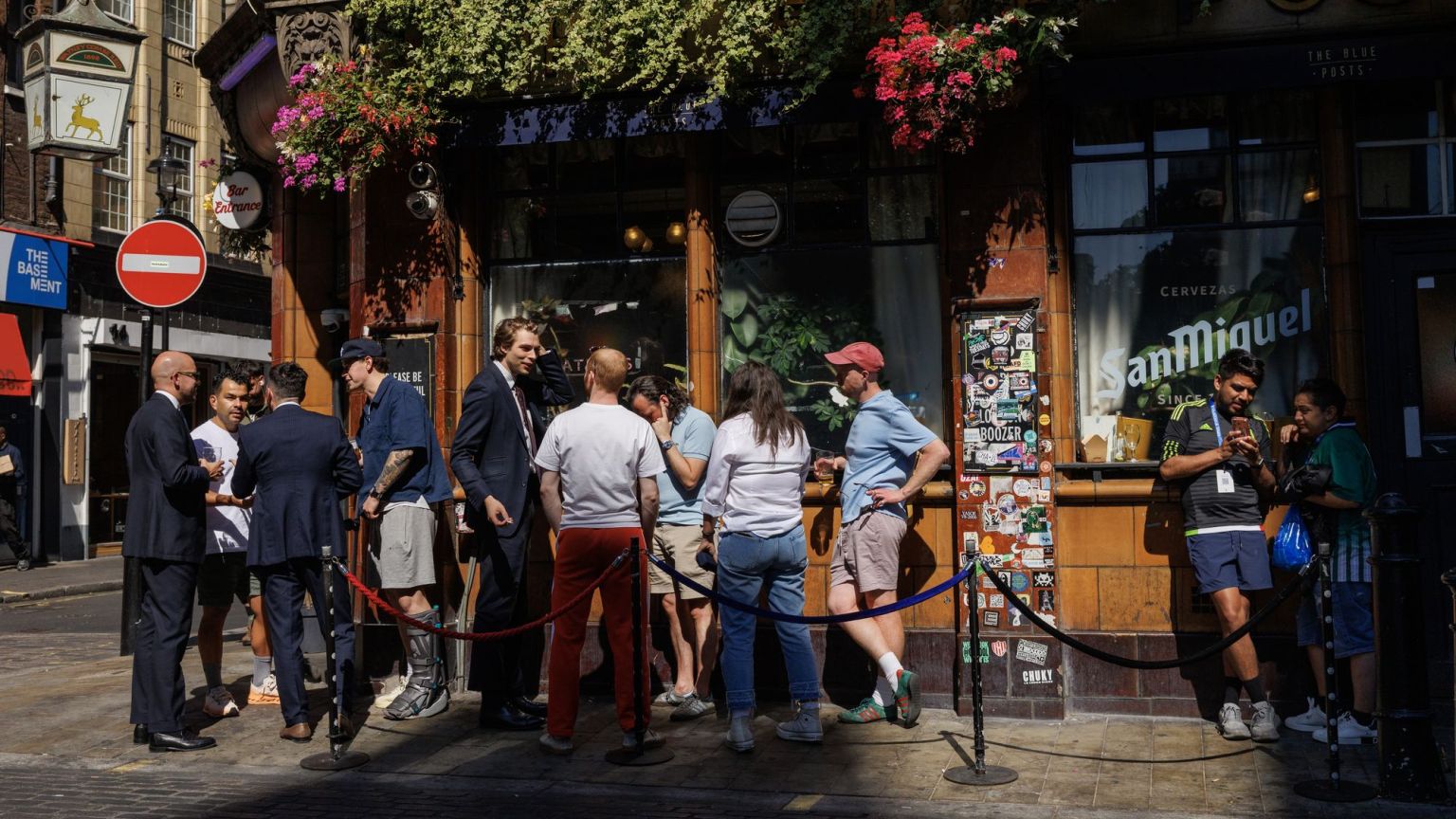
The CIA is the same mechanism that Westminster council used in its draft policy to ban ‘vertical drinking’ in pubs. The policy, which is currently out for consultation, states that there will be a standard presumption to refuse all applications for any new pub or club. However, if space for ‘vertical drinking’ is removed, then the council will consider awarding a licence.
Several Westminster councillors have taken to social media to declare themselves proud ‘vertical’ drinkers, and have consistently denied the claim that this policy amounts to a ban on standing. However, the policy reveals the council’s aversion to ‘alcohol-led’ activities, and it has yet to lay out any substance as to what the policy actually intends. Moving past the faintly comical idea of a nightclub where customers must remain seated, it seems the council has not considered what effect this paragraph would have on prospective publicans. If the intention is really isn’t to ‘reduce the extent of, or to remove opportunities for’ standing in the pub, then why include the passage at all?
Westminster council seems incapable of acknowledging the positive contribution made by Soho’s venues to the reputation of London, the social lives of residents and visitors, or the many jobs they create. Not to mention the revenue these businesses generate for the council. Hospitality is viewed in this area, and I suspect increasingly across the country, as a problem to be managed, not an industry to be encouraged and celebrated.
The licensing officers told me earlier in the summer that they would like more people to engage with the consultation process and to bring their questions and concerns. Well, these are our questions and concerns.
One of the stated objectives of the draft policy is to help reduce social isolation. The British pub must be at the centre of that mission, and the post-night-out debrief over an open pizza box is a close second. The council must change its policy: let people stand, and let them have boxes for crying out loud.
Lucy Rogers is the head of community at Looking for Growth, the political movement to end decline and save Britain.

New advice issued to Brits travelling to Portugal with kids
Earnings call transcript: PRKA posts mixed Q3 2026 results as costs rise

UK Money Laundering Suspect Bought $100M in Trump Crypto Business: NYT


-

 Fashion3 days ago
Weekend Open Thread: Mattifying Sunscreen
-

 Fashion3 days ago
Frugal Friday’s Workwear Report: Cap-Sleeve Pointelle Crewneck Sweater
-

 Sports5 days ago
Jordan Coyle & Cordiamo take Laya Arena Stakes at RDS
-

 News Videos2 days ago
Can Astrology Help Find Gold and Silver Trends? A Financial Astrology Guide
-
 Business5 days ago
US stocks: Dow closes at record on Mideast optimism; SpaceX, AMD drag Nasdaq
-
 Crypto World7 days ago
US Tech Stocks See Largest 5-Week Inflow in History: Can Nasdaq Break Its Downtrend?
-

 Politics4 days ago
Reform UK And Greens Sink To Lowest Favourability Ratings To Date
-

 Business6 days ago
Nvidia Stock Climbs 2.5% as Chip Sector Rally Builds Ahead of AMD Earnings, Nvidia’s Own Report Looms
-

 Tech6 days ago
OpenAI, Anthropic AI agents targeted real people and systems in cyber tests
-

 Crypto World6 days ago
Polymarket targets $20 billion valuation as competition heats up in prediction market sector
-

 Business5 days ago
Supply chain issues impact Ingredion
-
 Crypto World6 days ago
CLARITY Act Senate Vote Locked In, But 60-Vote Hurdle Looms Large
-

 Tech3 days ago
Rinn Pharma & Biopharma to join NordicPharmaTrain network
-

 Business2 days ago
How to Start a Cleaning Business: A Step-by-Step Guide
-

 Crypto World7 days ago
The Senate has one week: CLARITY’s last August window
-
 Crypto World6 days ago
Dow and S&P 500 Hit Records on AI Earnings: When Will the Bubble Burst?
-

 Business1 day ago
Datadog: Best Of Breed For Multiple Reasons
-

 Business7 days ago
CNH Industrial Shares Jump Over 15% After Beating Estimates and Raising Full-Year Earnings Guidance
-
 Crypto World6 days ago
Dollar Index Trapped at 100 as Hawkish Fed Meets Official Selling
-

 Business2 days ago
BDC Weekly Review: Private BDC Q2 Numbers Are Strong
You must be logged in to post a comment Login