

Business
Brexit cost 6% of UK economy, Bank of England company data suggests


With Stephen Curry entering his 18th NBA season and the Golden State Warriors facing one of the most consequential offseasons of his career, the front office is reportedly pursuing aggressive moves to surround its franchise star with enough talent to chase one more title before his window closes. Here are five players generating the most serious buzz as potential difference-makers for Curry’s championship push.
1. LeBron James
No name has generated more speculation than the future Hall of Fame forward, whose own free agency could intersect directly with Golden State’s roster-building plans. The Warriors are prepared to pursue significant moves, including gauging LeBron James’s interest. ESPN’s Ramona Shelburne and Anthony Slater reported that the Warriors are expected to test the waters again on LeBron while also looking at other big swings. Marc Stein also reported that the Warriors have had long-standing interest in bringing him to Northern California.
The pursuit faces significant financial obstacles, however. The Warriors could clear room for the full $15.1 million nontaxpayer midlevel exception — a team-friendly, low-risk bargain. The direct free-agent path is only possible if LeBron takes a major pay cut, since the Warriors are not opening $40 million or $50 million in cap space. If he wants anything close to his old number, this becomes a sign-and-trade with the Lakers.
Despite the interest, recent reporting has tempered expectations considerably. “Wednesday brought a bout of pessimism on the Golden State Warriors’ chances of landing LeBron James in free agency,” according to one report, suggesting Golden State’s pursuit might already be fading before free agency formally opens.
2. Kawhi Leonard
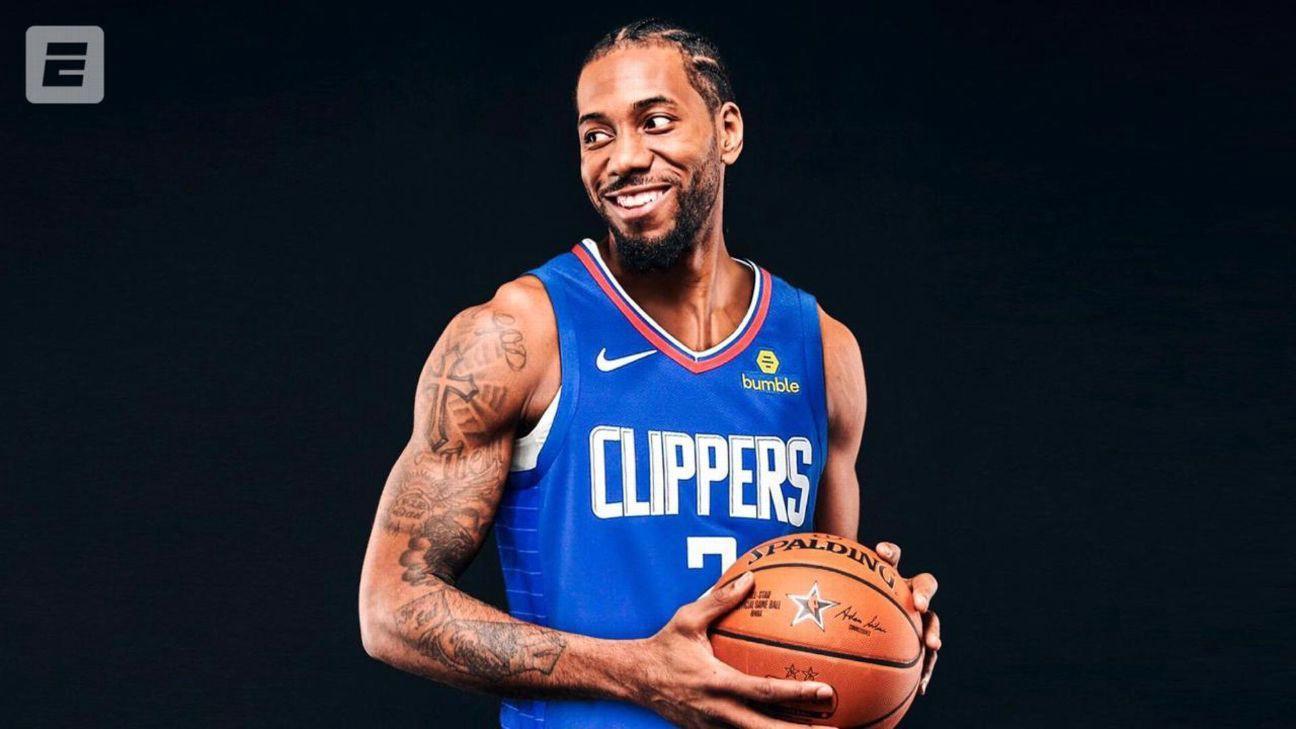
Beyond James, the Warriors have also re-engaged with another superstar whose situation in Los Angeles has generated its own share of speculation. The Warriors are prepared to pursue significant moves, including re-engaging the Clippers regarding Kawhi Leonard’s availability. The Golden State Warriors’ interest in Kawhi Leonard now sounds much stronger than background offseason noise, with the franchise continuing to search for one more star around Stephen Curry.
That said, the Clippers’ own organizational stance — with owner Steve Ballmer reportedly committed to keeping Leonard — could complicate any realistic path toward acquiring him, regardless of how much interest Golden State has shown.
3. Trey Murphy III
Among players with a genuinely plausible trade path to Golden State, the New Orleans Pelicans forward stands out as perhaps the most realistic addition. Murphy continues to be the most ideal trade target connected to the Warriors. He’s just 26 years old and under contract for three more seasons at a bargain rate of $27 million in 2026-27, $29 million in 2027-28, and $31 million in 2028-29. He plays the Warriors’ biggest position of need — big wing — and he’s a three-level scorer who can take some pressure off Stephen Curry.
ESPN’s Anthony Slater reported that Murphy could be more attainable this offseason and that the Pelicans are hoping to get a 2026 first-round pick after trading one last year. The 6-foot-8 small forward is already a fringe star after averaging 21.4 points over the last two seasons, with a plus-3.3 net rating this past season, according to Cleaning the Glass.
4. Kristaps Porzingis
Rather than chasing an external blockbuster, the Warriors also appear increasingly focused on retaining a piece already on the roster. The Warriors appear increasingly optimistic about bringing back Kristaps Porzingis. According to ESPN’s Anthony Slater, there is growing momentum toward a new contract between Golden State and the veteran big man, who is set to become an unrestricted free agent.
The retention path is made easier by the team’s existing rights to the player. It would make sense for the Golden State Warriors and Kristaps Porzingis to agree to a new contract. After all, the Warriors gave up Jonathan Kuminga for him, and they have his Bird rights, which will allow them to sign him without using any of their mid-level exception money. A realistic deal would likely fall in the $21 million to $24 million range to keep him alongside Curry, Butler, and Green for another championship run.
5. John Collins
Among the more attainable free-agent targets the Warriors have been linked to, the veteran frontcourt scorer offers a complementary skill set without requiring a major roster overhaul. John Collins is not a star-level acquisition, but he represents a sensible frontcourt target for the Warriors. The 28-year-old forward will enter unrestricted free agency in 2026 after completing a five-year, $125 million contract.
In the 2025-26 season, Collins averaged 16.2 points, 7.8 rebounds, 1.8 assists, 1.0 steals, and 0.6 blocks per game while shooting 52.6% from the field and 36.4% from three. A realistic offer from the Warriors would likely start with the non-taxpayer mid-level exception, roughly three years and $45 million, provided they remain below the second apron.
The Bigger Picture for Golden State
Despite the array of names connected to the team, the Warriors’ general manager has acknowledged the broader uncertainty hanging over the entire roster-building process. “Let’s see where we go when the trade deadline comes around and into the spring,” Warriors general manager Mike Dunleavy said. “I think the last couple of years we can say we’ve added talent in a good way in February. Who knows where we’ll be come April, March, May. … But by the end of the year, if you have Steph Curry on your team, Steve Kerr is the coach and Jimmy Butler is back, in a seven-game playoff series, I don’t want to say we can’t beat anybody.”
Teammate Brandin Podziemski outlined the kind of player the organization should prioritize, particularly with the team’s first-round pick in the upcoming draft. “I think the obvious answer is someone who’s ready to play or he can play right away,” Podziemski said. “Someone that has experience, is physically mature enough to play in the games right away. I think that’s kind of, as an organization, where we’re at. We’re at the stage where we’re trying to win as much as we can.”
Curry’s Own Future Remains Tied to Golden State
Despite occasional speculation about a potential trade given the team’s recent struggles, most reporting continues to suggest Curry’s future remains firmly in the Bay Area. “The Warriors wouldn’t dream of fielding any offers for Curry. If they were remotely interested in that kind of restart, Steve Kerr never would’ve signed on for two more seasons as head coach,” one analyst noted, pushing back against any notion that Golden State might move on from its franchise centerpiece.
Curry himself is eligible for a contract extension on August 29, which he has stated he wants — a clear signal of his own intention to remain with the only franchise he has ever played for as he chases a fifth championship.
With the NBA Draft set for June 23 and free agency negotiations opening shortly after, the coming weeks will be critical in determining which, if any, of these five players ultimately joins Curry’s supporting cast. Given the financial complexity surrounding James and Leonard, the more realistic paths to immediate roster improvement likely run through retaining Porzingis, pursuing a trade for Murphy using draft capital, and adding complementary depth pieces like Collins through the mid-level exception — moves that, collectively, could determine whether the Warriors mount one final serious championship push before Curry’s illustrious career eventually winds down.


Trump says US will resume attacks if Iran does not restrain Hezbollah allies

This shift has been driven by the way investing itself has evolved. What was once seen as a milestone decision is now becoming an everyday behaviour. Earlier, investing was something one did after accumulating surplus. Today, it can begin alongside earning and spending, often with very small amounts. Digital platforms have made this possible by reducing friction, simplifying access, and integrating investing into daily financial life.
Micro Investing and the Power of Small Starts
This is where micro-investing becomes important. It is not just about investing smaller amounts; it fundamentally changes how people approach money. Instead of waiting for the “right time” or a large surplus, individuals can begin early and build momentum gradually. Over time, it is this consistency of participation, rather than the starting amount, that shapes outcomes.However, starting small is only one part of the story. What truly defines long-term success is the ability to sustain that behaviour. This is where digital investing ecosystems have created a meaningful shift—from behaviour to system. Investing no longer depends entirely on memory, discipline, or timing. It can be automated, aligned with income cycles, and sustained with minimal effort.

As a result, consistency is no longer just a matter of intent; it is increasingly built into the structure of financial decision-making. This becomes especially relevant in the context of the modern Indian household. Today’s fathers are navigating multiple financial responsibilities such as EMIs, education costs, healthcare, and rising lifestyle expectations—all at the same time. In such an environment, investing often gets delayed, not because of a lack of awareness, but because of competing priorities.
Also Read | Father’s Day 2026: How fathers can build financial independence and generational wealth through mutual funds
Simpler, more accessible investment systems help address this gap. They allow investing to proceed alongside other financial commitments without requiring a perfect starting point or a large surplus. Over time, these small, consistent actions begin to shape how money is managed within the household. That, in turn, shapes what children learn. Financial behaviour is rarely taught explicitly; it is absorbed through observation. When children see regular investments, even in small amounts, they begin to understand that wealth creation is a continuous process, not a one-time decision. When investing is integrated into everyday routines, it becomes normal, not exceptional.
Leading in a Digital First Environment
In a digital-first environment, this visibility becomes even stronger. Children are not just seeing the outcomes, but the process, which includes the regularity, the simplicity, and the discipline involved. They see that investing does not require complexity or large starting points, but it does require consistency. This is where the idea of legacy begins to shift. It moves away from accumulation alone and towards participation and behaviour. Financial success is increasingly defined by how early one starts, how consistently one stays invested, and how effectively one navigates uncertainty over time.
Micro-investing and digital access have made this possible at scale. They have lowered the barriers to entry while reinforcing the importance of long-term discipline. In doing so, they are not just changing how individuals build wealth but also how future generations understand and engage with money.
Conclusion
This Father’s Day, perhaps it is worth recognising that a father’s legacy is no longer defined only by the assets eventually transferred to the next generation. It is also reflected in the habits demonstrated over time: planning instead of postponing, investing instead of merely intending to invest, staying patient during uncertainty and building steadily towards long-term goals.
Assets may support one generation. But financial wisdom, discipline and healthy money habits have the power to guide many more.
(Boniface Noronha is a Head at Digital, Axis Mutual Fund)
(Disclaimer: Recommendations, suggestions, views and opinions given by the experts are their own. These do not represent the views of The Economic Times)

FDIS: Consumer Discretionary Dashboard For June


Bolivia crisis begins to ease after lawmakers back state of emergency
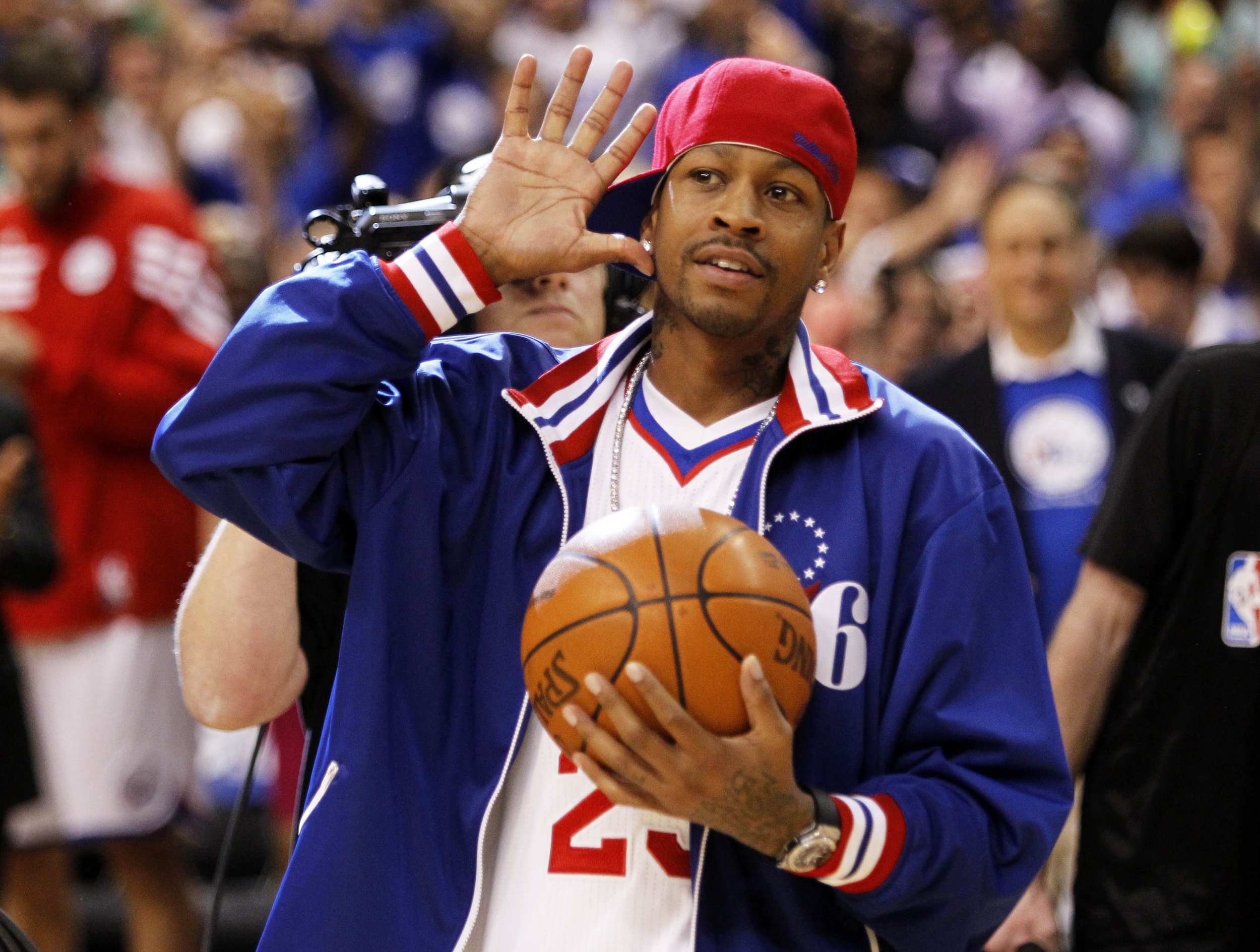
PHILADELPHIA — Allen Iverson, the electrifying former Philadelphia 76ers guard known for his fearless style of play, has long been associated with one of the most iconic moments in NBA history: his crossover dribble on Michael Jordan. Yet Iverson maintains the play was not even among his sharpest, attributing its enduring fame largely to the opponent on the receiving end.
The sequence unfolded on March 12, 1997, during Iverson’s rookie season. Facing Jordan, then with the Chicago Bulls and widely regarded as the game’s premier defender, the Georgetown product executed a hesitation crossover at the top of the key. Jordan lunged, and Iverson blew past him for a basket. The moment, replayed endlessly on highlight reels, symbolized the passing of the torch from one generation’s superstar to the next.
In a 2022 conversation with Dan Patrick, Iverson reflected on the play with characteristic candor.
“I always told my friends growing up that if I ever got an opportunity to try my move on the best that ever played the game, I would,” he recalled. “It just happened. You know, I backed him up, and I did it. I really didn’t know the significance of it when it first happened because I was just into the game, just playing the game.”
Iverson, who idolized Jordan growing up and emulated his moves on neighborhood courts, emphasized that the crossover’s legend grew because of Jordan’s stature.
“But thinking back on it, I had gotten guys way worse than that,” Iverson said. “It was just the fact that it was him.”
The 1997 encounter came at a pivotal time. Jordan was in the midst of his second three-peat with the Bulls, while Iverson, the No. 1 overall pick in the 1996 draft, was injecting new energy into the league with his crossover and scoring prowess. The move, though not invented by Iverson — Tim Hardaway popularized an earlier version — became synonymous with his game due to his speed and ball-handling flair.
Iverson’s career was defined by such audacity. Standing at 6 feet tall and weighing around 165 pounds, he routinely took on bigger defenders and emerged as one of the NBA’s most dynamic scorers. His four scoring titles, 11 All-Star selections and MVP award in 2001 underscored a relentless competitive fire that resonated with fans.
The crossover on Jordan quickly entered basketball lore. Analysts and players alike marveled at the rookie’s willingness to challenge the six-time champion. Jordan, never one to shy away from competition, reportedly showed respect for Iverson’s talent in subsequent years.
Years after both had retired, the two Hall of Famers shared a lighthearted moment. Iverson recounted the exchange during a visit to a Charlotte Hornets game.
“I went to a Hornets game. Me and him were in an area in the back where he chilled at halftime. He had me back there and we were just talking. And I just kept telling him how much I loved him and how much he meant to my life and my career,” Iverson said.
“And he was like, ‘You don’t love me that much. You wouldn’t have crossed me like that,’” Iverson added. “We laughed about it.”
Jordan’s response highlighted the mutual respect between two competitors who pushed each other and the league forward. Iverson frequently cited Jordan as a major influence, blending admiration with the drive to carve out his own legacy.
Beyond the highlights, Iverson’s career encompassed far more. Drafted by the 76ers, he led the franchise to the 2001 NBA Finals, falling to the Los Angeles Lakers in five games. His playoff performances, including a memorable step-over of Tyronn Lue, became etched in franchise history.
Off the court, Iverson’s impact extended to fashion and culture. His cornrows, tattoos and baggy shorts influenced a generation of players and fans, challenging NBA dress codes and broadening the league’s appeal.
The 76ers retired his No. 3 jersey in 2013, honoring his contributions. Iverson was inducted into the Naismith Memorial Basketball Hall of Fame in 2016, cementing his place among the all-time greats.
Today, discussions about Iverson often circle back to moments like the Jordan crossover. While he downplays its technical difficulty, the play endures as a symbol of fearlessness. In an era dominated by Jordan’s excellence, Iverson represented a new wave of guard play emphasizing quickness and creativity.
Analysts note that Iverson’s crossover technique — holding the ball high to freeze defenders before whipping it across — built on predecessors but added unmatched explosiveness. His battles with Jordan, Kobe Bryant and other stars defined an exciting period of NBA history.
Iverson’s post-playing life has included broadcasting appearances and community work. He remains a revered figure in Philadelphia, where fans still chant his name at games.
The 2022 remarks to Patrick offered a rare glimpse into Iverson’s mindset. Far from dwelling on past glories, he contextualized the crossover within a career full of similar maneuvers against lesser-known opponents. The difference, he suggested, was the spotlight Jordan’s presence created.
Jordan, for his part, has spoken sparingly about the play but has acknowledged Iverson’s skill. Their hallway conversation underscored a bond forged through competition.
As the NBA continues to evolve with new generations of guards, Iverson’s influence persists. Players like Kyrie Irving and Stephen Curry have cited elements of his game, from handle wizardry to scoring mentality.
The crossover on Jordan stands as more than a single highlight. It represents Iverson’s arrival as a star capable of challenging the league’s established order. Decades later, it continues to inspire, even as its architect views it with humility.
For basketball fans, the moment captures the essence of the sport: one player testing limits against the greatest, creating a memory that transcends statistics. Iverson’s reflection reminds observers that legends often grow from context as much as execution.


No-fly zone for Iran talks disrupted flights at Zurich airport, authorities say

GPIQ: The Ultimate 9%+ Covered Call Choice For Long-Term Compounding

Indian benchmark indices closed lower on Friday, June 19, with the Nifty 50 falling 154.90 points, or 0.64%, to settle at 24,013.10, halting a five-session winning streak as weakness in technology stocks dragged down the broader market.
A Broad Decline Led by Tech
India’s BSE Sensex closed about 0.8% down at 76,803 on Friday, halting a five-day advance, pressured by weakness in tech stocks following revenue growth guidance cut by Accenture. The SENSEX Index decreased 607 points, or 0.78%, to close at 76,803, with the decline led by Infosys, down 6.48%, Tata Consultancy Services, down 3.04%, and HCL Tech, down 2.73%.
The selloff in technology shares was particularly steep during the morning session. India’s BSE Sensex fell about 0.9% to 76,684 at the open on Friday, retreating from a five-day advance as information technology stocks led losses after Accenture’s latest results raised concerns about demand prospects for the sector. Shares of Tata Consultancy Services, Infosys, Tech Mahindra, and HCL Tech fell between 5.1% and 8.1% during the session.
Broader Market Sentiment Also Under Pressure
Beyond the technology-specific concerns, several macro factors contributed to the day’s weaker sentiment across Indian markets. Market sentiment was also hit by foreign outflows, renewed geopolitical uncertainties and the prospect of higher U.S. interest rates.
That pressure was reflected in foreign and domestic institutional investor activity for the session. Foreign institutional investors recorded net activity of 4,859.07 crore rupees, while domestic institutional investors posted net outflows of 1,159.64 crore rupees on June 19.
Other Notable Decliners
Beyond the major IT names, weakness extended across several other sectors during Friday’s session. Other notable laggards across sectors included HDFC Bank, down 2.1%, Meesho, down 1.0%, Vedanta, down 1.9%, Bata India, down 4.5%, and Ola Electric, down 2.6%. HDFC Bank and Mahindra & Mahindra were also among the session’s broader laggards, down 2.3% and 2.1%, respectively.
Stocks That Bucked the Trend
Despite the broad-based decline, several companies posted gains during the session, particularly in the defense and infrastructure sectors. On the upside, MTAR gained 3.1%, IFCI rose 5.7%, Paras Defence advanced 6.0%, and HFCL climbed 5.0%.
Among larger-cap names, top gainers included Eternal, up 2.2%, Bharti Airtel, up 1.8%, Power Grid, up 1.3%, and NTPC, up 1%. A separate measure of the session’s strongest performers similarly pointed to Bharti Airtel, up 1.61%, Power Grid, up 1.35%, and Nestlé India, up 1.22%.
Still Near Recent Highs Despite the Pullback
Despite Friday’s losses, the broader trend for Indian equities over the past week remained positive. Despite Friday’s decline, the benchmark indexes remained near recent highs after gaining in each of the previous five sessions. The index remained on track for a weekly gain of 1.5%. For the week overall, the Sensex advanced by 1.7%, even after accounting for Friday’s pullback.
A Notable Corporate Development: Bajaj Auto Buyback
Beyond the broader market movements, several individual corporate announcements drew investor attention during the session. Bajaj Auto’s board approved a 5,632.8 crore rupee buyback of shares, setting a record date of June 24 — a significant capital return move that gives shareholders a clear date to track ahead of the buyback’s execution.
Other Corporate News Driving Individual Stocks
Several other company-specific developments also factored into Friday’s trading. Geojit BNP upgraded Ramco Cements to a “Buy” rating, citing higher demand from government spending on infrastructure. Separately, analysts forecasted Prestige’s first-quarter revenue to grow 114% year-over-year, amid higher collections across markets, while Reliance Industries’ subsidiary Jio Platforms approved an IPO draft via a fresh issue of 27 crore shares.
Early Signals From Gift Nifty
Looking ahead to the next trading session, early indicators from Gift Nifty pointed to a modest rebound. Gift Nifty was trading 0.30% higher, at 24,042.00, suggesting at least a partial recovery may be in store when Indian markets reopen, though such early indicators can shift considerably before the regular session begins.
With Accenture’s revenue guidance cut continuing to weigh on sentiment toward India’s large IT exporters, market participants will be watching whether weakness in technology shares spills over into other sectors in the sessions ahead, or whether Friday’s decline proves to be a temporary pause within the broader five-day uptrend that had carried the market to recent highs. Investors will also continue monitoring foreign institutional investor flows and developments tied to U.S. interest rate expectations, both of which contributed to Friday’s broader risk-off tone across Indian equities alongside the sector-specific pressure from the technology space.
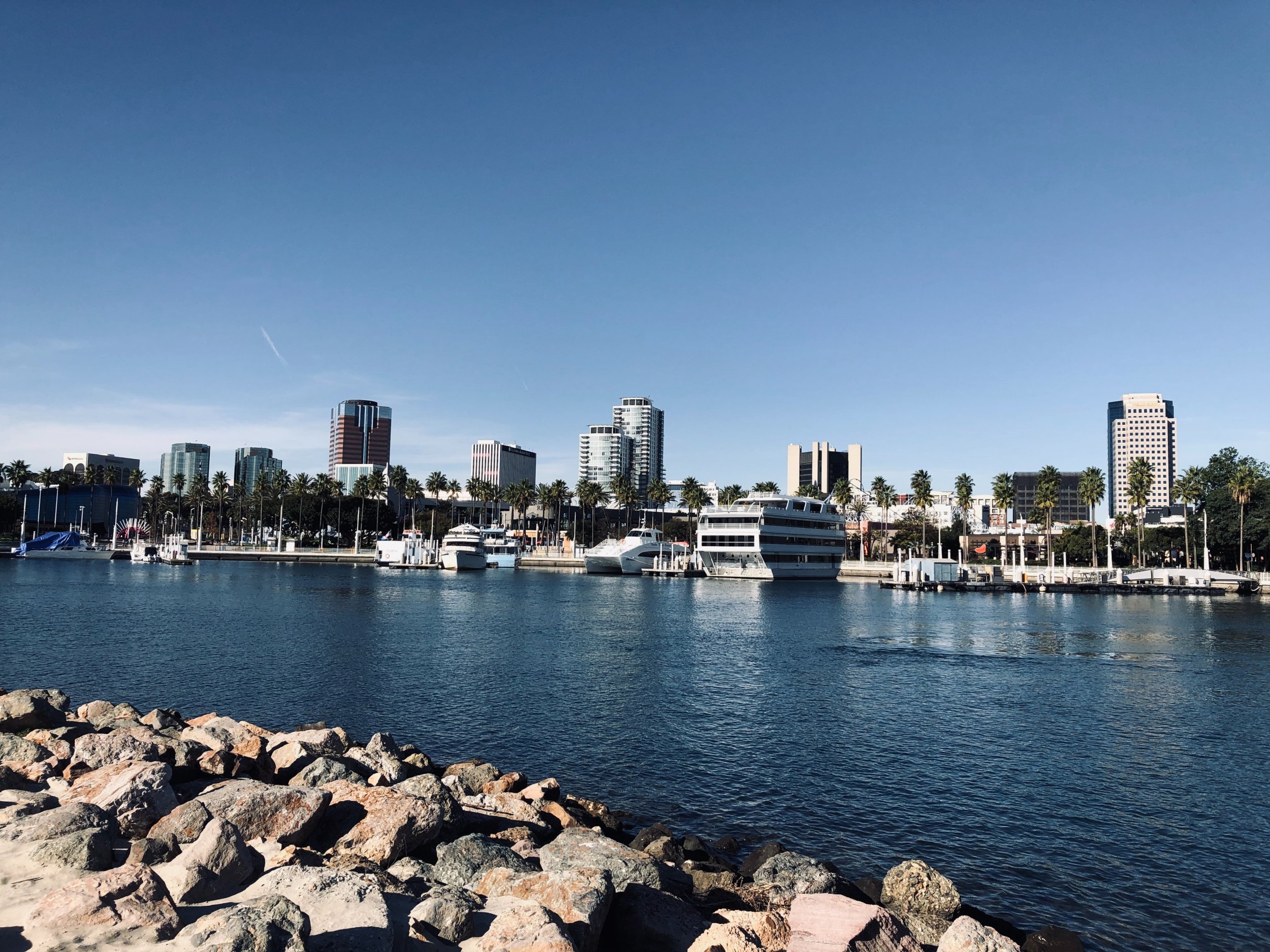
A wave of corporate headquarters relocations continued reshaping the American business landscape in 2026, with high-tax blue states bleeding major companies to lower-cost, business-friendly Sun Belt destinations. Here are five states posting the steepest losses, and five capitalizing the most on the migration.
The Biggest Losers
1. California
No state has felt the corporate exodus more acutely than California. California suffered the nation’s steepest corporate losses. The San Francisco Bay Area posted a net loss of 163 headquarters as Texas posted gains over the same period. Companies leaving California frequently cited taxes, labor rules and soaring living costs as reasons for relocating elsewhere, according to CBRE.
The Bay Area specifically has emerged as the hardest-hit market nationally. The San Francisco Bay Area lost 156 corporate headquarters between 2018 and 2024, fueled by high taxes and stringent regulations. In just 2024 alone, California lost 17 headquarters, of which 12 moved to Texas. California has lost at least 275 headquarters since 2018, a figure tied to homes at least 50% more expensive than in Texas, along with the fifth-highest tax burden in the country.
High-profile recent examples include Public Storage’s relocation from Glendale to Frisco, Texas, ending a half-century run in California, and Yamaha’s planned shift of its U.S. headquarters from California to Georgia after nearly 50 years in the state.
2. New York
New York has experienced its own accelerating wave of departures, particularly in the financial sector. A wave of high-profile companies has accelerated its departure from New York in 2026, citing soaring taxes, burdensome regulations and a shifting political climate under Mayor Zohran Mamdani as key drivers behind the ongoing business exodus.
Dallas Mayor Eric Johnson predicted the trend would only intensify. “What was already a trickle is going to turn into a flood,” he said in early 2026 interviews, referring to an anticipated wave of New York finance firms relocating south. Among the firms shifting significant operations away from New York are Elliott Management, AllianceBernstein, and Citadel, each moving key functions or talent to Florida as part of what’s increasingly being called the “Wall Street South” migration.
3. Illinois
Beyond California and New York, other higher-tax states have continued to see corporate departures as companies cite similar concerns over operating costs and regulatory burden. Losing regions faced potential erosion of tax revenue and leadership presence, though many retained substantial employment bases, a pattern consistent with broader departures from states perceived as having heavier regulatory and tax environments.
4. Massachusetts
Higher-cost metro areas including the Boston region have also factored into the broader relocation pattern, with companies departing in favor of lower operating costs elsewhere. Six companies sought Miami from other U.S. metros such as Los Angeles, the Bay Area, and Boston specifically, according to CBRE’s tracking of relocation patterns into South Florida.
5. New Jersey
Rounding out the states most affected by the relocation trend, New Jersey has continued to see companies migrate toward lower-tax Sun Belt destinations as part of the broader northeastern corporate exodus, following a regional pattern in which businesses cite high operating costs and tax burdens as primary motivating factors for relocation.
The Biggest Winners
1. Texas
No state has benefited more from the corporate migration than Texas. Texas emerged as the clear winner in corporate headquarters relocations during 2026, attracting dozens of major companies seeking lower taxes, lighter regulation and business-friendly policies. Dallas-Fort Worth led the nation with 111 headquarters relocations between 2018 and 2025, according to a CBRE report, while Austin added 88 and Houston gained 31.
Dallas-Fort Worth in particular has become the nation’s fastest-growing headquarters market, gaining 100 relocations between 2018 and 2024. Today, public companies based in Dallas-Fort Worth hold a combined $1.5 trillion in value — a figure doubling in the past five years. Goldman Sachs, for instance, plans to grow its headcount in Dallas to 5,000, up from 970 in 2016.
2. Florida
Florida ranked as the other major gainer. The state benefited from its no-income-tax environment, warm climate and appeal to finance and wealth-management firms. Miami continued to brand itself as “Wall Street South,” drawing hedge funds, private equity players and tech executives.
Foot Locker planned to move its headquarters from New York City to St. Petersburg, Florida, in late 2025, with effects carrying into 2026 planning. Two international companies selected Miami due to its strong industry-specific concentrations, including a cosmetics company attracted by Miami’s position as a leading hub for medical spas and dermatological aesthetic clinics.
3. North Carolina
Charlotte continues rising as a major contender for corporate relocations, due to a pro-business environment, tax benefits, growing and diverse talent pools and supportive infrastructure, placing North Carolina among the most active emerging destinations for companies leaving higher-cost states.
4. Tennessee
Tennessee has also captured meaningful relocation activity, with Nashville continuing to rise as a major contender alongside Charlotte, Miami, and Phoenix. Lumber Liquidators relocated to Tennessee, joining other companies drawn by the state’s favorable tax and business climate.
5. Arizona
Phoenix has also emerged as a significant beneficiary of the broader relocation trend. One international company relocated its headquarters to Phoenix from Canada, part of a broader pattern of Arizona capturing companies seeking lower costs and business-friendly policies, often as an alternative destination for companies leaving nearby California.
The Scale of the Overall Trend
The cumulative scope of this migration has been substantial. According to a report by CBRE, 561 companies have relocated their headquarters nationwide since 2018, with the research showing many companies reassessing tax climates, operating costs, and growth prospects as they consider a move.
A Nuanced Picture for the “Losing” States
Despite the headline-grabbing departures, some analysts caution against overstating the economic damage to states like California. States like Texas, Florida, and Georgia are winning the war for corporate HQ relocations, but the losses in other states may not be as catastrophic as reported. California suffered a net loss of eight Fortune 500 company headquarters in the past six years, with seven of those losses going to Texas. However, California is still home to 53 Fortune 500 firms, behind only Texas and New York, and its state economy remains the largest in the U.S., with a gross state product of $3.89 trillion.
Why Companies Are Moving
Industry analysts and officials point to several consistent factors driving the migration pattern. New York’s high corporate and personal income taxes, combined with elevated operating costs, commercial rent pressures and regulatory hurdles, have made southern states attractive. Florida and Texas boast no state income tax, lighter regulations and aggressive economic development campaigns.
Economist Steve Moore offered a blunt assessment of the underlying logic driving the trend. “It is common sense for business leaders to pick places for future financial success rather than economic suffocation,” Moore told Fox News Digital, describing the migration as companies “voting with their feet.”
With proposed tax measures, including California’s potential billionaire tax and continued policy debates in New York, still working their way through state legislatures, analysts expect the relocation trend to continue at a similar or potentially accelerated pace through the remainder of 2026. While CBRE has described recent activity as a “reset” compared to the pandemic-era peak, the underlying directional momentum — favoring low-tax, low-regulation states like Texas, Florida, North Carolina, Tennessee, and Arizona over historically high-cost hubs like California, New York, and other northeastern states — shows no clear signs of reversing in the near term.

10 Forgotten Animated Movies That Are Almost Perfect

The Best Thing To Come Out Of My Divorce? A Friendship With My Stepkids’ Mum

URGENT!!! XRP HOLDERS CLARITY ACT DEAD??!? (GAME CHANGER)


-

 Business7 days ago
No Jackpot Winner as $257 Million Prize Rolls Over to $269 Million Monday Draw
-

 Fashion2 days ago
Weekend Open Thread: Miami – Corporette.com
-
 Crypto World7 days ago
Zimbabwe Requires Crypto Businesses to Register Annually Under New FIU Regulations
-
 Business1 day ago
Wall Street Week Ahead: Investors see Micron earnings as pulse check of AI rally momentum
-
 Entertainment7 days ago
Matt Damon’s Viral Sci-Fi Thriller Has Taken Over HBO Max
-

 Crypto World1 day ago
HIVE shares jump as $220M AI deal speeds Bitcoin mining pivot
-

 Tech7 days ago
As AI companies race to go public, who else is along for the ride?
-

 Business7 days ago
Anthropic staff to meet White House officials next week, Axios reports
-
 Crypto World7 days ago
Bitcoin could crash to $48,000, if this historical pattern is triggered
-
 NewsBeat7 days ago
what doctors are seeing in ebike crashes
-
 NewsBeat7 days ago
Warning of disruption as Cardiff Crossrail works to start
-
 NewsBeat7 days ago
Tributes to former deputy head teacher at Cambridge school among death and funeral notices
-
 Entertainment7 days ago
Kate Middleton Glare Goes Viral After Kids Booed At Royal Event
-

 Politics7 days ago
“Israel’s” ban on ICRC visits ruled illegal, but Knesset moves to stop them permanently
-

 Crypto World7 days ago
XRP ETFs Outperform As Bitcoin And Ethereum Funds Extend Outflow Trend
-

 Tech7 days ago
Over 400 Arch Linux packages compromised to push rootkit, infostealer
-

 News Videos7 days ago
Financial Accounting | Last Day Revision Strategy and Booster | CMA Inter – June 2026
-

 Business7 days ago
Invesco Quality Income Fund Q1 2026 Commentary
-

 NewsBeat7 days ago
Singer Oliver Tree dies aged 32 in helicopter crash in Brazil
-

 Sports7 days ago
Dick Advocaat’s Curacao scores first-ever World Cup goal against Germany
You must be logged in to post a comment Login