
Politics
The Church of England’s woke crusade is driving away the faithful

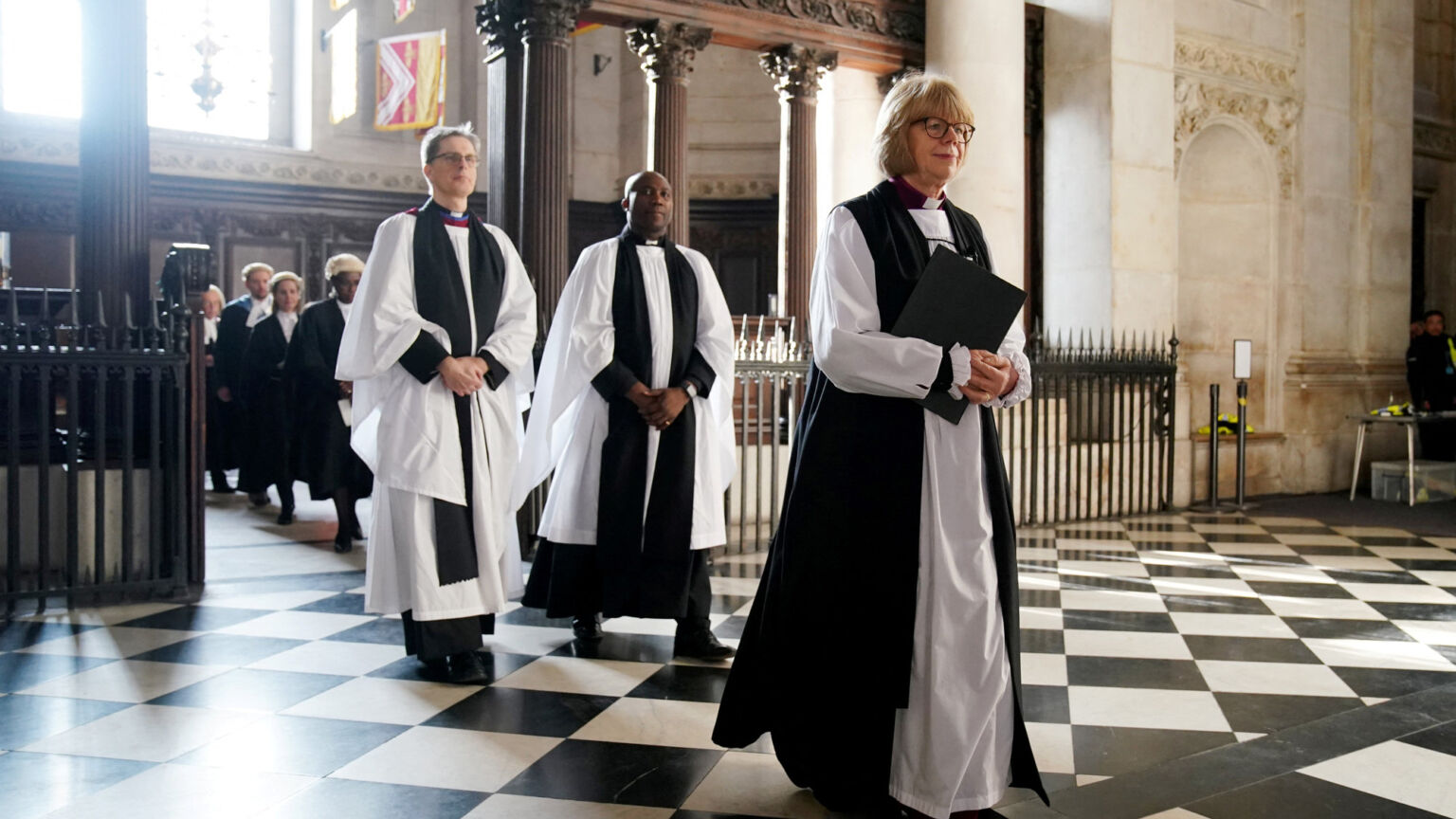
Who remembers Beilby Porteus? He doesn’t quite win the competition for Church of England cleric with the silliest name in history – the reverend Nutcombe Nutcombe, 19th-century chancellor of Exeter Cathedral, easily walks away with that prize. But Porteus was certainly one of the Church of England’s most outstanding campaigners for the abolition of slavery and, what we might call today, racial justice.
From the pulpit of St Mary-Le-Bow in 1783, he gave a seminal sermon. It condemned the inhumane treatment of slaves in the Caribbean, and in particular those on the Codrington Plantations – then owned by the Society for the Propagation of the Gospel in Foreign Parts, a Church of England body. Despite this fulminating critique of his own church, in 1787, Porteus was appointed as Bishop of London and thus also to the House of Lords, a position he used tirelessly to support William Wilberforce’s campaign to extirpate the slave trade. He was also committed to improving the lot of the poor, and making sure that as many people around the world had access to the Bible in their own languages.
Unfortunately, it seems that the Diocese of London has forgotten what it itself did to fight slavery. It is now engaged in a ‘Racial Justice Priority’ project. Clergy will be encouraged to promote ‘anti-racism in sermons’ in order to correct what the diocese claims is its own ‘systemic racism’. The project will also engage in ‘truth-telling’ to challenge the ‘historical heritage of slavery’, which, the Church of England seems to believe, haunts its every move. The cost of this project is £730,000 over three years, funded by the Church Commissioners – whose money, it is worth pointing out, was originally laid down for the support of poor clergy and cathedrals.
Who could possibly object to the Diocese of London acting against racism? It would be following not only in the footsteps of Porteus, but also the prompting of scripture itself, which reminds us that: ‘There is neither Jew nor Greek… for ye are all one in Christ Jesus.’ The problem is that such anti-racism initiatives are more apt to exacerbate racial division than to heal it, and to lead far beyond the bounds of what may be sanctioned by theology and scripture into the world of partisan political dogma.
Very far, in some cases. The racial-justice plan includes targets for percentages of ethnic-minoirty membership among clergy, administrative staff and even churchgoers. It also proposes ‘unconscious bias training’ for volunteers – something many of them will almost certainly view as the final straw after hours of safeguarding training and the day-to-day challenges of fundraising.
Perhaps more damaging than all of this is the ideological crusade inherent in the project. The previous Archbishop of Canterbury, Justin Welby, regularly insisted that the Church of England was ‘institutionally racist’. Nearly all of the evidence in support of this claim amounted to a reluctance of ethnic minorities to follow the norms of Anglicanism – something Welby chalked down to the ‘racism’ of the Church of England and its members. So it has drawn from scripture to justify an approach which effectively calls for the historic culture of the majority to adapt itself to the new minorities, rather than for minorities to assimilate.
This approach to scripture – based primarily on the most famous biblical lessons of loving one’s neighbour, the Good Samaritan and St Paul’s statement of there being neither Jew nor Greek – informs not only this Racial Justice Project within the Diocese of London, but also the approach of the Church of England at a higher level. It is from this that there is a general insistence on the good of open borders, a deep reluctance to speak out about any reasonable concerns people might have about wide-scale migration – even when its impact on the most vulnerable in society has been, as in the case of the rape gangs, at the deepest level of seriousness.
One of the practical impacts of this likely to be seen in London churches will be physical. An innocuous paragraph in the Racial Justice Strategy calls for ‘partnerships that can assist the Diocese of London in reviewing the legacy of statues and monuments exploring historical links and their relevance in today’s culture’. This refers to a desire expressed in the Church of England’s wider racial-justice reports for a move from ‘retaining and explaining’ monuments to a presumption that they should be removed if they have connections to slavery, despite any heritage or educational value they might have.
Another is in the idea of ‘truth telling’ to highlight ‘the historic injustices and the role played by the wider church’. The problem is that nowhere in the literature can one find calls to celebrate the courageous and world-leading actions of Porteus and his many Anglican colleagues to end the slave trade and help the disadvantaged. Everything is pointed towards calling for the majority in the church to lament their wickedness, but to forget anything good they might have done. This one-sided approach is hardly just or ‘truth telling’.
Congregations will be alienated by this injustice, but also they will know that this approach is not properly based on scripture. Christ calls for one to love the neighbour and the stranger, but the Bible, both in Old and New Testament, calls for the stranger and guest to be respectful to their hosts and society, respecting their customs and laws. One is hard-pressed to find, either in the CofE’s racial-justice documents, or in its public pronouncements, this huge part of scriptural guidance repeated. This absence is an unfortunate sign that the racial-justice agenda is driven more by politics than theology.
One injunction of scripture is ‘let us now praise famous men’. Perhaps if the Diocese of London spent more time honouring the legacies and examples of those like Porteus, rather than flagellating itself for imagined sins, they would be more likely to inspire its congregations to practical work against real racism and oppression, rather than driving them away in despair.
Bijan Omrani is the author of God is an Englishman: Christianity and the Creation of England.

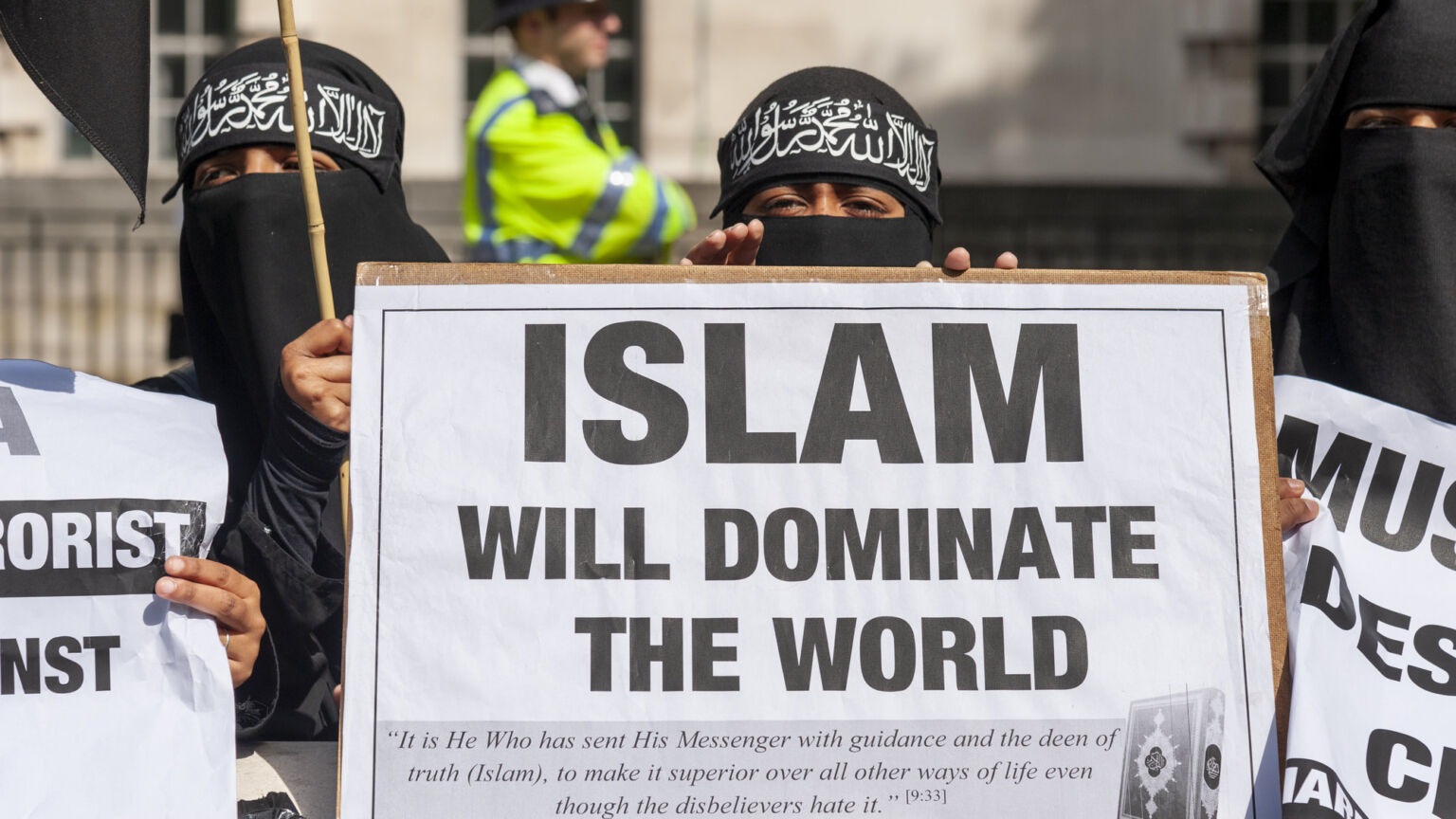
At a time when political language is routinely muddled, there can be few topics more confused than that of Islam and Islamism. The failure to make a clear distinction between the two – an error across the political spectrum – makes it harder to understand the true dynamics of Islamist movements, and particularly their relationship with the left. Indeed, those ‘progressives’ who align themselves with Islamists are often described as ‘useful idiots’ or cowardly ‘appeasers’. But when Islamism is properly understood, it becomes clearer why the left has such an affinity with it.
Although the term is often used in public debate, the precise meaning of Islamism is typically unclear. It is not synonymous with more observant or fundamentalist Muslims. Its true character was well summarised by Bassam Tibi, a Syrian-German political scientist, who said: ‘Islamism is about political order, not faith.’ Nonetheless, it is not mere politics, but religionised politics, that is at its core. Essentially, Islamism is best seen as a form of politics in a religious wrapping.
Islamism first emerged against the backdrop of anti-colonial struggles in the wake of the First World War. But unlike the radical nationalist movements that initially gained power in the Arab world, like that led by Egyptian president Gamal Abdel Nasser, Islamists did not aspire to embrace the benefits of modernity for those living in poorer parts of the world. On the contrary, Islamist movements were implacably hostile to cultural modernity, democracy and liberal values. They were also extremely sceptical of the nation state, if not outright hostile to it. Instead, they aspired to some kind of nizam Islami, or new Islamic order, transcending national boundaries in the name of a shared theocratic vision.
As Tim Black has noted on spiked, the first Islamist movement was the Muslim Brotherhood, founded in Egypt in 1928. Many of today’s Islamist groups, including Hamas, are offshoots of the Muslim Brotherhood. The first Islamist movement in the Indian sub-continent was Jamaat-i-Islami, founded in 1941. It too has many contemporary offshoots, including Islamist organisations in Bangladesh, India and Pakistan. Iran and Turkey both have Islamist governments, and Islamist movements are also prevalent in north Africa. Many of these groups have affiliated networks which operate within Muslim communities in the West, particularly the UK.
Although Islamism is routinely described as ‘medieval’, many key Islamist doctrines were developed in the 20th century, not the 7th. The idea of Sharia as an immutable Islamic legal system is a prime example. Although a concept of Sharia law did develop in the Middle Ages, it was seen at the time as being of human origin, and so open to dispute. In contrast, for Islamists, Sharia is a divinely ordained political order. It cannot, from their perspective, be modified or secularised.
Violent anti-Semitism as a central element of Islamism is also, despite appearances, a modern development. It is true that Islam has often adopted discriminatory practices against Jews. The Ottoman Empire’s branding of Jews and Christians as dhimmis, subjecting them to an inferior legal status and extra taxes, is a well-known example. But modern Islamism goes a lot further. It holds that Jews are a force for Satanic evil, which must be purged from the world.
Hamas’s founding covenant from 1988 makes this all too clear. Its Jew hate is not influenced by the Koran, but by the Protocols of the Elders of Zion, a notorious anti-Semitic forgery originating from Tsarist Russia at the beginning of the 20th century. Among other things, Hamas argues that Jews ‘were behind the First World War, when they were able to destroy the Islamic Caliphate, making financial gains and controlling resources’.
‘They obtained the Balfour Declaration [and] formed the League of Nations through which they could rule the world. They were behind the Second World War, through which they made huge financial gains by trading in armaments, and paved the way for the establishment of their state. It was they who instigated the replacement of the League of Nations with the United Nations and the Security Council to enable them to rule the world through them. There is no war going on anywhere, without having their finger in it.’
Clearly, none of these events or institutions could have been described in the Koran or the Hadith. The ideas in the passage were adopted from the racial thinking embodied in modern European anti-Semitism.
The violent language of Hamas reflects the ascent of a particular strain of Islamism, namely jihad. The jihadis are those Islamists who are openly willing to engage in violence. These people can be distinguished from what are sometimes called institutional or ‘participationist Islamists’ – those who support the use of violence, but do not practise it themselves.
Islamists typically operate covertly, within front organisations, including student organisations and charities. They are hard to identify with certainty as they deliberately try to blend in with broader Muslim communities. Islamists typically see themselves as true Muslims and take a derisive view of any co-religionists who do not share their politics.
Given this, it is hardly a surprise that Islamism and progressivism have such an affinity for one another. They have an awful lot in common: an aversion to modernity, hostility to democracy, cynicism towards the nation state and intolerance towards alternative views. Despite differences on some questions – most notably in relation to gay rights – the overlap is considerable.
There is also a particular affinity between mainstream identity politics and Westernised Muslims. As French political scientist Olivier Roy has noted, many Muslims in the West do not identify with the nations in which they live. For some of them, Islam is not so much a religion but a form of identity, one that precludes any attachment to a secular country. Such individuals are often attracted to Islamist ideas and networks. In effect, they embody a particular variant of the anti-nationhood trend that dominates identity politics in the West.
The progressive indulgence of Islamism is not primarily driven by cowardice or a propensity for appeasement – although that is certainly a factor. Neither is it solely a case of, as the hackneyed phrase goes, ‘turkeys voting for Christmas’. It is because progressives and Islamists agree on so much that they march arm in arm together.
The fundamental problem is not only that an extreme strain of Islam is corrupting an otherwise healthy body politic in the West. It is also that Islamism and progressivism share so much in common. The modern Western left offers fertile ground for Islamism to flourish on.
Daniel Ben-Ami is an author and journalist. He runs Radicalism of Fools, a website dedicated to rethinking anti-Semitism.

The US has denied that it’s planning a ground invasion of Iran. Despite this, there have been signs that the US is preparing for what will undoubtedly be another catastrophic land war. One of the latest is that US troops are telling strippers that deployment is imminent:
AMERICA DECIDES ‘26: Who do you trust when it comes to whether the troops are getting deployed?
OSINT strippers or manifesto-publishing access journos? pic.twitter.com/BBsIw5Z4Po
— ParaPower Mapping (@KlonnyPin_Gosch) March 29, 2026
Iran ground invasion signs
In the video above, influencer Charm Daze says:
So I work at a strip club next to several military bases and something I have noticed lately is all the military guys are coming in and they’re spending all their money… It’s sad. They’re like kind of depressed, and they’re like just coming in like ‘oh yeah, we’re gonna have fun like we’re getting’ – what is it called? Deployed? – ‘like we’re getting deployed next week…
I don’t want to spread misinformation or anything, but it’s just like, a lot of them are really kind. And to see these young guys that look like my pinky toe, they’re so – they’re like fetuses – coming in and then dancing with them and then being like, bye.
It’s actually making me emotional.
It’s fucked up.
In response to the above, a military commenter advised troops not to tell their secrets to their strippers, barbers, etc:
This stripper has singlehandedly caused an OPSEC crisis and panic amongst ex-military careerists.
OSINT strippers, hold the line! Double your Army brass seduction efforts! https://t.co/iA8g88pIFL pic.twitter.com/8jI0OScRDr
— ParaPower Mapping (@KlonnyPin_Gosch) March 30, 2026
The problem, of course, is that many of these troops will feel like their lives are being thrown away for the benefit of oil executives and Jeffrey Epstein associates. As such, why should they care about keeping the empire’s secrets?
Featured image via Charm Daze (Instagram)
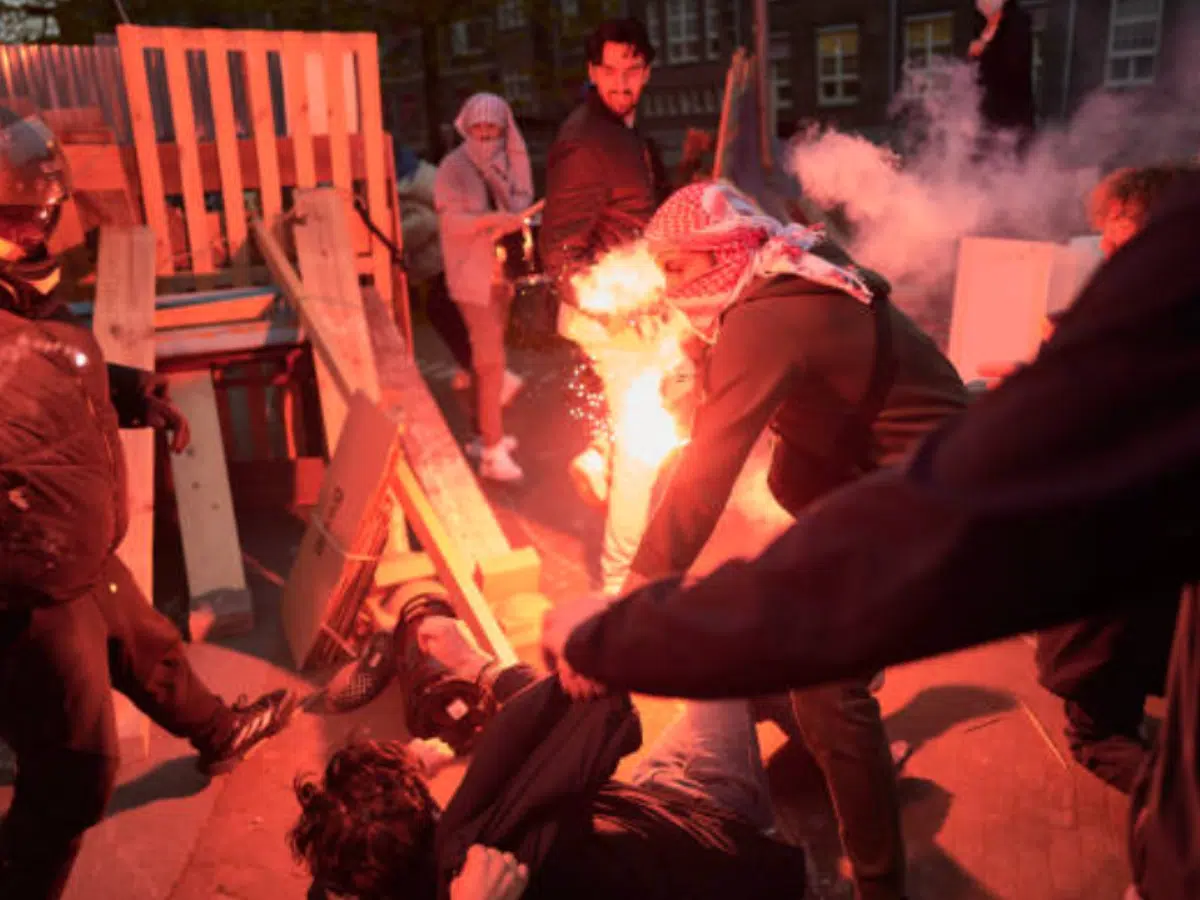
A heroic activist alleged to have been one of three people who spray painted a US military warplane at Ireland’s Shannon airport has said Palestine campaigners need to escalate beyond “marches, speeches and rallies”.
Conan Kavanagh has been charged with:
…criminal damage of the main body of a Boeing 737-700 belonging to the US Navy Reserve at Shannon airport on November 22nd.
Police say he and his comrades crashed through an airport barrier before making their way to the warplane used by the United States military for its global terror campaigns. They are then alleged to have used a “modified fire extinguisher” to douse the offensive object with green spray paint. Showing the extent to which the Irish government will go to protect its US master, Irish soldiers aimed guns at the non-violent activists.
Speaking to Al Jazeera, Cavanagh said:
I took part in the action out of a general frustration with the Irish establishment and society.
He continued:
For a country that prides itself on a shared history of colonialism and resistance, I think we’re incredibly limited in how we express support for the Palestinian people.
A lot of Palestinian activism in Ireland is centred around marches, speeches and rallies, which while good needs to be escalated upon with more actively disruptive protests if we hope to actually force the hands of the state.
Palestine direct action: Shannon hit several times, but more needed
There have been four incursions into the genocide-enabling airport since March 2024, including three in the last year. In the first one on the 30th of that month, three activists got on the runway with a banner which read “US military out of Shannon”. On 1 May 2025, three activists are alleged to have again used a van to breach the airport perimeter, though a trench prevented further progress. 16 days later, another trio got into the facility and spray-painted a US military-contracted Omni Air International Boeing 767 with red paint.
More must be done to match the scale of criminality, however. The airport has for years been a key refuelling point for the US empire. Shannon Watch details this feeble surrender to American militarism, stating that:
Since 2002 close to 3 million US troops have gone through Shannon Airport.
Shannon is also used as a means to ferry munitions across the world. The Irish government has to grant exemptions for overflights or landing at the airport. Shannon Watch show that 1354 of these were issued in 2024. Al Jazeera quote Irish senator Alice Mary Higgins saying:
…it is known that the largest number of exemptions have been sought by Germany and the United States.
The Ditch has reported the Irish government admitting that Shannon has been used to ferry munitions – the tools of genocide – from the US to so-called ‘Israel’. Lately, warplanes have been landing at Shannon before heading on to Germany’s Ramstein Air Base. It is the main US staging post for its illegal assault on Iran.
The Irish government has been unwilling to carry out inspections of planes to see if they are carrying weapons likely to be used to carry out war crimes. This is unsurprising for a government determined to completely end Ireland’s always imperfect position of neutrality. Taoiseach Micheál Martin has been enthusiastically covering for Trump’s mass murder, including during a truly pathetic display at the White House on St Patrick’s Day.
Promising escalation against Collins and GAA
Al Jazeera also spoke to Aine Ni Threinir, who was arrested following the March 2024 action. She agreed with Kavanagh, saying opposition to the US military presence at Shannon:
…should be something that we all mobilise strongly around.
Ni Threinir said people “absolutely could do more”. She acknowledged the risks when the criminal Irish state is determined to invert reality by prosecuting activists attempting to uphold international law.
The South of Ireland has seen increasing use of direct action in the last year. Activists have repeatedly targeted the Cork offices of Collins Aerospace. The company transferred munitions to the Zionist entity via Shannon. On March 30 campaigners from Palestine Action Éire improved the premises’ facade with the use of a hammer and spray paint can. Two activists from the group are alleged to have caused £100,000 of damage during an action on 13 October 2025. In the supposedly more radical North, those backing Palestine are yet to hit equivalent targets such as Aldergrove airport or the companies Act Now named as helping manufacture F35 warplanes.
The effectiveness of direct action was seen again when campaigners took over a Gaelic Athletic Association (GAA) conference at Croke Park. They were opposing the continued use of Allianz as a sponsor, who help insure Zionist land thieves taking Palestinian territory. The pressure resulted in GAA boss Jarlath Burns being provoked into making tone-deaf comments comparing the occupation of the GAA building to the occupation of Palestine.
The sporting organisation’s continued resistance to dropping Allianz suggests direct action will be needed again. Similarly, the Football Association of Ireland must be shown they face a cost if they continue with their plan to play the Nations League match against the genocidal apartheid pseudo-state.
Featured image via the Canary

New analysis has raised growing concerns about energy market volatility and its impact on the global economy. 350.org is urging governments to go further and tackle the root cause of rising costs: fossil fuel profiteering.
The organisation’s intervention follows a communiqué written by G7 Energy and Finance Ministers and Central Bank Governors. The G7 group recently held a meeting online, which reaffirmed the need to closely monitor the impact of surging energy prices on households and markets. But without action being taken on extraordinary corporate profits, these efforts risk falling short.
Profiteering impacts the cost of living
Recent market activity highlights the scale of the issue. Energy giant Total is reported [paywall] to have monopolized crude shipments from the UAE and Oman last month, securing around 70 shipments. By stockpiling oil during escalating tensions in the Gulf, the company is estimated to have made $1 billion in profit in just one month, as Murban crude prices surged from $70 to $170 per barrel.
The analysis by 350.org shows that $100 billion has been siphoned from ordinary people to oil and gas companies due to soaring energy prices. With less oil available on the market, companies like TotalEnergies are able to exert outsized control over supply, selling to the highest bidder, likely overseas markets, rather than helping ease pressure on energy bills for households already struggling with the cost of living.
Fanny Petitbon, France Team Lead, said:
It is obscene that companies like TotalEnergies are making enormous profits from war, while ordinary people’s lives are being shattered and the world faces a spiraling economic crisis. At a time of such profound human suffering, no company should be allowed to exploit chaos and conflict for financial gain. The G7’s deafening silence on these windfall profits speaks volumes, signaling a failure to hold corporate greed accountable while the rest of the world pays the price.
Coordinated international action is needed
Advocates are calling for coordinated international action to introduce windfall taxes on fossil fuel companies benefiting from crisis-driven price spikes. Revenues raised could be used to support vulnerable households, accelerate the transition to renewable energy, and fund recovery efforts in regions affected by conflict.
Petitbon added:
The principle is clear: extraordinary profits made in times of crisis should be redirected for the public good, not concentrated in the hands of a few.
This intervention follows the submission of a letter by 40 UK civil society organisations, who are similarly calling on the government to introduce new domestic levies across various war-profiteering industries.
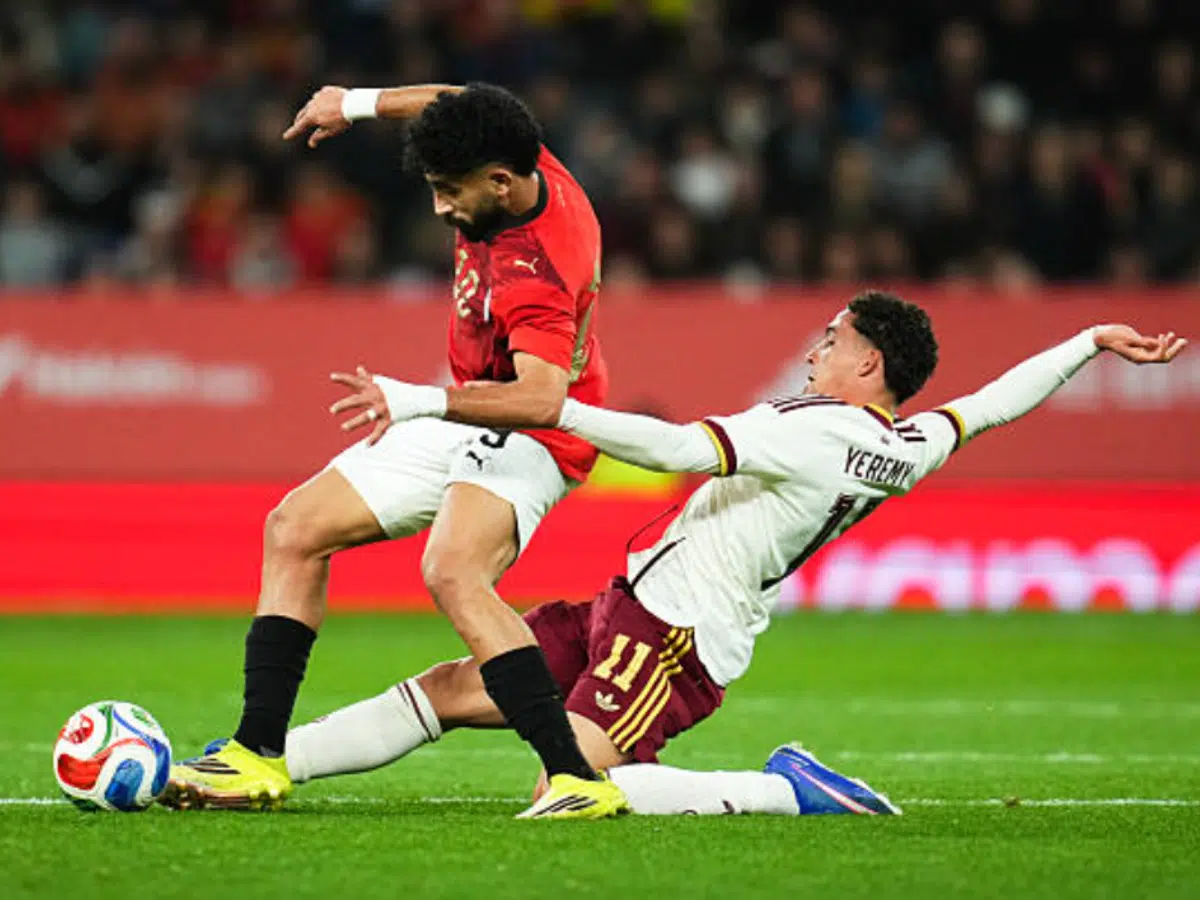
Islamophobic chants by Spanish fans during a friendly football match against Egypt have sparked outrage. Stadium management were forced to intervene repeatedly to halt the racist behavior.
During the first half, some fans chanted offensive phrases, most notably “If you don’t jump, you’re a Muslim,” and booed during the Egyptian national anthem. The chants were repeated on several occasions.
Islamophobic chants
Observers at Espanyol’s stadium in Barcelona reported that organizers displayed a warning message on the stadium screens during half time, which was also read aloud by the stadium announcer, urging fans to stop the Islamophobic chants. The warning was repeated at the start of the second half, amidst continued booing from attendees.
In its first official response, the Spanish Football Federation condemned the incident, emphasizing in a statement published on its official social media accounts its categorical rejection of such behavior. The statement read:
The Spanish Football Federation stands against racism in football and condemns any act of violence within stadiums.
And Spanish coach Luis de la Fuente called the chants “intolerable” and said those responsible:
must be removed from society, identified, and kept as far away as possible.
The match was part of both teams’ preparations for the 2026 World Cup, scheduled to be held in the United States, Canada, and Mexico, for which both teams have already qualified.
The match saw the participation of Lamine Yamal, a player of Moroccan descent and a Muslim, in the Spanish national team’s starting lineup. Observers considered the chants to have implications beyond the realm of sports, reigniting the debate about the rise of hate speech in European stadiums.
Featured image via the Canary
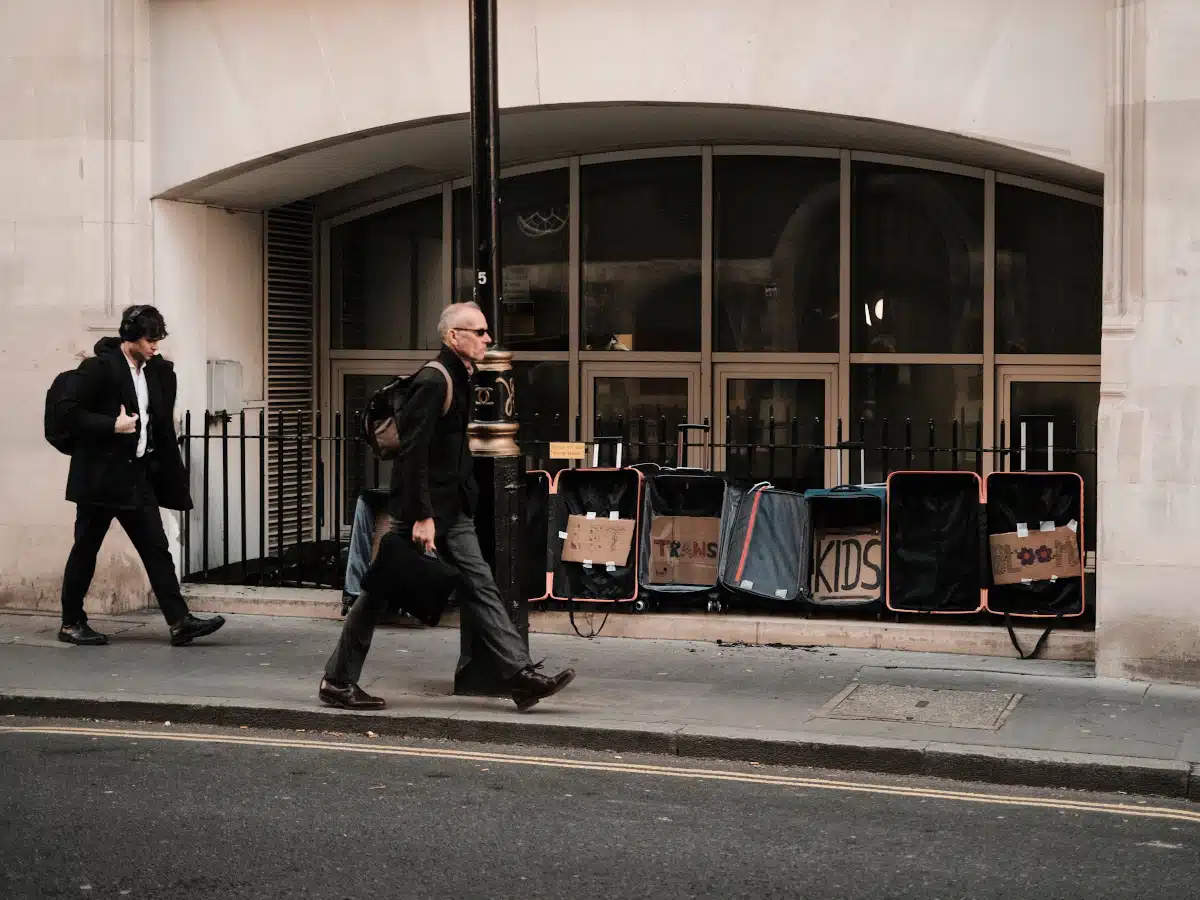
A group of young trans activists have used guerrilla gardening to protest transphobic revisions drafted in the Department for Education’s new ‘Keeping children safe in education (KCSIE) 2026‘ document.
The activists planted an array of blue, pink and white flowers, carrying soil-filled suitcases to the site, which were displayed to reveal the message:
Let trans kids bloom.
New guidance
This floral protest followed the publication of new guidance from the Department of Education (DfE), which aims to limit social transition in school, prioritising the opinion of parents and teachers over the wellbeing of trans kids.
It is a document that makes little fanfare about children who identity as lesbian, gay or bisexual, but insists that children who question their gender are likely going through a phase, noting:
It is common for children to engage in activities that are less typically associated with their sex… Sometimes young children also go through a period of questioning their gender but for the majority this will not continue into adulthood, while a small proportion may continue to question their gender and this feeling may intensify into puberty.
Although the document recommends that schools and colleges should “maintain flexibility and avoid rigid rules based on gender stereotypes”, it is advised that some forms of flexibility be encased in medicalised bureaucracies.
On this basis, the guidance emphasises that schools “should not adopt any changes relating to social transition unless a decision has been made by a school or college in consultation with parents or carers.” Instead, schools “should ensure that [a child’s] decision-making process is documented and records are kept.”
The document also defers to the widely criticised Cass Review, published in 2024.
Trans kids speak out
One of the suitcases displayed by the activists contained testimonies from trans kids about the life-changing benefits of being able to socially transition in school:
Social transition, especially at school, has heavily impacted my life. Before I socially transitioned, my school attendance was awful, and when I was in, I avoided all interaction as much as possible.
I hated school, and I hated feeling forced to be reminded of my dysphoria at every second.
I socially transitioned at school multiple years ago now, and I am doing so much better. I feel more able to express myself, and going to school feels significantly less terrifying. Now that I’m not worried about being misgendered and deadnamed, I can actually think about my future with comfort.
It is such a simple improvement to the quality of my life, and I’m so grateful that I could have a school experience where I got the respect and support that I deserved.
There were also quotes from trans adults on how being unable to socially transition negatively impacted both their childhoods and later life:
Social transition as a kid would’ve let me be a kid – figuring out what kind of person I was and how I related to the world around me.
Instead, I only knew that I was different and weird, isolated and stunted. It took me a full decade of self-loathing in adulthood to begin unpacking everything and growing into myself in the way I should’ve been allowed to so much earlier.
Setting hoops for trans kids to jump through
Commenting on the document, a spokesperson from Trans Kids Deserve Better said:
This guidance would restrict trans kids’ autonomy to socially transition in school by questioning our knowledge of ourselves. The guidance would set hoops for trans kids to jump through in order to socially transition, taking a default stance of doubt (especially when a child is neurodivergent) and forcing meetings with parents, teachers, and potentially clinicians, to decide for a child whether or not they are able to socially transition.
This does not centre the wellbeing of trans kids, rather this puts us through scrutiny and invasive questioning when we need support. The guidance of course neglects to mention the negative mental health effects for being denied a social transition…
This guidance has been in the works for quite some time now – first proposed under the Tories in 2024. But this iteration is even more harmful… Coming alongside the recent ban on HRT for trans kids, this is an alarming escalation of policy, designed to prevent trans kids accessing even the most basic forms of gender-affirming care.
If this guidance were to pass, it would amount to state-mandated conversion therapy.
Trans kids want to be able to live carefree. Access to a social transition gives us space to develop and grow, rather than feeling trapped and isolated. To the Department for Education: show us that you hear our voices, axe the guidance, and LET TRANS KIDS BLOOM!
Consultation period
The revisions implemented in the new document are currently under consultation, with the DfE seeking feedback to be reviewed in April.
The consultation period began when DfE first posted the document online in February 2026. At that time, the Canary‘s Alex/Rose Cocker described how it “treats vulnerable kids as a threat”.
Featured image via Trans Kids Deserve Better
This article was updated at 8pm on Wednesday 1 April to reflect a response from the Green Party.
Hamza Egal, chair of Global Majority Greens and convenor of the Greens’ racism policy working group, has sent a searing open letter to the leadership of the Green Party, calling on them to address “racialised harm,” governance failures, and what he describes as the weaponisation of party processes. Egal also serves as an elected member of the Standing Orders Committee (SOC), demonstrating a wealth of experience with the party’s internal governance structures and procedures.
Addressing the letter to Harriet Lamb and Zack Polanski, internal governance branches, and the Green’s Parliamentary group, Egal states:
The Green Party of England and Wales has a racism problem. Not a perception problem. Not a communication problem. A racism problem — structural, documented, and sustained.
Egal goes on to say that he has exhausted attempts to address this “racism problem” in private and in clear frustration, he has brought this serious issue to the public’s attention.
Discussing actions already taken, he writes:
I have raised concerns through the party’s own channels, used its rules and structures, submitted evidence, and waited for responses that have not come. What I have received instead is exclusion, misrepresentation, and the weaponisation of process against me.
Egal repeatedly raises concerns throughout the damning letter about inaction and ignorance from leadership. This suggests that, whilst the party portrays itself to be anti-racist, it hasn’t been behaving as such towards its minoritised members and elected officials.
A pretty damning accusation for a party that portrays itself as acting in solidarity and that apparently celebrates its diversity.
Green party racism furore
Speaking to the recent Spring Conference which saw repeated filibustering and delay tactics to block the vote on landmark motion “Zionism is Racism”, Egal said he chose not to attend due to fear of suffering harassment for being a “racialised member”. A concern which was seemingly proven well-founded by members actively working against the anti-Zionist motion.
For instance, Egal informed that a timely complaint had been sent by an ally of Polanski, Andrée Frieze. Conveniently, it came immediately prior to conference taking place. This complaint targeted him for a “conflict of interest” regarding an email sent out requesting members support the motion when it came to a vote. This apparent attack came despite Egal having no involvement in said email, reinforcing the suggestion that tactics are afoot in the Greens which are hostile to anti-Zionist members.
Addressing the “repeated use of accusations of antisemitism” within the Green Party, Egal wrote:
A serious dimension of this pattern has been the repeated use of accusations of antisemitism — deployed not only against me but against many members of this party who oppose Zionism and its racist ideology and practice. For a Black Muslim man raising concerns about racism, governance, and Palestine solidarity, these accusations have taken on a particularly targeted character.
Adding:
Attaching accusations of antisemitism to a Black Muslim member raising concerns about racism and Palestine is not incidental. It is a racialised tactic — one that conflates political opposition to Zionism with hatred of Jewish people, deployed repeatedly to delegitimise my voice and my roles in this party.
Consequently, this situation draws strong similarities to the period under Jeremy Corbyn’s Labour leadership. Corbyn’s Labour saw anti-Zionist socialist members expelled or sidelined due to a politically motivated antisemitism witch-hunt.
This heightens concerns that some within the Greens may be using unfounded allegations of antisemitism to discriminate against Muslim members.
Islamophobia concerns
Furthermore, Muslim members are increasingly facing toxic identity politics in the UK. Labour and right-wing parties have used Muslim communities as a political football, attempting to divide growing grassroots solidarity by portraying them as opposed to LGBTQIA+ people.
According to this open letter, it appears the Greens are not immune to hateful political game-playing either.
Critics have levelled allegations of transphobia against Egal, seemingly because he is a Muslim man:
I am also aware that SOC members who defended the constitution at Spring Conference are being publicly described as transphobes. That characterisation is false. It is another example of identity-based smearing deployed to silence those who challenge power inside this party.
The pattern is consistent: when process and procedure fail to silence dissent, identity-based attacks are deployed instead.
The letter further strengthens the suggestion that he is being targeted for being Muslim, detailing how transphobia allegations were directed at Egal after Joe Hudson-Small, co-chair of the Green Party Council (GPC), told approximately 900 members at the Spring Conference that Egal is “gender critical”:
That is not a neutral description. It is a politically loaded mischaracterisation by a senior party figure that causes direct harm to those named. By the party’s own legal standard, that should have triggered immediate accountability.
Instead there is silence. There is too often silence.
The Green Party says…
The Canary asked the Green Party about the letter. A spokesperson stated that firstly, they were checking to see if the leadership had received Egal’s correspondence. The spokesperson also noted that they were ‘looking into’ a request from deputy leader Mothin Ali for an investigation over the serious issues at play, here.
We also specifically asked the Green Party the following:
Egal highlights that whilst the messaging in statements from the party is antiracist, but institutional will to reinforce that antiracism within the party is lacking. How do you intend to confront this apparent racism with the Greens?
The spokesperson told the Canary:
We agree that we need to be confident that that we are matching our anti racist principles with fit for purpose internal processes. We know these can be improved.
This includes the collection of diversity data and this matter was discussed just yesterday by the Green Party’s Executive team. Data will be collected and analysed on staff members, councillors and candidates. When new members join the party, we will encourage them to register ethnic background. For candidate selection, when the latest round for the May elections are completed, we will analyse this data.
There are also plans in place to improve training on antisemitism, Islamophobia and anti racism.
A new Equity, Equality, Diversity and Inclusion manager has been appointed.
Repair before it is too late, or explain why you won’t
This damning letter drew attention to how these behaviours are increasingly pushing out Black and Brown members, who “no longer believe this party means what it says”. Pointing out that the membership of the Global Majority Greens has reduced, Egal pleaded with the Greens to act:
Trust is not rebuilt with statements. It is rebuilt with action, accountability, and the willingness to confront power internally rather than only performing that confrontation in public.
Opposing the party’s exclusion practices, Egal issued a list of proposed actions, insisting:
The Green Party must now choose what it is. It cannot speak the language of justice while practising exclusion. It cannot claim anti-racism while ignoring the people building anti-racist policy inside its own structures. It cannot call itself a democratic party while treating the decisions of its own membership as advisory.
Egal powerfully finished with a pleading call to action that Green Party leadership must now heed:
Choose justice. Or explain, publicly and in detail, why you will not.
The Green Party had not responded to a request for comment at the time of publication.
Featured image via the Canary

Complaints to the Department for Work and Pensions (DWP) about Universal Credit have increased by 43% in the last year. This is despite there only being a 12% increase in claimants.
The DWP publishes their official complaint statistics quarterly, so they’ve just released the figures up til the end of December 2025.
Overall, the department received 7,730 complaints, which is a 19% increase from December 2024. However
Universal Credit got over half of those complaints at 3,930. That’s a 43% increase from the previous year.
DWP blaming increase in Universal Credit again
They try to explain this away, of course, with the increase in Universal Credit claimants:
There are a range of different factors that may lead to a change in the number of complaints received. This can include increases in the caseload of a benefit, though you do not need to be in receipt of a DWP benefit to complain. In December 2025 there were 8.3 million people on Universal Credit, up from 7.4 million people on Universal Credit in December 2024.
However, the number of claimants only increased by 12%, so to blame that for a 43% leap is absurd.
There was also a sharp increase in complaints about disability services, which provide specialist support and advice to claimants. Whilst it hasn’t increased in number, statistically it has shot up by 62%. The type of complaint also matters. The DWP mentioned in the release that many complaints were ‘you’ve got it wrong’, but they conveniently missed out that many complained about staff not respecting them.
Just 4 out 10 complaints were upheld by the DWP, meaning many were probably once again treated poorly.
Universal Credit is currently experiencing a big increase in claimants as many are being forced to move onto it from legacy benefits. The DWP claims they are supporting everyone to move over, but the number who have failed to move over says otherwise.
Many disabled people have said they find the process too complex to navigate. So the process is probably not made any better by rude staff who don’t treat claimants with basic respect.
UC is generally a shit show
Along with migration issues, the Universal Credit system is, in general, an absolute shit show. Universal Credit sanctions are at a record high under Labour. The amount of compensation the DWP has had to issue due to their own incompetence has also shot up.
The Public Accounts Committee found that benefit claimants were overpaid by £1 billion in 2024-25 due to the DWP’s own errors. However, this was cancelled out by the fact that claimants were underpaid by £1.2 billion for the same reason 2024-25.
Instead of holding their hands up, the DWP once again blamed claimants.
The PAC report said:
The DWP has carried out some work to tackle the root causes of fraud and error – but this has focused on those committed by claimants, rather than errors by officials.
It’s clear from repeated inquiries, reports, and the DWP’s own stats that the department needs to spend less time demonising claimants and focus on teaching their staff how to be fucking compassionate.
But it’s clear from how much they’re pushing the workshy narrative that they care far more about forcing people off benefits than actually supporting people. But more people supported into benefits wouldn’t fit their narrative.
Featured image via the Canary

The Democratic Republic of Congo national team has returned to the world’s biggest football tournament after a 52-year absence. Their only prior appearance was at the 1974 World Cup as Zaire.
A dramatic extra-time victory over Jamaica secured the Leopards’ qualification for the 2026 World Cup, writing a new chapter in Congolese football history.
Half a Century of Waiting
The Congolese team started the match strongly, applying constant pressure on the Jamaican goal from the opening whistle. Despite numerous attempts, the game ended in a goalless draw, forcing extra time.
In the 100th minute, the historic moment arrived when Axel Tuanzebe headed in a corner kick. The goal was confirmed by VAR, giving the Leopards the victory and qualification, and bringing Congolese football back onto the world stage after half a century of absence.
A National and Symbolic Achievement
This qualification is not just a victory in a single match, but a symbol of organized effort. It represents a source of national pride for the Congolese people and reflects years of dedicated effort in developing players and sporting infrastructure.
It also demonstrates the rise of unconventional African teams and their ability to compete on the world stage.
The Challenges of the Upcoming World Cup
The Congolese national team will participate in Group K of the 2026 World Cup, alongside Portugal, Colombia, and Uzbekistan, facing a tough test against diverse footballing styles.
Finally, after 52 years, the Congolese Leopards have returned to the world’s biggest stage. They are carrying the hopes and aspirations of an entire nation, proving that organized work and unwavering determination can rewrite footballing history and establish themselves on the international stage.
Featured image via the Canary

Earlier today, activists across Britain participated in a coordinated day of action to apply mass pressure across the arms industry. Activists targeted arms factories in Sheffield, Brighton, Newcastle and Lancashire. They aimed to disrupt the supply chain of arms headed for the US and Israel.
Factories activists targeted during the action included:
- BAE Systems (Lancashire).
- Radius Aerospace (Sheffield).
- Pearson Engineering (Newcastle).
- L3Harris (Brighton).
Activists gathered in the early hours of the morning to stop workers from entering the sites and continuing the production of various components and equipment used by Israel and the US.
The actions saw hundreds of activists across the country completely halt production in these sites for hours before disproportionate policing moved them away after resistance.
Arms factories increasingly targets
The day of action comes after months of similar protests occurring more increasingly. The most recent took place at an Elbit systems site in Bristol. More and more activists are focusing on the arms factories in their locality.
This has come in part from the exposure of these companies through organisations such as Campaign Against Arms Trade providing maps and intel on their ties to Israel and the genocide unfolding.
The target arms factories and their activities are:
- BAE systems in Samlesbury, Lancashire, produces the rear fuselage for the F-35 fighter jet which is known to be produced in the US and provided to Israel as part of their military contractual obligations.
- Pearson engineering is an Israeli state-owned defence company supplying parts for armoured vehicles and specialising in combat robotics.
- L3Harris provides power systems for strategic missiles, missile defence and aircraft.
- Radius Aerospace while primarily a manufacturer of aerospace components, has been identified as part of the UK supply chain linked to military aircraft, including the F-35 program
A spokesperson from the BAE Out Campaign explained:
We organise these pickets because we know they are effective. Workers have told us that each time we block the site, they are offered overtime to make up for the time lost. This proves that our protests are costing them money and time.
This form of disruption is essential as these corporations only speak in monetary language. As long as BAE remain in the F-35 fighter jet programme, they can expect delays, disruption and discomfort in the face of supporting and aiding a genocide.
Featured image via the Canary

Is Abu Dhabi Airport Open Today on April 2 2026? Zayed AUH Flight Status and Travel Alert

China takes custody of alleged Huione Group-linked figure Li Xiong
Donald Glover promises the “Community ”movie will happen 'soon': 'I know everybody's been saying that'

Smart energy pays enters the US market, targeting scalable financial infrastructure

Why Israel is blocking foreign journalists from entering

Bitcoin: We’re Entering The Most Dangerous Phase

Explained: 7 financial changes from April 1 | Income tax | ATM withdrawals | PAN rules | STT hike

Krypto: Wenn Du im Minus bist, dann schau Dir das an.

New Financial Year, New Rules: New Financial Year Changes | New Income Tax Rules 2026 | BIG TV
-

 Business6 days ago
Instagram, YouTube Found Responsible for Teen’s Mental Health Struggle in Historic Ruling
-

 NewsBeat5 days ago
The Story hosts event on Durham’s historic registers
-
 Tech7 days ago
Intercom’s new post-trained Fin Apex 1.0 beats GPT-5.4 and Claude Sonnet 4.6 at customer service resolutions
-

 Sports5 days ago
Sweet Sixteen Game Thread: Tide vs Michigan
-
Entertainment3 days ago
Fans slam 'heartbreaking' Barbie Dream Fest convention debacle with 'cardboard cutout' experience
-
 Entertainment4 days ago
Lana Del Rey Celebrates Her Husband’s 51st Birthday In New Post
-
Crypto World2 days ago
Dems press CFTC, ethics board on prediction-market insider trades
-

 Crypto World10 hours ago
Gold Price Prediction: Worst Month in 17 Years fo Save Haven Rock
-

 Tech3 days ago
The Pixel 10a doesn’t have a camera bump, and it’s great
-

 Sports2 days ago
Tallest college basketball player ever, standing at 7-foot-9, entering transfer portal
-

 Tech2 days ago
EE TV is using AI to help you find something to watch
-

 Tech3 days ago
Apple will hide your email address from apps and websites, but not cops
-

 Tech2 days ago
Flipsnack and the shift toward motion-first business content with living visuals
-

 Tech2 days ago
How to back up your iPhone & iPad to your Mac before something goes wrong
-

 Fashion7 days ago
En Vogue in Brown Leather and Tailored Neutrals by Atelier Savoir, Styled by J Bolin
-

 Politics2 days ago
Should Trump Be Scared Strait?
-

 Crypto World2 days ago
U.S. rule change may open trillions in 401(k) funds to crypto
-

 Fashion7 days ago
What Are Your Favorite T-Shirts for the Weekend?
-

 Fashion6 days ago
Weekly News Update, 3.27.26 – Corporette.com
-

 Business6 days ago
Chinese universities with military links bought Super Micro servers with restricted AI chips
You must be logged in to post a comment Login