
Politics
The Comeback Season 3 Features Very Cool Friends Throwback

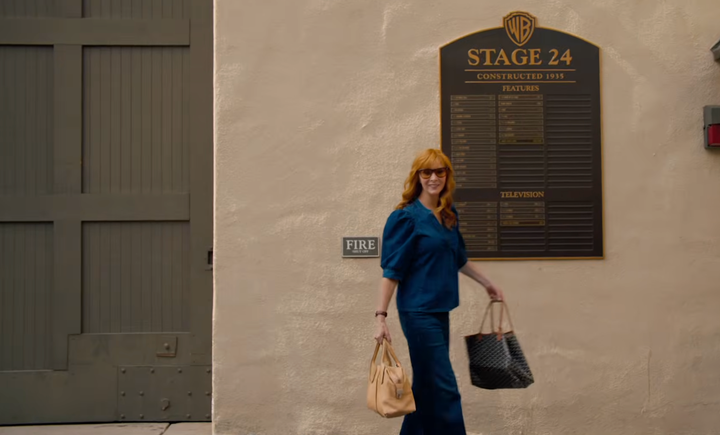
After keeping us waiting for more than a decade, Lisa Kudrow has donned that coiffed red wig for one last outing as Valerie Cherish.
The Comeback’s third (and, apparently, final) season premiered in the UK on Monday, with our central anti-heroine returning to the artform that first launched her to “stardom” – the sitcom.
In the new episode, Valerie learns that she’s been hand-picked as the lead in a new TV sitcom, How’s That?, but is contractually obligated to keep it secret that the whole thing has been generated by AI.
While promoting the latest iteration of The Comeback, Lisa shared that Valerie’s How’s That? scenes hold particular significance for her, as these parts of the show were filmed at Warner Bros.’ Stage 24 – the very same soundstage where she shot her scenes as Phoebe Buffay in Friends.

Appearing on CBS Mornings over the weekend, Lisa shared: “[It’s special] on different levels. We finished up Friends, which was one of the biggest things in my professional life – and life, period. And now I’m finishing up The Comeback trilogy in the same place where I finished the other most important thing.
“So, that made me a little emotional.”
During a previous interview on Jimmy Kimmel Live!, the Emmy winner said: “That was really strange and kind of emotional. That’s where we ended [Friends and The Comeback], so it was the ending of two really important things. So, it was a big deal.”
Asked about this by the New Yorker, she also joked: “I’m trying to think of a word that’s not ‘mindfucky’.”
The Comeback’s final outing sees the return of some familiar faces, including Laura Silverman as Jane and Damian Young as Valerie’s husband Mark, as well as new characters played by Andrew Scott, Jack O’Brien and Ella Stiller.
It’s also the first season not to feature fan-favourite Robert Michael Morris as hairdresser Mickey Deane, following the actor’s death in 2017.
The first episode of The Comeback season three is now streaming on Sky and Now in the UK, with new instalments every Monday.


Harrison Layden-Fritz is a Conservative campaigner and political writer. A centre-right free marketeer, he is passionate about restoring opportunity for the next generation and the renewal of Conservatism.
On the 28th of February, forty-seven years after the Iranian Revolution named America as its ultimate enemy, the tension finally ignited. British political conversation should have turned immediately to our energy exposure, fractured supply chains and the fragility of a regional order on which our trade, aviation and financial networks depend. Instead, a chorus rose from the Left about tax exiles in Dubai.
Set aside that those caught in the region were tourists, not expats. For those who have built their lives in the Gulf, there has been no rush for the exit doors. The reasons people build lives abroad do not dissolve with a short-term conflict. What matters most is that the Left’s mobilisation of anti-expat rhetoric was not just a distraction. It was a symptom. A political class still navigating by the stars of a vanished world, reaching instinctively for the wrong argument because it has never developed the right ones.
That is the defining problem of British politics today. Not any single crisis, but the absence of a doctrine equal to the age we are entering.
The world that no longer exists
The post-Cold War settlement rested on assumptions that have now collapsed. That interdependence was inherently stabilising. That open markets were self-correcting. That multilateral institutions would contain conflict. That Britain could safely thread its prosperity through global systems without maintaining the sovereign capacity to act independently of them.
For a generation those assumptions felt like realism. With the benefit of hindsight, they were a prolonged act of strategic optimism, sustained long past the point the evidence supported them.
The 2008 financial crisis showed that global capital markets transmit catastrophic risk faster than any institution can contain it. Covid proved that supply chains built for efficiency rather than resilience fail precisely when most needed. Russia’s invasion of Ukraine confirmed that territorial aggression in Europe was not a historical relic. And now the Gulf, long treated as a stable hub for trade, travel and finance, cannot invest its way out of the dynamics of its neighbourhood.
These are not separate shocks. They are expressions of a single reality. The liberal international order is not fraying at the edges. It is being actively dismantled at its centre. What is emerging in its place is a multipolar world defined not by shared rules but by competing power, in which interdependence is weaponised as readily as it is celebrated. The nations that prosper will be those that recover genuine agency over their own affairs. Britain has not yet reckoned with what that demands.
The response from European capitals has been no more reassuring. Where clarity and resolve were demanded, the continent offered process, statement and hesitation. This is not a failure of individual leadership. It is the terminal expression of a worldview: that institutions, dialogue and interdependence are sufficient answers to the exercise of raw power. They are not. The neoliberal order has no doctrine for the world now emerging. It has only the memory of the one that has gone before.
The cost of outsourced sovereignty
Strategic complacency has a price, and we are beginning to pay it.
Our energy policy was built on the assumption of stable global supply. Our defence industrial base was hollowed out on the assumption that large-scale conflict was obsolete. Our financial architecture was integrated into global markets on the assumption they would remain open and predictable. Our foreign policy was conducted through multilateral institutions on the assumption those institutions retained coherence and authority.
Every one of those assumptions is now in question. Energy prices lurch widely with every global shock. Supply chains fracture under geopolitical pressure. Our defence posture has struggled to respond at pace to a transformed threat environment. Our diplomatic leverage is constrained by dependencies we were warned about and chose to ignore.
This is not a counsel of despair. It is an honest account of where we stand. And honesty is the beginning of strategy.
Strategic autonomy
Britain is a resource-light island nation. Global trade accounts for more than sixty percent of our GDP. We cannot turn inward and we should not try. The question has never been whether to engage with the world. It is on what terms.
For thirty years we have participated in the global system as though participation itself were a form of power. It is not. In a multipolar world, genuine power rests on the capacity to act independently when necessary and to choose your dependencies rather than inherit them by default. That is what I mean by strategic autonomy. It is the organising principle Britain’s foreign and economic policy has lacked for a generation. Not isolation. Not nostalgia. The disciplined, clear-eyed reconstruction of Britain’s capacity to determine its own course.
That means energy we control, not energy we import at the mercy of hostile states. It means a defence posture built around sovereign industrial capacity and genuine deterrence, not the performance of it. It means domestic capital markets capable of backing British growth rather than a financial architecture totally dependent on footloose foreign flows. It means alliances chosen and maintained on the basis of shared strategic reality, not institutional habit. And it means treating Brexit for what it should always have been: not a cultural statement but a strategic unbinding, the removal of external constraint so that Britain can once again choose, adapt and act in its own interests. That window is already being closed.
None of this is cost-free, and intellectual honesty demands we say so. Strategic autonomy requires hard arguments that British politics has ducked for too long. We cannot build a resilient economy while the number of people out of work due to long-term sickness has risen by approximately forty percent since 2019. We cannot embrace the advantages of AI and automation while carrying some of the highest industrial electricity prices among developed nations. We cannot unleash the entrepreneurial talent of future generations while piling an ever-higher burden of an ageing population onto their shoulders. These are not peripheral concerns. They are the foundations the doctrine must be built on.
Nor can we claim genuine strategic autonomy while remaining judicially subordinate to bodies whose authority we have never meaningfully chosen. Britain was a pioneer of human rights and the rule of law long before the ICC, ICJ or ECHR existed. The United States enshrined such principles in the UN Charter but never felt the need to subject itself to foreign judicial oversight. It trusted its own processes. To those who decry any attempt to reassert British self-determination, the question is simple: do you not trust us? Strategic autonomy means retaining the sovereign right to act in our national interest, on defence, borders and security, without being vetoed by institutions of contested legitimacy. If we are to lead within NATO as American engagement recedes, we need armed forces and a defence industrial base capable of delivering on our commitments, and the legal clarity to act without paralysis, as Starmer’s failure on Iran made plain.
In the end, strategic autonomy is not the easy path. But it is the right one.
Taken together, these are not a list of policies. They are the load-bearing walls of a new British settlement, one built for a world of permanent competition rather than assumed stability.
The Conservative case
There is nothing inevitable about which party writes this doctrine, especially given the hard choices involved. But there is a natural home for it.
Strategic autonomy is a Conservative idea at its core. The same instinct that drives Conservative thinking on personal responsibility and self-determination applies equally to nations. Dependence, whether of individuals on the state or of Britain on systems we do not control, is a vulnerability to be reduced, not a comfort to be managed. Ownership of your own condition, with all the accountability that entails, is the foundation of genuine strength.
The Conservative Party’s greatest governing achievements were built on exactly this clarity. The willingness to see the world as it is, name what that demands, and act before events make the choice for you. That clarity has been absent. For fourteen years the party administered an inherited settlement, trusting that Britain’s natural entrepreneurialism would endure in spite of an unreformed state, and that the world would not punish a lack of strategic foresight. It placed its faith in stability continuing. Stability did not continue.
The pressure points, the Gulf, Eastern Europe, the Indo-Pacific, the contest over technology and critical supply chains, will not resolve themselves. They will intensify. The political force that develops a coherent doctrine before it is forced to by events will own the serious ground of British politics for a generation.
That is the opportunity now. Not to manage the consequences of a changed world, but to think clearly about what governing in it requires. To develop the doctrine before the crisis demands it. To lead the argument rather than react to its conclusions.
The age of strategic reliance is over.
The question is whether British Conservatism has the clarity to say so, and the courage to resolve it.

Martin Clunes is standing by his work in the 5’s Power: The Downfall Of Huw Edwards, after it faced criticism from its subject.
The Wuthering Heights star takes the lead in the feature-length drama, which aired on Tuesday night, telling the story of the ex-BBC News presenter’s very public fall from grace.
On the morning the drama aired, Clunes made an appearance on Good Morning Britain, where he was asked how he felt about Edwards’ recent comments slamming the TV movie.
“I appreciate he’s upset by the fact that we’ve made this programme,” the Bafta winner said.
“But [Edwards] would have reported on other [people’s] downfalls and other people’s disgraces [when he was working for BBC News].”

He added later in the conversation: “If anybody thinks it’s too soon, don’t watch it.
“I don’t think it’s too soon – I don’t know what the timetable is for these things.”
A 5 spokesperson responded to Edwards’ comments earlier this week saying: “Power: The Downfall of Huw Edwards is based on extensive interviews with the victim, his family, the journalists who revealed his story, text exchanges between the victim and Edwards, and court reporting.
“It has been produced in accordance with Ofcom’s Broadcasting Code. All allegations made in the film were put to Huw Edwards via his solicitors six weeks before transmission.”
Like Clunes, the broadcaster’s chief content officer brushed off the suggestion it was “too soon” for a TV drama about the Edwards scandal, insisting: “If you want to reach as many people as possible and highlight how grooming works and the insidiousness of grooming, drama is [the] most powerful way to do it.”
He also said that Power offered “a different side of the story”, while the show itself shone a light on the more “serious issue” of “the grooming of young men and abuse of power”.
Clunes has received widespread praise for his leading performance in the drama, although the response to the show itself has been decidedly more mixed.
Power: The Downfall Of Huw Edwards is now streaming on 5’s catch-up service.
Politics
The House | Questions about how the House should operate will always arise: our committee is here to address them

3 min read
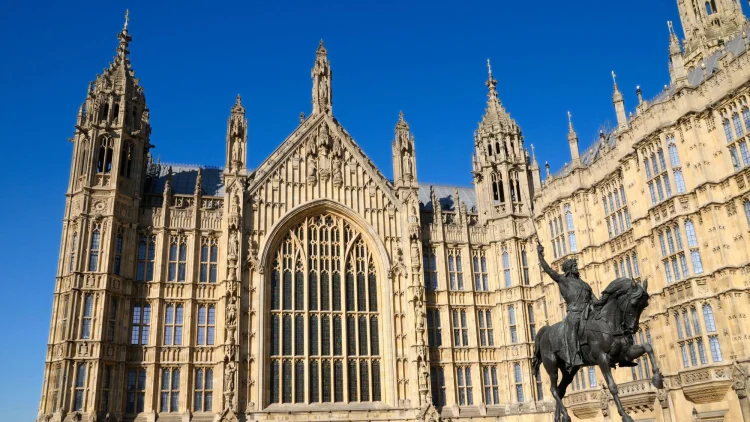
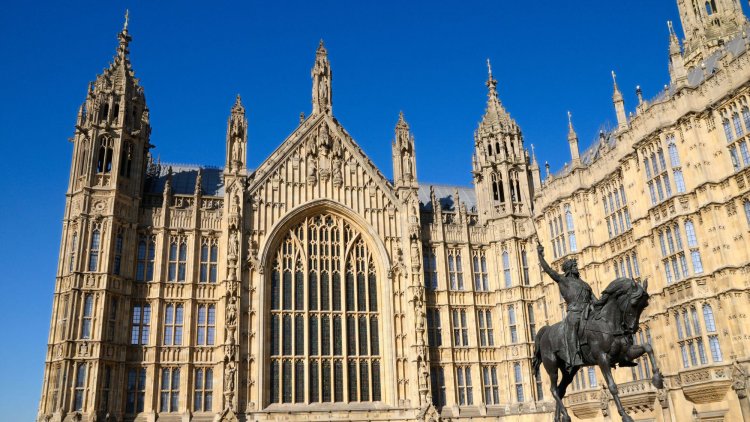
The House of Commons Chamber has seen no shortage of significant legislation during this parliamentary session. From the Crime and Policing Bill to the Terminally Ill Adults (End of Life) Bill, House procedure has frequently taken centre stage.
The House of Commons Chamber has seen no shortage of significant legislation during this parliamentary session. From the Crime and Policing Bill to the Terminally Ill Adults (End of Life) Bill, House procedure has frequently taken centre stage. However, it has also been an intensive period for the Procedure Committee as we tackle fundamental questions regarding how Members work in the Chamber and in committees, and how we debate, vote, and scrutinise.
We recently published our report on “call lists”: the practice whereby the order of speakers in a debate is made public in advance. Advocates of call lists argue they improve accessibility and allow MPs to better manage their professional and private lives by injecting certainty into the parliamentary day. Conversely, opponents fear the Chamber could cease to be a forum for genuine debate, trading spontaneous exchanges and interventions for a succession of short speeches intended for social media clips.
Our inquiry examined this matter in depth. We took evidence from Members, devolved legislatures, procedural experts, and former deputy speakers; we also observed the use of call lists in the House of Lords and reflected on their use during the Covid-19 pandemic. Our report emphasises the vital role of the Speaker and Deputy Speakers in managing debates through their discretionary power over whom to call and when. We ultimately concluded that call lists, if introduced in isolation, are not the solution to the issues raised. Current House of Commons procedures strike a necessary balance between certainty and flexibility; this adaptability must be maintained.
The committee’s agenda remains full. Our inquiry into electronic voting is still open for evidence, and we intend to report back to the House later this year. We have also now concluded our inquiry into elections within the House of Commons. While evidence suggests that the 2010 reforms – introducing elections for deputy speakers and select committee chairs – are working well after fifteen years, the 2024 post-election cycle highlighted a potential need to regulate campaigning to prevent excessive canvassing.
Furthermore, our newest inquiry is conducting a broad review of Written Parliamentary Questions (WPQs). We are responding to concerns that the system is under strain due to increased volumes and the complex interaction with Freedom of Information legislation. This runs alongside our regular scrutiny of government departments’ performance in responding to written questions in a timely manner.
Complex procedural matters will undoubtedly continue to arise. With a Commons dominated by MPs elected for the first time in 2024, it also means those of us ‘longer in the parliamentary tooth’ are challenged by newer colleagues who ask why procedures operate in the way they do. As a committee, we stand ready to investigate them thoroughly and present our findings to the House. While the final decision to adopt any recommended changes rests with the House, we remain committed to providing the informed guidance and direction necessary to safeguard and improve Commons procedure.

The main public body responsible for housing in the North of Ireland has revealed it is failing to properly monitor the effect of racist intimidation on housing security. When asked about the effect “public hate incidents” like the 2025 Ballymena riots had on housing pressure, the Northern Ireland Housing Executive (NIHE) responded simply:
The above information is not held.
The organisation was replying to a Freedom of Information (FOI) request submitted by a local migrant rights advocacy group. The NIHE was able to provide information detailing cases where the primary reason for being rendered homeless was filed under “Intimidation – Racial”. It stated there were 21 of these for the period 2024/25.
However, they acknowledged they have no readily available data on cases where:
…an individual cited racist/ xenophobic threats, attacks or harassment as a contributing factor in their application or their request for temporary accommodation and/ or storage of their belongings, beyond it being their primary reason for homelessness.
Housing stats gap hides scale of problem
The NIHE response said looking into this would necessitate a “manual review of case records”. This would require a level of work that would go beyond that permitted for fulfilling an FOI submission. The NIHE is only allowed to spend £450 fulfilling such requests.
Therefore, as a result of this information not being properly compiled into readily available statistics, we are denied proper insight into the true scale of the issue. That’s if the info’s there at all – the NIHE was only able to say they “may” hold some of the details requested.
The group submitting the FoI was seeking further info on the effect rising racist violence is having on the ability for racialised groups to secure safe and stable housing. They requested:
Records or statistics on individuals citing racist or xenophobic threats, attacks,
harassment, intimidation or similar as a factor in their application for:
– Emergency housing
– Homelessness support
– Transfers or removals
They also asked for:
Volume of contacts or referrals received that mention:
– Being “burnt out”, “bricked out” or intimidated out of their homes
– Hate crimes
– Race-related or politically motivated intimidation
The request also asked if these could be broken down by year and location.
Racist attacks likely to be driving 100s out of their homes
Recent large scale attacks by racist mobs have driven large numbers of people from their homes. Following a wave of violent pogroms in Ballymena in June 2025, The Guardian reported:
…houses that were torched remain gutted and boarded up. Of the Roma families who inhabited them there is no sign. There are no official figures but one informed source with ties to the community estimated that of the approximate pre-riot population of 1,200, two-thirds are gone – or, to use a loaded term, ethnically cleansed.
Reports of racist attacks on homes in the Six Counties (a decolonial term for the north of Ireland) are commonly found in the press, and those are just the ones that end up reported on. All in all, the evidence suggests a problem that goes beyond the NIHE-recorded number of 21 cases of homelessness resulting from racial intimidation.
The FOI also asked whether staff “workload [and] morale” had been affected by race-related intimidation. Once again the Housing Executive stated that this information is not collected. The NIHE response was shared with the Canary, and the activist we spoke to explained that failure to fulfil FOIs around housing issues has become increasingly common. They said complaints from asylum seekers around housing quality and safety provided by the company Mears have been frequent. However, their attempts to find out more via Freedom of Information submissions have been unsuccessful.
Our source said that when activists and even local politicians send requests for information to the likes of NIHE or the Northern Ireland Office (the British government’s outpost in the Six Counties), they are typically rejected on costs or security grounds. The claim on the latter excuse is that revealing further info on housing matters might jeopardise the safety of vulnerable migrants. However, the actions of various government bodies indicate little desire to protect those potentially in danger.
Lacklustre response across government agencies
The activist the Canary spoke to offered to help set up a project with NIHE to better monitor the sort of incidents which they are currently failing to track. The housing body initially seemed interested and suggested the matter be taken up with their business development section. However, attempts to pursue the matter resulted in radio silence from the Housing Executive.
Our contact also criticised the Police Service of Northern Ireland (PSNI) for failure to make use of modern threat monitoring techniques that may predict racist attacks. This includes tracking of social media activity on far-right social media accounts. The PSNI still largely relies on traditional methods such as tip-offs for gauging potential risks to vulnerable individuals and groups.
They said that, in the vacuum left by this failure, NGOs have attempted to do their own prediction. One organisation says it was able to establish that a spike in unpunished racist violence in primary schools could predict racist riots breaking out. It seems this will remain necessary while government bodies fail to do the absolute basics in protecting vulnerable groups amidst a rising tide of unchecked racist hostility.
Featured image via the Canary

US broadcaster Stephen Colbert has big plans to keep himself busy when his talk show goes off the air in May.
In the early hours of Wednesday morning, it was announced that Colbert will be co-writing a new instalment in the Lord Of The Rings franchise, based on the eighth chapter in JRR Tolkien’s novel The Fellowship Of The Ring.
Filmmaker Peter Jackson announced the news in a social media video, ostensibly about the next film in the big-screen series, The Hunt For Gollum, in which he teased that “that’s not the only Tolkien movie that we’re developing”.
Per Deadline, the film will be called The Lord Of The Rings: Shadow Of The Past, and will be set 14 years after the death of Frodo, with Sam, Merry and Pippin reflecting on the very beginnings of their adventures in Middle Earth.

New Line/Saul Zaentz/Wing Nut/Kobal/Shutterstock
Colbert, a Lord Of The Rings superfan, told the director: “You know what the books mean to me, and what your films mean to me, but the thing that I found myself reading over and over again were the six chapters early on in [The Fellowship Of The Ring] that y’all never developed into the first movie.
“And I thought ‘wait, maybe that could be its own story that could fit into the larger story’. ‘Could we make something that was completely faithful to the books while also being completely faithful to the movies that you guys had already made?’.”
He added that he first pitched his idea around two years ago, and after getting the green light, the project is now moving forward.
In the 25 years since the first instalment in Peter Jackson’s Lord Of The Rings trilogy hit cinemas, the New Zealand-based director has also helmed a new trilogy based on Tolkien’s novel The Hobbit.
Meanwhile, the cast of the original trilogy are expected to return in the new movie The Hunt For Gollum, which is expected to hit cinemas in 2027.
Politics
Politics Home | Upgrading Britain’s digital infrastructure: the three key benefits of consolidation in the full fibre market


Rajiv Datta, CEO
| nexfibre
The UK’s fibre market is entering a decisive phase. Sustainable competition, long-term investment and strategic consolidation will determine whether Britain can deliver world-class digital infrastructure and unlock the economic benefits it promises.
The early years of the UK’s fibre roll-out were defined by rapid network build; fuelled by billions in investment as dozens of alternative networks entered the market. That phase undoubtedly helped to accelerate fibre coverage and stimulate innovation, as we saw the introduction of leading new technology XGS-PON.
However, the build‑out has slowed materially as the financial pressure on many smaller operators has mounted; with high debt levels, unsustainable revenue metrics and inefficient business models, in a fragmented market.
The challenge now is not only completing the full fibre build, but ensuring the market is sustainable and capable of supporting long-term investment. For that to happen, the UK needs providers with the scale and resilience to take on the incumbent meaningfully and consistently.
That is why consolidation, done in the right way, is not a threat to competition but a necessary step in strengthening it. Where previous paper-based mergers failed to materially move the needle, our recently announced acquisition of Netomnia offers a turning point.
In a fibre market dominated by BT Openreach, our ambition is to expand our fibre network to create a genuine national-scale wholesale fibre challenger to the incumbent – one that will deliver greater choice and quality for consumers and businesses by enhancing competition and strengthening the UK’s digital infrastructure.
1. Unlocking £3.5bn of international investment in the UK
nexfibre’s acquisition of Netomnia is a landmark deal. The transaction unlocks £3.5 billion of international investment, providing a vote of confidence in the UK as a destination for long-term capital.
Already welcomed by the Investment Minister, Lord Stockwood, our planned investment will support continued fibre expansion and next-generation network upgrades over the coming years. By 2027, we aim to have reached 8 million premises with full fibre, from Broxtowe to Bolton.
At a time when economic growth is a central government priority, this matters.
Our digital infrastructure supports economic growth and higher productivity and, by driving innovation and regional development, can help improve living standards in every part of the UK. Securing large-scale, long-term capital investment is therefore not just a telecoms issue, it is an economic one.
2. Creating scaled, sustainable competition in a fragmented market
For too long, the UK’s wholesale fibre infrastructure market has lacked genuine national-scale competition.
BT Openreach has played a vital role in building connectivity, but it has been the only operator with truly national reach. While altnets have made progress on a local level, fragmentation, funding pressures and inefficient business models have limited their ability to compete at scale.
This is where consolidation can deliver real change for the market. It is about ensuring the UK has the right market structure to drive innovation and competition for the long term which directly aligns to the UK government’s economic policies and Ofcom’s objectives.
This will also benefit ISPs and their customers, who will see greater choice and quality as a result of enhanced wholesale fibre competition and a genuine alternative to BT Openreach.
3. Delivering fibre access faster to millions of homes and businesses
Ultimately, the success of any infrastructure investment is measured by the benefits it delivers to people and businesses across the country.
Ofcom data shows that full-fibre availability has expanded rapidly in recent years as the rollout has accelerated. Yet there’s more to do; millions of premises still rely on legacy networks, and significant resources are needed to reach the Government’s goal of 99 per cent coverage by 2032. Closing that gap remains a national priority and we believe this transaction will help accelerate that progress.
By combining networks, and welcoming investment from our shareholders InfraVia, Liberty Global and Telefonica, nexfibre will extend fibre access to millions more homes and businesses, including upgrading existing infrastructure and expanding coverage into new areas.
A pivotal moment for the UK fibre market
The UK is now at a turning point in its digital infrastructure journey. The next phase must focus on sustainability, scale and long-term delivery.
As Ofcom has recognised, consolidation within the altnet sector is both expected and necessary. The priority now is ensuring that this evolution strengthens wholesale competition while maintaining strong incentives for continued investment.
If we get that balance right, the benefits will extend far beyond the telecoms sector.
A strong, competitive fibre market underpins productivity, supports innovation and drives economic growth. It is not simply about faster broadband – it is about building the infrastructure the UK economy will rely on for decades to come.
nexfibre is a wholesale-only fibre broadband operator. Today our network is one of the largest in the UK, covering more than 2.6 million premises, with Virgin Media O2 as our anchor tenant.
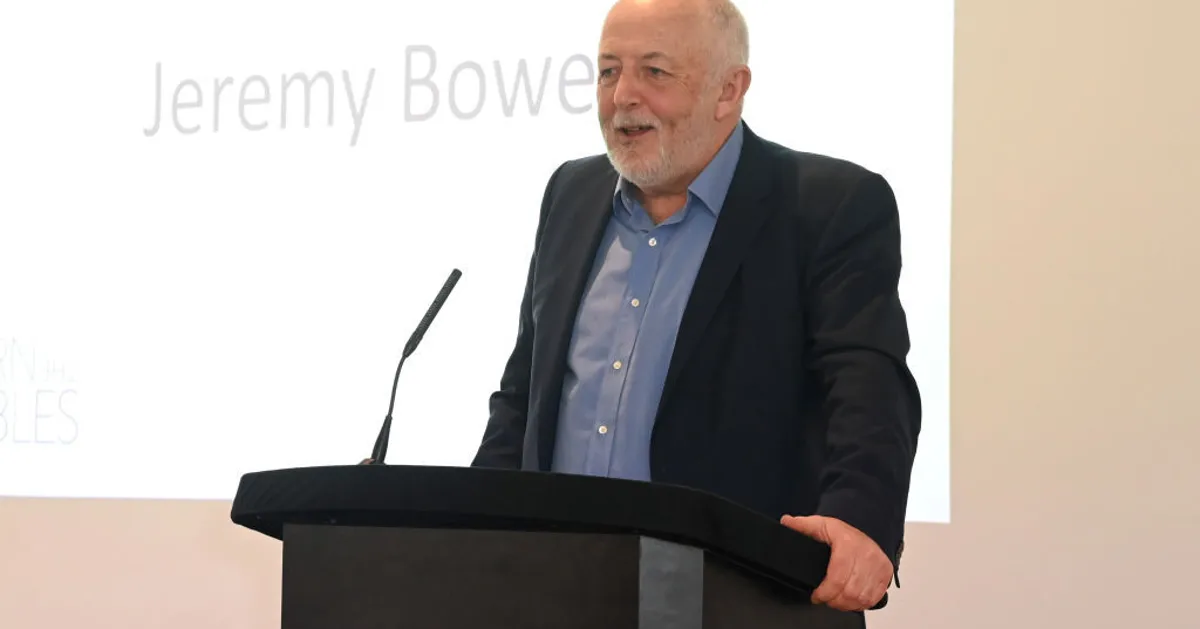
Jeremy Bowen has dismantled Donald Trump’s claim that America has already achieved “regime change” in Iran.
The US president made the bizarre comment as he said Tehran was ready to make a deal to end the war.
In response, a spokesman for the Iranian Revolutionary Guard Corps accused America of “negotiating with yourselves”.
Trump suggested that because US and Israeli strikes killed Iranian supreme leader Ali Khamanei, as well as other senior officials, his objectives have been achieved.
He said: “We have really achieved change, this is a change in the regime because the leaders are different to the ones that caused all those problems.
“We can say we really have regime change.”
But on Radio 4′s Today programme on Wednesday, Bowen dismissed the president’s claims.
The BBC’s international affairs editor said: “As for regime change, Trump came up with a fanciful suggestion in his remarks in the White House yesterday that because they’ve killed the supreme leader and a lot of the people around him, then it’s regime change. No it’s not. They’re changing some faces.”
He said the US and Israel had “massively underestimated the resilience of the regime”.
Bowen also said the war was now at “a crossroads moment”.
“Pretty soon the president is going to have to face a choice between getting deeper into the war or how does he end this?,” he said.
“Can he present a deal as a victory? He would need to get a concessions out of the Israelis that the Iranians might accept, and then he would have to frame that as a triumph.”
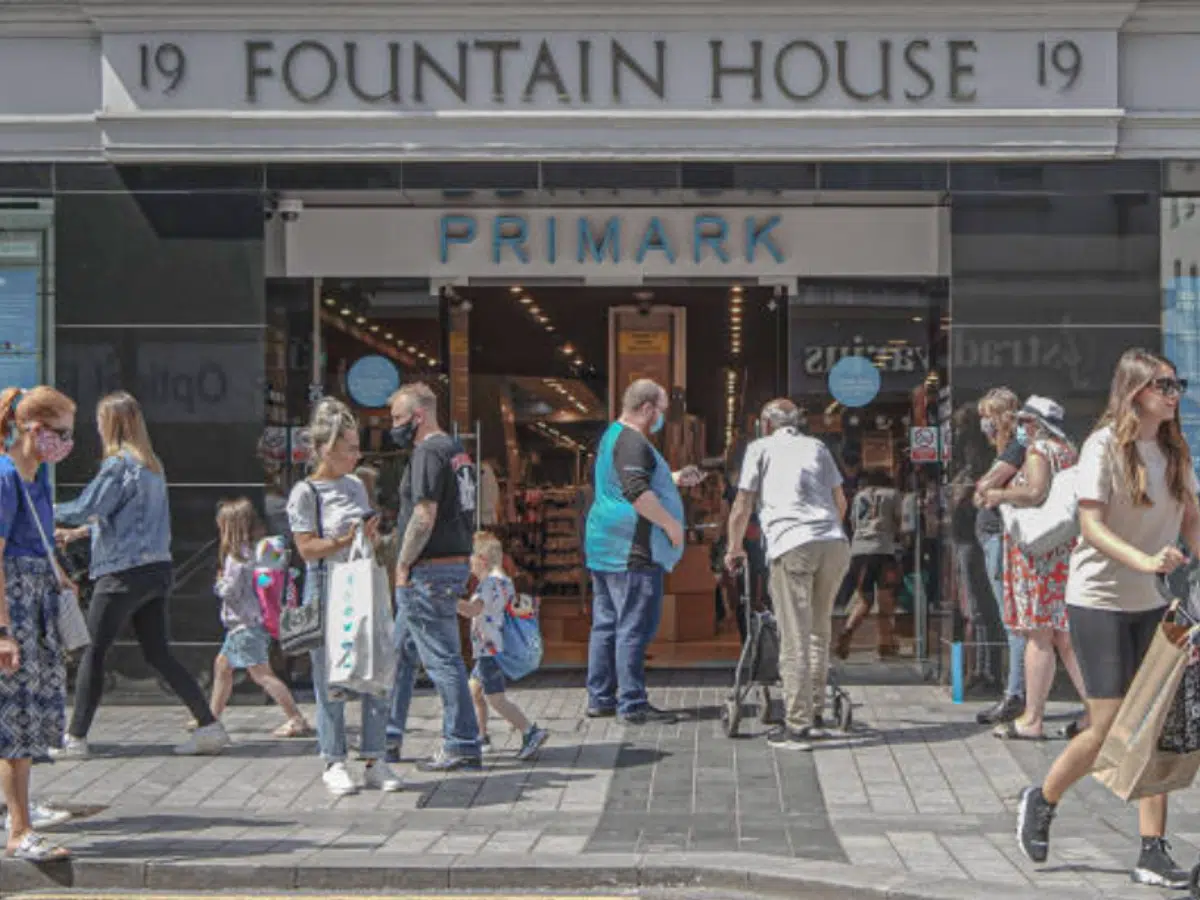
Belfast City Council is continuing to pursue its aim of ceaseless consumerism by extending shop opening hours within its area of influence. The move began last year in July 2025, when a majority of councillors (32 to 21) backed holding a public consultation on the proposed scheme. That consultation has now arrived with the council seeking:
…feedback from residents, visitors and business representatives on extending Sunday trading hours across the city during periods of high tourist and visitor numbers.
The North of Ireland has the most restrictive Sunday opening hours rules across Britain and Ireland, with shops over 280 square metres only permitted to open from 13:00 to 18:00. There are some exceptions, such as shops at transport hubs like railways and airports, or areas designated ‘holiday resorts’. England and Wales permit large shops to open for six hours, usually from 10:00 to 16:00, or 11:00 to 17:00. In the Republic of Ireland, no restrictions apply.
The new law will seek to designate the Belfast City Council area as a holiday resort, and allow large shops to:
…open at any time on up to 18 Sundays between 1 March and 30 September each year (excluding Easter Sunday).
Belfast and the neoliberal agenda
Sinn Féin councillor Natasha Brennan, whose party u-turned to back the proposed change, said the plan would:
…extend and enhance Belfast’s retail and hospitality experience on Sunday mornings to benefit residents, businesses and the increasing numbers of visitors to our city.
She also harped on about the need to “compete with other cities”, “boost visitor and tourism spending” and enable “additional trading opportunities for retailers.” Essentially a series of market-centric rather than human-centric arguments. The latter were provided in the earlier July 2025 debate around the plan, which was opposed by the Democratic Unionist Party (DUP), the Green Party, the Social Democratic and Labour Party (SDLP) and People Before Profit (PBP).
Séamas de Faoite of the SDLP said:
It is ironic we are being told this is what the people of Belfast want, when in fact the trade unions who represent the store workers of Belfast have made it very clear they don’t want it, and Retail NI who represent the small businesses of Belfast have made it very clear they don’t want it.
And we’ve had feedback from arts and community organisations to say they want to be involved in an animation programme that holds up the work they are doing in the city, that isn’t distracted by the opening of large retail.
He added:
Countless European cities operate on a model of having Sunday reserved for something different – for family time, for free time, for time when people can enjoy culture and the arts, where people who have a faith can have an opportunity to practice that faith. Why is it that Belfast continuously has this discussion?
Germany’s “shopping hell” – the way to go
The plan even managed to turn the DUP into budding Marxists, with Alderman Dean McCullough saying:
What can you say to the Alliance Party and Sinn Féin, who make even myself look left wing on this. I am a capitalist, because I have common sense, but I have a social conscience, and that means I want workers to have a day off on a Sunday. They work hard and tirelessly throughout the week, and throughout the year. They deserve a break.
The Canary can non-exclusively report that McCullough does in fact not typically possess common sense, but on this issue he is correct.
Meanwhile, Germany is the sort of European example de Faoite was alluding to. Described as “shopping hell” by TIME magazine, Germany forbids virtually all shops from opening on Sunday, under its catchily titled Ladenschlussgesetz law. Given Time magazine represents neoliberal hell, we’ll take their view as a ringing endorsement of the policy.
It was brought in during 1956 under the initiative of trade unions who argued Sunday should be used to give workers a break from ceaseless grind. A majority of Germans are still in favour of the law, which enables people to engage in more civilised pursuits like resting, leisure, and spending time with friends and family.
As mentioned by de Faoite, trade unions in the Six Counties (a decolonial term for the north of Ireland) still don’t want an extension of their potential working hours. The Union of Shop, Distributive and Allied Workers (USDAW) said:
USDAW opposes this. Members have told us that they already feel pressure to work on a Sunday, and that increasing trading hours will add to this. As well as retail workers themselves having concerns, smaller retailers have stated that they worry their trade will be taken by the bigger stores which could have a longer term detrimental impact.
Indeed, as it’s a lot harder for a family owned shop run by a couple to keep running seven days a week than it is for Tesco.
You don’t have to be religious to oppose Sunday opening hours. You just have to reject the inhumane demand of capitalist logic – that of being forced into an endless rat race only billionaires can win.
Featured image via the Canary

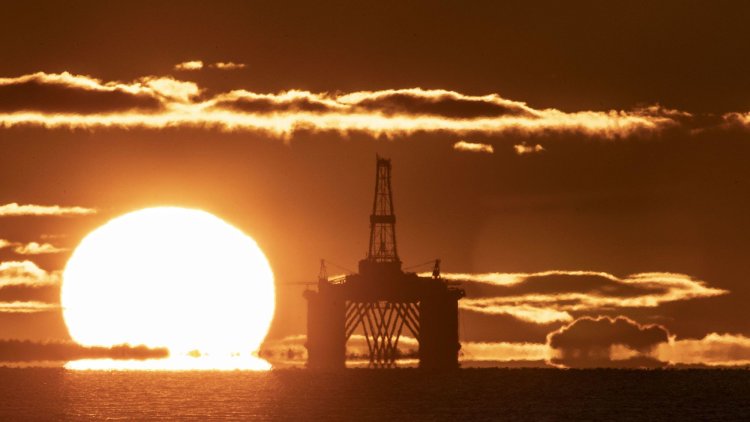
There are growing calls to provide new licenses to extra oil from the North Sea as the US-Israeli war with Iran continues. (Alamy)

6 min read
There are growing calls, including from US President Donald Trump, for the UK to allow new drilling in the North Sea in response to the spike in energy prices triggered by the Iran war. How much difference would it make?
It is not just Trump who has urged Keir Starmer to reverse the government’s position on drilling for gas and oil in the North Sea.
Conservative leader Kemi Badenoch has said she would get “all our oil and gas out of the North Sea” if she became prime minister, and on Tuesday, her party used an opposition day motion to force a House of Commons debate on the subject.
Last week, Reform UK leader Nigel Farage used his question in PMQs to ask Starmer why the UK couldn’t follow Norway’s lead and grant more licenses to drill in the North Sea, to create “thousands of jobs, increased tax revenues and cheaper gas prices”.
On Monday, The i newspaper reported that some Labour MPs were changing their mind on the subject amid the pressure being put on British energy prices by the Iran war. “This price shock has woken up a lot of people who hadn’t really engaged on the topic,” said one.
On the same day, Labour MP Henry Tufnell publicly called for the government to reverse its position on North Sea oil and gas, writing in The Sun: “In the face of further geopolitical turmoil, now is the time to alter our approach to energy to protect families.”
However, while political pressure to permit more North Sea drilling is rising, experts have cast doubt over how much it would actually help the UK deal with the current energy shock.
Why are energy prices rising?
The ongoing conflict in Iran is having a major impact on the supply of oil and gas.
In response to strikes by the US and Israel, Iran has threatened to attack ships seeking to pass through the Strait of Hormuz, which is one of the world’s most important shipping lanes, responsible for around a fifth, or 20 per cent, of the world’s oil supply. As a result, traffic through the lane has fallen sharply since the conflict started.
As well as threatening the Strait, Iran has also conducted strikes on other oil-rich countries in the region it views as allies of the US, including Saudi Arabia and the United Arab Emirates. Last week, international gas prices soared after reports that Tehran had carried out significant strikes on Qatar’s Ras Laffan, the world’s biggest liquified natural gas terminal.
This severe disruption to key sources of energy is leading international prices to rise sharply, with the UK very much among the countries impacted.
Petrol prices have taken an immediate hit, with the RAC estimating on Monday that drivers in the UK have paid an additional £307m for petrol and diesel since the conflict started at the end of February than they otherwise would have. Petrol and diesel prices per litre have risen from 132.9p to 146.4p and from 142.4p to 169.8p, respectively.
Last week, leading energy consultancy Cornwall Insights said it now expects typical household energy bills to increase by £332 when the current Ofgem price cap expires in July.
The government has already announced financial support worth £50m for houses reliant on heating oil, which are particularly exposed to the early impact of the crisis, and is currently considering targeted support for households nationwide if prices remain high.
What is the government’s policy on North Sea extraction?
The suspension of new oil and gas licences for the North Sea was one of Labour’s flagship energy policies when it was elected to office in 2024. Secretary of State for Energy Security and Net Zero, Ed Miliband, ordered a ban within days of taking power.
The move was part of the Labour government’s wider policy of developing more clean energy at home and making the UK less reliant on the international fossil fuel market.
“There is one lesson from this crisis, and only one in my view for the long term on energy policy, and that is that we need home-grown, clean power that we control,” Miliband recently told the BBC.
According to Politico, Miliband doubled down at a meeting of the Parliamentary Labour Party on Monday evening, telling MPs: “Anyone who tells you that new licenses in the North Sea will make any difference to price is not telling you the truth.”
In a briefing document prepared for Labour MPs ahead of Tuesday’s opposition day debate, seen by PoliticsHome, backbenchers were encouraged to put questions to the Tories and Reform like asking whether they “recognise that oil and gas is sold on the international market and therefore we are a price taker, not a price maker?”
Critics like the Conservatives and Reform accuse the government of putting its net zero agenda before a policy that could ease cost-of-living pressures facing households.
What impact would new North Sea drilling have?
However, if the government were to change course, what impact would it actually have on the current energy shock?
Adam Bell, director of policy at Stonehaven consultancy and former government energy adviser, told PoliticsHome that even if the government allowed a drilling “free-for-all” in the North Sea, it would not make any immediate difference to oil and gas prices.
Bell explained that while having more oil at home would have kept prices down to some degree, as it wouldn’t have had to travel via international shipping lanes affected by the Iran war, the infrastructure needed to carry out new drilling takes a long time to build, making the suggestion irrelevant to the current energy shock.
“We would have needed to have done that about three years prior,” he said.
Dr Hafez Abdo, an expert in oil and gas at Nottingham University, made the same point in an interview with Channel 4’s FactCheck this week, explaining that new drilling projects “typically require significant time before production begins”.
Bell also argued that there isn’t that much oil left in the North Sea to extract.
“There is also the reality that it would only have a marginal effect. There’s just not that much left in the North Sea. You might squeeze a bit more out, you might reduce the price by about a dollar in global terms,” he told PoliticsHome.
Chair of the energy security and net zero select committee, Labour’s Bill Esterson, said comparisons with Norway don’t really work as the country “has far greater reserves left than we do because we extracted much more of our oil and gas much sooner than they did”.
He added that Norway has a state-owned oil and gas company, giving it “far greater control” over the energy reserves than the UK has over what is in the North Sea.
“Oil and gas are produced by international companies, who sell it on the open market to the highest bidder, so there’s no way of reducing the price by what we produce in the North Sea,” the committee chair argued.
Abdo and Newcastle University Dr Mark Ireland told FactCheck that increasing production in existing North Sea sites was a better option than new projects, but would still have little effect on household energy bills, as prices are largely determined by international markets.
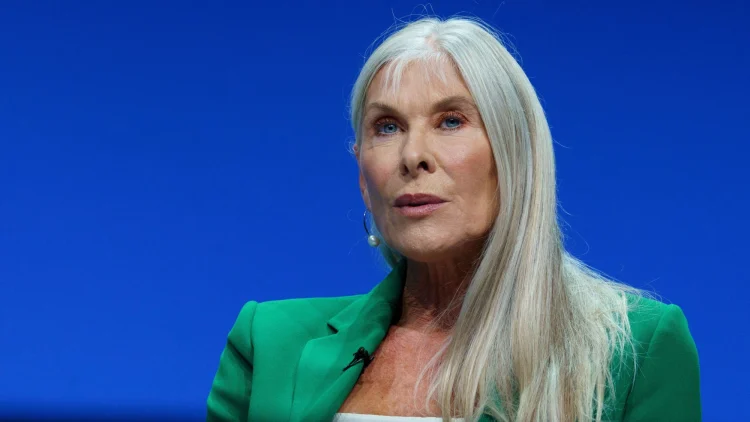
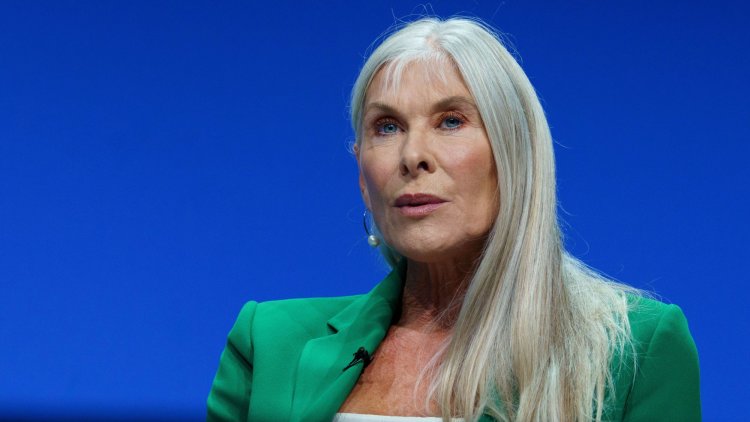
Sharron Davies, Conservative Party Conference in Manchester Central, October 2025 (Credit: Bridget Catterall/Alamy Live News)

11 min read
From racing doped East German swimmers to campaigning on women’s sport, Olympic medallist turned Conservative life peer Baroness Davies tells Sienna Rodgers that fairness will drive her work in the Lords
When Kemi Badenoch called Sharron Davies to ask her about joining the House of Lords, the outspoken former Olympian told the Tory leader she had two conditions.
“I said, ‘There are two things, Kemi, when I come in. The first one is, I’m not going to lie. Is that a problem?’ And she went, ‘No, that’s why I’m asking you,’ to her credit. And the second one, I said, ‘I have a grandma day, and I’m not prepared to give it up.’”
Baroness Davies of Devonport, 63, is a mother of three, all now adults, and grandmother of two little ones aged five and two. Although she relishes Mondays looking after her granddaughter Ariya, she has taken to her new role as a legislator with gusto and arrives with a definite agenda: women’s rights, children’s mental resilience and fitness for all.
Determined to spend two to three days a week in Westminster, she commutes from Bath for long days on the red benches: “I don’t think people realise how hard the people in the Lords actually work, and the amount of reading that’s required all the time.” And she must squeeze in the gym three or four times a week or she gets “cranky”.
Sitting in the peers’ guest room, Davies is immediately recognisable with her long white hair, piercing blue eyes and swimmer’s build. When she describes how, in an Olympic dining hall, you can easily guess each athlete’s sport from their body shape (“oh, there’s a gymnast, there’s a weightlifter, there’s a swimmer, there’s a high jumper”), The House can see exactly what she means.
Is it true, as has been reported, that she used to pee in the pool to put off competitors?
“That’s rubbish. It’s nonsense! I think it’s one of those stupid things where I went on a programme – I don’t know, They Think It’s All Over – in a jokey environment where you’ve got a comedian running the show, and somehow the whole thing goes to, ‘Who’s peed in a swimming pool?’, and I probably put my hand up.
“Bearing in mind I was spending six hours a day for 10 years of my life in the swimming pool, it’s really not unusual that I might have once peed in a swimming pool. I certainly didn’t do it to put competition off, and I certainly didn’t do it in a race. So, that’s garbage.”
“The psychological bashing was far worse than the physical bashing”
Davies talks tough and fast. Born in Plymouth to a big Navy family, she was coached in swimming from a young age. First by a professional who retired when she was about 10, and then by her ex-Navy father who learnt on the job, consulting books and personal trainers for advice.
She once broke both arms while tree-climbing. Her father sent her back in the pool with plastic bags over her casts.
“The thing is, though, elite sport is really hard. It’s not a walk in the park, and it’s not something where you can go, ‘Oh, I don’t feel like training today so I’m not going to go’. You’re not going to win if you have that attitude,” Davies explains.
“He got it in his head that one day missed was one day the opposition had against me. He didn’t really think that sometimes pushing when someone is very poorly… Funnily enough, the ‘two broken arms’ wasn’t the worst thing, because I wasn’t in pain once they were in plaster.”
What was the worst thing? “He trained me all the way through glandular fever.” He would motivate her by telling her she probably couldn’t do it. “And because I was bloody minded, I would do it.”
“The psychological bashing was far worse than the physical bashing, and it’s amazing, physically, what you can actually deal with. But mentally, that’s the bit that becomes much more delicate, really,” she continues.
“That happened in ‘79, ‘80, only six months before my Olympic Games where I won my medal. And that was really hard. On top of that, we had Mrs Thatcher trying to pull us all out of the Olympic Games. I’d been training for 10 years, and I was maybe not even going to get to go. Those six months leading up to that Olympics were mentally very, very tough.”

Aged 18, she won silver in the Moscow 1980 Olympics. Many countries boycotted the games, which took place during the Soviet-Afghan war, and the final medal tally was skewed amid widespread doping by East Germany and the Soviet Union.
German swimmer Petra Schneider took gold in Davies’ race, with a whopping 10-second gap, as well as setting five world records at the games. She later admitted to steroid use.
“These poor girls turned out with square jaws and five o’clock shadows. The gaps were massive. They would take 1, 2, 3 – no one had ever seen them before. That just doesn’t happen,” Davies says.
“All of them were ill, and many of them have died, and several of them have had disabled children – all because the state wanted to win medals in major internationals.
“I had that 20-year period where they were my nemesis. They were there all the time. All of my major medals were behind East Germans – every single one. I’d have been European champion at 14, had it not been for East Germans, as well as Olympic champion.”
At the time, Davies “didn’t really speak” to her doped rivals: they were surrounded by guards and always kept on separate buses. She remembers bringing them gifts from the capitalist West, however.
“I used to take tights and make-up and magazines for the East Germans and the Russians,” she says. “One Russian lady I used to swim against all the time, I got on really well with, and I’d take her stuff from the West, because they had nothing.”
While travelling behind the Iron Curtain racing as a girl, Davies says, she saw “extreme socialism”. The experience has clearly shaped her politics. Although never a paid-up party member until last year, she has almost always voted Tory (apart from once voting for Tony Blair’s Labour). As a “big believer” in common sense and ambition, she sees herself reflected in the Conservative Party ethos.
Davies had just had her second child when the Berlin wall came down and she went over to meet Schneider. Her former rival, who couldn’t have more children, was “besotted” with Davies’ daughter Gracie.
“She’d been told it was too dangerous to have any more kids. She had one daughter. She really wanted more kids. She literally tried to give me her medal, which is very sad. She’s very poorly. She takes all sorts of pills, for kidneys and heart and goodness knows what.”
She still feels the unfairness of East German victories against her and her friends keenly, but there is empathy there too.
“What Petra said to me, which was quite interesting, and also against the rules at the time: they were winning cars and flats for their parents,” she says. “Who am I to say I wouldn’t have done exactly the same thing in their position? So, I never had a problem with her as an individual. It was the state and it was the IOC I had the problem with, who let this happen and did nothing to stop it for such a long time.”
“We win races by hundredths of a second, and you’re saying we should potentially give away three-quarters of the length of the swimming pool”
For Davies, the lesson is straight-forward: fairness in sport can disappear quickly if governing bodies fail to act. “If you cut me down the middle, it would just say ‘fair’,” she says. The blatant injustices of the era in which she competed have made Davies vigilant about protecting women’s sport – and for her, the contemporary question of transgender inclusion is directly comparable to doping.
Over the last decade, prompted by the International Olympic Committee (IOC) removing its requirement for trans athletes to undergo sex reassignment surgery, she has campaigned against the inclusion of trans women in female categories, including in her 2023 book Unfair Play.
“Really, it’s never been my perspective wanting to keep anybody out of sport – the opposite. I want everyone to do sport, but I just believe that women and girls deserve their fair opportunities,” she argues.
“We get this tiny, tiny slither of the cake, and then we were told we can’t even have fair sport anymore. I just thought, I can’t sit and watch this happen to another generation of young women all over again.”
Davies is adamant that no peer-reviewed science shows it is possible to remove male physical advantage. (While research on performance advantages continues to be contested, and policies vary between sports, the IOC is thought to be moving towards her position on this same basis.) Tiny differences matter hugely, she points out: Michael Phelps, for example, was a swimming “superstar”, yet his world records have already been broken because the margins are so slim.
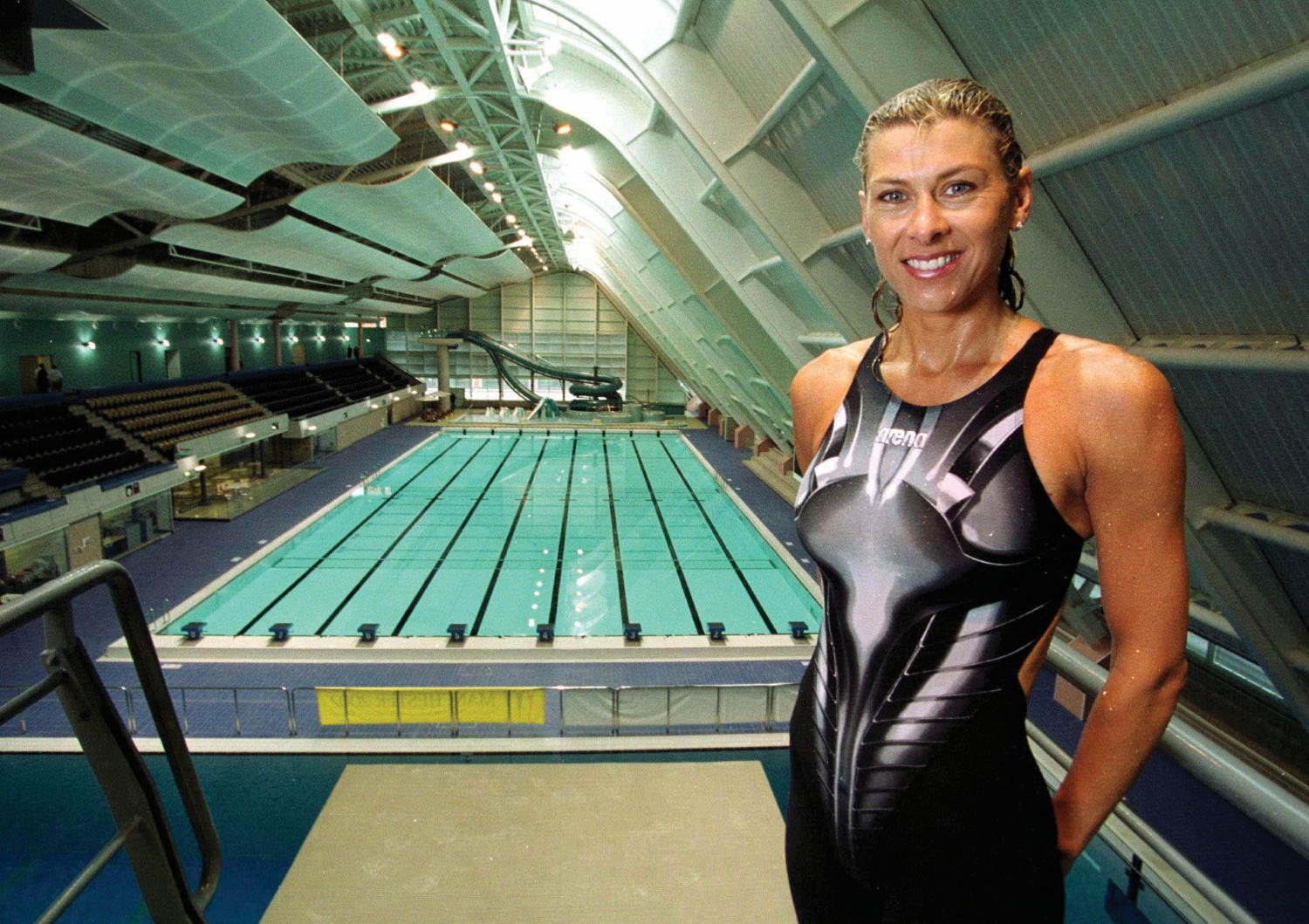
“At Olympic level, we’re talking between 10 and 30 per cent,” she says of the male advantage. “Even in swimming, which is the closest at 10 to 11 per cent, that’s nearly three-quarters of the length of the swimming pool. We win races by hundredths of a second, and you’re saying we should potentially give away three-quarters of the length of the swimming pool.”
The other side sometimes argues that elite sports already accept huge biological variation – wingspan in swimming, lung capacity in cycling – and those competing are already exceptional, so why should sex-linked advantages be different?
“That’s a rubbish argument,” Davies replies. “The category isn’t arm span; the category isn’t lung capacity; the category isn’t the size of your feet. The category is biological sex.”
Trans athletes have complained about the overly hostile nature of the debate and say there is too little understanding of the difficult situation they find themselves in. Not allowing them to compete in the category that matches their gender identity, they argue, is discriminatory and unfairly limits access to sport. What is her response?
“Why does the conversation always turn around to men in women’s sport, who we’re supposed to feel sorry for?” she shoots back. “Why is your first instinct to say, ‘but the poor men can’t be in the women’s races where they want to be’, rather than ‘the poor women are losing their medals and opportunities’? Why are women taught to put themselves second, third and fourth all the time?”
The solution she champions is two categories: one female category and another open and inclusive. Not all sports governing bodies agree: some still allow trans women to compete if they suppress testosterone for a period of time; others, as in rounders, are not considered sex-affected sports, which Davies rejects. “We already have legal precedence which shows that the pool is a sex-affected sport, so you can be damn sure hitting a ball with a bat is sex-affected.”
President Trump has reversed Biden-era rules around trans inclusion in sport, decreeing that schools which “let men take over women’s sports teams” risk their federal funding. Davies is highly supportive – but what does she make of Trump generally?
She hesitates for the first time. “He’s definitely a polarising character, isn’t he? There’s a lot of things about him I don’t like. But obviously, with regards to protecting women’s sport, he’s absolutely done the right thing.”
Davies is enthusiastically pro-Badenoch, having worked with her on these issues when the Tory leader was equalities minister: “I have great faith in Kemi. Kemi is probably the biggest reason why I said yes. I really like Kemi. I like her scruples. I like the way she thinks. I like her honesty. I think she’s a great leader. She would make a great prime minister.”
The campaigner enters the Lords with certain priorities – first, “to ring-fence women’s sport and create better opportunities for it”. She would like to bring in a British equivalent to the American ‘Title IX’ law, which requires equal provision for men and women in sporting facilities.
And, notwithstanding her own fondness for posting online, Davies urges girls to get off social media and into sport. “We used to lose girls from sport at about 14, 15, when they discovered boys and makeup… Now we lose girls at 11.” She wants to find new ways of engaging them. “If that means hair dryers and changing rooms and Zumba classes, then let’s think outside of the box.”
Davies may only just be settling into life in the Lords, but she is already considering the legacy she wants to leave there – and pursuing it with characteristic tenacity.

House votes to lift decades-old ban on supersonic passenger flights

Pump.fun Tightens Creator Fee Controls in New Update

These Hormone-Support Gummies Can Help Bloating and Stress


-
 Crypto World4 days ago
NIO (NIO) Stock Plunges 6.5% as Shelf Registration Sparks Dilution Worries
-

 Fashion5 days ago
Weekend Open Thread: Adidas – Corporette.com
-

 Politics5 days ago
Jenni Murray, Long-Serving Woman’s Hour Presenter, Dies Aged 75
-

 Crypto World4 days ago
Best Crypto to Buy Now: Strategy Just Spent $1.57 Billion on Bitcoin During Fear While Early Investors Quietly Enter Pepeto for 150x Potential
-

 News Videos7 days ago
RBA board divided on rate cut, unusually buoyant share market | Finance Report | ABC NEWS
-

 Crypto World4 days ago
Bitcoin Price News: Bhutan Sells $72 Million in BTC Under Fiscal Pressure, but the Smart Money Entering Pepeto Sees What the Market Does Not
-

 Tech5 days ago
inKONBINI Lets You Spend Summer Days Behind the Register
-

 Crypto World7 days ago
Canada’s FINTRAC revokes registrations of 23 crypto MSBs in AML crackdown
-

 Sports2 days ago
Remo Stars and Kano Pillars Strengthen Survival Hopes in NPFL
-
 NewsBeat2 hours ago
Manchester United reach agreement with Casemiro over contract clause amid transfer speculation
-
 NewsBeat7 days ago
Residents in North Lanarkshire reminded to register to vote in Scottish Parliament Election
-

 News Videos7 days ago
PARLIAMENT OF MALAWI – PAC MEETING WITH REGISTRAR OF FINANCIAL ON AMARYLLIS HOTEL – INQUIRY LIVE
-

 Politics6 days ago
Gender equality discussions at UN face pushbacks and US resistance
-

 Business3 days ago
No Winner in March 21 Drawing as Prize Rolls to $133 Million for Next
-

 Business7 days ago
Who Was Alex Pretti? 5 Key Facts About the ICU Nurse Killed by Federal Agents in Minneapolis
-

 Sports2 days ago
Gary Kirsten Accuses Pakistan Cricket Board Of ‘Interference’, Mohsin Naqvi Responds
-

 Tech3 days ago
Give Your Phone a Huge (and Free) Upgrade by Switching to Another Keyboard
-

 Tech7 days ago
Inventec’s bizarre VeilBook laptop hides its touchpad under a sliding keyboard just to give cooling fans a little breathing room
-

 Sports5 days ago
2026 Kentucky Derby horses, odds, futures, preview, date: Expert who nailed 12 Derby-Oaks Doubles enters picks
-
Sports6 days ago
Vikings Free Agency Enters Phase 2 with Key Questions
You must be logged in to post a comment Login