
Politics
The drugs made me do it


The post The drugs made me do it appeared first on spiked.



Dr. Alan Mendoza is the new Reform UK candidate for Abbey Road ward in Westminster who is quietly stealing our money to destroy Palestinian villages. The local elections on Thursday 7 May will see Mendoza beg for votes in London, but his primary loyalty seems to lie with Israel. Whilst he presents himself as ‘anti-establishment’, his career reveals a man deeply ingrained in the darkest wings of the British and Israeli establishments. And with him being Chief Advisor on Global Affairs for Reform UK, to which one does his allegiance lie?
Alan Mendoza — His original sin
In April 2011, Mendoza’s Henry Jackson Society (HJS) of which he is executive director, absorbed the Centre for Social Cohesion. The HJS is a Westminster think-tank that promotes “liberal interventionism” and a dark ‘transatlantic’ foreign policy. Basically, it’s a shill for Zionists to break into the heart of our politics. It was originally founded as a group for people from different political parties. Since then, it has been warped into a base for people who push for war. And they use hateful rhetoric against Muslim people in the UK.
The CSC merger was a massive moment for radicalisation. It opened the doors for notorious anti-Muslim wankers such as Douglas Murray to step into the heart of the organisation. This shift was so radical that it tore the society apart. Co-founder Matthew Jamison eventually tore into the HJS, denouncing it as a “far-right, deeply anti-Muslim racist propaganda outfit” that demonised Muslim people and Islam.
Another senior member to resign from the project in 2012 was Marko Attila Hoare. Citing the HJS’s obsession with “anti-Muslim and anti-immigration views” following the takeover as the final straw. This vile takeover ensured the HJS ceased being a foreign policy group and started being a Zionist weapon against Black, Brown and Muslim communities.
Planting trees over a genocidal crime scene
Mendoza’s disgusting reach extends way beyond that racist little think-tank in London. As the President of the Jewish National Fund UK (JNF), he leads a charity that literally erases Palestinians and their history, just to fund illegal occupation. And they’re using our fucking money to do it. One of their most disgusting projects is Britannia Park, a leisure facility in Israel.
This park covers 10,000 acres. And it was built directly over the ruins of seven Palestinian villages, including Ajjur. These communities were ruthlessly ethnically cleansed in 1948 to make way for Israeli expansion. The JNF is planting forests over the bones of innocent Palestinians to make sure displaced people can never return to their homes.
This is a systematic process of erase and deny. It physically blocks the Right of Return for refugees. And why Mendoza preaches about ‘British values’, he heads an organisation that shreds international law and builds on the remains of stolen homes.
And it gets worse.
The stolen land that WE foot the bill for
This isn’t just a devastating issue on the other side of the world. It is our fucking money they are using to commit these disgusting crimes. Through its subsidiary, KKL Charitable Accounts (operating as SmartGiving), Mendoza’s network moved an astounding £9,683,167 in the last financial year. And because it has charitable status, this theft of stolen land is subsidised by us. The British taxpayer is footing the bill through Gift Aid.
This vile little loophole allows wealthy wankers to get a 25% top-up from the government to fund projects that international law deems to be presumptive war crimes. To put it simply, our money is being used to erase Palestinian land and hand it over to settlers in Israel. And that fills me with rage. So whilst Reform UK says it wants to ‘stop the waste’ of public money, it’s own chief advisor is funnelling tax-payer money into illegal settlements behind the scenes.
In 2021, the KKL-JNF board even voted to officially facilitate land purchases in the occupied West Bank. So every quid they reclaim through Gift Aid by Mendoza’s Zionist charities, is a quid that we could use to heal our broken NHS and feed our hungry children. But no, our government is effectively giving it to the ethnic cleansing of Palestinians.
Alan Mendoza — Foreign agents are infiltrating our politics
Mendoza is now the Chief Advisor on Global Affairs for Reform UK. This is the man who is writing Nigel Farage’s foreign policy. A man who is deeply invested in Zionist expansion is definitely not going to be interested in fixing any broken system we have in the UK. The party’s ‘anti-establishment’ bullshit is nothing but a smoke screen designed to support and uphold racist ideologies fed to us by Israel’s far-right.
This corruption of the UK political landscape is a family affair for the Mendozas it seems. Alan is married to Claudia Mendoza, who is the Chief Executive of the Jewish Leadership Council. So whilst her husband appears to be Israel’s infiltrator into our politics, she seems to be reinforcing their control quietly behind the scenes.
As the head of the JLC, Claudia lobbies our government to protect these Zionist entities. Her organisations orchestrate the crack downs on anti-Zionist activism and the pro-Palestine movement.
If we allow Alan Mendoza to be elected to the Abbey Road ward, we are effectively allowing a Zionist takeover of our own democracy. Mendoza doesn’t give a flying fuck about saving the public’s money. While our society is crumbling, our NHS failing and our kids are hungry, Mendoza diverts OUR money away from those issues. He is funnelling our cash into paving over the bones of massacred Palestinians.
Mendoza is a Zionist shill, and we have to do everything we can to stop him getting into power. Time to dig out these parasites that have latched on to Reform UK. We need to do it now before it’s too late.
Featured image provided via author
By Antifabot


Donald Trump’s racist immigration forces deported over 440,000 people in the US fiscal year for 2025. His jackbooted Immigration and Customs Enforcement (ICE) agents have been terrorising American cities — and even killing US citizens — virtually since he came back to power in 2025.
US outlet Axios reported:
The top U.S. immigration enforcement agency deported 442,637 people between October 2024 and September 2025, according to newly-released statistics.
Adding:
The top-line figure is about 171,000 people more than the fiscal year before, but far short of Trump’s campaign promise to deport one million people a year.
Clearly Trump’s racist immigration regime is not hitting its grotesque targets:
The figure is the first official deportation statistic released under the Trump administration and was included in a congressional budget justification report.
Axios reported:
The Office of Homeland Security Statistics hasn’t updated its data since November of 2024. Homeland Security’s much-hyped “self deportation” figure is not included in the report. The agency has claimed in press releases that more than two million have “self-deported” but hasn’t shared regular data.
MAGA sad about Trump’s mere 400k deportations
Meanwhile Trump’s fascistic Make America Great Again (MAGA) allies have said the president has gone soft on deportations. Nigh-on half a million people ejected not enough for them then…
The grim-sounding Mass Deportation Coalition is chief among the complainers. Its leader, Mike Howell, told Axios:
The truth is the first year was not a year of mass deportation
Adding:
A conscious decision was made to go after the worst first, which was, we’ll call it a deviation from the central campaign promise of mass deportations.
A White House spokesperson told the outlet:
Nobody is changing the Administration’s immigration enforcement agenda and the President’s entire team is on the same page when it comes to implementing his policies.
Budgetary changes
And MAGA’s white supremacist weirdos might have more discomfort in store for them. A new report by Homeland Security, which control ICE, says that it has actually asked for less money for the next financial year:
The ICE report shows that the goal for next year is to deport 1 million people. But the agency has asked for less money in fiscal year 2027 than it did in fiscal year 2026.
ICE recently lost its boss after Trump fired nativist horror Kristi Noem and replaced her with another fascist tool, the preposterously named Markwayne Mullin. As the Canary wrote at the time:
Turns out that using a masked secret police to murder and kidnap people to concentration camps makes you unpopular, even in America.
As such, Noem has made a convenient sacrifice to make Trump look like he’s relenting. Meanwhile, nothing will change under Markwayne Mullin, save maybe that ICE will get a little more cautious, a little more covert in their actions.
There is no number of deportations which will sate American fascism’s thirst for human suffering. Trump may be distracted by his failed war against Iran, but sooner or later his Sauron gaze will turn back to the US and his attention will return to the ignoble task of kicking out immigrants left, right and centre. We hope the American people will continue to fight back, as they have in Minnesota and elsewhere.
Featured image via the Canary
By Joe Glenton


The Palestinian national beach soccer team has arrived in Sanya, China, to participate in the 2026 Asian Beach Games, but this time their arrival is unlike any previous appearance.
The team’s roster is incomplete. The coaching staff is absent. The international stadium is open to a team exhausted by years of inactivity.
Their progress has been halted by war, reduced to mere survival rather than competition.
Trapped in Gaza
The team enters the tournament with only 11 players. This includes five players from the Gaza Strip currently in Cairo, and six players from the West Bank, who are participating for the first time simply to fill the roster.
This lineup seems more like an attempt to fill space than to build a complete team. In reality, it is all that remains of a team that was once close to the top of the sport.
The most heartbreaking aspect is the absences: the entire coaching staff is not traveling, and key players are trapped by the war in Gaza. They will be absent from the fields, along with the very essence of the game itself.
The long years of inactivity, stretching back to the outbreak of war, have left Palestinian beach soccer with nothing but a dormant memory – a sport barely surviving.
Sports eroded by war
Beach soccer in Palestine didn’t suddenly collapse; rather, it gradually eroded over nearly three years of inactivity.
Training camps ceased, travel opportunities vanished, and international participation dwindled to almost nothing – a stark reflection of the direct impact of war on sports at all levels.
This sport wasn’t alone in its isolation; the beach volleyball team was also unable to travel to the same tournament, completing the picture of Palestinian absence from the competitions. It was as if participation this time wasn’t measured by the number of teams present, but by the number that couldn’t make it.
Despite all this, participation carries a dimension that transcends the result and the tournament itself. It’s an attempt to keep Palestine’s name present on the international stage, even if the presence is incomplete and burdened by circumstances. It’s a determination not to completely sever ties with the world.
The Palestinian national team’s memories harken back to a different time. When he was competing fiercely in Arab and Asian championships, coming close more than once to the World Cup dream, and even reaching the podium to win bronze at the 2012 Asian Beach Games in China.
That win is a distant image that seems today to belong to another life, before war redrew the boundaries of the game, the field, and the opportunity.
By Alaa Shamali


Disabled Shetland pensioner Don Whittle has accused Reform UK leader Nigel Farage‘s ‘heavies’ of ‘manhandling’ him – assault, in other words – after Farage’s car took a disabled parking bay.
Incident caught on camera
75-year-old Whittle has rheumatoid arthritis, heart failure, a pacemaker and a spinal condition that weakens his arms and legs. He says that the thugs grabbed him after he tried to take photos of Farage’s car in a disabled spot he needed to drop his wife off. The incident was caught on camera:

‘Lucky’ henchmen
An unfazed Whittle quipped that the henchmen were “lucky – I could have used my martial arts training”. He went on:
I’m disabled and I take offence to people that park in disabled spots who are not disabled. I went down to take photographs of them parked there and so they started to move off and decided to park on a corner on double yellow lines. I photographed them there.
This clown wouldn’t let me through. And I couldn’t go through on the pavement because of the protesters. I just wanted to get through to the front to take pictures of them blocking the street. [After Farage got in the car] I walked past them and went and stood in front of his car, thinking, ‘Well, if you can stand and block me, I can stand and block you.’
So I stood there. And two of his henchmen came out and manhandled me across the road out of the way. They weren’t considerate. They didn’t say, ‘Would you mind moving out of the way?’ They didn’t even ask. They just grabbed me. I said, ‘I’m disabled.’ And they didn’t care.

Shetland Greens intervene
Shetland Greens mounted a protest against Farage’s visit. Party candidate said:
We are here to oppose the toxic Trumpian politics of Nigel Farage. We stand against hate, our politics are guided by kindness, and we support the human rights of all people including migrants, ethnic minorities, and all marginalised people.
The Reform grifter could easily have afforded to pay for a parking space. He has been identified as having the second-biggest non-parliamentary earnings among all UK MPs after spending more than 1,100 hours outside Parliament working for fourteen outside employers. Clacton voters have complained that he is rarely in the constituency.
A sign spotted on a fence alongside one of Shetland’s main roads described Farage as a “frog-faced wanker”.
By Skwawkbox
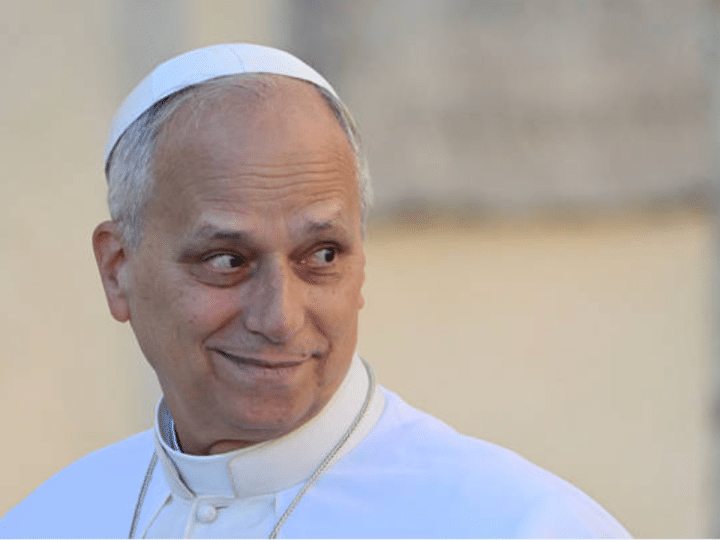

The Pope has criticised world leaders who spend billions on wars. This comes just days after US president and all-around fucking dickhead Donald Trump depicted himself as Jesus on Truth Social.
Trump vs Pope
American-born Pope Leo has been critical of Trump and the genocide he and Israel are committing. He rightly made Trump look like an absolute cock with the most grace by saying:
War divides; hope unites. Arrogance tramples upon others; love lifts up. Idolatry blinds us; the living God enlightens. All it takes is a little faith, a mere “crumb” of faith, in order to face this dramatic hour in history together — as humanity and alongside humanity. #Peace
On 13 April, Trump attacked the Pope in a lengthy post. As Canary reporter Willem Moore said, feel free to read it all if you’ve got a spare 10 minutes and don’t respect your own time.
This will end well.
Some genius in Trumpland decided, “Hey, the best thing we can do now is to go to war with the Holy Father.” pic.twitter.com/zYG3IuNivB
— Rick Wilson (@TheRickWilson) April 13, 2026
The paedophile president followed that up by posting the now-infamous AI image:
Trump is now posting AI images of himself as Jesus Christ healing, what appears to be, a young Jeffrey Epstein. pic.twitter.com/zG2OQKbP9s
— Harry Sisson (@harryjsisson) April 13, 2026
Surreal
The Pope responded to Trump’s latest outburst with:
I don’t think that the message of the Gospel is meant to be abused in the way that some people are doing.
I will continue to speak out loudly against war, looking to promote peace, promoting dialogue and multilateral relationships among the states to look for just solutions to problems.
After much criticism from his own supporters, Trump deleted the post. He then tried to claim he was actually supposed to be a doctor, not Jesus. Because doctors typically place their hands on their patients’ foreheads and heal them with light, don’t they?
He also of course, blamed the ‘fake news’:
Reporter: Did you post that picture of yourself depicted as Jesus Christ?
Trump: It wasn’t a depiction. I did post it and I thought it was me as a doctor. And had to do with red cross as a red cross worker, which we support and only the fake news could come up with that one. pic.twitter.com/7Y1u86GjkP
— Acyn (@Acyn) April 13, 2026
As the Canary also reported, JD Vance also tried it with the Pope, but got heckled in the process. Maybe you should just go pay him a visit, JD, it worked with the last one.
Now, on his tour of Cameroon, Pope Leo is doubling down on calling out genocide.
He criticised leaders who:
turn a blind eye to the fact that billions of dollars are spent on killing and devastation, yet the resources needed for healing, education and restoration are nowhere to be found.
He continued:
The masters of war pretend not to know that it takes only a moment to destroy, yet often a lifetime is not enough to rebuild
Speaking to crowds, he said the world was ‘being ravaged by a handful of tyrants’ and that in Cameroon in particular there was ‘an endless cycle of destabilisation and death’.
Fresh off the back of his speech, the Pope tweeted another message which was blatantly aimed at Trump:
Woe to those who manipulate religion and the very name of God for their own military, economic, and political gain, dragging that which is sacred into darkness and filth
It’s clear that the Pope will not be intimidated by pathetic little men like Trump, now if only other leaders like Keir Starmer could follow in his wake.
Though it will never not be fucking ridiculous that the bloody pope subtweets the president of the United States.
Featured image via the Canary
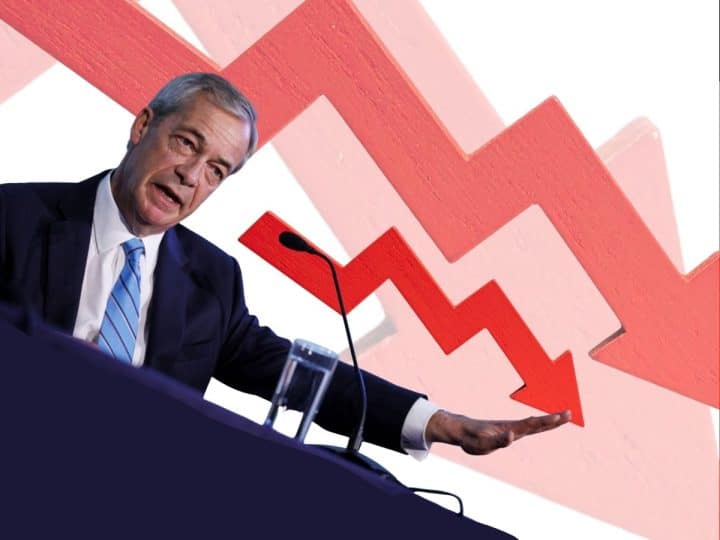

With the local elections fast approaching, Reform would ideally like to see their polling go up. Instead, they just lost a sixth of their supporters in one week according to More in Common:
Reform drops to 25% in this weeks voting intention their lowest since April 2025. They lead the Tories by 3 & Labour by 4
N = 2,011 | 10-13/4 | Change w/ 8/4 pic.twitter.com/DNZVf9Incv
— Luke Tryl (@LukeTryl) April 15, 2026
 REF UK 25% (-5)
 CON 22% (+3)
 LAB 21% (+1)
 GREEN 13% (+1)
 LIB DEM 12% (nc)
 OTH 3% (nc)
 SNP 2% (nc)
This is particularly embarrassing for Reform as the pollster More in Common is linked to their party:
Well of course Miles Jones, Reform UK’s Deputy Leader in Bexley works for pollster More in Common… pic.twitter.com/xMR8nOwyq3
— Reform Party UK Exposed
 (@reformexposed) April 3, 2026
Reform plummet
Of course, we can’t trust polls by themselves. The fact that different pollsters get such wildly different results is testament to that. In the above, More in Common have the Greens at 13%; several other pollsters regularly have them outperforming Labour:
— Seats — Poll: @FindoutnowUK, 15 Apr (+/- vs 8 Apr) pic.twitter.com/5um8xYOZyi
— Stats for Lefties
 POLL | Reform lead by 6pts
Ref: 26% (+1)
POLL | Reform lead by 6pts
Ref: 26% (+1) Grn: 20% (=)
 Con: 17% (=)
 Lab: 16% (=)
 Lib: 11% (=)
Ref: 323 Grn: 108 Lib: 77 Con: 48 SNP: 47 Lab: 12
Lib: 11% (=)
Ref: 323 Grn: 108 Lib: 77 Con: 48 SNP: 47 Lab: 12 Plaid: 8

 (@LeftieStats) April 16, 2026
— Seats — Poll: @YouGov, 12-13 Apr (+/- vs 7 Apr) pic.twitter.com/m0PQxoBh26
— Stats for Lefties
POLL | Reform lead by 5pts
Ref: 24% (=) Con: 19% (=) Grn: 18% (+2) Lab: 17% (+1) Lib: 13% (=) Res: 4% (=)
 YP: 0% (-1)
Ref: 282 Grn: 91 Con: 83 Lib: 81 SNP: 47 Lab: 34
(@LeftieStats) April 14, 2026
YP: 0% (-1)
Ref: 282 Grn: 91 Con: 83 Lib: 81 SNP: 47 Lab: 34
(@LeftieStats) April 14, 2026
At the same time, a sudden drop with a pollster can indicate that something is amiss for a party (that or something is amiss with the pollster).
Looking at Politico’s Poll of the Polls, we can see that averaged out Reform are down six percentage points from where they were six months ago:

It’s no wonder Reform are losing support. The following are just some of the stories we’ve reported on in the runup to the local elections:
- Reform activist said ‘Hitler was right’.
- Reform candidate wants to ‘tear down’ the NHS.
- Reform candidate exposed as a horny nincompoop.
- Day One Reform activist accuses party of ‘sewer’ politics in explosive resignation letter.
- Farage heckled at Reform’s Jimmy Saville-aping London launch.
A fish rots from the head
On 13 April, Farage announced his partnership with Stack BTC. As part of this, he purchased an unseemly quantity of Bitcoin – i.e. the digital money which you can’t use to buy everyday things but you can use to scam people:
BREAKING: Nigel Farage has purchased £2m of Bitcoin for Stack BTC – becoming the first sitting MP and the first UK political party leader in history to publicly buy Bitcoin.
A landmark moment for Bitcoin in British politics.$STAK @Nigel_Farage @blockchain @kwasi_stackbtc… pic.twitter.com/O614kKe5TN — Stack BTC (@stackbtc_) April 13, 2026
Farage bought the crypto from a company linked to Kwasi Kwarteng – the chancellor who delivered Liz Truss’s disastrous budget (the one which led to rampant inflation we never recovered from).
Journalist Fraser Nelson accused Kwarteng and Farage of working together to generate “hype” for their own benefit:
No, Kwasi: your company gave Farage a sweetheart deal. A bonus he can exercise in just two years. Ordinary shareholders don't have this.
The penny-share nature of your firm means Farage is already ~£200k up (+93%). With crypto, hype creates value. https://t.co/maRks88jMO https://t.co/5v9a9j7m5K
— Fraser Nelson (@FraserNelson) April 13, 2026
Hype is what made crypto what it is.
The value of BitCoin kept going up because people kept buying it. Those who bought early made bank; those who bought late did not.
In other words, there was a pyramid-like shape to the affair.
Because of the nature of triangle-shaped ventures, it became harder and harder to get people to buy in. Resultantly, BitCoin’s value has plummeted in the past six months:

Crypto holders need the value to keep going up – hence the promotional deals like this one with Farage.
Lib Dems are challenging the Farage Crypto dealings with the FCA https://t.co/L8LEGTpV0y
— dave lawrence

 (@dave43law) April 13, 2026
A long way to go
Reform UK have certainly lost support, but we need to make sure they lose more.
Whether it’s jumping into bed with dodgy donors or sucking up to Trump, this party is trouble.
We just don’t want the public to realise too late that Farage and co never had their best interests at heart.
Featured image via Canva
By Willem Moore


The BBC has confirmed Israel is demolishing hundreds of homes in southern Lebanon. Yet the corporation left out some key context: home demolitions are a part of an explicitly genocidal strategy know as the Dahiya doctrine.
BBC Verify used satellite imagery to confirm hundreds of homes had been deliberately destroyed with airstrikes or Israeli occupation force (IOF) demolition teams on the ground.
The BBC report said:
BBC Verify analysis found more than 1,400 buildings had been destroyed since 2 March based on verified visual evidence.
This is just a snapshot of the overall damage caused by Israeli air strikes and demolitions, because of limited access on the ground and available satellite imagery.
The reported acknowledged that the “true scale” is likely to be “much higher”.
The BBC did report some of the context:
Israel’s levelling of these structures comes after Defence Minister Israel Katz’s order on 22 March to “accelerate the destruction of Lebanese homes” near the Israeli border based on the “model in Gaza” as part of its campaign against Hezbollah.
Adding that:
The systematic demolition of these towns and villages may amount to a war crime, international law experts told BBC Verify.
And to their credit (for once) the BBC noted that Israel provided no evidence:
that Hezbollah has embedded military infrastructure within civilian areas in the region.
But there is still a lot missing from their report…
Lebanon: vital context
Here’s a breakdown of how we actually got here – usually missing from legacy media reporting.
Israel violated the US-brokered Lebanon 2024 ‘ceasefire’ over 15,400 times since it was signed. Must be a world record. Yet a short salvo from Hezbollah in early March 2026 was framed as a signal outrage by legacy media. That attack has been cited by the settler-colonial state as a pretext to invade.
Not satisfied with pulling the US and its allies into a runaway war with Iran, Israeli troops have pushed into Lebanon with airstrikes pummelling the capital Beirut.
The Canary reported the early moments of the new war here. You can read about the secretive Israel-US ‘side letter’ pact which gave Israel carte blanche to keep bombing through the ‘ceasefire’ here. And our extensive coverage of Israel’s ceasefire regular breaches here.
But there’s more…
Dayiha scorched earth doctrine
The so-called Dayiha doctrine was born in Lebanon and sharpened over many years. This scorched earth approach to ‘counter-insurgency’ found its fullest expression in Israel’s genocidal assault on Gaza. Now it is back where it began: Lebanon’s combative south.
As the Canary reported on 6 March, just days into the new Israel invasion, peace and conflict expert professor Paul Rogers explained the history and character of the doctrine particularly well in the context of Gaza in December 2023. Surveying the early devastation in the enclave, he said the horror spoke to a:
specific Israeli way of war that has evolved since 1948, through to its current Dahiya doctrine, which is said to have originated in the 2006 war in Lebanon.
Rogers said:
In July of that year [2006], facing salvoes of rockets fired from southern Lebanon by Hezbollah militias, the IDF fought an intense air and ground war.
However:
Neither succeeded, and the ground troops took heavy casualties; but the significance of the war lies in the nature of the air attacks. It was directed at centres of Hezbollah power in the Dahiya area, in the southern suburbs of Beirut, but also on the Lebanese economic infrastructure.
It was there in Dahiya that Israel’s genocidal impulses mutated into a new policy of annihilation.
As Rogers explains:
This was the deliberate application of “disproportionate force”, such as the destruction of an entire village, if deemed to be the source of rocket fire.
One graphic description of the result was that “around a thousand Lebanese civilians were killed, a third of them children. Towns and villages were reduced to rubble; bridges, sewage treatment plants, port facilities and electric power plants were crippled or destroyed.”
This “deliberate application” of massive Israeli violence goes far beyond fighting ‘terrorists’ and aims to destroy the very means of life.
As we always make sure to point out, Israel’s ambitions in Lebanon are not and have never been ‘defensive’. In the Zionist fever-dream of a Greater Israel, Lebanon is already theirs. So are large parts of other neighboring countries. The application of the latest version of the Dahiya doctrine to Lebanon is just the last expression of this Western-backed colonialist yearning.
Featured image via the Canary
By Joe Glenton


Polling suggests that Labour are facing a wipeout in the upcoming local elections. As these elections will also see votes in the Scottish and Welsh assemblies, this could see the party of government reduced to a movement which doesn’t exist outside England:
Labour is projected to collapse to just 15% of seats in the Senedd, after hovering around 50% since it was formed.
Plaid Cymru is to achieve its best result ever of 37 seats (39%)
Greens and Reform are to enter the Senedd for the first time, on 4 (4%) and 29 (30%) respectively. pic.twitter.com/asVJwkLuep — cez (@cezthesocialist) April 16, 2026
Labour collapse
Pollsters have been predicting that the party faces oblivion in the Senedd (Welsh parliament) for a while:
— Seats — Poll: @BeaufortLtd, 2-22 Mar (+/- vs 8 Feb) pic.twitter.com/rpFcgNTw6i
— Stats for Lefties
Senedd poll | Plaid lead by 3pts
Plaid: 30% (+1) Ref: 27% (=) Lab: 17% (-3) Grn: 11% (+4) Con: 9% (-1) Lib: 6% (+1)
Plaid: 36 Ref: 33 Lab: 15 Grn: 6 Con: 4 Lib: 2
(@LeftieStats) April 1, 2026
— Seats — Poll: @YouGov, 9-18 Mar (+/- vs 12 Jan) pic.twitter.com/OYI93UgBsr — Stats for Lefties
Senedd poll | Plaid Cymru lead by 6pts
Plaid: 33% (-4) Ref: 27% (+4) Lab: 13% (+3) Grn: 12% (-1) Con: 7% (-3) Lib: 5% (=)
Plaid: 41 Ref: 33 Lab: 11 Grn: 9 Con: 1 Lib: 1
(@LeftieStats) March 24, 2026
The leading party is Plaid Cymru, which is a nationalist party that wants to achieve Welsh independence. The fact that Plaid are doing well shows many Welsh voters are coming around to the party’s way of thinking.
Instead of offering a positive alternative, Starmer’s party are putting out materials like the following:
Labour has literally governed with Plaid. Meanwhile Reform are Nazis, apparently. Stop them!
But you governed with a party which you’re claiming is…the same? — Aaron Bastani (@AaronBastani) April 15, 2026

We saw an example of Labour’s fading Welsh fortunes in the Caerphilly by-election of October 2025:
Composition of the Senedd after by-election:
Labour no longer has a working majority. pic.twitter.com/bJPrQ2V1dc
— Stats for Lefties
LAB – 29 (-1) CON – 14 (-) PLAID – 13 (+1) IND – 2 (-) LD – 1 (-) REF – 1 (-)
(@LeftieStats) October 24, 2025
IND – 2 (-) LD – 1 (-) REF – 1 (-)
(@LeftieStats) October 24, 2025
This is what ex-Labour mayor Jamie Driscoll wrote for the Canary following Labour’s defeat:
Caerphilly is a constituency of South Wales Valleys. The spiritual home of the Labour movement. Labour’s superficially impressive haul of 411 Westminster MPs in July 2024 was an anti-Tory vote. They’ve squandered their opportunity.
Labour have been insincere, insidious, and incompetent. Having won the leadership by lying to Labour members (remember his Ten Pledges?), team Starmer doubled down and told different lies to different sections of the electorate. It’s not just that they are floundering in the polls. The party is structurally ashamed of itself. This time last year my social media feeds still had a handful of tribal Labour loyalists saying “give them time”.
No more.
Disasterclass
Keir Starmer looks set to go down in history as the politician who ended Labour’s viability in Wales. The question is whether his next record will be ending the party’s viability everywhere else.
Featured image via Getty
By Willem Moore


Trump got in trouble recently for depicting himself as Jesus Christ. Following a considerable backlash from his Christian supporters, Trump had to delete the image and said it was supposed to be him as a doctor – a claim which made zero sense.
Now, Trump is once again flirting with controversy by posting the following:
Trump posts a picture of Jesus hugging him days after his AI-deity image drew widespread anger https://t.co/othuzjEfKa pic.twitter.com/fuqsw2NX5b
— The Independent (@Independent) April 15, 2026
Trump is 6ft 3in, by the way, so that Jesus must be 6ft 7in at least.
Oh, and although it looks like Jesus is giving Trump a ‘hand’, that’s actually just how the picture was cropped.
And no, we can’t explain the expression on Trump’s face.
Trump has a go at “Radical Left Lunatics”
This was how Trump captioned the post:
Trump shares another image of himself and Jesus. pic.twitter.com/sDLQbAsVyc
— Headquarters (@HQNewsNow) April 15, 2026
Trump is suggesting it’s the “Radical Left Lunatics” who have taken offence. As we reported, however, it was Trump’s Christian base who really took offence to his obviously blasphemous post. And as Forbes added:
The post sparked instant backlash, largely from conservative Christian factions of Trump’s base, including prominent conservative Christian journalist Megan Basham who called it “OUTRAGEOUS blasphemy” and political commentator Cam Higby who said he spends “8 hours a day” defending Trump but “will not defend blasphemy.”
Trump would later claim he was supposed to be a “doctor” in his now-deleted post:
President Trump claims the viral image that was posted on Truth was not a depiction of him as Jesus Christ but was him being depicted as a doctor.
Reporter: Did you post that picture of yourself depicted as Jesus Christ? Trump: I did post it, and I thought it was me as a doctor… pic.twitter.com/4pfSRFPdrp
— Collin Rugg (@CollinRugg) April 13, 2026
This made zero sense, because doctors don’t dress as Jesus Christ:
Come on people. We all know that Trump was dressed as a doctor. pic.twitter.com/HvFNKhMasS
— Ed Krassenstein (@EdKrassen) April 13, 2026
Trump rolls out new scrubs US doctors will be required to wear. pic.twitter.com/3CUhjxlyaV
— Mike Sington (@MikeSington) April 14, 2026
Since then, the following theory has emerged:
oh my god. was trump told to tell the press that the image was "doctored," but misunderstood and told everyone that he was depicted as a "doctor"? https://t.co/IHr3y5myha
— manny (@mannyfidel) April 14, 2026
The religious roundup
In other news, war secretary (and supposed Christian) Pete Hegseth quoted Pulp Fiction because he’s never read an actual Bible:
Pete Hegseth quoted a fake Bible verse from Pulp Fiction during a Pentagon sermon.pic.twitter.com/1o3CJiJYRF
— Clash Report (@clashreport) April 16, 2026
Italy’s Giorgia Meloni, meanwhile, fell out with Trump as a result of him attacking the Pope:
"Trump's statement is unacceptable"
“I wouldn’t feel comfortable in a society in which religious leaders do what political leaders say.”
"I stand with Pope Leo.” pic.twitter.com/B4i2tiRUUh
— 𝐀𝐍𝐓𝐔𝐍𝐄𝐒 (@Antunes1) April 14, 2026
 Meloni has just disavowed Trump

Trump fired back with the classic ‘I know you are but what am I‘ – a classic line from Pete Hegseth’s Bible:
"It's her who's unacceptable" — Trump in a new interview today attacked Italian Prime Minster Giorgia Meloni for criticizing his attacks on the Pope pic.twitter.com/1QDw7Vqkmw
— Aaron Rupar (@atrupar) April 14, 2026
As the Guardian reported, Trump has since said:
“If I wasn’t in the White House, Leo wouldn’t be in the Vatican,” Trump claimed, adding: “Leo should get his act together as Pope, use Common Sense, stop catering to the Radical Left, and focus on being a Great Pope, not a Politician. It’s hurting him very badly and, more importantly, it’s hurting the Catholic Church!”
It’s unclear why Trump thinks Leo owes his papacy to Trump; possibly because both men are American?
Does Trump think the Catholics were so impressed with Trump that they had to promote a Yank of their own?
Hmm – that does sound like the sort of thing he’d think, actually.
This is the Pope’s latest message anyway:
Woe to those who manipulate religion and the very name of God for their own military, economic, and political gain, dragging that which is sacred into darkness and filth. #ApostolicJourney #Cameroon https://t.co/bKteFZ3iWE
— Pope Leo XIV (@Pontifex) April 16, 2026
End of days
The Guardian also noted:
In his subsequent comments to reporters, Trump remained highly critical, saying: “I don’t think he’s doing a very good job. He likes crime I guess,” adding: “He’s a very liberal person.”
The reference to ‘liking crime’ shows how much Trump has degenerated.
Going tough on crime and punishment has always been a Republican talking point, but you can’t just level the argument against anyone. Accusing the Pope of loving crime because he opposed America’s illegal war on Iran makes zero sense to anyone besides Trump himself.
At this point, we’re just praying giant AI Jesus shows up to save us all.
Featured image via Truth Social
By Willem Moore


The Department for Work and Pensions’ (DWP) Access to Work (AtW) scheme has been referring people living with myalgic encephalomyelitis (ME) to organisations classifying the condition as a form of “acquired neurodivergence”.
Of course, ME is already a much-misunderstood syndrome, and it can be extremely difficult for people to get treatment. And, this shocking revelation comes as the DWP try to force disabled people into work, and strip back funding for AtW – making it even harder for disabled people to stay in work.
The implications for people living with ME could be catastrophic.
DWP Access to Work: ME as ‘acquired neurodivergence’?
A person living with ME has approached the Canary to whistleblow over their alarming experience engaging with AtW. Notably, DWP staff administering the scheme had directed them to organisations misrepresenting the condition as a form of neurodivergence.
Now, after investigating further, the Canary has discovered a number of AtW coaching providers specialising in support for neurodivergent employees are promoting their services for people living with ME.
The Canary has identified at least three peddling this:
- Creased Puddle
- Genius Within
- No Drama Llamas
Of course, ME is not a neurodivergent condition. The World Health Organization (WHO) has long recognised it as a neurological disease affecting the nervous system.
Despite this, these organisations have still been actively peddling the idea that ME is a type of “acquired neurodivergence”. This dangerously trivialises the lived reality of employees with ME. It’s also likely impacting the sorts of support the AtW scheme is prepared to offer them.
And this misrepresentation of the extensively debilitating condition is undoubtedly contributing to the punitive ‘back to work’ climate and vilifying culture rife at the DWP as well.
Out with the old psychologising, in with the new psychologising
The above organisations specialise in neurodivergence and seem to have started expanding their services to people with ME around 2020 and 2021. The reasons for this are likely twofold.
Firstly, this coincides with the rising cases of long Covid – many of which will meet the diagnostic criteria for ME. In a 2021 Returning to Work briefing, Creased Puddle’s CEO Caroline Turner said:
Our expertise lies in developing and supporting neurominorities, yet with COVID-19 we are seeing our services extending to other conditions such as Chronic Fatigue, Fybromyalgia and Depression.
Meanwhile, a webpage Genius Within created in September 2020 features a page on ‘Chronic neurological conditions’ where it classifies multiple sclerosis, “chronic fatigue syndrome”, and long Covid as a ‘neurotype’ called ‘acquired neurodivergence’.
The second reason for their emergence into employment support for people with ME could revolve around the 2021 updated National Institute for Health and Care Excellence (NICE) guidelines.
This finally dismissed the biopsychosocial lobby’s junk science around treatments psychologising ME. Of course, a core part of these psychosocial-wedded clinicians’ evidence base had been the disgraced PACE trial. The DWP had part-funded this – with an obvious agenda of trivialising the condition in order to force chronically ill patients into the low-waged capitalist workforce.
As the lobby’s grip on the condition’s consensus has gradually waned, it has taken new rebranding approaches to continue harmful psychologising treatments. While they can no longer outright label ME as psychological, ‘acquired neurodivergence’ could open up a new avenue to promote psychological interventions.
Acquired neurodivergence: not a new term
That said, the idea that ME is a form of acquired neurodivergence does not appear to be a new phenomenon. A 2017 report that the British Psychological Society (BPS) launched at the All Party Parliamentary Group (APPG) on Psychology categorised ME amid a group of neurological conditions it described as “acquired neurodiversity”*.
The report’s core thrust was largely about adaptations and interventions employers could put into place to support neurodivergent employees.
But the interventions involved some problematic suggestions for employees with ME, including:
- Formal coaching for “executive functions, communication skills, stress management and understanding own abilities.”
- Vocational rehabilitation and Individual Placement and Support (IPS).
In other words, all approaches that psychologise support – and with histories of harm to boot.
Perhaps most significant however is the fact that Genius Within’s founder and CEO Dr Nancy Doyle co-authored the report. And now, her organisation is among the handful pushing this ‘acquired neurodivergence’ paradigm. The support it offers to employees with ME is coaching for:
- Stress
- Time management
- Organisation
- Memory
- Listening and taking notes
- Verbal communication
So it’s evident Doyle’s approach has little changed since the 2017 BPS report. Because clearly employers simply need to coach the chronic multi-systems dysfunctions out of their employees with ME.
DWP: no training for Access to Work staff on ME
Through a Freedom of Information (FOI) request we sought to find out what training the DWP provides to its staff administering the AtW scheme.
The DWP has training guides and condition-specific insight reports for assessors overseeing Personal Independence Payment (PIP). It also separately holds these for Universal Credit’s health element. We have however highlighted some glaring issues with these.
But when it comes to AtW, no such training or guidance for staff appears to exist. The DWP responded to the FOI that:
the information you requested is not held by this Department.
This is concerning enough in itself. However, a recent revelation during a Public Accounts Committee (PAC) inquiry session on AtW highlighted that DWP staff making decisions around the scheme are not medically trained. Responding to a question on this, DWP director general on services and fraud noted only that there are doctors in the department that staff can go to for “advice”. Of course, the implication is that there’s no expectation on AtW staff to do that.
In essence, DWP AtW employees with no training, guidance, or knowledge around the condition are deciding what support people with ME need. And this will undoubtedly be the case across the board for all disabilities and health conditions.
DWP directing people to these organisations deliberately?
The Canary its findings with the ME Association. On reading them, honorary medical adviser to the ME Association Dr Charles Shepherd told the Canary:
The ME Association is aware of a number of people who have some form of neurodivergence as well as having ME/CFS. However, neurodivergent conditions are increasingly being diagnosed – so there are bound to be some people who have both conditions, and there is no research evidence to indicate that the two conditions are linked.
It is not therefore correct to classify ME/CFS as an acquired neurodivergent condition. Incorrect classification of ME/CFS as a neurodivergent disorder could also lead to inappropriate forms of symptom or support management being advised.
Overall, ‘acquired neurodivergence’ seems to be the new ‘psychosomatic’ for ME patients.
Where previously, the DWP benefitted from the trivialisation of ME as a mental health condition, now it can weaponise this idea that its neurological symptoms constitute neurodivergence developed from chronic illness.
The consequences of this are obvious. Because in turn, it means the government’s attack on neurodivergent people not in work will target people with ME too.
Set against its narrative on the so-called post-pandemic rise in neurodivergent people claiming health benefits and it’s clear where this leads. If the foremost scheme improving workplace accessibility for disabled employees is directing people with ME to organisations that treat their condition in neurodivergent terms, it also doesn’t have to provide the more expensive support workers, job aides, and workplace accommodations that people with ME actually need to re-enter and/or stay in employment.
That all likely suits a DWP that’s sneaking through devastating cuts to AtW behind closed doors. But overall, it’s risking coercing people with ME into work without the support they need to protect their wellbeing.
So once again, the department is failing people with ME. However, that will come as little surprise to a patient community it has long gaslighted and pushed to the margins.
Featured image via the Canary

Bitcoin Price Prediction Flips Bullish After Strategy Loads $1 Billion in BTC but Pepeto Is the Best Crypto to Buy Now

Meet the new Reform UK councillor using your money to fund Israeli occupation
SI.com Drops ‘Dream Scenario’ for Vikings Draft

Why Israel is blocking foreign journalists from entering

Bitcoin: We’re Entering The Most Dangerous Phase

Alan Cumming Brands Baftas Ceremony A ‘Triggering S**tshow’

Ripple XRP YieldGate: The BIGGEST Financial Scam Of The Century (Federal Reserve EXPOSED)

Desperate Meghan Markle becomes a Masterchef judge for the money on humiliating Australian tour

Ripple CEO: “Now Is Our Moment” & The Real XRP Catalyst
-

 Politics6 days ago
US brings back mandatory military draft registration
-
 Sports6 days ago
Man United discover Nico Schlotterbeck transfer fee as defender reaches Dortmund agreement
-

 Fashion6 days ago
Weekend Open Thread: Veronica Beard
-

 Politics7 days ago
Malcolm In The Middle OG Turned Down ‘Buckets Of Money’ To Appear In Reboot
-

 Politics4 days ago
World Cup exit makes Italy enter crisis mode
-

 Business6 days ago
Tesla Model Y Tops China Auto Sales in March 2026 With 39,827 Registrations, Beating Cheaper EVs and Gas Cars
-

 Crypto World3 days ago
The SEC Conditionalises DeFi Platforms to Be Avoided for Broker Registration
-

 Crypto World3 days ago
SEC Signals Exemption for Crypto Interfaces From Broker Registration
-

 News Videos1 day ago
Secure crypto trading starts with an FIU-registered
-
 NewsBeat4 days ago
Pep Guardiola and Gary Neville agree over Arsenal title problem that benefits Man City
-

 Business5 days ago
Ireland Fuel Protests Enter Day 5 as Blockades Spark Shortages and Government Prepares Support Package
-

 Business6 days ago
OpenAI Halts Stargate UK Data Centre Project Over Energy Costs and Copyright Row
-

 Politics7 days ago
LBC Presenter Mocks Trump Over Iran War Failures
-

 Crypto World6 days ago
Federal judge blocks Arizona from bringing criminal charges against Kalshi
-

 NewsBeat2 days ago
Trump and Pope Leo: Behind their disagreement over Iran war
-

 Crypto World3 days ago
SEC Proposes Certain Crypto Interfaces Don’t Need to Register as Brokers
-
 NewsBeat4 days ago
JD Vance announces ‘no agreement’ with Iran over nuclear weapons fear
-

 Tech7 days ago
A version of Windows 10 released a decade ago is now eligible for additional security patches
-

 Business6 days ago
IMF retains floor for precautionary balances at SDR 20 billion
-

 Business6 days ago
Former Liverpool CEO eviscerates FIFA for World Cup ticket pricing
You must be logged in to post a comment Login