
Politics
The end of the British salt industry could be apocalyptic

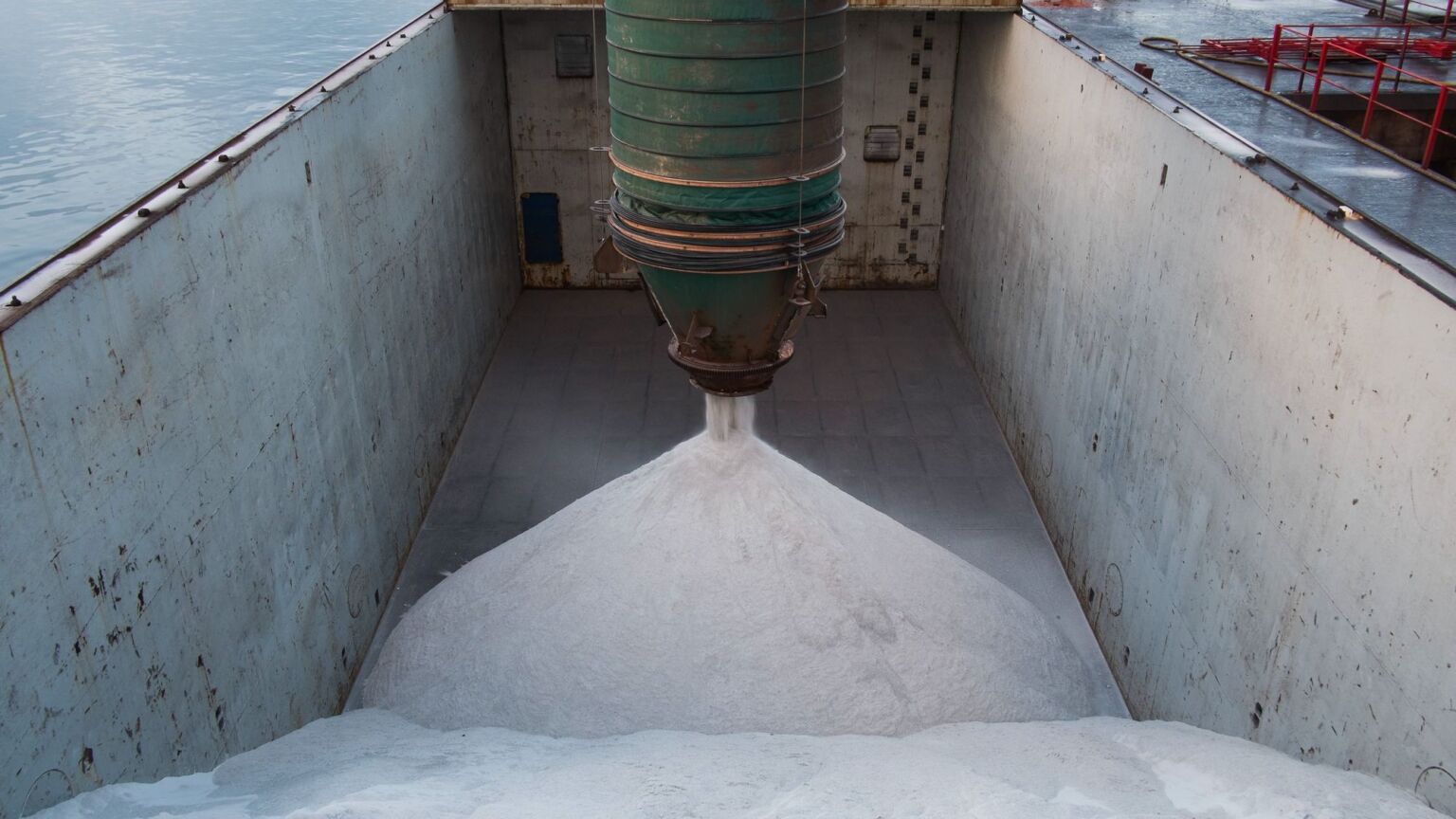
Salt has been a major industry in Britain for centuries. The salt deposits in Cheshire, the West Midlands and Teesside are huge and still are – in fact, they could be viable for decades to come.
Yet now the UK is on the verge of becoming a net importer of salt, for the first time in history. Inovyn, the company that produces roughly 50 per cent of Britain’s salt, has announced that it will likely have to close its facility in Runcorn, Cheshire, unless it receives government support. Like the rest of the UK’s manufacturing industry, Inovyn is struggling to cope with the UK’s breathtakingly high energy costs and crippling carbon taxes. In other words, Britain’s salt industry is to be sacrificed at the altar of Net Zero.
The decline of salt would be an economic disaster. The chemical and pharmaceutical industry is one of the largest manufacturers in the UK. Salt, which is used in 90 per cent of pharmaceuticals, is a vital component in a surprising number of everyday products. Only the food industry contributes more to the domestic economy – and the food industry also needs high-quality salt, for taste and preservative reasons.
Salt is integral to sectors that employ hundreds of thousands of people. The consequences of Britain becoming a net salt importer will have a huge impact on these industries. Salt is difficult to store and transport. That is the major reason why chemical plants are located very close to the point of production. Those chemical and pharmaceutical industries that depend on local supplies will, inevitably, either close down or relocate closer to salt sources. If Runcorn goes, don’t expect the chemicals industry or pharmaceuticals to survive in this country.
Salt is a vital part of an integrated industrial supply chain. And that is what Britain had, for most of the 20th century, in the shape of Imperial Chemical Industries (ICI). ICI was, for decades, the largest manufacturer in the UK. It owned and operated plants, production and distribution along the entire supply chain, from salt extraction in Cheshire to Dulux paint in your local hardware store.
When ICI was still in business, the less profitable elements were maintained because they fed the valuable downstream activities. Since the demise of ICI in 2008, the separated upstream operations like salt production have been allowed to decline, following years of underinvestment.
While demand for salt and its derivatives has fallen, that cannot be seen in isolation. It has been a long time coming. The removal of ICI’s integrated supply of salt and derivatives has led production of cosmetics, chemicals and pharmaceuticals to move elsewhere. If the Runcorn plant closes, a full sector collapse will inevitably follow.
Inovyn is part of INEOS, whose owner, Jim Ratcliffe, is hardly short of a bob or two. I would argue that Inovyn should be recognised as a key, national strategic asset. There is a case for public funding. But we should avoid the normal no-strings giveaway with which we have become all too familiar. It should be co-investment, matched by the owners and interested parties from the private sector more widely.
Pleas to change the current government’s entire energy strategy in order to rescue Runcorn will fall on deaf ears. But calls for targeted support for Runcorn may be better received – especially if the current government wants to have a fighting chance of reclaiming the local parliamentary seat from Reform UK.
To allow Runcorn to close – and lose 50 per cent of Britain’s salt production – would be a catastrophic folly. The UK is already far too vulnerable to the slings and arrows of international events. We must not allow salt to join the manufacturing funeral procession.
Ruari McCallion is a freelance journalist specialising in manufacturing. He tweets at @RuariJM.

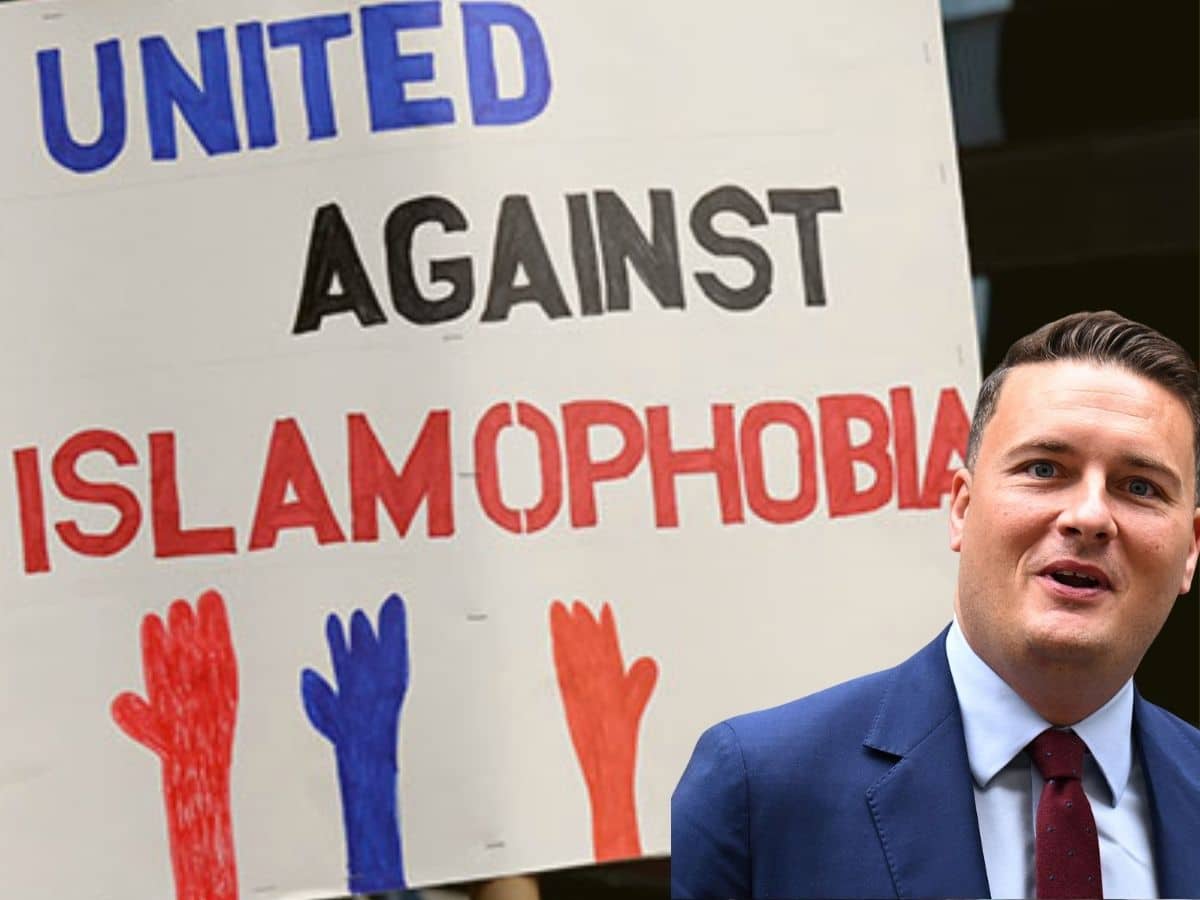
Yesterday, 24 March, Health Secretary Wes Streeting announced the offer of four replacement ambulances to Hatzolah, the Jewish-run charity ambulance service which suffered an arson attack on the morning of 23 March.
Since the attack, politicians across the political spectrum have voiced their condemnation of antisemitism. Predictably, some have also taken the opportunity to attack Muslims and migrants — without evidence that the attackers were either.
In Streeting’s case, both his words and his offer of tangible support are a clear demonstration of the energy we need when tackling bigotry in the UK. The problem is, this only makes his careless attitude to Islamophobia in his own NHS all the more egregious when we contrast the two.
Streeting — ‘Despicable act of evil’
In his statement, Streeting was unequivocal in his condemnation of antisemitism:
This shocking, cowardly, and despicable act of evil was not only an attack on London’s Jewish community, but on an ambulance service whose sole purpose is to save lives and care for others.
There is no doubt this attack was designed to strike fear into the heart of Jewish people in Golders Green and across the country. And, as a Member of Parliament who represents a significant Jewish community further east in London, I know what’s happened will be felt painfully and acutely by all Jewish people across our country.
Likewise, he also went on to praise Hatzolah, and offered his practical support:
Hatzola’s volunteers represent the very best of public service, providing rapid, life-saving care to anyone in need, and it is appalling that such a service has been targeted in this way.
Of course, the best form of solidarity is practical solidarity, which is why today, our London Ambulance Service colleagues are providing support to the team in Golders Green to make sure that we don’t skip a beat when it comes to responding to emergency call-outs. We will also be providing four replacement ambulances, initially on loan until we can provide permanent replacements. The Jewish community should not bear the cost of this hatred.
This moment demands more than practical support. The Jewish community will not stand alone – the government and this entire country stand with them.
We’re not going to argue with any of this. It’s the exact kind of response we should expect in the face of rising antisemitism in the UK. The problem is that, for Streeting and much of the Labour Party, that attitude clearly doesn’t extend to all forms of racism.
Streeting’s ‘Lack of urgency and movement’
As a case in point, late last year the British Islamic Medical Association (BIMA) wrote a letter to Streeting and other senior figures in UK healthcare. The missive urged action against a pattern of Islamophobic attacks on Muslim staff and patients in the NHS.
On 4 December, BIMA president Dr. Sahira Dar wrote a letter to Streeting which stated:
I am writing to express our growing concern that we have still not received a response to our previous correspondence on 20th October 2025 or our meeting on 9th September regarding the safety, fair treatment and freedom of expression of Muslim healthcare workers. This lack of urgency and movement is increasingly difficult to reconcile with, especially in light of a serious Islamophobic incident reported at Leeds Teaching Hospitals, where a copy of the Qur’an was desecrated on NHS premises.
In another letter, BIMA reminded Streeting that:
The NHS constitution commits the service and its leaders to uphold respect, dignity, inclusion and safety for all staff. Ensuring that Muslim workers and patients can engage with the NHS without fear, while trusting that discriminatory behaviour will be taken seriously and responded to transparently is fundamental to these values.
It also reiterated the organisation’s desire to meet with the health secretary to continue their discussions. Likewise, it expressed its extreme disappointment with the lack of communication from Streeting over the months.
‘Embarking on wholesale repression’
At the time, I wrote that this apparent lack of concern for Islamophobia is particularly galling, given that Labour recently launched an investigation into racism in the NHS which appears to privilege antisemitism over other forms of racism.
The government outlined these plans in a press release issued in October. Egregiously, the proposals introduce a blanket ban on expressions or symbols of solidarity with Palestinians.
The plan also advises the NHS to adopt the definition of antisemitism used by the International Holocaust Remembrance Alliance (IHRA). The organisation places Israel beyond reproach, and frequently conflates anti-Zionism with antisemitism.
In reaction, a coalition of 23 groups — including trade unions and Jewish organisations — undersigned a joint statement penned by Doctors in Unite (DiU) criticising the proposals.
Dr Coral Jones, chair of Doctors in Unite, said:
The government is embarking on wholesale repression within the NHS to try to silence health workers from speaking out against the bombing of hospitals and the detention, torture, and killing of our Palestinian colleagues in Gaza.
They accused Labour of elevating antisemitism above other forms of racism, and pointed to the Forde Report of 2022, which highlighted the hierarchy of racism within the Labour Party.
Streeting’s reaction to the attack on Hatzolah clearly demonstrates that he knows what a useful and constructive reaction to discrimination looks like. However, as the letters from BIMA and DiU show, the health secretary doesn’t extend that same care to all.
Labour published the final version of the Forde Report in 2022. However, it remains depressingly obvious that the hierarchy of racism is still deeply entrenched within the PLP.
Featured image via the Canary

The post How a grooming-gang victim was framed as a criminal appeared first on spiked.
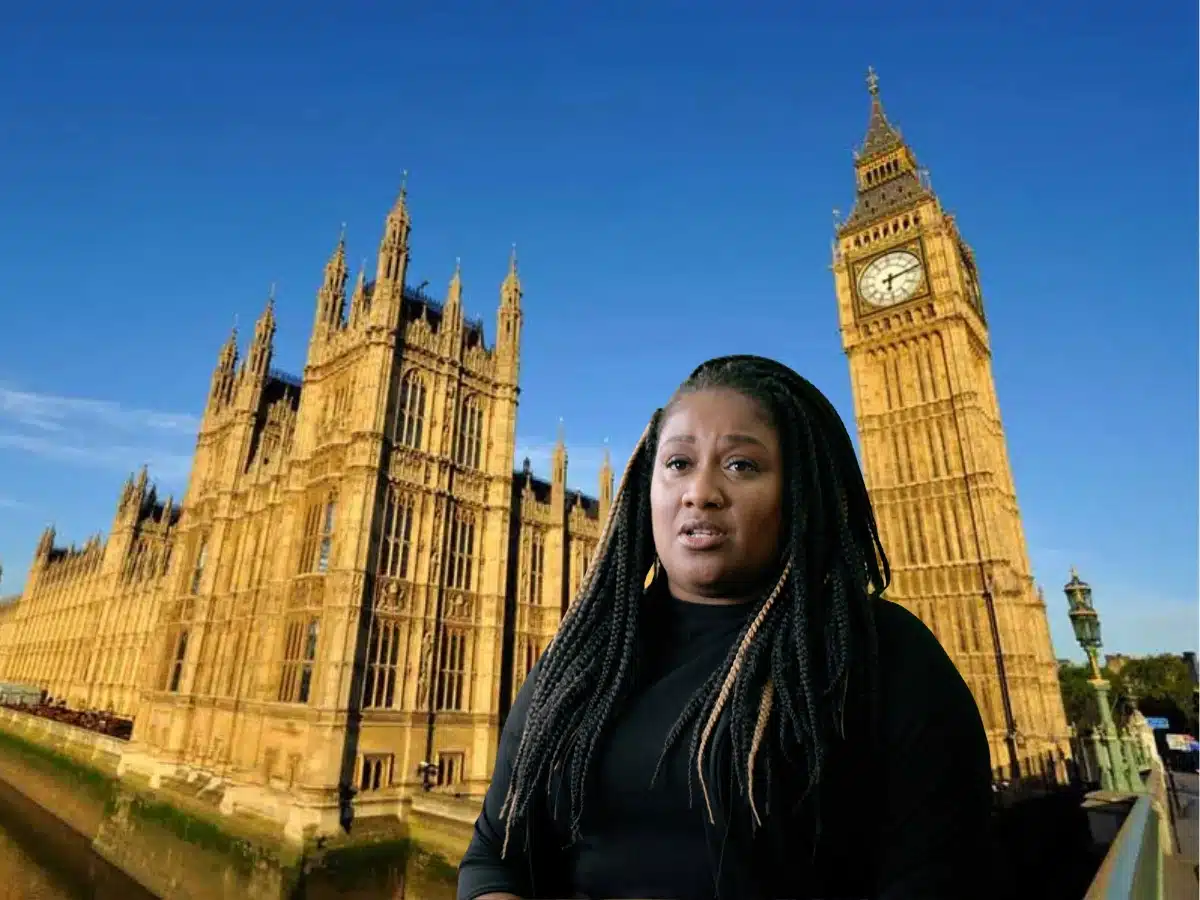
Bell Ribeiro-Addy MP is chair of the All Party Parliamentary Group for Afrikan Reparations. (The spelling with a “k” is deliberate.) On 25 March, the UN International Day for the Remembrance of Victims of the Transatlantic Slave Trade, she presented a petition in Parliament. It calls for an apology for the UK’s role in African chattel slavery and colonialism.
Ribeiro-Addy’s petition hand-in comes as UN delegates vote on a historic motion, tabled by Ghana, which would recognise the trafficking and enslavement of Africans as a crime against humanity. The UK government has not indicated whether it will support this motion.
The petition calls on MPs to push for a state apology on behalf of the government and the monarchy for the UK’s role in the slavery and colonisation of African people.
It also asks parliamentarians to establish an All-Party Parliamentary Commission of Inquiry for Truth and Reparatory Justice. This would examine the legacy of these crimes and propose concrete steps to address their lasting damage.
It notes that there has never been:
a genuine apology for the enslavement, trafficking, genocide, and exploitation committed under British authority.
Ribeiro-Addy said:
To this day, our country has never provided a genuine apology for the crimes of British Empire or the Transatlantic slave trade.
Rather than acknowledging these historical injustices and how they have shaped the world we live in today, our institutions have sought to sweep them under the carpet.
So many of the intersecting global challenges we now face are rooted in the legacies of enslavement and empire: from geopolitical instability to racism, inequality, underdevelopment and climate breakdown.
To truly confront these issues, we must acknowledge where they come from. An apology could be a meaningful basis for action, signalling our country’s commitment not simply to righting historic wrongs but to tackling ongoing issues they have created and exacerbated.
Featured image via the Canary

PM Keir Starmer has introduced landmark legislation that will significantly change how politics operates in the UK. While MPs must still approve it, Cabinet Minister Steve Reed has confirmed that the government will apply it retrospectively. Bad news for Farage and Reform.
Justifying this move to backdate this policy, Reed cited the urgent need to protect the country’s democracy.
The proposed changes follow an independent review by Sir Philip Rycroft which explored the influence of political donations on British political parties. Rycroft’s review follows significant concerns surrounding foreign influence on domestic politics. Naming Iran, Russia, China and the US, the review put forward a further 15 recommendations to the Starmer government.
Nevertheless, Israel should also be included, given the scale of pro-Israel donations to the Labour Party ahead of the 2024 General Election.
It seems some foreign influence continues to operate largely out of sight in British politics.
In today’s London Influence:
😱 There’s more in the Rycroft review than the Farage-baiting crypto donation ban.
📈 Some new stats suggest we aren’t very good at policing election bad actors.
💼 We have loads of job moves for you to feast on.Dig in 👇https://t.co/2vMKYlfFCR
— POLITICOEurope (@POLITICOEurope) March 26, 2026
Back to the drawing board for Farage
This news comes as little surprise. A month ago, the Guardian reported that a national security committee warned UK elections were “dangerously exposed” to foreign money and recommended implementing stronger safeguards to counter the risk.
Subsequently, this legislation appears to seek to do just that. Limiting donations from Brits abroad to £100,000 and banning cryptocurrency donations entirely will drastically impact the level of donations political parties can obtain.
It also works to reduce the unwelcome and disproportionate influence that super-rich donors have on policy decisions made by elected leaders. Nevertheless, these proposed changes are likely to impact some more than others. Reform UK has received £12m just in the last year from Christopher Harborne, an overseas investor based in Thailand.
When this legislation kicks in, Harborne’s donations will stop filling Reform UK’s coffers, and the crypto ban will hit Farage and his team — since they’re the only party openly taking cryptocurrency.
Reform deputy leader Richard Tice remains defiant, stating to GB News:
The reality is everything they’re trying to do is to stop the incredible progress of Reform, and cryptocurrencies are a perfectly legitimate way of investing, of earning within the law.
Once again, they’re putting a cap on donations from overseas electors, stopping crypto donations. We’ve got nothing to hide. It’s quite clear they’re absolutely petrified, terrified of the progress of Reform.
This X post highlights how big an impact these caps and bans will be on Reform’s super-privileged donations:
3️⃣ 🇬🇧 UK BANS CRYPTO POLITICAL DONATIONS — NIGEL FARAGE IN THE CROSSHAIRS
The UK just announced it will ban cryptocurrency donations to political parties and cap overseas donations at £100K/year.
Nigel Farage’s Reform UK party accepted Bitcoin donations and sourced two-thirds of…— Joshua (@JoshOnTheMoney) March 26, 2026
‘The Sanctuary’ for the far-right
A recent investigation carried out by HOPE Not Hate and the Guardian unearthed troubling details surrounding the Sanctuary in London. Set up by British crypto billionaire Ben Delo, it offers financial support, free meeting rooms, podcast spaces and catered events to ‘hardline activists’. The investigation describes the set-up as a:
start-up accelerator for political initiatives, some of which are far right, like Rupert Lowe’s Restore Britain and the race science magazine Aporia.
Delo is reported to be ‘anti-woke,’ believing it to be an “existential threat to Western civilisation”. Beauty may be in the eye of the beholder, but most see the super-rich as the ultimate threat to peace and stability.
Something this new legislation from Starmer’s government reaffirms.
The Sanctuary appears to go to great lengths to avoid public attention. For instance, it requires organisations that use its spaces not to mention it online. Moreover, it has hosted high-profile figures, including far-right MP Rupert Lowe. Despite this, however, the media had not reported on it until now.
HOPE not hate and the Guardian draw attention to an ‘ecosystem’ purposed to support more extreme right-wing views in British politics, with Lowe being one of their biggest beneficiaries. Since his very public fallout with Nigel Farage, Lowe has used the Sanctuary as the base for his pressure group, Restore Britain, which he has now launched as a political party.
Speaking to the influence of Delo on the kind of politics that will come out of the Sanctuary, the investigation wrote:
We can reveal that much of Restore Britain’s social media content is produced directly inside The Sanctuary. In November 2025, Lowe used the offices to promote a policy paper on implementing mass deportations. Inspired by the USA’s “Operation Wetback” of the 1950s, Lowe’s paper called for “forced removals and subtler tactics for making residence in Britain unliveable for those with no right to be here”. Lowe has been holding his “rape gang inquiry” at The Sanctuary.
Restore Britain’s website demands immigrants be detained in “deliberately austere” camps. Lowe has elsewhere called for a ban on kosher and halal meat, which would make life for many British Jews and Muslims impossible.
The list of privileged, self-interested and ego-driven pundits doesn’t end there; the guest list includes race scientists and anti-abortion agitators, according to the in-depth investigation.
The names of former prime minister Boris Johnson and Tory party leader Kemi Badenoch are in there, having filmed episodes of Triggernometry, an anti-woke podcast, in The Sanctuary. The podcast, which has 1.7 million subscribers, uses Delo’s facilities free of charge.
The GB News presenter Andrew Doyle and the Peep Show actress Sophie Winkleman have also signed the book, as have the far-right activists Charlie Downes and Connor Tomlinson.
It’s about bloody time!
Public concern around donations from the super-rich to political parties has grown rapidly over recent years. This comes as the sheer scale of donations have surpassed levels seen in previous years, marking an escalation in the influence of billionaires. For instance, Quadrature Capital made the biggest political donation ever received by the Labour Party after donating £4m to Starmer’s campaign.
Funnily enough, the government then decided to scale back its commitment to a new green economic plan which ended up directly benefiting Quadrature. This followed Starmer’s choice to divert those funds to an increase in defence spending of £3.5bn which coincidentally increased the asset value of the hedge fund.
Therefore, this move by the government is crucial and necessary to safeguard our democracy. Their unparalleled ability to secure advantageous policies benefitting the richest in society will deepen inequality and hurt the majority of hard-working British people.
However, Starmer must go further than simply trying to undercut Reform’s advantage — he must also ban pro-Israel donations.
Featured image via the Canary
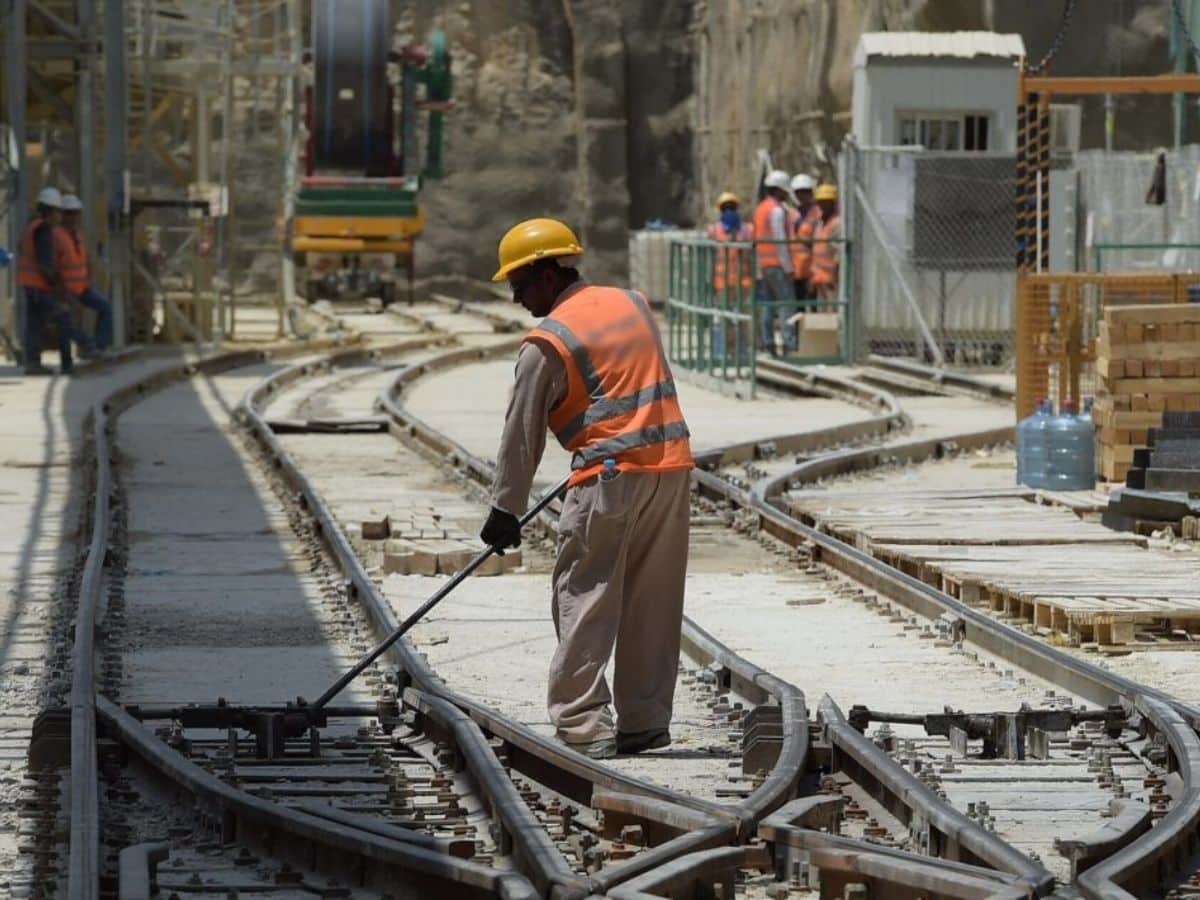
According to Amnesty, the complaint documents widespread forced labour, wage theft, physical and sexual abuse and systemic racism, particularly — but not exclusively — targeting African migrant workers who experienced being locked in homes, forced to work 18 to 20 hours a day, denied wages, healthcare and rest, and subjected to beatings and harassment.
Amnesty is urging ILO member states like the UK not to let the complaint be buried during the 356th Session of the ILO Governing Body, which runs from 23 March to 2 April.
In January, the Government of Saudi Arabia responded to the complaint and asked for it to be dismissed.
Vulnerable workers in Saudi Arabia and the rest of the Gulf
Across the six countries of the Gulf Cooperation Council — Saudi Arabia, the United Arab Emirates, Qatar, Kuwait, Bahrain and Oman — migrant workers form the backbone of oil and gas-rich economies, according to the Business and Human Rights Centre.
The region’s population is roughly 60 million, of whom more than half are migrants.
However, a pattern of human rights violations across the GCC of migrant labour has been seen.
Qatar hosted the FIFA World Cup in 2022.
Burnt of Iran’s retaliatory strikes
Unsurprisingly, these workers are also facing the repercussions of Trump’s illegal war on Iran.
According to Al Jazeera, of the eight people killed in the UAE in Iranian retaliatory strikes, five were from South Asia. Three people killed in Oman were from India. An Indian and a Bangladeshi national were the only deaths in Saudi Arabia. Millions of migrant workers now face job losses and fear as the conflict escalates.
Despite the danger, most South Asian migrant labour in the Gulf appears to be staying on for now, according to DW.
“Economic survival trumps perceived risks for the vast majority” of workers, Harsh Pant, head of the strategic studies program at the Observer Research Foundation (ORF), a New Delhi think tank, told DW.
Scholar Adam Hanieh has shown that the “racialised and gendered” characteristics of the working class population in the Gulf States favour temporary workers. Hanieh wrote:
…in the case of the Gulf Arab states, the pronounced shift away from Arab to Asian workers through the 1990s and 2000s was likewise conceived as a means of discouraging workers from forming bonds of cultural belonging, and was also organised through the spatial separation of these workers from local Gulf citizens.


Widespread press coverage has been given to the attack in Golders Green, London, where arsonists set fire to four ambulances owned by Jewish charity Hatzola.
Golders Green attack
At around 1:45am on Monday 23 March, the London Fire Brigade contacted the Met Police with news of the arson. The Met issued a statement three hours later, confirming that they’re treating the attack as an antisemitic hate crime.
The BBC reported that
Met Police chief Sir Mark Rowley said officers were investigating whether a group with ‘potential Iranian state links’ could have been behind the attack. He stressed it was too early to attribute the attack to Iran but expressed concern at the “rapid growth in recent years of Iranian state threats” in the UK.
Others such as the Telegraph led with headlines such as “Counter-terror police investigating ‘Iran-backed firebombing’”. The Telegraph appear to have particularly good access to Israeli government information channels. Israeli Embassy sources told them that the firebombing had all the hallmarks of an Iran-backed attack. They additionally had this nugget of information:
An internal report by the Israeli government, seen by The Telegraph, claimed the group probably hired local criminals online to carry out the attacks.
Numerous politicians and public figures have come out to immediately condemn the attack and frame it as an antisemitic hate crime carried out by some sort of Islamic group linked to Iran. Mark Gardner of the Community Security Trust told the Telegraph:
Iranians have long used terrorism against Jewish communities around the world for decades.
So that’s the mainstream media narrative. Is that replicated on social media? Well, no.
Social media response
In a post on X gaining 1.2M views, Lowkey pointed out that:
It is worthy of note that the group which is claiming responsibility for the burning of ambulances last night refers to Palestine as “the land of Israel.” It does so in both English and Arabic, which is particularly unusual.
Lowkey was right to point this out, but he missed that the statement capitalised the ‘L’ in Land, even more clearly making it a term specifically used by pioneers of the current State of Israel such as David Ben-Gurion to describe historic Palestine, or the current State of Israel plus East Jerusalem, the Occupied West Bank, and Gaza.
The idea that a pro-Palestine and Iran-linked group would use this term rather than ‘the Zionist entity’ or simply ‘Palestine’ does not stand up to scrutiny. Aaron Bastani of Novara Media weighed in to support Lowkey, saying that “Iranian schoolbooks don’t even refer to Israel on a map.”
But there is more about the statement by Harakat Ashab al-Yamin al-Islamiya (HAYI) that deserves careful attention.
“A clear lack of fluency in Arabic”
Other attacks attributed to the group on Jewish targets have taken place in Europe in recent weeks, one of which was an explosion at an Orthodox Jewish School in Amsterdam, and a follow up one at an Amsterdam business premises. The attacks have been covered by Dutch News.
Younes Saramifar, a political Anthropologist at VU University Amsterdam, has posted in detail about HAYI’s online post on his LinkedIn profile, and is also quoted in the article in Dutch News. He makes numerous points which cast serious doubt on the Arabic language portion of the statement, including:
The language of announcements shows a clear lack of fluency in Arabic. The language is generated by an AI tool. Furthermore, the electronic device on which the new video was edited does not have Arabic or English as its native language in its operating system. This is clear from where the colon and the exclamation mark are placed in the sentence. This shows that the group is neither native Arabic nor English speakers. Native speakers are habituated to managing these technical glitches. Based on their language use, I don’t think they are a direct proxy or a sleeper cell associated with the Axis of Resistance.
Dutch News reported that five teenagers in total have been arrested in relation to the attacks, aged between 14 and 19, all from Tilburg in the Netherlands. But if this is an Iran-linked group then we would expect the young people to be members of the Tilburg Muslim minority, possibly Shia?
Sadly for the purveyors of the currently dominant narrative, no. Tilburg does have a Muslim minority, with around 7.6% of the citizens in 2024/2025 being of Turkish, Moroccan, or Syrian origin, but the five teenagers arrested were reported by Dutch News as all being of Antillean heritage. This refers to the overwhelmingly Christian Dutch Antilles islands in the Caribbean.
Along the right lines
It seems then that the author of the internal report by the Israeli government mentioned above (that the Telegraph mysteriously has access to) is thinking along the right lines.
A group that doesn’t know how to sound pro-Palestinian in English and needs to use Chat GPT to produce broken Arabic and still doesn’t get it right hires some young people, including children, of no particular faith background to carry out attacks on the Jewish community. These attacks are immediately propagated across the media and political system in a way which heightens fears of antisemitism and links it to Iran and the pro-Palestinian movement, without any supporting evidence.
When we are investigating a crime, it’s always good to look first for a motive and ask the question, ‘who benefits politically?’.
Do Iran or its proxies stand to benefit? It’s very obvious that they don’t. Not only could proof of Iran’s involvement be used to provide political justification for more UK involvement in the US and Israel’s illegal war, attacks on Synagogues and other Jewish community organisations have been used in the UK, Australia and other countries to give politicians cover to clamp down on protest and speech rights.
As Younes Saramifar points out:
The Axis of Resistance has shown consistent disinterest in antisemitic expressions and discourse that target Jewish faith and communities. They have focused on Zionism and Israel within their rhetoric.
But surely the suggestion that pro-Israel interests could be behind a so-called false flag incident in London is both shockingly antisemitic and completely fanciful? It is worth looking at just a few of many historical incidents to provide context on this subject.
A history
The eminent British-Israeli historian, Emeritus Fellow of St Anthony’s College Oxford and fellow of the British Academy Avi Shlaim, has written extensively on how he can demonstrate that Mossad carried out bombings to drive Jews out of Iraq and hasten their transfer to Israel during his childhood in Baghdad in the 1950’s. His book Three Worlds: Memoirs of an Arab-Jew, gives more detail and was Times Literary Supplement and New Statesman book of the year in 2023.
The Lavon Affair is one of the most famous Israeli false flag operations, in which a group of Egyptian Jews were recruited in 1954 by Israeli Military Intelligence to plant bombs inside Egyptian, American, and British-owned civilian targets: cinemas, libraries, and American educational centres.
The case of the 1994 London Embassy bombings was covered in detail by Skwawkbox in 2025.
More recently, in Australia and Canada there have been numerous cases which suggest that a pro-Israel motive is a rational thing for law enforcement to investigate when it comes to attacks on the Jewish community.
And now, as Skwawkbox recently reported for the Canary, there’s been another twist to the story. The Guardian noted that:
Two men arrested in connection with a suspected arson attack on four ambulances operated by a Jewish charity in north London have been released on bail.
The men, aged 47 and 45, who are both UK nationals, were arrested on Wednesday on suspicion of arson with intent to endanger life after the incident in Golders Green. On Thursday the Metropolitan police said the pair had been bailed until April while the investigation continues.
What really happened in Golders Green?
Bailed? Really? Well, as Skwawkbox concluded:
As Irish comedian and political activist Tadgh Hickey pointed out, this “weirdly lenient” decision doesn’t really fit with the idea of a ‘terror cell’.
We trust that the Metropolitan Police will leave no stone unturned in their zeal to follow up the points we have made in this article, and that all of the media organisations and politicians will retract statements which suggest that there is proof that Iran is behind the attack.
Featured image via the Canary
By The Canary
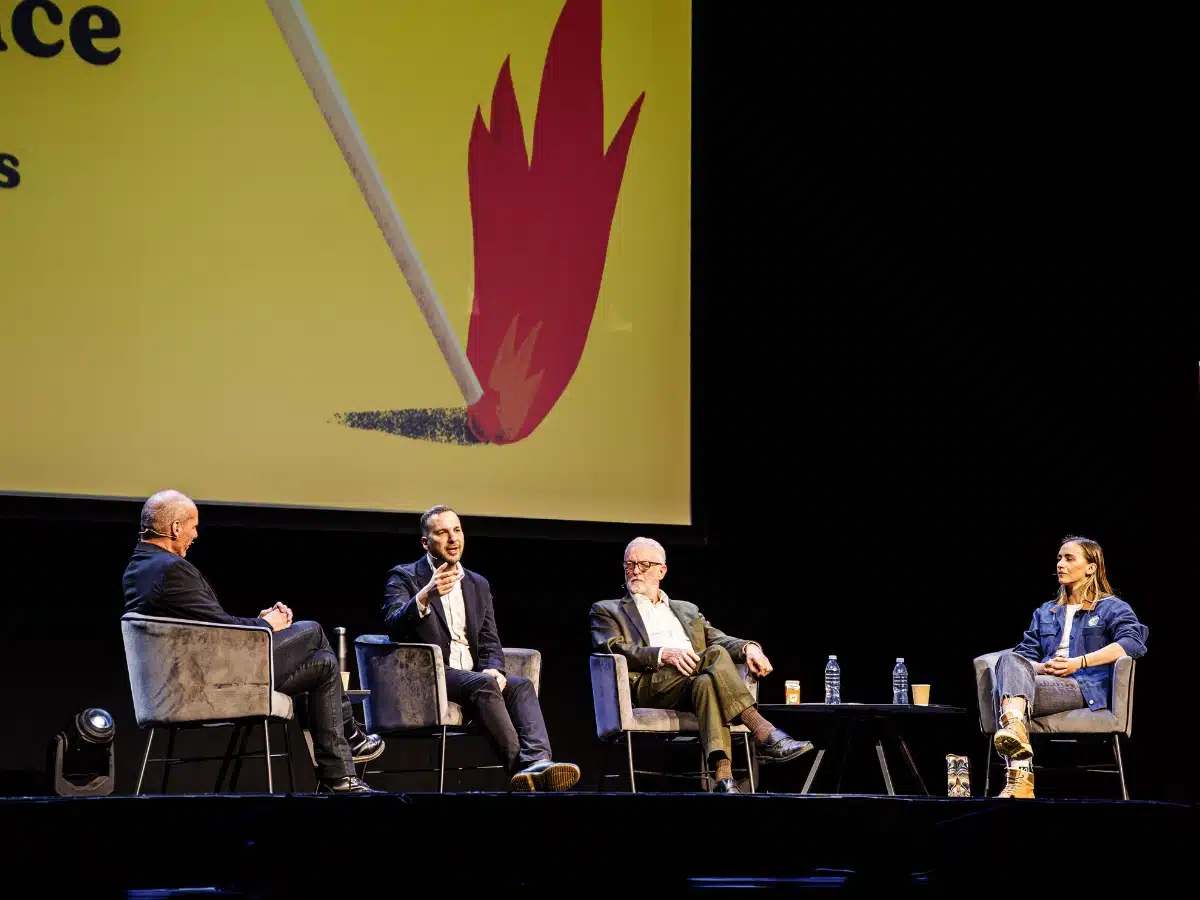
DiEM25’s landmark event united Yanis Varoufakis, Jeremy Corbyn, Zack Polanski, Grace Blakeley, Laura Pidcock and Brian Eno in an electrifying night of radical politics. It proved that cross-party, cross-movement solidarity is not a distant dream, but something that can begin tomorrow.
On the night of 24 March, the historic Troxy in London’s East End was packed to capacity, with an audience that was treated to a mix of poetry and provocation, moments of grief and speeches of passion.
DiEM25’s Resistance Is Existence brought together some of the top minds of the political Left, who offered both warnings about the current situation but also practical solutions on how to get involved and bring about tangible change.
The evening opened with comedian and DiEM25 Coordinating Collective member Francesca Martinez. She brought the house to life with a searingly funny and deeply personal account of what resistance means to someone who has spent years fighting for a more humane world.
Following her was Nigerian poet and playwright Inua Ellams. Her performance cut to the heart of the contradictions of our age.
In the first panel, DiEM25’s political director Erik Edman brought together co-founder Varoufakis, former MP Pidcock, and musician and long-time DiEM25 supporter Eno. The message from all three was urgent and unambiguous. Eno warned:
We are dealing with fascism now. It intends to end the game of democracy, it intends to smash it.
Reflecting on a decade of political upheaval, Eno called on everyone in the room to stop watching from the sidelines. Find someone doing something you admire, and help them. Pidcock echoed the call in her own register. She urged the audience to reimagine democracy beyond the ballot box in workplaces, in communities, in every space where people organise together. She said:
We have to widen our conception of democracy… let us expand our imagination for everywhere we can build power for ourselves.
DiEM25 brings together Polanski and Corbyn
The second panel produced a very significant moment for British politics.
Eno had said it plainly in the first half. The climate movement, the anti-war movement, the fight for democracy, these are not separate battles. They are the same fight, wearing different faces.
Former Labour leader Corbyn and Green Party leader Polanski took the stage together, where recognition and threads connected. Polanski set the tone from his very first words, reframing what resistance actually means:
Resistance is making things more accessible, more inclusive, making sure we are talking to friends, family, even strangers sometimes…
Resistance is joy, is art, is culture. And resistance is saying: what is happening in this country, where 50 of the wealthiest families own more wealth than the bottom 50% of the population. That’s not right, that’s a political choice. Let’s make different political choices.
From there, the conversation moved outward to electoral reform, a wealth tax, an end to homelessness, and accountability for Britain’s role in Gaza. Corbyn named it without flinching:
If the ICJ [International Court of Justice] has decided that acts of genocide are taking place… that makes the British government complicit in genocide.
Alongside them, DiEM25 Coordinating Collective member and author Grace Blakeley delivered the structural analysis. That all the hope in the room counts for nothing without rebuilding worker power from the ground up. Blakeley stated:
For the first time in a long time I do see some hope that we might be able to come together and translate it into something that really scares those at the top.
Varoufakis, who anchored both panels, drew the threads together: democracy is not something we inherit. It is something we have to make, again and again, in the face of those who would unmake it.
You can watch the full event on YouTube here.
Featured image via Chloe Chia (Haych) / DiEM25

Leading UK civil society organisations have called on the Chancellor to increase levies on corporate profits to help address the cost of living crisis. This follows predictions that numerous sectors will make huge profits from the economic fallout of the US-Israeli war on Iran.
War with Iran set to increase household bills
In a joint letter to Keir Starmer and Rachel Reeves, 40 organisations are urging the government to take action and curb profiteering.
The signatories represent organisations across various sectors, demonstrating the breadth and depth of support for action to tackle corporate profiteering and the affordability crisis. They include the Cost of Living Action coalition, Global Witness, Women’s Budget Group, National Education Union, New Economics Foundation, Patriotic Millionaires UK, and many more.
The signatories say that the Iran war crisis should be a “turning point for the UK” as “energy bills, fuel costs, and essentials are set to increase in costs for households and businesses already struggling with affordability after years of a cost of living crisis”.
The letter goes on to say that “It is not right that extraordinary profits, generated off the backs of ordinary people during periods of crisis, are siphoned off into private hands and corporate bank accounts.” The letter also notes that the government’s own cost of living champion has called for measures to prevent profiteering.
Faiza Shaheen, executive director of Tax Justice UK, said:
Too often UK governments have failed to protect households and small businesses from the profiteering corporates and super-rich individuals who circle around crises like vultures. Spain has already frozen rents, yet our government fails to show urgency. The Chancellor needs to get a grip on the situation to help people already struggling, and show that this will not be yet another crisis where the rich get richer, while everyone else foots the bill.
Profits increase across sectors
New data recently released suggests that North Sea energy firms are already set to make extra profits.
Areeba Hamid, Co-Executive Director of Greenpeace UK, said:
The oil-majors are set to make gargantuan profits from global instability while ordinary people pay the price of Trump’s war in Iran. Calls to scrap the windfall tax early are not just misguided—they are a slap in the face to people struggling with rising energy costs, and more drilling in UK waters won’t cut bills or protect UK households. The fossil fuel industry should be contributing more tax, not less.
Banks and mortgage providers will also increase revenue as a result of increased mortgage costs. Meanwhile, costs for agricultural inputs have risen extraordinarily. Defense contractors have already posted record revenues recently.
It is not the first time these sectors have profited from crises. The letter notes that previous moments, like the Covid-19 pandemic and invasion of Ukraine, “saw the wealthiest households and super-rich amass even greater fortunes … while millions were left struggling.”
Simon Francis, Coordinator of End Fuel Poverty Coalition, said:
Gas prices have more than doubled since late February, and households are already struggling with energy bills that have been stuck at elevated levels for five years. The latest global disruption is a stark reminder of the cost of our dependence on imported fossil fuels. Every time conflict or instability strikes overseas, ordinary households pay the price through their energy bills.
The Government must act urgently to protect households from the impact of rising prices and ensure that the billions in excess profits energy companies are making during this crisis are redirected to support the people who need it most. Wiping out household energy debt, strengthening the Warm Home Discount and accelerating investment in home insulation would all help cushion the blow.
New policies needed
The policies put forward by the organisations are a strengthening of the existing energy profits levy on North Sea oil and gas companies. They are also calling for a new levy on UK bank profits made from the British public.
Additionally, excess profits taxes are specifically called for on industries such as defense, big agribusiness, and associated artificial intelligence and big tech firms, which are predicted to make bumper profits as a direct result of the war on Iran.
As well as providing direct cost of living support, they propose the tax revenue is used to invest in the long-term resilience of the UK economy. This will make the economy less susceptible to fuel price shocks in the future.
Featured image via the Canary

Sula Sgeir is Scotland’s worst-performing gannet colony. But the body responsible for protecting it is still allowing hunters to kill gannet fledglings. A freedom of information request has exposed the colony’s collapse, even as the nature agency continues to permit the controversial seabird hunt.
Each year a group of men from the Isle of Lewis travels to the remote uninhabited island of Sula Sgeir. They go there to kill young gannet seabirds, known as “guga”, as part of a traditional hunt. It is the last legal seabird hunt in the UK. The activity is carried out under licence from NatureScot, and the bird’s flesh is eaten as a local delicacy.
The hunt has become increasingly controversial, triggering protests, political pressure in the Scottish Parliament, and even a dramatic rooftop occupation by activists calling for it to be banned. 45,000 people have now signed a petition against the guga hunt.
Last year, NatureScot allowed the killing of 500 birds and said this number is unlikely to affect the long-term stability of the gannet population.
An underperforming gannet colony
But wildlife advocacy group Protect the Wild obtained relevant documents via a freedom of information request. And the data shows Sula Sgeir is uniquely underperforming relative to every other comparable gannet colony in Scotland.
In a scientific assessment used to inform the 2025 licence, NatureScot’s adviser warns that Sula Sgeir is the only Special Protection Area (SPA) for gannets in Scotland whose population has shrunk.
Between 2001, when the island first became an SPA, and 2024, the number of apparently occupied nesting sites at Sula Sgeir fell by almost 2%. Meanwhile, all other colonies showed increases between 9% and 314%.
Highly Pathogenic Avian Influenza (HPAI) outbreaks caused a further 23% crash in 2023. But the decline was already in progress.
As NatureScot’s adviser states:
This indicates that the population growth rate has been suppressed compared to other gannet populations outwith the influence of HPAI.
In other words, bird flu didn’t cause the gannets’ decline – it only worsened a problem that was already underway.
Devon Docherty, Scottish campaigns manager at Protect the Wild said this shows the Guga hunt is driving the colony’s decline:
NatureScot says the Guga hunt does not negatively impact the gannet population. But their own data says otherwise. Sula Sgeir is Scotland’s worst performing gannet colony – the only one in decline while every other comparable colony grows.
This is not a coincidence. The hunters slaughter hundreds or thousands of chicks every year at their most vulnerable and critical life-stage, while causing chaos and distress throughout the entire colony.
NatureScot must use their discretionary power and stop licensing this cruelty immediately.
Featured image via John Ranson / the Canary
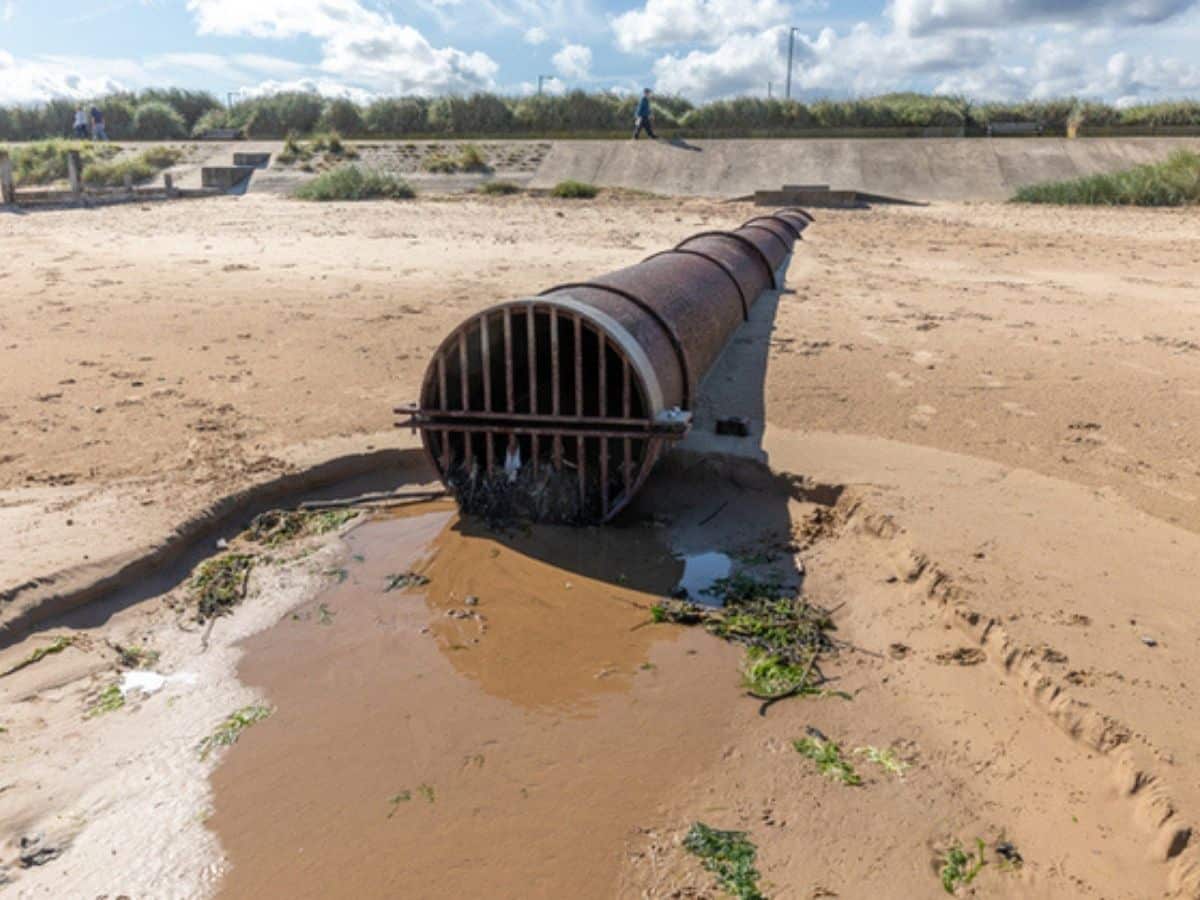
Today, 26 March, the government released its latest sewage spill statistics, as gathered by the Environment Agency (EA). The banner headline boasted “Fewer and shorter storm overflow spills” over 2025. Well, that’s just marvellous, isn’t it?
However, once we get about a third of the way into the document, we get to the meat of the matter:
Much of this improvement reflects unusually dry conditions in 2025 following a particularly wet 2024.
So, the water companies are dumping less sewage, not because they’ve done their goddamn jobs, but because they got lucky with the weather.
Or, to put that another way, companies dumped untreated sewage once every two minutes over 2025. However, the UK water industry is such a (literal) shitshow that this constitutes a genuine improvement on 2024. And we’re chalking this up as a fucking win?
Laying cover for the polluters
The EA announced that 2025 saw 291,492 monitored spill events. That represents a 35% drop in storm overflow spills compared to the previous year. It also means that each individual overflow experienced an average of 20.5 spills, down from 31.8 in 2024.
Likewise, the overall duration of those spills also fell massively, by around 48%. Depending on the company, the durations decreased by between 40% and 70%.
However, these drops are to be expected, given that 2025 was an unusually dry year. Storm overflows will naturally see less use when the UK experiences fewer storms. Consequently, we’ll get a more accurate idea of whether the water companies have done their job when we get another year of heavy rain.
It also means that, in spite of the fact that storm overflows should only be used in extreme weather events, the water companies were still making regular use of them. Spring 2025 was the driest in over a century, and the year was the warmest on record overall.
Some water companies even instituted hosepipe bans for the public, and then continued to dump sewage themselves. Yorkshire Water, for example, imposed a 5-month hosepipe ban. Meanwhile, the company’s official performance rating was downgraded because it actually increased its pollution incidents.
Karen Shackleton, representing the Ilkley Clean River Group, said:
Today’s report creates a cover for water companies’ illegal pollution and neglect of our infrastructure. The figures for last year, in drought conditions, take us back to the level of pollution we had two to three years ago in normal weather. This is not a good news story. Yorkshire Water is still polluting illegally and the government is still failing to hold them to account.
Sewage — £6.9m in fines isn’t enough
2025 also brought with it an increase in the monitoring of sewage spills. In particular, all storm overflows in England are now fitted with ‘event duration monitors’ (EDM), giving us a more accurate picture of the extent of individual water companies’ crimes.
Along with this, the EA has also updated its online map of storm overflow monitoring. The EDM Data Portal publishes open-access monitoring information for overflows across England.
Along with this increased level of scrutiny, water companies have been slapped with numerous fines for their crimes. In 2025, these enforcement undertakings ran to a total of £6.9 million for breaches of environmental law.
However — and flogging a dead horse here for a minute — these fines clearly aren’t working. Sophie Conquest, lead campaigner at anti-privatisation pressure group We Own It, said:
Under our privatised system, pollution is rewarded with profit. Less money invested in crucial infrastructure means more of billpayers’ money lining the pockets of shareholders.
Sewage pollution is a dire threat to public health, and has decimated our rivers and seas. This government must stop rearranging the deckchairs on the titanic, and bring water into public ownership without delay – starting with the collapsing Thames Water.
This is a cycle, and by now it’s a familiar one:
- The water companies don’t maintain their infrastructure.
- They dump sewage into our lakes, rivers and seas.
- Then, the Environment Agency slaps them with fines and sanctions.
- But the water companies go and jack up their prices, ostensibly so that they can fix their shoddy infrastructure.
- Return to Step 1.
So tell me again who’s actually paying the fines here?
Featured image via the Canary

North Carolina’s voter ID law upheld by federal judge despite bias claims

Saks CEO Accused of Potential Favoritism Toward Moncler in Bankruptcy Proceedings

Tether Gold launches on BNB Chain as tokenized gold market tops $4B


-
 Crypto World6 days ago
NIO (NIO) Stock Plunges 6.5% as Shelf Registration Sparks Dilution Worries
-
 NewsBeat2 days ago
Manchester United reach agreement with Casemiro over contract clause amid transfer speculation
-

 Fashion6 days ago
Weekend Open Thread: Adidas – Corporette.com
-

 Politics6 days ago
Jenni Murray, Long-Serving Woman’s Hour Presenter, Dies Aged 75
-

 Crypto World5 days ago
Best Crypto to Buy Now: Strategy Just Spent $1.57 Billion on Bitcoin During Fear While Early Investors Quietly Enter Pepeto for 150x Potential
-

 Crypto World5 days ago
Bitcoin Price News: Bhutan Sells $72 Million in BTC Under Fiscal Pressure, but the Smart Money Entering Pepeto Sees What the Market Does Not
-

 Tech7 days ago
inKONBINI Lets You Spend Summer Days Behind the Register
-

 News Videos20 hours ago
Parliament publishes latest register of MPs’ financial interests
-

 Sports3 days ago
Remo Stars and Kano Pillars Strengthen Survival Hopes in NPFL
-

 Business4 days ago
No Winner in March 21 Drawing as Prize Rolls to $133 Million for Next
-

 Sports3 days ago
Gary Kirsten Accuses Pakistan Cricket Board Of ‘Interference’, Mohsin Naqvi Responds
-

 Tech4 days ago
Give Your Phone a Huge (and Free) Upgrade by Switching to Another Keyboard
-

 Sports6 days ago
2026 Kentucky Derby horses, odds, futures, preview, date: Expert who nailed 12 Derby-Oaks Doubles enters picks
-

 Tech4 days ago
AI enters the chat: New Seattle dating app relies on tech to facilitate meaningful human connections
-

 Business7 days ago
DLocal: Entering 2026 At Escape Velocity
-
Business6 days ago
Columbia Sportswear enters $500 million credit agreement with JPMorgan Chase
-

 Tech5 days ago
Today’s NYT Connections Hints, Answers for March 22 #1015
-

 News Videos3 days ago
Ch 9 Financial Management Part 1 | Detailed One Shot | Class 12 Business Studies Boards 2026
-

 Business4 days ago
Will Duke Basketball Win It All? Duke Basketball Enters Second Round as Third Favorite to Claim NCAA Title
-

 Sports4 days ago
2026 Kentucky Derby horses, odds, futures, preview, date: Expert who hit 12 Derby-Oaks Doubles enters picks
You must be logged in to post a comment Login