Connect with us

Politics

The Green Party is a menace to free speech

Published

on

The Green Party is a menace to free speech

Gone are the days when the Green Party of England and Wales was full of hippie tree-huggers singing ‘Kumbaya’ around a campfire. Today, the party is unrecognisable – and far more sinister. It has been intolerant of dissent in its own ranks for a few years. Now, it is turning that intolerance against the media.

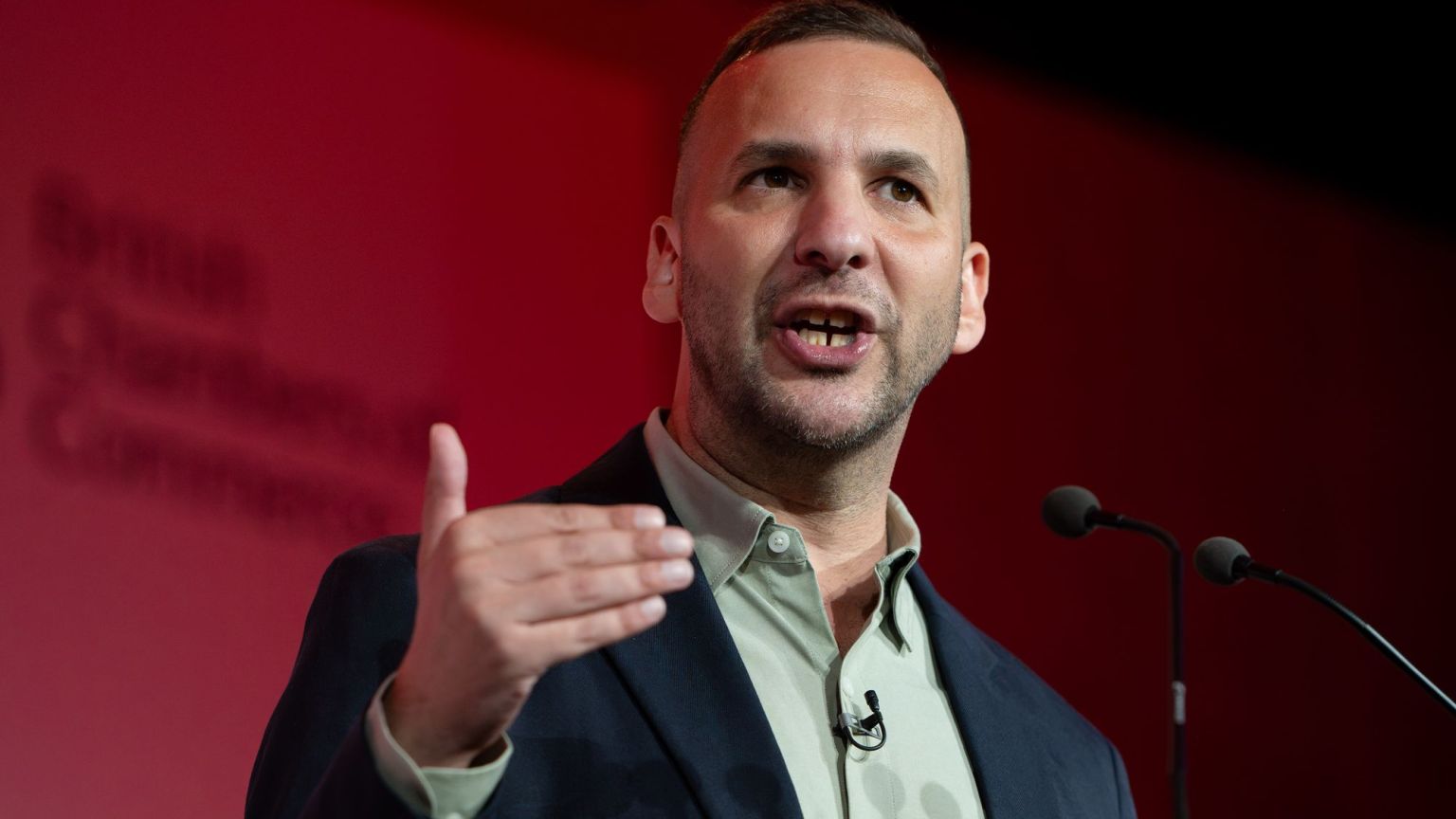
The recent death of former Cambridge professor Jason Arday has provided Green Party leader Zack Polanski with his latest pretext for going after the media. Speaking last week, he blamed Arday’s seeming suicide on the media’s reporting of Arday’s plagiarism, academic fraud and rampant fabulism. He called on the government to ‘ensure a responsible [media]’, by holding an inquiry into its ‘culture and behaviour’.

This came just days after he’d made a similar demand in response to some newspapers’ refusal to toe the ‘climate emergency’ line in their coverage of the heatwave. ‘It’s time we sorted out the press’, Polanski posted on X. ‘Constant misinformation to protect their donors and fossil fuels is destroying lives and our planet. The government must step up and stop being cowardly.’

Advertisement

If you think the talk of ‘sorting out’ and changing the ‘culture and behaviour’ of the press sounds ominous, that is because it is. It is also deeply authoritarian.

In the comments to his X post, Polanski posted two links that he encouraged his followers to sign. The first was a petition to parliament calling for a ban on foreign media ownership, the establishment of a social media levy and restrictive regulation. The second link directed followers to Hacked Off’s website, and a petition demanding that the government launch an inquiry into the British press.

Polanski has since doubled down on these comments. He has claimed that ‘freedom of the press should never have been freedom to own and dominate the press’. He has insisted that the UK regulate its media ‘now’. He is particularly obsessed with a ‘tiny number of billionaire firms’, which Polanski seems to believe control the media like a sinister cartel.

Advertisement

Enjoying spiked?

Why not make an instant, one-off donation?

We are funded by you. Thank you!

Advertisement


Advertisement

Please wait…

Advertisement

It should surprise nobody, in fact, that behind that gap-toothed grin, Polanski does not like the media much at all. And that’s because he doesn’t like to be challenged or scrutinised. After all, columnists have ridiculed him for his claim, made over a decade ago, that he could enlarge the size of a woman’s breasts through hypnotherapy. Reporters also exposed the fact that he failed to pay council tax on his houseboat, and that he dishonestly claimed to have worked as a spokesperson for the Red Cross.

It’s not just the thin-skinned Polanski who wants to muzzle the press. It seems to be a widely held desire throughout the Green Party. Last week, the Spectator revealed that 89 members had endorsed a motion, submitted ahead of the party’s Autumn conference, with the title: ‘Justice for Jason Arday: Stopping Racist Smear Campaigns and Reforming Media Power.’

Advertisement

This censorial motion calls for two state regulators to ‘map and address racism’ and ‘ableism’ in the media. It also wants a regulator to have the power to clamp down on ‘harassment’, which is the term Green supporters have used for press scrutiny.

The Greens’ ultimate aim would be to force every major national newspaper to join a state press regulator. And the already overpowered media regulator, Ofcom, would be given powers to force large social-media platforms to remove ‘hateful, discriminatory and conspiratorial’ material, seemingly even where it falls within the bounds of lawful speech.

Advertisement

Recently, we witnessed just how menacing Green Party supporters can be. Writing in the Spectator earlier this month, Jonathan Sacerdoti revealed an attempt by activists to have him silenced by the police. After a disagreement with a canvasser who visited his home in April, Sacerdoti was told that an allegation of ‘harassment’ had been made against him. Conceding that there was no evidence for the complaint, the police eventually closed the investigation. But it was another telling insight into how these people operate.

The current militancy of the Greens has been a few years in the making. In 2022, Shahrar Ali was sacked as the party’s policing and justice spokesperson – and later expelled from the party – for expressing his gender-critical beliefs. This censorial trend has accelerated under Polanski.

The Green Party is no longer a benign force in British politics. It seems to have jettisoned its old environmental concerns to pursue a string of culture-war issues, championing trans rights (at the expense of women) and demonising Israel. And now it’s coming after press freedom.

Advertisement

The Greens have now shown their true, authoritarian colours.

Source link

Advertisement
Continue Reading
Click to comment

You must be logged in to post a comment Login

Leave a Reply

Politics

Why can’t Chelsea fans chant ‘F**k the Pope and the IRA’?

Published

on

Why can’t Chelsea fans chant ‘F**k the Pope and the IRA’?

‘When I was young, I had no sense, I bought a flute for 50 pence / The only song that I could play was fuck the Pope and the IRA.’

So went the chant that emerged from the away section following Chelsea’s Monday night clash with Fulham FC at Craven Cottage. The impromptu chorus of ‘Flute for 50 Pence’, an infamous sectarian football song that was historically deployed by sections of Rangers FC supporters, appears to have sent Chelsea officials into a nervous tailspin.

‘We would like to strongly remind all supporters that the club does not condone any chants which discriminate against a protected characteristic’, read the email sent out to Chelsea’s fanbase earlier this week. ‘Any supporter found guilty of this will face the strongest possible action, which could include indefinite suspension from attending all Chelsea matches and ejection from the stadium.’

Advertisement

The public-service announcement concluded by emphasising the club’s commitment to ensuring ‘a welcoming matchday experience for all’, and asked supporters ‘to take collective responsibility and remain vigilant in helping us tackle discriminatory chanting’.

Crackdowns on football chants are nothing new. Chelsea, like many Premier League clubs, currently has extraordinarily broad conditions on prohibited chants. It reserves the right to sanction supporters for any language of an ‘offensive, immoral, obscene, abusive, indecent, political or discriminatory nature’, with the framework stating discriminatory language can attract a 36-month ban. Indeed, over the past few years, the list of ditties that might lose you a season ticket has been growing. But there’s something especially silly about this latest addition – not least because ‘Flute for 50 Pence’ takes aim at a public religious figure and a terrorist organisation. However vulgar, indecent or ugly the historical sentiment, the idea that fans should be ousted for singing it shows just how institutionally micromanaged the nation’s favourite sport has become.

English football has been in this censorial quagmire for a while now. What began with the Football (Offences) Act 1991, which criminalised ‘racialist’ and ‘indecent’ chanting at designated matches, has expanded into an ever-growing regime of policing what supporters say and sing. More recently, the CPS has taken a hard line against so-called tragedy chanting: references to Hillsborough, the Munich air crash and other football-related disasters, even in jest, can lead to prosecution under public-order legislation. While nobody wants football grounds to become arenas for racism, intimidation or threats, somewhere along the way, the principle that fans should not be subjected to abuse has become entangled with a rather different one: that fans should never be allowed to say anything that could conceivably wind someone up.

Advertisement

Enjoying spiked?

Why not make an instant, one-off donation?

We are funded by you. Thank you!

Advertisement


Advertisement

Please wait…

Advertisement

For better or worse, football was once one of the few places in British public life where people were permitted to be spectacularly obnoxious. The terraces were partisan, profane and deliberately antagonistic. Nobody pretended otherwise – and no one with a brain mistook a football chant for a peer-reviewed contribution to public discourse. The modern game, by contrast, increasingly treats supporters as the nasty, rough edge of English football that safeguarding departments can’t sand away fast enough. It is yet another example of a proletarian pastime being neutered for the comfortable enjoyment of the middle classes.

There is a world of difference between protecting supporters from threats and intimidation and protecting them from words they find objectionable. The world will keep turning if football culture stays a little unruly. As a Catholic, I’m unlikely to join in with a chant that effs and jeffs about the pontiff. Then again – who am I to cancel the Rent Boys’ fun?

Advertisement

Georgina Mumford is a London-based writer.

Advertisement

Source link

Continue Reading

Politics

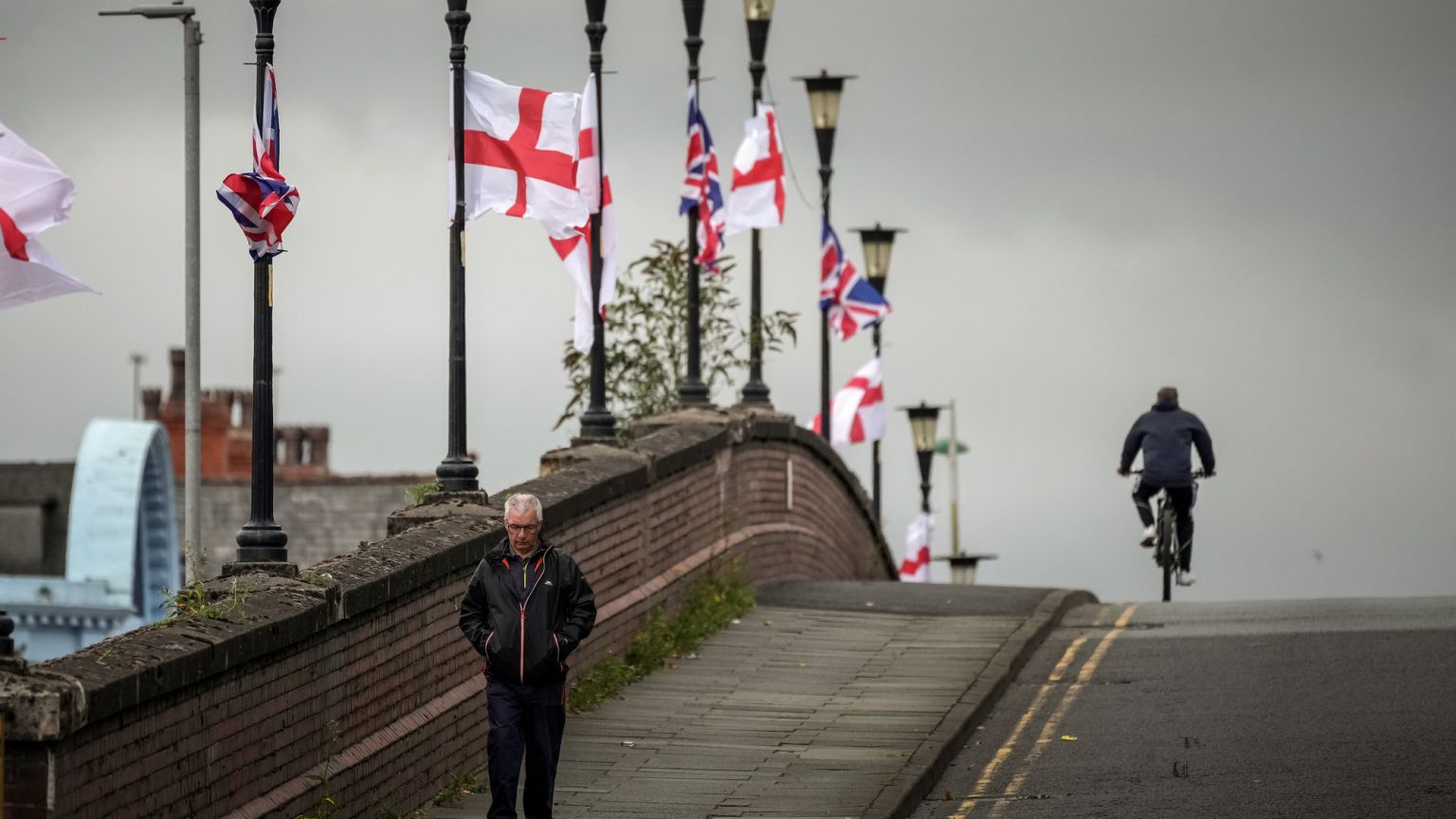
Birmingham has declared the England flag haram

Published

on

Birmingham has declared the England flag haram

The post Birmingham has declared the England flag haram appeared first on spiked.

Source link

Continue Reading

Politics

Helen Millman: Kemi, it’s time to get real about climate change

Published

on

Dr Helen Millman is a climate scientist and glaciologist based at the University of Exeter. She writes in a personal capacity.

The UK’s commitment to reach net zero by 2050 was introduced by a Conservative government and supported across Parliament because the scientific evidence shows that limiting warming to 1.5°C requires global CO₂ emissions to fall rapidly this decade and reach net zero by the middle of the century.

This is the consensus reflected by the IPCC and, like all IPCC reports, was approved by the governments of its 195 member countries. Even Saudi Arabia, a nation not known for its eco-zealotry, couldn’t change the scientific assessment to suit its interests. It is, therefore, surprising to see Kemi Badenoch dismiss our 2050 net zero target as “arbitrary” and a “political programme.”

Accepting the target and delivering it are different things, but the target itself is scientifically grounded. As long as greenhouse gas emissions remain above net zero, global temperatures will continue to rise, increasing the frequency and intensity of heatwaves, wildfires and other climate extremes. This summer, in a 1.4°C warmer world, we have seen people lose everything to wildfires and our infrastructure fail in unnaturally hot weather. A&Es have experienced their busiest period on record, with excess deaths from heatwaves running into the thousands in England alone. As UK temperature records continue to be broken, farmers have raised concerns about food shortages amid what’s expected to be the worst harvest on record.

Advertisement

Against this backdrop, the party leadership has made a series of dubious claims about net zero. Badenoch has claimed that net zero by 2050 is “impossible”. In reality, the transition is achievable for around 1 per cent of GDP, far less than the costs of not reaching net zero by 2050.

She has suggested that the UK’s net zero commitment has caused emissions to increase. In fact, since our net zero target became legally binding in 2019, our consumption-based CO2 emissions figures – which include offshored emissions – have fallen from 23 per cent below 1990 levels to 27 per cent below 1990 levels. In contrast, the party’s proposals of more North Sea drilling, removing emissions targets and cutting carbon taxes would put the UK on a higher-emissions pathway than current plans and keep the UK tied to a more expensive energy model for longer.

Just recently, Claire Coutinho was forced to defend a report which she’d hailed as “the most detailed energy analysis ever.” When it was found that those details were questionable, she doubled-down in a Trumpian style rebuttal with further inconsistencies and attacks on her critics.

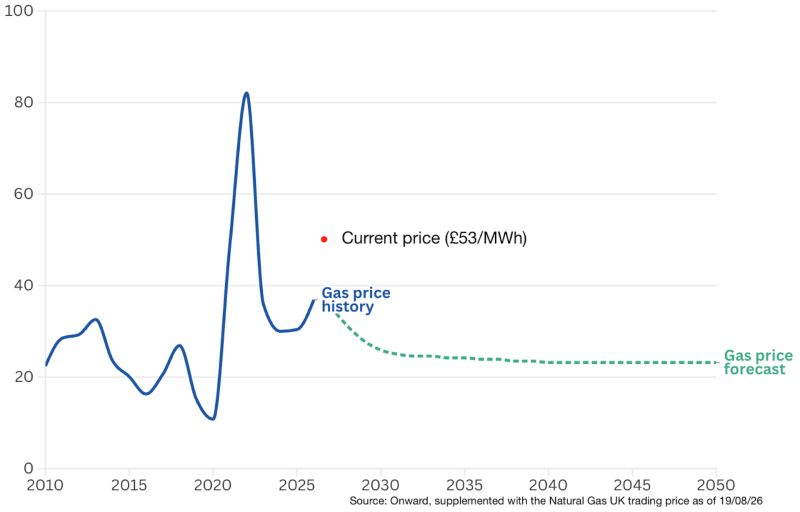
Coutinho and Badenoch are right that British industry faces exceptionally high electricity prices, but they are wrong to blame carbon taxes and renewables. The steel industry, for instance, is largely exempt from environmental levies and receives network cost relief through the Supercharger scheme.
Advertisement

Yet British steelmakers still pay more for electricity than their French and German counterparts because UK wholesale electricity prices remain tied to the price of gas. In the latest auction, contracts for onshore wind and solar were awarded at around £72 and £65 per megawatt hour respectively, compared with more than £147 per megawatt hour for new gas generation. Renewables are not cost-free, requiring investment in networks, storage and flexibility, but clinging to an outdated system dominated by expensive gas is not the cheaper route.

Until the world reaches net zero, warming will continue, making climate impacts harder, more costly and, in many cases, beyond our ability to adapt to. This year’s poor harvest points to what more frequent and severe droughts will mean for crop yields and food security. Rising sea levels will make low-lying coastal communities increasingly difficult or impossible to defend, threatening homes, infrastructure and farmland. More properties will become uninsurable due to extreme weather, wildfires and flooding, while investment will be diverted towards repairing damage and adapting existing assets rather than raising productivity and living standards. A slower transition for Britain carries severe economic, diplomatic and physical challenges, but the party leadership has yet to acknowledge them.

Yes, the UK only makes a small contribution to global emissions, but so does almost every other country on Earth. Countries that each account for less than 1 per cent of global emissions collectively produce more than a fifth of global emissions – more than the USA and India combined. It also doesn’t take a diplomat to realise that a country which refuses to meet the 2050 target will struggle to persuade others to do so.

We were the first to commit to net zero, and 144 countries have followed our lead. Before the 2015 Paris Agreement at COP21, the world was on course for 4°C of warming, but due to net zero policies and the falling cost of green technology, we are now on course for 2.8°C of warming. This is still well beyond the 1.5°C limit, but we have helped to lead the world in the right direction and should continue to do so.

Advertisement

Conservatism has traditionally understood that facts cannot be negotiated with. Markets, public finances, demographics and geopolitics impose constraints that governments ignore at their peril. Climate change belongs to this same class of realities, governed by atmospheric physics rather than political beliefs. When the truth is inconvenient, it’s best to work towards solving the problem, not to imagine a different reality to suit the argument you would rather be making.

Barring Conservative candidates who support net zero by 2050, including former Government Ministers, puts compliance with a populist ideology ahead of the national interest. It risks excluding the people with the knowledge and expertise the party needs to navigate one of the most serious challenges the country faces. Treating knowledge as a tribal marker rather than a basis for decision-making might be popular in the online world, but it leads to bad policy and poor outcomes in the real world.

There are serious debates to be had about how we decarbonise more rapidly, how the costs are distributed, and how we strengthen economic competitiveness while doing so. But by treating the net zero target itself as heresy, Badenoch’s approach has opened a void where constructive debate should be. Ignoring scientific evidence doesn’t form a strong foundation for winning political arguments or for tackling the problems we face. For a party that once prided itself on governing through competence, this is a deeply damaging direction to take.

The post Helen Millman: Kemi, it’s time to get real about climate change appeared first on Conservative Home.

Advertisement

Source link

Continue Reading

Politics

The narrative and the numbers: how does migration affect crime?

Published

on

The narrative and the numbers: how does migration affect crime?

Ali Ahmadi, Catherine Barnard and Fiona Costello argue that, contrary to common media narratives, there is no clear link between increased migration and higher crime rates.

The media often associates migrants, particularly asylum seekers and refugees, with criminality. A study of news coverage in Canada, the UK, and the US found recurring negative themes, including describing migrants as ‘rapists and criminals,’ and linking migrants with ‘terrorism’.

But what does evidence say? Are asylum seekers and refugees really more likely to commit crimes? And, if they are, will a government leaflet, setting out the basic rules, deter them?

Research does not show a consistent link between migration and crime. In fact, across OECD countries, an increase in immigration has not seen an increase in the crime rate (particularly property, violent, and drug crime). However, a closer look at the figures reveals significant variation, depending on immigration policies, immigrants’ backgrounds, and the post-arrival conditions. For instance, a study of 128 countries found that while migration was positively associated with crime in countries such as Iran and Ukraine, it was associated with lower crime indices in Egypt, Mauritius and the United States. Similarly, in the UK, the proportion of non-citizens among people convicted or incarcerated is similar to that of the adult population (about 12%), or lower once age is taken into account (non-citizens tend to be younger, and young men are more likely to commit crimes).

Advertisement

Crime rates also vary by nationality and offence type. For instance, Afghans are over-represented in sexual offences and Albanians are over-represented in drug offences (although the available data do not allow for a reliable measurement of this over-representation). More broadly, high-income countries (e.g., China, France) are less represented in convictions and low-income countries (e.g., Afghanistan, Iraq) are over-represented. This can be explained by socio-economic and family circumstances, which is also in line with research within the British population. For example, young adults who had spent time in care were roughly ten times more likely to have been found guilty of an offence than those who had never been in care.

Crime rates also differ according to how people enter a country and their post-arrival conditions. For example, immigrants who come for study and work (generally those with more affluent socio-economic backgrounds) are less likely to commit crime. On the other hand, asylum seekers and refugees are more likely to be convicted or incarcerated. A study in the UK found that the large arrival of asylum seekers in the late 1990s led to a small but statistically significant increase in property crime. Similarly, a study in Germany found a small increase in property and violent crime one year after refugees arrived. This could be explained by the limbo these individuals face in their host countries post-arrival. A prolonged period of uncertainty can create financial and social pressures. In the UK, over 36% (17,668 people) of those claiming asylum wait for more than a year for an initial decision and the average time for an appeal for asylum applicants is 67 weeks. This limbo may, in some cases, increase the risk of involvement in crime.

However, even this increase should be interpreted carefully. Researchers have identified an ‘over-reporting bias,’ where people may report or attribute crimes to refugees more often in areas with large refugee populations because of prejudice, heightened public attention, and/or increased police alertness.

Government policies, particularly rules on employment and legal status, can either increase or reduce crime among asylum seekers. People who cannot work legally have fewer opportunities to earn a legitimate income, which creates financial pressures that may lead to them engaging in illegal activity. For instance, although crime increased among asylum seekers in the UK, no such effect was observed following the arrival of a large number of EU labour migrants after 2004, who had immediate access to employment. Similarly, in Italy, migrants with legal work permits showed a similar or lower propensity for committing crime compared to natives. And those whose status had been legalised were significantly less likely to commit serious crimes in the following year.

Advertisement

Similarly, in Türkiye, which hosts the world’s largest Syrian refugee population, crime rates fell following the arrival of refugees. Researchers suggested that the risk of deportation, combined with humanitarian cash-transfer programmes such as the Emergency Social Safety Net, may have discouraged illegal activity.

A study from Denmark showed that a more expansive integration support such as employment and language training for adult refugees also has significant intergenerational effect in terms of, among other things, lowering juvenile crime.

Recently, the UK government distributed a short guide for asylum seekers covering public behaviour, sex and consent, domestic abuse, and gender equality, and highlighted the legal consequences of non-compliance. We are not aware of any evidence that pamphlets of this kind, on their own, produce a substantial reduction in criminal behaviour. A study of North Korean refugees in South Korea found that greater familiarity with the law was associated with lower offending rates, indicating that legal awareness may have some preventive value. The guide could therefore be beneficial if combined with in-person orientation and ‘psycho-education’ programmes such as anger management and violence prevention, particularly for adolescent and young adult refugees. These could build a better understanding of the law and address wider barriers to integration. This may be particularly important for asylum seekers given that trauma and exposure to conflict significantly increase an individual’s propensity to commit violent crime.

To conclude, the evidence is mixed on whether migration increases or decreases crime. It varies across countries and groups and depends on factors such as migrants’ backgrounds (e.g. socio-economic factors, family, etc.), their route of arrival, their legal status and their access to employment. Also, the propensity for crime among migrant populations is highly responsive to government policies. Policies that restrict employment and leave people in prolonged legal uncertainty can create economic pressures. Conversely, policies that provide access to work, social support and secure legal status may reduce these pressures and see crime risks minimised or even reversed. Therefore, reducing prolonged periods of unemployment and legal uncertainty may help people establish more stable lives and could, in turn, reduce the conditions associated with some forms of offending.

Advertisement

By Ali Ahmadi, Research Associate, University of Cambridge and PhD student at Anglia Ruskin University, Catherine Barnard, Senior Fellow, UK in a Changing Europe & Professor of EU Law and Employment Law, University of Cambridge and Fiona Costello, Assistant Professor, University of Birmingham.

Source link

Advertisement
Continue Reading

Politics

Wings Over Scotland | Spot The Problem

Published

on

See if you can identify why this isn’t an ideal way to run a justice system.

We’ve put a couple of clues in for the slower folk. Answer below.

Still, the Crown Office IS at least theoretically accountable to Parliament, so as long as the governing party is full of strong, independent, fair-minded MSPs willing to stand up for justice even against their own party leadership then everything will be oh wait right yeah we remember now.

Advertisement

Source link

Continue Reading

Politics

Can local communities turn the tide on AI data centers?

Published

on

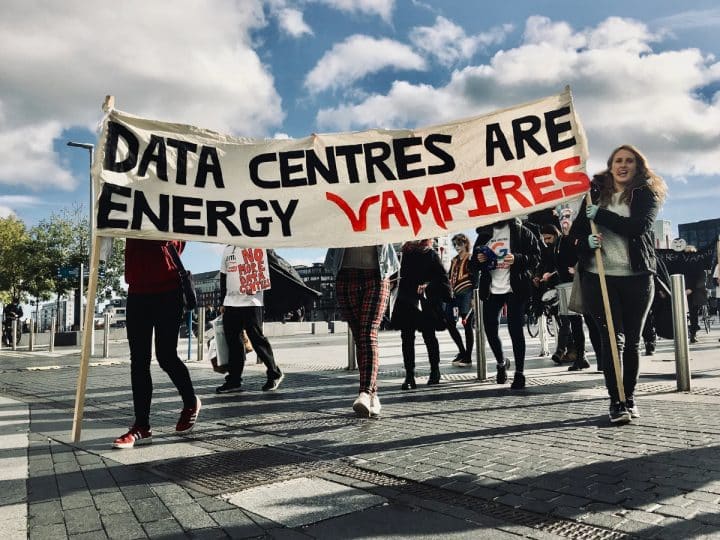
Protestors against AI data centres holding a banner that reads, "Data centres are energy vampires"

Protestors against AI data centres holding a banner that reads, "Data centres are energy vampires"

The “AI boom” has caused a surge in tech companies proposing to build massive data centres across the UK. Concerned about the resource use, disruption, noise, environmental impacts and the lack of public consent, local communities are pushing back.

Expansion and destruction

As the digital world expands so too does the amount of data that’s processed and stored. Data centres have become a key part of the physical infrastructure that enables this: they’re large – often huge – buildings that house arrays of servers, storage drives, cables, batteries and cooling systems.

Around 500 data centres have been built in the UK since the 1990s. But AI adoption is now driving a massive expansion, with the government expecting data centre capacity to double or even quadruple within the next few years. There are thought to be at least 100 proposed data centres angling to be given the go-ahead, and some of them are absolutely enormous ‘hyperscale’ developments.

It’s hard to overstate the demand AI expansion – and the data centres needed for it – is imposing on global resources: tech companies are sidelining their sustainability goals and using far more energy than ever before; drinkable water is being drained from places that desperately need it; hunger for minerals is driving yet more toxic and exploitative conditions for the people who mine them.

Advertisement

Concerned communities

Communities living near proposed data centres are increasingly worried about the noise, pollution and water stress their new neighbours would bring. They’re also seeing data centres consume space at the cost of agricultural land, local wildlife, housing and other valued infrastructure.

Nick Richards, who lives in east Cardiff where plans for a new data centre threaten a local hospital park and ride service, tells me:

The data centre will harm the community in many different ways. Staff and patients will have to spend up to an hour finding a parking space at the hospital. The gas turbines will have people living within a few miles breathing pollutants. Residents will be subjected to an intense humming noise continuously. My housing estate was only completed this year and most residents now fear they will never be able to sell their homes if the data centre goes ahead.

He also fears for how the community will fare as climate impacts intensify. He continues:

Then there’s the ‘heat island’ effect, where it’s understood that gas-powered data centres can raise the temperature of their surroundings by up to nine degrees. We’ve had a number of wildfires in that area this summer, and with 2027 set to be the hottest in a thousand years, I can’t picture things getting any better.

Communities respond

In Cardiff and beyond – including in London, Devon, Slough, Havering, Leeds, Selby and across Scotland – local people are organising their opposition to new data centres via campaigns and protests.

Advertisement

Local authorities are meant to inform residents who stand to be impacted by planning decisions and give them a chance to have their views considered. But campaigners are having to take on a lot of this work themselves, as Richards tells me:

I’ve spent two days walking door to door notifying the residents of the development; only 15% of them knew about it. The Local Authority’s public consultation consisted of four A4 notices on lampposts and three classifieds on page 38 of the Western Mail newspaper.

Communities have a huge challenge on their hands, especially as the government seems determined to fasttrack developments in the hope of becoming an AI ‘superpower’. Even when councils take positions against new data centres – for example, in Buckinghamshire, Slough and Tower Hamlets – they can find themselves overruled by ministers.

Momentum building?

Despite the hurdles, campaigners are buoyed by the groundswell in the USA where opposition to data centre expansion is becoming mainstream. Backlash there has blocked or delayed at least 75 major projects within a three-month window. New York and Texas now have temporary bans on new data centre approvals, with more than a dozen states considering similar action.

But could the grassroots organising and legal challenges we are seeing here in the UK replicate this momentum? All the campaigners I’ve spoken to hope it will, but also acknowledge how much effort it will take. According to Richards:

Advertisement

You can’t get disheartened… if you keep speaking to people, things will start to happen.

Featured image via The Commons / Climate Camp Ireland

By Abi Perrin

Source link

Advertisement
Continue Reading

Politics

UK cinema chain won’t screen new Ali G film

Published

on

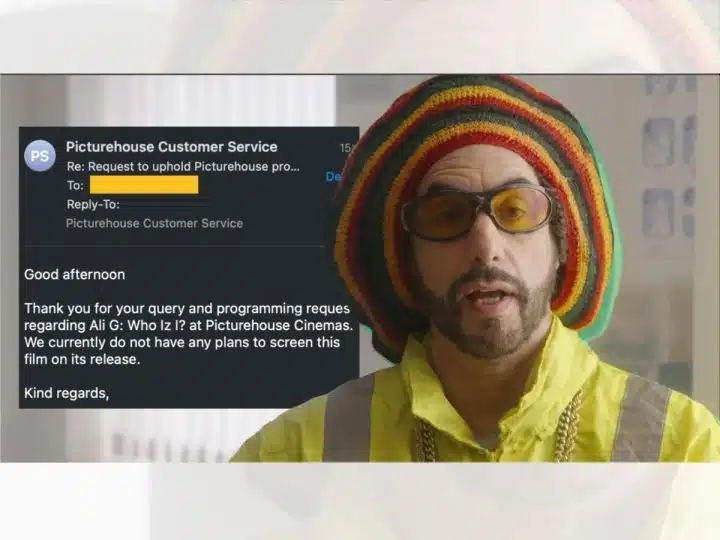
Sacha Baron Cohen playing Ali G and an email from the Picture House cinema chain saying they have no plans to screen the new movie

Sacha Baron Cohen playing Ali G and an email from the Picture House cinema chain saying they have no plans to screen the new movie

On 26 August, Sacha Baron Cohen and Sony Pictures showed off the new Ali G sequel. The response — it’s fair to say — has not been positive. And now, campaigners are asking cinemas to not show the film, with one UK chain already confirming the following:

Advertisement

Pushback

Cohen is receiving backlash for three primary reasons. The first is that the character is basically just Cohen doing blackface:

Advertisement

When Ali G first came out, the joke was seemingly pastiching white guys who appropriated what they saw as Black culture in London. Whether you bought that joke or not, it’s clearly worn thin to the point of being non-existent at this point, and as such people are understandably taking the character to be Cohen’s impression of Black people.

The new Ali G is also facing pushback because of Cohen’s support for Israel – especially as the trailer literally features an Israeli government talking point:

The comedy film is also receiving pushback for not looking very funny:

Advertisement

Campaign against Ali G

In response to all this, NewsCord have issued the following statement:

New campaign: demand cinemas worldwide refuse to screen the new Ali G film.

Sacha Baron Cohen retired Ali G in 2007. Amazon has revived him. On 23 October, Ali G: Who Iz I? opens in cinemas worldwide, and Sony Pictures is selling it to the public with the line “He iz back. We ain’t liable.”

Advertisement

The distributor is joking about liability. But the screens belong to the cinemas, and a booking is a choice.

In January 2000, the Guardian reported the verdict of Black British comedians under the headline “Comics find Ali G is an alibi for racism”. Felix Dexter said the act lets “the liberal middle classes laugh at black street culture” while keeping their sense of political correctness.

The catalogue behind it hurt community after community. The Kazakh American Association told Amazon that in Borat “a white person adorns a Kazakh persona” and belittles everything Kazakhs stand for. Kazakh children were bullied at school off the back of the joke.

On The Dictator, Jack Shaheen said “Arabs are being ridiculed again and again and again”, and Dean Obeidallah called it a “modern-day minstrel show”.

Advertisement

Studios sell films. Cinemas choose them. No film is owed a screen.

So we’ve created a campaign where you can voice your opinion to the cinemas.

One click sends up to 20 personalised letters in your name to the booking desks of Odeon, Cineworld, Regal, Vue, Everyman, Picturehouse, Showcase, Cinemark, Harkins, B&B, Landmark, Cineplex, Event, Kinepolis, VOX, Reel, Pathé, CinemaxX, Cinépolis, Cinemex and Nordisk Film.

Every address is verified on the chain’s own website.

Advertisement

Non-English chains get the letter in their own language.

You read every letter before it is sent. The chains decide their bookings in the next eight weeks.

The link to the email campaign can be found here.

Zionists and cinema

It’s unlikely cinemas will ever put a blanket ban on movies linked to Zionists. We say this because several prominent movie producers have supported Israel throughout the genocide.

Advertisement

For clarity’s sake, when we say ‘Zionists’, we mean people who actively support Israel existing as an expansionist colonial state – a state which serves as America’s foothold in the Middle East. One such supporter is Larry Ellison, who owns Paramount Studios and is a major donor to the IDF (a.k.a. the ‘IOF’ or ‘Israeli Occupation Forces’). Ellison also owns Oracle – a company which has continued to provide tech solutions to Israel throughout the genocide. He was additionally involved in the US takeover of TikTok:

Actor Mark Ruffalo recently spoke out against Paramount’s attempts to buy out Warner Bros, and he did so by pointing out Ellison’s links to the genocide. Paramount smeared Ruffalo as an ‘antisemite’. The response to that was an outpouring of support for Ruffalo from people who oppose the mass killings which Israel is continuing to perpetrate in Gaza.

Ali G loses his mojo

The backlash to the new Ali G movie is a sign that support for Israel is increasingly toxic. The reason for this is that the genocide has made it completely impossible to present Israel in a favourable light.

Of course, it’s possible many cinema chains aren’t going to show the movie purely because it doesn’t look very good. At the same time, it would have needed to be Citizen Kane levels of amazing to escape the backlash that now accompanies Cohen and his increasingly dated caricature.

Advertisement

Featured image via the Canary

By Willem Moore

Source link

Advertisement
Continue Reading

Politics

Burnham returns from Kyiv with war AI to ‘protect’ UK bases

Published

on

Burnham meets Zelensky during state visit

Burnham meets Zelensky during state visit

The ‘People’s Prime Minister’ Andy Burnham has struck a concerning deal with Ukraine. It will see Ukrainian-developed war-tested AI used to ‘protect’ UK military bases from protestors. It seems like Burnham is going to pick up where Keir Starmer left off – a spiral into anti-democratic authoritarianism.

A government press release published on 24 August claimed:

New partnership set to see the UK and Ukraine develop battle winning technology as Britain secures access to Ukraine’s Avengers AI Labs.

A landmark AI deal between the UK and Ukraine has been signed today as the two countries join forces to develop new military capabilities and the technology of the future.

Secreted lower down in the document, the government has said (author’s bold):

The first of the trial technology is about to be rolled out at a UK defence site to protect bases from protestors and hostile actors trying to gain intelligence.

The press release confirms:

Advertisement

The project, which uses Ukrainian data and UK technology, turns buried fibre-optic cables into a giant AI-enabled sensor. As well as military bases, the technology could be rolled out to protect airports, prisons and even railways and energy plants in the future.

Burnham’s state visit

Burnham has spent several days in Ukraine leading an official state visit. He also talked up giving Ukraine more missiles too:

To underline the strength of this commitment, the Prime Minister is set to announce that the Government has agreed that defence firm MBDA can release classified information on UK components for the long-range missile, SCALP, as Ukraine and France look to establish local assembly lines in Ukraine.

Burnham’s commitment to the war machine is evident. So is that of his cabinet. Defence secretary Wes Streeting gave a speech to arms firm leaders on 23 July, soon after being appointed, which:

promised new arms contracts worth over £11 billion and pledged unstinting support for rearmament in a speech that never deviated from Ministry of Defence approved themes.

The same report from Europe Says stated:

Also today his boss, Prime Minister Andy Burnham, committed to allowing the US to use RAF bases in the UK to bomb Iran.

The new boss, then, same as the old boss.

Advertisement

Burnham’s gimmicky politics and DJ sets might appeal to centrist dads and naive liberals. His branding might appeal to middle-class ‘left’ cosplayers. But the increasingly obvious truth is that whether or not he likes Joy Division, his underlying politics are perfectly in line with establishment consensus. Labour is still for war, still for capital and still for US empire. Let’s at least be frank about it.

Featured image via the Canary

By Joe Glenton

Source link

Advertisement
Continue Reading

Politics

Samantha Niblett Wants To Shift Overton Window On Sex

Published

on

The Rundown Podcast: Samantha Niblett Wants To Shift The Overton Window On Sex


4 min read

The Labour MP behind the campaign to make 2026 the “summer of sex” said she wants to talk about the subject so much in Parliament that it becomes “boring”.

Advertisement

The MP for South Derbyshire, Samantha Niblett, said she wanted to shift the Overton window – a term which means ideas being accepted as mainstream – so that talking about consent, intimacy and pleasure is entirely normalised.

Speaking on the latest episode of PoliticsHome podcast The Rundown, which will be published on Friday (28 August), Niblett said she hopes her campaign for lifelong sex education will help her MP colleagues feel more comfortable talking about the subject in the House of Commons.

“I have spoken to male MPs who are really supportive, but who are really scared about talking about it when it comes to the debate in the chamber, because they don’t want to be known as the ‘pervy male MP’, and that’s part of the problem,” Niblett said.

“But you know how we see the Overton window shift what we think of as normal in politics, I kind of want to be doing the same thing with sex. So, the more I talk about it, the more it’ll be boring, and when it’s boring, then won’t that be great?”

Advertisement

The Labour MP faced criticism, some of it from MPs in her own party, when in an interview with PoliticsHome earlier this year she announced her campaign to overhaul sex education in Britain.

Niblett said a more “inclusive” approach would encourage people to talk about sexual pleasure without feeling “ashamed”, as well as help people better understand consent, prevent abuse and violence, and raise awareness of how childbirth, the menopause, stress and other health conditions can impact sexual satisfaction.

She hosted a campaign launch party at a rooftop bar in London last month, where she told PoliticsHome that some MPs were “on a journey” to supporting it.

Advertisement

Speaking on the podcast, Niblett said the negative responses and becoming known as the “sex MP” have not put her off: “I am happy to take it on. I’m a belligerent swine.”

However, she admitted that some of the criticism had affected her, including a recent article which asked if she was “the most ridiculous MP in Britain”. “I am only human. Of course, there are going to be some times where it’s knocking me down,” she said.

Labour MP Samantha Niblett
Labour MP Samantha Niblett faced a backlash after announcing her ‘Summer Of Sex’ campaign (UK Parliament)

“But that’s also why it’s absolutely delightful when I have Thames Valley Police reach out to me to say, thank you so much for your campaign. When I have spoken to the first-ever occupational therapist to work in a sexual health clinic in a hospital, saying, brilliant, thanks for your campaign’.

“I feel I’m justified in the work that I am doing, but I don’t think I will be alone for long.

“I think there will be more and more MPs who feel that they can talk about it, and then we can share the load.”

Advertisement

The Labour backbencher has secured a debate in Parliament on the topic in the autumn, and is currently working on a briefing for her MP colleagues about her campaign, which hopes to normalise conversations about sex that politicians usually shy away.

“If we start to normalise it, then it’s going to hopefully make it easier for some of my colleagues,” she said.

“I know there are loads of them that feel the same. They’re just a bit uncomfortable about getting the conversation started because they are nervous about the pushback, because they are nervous about the single clips for headlines.”


The Rundown is presented by Alain Tolhurst, and is produced and edited by Lulu Goad and Ewan Cameron for Podot

Advertisement
  • Click here to listen to the latest episode of The Rundown, or search for ‘PoliticsHome’ wherever you get your podcasts.


Source link

Advertisement
Continue Reading

Politics

Manchester City sign Bouadi from Lille

Published

on

Man City signs Ayyoub Bouaddi

Man City signs Ayyoub Bouaddi

Manchester City have signed Morocco midfielder Ayyoub Bouaddi from Lille on a five-year deal. The Premier League club confirmed the move on 26 August 2026, posting images of the 18-year-old signing on the dotted line.

Manchester City did not disclose the fee, although Reuters, citing British media, reported it was EUR 86 million.

Bouaddi joined Lille’s first team in 2023, aged 16, becoming the club’s youngest senior player. He went on to make 96 appearances for the French side, including 30 in Ligue 1 last season with Lille finishing third.

He also caught the eye in Europe during Lille’s Champions League win over Real Madrid in 2024.

Advertisement

Although born in France to Moroccan parents, Bouaddi came through the French youth system before choosing Morocco for his senior international career.

He made his senior debut for the Atlas Lions last May and was part of their 2026 World Cup squad, starting five of their six matches as they reached the quarter-finals.

Known for his ability to dictate the tempo, Bouaddi can maintain possession under pressure and play the ball forward from midfield.

His move to Manchester City comes as the club reshapes its midfield following the departures of Rodri, Bernardo Silva and Tijani Reijnders. City also signed England midfielder Elliot Anderson from Nottingham Forest last month for a reported £116 million.

Advertisement

In his first interview since the signing, Bouaddi said:

It’s a dream come true to join this club and to be able to call myself a City player.

For me, Manchester City is the best club in the world.

City will look to Bouaddi to make his mark at the club and play a big part in what comes next.

Featured image via Manchester city / the Canary

Advertisement

By Alaa Shamali

Source link

Continue Reading

Trending

Copyright © 2025