
Politics
The House Article | Drought is here to stay. It’s time for the Government to act



4 min read
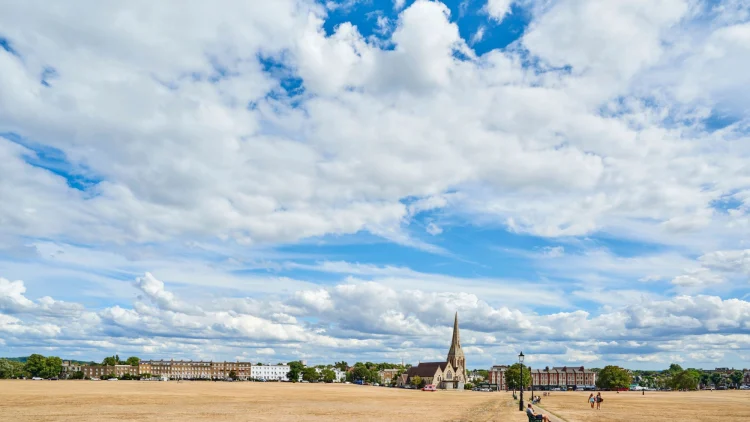
Fifty years after the drought of 1976, the images of the 2026 drought will also last long in the memory.
Parched brown lawns and fields, failing crops and sustained high temperatures have become a familiar sight, along with queues for water as taps run dry in some parts of the country.
The difference between now and 1976 is that drought in the UK is becoming a regular occurrence rather than a once-in-a-generation event.
In May of this year, the House of Lords Environment and Climate Change Committee, which I chair, published our report Surviving drought: reclaim the rain. It warns that England’s water supply is under growing strain due to a combination of climate change, population growth, public water supply leakage and water-intensive industries. Without considered Government action to reduce demand and increase supply, as well as working with our natural catchment areas, the risk of drought in England threatens the very systems on which people and nature depend.
Despite commonly held assumptions, water in England is a precious resource. Ever drier summers and wetter winters, coupled with new housing developments, data centres and energy infrastructure, are projected to lead to a shortfall of 5 billion litres per day by 2055. It is under growing strain, particularly from new housing developments, data centres and energy infrastructure.
Given the weather events of 2026, with a potentially drier 2027 as the “super El-Nino” gathers force, it is disappointing that the much-touted cultural and behavioural change campaign has been a damp squib. There has been no high volume campaign targeting how businesses and households use water. For example do we really need to use clean drinking water to flush our toilets, water our gardens and cool industrial plants?
During our inquiry, the Committee heard of serious gaps in the way industrial and commercial water use is planned and managed. Developments relying on major water usage are too often proposed in places that are already under water stress, without a clear assessment of whether there is sufficient local supply or how a projected shortfall might be met.
The Government disappointingly rejected our recommendation that water companies should be statutory consultees on all major planning applications. It is simply not sensible to approve large, water-intensive developments before the people responsible for supplying water have had a formal opportunity to assess the consequences.
The Government is backing itself into a corner by not setting out clear guidance on how water companies should prioritise the supply of water.
Calls in our report for the Government to urgently publish a prioritisation plan for an emergency drought has been echoed in the media by the water trade body Water UK and environmental charity Global Action Plan.
There will soon come a time when it will need to decide and communicate whether water supply to hospitals, households and schools should be prioritised ahead of data centres and other heavily water-reliant industries. The sooner the Government lays out and communicates their plans for such scenarios, the sooner services, organisations and businesses can plan for future droughts.
Businesses also need clearer incentives to use water efficiently. Where water is treated as a cheap and effectively unlimited input, there is little reason for a large commercial user to invest in water recycling, rainwater harvesting, closed-loop systems or less water-intensive technology.
Households are rightly encouraged to save water and to repair leaking taps and toilets. Industry should face an equally clear expectation to reduce waste and make better use of water. We need a system that rewards efficiency rather than excessive consumption.
Climate change is gathering pace and droughts have become a regular fixture in the UK. The Government must act now to ensure we are prepared as a nation to adapt to the impacts of this reality.
Baroness Sheehan is Chair of the House of Lords Environment and Climate Change Committee


We’ve endured blistering heat this summer, which has made it pretty much impossible to do anything other than walk to the end of your road.
My gym has been impossibly busy, thanks to the fact it has both an air con and a pool. It’s no wonder that, as temperatures climb, people are flocking towards anywhere that’s cold.
It’s even seeped into our travel habits: instead of travel to another scorching hot country (that’s probably not dissimilar in clime to the UK, let’s be real) people are increasingly going on ‘coolcations’ to places where they won’t have to plan what they do around the heat.
As winter approaches, research by SportsCover Direct shows that searches for ‘coolcations’ have risen a whopping 74% year-on-year, with 65% of holidayers saying they’d rather avoid travelling during the hottest time of year. Fair.
If you’ve given in to the allure of bathing in a natural bath while surrounded by ice caps, or can think of no better excuse to get off your phone than to be surrounded by the great outdoors, you’ll want to make sure you’ve packed the right thing.
It goes without saying, but what you shove in your suitcase undoubtedly needs to be different from what you wear on the beach.
While you might have conquered the shorts and vest look for hiking in hot weather, you’ll need to prepare more for hiking or cycling in the winter, explains Natalie Wolfenden, author and hiking enthusiast at GO Outdoors.
“A change in weather shouldn’t signal an end to your outdoor plans,” she says. “Some of the most enjoyable days in the hills can come when conditions are cooler, and the trails are quieter.
“The key is being properly prepared, with the right clothing, equipment and a clear understanding of how conditions can change throughout the day.”
To save you time, we’ve asked Wolfenden to round up her ultimate packing guide for a coolcation.
Keep reading for our recommendations.
Everything you need to pack for a coolcation



I love brushing my teeth. There, I said it. Thus, my toothbrush is probably the most important part of my day.
It wasn’t until I switched to the SURI Pro, though, that I realised I’d been using an amateur electric toothbrush for far too long.
While I was a big fan of the brand’s award-winning brush (read my full review here) there’s one thing that kept niggling at me: it costs £105. That’s a lot for a toothbrush.
I would argue that, yes, it’s totally worth it – you can choose from a range of colours and a UV-cleaning travel case that also charges it, plus the charge lasts for over a month – not everyone is at home with splashing out that much on something so banal and quotidien as a tool for keeping your gnashers clean.
That’s probably why nearly half of the UK population still uses a manual toothbrush. That, or they prefer manual.
If, like me, you’ve been sucked in by SURI’s applaudable sustainability efforts (it uses plant-based heads and an aluminium body that can both be recycled) and pastel marketing, good news: you can finally get your hands on one of its brushes for less.
We’re not talking about a sale – although the brand does excellent Amazon discounts around Prime day and Black Friday, so look out for those – but a whole new brush, designed for people who are entering the electric toothbrush realm for the first time.
SURI has now launched the Core 1.0, which will set you back £40 less than the Pro.

Having loved the Pro so much, I was keen to see how they compared. Immediately, the Core 1.0 feels pretty much the same as the Pro.
It’s the same shape, but the main visual difference is that the brush heads are white, rather than the same colour as the body.
There are also fewer colours to choose from – four, instead of six. Like I said, the Core is designed to be an entry-level toothbrush, so that’s reflected in slightly less power: 28,000 sonic vibrations per minute instead of 30,000, and a battery life that lasts up to a month, rather than over a month.
It also doesn’t come with a UV cleaning storage charging case, which definitely comes in handy when travelling with the Pro, and it’s not compatible with it if you already happen to have one.
Instead, SURI has included a cap to keep your bristles clean if you chuck it in your bag, so naturally it’s slightly less heavy, making it kind of more ideal to travel with than the original.
Apart from that, it has basically the same functions as the Pro: a haptic pressure sensor that means it adjusts the intensity to your brushing, wireless USB-C charging, and a long-lasting battery life.
To me, the 2,000 fewer sonic vibrations per minute are barely noticeable, and the brush has essentially the same mouthfeel as the Pro.
Most importantly (for me) it still comes with all the extras, too, including a wireless stand and an adhesive mirror mount, so it won’t take up space in your bathroom.

Honey Jane Wyatt/HuffPost
If you send the heads back to SURI, they’ll recycle them for you. You can even sign up for a new head subscription, so you get them every six months without having to think about it.
Personally, that’s huge for me, because I can never remember to change my brush head without being prompted by a concerned onlooker (usually my mother when I go to stay with her) that my bristles are looking a little worse for wear.
Considering the brush is £40 cheaper, it’s not lost much of its functionality, and I’d happily spend that on a brush from a company that champions sustainability, and also looks nice in your bathroom.
Whether you’re only just entering the electric toothbrush market, or looking for a prettier alternative to some of the clunkier models out ther, the Core is a great electric toothbrush to go with.
Thinking ahead to Christmas, it would also make a great present for any teens or health-conscious family members.
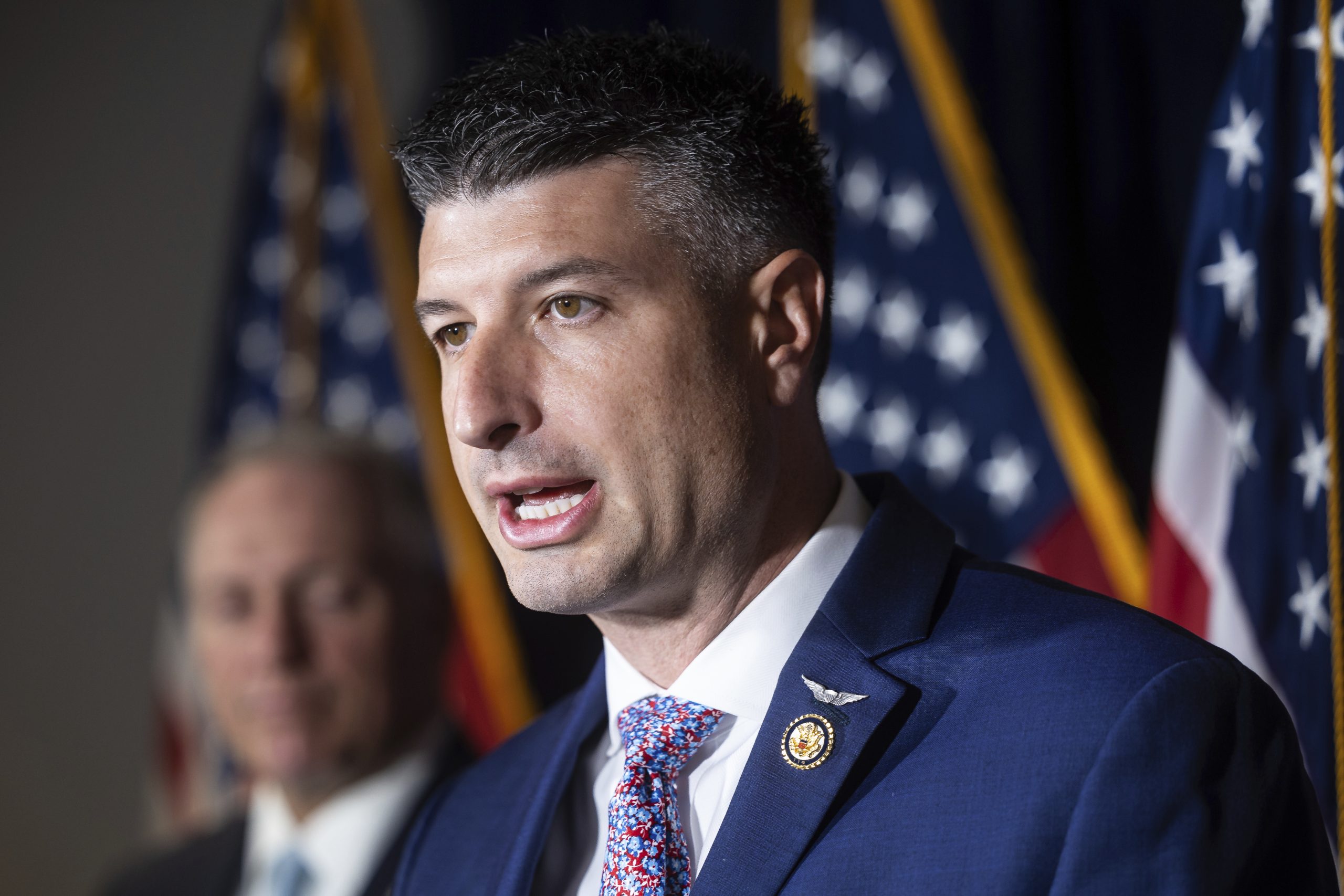

President Donald Trump has a vision for next week’s GOP convention in Dallas: a televised spectacle putting Republican candidates in front of midterm voters and top party donors just two months before the Election Day — with Trump himself headlining the show.
But a POLITICO survey of more than 70 GOP candidates and members revealed that most either do not plan to attend or are still weighing whether to go. Dozens more declined to share their plans.
The 45 Republicans cited a variety of reasons for skipping the first midterm convention put on by a major party in more than four decades. Some cited prior obligations such as fundraisers or events in their districts that were planned before the convention was scheduled in June. Others had personal conflicts, like weddings and family events, and still others raised qualms about the five-figure-minimum fees that party officials want attending lawmakers to pony up.
And some Republicans in tough races are steering clear of the gathering — which has come to be called “Trump-a-palooza” in some GOP circles — as they face growing hesitation about associating themselves with the polarizing president so close to the election.
“I just felt I’d be more useful in my district,” said Rep. Tom Barrett, who is facing a tough campaign to keep his central Michigan seat. “I travel a lot for this job and if I can be back home and see my family and do the job back home as well, then that’s sort of what I lean toward doing.”
Asked if the president’s remarks might cause him problems back home, Barrett said: “I can’t control what the president’s going to say at the convention, but I can control where I’m at, what I’m doing.”
Several other Republicans in key races targeted by Democrats said they weren’t committing to attend.
“I’m going to be in my district,” Rep. Zach Nunn (R-Iowa) said when asked about his plans, while Rep. Rob Bresnahan (R-Pa.) said, “I’m not sure yet.” Rep. Jeff Hurd (R-Colo.) isn’t planning to go, according to people granted anonymity to describe his decision. And Rep. Nick LaLota (R-N.Y.) said he instead plans to visit colleges with his daughter.
Trump will be the headline speaker of the two-day convention inside the American Airlines Center, with Vice President JD Vance also set to address Republicans.
Most top House and Senate GOP leaders will be in attendance, including Speaker Mike Johnson and Senate Majority Leader John Thune. Some potential 2028 presidential contenders, including Sen. Ted Cruz (R-Texas), will also be in attendance, as will some Senate Republicans from marquee battleground races.
Former Rep. Mike Rogers, who is trying to flip retiring Democratic Sen. Gary Peters’ seat in Michigan, and Sen. Jon Husted, who is working to fend off a challenge from former Sen. Sherrod Brown in Ohio, will both attend, according to their campaigns. Sen. Bernie Moreno (R-Ohio), who is expected to be the next Senate GOP campaign chair, is also planning to be there.
Johnson said he has been “promoting this everywhere” as an important event for the party but also acknowledged it’s a crucial time for some of his members to spend time in their districts.
“They’ve got to all make their own individual decision … but the people that do come are going to have a great time,” Johnson said in an interview, adding that he expects high attendance during the convention. He acknowledged in a news conference Tuesday, however, that some members will need to be in their districts because “it’s critical time right before early voting begins nationwide.”
With Trump front and center at the convention, some Republicans are privately fretting about slipping presidential approval ratings in their districts amid the ongoing conflict in Iran, a trade war with Canada and rising prices from both. Other moves by the administration, such as a deal tackling beef imports to address affordability, have angered other key GOP constituencies.
One House Republican not attending the convention who was granted anonymity to speak candidly called the event “a waste of time” and said the planning has been “a mess.”
“You shouldn’t be having to rally your base at this point,” the member said. “You should be trying to convince independents. Independents are not attending nor watching the midterm convention.”
RNC national press secretary Natalie Baldassarre said in a statement responding to those claims that “the outreach and enthusiasm to attend, participate, and speak at this historic midterm convention has been incredible.”
“Republicans across the country are rallying behind President Trump’s America First agenda that’s brought lower drug prices, lower taxes, and a secure border, and this convention will provide the momentum needed to expand our majorities in November,” she added.
But even some Republicans who might benefit from campaigning with Trump said the costs members are being asked to pay to attend were getting in the way. Another House Republican granted anonymity to speak candidly pointed to the $25,000 minimum attendee donation suggested by the National Republican Congressional Committee, which is distributing RNC-provided tickets to members.
“I didn’t want to go anyways. That made it easier,” the member said.
According to an NRCC memo obtained by POLITICO, that donation gives a member the right to book one hotel room in the committee’s block as well as two tickets to a welcome reception and the convention itself. Higher tiers of giving up to $100,000 come with access to additional rooms, tickets and events. An NRCC spokesperson declined to comment.
Rep. Tim Burchett (R-Tenn.) cited the price tag in explaining why he is still “not sure” whether he would attend.
“It’s $25,000, apparently — I just got a bill,” said Burchett.
With the convention being seen inside the party as a key late fundraising opportunity, several GOP lawmakers who intend to be there, including some committee chairs, plan to give much more than $25,000, according to three people familiar with the planning for the event.
But other powerful members are taking a pass, including two of the most senior members of the powerful House Energy and Commerce Committee. Ohio Rep. Bob Latta, who chairs the panel’s Energy subcommittee, said he had events back in his district, and Virginia Rep. Morgan Griffith, who chairs the Oversight subpanel, said he preferred to be home campaigning.
“I should be safe,” Griffith said in an interview. “But no member of Congress from the 9th Congressional District of Virginia has left voluntarily since 1952.”
House Appropriations Chair Tom Cole said he is not attending because he has a dove-hunting event back home in Oklahoma.
Several northeastern members, including Reps. Chris Smith of New Jersey and Andrew Garbarino of New York, said they have commitments in their districts related to the 25th anniversary of the 9/11 attacks.
Less surprising are the alternate plans being made by moderate Republicans who are facing tough elections in the fall and don’t necessarily benefit from being associated with the president.
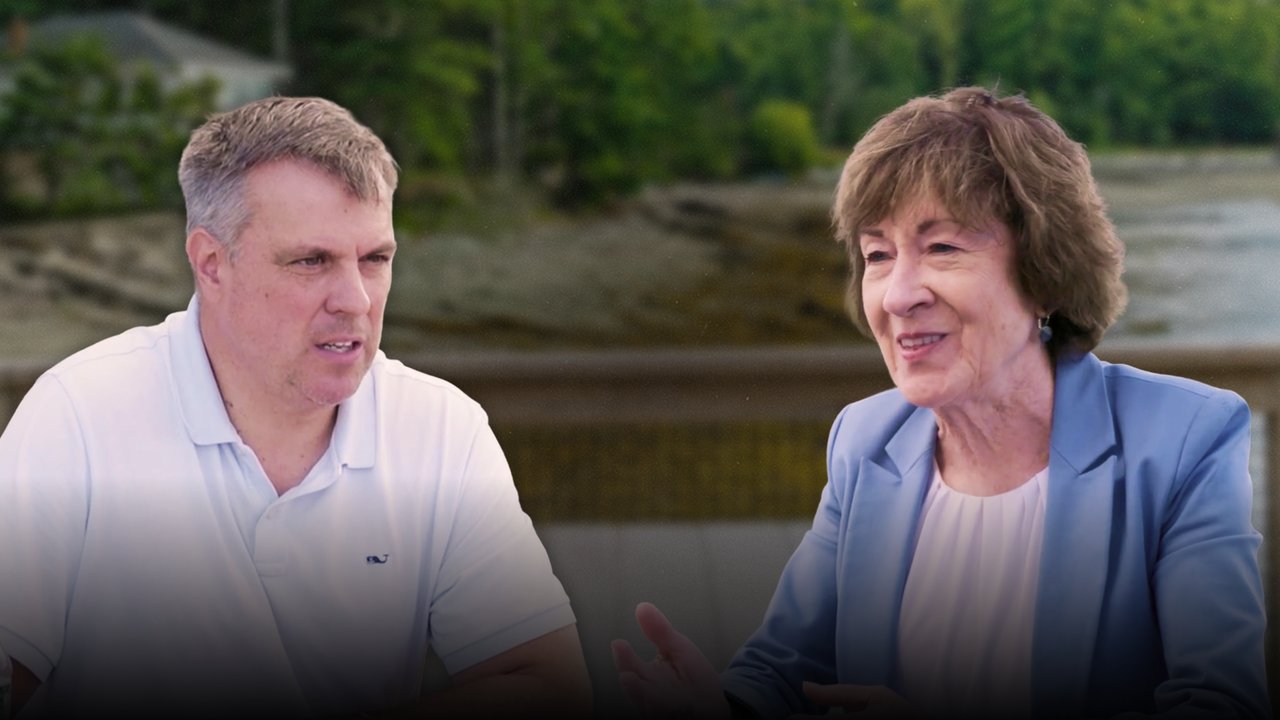
A campaign spokesperson for Sen. Susan Collins of Maine said she will not be in attendance, citing a “long standing practice of not going to conventions while she is in cycle.”
“I’m not a party guy,” said Rep. Brian Fitzpatrick (R-Pa.) said in an interview Tuesday, explaining why he won’t be in Texas next week. “I believe in ending the two-party system. Get back to our roots as a country.”
Riley Rogerson, Kelsey Brugger, Katherine Tully-McManus and Calen Razor contributed to this report.
 lead image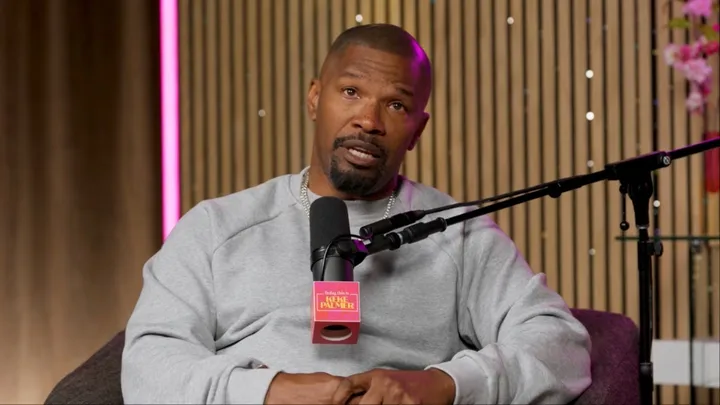
Jamie Foxx is reflecting on surviving a life-threatening brain bleed that led to a stroke in April 2023, suggesting he had some questions for God at the time.
“I was talking to him,” said the Oscar winner, 58, gesturing toward the sky on a recent episode of “Baby, This Is Keke Palmer.” “This is me, bro. I put the smiles on people’s faces. Why me? Look at all these bad people out here.”
Foxx said that after his medical emergency, when he asked his loved ones what had happened to him, he was astonished to find out he had suffered a stroke.
“[I said,] ‘What are you talking about?’ I couldn’t make sense of it,’” he shared during the Aug. 25 podcast episode. The actor called rehab “frustrating,” saying people told him, “You got a second chance.”
“I said, ‘Fuck the second chance! What was wrong with my first chance?’” Foxx recalled. “This doesn’t happen to anybody. How does it happen to me?”
The “Django Unchained” star then cracked that his health care team couldn’t do wellness checks on him because he was constantly telling jokes, noting that he “only had comedy to lean on” during the challenging time.
“So, I was just funny. I was always joking all the time. So, when they [would] come and say, ‘Who are you today, sir?’ I was somebody different [everyday]. ‘Who are you today?’” Foxx recalled before doing an impression of fellow comedian Dave Chappelle.

Youtube/Baby, This Is Keke Palmer
The actor’s daughter, Corinne Foxx, also appeared in the interview and told Palmer that her dad had imitated Denzel Washington when he was first admitted to the hospital.
“Not because he didn’t know who he was, but because he was making a joke,” she clarified before her dad interjected to say that his impersonations were “the only way I could find myself.”
Foxx also revealed that one nurse told him that his survival was a miracle.
“I said, ‘What you mean?’ She said, ‘Less than 3% of people that come in with what you have walk out of here. We usually put them in a box.’”
In April 2023, Foxx was hospitalized after he suffered what was then vaguely described as a “medical complication.”
Foxx told a group of people in downtown Phoenix in summer 2024 that his health issues began with a “bad headache.”
“Look, April 11 last year, bad headache, asked my boy for an Advil. I was gone for 20 days,” he said in a clip shared on X. “I don’t remember anything. I’m in Atlanta, they told me … my sister and my daughter took me to the first doctor. They gave me a cortisone shot.”
“The next doctor said, ‘There’s something going on up there,’” the actor added while pointing to his head.
Watch Foxx’s appearance on the “Baby, This Is Keke Palmer” podcast below. Skip to the 1:11:41 mark to hear his comments.

Miley Cyrus knows how to drum up attention.
The 33-year-old teased that something big was on the way on Instagram Monday, when she appeared to drop the “Cyrus” from her handle.
She posted two photos in red and black, captioning one of her face just “MILEY” – the same as her Instagram bio.
The change prompted speculation from media outlets and fans alike, though the singer didn’t make people wait long.
Cyrus revealed her big news on Tuesday, saying she is dropping a new album later this month.
“My tenth studio album, BASS PERSUADES, is yours September 18th. Music takes hold of us,” she wrote.
“We feel it, sing it, sometimes dance to it, let it out and carry on. It is powerful, vulnerable, sweet and strong. Heart full, heartache, every part of life in between,” Cyrus added. “That’s what the title means to me. Thank you for being a part of making my wildest dreams come true. I sincerely hope you love this album. ❤️ Miley.”

Kevin Winter via Getty Images
In the black-and-white photo accompanying the announcement, the singer has a flower in her mouth – which could be a reference to her hit single “Flowers.”
In addition to the singer’s new music, she also revealed that she’ll be performing two shows at the Hollywood Bowl in Los Angeles in October.
While Cyrus is headed back onstage, it’ll be interesting to see if she wants to tour again.
In an interview with “Good Morning America” last year, the “Hannah Montana” star explained what’s keeping her off the road.
“I do have the physical ability and I have the opportunities to tour. I wish I had the desire, but I don’t,” she said at the time.
“There’s artists like Prince that are not here today that lived such a high-intensity lifestyle out on the road,” she added. “And it’s really hard to maintain sobriety when you’re on the road, which is a really important, kind of, pillar of stability in my life.”
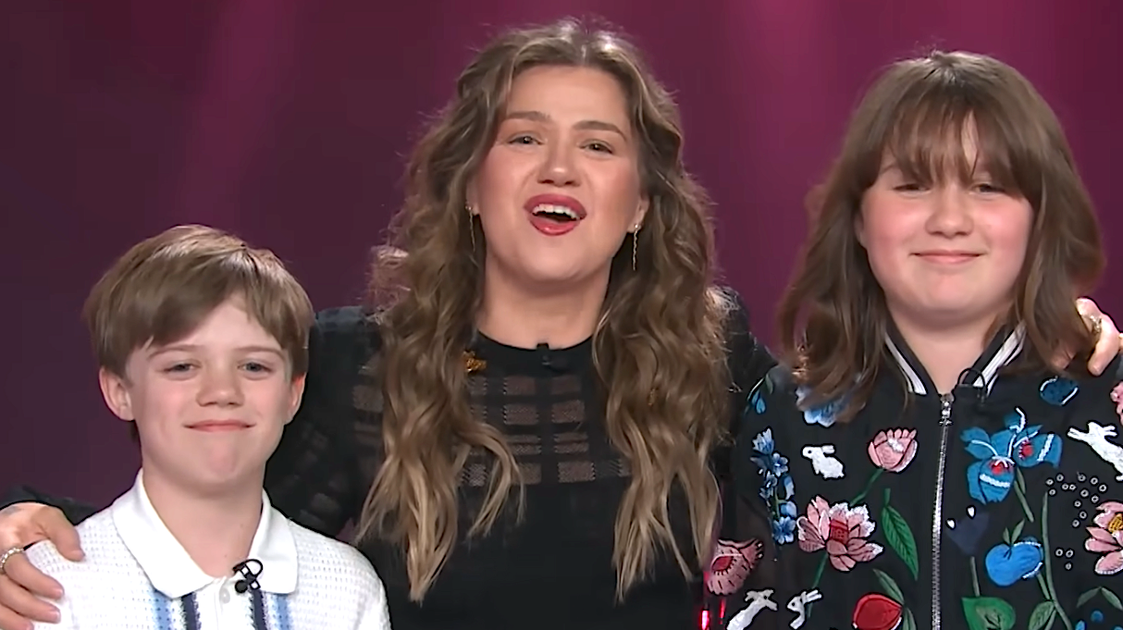
Kelly Clarkson said goodbye for good from “The Kelly Clarkson Show” on Monday – and she made the moment count. (Watch the video below.)
As she closed out her seven-year run, the daytime host welcomed her son, Remington, 10, and daughter, River, 12, onstage one last time and gave helpful advice to her audience.
It came therapist-approved – from the singer’s own mental health professional, apparently.
“For seven years, I’ve ended each episode by saying, ‘Have a great day. And if it’s not, change it,’” Clarkson began. “I say that because, while we have to accept that life is totally out of our control, each moment, though, truly depends on how we choose to respond and react to it. ‘You don’t have to attend the negative party you were invited to,’ I’ve been told by a therapist. So there ya go.”
Clarkson reinforced her point as she savored the waning moments of her show.
“If you remind yourself once a day that you have that choice to respond [with] how you really want to be and who you really are inside, I promise that habit is gonna become a part of you, and your life will respond to you in return.”
Then it was truly time to say goodbye.
“I loved being in your homes each day,” Clarkson said, eventually pivoting to her signature ending one last time.
“Have a great day, and if it’s not – change it!” she said as audience members joined in.
Thanks for the rec, Kelly.
Clarkson announced the end of her show in February after a tumultuous 2025 in which Brandon Blackstock, her ex-husband and the father of River and Remington, died of cancer at 48.
The former “American Idol” champ can still be seen on TV as a coach on NBC’s “The Voice” starting Sept. 21.

Once your parents, grandparents or other older adults in your life reach a certain age, it’s natural to become hypervigilant about their changing health, wanting to catch any potential issues as soon as possible. (Not to mention, it makes you more self-aware about your own signs of aging.) Certainly, that includes being aware of the early signs of dementia.
Though there is no cure for dementia (which is an umbrella term describing multiple forms of cognitive impairment, with Alzheimer’s disease being the most common type), there are treatments that can slow progression so those who have it can have a better quality of life for longer. While memory problems are the hallmark symptom of dementia that many people focus on, it’s not the only early sign of dementia. Certain changes in eating habits and mealtime can also be signs of dementia.
“As a neurologist who has spent decades studying brain health and memory, one of the most common questions I get from families is this: ‘My mother has started eating strangely. Does that mean she has Alzheimer’s?’” Dr. Majid Fotuhi, a neurologist, adjunct professor at Johns Hopkins University’s Mind/Brain Institute, and author of “The Invincible Brain,” told HuffPost.

Willowpix via Getty Images
Fotuhi explained that the answer is more nuanced than a simple yes-or-no, but there are specific changes that often serve as a tell. Below are five changes in eating habits that can be signs of dementia, according to neurologists.
Changes To Watch Out For
Futuhi emphasised that if someone you love develops new and unusual eating habits but their memory, judgment and daily functioning otherwise seem fine, that alone should not make you worry about Alzheimer’s. He explained that the changes could be an indication of something else, such as depression, anxiety, a side effect from medication or dental problems.
“This is exactly why a distinct and lasting change in eating behaviour deserves a proper medical evaluation rather than a guess,” Fotuhi said, adding that any changes in eating habits should be evaluated by a medical professional. With that in mind, below are five changes in eating habits to be on the lookout for.
1. Mealtime gets simpler
“One of the earliest changes families might describe is that their loved one who cooked elaborate meals for decades starts making simpler dishes, then stops cooking altogether,” said Dr. Joel Salinas, a clinical associate professor of neurology at New York University Langone Health and chief medical officer at Isaac Health. Salinas pointed out that complex meals require planning and sequencing, skills that dementia affects. Dr. Adam Mednick, a neurologist and the author of “Normal Pressure Hydrocephalus: From Diagnosis to Treatment,” added that having trouble planning, shopping for and preparing meals can be early signs of dementia.
Just because someone stops cooking elaborate meals doesn’t mean they have dementia. But when accompanied by the other signs shared here, it’s something to be mindful of.
2. Losing interest in food
All three neurologists shared that losing interest in food is a common symptom of dementia, and there are several reasons why it happens. Fotuhi told HuffPost that changes in the brain can lead to loss of smell, which reduces the pleasure of eating, since much of what we experience as taste actually comes from smell. Salinas said this too, explaining, “Reduced smell strips much of the pleasure from food. Someone with dementia may describe meals as bland or flat.”
People with dementia are also at higher risk of experiencing depression, which Fotuhi said can blunt interest in activities, including mealtime. On top of that, all three experts point out that mealtime requires using utensils and maintaining conversations at the same time, which can feel stressful to someone with dementia. “A noisy, overstimulating, or unappealing setting makes this worse by making it harder to focus and engage,” Mednick added.
3. Forgetting to eat or that mealtime happened
Since dementia impacts memory, all three neurologists say that it can lead to forgetting to eat or forgetting that they’ve already eaten. Part of what makes this even more likely is that dementia impacts the body’s hunger and fullness cues.
“Dementia makes it difficult to interpret the body’s internal signals for hunger and fullness and to connect them to external cues, such as the time of day or the sight of food,” Mednick said. He explained that damage to the brain regions that regulate appetite can blunt the drive to eat, while memory loss can cause someone to forget to eat, forget they just ate, or no longer recognise or communicate that they are hungry. “The result can go either way, leading to eating too little or, in some cases, overeating,” he said.
4. Rigid food choices
Even for someone without dementia, answering the whole “what’s for dinner?” question can be challenging. As the doctors explained earlier, mealtime requires planning, shopping and preparation. This, they shared, is why it’s common for people with dementia to eat the same meals or foods repeatedly.

Sandor Mejias Brito via Getty Images
“When thinking becomes effortful, every decision has a cost, and eating the same meal removes one decision from the day. Familiar foods are also predictable, which can feel safer when so much else feels uncertain,” Salinas said.
Fotuhi agreed, explaining that the same rigidity often shows up in other areas of life at the same time, such as insisting on the same daily schedule or the same clothing.
5. Cravings for sweets
“A shift toward sweets is by far the most consistently reported change,” Mednick said, explaining that this change likely stems from damage to the brain’s reward and impulse-control circuits.
Fotuhi said that a newly developed sweet tooth is most common in those with frontotemporal dementia (FTD), which is a distinct group of brain disorders that damage the frontal and temporal lobes. “The frontal lobe normally helps us regulate impulses and food choices. When it is damaged, that regulation weakens, and a strong pull toward sweet and starchy foods often emerges, sometimes dramatically,” he explained.
Tips For Navigating Mealtime
If you are a caregiver or loved one to someone with dementia who is experiencing these changes in eating habits, confronting these new hurdles can feel overwhelming. But there are ways you can make mealtime less stressful and more enjoyable for everyone.
1. Avoid pressuring them to eat
Instead of pressuring your loved one to eat, Alison Neov, a registered dietitian specialising in geriatric nutrition, told HuffPost that it’s more effective to focus on creating a positive mealtime environment. You can do this by keeping meals on a consistent schedule and serving foods you know they like.
Neov said she finds it helpful to offer smaller meals and avoid overcrowding the plate with food. “A large meal can be overwhelming when your appetite is low,” she said. If using utensils is a struggle, Neov and Salinas both said that serving finger foods, like sliced chicken with a dipping sauce or a sandwich cut into fours, can be helpful.
If possible, Neov recommends eating meals together. “Sometimes a person with dementia may struggle with a familiar task like eating, and seeing someone else pick up a fork and start eating can remind them to do the same,” she said.
2. Only set the table at mealtime
A set table indicates that it’s time to eat. To avoid confusion, Neov told HuffPost that it’s best to keep the table set only at mealtime, something she said is especially helpful if someone is eating too frequently. Between mealtimes, keep the table cleared to signal that it’s not time to eat.
When it is time to eat, Neov recommends eliminating other distractions, such as having the TV on.

Milky Way via Getty Images
3. Pair sweet foods with nutrient-dense ones
As the neurologists explained earlier, one of the eating changes that often happens with dementia is a craving for sweet, carb-dense foods. “It’s also OK if your loved one is not eating perfectly. The emphasis at this time is on making sure that they are eating enough calories and maintaining their weight. If they are only willing to eat a few different foods, I would rather see them eating enough than worry about whether every food choice is perfectly nutritious,” Neov said.
Instead of taking away the foods they seem to be interested in Neov shared that it can be more effective to find ways to enhance them. “For example, you can make a delicious smoothie with nutrient-dense ingredients that tastes like a milkshake. My favourite combination is yogurt, frozen fruit, banana, nut butter, and a splash of milk or water,” she said.
Neov shared that pairing not-so-healthy foods with healthier options (like fruit, vegetables, and nuts) is another way to add nutritional value to snacks that are nutritionally lacking.
Navigating changes in eating habits can be challenging, so don’t be afraid to reach out for help, either to your loved one’s healthcare provider or a registered dietitian specialising in geriatrics. “They can provide you with strategies to help keep mealtimes stress-free and also as nourishing as possible,” Neov said.
Changes in eating habits don’t mean that someone definitely has dementia, but they do deserve a medical evaluation. Before jumping to conclusions, the first step is making an appointment with a healthcare provider. That way, you’ll truly know how you can offer your support.
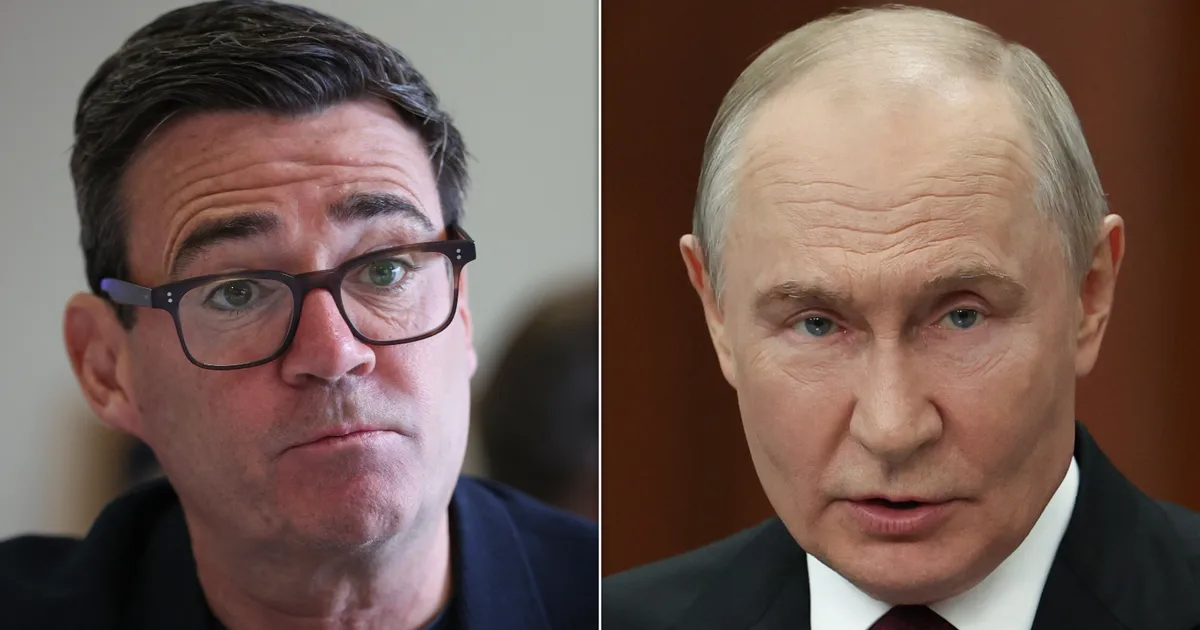
Vladimir Putin is trying to “get Britain stressing” over the possibility Russia could target the UK, according to a BBC expert.
It comes after Germany confirmed Russia was responsible for last month’s drone attack at Leipzig airport in a worrying sign that Putin’s war in Ukraine was reaching into other countries.
The BBC’s Russia editor Steve Rosenberg suggested the Kremlin leader was now deliberately using “psychological pressure” to intimidate the UK over its support for Kyiv, too.
When asked by a journalist if military industrial facilities in the UK could become Russian targets – as Putin’s ally Andrei Fedorov said last week – Putin told the media on Tuesday: “That is classified. A military secret.”
Rosenberg told BBC Radio 4’s Today programme he could not say with “100%” accuracy what the Russian autocrat meant by those words.
But he added: “My impression is the aim of that short sentence was psychological pressure, to keep Britain guessing, to get Britain stressing, stressing out about Russia’s intentions, and maybe to encourage Britain to think twice before being such a staunch supporter of Ukraine.”
He pointed out that a Russian newspaper recently claimed Andy Burnham should see Putin not in his dreams but “in his nightmares”.
“It doesn’t mean that Russian missiles are about to come raining down on UK defence facilities,” Rosenberg said. “But having said that, yesterday we did hear Germany’s interior minister talking about the well-established pattern of Russian hybrid operations in Europe.
“There may well be concern in the UK that Russia could step up hybrid activity in Britain [like] hybrid attacks, sabotage, or covert operations.”
However, he noted: “Over the last four and a half years we have heard from Moscow to the west many warnings, many threats.
“We’ve witnessed much saber-rattling here.”
He added that Putin was even issuing threats to foreign nations on the day he invaded Ukraine, warning they would face intense consequences if they supported Kyiv.
So far, UK prime minister Burnham has shrugged off the heightened rhetoric coming from the Kremlin.
Moscow accused Burnham of adding “fuel to the fire” of the Ukraine war last week over the PM’s decision to give Kyiv key missile blueprints.
The PM replied: “Who started the fire? That’s the question, isn’t it.”
Putin has also deflected any blame over the drone attack at Germany’s Leipzig airport, claiming Berlin had planted evidence to blame Moscow.
He had no proof to back up his claim.
Rosenberg said: “Russia’s reaction is as you might expect: denial, and prolific finger-pointing the other way. In other words, Russia accusing the accuser.”
“We’ve seen this kind of reaction many times before whenever Russia is accused by something by western governments,” the specialist noted, pointing to Moscow’s reaction when accused over the Salisbury poisonings.
Listen to Commons People, the podcast that makes politics easy. Every week, Kevin Schofield and Kate Nicholson unpack the week’s biggest stories to keep you informed. Join us for straightforward analysis of what’s going on at Westminster.
Politics
Politics Home | The St Leger turns 250. The partnership supporting racing must be protected
Credit: Adobe Stock
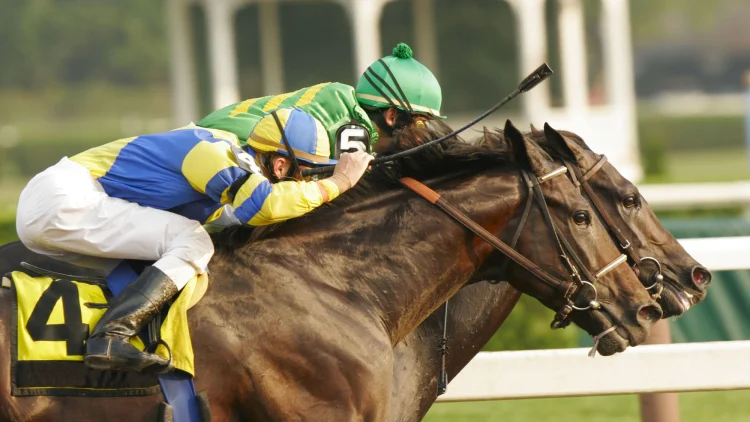
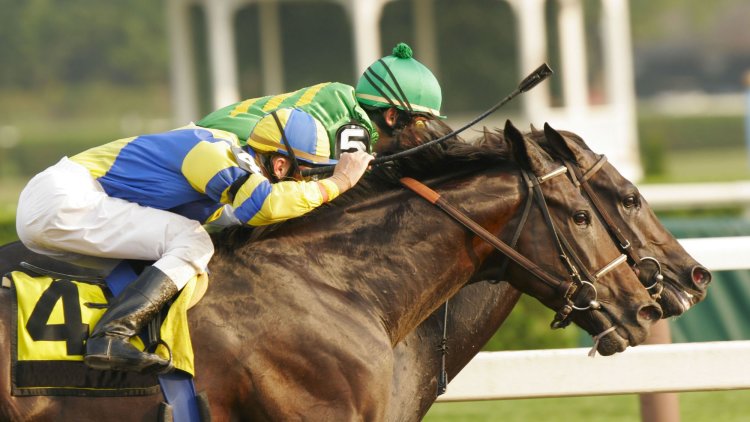
As Parliament marks 250 years of the St Leger, Grainne Hurst of the Betting and Gaming Council and Martin Cruddace of Arena Racing Company argue that the future of British racing is closely tied to the health of the regulated betting industry, and warn that policies which weaken high street betting shops will be felt across the sport
In 1776, a small crowd gathered at Cantley Common outside Doncaster to watch a new horse race, won by a filly called Allabaculia.
Few of those watching that first running could have imagined they were witnessing the beginning of a sporting institution that would endure for a quarter of a millennium.
Later named after the man who conceived it, Colonel Anthony St Leger, the race predates the Derby by four years. Today, it is the world’s oldest Classic, the North’s only Classic and the final leg of the British Triple Crown.
There is an old racing saying that the fastest horse wins the Guineas, the luckiest wins the Derby and the best horse wins the St Leger. Run over more than a mile and three-quarters, it is a test of speed, stamina, courage and class.
For 250 years, generations have returned, and Race Week has become woven into the life of Doncaster and Yorkshire, drawing huge crowds and producing champions whose names still echo through the sport. In 1970, Nijinsky became the last horse to complete the British Triple Crown.
Last night we marked that anniversary together in Parliament because the story of British racing cannot be told without recognising the vital role played by regulated betting.
BGC members contribute more than £350m every year to British horseracing through the Levy, media rights and sponsorship, supporting prize money, racecourses, trainers, breeders, jockeys, stable staff and horse welfare.
Racing supports around 85,000 livelihoods and generates roughly £4bn for the economy, much of it through the yards, haulage firms, feed merchants, vets, hotels, pubs and local businesses far beyond London.
The St Leger is one of racing’s great showcases. Last year, more than 52,000 people attended the four-day Festival, including more than 26,000 on St Leger Saturday, up 11 per cent and making it the best-attended British Classic of 2025. This year, we expect a crowd of more than 30,000 on St Leger Saturday alone.
The St Leger is a national sporting treasure, but it is not a museum piece. Its future depends on people continuing to watch it, work in it, invest in it and bet on it.
A substantial part of the money sustaining racing comes through one of the most frequently misunderstood parts of our industry: the high street betting shop.
Betting shops contribute around £140m a year to horseracing. They pay roughly £1bn in direct tax and a further £60m to councils in business rates. They are also racing’s shop window, where generations of fans have watched and enjoyed the sport.
Last month, the Government set out plans to give communities more say over what opens on their high streets, alongside tougher action against criminal operators. We support both principles.
But good policy must draw clear distinctions. A licensed betting shop, staffed by trained employees and operating under strict regulation, is not a rogue or criminal operator.
Betting shops are legitimate high street businesses which have made enormous progress in preventing gambling-related harm. They employ tens of thousands of people, contribute to local economies and operate under some of the toughest regulation anywhere in the world. Policy should recognise that reality rather than treating them as a problem to be managed out of our high streets.
Shop numbers have fallen by more than a third since 2019. Around 3,000 have closed and more than 15,000 jobs have been lost. The 37,500 people still working in them support local economies and bring footfall to neighbouring businesses.
For some customers, particularly older people, the local betting shop is also somewhere to see familiar faces, talk about racing and enjoy a shared interest. Racing is a sport enjoyed by people from every section of society, and it is proud to be so.
Respecting communities means respecting those choices too. An empty unit is not regeneration. A lost job is not renewal. A regulated business should not be stigmatised simply because some politicians dislike what it sells.
The Government says it wants thriving high streets with a diverse mix of businesses that serve their communities. We agree. But that should not mean politicians deciding that a licensed, regulated betting shop is somehow less worthy of a place on the high street than another vape shop, fried chicken takeaway, dingy barber, nail bar or coffee shop where the cost of two oat milk lattes would trigger an affordability check. People should be trusted to choose where they spend their money, without politicians passing judgement on one legal product but not another.
But there is a consequence here that has gone almost entirely unmentioned. The closure of 500 betting shops would cost racing around £20m. Every closed shop means a little less prize money, a little less investment in the sport and, ultimately, greater difficulty in exporting one of Britain’s great sporting products and attracting international investment.
Affordability checks pose another challenge. The Gambling Commission has confirmed that the checks will proceed, so what matters now is whether the promise that they will be genuinely frictionless is honoured.
If credit reference agency data is inconsistent, customers could still find themselves restricted or asked for payslips and bank statements simply to continue with a legal activity that 22.5 million adults enjoy safely every month.
Racing customers are particularly exposed because the sport is seasonal. Someone may bet very little for much of the year and then have several more bets during Cheltenham, Aintree, Royal Ascot or the St Leger. That is normal behaviour for a racing fan, not necessarily a sign of financial risk.
Our modelling suggests the proposed approach could reduce Levy receipts by around £13.2m a year and push more than 70,000 customers towards the illegal gambling market.
That market pays no British tax, buys no media rights, contributes nothing to the Levy and offers none of the protections of the regulated sector.
We are not asking for special treatment. We are asking for fair, proportionate policy based on evidence and an honest understanding of how closely racing, betting and local communities are connected.
Our message to the Prime Minister, and indeed former prime ministers, is clear: please do not treat the betting shop as something you accidentally trod in. It is so much more than that, and it deserves respect.
Two hundred and fifty years ago, people came to Doncaster to watch a horse race. What began there became part of Yorkshire’s identity and Britain’s sporting heritage.
The St Leger is, fittingly, a race about staying power. After 250 years, few sporting institutions have shown more.
That legacy is worth protecting. As Parliament marks this extraordinary anniversary, public policy should create the conditions for racing to flourish and for the partnership that sustains it to remain strong.

The Best REIT And BDC To Own If Things Get Rougher From Here

Ripple Sees XRP ETFs Pull In $170M as Institutions Build Their Positions

Top-seeded Alexander Zverev rallies to avoid first-round exit at US Open





-

 Fashion5 days ago
Weekend Open Thread: Maeve – Corporette.com
-

 Crypto World5 days ago
Bitcoin’s 22% rally now needs real demand to outlast Treasury liquidity boost
-

 Crypto World7 days ago
Warsh Jackson Hole keynote puts financial innovation first
-

 Business5 days ago
Apple Confirms September 9 Keynote and Reveals Its Full Pre-Order Schedule
-

 Crypto World6 days ago
Elon Musk Grok Bot Promise: We Will Make You Whole if AI Loses Your Money
-

 Business5 days ago
Salesforce Stock Soars 19% as Blowout Earnings and Agentforce AI Growth Silence Software Skeptics
-

 Business4 days ago
Onto Innovation Stock: AI’s Next Bottleneck Is Yield (NYSE:ONTO)
-

 Business7 days ago
Walmart takes aim at younger shoppers with new fashion brand
-
 NewsBeat7 days ago
Lindsay Clancy jury braces for closing arguments as judge tells court: ‘You’ve heard all the evidence’ – Live updates
-

 Crypto World6 days ago
NVIDIA revenue hits $96.2B as AI demand doubles
-

 Crypto World4 days ago
Bitcoin price tests $82K resistance as Brandt stays long
-
 Crypto World7 days ago
Nvidia Q2 Earnings Reveal $96.2 Billion Beat, So Why Is NVDA Falling?
-

 Business5 days ago
iPhone 18 Pro Pre-Orders Could Shift to Saturday as Apple Reportedly Avoids September 11 Anniversary
-
 Tech4 days ago
Hugging Face built a $4.5 billion empire on free AI models. Now Nvidia is buying it for $12.9 billion
-

 Tech6 days ago
Claude Cowork gets its own browser that doesn’t touch your tabs, bookmarks, or saved passwords
-

 Crypto World5 days ago
Truflation calls for Fed rate cut after PCE forecast
-

 Crypto World6 days ago
GENIUS Act missed its deadline as OCC writes rules anyway
-

 Tech4 days ago
PaperCut releases second emergency patch for exploited flaws
-

 Tech7 days ago
Apple’s iPhone 18 Pro event is on September 9
-
 News Videos3 days ago
Charlie Munger on Robinhood: No one should believe that Robinhood’s trades are free
You must be logged in to post a comment Login