Politics
The House Article | Parliament is about to make a grave mistake over its own restoration


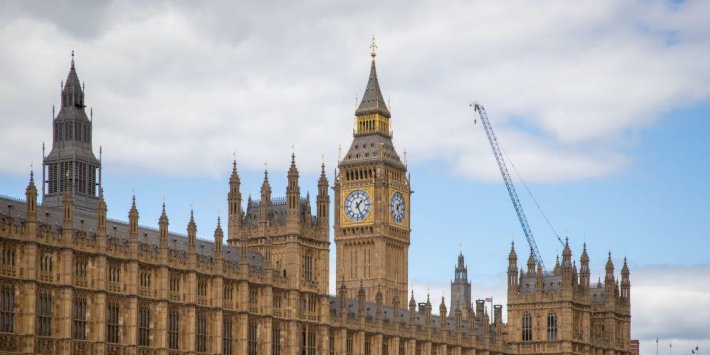
(Alamy)


3 min read
No one disputes that the Palace of Westminster needs serious work. It faces fire risks, crumbling systems and decades of underinvestment.
Essential safety repairs are unavoidable.
But Parliament is now being steered towards something very different: a vast, expanding and insufficiently scrutinised programme that could cost tens of billions of pounds — with no credible guarantee of cost control, no clear line of delivery authority and no meaningful parliamentary grip on the process.
The first problem is scrutiny — or rather, the lack of it. Parliament may soon be asked to authorise up to £3bn in preparatory spending over seven years. That sum excludes VAT and inflation. It will be presented through a single vote in each House shortly after publication of a long, complex and technical report. There will be limited time for Members to digest it.
And, at a time when money is short, it is an order of magnitude more than the public might expect. It threatens to make this project another HS2.
Families are under sustained financial pressure thanks to Labour’s mismanagement and public services face real constraints. In this context, a programme of this magnitude demands rigorous scrutiny, firm cost discipline and clear prioritisation. Those standards are not currently being met.
If this were ordinary government expenditure, ministers would be at the dispatch box. Officials would appear before committees. There would be sequenced scrutiny and democratic accountability. None of that applies here. Internal boards meet in private. Hundreds of millions of pounds are already spent annually with relatively little public visibility. Parliament is being asked to approve one of the largest capital programmes in British history through a process that would not pass muster anywhere else.
Secondly, cost. The underlying options currently favoured could cost as much as £39bn. The report itself acknowledges design immaturity, uncertainty and inflationary drift. Anyone with experience of major public works will know what that language implies.
Past experience does not inspire confidence. Portcullis House ran substantially over budget and now suffers from serious defects less than 25 years after completion.
Yet taxpayers are now being asked to fund a programme several orders of magnitude larger. Where, exactly, is the credible delivery authority capable of imposing discipline at this scale?
The governance proposals are themselves revealing. The report suggests that roles and responsibilities across the various bodies involved should be clarified — but only after Phase One is approved. It also floats the creation of an additional management board alongside the two already in place. That is a recipe for failure.
Third, there is mission creep. What began as a safety-led intervention increasingly resembles a radical transformation. That is how large public projects lose focus and taxpayers lose control.
Finally, the choice being presented is misleading. The two preferred options presented by the Client Board are not simply technical alternatives. One of them, the “full decant” proposal, would remove Parliament from the Palace for more than a decade, sharply curtail public access and great ceremonial occasions such as the State Opening and fundamentally disrupt centuries of continuity. That is not a marginal operational adjustment; it is a constitutional rupture. It underlines how decisions over restoration cannot be reduced to technocratic issues.
The danger is clear. And the result could be a loss of confidence in Parliament itself.
There is a better path. Begin with urgent, defined safety works. Move to phased renewal. Authorise spending incrementally. Impose hard cost ceilings. Establish a clear and accountable delivery structure working through named individuals before, not after, committing new capital.
The Palace of Westminster belongs to the British people, and they deserve better than these proposals.
Jesse Norman is the shadow leader of the House of Commons and Conservative MP for Hereford and South Herefordshire

You must be logged in to post a comment Login