Politics
The House Article | We’re Going To Need A Bigger Stick: Britain Seeks AI Sovereignty


(Collectiva/Alamy)
10 min read
Britain has now made clear that it wants AI sovereignty, of a kind. But there are numerous hurdles in the way, reports Matilda Martin. For a seat at the table with the US and China, say experts, we’re going to need a bigger stick
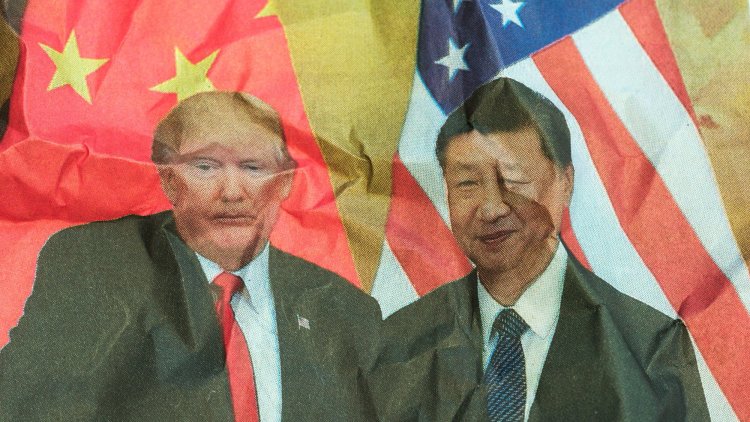
The battle for tech supremacy has taken many forms: nuclear weapons in the 1940s; the space race in the Cold War. Today, it is artificial intelligence – and the stakes are high.
As Keir Starmer limits British involvement in the Iran war, President Donald Trump’s frustration grows – and the UK’s so-called “special relationship” with the US looks increasingly fractured. What would it mean, many wonder, if an irritable US President decided to ‘pull the plug’ on our access to American tech infrastructure?
When Trump placed sanctions on the International Criminal Court last year, officials lost access to email accounts and found their bank accounts frozen, bringing the tribunal’s work to a halt. The event was a small glimpse of how quickly a tech superpower can exert pressure.
Few believe Britain becoming the victim of such a scenario is likely, for the economic repercussions for the US would be hugely damaging. But in an era of geopolitical volatility – and a US President famed for his unpredictability – the UK is currently vulnerable to pressure and manipulation in a way that leaves many uncomfortable.
“Under the last government, they were very happy to say to the sector, particularly the big American companies, ‘You know this stuff better than we do. We trust you’,” says Labour MP Emily Darlington, who criticises this approach as “naïve”.
“We might not yet know how easy it would be for the US to pull our access to AI, but we do know the threat is real,” warns senior research fellow Roa Powell at think tank IPPR.
“Technology giants have repeatedly threatened to pull their services from countries which regulate their technology, while at the same time AI is beginning to be treated as a national security asset that cannot be shared with everybody.”
If UK access to US companies providing cloud services as well as other AI products were cut off, the results would be catastrophic. Could US companies stand independently from their government on such a decision?
“It’s not clear,” Darlington says. “The US has this weird law that essentially all those companies report to the US.” While companies like Amazon Web Services and Palantir have made repeated assurances to the UK that “we’re separate from the Americans”, she adds, this would be a true test of that premise.
At the end of April, Tech Secretary Liz Kendall delivered a speech signalling a step change in the UK’s approach to AI.
“This government believes AI sovereignty is not about isolationism or attempting to pull up the drawbridge and go it alone… For Britain, AI sovereignty is about reducing over dependencies and increasing resilience,” she told an audience at defence and security think tank, Rusi.
The government is clearly concerned about the UK’s future if it allows other larger players like the US and China to dominate the market. Experts say this anxiety is well founded. Powell of IPPR warns that “this government has a narrow window before the concentration of power in AI markets becomes irreversible”.
In 1901, the soon-to-be US president Teddy Roosevelt repeated a famous proverb: “Speak softly and carry a big stick.” It is an anecdote Irish political scientist and author Henry Farrell refers to when he speaks to The House from the US. “If you don’t have a big stick,” he continues, “search around as quickly as you can to find at least a medium-sized cudgel that will allow you to push back.”
Farrell, who co-authored Underground Empire: How America Weaponised the World Economy, has two suggestions for smaller powers like the UK.
“First of all, where they can sort of build up some degree of redundancy, some degree of alternative sourcing, they absolutely should do.
“And secondly, everybody ought to be thinking about their forms of counter leverage in a world where you might see… substantial amounts of pressure being applied upon you to go into one direction rather than the other.”
Kendall’s clarification of what sovereignty means for the UK is welcomed by the Tony Blair Institute (TBI).
“It’s okay for the UK to have some dependencies – no-one can go it alone in the age of AI. And it needs to have leverage. The UK does have great talent, great universities, great startups, but these are not enough to guarantee the country’s competitiveness and security. Britain must also build critical technologies that others depend on. The future global economy, and geopolitical order, is going to be built on technology,” says TBI director of science and technology Keegan McBride.
“For better or worse, this is the way of the world and how power and influence will be exerted. What’s important is that the UK responds now, otherwise it risks losing its seat at the table and the prosperity that will come from the AI revolution.
“The country must focus on becoming strategically important to its allies and embedding itself in the AI and frontier technology economy of the future – not the digital economy of today.”
The most famous example of a small and vulnerable nation dominating an area of the market is Taiwan’s chip industry, which also ensures America has an interest in the nation’s independence from China. Another is the Holland-based photolithography company ASML.
“They’ve got the Hormuz strait on AI technology,” says Dan Howl, head of policy and public affairs at the chartered institute of AI, BCS, referring to the vital shipping line in the Middle East that has allowed Iran to maintain a chokehold on the world’s oil industry.
We might not yet know how easy it would be for the US to pull our access to AI, but we do know the threat is real
While some countries have interpreted AI sovereignty as independence – for example, France’s efforts to build its own sovereign AI stack – the UK government’s approach is seen by some as more pragmatic. Experts say pursuing “full sovereignty” would require a huge injection of cash, mean less secure and competitive products and reduce the ability to influence global standards. Instead, they favour an approach that would allow the UK a certain degree of leverage and control, just like the “big stick” that Roosevelt was describing more than a century ago.
As with many aspects of its infrastructure, the overwhelming feeling among experts is that the UK has rested on its laurels somewhat when it comes to innovation. “The political establishment has failed to invest in and secure the foundations of our country’s sovereignty.
And what we need to make sure is that in the decades ahead, which are going to be so much about digital AI and data, we don’t fail again,” says former minister Josh Simons.
The Labour MP, who in the past worked for Meta in its AI programme, underlines the importance of sovereignty as a whole: “Sovereignty is the ability to, over relatively long periods of time, shape your own collective destiny.”
He believes that the vulnerable situation in which the UK now finds itself is the culmination of centuries of inaction: “It’s more than just the Tories. I don’t think it even just ends with the Labour government before that.
“For a long time now, we’ve assumed that trade will always be basically frictionless, that international financial markets will have very little interest in borders, and that the energy market will be a sufficiently efficient market that, provided we have diversity of supply, we’re fine. All those assumptions are just wrong – or are certainly becoming wrong.”
The UK has “an acute dependency”, as Howl puts it, on cloud services such as Amazon Web Services – integral to the functioning of the NHS, the Ministry of Defence, HMRC, policing and the courts. He explains how the experts at BCS do not think that risk is assessed “as much as it needs to be”.


While everyone can agree that the UK has fallen behind in the AI arms race, there is a live debate over where the nation’s efforts should be focused as it looks to build its arsenal.
For IPPR’s Powell, the UK’s comparative advantage lies in the AI applications layer – specialist products built on top of frontier models, like ChatGPT. She also thinks the UK should not see this approach “as a ceiling”, however, and look to strengthening areas such as chip design too.
Here, Kendall’s announcement of a new ‘AI Hardware Plan’, the details of which will be announced in June, comes into play.
Other experts highlight the UK’s strengths in aerospace, quantum technologies, health and sciences. While Kendall’s recent intervention indicates that the UK may be more decisive on where it wants to go, how it gets there could be more complicated. The House understands that government insiders are aware of how the UK’s high energy prices could discourage and hinder start-up growth, and push homegrown talent to look elsewhere.
In a recent interview with CityAM, former deputy prime minister and one-time Silicon Valley convert Nick Clegg said the UK’s energy is “too expensive” and the UK’s AI sovereignty debate is “slightly dishonest” due to its “marginal relevance”.
Emma McGuigan, AI expert at BCS, points out that the cost of running data centres is a key hurdle. If the UK hopes to achieve its AI sovereignty goals, she says, this must be addressed. A sustained reduction in energy costs would allow “the opportunity to bring the investment to build those sovereign cloud data centres”, McGuigan argues.
Energy sovereignty is thus also called into question. “Digital sovereignty is inseparable from energy sovereignty and energy is a real, physical, material constraint and precondition for the digital world,” says Simons.
Another hurdle facing the UK is its inability to keep homegrown innovators here. The most famous example is the well-documented acquisition of London-based AI firm DeepMind by Google for $400m in 2014. As Kendall hopes to encourage the scale-up of UK businesses through the launch of the Sovereign AI fund, the challenge will be keeping those companies in Britain.
Unless we secure it, there’s no guarantee that we can have the freedom that we’ve enjoyed for several hundred years
“There’s a culture within technology about selling things,” Howl says. “The real question is, what happens when the start-ups start getting bids from New York and California. That’s the real problem.”
He explains: “The reality is that the British market just isn’t big enough to be able to scale these really good companies to a way in which that would be advantageous to the owners, and that is compounded by the culture. But the solution to that would probably be to work with Europe and to genuinely get access to a much bigger market.”
What is at stake? Simons has a “slightly apocalyptic view of where the world is heading”. But he also insists Britain “can’t be gripped by the throat by those who don’t share our commitment to freedom”.
“The future economy and the future of warfare and the future of security, technology, and in particular, AI, data, is going to be one of the foundations of power. So, unless we secure it, there’s no guarantee that we can have the freedom that we’ve enjoyed for several hundred years,” says the Labour MP.
Kendall has fired the starting gun on the UK’s drive for its version of AI sovereignty. But can this middle power successfully insert itself into the supply chain and find Roosevelt’s “big stick” – or is the UK joining the race with too big of a handicap?

You must be logged in to post a comment Login