

Politics
The House Article | We’re Going To Need A Bigger Stick: Britain Seeks AI Sovereignty



(Collectiva/Alamy)
10 min read
Britain has now made clear that it wants AI sovereignty, of a kind. But there are numerous hurdles in the way, reports Matilda Martin. For a seat at the table with the US and China, say experts, we’re going to need a bigger stick
The battle for tech supremacy has taken many forms: nuclear weapons in the 1940s; the space race in the Cold War. Today, it is artificial intelligence – and the stakes are high.
As Keir Starmer limits British involvement in the Iran war, President Donald Trump’s frustration grows – and the UK’s so-called “special relationship” with the US looks increasingly fractured. What would it mean, many wonder, if an irritable US President decided to ‘pull the plug’ on our access to American tech infrastructure?
When Trump placed sanctions on the International Criminal Court last year, officials lost access to email accounts and found their bank accounts frozen, bringing the tribunal’s work to a halt. The event was a small glimpse of how quickly a tech superpower can exert pressure.
Few believe Britain becoming the victim of such a scenario is likely, for the economic repercussions for the US would be hugely damaging. But in an era of geopolitical volatility – and a US President famed for his unpredictability – the UK is currently vulnerable to pressure and manipulation in a way that leaves many uncomfortable.
“Under the last government, they were very happy to say to the sector, particularly the big American companies, ‘You know this stuff better than we do. We trust you’,” says Labour MP Emily Darlington, who criticises this approach as “naïve”.
“We might not yet know how easy it would be for the US to pull our access to AI, but we do know the threat is real,” warns senior research fellow Roa Powell at think tank IPPR.
“Technology giants have repeatedly threatened to pull their services from countries which regulate their technology, while at the same time AI is beginning to be treated as a national security asset that cannot be shared with everybody.”
If UK access to US companies providing cloud services as well as other AI products were cut off, the results would be catastrophic. Could US companies stand independently from their government on such a decision?
“It’s not clear,” Darlington says. “The US has this weird law that essentially all those companies report to the US.” While companies like Amazon Web Services and Palantir have made repeated assurances to the UK that “we’re separate from the Americans”, she adds, this would be a true test of that premise.
At the end of April, Tech Secretary Liz Kendall delivered a speech signalling a step change in the UK’s approach to AI.
“This government believes AI sovereignty is not about isolationism or attempting to pull up the drawbridge and go it alone… For Britain, AI sovereignty is about reducing over dependencies and increasing resilience,” she told an audience at defence and security think tank, Rusi.
The government is clearly concerned about the UK’s future if it allows other larger players like the US and China to dominate the market. Experts say this anxiety is well founded. Powell of IPPR warns that “this government has a narrow window before the concentration of power in AI markets becomes irreversible”.
In 1901, the soon-to-be US president Teddy Roosevelt repeated a famous proverb: “Speak softly and carry a big stick.” It is an anecdote Irish political scientist and author Henry Farrell refers to when he speaks to The House from the US. “If you don’t have a big stick,” he continues, “search around as quickly as you can to find at least a medium-sized cudgel that will allow you to push back.”
Farrell, who co-authored Underground Empire: How America Weaponised the World Economy, has two suggestions for smaller powers like the UK.
“First of all, where they can sort of build up some degree of redundancy, some degree of alternative sourcing, they absolutely should do.
“And secondly, everybody ought to be thinking about their forms of counter leverage in a world where you might see… substantial amounts of pressure being applied upon you to go into one direction rather than the other.”
Kendall’s clarification of what sovereignty means for the UK is welcomed by the Tony Blair Institute (TBI).
“It’s okay for the UK to have some dependencies – no-one can go it alone in the age of AI. And it needs to have leverage. The UK does have great talent, great universities, great startups, but these are not enough to guarantee the country’s competitiveness and security. Britain must also build critical technologies that others depend on. The future global economy, and geopolitical order, is going to be built on technology,” says TBI director of science and technology Keegan McBride.
“For better or worse, this is the way of the world and how power and influence will be exerted. What’s important is that the UK responds now, otherwise it risks losing its seat at the table and the prosperity that will come from the AI revolution.
“The country must focus on becoming strategically important to its allies and embedding itself in the AI and frontier technology economy of the future – not the digital economy of today.”
The most famous example of a small and vulnerable nation dominating an area of the market is Taiwan’s chip industry, which also ensures America has an interest in the nation’s independence from China. Another is the Holland-based photolithography company ASML.
“They’ve got the Hormuz strait on AI technology,” says Dan Howl, head of policy and public affairs at the chartered institute of AI, BCS, referring to the vital shipping line in the Middle East that has allowed Iran to maintain a chokehold on the world’s oil industry.
We might not yet know how easy it would be for the US to pull our access to AI, but we do know the threat is real
While some countries have interpreted AI sovereignty as independence – for example, France’s efforts to build its own sovereign AI stack – the UK government’s approach is seen by some as more pragmatic. Experts say pursuing “full sovereignty” would require a huge injection of cash, mean less secure and competitive products and reduce the ability to influence global standards. Instead, they favour an approach that would allow the UK a certain degree of leverage and control, just like the “big stick” that Roosevelt was describing more than a century ago.
As with many aspects of its infrastructure, the overwhelming feeling among experts is that the UK has rested on its laurels somewhat when it comes to innovation. “The political establishment has failed to invest in and secure the foundations of our country’s sovereignty.
And what we need to make sure is that in the decades ahead, which are going to be so much about digital AI and data, we don’t fail again,” says former minister Josh Simons.
The Labour MP, who in the past worked for Meta in its AI programme, underlines the importance of sovereignty as a whole: “Sovereignty is the ability to, over relatively long periods of time, shape your own collective destiny.”
He believes that the vulnerable situation in which the UK now finds itself is the culmination of centuries of inaction: “It’s more than just the Tories. I don’t think it even just ends with the Labour government before that.
“For a long time now, we’ve assumed that trade will always be basically frictionless, that international financial markets will have very little interest in borders, and that the energy market will be a sufficiently efficient market that, provided we have diversity of supply, we’re fine. All those assumptions are just wrong – or are certainly becoming wrong.”
The UK has “an acute dependency”, as Howl puts it, on cloud services such as Amazon Web Services – integral to the functioning of the NHS, the Ministry of Defence, HMRC, policing and the courts. He explains how the experts at BCS do not think that risk is assessed “as much as it needs to be”.

While everyone can agree that the UK has fallen behind in the AI arms race, there is a live debate over where the nation’s efforts should be focused as it looks to build its arsenal.
For IPPR’s Powell, the UK’s comparative advantage lies in the AI applications layer – specialist products built on top of frontier models, like ChatGPT. She also thinks the UK should not see this approach “as a ceiling”, however, and look to strengthening areas such as chip design too.
Here, Kendall’s announcement of a new ‘AI Hardware Plan’, the details of which will be announced in June, comes into play.
Other experts highlight the UK’s strengths in aerospace, quantum technologies, health and sciences. While Kendall’s recent intervention indicates that the UK may be more decisive on where it wants to go, how it gets there could be more complicated. The House understands that government insiders are aware of how the UK’s high energy prices could discourage and hinder start-up growth, and push homegrown talent to look elsewhere.
In a recent interview with CityAM, former deputy prime minister and one-time Silicon Valley convert Nick Clegg said the UK’s energy is “too expensive” and the UK’s AI sovereignty debate is “slightly dishonest” due to its “marginal relevance”.
Emma McGuigan, AI expert at BCS, points out that the cost of running data centres is a key hurdle. If the UK hopes to achieve its AI sovereignty goals, she says, this must be addressed. A sustained reduction in energy costs would allow “the opportunity to bring the investment to build those sovereign cloud data centres”, McGuigan argues.
Energy sovereignty is thus also called into question. “Digital sovereignty is inseparable from energy sovereignty and energy is a real, physical, material constraint and precondition for the digital world,” says Simons.
Another hurdle facing the UK is its inability to keep homegrown innovators here. The most famous example is the well-documented acquisition of London-based AI firm DeepMind by Google for $400m in 2014. As Kendall hopes to encourage the scale-up of UK businesses through the launch of the Sovereign AI fund, the challenge will be keeping those companies in Britain.
Unless we secure it, there’s no guarantee that we can have the freedom that we’ve enjoyed for several hundred years
“There’s a culture within technology about selling things,” Howl says. “The real question is, what happens when the start-ups start getting bids from New York and California. That’s the real problem.”
He explains: “The reality is that the British market just isn’t big enough to be able to scale these really good companies to a way in which that would be advantageous to the owners, and that is compounded by the culture. But the solution to that would probably be to work with Europe and to genuinely get access to a much bigger market.”
What is at stake? Simons has a “slightly apocalyptic view of where the world is heading”. But he also insists Britain “can’t be gripped by the throat by those who don’t share our commitment to freedom”.
“The future economy and the future of warfare and the future of security, technology, and in particular, AI, data, is going to be one of the foundations of power. So, unless we secure it, there’s no guarantee that we can have the freedom that we’ve enjoyed for several hundred years,” says the Labour MP.
Kendall has fired the starting gun on the UK’s drive for its version of AI sovereignty. But can this middle power successfully insert itself into the supply chain and find Roosevelt’s “big stick” – or is the UK joining the race with too big of a handicap?



Big Oil, Big Banks and arms companies are profiting massively from the war on Iran.
Iran War — Oil
While most people face higher bills, oil giants are making a lot of money. Shell has reported its first quarterly profits. They are up £982 million on the year before. That’s after BP, which actually doubled its profit for the same period. Further, the French giant TotalEnergies had its profits increase by almost a third.
The price of oil has jumped partly because of the closure of the Strait of Hormuz. Yet the UK only gets around 2% of its oil via that route. It’s the market that is raising the price due to companies selling it at the highest price they can, which is very high because of the disruption.
Big oil profits underscore the need to move away from fossil fuels and volatile international markets. Instead, the UK should bring in a publicly owned Green New Deal.
Banks
Big Banks are also profiteering from the war. The Big Six banks — Goldman Sachs, Bank of America, Wells Fargo, Morgan Stanley, Citigroup and JP Morgan — all saw huge profits in the first quarter, at around £36 billion. That’s up £12 billion on the average from the year before.
In the UK, Lloyds Bank has increased profits by more than 30% over the same period. Barclays also saw increased profit before tax.
Arms
As well as big banks and oil, arms companies are expecting to cash it in. BAE systems expects increased profits this year and Lockheed Martin, Boeing and Northrop Grumman had their highest orders as of the first quarter.
Function of war on Iran
War has long been profitable for the ruling class. Indeed, the US DOJ is investigating £1.9 billion in insider trading from the Trump regime over the war on Iran, Forbes reports.
The oligarchy use war to justify their position in power, because they aren’t actually improving people’s lives.
Featured image via FreePress
By James Wright
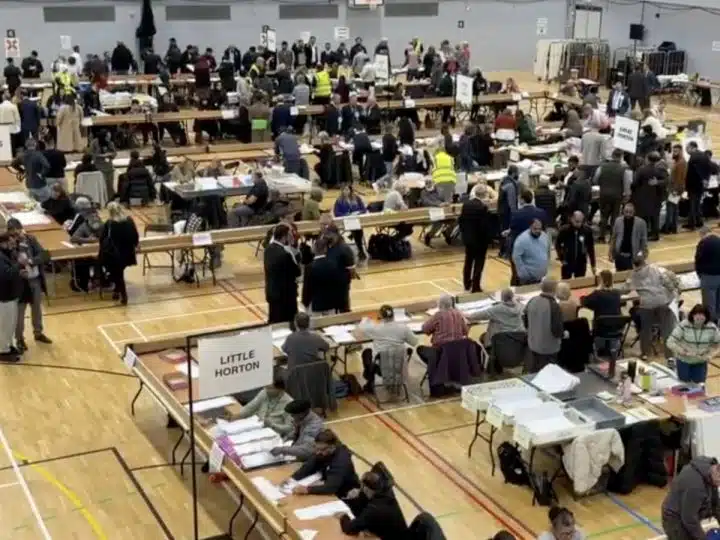

Labour has lost Bradford District Council to no overall control, as no party secured a majority.
Reform won 29 seats, up from zero at the last election, but fell shy of the 44 seats needed for a majority. The party won 26% of the vote.
Labour only won 15 seats, meaning it lost a shocking 27.
One of the people to lose her seat was Bradford council leader, Susan Hinchcliffe. She lost her seat in the Windhill and Wrose ward. She had been the leader of the council for a decade.
Reform UK councillors Sally Jane Birch, Stephen Broadbent and Chris Howlett won the ward. This means the ward went from three Labour councillors to three Reform councillors overnight.
The Tories won 18 seats, which is three more than in the previous election, and the Greens won seven, meaning the party lost three. Finally, ‘Independents and others’ lost two seats compared to the previous election.
All three results are in for the Little Horton Ward
Talat Sajawal (Your Bradford Independent Group)
Taj Salam (Your Bradford Independent Group)
Noor Elahi (Your Bradford Independent Group) pic.twitter.com/Yq3C7Frr5M— Bradford Council (@bradfordmdc) May 9, 2026
Labour’s controversial candidates
Daniel Devaney was the party’s candidate for the Clayton and Fairweather Green ward in Bradford. Before the election, he said he was stepping down, wasn’t “really bothered” and was going on holiday. He was upset about public outrage over social media posts.
He claimed he was standing down as a candidate. However, he was one of three councillors whom voters elected for Reform UK in that ward.
This lines up with stories from up and down the country, where Reform has fielded abusive, racist, and completely innapropriate candidates for public office.
Demographic differences
However, Bradford was one of the places where we expected the Green Party to be more successful.
In other constituencies, we have seen a higher proportion of Green Party and Independent votes in areas with a higher proportion of voters who are Muslim and not white, due to the Greens’ stance on Palestine.
Around 61.1%% of people in Bradford are white, whereas 32.1% are Asian, Asian British or Asian Welsh. Similarly, 30.5% described themselves as Muslim.
These demographics are similar to those in Blackburn, where Reform also made huge gains.
Luckily for Reform, Bradford has plenty of bins to collect and potholes to fill. Did they really think they’d be stopping the boats?
Feature image via Michael Broomhead/X
By HG

Labour MP Catherine West has dropped her immediate threat to challenge Keir Starmer’s premiership after his make-or-break speech on Monday.
But the former Foreign Office minister still insisted he should resign by September following Labour’s catastrophic results in last week’s local elections.
The MP for Hornsey and Friern Barnet announced on Saturday that she planned to gather 81 Labour MPs’ names to formally challenge Starmer.
At least 20% of the total parliamentary party needs to back one challenger MP for a Labour leader to be ousted.
West insisted that she did not want to take over from the prime minister, but suggested this would encourage others to step up.
Starmer tried to win back disillusioned MPs by promising to prove his doubters “wrong” in a high-stakes address to the party this morning, vowing to fight on.
Shortly after his speech, West said in a statement: “I have listened to the prime minister’s speech this morning. I welcome the renewed energy and ideas.
“However, I have reluctantly concluded that this morning’s speech was too little, too late.
“The results last Thursday show that the prime minister has failed to inspire hope. What is best for the party and country now is for an orderly transition.
“I am hereby giving notice to No 10 that I am collecting names of Labour MPs to call on the prime minister to set a timetable for the election of a new leader in September.
“I want to thank everyone who has been in contact over the weekend to offer good wishes. We need our best top team in place to fight the next election. We owe working people up and down the country nothing less.”
Potential rivals, health secretary Wes Streeting and former deputy prime minister Angela Rayner, were expected to launch imminent leadership bids after West offered to be the stalking horse over the weekend.
West’s pivot will take the immediate pressure off Starmer, and give another expected challenger, Greater Manchester mayor Andy Burnham, more time to secure a seat in parliament.
Subscribe to Commons People, the podcast that makes politics easy. Every week, Kevin Schofield and Kate Nicholson unpack the week’s biggest stories to keep you informed. Join us for straightforward analysis of what’s going on at Westminster.
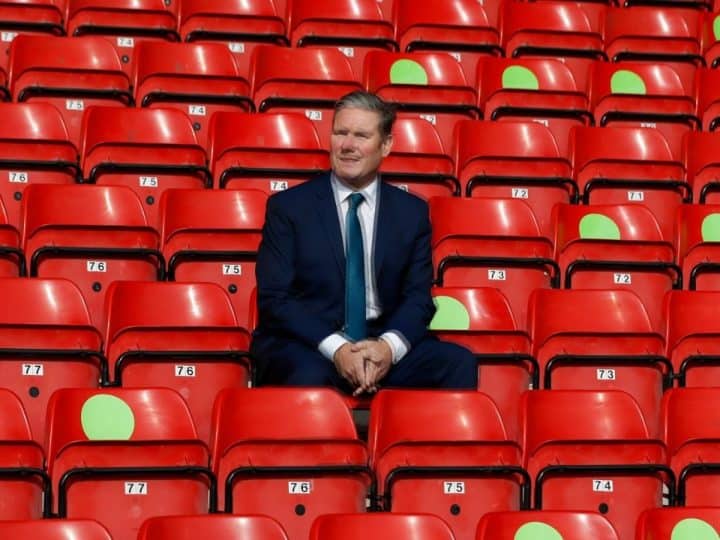

Liverpool West Derby MP Ian Byrne has become the latest to join a growing chorus of Labour politicians to demand the resignation of Keir Starmer over the party’s appalling performance in the 2026 local elections.
Labour collapsed, losing — so far — almost 60% of the seats it was defending: 1443 lost out of 2484. Three areas have yet to declare. It has also lost a number of mayoral positions. It was too much for Byrne, a Hillsborough survivor who held onto his selection for the 2024 general election only after defeating the party machine’s attempt to remove him.
He said:
Statement re: local election results
The election results across the country make this a truly existential moment for Labour. They cannot be dismissed as a bad night or a messaging problem. This is a political crisis.
Councillors in Knowsley and across the country who have lost their seats will rightly be furious with the Prime Minister and the national leadership, who must be held accountable for this electoral disaster.
Like them, I do not believe this will be fixed by another speech, another reset, or another reshuffle. The problem runs far deeper. Labour has lost touch with the working class people and communities it was created to represent.
Our natural voting base has turned away because we have failed to address the deep-seated decline they see in their public services and communities. This sense of anger is being intensified by the Government’s failure to tackle the cost of living crisis, rooted first in Tory austerity and sustained by an economic system that allows the wealth of this country to flow upwards, instead of being shared fairly across it.
Across towns and cities that should be Labour heartlands, our base has collapsed. We cannot brush this off as a bad night or a messaging issue. This is a political crisis for the entire Labour movement. How we respond now will determine whether the Labour Party remains a relevant political force for years, and decades, to come.
The Prime Minister has reached the point where the question is no longer whether he can recover, but whether staying on causes lasting damage to Labour’s ability to rebuild trust and stop the advance of the right.
The longer this drags on, the greater the damage to the party and the country. The Prime Minister must now set out a clear timetable for his departure, and restore our party’s democratic processes for selecting candidates, which have been shamefully eroded in recent years.
Only then can we use every asset this party still has to deliver the change we promised this country.
Byrne doesn’t go far enough, though. Labour is beyond saving. Keir Starmer is clinging on, but his response to the collapse has been to appoint disliked former PM Gordon Brown and a(nother) paedophile-linked adviser, Harriet Harman. Harman wrote an argument in the 1970s against prosecuting paedophiles who sexually exploit children on film.
There could hardly be a clearer demonstration of Starmer’s utter moral and political bankruptcy — and the rotting corpse he has made what was once the Labour party that Byrne loved.
Featured image via the NewWorld
By Skwawkbox


With Keir Starmer in meltdown mode, Andy Burnham is being presented as Labour’s saviour. Last time he stood for leader, in 2015, Burnham promised that his first trip overseas would be to the Israeli settler-state. This would be his third attempt at securing the top job at Labour, but does Burnham really represent a change from the failings of Starmer, or simply more of the same?
Burnham’s Friends of Israel
Whilst serving in the last Labour administration, Andy Burnham’s principal adviser was Jennifer Gerber. In 2010, Gerber was appointed director of the lobby group Labour Friends of Israel, which she went on to lead for the next decade.
In 2016, then Shadow Home Secretary Andy Burnham was one of the Labour MPs who “flocked” to support Labour Friends of Israel under Gerber’s leadership. He was joined by then Shadow Foreign Secretary Emily Thornberry; Jess Phillips, now sitting on a wafer-thin majority in Birmingham Yardley; and Dan Jarvis, amongst others.
Gerber previously led Progress, a Labour Party pressure group reportedly founded by Epstein-associate Peter Mandelson. The group received millions from David Sainsbury, a major backer of the infamous Labour Together think tank, and were also funded by pharmaceutical company Pfizer.
In 2021, Progress merged with Policy Network, another Peter Mandelson operation, and changed their name to Progressive Britain. The group is currently led by Adam Langleben, a former national secretary of the Jewish Labour Movement.
When Jennifer Gerber stepped down from Labour Friends of Israel in 2020, she praised Keir Starmer for “[committing to] fully rooting out the … Israel obsession in the party.” In his first meeting with LFI as party leader, Starmer pledged to travel to Israel with the group.
At the time, Keir Starmer thanked LFI for “the crucial role they play in the Labour Party”. Now, Andy Burnham, a parliamentary supporter of LFI who voted for Tony Blair’s invasion of Iraq, seeks to depose him.
Past leadership bids
Burnham has tried to become Labour leader twice before. In 2015, his leadership bid was supported by Dan Jarvis, another parliamentary supporter of Labour Friends of Israel. Jarvis has previously been funded by Martin Taylor, a major backer of Morgan McSweeney’s Labour Together, who also gave £95,000 to Keir Starmer’s 2020 leadership bid.
Andy Burnham’s 2015 leadership campaign received over £130,000 in private donations. One of his funders was Michael Sternberg, who has also financed Labour’s current Courts Minister, Sarah Sackman. Sackman, a key supporter of David Lammy’s proposals to restrict jury trials, previously worked as a judicial clerk at the Israeli Supreme Court.
Sternberg also gave £5000 to Labour’s current Middle East Secretary, Hamish Falconer. Falconer received another £5000 from Labour Together Limited, and £13,900 from Mike Craven, a former press officer to Tony Blair and current Labour Together board member.
Falconer also received £4600 from a group called “SME 4 Labour”. In the run up to the 2024 general election, with a view to helping Keir Starmer secure a parliamentary majority, SME 4 Labour held a fundraising dinner in London with Jeffrey Epstein’s “best pal” Peter Mandelson.
For the 2024 election, SME 4 Labour had identified Scotland as a “crucial” target. Labour’s parliamentary candidate (and now MP) for Rutherglen Michael Shanks received £4000 from Sternberg. Shanks was also one of several Scottish Labour MPs who received £10,000 from Labour Together to fund their electoral campaigns.
Another funder of Burnham’s 2015 leadership campaign was Howard Borrington. For 22 years, ending with his retirement in 2024, Borrington was Director of UK Government Affairs at arms firm MBDA, the self-declared “world leader in missiles and missile systems”. Before that, he spent almost 16 years at BAE Systems.
Burnham won’t mop up the bloodbath
In 2010, Burnham stood against Ed Miliband and lost. In 2015, Burnham promised that, if he won, he “would involve Jeremy [Corbyn] in my team from the outset.” As recently as February, he was publicly backing Keir Starmer. Burnham will say anything to get into power.
After the bloodbath of last week’s council, Scottish, and Welsh elections, it is clear that Keir Starmer has lost any mandate to rule, but do not expect any stronger moral fibre from Andy Burnham.
Featured image via the Canary
Politics
Politics Home | Keir Starmer Tries To Position Labour As The Party Of A “Stronger And Fairer” Britain
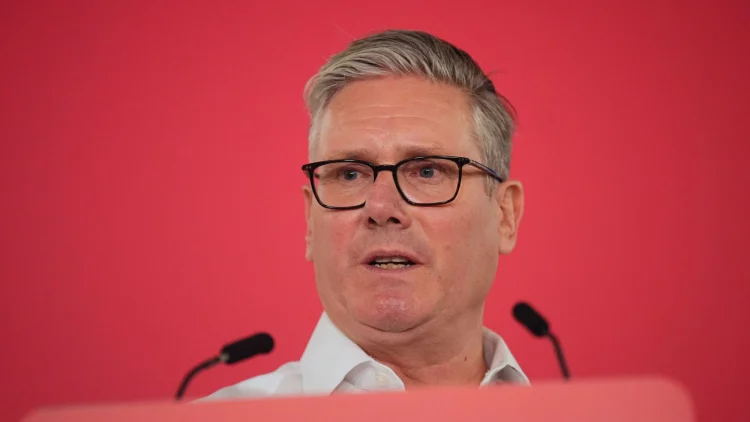

Keir Starmer gave a speech to try to defend his position as prime minister on Monday morning (Alamy)

5 min read
Prime Minister Keir Starmer has attempted to shore up his leadership of the Labour Party and of the country by saying Labour needs to go beyond just “incremental change” and be the party of a “stronger and fairer” Britain.
The Prime Minister is attempting to see off potential leadership challenges following Thursday’s local election results, which saw Labour lose the Senedd in Wales for the first time, fail to make inroads against the SNP in Scotland, and lose around 1,500 seats on local councils in England.
In a speech in London on Monday morning, he admitted that “like every government, we’ve made mistakes”, but insisted “we got the big political choices right”. It was a speech that was passionate, but lacking in policy meat on the bone.
What is the Labour Party for?
Starmer attacked both Reform and the Green Party, arguing that only Labour can “face up to the big challenges” and “make the big arguments”.
“Delivery is, of course, essential, but it’s not sufficient on its own to address the frustration that voters feel, with battling Reform and the Greens, but at a deeper level, with battling the despair on which they prey, despair that they exploit and amplify,” he said.
“And so analysis matters, but argument matters more. Evidence matters, but so too does the emotion. Stories beat spreadsheets. People need hope.”
He went on to say that the Labour Party would not be able to win going forwards as a “weaker version of Reform or the Greens”.
“We can only win as a stronger version of Labour… I will never stop fighting for the decent, respectful, diverse country that I love.”
The status quo is not enough
He appeared to argue for railing against the status quo in government, but did not set out any major new policies.
“Incremental change won’t cut it on growth, defence, Europe, energy,” he said.
“We need a bigger response than we anticipated in 2024 because these are not ordinary times, and this is a political challenge, just as much as it’s a party challenge.”
By way of hard policy, however, there was very little: the one major announcement was that legislation would be brought forward this week to give the government powers to take “full ownership of British Steel”, subject to a public-interest test.
Starmer described this as an example of a policy which will “show the Labour values we will be guided from, and the lessons we will learn”.
He said the government would also go “much further on our investment” in apprenticeships in technical excellence colleges and special educational needs.
Starmer has come under criticism by his own MPs for not spearheading the change that was promised to voters in the 2024 general election.
Senior Labour MP Sarah Owen told The Times over the weekend: “Unless Keir Starmer delivers tangible change and truly connects with the public on a human level, he can’t lead us into another election (locally or nationally). People want politics and politicians who are upfront and true to their values.”
Closer ties with Europe at the heart of the “Labour choice”
Starmer also set out a closer relationship with Europe as being at the heart of the “Labour choice” going forward.
“This Labour government will be defined by rebuilding our relationship with Europe, by having Britain at the heart of Europe, standing shoulder to shoulder with the countries that most share our interests, our values and our enemies,” he said.
“That is the right choice for Britain. That is the Labour choice.”
However, asked whether the next Labour manifesto would include single market or customs union membership, Starmer simply said the UK will take a “big leap forward with the EU-UK summit this year and take us closer, both on trade and the economy, and defence and security.
“That will then be a platform on which we can build as we go forward,” he said.
Change in leadership would be too “damaging”
Addressing Thursday’s elections, the PM said Labour’s losses “hurt”: “I get it, I feel it”.
But many Labour MPs are already concerned that the speech listed the government’s achievements again and did little to shift the dial on either Starmer’s own leadership or the public perception of the Labour government.
Backbench Labour MP and former minister Catherine West has said she could try to launch her own leadership bid if no cabinet minister steps forward to challenge Starmer.
Former deputy prime minister Angela Rayner has told Starmer that “what we are doing isn’t working”, calling for Greater Manchester Mayor Andy Burnham to return to Parliament. Indeed, perhaps the most significant moment of Starmer’s speech came when he said that Burnham’s return would be a matter for the party’s National Executive Committee, rather than closing the door on him entirely.
Starmer had already insisted he will not step down as PM, and in his speech on Monday, he said he did not want to “plunge the country into chaos”.
“I’m not going to shy away from the fact that I’ve got some doubters, including in my own part,” he said.
“And I’m not going to shy away from the fact that I have to prove them wrong, and I will.”
In what was likely an appeal to his own MPs, he said that the government constantly changing their leadership was “damaging”.
“We tested it, we tested its destruction, and it inflicted huge damage on this country,” he said, in a reference to the changing of leaders under previous Conservative governments.
“A Labour government will never be forgiven if we repeat that and inflict that on the country.”
Labour deputy leader Lucy Powell sat on the front row during Starmer’s speech, with one of the PM’s PPSs Jon Pearce sitting on the row behind.
Labour MP for Ossett and Denby Dale Jade Botterill introduced Starmer on the stage, saying that it was clear to her that the Labour Party “is one of the greatest vehicles for changing the lives of working people this country has ever known”
“But yet, on the doorstep, people no longer believed it.”
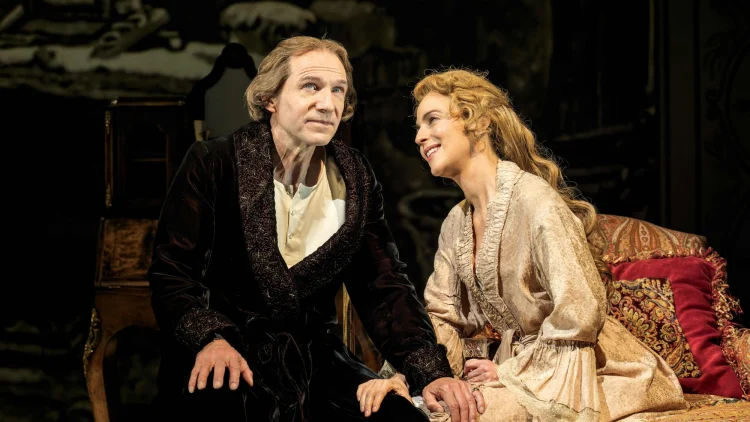
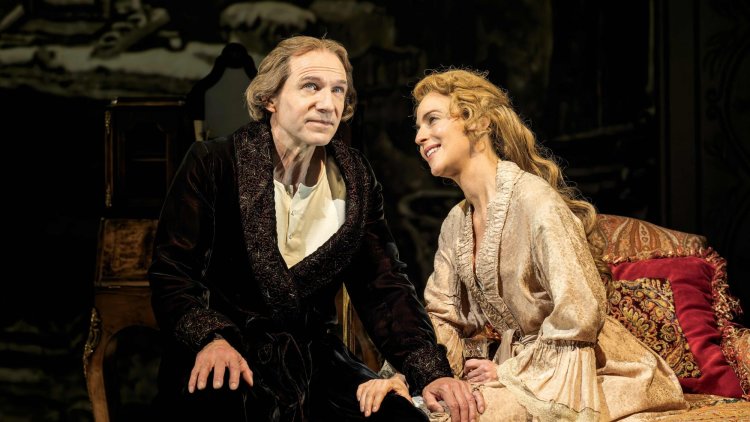
Ralph Fiennes as Henry Irving and Miranda Raison as Ellen Terry | Photography by: Marc Brenner

5 min read
A superbly acted contemplation on theatre and the acting profession, this play may appeal more to the cognoscenti, but the one-liners are worth the ticket price alone
This is a play about what a play is about. It is an examination of theatre and the acting profession.
That I took an instant dislike to Teddy was a tribute to Jordan Metcalfe’s point-perfect interpretation of the arrogant Edward ‘Teddy’ Gordon Craig who opens the play recalling his mother, the superstar of Victorian drama, Ellen Terry with the question, “What is it like to be a genius?”
Not that he seems a great fan of his mother, remarking that “if one is still an actor at 40, you need to ask yourself some serious questions”. It is a line that the 78-year-old David Hare must have enjoyed writing, and one which the audience fully appreciated the nuance of.
The play’s title, Grace Pervades, is another blague privée intended for the theatrical cognoscenti. It refers to a less than kind contemporary review, that said of her performances “Grace pervades the hussy”. Not much used in modern parlance, “hussy” is a word to which Terry’s daughter Edith, ‘Edy’, would have taken great exception. Her own dramatic productions were focused on achieving social revolution and the advancement of the suffrage movement.

In fact, living at the bottom of her mother’s garden in a lesbian ménage-à-trois with the occasional “sympathy frig” by Vita Sackville West, Edy might well have had the word applied to herself. However, it must be considered the more remarkable that in the prurient Victorian age, Ellen Terry – whose string of affairs began at the age of 14 – could be deemed such a national sweetheart.
Her amorous liaisons did not prevent her becoming the best-paid woman in England. On one of her American tours, she earned the modern equivalent of £24,000 a week – and just as well. Edy slyly tells us, when disparaging her brother’s theatrical disasters, that “Teddy’s Vikings of Helgeland lost more in a week than Ellen made in a year!”
David Hare has lost none of his powers
Teddy believes in “a theatre without actors” and in real life became (in retrospect, it must be said) a noted theoretician of drama and performance, revered by the likes of Konstantin Stanislavski and Peter Brook. A self-righteous, arrogant womaniser who had an affair with Isadora Duncan, we are told by sister Edy that in his own short acting career, the other spear carriers in Hamlet threw him off the battlements at the end of one rehearsal!
Now, the man himself: Henry Irving. Or do I mean Ralph Fiennes? It is difficult to tell. Irving regarded the theatre with the utmost seriousness. Meticulous in his preparation, he boasts that his is “a company of equals in which I am the boss”. He admits to Ellen that he is “atrabilious” (yes, I had to look it up too) and “an evening in my company can sometimes be very grim”, yet this is the man who single-handedly transformed 19th-century theatre into a respected art form. On stage he was the charismatic epicentre from which no eye turned, except to alight on Ellen Terry.

Ellen (played by Miranda Raison) was his theatrical and life partner for 27 years. She was “the day to his night”. She it was who persuaded him to direct his gaze away from declamation at the audience and to the other actors on stage. With her, Irving ran the Lyceum Theatre, overpaying his actors, accumulating debt, but entrancing audiences.
“You see everything as tragic,” she tells his Malvolio, “but Twelfth Night is supposed to be a comedy!” For him, theatre always comes first. For her, life does. She just happens to be spectacularly good at being an actress. “We have taken this forsaken art form and taken it to a level it has never aspired to,” he tells her. “To you, the theatre is everything. I’d rather be a successful human being,” she retorts.
 In a moment of purity and tenderness, he admits, “A faltering actor until 40, you were the instrument of my transformation.” I cannot remember if it is he or she who then says, “Together we made a harmony we could not make apart.” But of course it does not matter.
And this is the heart of David Hare’s contemplation on what it is to be a player, and what this strange art form is. He gives us four very different approaches in Teddy, Edy, Ellen and Irving. The minimalist, Teddy; the purposeful utilitarian, Edy; the escapist, Ellen; and Henry Irving, for whom the theatre is inextricable from life itself.
If you love theatre, go – these are some of our finest actors paying obeisance to the nobility of their calling and the giants on whose shoulders they stand.
If you do not count yourself a thespian, still go – Hare has lost none of his powers, and some of his one-liners are worth the price of the ticket all on their own.
Barry Gardiner is Labour MP for Brent West
Grace Pervades
Written by: David Hare
Directed by: Jeremy Herrin
Venue: Theatre Royal Haymarket, London SW1 – until 11 July 2026
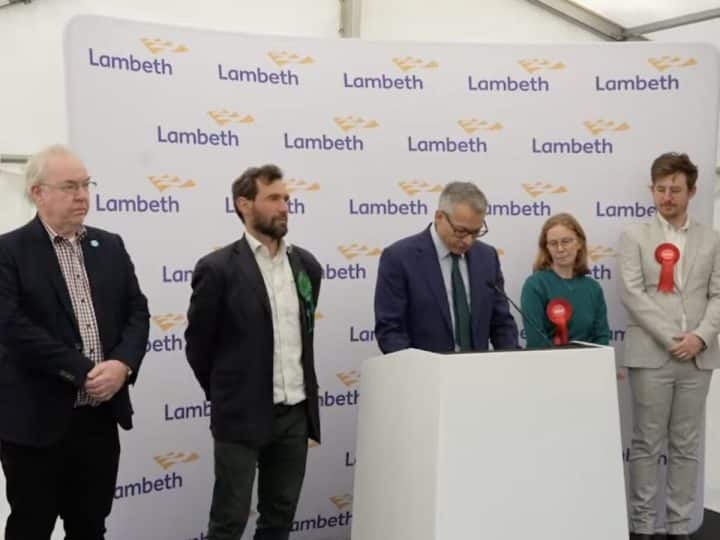

Labour has lost control of Lambeth council for the first time in 20 years.
The Greens are now the largest party; however, no party gained overall control of the council.
Lambeth goes from Labour -> No Overall Control (NOC).
Check out all of the election results by ward with our ward and council-level maps over at: https://t.co/QXT1tzrRXB pic.twitter.com/e8s1KiHxeW
— Election Maps UK (@ElectionMapsUK) May 9, 2026
According to the BBC:
Labour has controlled Lambeth since 2006. After the 2022 elections, Labour had 54 seats with the Greens and Lib Dems both on four.
The Green Party gained 27 seats, taking their new total to 29. This is up from four at the last election.
The Green Party go from 2 seats to 28 in Lambeth – and Labour lose control!
This is happening in our cities and in many of our rural targets too.
People voting Green Party councillors to help end Rip Off Britain!https://t.co/0qbagSvIYp https://t.co/rymnuWMQnX pic.twitter.com/yyxpggAW2s
— Zack Polanski (@ZackPolanski) May 9, 2026
Hilariously, Labour lost 32 seats, leaving the party with only 26.
The Liberal Democrats won eight seats.
This is yet another example of the Labour vote collapsing in former strongholds.
The Labour leader of the council, Claire Holland, managed to keep her seat, but so many others didn’t.
It’s a shame the leader of the council managed to keep her seat but so many other cllrs didn’t.
I’ve written in about countless residents over the years in lambeth and she’d never even acknowledge the emails let alone respond

Welp.
— KWAJO- Social Issues Campaigner (@Kwajotweneboa) May 9, 2026
Labour together?
Lambeth is also where Morgan McSweeney, enemy of the Canary and Starmer’s former right-hand man, helped to run a successful Labour campaign to retake it in 2006.
McSweeney resigned as Starmer’s chief of staff in February over the shocking appointment of Lord Mandelson as US ambassador.
Similarly, it was also the training ground for now-MP Steve Reed. He was the leader of Lambeth Borough Council from 2006 to 2012. He is now the MP for Streatham and Croydon North.
Lambeth council was a training ground for both Morgcn McSweeney and Steve Reed. Two of the architects of Labour Together. https://t.co/jaBm6hEWux
— Samantha Asumadu (@SamanthaAsumadu) May 9, 2026
Both were architects of Labour Together — which seems to be falling apart.
However, this makes the loss even more symbolic and will hopefully hit Starmer right where it hurts.
Feature image via Lambeth Council/YouTube
By HG
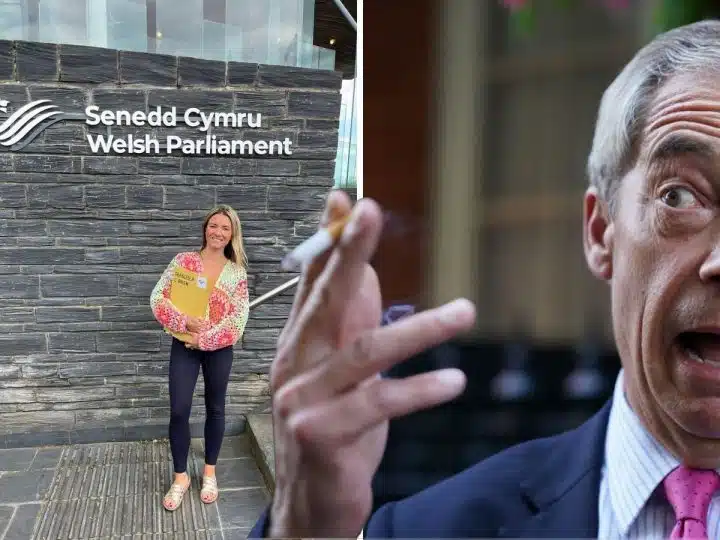

Reform UK councillor Francesca O’Brien posted that she’s completed her Senedd member induction. The fact that she’s taken her seat as a Reform politician shows her party really doesn’t care what its candidates say about people.
Reform UK’s new MS, the same Francesca O’Brien who defected to Reform UK from the Conservatives saying it was a ‘gamble’ (because it’s not about principles).
Oh, and she once said people on benefits should be “put down”. https://t.co/qXACxRZban
— Reform Party UK Exposed
 (@reformexposed) May 10, 2026
Reform councillors treat people as less than human
O’Brien is far from the only Reform member the party has turned a blind eye to, as the Canary reported:
Ben Rowe posted Islamophobic, antisemitic and racist memes. Reform said it was 'investigating', so how come he's now a sitting councillor?
Via @willem_moore_uk https://t.co/xKyGhLh6TI
— Canary (@TheCanaryUK) May 10, 2026
Reformed Tories
As Reform Exposed highlighted, O’Brien began her political career as a Tory. She unsuccessfully ran to be the MP for Gower in 2019, before successfully becoming a councillor for Mumbles in 2022.
O’Brien would later switch to Reform in 2025, telling Wales Online:
For me it’s very much a gamble. Reform are very good at engaging with people across all ages, particularly the younger generation and I think it’s really important to get younger people into politics.
I’ve never seen a party that engages like this across generations and wherever you sit demographically. I want to be part of that, get involved and help fine-tune some of the policies.
This is how Reform Exposed interpreted what O’Brien said:
Reform UK’s new Councillor Francesca O'Brien has described her defection as "a gamble".
It’s just a game to them, she doesn’t have principles, just a will to power, or else it wouldn’t be a gamble, it would be a principled stand…https://t.co/CSQWFn5pBh
— Reform Party UK Exposed
(@reformexposed) August 19, 2025
At the same time, Wales Online reported:
And although the mother-of-two said she lived and breathed being a councillor in Mumbles, she said “speaking off the top of my head” she would be keen to stand at next year’s Senedd elections if the opportunity arose.
This year O’Brien did indeed run to join the Senedd (Welsh parliament), and she was successful. So why is this a problem?
It’s a problem because she’s previously made comments like the following:
Benefit Street..anyone else watching this?? Wow, these people are unreal!!!”
She also said:
My blood is boiling, these people need putting down.
Generally, you don’t want people in positions of power to hold opinions which can accurately be described as ‘Nazi-like’.
Benefits Street
If you’re unfamiliar with Benefits Street, this is what Canary founder, Kerry-Anne Mendoza, wrote about the show:
One of the most insidious developments during the prime ministership of David Cameron was the rise of poverty porn – television shows like Benefits Street, which turned poverty and destitution into cheap thrill entertainment.
She added:
Benefits Street was just one in a long and sad list of poverty-porn programming aired during Cameron’s tenure. Channel 4 also brought us Skint, Benefit Busters, How to Get a Council House, and Benefits Britain. The BBC even chipped in with We All Pay Your Benefits.
This list is not even exhaustive. Just some of the lowlights, if you will.
All of these shows, intentionally or otherwise, feed into a myth that the UK is some sort of paradise for benefit cheats.
It’s a tried and tested technique to focus on the small number of ‘badly behaving’ people in a minority group to suggest that the entire group behaves like that. To their eternal shame, Channel 4 and the BBC functioned as the propaganda wing of David Cameron’s austerity-pushing coalition government on this one.
In the current day, the media and political spheres spend more energy demonising migrants than poor people (which isn’t to say they don’t demonise people on benefits). The reason for this is obvious.
Following years of austerity, more people than ever are claiming in-work benefits. As such, it’s harder to form a majority consensus around the idea that all benefit claimants are evil.
The Conservatives, Labour, and Reform do still demonise claimants, of course, but if you look at the polling, none of them are majority parties.
{ Seats } Poll: @LordAshcroft, 23-27 Apr (+/- vs 30 Mar) pic.twitter.com/QjevEqb8SJ
— Stats for Lefties
 POLL | Reform lead by 1pt
 Ref: 21% (-)
 Con: 20% (-1)
 Grn: 20% (-1)
 Lab: 18% (+1)
 Lib: 11% (+2)
Ref: 170 Con: 161 Grn: 109 Lib: 73 Lab: 52
Lib: 11% (+2)
Ref: 170 Con: 161 Grn: 109 Lib: 73 Lab: 52 SNP: 48

 (@LeftieStats) May 3, 2026
Myth making
Speaking more on the myth of the greedy benefit claimant, Mendoza wrote:
In reality, according to the government’s own figures, benefit fraud amounts to just 0.7% of all claims. The total cost of benefit fraud is £1.2bn a year – this is less than half the annual cost to the Department for Work and Pensions of administrative errors.
In short, the government spends twice as much money fixing typos than it does on fraudulent benefit claims. But you wouldn’t know that from watching these shows. Far from it. You would be left with the impression that Britain was facing a benefit fraud epidemic.
To be entirely fair, a lot of people fell for the anti-benefits propaganda in the 2010s. The problem is we know O’Brien is still a believer because she’s joined Reform — a party that attempts to draw a line between ‘good workers’ and ‘bad claimants’.
My party is the party of alarm clock Britain.
— Nigel Farage MP (@Nigel_Farage) November 3, 2025
In line with the shifts we talk about, Reform now puts more emphasis on the people who aren’t on benefits (the ‘alarm clock’ Britons) rather than the people who are. The point is the same, though. The party wants you to think some people are ‘strivers’ and others are ‘scroungers’.
This is all very ironic when you consider that Farage has barely bothered to show up to do his job since he became an MP:
'Skive Minister' Nigel Farage is getting away with the equivalent of only working 7 days a month while earning millions from side hustles
By @willem_moore_uk https://t.co/CTE8RxUIGK
— Canary (@TheCanaryUK) May 7, 2026
Perhaps when O’Brien reads about Farage’s attendance record she’ll also call for the UK to put him down?
Featured image via the Canary
By Willem Moore
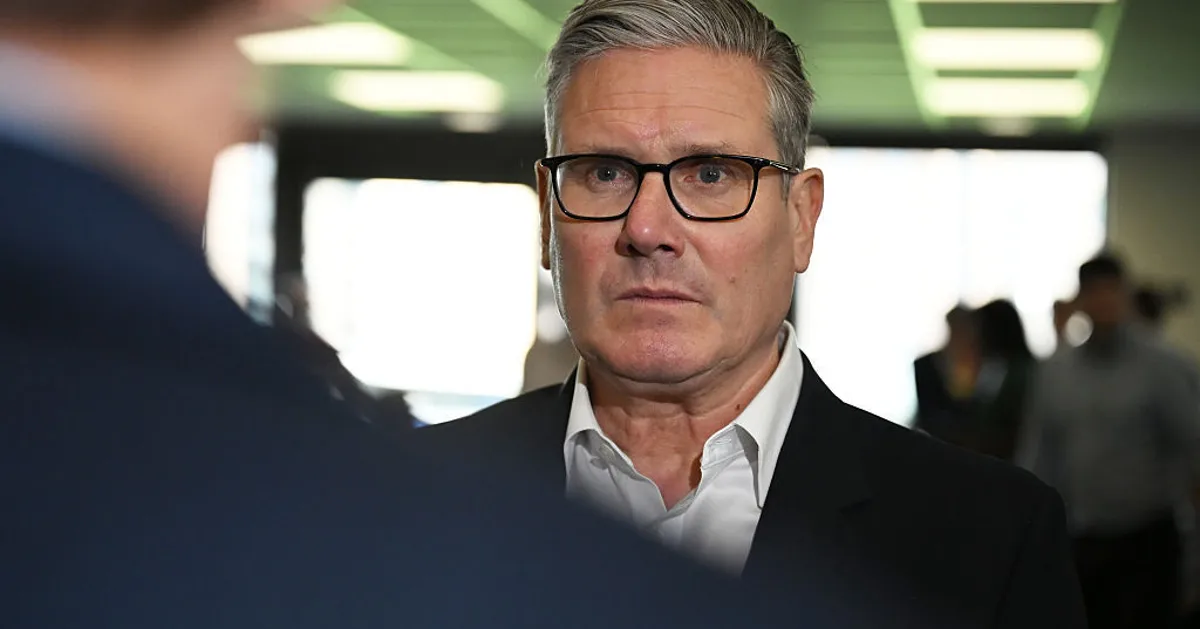
Keir Starmer’s attempt to save his premiership with a make-or-break speech went down like a lead balloon on Monday.
He pledged to rebuild the UK’s ties with the EU after Brexit and insisted he would put the country “at the heart of Europe”.
The PM also confirmed plans to nationalise British Steel.
Amid mounting speculation that he will face an imminent leadership challenge, Starmer said: “I know people are frustrated by the state of Britain, frustrated by politics, and some people, frustrated by me.
“I know I have my doubters and I know I need to prove them wrong, and I will.”
However, the initial reaction to the speech was overwhelmingly negative, with one former minister telling HuffPost UK it was “utterly inadequate”.
Other responses on social media were similarly unforgiving.
Subscribe to Commons People, the podcast that makes politics easy. Every week, Kevin Schofield and Kate Nicholson unpack the week’s biggest stories to keep you informed. Join us for straightforward analysis of what’s going on at Westminster.

Strategy adds $535 million in bitcoin days after outlining potential sale scenarios

Oil, banks and arms make huge profit from the war on Iran

Scheffler tops McIlroy as favorite

Manchester United reach agreement with Casemiro over contract clause amid transfer speculation

US brings back mandatory military draft registration

Steven Gerrard disagrees with Gary Neville over ‘shock’ Chelsea and Arsenal claim | Football


-
 Crypto World3 days ago
HarrisX Poll Found 52% of Registered Voters Support the CLARITY Act
-

 Crypto World4 days ago
Upbit adds B3 Korean won pair as Base token gains Korea access
-

 Fashion3 days ago
Weekend Open Thread: Marianne Dress
-

 Tech7 days ago
Image AI models now drive app growth, beating chatbot upgrades
-
 NewsBeat4 days ago
NCP car park operator enters administration putting 340 UK sites at risk of closure
-

 Politics2 days ago
Politics Home Article | Starmer Enters The Danger Zone
-
 Business2 days ago
Ignore market noise, India’s long-term story intact, say D-Street bulls Ramesh Damani and Sunil Singhania
-

 Tech1 day ago
Auto Enthusiast Carves Functional Two-Stroke Engine from Solid Metal
-

 Tech5 hours ago
GM Agrees To Pay $12.75 Million To Settle California Lawsuit Over Misuse Of Customers’ Driving Data
-

 Crypto World6 days ago
UAE Free Zone Deploys Blockchain IDs to Verify Registered Firms
-
 Sports7 days ago
2026 NHL playoff picks: Second-round predictions, series odds, Stanley Cup bracket
-

 Crypto World5 days ago
BlackRock CEO Larry Fink Discusses a New Asset Class
-

 Crypto World4 days ago
Robinhood says Wall Street is building onchain
-
Entertainment6 days ago
Serena Williams hits Met Gala in metallic dress after GLP-1 reveal
-

 Entertainment7 days ago
Skai Jackson Responds To AI Baklash After Viral Snapchat Photos
-

 Tech5 days ago
Apple and Samsung are dominating smartphone sales so thoroughly that only one other company makes the top 10
-

 Tech5 days ago
I tested the Xiaomi 17 Ultra’s camera and I don’t think I’ll ever go back to an iPhone
-

 Politics6 days ago
Met Gala 2026: Madonna’s Dramatic Red Carpet Look Steals The Show
-

 Fashion5 days ago
The Best Work Pants for Women in 2026
-
 Sports7 days ago
Hearts v Rangers LIVE: Prediction, team news and line-ups as Scottish Premiership title rivals meet at Tynecastle
You must be logged in to post a comment Login