Politics
The House | Government Promises Devolution Reform But Mayors Say ‘Begging Bowl’ Culture Persists


(Tracy Worrall)
9 min read
MHCLG and the Treasury are promising more powers to the devolved regions through a series of reforms. But for all the progress, regional mayors remain frustrated at a ‘begging bowl’ culture forced on them by an untrusting Whitehall. Benedict Cooper reports
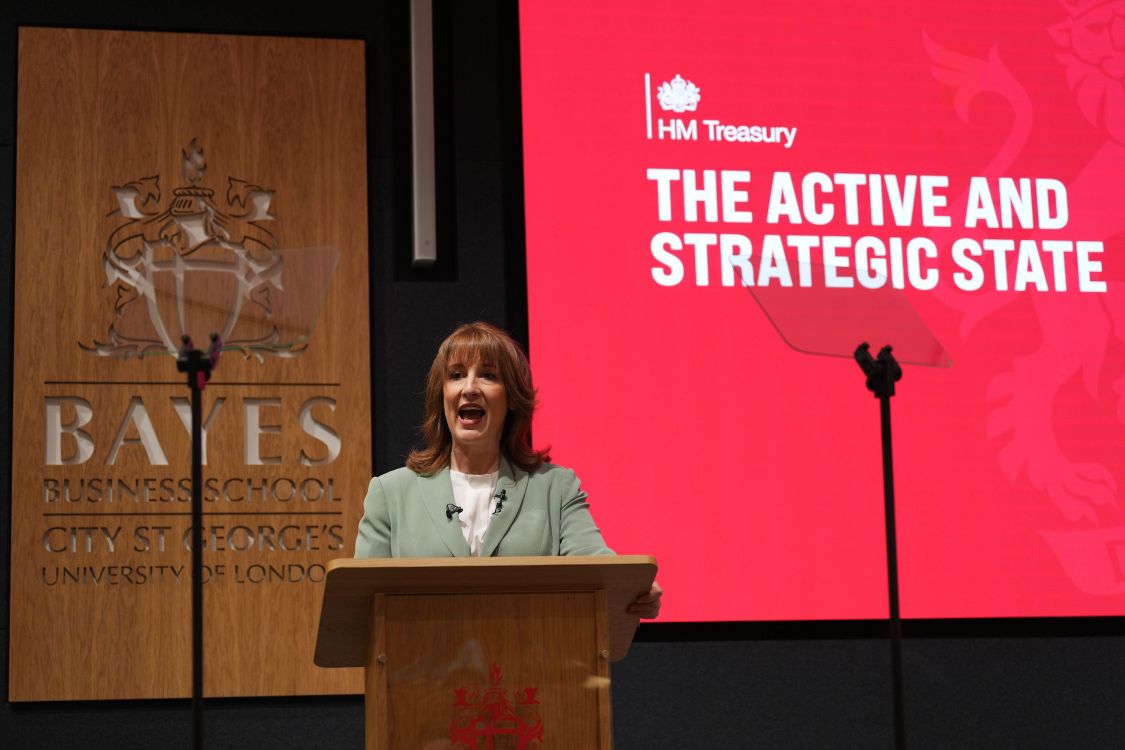
At times, delivering this year’s Mais Lecture, Rachel Reeves sounded more like a fierce critic of government devolution policy than someone involved in delivering it.
The Chancellor spoke of the “stifling Whitehall orthodoxies” that have held back the regions; the “local ambition frustrated by central government control”. She attacked the “fiction that a strong economy could be built on the success of just a few places”, and called for a “genuine break with the past” as the only true solution to all of the above.
The language of the lecture must have given some relief to the mayors and officials running England’s devolved authorities. It reflected precisely their frustrations at the slow and limited nature of change.
The lack of power to raise revenues locally and to truly decide, not merely preside over, the prescribed allocation of central Treasury funds, has been at the core of discontent about the way devolution has been delivered since the start.
For now, the details of how it might be solved are with the Chancellor’s Treasury officials. To understand what’s at stake, why frustrations persist and what should be done, we’ve gone straight to the regional mayors and devolution experts.
If a single statistic can tell the story, it must surely be the Organisation for Economic Co-operation and Development’s (OECD) finding, released last year, as to how much autonomy the UK gives its regions compared to other nations.
Among the OECD countries in 2024, the average proportion of overall revenues generated by a central, national exchequer was 53.2 per cent, with the rest being raised, and spent, by regional or federal authorities. In the UK, that figure was 91.8 per cent; the highest by some distance.
The UK’s economy is as centralised as it gets. It makes the Chancellor’s plan to “liberate” the regions, by granting “control over long-term, self-sustaining capital”, extremely ambitious.
Alex Walker, senior researcher at think tank Re:State and former research assistant at the Bennett School of Public Policy, says that while the scale of the job is huge, the intention is right, and necessary to redressing a paradox of the system.
“It’s a very big development,” he says. “England is a big outlier in how fiscally centralised it is. At the moment, you’ve got this decentralisation of spending responsibilities, but not really much decentralisation of revenue raising power.”
Responsibility without power is surely a political leader’s nightmare. And, Walker says, it’s the cause of a democratic deficit at the core of English devolution.
Under the current model, he says, the money comes largely out of general taxation so the accountability is upwards to the Ministry of Housing, Communities & Local Government (MHCLG) and various Whitehall departments: “Once strategic authorities are more financially and fiscally independent from central government it should lead to the accountability being more towards their local electorate in terms of how they are spending that money that’s being raised and generated in the local area.”
There is the way money is raised, and there is the way it is distributed, or not, to the regional authorities.
England is a big outlier in how fiscally centralised it is
Akash Paun, devolution programme director at the Institute for Government, says: “Mayors often speak of the unhelpful ‘begging bowl culture’ created by the funding system they operate within, in which combined authority budgets are a hodgepodge of grants from across Whitehall.
“This is a system that has limited the ability of mayors and local partners to develop joined-up and long-term strategies for their regions, as they have to account separately to numerous different government departments for their use of public money.”
A proposed solution to this surely unsustainable situation is the integrated settlement, an instrument introduced into the English Devolution White Paper of December 2024 as a means to grant authorities access to a “consolidated budget across housing, regeneration, local growth, local transport, skills, retrofit, and employment support”.
The idea is sound. And few would argue with communities minister Miatta Fahnbulleh’s view, who tells The House it is based on the idea that “mayors know their areas better than Whitehall ever could”.
She adds: “That’s why we’re scrapping dozens of ring-fenced grants and giving seven city regions more control through integrated settlements – so they can spend on what their residents actually need.”
Far more contentious, and many mayors say deeply unhelpful, are the many qualifications and stipulations required to reach an integrated settlement in the first place. Namely, that only those authorities proven to have met eligibility criteria and thus elevated to the status of ‘established’ mayoral strategic authority (EMSA) may qualify for an integrated settlement.
At the moment, only seven combined authorities do: in Greater London, Greater Manchester, the North East, West and South Yorkshire, the West Midlands, and the Liverpool City Region.
Seven authorities out of 16. That leaves nine working to meet the criteria to reach the status to receive the funding they need.
Those criteria are extensive. And include a contentious detail that an authority must “have been in existence, with a directly elected mayor in place, for at least 18 months” before it can even submit a request to become an established authority, let alone actually receive the integrated funding.
It has left many mayors in a state of frustration, eager to get on with the work of investing in their regions.
Not least Labour’s Claire Ward, East Midlands Combined County Authority mayor, which has hit its 18 months, applied for established status and subsequent integrated settlement, but still finds itself in ongoing talks with MHCLG about getting to the next step.Ward says: “I want it to move much faster. I want to be in a position where I’m not being held back from the things that we can do in this region because I don’t have the flexibility over the integrated settlements or I don’t have the powers that are going to come with the established status.

“As mayor I feel it’s my duty to be challenging government to explain why I can’t have those powers, why I can’t have additional funding, why I don’t have that flexibility that would allow me to do far more in terms of being able to create that growth of an opportunity in the region.
“I do not want this region to be held back any longer than it needs to be.”
This is precisely the sentiment of Paul Bristow, the Conservative mayor for Cambridgeshire and Peterborough, a new mayor elected to a new role.
“We’re ready,” he says. “The authority had already done a lot of work, before I was elected last year.
“We’re following MHCLG’s guidance on when we can get established mayoral strategic authority status. The government has said it will only consider an integrated settlement for the next spending review, which is 2027.
“I want to progress that as quickly as possible, and perhaps get elements earlier, because the right time to get Cambridgeshire and Peterborough moving is now.”
The approach that’s been increasingly taken by government departments is them telling us how we should be spending the money
The sense of being held back, it seems, isn’t confined to those authorities awaiting the crucial established status.
The South Yorkshire mayoral combined authority was granted EMSA status and promised an integrated settlement as early as the white paper in 2024. Yet still its Labour Co-op mayor, Oliver Coppard, feels deprived of the powers he was promised. Coppard isn’t holding back in his criticism of a devolution system he says is “founded on a lack of trust”.
“We’ve found the process to be not in the spirit of devolution,” he says. “The principle is not being adhered to by the government. The government wants to hold onto the reins.
“And we’ve had concerns about various departments and what we are being asked to achieve with the money we’re being given. It’s the wrong way around. The approach that’s been increasingly taken by government departments is them telling us how we should be spending the money.”
Precisely what devolution was meant to undo.
There have undoubtedly been big steps forward, and real legislative action. There is grand talk of liberating the regions. But clearly, too, there is residual resistance, bureaucratic or otherwise, to releasing the reins.
“That attitude is still there in central government,” says Walker, “where the local state can’t be trusted to deliver people’s priorities. And when something goes wrong the instinct is to take it back to central government control.
“We’ve been hamstrung by a model where central government micromanages things across all of government.”
The Chancellor has identified the problems and recognised the frustrations of the regions: the begging bowl culture needs to end, and the gross imbalance in mayors’ powers and responsibility needs to be redressed.
And she has drawn broad rhetorical strokes for a solution which could truly transform the devolution process for the better.
There are risks. Vividly voicing the frustrations of regional leaders is fine, if you then fix the problems. Fail to find the right formula – or, worse, do a U-turn – and the tensions between Westminster and Whitehall on the one side, and the hamstrung devolved authorities on the other, could escalate.
Labour could find itself overseeing yet another “exercise in local ambition frustrated by central government control”, and the great opportunity devolution offers the nation as much as the regions could be lost.
An MHCLG spokesperson said: “We have a proud record on devolution. We’ve already rolled out more integrated settlements and cut bureaucracy for mayors so they have more freedom to spend in ways that they think work best for their communities. We’re not stopping there, with our English Devolution Bill, fiscal devolution roadmap, and Right to Request process we’re going even further in moving power and money out of Whitehall and into the hands of those who know their areas best.”

You must be logged in to post a comment Login