
Politics
The House | Government Promises Devolution Reform But Mayors Say ‘Begging Bowl’ Culture Persists


(Tracy Worrall)
9 min read
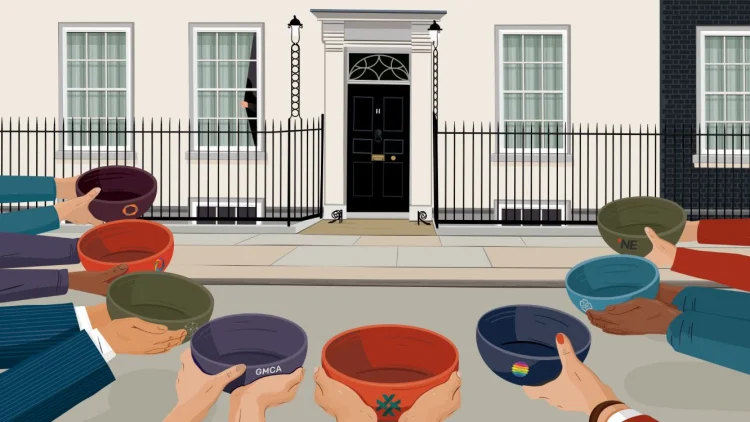
MHCLG and the Treasury are promising more powers to the devolved regions through a series of reforms. But for all the progress, regional mayors remain frustrated at a ‘begging bowl’ culture forced on them by an untrusting Whitehall. Benedict Cooper reports
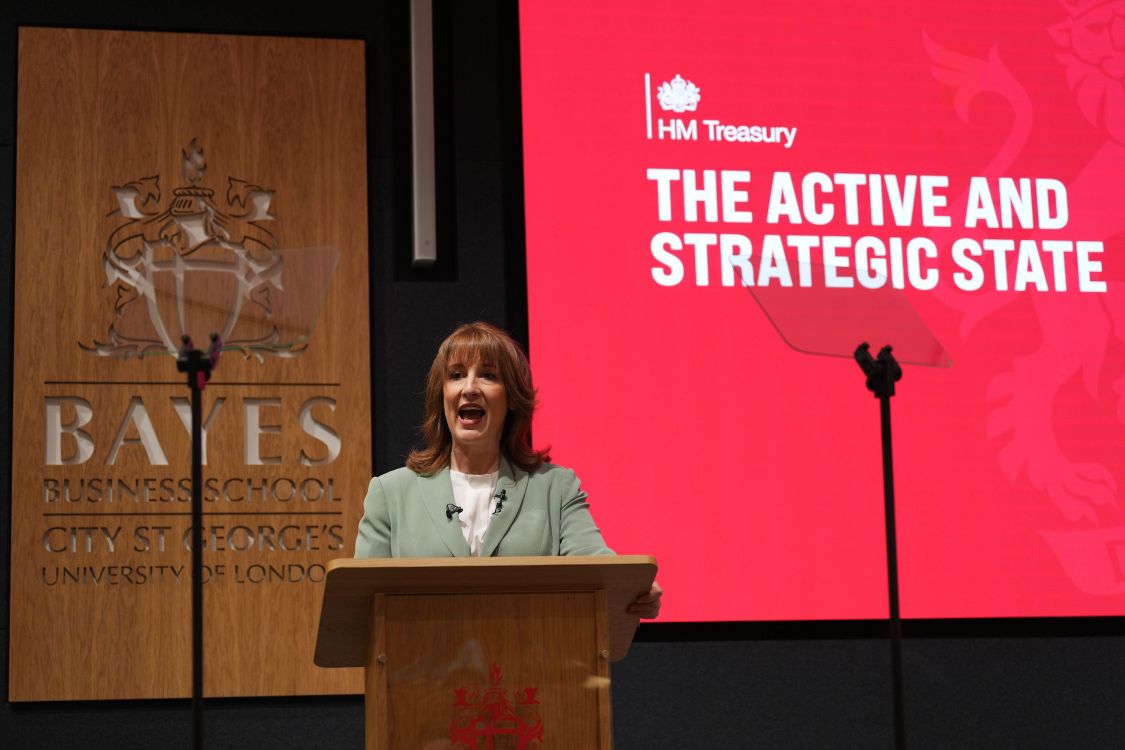
At times, delivering this year’s Mais Lecture, Rachel Reeves sounded more like a fierce critic of government devolution policy than someone involved in delivering it.
The Chancellor spoke of the “stifling Whitehall orthodoxies” that have held back the regions; the “local ambition frustrated by central government control”. She attacked the “fiction that a strong economy could be built on the success of just a few places”, and called for a “genuine break with the past” as the only true solution to all of the above.
The language of the lecture must have given some relief to the mayors and officials running England’s devolved authorities. It reflected precisely their frustrations at the slow and limited nature of change.
The lack of power to raise revenues locally and to truly decide, not merely preside over, the prescribed allocation of central Treasury funds, has been at the core of discontent about the way devolution has been delivered since the start.
For now, the details of how it might be solved are with the Chancellor’s Treasury officials. To understand what’s at stake, why frustrations persist and what should be done, we’ve gone straight to the regional mayors and devolution experts.
If a single statistic can tell the story, it must surely be the Organisation for Economic Co-operation and Development’s (OECD) finding, released last year, as to how much autonomy the UK gives its regions compared to other nations.
Among the OECD countries in 2024, the average proportion of overall revenues generated by a central, national exchequer was 53.2 per cent, with the rest being raised, and spent, by regional or federal authorities. In the UK, that figure was 91.8 per cent; the highest by some distance.
The UK’s economy is as centralised as it gets. It makes the Chancellor’s plan to “liberate” the regions, by granting “control over long-term, self-sustaining capital”, extremely ambitious.
Alex Walker, senior researcher at think tank Re:State and former research assistant at the Bennett School of Public Policy, says that while the scale of the job is huge, the intention is right, and necessary to redressing a paradox of the system.
“It’s a very big development,” he says. “England is a big outlier in how fiscally centralised it is. At the moment, you’ve got this decentralisation of spending responsibilities, but not really much decentralisation of revenue raising power.”
Responsibility without power is surely a political leader’s nightmare. And, Walker says, it’s the cause of a democratic deficit at the core of English devolution.
Under the current model, he says, the money comes largely out of general taxation so the accountability is upwards to the Ministry of Housing, Communities & Local Government (MHCLG) and various Whitehall departments: “Once strategic authorities are more financially and fiscally independent from central government it should lead to the accountability being more towards their local electorate in terms of how they are spending that money that’s being raised and generated in the local area.”
There is the way money is raised, and there is the way it is distributed, or not, to the regional authorities.
England is a big outlier in how fiscally centralised it is
Akash Paun, devolution programme director at the Institute for Government, says: “Mayors often speak of the unhelpful ‘begging bowl culture’ created by the funding system they operate within, in which combined authority budgets are a hodgepodge of grants from across Whitehall.
“This is a system that has limited the ability of mayors and local partners to develop joined-up and long-term strategies for their regions, as they have to account separately to numerous different government departments for their use of public money.”
A proposed solution to this surely unsustainable situation is the integrated settlement, an instrument introduced into the English Devolution White Paper of December 2024 as a means to grant authorities access to a “consolidated budget across housing, regeneration, local growth, local transport, skills, retrofit, and employment support”.
The idea is sound. And few would argue with communities minister Miatta Fahnbulleh’s view, who tells The House it is based on the idea that “mayors know their areas better than Whitehall ever could”.
She adds: “That’s why we’re scrapping dozens of ring-fenced grants and giving seven city regions more control through integrated settlements – so they can spend on what their residents actually need.”
Far more contentious, and many mayors say deeply unhelpful, are the many qualifications and stipulations required to reach an integrated settlement in the first place. Namely, that only those authorities proven to have met eligibility criteria and thus elevated to the status of ‘established’ mayoral strategic authority (EMSA) may qualify for an integrated settlement.
At the moment, only seven combined authorities do: in Greater London, Greater Manchester, the North East, West and South Yorkshire, the West Midlands, and the Liverpool City Region.
Seven authorities out of 16. That leaves nine working to meet the criteria to reach the status to receive the funding they need.
Those criteria are extensive. And include a contentious detail that an authority must “have been in existence, with a directly elected mayor in place, for at least 18 months” before it can even submit a request to become an established authority, let alone actually receive the integrated funding.
It has left many mayors in a state of frustration, eager to get on with the work of investing in their regions.
Not least Labour’s Claire Ward, East Midlands Combined County Authority mayor, which has hit its 18 months, applied for established status and subsequent integrated settlement, but still finds itself in ongoing talks with MHCLG about getting to the next step.Ward says: “I want it to move much faster. I want to be in a position where I’m not being held back from the things that we can do in this region because I don’t have the flexibility over the integrated settlements or I don’t have the powers that are going to come with the established status.
“As mayor I feel it’s my duty to be challenging government to explain why I can’t have those powers, why I can’t have additional funding, why I don’t have that flexibility that would allow me to do far more in terms of being able to create that growth of an opportunity in the region.
“I do not want this region to be held back any longer than it needs to be.”
This is precisely the sentiment of Paul Bristow, the Conservative mayor for Cambridgeshire and Peterborough, a new mayor elected to a new role.
“We’re ready,” he says. “The authority had already done a lot of work, before I was elected last year.
“We’re following MHCLG’s guidance on when we can get established mayoral strategic authority status. The government has said it will only consider an integrated settlement for the next spending review, which is 2027.
“I want to progress that as quickly as possible, and perhaps get elements earlier, because the right time to get Cambridgeshire and Peterborough moving is now.”
The approach that’s been increasingly taken by government departments is them telling us how we should be spending the money
The sense of being held back, it seems, isn’t confined to those authorities awaiting the crucial established status.
The South Yorkshire mayoral combined authority was granted EMSA status and promised an integrated settlement as early as the white paper in 2024. Yet still its Labour Co-op mayor, Oliver Coppard, feels deprived of the powers he was promised. Coppard isn’t holding back in his criticism of a devolution system he says is “founded on a lack of trust”.
“We’ve found the process to be not in the spirit of devolution,” he says. “The principle is not being adhered to by the government. The government wants to hold onto the reins.
“And we’ve had concerns about various departments and what we are being asked to achieve with the money we’re being given. It’s the wrong way around. The approach that’s been increasingly taken by government departments is them telling us how we should be spending the money.”
Precisely what devolution was meant to undo.
There have undoubtedly been big steps forward, and real legislative action. There is grand talk of liberating the regions. But clearly, too, there is residual resistance, bureaucratic or otherwise, to releasing the reins.
“That attitude is still there in central government,” says Walker, “where the local state can’t be trusted to deliver people’s priorities. And when something goes wrong the instinct is to take it back to central government control.
“We’ve been hamstrung by a model where central government micromanages things across all of government.”
The Chancellor has identified the problems and recognised the frustrations of the regions: the begging bowl culture needs to end, and the gross imbalance in mayors’ powers and responsibility needs to be redressed.
And she has drawn broad rhetorical strokes for a solution which could truly transform the devolution process for the better.
There are risks. Vividly voicing the frustrations of regional leaders is fine, if you then fix the problems. Fail to find the right formula – or, worse, do a U-turn – and the tensions between Westminster and Whitehall on the one side, and the hamstrung devolved authorities on the other, could escalate.
Labour could find itself overseeing yet another “exercise in local ambition frustrated by central government control”, and the great opportunity devolution offers the nation as much as the regions could be lost.
An MHCLG spokesperson said: “We have a proud record on devolution. We’ve already rolled out more integrated settlements and cut bureaucracy for mayors so they have more freedom to spend in ways that they think work best for their communities. We’re not stopping there, with our English Devolution Bill, fiscal devolution roadmap, and Right to Request process we’re going even further in moving power and money out of Whitehall and into the hands of those who know their areas best.”

Fleur Butler OBE is Director of Development for Conservative Women’s Organisation
The row over the two-child benefit cap has become a predictable clash between left-wing moral outrage about “the poor” and right-wing arguments about cost, GDP and fairness to taxpayers. Conservatives rarely say they care; the Greens rarely say where the money will come from, beyond “the rich.” But the Conservative case on fiscal restraint simply does not land with younger voters. Their economic reality is different from their parents’, and their news comes through social media algorithms that reward emotion over economics. If we only speak the language of older voters, we have no future.
We also fail to explain that this debate is not just about welfare policy. It is about what kind of society we want, and whether capitalism can still offer young people, especially women with children, a safer, freer and more prosperous future. A basic economic truth is being ignored: partnership between two people is still the most effective form of wealth-sharing most people will ever experience, while the state will always be limited and often disappointing. Of the 1.5 million children in single-parent households, 41 per cent are in poverty, compared with 23 per cent in two-parent households. Stable partnerships reduce child poverty, women’s pension poverty, demand for social housing, loneliness, mental health strain and dependence on welfare. They reduce the tax burden on working families. On average, women and men get more financial support from a partnership than from the state.
Yet politicians are afraid to talk about this for fear of sounding moralistic. We should make the economic case instead. The state is increasingly being asked to take on functions once shared within families. But it is structurally incapable of providing emotional, practical and flexible support. It cannot read a bedtime story, collect a sick child from school, or share the daily load of care. It cannot even put the bins out badly. It can only redistribute money, inefficiently and at enormous cost. Attitudinal studies published this spring show young women in particular are increasingly distrustful of men and are delaying relationships and children. Yet no one points out that the state is an even worse partner: cold, bureaucratic and transactional. Even the most average man will often offer more support than the welfare system ever can. For those in abusive or broken relationships, the state must always be there. But it should never be sold as the first or better option, because it cannot be.
Polling from the 2024 election revealed a deeper divide. While attention focused on young men voting Reform, far less was said about the overwhelming number of young women voting Left or Green. There has been no Louis Theroux documentary on the femo-rage conspiracy theories on line, nor film of young women committing acts of violence against the police and state infrastructure. This invisible shift is not driven by understanding the details of welfare policy It reflects a broader belief that capitalism is failing them and that the state offers more security. This is where Conservatives are losing. We argue macroeconomics and statistics while the Left sells a vision.
Young women facing high rents, insecure work and a cost-of-living crisis do not feel “fiscal responsibility” in daily life. To them, the state feels safer than the market, safer than men and safer than family. But this misunderstands what the state can provide. Welfare can redistribute income, but it cannot create resilience, stability or shared resources in a household. It cannot insulate women from the economic realities of childbirth, caring responsibilities, healthcare needs and time out of the labour market. The state will always be a second-best partner. We need to make the case that capitalism is not just about growth, but about freedom, resilience and choice. It has done more than any welfare state to lift people out of poverty and has given women independence, opportunity and freedom. Yes, capitalism needs rules and reform to remain fair and resilient. But destroying it will not make young people safer, they need to work with us to make it function better for all. To join us, as we have the better vision for the future.
The two-child cap is a case study in this. Lifting it may help some families, but it also increases the burden on working people already struggling, many of them young themselves. Yet the debate is framed as compassion versus cruelty, rather than two competing visions of how society shares risk and responsibility. If Conservatives want to reach younger voters, we must stop speaking in abstract fiscal language and start speaking to everyday life. Explain how high taxes limit personal freedom. Explain that building a household, a business or a partnership is not a moral act, but a practical route to resilience when the state lets you down. Explain the limits of the state through lived experience, not ideology.
And yes, we must make the emotional case too. We need to challenge young women’s distrust of men while acknowledging it, and remind them that most men are not the online caricatures they see. Society works best through strong partnerships between men and women in the work place and in private lives, not dependence on bureaucracies. The message is not “get married.” The message is: don’t let the state be your only safety net, “build your own”. It is not an attack on single mothers or a call to dismantle welfare. Life goes wrong in ways the lucky often cannot imagine. The state should always be there for those who need it. But we must be honest about what it can and cannot do.
Young voters, both men and women, are not hearing this argument because we are not making it. Until we do, the generational divide will grow and the welfare state will keep being sold as the answer to every problem, expanding in ways that strain both public finances and the social fabric.

Earlier this year I had the pleasure of sponsoring a Dogs Trust event in parliament highlighting an important and overlooked issue concerning animal rehoming organisations. It is frankly shocking that rehoming organisations, rescues and shelters across England, Wales and Northern Ireland remain unlicensed and not subject to inspections, even when they are registered charities. Whilst most organisations do vital work in protecting vulnerable animals, the absence of a comprehensive regulatory framework has sadly left ample room for abuse.
This was unfortunately brought into sharp focus in Billericay last year when an Essex Police raid on an animal rehoming organisation led to the discovery of 41 dead dogs in squalid conditions. While it is important to recognise that this incident is an outlier and not representative of most rehoming organisations, it does highlight the risks that can arise in the absence of oversight.
Despite this, public awareness of the status of animal rehoming organisations is remarkably low. Polling data from Dogs Trust outlined that 79% of the population wrongly believe that these organisations are already subject to licensing and inspection. However, once informed of the current situation, 89% support the introduction of regulation. Whilst significant efforts by animal welfare organisations in recent years have sought to raise awareness, the contrast between widespread misunderstanding and strong public support for reform highlights that much more still needs to be done.
For those that are aware of the situation, there is a clear concern and a demand for change. A petition that was established in the aftermath of the Billericay case, gathered over 109,000 signatures and was subsequently debated in parliament earlier this year. This demonstrated a strong and shared desire across the House with the public to seek action and protect animal welfare.

MDU warns Chancellor clinical negligence system ‘not fit for purpose’

Northern Ireland RE curriculum is ‘indoctrination’ – Supreme Court
At the event, we heard compelling arguments for the introduction of a proportionate system of licensing and regulation. This would help ensure that rehoming organisations are supported by clear minimum standards and effective enforcement, ultimately strengthening the excellent work already happening across the sector. Scotland has already provided a framework for this, having in 2021 introduced legislation to regulate both rehoming organisations and rehoming activities under the Licensing of Activities Involving Animals (Scotland) Regulations Act.
The government’s recent Animal Welfare Strategy is a welcome and ambitious step forward in this space. Its commitment to consult on the regulation of rehoming organisations reflects a clear recognition of the issue and the need to address it. Whilst that ambition is to be commended, it is important that the government provides a clear timeline for the consultation to ensure that a resolution is not delayed as it has been by previous administrations.
With the absence of a clear licensing framework, there remains a clear risk that both bad actors and well-intentioned individuals who become overwhelmed may fall short of the standards that animals deserve. Introducing sensible regulation would help mitigate these risks, provided it was underpinned by appropriate enforcement to safeguard animal welfare and protect prospective adopters. By setting out a clear timetable and working collaboratively with welfare organisations, the government can deliver a system that protects animals, supports reputable rescues, and meets the expectations of the public.
Politics.co.uk is the UK’s leading digital-only political website. Subscribe to our daily newsletter for all the latest news and analysis.
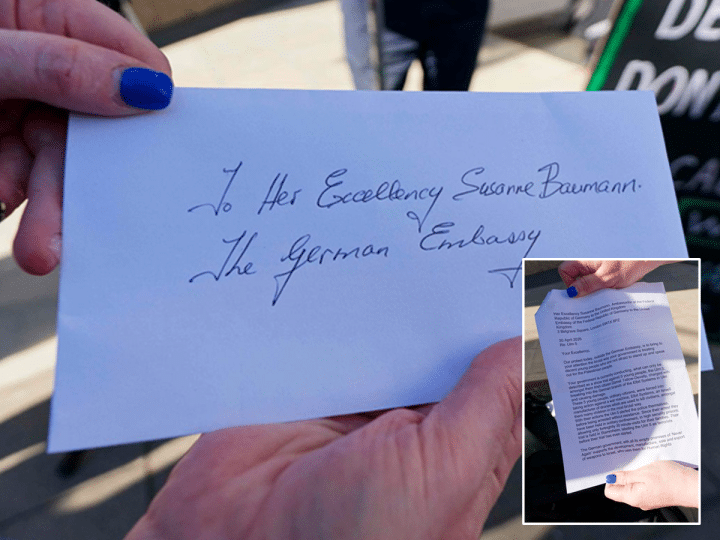

The London Irish Brigade and others gathered in the capital on 30 April to deliver a letter to the German embassy. The letter supported, and demanded the release of, the ‘Ulm 5‘ prisoners held for months without trial for action.
As with the ‘Filton 24‘, imprisoned for more than 18 months by the UK government, the Ulm 5 are imprisoned for damaging equipment belonging to Israel’s Elbit Systems, making weapons for Israel’s Gaza genocide.
The prisoners are an international mix: Irish, Spanish, British, and German. Unsurprisingly, Keir Starmer has said nothing against Germany’s imprisonment of two Britons, nor its brutal repression of protest. How could he, when he has done the same?

The Brigade’s Frank Glynn gave a speech. He pointed out Germany’s attempts to ‘wash its hands of the Holocaust in the blood of the Palestinians’ – and of its shameful record in other genocides:
Cowardly refusal
Disgracefully, the embassy refused to take the letter. Like the Starmer regime in the UK, the German government is deeply complicit in Israel’s genocide.


Read more about the Ulm 5 here.
By Skwawkbox

 lead image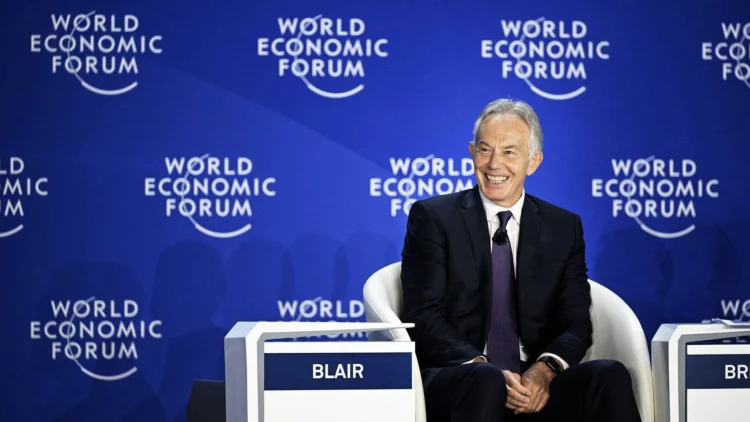

(Alamy)
3 min read
The Tony Blair Institute (TBI) think tank has called for the government to scrap the “unaffordable” triple lock on state pensions.
In a new report published on Friday, the think tank said current pensions policy is unsustainable and outdated and should be replaced by a more flexible alternative.
“Britain’s state pension system was built for a different era. We can’t keep pouring money into a system that is increasingly unaffordable,” said Tom Smith, TBI Director of Economic Policy.
Under the existing policy, pensions are guaranteed to rise by the highest of inflation, average earnings and 2.5 per cent.
However, there have been growing warnings that factors like people living longer, a falling birth rate and high inflation levels mean that it is not sustainable in the long term.
The TBI report points to the number of pensioners in Britain being expected to rise from 12.6m this year to 19m in 2070, with spending on the state pension expected to increase from 5 per cent of GDP to 7.5 per cent, costing the Treasury an additional £85bn a year.
There is also an argument that to maintain the triple lock in its current form would worsen generational inequality, given the financial challenges faced by younger people.
Despite these warnings, the triple lock continues to enjoy broad cross-party support, partly because older people are seen as a key voter group. Chancellor Rachel Reeves said last week that the government was not changing its triple lock policy.
TBI’s Smith said it would take “political leadership” to reform the policy, but that doing so would create a system “fairer, more flexible, and designed for how people live today”.
The think tank has proposed what it calls a new ‘Lifespan Fund’, which would replace the fixed pension age with a system whereby one full year of contribution would add half a year of entitlement, up to a maximum of 20 years of support.
It would also allow people to use the fund earlier in life to support them in key moments like finding work, funding child care, and looking after a sick relative, with safeguards included to ensure people do not draw out too much too early.
Smith said the model “keeps the promise of a secure retirement while making the system more flexible and financially sustainable” and would be “the upgrade Britain needs”.
The TBI estimates that these reforms would keep long-term state pension spending at around 5.5 per cent of GDP, rather than allowing it to rise towards 7.8 per cent, avoiding roughly £66bn a year in additional costs by 2070.
The intervention was welcomed by the Labour MP for Dunfermline and Dollar, Graeme Downie, who, in a recent piece for The House, called for the triple lock to be reformed to help fund greater defence spending.
“This is the kind of conversation I called for a few weeks ago,” he told PoliticsHome.
Our welfare needs to be fit for the future, helping those who need it most and being a strong safety net, effectively supporting people to get them into work and keep them in work to drive economic growth, and to fund critical national priorities like defence, which are vital to protecting our people and our democracy.”


On 30 April, during one of their regular raids on Shuafat Refugee Camp, North East of Jerusalem, Israeli occupation forces (IOF) assaulted Mehdi Al Arabi, a child with Down’s Syndrome.
15-year-old Mehdi ran away from the IOF, who then chased him:
He was detained for 15 minutes before being released.
Mohammad al Arabi was at the scene and tried to intervene, but was beaten and injured in the face by the occupation as he tried to protect his brother.

‘Israel’, as an occupying power, has clear legal obligations toward Palestinians with disabilities under international law, including the Convention on the Rights of Persons with Disabilities. These obligations require the occupation to ensure protection and safety during military operations, access to essential services, and non‑discrimination for disabled Palestinians.
Indiscriminate attacks by the IOF have killed and injured disabled Palestinians who posed no security threat. Such attacks violate international humanitarian law obligations to protect civilians, especially those with limited mobility or communication barriers.
Featured image provided by the author
By Charlie Jaay


The refusal to allow the Iranian Football Federation delegation to enter Canada has led to an escalating crisis with FIFA, after it became clear that Tehran would be absent from the Congress, the most significant event bringing together all national associations to discuss global football matters and take crucial decisions.
According to Reuters, the Iranian delegation was unable to enter Canadian territory despite prior arrangements, amid allegations of “mistreatment” by immigration authorities, forcing it to withdraw from the event.
In contrast, Canadian officials reportedly confirming that entry procedures are subject to strict legal and security considerations, given potential restrictions on individuals suspected of links to designated entities, which explains the decision from an official standpoint.
This development places FIFA in an extremely delicate position, as it is required to ensure the neutrality of international competitions and events, whilst facing a political reality that directly affects the participation of certain federations.
The event takes on deeper dimensions, as it comes against a backdrop of escalating political and military tensions linked to Iran, transforming the crisis from a mere administrative issue into a matter with political ramifications that may cast a shadow over upcoming football events — most importantly those hosted by Canada.
Featured image via IRNA
By Alaa Shamali
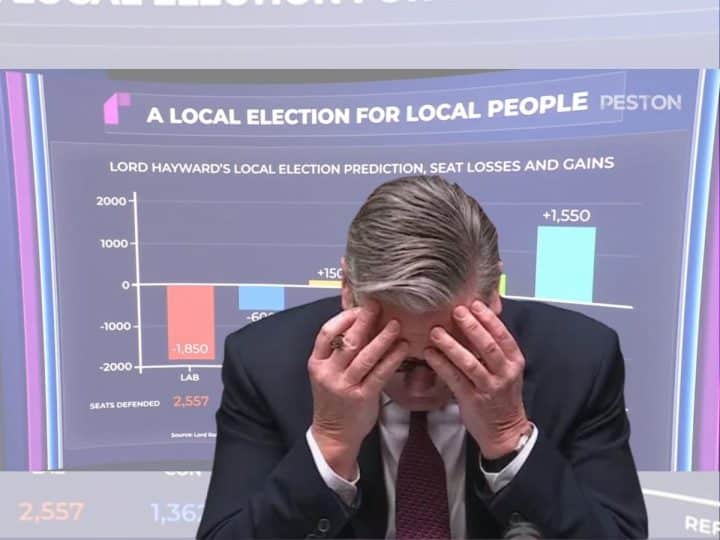

As we all know, things are looking dire for Labour in the upcoming local elections. On a positive note, however, they may do so badly that they end up winning a Guinness World Record:
“Anything north of 1500 seats lost would trigger a collective nervous breakdown”
Exclusive data from Lord Hayward suggests Labour may lose 1850 English councils in the upcoming local elections, the worst midterm results by any modern government#Peston pic.twitter.com/0JXXTLrYMk — Peston (@itvpeston) April 29, 2026
 EXCLUSIVE
Labour: record breakers
First things first, we want to apologise on behalf of Peston for the word ‘midterm’:
why is the phrase ‘midterm’ eeking its way into British politics pic.twitter.com/BbFnJhER4S
— DX (@diggingmad) April 29, 2026
They’re not ‘midterm elections’; they’re ‘local elections’. In the American midterms, they vote for national politicians; in the British locals, we vote for local politicians. You may not know this if you watch the mainstream news, of course, because they refuse to engage with local issues.
The Peston team made another mistake too – namely by stating Labour is set to lose 1,850 “councils”. There actually aren’t that many councils in the UK, and what they meant to say was ‘seats’. In other words, Labour are potentially set to lose 1,850 councillors.
In the clip at the top, Pippa Crerar says:
I want to show you a projection by the elections expert Robert Hayward shared exclusively with the Preston Show which shows just how bad it could get. Now he predicts… that Labour could lose as many as 1,850 seats. That’s of the 2,500 they’re defending so pretty terrible prediction.
And you can see also that the Tories lose almost half their seats that are up for grabs, with the Greens and Reform the big winners.
This is the poll in question:

Peston asked:
Now, Heywood has a formidable reputation for getting these things right. Now, this might be an occasion when he’s not, but if it were 1,850 losses for Labour, Is that worse than Labour campaigners’ fears?
Crerar responded:
I think, in short, yes. I mean, ministers tell me that anything north of 1,500 seats lost would trigger a collective nervous breakdown in the Cabinet and potentially a revolt. And that’s obviously very dangerous territory for Starmer.
. … This comes, of course, on top of results in Scotland and Wales, which are also expected to be pretty dire for the government, the UK government, and that inevitably creates yet more danger for Starmer.
Things look equally bad in other polls too (albeit better for the Greens):
Median estimate via @Moreincommon_, April '26 pic.twitter.com/OFxPMxmoUV
— Stats for Lefties
 Projected net changes for local elections:
 Ref +1,437
 Grn +926
 Lib +327
 Con -627
 Lab -1,738

 (@LeftieStats) April 21, 2026
Median estimate via @Moreincommon_, April '26 pic.twitter.com/OFxPMxmoUV
— Stats for Lefties
Projected net changes for local elections:
Ref +1,437 Grn +926 Lib +327 Con -627 Lab -1,738
(@LeftieStats) April 21, 2026
Time to go
At this point, it seems that Starmer has to go after the local elections. The only reason it’s not entirely certain is because this current crop of Labour MPs are so weak and directionless that they might just go with the flow all the way down the electoral drain.
Featured image via Peston
By Willem Moore
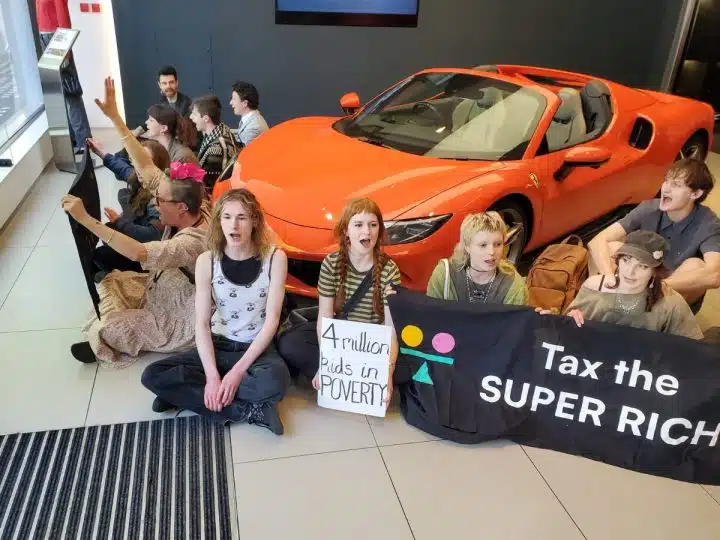

Take Back Power supporters have been ‘taking over’ the playgrounds of the super-rich on the morning of 30 April. Take Back Power is a nonviolent campaign, demanding a tax on extreme wealth, to be decided by a ‘House of the People’.
At around 10am, 22 Take Back Power supporters occupied a Ferrari dealership in Berkeley Square. They chanted “WE DEMAND EQUALITY!” and “THE BILLIONAIRES HAVE GOT TO GO!”. By around 10.30am the group left the store.
At around 11.30am the group reconvened at Burlington Arcade, the world’s first modern shopping mall. It positions itself as an ‘elegant and exclusive upmarket shopping venue’. The group held signs which read “HOUSE OF THE PEOPLE” and “4 MILLION KIDS IN POVERTY”. Door staff quickly seized the placards.
By around 12.20pm the group had moved on to the food hall at luxury department store Harrod’s. Security was much more reactive, dragging Take Back Power supporters from the building.
A Take Back Power spokesperson said:
This country is in crisis and everyone knows it! The people to blame are the corporations and super-rich who are extracting every last penny from working people, and then using their ownership of the media to distract people into blaming the poor and migrants.
Nothing short of a massive transfer of wealth and power away from the 1% and back to working people can hope to fix Britain.
One of those taking action today is Robert Pembroke, 43, a builder and dad from Devon. He said:
It’s time ordinary people take back our power from the super-rich. Inequality is spiralling out of control, 50 families in the UK hold more wealth than 50% of the country. Around the world, it’s even worse with eight men holding more wealth than 50% of the world’s population!
It is obscene to allow this, people are dying. We need ordinary people, taking part in a permanent citizens’ assembly – a House of the People – deciding how to tackle this.
Also taking action today is Ana Heyatawin, 63, a grandmother from Somerset. She said:
Inequality, which is being imposed on ordinary people by big business, billionaires and the politicians who work for them, is killing people right now. More than a third of people in the UK now don’t earn enough to buy life’s essentials.
We need ordinary people at the heart of deciding how to tax extreme wealth to begin fixing this mess. This is why we are calling for a permanent citizen’s assembly, with the power to tax extreme wealth – a House of the People.
Take Back Power is demanding that the UK government establishes a permanent House of the People – a citizen’s assembly chosen by democratic lottery, that has the power to tax extreme wealth and fix Britain.
Until the government makes a meaningful statement in response to this demand, the group says it will undertake nonviolent action to resist the super-rich, who are driving us towards social collapse. Donate or sign up to take action at TakeBackPower.net.
Featured image via Take Back Power
By The Canary


Israel’s government has approved the construction of an ultra-Orthodox Jewish religious school on stolen Palestinian land.
View this post on Instagram
This decision only formalises the systemic takeover of Palestinian land through illegal Israeli settlement expansion. It comes only months after the Israeli government demolished the UNRWA headquarters in Sheikh Jarrah, an agency that served millions of Palestinian refugees.
The school is set to be built in the heart of Jerusalem’s Sheikh Jarrah neighbourhood, across 5000 square metres. It will include housing for hundreds of students and residential units for the teaching staff.
The bigger picture
The plan is in conjunction with Israel’s “E1 Plan”. This paves the way for the construction of thousands of settlement units between East Jerusalem and Ma’ale Adumim – an illegal Israeli settlement in the West Bank.
According to the Institute for Middle East Understanding:
E1 (“East 1”) is the Israeli administrative name for an area in the occupied Palestinian West Bank east of occupied Palestinian East Jerusalem. It’s located inside the boundaries of the large illegal Israeli settlement of Ma’ale Adumim. Israel is planning to expand the Ma’ale Adumim settlement into E1, including nearly 4,000 housing units for Jewish Israelis.
Around 3,700 Palestinians live in E1. These are mostly Bedouins who live in 18 different villages. The residents pursue a traditional way of life based on shepherding. This is despite their limited access to pastures and markets.
The E1 and the Ma’ale Adumim settlement cut deep into the West Bank, basically dividing it into two sections.
It is part of Israel’s plan to take full control over East Jerusalem in Occupied Palestine, by cutting it off from the West Bank with a ring of Jewish settlements in and around the city’s eastern perimeter.
Israel is aiming to make an independent Palestinian state physically impossible.
The approval of the school means that the Israeli government continues to facilitate the coercive transfer of Palestinians from East Jerusalem through land confiscation, increased settler harassment and terrorism.
As miftahpal said in a post on Instagram:
It is yet another systematic effort to erase the Palestinian presence by reshaping the land’s identity and forcing out its indigenous people.
Israel government policy
Occupation and stealing Palestinian land are a core part of Israeli government policy.
In December 2022, in a post on X, Benjamin Netanyahu stated:
These are the basic lines of the national government under my leadership:
The Jewish people has an exclusive and indisputable right to all spaces of the Land of Israel. The government will promote and develop settlement in all parts of the Land of Israel—in the Galilee, in the Negev, in the Golan, in Judea and Samaria.
There are currently more than 737,000 illegal Jewish settlers living in the West Bank and East Jerusalem. They have the full backing of the state – both ideologically and materially. They are armed by the government and protected by the IOF and the Israeli police.
Only this week, Israel has illegally ordered 42 Palestinians to leave their homes in Batn al-Hawa, East Jerusalem, by May 17, so it can hand the homes to Israeli terrorist settlers.
As the Canary previously reported:
These settlers only aim is to force Palestinians off their land, so their colonial settlements can be built there instead, and they do this by storming villages and terrorising residents, burning homes, killing livestock, and destroying crops and trees.
Currently, Israel is perpetrating its biggest expansion of Jewish settlements in decades across the West Bank and East Jerusalem.
Settlements are illegal under international law.
Article 49 of the Geneva Convention states:
The Occupying Power shall not deport or transfer parts of its own civilian population into the territory it occupies.
Additionally, the Hague Regulations [1907] prohibit the seizure and destruction of private property. This means that both building and expanding settlements breach international humanitarian law.
Apartheid, ethnic cleansing, occupation, and settler violence are all war crimes and crimes against humanity. It has been committing these crimes since its creation in 1948 – and the international community has just stood by and let it.
The world should be holding Israel to account – but it has not up to this point. Unless that changes soon, Israel will continue to forcibly expel the indigenous people of Palestine and import its own imported settler-colonialists.
Feature image via Middle East Eye/YouTube
By HG
AI Is 2x Better at Exploiting Smart Contract Flaws Than Catching Them, Binance Finds

Meghan Markle Dragged For ‘Cosplaying’ Princess Diana

Americans Can Fells What’s Coming Will Be Worse Than A Financial Crisis

Manchester United reach agreement with Casemiro over contract clause amid transfer speculation

US brings back mandatory military draft registration

Steven Gerrard disagrees with Gary Neville over ‘shock’ Chelsea and Arsenal claim | Football


-

 Tech4 days ago
Register Renaming | Hackaday
-

 Fashion7 days ago
Weekend Open Thread – Corporette.com
-
 Crypto World6 days ago
Hyperliquid $HYPE Rally Builds Momentum as AI Sector Enters Prove-It Phase
-

 Politics3 days ago
Drax board avoid their own AGM, accused of greenwashing & environmental racism
-

 Tech4 days ago
Images of Samsung’s rumored smart glasses have leaked
-
 Sports5 days ago
IPL 2026: Ruturaj Gaikwad registers slowest fifty of the season, enters all-time unwanted list | Cricket News
-

 NewsBeat5 days ago
LK Bennett closes all stores after entering administration
-

 Tech4 days ago
Why Blue Badges Disappeared From Toyota Hybrids
-

 Fashion2 days ago
Kylie Jenner’s KHY Enters a New Era with ‘Born in LA’
-

 Crypto World7 days ago
Michael Saylor says BTC winter is over. Market analyst disagrees, says bitcoin was in a pullback
-
 Entertainment6 days ago
Mariah Carey Slams Deposition Claims In Brother’s Lawsuit
-

 Business2 days ago
Most Commercial Energy Audits Miss the Real Losses
-
 NewsBeat7 days ago
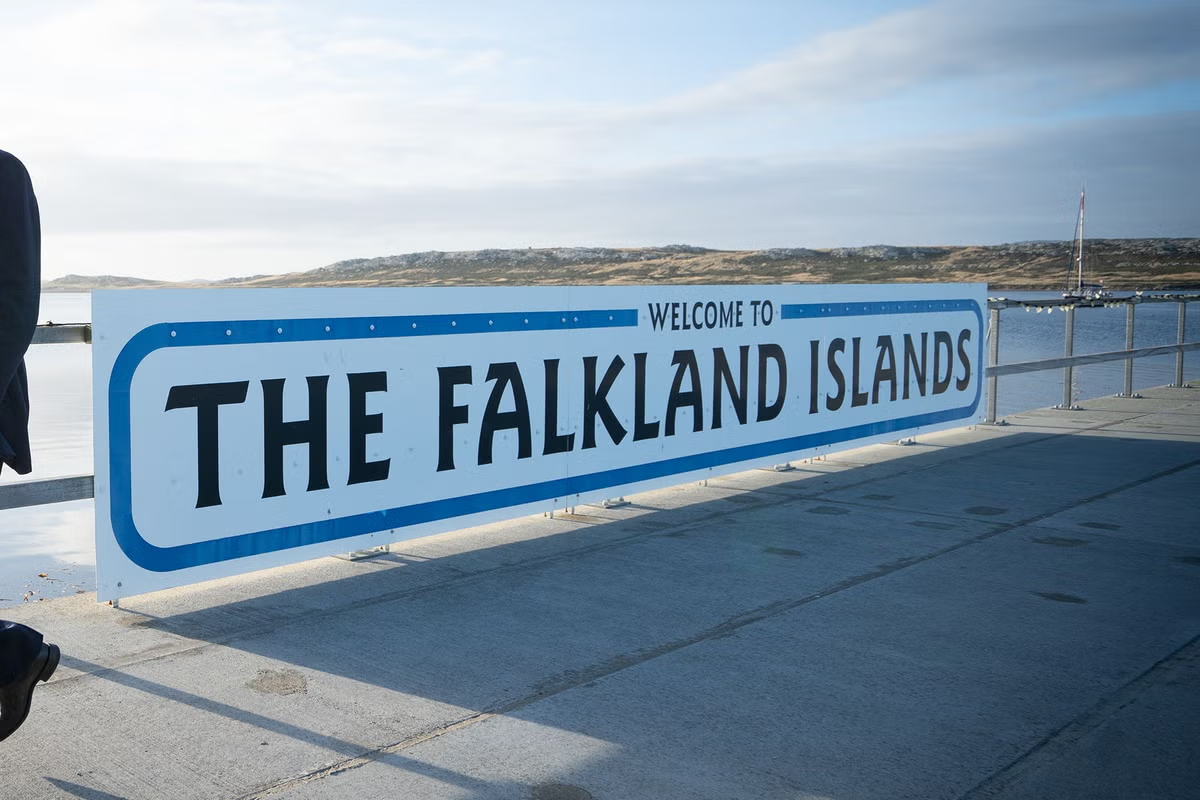
Trump threatens to review UK’s claim to Falkland Islands and punish Nato allies over Iran war disagreement
-

 Business4 days ago
(VIDEO) Charlize Theron Climbs Times Square Billboard to Promote New Netflix Thriller ‘Apex’
-

 Business7 days ago
Jeanine Pirro announces closure of Federal Reserve building cost probe
-
 Crypto World6 days ago
Nvidia (NVDA) Stock Jumps 5% as Intel Earnings Ignite Semiconductor Rally
-

 Tech5 days ago
Microsoft to roll out Entra passkeys on Windows in late April
-

 Tech5 days ago
OpenAI’s Sam Altman apologizes for not reporting ChatGPT account of Tumbler Ridge suspect to police
-

 Crypto World3 days ago
CFTC’s AI will review U.S. crypto registration applications, chairman tells CoinDesk
-
 Tech5 days ago
OpenAI CEO apologizes to Tumbler Ridge community
You must be logged in to post a comment Login