
Politics
The House Opinion Article | Inside The Race To Mine The UK’s Critical Minerals



Illustration: Tracy Worrall

10 min read
The UK has deposits of critical minerals but has stopped mining them. Sophie Church hears that, if we don’t take advantage of our assets, others are waiting
Cornish lads are fishermen, and Cornish lads are miners too. But when the fish and tin are gone what are the Cornish boys to do?
In 1994, Cornish shanty singer Roger Bryant wrote Cornish Boys, an ode to Cornwall’s dying mining industry. The price of tin was falling, and the mines that had supported Cornish communities for hundreds of years could not afford to stay open. Four years after Bryant wrote his shanty, the UK’s last remaining tin mine, South Crofty, closed.
Yet pockets of critical minerals remain nestled across our Isles, from County Tyrone to the Highlands and down to Cornwall. The UK has some of the largest reserves of lithium in Europe, while Hemerdon Mine in Devon boasts the second-largest deposit of tungsten in the world.
Used in many of the technologies we see today, from solar panels to mobile phones to jet engines, China has invested heavily in critical minerals and held prices low. China now produces more than 50 per cent of 17 of the top 27 critical mineral groups, and refines 90 per cent of the world’s rare earths. Xi Jinping’s ‘Belt and Road’ initiative has seen China control critical mineral extraction on five different continents.
South Crofty and other critical minerals mines around the world have been unable to compete.
But as the world wakes up to its over-reliance on China for critical minerals, the UK is finally recognising its own value. In July, Rachel Reeves visited South Crofty, which has now reopened thanks to government funding. After speaking a few words in Cornish, in her hard hat and high-vis, the Chancellor went on to say that the £28.6m grant from the National Wealth Fund (NWF) could lead to the creation of 1,300 jobs. The team at South Crofty now hope to start commercial extraction of tin by mid-2028.
Chris understands the opportunity, but he also understands the requirement for investment in processing
In September, the NWF invested another £31m into Cornish Lithium alongside increased funding from Techmet, a critical minerals investor. Then-communities secretary Angela Rayner designated Cornish Lithium’s Trelavour Hard Rock plant a ‘Nationally Significant Infrastructure Project’.
“It’s really hard to articulate this groundswell of hope that is coming back to communities that for decades have been deprived,” says Perran Moon, Labour’s MP for Camborne and Redruth.
“We’re seeing record numbers of apprenticeships in some of our businesses. We’re seeing young people really engaging with geology. And we’re seeing our further education college maxed out in its number of construction workers and engineers.”
The UK’s mining industry is also revelling in the government’s support.
“What projects internationally are competing for is capital, and that’s where, for instance, the NWF investment in Cornish Lithium – which was instrumental in attracting other funding from the private sector into the project – was so important,” says Mike King, business development and government relations vice president of Cornish Lithium.
Being made a ‘Nationally Significant Infrastructure Project’ helped “tremendously” in giving certainty to investors, King adds.
Strategic Minerals, which is exploring the Redmoor Tungsten-Tin-Copper project in Cornwall, has now unlocked over £750,000 in grant funding. The company matched this via its parent company to access a further £1.5m.
“We’ve significantly increased our market cap through that positive news flow and showing how good a project we have here,” says Dennis Rowland, managing director at Cornwall Resources Limited, which is working on the project.
But financial support and photo opps for the Chancellor may be the simpler of government’s tasks. Now, all eyes are on its Critical Minerals Strategy (CMS), which, delayed since the spring, is expected to be published this month.
Chris McDonald, industry minister in the Department for Energy Security and Net Zero (Desnz) and the Department for Business and Trade (DBT), is driving the strategy. Previously the chief executive officer of the Materials Processing Institute, McDonald is a welcoming face to those supporting UK critical minerals.

“Chris has got a lot of experience in this sector,” says Moon. “That really helps because he understands the opportunity, but he also understands the requirement for investment in processing. He’s in Stockton North; he understands the importance of the community side, of making sure there’s the right housing and social care.”
“We need the government to be ambitious and forward looking, and back the Cornish-Celtic Tiger – because we will roar if we’re given a chance,” he adds.
McDonald recently attended an event in No 11 hosted by Reeves, to which SMEs from the South West and North East were invited. Nick Pople, the managing director of Northern Lithium, who was also there, said McDonald showed he understands the UK must move at pace to secure its supply chain.
“He agrees that we need – and I would hope that the government and Rachel would agree – to be producing as much lithium as we can domestically in the UK as quickly as we can,” Pople says, “to ensure that we’ve got security of supply within the UK for the UK industry.”
Working together, Northern Lithium and Cornish Lithium could produce 50 per cent of the UK’s demand for lithium – essential for electric vehicle batteries – by 2035, he adds.
The previous Conservative government published a critical minerals strategy in 2022, which was updated in 2023. But King says the Labour government – and Moon’s dogged Cornish MP colleagues, working from their shared Westminster office – have been more “politically active” in raising awareness of critical minerals.
However, Labour has prevaricated over the CMS – drafting the document, then drafting again – leaving a strategic vacuum for the sector.
“The critical mineral strategy suffers and benefits from a lot of the same things that have been there with other strategies with this government,” says Dan Marks, research fellow for energy security at think tank Rusi.
“They are thinking about it quite carefully, and have been moving in the right direction, making some sensible changes and putting some money behind it, but moving incredibly slowly and lacking the more radical changes or strategic thinking that would really move the dial.”
Whitehall’s sluggishness is proving harmful. In October, UK-based mining company Pensana scrapped its £250m critical minerals processing plant beside the Humber – a project that promised to create 126 jobs – to move its refining operations to the US.
Either UK PLC takes advantage of the Cornish opportunity, or international investors will
“Europe and the UK have been talking about critical minerals for ages,” Pensana’s chairman, Paul Atherley said. “But when the Americans do it, they go big and hard, and make it happen. We don’t; we mostly just talk about it.”
For European countries firing up their defence industries, accessing secure sources of critical minerals has become vital. In July, the European Commission’s first ever stockpiling strategy concerned plans for food reserves and medical equipment – but also critical minerals.
Yet the UK defence industry has been left rudderless while it waits for the CMS. Last week, The i reported that the UK risks falling behind in the race to access critical minerals used in F-35 fighter jets.
Marks thinks there has been a “massive oversight” in Keir Starmer’s government to incentivise the UK defence industry to secure its own critical minerals supply chains. “I don’t get the sense that defence industries are expecting to have to do anything about this any time soon,” he says. “If they’re not, then that’s a massive vulnerability.”
Of the drones currently being made in the UK, for instance, around 90 per cent of their flight controllers – the core electronic boards managing flight stability, sensors, and controls – are made in China, The House has found.
As the UK slowly wakes up to the potential of mining its own underground stores of lithium, tin and copper, so too has China.
While official Chinese delegations have previously visited the UK to learn about our critical minerals sector, China is now sending a delegation from its Sichuan Provincial Natural Resources Investment Group (SPNRIG) – a capital investment company focusing on the energy industry – to the UK, The House has learned.
The delegation comprises 11 senior representatives primarily responsible for investment and strategic development at the company.
Bonjoe Education, a London-based company that specialises in such exchanges between the UK and China, will be hosting the group. Bonjoe Education’s programmes have fostered an “understanding of different cultures” and have had “great influence” on communities at home and abroad, its website reads. Bonjoe Education declined to comment.
SPNRIG has also been reaching out to specialist critical mineral organisations in the UK, The House understands.
While the aims of the visit remain unclear, industry figures have reason to fear. Earlier this year, British-based Anglo American sold its Brazilian ferronickel operations in Brazil to MMG Singapore, whose largest shareholder is China Minmetals, a Chinese state-controlled company. Critics warned this would leave Beijing with greater control over critical minerals vital to the UK’s defence, clean energy and industrial sectors.
“Ultimately, either UK PLC takes advantage of the Cornish opportunity, or international investors will,” says Moon.
“We have international visitors who come and look and talk to our businesses all the time. I’m very, very hopeful that the government is not going to take their eye onto other things and allow those international investors to dominate the Cornish critical minerals opportunity.”
Moon lists international investors from Singapore, China, America and Canada as those, “as sure as eggs is eggs”, who would raid our assets.
“There’s not a massive appetite within Cornwall to sell out to Chinese investors. But ultimately, this is an area that has been deprived for a very long time, there is an opportunity to create jobs to make sure that we get some economic stability within Cornwall. It would be a mistake, in my view, to not be taking advantage of that and letting international players dominate.”
“There is no western stage one processing capacity for tungsten from concentrate into the first stage of refined product,” says Mark Burnett, chief executive officer of Strategic Minerals.
“[I’d be lying if I said] we hadn’t been contacted by a corporate party that is related in some way to China – but it’s rather inescapable. But to be clear, from a board, a company and a management and team perspective, we don’t want to take that route. We want to develop a tungsten mine in the UK that’s the highest-grade tungsten mine in Europe, and largely in the world.”
History has shown that when foreign investors buy domestic critical minerals assets, local communities can suffer.
Swiss mining company Xstrata took full control of the Windimurra Vanadium plant in Western Australia, for example, only to shut the mine down just months later in 2004. Hundreds of people were left jobless.
“They were protecting the South African market, the South African mines, so they didn’t want a new entrant into the market,” says Gavin Mudd, director of the Critical Minerals Intelligence Centre at the British Geological Survey.
“There was an extension from the gas pipeline built for that, so it could actually have a gas fired power station and therefore, in theory, cheaper electricity. That was subsidised by something like $100m or $200m by the West Australian government. To have that facility mothballed was a huge waste of taxpayers’ money.”
For now, momentum is on the side of British miners. But while the UK may be seeing its own ‘gold rush’, the danger is that government funding “freezes up and dries up”, says Burnett.
As world powers race to secure their own critical minerals, Labour faces a choice: continue to invest in our own critical minerals and support our ‘Cornish boys’ or watch as others reap the rewards.
A government spokesperson said: “Securing our supply of critical minerals, including nickel, is vital for our industrial strategy, economic growth and clean energy transition.
“We’re working with UK industry and G7 partners to develop plans that will reinforce our supply chains for the long term, increase the resilience of our economy and drive forward our Plan for Change.”

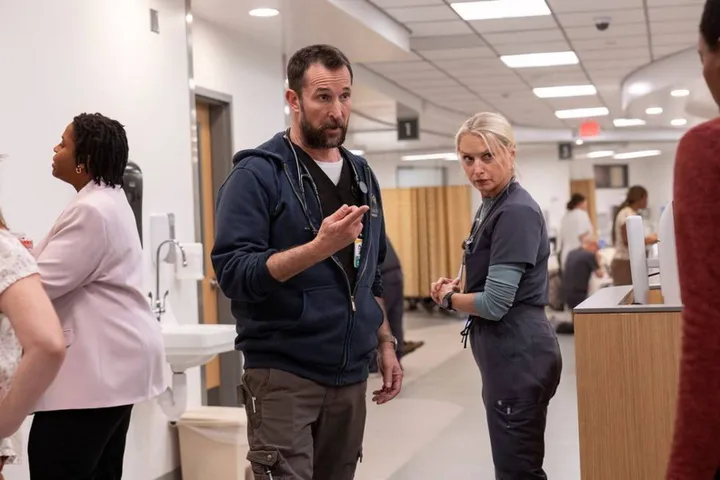
Medical drama fans can finally hit pause on their 500th rewatch of their old favourite in favour of something new, as buzzy series The Pitt has finally landed in the UK.
Despite the vast TV landscape of shows like Grey’s Anatomy, ER and House over the last few decades, it’s been a while since we’ve had a decent fresh addition to the genre – until now.
In The Pitt – which was developed by the team behind ER – viewers are planted directly into a fictional Pittsburgh hospital emergency department.
The hit show follows staff in real-time over the course of a 15-hour shift, spread out over 15 episodes, as they frantically navigate the influx of medical emergencies, as well as wider issues like their personal trauma caused by Covid and the American healthcare system.
Sounds like a hoot, right? Perhaps not, but if the piles of awards and critical praise are anything to go by, you’re going to want to make this your next watch.
The Pitt premiered in the US over a year ago in January 2025, and has already picked up five Emmy Awards, including Outstanding Drama Series and a Lead Actor win for lead Noah Wyle, as well as a Golden Globe and three Critics’ Choice Awards.
Katherine LaNasa and Shawn Hatosy have also picked up Emmy Awards for their performances as Nurse Dana Evans and Dr. Jack Abbot, respectively.
Despite all the hype, there hasn’t been a way for UK fans to get in on the action until today. Thankfully, as of Thursday 26 March, viewers can stream the show on the newly-launched streaming platform HBO Max.

Those who already have a Now subscription will be given immediate access to an ad-supported version of HBO Max, while new viewers will have four different payment options to use the service.
Reviews on this side of the pond are already lauding The Pitt as a “punchy, gory and totally addictive series” and “well worth the wait”.
You’ll also be able to watch Friends star Lisa Kudrow as she reprises her role as anti-heroine Valerie Cherish for the third and final iteration of The Comeback.
Completing the line-up are HBO classics like Sex And The City, The Sopranos, Succession and Game Of Thrones.

Donald Trump’s war in Iran will deliver a hammer blow to the UK economy, experts have warned.
The OECD think-tank has dramatically downgraded its forecast for Britain’s economic growth in the year ahead, with inflation also set to be far higher than previously thought.
It means Brits will have to brace themselves for higher prices in the shops, a jump in energy bills and soaring mortgage costs.
The findings will pile pressure on chancellor Rachel Reeves to either hike taxes or slash public spending in the next Budget to balance the nation’s books.
Just three months ago, the OECD forecast the UK economy would grow by 1.2% in 2026.
But the Paris-based body has now downgraded that to just 0.7% due to the global uncertainty caused by Trump and Israel’s decision to bomb Iran.
They also said “a prolonged period of disruption could also result in the emergence of significant energy shortages that would lower growth further”.
Meanwhile, the UK rate of inflation is set to hit 4% this year – double the Bank of England’s 2% target and well up on the 2.5% the OECD forecast in December.
It means the UK is set to have the second-highest inflation rate this year in the G7 group of advanced economies, behind only the US.
Reeves said: “The war in the Middle East is not one that we started, nor is it a war that we have joined. But it is a war that will have an impact on our country.”
The OECD report also warned of a sharp increase in fertiliser prices since the war began a month aga, with countries in the Middle East big producers of things like urea and ammonia.
Supply shortages “could increase global food prices, with potentially serious impacts to household finances and inflation expectations”, they said.
Reeves insisted that “in an uncertain world we have the right economic plan”.
But Tory shadow chancellor Mel Stride said: “This downgrade from the OECD is a damning verdict on how vulnerable our economy is thanks to Labour.
“Rachel Reeves has ramped up borrowing, spending and taxes. As a result, we have stagnant growth, while inflation, unemployment, the deficit and debt interest costs have all shot up.
“At the same time, Ed Miliband’s net zero obsession has left us reliant on imported energy instead of using our own supplies in the North Sea.
“Rachel Reeves can blame the world all she wants, but it’s her choices that have weakened our economy at the worst possible moment.”
Daisy Cooper, the Liberal Democrats’ Treasury spokesperson, said: “This dire OECD forecast is a wake-up call that the Government’s anti-growth agenda is leaving families to pick up the tab through soaring food and energy bills.
“The fastest way to break this cycle of stagnation is to get an EU-UK customs union to lower costs, secure our energy future, and finally kickstart real growth.”
Politics
Politics Home | Former AI Minister Warns Social Media Ban Could “Cut Off” Education For Young People
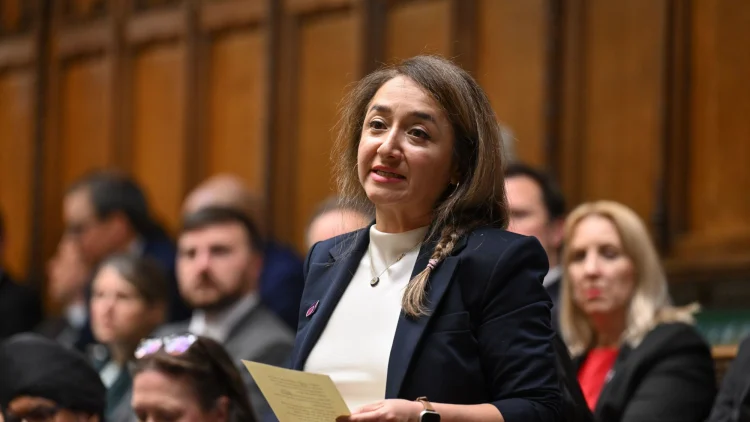
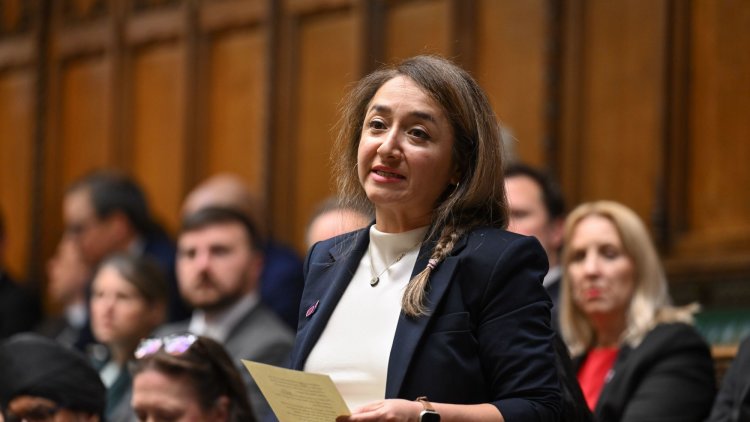
Feryal Clark was parliamentary under-secretary for AI and digital government until September 2025 (Alamy)

6 min read
Labour MP and former AI minister Feryal Clark has warned that restricting young people’s access to social media could “cut off” vital education resources for disadvantaged or vulnerable children, as parliamentarians consider whether to introduce a ban for under-16s.
Clark, who served as AI minister until the ministerial reshuffle in September 2025, is co-chair of the Digital Creators All-Party Parliamentary Group (APPG) alongside Conservative peer Ed Vaizey. This week, the group launched an inquiry into how creator-led content can support young people’s education and personal development, as the debate continues in Westminster over online harms and youth access to digital platforms.
In January, the government announced a consultation on the impact of mobile phones and social media on children, following a ban on large social media platforms for under-16s in Australia at the end of last year.
On Wednesday evening, peers voted for the second time in support of an amendment to the Children’s Wellbeing and Schools Bill to ban social media for under-16s, put down by Conservative peer Lord John Nash after wider pressure from campaigners and some politicians for tougher safeguards. It is the second time peers have defeated the government over the proposal, with the bill now set to return to the Commons.
Opinion polls have found that a ban on social media for under-16s is popular with the public, and Labour MPs have reported receiving a large number of emails from constituents pushing for them to support a ban. Recent outrage over X’s AI tool, Grok, being used to produce non-consensual sexualised images of adults and children, fuelled calls for the Labour government to regulate childrens’ exposure to the internet.
However, there is scepticism among cabinet ministers about how it would work in practice, with an early Whitehall assessment of Australia’s ban identifying problems like young people moving to other unregulated platforms and being allowed to use their parents’ social media accounts. The House magazine reported in January that Prime Minister Keir Starmer, Education Secretary Bridget Phillipson and Technology Secretary Liz Kendall all believe the UK should wait to see how it plays out in Australia before making a decision.
Speaking to PoliticsHome before the Lords vote on Wednesday, Clark said she found the Nash amendment “unhelpful” and argued that the government and MPs needed to listen to the voices of children and families, but also of digital creators who share educational content for children.
“I really value the input, the contribution and the educational content,” she said.
The former minister said she first became aware of the importance of digital creators while serving in the Department for Science, Innovation and Technology between 2024 and 2025.
“When I was in the department, when we were looking at the AI copyright bill, I just couldn’t see their voice anywhere, considering they contribute hugely to our economy and employ thousands of people,” she said.
Clark said that while concerns about the “full impact” of addictive algorithms on children were valid, policymakers risked overlooking the benefits of online educational content.
“I am concerned that we’re lumping everything together,” she said, adding that digital platforms can help address inequalities in access to education. At a session with the APPG on Wednesday morning, a group of digital creators told PoliticsHome that long-form education content on platforms such as YouTube should be treated differently from short-form videos on platforms like TikTok.
Clark added that she wanted to consider “some of the really important uses of technology that have been instrumental in bridging that gap in society for those young people who don’t have access to tutors, who don’t have parents at home all the time who can help them with their homework, who need that additional help”.
Clark echoed concerns by other MPs, including Labour MP Josh Dean, who have pointed out that plans to expand the vote to 16 and 17-year-olds must be factored into the government’s consultation on a potential ban on social media for under-16s.
Educational creators told the APPG that their videos are already playing a significant role in the classroom, with schools and teachers actively recommending their content for revision and learning, despite barriers to forming formal partnerships with education providers.
“When you’ve got schools and teachers directing their students to this content, where they see the value of it, we then have to ask ourselves a question of why are we looking to put something in place that will cut off these young people from it?” Clark said.
She was also critical of attempts to legislate via amendments, including the Nash amendment aimed at curbing under-16s’ access to social media.
“Legislating on such an important area shouldn’t be done just through an amendment,” she said.
“It just really irritates me. I find it really unhelpful. If you want an issue to be killed off, the best way to do it is that way. We need to understand the evidence, we need to make the best laws. It is the issue of our era, and we’ve got to get it right.”
Content creators themselves told the APPG that their work is filling gaps left by the formal education system. Katie Estruch, who has more than 100,000 subscribers producing biology revision content, said students and parents turn to her videos when they feel that the provisions from their schools are inadequate.
“They might have a teacher who is long-term sick, or they think they haven’t got a good teacher compared to someone else, or their school can’t afford to pay for practicals that a private school might be able to do multiple times,” she said.
She described her videos as a “resource for free that helps to bridge that gap”, adding that they are particularly valuable for neurodivergent students who can find classroom environments overstimulating.
Dr Tom Crawford, who teaches at Cambridge and Oxford and has built a large online following, said digital content can be transformative for students outside mainstream education.
Describing one student who had been homeschooled after experiencing bullying, he said that the student had passed his entire GCSEs and A-levels by watching YouTube videos.
“That’s obviously one specific case, but imagine someone who can’t go to school for various reasons: without that, he wouldn’t have passed these GCSEs, and obviously wouldn’t now be studying Maths at Cambridge,” he said.
“There are going to be quite a lot of individual stories like that with our audiences, and just generally across the country, where this is actually how they learn, or how they get excited about learning.”
Dr Lauren Bull, safeguarding lead at Chelsea and Westminster NHS Foundation Trust and TedxNHS speaker, wrote in The House that a ban was necessary to safeguard children from online harm.
“Delaying exposure to highly polarised, adult ideological content gives young people the time to develop the cognitive and emotional capacity required to critically evaluate what they encounter,” she said.
Bull argued that Louis Theroux’s recent “manosphere” documentary had “brought into view what many of us working on the frontline have been witnessing for years”.
“For doctors, teachers, and youth workers, this is not a sudden crisis. It is a predictable outcome,” she wrote.
Politics
The House | The UK is cutting aid as progress on child mortality stalls. This is not the moment to retreat

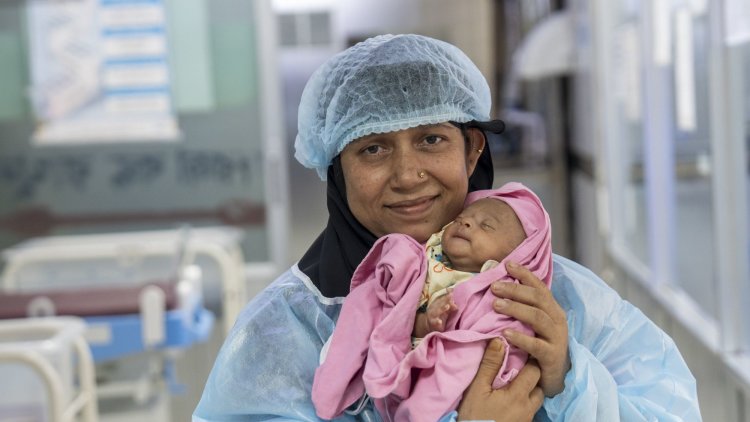
Misnahar and newborn son, Sarid. (Credit: UNICEF/2025/Saikat Mojumder)

Dr Philip Goodwin, Chief Executive Officer
4 min read
On a November morning in Cox’s Bazar, Bangladesh, an auto-rickshaw sped towards the district hospital. Inside, 37-year-old Misnahar had just given birth.
Her son, Sarid, had arrived far too early – weighing just 900 grams, and immediately showing signs of respiratory distress. Health workers rushed him to the Special Care Newborn Unit, placing him on oxygen and surrounding his tiny body with tubes and wires. For the first 24 hours, Misnahar could only wait and watch through the glass.
Today, Sarid weights 1.5 kilograms and is growing stronger. He survived because skilled care was there when he needed it, enabled by sustained investment – from governments, partners and organisations like UNICEF. It is proof that we know how to save children’s lives. The question is whether the UK will continue to help fund it.
Last week, the UN released its most comprehensive picture of annual child mortality globally. The findings are sobering. In 2024, 4.9 million children died before their fifth birthday – nearly half in their very first month of life.
Child mortality has more than halved since 2000, but that momentum has flatlined. In 2020, 5 million children died before their fifth birthday; in 2024, that figure had barely shifted. These are not inevitable deaths. The leading killers of children under five – preterm birth complications, malaria, pneumonia, diarrhoea, malnutrition – are largely preventable with proven, low-cost interventions. Immunisation. Skilled care at birth. Quality antenatal services. The tools exist. Yet the past few years have seen the gradual erosion of the political commitment and investment required to reach every child.
We know that investing in children delivers some of the highest returns on investment. Children who are vaccinated, well-nourished, educated are more likely to grow into adults who support their communities, strengthen their economies and contribute to a more stable world. That is why UNICEF UK has repeatedly warned that last year’s decision to slash the Official Development Assistance (ODA) budget by 40 per cent would have devastating consequences for the world’s most vulnerable children. Last Thursday’s aid allocation offered the first glimpse of what this will mean in practice.
The consequences for children are stark. Multilateral commitments to global health will be reduced by 23 per cent, while regional bilateral aid to African countries – where the majority of child deaths occur – will collapse by 56 per cent. Funding to safeguarding programmes is disproportionately reducing, putting children’s safety further at risk. Support for the Global Polio Eradication Initiative has been cut entirely, just as the world was on the verge of eliminating a deadly yet preventable disease for good.
The UK government’s decision to use the aid budget to cover refugee costs at home is a significant part of the problem. In 2026/27, £2.2 billion – significantly more than all multilateral spending combined – will be spent in the UK rather than reaching the children who need it most. When that forces a choice between funding polio eradication and other life-saving programmes for children, it is hard to argue that UK aid is still serving its original purpose – protecting the world’s most vulnerable people.
The progress of the past 25 years – child mortality more than halved, diseases driven back, millions of live saved – was built on global partnership and sustained investment. The UK has been a major part of that. To step back now, when that progress is most fragile, would be a betrayal of the children who still need it most.
UNICEF UK is calling on the UK government to commit at least 25 per cent of the UK aid budget to children – the investment needed to protect immunisation and nutrition programmes and to train the frontline health workers who make these life-saving services possible. Next month’s Global Partnerships Conference offers the government a key opportunity to show that children are central to its new vision for development.
Misnahar’s dream for Sarid is simple: that he grows up to become a doctor or nurse. “The people here saved my baby’s life,” she said. “Maybe one day he can save others.” That future is possible – for Sarid and other newborns like him – if the support systems that saved him are still standing.
Dr Philip Goodwin is chief executive of UNICEF UK
Politics
Daniel Herring: Time to think how we defuse the ticking debt bomb that is public sector pensions
Daniel Herring is Researcher for Fiscal and Economic Policy at the Centre Policy Studies.
The UK government’s financial position was precarious even before war in the Middle East blew up Treasury borrowing forecasts.
We have not run a budget surplus in over 25 years and debt is now approaching 100 per cent of GDP. But the situation is even worse than it looks on the surface, not least because of a big hidden debt on the government balance sheet: public sector pensions, which add £1.4 trillion – equivalent to 45 per cent of GDP – to the national debt.
Thankfully, there are some politicians and public figures who are taking action.
The Pensions Schemes Bill is currently being taken through Parliament, and the Lords have voted in favour of an amendment by Conservative Peer Baroness Neville-Rolfe that would require the government to conduct and publish a review of public sector pensions. This is an excellent amendment as a review of public sector pensions is urgently needed.
Public sector pensions are incredibly generous. Most private sector workers have defined contribution schemes, where the employee carries the risk and must manage their retirement pot throughout their retirement. In contrast, public sector pensions are defined benefit schemes, meaning a guaranteed, inflation-protected retirement income for as long as someone lives. And unlike private sector pensions, where you might get as little as 3 per cent of your salary as an employer contribution, public sector workers usually get 25-30 per cent from the government.
However, the main problem is not the generosity, but the fact that these pensions are entirely unfunded. Unlike a private sector defined benefit scheme, where the money is set aside in a managed fund to pay for future costs, no money is set aside for public sector pensions. This means that contributions made for employees’ future pension provision are spent on current pensioners.
The numbers are big. The pension schemes cover three million active members in the civil service, NHS, schools and the armed Forces (local government employees are in a separate funded scheme). There are also 2.2 million deferred members and 2.8 million pensioners. Contributions to the scheme are currently £57.3 billion and pensions paid are £56.8 billion.
It’s not helped by the obscure (some might say dishonest) way this is presented in the public accounts. A quick look at the OBR’s website will tell you that net public service pension payments are in surplus.
Nothing to worry about then!
Not so fast – ‘surplus’ just means that the employer and employee contributions are larger than what is being paid out to retired public sector workers.
This is perverse – it means that if the government were to vastly increase the size of its workforce, current contributions would increase, and the surplus would grow. This might look better today, but it would create a much larger bill for future taxpayers. This is already happening – increased contributions since 2020 have been driven in part by a growing NHS workforce.
This is irresponsible: like the national debt, future taxpayers are being forced to pay for our choices today. In contrast, our goal should be that each generation of taxpayers pays for its own choices.
There’s plenty of challenges to reforming the system. The biggest fiscal challenge is that moving public servants onto autoenrollment will mean the government continues to pay for current pensioners and make an employer contribution for current employees. That will be costly in the short-term, so the government would have to find savings elsewhere.
The second challenge is how to convince employees and trade unions of the reform. It is undoubtedly true that many public servants work hard and deserve fair compensation. However, public sector workers are paid, on average, similar wages to private sector workers (before their employer pension contribution is taken into account).
For many public servants, a promise for a pension in 30 or 40 years’ time is just not worth that much, and they might prefer a higher salary today so that they could afford a house or start a family. We could increase take-home pay for public servants and still save the government money in the long run.
Reform will be hard and should not be rushed. But a review that sets out the actual costs to future taxpayers is a good place to start.
We need an open debate about how much these pensions are costing the taxpayer, otherwise our children and grandchildren – probably on far less generous pension schemes themselves – will pay the price for £1.4 trillion worth of political convenience today.

An annual ‘State of Protest’ report on the policing of demonstrations says the repression of dissent in Britain in 2025 has not only become worse. In fact, it is now increasingly routine. This is not just in London. It applies more widely across England, Wales, and Scotland.
Policing protests
The report, “How Repression Became Routine” by the Network for Police Monitoring (Netpol), says that protests are increasingly policed as threats rather than an exercise of fundamental democratic freedom and expression.
Netpol was set up in the aftermath of G20 protests in London in 2009. Its work challenges police tactics, intrusive police surveillance and the expansion of public order powers.
The report concludes that new and overlapping laws have contributed to the normalisation of surveillance and confrontational policing. There is also a growing tendency to treat protest as a security issue. As a result, the report states that punishment has also been normalised. The impacts are disproportionately felt by marginalised groups.
Speakers at the report’s launch included Palestine Action co-founder Huda Ammori, and NHS doctor and campaigner Ayo Khalil. He was racially profiled and arrested at a prisoner solidarity protest outside HMP Bronzefield in December 2025.
Police impunity
Netpol also reported that the public’s ability to scrutinise police powers has been weakened. Their reporting suggests that journalists and legal observers documenting police violence and repression are operating in an increasingly unsafe environment.
This aligns with the appalling but entirely unsurprising claim that human rights legislation makes policing “untenable,” Met Police commissioner Mark Rowley has claimed.
He laid out his position in a recent LRB interview:
There will always be a bit of grey at the margins of legislation[…]but the current public order legislation has far, far too much grey.
It was designed in the 1980s in a different time and has had the Human Rights Act overlaid over the top of it, which creates such complexity for the decision making of police officers and the Crown Prosecution Service.
Commenting on the police’s remit, Rowley said:
It’s not for me to say how permissive or restrictive they should be, but as a police officer, me and my colleagues just want clarity.
Repressive policing, Britain’s new norm
The report’s finding imply that repressive policing—far from being ‘drift’ or isolated to some police forces—is recognised as a standard “routine” practise. “Layered legislation,” as Rowley alludes, create a legal situation that is not just open to interpretation but is also confusing and open to abuse. Consequently, this makes it equally difficult for protest groups to predict how demonstrations will be policed.
Typically, the Met force determines the application of the law. Other forces then adopt this into their practices. These are widely perceived by activists and excessive and draconian.
Powers initially applied to marches have been expanded to static protests including those held outside of weapons factories. Both are treated as a security threat rather than a human and civic right.
Additionally, politicians who talk about disloyalty or British values render racialised people at protests as ‘Other.’ This dog-whistling places minorities at greater risk of aggressive policing. For example, this was seen at the recent Quds Day demo. Legal observers and “journalists” specialising in civic protest movements are also at greater risk.
The report’s findings are based on deep-dive qualitative research on protest movements. It features interviews, testimonies, legal observer notes, court records, police and government data, media coverage, and twenty-one freedom of information requests.
The report went live on 25 March. In-person events will be taking place in April across Manchester, Brighton, and London to discuss its findings.
Kevin Blowe of Netpol said:
Last year we raised the alarm about state-supported measures designed to impose social control on protests on a scale reminiscent of the ‘war on terror’ two decades ago. A year on, we have now documented how these practices have become the norm.
Repression does not happen overnight: it creeps up on us gradually. Frontline campaigners and human rights are all now saying that attacks on protest rights are repressive. Yet the government plans even more new laws in 2026.
As well as new legislation, we are seeing a growth in police powers used as tools of surveillance, particularly against anti-racist and anti-fascist opponents of the increasing number of far right demonstrations across Britain against migrants.
Britain’s most senior police officer, Sir Mark Rowley, is now also seeking to further undermine human rights laws and crack down on protests even more in the name of ‘clarity’. Our research, however, found it is the excessive and arbitrary use of police powers, not the Human Rights Act, that appears intended to confuse and intimidate protesters and discourage them from exercising their rights.
The human cost
At the report launch, psychiatrist and medic Ayo Khalil spoke of the impact of these policing tactics, stating that given:
the state of our country, [the roots of depression, anxiety and other mental health problems] are in the seats of power and institutions [and] the state’s efforts to pathologise people who care. We are told we are the problem … The system does not value human life.
Khalil also pointed to the attempt by Starmer and the General Medical Council to treat doctors who oppose genocide as antisemitic.
It’s this constant push to treat opposition to genocide as a threat of violence or putting patients at risk. [Doctors] at protests outside hunger strikers’ prisons have even been choked unconscious… [yet] there is no accountability for the police officers.
Khalil noted a pattern in the violence used against protesters, particularly targeting their back, neck, and other areas during arrests. This elevates the risk of lasting injuries or even permanent disability. Families of people that have been injured or arrested also suffer from crippling anxiety and fear, which may pressure dissenters and dissuade them from future protests.
That said, Khalik told the Canary that the protest movement has been galvanised and redoubled its efforts in response to hostile policing. In response, the government has been trying to neutralise protest and its impact. Khalil also highlighted that prisons—in many cases—are run by private companies, holding hunger strikers use “systematic” violence, abuse and the withholding of rights as a further form of punishment.
What is protest if you can’t disrupt? The point of protest is to shake things up. If we allow ourselves to be reduced to a bit of noise in the corner, we will lose our potency and we can’t allow that … The British government is directly responsible for so many of these [wrongs] around the world.
Starmer’s protest U-turn
Ammori, whose legal success in obtaining a judicial review that reversed the ‘terror’ ban on Palestine Action (currently being appealed by the Starmer regime) said that direct action is essential to ending genocide. However, it inevitably triggered a backlash:
Even one day of a weapons factory being shut down is a victory … The proof is in the pudding and in the process we annoyed a lot of powerful people [especially those] sponsored and paid for by the Israel lobby. All that lobbying pressure built up and…it was very clear that the government had decided to prioritise the needs and interests of a foreign weapons manufacturer over the rights of its own citizens.
She added that the government had redefined actions as terrorism, even though they had already been convicted as breaches of the peace or criminal damage.
What is becoming more and more apparent was that the reason they arrested those people [the Filton 24] was because they needed those arrests to justify the ban on Palestine Action and their claims of terrorism. [But] when the cases went to trial, not a single one of them was convicted of a single offence. Those people were held without being convicted of a single offence [and] Sam continues to be held.
They tried to put these ridiculous charges against them and they couldn’t land a single conviction. And [The ban on protest supporting Palestine Action] made Palestine Action a household name.
Ammori said that because of this, if the government’s appeal fails and Palestine Action comes back, then:
It will come back stronger than ever before.
She condemned the government’s violence and denial of human rights, especially against hunger strikers. Additionally, she said that it’s “only a matter of time” before Palestine Action is back. She believes it will be more of a thorn in the side of the apartheid lobby than ever.
Feature image via Barold/the Canary

Palestine activists disrupted the North West Apprenticeship and Careers Expo on 25 March, which was held at the University of Central Lancashire (Uclan). They were targeting the presence of BAE Systems, the largest arms manufacturer in Europe.
Close ties to BAE
Activists disrupted the event to challenge the university’s close ties with BAE, which has a major production facility in Samlesbury, Lancashire. The factory manufactures the rear fuselage for every F-35 warplane, including those supplied to and used by Israel and the US. F-35 pilots have massacred hundreds of thousands of civilians in Gaza, Lebanon, Iran, Yemen and many more countries.
UCLan has strengthened its partnership with BAE Systems through a memorandum of understanding. Their aim is to create career pathways for graduates and apprentices, further integrating the university into the defence sector and facilitating student access to roles within the company.
A spokesperson from the BAE Out Campaign said:
We call on UClan to immediately cut all ties with the death merchants BAE Systems, who continue to profit and delight from the suffering of innocent people.
Until then, we will continue to take action and hold those responsible to account.
Components used in Iran
London-based research charity Action on Armed Violence has confirmed that two UK defence companies – BAE Systems and Raytheon UK – produce components used in Tomahawk cruise missiles. This is the same type of missile that struck a girls’ school in Iran, killing over 160 children.
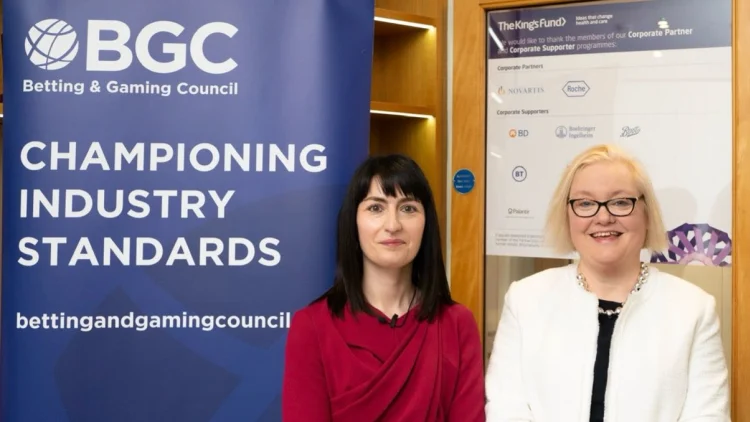
Grainne Hurst, Cheif Executive of the Betting & Gaming Council, and Baroness Twycross, Parliamentary Under Secretary of State and Minister for Gambling
The illegal gambling market was the dominant theme at this year’s Betting and Gaming Council AGM. Industry leaders warned that unlicensed operators are already attracting millions of British gamblers – and that recent tax changes risk accelerating the shift away from the regulated market
The warning at the centre of this year’s Betting and Gaming Council’s (BGC) Annual General Meeting was stark. As speakers repeatedly highlighted, 1.5 million people in Britain are already gambling on unlicensed sites and staking around £10bn a year outside UK regulation.
That concern is only set to intensify in the coming weeks as the Government considers further regulatory changes. In particular, Financial Risk Assessments (FRAs), which would require customers to provide detailed financial information such as bank statements and will only drive more customers towards unlicensed operators.
Chaired by broadcasters Gloria de Piero and Liam Halligan, the event began with a keynote from the Gambling Minister, followed by a discussion with BGC Chief Executive Grainne Hurst. A panel on the illegal market and the Gambling Commission’s assessment of the challenge followed, alongside research, polling and personal testimony from across the industry highlighting the scale of the problem.
The Gambling Minister on the illegal market
Baroness Fiona Twycross, Parliamentary Under Secretary of State and Minister for Gambling, opened proceedings by addressing the tensions in current policy. She acknowledged that the gambling duty changes announced in November’s Budget were “extremely challenging for the sector, particularly for online operators,” and that they would “significantly affect business decisions and staff.” She defended the government’s position, arguing the changes were necessary to support public finances and would raise over a billion pounds a year for the Treasury.
The minister was clear: “Illegal gambling causes harm to vulnerable consumers,” she said, adding that it also damages the regulated sector. She announced an additional £26m for the Gambling Commission over the next three years and publicly confirmed the establishment of an Illegal Gambling Taskforce. This will bring together major companies including Google, Mastercard, TikTok and Visa alongside law enforcement and advertising bodies with a focus on illegal payments, advertising and cross-agency collaboration. She also announced a forthcoming consultation on the banning of unlicensed sport sponsorships, including in the Premier League. For many in the industry, this welcome action on enforcement will sit uneasily alongside tax policy that they believe is actively driving consumers toward the harmful black market.
“We are at a crossroads”
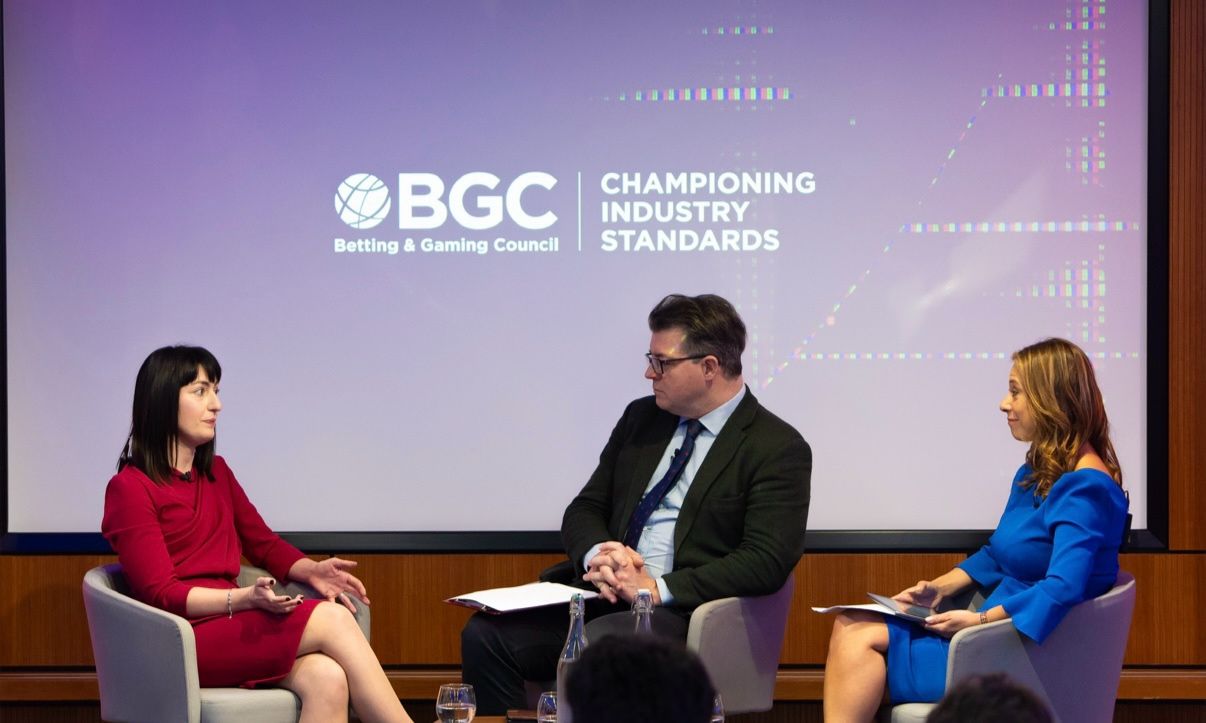
Betting and Gaming Council, with hosts
Liam Halligan and Gloria de Piero
BGC Chief Executive Grainne spoke openly about the sector’s strengths and the challenges it faces. “Betting and gaming is a genuinely enjoyable experience for 22 million people every month in the UK, and the vast majority do so safely and responsibly,” she said. “That often gets lost or forgotten by anti-gambling campaigners, by some politicians, by some in the media – but it is a great part of our British culture.” The regulated sector supports over 109,000 jobs, contributes £6.8bn to the UK economy and currently generates £4bn in tax revenue each year.
More than one in five adults aged 18 to 24 who bet are already using unsafe, unregulated sites – including via secure messaging apps – and illegal operators aggressively target those who have self-excluded from the regulated market.
By contrast, problem gambling rates stand at just 0.7 per cent according to recent NHS surveys – the result, the BGC argues, of a regulatory system that has worked. New polling by Anacta found that 52 per cent of people who bet believe higher taxes will make punters more likely to use unlicensed sites. 66 per cent say the increases will make betting and gaming less enjoyable, and 57 per cent already think UK gambling is too heavily regulated.
A key concern is the ease of access to illegal sites. “My eight-year-old son could go onto Google and type in ‘non-GamStop casino’ and pages and pages of it would come up – which it shouldn’t,” Hurst said. “Most of these sites look professional and trustworthy, just like any of our members’ sites. It’s hard to tell the difference.” The BGC simultaneously launched its ‘Spot The Black Market‘ interactive game, designed to help identify which sites are legitimate and which are unlicensed.
Hurst reserved her sharpest words for the government’s own Budget documentation, which she said admitted its policies would drive an additional £500m into the black market. “I find it incredulous that the government actually admitted their policies will drive another £500m into the black market – but that seems to be a price worth paying. What world are we living in where that is a sensible, coherent policy?” The regulated sector, she argued, has reached a critical point: “It’s a bit like a Jenga tower – you build it up, build it up, and at some point it’s not going to last.”
Shadow Secretary of State warns of regulatory threat
In a video message pre-recorded for the AGM, Shadow Secretary of State for Culture, Media and Sport Nigel Huddleston MP was unambiguous. “Britain should be proud of having one of the most robust regulated gambling markets in the world,” he said. “But that balance is now under threat.” Pointing to shop closures and sponsorship decisions already being reconsidered, he warned: “If you make the regulated market less competitive – if you squeeze it too hard through tax and regulation at the same time – then you do not eliminate gambling. You displace it towards the harmful, illegal black market. That’s not a theory. It’s reality.” His message was direct: “Tax policy is not separate from consumer safety – it is part of it.”
Getting the balance right
The morning’s panel, ‘Getting the Balance Right: Tax, Regulation and the Growth of the Illegal Market’, brought together Chris Sanger of EY, Ian Angus of the Gambling Commission, Simon Zinger of Entain, David Williams of Rank Group, and Jordan Lea, CEO of Deal Me Out.
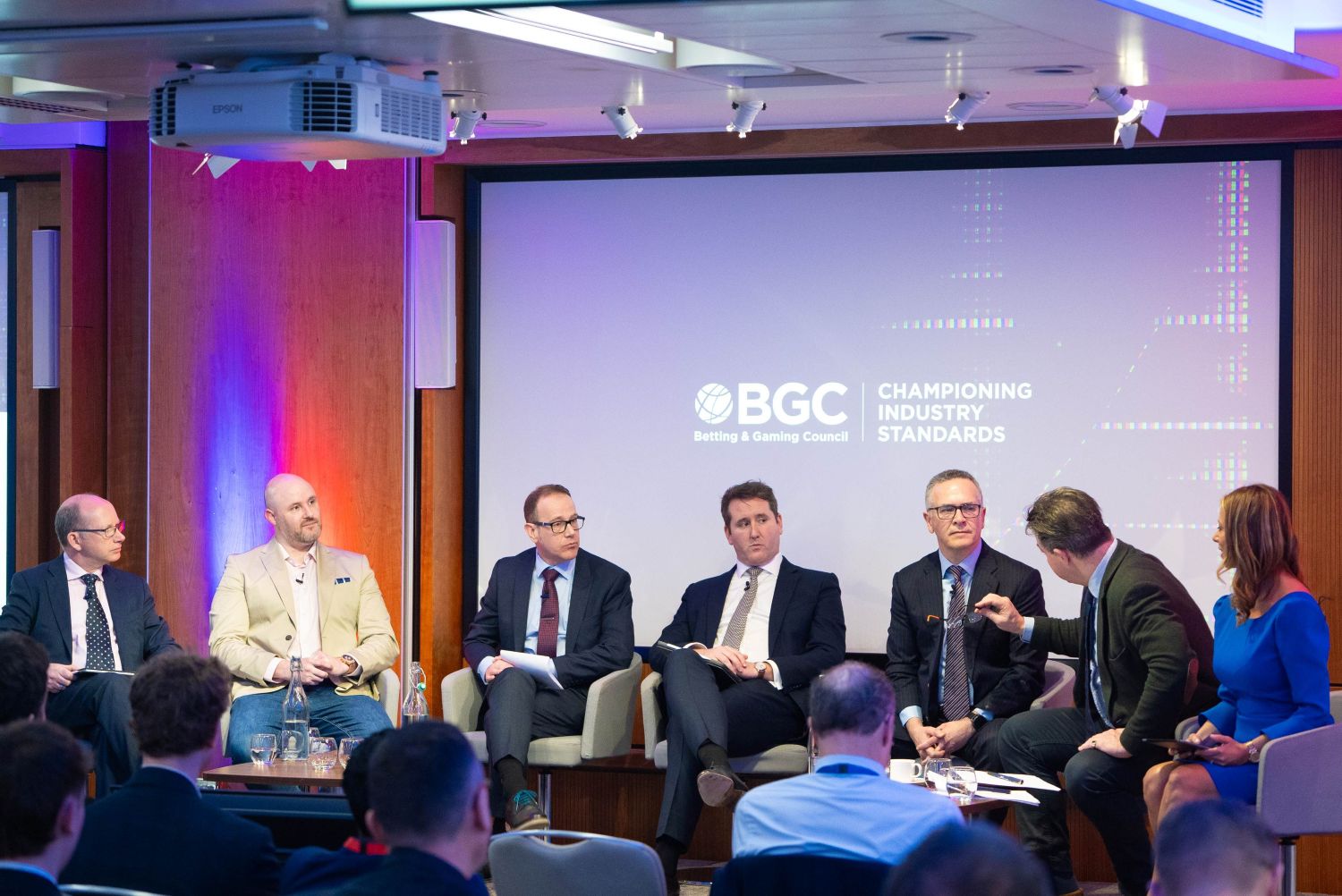
Williams, Simon Zinger, Liam Halligan &
Gloria De Piero
Jordan Lea, who spent years caught in the illegal market before channelling that experience into consumer advocacy, pointed to research from Yield Sec which he said suggests that the black market may now account for 10 to 12 per cent of all gambling activity in Britain – up from just 0.5 per cent five years ago. “I’m extremely concerned that the tax is not a migration – it’s a flood,” he said. His personal experience of being targeted by illegal sites after signing up to GamStop “time after time” put a human face to the statistics.
Ian Angus of the Gambling Commission was direct: “The threat of the illegal market is higher than it was previously. We do expect illegal gambling to grow as a result of the Budget.” On the limits of the £26m, he was frank: “Irrespective of how much money is thrown at us, we can’t do it alone. The tech firms have to do more.”
David Williams of Rank Group argued the black market is a symptom of policy going wrong. With the annualised effect of the increase to 40 per cent Remote Gaming Duty adding £46m to Rank’s cost base – against a digital operating profit of £33m – he was stark: “No business can withstand that without significant changes. And those changes involve people.” Simon Zinger of Entain warned the £26m was “a drop in the ocean” against illegal operators with “massive spending power,” while Chris Sanger of EY pointed to Poland, where every one percentage point tax increase led to a 1.74 per cent reduction in the regulated market. “We’re about to go through a 19 per cent change. That is a huge shift.”
By the end of the discussion, the consensus was clear across the panel: urgent, coordinated action is needed to prevent the illegal market from continuing to grow.
Gambling Commission outlines next steps
Tim Miller, Executive Director of Research and Policy at the Gambling Commission, delivered a speech that was both honest about the challenge and forward-looking. “Britain has one of the most diverse, competitive and successful gambling markets in the world, while also being one of the most strongly regulated,” he said. “When I talk to international regulatory colleagues, they speak enviously about what’s been built here since the 2005 Act. We need to protect it.”
Miller called for action on both supply and demand: “If we are to really have an impact on the illegal market, we also need to look at the demand side,” Miller said. “What actually encourages people to move to the illegal market, and what can be done to keep them in the licensed market.” He announced that the Commission would begin exploring regulated crypto assets as a consumer payment option for licensed gambling, responding to evidence that cryptocurrency is one of the primary routes driving gamblers to illegal sites, and called for a period of regulatory stability: “Getting into a position where we are on an endless treadmill with reform will not take us any further forward.”
Closing remarks
In her closing address, Grainne Hurst was firm. “The illegal black market is the single biggest threat facing our industry, and that threat is growing in scale, in sophistication and in harm. Unless we all act collectively and decisively, the harmful illegal market will be the only winner.”
The BGC’s response is a five-pillar strategy – strengthening the evidence base, deepening understanding of illegal networks, exposing the organisations behind illegal sites, supporting enforcement and raising public awareness. “We will not be passive observers while criminals undermine the sector,” Hurst concluded. “We will lead, we will support enforcement, and we will hold others to account if they fail to act. This is truly a fight that we cannot afford to lose – and it’s one that the BGC is determined to win.”
For more information about the Betting and Gaming Council, visit www.bettingandgamingcouncil.com.


10 min read
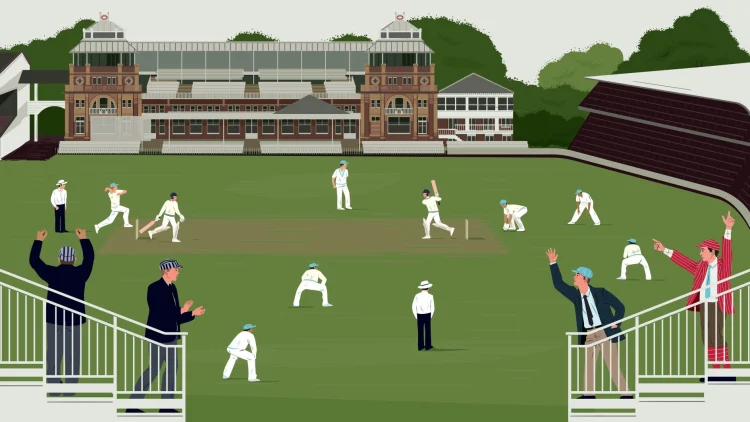
Cricket has long been seen as an exclusionary and rarefied sport, but it is undergoing huge changes, including a drive by its chiefs to open it up to all. Alan White reports
By any standards, the England cricket team had a difficult winter. As well as the now-traditional overseas Ashes thumping, there were headlines about drinking and a general lack of preparation on tour.
Amid the opprobrium over their performance, another jibe became a refrain: the England team were overprivileged, as well as bad. Only three of the losing England team who were educated in the UK did not go to private school (by contrast, the 1985/6 tour saw five who went to private school and 11 who didn’t).
As the Guardian writer Barney Ronay had it: “England cricket has long since been Thatchered, emptied out, atomised. It’s a private party, a silent disco for a small and privileged minority. The England team are at least expressing some truth, that the sport exists most vividly in private schools and private fields.”
The truth, however, is rather more complex. English cricket is, to coin a phrase, working through some issues right now. The game is changing rapidly. Money is flowing in from the subcontinent to newfangled, noisy franchise teams that play in The Hundred, a short-form, city-based format that takes place throughout August, designed to attract a more diverse audience.
While a proportion of this money has flooded down to the counties and the recreational game, many of the stalwarts who are fans of a more traditional format are finding the pace of change bewildering at best and mortifying at worst. For them, a portion of the English summer has been sold off; the rest of cricket has been pushed to the margins of the season’s calendar, to little positive effect.
But at the same time, the women’s game has been utterly revolutionised: the first auction of its kind in a major British sport saw The Hundred create some of the highest-paid sportswomen in the UK this year. As around the world, there has been massive growth in viewership, commercial investment, and player remuneration.
And while this turbulence plays out, there is a genuine belief among the staff of the England and Wales Cricket Board (ECB) that its chief executive’s stated aim to become “the most inclusive team sport in England and Wales” is now attainable.
It is five years since the ECB took the brave decision to give the green light to an independent commission into the game, which delivered a thunderbolt of a report. It described how private school players were 13 times more likely to become pro than those in state schools, found women faced sexism and structural pay discrimination, and described how working-class children and those from minority backgrounds faced huge barriers to inclusion, including clear, documented examples of racism.
Multiple ECB employees told this magazine at the time how uncomfortable a read it was, and how determined they were to make a change and open up the game to all.
Following the commission, the ECB developed an internal dashboard that measures cricket’s inclusion, diversity, fair access and equity, using a standardised grading system of A to F. In the ECB’s recent state of equity report, it awarded itself a C+; it was a D two years ago. The aim is to hit B by 2028. But to do so, there are significant structural challenges that must be overcome.
Take England’s mostly privately educated Test team. The reasons for the dominance of private school players in the professional game are complex, and demonstrate how a deeply flawed form of accessibility developed within a sport that became, over the years, increasingly exclusionary.
Just over half of professional cricketers will have gone to private school, but just under a fifth of male players will have seen 90 per cent or more of their fees funded by bursaries, while others will have received smaller grants.
While it’s inaccurate to dismiss the professional game as being entirely dominated by the rich and privileged, as the Independent Commission for Equity in Cricket (ICEC) report had it, the resulting proliferation of former scholarship pro cricketers is “by no means a systemic response to the class and socio-economic inequities within the game”.
For Kate Aldridge, the ECB’s director of business operations, the key to broadening access is about working with the system as it stands and building partnerships between the state and private sector. “Private schools do contribute a lot to the cricket ecosystem in terms of facilities [and] opportunities… We’re focused on [how we can] work with private schools to open up their facilities, to share the expertise that they’ve got, the opportunities to play matches that they have with more children.”
The other side of the coin for Aldridge is about “levelling up the playing field” for state school children. State schools have been stretched by the hollowing out of statutory services. As Luke Sparkes of the Dixons Academies Trust recently told The Cricketer magazine: “They do this vital work with no extra money, stretching staff and burning them out… Too often it is the very things that bring joy, build character and create well-rounded citizens – sport, drama, and music – which are lost.”
Aldridge describes how the restructuring of the talent pathway will help: an early engagement programme will, she says, give 7,000 young people “a free-to-access trial, gives them coaching, gives them match play at a young age before they get selected into county age group”.
Another support programme designed for state school kids will give them 50 per cent extra training alongside the county programme. “What we know from our research,” says Aldridge, “Is that if you go to a private school, you get disproportionately more access to coaching, and then by the time you come… to U-15s or U-17 trials… you obviously are performing better.”
She says the narrative that there is no cricket in state schools is not true: a partnership with Chance to Shine and Recreational Cricket Boards delivers cricket in 4,268 primary schools, which is about a quarter of all primary schools in England and Wales. However, only two per cent of state-school students currently play in competitive inter-school or intra-school competitions.
Leshia Hawkins, the ECB’s managing director, describes the challenge: “You know, a lot of state schools don’t even have grass, let alone enough grass and a cut wicket… We tracked how many kids are playing each team sport in schools. And technically… dodgeball does beat us. But why? Because it’s so easy to do… you need limited equipment. You can sort of play it anywhere.”
So the ECB is launching a new national softball competition, softball being seen as much easier to deliver than hardball. The rules won’t be different, says Hawkins: “When you’re out, you’re out, you’re caught, etc, but [it’s about] introducing the joy and that first moment when you take a catch or you hit a four or a six.”
Getting state schools to adopt any new initiatives will require teacher buy-in. This is why the ECB has launched Cricket For Teachers, a short entry-level course. “It’s looking like in the pilot year, we’re probably going to train nearly 650 secondary school teachers,” says Hawkins, adding that there’s a 50:50 gender balance among those signed up. She suggests a quarter of a million children could be given access to the game as a result.
The recreational game, says Hawkins, will also benefit from money that has trickled down from the sale of stakes in the Hundred franchises: “we’re able to focus that investment on… women and girls, disabled participants, ethnically diverse participants, and those from lower socio-economic groups, those who’ve been underserved by cricket”.
On women’s cricket, from the poor base as described in the ICEC report, there has of course, been enormous progress in recent years: at a recreational level, the number of women’s and girls’ teams has doubled since 2021, while a record number of girls (30,627) took part in All Stars and Dynamos, the ECB’s national youth programmes. In the professional game, salaries for women in The Hundred have more than tripled in more than three years.
There is huge excitement around the potential for more commercial investment too. Back in 2013, Hawkins was a business development manager trying to sell sponsorship for women and girls’ recreational cricket (“I had to kiss a lot of frogs,” she jokes), and it feels like the game has come a long way in just a few years: “It’s not, you know, sponsors coming in now and just having their brand on the perimeter. It’s a real care… it’s a real purpose,” she says.
There are still areas where progress has been slow, however. The cricket writer Andy Bull recently noted that while women were fetching huge prices at the Hundred auction, it was still “a room full of men sitting around weighing the relative merits of young women so they can bid against each other for their services in a competitive auction”.
Aldridge acknowledges there is work to be done on leadership in cricket: “We’ve gone from eight per cent in 2019 to 20 per cent female. Now that is still far below where we want to be, but it is a consistent year-on-year improvement and increase, particularly in the recreational game.” Could they bring in targets? The challenge, she says, is that, “If you start to put quotas or targets in place around your workforce, particularly for professional counties and recreational cricket boards, you start to incentivise behaviour that could be illegal.”
Quicker progress also needs to be made on developing cricket in the Black community too, which the ICEC report noted had declined from a strong base in the 1980s to be so low as to be statistically irrelevant. Aldridge acknowledges an issue: “I don’t think we have cracked it yet… whether it’s enough initiatives, or whether the initiatives are quite working the way that we want them to.”
The playing base is smaller than for the South Asian population, and it presents a different challenge: the majority of the population lives in around 10 UK cities, in areas the ECB’s data shows are often lacking in facilities. The ECB is attempting to use non-turf pitches and domes to engage the population. One recent success came via upcoming superstar Davina Perrin, who smashed a staggering 42-ball century for Northern Superchargers in last year’s Hundred eliminator. She was mentored by Ebony Rainford Brent, founder of the African Caribbean Engagement programme.
For all this progress, there has also been one significant setback. In 2024 things were looking up: then-prime minister Rishi Sunak pledged £35m in grassroots cricket funding, which ECB staff told this magazine would never have happened without the ICEC report laying bare the game’s ills. But after the general election, that funding dropped to a mere £1.5m, with Culture Secretary Lisa Nandy deriding the funding as a “fantasy”.
It was a huge blow for the ECB. The money would have funded 16 all-weather domes as well as the delivery of cricket into state schools. The ECB is working on ways to fund these domes – with two now open in Bradford and Darwen, Lancashire, with a third opening soon in Willenhall, West Midlands. Further projects are advancing in Farington, Lancashire, and Luton. Just before this magazine went to press, a further £2.5m was announced, which The House understands will go towards funding four more domes.
When approached, Sunak did not comment on the decision itself, but told The House: “I love cricket and I believe it is one of the things that can bring people together. I know there is huge potential to grow the game even further and open it up to everyone, from all backgrounds and in all parts of the country.”
There is clearly a genuine belief the game is about to turn a corner. An ECB spokesperson said: “We have a golden opportunity to capitalise on England and Wales hosting this year’s ICC Women’s T20 World Cup, and the men’s competition in 2030, to inspire a generation to pick up a bat and ball. With government support we can reach so many more people through new and improved facilities.”
The only question is how quickly the game can force its way up the list of Westminster’s sporting priorities.

The six-part series sees the British actor playing Shah Latif, a British actor who finds himself at the centre of a media storm – and public debate – when he’s named as the new favourite to play James Bond.
As the series progresses, things for Shah become increasingly surreal as he’s presented with big questions on subjects as varied as fame, family relationships, national identity and racism.
Since it began streaming on Amazon Prime Video, the series has been met with near-unanimous praise, initially debuting on Rotten Tomatoes with that oh-so-rare 100% critical score, which has since fallen to a still-enviably-high 94% at the time of writing.
Here’s a selection of reviews, showing why critics are calling it one of the most “electrifying” and “genius” shows of 2026…
“The series is at once satirical and celebratory; Bait feels abundant, both in its presentation of a culture, which has the ring of documentary truth, and as a beautifully realised work of art.”
“Bait is best when Ahmed-the-performer is bouncing off one or more of the excellent cast, and when Ahmed-the-writer is exposing his most petty, narcissistic and self-absorbed instincts.”

“Near-perfect […] aside from a handful of hurdles, however, the unpredictability only made the viewing experience more fun. It’s definitely the type of show that needs to be seen to be believed.”
“Presenting as TV’s latest entertainment industry satire, Bait is ultimately less like Hacks or The Studio or The Franchise and more like Disney+’s Wonder Man (mixed with a dash of Baby Reindeer), in which the main character’s dream of taking on a franchise-leading role in a blockbuster becomes a proxy for unresolved trauma and a desperate need to find a place in a world that has tried to exclude him.
“Like its main character, Bait is a series that feels like it’s constantly on the verge of a breakthrough, constantly on the edge of finding a next gear either satirically or emotionally. Instead, it’s more interesting and worthy of admiration than necessarily great, but you can see the greatness on the periphery.”
“With only six thirty-minute episodes, the series thankfully never overstays its welcome, forcing its audience to join Shah on this unexpectedly poignant journey to find himself in an industry and country that threatens to swallow people like him whole.
“A fascinating look at the psychological cost of performing, both on- and off-camera, Bait is undeniably one of the funniest and most electrifying shows of the year.”
“A stroke of hilarious, introspective genius […] Where many comedies these days feel more drama than straight comedy, Bait packs in all the quick wit and quibbles of any great sitcom.”
“The line between fiction and reality is very fine indeed in Riz Ahmed’s undefinable new series […] Mixing comedy, satire and, yes, Bond-style espionage thriller, at times it feels like Ahmed (who also wrote and produced the show) has crammed too many ideas into the mix. Yet the half-hour episodes move at such a thrilling pace that you’ll quickly cease to care.”
“As Shah’s life (and, possibly, mind) fractures, Bait becomes an unnerving and haunting pastiche of a paranoid spy thriller […] Ahmed can do bruised and soulful, and he can do James Bond too, but here he reminds us (in case we forgot, following Four Lions) that he is a terrifically funny actor […] There are more laugh-out-loud moments in this show than your average out-and-out sitcom.”
“Bait has two contradictory concepts that uncomfortably co-exist inside the same six-episode season. On the one hand, the show is a deeply personal story from star and creator Riz Ahmed about what it’s like to be a South Asian, British and Muslim actor with deep roots in London, a biography Ahmed shares with Bait protagonist Shah Latif. On the other, it’s a canny act of IP exploitation, with the mega-corporate and the individual making for a discordant set of priorities.”
“Bait, the new Prime Video miniseries Ahmed created, wrote, and stars in, is both an exercise in self-analysis and an interrogation of it, a breakneck romp through farce, satire, thriller, family drama, and romantic walk-and-talk that transforms itself in each of its six episodes […] Flaws, deviations, and all, the series always feels like a singular, boldly conceived experiment…”
Bait is now streaming on Amazon Prime Video.

Speaker Th.Satyabrata na Financial Committees 3 gi chairman sing hapkhare

Prolonged war in Iran could test Republicans’ loyalty to Trump: poll

The EUR/AUD Pair Rose by More Than 2% Over the Week


![BREAKING! Did Trump Fake Iran Peace Talks? [Bitcoin Already Reacting]](https://wordupnews.com/wp-content/uploads/2026/03/1774524428_maxresdefault-80x80.jpg)

-
 Crypto World6 days ago
NIO (NIO) Stock Plunges 6.5% as Shelf Registration Sparks Dilution Worries
-

 Fashion6 days ago
Weekend Open Thread: Adidas – Corporette.com
-
 NewsBeat1 day ago
Manchester United reach agreement with Casemiro over contract clause amid transfer speculation
-

 Politics6 days ago
Jenni Murray, Long-Serving Woman’s Hour Presenter, Dies Aged 75
-

 Crypto World5 days ago
Best Crypto to Buy Now: Strategy Just Spent $1.57 Billion on Bitcoin During Fear While Early Investors Quietly Enter Pepeto for 150x Potential
-

 Crypto World5 days ago
Bitcoin Price News: Bhutan Sells $72 Million in BTC Under Fiscal Pressure, but the Smart Money Entering Pepeto Sees What the Market Does Not
-

 Tech6 days ago
inKONBINI Lets You Spend Summer Days Behind the Register
-

 News Videos10 hours ago
Parliament publishes latest register of MPs’ financial interests
-

 Sports3 days ago
Remo Stars and Kano Pillars Strengthen Survival Hopes in NPFL
-

 Politics7 days ago
Gender equality discussions at UN face pushbacks and US resistance
-

 Business4 days ago
No Winner in March 21 Drawing as Prize Rolls to $133 Million for Next
-

 Sports3 days ago
Gary Kirsten Accuses Pakistan Cricket Board Of ‘Interference’, Mohsin Naqvi Responds
-

 Tech4 days ago
Give Your Phone a Huge (and Free) Upgrade by Switching to Another Keyboard
-

 Sports6 days ago
2026 Kentucky Derby horses, odds, futures, preview, date: Expert who nailed 12 Derby-Oaks Doubles enters picks
-

 Tech4 days ago
AI enters the chat: New Seattle dating app relies on tech to facilitate meaningful human connections
-

 Politics7 days ago
Scotland’s rejection of assisted dying is a victory for humanity
-

 Business7 days ago
DLocal: Entering 2026 At Escape Velocity
-
Business6 days ago
Columbia Sportswear enters $500 million credit agreement with JPMorgan Chase
-

 NewsBeat7 days ago
Missile lands next to presenter during live report
-

 Tech4 days ago
Today’s NYT Connections Hints, Answers for March 22 #1015
You must be logged in to post a comment Login