
Politics
The House Opinion Article | The Professor Will See You Now: Records

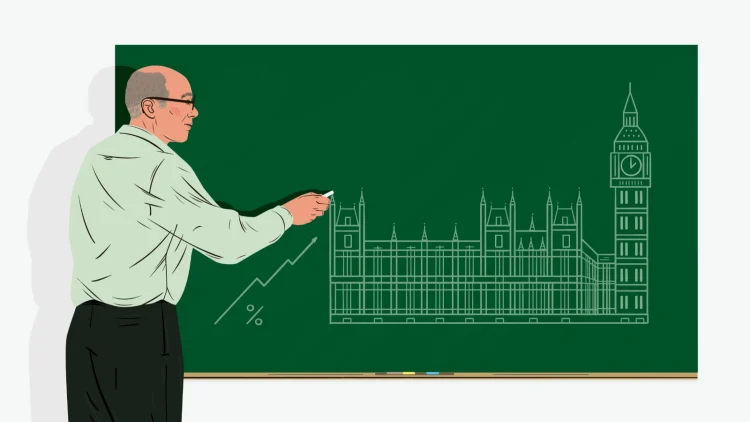

Illustration by Tracy Worrall
4 min read
Lessons in political science. This week: records
The story goes that in early 1945 Ronald McCallum was sat reading in the university library when he suddenly remembered he was supposed to be at a committee meeting to discuss future research projects. Having given it no thought, and with not a single idea ready to propose, he set off at pace and out of nowhere it came to him: a study into the forthcoming general election.
So began what is now the longest-running election series in the world. The latest volume, the 22nd in the series, was published recently.
McCallum’s story says a lot about how academic life has changed. He came up with the idea on the hoof and they just gave him the money. These days, I have about a dozen projects for which I can’t get funding and the process of applying makes Parliament’s renewal and restoration programme look snappy.
That first study on 1945 begins with the Duke of Wellington’s observation that you could no more describe a battle than you could describe a ballroom. “Still less,” McCallum, and his co-author Alison Readman, remarked “can you describe a general election”. They listed a series of ‘named’ elections: 1874, when the Liberals went down in a flood of gin and beer; the Midlothian election of 1880; the Khaki election of 1900; the Chinese Slavery election of 1906; the People’s Budget election of 1910, the ‘Hang the Kaiser’ election of 1918; and the 1924 Zinoviev letter election. They were sceptical that in reality these issues had ever been so dominant. In 1945, they pointed out, the key issue of the election was housing – yet no one referred to it then (or since) as the Housing election.
Since then, we have had fewer such ‘named’ elections. Even with the 1983 contest, which could easily be known as the Falklands election, there is plenty of evidence that the Falklands conflict was much less significant than people think. The 2005 election could have been labelled the Iraq election, given the extent to which national debate focused on the consequences of the 2003 war, but we know it was fairly low down voters’ priorities. The recent Brexit elections were about a lot more than Brexit.
Still, reading the latest volume (which is a cracker) it occurred to me that we could name 2024 the Roy Castle election – younger readers should ask their parents – because there were record-breakers everywhere. The Conservatives alone managed (i) their lowest vote share, off the back of (ii) the largest fall in vote share of any British party, resulting in (iii) the greatest loss of seats ever.
The 2005 election could have been labelled the Iraq election, given the extent to which national debate focused on the consequences of the 2003 war, but we know it was fairly low down voters’ priorities
There was (iv) the highest level of vote switching by electors for any contest for which we have data and (v) the most ever seats changing hands, along with (vi) the largest number of incumbents falling from first to third or fourth (all Conservatives). The record for (vii) the largest Conservative-to-Labour swing was broken in 47 separate seats; the largest was in Norfolk South West.
Labour benefited from (viii) the largest ever winner’s bonus – the gap between the vote and seat share of the winning party – winning a majority (ix) on a lower share of the vote than any other majority government. The combined vote share of the two largest parties (x) was lowest at any election since 1922, with MPs from other than those two parties (xi) at its highest since 1923.
Plus: (xii) the largest Lib Dem number of seats; the best Reform performance in (xiii) seats and (xiv) votes of any radical right party; the best Green performance in (xv) seats and (xvi) votes; more independent (xvii) votes and (xviii) seats than any election since 1945; and (xix) a record number of candidates: 2024 was the first election where every voter had at least five choices on the ballot paper. This is before we get onto the changes in the Commons – a record number of (xx) women, (xxi) graduates, (xxii) those from ethnic minorities, and so on.
And then you look at the current polling and think: what are the odds on some of these records surviving the next election?
Further reading: R Ford et al, The British General Election of 2024 (2026)

Politics
Politics Home | Train Teachers To Identify Antisemitism In Classrooms, Says Independent Advisor
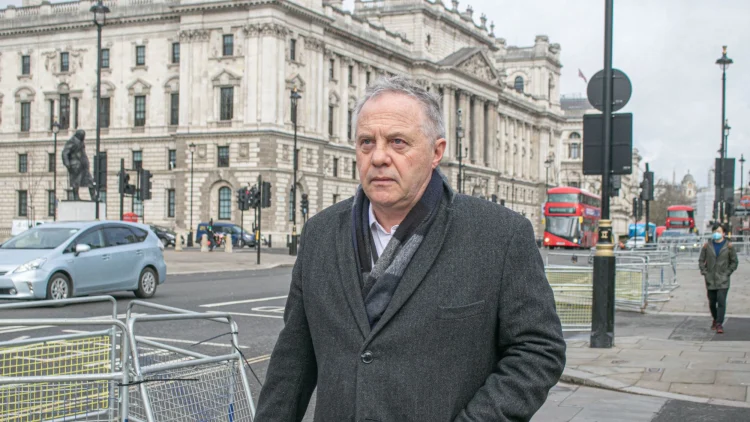
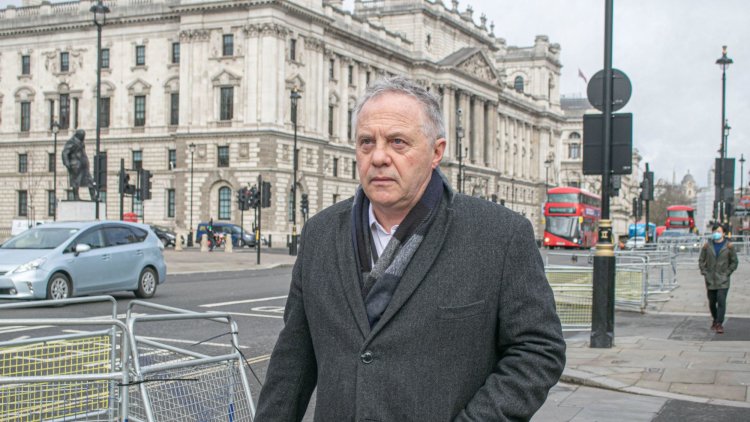
The government’s antisemitism Lord John Mann told PoliticsHome all school teachers should have “basic” antisemitism training. (Alamy)

5 min read
The government’s independent advisor on antisemitism has called for teachers to be given basic training in how to identify antisemitism in classrooms, telling PoliticsHome that there must be a stronger state effort to tackle rising hate against Britain’s Jews.
Lord John Mann, a former Labour MP who has advised ministers on antisemitism since 2019, said he was not “satisfied” with how successive governments have responded to rising levels of antisemitism in the UK, saying “everyone needs to up their game”.
Mann spoke to PoliticsHome after two Jewish people were stabbed in a terrorist attack in Golders Green, north London, on Wednesday. The Met Police announced on Friday morning that Essa Suleima, 45, had been charged in connection with the attack.
There have also been arson attacks in the wider borough of Barnet, home to the UK’s largest Jewish community, in recent months, including the firebombing of ambulances run by a Jewish charity and several synagogues, and a lethal attack on a synagogue in Manchester last year.
Following the terrorist attack on Wednesday, the government has announced an additional £25m for community policing to protect Jewish communities and pledged to fast-track legislation banning state-linked terror groups.
In a press conference on Thursday, Prime Minister Keir Starmer said ministers were looking at “further measures we can take on protests”, amid calls for tougher action against antisemitism at pro-Palestine marches. Starmer said the phrase “globalise the intifada” was an example of “extreme racism” which should result in police prosecution.
Speaking to PoliticsHome, Mann said there should be a greater police presence in Barnet permanently, as well as more government funding for security measures to protect Jews across the country, like CCTV and alarm systems in shops.
But he stressed that tackling antisemitism must go further than greater security, calling for every secondary school teacher nationwide to be “taught the basics” of identifying it: “about how to recognise antisemitism, and how to deal with it in the classroom”.
“Very basic level training, nothing particularly expensive or fancy, a basic level for every secondary school teacher, starting with the new teachers. I think that is doable, and that it needs to happen. And I’m impatient on that happening,” the peer said.
He continued: “If a Jewish child at school, or a Jewish staff member, doesn’t have people at work who understand how to recognise antisemitism, they’re clearly not going to be able to deal with it properly… and the impact on children is far more important than anything…
“I put it to the last government, I put it to this government. It hasn’t happened yet.”
Mann said the recent creation of a cross-departmental group in government focusing on antisemitism was a “really significant” development, but warned that it “would take some time for that to have a real impact”. He added that he expects his report on antisemitism in the health service to be published by Health Secretary Wes Streeting in the coming weeks.
Speaking during a visit to Golders Green on Thursday, the Prime Minister said the government was looking at “what more needs to be done in health and education” to tackle antisemitism. “So there is a lot that is being done. Of course, we need to do everything we can,” he said.

However, Mann argued that the UK does not yet have a “comprehensive approach” to dealing with antisemitism, after charity Community Support Trust said in February that 2025 saw the second-highest annual number of anti-Jewish hate incidents on record.
“We don’t have a comprehensive approach, in my opinion, to extremism. What it is, how it manifests,” he said.
“The growth of Islamist extremism has been pronounced and is very dangerous, and we’re not on top of that. We have left-wing extremism and right-wing extremism to contend with… both have grown. Older problems and newer problems all converged together.”
Last month, the cross-party Home Affairs Committee concluded that Prevent, the government’s anti-terrorism programme, is “outdated and inadequately prepared”.
Committee chair Conservative MP Karen Bradley said Prevent “has the clear and explicit function of stopping people becoming radicalised into terrorism, but more and more it is having to support those with no ideological motivation, who may have complex needs and operate in digital spaces that are poorly understood”.
“There needs to be a comprehensive structure in place at a local level, but implemented nationwide, that triages referrals to where they can receive the right support.”
Mann believes that “very big numbers” of Jews will start to leave the UK “very quickly” if things do not change, telling PoliticsHome that “the freedom to be Jewish in this country has been significantly impaired”.
“That’s unacceptable, because people aren’t doing that willingly,” said Lord Mann.
“They’re doing it under duress.”
The independent adviser compared what he believes could happen in the UK in the coming months to what happened in France following rising levels of antisemitism in the 2010s, culminating in a lethal attack on a Jewish supermarket in Paris in 2015, when, according to the World Jewish Congress, around 8,000 Jews left the country.
“I would define the breaking point as when a significant number of people start to move,” he said.

The BBC, which has been accused of acting more like a spin doctor than an impartial broadcaster in its recent coverage, has not named Israel as the perpetrator in 50% of reported Israeli attacks on civilians in Gaza, and has also been getting things wrong on immigration.
Two recent immigration errors reveal a similar pattern of failing to correct misleading claims or of wrongly stating figures.
The BBC: propping up the colonialist system
The first involved unchallenged misinformation from Nigel Farage about why net migration is falling. The second involved wrongly stating small boat arrivals were 100,625 when the correct figure was 41,472, a staggering 143% error.
In the first instance, speaking to Nick Robinson on his Political Thinking Podcast back in February, racist-in-chief Nigel Farage claimed net migration had fallen due to an “exodus” of people leaving the UK.
BBC’s Nick Robinson did not correct or contextualise this. In fact, Office for National Statistics (ONS) data for the year to June 2025 shows that net migration fell by two-thirds, with 90% of that drop due to fewer people arriving. Immigration fell by 401,000. Farage’s framing was therefore misleading and went unchallenged.
The BBC has since added this episode to its official Corrections and Clarifications page, dated 17 April 2026.
The second instance took place on the BBC News website article (14 April 2026), where the BBC had initially reported that the number of small boat crossings had increased dramatically, when in fact the opposite was true. The story, which opened with the declining number of asylum hotels in the UK, did not appear on the Corrections and Clarifications page as of 30 April, although the news story itself includes a correction note.
That note, added on 21 April, acknowledges that the piece initially claimed 100,625 small boat arrivals in 2025 when the correct figure was 41,472.
The mistakes have been picked up by the media and commentators, though.
SNP criticises the error
Peter Wishart, MP of Perthshire for the Scottish National Party (SNP), shared the National’s coverage of the BBC’s second error and said:
This is totally shocking. The far right depend on disinformation to conduct their ugly business and promote their division. Now the BBC gets small boat crossings wrong by 140%. Do they not know how sensitive this debate is.
This is totally shocking. The far right depend on disinformation to conduct their ugly business and promote their division. Now the BBC gets small boat crossings wrong by 140%. Do they not know how sensitive this debate is. https://t.co/JQVGt0dzx3
— Pete Wishart (@PeteWishart) April 28, 2026
Sunder Katwala was the one who had pointed out the second mistake to the BBC.
He posted on X:
I have asked the BBC to correct this mistake: in trying to give context, it reports 100k small boat crossings in 2025 (There were 41,472, which is a lot, but not 100k, but different statistics have got garbled up here). https://t.co/ZDYptPCXUV pic.twitter.com/4OUPJQr2D8
— Sunder Katwala (@sundersays) April 18, 2026
Farage’s misleading claim about an “exodus” went unchallenged on air. The small boat figure was overstated by 143% on the website. Neither error would have overstated the case for lower immigration or reduced crossings.
This pattern of asymmetric inaccuracy becomes harder to dismiss as mere coincidence when set alongside the BBC’s coverage of Gaza. There, too, the corporation has failed to name Israel as the perpetrator in 50% of reported Israeli attacks on civilians.
In all cases, the BBC’s errors ran in one direction: inflating public concern. When a public service, publicly-funded broadcaster is behaving like a propagandist for the colonialist far-right, it is time to ask whether or not it can even be trusted.
Featured image via the Canary
By The Canary


DSV’s depot in Potsdam, Germany recently became the latest site to be targeted by Palestine Action’s global campaign. Actionists sent a clear message to DSV by smashing windows and using red paint to call on the company to “drop Elbit”.
This comes just days after Palestine Action Éire hit DSV and a previous coordinated action that saw Palestine Action target 5 DSV sites in one night.
Logistics, transport and warehouse multinational DSV ships weapons and military components for Israeli arms manufacturer Elbit and for its subsidiary UAV Tactical Systems on a weekly basis from European based factories to Ashdod.
Elbit Systems is Israel’s biggest weapons company, producing 85% of the military’s killer drone fleet, and land-based equipment. Its weapons, which it boasts of being “battle-tested” on Palestinians, have been used throughout the ongoing genocide in Gaza, in the Palestinian West Bank, against Syria, and Yemen, and currently, against Lebanon and Iran.
DSV took over the shipping of Elbit’s weapons after another shipping company, Kuehne + Nagel, one of the only six companies licensed to transport and handle weapons in Britain, was forced to cut ties with Elbit in 2024 following a series of actions by Palestine Action and broader public pressure.
A spokesperson for the action has said:
Elbit is making this mass murder possible. By working for Elbit DSV is just as complicit. DSV drop Elbit!
The group has threatened to keep targeting DSV sites until it drops its services for the Israeli arms manufacturer.
Featured image via the Canary
By The Canary
Fleur Butler OBE is Director of Development for Conservative Women’s Organisation
The row over the two-child benefit cap has become a predictable clash between left-wing moral outrage about “the poor” and right-wing arguments about cost, GDP and fairness to taxpayers. Conservatives rarely say they care; the Greens rarely say where the money will come from, beyond “the rich.” But the Conservative case on fiscal restraint simply does not land with younger voters. Their economic reality is different from their parents’, and their news comes through social media algorithms that reward emotion over economics. If we only speak the language of older voters, we have no future.
We also fail to explain that this debate is not just about welfare policy. It is about what kind of society we want, and whether capitalism can still offer young people, especially women with children, a safer, freer and more prosperous future. A basic economic truth is being ignored: partnership between two people is still the most effective form of wealth-sharing most people will ever experience, while the state will always be limited and often disappointing. Of the 1.5 million children in single-parent households, 41 per cent are in poverty, compared with 23 per cent in two-parent households. Stable partnerships reduce child poverty, women’s pension poverty, demand for social housing, loneliness, mental health strain and dependence on welfare. They reduce the tax burden on working families. On average, women and men get more financial support from a partnership than from the state.
Yet politicians are afraid to talk about this for fear of sounding moralistic. We should make the economic case instead. The state is increasingly being asked to take on functions once shared within families. But it is structurally incapable of providing emotional, practical and flexible support. It cannot read a bedtime story, collect a sick child from school, or share the daily load of care. It cannot even put the bins out badly. It can only redistribute money, inefficiently and at enormous cost. Attitudinal studies published this spring show young women in particular are increasingly distrustful of men and are delaying relationships and children. Yet no one points out that the state is an even worse partner: cold, bureaucratic and transactional. Even the most average man will often offer more support than the welfare system ever can. For those in abusive or broken relationships, the state must always be there. But it should never be sold as the first or better option, because it cannot be.
Polling from the 2024 election revealed a deeper divide. While attention focused on young men voting Reform, far less was said about the overwhelming number of young women voting Left or Green. There has been no Louis Theroux documentary on the femo-rage conspiracy theories on line, nor film of young women committing acts of violence against the police and state infrastructure. This invisible shift is not driven by understanding the details of welfare policy It reflects a broader belief that capitalism is failing them and that the state offers more security. This is where Conservatives are losing. We argue macroeconomics and statistics while the Left sells a vision.
Young women facing high rents, insecure work and a cost-of-living crisis do not feel “fiscal responsibility” in daily life. To them, the state feels safer than the market, safer than men and safer than family. But this misunderstands what the state can provide. Welfare can redistribute income, but it cannot create resilience, stability or shared resources in a household. It cannot insulate women from the economic realities of childbirth, caring responsibilities, healthcare needs and time out of the labour market. The state will always be a second-best partner. We need to make the case that capitalism is not just about growth, but about freedom, resilience and choice. It has done more than any welfare state to lift people out of poverty and has given women independence, opportunity and freedom. Yes, capitalism needs rules and reform to remain fair and resilient. But destroying it will not make young people safer, they need to work with us to make it function better for all. To join us, as we have the better vision for the future.
The two-child cap is a case study in this. Lifting it may help some families, but it also increases the burden on working people already struggling, many of them young themselves. Yet the debate is framed as compassion versus cruelty, rather than two competing visions of how society shares risk and responsibility. If Conservatives want to reach younger voters, we must stop speaking in abstract fiscal language and start speaking to everyday life. Explain how high taxes limit personal freedom. Explain that building a household, a business or a partnership is not a moral act, but a practical route to resilience when the state lets you down. Explain the limits of the state through lived experience, not ideology.
And yes, we must make the emotional case too. We need to challenge young women’s distrust of men while acknowledging it, and remind them that most men are not the online caricatures they see. Society works best through strong partnerships between men and women in the work place and in private lives, not dependence on bureaucracies. The message is not “get married.” The message is: don’t let the state be your only safety net, “build your own”. It is not an attack on single mothers or a call to dismantle welfare. Life goes wrong in ways the lucky often cannot imagine. The state should always be there for those who need it. But we must be honest about what it can and cannot do.
Young voters, both men and women, are not hearing this argument because we are not making it. Until we do, the generational divide will grow and the welfare state will keep being sold as the answer to every problem, expanding in ways that strain both public finances and the social fabric.

Earlier this year I had the pleasure of sponsoring a Dogs Trust event in parliament highlighting an important and overlooked issue concerning animal rehoming organisations. It is frankly shocking that rehoming organisations, rescues and shelters across England, Wales and Northern Ireland remain unlicensed and not subject to inspections, even when they are registered charities. Whilst most organisations do vital work in protecting vulnerable animals, the absence of a comprehensive regulatory framework has sadly left ample room for abuse.
This was unfortunately brought into sharp focus in Billericay last year when an Essex Police raid on an animal rehoming organisation led to the discovery of 41 dead dogs in squalid conditions. While it is important to recognise that this incident is an outlier and not representative of most rehoming organisations, it does highlight the risks that can arise in the absence of oversight.
Despite this, public awareness of the status of animal rehoming organisations is remarkably low. Polling data from Dogs Trust outlined that 79% of the population wrongly believe that these organisations are already subject to licensing and inspection. However, once informed of the current situation, 89% support the introduction of regulation. Whilst significant efforts by animal welfare organisations in recent years have sought to raise awareness, the contrast between widespread misunderstanding and strong public support for reform highlights that much more still needs to be done.
For those that are aware of the situation, there is a clear concern and a demand for change. A petition that was established in the aftermath of the Billericay case, gathered over 109,000 signatures and was subsequently debated in parliament earlier this year. This demonstrated a strong and shared desire across the House with the public to seek action and protect animal welfare.

MDU warns Chancellor clinical negligence system ‘not fit for purpose’

Northern Ireland RE curriculum is ‘indoctrination’ – Supreme Court
At the event, we heard compelling arguments for the introduction of a proportionate system of licensing and regulation. This would help ensure that rehoming organisations are supported by clear minimum standards and effective enforcement, ultimately strengthening the excellent work already happening across the sector. Scotland has already provided a framework for this, having in 2021 introduced legislation to regulate both rehoming organisations and rehoming activities under the Licensing of Activities Involving Animals (Scotland) Regulations Act.
The government’s recent Animal Welfare Strategy is a welcome and ambitious step forward in this space. Its commitment to consult on the regulation of rehoming organisations reflects a clear recognition of the issue and the need to address it. Whilst that ambition is to be commended, it is important that the government provides a clear timeline for the consultation to ensure that a resolution is not delayed as it has been by previous administrations.
With the absence of a clear licensing framework, there remains a clear risk that both bad actors and well-intentioned individuals who become overwhelmed may fall short of the standards that animals deserve. Introducing sensible regulation would help mitigate these risks, provided it was underpinned by appropriate enforcement to safeguard animal welfare and protect prospective adopters. By setting out a clear timetable and working collaboratively with welfare organisations, the government can deliver a system that protects animals, supports reputable rescues, and meets the expectations of the public.
Politics.co.uk is the UK’s leading digital-only political website. Subscribe to our daily newsletter for all the latest news and analysis.
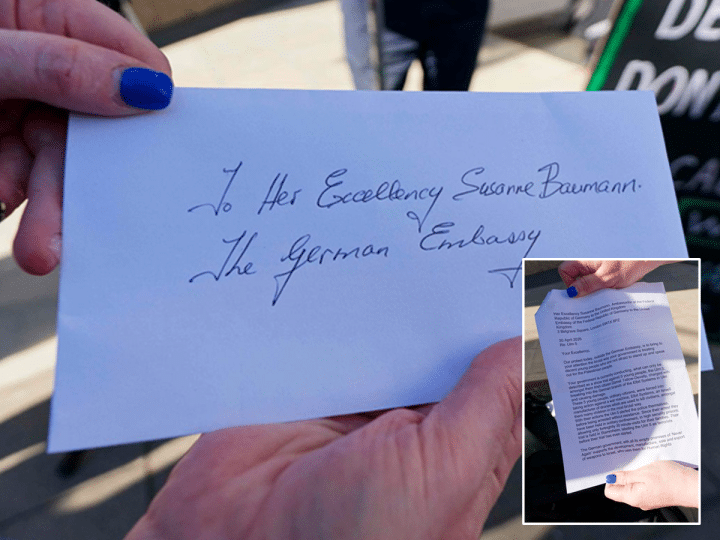

The London Irish Brigade and others gathered in the capital on 30 April to deliver a letter to the German embassy. The letter supported, and demanded the release of, the ‘Ulm 5‘ prisoners held for months without trial for action.
As with the ‘Filton 24‘, imprisoned for more than 18 months by the UK government, the Ulm 5 are imprisoned for damaging equipment belonging to Israel’s Elbit Systems, making weapons for Israel’s Gaza genocide.
The prisoners are an international mix: Irish, Spanish, British, and German. Unsurprisingly, Keir Starmer has said nothing against Germany’s imprisonment of two Britons, nor its brutal repression of protest. How could he, when he has done the same?

The Brigade’s Frank Glynn gave a speech. He pointed out Germany’s attempts to ‘wash its hands of the Holocaust in the blood of the Palestinians’ – and of its shameful record in other genocides:
Cowardly refusal
Disgracefully, the embassy refused to take the letter. Like the Starmer regime in the UK, the German government is deeply complicit in Israel’s genocide.


Read more about the Ulm 5 here.
By Skwawkbox

 lead image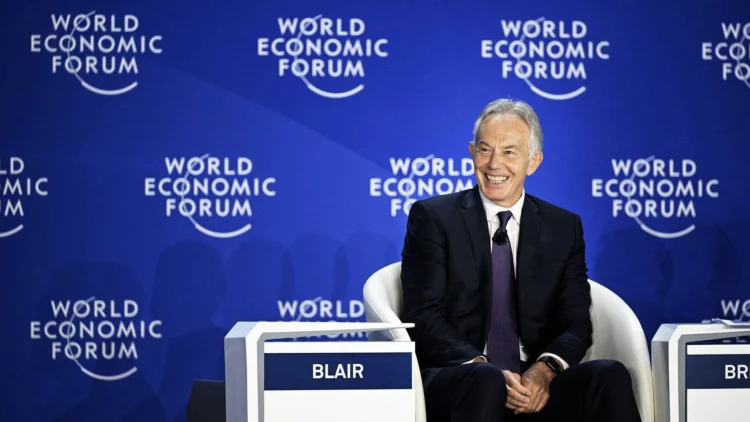

(Alamy)
3 min read
The Tony Blair Institute (TBI) think tank has called for the government to scrap the “unaffordable” triple lock on state pensions.
In a new report published on Friday, the think tank said current pensions policy is unsustainable and outdated and should be replaced by a more flexible alternative.
“Britain’s state pension system was built for a different era. We can’t keep pouring money into a system that is increasingly unaffordable,” said Tom Smith, TBI Director of Economic Policy.
Under the existing policy, pensions are guaranteed to rise by the highest of inflation, average earnings and 2.5 per cent.
However, there have been growing warnings that factors like people living longer, a falling birth rate and high inflation levels mean that it is not sustainable in the long term.
The TBI report points to the number of pensioners in Britain being expected to rise from 12.6m this year to 19m in 2070, with spending on the state pension expected to increase from 5 per cent of GDP to 7.5 per cent, costing the Treasury an additional £85bn a year.
There is also an argument that to maintain the triple lock in its current form would worsen generational inequality, given the financial challenges faced by younger people.
Despite these warnings, the triple lock continues to enjoy broad cross-party support, partly because older people are seen as a key voter group. Chancellor Rachel Reeves said last week that the government was not changing its triple lock policy.
TBI’s Smith said it would take “political leadership” to reform the policy, but that doing so would create a system “fairer, more flexible, and designed for how people live today”.
The think tank has proposed what it calls a new ‘Lifespan Fund’, which would replace the fixed pension age with a system whereby one full year of contribution would add half a year of entitlement, up to a maximum of 20 years of support.
It would also allow people to use the fund earlier in life to support them in key moments like finding work, funding child care, and looking after a sick relative, with safeguards included to ensure people do not draw out too much too early.
Smith said the model “keeps the promise of a secure retirement while making the system more flexible and financially sustainable” and would be “the upgrade Britain needs”.
The TBI estimates that these reforms would keep long-term state pension spending at around 5.5 per cent of GDP, rather than allowing it to rise towards 7.8 per cent, avoiding roughly £66bn a year in additional costs by 2070.
The intervention was welcomed by the Labour MP for Dunfermline and Dollar, Graeme Downie, who, in a recent piece for The House, called for the triple lock to be reformed to help fund greater defence spending.
“This is the kind of conversation I called for a few weeks ago,” he told PoliticsHome.
Our welfare needs to be fit for the future, helping those who need it most and being a strong safety net, effectively supporting people to get them into work and keep them in work to drive economic growth, and to fund critical national priorities like defence, which are vital to protecting our people and our democracy.”


On 30 April, during one of their regular raids on Shuafat Refugee Camp, North East of Jerusalem, Israeli occupation forces (IOF) assaulted Mehdi Al Arabi, a child with Down’s Syndrome.
15-year-old Mehdi ran away from the IOF, who then chased him:
He was detained for 15 minutes before being released.
Mohammad al Arabi was at the scene and tried to intervene, but was beaten and injured in the face by the occupation as he tried to protect his brother.

‘Israel’, as an occupying power, has clear legal obligations toward Palestinians with disabilities under international law, including the Convention on the Rights of Persons with Disabilities. These obligations require the occupation to ensure protection and safety during military operations, access to essential services, and non‑discrimination for disabled Palestinians.
Indiscriminate attacks by the IOF have killed and injured disabled Palestinians who posed no security threat. Such attacks violate international humanitarian law obligations to protect civilians, especially those with limited mobility or communication barriers.
Featured image provided by the author
By Charlie Jaay


The refusal to allow the Iranian Football Federation delegation to enter Canada has led to an escalating crisis with FIFA, after it became clear that Tehran would be absent from the Congress, the most significant event bringing together all national associations to discuss global football matters and take crucial decisions.
According to Reuters, the Iranian delegation was unable to enter Canadian territory despite prior arrangements, amid allegations of “mistreatment” by immigration authorities, forcing it to withdraw from the event.
In contrast, Canadian officials reportedly confirming that entry procedures are subject to strict legal and security considerations, given potential restrictions on individuals suspected of links to designated entities, which explains the decision from an official standpoint.
This development places FIFA in an extremely delicate position, as it is required to ensure the neutrality of international competitions and events, whilst facing a political reality that directly affects the participation of certain federations.
The event takes on deeper dimensions, as it comes against a backdrop of escalating political and military tensions linked to Iran, transforming the crisis from a mere administrative issue into a matter with political ramifications that may cast a shadow over upcoming football events — most importantly those hosted by Canada.
Featured image via IRNA
By Alaa Shamali

How authoritarian regimes use education as a political tool

Manus Serves as a Warning as China Halts Meta Agreement
Bitcoiners Launch AI-Powered Bitcoin FUD-Fighting Database

Manchester United reach agreement with Casemiro over contract clause amid transfer speculation

US brings back mandatory military draft registration

Steven Gerrard disagrees with Gary Neville over ‘shock’ Chelsea and Arsenal claim | Football


-

 Tech4 days ago
Register Renaming | Hackaday
-

 Fashion7 days ago
Weekend Open Thread – Corporette.com
-
 Crypto World6 days ago
Hyperliquid $HYPE Rally Builds Momentum as AI Sector Enters Prove-It Phase
-

 Politics4 days ago
Drax board avoid their own AGM, accused of greenwashing & environmental racism
-

 Tech4 days ago
Images of Samsung’s rumored smart glasses have leaked
-
 Sports5 days ago
IPL 2026: Ruturaj Gaikwad registers slowest fifty of the season, enters all-time unwanted list | Cricket News
-

 Tech4 days ago
Why Blue Badges Disappeared From Toyota Hybrids
-

 NewsBeat5 days ago
LK Bennett closes all stores after entering administration
-

 Fashion2 days ago
Kylie Jenner’s KHY Enters a New Era with ‘Born in LA’
-

 Crypto World7 days ago
Michael Saylor says BTC winter is over. Market analyst disagrees, says bitcoin was in a pullback
-
 Entertainment6 days ago
Mariah Carey Slams Deposition Claims In Brother’s Lawsuit
-

 Business2 days ago
Most Commercial Energy Audits Miss the Real Losses
-

 Business4 days ago
(VIDEO) Charlize Theron Climbs Times Square Billboard to Promote New Netflix Thriller ‘Apex’
-

 Business7 days ago
Jeanine Pirro announces closure of Federal Reserve building cost probe
-

 Tech5 days ago
Microsoft to roll out Entra passkeys on Windows in late April
-
 Crypto World7 days ago
Nvidia (NVDA) Stock Jumps 5% as Intel Earnings Ignite Semiconductor Rally
-

 Tech5 days ago
OpenAI’s Sam Altman apologizes for not reporting ChatGPT account of Tumbler Ridge suspect to police
-

 Crypto World3 days ago
CFTC’s AI will review U.S. crypto registration applications, chairman tells CoinDesk
-

 Business2 days ago
Barclay Brothers Avoid Bankruptcy: HSBC Drops High Court Petitions After IVA Deal
-

 Tech7 days ago
Apple’s Next CEO Has a Different Battle Ahead
You must be logged in to post a comment Login