Politics
The House | The Belfast West MPs bound together by faith, politics and personal tragedy


Thomas Teevan speaks at the opening of Largy Hall
10 min read
The opportunities – and constraints – of Northern Ireland in the middle of the last century are illuminated by the lives of two men who briefly represented Belfast West. Aaron Callan tells the story of MPs bound together by faith, family, politics and ultimately tragedy
Reverend James Godfrey MacManaway, a clergyman soldier turned parliamentarian, and his political heir Thomas Leslie Teevan, a brilliant young lawyer and public servant, are barely Westminster footnotes. Both served as Belfast West MP for less than a year.
And yet their story embodies a sense of promise broken by legal anomaly, electoral mischance, and personal tragedy.
James Godfrey MacManaway was born into an ecclesiastical family as the son of Rt Rev Dr James MacManaway, Bishop of Clogher. He was educated at Campbell College and Trinity College Dublin. Aged just 16, while still at Campbell College, he enlisted to fight in the First World War, seeing action at the Battle of Loos and later joining the Royal Flying Corps. In 1923, he was ordained by the archbishop of Armagh and served a curacy at Drumachose, Limavady, before moving to Christ Church, where he became rector in 1930 and remained for 17 years; in 1926, he married Catherine Anne Trench.
During the Second World War, MacManaway again “took the King’s shilling”, serving as senior chaplain to the forces. He experienced the evacuation of Dunkirk with the 12th Royal Lancers, later serving in the Middle East with the First Armoured Division and returning in 1945 to the Italian Front as senior chaplain to the 10th Armoured Division, a service for which he was awarded the MBE.
Contemporaries remembered him as one of the most colourful figures in the Church of Ireland, a gifted storyteller who could hold an audience spellbound, sometimes allowing his imagination to outrun accuracy. A favourite anecdote described him swimming for two hours after his Dunkirk vessel was hit, only for his wife to puncture the tale by reminding everyone that he could not swim at all – a story that captured both his flair and the affectionate tolerance of those around him.
By 1947, MacManaway resigned his Church of Ireland post and turned to politics, successfully contesting the city of Londonderry seat at Stormont as a Unionist, winning by a majority of 4,028 and again taking over 60 per cent of the vote in 1949. His oratorical gifts and colourful personality quickly established him as a notable figure at the parliament of Northern Ireland.
His ambitions soon extended to Westminster. As an ordained clergyman, doubts arose over his eligibility, but he sought legal advice from Edmund Warnock, attorney general of Northern Ireland, who advised that the disestablishment of the Church of Ireland in 1869 meant earlier statutory bars on clergy sitting in the House of Commons did not apply.
On this advice, MacManaway resigned his remaining Church offices, relinquished his clerical rights and sought and obtained Ulster Unionist selection for Belfast West, a difficult marginal seat held by Labour’s Jack Beattie. After a vigorous campaign in the 1950 general election, assisted by activists including a young Ian Paisley, he defeated Beattie by 3,378 votes, becoming the first clergyman in 150 years to sit in the House of Commons.
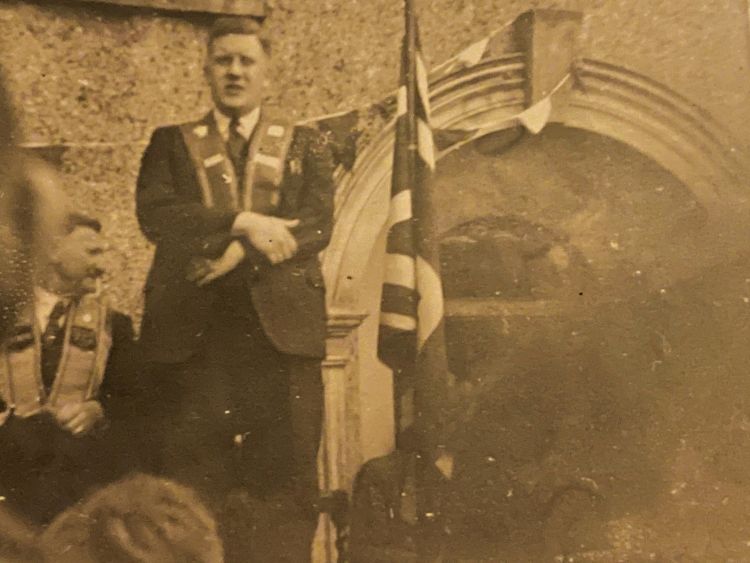

His election caused a stir in Westminster, where few had anticipated that a disestablished Irish clergyman would gain a seat. The challenge came from Labour backbencher Maj Geoffrey Bing, and the issue was referred to a select committee, prompting strong Unionist defences of MacManaway, including from Winston Churchill, yet the committee declined to reach a decisive conclusion and recommended urgent legislation instead.
The matter went to the Judicial Committee of the Privy Council which identified a lacuna in the law: although the Irish Church Act 1869 disestablished the Church of Ireland, it did not expressly permit its clergy to sit as MPs, leaving in force the House of Commons (Clergy Disqualification) Act 1801, which barred any person ordained priest or deacon from sitting or voting.
The Privy Council held that the 1801 act applied not only to clergy of the established churches of England and Scotland but to anyone ordained by a bishop according to episcopal forms, which included the Church of Ireland. In contrast, ministers not episcopally ordained, such as those who would later include Rev Martin Smyth, Rev Robert Bradford and Rev Ian Paisley, were not similarly disqualified.
The House of Commons accepted the Privy Council’s view and, on 19 October 1950, resolved that MacManaway was disqualified, though it waived any financial penalties for the five divisions in which he had voted while ineligible. He protested bitterly against what he saw as an unjust anachronism and the ignoring of later legislation that allowed priests to sit if they renounced benefice, emoluments, and pension, but his Westminster career had lasted just 238 days.
The judgment also compelled him to resign his Stormont seat, as the same legal principle applied in Belfast. Personal tragedy followed swiftly: his wife died in January 1951; his health, never robust, declined sharply; his eyesight deteriorated so that he virtually lost one eye and was threatened with blindness in the other, and he could walk only with great difficulty and the aid of a stick.
MacManaway remained politically active despite infirmity and was severely injured when he tripped on the staircase of the Ulster Club in Belfast while on his way to address a meeting for his political heir, Thomas Leslie Teevan, the Unionist candidate for Belfast West.
He died shortly after in the Royal Victoria Hospital, aged 53, the coroner finding that meningitis following a skull fracture from the fall was the cause of death, and remarking that he scarcely knew when to stop in service to causes such as that of Ulster.
Even before his death, MacManaway had recognised a successor. He did not contest the by-election triggered by his disqualification; instead, the Ulster Unionist Party selected 23-year-old Limavady Urban Council chairman Thomas Teevan, MacManaway’s godson, of whom he said he was glad that “the people chosen to take up the torch which he had not been allowed to continue to hold was another Limavady man”.

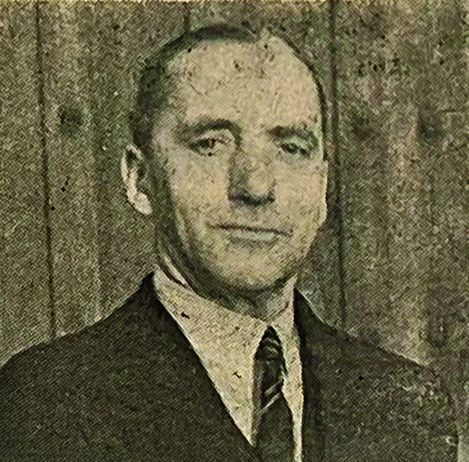
Thomas Leslie Teevan was born in Limavady in July 1927 into a family with deep roots in the town and a wider Cavan lineage marked by public service. Family tradition recounted ancestors who served as army medics and doctors, tended the wounded in turbulent times, and even survived the Charge of the Light Brigade, stories that underlined a long-standing engagement with Irish and British military history.
Educated at Limavady Academy, where he served as head boy, Teevan went on to study law at Queen’s University Belfast. After graduation, he became a lecturer in law, remembered for his vibrant personality, fellowship and capacity for friendship across social and sectarian boundaries.
Academically, Teevan was highly regarded. He combined intellectual rigour with a flair for exposition. Little wonder he quickly made his mark at the Bar. Belfast’s senior magistrate JH Campbell QC believed that, but for his early death, Teevan would have left an indelible imprint on the Northern Ireland legal profession – a view echoed by Charles Stewart QC, who described him simply as a “great lawyer” despite his short practising career.
Teevan’s public service began early. He became the youngest urban district councillor in Northern Ireland and rose to be chairman of Limavady urban district council. Wherever he entered an institution, be it Queen’s University, the council chamber, or later Parliament, he swiftly assumed responsibility and won trust. His warmth, wit and optimism enabled him to bridge divides and “love his fellow men regardless of creed”, an attribute widely remarked upon in later tributes.
The disqualification of MacManaway in 1950 created the opening that propelled Teevan onto the Westminster stage. Selected as Ulster Unionist candidate for the Belfast West by-election, he framed his campaign as the continuation of his godfather’s cause, calling on the “Loyalist community” to rally behind him as they had rallied behind MacManaway.
The by-election of 29 November 1950 proved a hard-fought contest. Teevan secured 31,796 votes (50.8 per cent) to Jack Beattie’s 30,833 (49.2 per cent), a majority of 913 on a turnout of 79.8 per cent, thereby becoming the ‘Baby of the House’, the youngest MP at that time.
He entered Parliament on 5 December 1950 and, in 1951, spoke six times, including a maiden speech on 11 April during the budget and economic survey debates, concentrating particularly on the economic and social needs of Belfast West.
Teevan’s parliamentary tenure was brief, lasting 330 days. In the 1951 general election, he again faced Beattie in what became the narrowest result in the United Kingdom that year: both candidates secured 50.0 per cent of the vote, but Beattie polled 33,174 to Teevan’s 33,149, a margin of just 25 votes out of more than 66,000 cast.
This wafer-thin loss made Teevan not only one of the youngest MPs ever elected but also one of the youngest to lose his seat. The result underscored both his appeal and the volatility of Belfast West, where demographic and political shifts rendered Unionist representation precarious despite his personal popularity.
Defeat did not end Teevan’s public engagement. Called to the Bar in 1952, he continued to lecture in law at Queen’s University while maintaining his leadership role as chairman of Limavady urban district council, embodying a rare combination of academic, professional and civic commitments.
Across these spheres, he retained the same qualities admired in his student days: exuberance, loyalty to family and community, and an infectious optimism that could lift the burdens of those around him. Colleagues from different backgrounds acclaimed his capacity for friendship and his refusal to be constrained by the sectarian lines that shaped much of public life.
In October 1954, at just 27, Teevan died suddenly from severe pneumonia, prompting widespread grief in Limavady, at Queen’s and within the legal and political worlds of Northern Ireland. He was buried at Christ Church, Limavady, the same parish in which MacManaway was also buried and where their intertwined stories found a poignant convergence.
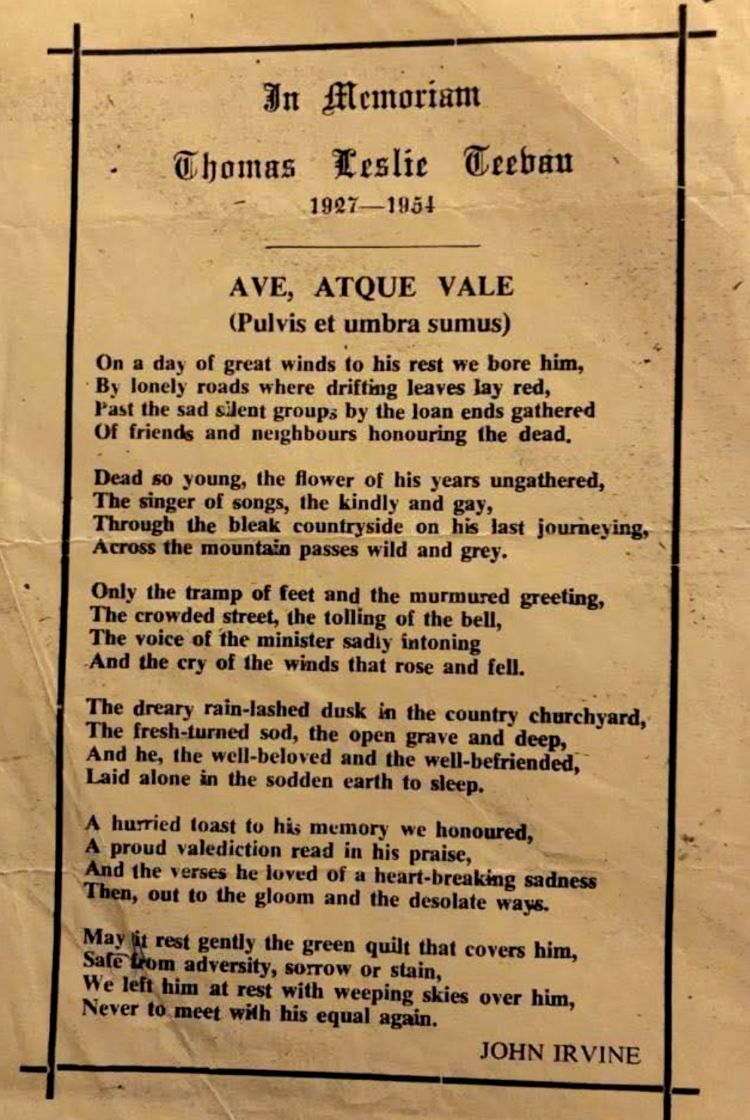

The sense of loss was captured in John Irvine’s poem ‘Ave Atque Vale’, which depicted neighbours and friends mourning a young man whose promise had been cut short, yet whose memory remained cherished. The verses, steeped in the imagery of rural funerals and quiet roads, framed Teevan’s passing as not only a private sorrow but a communal bereavement.
Following his death, friends and admirers from both sides of the Irish border contributed to memorials in Teevan’s honour. At Queen’s University Belfast, the faculty of law dedicated an oak chair and inscription in Celtic script, with senior members of the judiciary, local government and his family in attendance, a reflection of the breadth of his influence.
The fates of MacManaway and Teevan also raised broader questions about law, representation, and Unionism’s generational leadership.
A House of Commons select committee in 1951 acknowledged the anomalies of the clergy disqualification laws exposed by the MacManaway case but recommended no immediate change, leaving the issue unresolved for half a century.
Only in 2001, amid the candidacy of former Roman Catholic priest David Cairns, did Parliament finally enact the Removal of Clergy Disqualification Act, lifting most remaining bars on ordained ministers sitting at Westminster – a relief that could have saved MacManaway. Differently, demographic change and the knife-edge defeat of 1951 ensured that Teevan’s promise as a Unionist standard-bearer for Belfast West would also remain unfulfilled.
Seen together, the stories of James Godfrey MacManaway and Thomas Leslie Teevan trace a distinct Limavady thread through church, war, law and politics in mid-20th-century Northern Ireland.
Both were men of faith, intellect and service, shaped by family traditions that valued public duty and by a town that produced leaders capable of commanding respect across communities.
Their intertwined careers – rector and godson, MP and Baby of the House, both cut down in their prime – embody a sense of promise broken by legal anomaly, electoral mischance and personal tragedy.
Yet in church records, university memorials, legal recollections and the collective memory of Limavady, the clergyman soldier and the lost leader remain enduring figures.
They are reminders of what Northern Ireland gained for a time, and what it lost too soon.
Aaron Callan is senior parliamentary researcher for Gregory Campbell MP

You must be logged in to post a comment Login