

Politics
The House | This King’s Speech is a blueprint for change and builds a more secure country for all

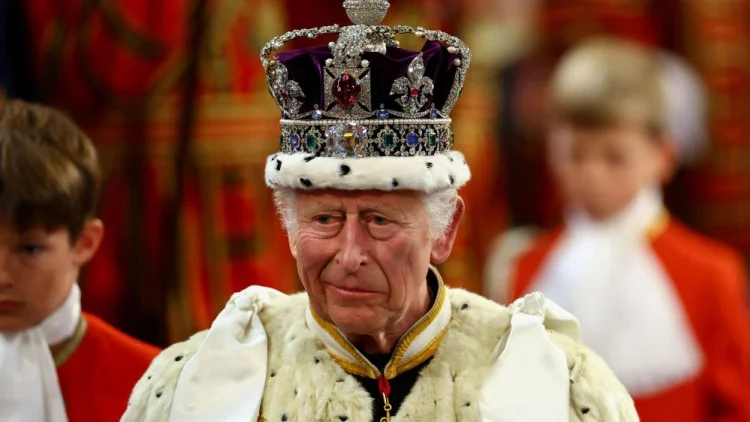

Charles III will speak to Parliament on Wednesday (Alamy)

3 min read
The State Opening of Parliament is at once about tradition and change. On Wednesday His Majesty The King will wear symbols of kingly authority that have been passed down the generations, to deliver a speech announcing everything the government wants to do to transform the country.
You don’t have to be a student of history to find that a profoundly moving spectacle.
This year’s State Opening will be the 27th I’ve seen since entering the Commons in 1997, but it’s by far one of the most important. Events at home and abroad mean that the world feels more insecure than it has for decades. Basic expectations, like decent housing and safe streets, seem out of reach for too many. Meanwhile the crisis in the Middle East is just the latest in a series of global shocks that have come thick and fast since 2008.
This presents the government with a choice. We could sit around bemoaning our fate, pursue the sticking plaster politics of the past, and avoid making difficult decisions. Or we could seize the moment, fix the underlying problems people face, and put the country in a stronger position for decades to come.
Almost by definition, long term problems will take time to solve. But it’s the difficult work we need to undertake if we’re to truly transform the country. And over the past two years we’ve wasted no time getting to work, passing more than fifty pieces of legislation that are beginning to be felt in the real world.
When you take the morning train, you’re increasingly likely to be traveling on a service owned and operated by you and your fellow passengers. When you arrive at work, you now have full employment rights from your first day in the job. When you return home, you’re turning the key in the knowledge that your landlord can no longer evict you without fault.
When you turn on the kettle, it’s increasingly likely to be powered by renewable energy rather than the rollercoaster of fossil fuels. When you fall asleep at night, police officers and others are keeping you safe with new powers to crack down on anti-social behaviour and protect our borders.
On Wednesday we will continue all this work with a renewed sense of purpose. While I can’t disclose the content of the King’s Speech, you should expect action to deliver the security people need. That means breaking down barriers to growth, tackling extremism on our streets from hostile states, and introducing root and branch reform to public services like the NHS.
Amid the wonderful traditions and pageantry of the day, this King’s Speech is a blueprint for change that doesn’t just weather the current storm, but builds a more secure country for all.
Sir Alan Campbell is the Leader of the House of Commons



The presence of the Palestinian flag in European stadiums is no longer an exceptional event or a fleeting snapshot linked to a match or celebration.
Rather, it has become a recurring sight within the wider world of football, reflecting the transformation of the sport from a game into an open space for the expression of stances, symbols and identities.
During Barcelona’s celebrations of their La Liga title in Plaça de Catalunya, the scene was not limited to Catalan flags and the atmosphere of the victory.
The Palestinian flag appeared amongst the crowds, raising a question broader than the event itself: why does this presence recur in European stadiums, particularly in Spain?
The answer does not lie in a single moment but in a broader context.
WATCH: Palestine’s flag raised at La Liga title parade
In Catalonia specifically, the stands have long been associated with the idea of symbolic expression, whether at Barcelona matches or on other occasions. Take the match between the Catalan and Palestinian national teams, which from the outset carried a dimension that went beyond the sporting nature of the event towards a clear message of solidarity.
But solidarity does not stop at the borders of Catalonia.
In recent years, similar scenes have been repeated in various European stadiums, where fans of multiple clubs have raised Palestine’s flag at domestic and continental matches, in moments not directly linked to the cause. Yet they reflected a gradual shift in the very function of the stadium itself, from a place of support to a space for expression.
This recurrence calls for a deeper interpretation: football is no longer isolated from the global context but has become part of it.
Stadiums are where culture and politics collide
Fans, in many cases, no longer view the match merely as a sporting event but as an opportunity to convey a message, affirm a stance, or highlight an identity. It is precisely here that Palestine’s flag emerges as one of the most prominent symbols in this European context.
In Spain, sport is intertwined with the political and cultural history of cities and regions. This overlap is particularly evident in stadiums, which have never been entirely neutral spaces but rather an extension of broader social debates, where the public finds a space for indirect expression of their views.
Ultimately, no single scene can be interpreted in isolation from this accumulation.
The Palestinian flag appearing in European stadiums — whether during celebrations, matches or mass gatherings — is no longer a mere detail but an indication that the stands have become another language. A language that speaks beyond the boundaries of the pitch and writes its own messages in its own way, amidst the clamour of the world’s biggest game.
And its influence on the space has expanded over the past two years through repeated calls to expel Israel from FIFA as a result of its ongoing violations of sport in Palestine.
Featured image via Reuters/ Phil Noble
By Alaa Shamali
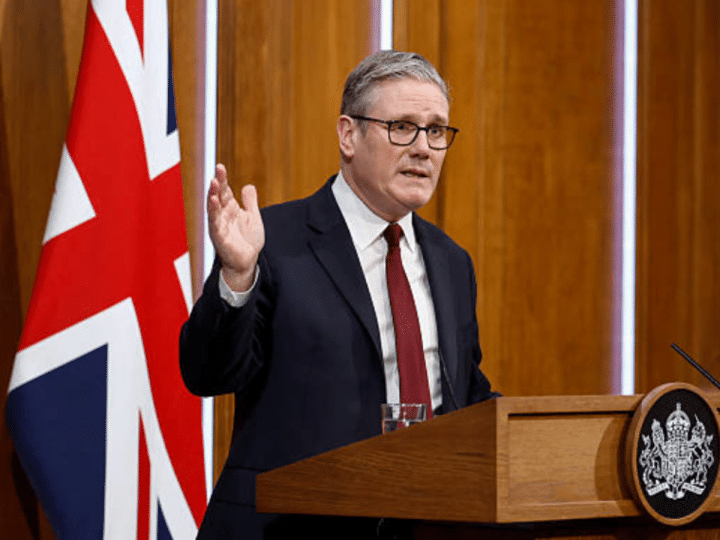

At least 81 Labour MPs have signed Catherine West’s letter for Keir Starmer to immediately announce a timetable for his departure to allow an election in September. This graphic by @toryfibs names those who are known:

Signing up for that timetable is an indication of likely support for an Andy Burnham leadership bid, as Burnham would need time to persuade an existing MP to step down and allow him to stand. However, the pro-Israel right’s stranglehold on party mechanisms is so tight it is far from certain he would ever get to stand. It is far from certain Labour would win a by-election even if he did.
Starmer: now or later?
Yet more MPs are pushing for Starmer to go immediately. These almost certainly back the awful Wes Streeting, as they believe he would have no chance against Burnham if he gets back into Parliament.
The pressure is mounting on the worst PM in history – worse even than the notorious Liz Truss. But Starmer – always a woeful politician – has told them MPs this morning that he will not go unless a leadership election is formally triggered.
Featured image via the Canary
By Skwawkbox
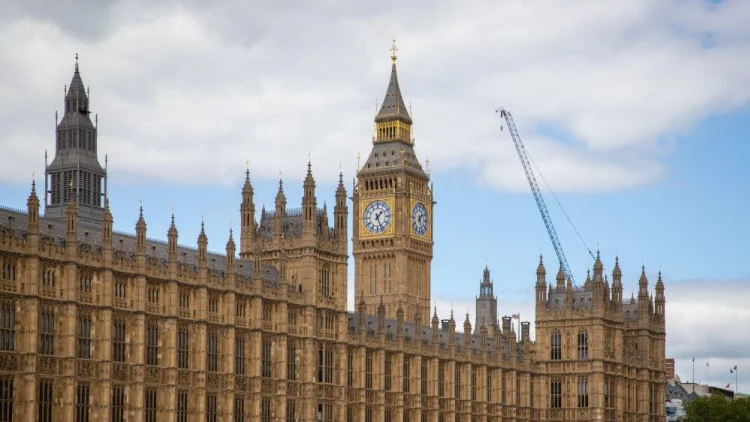

King Charles will address Parliament on Wednesday (Alamy)
6 min read
On Wednesday, Charles III will deliver the King’s Speech in Parliament, setting out the government’s plans for policies and legislation for the coming parliamentary session.
The speech will come as Keir Starmer fights for his premiership amid a swathe of resignations and increasing calls for the Prime Minister to set out a timetable for electing a new leader of the Labour Party.
The government has said that the King’s speech is expected to unveil over 35 bills and draft bills.
Here is what could be in the King’s speech, set to be delivered at 11 30am:
Economy
Nationalisation of British Steel: The government is expected to introduce legislation to allow for the nationalisation of Chinese-owned British Steel, subject to a public-interest test. Last year, the government passed emergency powers to save British Steel from closure. It is unclear how much nationalisation would cost.
Tourist tax: Legislation to allow mayors and councils to introduce a tourist tax for overnight stays is expected. Local government Secretary Steve Reed said last year that the move would “unlock growth through investment”.
Closer alignment with the European Union: At a speech on Monday, Starmer said that a closer relationship with Europe is at the heart of the “Labour choice” going forward. The government has said that new laws will deliver more trade, more opportunities for young people and help to reduce the cost of living.
Financial services Bill: According to The Financial Times, the bill will set out changes to major regulators, alongside a package of City of London reforms.
Late Payments Bill: The Department for Business and Trade published its response to the late payments consultation in March and said that mandatory interest on late payments would be introduced. Late payments to suppliers are estimated to cost the UK economy £11bn each year.
National Wealth Fund Bill: The government previously established the National Wealth Fund, replacing the UK Infrastructure Bank in October. Legislation could be brought forward to further outline next steps.
Public Procurement (British Goods and Services) Bill: The bill, which was introduced in 2024, aims to increase the use of UK suppliers and would introduce mandatory reporting on the proportion of British food supplied to the public sector.
Technology
Digital ID: While the government U-turned on plans to introduce a mandatory form of digital ID, a voluntary form of the technology is set to be introduced.
Cyber attacks: First announced in the 2024 King’s Speech, the legislation aims to make essential and digital services more secure in the face of cyber criminals.
Health
Abolishing NHS England: Legislation will be needed to deliver on the abolition of NHS England, announced last year by Health Secretary Wes Streeting, and implement several commitments in the 10-year health plan.
Energy and water
Water regulator bill: The government said last year that Ofwat would be replaced with a new, single, powerful regulator to be established to cut water pollution in England’s rivers, lakes and seas, and protect families from massive bill hikes.
Energy Independence Bill: Government is expected to bring forward the Energy Independence Act, which will “establish the framework for Labour’s energy and climate policies” and provide “energy independence from dictators like Putin”. It will also give government more power to tackle the affordability crisis and speed up the delivery of clean energy technologies.
Housing and local government
Leasehold and Commonhold Reform Bill: The legislation, a draft version of which has already been published, will make it easier for residents to extend their lease and buy their freehold, as well as cap ground rents at £250 a year.
Building Safety Remediation Bill: This legislation will aim to strengthen building safety standards and accelerate the remediation of residential buildings with unsafe cladding in England, following the Grenfell Tower fire in 2017.
Local government standards: The government has tabled amendments to the English Devolution and Community Empowerment Bill in a bid to strengthen scrutiny of mayors.
Home affairs
Policing reform: Home Secretary Shabana Mahmood has previously said she would reduce the number of police forces in England and Wales and pledged to abolish Police and Crime Commissioners.
Immigration: The government has previously said it would like to narrow the scope of the use Article 8 of the European Convention on Human Rights, which provides a right to respect for family and private life, as it is being used too often as a ground to block removals.
.jpg)
Courts and Tribunals Bill: The controversial bill, which will abolish jury trials in some cases, will be carried over from the previous parliamentary session.
Terrorism: The Prevent learning review from the Southport attack identified a gap around the understanding of radicalisation indicators where a specific ideology does not seem to be present.
Animal welfare
Vet costs reforms: After a Competition and Markets Authority (CMA) found problems in the veterinary market could be costing households up to £1bn over five years, the government said it would set out a series of reforms to the sector.
Animal welfare reforms: In December, the government announced a tranche of animal welfare reforms, including ending puppy farming and improving conditions for farm animals.
Transport
Railways Bill: The legislation is currently making its way through Parliament and will nationalise railways in England, Wales and Scotland under ‘Great British Railways’.
High Speed Rail (Crewe – Manchester) Bill: The bill, first introduced under the Tories, is being repurposed for Northern Powerhouse Rail (NPR), which aims to boost connectivity in the North of England.
Road safety: Measures could be introduced after the government published its new road safety strategy, including mandatory eye tests for older drivers.
Other legislation
Public Office (Accountability) Bill: The legislation, also known as ‘The Hillsborough Law’ is currently making its way through Parliament. As first reported by The Times, the government is expected to scrap an expectation that the duty of candour will not extend to the intelligence services.
Representation of the People Bill: The government will look to finalise this bill, which will lower the voting age to 16 for general elections, a key Labour pledge in 2024.
Peerages: Following additional revelations about Peter Mandelson’s relationship with the paedophile financier Jeffrey Epstein, the government said it would draft legislation to remove disgraced peers.
Conversion therapy: Ministers have said that they will bring forward legislation for a full trans-inclusive ban on conversion practices. The Conversion Practices Bill was announced in the 2024 King’s Speech.
Education
School system: The government will set out previously published reforms aiming to transform the school system. While the government has set out reforms to the special educational needs and disabilities system, it is still consulting on those proposals.
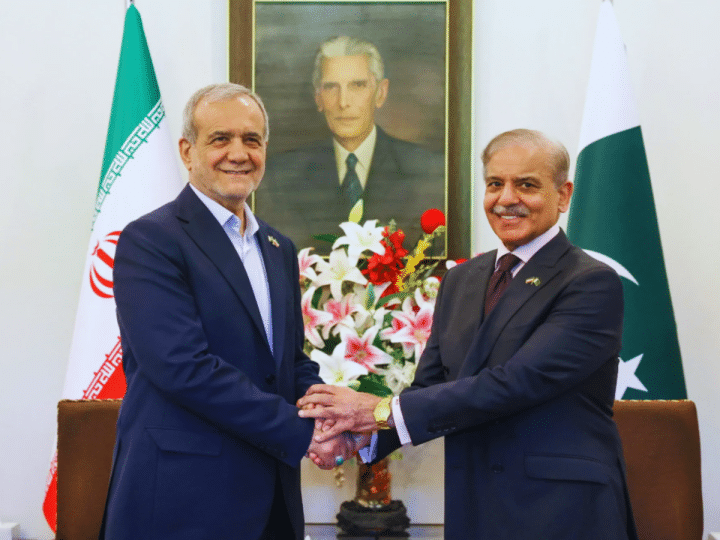

Pakistan has reiterated plans to issue a yuan-denominated “Panda bond” as it seeks to shore up its economy. This move comes amid inflationary and geopolitical pressures triggered by Trump’s war on Iran. The longer-term strategy is to reduce Pakistan’s reliance on the dollar. Meanwhile, Pakistan aims to raise funds through Chinese capital markets.
These plans, announced by Pakistan’s finance minister, Muhammad Aurangzeb, are expected to take effect next week:
God willing, next week you will hear good news that for the first time, we will be accessing Chinese capital markets through Panda bond.
View this post on Instagram
Pakistan’s initial $250 million Panda bond, backed by the Asian Development Bank and the Asian Infrastructure Investment Bank, is part of a $1 billion package.
The dual shock of soaring inflation and collapsing remittance incomes has put Pakistan’s economy in a squeeze, alongside others across Asia. They’re reeling as a direct consequence of disruptions to the Strait of Hormuz, cutting off 20% of the world’s oil and gas supplies.
In South Asia, inflation is set to rise from 2.9% in 2025 to 5.0% in 2026, driven by higher food and energy prices.
Abandoned by the UAE
Pakistan was recently also rocked by the UAE’s refusal to renew a $3.5 billion financial facility, a move viewed by Islamabad as a betrayal. Saudi Arabia stepped in with $3 billion in additional support to help bridge the multi-billion-dollar gap in the country’s finances.
According to the FT, the UAE’s decision follows growing frustration with Pakistan’s deepening ties with Saudi Arabia and what it considers Pakistan’s meek response to Iranian attacks on the Gulf.
Recent UAE developments, including the US dollar swap request, exit from OPEC, and expulsion of 15,000 Pakistani Shias, can be read as interlocking signs of the Gulf state’s increased subservience to the US/Israel axis.
Michael Kugelman of the Atlantic Council, a pro-war group, in an interview with DW, said that Pakistan’s role as a mediator was to protect itself because of its vulnerability. The country depends heavily on Gulf remittances from overseas workers, and energy imports from the Middle East.
Pakistan’s need to protect its fiscal position is shaped in large part by the need for cash in a cash-strapped, politically turbulent region.
By contrast, the US interests, which Kugelman presumably thinks are altruistic, are applauded… American exceptionalism and all.
What he presents as opportunistic behaviour by Pakistan is, in fact, a question of survival. After all, his institution’s backers in Washington and Tel Aviv are the ones who started the war. So, are countries in the Global South expected to absorb these consequences without protest? Or should they do so without mitigation?
The curse of IMF loans
Pakistan has received $4.8 billion from the International Monetary Fund so far. These funds were received under two separate programmes.
The first is the Extended Fund Facility, a 37 month arrangement approved on September 25, 2024. This is the main bailout program. In addition, the second is the Resilience and Sustainability Facility. It is a 28-month arrangement approved on May 9, 2025. It focuses on climate and disaster resilience.
IMF is a Western neoliberal international finance institution that offers the poorer nations no viable exit from the death spiral of debt.
According to the Tricontinental Institute:
the IMF not only engineers austerity-driven debt crises, but its policies are designed to ensure and manage a permanent debt crisis, not to erase debt.
Ali Hasanain, a professor at the Lahore University of Management Sciences, explained on Al Jazeera that Pakistan entered the Iran war crisis with virtually “no economic cushion”. This was because it had already been subjected to a long-standing IMF-managed austerity programme.
As a result, the government was unable to shield ordinary people from rising energy prices. Consequently, it was forced to pass most of the inflation directly onto consumers.
The US-Israeli war on Iran has impacted fiscally vulnerable nations like Pakistan. Hence, its entry into the Chinese capital market through the Panda bond is a much-needed lifeline.
Featured image via the Canary
By The Canary
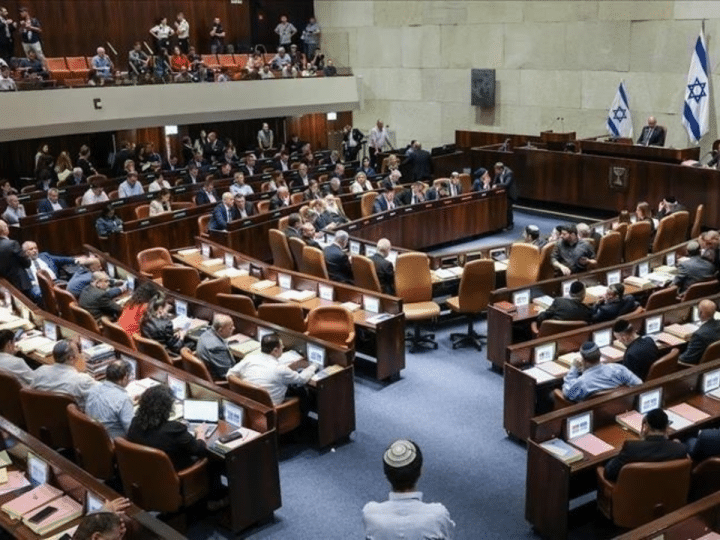

Members of Knesset (MKs) in Israel have passed a bill establishing a so-called ‘special tribunal’ for Palestinians detained on 7 October 2023.
The tribunal is designed to strip fair trial rights and has the power to impose death penalties on detainees.
The bill passed without a single dissenting vote. A total of 27 MKs in Israel’s parliament did not vote.
Israel MKs voted 93-0 in favour of the bill
Human rights groups in Israel and occupied Palestine say the bill removes any legal impediments to executing prisoners.
Muna Haddad, a lawyer with The Legal Center for Arab Minority Rights in Israel (Adalah), told Al Jazeera that the bill is designed to make it easy to secure the mass conviction of Palestinians.
She said:
The bill explicitly permits mass trials that deviate from standard rules of evidence, including broad judicial discretion to admit evidence obtained under coercive conditions that may amount to torture or ill-treatment.
This constitutes a severe violation of fair trial guarantees that falls well short of international law requirements.
The provisions governing public hearings…violate the presumption of innocence, the right to a fair trial, and the right to dignity. The framework effectively treats indictment as a finding of guilt, before any judicial examination has begun.
Show trials
In a move designed to humiliate those seized, the trials will be publicly broadcast, including sentencing.
Israel murdered hundreds of its own citizens on 7 October 2023 under the ‘Hannibal directive’ in repeated attacks from early morning to late at night. Israel’s then-defence minister Yo’av Gallant told a TV interviewer that he wished the IOF had killed more.
At least 200 people were detained after the raid on ‘suspicion’ of involvement, but no evidence has ever been presented against them.
Featured image via Anadolu Agency
By Skwawkbox
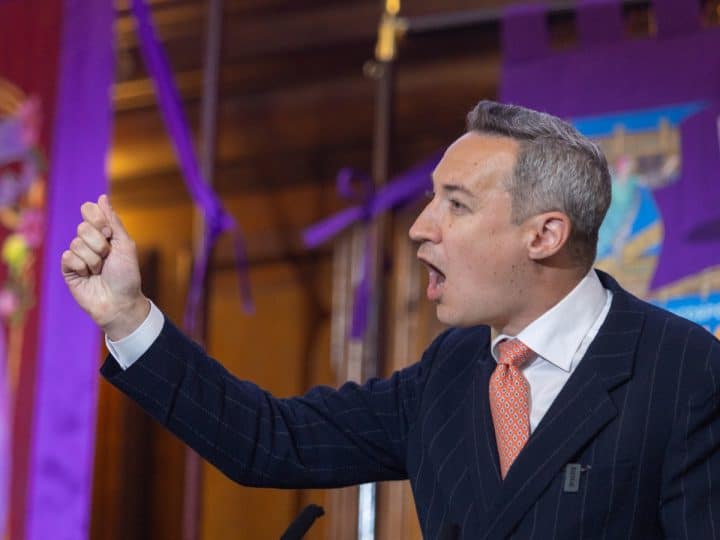

In his speech to Equity’s annual conference on Sunday 10 May, general secretary Paul W Fleming called for prime minister Keir Starmer:
to set out a timetable in which he resigns and is replaced.
He also said that the union “opposes” Reform:
opposes giving them a platform, and opposes what they threaten to do to our movement and trade union.
But Fleming added that among Reform voters are:
people who are actually frustrated about the economic and social situation in which we find ourselves… who are desperately grabbing around for a different answer.
And he said that for this:
there is one person who is disproportionately to blame: not Nigel Farage, but Keir Starmer.
Equity’s annual conference took place this year in the Durham Miners’ Hall from 9-11 May.
Elsewhere, the general secretary said that there is currently a:
real prospect of industrial action on the West End costing the bosses hundreds of thousands of pounds a day.
This was referring to the ongoing indicative ballot of performers and stage management working in London’s world-famous theatres who are threatening to take strike action for fairer pay, terms and conditions.
He also said that the union had:
Never had as many [emails] as in response to our loss at Spotlight [of which people were] proud that this is a union that is standing up for them.
In September last year, the High Court ruled in favour of Spotlight, dismissing Equity’s case that the casting directory’s fees should be regulated. The union’s appeal is set to go ahead in November this year.
The section of Fleming’s speech regarding Starmer and Reform in full:
It would be remiss of me after the last week to not mention potentially the biggest threat to our union, to our industry, and to any union. And that is the rise of the far right. And I don’t want to speak euphemistically.
The rise of the far right includes Reform. Reform is the far right. Not every Reform voter. Not every Reform council candidate. But the leadership and direction and policies of that party are those of the far right.
And I have no shame in saying so, and I have no shame in saying that this union opposes them, opposes giving them a platform, and opposes what they threaten to do to our movement and trade union.
But as we find amongst Reform voters – and indeed some Reform councillors – converts to our way of thinking, people who are actually frustrated about the economic and social situation in which we find ourselves, which has seen wage stagnation across our economy, that has seen austerity in our communities, who are desperately grabbing around for a different answer, there is one person who is disproportionately to blame: not Nigel Farage, but Keir Starmer.
And this union should have no hesitation in calling for the prime minister to set out a timetable in which he resigns and is replaced.
Featured image via Equity
By The Canary


Jordan Devlin was one of six ‘Filton 24’ activists retried by the Starmer regime for damaging an Israeli weapons factory.
Devlin and Zoe Rogers were acquitted. Their four comrades were convicted after the trial judge forbade any mention of the jury’s legal right to acquit on conscience.
The government wants those four — Samuel Corner, Charlotte Head, Leona Kamio and Fatema Rajwani — sentenced as terrorists. They were convicted of criminal damage, not of any terror offence.
Devlin is asking well-wishers to attend their sentencing on 12 June at Woolwich Crown Court to show support for the Filton 24.
Those who care about human rights and what’s left of justice in the UK should be there, if they can.
View this post on Instagram
Featured image via the Canary
By Skwawkbox
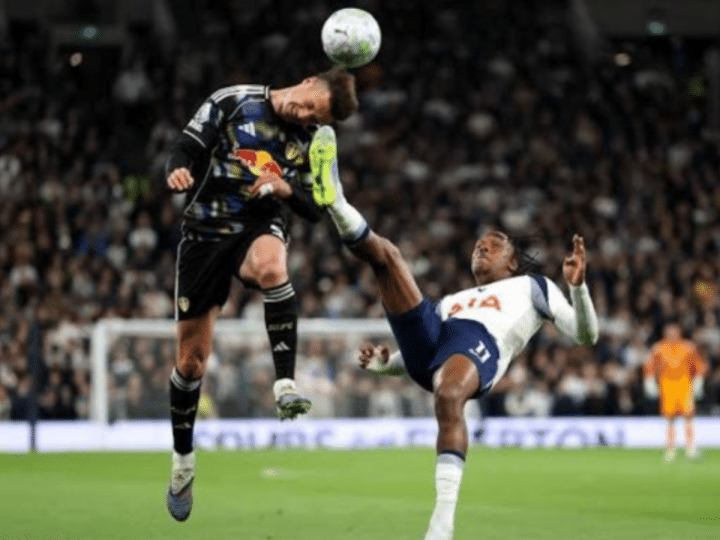

Mathys Tel produced the kind of moment that makes managers grin and then grind their teeth in frustration, as he curled superb finish into the top corner to put Spurs ahead early in the second half. The goal looked like it might settle a nervy night at the Tottenham Hotspur Stadium.
However, twenty minutes later, the same player attempted an overhead kick defensive clearance which struck Ethan Ampadu. After a VAR review, Leeds were awarded a penalty that Dominic Calvert-Lewin converted to level the game.
Tottenham’s attacking intent was clear: they probed, they recycled possession, and they created some openings. But, the match underlined a recurring problem this season. Few moments of quality are too often followed by lapses in concentration. That oscillation between brilliance and error has left Spurs in a precarious position with only two games to go.
Spurs last minute drama
The penalty decision was the games fulcrum, referee Jarred Gillett initially waved played on, but a lengthy VAR check and a pitchside monitor review overturned that call. The sequence summed up modern football’s reliance on replay technology, a single frame can change the course of a relegation battle.
There was more drama, in a chaotic 13 minutes of added time, Sean Longstaff thought he had a late winner only for Spurs goalkeeper Antonin Kinsky produce a spectacular save, pushing the effort onto the crossbar. That stop was arguably the difference between a home defeat and a point that keeps Tottenham marginally above the drop zone.
Kinsky’s was the standout player for Spurs; he made several important saves and was later named player of the match, a rare positive in a game where Spurs form at home remains a concern. The club have now won just once in their last ten matches at the Tottenham Hotspur Stadium, a run that has amplified pressure on Roberto De Zerbi and his players as the season reaches its climax.
De Zerbi’s side showed fight and flashes of the tactical shape he’s trying to instil, but the manager will be frustrated by the inability to close out a match they controlled for long periods. He was forced to make attacking substitutions late on, including bringing on James Maddison, but even those changes couldn’t force the decisive breakthrough.
Leeds are safe
For Leeds, the draw was a valuable point and a sign of composure and maturity. They defended with discipline, stayed compact when needed, and took their chance from the spot. Crucially, Leeds top flight status for next season was already secured after West Ham’s defeat to Arsenal, meaning they could play with less pressure and more clarity in north London. That freedom showed in their organisation and willingness to see out the result.
Leeds’ manager will take encouragement from the way his team handled the occasion, the Whites were not there to make up the numbers, they came with a plan and executed it well enough to leave Spurs with a solid point.
Spurs future uncertain
The draw leaves Tottenham two points clear of the relegation zone with two games remaining, but the margin is fragile. West Ham sit just behind and can leapfrog Spurs if they beat Newcastle, a result that would dramatically reshape the final week of the season.
Spurs now head to Chelsea on May 19 before a final-day home fixture against Everton, West Ham’s remaining fixtures include a showdown with Leeds. The permutations are simple: any slip and Spurs could be dragged into a last-day scrap for survival.
This is not the script Spurs expected when the season began. Instead of a comfortable finish, they face a tense run-in where every decision, substitution, and VAR check carries outsized weight. De Zerbi has repeatedly asked for calm and consistency. What he will get is a fortnight of high stakes football where margins will be measured in inches and seconds.
Final word
A night of mixed emotions for Tottenham, a moment of individual brilliance, a costly error, and a goalkeeper who kept them alive. For Leeds, a tidy away point and the luxury of safety already secured, the relegation picture has tilted again, not dramatically, but enough to ensure the final two fixtures will be watched with the kind of intensity usually reserved for cup finals.
Featured image via the Canary
By Faz Ali


Wanted Israeli war criminal Benjamin Netanyahu has been given yet another soft-soap interview by Zionist-run CBS. In it, Netanyahu railed about the US public’s supposed hate for Israel but then turned, ‘panicked’, to first beg and then try to con China into ending its support for Iran.
China has supplied Iran with high-grade satellite intel on the positions of US and Israeli aggressors. It has reportedly agreed the sale of new, modern warplanes, is buying Iranian oil, and has moved its ships into position to impede illegal US operations.
And that support is proving highly effective. Iran is reported to have damaged and forced down two more of the US and Israel’s advanced F-35 strike aircraft, and three US warships. Hence, presumably, Netanyahu’s desperation.
Feeble
And desperate it was. The genocidaire tried to claim that China’s access to energy resources would be more secure with Iran defeated and the US/Israel in charge of the region.
But it’s an open secret admitted even by alleged western proxies that China, and strangling its supply of resources, is the ultimate target of the US-Israel war of aggression on Iran.
It was a feeble display from the usually arrogant criminal:
Massive panic in Tel Aviv. Major Garrett confirms China is actively providing highly advanced military support to Iran.
Benjamin Netanyahu is visibly terrified, desperately begging Beijing to stop arming Tehran.
Zionist regime realizes their regional dominance is collapsing. pic.twitter.com/SXDqVUCsYv
— Furkan Gözükara (@FurkanGozukara) May 10, 2026
Featured image via Furkan Gözükara
By Skwawkbox
Politics
YouGov poll shows that Labour would bag just 5 MPs in 2029 under Wes Streeting’s leadership
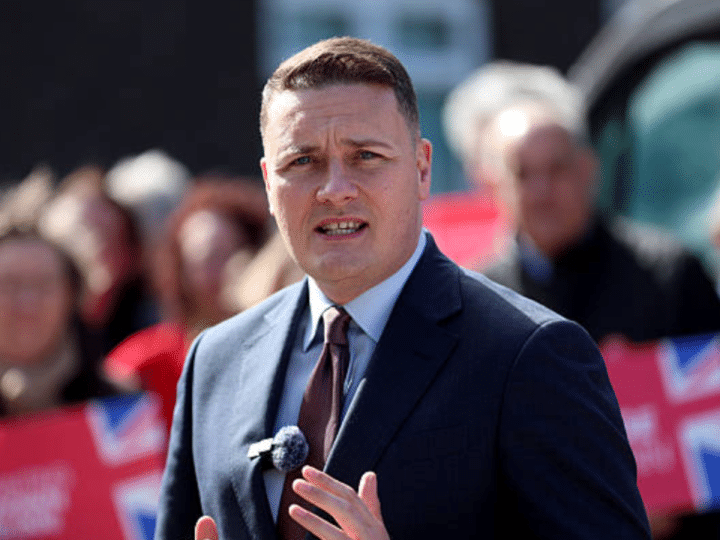

With rumours of a leadership challenge swirling, YouGov polling demonstrating that Labour-right darling Wes Streeting is somehow an even worse option than Keir Starmer has resurfaced on social media.
The widely reposted infographic was highlighted by Stats for Lefties on May 11. It shows a Streeting-led Labour receiving just 5 seats in the 2029 general election, based on polling from 28 January 2026:
{ Seats } Poll: @YouGov, 28 Jan 2026 pic.twitter.com/13HmCGvTCx — Stats for Lefties
 POLL | #GE2029 with Streeting as PM:
 Ref: 32% (+17)
 Grn: 21% (+14)
 Con: 15% (-9)
 Lab: 15% (-20)
 Lib: 11% (-2)
Ref: 373 (+368)Grn: 101 (+97)Lib: 72 (-)
Lib: 11% (-2)
Ref: 373 (+368)Grn: 101 (+97)Lib: 72 (-) SNP: 47 (+38)Con: 17 (-104)
 Plaid: 10 (+6)Lab: 5 (-406)

 (@LeftieStats) May 11, 2026
Streeting somehow worse than Starmer
Streeting’s hypothetical Labour Party would draw just 15% of the vote share. Meanwhile, Reform would take a sweeping majority, with the Greens in second. That being said, the Lib Dems’ vote share would barely change, because even the centrists don’t care for poor Wesley.
Because the health secretary has all of the political guile of a goldfish, the fact that he’s got his eyes on Starmer’s job is one of Westminster’s most poorly kept secrets:
Senior Labour source: “Wes has spent six months doing everything he could to bring down the Labour government while publicly denying it. Now everyone can see him for what he is: a self interested lizard.” https://t.co/KXG8f13byr
— Kevin Schofield (@KevinASchofield) May 11, 2026
As is tradition at the Canary, I turn now to the immortal words of Dawn Foster:
Wes Streeting is THE absolute worst. An irredeemable lickspittle cunt. pic.twitter.com/1sA3mSsoAw
— Jason Reid (@JasonReidx) July 12, 2024
Of course, we’re not just quoting that idly – the prick is deep in the pocket of private healthcare (whilst also eroding the NHS), proposed segregating trans people, and takes any chance he can to bash striking doctors. A “right wing lickspittle cunt” indeed.
But then, we would say that. So, let’s see what the general public thinks of the guy – maybe opinions have gone up since the January polls. Here’s some solid data from YouGov again:

Around 66% of the general public have actually heard of Streeting. Meanwhile, the majority of the people who have heard of him don’t like him. I particularly love that the shapes of the ‘know of him’ and ‘dislike him’ lines are almost identical.
‘It’s time for Wes!’
Obviously, social media had a field day with the idea of Streeting as the Labour right’s best hope.
The Labour Right are still yet to realise how toxic Streeting is to voters. He’d genuinely sink Labour to under 10% in the polls. https://t.co/Bwq1lbmHeG
— Hugo Papé


 (@HugoPap2) May 11, 2026
He’d definitely finish what Starmer started:
I said this the other day but it genuinely speaks volumes to how out of touch with reality the Labour Party is that they would even entertain the possibility of replacing Keir Starmer with Wes Streeting.
It would be an extinction-inducing decision. https://t.co/2HoEroZV87
— thelefttake (@thelefttake) May 11, 2026
Do we think Wes Streeting would be ruinous for the country? Yes. Do we think he’d be ruinous for the NHS? Also yes. Do we want him to spend even more time behind a microphone? God no.
I never thought I’d say it, but Starmer is definitely the better option here. That said, if it was only the modern Labour Party that Streeting’s leadership would burn to the ground, I’d be singing a very different tune:
It’s time for Wes! https://t.co/TGB4KdnYkS pic.twitter.com/WsFLGmQwkM
— Northern Greens (@VoteGreenNorth) May 11, 2026
‘A stronger version of Labour’
In his belly-flop of a speech yesterday, 11 May, Keir Starmer mused that:
This is nothing less than a battle for the soul of our nation. And I want to be crystal clear about how we will win it. Because we cannot win as a weaker version of Reform or the Greens, we can only win as a stronger version of Labour, a mainstream party of power, not protest.
I put it to you that Wes Streeting is the absolute apex example of the current Labour Party. I genuinely don’t think the even the Tony Blair Institute and Labour Together could conjure up a more lackluster right-wing shill if they designed him in a fucking lab.
And, as the YouGov polling shows, that “stronger version” of new-new-Labour most definitely could not win against Reform and the Greens. Hell, even with the whole UK to aim at, Streeting’s Labour couldn’t even beat Plaid Cymru.
Featured image via the Canary

Ray Dalio says Bitcoin blocks central banks

Former NBA player Jason Collins dead at 47

Why Audiologists Want You To Follow The 60-60 Headphone Rule

Manchester United reach agreement with Casemiro over contract clause amid transfer speculation

US brings back mandatory military draft registration

Steven Gerrard disagrees with Gary Neville over ‘shock’ Chelsea and Arsenal claim | Football

XRP RIPPLE CEO CONFIRMS BG123 !!!! IT DOESN’T GET ANY BIGGER THAN THIS !!!!

XRP HOLDERS! May 21 Could CHANGE EVERYTHING For XRP (And, All Of Crypto!)!

Nikon Confirm Retro Coming & 10 New Lenses Per Year ! | Annual Financial Results | Matt Irwin
-
 Crypto World5 days ago
HarrisX Poll Found 52% of Registered Voters Support the CLARITY Act
-

 Fashion4 days ago
Weekend Open Thread: Marianne Dress
-

 Crypto World6 days ago
Upbit adds B3 Korean won pair as Base token gains Korea access
-
 NewsBeat6 days ago
NCP car park operator enters administration putting 340 UK sites at risk of closure
-

 Fashion1 day ago
Coffee Break: Travel Steam Iron
-

 Fashion2 days ago
What to Know Before Buying a Curling Wand or Curling Iron
-

 Tech3 days ago
Auto Enthusiast Carves Functional Two-Stroke Engine from Solid Metal
-

 Politics1 day ago
What to expect when you’re expecting a budget
-

 Politics4 days ago
Politics Home Article | Starmer Enters The Danger Zone
-
 Business3 days ago
Ignore market noise, India’s long-term story intact, say D-Street bulls Ramesh Damani and Sunil Singhania
-

 Tech2 days ago
GM Agrees To Pay $12.75 Million To Settle California Lawsuit Over Misuse Of Customers’ Driving Data
-

 Crypto World6 days ago
BlackRock CEO Larry Fink Discusses a New Asset Class
-
 Sports7 days ago
NBA playoff winners and losers: Austin Reaves is not loving Lakers vs. Thunder matchup, but Chet Holmgren is
-

 Entertainment6 days ago
Sarah Paulson Called Out For Met Gala ‘Hypocrisy’
-

 Entertainment5 days ago
General Hospital: Ric & Ava Bombshell – Ric’s Massive Secret Exposed!
-

 Politics5 days ago
Simon Cowell Says He Was ‘Horrible’ To Susan Boyle During BGT Audition
-

 Entertainment6 days ago
Bold and Beautiful Early Spoilers May 11-15: Steffy Revolted & Liam Overjoyed!
-
 Sports6 days ago
UEFA Champions League final schedule, teams, venue, live time and streaming | Football News
-

 Crypto World6 days ago
Robinhood says Wall Street is building onchain
-

 Tech7 days ago
Apple and Samsung are dominating smartphone sales so thoroughly that only one other company makes the top 10
You must be logged in to post a comment Login