Politics
The House | “Too many stunning pieces to describe”: Baroness Young reviews ‘Nigerian Modernism’


1955: ‘The Durbar of Eid-ul-Fitr, Kano, Nigeria’ by Ben Enwonwu. (c) Ben Enwonwu Foundation. Private Collection


4 min read
Filled with exquisite works, this Tate Modern exhibition offers refreshingly well-rounded representations of African women and a vital lesson in Nigerian cultural expression
So many of these artworks are outstanding that I spent longer than expected wandering though the gallery. Ben Enwonwu’s works made an immediate impact on me, as I’d not seen much of his work in real life before. The breadth of Enwonwu’s artistry is staggering: beautiful portraits in oils; delicate sculptures in bronze and wood; surprising commissions (to me, at any rate) include a sculpture of Queen Elizabeth in the 1950s and seven linked wooden sculptures commissioned by the Daily Mirror in 1960.
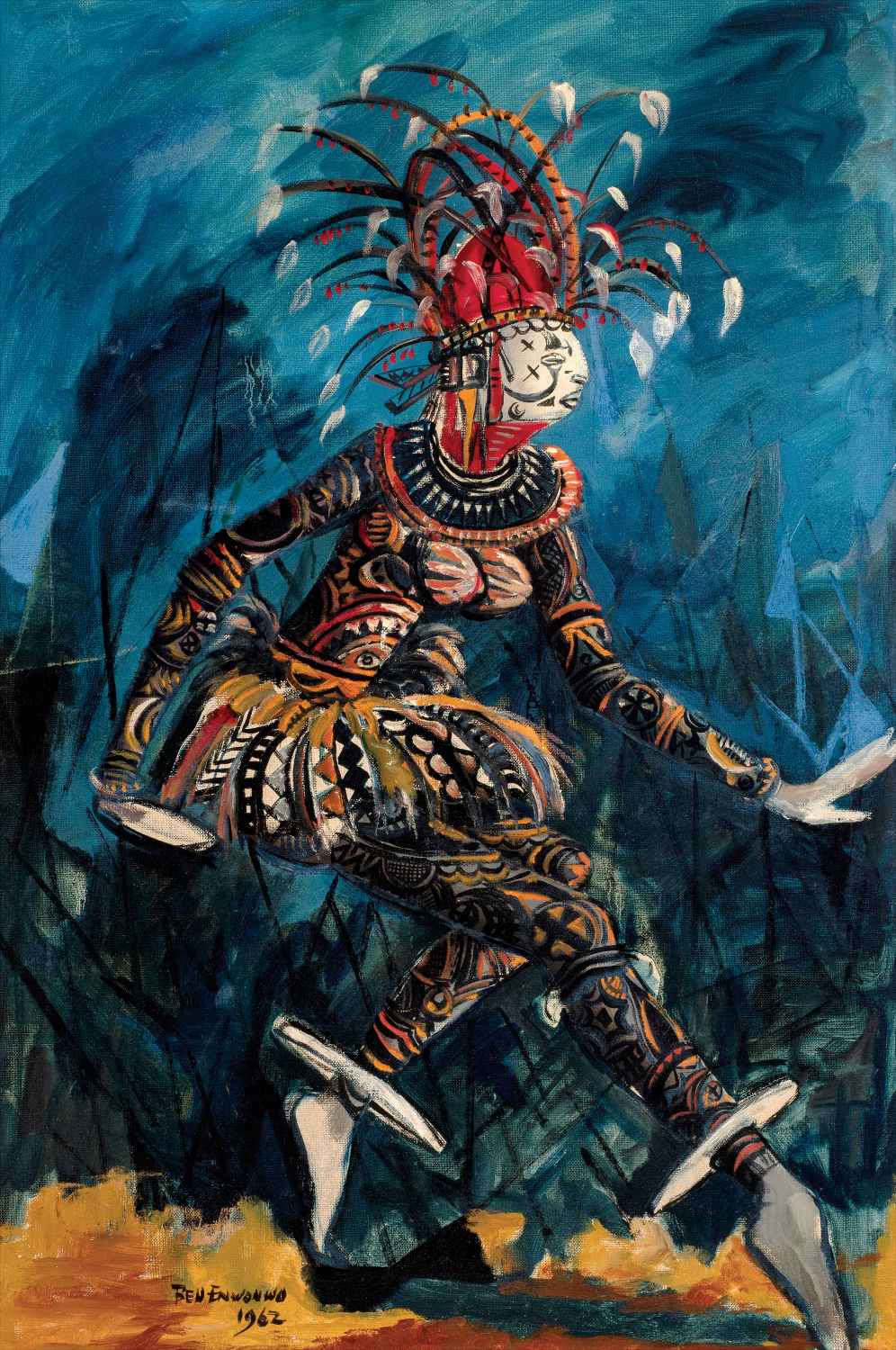

This exhibition contains too many stunning pieces to describe here: artists spanning eras from pre- to post-independence from colonial rule are represented, and I found this aspect immensely enjoyable. Carved sculptures using wood and metal, paintings, photography, satirical cartoons, textile patterns and pottery are all given space to breathe. Ample contextual notes give a sense of the sources of inspiration – and key Nigerian and African diaspora artists and thinkers are linked to other African diaspora intellectual and political movements, such as Négritude. Online notes, accessed via a QR code, further augment the exhibition’s description of the artwork.
Engagement with European modern artistic practice is evidenced in several artists’ work and, unsurprisingly, that cultural dialogue is woven across the Black Atlantic to feed into and derive inspiration from the African-American Harlem Renaissance and Blues Aesthetic, Pan Africanism and Négritude.


Image: (c) Obiora Udechukwu. Hood Museum of Art
Most closely associated with the Senegalese politician and poet Léopold Senghor, Négritude speaks to Africa’s own response to the rapidly evolving modern, post-imperial world, incorporating traditional cultural forms denigrated during colonial rule. In addition to referencing Senghor, several of the artworks evoke contemporary cinematic developments in Afro-Futurism. Some of Enwonwu’s paintings could easily have been the inspirational source of the costumes and movement sequences in the Oscar-winning films Black Panther and Sinners.


African women have traditionally been the object of the male gaze in ways that differ from how European women have been viewed and represented: it’s only relatively recently that African women have been recognised as having agency and been represented as something more than the stereotypical, tourist-friendly, carved wooden ‘tribal woman’. Here, though, we see women as artists, skilled makers and crafts people, dedicated to both traditional ways of working and embracing the modern.
One example stood out for me: Ladi Kwali’s pots, so exquisitely formed and decorated – all by hand. There’s a photograph of her making a pot outdoors on a sunny day, during her tour of the USA, as students look on, enthralled.


This exhibition is an enticing glimpse of the relationship between art, culture and politics from a continent bursting with creative talent, historically and in the present day.
Baroness Young of Hornsey is a Crossbench peer
Nigerian Modernism
Curated by: Osei Bonsu and Bilal Akkouche
Venue :Tate Modern – until 10 May 2026

You must be logged in to post a comment Login