
Politics
The House | “Too many stunning pieces to describe”: Baroness Young reviews ‘Nigerian Modernism’

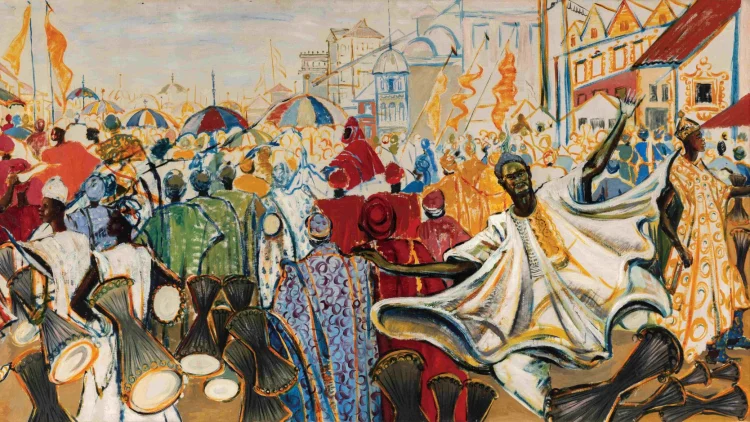

1955: ‘The Durbar of Eid-ul-Fitr, Kano, Nigeria’ by Ben Enwonwu. (c) Ben Enwonwu Foundation. Private Collection

4 min read
Filled with exquisite works, this Tate Modern exhibition offers refreshingly well-rounded representations of African women and a vital lesson in Nigerian cultural expression
So many of these artworks are outstanding that I spent longer than expected wandering though the gallery. Ben Enwonwu’s works made an immediate impact on me, as I’d not seen much of his work in real life before. The breadth of Enwonwu’s artistry is staggering: beautiful portraits in oils; delicate sculptures in bronze and wood; surprising commissions (to me, at any rate) include a sculpture of Queen Elizabeth in the 1950s and seven linked wooden sculptures commissioned by the Daily Mirror in 1960.

This exhibition contains too many stunning pieces to describe here: artists spanning eras from pre- to post-independence from colonial rule are represented, and I found this aspect immensely enjoyable. Carved sculptures using wood and metal, paintings, photography, satirical cartoons, textile patterns and pottery are all given space to breathe. Ample contextual notes give a sense of the sources of inspiration – and key Nigerian and African diaspora artists and thinkers are linked to other African diaspora intellectual and political movements, such as Négritude. Online notes, accessed via a QR code, further augment the exhibition’s description of the artwork.
Engagement with European modern artistic practice is evidenced in several artists’ work and, unsurprisingly, that cultural dialogue is woven across the Black Atlantic to feed into and derive inspiration from the African-American Harlem Renaissance and Blues Aesthetic, Pan Africanism and Négritude.
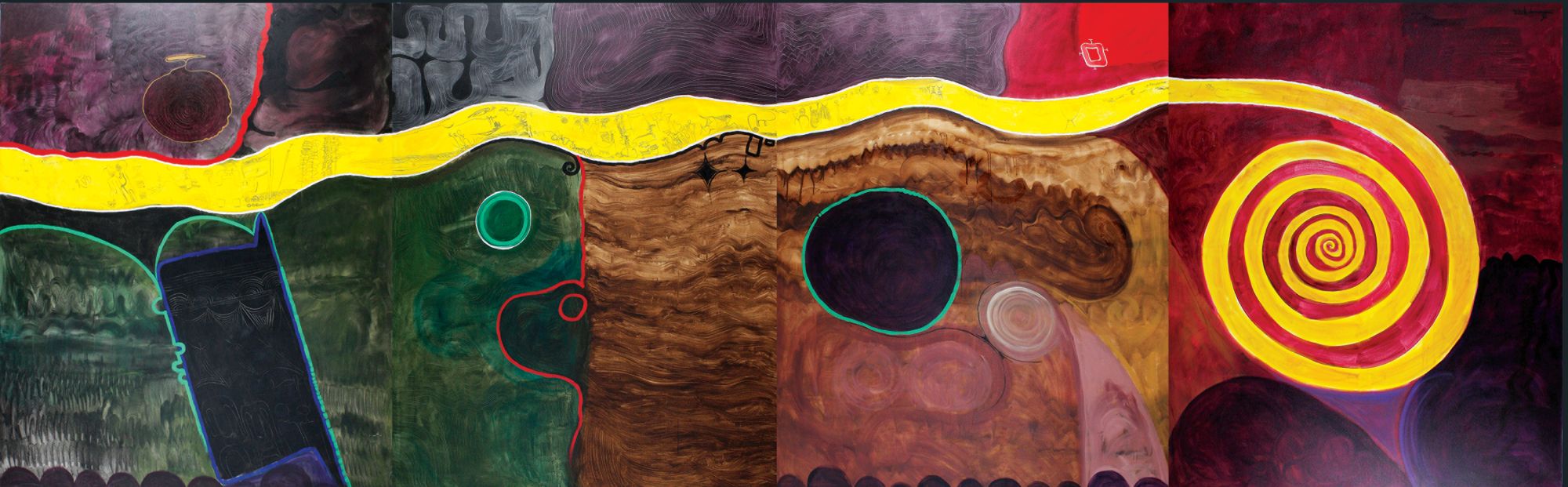
Image: (c) Obiora Udechukwu. Hood Museum of Art
Most closely associated with the Senegalese politician and poet Léopold Senghor, Négritude speaks to Africa’s own response to the rapidly evolving modern, post-imperial world, incorporating traditional cultural forms denigrated during colonial rule. In addition to referencing Senghor, several of the artworks evoke contemporary cinematic developments in Afro-Futurism. Some of Enwonwu’s paintings could easily have been the inspirational source of the costumes and movement sequences in the Oscar-winning films Black Panther and Sinners.

African women have traditionally been the object of the male gaze in ways that differ from how European women have been viewed and represented: it’s only relatively recently that African women have been recognised as having agency and been represented as something more than the stereotypical, tourist-friendly, carved wooden ‘tribal woman’. Here, though, we see women as artists, skilled makers and crafts people, dedicated to both traditional ways of working and embracing the modern.
One example stood out for me: Ladi Kwali’s pots, so exquisitely formed and decorated – all by hand. There’s a photograph of her making a pot outdoors on a sunny day, during her tour of the USA, as students look on, enthralled.
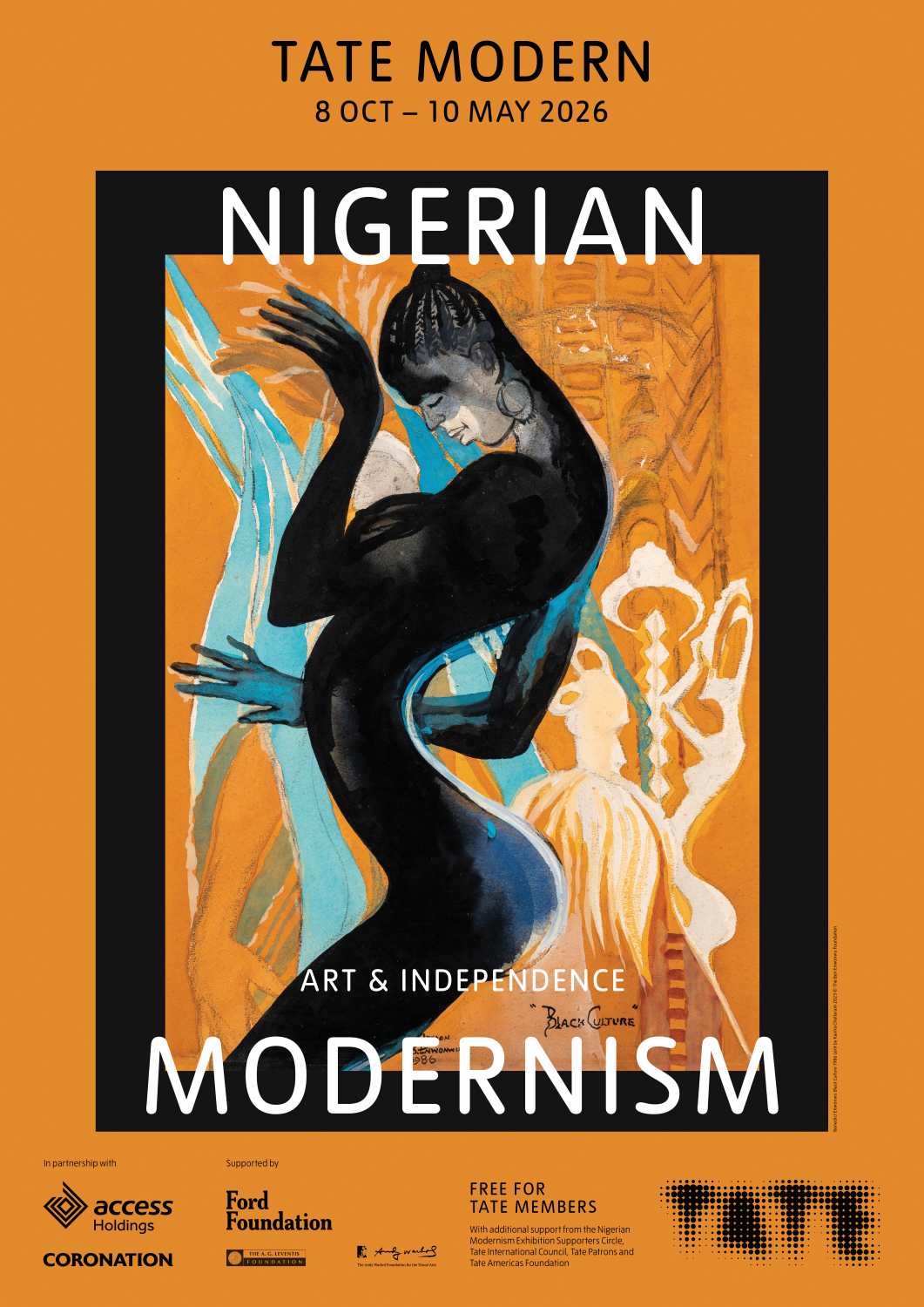 There’s still a tendency to underestimate African art and artists – their skills and achievements, their intellectual and cultural connectedness. The lack of knowledge of the post-Second World War context of this period – and the rich Nigerian cultural expression that emerged before and during the course of it – is still not generally known.
This exhibition is an enticing glimpse of the relationship between art, culture and politics from a continent bursting with creative talent, historically and in the present day.
Baroness Young of Hornsey is a Crossbench peer
Nigerian Modernism
Curated by: Osei Bonsu and Bilal Akkouche
Venue :Tate Modern – until 10 May 2026

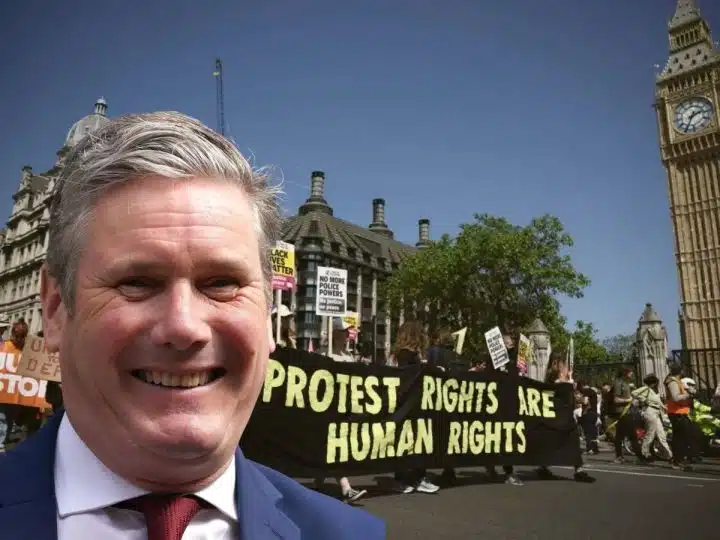

Keir Starmer’s government has moved closer than ever to crushing our protest rights in the UK, with his highly controversial Crime and Policing Bill moving to the final stages. And amid Israel’s ongoing war crimes throughout the Middle East, it seems crystal clear that Starmer’s efforts aim primarily to silence criticism of UK complicity.
Starmer’s Crime and Policing Bill seeking to ‘kill protest rights’ on Israel’s behalf
Starmer has already shown his authoritarian instincts openly. But Amendment 312 to the Crime and Policing Bill would let police effectively shut down protests via a vague concept of “cumulative disruption”. And despite opposition, MPs voted on 14 April to move the massive bill to its final stage.
Civil society groups have criticised the bill for ‘hollowing out‘ our right to protest and turning it into a ‘privilege’ that governments can simply take away when it doesn’t suit them. Faith leaders and a UN expert have joined them in calling it out too. And countless politicians have been vocal, with Labour peer Peter Hain saying:
this is a wholly unnecessary and damaging course of action that the government does not need to be taking
Labour MP Apsana Begum, meanwhile, clarified that:
The expansive police powers in the Crime and Policing Bill are a direct response to the demonstrations in solidarity with Palestine.
This connection is essentially common knowledge. And Your Party claimed Starmer’s moves show his cabinet is “desperate to repress the movement for Palestine“, with Jeremy Corbyn saying:
The government is fed up with people protesting about genocide.
Pro-Israel lobbyists have played a key role in securing Starmer and other right-wingers’ control of the Labour Party in recent years. And as Liberal Democrat peer Paul Strasburger has insisted:
in its attempts to crack down on pro-Palestinian protest, the government is eroding our democratic freedoms more broadly
Strasburger also mentioned the unlawful proscription of non-violent direct-action group Palestine Action, saying:
The authoritarian protest measures in the Crime and Policing Bill, and the misuse of terrorist proscription powers in the case of Palestine Action, are not isolated developments.
Freedoms won over centuries of popular struggle continue to be dismantled on behalf of the genocidal Zionist entity 3,000 miles away
Surreal to watch in real-time
Britain is well and truly occupied pic.twitter.com/68fLCXwAPX
— Matt Kennard (@kennardmatt) April 15, 2026
This isn’t just about Palestine. It’s about democracy itself
Labour MP Andy McDonald led opposition in parliament to Amendment 312. Begum joined him, along with MPs like Mary Kelly Foy, Kim Johnson, and former shadow chancellor John McDonnell. Johnson slammed how the “vast expansion of anti-protest powers” had:
sneakily come through the back door
And McDonnell echoed this, highlighting the dangers of rushing the amendment through alongside “many amendments that were supportable”. The government, he lamented, was contributing to the ongoing:
erosion of basic civil liberties won by people protesting over centuries
As Labour MP Clive Lewis stressed, the government:
knew this wouldn’t survive proper scrutiny – so they denied MPs the time to give it any.
The Independent reported that:
The change was written in to the Bill by the Government during its House of Lords stages, meaning MPs had not been able to scrutinise it in the chamber until Tuesday.
Numerous politicians highlighted how the crackdown on protest rights today would have limited the Suffragettes or anti-apartheid campaigners of the past. And they warned of how a government even further to the right may use such powers in the future. As Strasburger stressed, the consequences of the government’s crackdown:
extend far beyond any single movement.
The measures, he asserted:
are part of a wider shift in how protest is being treated in Britain, from a protected democratic right to something increasingly conditional on the judgement of those in power at the time and local police.
And if we don’t stop Starmer’s cabal from “killing free speech” now, he warned, citizens in the future may remember us as:
the generation that let it slip away
As the House of Lords considers the amendments and parliament moves to approve a final draft of the bill, we must all do our best to avoid becoming that generation.
Featured image via the Canary
By Ed Sykes


The TEFL Academy has released a report, The Great Gen Z Exodus. And it reveals that Britons are no longer waiting until their 30s to leave the UK. They’re doing it in their 20s, in record numbers, as economic pressure and shifting career priorities reshape life decisions.
In June 2025, departures among those aged 20–29 reached 130,000–140,000. This is significantly higher than pre-pandemic levels of around 92,000–95,000 in 2018. Meanwhile, emigration among those in their early 30s has fallen from around 78,000–81,000 in 2018 to 55,000–65,000 in 2025.
Together, this points to a clear shift towards earlier, opportunity-driven migration, with young professionals choosing to build their futures abroad sooner rather than later. This marks a fundamental shift in when Britons choose to leave the UK, with migration decisions happening earlier in life than ever before.
Mobility in pursuit of stability
The findings draw on a new survey of 4,000 Gen Z and young Millennials, alongside national migration statistics, labour market data and international mobility research. Together, the evidence points to a structural shift in how young Britons define success, stability and opportunity. They increasingly see international mobility as a necessary pathway to achieving those goals.
The findings form part of The Great Gen Z Exodus and Young Millennials report, conducted by The TEFL Academy in March 2026. It combines official UK migration statistics with a survey of 422 Gen Z and young Millennial adults aged 18–34 exploring international work opportunities.
The research provides insight into why Britain’s young workforce is increasingly looking abroad for employment. And it reveals a growing confidence gap in long-term prospects at home. Many respondents view international mobility as a strategic way to build stable careers and improve quality of life.
Teaching English abroad is emerging as one of the most accessible pathways for graduates and young professionals seeking global work experience.
Record youth exodus from the UK
Official migration data shows that the rise in young Britons leaving the UK is not a sudden spike. Rather it’s a clear post-pandemic acceleration driven by shifting economic realities and changing career priorities. Data from the Office for National Statistics Long-Term International Migration series (ONS LTIM) highlights how youth emigration has evolved over time.
Before the pandemic, emigration among young adults was relatively stable. In 2019, around 176,000 Britons aged 20–39 left the UK, reflecting a steady flow of young professionals seeking opportunities abroad (ONS LTIM 2019). During the pandemic, however, global movement temporarily stalled. In 2020, the number of young people leaving dropped sharply to around 115,000, as border closures and uncertainty forced many to delay or abandon plans to move overseas (ONS LTIM 2020).
The post-pandemic rebound has been both rapid and sustained. By 2022, pent-up demand was released, with approximately 200,000 young adults emigrating in a single year, surpassing pre-pandemic levels and signalling a structural shift rather than a temporary fluctuation (ONS LTIM 2022).
Since then, the trend has continued upward, but with a notable generational shift. By the year to June 2025, Gen Z emigration reached its highest level on record, with an estimated 130,000-140,000 leaving the UK, while young Millennial departures declined to around 55,000-65,000. This marks a clear transition, with Gen Z now driving the majority of youth emigration (ONS YE June 2025).
Overall, around 195,000 Britons under the age of 35 left the UK in the past year, meaning 76% of all British emigrants are now young adults, according to analysis from the Migration Observatory at the University of Oxford. This equates to hundreds of young professionals leaving the country each day during their most economically productive years.
A generation under economic pressure
Taken together, the data points to a post-pandemic inflection point, where delayed mobility has evolved into a longer-term behavioural shift, with Gen Z leading a new wave of global, opportunity-driven migration.
Survey responses from The TEFL Academy’s research reveal the economic pressures shaping these decisions. Among respondents aged 18–34, more than 86% agreed that UK wages do not reflect the cost of living, while around 79% said they feel constant financial pressure living in the UK.
Many also reported that it has become increasingly difficult to “get ahead”, with respondents rating the impact of cost-of-living pressures on their ability to progress at 4.29 out of 5 on average.
Despite strong personal ambition, confidence in the UK’s long-term economic outlook appears weak. Respondents rated their optimism about their long-term future in the country at an average of 2.44 out of 5, suggesting widespread uncertainty about the prospects available to young professionals.
These perceptions mirror wider national research. According to the British Council, 72% of UK adults aged 18–30 say they would consider living and working abroad, while 63% believe their standard of living is worse than that of their parents’ generation.
Housing insecurity compounds the problem: polling from the Adam Smith Institute shows that 65% of young people expect housing affordability to worsen, while around half say most people their age struggle to make ends meet.
Separate research from Currencies Direct suggests the trend may accelerate further, with 38% of people aged 25–34 and 36% of those aged 18–24 already considering leaving the UK to live or work abroad.
What young Britons are seeking abroad
Survey responses from individuals exploring TEFL qualifications highlight how strongly international mobility features in the career planning of people already interested in working abroad. Among respondents aged 18–34:
- 33% said they have already moved abroad.
- 26% said they are actively planning to move.
- 30% said they are seriously considering relocating.
- 11% said they are not currently planning to leave the UK.
While the survey reflects individuals already interested in international work opportunities, the findings illustrate how teaching English abroad is increasingly viewed as a practical pathway for young professionals seeking global experience and career mobility.
For many respondents, leaving the UK is less about escape and more about strategic life planning. Among those who had already moved abroad, the most commonly cited motivation was improving overall quality of life, which received an average rating of 4.45 out of 5. Expectations of better work-life balance also ranked highly, with an average rating of 4.03 out of 5.
Many participants also viewed international mobility as a long-term career strategy rather than a short-term decision. Respondents rated the idea that moving abroad is a strategic choice rather than an emotional one at 3.47 out of 5, while 54% agreed that staying in the UK could hold back their long-term potential.
The research also points to a broader generational shift in career mindset. Respondents rated the importance of developing global skills at 3.93 out of 5, while attitudes toward traditional career stability appear to be changing, with many indicating that the idea of a lifelong job in the UK holds less relevance for their generation.
Where young Britons are going
Destination trends suggest young professionals are targeting regions that offer clearer economic and lifestyle advantages. Among respondents actively considering relocating abroad:
- 47% identified Asia as their preferred destination, attracted by lower living costs and strong demand for English teachers in countries such as Thailand, Vietnam and South Korea.
- 26% were considering Europe, particularly destinations such as Spain and Portugal that combine cultural proximity with lifestyle appeal.
- 17% cited Australia or New Zealand, often drawn by higher wages and working holiday opportunities.
- Smaller shares pointed to the Middle East (6%), where tax-free salaries and rapid career progression are appealing, and Africa (4%), often driven by heritage connections or lifestyle motivation.
For many graduates, teaching English abroad represents one of the most accessible international career pathways. TEFL qualifications can be completed online and provide access to teaching opportunities across Asia, Europe and Latin America, allowing young professionals to gain international experience while earning an income.
The career impact of going global
Broader labour market research suggests that international mobility can have long-term career benefits. Studies across global labour markets show that professionals who gain international work experience often experience faster career progression, stronger cross-cultural skills and higher long-term earning potential.
As a result, many young professionals, increasingly view the decision to move abroad as an investment in their future career trajectory rather than a temporary lifestyle choice.
Rhyan O’Sullivan, managing director at The TEFL Academy, said:
Young Britons aren’t running away from the UK, they’re running toward opportunity. For many graduates, teaching English abroad offers a practical way to gain international experience, improve quality of life and build global careers.
With an estimated 5.5 million UK citizens already living abroad, The TEFL Academy’s research suggests that younger generations are redefining success as the ability to build a stable, fulfilling life wherever opportunity exists, rather than being tied to one country.
Featured image via the Canary
By The Canary
Politics
Holocaust survivors, MPs, artists demand Met reverse decision favouring fascist march over Nakba



More than a hundred MPs, holocaust survivors, artists, authors and performers — many of them Jewish — have presented a letter to the Met Police condemning the force’s — no doubt political — decision to deny the annual Nakba Day march its usual route so that a fascist march can dominate central London.
The 16 May march will commemorate the Nakba (catastrophe) of around 800,000 Palestinians being violently driven from their homes and land to create the ‘state’ of Israel. The Met has refused to sign off on its route application. Instead it is giving priority to a “hate march called by racist thug ‘Tommy Robinson’” in opposition to the Nakba commemoration.
The letter reads:
Public Letter
The Metropolitan police must not favour the far right over Palestine.We are appalled to hear that the Metropolitan Police have refused permission for the Palestine movement to march to commemorate Nakba day on 16 May on its proposed route and instead given over the political centre of London to a hate march called by racist thug ‘Tommy Robinson’ in response
The far right has targeted the Palestine movement before. They have done so aggressively with verbal and physical violence directed at the movement and the police.
The Palestine movement marches on the nearest Saturday to Nakba day every year, and they informed the police of their intention to hold the 16 May march in central London on 18 December 2025. While the police have refused their route, Tommy Robinson’s demonstration has been granted Kingsway, the Strand, Trafalgar Square, Whitehall and Parliament Square.
We call on the police to immediately reverse this shameful decision. We call on everyone of good conscience to join us for Palestine on 16 May. We will march.Signed by:


As well as Palestine solidarity campaigners, MPs and union leaders, the letter is signed by Holocaust survivors Stephen Kapos and Agnes Kory, as well as many leading Jewish and non-Jewish figures, including:
Alexei Sayle, writer and comedian
Andrea Kapos, filmmaker
Andrew Feinstein, author and former ANC MP
Arthur Neslen, journalist
Brian Eno, artist and musician
Francesca Martinez, writer and comedian
Gideon Mendel, photographer
Jen Brister, comedian
Juliet Stevenson, actor
Karishma Patel, journalist
Khalid Abdalla, actor
Matt Black, musician
Maxine Peake, actor
Michael Rosen, author
Mike Leigh, filmmaker
Miriam Margolyes, actor
Misan Harriman, photographer
Norma Cohen, actor and writer
Paloma Faith, musician
Prof Anne Karpf, writer and academic
Rachael Clyne, writer
Taj Ali, writer photographer and filmmaker
Stop the War’s Chris Nineham and MP John McDonnell gave their view on the Met’s move and the Starmer regime’s war on pro-Palestine protest:
In a statement on its Instagram page, the coalition of anti-apartheid groups organising the march also said that it rejected the Met’s decision and called for an immediate change:
View this post on Instagram
Featured image via RedPepper
By Skwawkbox


Most people you know will use Meta applications. But do they know the corporate giant is also paying Israeli extremists amid the ongoing genocide in Gaza and illegal settlement expansion in the West Bank?
Meta incentivising hate, violence, and illegality
Digital rights group 7amleh has released a new report showing Meta isn’t just failing to remove or limit “violent, racist, and inciting content against Palestinians” but is:
financially enabling it through monetization programs
7amleh doesn’t see this as:
a technical flaw or procedural gap, but rather a practice that incentivizes harmful content, normalizes violations, and amplifies their impact
Meta owns Facebook, Instagram, and WhatsApp. But it’s Facebook that’s the focus of the report, which documents:
dozens of Israeli extreme right wing and settlement related Facebook pages that are actively monetized by Meta
Such pages, it clarifies:
promote or legitimize military operations and violence against a protected civilian population
And Meta’s monetisation, which has apparently “failed to assess or mitigate the human rights risks associated”:
functions as a mechanism that rewards and supports the settlement expansion movement
As a result, the corporation:
risks contributing to internationally wrongful acts
The International Court of Justice (ICJ) has ruled that Israel’s occupation of Palestinian territories is illegal. There is also an overwhelming consensus among experts that Israel has committed genocide in Gaza. And although the ICJ will take time to make an official ruling, it accepted in 2024 that this was plausible and called for action.
Breaking its own rules
Meta very clearly took sides early on in the genocide (as did other major global corporations). And as 7amleh’s report explains:
Hebrew content that includes incitement, dehumanization, and explicit calls for violence has been allowed to circulate widely, with limited enforcement
Palestinian content creators, on the other hand, have been:
structurally barred from accessing monetization tools solely because they are based in Palestine
Meta, a report summary says, has essentially created:
a dual system: on one hand, Palestinian digital and economic participation is suppressed; on the other, pages that promote settlement activity, violence, and incitement against Palestinians are financially rewarded.
The company has monetised:
Israeli right-wing pages and accounts, including those linked to the settlement movement, far-right public figures, and media outlets known for incitement.
But it also seems to have gone against its own rules, as the report:
documents cases involving entities that should be ineligible for monetization under Meta’s own policies, such as government bodies.
7amleh wants Meta to stop excluding Palestinians from monetisation, end the monetisation of pages and accounts inciting hatred and violence, and enforce its policies fairly. It also calls for independent audits and a fair appeals process.
Featured image via the Canary
By Ed Sykes
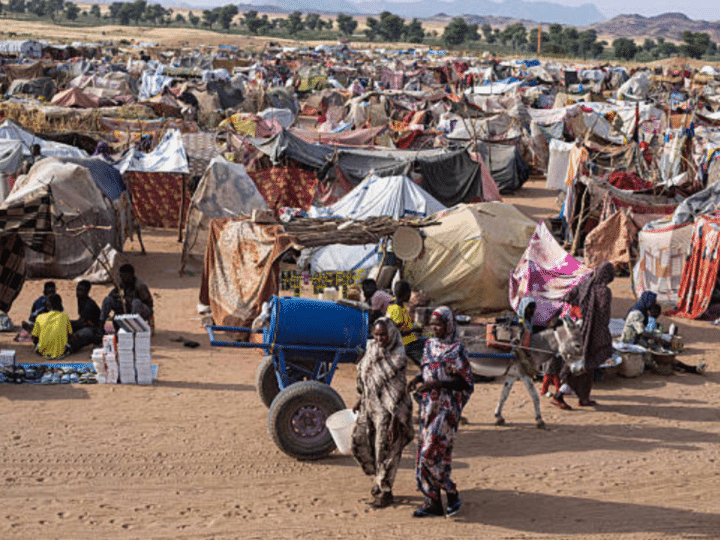

The world has abandoned, not forgotten, people in Sudan, a top UN official has said. UN coordinator for Sudan Denise Brown said the country was “on repeat”. The war is in its fourth year. Some estimates say 150,000 people have died as a result of the war with over 10 million displaced.
Human rights violations, widespread sexual violence, and sundry other war crimes have been normalised as the UAE-backed Rapid Support Forces (RSF) fights the national government.
As Sudan’s war moves into a fourth year, civilians are still being killed, displaced and subjected to widespread sexual violence.
"We are on repeat in Sudan", the UN’s top humanitarian official in the country warned on Monday, calling for urgent action to stop the fighting. pic.twitter.com/4U29nPFIFS — UN News (@UN_News_Centre) April 13, 2026
And although the world’s great power have failed to help, many of them are involved – pursuing their own interests at the expense of the Sudanese population. Neighbouring states have also become entangled.
Brown told journalists:
We are on repeat in Sudan. Please don’t call this a forgotten crisis. I’m referring to this as an abandoned crisis.
The UN website said:
Humanitarians in Darfur have treated close to 2,500 survivors of sexual violence over the past year. Ms. Brown said the impact goes far beyond the immediate survivors, affecting families, communities and children born as a result of sexual violence.
She also highlighted mass killings around El Fasher, where she said 6,000 people were killed in three days according to verified information, while the real number could be higher.
Brown asked:
What more has to happen for everyone to sit up and pay attention, to find a solution?
And:
She urged Member States to focus on the forces driving the war, including the flow of weapons and the wider war economy. She also referred to questions around the Darfur arms embargo and whether enough is being done to enforce it.
Arms flows into Sudan
As the Canary has reported, the UAE has been a major backer of RSF in its war with the Sudanese government. Turkey, Egypt, Israel and many more countries are pursuing their own interests in Sudan too. British military components has also shown up on the battlefield in RSF hands. The UK is a major arms supplier to UAE.
As the Canary has said in our previous coverage of this poorly understood genocidal war:
The war in Sudan is theoretically between RSF and the Sudanese government. But foreign states pursuing their own interests are backing the combatants. The United Arab Emirates (UAE), for example, backs the RSF with arms and equipment. Egypt backs the government, alongside Russia, Turkey, Iran, Saudi Arabia, and Qatar. Israel has backed both sides at different times.
The mounting death toll is similarly mindboggling:
RSF has killed Sudanese civilians in vast numbers. And some estimates say 150,000 people have died and over 10mn have been displaced by fighting.
You can read more of our reporting on RSF and Sudan here.
Beyond time for action
On 9 April, a Yale forensic human rights thinktank reported how vehicles modified for paramilitary use was flowing into Sudan via Ethiopia And, as in war zones all over the world, drones have become a deadly factor in the fighting. France 24 reported on 14 April that UN aid chief Tom Fletcher claimed nearly 700 people had been killed by drones so far in 2026.
Fletcher said:
We need action now – to stop the violence, protect civilians, ensure access to communities in greatest danger, and fund the response.
This grim and chastening anniversary marks another year when the world has failed to meet the test of Sudan.
Sudan’s plight is truly hideous but it barely seems to register amid various other wars raging around the world. Yet it is an inescapable fact that the killing there is taking place on a scale which likely exceeds that in Gaza and, for example, Iran – so far, at least. Like those conflicts it is a result of centuries of imperial intervention by regional and global powers – not least, Britain. The horrors in Sudan should be reported with the same vigour.
Featured image via the Canary
By Joe Glenton


Kuwait has arrested journalist Ahmed Shihab-Eldin in an aggressive social media crackdown. The Gulf state accuses Shihab-Eldin of publicising damage to infrastructure caused by Iranian retaliation to the unprovoked and illegal US-Israeli war.
— jeremy scahill (@jeremyscahill) April 14, 2026
 Prominent Journalist Ahmed Shihab-Eldin Has Been in Jail for Six Weeks in Kuwait, Faces Trial in Special Tribunalhttps://t.co/6u8QeUpMUU
Kuwait crackdown
Drop Site News reported on 14 April:
Prominent journalist Ahmed Shihab-Eldin was arrested six weeks ago in Kuwait where he remains in detention and faces prosecution in a special tribunal over social media posts related to the Iran war. His detention comes as part of a wider crackdown on online speech in Kuwait and other Gulf countries during the U.S.-Israeli war with Iran that has engulfed the region.
CPJ calls on Kuwaiti authorities to immediately and unconditionally release Kuwaiti-American journalist Ahmed Shihab-Eldin, detained under new security and fake news laws.
Read more: https://t.co/H1qBu1OCFg#FreeAhmed #FreeAhmedEldin pic.twitter.com/aCUtmw6i9l
— Committee to Protect Journalists (@pressfreedom) April 14, 2026
The US-based outlet described Shihab-Eldin as “an American born Kuwaiti citizen” and:
award-winning journalist with more than two million followers across social media platforms.
Human rights organisations have condemned his detention. Sara Qudah, the Middle East and North Africa Director for the Committee to Protect Journalists (CPJ), told Drop Site:
We are seeing escalating censorship of journalists and news outlets across the world in relation to the Iran war, including in the Gulf. National security is being used as a pretext to crack down on freedom of speech and Shihab-Eldin’s detention is emblematic of that. He must be freed immediately.
He was reportedly arrested on 3 March 2026, five days after the illegal assault on Iran began, and has had little contact with his legal counsel. Drop Site said:
There has been little transparency around his case, but the charges he faces are reported to be related to his social media posts, including a video showing a U.S. fighter jet crash near a U.S. air base in Kuwait, according to CPJ, which stressed that the videos and images he shared had been publicly available.
Adding:
The charges Shihab-Eldin faces may include allegations of spreading false information, harming national security, and misuse of a mobile phone.
Press freedoms
Kuwait, like UAE, has enacted a ban on reporting details of war damage. Only a month ago Shihab-Eldin spoke to Pullitzer-winning reporter Chris Hedges about how the legacy media had capitulated to the US and Israel’s genocidal impulses:
Drop Site said dozens of other people had been detained in similar circumstances. Kuwait has created new courts designed to deliver rapid judgements:
The courts were established to “resolve cases with high speed,” and the Kuwaiti government claimed they were “necessary due to the extreme danger terrorism poses to national stability and peace,” according to Kuwaiti newspaper Al-Wasat.
Authoritarians are carrying out a global assault on press freedom and truth telling. This has only been exacerbated by the genocide in Gaza and the US-Israeli attack on Iran. The Canary stands in solidarity with Ahmed Shihab-Eldin. And with our fellow journalists all over the world who are under attack. He should be freed immediately to continue his vital work.
Featured image via the Canary
By Joe Glenton


Every few months, a weight loss story captures attention online.
Recently, it was a woman who reportedly lost around 10 stone in just six months. The story was framed around discipline, routine, and a dramatic transformation. The kind that inevitably sparks the same reaction:
“How did she do it?”
And more importantly:
“Could I actually stick to that?”
According to the report, her results were not just down to a traditional restrictive diet. They were supported by the use of prescription weight loss injections, alongside changes to her eating habits and lifestyle. These treatments work by reducing appetite and helping people feel full on much smaller portions, which can make it easier to maintain a calorie deficit without relying purely on willpower.
That detail matters.
Because behind most of these stories sits a familiar assumption that losing weight means strict rules, repetitive meals, and cutting out anything remotely enjoyable.
Chicken. Rice. Salad. Repeat.
But for many people using weight loss injections today, that idea is starting to look increasingly outdated.
The old model of dieting
For years, weight loss advice has followed a similar pattern.
- Cut calories as much as possible
- Stick to “clean” foods
- Avoid anything seen as a treat
- Rely heavily on willpower
For some people, that approach works in the short term.
But for many others, it leads to a cycle of restriction, burnout, and eventually slipping back into old habits. Not because they lack discipline, but because the approach is difficult to maintain in everyday life.
Why things are starting to change
Weight loss injections are shifting the experience in a way that is less about forcing discipline and more about reducing friction.
By lowering appetite and helping people feel full sooner, they change the starting point. Instead of constantly fighting hunger, people are working with a body that is not pushing back as hard.
That is why treatments such as mounjaro weight loss injections are becoming more widely discussed.
But one of the biggest misunderstandings is what this means for diet.
Because while appetite is reduced, that does not mean people are suddenly following extreme or highly restrictive meal plans.
You don’t have to eat like a bodybuilder
One of the most persistent myths around weight loss is that your diet has to look perfect to be effective.
Endless meal prep. Cutting out entire food groups. Eating the same meals every day.
In reality, many people using weight loss injections find the opposite.
Because their appetite is lower, they are not constantly dealing with cravings or hunger spikes. That often leads to:
- Smaller portions without strict tracking
- More flexibility in food choices
- Less focus on “good” and “bad” foods
Food becomes less of a battle and more of a background part of the day.
So what does eating actually look like?
Instead of following rigid rules, most people settle into a more balanced and realistic approach.
That might include:
- Eating when they are genuinely hungry rather than on a strict schedule
- Having smaller versions of normal meals instead of separate “diet food”
- Including foods they enjoy without feeling the need to overdo it
There is still a structure to it, but it is not built around restriction for the sake of it.
For anyone trying to understand how to approach this properly, guidance around what to eat on mounjaro can help turn that flexibility into something more practical without falling back into overly strict dieting habits.
Why extreme diets are losing their appeal
Stories of rapid weight loss still tend to focus on discipline because that is what people expect.
But the reality is shifting.
More people are moving away from the idea that weight loss has to feel punishing to be effective. Instead, the focus is starting to move towards approaches that are easier to live with long term.
That does not mean there is no effort involved. It just means the process does not have to rely entirely on restriction.
A different way to think about weight loss
Rather than asking how strict a diet needs to be, a better question might be how sustainable it is.
Can you actually keep eating that way for months, not just weeks?
Does it fit around your life, or does everything have to revolve around it?
For many people, that is where traditional dieting falls short.
The bottom line
Weight loss stories will probably always highlight dramatic transformations.
But the way people get there is changing.
For some, it no longer looks like repetitive meals and constant restriction. It looks more flexible, more balanced, and far more realistic to maintain.
And for anyone who has struggled with strict diets in the past, that shift might be the most important change of all.
Disclaimer: This article is for informational purposes only and does not constitute medical advice. Weight loss treatments, including prescription injections, should only be used under the guidance of a qualified healthcare professional. Always consult your GP before starting any new diet, medication, or weight loss programme. Individual results may vary.
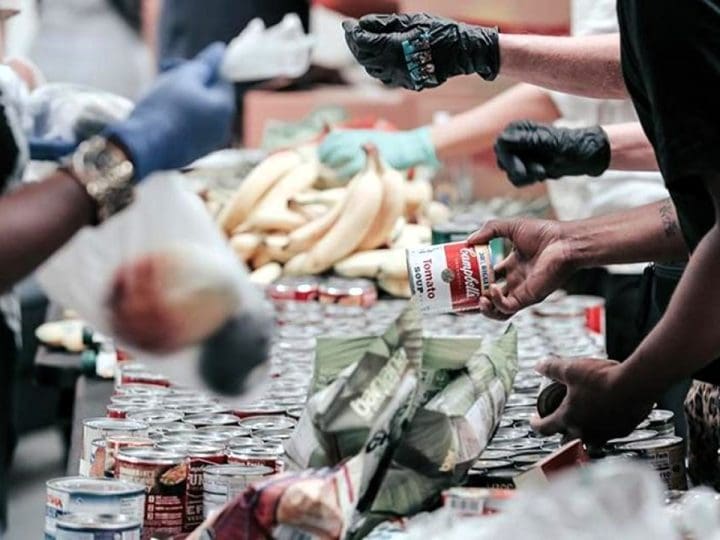

The Green Party have announced measures to tackle the ‘affordability crisis’ and to end the ‘normalisation’ of food banks.
The Greens have called for a raft of measures that will support all people who are affected by the crisis. Though it’s more commonly known as the cost-of-living crisis, it’s clearly more about the fact that people can’t afford the inexplicably rising bills.
Green policies to support all, not just the rich
Leader Zack Polanski and deputy leader Rachel Millward announced the plans at a Community Fridge in Sussex.
The measures will include universal support with energy bills this winter, rent controls, free school meals for all, and for the UK to join a customs union with the EU to reduce costs to businesses.
Though it shouldn’t be controversial, one part of the plans will be talked about far more than the others: the Greens have proposed to introduce a 10:1 pay ratio. This would mean the highest-paid person in a company couldn’t earn more than ten times what the lowest-earning employees do.
In practice, minimum-wage employees would get a pay rise, but crucially, we would also see the end to sky-high executive salaries and ridiculous bonuses.
This will no doubt be met with criticism from the ruling class, but it’s also causing a furore on social media. Annoyingly, some criticism is coming from those in the working class who are desperate to suck off those with a foot on their neck. This is despite the average FTSE 100 CEO earning around 113 times more than the average worker.
There’s always the argument that if we tax the billionaires, they’ll leave, but many of them already have their assets tied up offshore to save money anyway. It’s more important right now that we make lives easier for those who are struggling than do what the rest of the parties are doing and appease billionaires.
Approximately 6.5 million people a year are forced to turn to foodbanks. One in five of these are from a working household. In 2025, the Trussell Trust provided over 2.6 million food parcels. Recent research found that, whilst supermarket prices rise, 40% of people are left with less than £25 at the end of each week.
Policies for real people
As Canary reporter James Wright said recently, while Labour have come up with cost-of-living policies, they’re certainly not new. They’re just the same old tired Labour and Tory policies reheated – something Labour does best.
Polanski was keen to impress that everyone should be able to access support, because it’s far easier to fall into poverty than become a billionaire.
Polanski said:
The affordability crisis is something affecting nearly everyone, from the most vulnerable to people in work and comfortable, where any change in circumstance can push people over the edge into requiring a foodbank.
This crisis is totally avoidable and down to choices made by this Labour government and previous Tory governments. The Greens have a plan which would make different choices, taking on corporate power and vested interests to give ordinary people a way out of this crisis
Rachel Millward pointed to how much wealth there is in the UK, which is being hoarded by a few to the detriment of others:
The UK is the sixth largest economy in the world where the 50 richest families hold more wealth than the poorest 50% of the population. Yet millions face food insecurity, food poverty and turn to foodbanks to prevent them going hungry. A high proportion of these are people from working households.
Millward continued:
It’s time to end the normalisation of food bank use and the scourge of food and energy poverty affecting so many families.
It’s very easy to praise this ambitious policy, but it must also be pointed out that now is a convenient time to announce it. We’re just weeks away from local elections, yet councillors won’t have the power to implement any of this if elected. The Greens have rightly criticised Reform for running with national policies in the same manner.
It remains to be seen whether the Greens will follow through with all of their policies, but its definitely refreshing to see policies that aren’t wishy washy as fuck.
Featured image via the Canary


This morning, BP announced oil trading results in 1Q 2026 are expected to be ‘exceptional’ compared to the ‘weak’ performance of the previous quarter.
BP said that the “ongoing situation in the Middle East” had “heightened volatility in crude oil, natural gas and refined products prices.” So, yes, the price shock and volatility have helped its profits.
The surge comes with Brent crude averaging $81.13 per barrel in the first quarter of 2026. That is up from $63.73 per barrel in the fourth quarter of 2025.
BP hails ‘exceptional’ quarter for oil traders as Iran war stokes volatility https://t.co/gjME3EpQMD
— Financial Times (@FT) April 14, 2026
Shell expects a similar boost from the war. Also, TotalEnergies traders made more than $1bn in March by hoarding crude from the UAE and Oman.
BP and others are wart profiteers
Five leading oil companies, BP, Shell, Chevron, ExxonMobil, and TotalEnergies, have recorded profits of almost half a trillion dollars (US$467 billion) between 2021 and 2026, according to an analysis from Global Witness.
Already in March, professor Nick Butler, a former Downing Street energy adviser who worked at BP for almost three decades, said on LBC that the closure of the Strait of Hormuz could create a physical oil shortage, leading to rationing.
Meanwhile in the UK, Starmer announced £53m for vulnerable households who rely on heating oil in making from the very same crisis mid-March – a pittance if compared to the profits BP and its rivals are expected to make and already made this decade.
So, the winners of the US/Israel/UK war on Iran, Lebanon, and Gaza are the oil and arms traders.
West Asia burns. BP counts its “exceptional” profits.
Featured image via the Canary
By The Canary


Afghan women fleeing one of the world’s most extreme systems of gender persecution are being denied safe asylum in the UK. And this is undermining the UK’s commitments on Women, Peace and Security, a new briefing warns.
Published by Amnesty International UK and the Gender Action for Peace and Security network, the briefing finds that asylum policies framed as restoring “control” are instead designed to deter people from seeking protection, shutting out women and girls escaping Taliban repression.
Sharp drop in successful Afghan asylum claims
Recognition rates for Afghan asylum claims have fallen sharply from 96% to 34% since the current government took office. At least 370 Afghan women and girls had asylum claims refused in 2025 alone.
Campaigners say the consequences are stark. A country that claims global leadership on women’s rights is turning away women fleeing systematic oppression.
Afghanistan is one of the most extreme examples of gender persecution in the world. Women and girls have been erased from public life, barred from education, excluded from work, stripped of autonomy, and silenced by sweeping restrictions on their movement and expression.
Many are effectively confined to their homes under threat of punishment. This is the reality women are fleeing. Yet current UK asylum policies are denying protection to many of them.
Karla McLaren, Amnesty UK’s head of government affairs, said:
Afghanistan is one of the worst places in the world to be a woman. Women have been systematically erased from public life, denied education, autonomy, and even the most basic right to be seen or heard.
Yet as the Taliban tightens its grip, the proportion of women granted safety here is falling. That is indefensible.
The fact that Afghan women are being denied refuge here, despite clear evidence of the brutality they face under the Taliban, shows the extent of the moral and practical collapse in the UK’s asylum decision-making.
Denying protection to women who so clearly should be recognised as refugees, preventing them from rebuilding their lives with dignity, and deliberately subjecting them to years of uncertainty is not strength, but cruelty.
Ministers cannot claim international leadership on women’s rights while turning away women fleeing persecution. The UK’s treatment of Afghan women seeking protection is a total betrayal of the principles it claims to stand for.
A system designed to deter, not protect
The briefing identifies a pattern of policies making it harder for refugees to secure safety in the UK, with disproportionate harm to women and girls. These include:
- Rising refusal rates, including for Afghans despite well-documented persecution.
- Plans to cut refugee status from five years to 30 months, increasing instability.
- Proposals that could delay settlement for up to 20 years, trapping refugees in prolonged insecurity.
- Ending refugee family reunion, closing a vital safe route used predominantly by women and children.
Taken together, campaigners warn these measures amount to a system designed to deter people from seeking asylum rather than protecting those entitled to it.
The UK is the UN Security Council penholder on the Women, Peace and Security agenda. This means it’s responsible for leading global efforts to protect women and girls affected by conflict.
However, the organisations warn that current asylum policies directly undermine these commitments. Denying protection to women fleeing gender-based persecution, including forced marriage, sexual violence, and exclusion from education and work, contradicts the UK’s stated leadership on the global stage.
At a time of rising global conflict and displacement, campaigners say the UK should be strengthening protection, not restricting it.
The organisations behind the briefing call on the UK government to:
- Reinstate refugee family reunion rules.
- Repeal restrictive asylum decision-making provisions.
- Abandon plans that weaken protection for recognised refugees.
- Expand safe routes for women and girls fleeing conflict.
Featured image via the Canary
By The Canary

Fellowship PAC Sends $3M in Ads to Hines-Linked Firm

Hamilton Cinema bringing back much-loved film favourites

Closing the innovation gap in Thailand

Why Israel is blocking foreign journalists from entering

Bitcoin: We’re Entering The Most Dangerous Phase

Alan Cumming Brands Baftas Ceremony A ‘Triggering S**tshow’

HDB Financial Share q4 result 2026 I HDB Financial SHARE DIVIDEND I HDB Financial DIVIDEND I HDBFS
![Tom Lee: Important Warning To All Ethereum Holders - The Bottom Is Already In [2026 Prediction]](https://wordupnews.com/wp-content/uploads/2026/04/1776284749_maxresdefault-80x80.jpg)
Tom Lee: Important Warning To All Ethereum Holders – The Bottom Is Already In [2026 Prediction]

Ripple XRP: do you see whats coming ?
-

 Politics5 days ago
US brings back mandatory military draft registration
-
 Sports5 days ago
Man United discover Nico Schlotterbeck transfer fee as defender reaches Dortmund agreement
-

 Fashion5 days ago
Weekend Open Thread: Veronica Beard
-

 Politics6 days ago
Malcolm In The Middle OG Turned Down ‘Buckets Of Money’ To Appear In Reboot
-

 Politics3 days ago
World Cup exit makes Italy enter crisis mode
-

 Crypto World6 days ago
Canary Capital Files SEC Registration for PEPE ETF
-

 Business5 days ago
Tesla Model Y Tops China Auto Sales in March 2026 With 39,827 Registrations, Beating Cheaper EVs and Gas Cars
-

 Crypto World2 days ago
The SEC Conditionalises DeFi Platforms to Be Avoided for Broker Registration
-

 Crypto World2 days ago
SEC Signals Exemption for Crypto Interfaces From Broker Registration
-

 News Videos13 hours ago
Secure crypto trading starts with an FIU-registered
-
 NewsBeat3 days ago
Pep Guardiola and Gary Neville agree over Arsenal title problem that benefits Man City
-

 Business5 days ago
OpenAI Halts Stargate UK Data Centre Project Over Energy Costs and Copyright Row
-

 Business4 days ago
Ireland Fuel Protests Enter Day 5 as Blockades Spark Shortages and Government Prepares Support Package
-

 Politics6 days ago
LBC Presenter Mocks Trump Over Iran War Failures
-

 Crypto World5 days ago
Federal judge blocks Arizona from bringing criminal charges against Kalshi
-
 NewsBeat4 days ago
JD Vance announces ‘no agreement’ with Iran over nuclear weapons fear
-

 NewsBeat1 day ago
Trump and Pope Leo: Behind their disagreement over Iran war
-

 Crypto World2 days ago
SEC Proposes Certain Crypto Interfaces Don’t Need to Register as Brokers
-

 Tech6 days ago
A version of Windows 10 released a decade ago is now eligible for additional security patches
-

 Business5 days ago
IMF retains floor for precautionary balances at SDR 20 billion
You must be logged in to post a comment Login