Politics
The Inside Story of the Campaign for a Second EU Referendum’


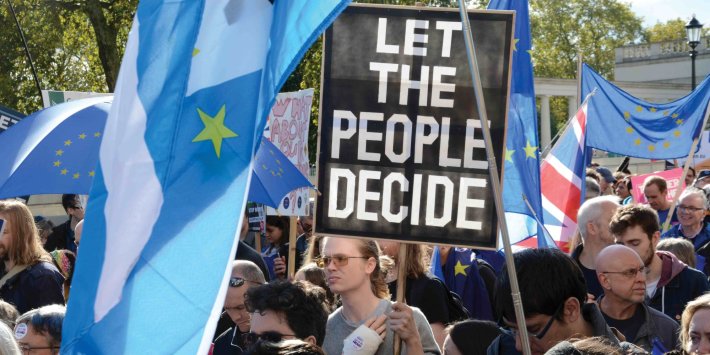
October 2019: People’s Vote march, London | Image by: Paul Smyth / Alamy


6 min read
Morgan Jones’ account of the campaign for a second EU referendum carefully sets out how Britain and the remain world lost control – not in a single calamity but in instalments
Brexit has generated a literature of noise. There are books of recrimination and adulation, books of confession and books that replay the referendum campaign as if it were a war diary. Morgan Jones has written something different. No Second Chances is about what happened after the shouting, when politics returned to its habitual setting of process and drift. Her subject is the campaign for a second EU referendum. Her larger point is that Britain and the remain world lost control, not in a single calamity but in instalments.
Jones begins where the movement began, not in Millbank Tower but in market towns and Facebook groups and improvised street politics. The bEUret, that blue beret with yellow stars, becomes a symbol of identity and unease. It signals devotion and a problem. The professionals who wanted to shift Parliament needed the base and they also feared being defined by it. The base wanted reversal. The professionals wanted a route that sounded like constitutional repair, not revenge; a way to put the question back to the country while insisting they were cleaning up a mess rather than overturning a result. Between them sat a public that was tired and often hostile and not much inclined to be told it must vote again for its own good.


Image by: Lynchpics / Alamy Live News
The book’s climax is not Westminster drama but organisational breakdown
The chosen instrument was the People’s Vote, a phrase designed to sound less like a rerun and more like a right. It offered unity to a fragmented remain world and it offered a single ask that donors could fund and journalists could recognise. It also carried an ambiguity the campaign never solved. Was the purpose to secure a vote, to stop Brexit, or to build a remain campaign in waiting? Jones shows how these aims were spoken as one and acted as several, which is fatal in any campaign and doubly so in a country already split into identities.


At its best, this was civic mobilisation. Jones captures the scale of the marches and the ingenuity of local organisers and the stubborn humour that kept people going. She also records the cost. Abuse flooded inboxes and threats became routine. Yet mobilisation was never the same as persuasion. The movement could fill Whitehall and still struggle to move the MPs who mattered. When staff tried to soften the visual language, offering Union flags in place of EU flags, many activists refused. A movement that could not persuade could still console itself with numbers, and it did.
Her most telling pages are about institutions and incentives. Britain Stronger in Europe became ‘Open Britain’ and Open Britain became the shell that housed the new campaign. That inheritance brought data and money, and it also brought suspicion, because the grassroots remembered the failure of the official remain effort. Governance was improvised. Authority was contested. Strategy was repeatedly subordinated to ego and donor preference and the daily demands of press and social media. The campaign could raise money and win headlines, but it could not settle its own line, and it could not decide whether it was a pressure group, a brand, or a government in exile.


Jones’s account of Labour is equally sharp. After 2017 Labour held the casting votes in any parliamentary route to a new referendum. Yet the party could not decide whether Brexit was a fact to manage or a project to reshape. Jones sets out the internal groups and the factional traps and shows how conference procedure became the proxy for strategy, a way to postpone a choice while claiming to respect the members. The so-called shadow cabinet Brexit sub-committee, which met in secret specifically to prevent the deputy leader from attending, was not merely dysfunctional; it was emblematic of a political culture that mistook internal control for strategic clarity. This is my own experience of the period rather than a scene Jones reports. I was prohibited from attending and with all internal avenues of negotiation closed, I had no compunction about supporting the People’s Vote campaign.
The book’s climax is not Westminster drama but organisational breakdown. The People’s Vote implodes in a struggle over control and roles and data. Roland Rudd fires Tom Baldwin and James McGrory, staff walk out and the campaign evaporates on the eve of the election that ends the argument.
Jones does not treat this as soap opera. She treats it as parable. She is careful, too, to show why the rupture mattered inside the building. The young staffers, by and large, “adored” Baldwin and McGrory, and that loyalty became a force in its own right.

Lord Watson of Wyre Forest is a Labour peer and former deputy leader of the Labour Party
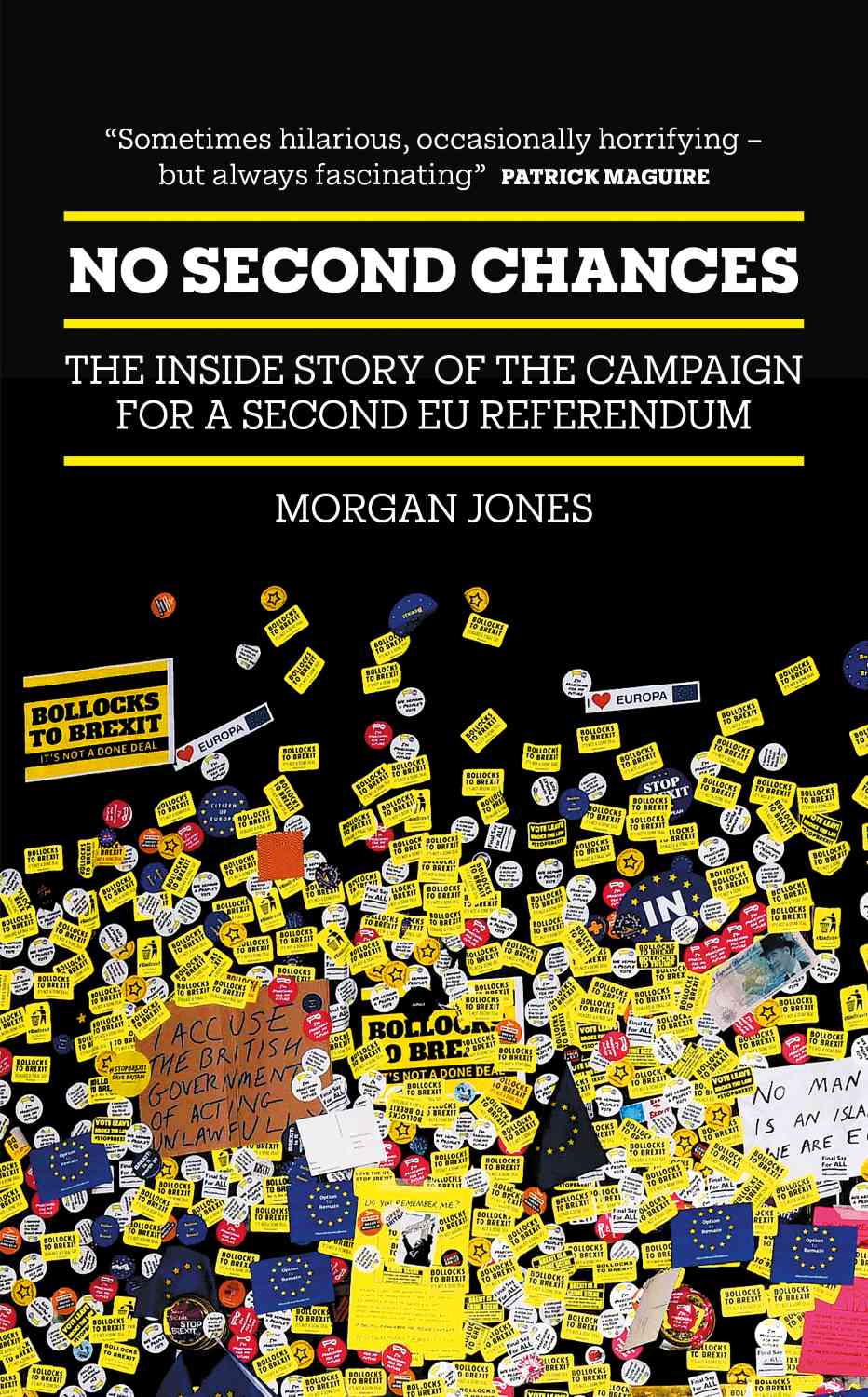
No Second Chances: The Inside Story of the Campaign for a Second EU Referendum
By: Morgan Jones
Publisher: Biteback

You must be logged in to post a comment Login