
Politics
The Inside Story of the Campaign for a Second EU Referendum’


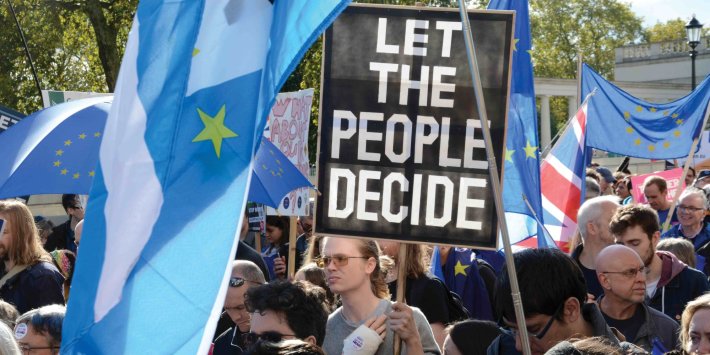
October 2019: People’s Vote march, London | Image by: Paul Smyth / Alamy

6 min read
Morgan Jones’ account of the campaign for a second EU referendum carefully sets out how Britain and the remain world lost control – not in a single calamity but in instalments
Brexit has generated a literature of noise. There are books of recrimination and adulation, books of confession and books that replay the referendum campaign as if it were a war diary. Morgan Jones has written something different. No Second Chances is about what happened after the shouting, when politics returned to its habitual setting of process and drift. Her subject is the campaign for a second EU referendum. Her larger point is that Britain and the remain world lost control, not in a single calamity but in instalments.
Jones begins where the movement began, not in Millbank Tower but in market towns and Facebook groups and improvised street politics. The bEUret, that blue beret with yellow stars, becomes a symbol of identity and unease. It signals devotion and a problem. The professionals who wanted to shift Parliament needed the base and they also feared being defined by it. The base wanted reversal. The professionals wanted a route that sounded like constitutional repair, not revenge; a way to put the question back to the country while insisting they were cleaning up a mess rather than overturning a result. Between them sat a public that was tired and often hostile and not much inclined to be told it must vote again for its own good.

Image by: Lynchpics / Alamy Live News
The book’s climax is not Westminster drama but organisational breakdown
The chosen instrument was the People’s Vote, a phrase designed to sound less like a rerun and more like a right. It offered unity to a fragmented remain world and it offered a single ask that donors could fund and journalists could recognise. It also carried an ambiguity the campaign never solved. Was the purpose to secure a vote, to stop Brexit, or to build a remain campaign in waiting? Jones shows how these aims were spoken as one and acted as several, which is fatal in any campaign and doubly so in a country already split into identities.
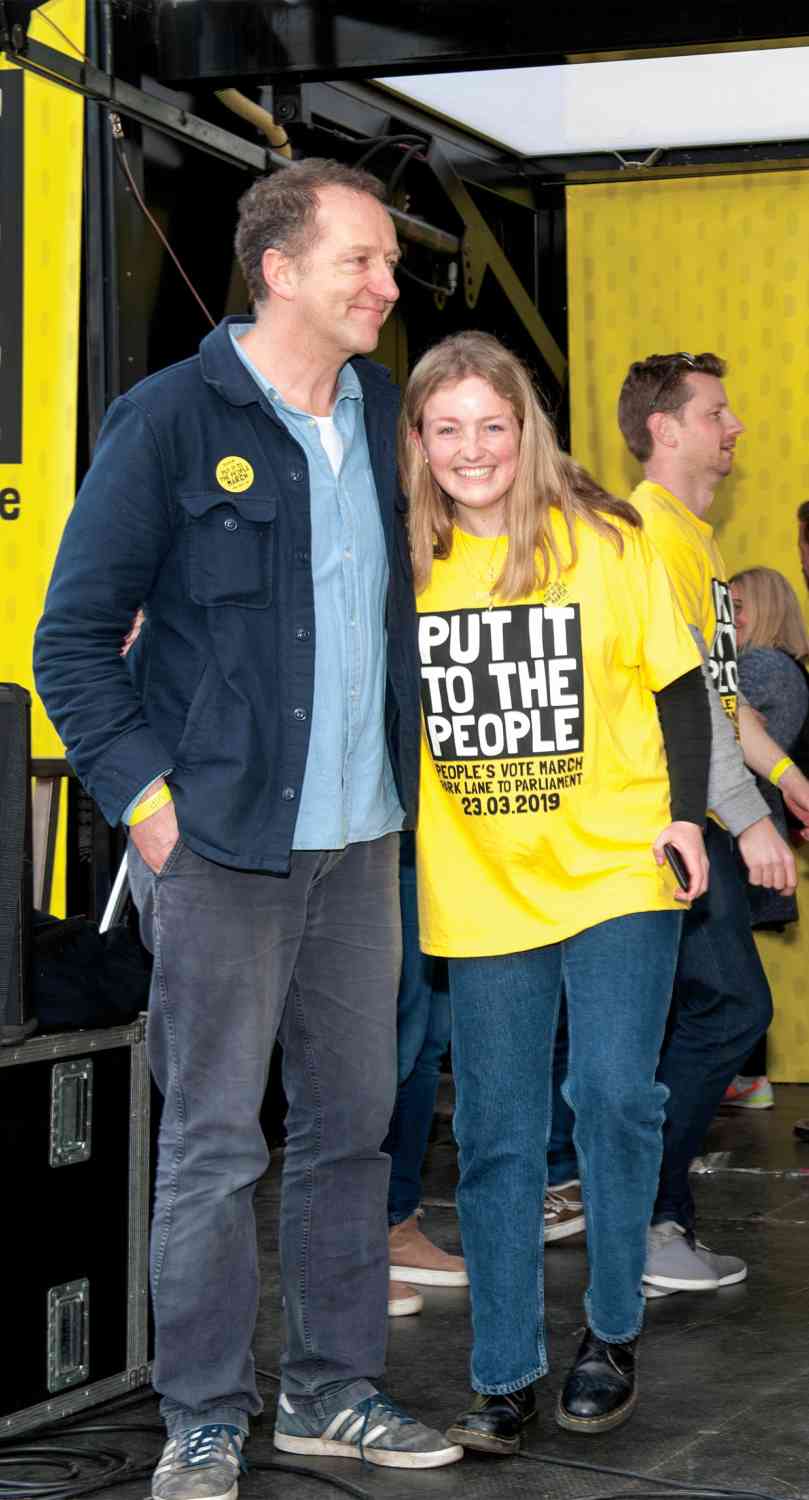
At its best, this was civic mobilisation. Jones captures the scale of the marches and the ingenuity of local organisers and the stubborn humour that kept people going. She also records the cost. Abuse flooded inboxes and threats became routine. Yet mobilisation was never the same as persuasion. The movement could fill Whitehall and still struggle to move the MPs who mattered. When staff tried to soften the visual language, offering Union flags in place of EU flags, many activists refused. A movement that could not persuade could still console itself with numbers, and it did.
Her most telling pages are about institutions and incentives. Britain Stronger in Europe became ‘Open Britain’ and Open Britain became the shell that housed the new campaign. That inheritance brought data and money, and it also brought suspicion, because the grassroots remembered the failure of the official remain effort. Governance was improvised. Authority was contested. Strategy was repeatedly subordinated to ego and donor preference and the daily demands of press and social media. The campaign could raise money and win headlines, but it could not settle its own line, and it could not decide whether it was a pressure group, a brand, or a government in exile.
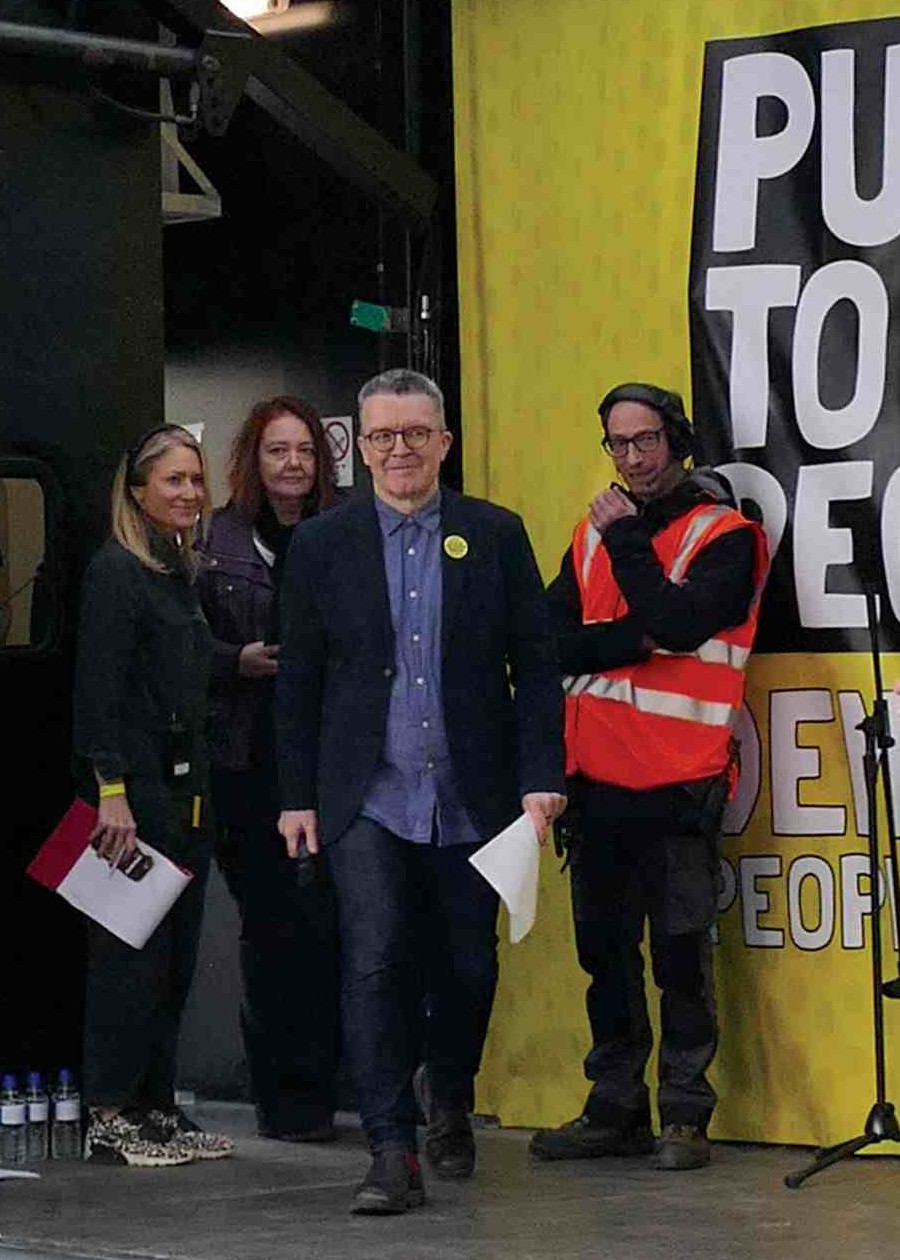
Jones’s account of Labour is equally sharp. After 2017 Labour held the casting votes in any parliamentary route to a new referendum. Yet the party could not decide whether Brexit was a fact to manage or a project to reshape. Jones sets out the internal groups and the factional traps and shows how conference procedure became the proxy for strategy, a way to postpone a choice while claiming to respect the members. The so-called shadow cabinet Brexit sub-committee, which met in secret specifically to prevent the deputy leader from attending, was not merely dysfunctional; it was emblematic of a political culture that mistook internal control for strategic clarity. This is my own experience of the period rather than a scene Jones reports. I was prohibited from attending and with all internal avenues of negotiation closed, I had no compunction about supporting the People’s Vote campaign.
The book’s climax is not Westminster drama but organisational breakdown. The People’s Vote implodes in a struggle over control and roles and data. Roland Rudd fires Tom Baldwin and James McGrory, staff walk out and the campaign evaporates on the eve of the election that ends the argument.
Jones does not treat this as soap opera. She treats it as parable. She is careful, too, to show why the rupture mattered inside the building. The young staffers, by and large, “adored” Baldwin and McGrory, and that loyalty became a force in its own right.
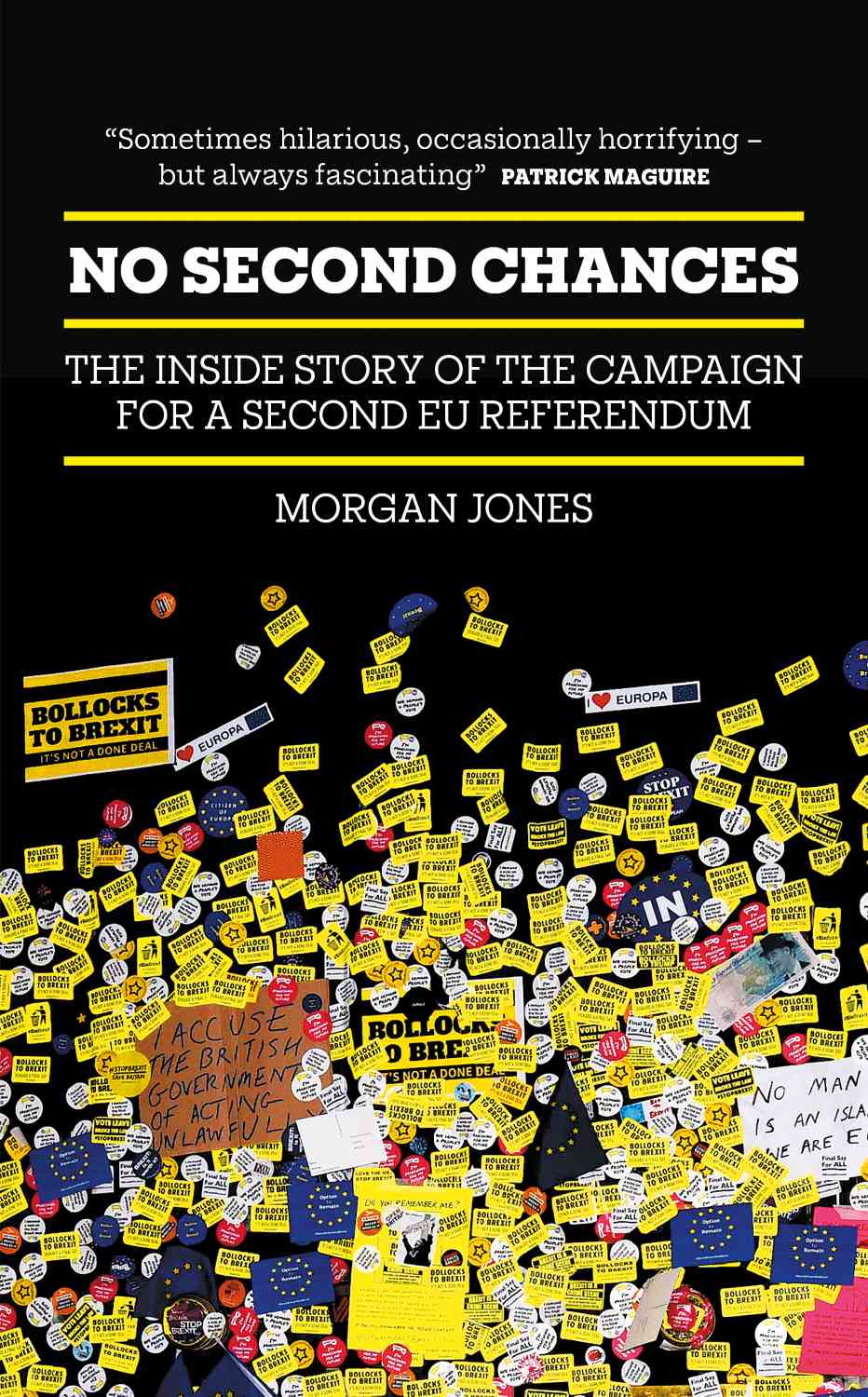 No Second Chances offers no comfort. Jones is sceptical that a second referendum was ever within reach, and she shows why the movement could get close and still fail. Yet she is also clear that failure has consequences. Many of those who cut their teeth in this world are now back in politics, carrying their instincts with them. Jones has written an anatomy of a near miss and a self-deception. Britain did not lose control in a single act. It lost it in instalments, through respectable procedures and misplaced confidence and the inability to align passion with power. That is why the title lands. In politics, as in life, you can squander your first chance and still tell yourself you are keeping your options open. You are not.
Lord Watson of Wyre Forest is a Labour peer and former deputy leader of the Labour Party
No Second Chances: The Inside Story of the Campaign for a Second EU Referendum
By: Morgan Jones
Publisher: Biteback


!function(n){if(!window.cnx){window.cnx={},window.cnx.cmd=[];var t=n.createElement(‘iframe’);t.display=’none’,t.onload=function(){var n=t.contentWindow.document,c=n.createElement(‘script’);c.src=”//cd.connatix.com/connatix.player.js”,c.setAttribute(‘async’,’1′),c.setAttribute(‘type’,’text/javascript’),n.body.appendChild(c)},n.head.appendChild(t)}}(document);(new Image()).src=”https://capi.connatix.com/tr/si?token=19654b65-409c-4b38-90db-80cbdea02cf4″;cnx.cmd.push(function(){cnx({“playerId”:”19654b65-409c-4b38-90db-80cbdea02cf4″,”mediaId”:”d0c0715d-b6f4-4c5b-a7be-52b728918d0f”}).render(“69cbbadce4b010178ee70322”);});

You probably already know that strength training and calcium can help to keep your bones healthy and strong as you age.
But some factors – like getting enough vitamin D, which helps to absorb calcium, and avoiding smoking, which raises your risk of osteoporosis and is linked to a 30-40% higher risk of broken hips – are less obvious.
And in one study, prunes, which are high in anti-inflammatory polyphenols and calcium-balancing vitamin K, appeared to preserve bone density and strength at weight-bearing parts of the hip for post-menopausal women.
What did the research show?
The researchers followed a group of 235 postmenopausal women, who are at greater risk of bone loss, over a year.
They told one group to eat 50g (about five to six prunes) a day during the trial, and another group to eat 100g a day. A third group didn’t eat any prunes at all.
Though both prune levels were beneficial, the first group (50g) were more likely to stick to the habit, which meant they tended to get better results.
Professor Mary Jane De Souza, the study’s lead author, said: “Consuming five to six prunes a day for 12 months resulted in preservation of bone at the hip, a finding that was observable at six months and persisted through month 12.”
Postmenopausal women who didn’t consume any prunes saw a 1.1% bone loss in the same time period, while for those in the study, it stayed the same.
That benefit could lead to fewer bone breaks.
It could have benefits for bone quality, too
The same group of women were part of another study looking at how prunes seemed to affect the structure and estimated strength of their tibia.
“This is the first randomised controlled trial to look at three-dimensional bone outcomes with respect to bone structure, geometry and estimated strength,” Professor De Souza said.
“In our study, we saw that daily prune consumption impacted factors related to fracture risk. That’s clinically invaluable.”
She added that prunes may help to reduce the risk of osteoporosis, but more research is needed.

!function(n){if(!window.cnx){window.cnx={},window.cnx.cmd=[];var t=n.createElement(‘iframe’);t.display=’none’,t.onload=function(){var n=t.contentWindow.document,c=n.createElement(‘script’);c.src=”//cd.connatix.com/connatix.player.js”,c.setAttribute(‘async’,’1′),c.setAttribute(‘type’,’text/javascript’),n.body.appendChild(c)},n.head.appendChild(t)}}(document);(new Image()).src=”https://capi.connatix.com/tr/si?token=19654b65-409c-4b38-90db-80cbdea02cf4″;cnx.cmd.push(function(){cnx({“playerId”:”19654b65-409c-4b38-90db-80cbdea02cf4″,”mediaId”:”52ca7643-7998-446c-a20e-9db25b6fd9b7″}).render(“69cbd726e4b039d10fc6df5a”);});

Labour MP Karl Turner has had the party whip suspended after rebelling against the government over its plans to scrap most jury trials.
It is understood the MP for Kingston upon Hull East was informed by the chief whip Jonathan Reynolds today that he had the whip suspended following his recent conduct.
This decision will be reviewed at a later date, HuffPost UK understands.
However the MP has suggested he was not told of the party’s decision before the media announced it.
Turner wrote on X: “I am being told that I have had the whip suspended but I have not had any notification from the whips about this. It seems journalists have been told but I have not.”
He issued a full statement hours later, saying he was “disappointed” to be suspended without prior verbal communication.
Ministers have been pushing to end jury trials in cases that carry a likely sentence of less than three years, which would instead be heard in front of a lone judge.
The government argues that this is needed to clear the huge backlog of cases within the system, but critics like Turner say jury trials are a fundamental right.
Turner also told HuffPost UK less than a fortnight ago that a “revolt” by the Parliamentary Labour Party is just weeks away unless Starmer turns around the government’s fortunes ahead of the May elections.
He voiced his support for former deputy prime minister Angela Rayner after she warned the government was “running out of time” to deliver the change voters were promised.
The MP said: “It is refreshing to see a senior Labour politician come out and speak clearly to the situation we find ourselves in.”
He claimed there is “a great deal of discontent on the Labour benches”.
Turner said he still supports the prime minister’s leadership but urged him to up his game as Labour trails in the polls.
And he said the elections for the Scottish Parliament, Welsh Senedd and English councils on May 7 were D-Day for his premiership.
He said: “The PM needs to listen hard to what his PLP are saying. We cannot be treated with contempt.”
Meanwhile the Guardian reported that Turner’s suspension was related to an interview the MP gave to Jody McIntyre, a campaign who previously stood at the 2024 elections against Labour’s Jess Phillips.

!function(n){if(!window.cnx){window.cnx={},window.cnx.cmd=[];var t=n.createElement(‘iframe’);t.display=’none’,t.onload=function(){var n=t.contentWindow.document,c=n.createElement(‘script’);c.src=”//cd.connatix.com/connatix.player.js”,c.setAttribute(‘async’,’1′),c.setAttribute(‘type’,’text/javascript’),n.body.appendChild(c)},n.head.appendChild(t)}}(document);(new Image()).src=”https://capi.connatix.com/tr/si?token=19654b65-409c-4b38-90db-80cbdea02cf4″;cnx.cmd.push(function(){cnx({“playerId”:”19654b65-409c-4b38-90db-80cbdea02cf4″,”mediaId”:”2d686915-cc19-4a2a-8708-d3aeb1a20580″}).render(“69cbd725e4b0bb388b875d05”);});

A government report has raised concerns about people being referred to the ‘Prevent’ counter-terrorism program, not because of genuine concerns about radicalisation, but to speed up access to the UK’s crumbling mental health services.
However, given the biases and bigotries rife in both the program and mental health services themselves, this tactic is likely to be extremely risky for any Muslim, Black, and Brown people it affects.
‘Badly twisted approach’ ends up with Prevent
Whilst the government’s report was internal and never intended for public scrutiny, the Financial Times stated that it has seen the document. It was submitted in evidence for an inquiry into teenager Axel Rudakubana’s murder of three children in Southport in 2024.
However, the Financial Times doesn’t go far enough in its article.
We’ve known for a long time now about the use of health professionals to surveil patients for Prevent. We know Prevent has a massive bias against Muslim, Black, and Brown people. And, of course, we know mental health services themselves have a bias against Black and Brown individuals and Muslims.
As such, this referral tactic is likely to have severe consequences for many of the people it was ostensibly intended to help. As highlighted by Sarah St Vincent of campaign group Rights and Security International, health professionals are:
so desperate to get help for their patients that they’re referring them to a secretive policing programme that could impact them for the rest of their lives.
If that’s not a sign of a badly twisted approach in Westminster to people’s welfare, I don’t know what is.
Crumbling system
This desperation, if not the approach, is fully understandable. The waiting list for mental health services in England includes more than half a million young people. According to the Royal College of Psychiatrists, over half of them have been waiting over a year. For over a third, the wait has lasted two years or more.
For childhood autism diagnoses alone, NHS data places the median waiting time as 19 months. However, guidance states that people who are referred to mental health services through Prevent should be seen within a week.
Psychologists working within counter-terrorism programs like Prevent have previously suggested that autistic people make up around 13% of their caseloads. For comparison, autistic people make up around 1% of the population.
The leaked Home Office report states that:
sometimes practitioners made referrals to Prevent to try to expedite mental health and neurodiversity support and diagnosis.
Similarly, it also claimed that evidence suggests:
that the limited capacity of mental health resources has a notable impact on Prevent thresholds. Separately, waiting lists for neurodivergence assessments reportedly impact the support available to them.
Racism within mental health support
However, once referred to Prevent – with its accompanying stigma – outcomes are likely to be far from positive for Muslim or Black and Brown people.
Prevent itself is well-known for disregarding the mental health needs of the individuals referred to it. Research from health work campaign group Medact highlighted the intertwined biases of Prevent and mental health ‘support’:
Racism is highly significant to both mental health and policing, especially ‘pre-crime’ areas such as Prevent, and the hubs stand at the intersection of these two fields.
A racialised Muslim is at least 23 times more likely to be referred to a mental health hub for ‘Islamism’ than a white British individual is for ‘Far Right extremism’
Likewise, with regard to combined policing/mental health ‘support hubs’, Medact highlighted the reciprocity between the two sectors:
A high proportion of patients referred to each hub were already in contact with NHS mental health services and many were actually referred into Prevent from the health sector, underlining the circularity and duplication the
hubs create
Even regardless of the Prevent element, racist treatment is rife within mental health and neurodiversity services themselves. For example, Black children face 3-year delays for autism diagnoses.
Black people are also four times more likely to be restrained or sectioned by mental health services than their white counterparts, and are more likely to be diagnosed with schizophrenia.
The disconnect
A Home Office spokesperson told the Financial Times that there was no link between radicalisation and neurodivergence or mental health needs. They stated that:
We understand that people referred to Prevent may have a range of vulnerabilities, and we take our safeguarding responsibilities extremely seriously. That is why we continue to strengthen Prevent’s approach to mental health and neurodiversity.
However, this somebody apparently forget to tell Prevent itself. 2025 Prevent Duty guidance from Ofsted states that:
Children and young people with Autism are at increased risk of being susceptible to extremism. This is because they are more likely to develop special interests. […C]hildren with autism are more likely to experience social isolation and so use the internet to find friends. They trust the information they read and the “friends” that they find online and so can be drawn into extremism.
Lasting consequences of Prevent referrals
The massive underfunding of mental health support by the UK government is making some health workers reliant on Prevent as a workaround for referral and diagnosis.
However, contact with Prevent can have a lasting impact and stigma attached to it – particularly for Muslims and Black and Brown individuals. Research, like Medact’s landmark study, has shown the level of reciprocity within mental health ‘care’ and Prevent – with both serving to create a web of surveillance.
Meanwhile, neurodivergence is being targeted by Prevent as a cause and indicator of radicalisation. Making Prevent referals in order to expedite diagnosis can only serve to entrench this view.
Whatever the intentions of the clinicians passing kids off to Prevent, their actions could have severe and lasting consequences for the vulnerable children they purport to protect.
Featured image via the Canary

We got green-ified with Wicked West End Elphaba, Emma Kingston, and Head of Wigs, Heather-Jay Ross! Join us as we chat about London’s ever-Popular stage production of Wicked, including everything from what it’s like being painted green, to how it feels performing Defying Gravity every night.

US president Donald Trump doesn’t appear to have any idea what he is doing over the Iran war. Trump has claimed victory several times, while also pledging to keep bombing. He’s told reporters that the war will end with or without a deal now.
Trump cannot tell the truth that this war is lost. The US has been humiliated. Pointing this out must be at the centre of any anti-war politics going forward.
Trump is finished
The Financial Times reported on 31 March that Trump told journalists:
We’ll leave whether we have a deal or not. It’s irrelevant.
The US and Israel attacked Iran first on 28 February without provocation. Iran was offering unprecedented concessions in negotiations at the time. The Pentagon has since stated there was no imminent threat from Iran. And the UN’s atomic watchdog, the IAEA, has said there is no evidence Iran was developing a nuclear weapon.
The Iranian government remains intact after over a month of intensive US and Israeli attacks. The US-Israeli attack’s main achievement seems to be a global energy crisis after Iran predictably closed the straits of Hormuz, a vital oil channel.
The FT also reported on 31 March that Trump indicated he wanted to:
knock out every single thing there.
Adding:
They don’t have to make a deal with me when we feel that they are . . . put into the Stone Ages” without being able to “come up with a nuclear weapon”.
Despite this erratic and belligerent rhetoric, there’s a strong sense that the war is lost in everything but name.
It’s over
Author and journalist Spencer Ackerman wrote on 31 March:
IT’S WEEK FIVE of the Iran War—past the point Donald Trump initially forecasted it would be over—and the Trump administration has a new line: The Strait of Hormuz doesn’t matter.
He referred to an interview on 30 March in which secretary of state Marco Rubio tried vaguely to save face for the US. Rubio did this by, among other things, trying to:
convince an audience that the aims of the war were limited, achievable and consistent.
Ackerman went on:
Here we have the foreign minister of a belligerent power—the regnant superpower, no less—insisting that if the U.S. ceases fighting with the Strait of Hormuz closed, it’s still victory by the original terms the U.S. set out, no matter how thoroughly Iran has obviated those terms.
Adding:
That’s not just a lost war. That’s a humiliation.
The warmongers can’t be allowed to get away with their ridiculous assertion that the US, which has achieved none of its goals, has in any way won:
A narrative that the 2026 War was a success will hasten both that return and to the deeper catastrophes it will unlock.
He warned that we must tell the truth of the US defeat or:
We will be right back here if the architects, the profiteers, the propagandists and the forerunners of this war get away with their evasions once again.
One of the reasons we still got an Iran war after the disasters of Libya, Afghanistan, Iraq and others is that no proverbial heads rolled. On Iran, they have to. Failure in this area guarantees the next war – and the one after that.
Featured image via the Canary
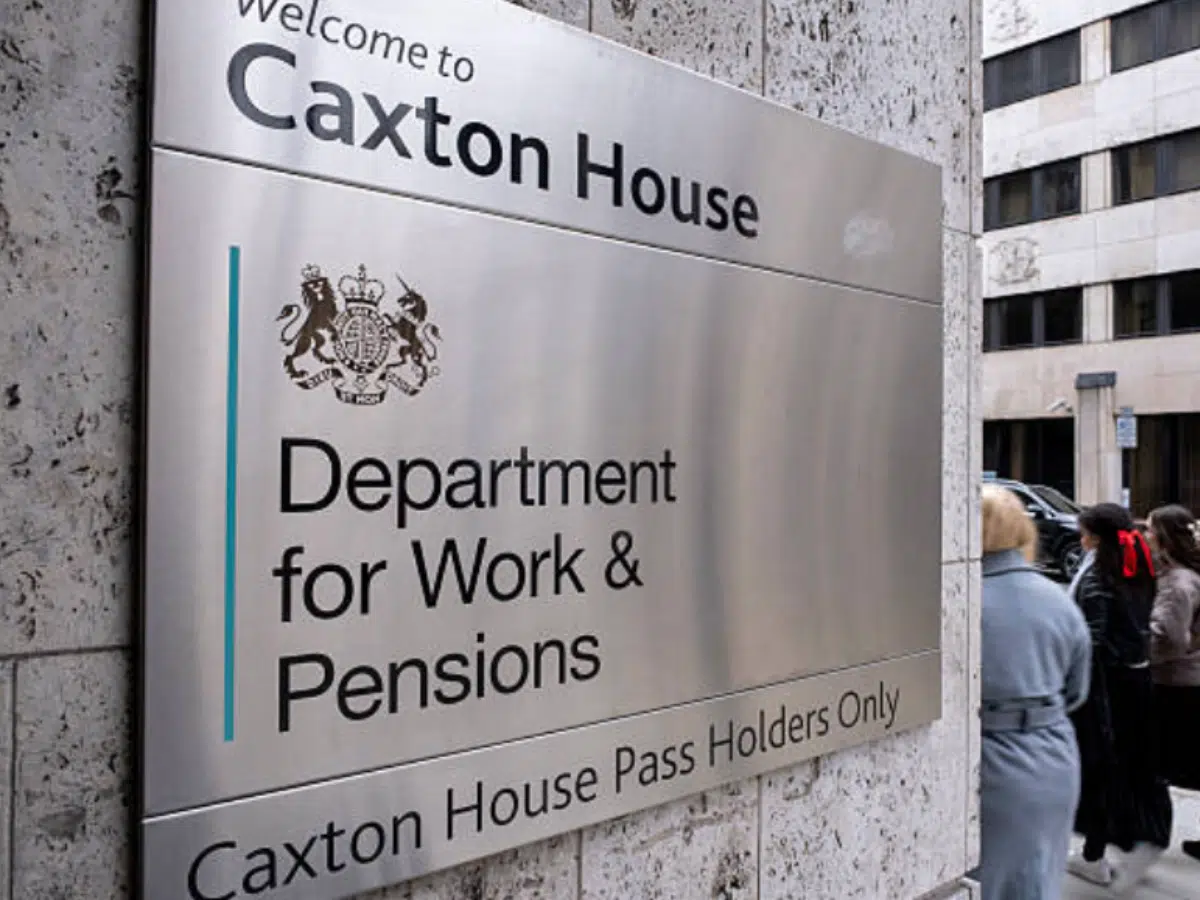
The Department for Work and Pensions (DWP) announced its flagship new “Youth Jobs Grant” scheme in March. It did so alongside a package of new policies to tackle the so-called rise in young people “not in education, employment, or training” (NEET). But now, it has admitted that all is not what it seems.
DWP Youth Jobs Grant
The grant scheme offers employers £3,000 for every young person aged 18-24 they hire who has been claiming universal credit for over six months.
The DWP will issue the grant irrespective of the claimant’s conditionality regime. It means that this could also apply to young disabled people claiming limited capability for work-related activity (LCWRA), who the DWP has assessed as not fit for work.
Alongside its new Youth Jobs Grant, the DWP is also introducing a £2,000 “Apprenticeship Incentive” to encourage small and medium-sized businesses to employ 16-24 year-olds into new apprenticeship roles.
It also announced an expansion to its so-called “Jobs Guarantee“. This will now make the fully funded six-month wage subsidy available to employers hiring young people aged 18 to 24.
However, the Canary’s Rachel Charlton-Dailey has highlighted how the government’s raft of youth employment policies risks coercing young chronically ill and disabled claimants into low-waged and unsuitable work.
Cat out of the bag
Now, in response to a series of parliamentary written questions, the DWP has admitted that the Youth Jobs Grant will “not require employers to demonstrate” that they have hired young people into any roles that wouldn’t have already existed without the new incentive funding.
Independent MP James McMurdock asked “what steps” the DWP “plans to take to help ensure that jobs created through the Youth Jobs Grant are additional to existing positions”.
The answer came amid a lengthy response addressing 14 separate written questions McMurdock had tabled probing the government’s youth employment plans.
On 27 March, DWP minister Andrew Western wrote:
The scheme will not require employers to demonstrate that roles are additional.
Meanwhile, the Institute for Fiscal Studies (IFS) has separately said:
Offering £3,000 to all employers without checking for additionality would result in substantial dead weight.
In particular, it has highlighted how “DWP statistics from 2022–25 show that only 19% of 16- to 24-year-olds on UC who have been unemployed for 6 months are still on the benefit 18 months later”.
It said this “implies that the majority are likely to find work even in the absence of wage subsidies”.
Barriers to employment
Disabled young people face significantly greater barriers to employment, so the grant’s lack of an additionality requirement could fail to ensure employers offer accessible roles for 18-24 year-olds well enough to work and/or not in the LCWRA group.
Western told McMurdock that the DWP would pay the grant in “staged instalments”. The department has yet to specify what these will be. It also hasn’t confirmed the length of time these instalments will span in total.
But Western admitted that the government isn’t planning to place any minimum retention requirements on employers for the grant.
He said that the staged instalments would “encourage sustained employment during the early months without requiring a formal retention period”.
Elsewhere in the response, he stated that the scheme’s “purpose is to reduce the barriers young people face when entering the labour market”.
According to Western, the grant aims to do that “by helping employers with the early costs of recruitment and training, rather than placing conditions on wider staffing decisions and how long an employer must retain someone”.
The revelations call into question the government’s claims that its new package of employment policies will create 200,000 new jobs for young people.
More DWP nonsense?
The DWP anticipates that the Jobs Guarantee and the Youth Jobs Grant will create 30,000 and 20,000 new job roles for young people respectively. However, the IFS has said that in tandem, even if these are additional, the policies will “directly benefit a small percentage of the almost 1 million 16- to 24-year-olds who are NEET”.
Now, Western’s response has confirmed that the DWP can’t guarantee these will be genuinely additional.
The government has been citing its programme of employment support, including these employer incentives, to justify widespread cuts to welfare.
From 6 April, DWP will slash the universal credit health element in half for new claimants.
The cut exempts existing claimants, those who meet the department’s “severe conditions criteria”, and those who are terminally ill.
In its Pathways to Work green paper, the government also floated plans to restrict the health element of universal credit to over 22s. It has yet to make a decision on the proposal.
However, in November work and pensions secretary Pat McFadden referred to former Labour health secretary Alan Milburn’s “independent” investigation into Young People and Work.
He said that he did not “want to make a decision” on the minimum age requirement proposal until Milburn had looked at “the whole issue of young people, sickness, unemployment and work”.
The inquiry’s terms of reference show that it will solely target chronically ill and disabled claimants.

We hope you love the products we recommend! All of them were independently selected by our editors. Just so you know, HuffPost UK may collect a share of sales or other compensation from the links on this page if you decide to shop from them. Oh, and FYI – prices are accurate and items in stock as of time of publication.
After a long, dreary winter, it’s finally spring, which means one very important thing – that’s right, it’s time to cycle out our cold-weather wardrobes at last.
Sure, it’s not exactly tropical outside right now, but the height of spring is looming, and with that comes an influx of springtime-friendly dresses.
And I, for one, have been on the edge of my seat waiting to say goodbye to my big coat and thermals for another year.
From florals to LBDs to leopard print, if you’re looking for some shopping inspo to get you started for the new season, here’s a list of the best spring dresses you can buy right now.

Brandy’s Memoir Clarifies Past Relationship With Wanya Morris
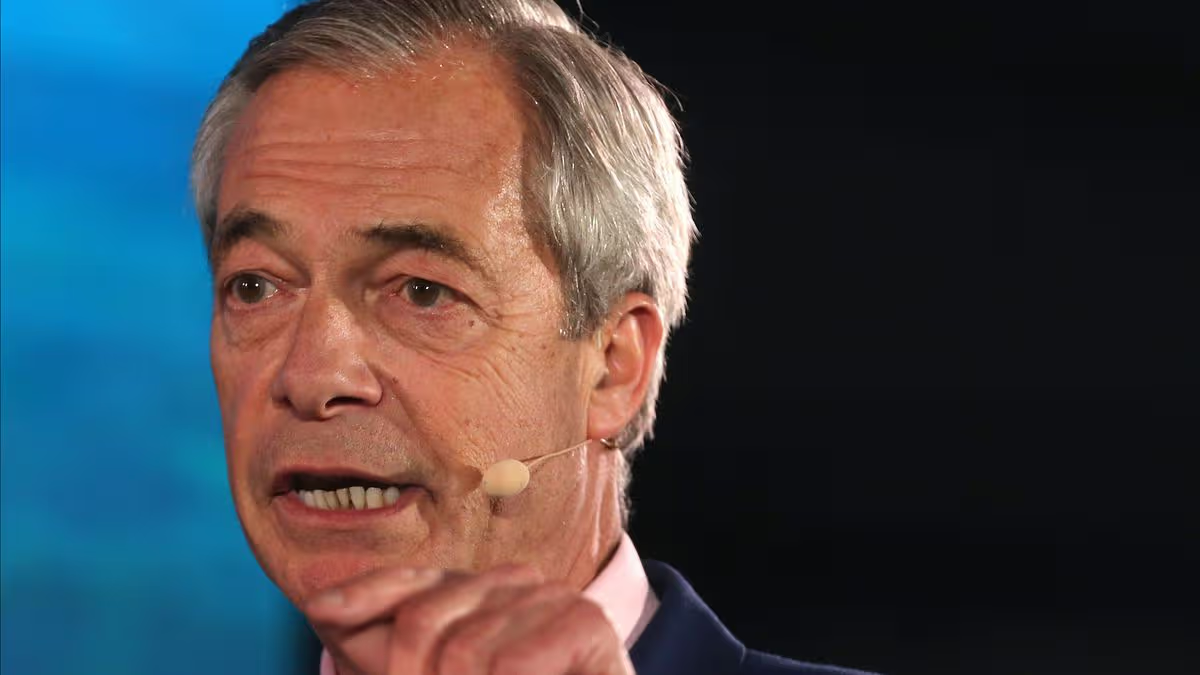
Nigel Farage branded ‘charlatan’ as Labour launches major ad campaign

Bar innovations building momentum

Smart energy pays enters the US market, targeting scalable financial infrastructure

Why Israel is blocking foreign journalists from entering

Bitcoin: We’re Entering The Most Dangerous Phase

how i’d invest right now to make millions in 2026

WHITE HOUSE CRYPTO CZAR DAVID SACKS IS OUT! CRYPTO IN 401KS NEARS & COINBASE BITCOIN MORTGAGES!

Dr. Fazeela Breaks Silence On Financial Allegations #hamzaaliabbasi #nadiakhan #laundering | EB3Q
-

 News Videos7 days ago
Parliament publishes latest register of MPs’ financial interests
-

 Business6 days ago
Instagram, YouTube Found Responsible for Teen’s Mental Health Struggle in Historic Ruling
-
 Tech6 days ago
Intercom’s new post-trained Fin Apex 1.0 beats GPT-5.4 and Claude Sonnet 4.6 at customer service resolutions
-

 NewsBeat5 days ago
The Story hosts event on Durham’s historic registers
-

 Sports5 days ago
Sweet Sixteen Game Thread: Tide vs Michigan
-
Entertainment2 days ago
Fans slam 'heartbreaking' Barbie Dream Fest convention debacle with 'cardboard cutout' experience
-
 Entertainment4 days ago
Lana Del Rey Celebrates Her Husband’s 51st Birthday In New Post
-
Crypto World1 day ago
Dems press CFTC, ethics board on prediction-market insider trades
-

 Sports1 day ago
Tallest college basketball player ever, standing at 7-foot-9, entering transfer portal
-

 Tech3 days ago
The Pixel 10a doesn’t have a camera bump, and it’s great
-

 Crypto World3 hours ago
Gold Price Prediction: Worst Month in 17 Years fo Save Haven Rock
-

 Tech2 days ago
EE TV is using AI to help you find something to watch
-

 Entertainment7 days ago
HBO’s Harry Potter Series Will Definitely Fail For One Big Reason, And It’s Not J.K. Rowling Or Snape
-

 Tech2 days ago
Apple will hide your email address from apps and websites, but not cops
-

 Tech2 days ago
Flipsnack and the shift toward motion-first business content with living visuals
-

 Tech2 days ago
How to back up your iPhone & iPad to your Mac before something goes wrong
-

 Fashion6 days ago
En Vogue in Brown Leather and Tailored Neutrals by Atelier Savoir, Styled by J Bolin
-

 Politics2 days ago
Should Trump Be Scared Strait?
-

 Crypto World2 days ago
U.S. rule change may open trillions in 401(k) funds to crypto
-

 Fashion5 days ago
Weekly News Update, 3.27.26 – Corporette.com
You must be logged in to post a comment Login