

Politics
The Iran War has exposed the folly of Net Zero

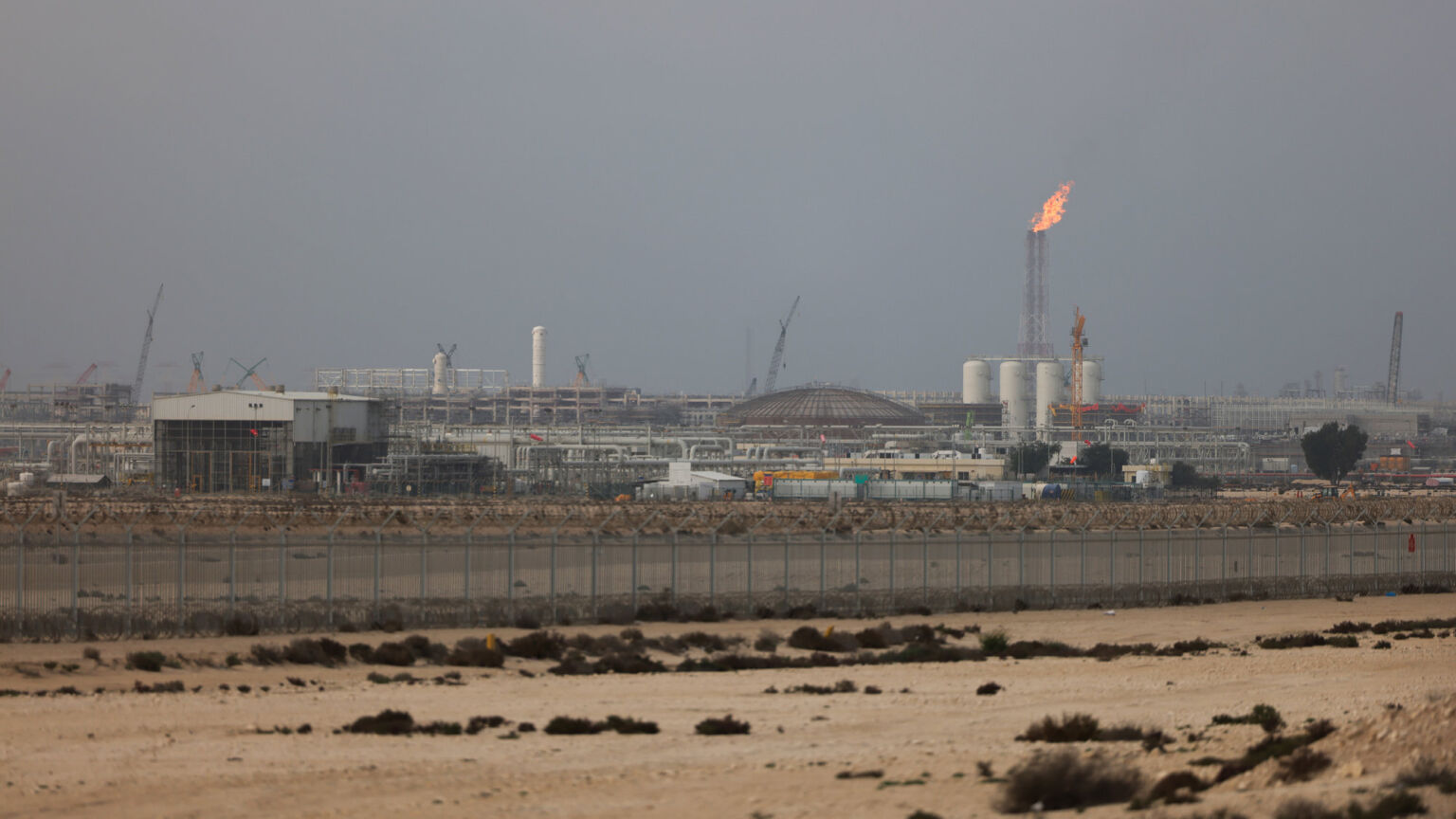
The Strait of Hormuz, one of the most vital shipping routes in the world, has been closed by Iran since the US and Israel began their airstrikes last week. This event might not seem as newsworthy as the assasination of Ayatollah Khamenei and the potential demise of the Islamic Republic – but make no mistake, the consequences could be just as profound. Particularly for the UK.
The impact of the Strait’s closure has already been unprecedented. And no wonder: roughly one-fifth of the world’s oil passes through this narrow, 90-mile stretch of water separating the Persian Gulf and the Gulf of Oman. Prices for oil and gas have skyrocketed – in the UK, wholesale gas prices increased 100 per cent in the first 48 hours of conflict, the sharpest rise since records began. Adding to the chaos of the Strait’s closure was Iran’s successful strike on Saudi Arabia’s Ras Tanura, the world’s biggest oil-export terminal, sending Brent crude prices soaring. Ras Laffan, the world’s biggest terminal for exporting liquified natural gas, based in Qatar, has also closed down after it was hit by Iranian drones. Global energy markets are in complete turmoil, with no end in sight.
The UK, which has depended on foreign imports for energy for decades, is in the eye of this storm. In a more rational world, then, one might hope that UK energy secretary Ed Miliband would reassess his longstanding hostility to fracking on British land and drilling in the North Sea. Miliband, you might remember, has banned fracking for natural gas, while slowly strangulating the economic viability of the North Sea oil and gas industry. Surely the crisis around the Strait of Hormuz ought now to force him into some soul-searching about Net Zero, and his unquenchable drive to abandon fossil fuels?
Alas, no. The phrase ‘doubling down’ seems to have been invented for Miliband. ‘To ensure our energy security in an unstable world’, Miliband said on Wednesday, the Labour government will ‘keep driving’ for ‘clean, homegrown power’. What Miliband is saying, with his typical nursery-school level of insight, is that the wind and sun in the British Isles are more reliable and affordable than fossil fuels from the Middle East. The war is further proof, in Miliband’s deluded mind, that his flagship Net Zero target – of 95 per cent of British electricity coming from renewables and nuclear by 2030 – has never been more urgent.
So, we will be asked to forget the higher prices that motorists can now expect for fuel at petrol stations, and the higher bills that households can equally expect for gas-fired central heating. Never mind that Britain will always need gas-fired power stations to back up, at vast expense, its intermittent production of renewable energy. Erase from all memory our Ed vandalising two potential sites for UK fracking by pouring concrete into them – and of him banning the issuing of new licences to drill for oil and gas in the North Sea, in favour of buying supplies from Norwegian drillers.
Instead, look forward to Miliband citing the Hormuz crisis as a vindication of Net Zero, and of his belief that Britain should decouple from Middle Eastern petrostates through home-grown wind and solar. In his typically imperious style, he will go on thinking that the UK’s Net Zero policy shows the way to the rest of the world. In truth, the rest of the world will continue to see Britain as an example of exactly what not to do. Of course, with Britain labouring under the weight of some of the world’s highest industrial-energy prices, they would be right.
Miliband has drawn precisely the wrong lesson from the war in Ukraine. When Russia invaded its western neighbour in 2022, and sent global energy prices soaring, he never even seemed to entertain the idea that oil and gas beneath our soil and seas could be a solution to the inevitable energy shocks of the future. Such was the extent of Miliband’s Carbon Derangement Syndrome that the idea of developing British-based sources of hydrocarbons – the source not just of fossil fuels, but also of lifesaving pharmaceuticals, agricultural fertilisers and plain old methanol – did not even enter his mind.
Speaking at an International Energy Agency summit last year, UK prime minister Keir Starmer conceded that fossil fuels would be part of Britain’s energy mix for ‘decades to come’. He was, for once, right. What a shame, then, that Starmer appears to have done nothing to follow through on this insight.
Britain must take energy security seriously, even if Ed Miliband and Keir Starmer refuse to. The danger of Net Zero – to the UK’s energy security and indeed national security – has never been so obvious. The war in Iran might have been beyond the UK’s control, but our vulnerability to its consequences was not. The coming energy crisis has Miliband’s fingerprints all over it.
James Woudhuysen is visiting professor of forecasting and innovation at London South Bank University. Follow him on X: @jameswoudhuysen.

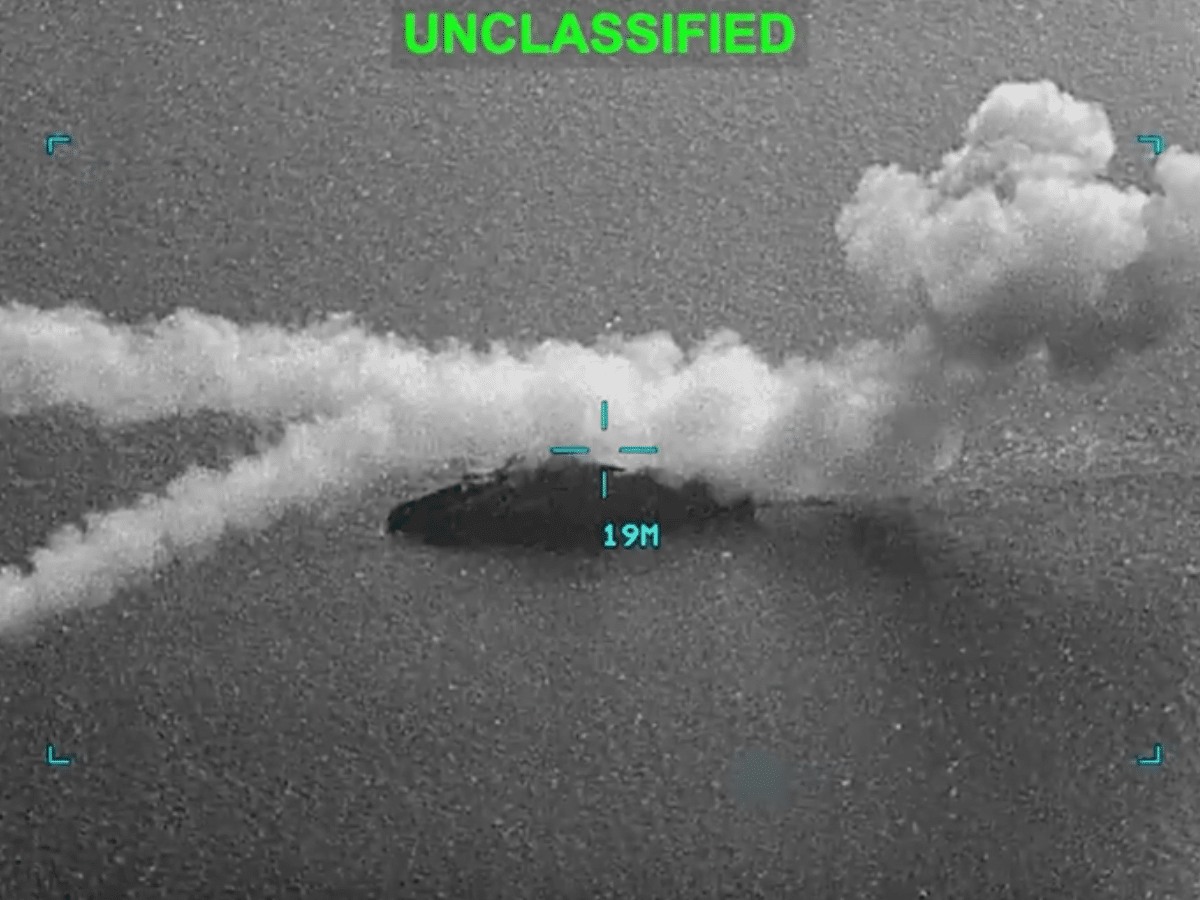
Indian Opposition Congress leader Mallikarjun Kharge on Thursday launched a scathing attack on the Modi government over America’s fatal strike on an Iranian vessel, IRIS Dena. The strike occurred as it was sailing through the Indian Ocean.
Kharge accused Modi of a “reckless abdication” of India’s national interests following. He emphasised that the ship was a returning guest from India’s International Fleet Review 2026 and was unarmed. Initially, there was no response from prime minister Modi.
Modi Govt’s reckless abdication of India’s strategic & national interests is there for all to see.
An Iranian ship, a guest of India was returning, unarmed from the International Fleet Review 2026, hosted by us, and was torpedoed in the Indian Ocean Region (IOR).
No…
— Mallikarjun Kharge (@kharge) March 5, 2026
Only after opposition started mounting, did the government respond, and even then, it was meagre.The Foreign Secretary was the only official pictured signing the Condolence Book at the Iranian Embassy in a formal gesture of respect.
As Maktoob Media reported:
India’s Foreign Secretary signs condolence book for Iran’s Supreme Leader Ali Khamenei India’s Foreign Secretary Vikram Misri has signed the condolence book for Iran’s Supreme Leader Ali Khamenei at the Embassy in Delhi, amidst growing criticism against the Modi government’s silence on the US-Israel attack on Iran.
India’s Foreign Secretary signs condolence book for Iran’s Supreme Leader Ali Khamenei
India’s Foreign Secretary Vikram Misri has signed the condolence book for Iran’s Supreme Leader Ali Khamenei at the Embassy in Delhi, amidst growing criticism against the Modi government’s… pic.twitter.com/8u29HvIMwO
— Maktoob (@MaktoobMedia) March 5, 2026
Meanwhile, American and Trump-aligned media outlets have been celebrating the cowardly attack, thumping their chests in glee.
Hegseth, who has said the war is being fought for Jesus, was gloating to reporters. In fact, he was admitting that they had:
sunk an Iranian war ship that thought it was safe in international waters.
Instead it was sunk by a torpedo, a quiet death – the first sinking of an enemy ship by a torpedo since World War II. Like in that war, back when we were still the war department, we are fighting to win.
He said the ship was:
ineffective, decimated, destroyed…pick your adjective, it is no more.
Murder of Indian guests and Modi’s silence
Professor Priyamvada Gopal questioned India’s legal standing in the face of such an attack, given Modi’s claim that India is the ‘guardian of the Indian Ocean.’
What about the Indian hosts of the Iranian ship on whose doorstep this happened? The self-proclaimed ‘guardian of the Indian Ocean’? Now a weak US vassal state. What terrible fall. https://t.co/RJOxDqBiNC
— Priyamvada Gopal © (@PriyamvadaGopal) March 5, 2026
Esha Krishnaswamy, the host of Historic.ly podcast, said that India wasn’t sovereign, insinuating that it had capitulated to the US and Israel.
Today, India showed that it isn’t an actual Sovereign country
— Esha K (@eshaLegal) March 5, 2026
Anand Mangnale, an Indian journalist said that the absence of any statement from the Foreign Minister, Defence Minister, Navy, or PM signified a failure in diplomatic and defence policy.
This is the same vessel that the US torpedoed. Off the coast of India. It was a GUEST of India visiting for a Naval exercise.
What did @Jaishankar @rajnathsingh @indiannavy & @narendramodi have to say about it?
NOTHING. SILENCE.
Never has Indian Foreign & Defence policy been… https://t.co/WVZJrO4obR— Anand Mangnale (@FightAnand) March 5, 2026
Journalist Barkha Dutt shared satellite footage of IRIS Dena participating in multilateral naval exercises held in India’s eastern port city of Visakhapatnamised on 19 February 2026. She expressed horror at the fact that those onboard had likely all been killed.
To watch this is chilling. To think that most of these sailors are now likely dead, killed by a US strike on a ship off the coast of Sri Lanka, who were part of naval exerises reviewed by President Murmu a fornight ago. The war reaches our backyard. https://t.co/sK5fgjGpqY
— barkha dutt (@BDUTT) March 4, 2026
Some pointed out that even Modi’s loyal supporters were turning on him.
Commenting on this, SOAS-based academic Subir Sinha wrote:
First @Zakka_Jacob. Then Kanwal and the other Sibal. And now @ShivAroor, who used to abuse and block people for people criticising his fawning coverage of Modi’s bombastic claims on security and foreign policy! The worms are turning! https://t.co/TcfidC9pJl
— Subir Sinha (@PoMoGandhi) March 5, 2026
So, when is Modi’s statement coming? Maybe never or far too late. The damage is done. However, we can clearly see where his loyalties lie. They are with the US and Israel, not India.
Featured image via the Canary
On 5 March, Ofwat proposed a fine of over £22m to lax water firm South East Water. The news comes on the heels of an investigation into the companies repeated failures across 2020-2023.
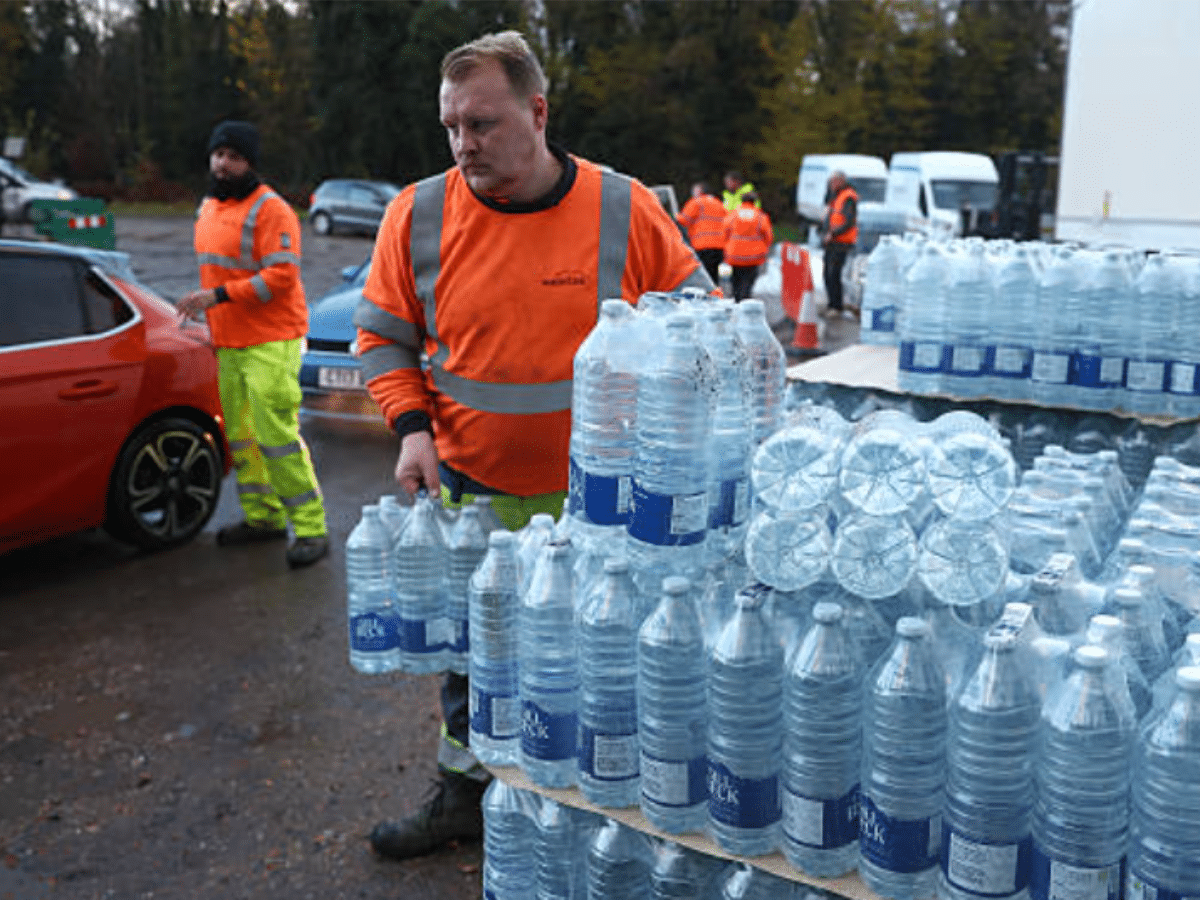
These supply disruptions affected upwards of 286,000 people. Often, customers were left without running water, meaning they were unable to bathe, clean dishes, or even flush the loo.
However, the fine isn’t a done deal just yet. Ofwat is running a customer consultation on the fine until 13 April. If you want to have your say, follow the link here.
South East Water ‘failed to plan sufficiently’
The report itself was damning, finding that South East Water:
failed to plan sufficiently, learn from incidents and conduct root cause analysis to maintain resilience within its water supply system, and was therefore unable to cope during periods of high demand or extreme weather. The company also failed to maintain key infrastructure such as service reservoirs, boreholes and major pipes.
Taken together, these issues meant that South East Water’s was more likely to fail in the face of both freeze-thaw events and long dry periods.
Ofwat accused the water firm of lacking organisation, responding slowly to key issues, and failing to learn from previous mistakes. Worse still, the water watchdog stated that:
South East Water has not taken ownership of these issues and as a result, supply interruptions are still happening too often. Our proposed enforcement order sets out the steps we expect the company to take, including senior management responsibility to fix the problems to prevent them from happening again.
‘Significant failings’
Given the severity of the issues, the full fine that Ofwat is proposing is £22.46m. That’s equal to 8% of the South East Water’s annual turnover.
The maximum penalty which the regulator could impose is equal to 10% of a company’s turnover. In South East Water’s case, this would run a bill of just over £28m.
Ofwat’s consultation for customers and stakeholders is already open. After it closes on 13 April 2026, Ofwat will weigh the responses and make its final decision.
Chris Walters, Ofwat’s interim CEO, said:
South East Water’s significant failings caused major disruption and had a huge impact on thousands of its customers. Not only did the company fail in its duty to provide a water supply to meet the demands of its customers, but it also fell short when it came to providing support for customers who lost their supply. They must do better.
This investigation gets to the heart of the company’s supply resilience problems. We want to see South East Water take more responsibility and get on with fixing things for its customers.
Legal challenge
Funding body the Utilities Trust of Australia currently owns a 50% share of South East Water, along with a group of other pension and investment funds.
South East Water has already filed for a judicial review in response to Ofwat’s proposed fine. The water firm also requested an injunction, although the court swiftly rejected the plea.
Of course, given that the fine was issued for failures back in 2020-2023, it hasn’t taken into account any of the company’s more-recent massive fuckups. Back in December 2025, the Canary reported that:
Only last week, 6,500 properties were without water. Whilst the company restored the supply on Friday, January 16, it then left a further 5,500 homes without water on Sunday evening. This was due to a treatment works fault, a power outage and two burst mains – all at the same time.
And then again, on 19 January:
Over the last few weeks, South East Water left customers across Kent without water on several occasions.
Only last week, 6,500 properties were without water. Whilst the company restored the supply on Friday, January 16, it then left a further 5,500 homes without water on Sunday evening. This was due to a treatment works fault, a power outage and two burst mains – all at the same time.
Adding insult to injury, South East Water had the nerve to claim that they’ll have to increase customers’ water bills. That’s in spite of Ofwat’s ban on further price hikes, which the company have appealed against.
Meanwhile, the water supplier’s profits have continued to climb. South East Water reported profit before tax of £18.2m for the six months up to October 2025, up from £2.6m the previous year.
To put that another way, South East Water are still failing to fix their mistakes, demanding that customers pay more, and raking in over £15m profit increases.
Further investigation
As such, Ofwat has already launched a new investigation of the supply interruptions in November and December 2025, and January 2026. The watchdog stated that:
This investigation will determine whether the company complied with its customer-focused licence condition, which requires companies to provide a high level of support to customers when issues arise. This licence condition was introduced in February 2024.
However, as the failures from 2020 have made abundantly clear, the threat of fines hasn’t been nearly enough to make South East Water mend its ways. This company is doing less than the bare minimum, leaving customers without water, and letting its infrastructure go to ruin.
And it’s still turning a massive profit.
This is privatisation in action – a system that allows companies to extract money from customers who literally have no other choice. The system is, and has always been, wide open to abuse. We can’t allow this to stand – we must call to end the failed experiment that is privatisation.
Featured image via the Canary
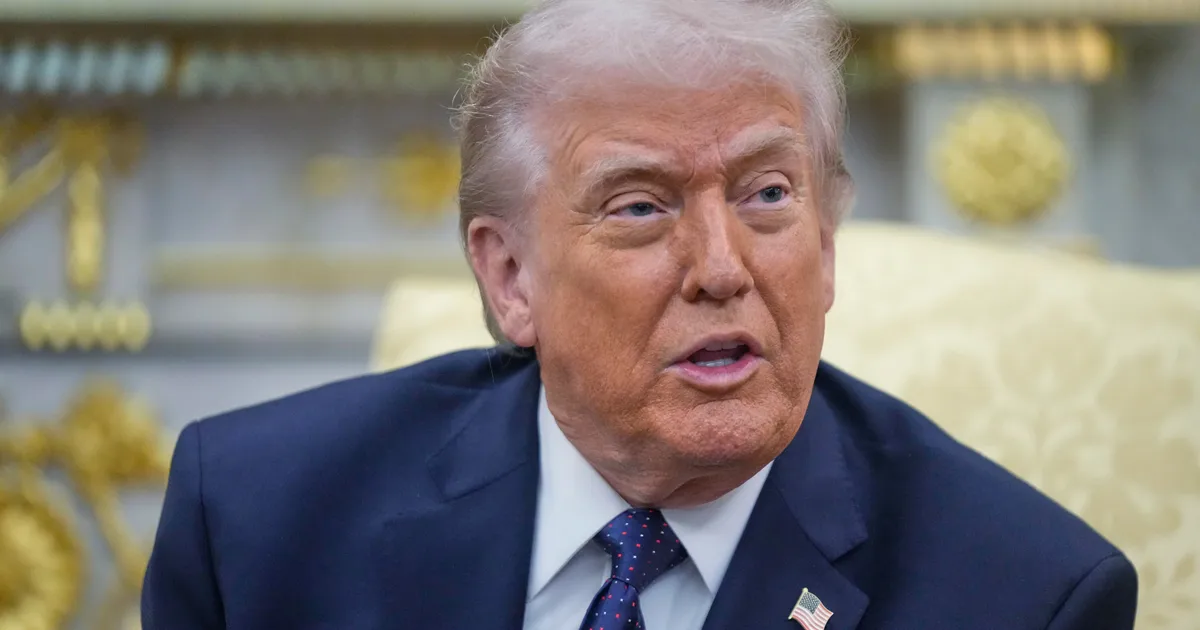
A former Nato commander has urged Britain not to follow “gung-ho nutter” Donald Trump into war in the Middle East.
General Sir Richard Shirreff warned Sky News that the Americans’ lack of strategy following the US-Israeli strikes on Iran could have far-reaching consequences for anyone who gets involved.
Trump has lashed out at Keir Starmer after the prime minister hesitated over US requests to use British military bases to attack Iran.
The UK has since granted access for “limited” and defensive American strikes – and Iran has subsequently hit an RAF base in Cyprus.
Meanwhile, Trump and his top team are still yet to offer a comprehensive explanation for their attacks.
Former deputy supreme allied commander of Nato, Sir Richard suggested to Sky News that it was not wise for Britain to get involved in the war.
He said any idea of a “special relationship” between the UK and US does not exist, adding: “It is a complete fantasy. America does what America wants to do and Britain’s got to look after its interests.”
“Britain shooting drones, Britain engaging in offensive or defensive operations is invidious, frankly,” the former commander continued. “We should not in any way, shape or form, be involved with the Americans closely because they are being led by a couple of gung-ho nutters, like Trump and [US Secretary of War Pete] Hegseth, without a proper strategy, without serious thought about what end-state for this war is.”
“Unless we keep cool heads, as the prime minister is attempting to do, and think things through very very carefully this thing could go in the way of Iraq,” he said.
“Yet again we have an American president who has gone to war, a war of choice, a war of hubris frankly, without any clear idea of how the war ends, without a clear strategy.”
Starmer has so far managed to draw a distinctive line between the UK and the US’s aggression, even though Britain has just sent a warship to Cyprus.
After Trump said the prime minister was “no Winston Churchill”, Starmer said the US attacks on Iran were illegal and that the White House had no plan.
And on Thursday, the PM said Trump had plunged the region “into chaos”.
Similarly, Sir Richard said: “The Americans might be getting frightfully excited about sinking submarines, X number of missions bombing the Iranians to bits, but unless there’s a strategy, unless they have thought about what they are doing on the minds of the Iranian people, this thing is going to go south very quickly.”
He said: “The idea of assassinating the Ayatollah, Khamenei, not just Iran’s head of state but the religious symbol for Shiites worldwide during the month of Ramadan, is about as subtle as murdering the Pope on the steps of St Peter’s during holy week.
“It will enflame the Shiite world and what you’re doing by doing that is probably putting large numbers of Iranians who might have been reconcilable back into the folds of the irreconcilable.”
The UK Israel lobby is intensifying its pursuit of UN Special Rapporteur for occupied Palestine Francesca Albanese.
Witch-hunt hysteria
Notorious Israel lobbyist-turned-MP Luke Akehurst is laying the ground for a renewed attack on Albanese, calling for backing from the Starmer regime.
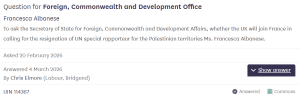
On 20 February, Akehurst asked if the Foreign Office to join in demands for the resignation of Albanese.

Zionist minister Chris Elmore responded yesterday saying, yes, the UK is making representations to the UN against Albanese and demanding “action” against her to — an undoubtedly Orwellian move. See his full response below.
4 March 2026. Along with several other countries, we have raised concerns about a series of comments made by the Special Rapporteur on the Occupied Palestinian Territories. Ministers have raised these concerns directly with the UN High Commissioner for Human Rights, and the UK has asked that the comments of the Special Rapporteur be urgently investigated against the Code of Conduct for her post, and for action to be taken to restore the confidence of the international community in the independence and objectivity of this important role.
Israel’s number one defender
Before Labour parachuted him in as an MP, Akehurst ran “We Believe in Israel,” an offshoot of Britain Israel Communications and Research Center (BICOM) — another lobby group. He also ran Labour First, a right-wing pressure group behind the worst attacks on the left. In 2023, Akehurst also helped infamous pro-Israel stalker Luke Stanger escape expulsion from the Labour party.
Trevor Chinn, a pro-Israel fanatic and megadonor, who sits on BICOM’s executive, has donated thousands to one Chris Elmore, Foreign Office minister. Elmore is also a parliamentary supporter of the racist lobby group Labour Friends of Israel. In 2025, he had a meltdown with Middlesbrough MP Andy McDonald, who at the time supported a Jeremy Corbyn-proposed ‘ten minute rule’ bill, demanding an inquiry into the UK’s collaboration in Israel’s genocide.
Albanese remains louder than ever
The Israel lobby has tried for years to silence UN Special Rapporteur for Occupied Palestine, Francesca Albanese. She has been an outspoken advocate for the Palestinian people and has repeatedly condemned Israel’s genocide in Gaza – in the face of staggering silence from Western powers. Still, these orchestrated efforts have also failed. This includes an attempt earlier this year to prevent her re-accreditation to the position. The move was overwhelmingly rejected by UN member states on the United Nations Human Rights Council, who backed Albanese.
The Trump regime has also targeted the UN official with vicious, wide-ranging sanctions.
If anything, US hostility has amplified her voice for Palestinians and against genocide. However, as the Akehurst-Elmore exchange makes clear, the Israel lobby has not given up trying to remove her – using the Starmer regime as their latest springboard.
Featured image via the Canary

The head of the Carers Allowance inquiry has told MPs that there is a ‘force of resistance’ in the Department of Work and Pensions (DWP). Liz Sayce was giving evidence to the Work and Pensions Committee session on what the department has done since her review.
Spoiler: it’s sweet fuck all.
DWP “minimising” problem, says Sayce
Sayce told the committee that rather than own up to their problems and attempt to do better, the DWP has instead attempted to “minimise” the problem. She also said the department had been focused on deflecting blame.
Chair of the committee, Debbie Abrahams, asked Sayce what she thought the DWPs progress had been like, since the carer’s allowance issue was first revealed in 2018.
While Sayce acknowledged that small improvements happened, she skewered the DWP:
What didn’t happen was there was no overarching plan to address the recommendations that the [2019 Work and Pensions] committee made, ensure that the issues and really the injustices that carers had faced with overpayments and nobody senior tracking it
Sayce’s review finally made it clear that the DWP’s ‘systemic’ issues were to blame for many carers being overpaid and that no blame lay at individual carers’ feet. However, just days after her review was published, a senior DWP figure published a blogpost still blaming carers.
Neil Couling wrote:
Incidentally what has been missed in all the [media] coverage is that this error (and hands up we made it and we will put it right) affects only a relatively small number of cases and wasn’t the cause of the original complaint. Because at the heart of the overpayment issues in CA is a failure to report changes of circumstances
Speaking about Couling’s blogpost she said:
I was really distressed by that blog, as I am sure many people were. Because what you were hoping for from senior people at that point was to really share with colleagues across the department the seriousness of this – what has been learned, what is going to be put right. Not attempt to minimise or again place a responsibility back on the carers, as if it was their fault.
Culture of ‘resistance’ in DWP
She then went on to talk about the culture of the DWP as a whole:
When I was doing the review, I found people at different levels who were serious about wanting to improve things, including front line officials. And since then I can see that there are some people who are really wanting to learn and wanting to make change
But there’s also these almost sort of forces of resistance, which which worry me, and it’s about culture.
Sayce did say, however, that it was heartening to see ministers and the permanent secretary refuting Couling’s claims.
She said she thought there was a ‘job to be done’ to ensure everyone across the DWP. Which lined Abrahams up nicely to ask what Sayce thought that ‘job’ should involve.
In her answer, Sayce threw shade at senior officials like Couling:
Culture change is a difficult thing, isn’t it? But I think the first thing is that the there needs to be a modeling from senior people across the department about the importance of learning, the importance of getting things right for the people who are claiming the benefits
Hypocrisy
Sayce also called out the hypocrisy of the department penalising claimants for not responding quickly enough when they have excessive wait times. Asked by Joanna Baxter if she thinks the DWP customer charter for carer’s allowance is enough, she said:
One of the things that came through in the review was that sometimes, maybe for understandable reasons, the DWP didn’t respond very promptly. Somebody would communicate, and they didn’t get a response in a swift timescale, but they were expected to respond within specified timelines.
She continued:
The charter says something like… ‘we’ll reply as soon as we can’ So then you think, well, can the carer reply as soon as they can? There should be a kind of reciprocal rights and responsibilities here
She also raised the issue that while the DWP have contracted out the helplines jobs to bring down wait times, those on the end of the phone aren’t experts. So customers then have to wait for someone actually within the department to get back to them, which can often get lost. Sayce said this is something that also needs to have better regulations.
Speaking about staff, Sayce said that’s why she felt senior members of staff had perhaps brushed the issue under the carpet:
I felt that sometimes there was a kind of effort to almost minimise what had gone wrong to reassure staff that they hadn’t done anything. And actually that’s the wrong thing to do. As a leader in such a circumstance what you need to do, I think, is to own the problem, explain why the system wasn’t right.
DWP culture needs demolishing
Finally speaking about the culture again, she said more needed to be done by senior figures
I think it’s important with culture change to understand where you’re at, to understand what you’re doing, to shift the culture and to track it. The senior team needs to be on that case. It needs to be a bit more systematic than just good intent.
Sayce is right, that more needs to be done to change the culture in the DWP. But when they’ve had so many chances to improve, it’s hard to be as positive as her that they actually want to.
The DWP is a department entrenched in demonising poor and disabled people. For a positive culture shift to happen it needs to be completely stripped back to the bare bones and built again from the ground up. As a department that wants to actually support those who need it, not work against them.
Featured image via the Canary
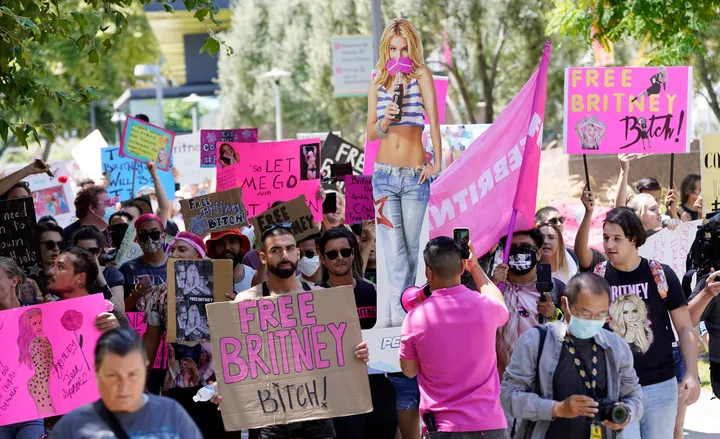
Britney Spears was arrested in California on Wednesday night.
According to the Ventura County Sheriff’s Office website, the chart-topping singer was pulled over by the California Highway Patrol at around 9.30pm on Wednesday.
The site does not list a reason for Britney’s arrest, and the …Baby One More Time star was released from custody in the early hours of Thursday morning.
Britney is now due to appear in court on Monday 4 May.
HuffPost UK has contacted Britney Spears’ team for comment.
TMZ pointed out that Britney’s arrest came just hours after she was granted a restraining order against a man from her home state of Louisiana, who her team alleged had been repeatedly showing up at her home in LA and sharing “disturbing social media posts” about her.
It’s been a turbulent few years for Britney, who in 2021 was released from a conservatorship she’d been placed under 13 years earlier.

Since then, she has married and subsequently divorced the actor Sam Asghari, released a popular memoir telling her story for the first time, The Woman In Me, and returned to the music scene with the top 10 Elton John collaboration, Hold Me Closer.
However, more recently, she has claimed she has vowed “never” to “return to the music industry”.
Throughout this time, Britney has been keeping fans updated on her life with candid posts on her Instagram, which is currently deactivated.
Last year, she found herself back in the headlines after her ex-husband Kevin Federline made a series of allegations about her as a wife and mother in his own memoir You Thought You Knew.
In a statement, Britney’s spokesperson pointed out that the claims, made in Kevin’s new book, coincided with the Grammy winner no longer having to pay him child support, and accused the former back-up dancer of “profiting off her”.
“All [Britney] cares about are her kids, Sean Preston and Jayden James and their well-being during this sensationalism,” her representative insisted. “She detailed her journey in her memoir.”
Britney and Kevin are parents to two sons, 20-year-old Sean Preston and 19-year-old Jayden James.
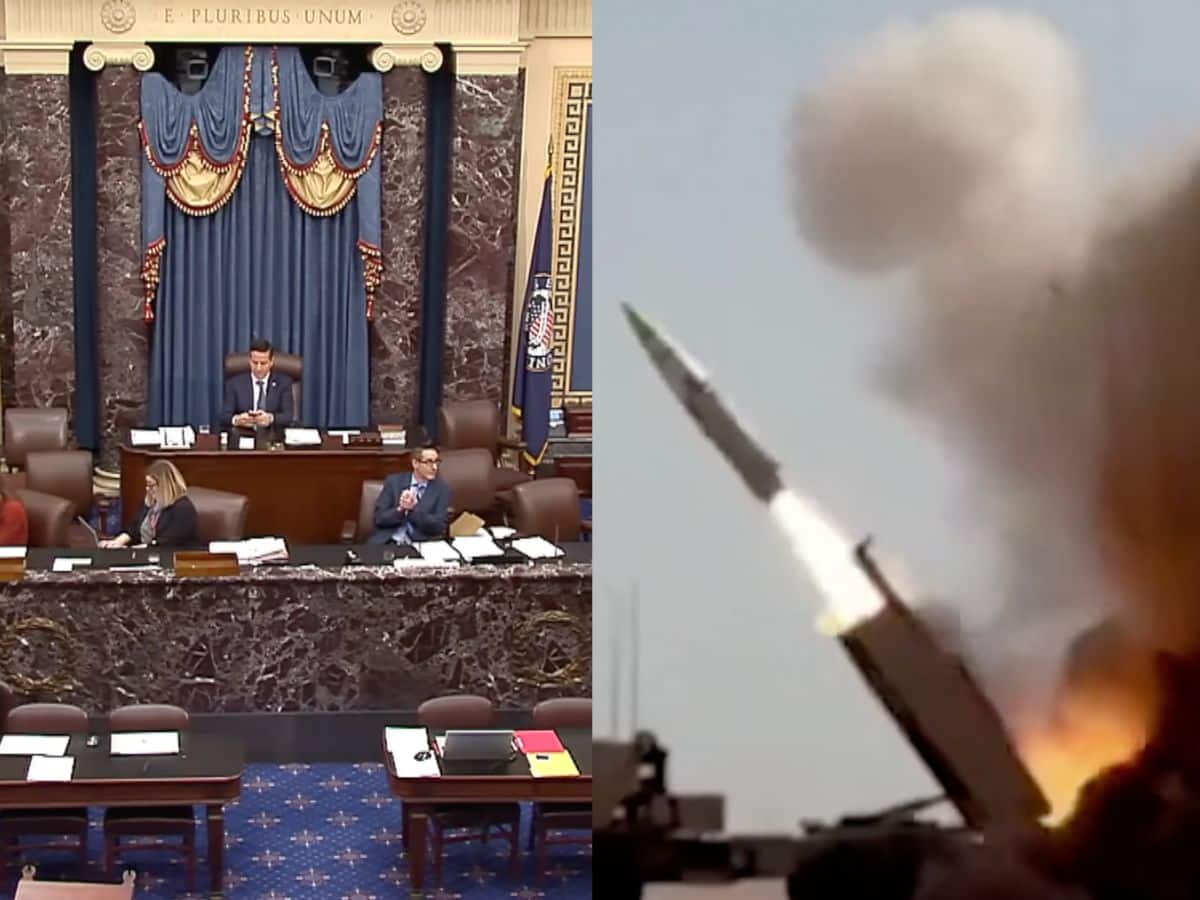
Republicans in the US Senate have voted to block a Democratic resolution to stop Trump’s illegal war in Iran.
BREAKING: Senate Republicans just blocked our bipartisan War Powers Resolution to rein in Trump’s illegal war of choice against Iran.
They chose fealty to Trump over our troops’ lives.
— Tammy Duckworth (@SenDuckworth) March 4, 2026
They defeated the procedural vote to rein in Trump’s military powers by a 47-52 vote. A separate House vote is set for March 5, today.
However, the Republicans are confident they will win.
The supporters of the resolution say that Trump “exceeded his constitutional authority” by launching war alongside Israel.
Under Article II of the US Constitution, presidents can only launch attacks in self-defence in response to an immediate threat. Otherwise, Congress has the sole power to declare war.
And as we have already established, there was no immediate threat to either the US or Israel.
Additionally, as the Canary has previously reported, even former senior US military officials have said that Trump’s war on Iran is illegal. Even the Pentagon has since stated there was no imminent threat from Iran.
Senator Tim Kaine argued that:
even in a classified setting, the Trump administration could produce no evidence, none that the US was under an imminent threat of attack from Iran.
Make your mind up
Trump has claimed that Iran was aiming to rebuild its nuclear programme. Which he also said Israel and the US “obliterated” in strikes last year. However, there was no evidence of any nuclear programme, this year or last.
The director general of the International Atomic Energy Agency has told NBC News the organisation does not believe Iran has nuclear weapons and:
had not seen elements of a systematic and structured program to manufacture nuclear weapons there.
Trump also claimed that Iran was seeking to develop a long-range missile to attack the US.
Meanwhile, Marco Rubio, Secretary of State, told reporters that Israel was planning to attack Iran, and this would likely have led to “retribution” against US assets in the region.
But again, Trump contradicted this by saying Iran was the one planning an imminent attack on Israel.
Trump can’t even stick to one lie.
But underneath all of that is the Trump administration’s attempts to frame the whole of Iran’s military and nuclear-energy programs since the Islamic revolution in 1979, as an imminent threat to the US.
Additionally, Iran had been in talks with the US to scale down Iran’s nuclear programme in the lead-up to the US and Israel’s illegal attacks.
And this wasn’t the first time that Israel has bombed Iran during peace talks.
Trump is unhinged. Up to now, he has been attacking Iran without any approval from the US government. Worryingly, he now has that approval, which means he will only become even more dangerous. It’s time that other nations stepped up and stepped in – because otherwise, alongside Netanyahu, he is going to murder thousands more black and brown people.
Featured image via HG
Besmira Manaj PhD is governance and geopolitics specialist, and a member of the UK Conservative Party, and Director of Conservatives Friends of Albania.
Illegal migration is a symptom of weak governance and poor coordination, not the root cause.
The UK debate on illegal migration has become increasingly narrow. Too often, migration itself is treated as the core problem rather than the visible outcome of deeper failures in governance, security coordination and institutional weakness beyond Britain’s borders. This framing may offer political clarity, but it is not a strategy and it will not secure Britain’s borders.
Nowhere illustrates this more clearly than the Western Balkans. Too often treated as a peripheral foreign policy issue, the region has in fact become central to Britain’s long-term border security challenges. Weak institutions, fragmented coordination and entrenched organised crime networks shape migration routes long before anyone reaches the Channel.
For Conservatives serious about sovereignty, enforcement and national resilience, the Western Balkans should be understood as a frontline security issue not a distant diplomatic concern.
Britain’s border problem starts far from Britain.
Public attention understandably focuses on the final stage of irregular migration: small boats crossing the Channel. But this narrow focus obscures the upstream drivers that determine who reaches Europe in the first place and how.
The Western Balkans sit at the crossroads of key migration and trafficking routes into Western Europe. Weak border enforcement, politicised institutions, limited judicial capacity and corruption allow criminal networks to operate with relative ease. These networks facilitate irregular migration, human trafficking, drug smuggling and financial crime all of which ultimately affect the UK.
In recent years, citizens from the Western Balkans have featured prominently in UK asylum and illegal migration statistics. While economic motivations are often cited, the deeper drivers are governance-related: lack of institutional trust, limited economic opportunity and the presence of organised crime networks that profit from instability.
A Conservative migration policy that focuses solely on deterrence at the UK border without addressing these upstream conditions is incomplete by design.
Organised crime thrives where coordination fails.
The Western Balkans remain one of Europe’s most persistent hubs for organised crime. Criminal groups operating in the region are highly networked, technologically agile and deeply embedded in weak state structures. Where institutions lack capacity or independence, criminal actors step in.
This is not an abstract regional problem. Balkan based criminal networks are directly linked to illicit markets in the UK, particularly in drugs, trafficking and financial crime. Fragmented intelligence sharing, weak judicial cooperation and inconsistent enforcement across Europe make these networks harder to disrupt.
For Conservatives, this should be a warning sign. Law and order cannot stop at national borders. Border control without coordination is not control at all.
There are limits to what a technocratic EU can do.
For decades, the dominant response to instability in the Western Balkans has been EU enlargement orthodoxy: long accession processes, technical benchmarks and compliance checklists. While this approach has delivered surface level reforms, it has failed to produce deep institutional resilience or genuine political accountability.
In practice, technocratic conditionality has too often rewarded box-ticking over substance. This has fuelled public frustration, elite capture and declining trust in institutions creating fertile ground for criminality, emigration and external influence.
The UK, no longer bound by EU frameworks, has an opportunity to engage differently. A Conservative foreign policy should avoid replicating Brussels’ bureaucratic instincts and instead focus on targeted, outcome driven engagement aligned with British interests.
Geopolitical competition fills the vacuum.
Where governance is weak and Western engagement is incoherent, other actors move in. Russia, China and Turkey have all expanded their influence in the Western Balkans, exploiting political fragmentation and institutional vulnerability.
Russia leverages energy dependency and disinformation. China offers infrastructure finance with limited transparency and long-term dependency risks. Turkey projects influence through cultural and economic ties. None prioritise rule of law, accountability or institutional independence in ways that align with UK security interests.
Geopolitical competition amplifies instability. Influence gained through weak governance does not stabilise regions it entrenches dependency and undermines reform. A Conservative approach must be clear-eyed: influence is secured through sustained engagement, not declarations.
Migration is a symptom, not the disease.
Treating migration itself as the primary problem risks a serious misdiagnosis. Migration is a symptom of governance failure, economic stagnation and institutional decay. Without addressing those causes, enforcement measures will continue to chase effects rather than resolve drivers.
This does not mean abandoning firm border control. Conservatives are right to insist on enforcement, deterrence and clear rules. But enforcement alone cannot compensate for weak coordination and upstream failure.
Blame without coordination offers political noise, not policy results.
So what should a Conservative strategy prioritise?
First, the UK should prioritise security and governance cooperation with Western Balkan states. Support for border management, judicial reform, anti-corruption bodies and intelligence-sharing delivers direct returns for UK security.
Second, the UK should pursue bilateral and flexible engagement, working with reform-minded institutions and leaders rather than relying on rigid frameworks that reward form over substance.
Third, public–private partnerships should be used more strategically. Investment in energy security, infrastructure and employment reduces the economic drivers of emigration while reinforcing accountability through market discipline.
Finally, migration policy must be integrated into foreign and security policy thinking. Border control is not just a domestic issue it is a strategic challenge that begins far beyond Britain’s coastline.
This is a test of Conservative seriousness.
The Western Balkans are not a peripheral concern. They are a test of Conservative realism in foreign and security policy: whether Britain can pursue an approach rooted in competence, coordination and national interest rather than slogans.
Blaming migration may be easy. Fixing weak governance and poor coordination is harder but it is the only route to durable border control and genuine security.
If Conservatives want to secure Britain’s borders, they must be willing to look beyond them.
Politics
Politics Home | Keir Starmer Says UK Is Sending Four More Typhoon Jets To Help Defend Brits In Middle East
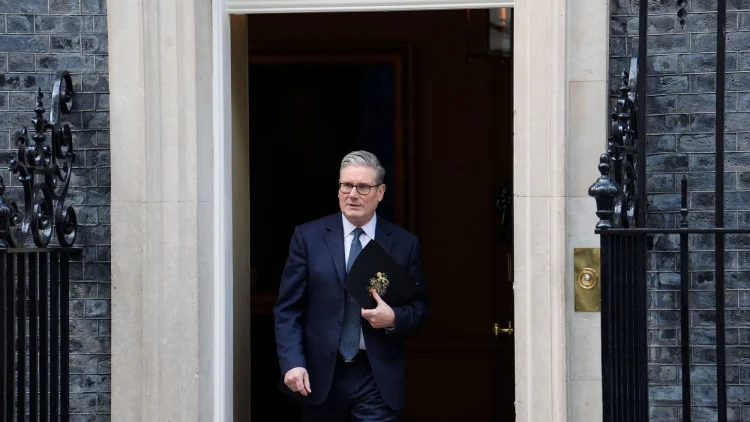
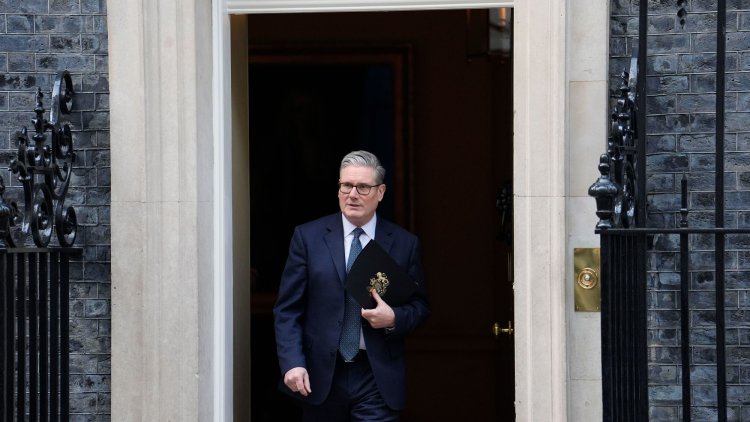
Prime Minister Keir Starmer gave a press conference on Thursday afternoon about the conflict in the Middle East (Alamy)

3 min read
Prime Minister Keir Starmer has said the UK is sending more jets to “maintain the shield” over the British people in the Middle East, after Iran launched a fresh wave of attacks against Israel and US targets in the region.
Starmer gave a Downing Street press conference on Thursday afternoon to update the public on the conflict in the Middle East, as the war between Iran and the US and Israel continues into its sixth day.
“I can announce today that we’re sending four additional Typhoon jets to join our squadron in Qatar,” he said.
“To strengthen our defensive operations in Qatar and across the region, Wildcat helicopters with anti-drone capabilities are arriving in Cyprus tomorrow.”
Starmer defended his decision not to join the initial US-Israeli strikes on Iran, after he declined a request to allow US planes to use British bases, saying that his focus was on “providing calm, level-headed leadership”.
He later approved a US request to use British bases to carry out “defensive” strikes on Iran.
Responding to President Donald Trump’s criticism of his initial decision not to approve US use of British bases, which included saying Starmer is no Winston Churchill, the Prime Minister said that, just as Trump is taking decisions in his country’s national interest, he is taking decisions in the interest of Britain.
Starmer warned that the conflict “could continue for some time”, and said that when the strikes began on Saturday, the UK “immediately” put jets into the sky to “protect our people and our allies in the region”.
The jets have shot down multiple drones, at least one of which was heading towards a base housing British military personnel.
Starmer addressed the ongoing evacuation flights from the region, with more than 4,000 people having now arrived back in the UK on commercial flights from the United Arab Emirates (UAE).
A further seven flights are due to leave the UAE for the UK on Thursday, and Starmer confirmed that the first charter flight from Oman took off earlier today.
“I want to be very clear, this is a huge undertaking,” he said.
“It’s one of the biggest operations of its kind, many times bigger than the evacuation from Afghanistan.”
In his speech at the press conference, Starmer said that some would use the geopolitical crisis to “divide us”.
“That’s why the government is reaching out to communities across the United Kingdom, Jewish and Muslim alike, making sure that communities and places of worship have appropriate protective security in place,” he said.
“As a nation, we should come together in this moment. Those citizens who are stuck in the region, scared and in need of help, come from all backgrounds; the armed forces who protect them come from all backgrounds, too. We are united by our common humanity and our love of this country.”
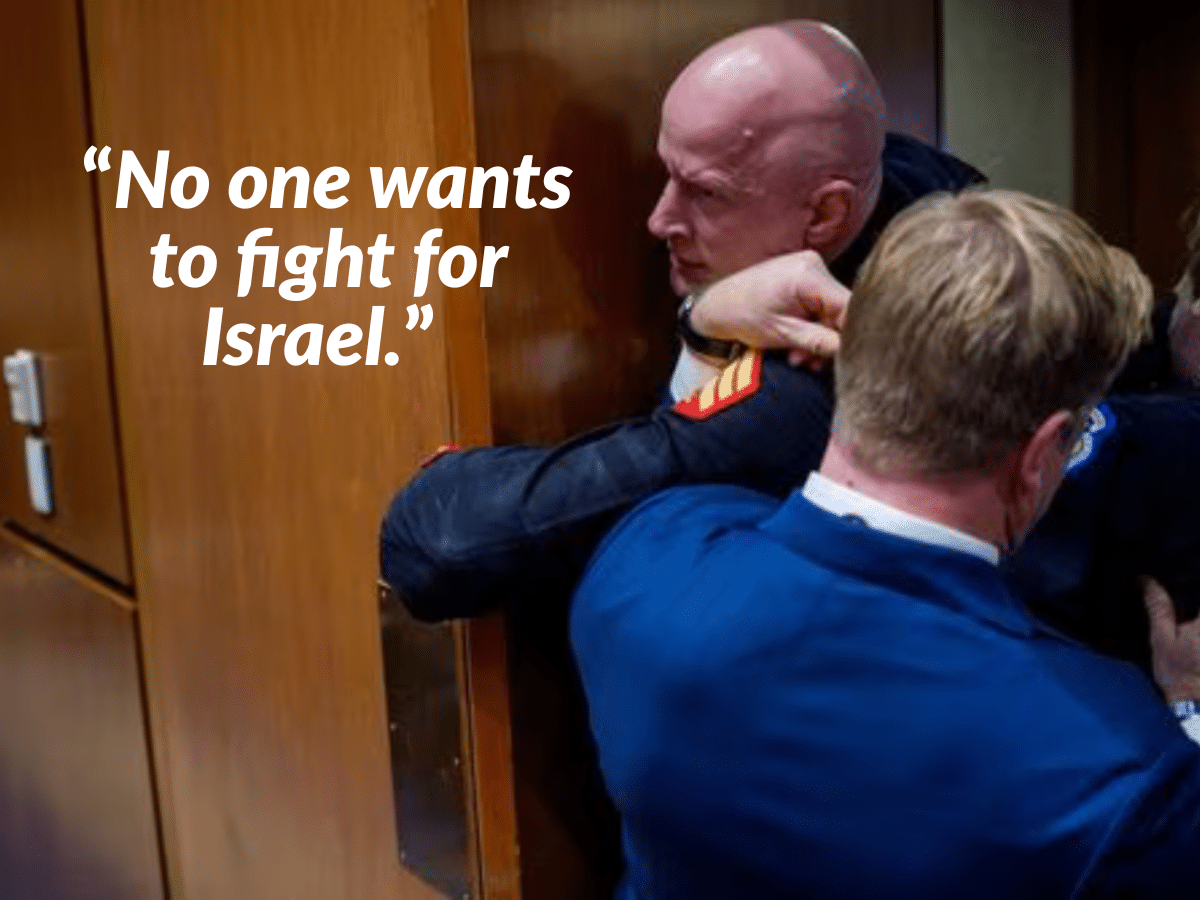
During a Senate Armed Services hearing on 4 March, a Marine veteran protesting a war fought “for Israel” was violently assaulted by a Trump senator. This occurred while police officers rough handled the protester while trying to escort him out of the building. In the process, they apparently broke the veteran’s arm.
No war for Israel
In reference to coordinated US-Israeli strikes on Iran, protester Brian McGinnis interrupted the hearing by saying:
America does not want to send its sons and daughters to war for Israel.
The Trump aligned republican senator Tim Sheehy has received massive amounts of money from big business and Israel lobbyists. He has called the US-Israel terror in Iran “righteous“. Moreover, his aggressive intervention seemed to break McGinnis’s arm.
Sen. @TimSheehyMT says he “decided to help out and deescalate” by breaking a man’s arm. Let’s be clear:
• The man is a Marine Corps veteran.
• He was protesting war with Iran
• Sheehy, a sitting Senator, physically attacked him until his arm SNAPPED. You can hear the crack on… pic.twitter.com/haTVcR2DQs— AIPAC Tracker (@TrackAIPAC) March 5, 2026
McGinnis is a firefighter and Green Party senate candidate. His campaign manager said he stood up because he “couldn’t take their lies anymore.”
He just wanted to be heard [and was] speaking loud and clear… He was assaulted, actually. They broke his arm.
The pro-Israel establishment lies
Sheehy has openly shown his excitement about the costly and destructive, trump vetted US-Israeli offensive against Iran, which has already killed over a thousand people in the country since 28 February. Furthermore, one report says the assault has cost US taxpayers over $5bn so far. It could end up costing many billions more.
As we might expect of someone who supports a country openly committing genocide, Sheehy has lied consistently to try and justify the war on Iran.
Here he is pushing this narrative:
President Trump is putting an end to Iran’s 47-year reign of terror spent murdering and maiming Americans all over the globe. Time to finish the job. pic.twitter.com/mBqkpEXyay
— Tim Sheehy (@TimSheehyMT) March 3, 2026
The truth is that, despite constant US hostility, Iran has killed far fewer US citizens in the Middle East than the US has killed Iranians.
A key question, of course, is why the hell has the US placed soldiers in the Middle East anyway, thousands of miles away from the US?
Nonetheless, Sheehy has repeated the lie that Iran is somehow a threat to US citizens, even going so far as to call Iran the:
largest destabilizing force in the region.
This is despite Israel committing genocide in Palestine. It is also attacking numerous countries in the region in recent years. And it has learned the trade from its enabler – the US. As the Canary has reported previously, the US is the ‘nation of terror‘:
the US has long terrorised people around the world to get what it wants, forcing countless civilians to flee to safety. It then celebrates the war criminals responsible. Time and again, Washington has gleefully trampled over international law
McGinnis is right. Millions of ordinary people in the US don’t want their country fighting wars thousands of miles away for a genocidal settler-colonial power. But until people like Donald Trump and Tim Sheehy no longer sit in the halls of power, that’s unlikely to change.
Featured image via the Canary

Modi cowers after US blasts Iranian vessel in Indian Ocean

Could Kyler Murray crossroads lead back to MLB? A’s open to talks

Google begins calling out battery-killing Android apps


-

 Politics7 days ago
ITV enters Gaza with IDF amid ongoing genocide
-

 Politics2 days ago
Alan Cumming Brands Baftas Ceremony A ‘Triggering S**tshow’
-

 Fashion6 days ago
Weekend Open Thread: Iris Top
-

 Tech5 days ago
Unihertz’s Titan 2 Elite Arrives Just as Physical Keyboards Refuse to Fade Away
-
Sports6 days ago
The Vikings Need a Duck
-
 NewsBeat5 days ago
Dubai flights cancelled as Brit told airspace closed ’10 minutes after boarding’
-

 NewsBeat5 days ago
Abusive parents will now be treated like sex offenders and placed on a ‘child cruelty register’ | News UK
-

 NewsBeat4 days ago
‘Significant’ damage to boarded-up Horden house after fire
-
 NewsBeat5 days ago
The empty pub on busy Cambridge road that has been boarded up for years
-

 Tech10 hours ago
Bitwarden adds support for passkey login on Windows 11
-

 Entertainment3 days ago
Baby Gear Guide: Strollers, Car Seats
-
 Tech6 days ago
NASA Reveals Identity of Astronaut Who Suffered Medical Incident Aboard ISS
-

 Business7 days ago
Only 4% of women globally reside in countries that offer almost complete legal equality
-
Politics5 days ago
FIFA hypocrisy after Israel murder over 400 Palestinian footballers
-
 NewsBeat4 days ago
Emirates confirms when flights will resume amid Dubai airport chaos
-

 NewsBeat3 days ago
Is it acceptable to comment on the appearance of strangers in public? Readers discuss
-

 Crypto World7 days ago
From Crypto Treasury to RWA: ETHZilla Retreats and Relaunches as Forum Markets on Nasdaq
-

 Tech4 days ago
Viral ad shows aged Musk, Altman, and Bezos using jobless humans to power AI
-

 Video3 days ago
How to Build Finance Dashboards With AI in Minutes
-

 Business2 days ago
Guthrie Disappearance Enters Fifth Week as Family Visits Memorial