

Politics
The World Cup final came to town. The town great eight times larger.

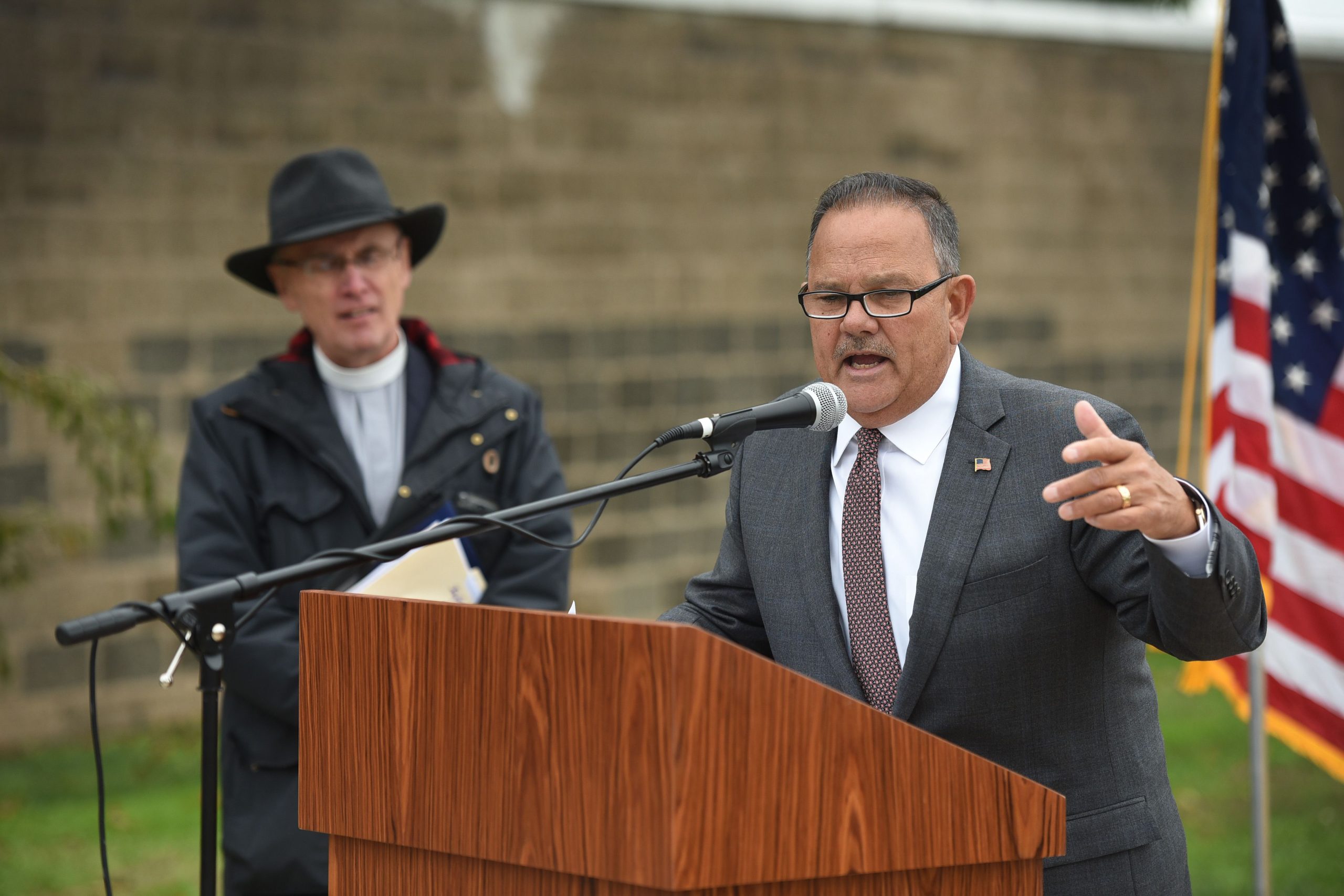

Forget Zohran Mamdani. The local elected official who really rules MetLife Stadium today is Jeffrey Lahullier, whose 10,000-person town sees its population swell by more than 800 percent whenever there’s an event at the stadium complex in the middle of his turf, writes POLITICO’s Will McCarthy:
Read Will’s story “The World Cup came to town. The town grew eight times larger” here.

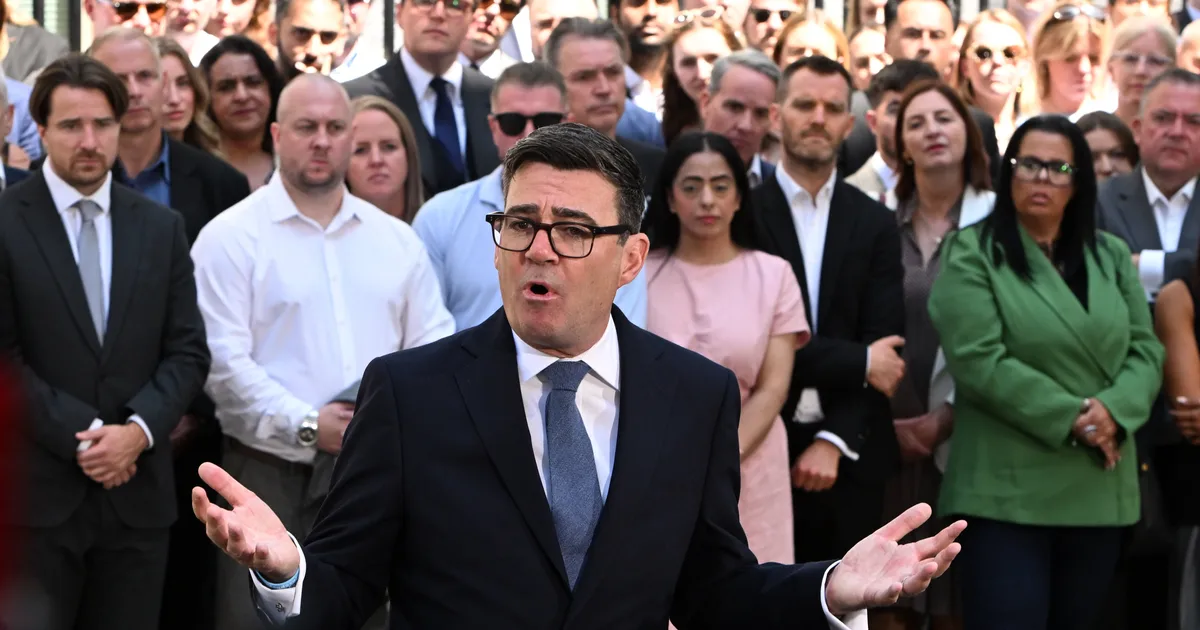
Rents could be frozen as part of attempts to help Brits struggling with the cost of living, Andy Burnham has indicated.
The new prime minister is also looking at ways to bring down energy bills and cap bus fares to show his government is on the side of ordinary people.
He has also set out his ambition of ending rough sleeping in the UK during his time in office.
Burnham is expected to unveil a package of measures tomorrow aimed at putting more money in people’s pockets as he aims to hit the ground running after replacing Keir Starmer in No.10.
In his first speech in Downing Street, Burnham said he wanted to “give people some breathing space”.
Speaking to journalists in the No.10 garden afterwards, Burnham was asked if that would include measures on bus fares, energy bills and rent freezes.
He said: “We are looking at all of those things, but we will make more announcements tomorrow. We’re just finalising the details.
“It’s premature to say it will be any one of those particular things. We just want to do some things that people will feel and feel quite quickly. It won’t solve everything, it won’t take all of the pressure off but it just shows the direction of travel and that we’re serious about helping them out.”
Bringing in rent controls is one of the Green Party’s key policies, but critics say it could lead to a shortage of properties as landlords respond by taking them off the market.
Ben Beadle, chief executive of the National Residential Landlords Association, said: “Rent controls would choke off supply in the private rented sector, making it harder to meet the prime minister’s welcome ambition to end rough sleeping.
“The reality is that rent increases have fallen by two thirds over the past two years at exactly the time when supply is better meeting tenant demand. Rent controls would undermine all of this.”
Meanwhile, Burnham also failed to rule out increasing the top rate of income tax to 50p in the pound.
However, that would be a clear breach of Labour’s election manifesto, which he has insisted he will stick to.
The new PM also said he wanted to “fix” the social care system before he leaves office.
He said the NHS was spending billions of pounds a year looking after elderly people stuck in hospitals because there is nowhere else for them to go.
“I am ready to use some of my political capital on this issue,” he said. “I’ll be blunt with you. I would not want to leave office having done what Westminster has done, not just not just for 15 years actually, I think you’re getting close to 30 years.
“It’s not defensible. How many people have lost their homes and their savings in that time? We need to face it and fix it.”
Listen to Commons People, the podcast that makes politics easy. Every week, Kevin Schofield and Kate Nicholson unpack the week’s biggest stories to keep you informed. Join us for straightforward analysis of what’s going on at Westminster.
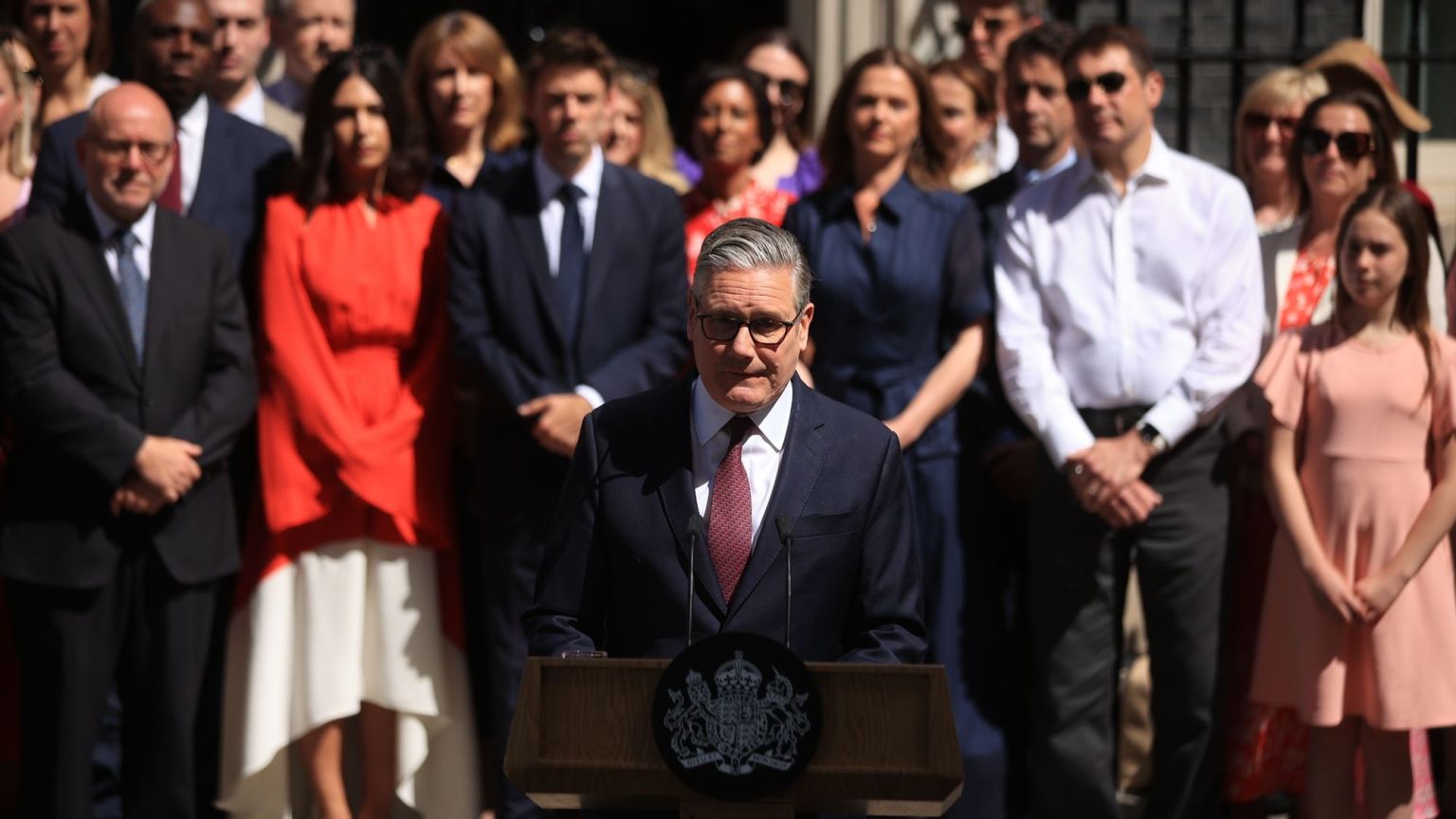
Sir Keir Starmer: the PM who did nothing about the sense of doom pervading Britain, but he did ban ‘doomscrolling’. The man who did zilch to mend our fraying social fabric, but he did stop kids from perusing its consequences on TikTok. The man who failed – catastrophically – to alleviate that bleak feeling many of us have that Britain is broken, but he did cover the next generation’s eyes to just how broken we are.
Starmer should be remembered for his social-media ban for under-16s, that mad, illiberal law, due to come into force in spring next year, that promises to liberate youth from the angst-inducing ‘doomscrolling’ inflicted on them by Big Tech’s wily algorithms. Not because it’s a ‘landmark’ policy, as he claims. And not because it will be effective – kids will find a workaround. No, it’s because leaving intact the social conditions of doom while tweaking the machine so that fewer people can ‘scroll’ those conditions is Starmerism summed up: a regime of hollow theatricality, devoted more to managing the optics of crisis than mustering up the competence to avert it.
Starmer is a man without a legacy. He promised competence over charisma and delivered neither. His was a phantom premiership: government without governing. You could ask a hundred Brits to name a policy he enacted and I reckon five, at best, could do so. Even his vanishingly small number of apologists usually only squawk about what he didn’t do. He didn’t drag us into the Iran-US War. He didn’t follow through on his promise to cut the winter-fuel allowance for pensioners. He didn’t murder anyone. A man so staggeringly insubstantial that even his fans prefer his inertia to his initiative.
For me, the terrifying nothingness of Starmerism is best summed up in the fact that he recently said his ‘proudest achievement’ was scrapping the two-child benefit cap, the Tory-introduced measure that meant families could only claim additional welfare payments for their first two kids. But Starmer opposed cutting that cap. For ages. In fact, in July 2024, he withdrew the whip from seven Labour MPs who voted to scrap it. It was only under pressure from his parliamentary colleagues that he relented. What can you even say about a man whose ‘proudest achievement’ is a course of action foisted on him by others? That’s Sir Keir: the political weathervane who mistook a gust of wind for his own internal moral compass.
As Starmer exits Downing St, to be replaced by his usurper from the north, Andy Burnham, there will be much chatter about his legacy and policies and character. People will remind us he recognised the state of Palestine (which of course wasn’t enough to appease the insane Islamo-left that lusts after the obliteration of the Jewish State). They’ll yap about his adroit handling of Trump’s tariffs frenzy. They’ll say he invested billions in renewables, while the rest of us still wonder why he didn’t just drill, baby, drill for all that oil in the North Sea. They’ll chirp about how he extended free school meals provision. They’ll say he stood up to Big Tech.
But for me, even these policies, if we can call them that, illuminate the rot in the hollow heart of Starmerism. The Starmer era was fundamentally a performance of government. Starmer gave the appearance of governing without actually governing. He was the ultimate busy fool – officiously rushing through the corridors of power while neglecting the nation outside. It felt flat-out surreal to watch him wang on about the importance of getting teens off TikTok even as thousands of men from fuck knows where landed on our shores every week and as the economy teetered on the brink of ruin. It was worse than fiddling while Rome burns – at least those emperors had some fun as the flames licked the walls of their empire.
To read about Starmer’s style of ‘government’ was to stare goggle-eyed into the bottomless well of state incapacity in the 21st century. His colleagues called him the ‘absent PM’. He has ‘no views’, apparently. He is the ‘least intellectually curious person I have ever met’, said a departing aide. Downing St under Starmer was apparently consumed by an ‘unnatural, overwhelming silence’. The PM pored with anal intensity over every policy document but had nothing to add to them: ‘He read everything [and] said nothing.’ He has no ‘theory of power’, insiders said. He has no idea ‘how power works’. He is wholly unlike any ‘historical figure’ who ‘got stuff done’.
Partly this is a Starmer problem: he’s a stiff, adenoidal, lawyerly type who was ill-suited to both the ideology and the intrigue of politics. But it’s also a state problem. Starmerism is the end product of the voluntary euthanasia of the British state; of decades of the state’s suckling at the teat of Euro-federalism and its outsourcing of economic life to the Bank of England and of political life to a vast quangocracy that is as aloof as it is unaccountable.
No one in politics has a ‘theory of power’. They haven’t needed one, because they abdicated their power to others. They are incurious and uncannily quiet and ‘absent’ because they made themselves the recipients of foreign law-making and of ‘expert’ economic advice, robbing themselves of any need to think, far less act. Anyone who thinks Burnham will turn this around is in for the rudest of awakenings. Managerialism with eyelashes is still managerialism. A technocrat who likes The Smiths is still a technocrat. Indeed, Burnham’s hyper-localism will create ever vaster layers of bureaucracy, further deracinating the decision-making capacity of the British state and birthing yet more incurious faux-leaders primed for ‘taking advice’ rather than remaking the nation.
It is precisely the thinness of politics in the modern era that bends it towards authoritarianism. Incapable, or unwilling, or both, of fixing the legion crises afflicting our societies, our leaders instead focus on policing what we the people are allowed to think and say about those crises. So Starmer called the rape-gang crisis a ‘far-right bandwagon’. He lamented, and sought to crush, ‘doomscrolling’. He spent ages coming up with a new definition of ‘Islamophobia’. There was even discussion about forcing YouTube to big up ‘trustworthy’ sources like the BBC and Channel 4 News over fresh, dissenting digital voices, like spiked.
Starmer’s instinct, always, was to manage and tame and drain the fury from public discussion. He couldn’t repair our borders, but he could demonise people who worried about the borders. He couldn’t truthfully confront the rape-gang crisis – and the state’s complicity – but he could call people ‘far right’ for talking about it. He couldn’t address the entirely legitimate concerns of the upstart media, but he could subdue the upstart media by strong-arming Big Tech to parrot the bollocks of the BBC. The great terror of the technocrat is that they have lost control of the narrative. Because they have. Demonisation and censorship are the natural, cancerous outgrowths of a state that is isolated and scared and searingly distrustful of the people it rules over. Tyranny is always more likely to spring from weakness than from strength. Starmerism shows that.
A confession: I doomscroll sometimes. My algorithm feeds me clips of Europe in crisis. I try to resist. I certainly refuse to bow to the idea that Europe is doomed, because I don’t believe it is. But not once have I thought, ‘Why is Big Tech feeding me this?’. Instead I’ve thought, ‘Why have our politicians done this to our beautiful nations?’. Starmer had no answers. Burnham won’t, either. Their cowardly despotism will endure for as long as we let it.
Brendan O’Neill is spiked’s chief political writer and host of the spiked podcast, The Brendan O’Neill Show. Subscribe to the podcast here. His latest book – After the Pogrom: 7 October, Israel and the Crisis of Civilisation – is available to order on Amazon UK and Amazon US now. And find Brendan on Instagram: @burntoakboy.
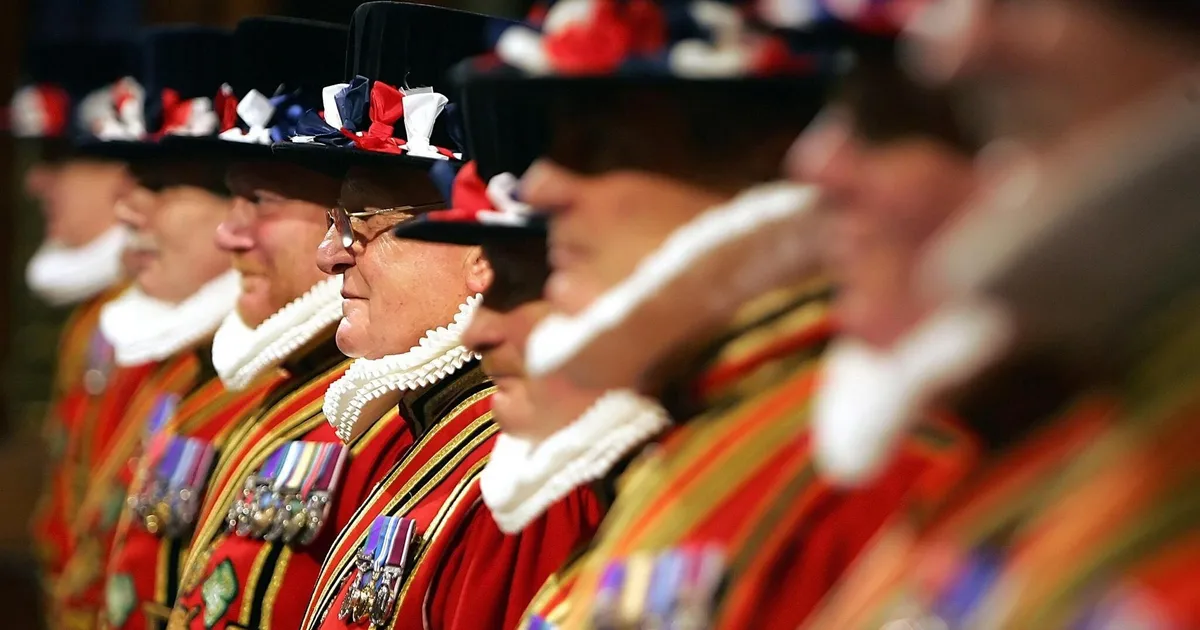
The straight-backed, stiff-jacketed people who stand on guard outside royal spots are a sight for tourists and locals alike.
If you’ve grown up knowing about them, calling the guards “Beefeaters” seems natural.
But not only is it not their actual name ― it’s used to refer to the Yeoman Warders of His Majesty’s Royal Palace and Fortress the Tower of London, and Members of the Sovereign’s Body Guard of the Yeoman Guard Extraordinary (phew) ― but nobody’s exactly sure how it came to be.
Oh. Any theories?
Yes! The name seems to have been in use since about 1485, so we’ve had time to cook up some ideas.
One 1669 comment from Cosimo III de’ Medici, Grand Duke of Tuscany, who frequented the royal Court, reads “A very large ration of beef is given to them daily at the court, and they might be called Beef-eater.”
Another theory goes that buffetier, an Old French word meaning “servant” or “food taster,” could have been mistranslated into the term ― however the Etymological Dictionary of the English Language writing in the 1800s that there’s “not the faintest tittle of evidence” for that idea.
Yet another idea is that the staff were once paid in chunks of beef.
Ultimately, the name is still up in the air.
Why do Beefeaters exist?
Per Historic Royal Palace’s page, the Yeoman of the Guard were originally the “monarch’s personal, crack bodyguard who travelled with him everywhere.”
Then, they say Henry VII decided the Tower of London needed its own guards ― that’s when the Tower Warders came to be. These people protected the Tower and its famous Crown jewels.
They’re related, and are both often called “Beefeaters,” but are technically separate.
Nowadays, Beefeaters are mostly ceremonial ― though they still uphold some traditions, like shouting “Halt! Who comes there?” nightly at the Tower of London and examining the King’s keys at 9.53 PM as part of the Ceremony of the Keys.
Tradition is a wild thing, isn’t it?
Last Friday’s edition of The National ran this guff:

And as we often are, we were put in mind of the greatest politics book ever written.
We’d really need to quote a much longer section to fully convey the point – ideally just read all of the piece linked above – but this passage will suffice for general purposes:
“What is concerned here is not the morale of masses, whose attitude is unimportant so long as they are kept steadily at work, but the morale of the Party itself.
Even the humblest Party member is expected to be competent, industrious, and even intelligent within narrow limits, but it is also necessary that he should be a credulous and ignorant fanatic whose prevailing moods are fear, hatred, adulation, and orgiastic triumph. In other words it is necessary that he should have the mentality appropriate to a state of war.
It does not matter whether the war is actually happening, and, since no decisive victory is possible, it does not matter whether the war is going well or badly. All that is needed is that a state of war should exist.”
So let’s talk about the independence industry.

Or as Orwell put it, “The war is now within measurable distance of its end”. Kemp’s claim is obvious bollocks. Plaid Cymru are now the party of power in Wales but they don’t have a majority, they’ve pledged NOT to hold a referendum on independence, and if they did there’s essentially no chance they’d win it. Support in Wales usually bobbles around between 25% and 40% with DKs excluded.


Similarly, we can’t even find much in the way of evidence of Sinn Fein even seriously talking about a border poll in Northern Ireland. Much like the SNP in Scotland, they tend to talk it up a bit during elections then immediately kick it back into the long grass.

And of course the UK government has less than no interest in granting any more referendums in the foreseeable future, having been quite terrified by the unexpected closeness of the Scottish one and then losing the Brexit one.
So what of this “strategy for victory”, then? Kemp has a surprise for us.

Apparently the “true” support for independence is actually less than 40%. That’s what Kemp says would be the result of a “de facto referendum” conducted via a general election. He doesn’t cite any evidence for that figure, although it does pretty much correspond with what pro-indy parties got in the Holyrood election in May.
There’s little prospect of support for either the SNP or the Greens rocketing in the near future, and no sign of any new party with any traction, so let’s accept that proposition for the sake of argument. Now what?

This, though, is cobblers of the very lowest grade. For reasons we’ve explored extensively in the past, using a Westminster election rather than a Holyrood one is an epically terrible idea. You’d struggle to even get heard in a media which would be focused on UK issues, and you’d only really have one party to vote for – the Scottish Greens are a total irrelevance at Westminster.
That leaves it all on the SNP, and (as Kemp notes), the SNP are a shambles of a party that even many indy supporters won’t vote for.

In a Holyrood election you have the huge advantage of two votes, and thereby you can campaign on the basis of using the constituency vote as your de-facto indyref and the list vote as your normal election vote, making it much easier for people who don’t support the SNP to vote “for independence” while still backing their preferred party.

Heavens, we’re getting dizzy trying to track all these U-turns. Does he want a de-facto indyref or not? At this point we honestly don’t know. Just a few paragraphs ago he’s told us we’d get less than 40% in such a vote, now he wants to have it in three years anyway, in the most doomed-to-certain-failure manner possible.
What’s your game, Gordon?

“Impulsive”? Christ above. We’ve been demanding Westminster outline a defined route for over a decade now – since at least the Brexit vote of June 2016 – and they’ve swatted it away like a mildly annoying moth on a summer’s evening. The chances of them having a sudden change of heart between now and 2028 are roughly on a par with FIFA agreeing to replay the whole World Cup due the the referee’s refusal to give Scotland a nailed-on penalty against Morocco.
(And about the same as the SNP finally coming up with all the serious work on the case for independence that they’ve so conspicuously failed to do in that decade. What does he think has changed? Has the party suddenly recruited an army of geniuses?)

This drivel is what the SNP has been punting relentlessly at voters since 2015 and all that’s happened as a result is that SNP support has plunged from 60% to the mid-30s. The definition of insanity, they say, is doing the same thing over and over again and expecting different results.
But that assumes you WANT different results. And there’s the rub. Because if you did you’d be trying a bit harder than this:

Billboards and petitions. Whoop-de-sodding-doo. (We all know how much attention we pay to political bumf shoved through our letterbox, and 75,000 is a pathetic number – just one for every 34 households in the country – anyway. What are the people who get one going to do, call the whole street round to read it together?)
As for the “Scottish Citizens’ Convention”, Kemp and Believe In Scotland have been trying to flog that ridiculous pig-in-a-poke for years now and it’s an absolute honking embarrassment of a plan.
But as we pointed out yesterday, punting this quack-hooey at the hopelessly gullible is a nice little earner for BiS’s parent company Business For Scotland. Failing to deliver it year after year keeps the (folding, not clinking) money rolling in and Kemp in an undisclosed, but we’re quite certain enviable, salary.

Independence either happening, or definitively failing, would see that gravy train crashing straight into the buffers. The only thing that keeps it rolling along (apologies for the mixed metaphor) is a carrot on a stick, constantly dangling something a couple of years ahead, no matter how implausible, whether it’s an 11-point plan or yet another talking shop, committee, “task force”, “Summer Of Independence” or whatever.

Even as shonky independence strategies go this one’s a duffer, for a truckload of reasons so blindingly obvious that we feel bad about insulting your intelligence by spelling them out, so we’ll just do a few of the biggest ones.

(1) There is NO chance of the SNP willingly surrendering their political ownership of the concept of independence. They wouldn’t even accept votes for other indy parties at this year’s election as being votes for indy, they insisted only SNP ones counted.
(2) Even if they did (they won’t) and the “common national banner” took every seat at Westminster, so what? The SNP got 56 out of 59 in 2015 and they did nothing. They did nothing when they had numerical leverage in 2018-2019 either. If they had any cunning plans, those were the times to whip them out.
(3) You get zero “legitimacy” from a discussion process that Unionists have absolutely no reason to participate in. Why on Earth would they lend any sort of support or credibility to a venture expressly and openly designed to achieve the thing they most oppose? So you’re talking solely to the people who already agree with you, persuading no-one and getting nowhere.
(4) If BiS know the people capable of getting us from where we are now to a position of being ready to win a de-facto indyref, where the heck are they and what have they been doing for the last 10 years, when the circumstances have been so favourable? Washing their hair? Were they just waiting for all the momentum and impetus of Brexit, COVID, May, Truss and Starmer to die down because they didn’t want to make it too easy?
The snake oil they’re selling isn’t even oil, it’s toilet water. The independence industry wants your money to pay its wages, and that’s the end of their interest in you. If they had anything to offer, they’d have done it by now, but then they’d be out of a job and have to do something a little harder than organising a dinner and a march for a few hundred people once a year.
In football, if you produce nothing for a decade you get the sack. But Scottish politics is a gig for life. When you’re cruising, you don’t rock the boat.


Generally, it isn’t a good sign when a new employee is hurriedly deleting his social-media accounts days before he starts. It’s a particularly bad omen when that person is about to take up one of the most important jobs in the country – in Matthew McGregor’s case, the head of political strategy for the UK prime minister. Unluckily for Andy Burnham’s new Svengali, his opponents have kept the receipts.
One of McGregor’s most memorable posts came during the Brexit referendum debate in 2016. ‘Another reason to vote Remain: to tell this racist piece of shit to do one’, he wrote on what was then Twitter, with a picture of Nigel Farage. Other musings lifted from the annals of his X account were less juvenile but no more comforting: last year, he described chancellor Rachel Reeves’s fiscal rules as ‘too tight’, despite UK debt then being more than 90 per cent of GDP, and called on Ofcom to ‘tighten its rules’ to prevent politicians hosting shows on GB News.
You might be charitable and reply that everyone has said something hastily online that they later come to regret. And, after all, everyone on the Remain side lost their minds after the Brexit referendum, didn’t they? But McGregor’s musings on that ‘racist piece of shit’ who now leads the most popular political party in the UK really only scratch the surface.
McGregor spent three years – from 2018 to 2021 – as the head of campaigns and strategy for Hope Not Hate, a charity that isn’t nearly as innocent as its name suggests. Although it claims to be a non-partisan outfit fighting ‘far-right extremism’, it dedicates a significant chunk of its resources to attacking anyone and anything of a remotely conservative bent. The aim, you have to presume, is to have such people silenced and excluded from public life.
In fact, nearly anyone noteworthy who has expressed a preference for controlled or reduced immigration, or gender-critical views, has found themselves ‘exposed’ as a foul hate-monger in one of its annual ‘State of Hate’ reports. In 2024, Hope Not Hate memorably pointed the bone at Conservative MPs Jacob Rees-Mogg, Iain Duncan-Smith and Miriam Cates for their supposedly poisonous influence on British public life. Last week, Hope Not Hate quietly deleted an article on its website that accused the recently murdered former minister Ann Widdecombe of promoting a ‘dangerous and divisive politics’. Whatever one might think of these politicians, fascists and extremists they are not.
After leaving Hope Not Hate, McGregor joined the board of Reprieve, where he led a campaign to abolish the power of governments to strip the British citizenship of dual nationals. This, like Hope Not Hate, may sound innocent even though it is anything but – a point demonstrated by the fact that many of Reprieve’s ‘clients’ were ISIS brides. As a few people have already pointed out, if Reprieve had its way, it would be impossible to deport Pakistani national Shabir Ahmed, the recently released ringleader of a Rochdale rape gang who was convicted of 30 child sex offences.
Like pretty much everyone near the top of the modern Labour Party, McGregor appears to have been allergic to anything resembling a real job. So we also find him plugging away at activist outfit 38 Degrees. As chief executive, McGregor campaigned heavily against the one good thing Keir Starmer tried (and of course failed) to do during his short premiership – namely, reforming the UK’s bloated, financially ruinous and patently unfair welfare system.
Like all full-time activists, McGregor really, really dislikes Israel. Last year, 38 Degrees drafted a petition and led a campaign demanding Gaza be ‘the first thing on the agenda’ for one of Starmer’s meetings with US president Donald Trump. Of course, this was rightly ignored at the time. But might Burnham’s bizarre mea culpa on Gaza – his only significant foreign policy intervention since the Makerfield by-election – be a taste of more senseless Israel-bashing to come?
With a track record like this, it beggars belief that new prime minister Andy Burnham would touch McGregor with a barge pole. But to think that such a person will help shape the policy of the new government – the ‘brains’ behind the operation – is a deeply troubling prospect. It will surely mean less free speech, less control of the UK’s borders, more welfarism and an even more obsessive focus on the Jewish State.
The rise of Matthew McGregor suggests that life under Burnham could soon resemble what French novelist Michel Houellebecq said about life after Covid: the same, only worse.
Hugo Timms is a staff writer at spiked.
We’ve written before at HuffPost UK about why dashboards are called dashboards (the word is actually way older than you’d think).
But once you’ve wrapped your head around that bit of trivia, you might wonder about the other mysteries of the automobile world.
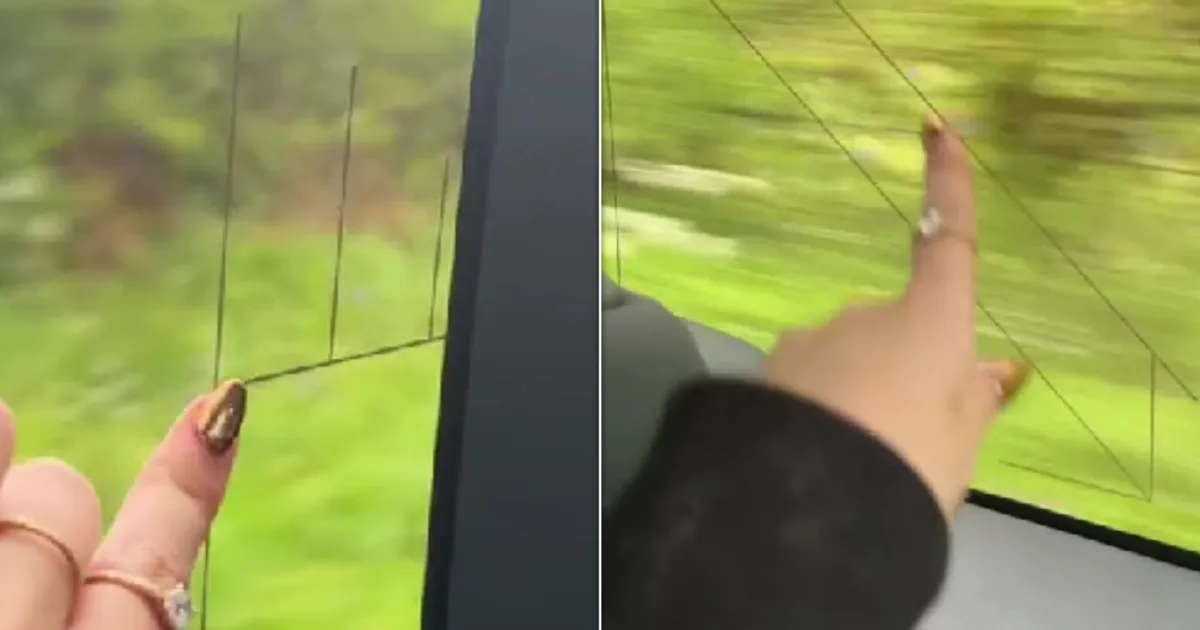
For example, TikToker @mi.slater recently posted a video which read, “Does anyone wanna mansplain to me why car windows have these lines?”
In the clip, she was pointing to thin, black lines on the back window of a car. Watching it, I realised I had no idea why they were there, either.
So… what are they for?
Commenters suggested that the lines were put in place “to prevent the windows icing up” or to help them defrost.
Car window experts at Miracle Auto Glass Centre confirmed the theory and added that these lines are actually wires.
“The defroster wires are usually a wire grid that utilises resistive heating that physically warms the glass until frost is removed by electric currents. When the glass of a windshield warms up, ice melts quickly and condensation is minimised,” they say.
Meanwhile frits, the black dots which sometimes accompany the lines, are there to disperse the temperature evenly, make the bond between the car and the window look nicer, and even provide a rough surface for the adhesive to stick to, Autoglaze says.
People were having a time in the comments
Some commenters jokily suggested that the lines were a sip wire for bugs (well, the wire part is right), while others said they were a “race course for the rain drops.”
“Basically they’re there because of so yeah,” another commenter said.
Others shared that the wires can be used for radio antennae, too. We couldn’t find anything to support that, but there are reports of people’s radio signals being affected by defroster wire voltage changes as the antennae and heater grid run close together.
You learn something new every day, right?

!function(n){if(!window.cnx){window.cnx={},window.cnx.cmd=[];var t=n.createElement(‘iframe’);t.display=’none’,t.onload=function(){var n=t.contentWindow.document,c=n.createElement(‘script’);c.src=”//cd.connatix.com/connatix.player.js”,c.setAttribute(‘async’,’1′),c.setAttribute(‘type’,’text/javascript’),n.body.appendChild(c)},n.head.appendChild(t)}}(document);(new Image()).src=”https://capi.connatix.com/tr/si?token=8b034f64-513c-4987-b16f-42d6008f7feb”;cnx.cmd.push(function(){cnx({“playerId”:”8b034f64-513c-4987-b16f-42d6008f7feb”,”mediaId”:”c41e05a6-7ba0-42f1-8023-0f5ff30eab87″}).render(“6a5e0e34e4b0ab756517d598”);});
Most of us know that regular exercise can help us to age more healthily and might even add years to our lives.
Staying active has been linked to less age-related muscle loss (sarcopenia), which may mean a lower likelihood of falls, frailty, and dementia.
We also know that a variety of exercises, from “balance training” to “walking football”, can help to achieve these health benefits.
Some studies say that vigorous intermittent lifestyle physical activity (VILPA) workouts may be an especially “time-efficient and behaviourally sustainable” approach to lowering mortality risk.
What is VILPA?
VILPA involves short bursts of intense activity. It’s a bit like a “scaled-down version of high-intensity interval training (HIIT),” the Institute of Sport, Exercise, and Health said.
But you don’t need a gym to do VILPA workouts. Just ramping up your activity during everyday tasks, like walking to the shops or gardening, counts.
The “bursts” last one to two minutes at a time and are integrated into your everyday life.
Some examples include:
- Bursts of running or fast walking during your usual stroll
- Taking the stairs instead of using the lift
- Carrying heavy shopping bags or children
- Playing vigorously with pets
- Enthusiastic bursts of cleaning or gardening
What are the health benefits of VILPA?
It’s remarkable how beneficial mere minutes of VILPA can be for our health, particularly as we age.
Some research showed that just three to four one-minute bursts of activity a day is linked to a 40% lower risk of premature death from all causes, and a 49% lower risk of cardiovascular death compared to doing no activity at all.
A separate paper found that VILPA might help to offset the heart health risks associated with a sedentary lifestyle.
Another study focusing on adults transitioning into retirement found that 12 weeks of the exercise style upped their physical activity levels.
Not only that, but because it’s really fast and is designed to be built into your day-to-day life, those who try VILPA are very likely to stick to it.
There are some caveats, though: multiple studies have called for larger and longer-lasting trials to confirm their results, and we shouldn’t try to replace existing exercise recommendations with VILPA alone.
But if you’re not a fan of the gym and/or can’t see yourself buying a running vest any time soon, VILPA can be an easy, speedy way to introduce potentially health-boosting movement into your day without having to change your whole routine.
Related…




To become a surgeon in the UK, you need to finish medical school first. Then, you can “join the paid two-year foundation programme where you’ll work in six placements in different settings,” the NHS says.
“After your foundation programme, you can apply for paid specialty training to become a general surgeon, which will take a minimum of eight years.”
After all that training, you’d think you’d at least get to call yourself a doctor, right? Well, in the UK and Ireland, many don’t ― the formal title for doctors in those parts of the world is “Mr, Miss, Mrs,” or “Ms.”
Why?
Like lots of baffling things about the UK and Ireland, it comes down to tradition (and possibly a little bit of snobbery).
The British Medical Journal (BMJ) says that the “curious” tradition, which it calls “a mystery to doctors in other countries as well as to the British public,” dates back to before 1800.
Back then, physicians were usually “gentlemen” who possessed a formal Medical Degree (MD) from an accredited university. But surgeons didn’t usually have one and often took apprenticeships rather than studying, after which they were tested and awarded a diploma if they passed.
That meant surgeons stayed “Mr” while physicians were “MD”s. But over time, especially with the addition of London’s “voluntary” hospitals, surgeons proved their skill and mettle.
Honorary surgeon at St Bartholomew’s Hospital John Abernethy wrote in 1812, “There was a time when surgeons were considered as mere appendages of physicians, the mere operators to be put in motion by their directors: but times have changed and surgeons are changed too… and in consequence have got a kind of information which puts them on a par with others of the profession.”
Surgeons have long needed a medical degree and then some. So why keep the name?
But also, as the BMJ explains, “Surgeons had become so pleased with themselves that being addressed as Mr ceased to be a put-down and became a badge of honour and distinction. Although surgeons in 1730 had no right to be called Dr, hospital surgeons in 1830 had no wish to be.”
In other words, surgeons began to see their distinction from physicians as an honour. And now, as The Royal College of Surgeons points out, “in effect a person starts as Mr/Miss/Ms/Mrs, becomes a Dr and then goes back to being a Mr/Miss/Ms/Mrs again.”
After a complicated turn of events, which saw lots of arguments about who did and didn’t get to call themselves Mr and Dr, there is now only one medical Mr/Ms/Miss/Mrs per eight Drs.
Politics
Politics Home | New PM Andy Burnham Pledges Cost Of Living Action And An End To Rough Sleeping In First Speech
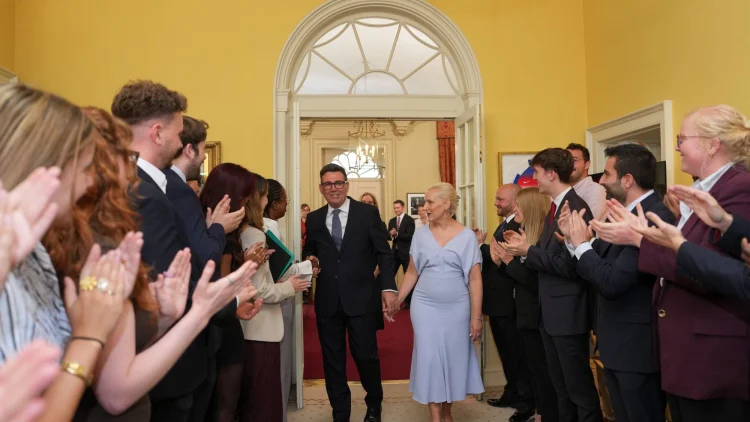

Andy Burnham has replaced Keir Starmer as the new prime minister of the United Kingdom (Alamy)

2 min read
Prime Minister Andy Burnham has pledged to end rough sleeping and bring in new measures to help the public with cost-of-living pressures in a Downing Street speech.
Burnham addressed the nation on Monday afternoon before entering No 10 to begin his premiership, after having been confirmed as leader of the Labour Party on Friday as the only eligible candidate.
Outlining his first plans for power, Burnham said: “I can do something to give people some breathing space now, some help with the cost of living, and I will set out some of those measures starting tomorrow, including how we pay for them.”
He went on to pledge that his first instruction in office will be to “end rough sleeping in our country”, as he wants to “help people to live well” by “building a more preventative state, investing in people’s success rather than paying for failure”.
The new PM also confirmed the government will bring forward a new 10-year plan for Britain later this year, and said his government would change the education system to give young people more support, and build more homes across the country.

Echoing comments by outgoing prime minister Keir Starmer on Monday morning, Burnham said he wanted to build a “new national sense of unity” and “common purpose”.
Burnham arrived at Downing Street after coming straight from meeting King Charles III at Buckingham Palace, accompanied by his wife Marie-France van Heel.
He delivered the speech outside No 10 without notes and without the traditional lectern used by prime ministers.
Among those greeting Burnham when he arrived in Downing Street were long-time allies and advisers from his time as Manchester mayor, including his friend and ally, Liverpool Mayor Steve Rotheram; former Labour MP for Makerfield Josh Simons, who gave up his seat to allow Burnham to stand in the by-election; and former footballer Peter Reid, who has campaigned for Burnham.
Burnham, who won the Makerfield by-election in June to become prime minister, is expected to begin appointing his cabinet on Monday afternoon.

Andy Burnham has used his first speech as prime minister to launch a national drive to end rough sleeping.
The announcement, delivered as Burnham addressed the nation outside 10 Downing Street, will be backed “from day one” by an extra £340 million in funding – pushing total investment in tackling rough sleeping to record levels.
Burnham argued the policy was central to his broader promise to build a “more preventative state” and invest “in people’s success, rather than paying for people’s failure.”
The new prime minister blamed successive governments for “turning a blind eye” to the issue of rough sleeping. Downing Street pointed to the “Everyone In” scheme launched during the Covid pandemic as proof that action is possible when there is political will.
MDU warns Chancellor clinical negligence system ‘not fit for purpose’

Northern Ireland RE curriculum is ‘indoctrination’ – Supreme Court
Before delivering his speech on Monday afternoon, Burnham met people with experience of sleeping rough and heard first hand how “it can trap people in a cycle of crisis, poor health and insecurity.”
As a first step, the government will begin acquiring homes suitable for rough sleepers, identifying those most in need, and moving people into housing and support. The £340 million is said to represent the opening phase of a five-year programme, with further details expected before the autumn.
Officials say the initial funding alone will provide 1,200 homes and intensive support for at least 3,000 people.
Burnham stated: “For too long, we’ve been told that ending rough sleeping will take decades or even that it’s impossible. I’m not having that.
“This is something a government can fix if it chooses to. Today, I’m choosing to.
“On my first day as prime minister, I’m announcing this government’s commitment to finally end long-term rough sleeping across the UK at the earliest opportunity.
“We’ll get to work immediately, bringing together national and local government with the investment needed to get it done.
“This is the kind of Britain I want us to be – a country where everyone has the security of a roof over their head, and where no one is left behind or written off. Let’s bring back hope.”
Politics.co.uk is the UK’s leading digital-only political website. Subscribe to our daily newsletter for all the latest news and analysis.
MicroStrategy Is Asking MSTR Investors to Make One Big Trade-Off
Cardi B’s Bold Outing With Nigerian Athlete Stirs Talk

Rents May Be Frozen To Support Struggling Brits

Renter of Home in Anne Heche Crash Denies Settlement With Son

No Jackpot Winner as $257 Million Prize Rolls Over to $269 Million Monday Draw

Weekend Open Thread: Staud – Corporette.com

Porshe? #car #shorts #tiktok #instagram #youtube #youtubeshorts #music #trending #new #money #sports

“Get a Financial Life” author Beth Kobliner on how credit cards encourage people to rack up debt

25 Minutes of The BEST Financial Decisions of 2025
-
 NewsBeat4 days ago
London Mayor Sadiq Khan handed a peerage by Keir Starmer alongside 15 other Labour figures… just days before the PM leaves No10
-

 Fashion3 days ago
Weekend Open Thread – Corporette.com
-

 Politics2 days ago
The House | The City of London can help the new chancellor deliver growth in every postcode
-

 Politics5 days ago
Young campaigners urge incoming PM to act on outdoor junk food ads
-

 Crypto World5 days ago
CFTC blocks Kalshi from unwinding Michigan trades after court order
-
 Crypto World3 days ago
Two July Windows Left: The CLARITY Act’s Senate Fight and What Failure Means
-

 Business5 days ago
Nvidia Stock Slips After Big Tuesday Rally as Huang Confirms Vera Rubin Chip Is Now in Production Today
-

 Crypto World2 days ago
Ripple Payments Joins MiCA With 14 Firms, Does It Mean Anything For XRP?
-

 Politics1 day ago
Democrats look to World Cup watch parties to register thousands of voters
-
 Entertainment5 days ago
Disney’s Most Ambitious Failed Star Wars Attraction Is Coming to SDCC
-

 Crypto World3 days ago
Ripple wins EU-wide access as ESMA adds it to MiCA register
-

 Business4 days ago
Palantir Shares Rise After Expanded Nvidia Partnership and Fresh Analyst Upgrades Ahead of Earnings Day
-

 Crypto World4 days ago
Injective Submits SEC Transfer-Agent Registration to Onchain Ownership Records
-

 Tech6 days ago
Get Your ESP32 Sunny Side Up With This Solar Dev Board
-

 NewsBeat3 days ago
Registration is now open for March for Men with Kev 2026
-

 News Videos6 days ago
XRP BOMBSHELL… XRP OMBOARDED FOR TRANSACTIONS!!!
-

 Tech6 days ago
Dark Secrets Emerge When Jailbreaking LLMs
-

 NewsBeat4 hours ago
Unregistered fitter used Gas Safe logo on business flyers
-
 Sports5 days ago
New Cornerback Enters Vikings Trade Rumor Mill
-

 News Videos3 days ago
Money | Class 12 Economics | CBSE Board Exam 2026-27
You must be logged in to post a comment Login