
Politics
Tina Fey To Front Saturday Night Live UK As First Guest Hosts Are Confirmed


Saturday Night Live UK will finally be hitting our screens this weekend – with the show’s first guest hosts and musical performers having now been announced.
Ahead of the series’ premiere on Saturday night, Sky has confirmed that SNL legend Tina Fey will be the UK spin-off’s very first presenter.
The premiere is in safe hands, as Tina worked as the head writer on the American version of SNL between 1997 and 2006. She has since gone on to host the US show six more times.
She will be joined by Brit Award winners Wet Leg as SNL UK’s inaugural musical guest.
Following Tina’s appearance as host, Fifty Shades Of Grey actor Jamie Dornan will be hosting the second episode, with Brit Award winners Wolf Alice joining him as the musical act.
Episode three will then be hosted by Oscar-nominated actor Riz Ahmed, with Kasabian serving as musical guests.
Lorne Michaels, who created SNL in 1975, will also work as the UK show’s executive producer, along with a team of 20 writers and a regular cast of 11 comedians, which includes Taskmaster alum Emma Sidi and Ania Magliano, Black Ops star Hammed Animashaun and TikTok fave Jack Shep.
SNL UK will follow the same format as the long-running American version, in which a new host each week performs sketches alongside the regular cast in front of a live studio audience.
Written the week of the filming, all 75-minute episodes will feature an opening monologue from the host, sketches, live performances from the musical act and a British take on SNL’s satirical news segment, Weekend Update.

Speaking on BBC Radio 4’s Today Show, one of the show’s producers, James Longman, said he hoped to offer some joy to viewers during “rough times”.
“It’s a perfect time for this kind of show. The world is rough out there at the moment, so it’s a really good time to laugh,” James said this morning, hinting that the show would feature plenty of topical and satirical laughs. “There’s so many things to be funny about, and so it’s just finding the right angle for us. The key for us is to be funny.”
SNL UK is due to begin this Saturday (March 21) on Sky and Now TV, and will run for six episodes.


The post The DEI war on dogs appeared first on spiked.
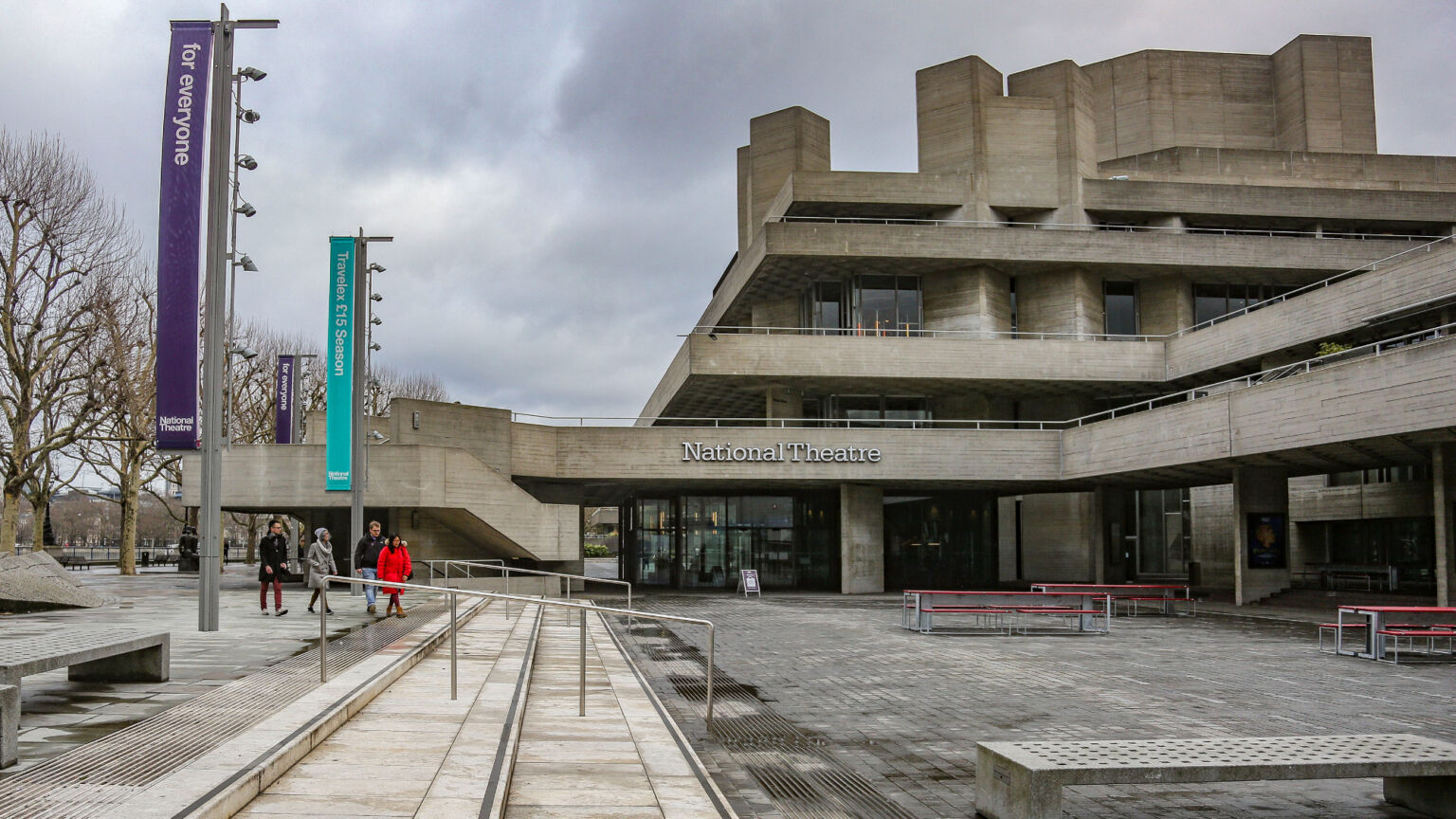
I live in Glasgow now, but I grew up in London. And I remember, as a teenager studying for my GCSE in drama, going to see Alun Armstrong’s barnstorming performance as Francisco Pizarro in Peter Shaffer’s The Royal Hunt of the Sun at the Royal National Theatre. It was a sumptuous affair, all vibrant, elegant staging and costumes, starkly contrasting with the dark themes inherent to Shaffer’s exquisitely harrowing narrative. But staring up at the National at 16 years old, I had a similar experience to thousands of people down the years looking up at the building, the gopping eyesore that it is.
‘Is this the best we can do?’, I wondered. We house the best of our national artistic endeavour in a multistorey carpark. And, if I had my way, not even our carparks would look like that.
These days, planners seem to promote ugliness as some kind of quasi-political message. Any British town will show it clearly enough: housing estates are poured in grey concrete, new towers go up that could be anywhere in the world, and ring roads – like the one encircling my own home in Glasgow – hem us in with an almost defiant lack of charm. It’s a truly soulless business, modern British urban planning, and has been since the middle of the 20th century.
These are not places designed to be loved. They don’t inspire numinous awe, like cathedrals of old; nor do they suggest elegant restraint, like a nice Georgian mews. They function, and we are increasingly told that that is enough.
I’ve come to think that ugly architecture and town planning aren’t neutral things – rather, they are symptoms of a spreading disease. We no longer assume that the environments we inhabit should uplift us, or delight us, or make us feel big, or make us feel small, or do anything other than contain us in concrete.
Architects and certain graduates will tell you of brutalism’s many benefits, of post-modernism’s philosophical elegance. But the desire for proportion, elegance, colour and harmony – for something that helps us to transcend the humdrum, rather than forcing us to give in to it – is not learned in privileged educational establishments. It’s inherent, a part of being human.
Our willingness as a society to provide beauty is waning. And when it disappears, it is the working classes who feel its absence most acutely. Ask anyone who grew up on a 20th-century council estate. It is ordinary people, stuck in modern housing, using those ugly carparks and civic buildings every day, who are left with the consequences of a political choice to uglify the human world.
Brutalism was no accident. It emerged through mid-20th-century planning regimes implemented by postwar governments, often influenced by left-leaning ideals. After the Second World War, many European governments were expanding the welfare state. We were doing so in Britain. There was a deep political commitment to provide mass housing, public institutions and civic infrastructure quickly and affordably. Fair enough – I applaud the postwar consensus as a moment of national pride.
But efficiency, uniformity and mass provision were social and economic priorities, not a recipe for something beautiful. Brutalism, with its exposed concrete, modular forms and minimal ornament, suits those goals. It was efficient, scalable and rejected what was seen as the decorative excess of earlier, class-bound architecture. Functional design could engineer a fairer society, they told us, and we’re still getting shafted by their sensibilities.
A similar pattern seems to have got its fingers into our broader culture, though this time perhaps led by tech bros and Silicon Valley types. Art and literature, and the magnificent inner worlds they mirror and enhance, are giving way to TikTok and all that rubbish. As a children’s author, I see this played out particularly harshly. Fewer children read for pleasure, and fewer families pass on the habit of sustained attention to language. I recently ran a creative writing workshop for a school. Many of the 11-year-olds that I was teaching had a reading age of six. Because reading, once a shining portal into other worlds, is increasingly shunned.
Something vital is lost as we lose the ability to delight in words and stories, to engage with philosophy and learn our histories. As with architecture, we are no longer uplifted, but are instead dragged down. And just as with architecture, the consequences are uneven. Some children, surrounded by books, will still find their way into that richer world. Others will not, through a lack of exposure, largely through their parents’ ambivalence.
These twin declines, intentionally uglier environments and less literary engagement, reflect a similar drift – a loss of confidence that ordinary life should be elevated. A well-built civic building and a well-turned sentence both signal care, intention and something beyond mere utility. They both brighten your day, and let’s not underestimate the importance of that. When we abandon any of it, we diminish.
Beauty, in all its forms, is not expendable. It is part of a life well lived. A society that stops offering it will soon forget how to recognise it, and, in time, stop demanding it altogether. It will be poorer for it.
If we house Shaffer’s work in a brutalist slab, we run the risk of undermining what Shaffer had to say for himself. We will stop being uplifted and challenged by great literature, theatre and art, and will instead be happy to slop around in online swill. This is surely not the world we want to live in, or pass on to our children.
James Dixon is a Glasgow-based novelist, poet and playwright.
Politics
Politics Home Article | Readiness requires biodefence: making Nato’s 1.5 per cent target count
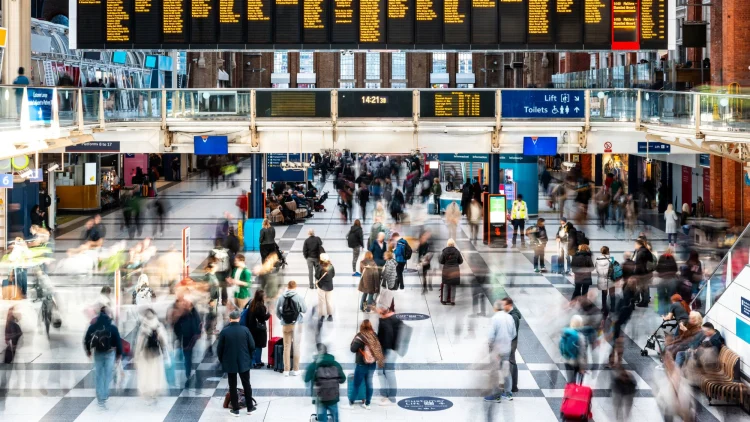
(Credit: Adobe Stock)

Ask Eirik Storsve, Senior Director – Head International Government Affairs
| Emergent
Nato’s new 1.5 per cent resilience target marks a turning point in how the Alliance approaches threats beyond the battlefield, from biological attacks to cyber warfare. But will it actually make us more secure?
A broader definition of security
With the London Defence Conference taking place in April, attention is turning to how the United Kingdom and its allies can strengthen “readiness” for threats in an increasingly dangerous world. Much of the focus is on military spending, set against a backdrop of new Nato targets, with Allies now aiming to spend 3.5 per cent of GDP on military capability and operations.
But of equal importance, Nato Allies have also agreed that up to 1.5 per cent of GDP should go on defence – and security-related spending, including resilience and preparedness – so countries can better withstand and recover from shocks that can disrupt everyday life. Cyber-attacks, pandemics, infrastructure sabotage, and supply chain disruption, among other threats, can all destabilise a country without a shot being fired. The 1.5 per cent target reflects a simple shift – that security today extends far beyond military strength and requires preparing for disruption across society.
Biological threats and national risk
Biological threats are perhaps the clearest example of this. Covid-19 caused profound loss of life, shut down economies and overwhelmed health systems, leaving impacts on societies and public services still felt today.
That experience has fundamentally shaped how the government now assesses risk. The UK’s National Risk Register continues to rank pandemics among the most serious threats facing the country, with up to a one in four chance of another within the next five years.
Biological threats are also not limited to naturally occurring outbreaks. Advances in biotechnology – combined with rapid progress in artificial intelligence and wider access to scientific knowledge – are making it easier to manipulate pathogens. This raises the stakes, increasing the risk of both deliberate misuse by hostile actors and accidental incidents. The Risk Register also ranks large-scale chemical, biological, radiological and nuclear (CBRN) attacks among those with the highest potential impact.
Biological threat preparedness is no longer only a health issue – it is a national security concern with significant societal and economic implications. Nato’s resilience benchmark offers a real opportunity to act on that shift in thinking. But whether it delivers will depend on how it is implemented.
Making the 1.5 per cent target count
There is an obvious risk. At a time of tight public finances, the easiest way to meet the 1.5 per cent target would be to re-label existing spending. While investment in healthcare, infrastructure and energy is vital, it is not the same as building resilience in the way Nato intends. Without a clear, shared definition of what qualifies as resilience spending – and without mechanisms to track new versus existing investment – the target risks becoming an exercise in accounting rather than a catalyst for capability.
Preparing for biological threats requires sustained, targeted investment – stockpiling vaccines and treatments, maintaining manufacturing capacity, strengthening disease surveillance and prioritising research and development. In many countries, these capabilities remain spread across government without clear coordination or a long-term structure, making it harder to respond quickly and effectively when the next crisis hits.
The UK has taken important steps. The government’s Biological Security Strategy and the work of the UK Health Security Agency (UKHSA) have strengthened understanding of the threat and improved capability, with UKHSA playing a central role in preparedness and response. The next step is to build on that progress with a clearer view of what is being invested – and whether it matches the scale of the risk.
Other countries offer useful examples. In the United States, long-term investment in medical countermeasures is coordinated through a cross-government framework, supported by regular congressional scrutiny and multi-year planning. The Public Health Emergency Medical Countermeasures Enterprise (PHEMCE), for example, sets out a multi-year strategy covering everything from R&D through to procurement and stockpiling – identifying priorities and capability gaps over time. Canada also has an effective model: government makes committed annual investments in advanced strategic stockpiling of medical countermeasures that are closely coordinated across the country’s public health and defence authorities.
This provides clearer demand signals, supports manufacturing capacity, and allows policymakers to track progress. Across Nato, approaches remain varied, although efforts such as the European Union’s Health Emergency Preparedness and Response Authority are beginning to introduce more structure.
In the UK, Parliament has a clearer view of the risks, but there is an opportunity to provide greater visibility on what is being spent to address them. Regular and more detailed cross-government reporting could provide a clearer picture of investment, capability gaps and progress over time. This would not only strengthen scrutiny, but help ensure that funding decisions are aligned with the highest-impact risks.
Nato’s 1.5 per cent benchmark is a step forward. But on its own, it is unlikely to shift approaches to resilience spending. Without clearer definitions, stronger accountability, and a focus on building tangible capabilities, it risks reinforcing existing patterns rather than changing them.
If it is implemented well, however, it could mark the beginning of a more strategic approach to national resilience – one that recognises biological threats as central to security in the 21st century.
The risks are well understood. The challenge now is to ensure that policy and investment keep pace. Because while the 3.5 per ecnt prepares us for war, the 1.5 per cent must prepare us for everything else.
For further material on strengthening biosecurity and national resilience, visit
www.emergentbiosolutions.com or contact Ask Eirik Storsve, Senior Director, International Government Affairs, Emergent BioSolutions on [email protected].
Ask Eirik Storsve
Ask Eirik Storsve is the Sr. Director, Head of International Government Affairs at Emergent, a global life sciences company that develops and manufactures medical countermeasures for some of society’s most pressing biological threats. Ask Eirik is a member of the EU HERA Industry Cooperation Forum and the European Confederation of Pharmaceutical Entrepreneurs’ Health Crisis Management & Preparedness Steering Group. Ask Eirik brings years of international policy development experience from the European and Norwegian Parliaments and work with Afghan refugees in Pakistan and Afghanistan to his international work at Emergent.
Politics
Politics Home | Leeds Tram Plan Was Working To “Unrealistic Milestones”, Secret Government Report Warned


Concept illustration of the West Yorkshire Mass Transit scheme (Credit: West Yorkshire Combined Authority)

3 min read
Exclusive: Tracy Brabin’s attempts to start construction on a Leeds tram network before her next re-election campaign were blocked after a confidential Whitehall review concluded this deadline carried a high risk of wasted taxpayers’ cash.
The Labour mayor of West Yorkshire has repeatedly promised to get “spades in the ground” by 2028. But the project’s timeline was delayed following a September 2025 audit by the Cabinet Office and Treasury.
The confidential ‘peer review’, obtained by The House magazine, warned that the mass transit scheme was being driven by a “political agenda rather than a recognised programmatic approach”.
It added that “options appraisal for investment, robust project planning and risk management are critical ingredients for successful delivery and should not be compromised for unrealistic milestones”.
There was a risk of “political embarrassment”, it cautioned, “if there was a large disconnect between a lauded ‘spades in the ground’ date and the start of actual work,” and it said that money could be wasted: “The risk of nugatory spend is high.”
The review, conducted by the National Infrastructure and Service Transformation Authority (NISTA), also found that not enough work had been done to prove why the scheme needed trams rather than buses.
The paper’s authors were “concerned” about the West Yorkshire Mayoral Combined Authority’s (WYCA) “lack of unbiased thinking” on this question, adding: “There is a need to build the case for trams which has not been completed.
“This is particularly important because the likely cost of a Bus Rapid Transit (BRT) mode is significantly less than for trams and the BRT benefits:cost ratio is significantly better.”
Following the review, mass transit services have been delayed from the mid-2030s to the late 2030s. WYCA has said spades will still go in the ground in 2028, but for “preparatory” works rather than laying tracks.
A WYCA spokesperson said: “Beginning preparatory construction works by 2028 has been an ambition for the combined authority for some time because the people of West Yorkshire have waited long enough for this investment…
“NISTA’s predecessor body, the National Infrastructure Commission, set out clearly in 2023 that Leeds needs a tram. A review at this stage of a project of this scale is completely normal, and the majority of its recommendations have already been addressed by the combined authority.”
The Department for Transport said the government “fully supports Mayor Brabin’s ambitions for a world-class mass transit system for West Yorkshire”, adding: “We look forward to receiving West Yorkshire Combined Authority’s initial business case for the project later this year.”
A feature on the West Yorkshire Mass Transit project will be published in the next edition of The House magazine and online next week.
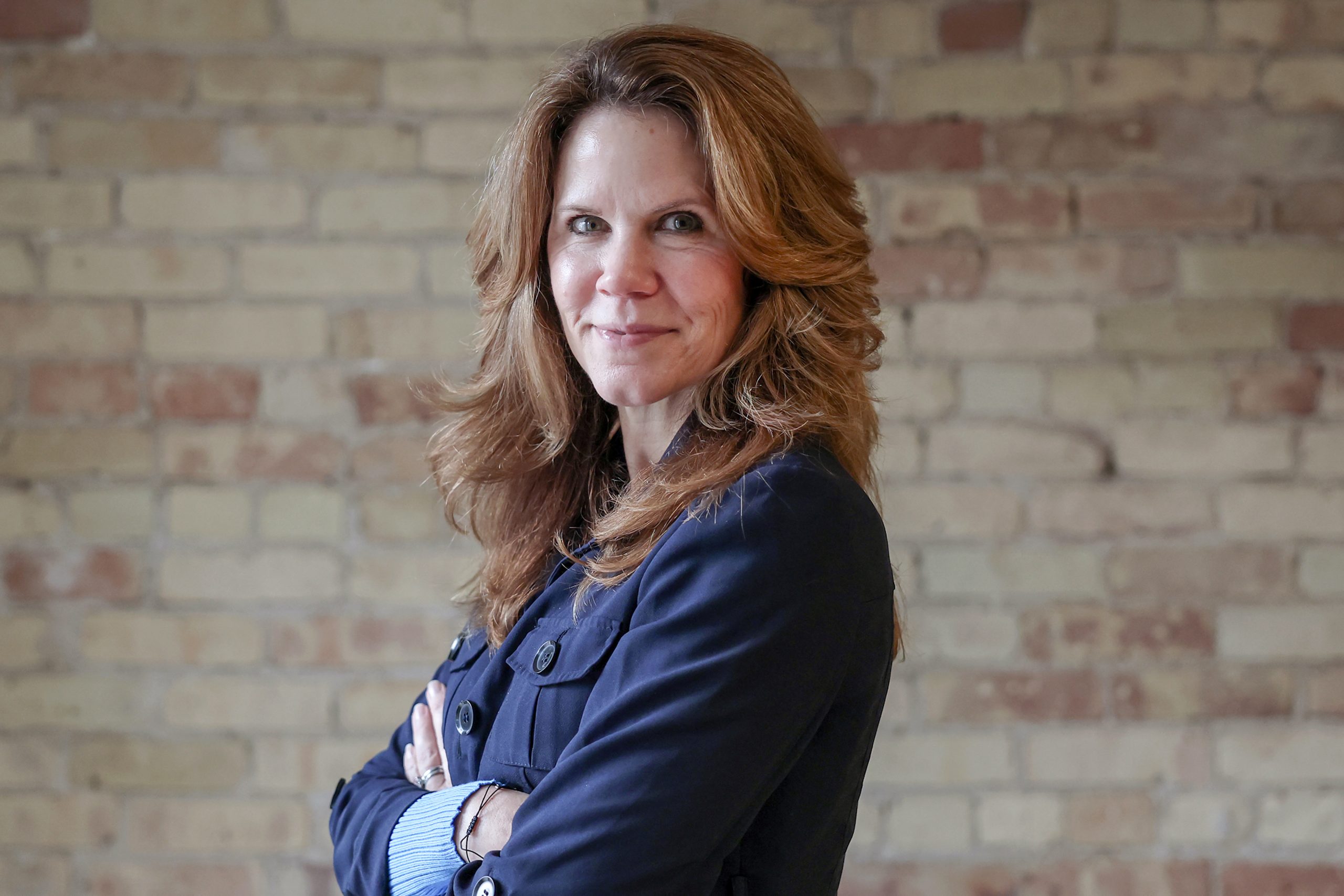

Chris Taylor, a liberal Wisconsin judge, won a seat on the state Supreme Court on Tuesday in the latest strong election for liberals since President Donald Trump’s return to office.
Taylor, a former Democratic state representative and current state appellate judge, defeated conservative appeals court judge Maria Lazar in the race for the ten-year term. Her win expands liberals’ majority on the Wisconsin Supreme Court to a 5-2 split.
Her win comes amid a string of special election victories for Democrats that suggests a difficult political environment for the GOP heading into November’s midterms.
Conservatives haven’t notched a Wisconsin Supreme Court victory since a narrow 6,000-vote win in 2019. In the years since, liberal judges Jill Karofsky, Janet Protasiewicz, Susan Crawford — and now Taylor — have romped to easy wins in a Wisconsin spring electorate trending firmly to the left.
Assuming every justice finishes out their terms, the win locks in a liberal court majority until at least 2030.
Taylor’s win doesn’t come as a surprise. In the days before the Tuesday election, Wisconsin Republicans conceded Lazar stood little chance of victory, with GOP donors refraining from pulling out their checkbooks and the majority not at stake in this election.
The election attracted far less attention than last year’s race, where Crawford beat her conservative opponent by over 10 points. That race saw Elon Musk — the world’s richest man and a Republican megadonor — pour millions into an effort to defeat Crawford, arguing the fate of “Western civilization” was at stake in the race.
The court’s liberals have made use of their majority in recent years. In 2023, the court ordered new legislative maps in Wisconsin, effectively ending a GOP gerrymander that had lasted for over a decade. And last July, the panel overturned Wisconsin’s 176-year-old abortion ban by a 4-3 majority.
Also last year, the court ruled that Democratic Gov. Tony Evers could use his veto pen to lock in a 400-year increase in funding for schools.
Neither party expects the fall governor’s race to follow the same exact path as this spring Supreme Court campaign, with November elections in the battleground state routinely decided by slim margins.
Milwaukee County Executive David Crowley, Lt. Gov. Sara Rodriguez and former Lt. Gov. Mandela Barnes are the top Democrats running for the right to face Trump-endorsed Rep. Tom Tiffany for governor in November.
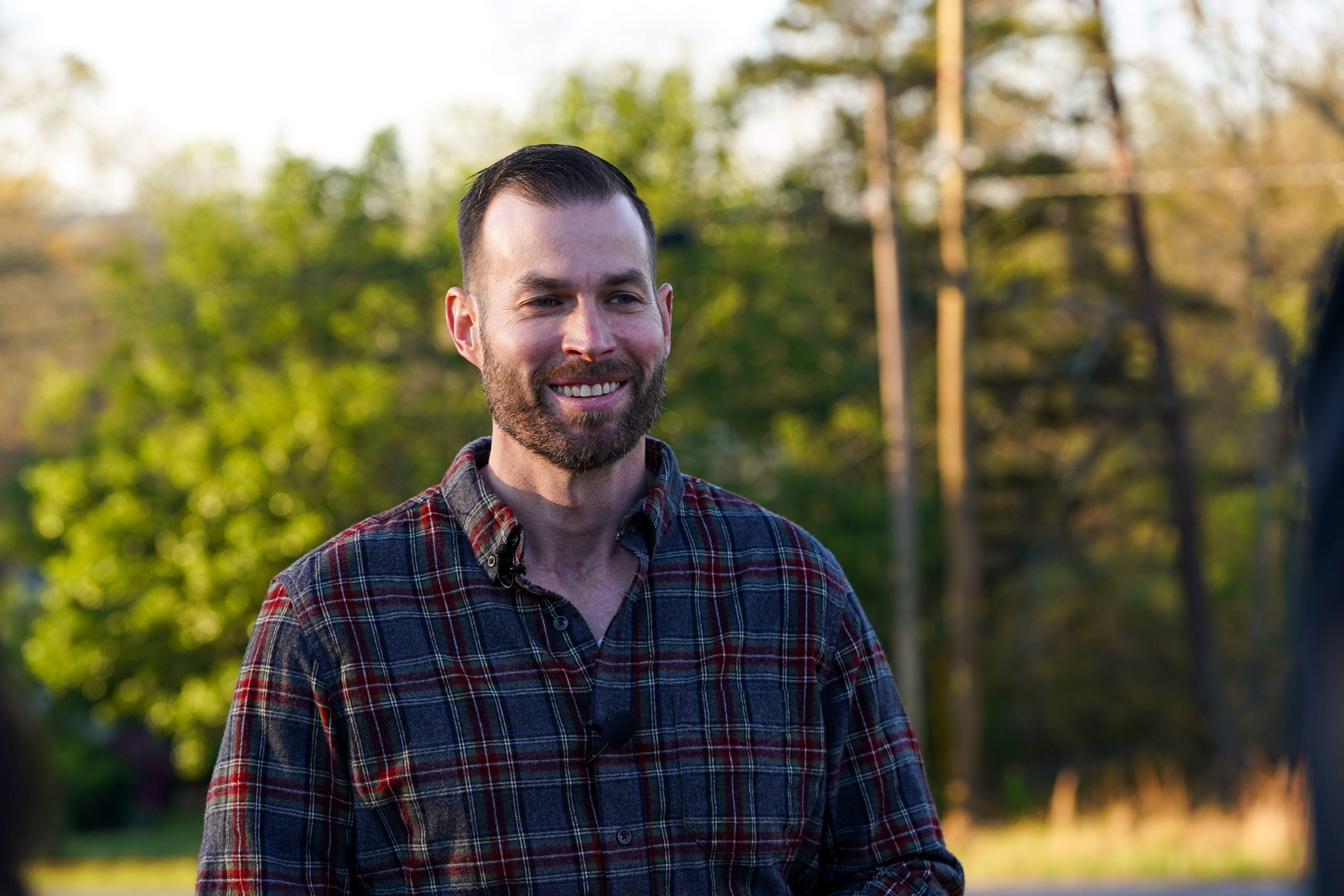

Republicans held onto former Rep. Marjorie Taylor Greene’s House seat on Tuesday.
Republican Clay Fuller defeated Democrat Shawn Harris in a special runoff election in the state’s 14th Congressional District, giving the GOP another vote for their narrow House majority.
The northwest Georgia district is the reddest House seat in the Peach State, and Democrats never had a serious chance of flipping the seat.
But Republicans took no chances. GOP-aligned outside groups, combined with Fuller’s campaign, spent more than $1.2 million on the runoff, according to AdImpact, while Harris didn’t receive any air support from national Democratic groups and spent just $300,000. In the short term, Fuller’s win is a boon for Speaker Mike Johnson, who will gain a safe vote for the GOP caucus.
Fuller, who had Trump’s endorsement, came in second behind Harris in March’s first round of voting, but that was in large part due to a crowded GOP field that split votes.
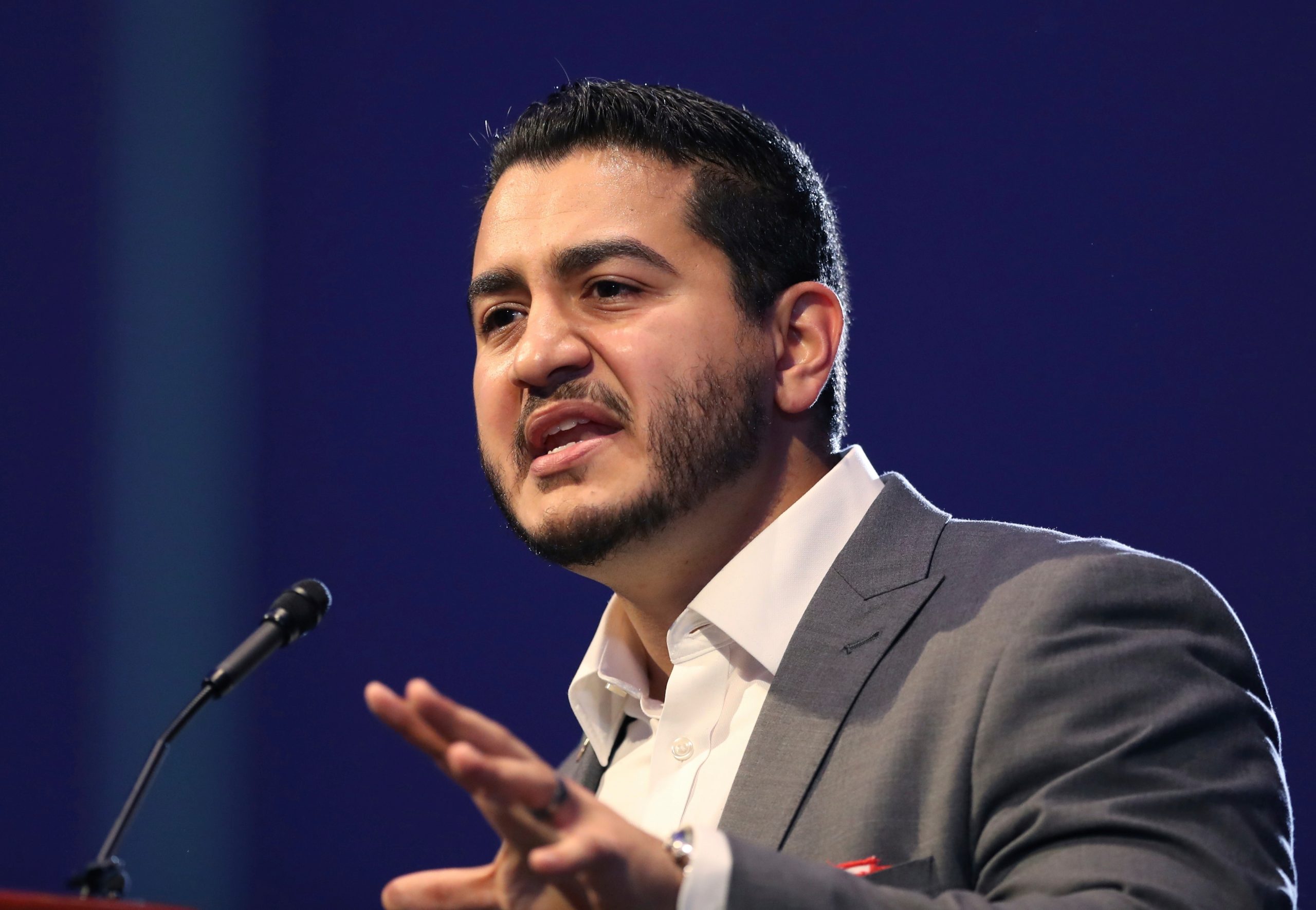

East Lansing, Michigan — Michigan Democratic Senate candidate Abdul El-Sayed declined during a campaign stop Tuesday to denounce Hasan Piker’s past comments and defended the popular far-left streamer’s place in the Democratic Party amid attacks from the center-left.
In an interview with POLITICO while standing next to Piker, El-Sayed said he believes it’s “critical” that Democrats embrace Piker, who has drawn criticism from Democrats and Republicans over his comments about Israel and U.S. foreign policy — including from El-Sayed’s two most formidable opponents, Rep. Haley Stevens (D-Mich.) and Democratic state Sen. Mallory McMorrow.
In 2019, Piker said on his livestream that “America deserved 9/11,” though he later apologized for the remark. In the aftermath of the Oct. 7, 2023, Hamas attack on Israel, Piker strongly condemned the Israeli response in Gaza and has disparaged the government in terms some Jews and supporters of Israel have labeled antisemitic.
Asked if he would disavow any of Piker’s views, El-Sayed said attempts to pin Piker’s past comments to him amounted to a “gotcha game.”
“I’m not here to disavow people’s views,” El-Sayed said. “This whole gotcha game, platform policing, cancel culture — I thought we were over it.”
El-Sayed’s comments quickly drew attention from Republicans, who circulated video of his remark online while noting Piker’s divisive past.
El-Sayed defended the decision to appear with Piker on the campaign trail, where the two spoke to a room of about 400 people at Michigan State University, and said hesitancy to engage with left-wing surrogates like him is “exactly why Democrats too often fail to get our message out to everybody.”
El-Sayed and Piker also campaigned at the University of Michigan in Ann Arbor on Tuesday.
Piker downplayed attacks from other Democrats, including the center-left think tank Third Way and some potential 2028 presidential candidates, suggesting they were delivering “talking points that someone else has given them.”
“It is a heinous smear at the end of the day, and it’s one that many of these groups actually apply, because they can’t have a conversation about Israel’s influence over American foreign policy on moral terms,” Piker said. “So instead of attacking the message, they attack the messenger.”

As the biggest edition in World Cup history approaches in 2026, football fans in Tunisia, Algeria, Senegal, Ivory Coast and Cape Verde face unforeseen challenges far removed from the tactics and strategies on the pitch.
New procedures imposed by the US administration through the Visa Bond Pilot Programme could transform the dream of attending the tournament live from the stands into an expensive luxury.
The programme requires each applicant to deposit between $5,000 and $15,000 (£11,200), refundable upon completion of the trip, as a prerequisite for obtaining a B-1/B-2 tourist visa.
In north and west African countries, where average annual incomes are meager compared to these sums, the bill becomes enormous. A family-of-three would need to deposit around $45,000 (£33,600) just as a guarantee in addition to record-breaking ticket prices and the new $250 (£186) visa integrity fee. Plus, pay for expensive hotels which risen in price by 55% in host cities compared to the same period last year.
World Cup tickets – for wealthy fans only?
The challenge isn’t limited to the financial aspect; logistical complexities add further burdens. US consulates have begun to favor single-entry visas over multiple-entry visas, meaning fans will have to redo their visa applications when traveling between the US, Canada and Mexico to support their national teams.
Meanwhile, long waiting lists persist despite FIFA’s launch of the FIFA PASS platform to streamline appointments, turning obtaining a visa before kick-off in June into a race against time.
The reactions were swift, with fan groups in Africa calling for a travel boycott and urging fans to watch the matches on TV, fearing that attending in person would become a heavy financial burden.
Meanwhile, sources close to FIFA confirm that intensive negotiations are underway with the US to exempt national team delegations and fans from the financial guarantee requirement. The concern is that rigid regulations could transform the tournament into an event for wealthy fans only, jeopardising its popularity and global image.
The most pressing question remains: will FIFA’s power and authority succeed in ensuring the authentic “pulse of the stadiums”, which has always given the tournament its distinctive spirit? Or will the 2026 edition become the most financially successful yet least popular World Cup in history?
Featured image via Til Buergy
Although he held medical reports, Ministry of Health documentation and even World Health Organization (WHO) approval for evacuation from Gaza, Ibrahim Abu Aram’s requests to leave the Strip for specialised treatment were never granted, despite many months of pleading from his family.
While the Israeli occupation prevented him from leaving Gaza, his health rapidly deteriorated over the past few months and his condition became critical. He sadly died when his life support machine was switched off.
Abu Aram was a husband and father, and a forcibly displaced Palestinian living in the Gaza Strip. He suffered for years from a rare and life-threatening autoimmune disease called Pemphigus vulgaris, a skin disorder which causes painful blistering and severe physical deterioration.
In Gaza, Abu Aram’s story is not unique. Thousands of patients have been unable to receive life-saving treatment abroad because the Israeli occupation has prevented them from leaving the enclave.
Medical evacuations from Gaza take place through the Rafah crossing into Egypt, but in May 2024, the Israeli occupation seized the crossing and closed it. Medical evacuations during this time were banned.
The border crossing was partially reopened on 2 February but between 28 February and 19 March, it was closed again because of the Iran war, the occupation claimed.
Gaza citizens denied access to medical treatment
While many people have medical conditions that are manageable with the correct treatment, many factors have meant that even treatable conditions have become deadly, such as the shortage of medical supplies and equipment, the manufactured state of malnutrition in the Strip and limited access to clean facilities.
Since the beginning of the genocide in Gaza, the Zionist regime has systematically and intentionally targeted and destroyed Gaza’s healthcare system. The Palestinian Ministry of Health reported that more than 1,800 healthcare facilities have been partially or totally destroyed since 7 October 2023. For this reason, it was impossible for Abu Aram to receive treatment inside the Strip.
Since the same date, 72,292 Palestinians in Gaza have been killed, with 716 of those people having lost their life since the start of the so-called ‘ceasefire’ on 11 October last year.
Israeli occupation continues to break ‘ceasefire’ agreement
The continued restrictions on the entry of medical supplies into the Strip has also had severe impacts on patients. Médecins Sans Frontières shared that almost 50% of its essential medications for chronic diseases are in “critically low stock”, and says this shortage will “inevitably lead to preventable deaths”.
There is also a shortage of essential medications, such as antibiotics and anaesthetics, and wound dressings, which are essential to prevent the spread of infection. New medical equipment or spare parts have also been banned from entry by the occupation, so any malfunctioning equipment can have severe consequences for a patient’s recovery.
According to the Gaza ceasefire agreement, 150 patients should be allowed to travel out of the Strip each day for medical treatment, but yet again, the Israeli occupation has not kept its word. Instead, less than 25 patients have crossed the border each day.
Between six and 10 Palestinians like Abu Aram lose their lives each day as a direct result of severe restrictions on medical travel and the continued near-total closure of the Rafah Crossing. A total of 1,400 patients have died since 7 May 2024, when the Rafah border crossing was seized by the Israeli army.
The situation is dire. There are thousands of patients, including those with cancer and children, who if they aren’t evacuated within weeks and their condition worsens, they could become “extremely critical”.
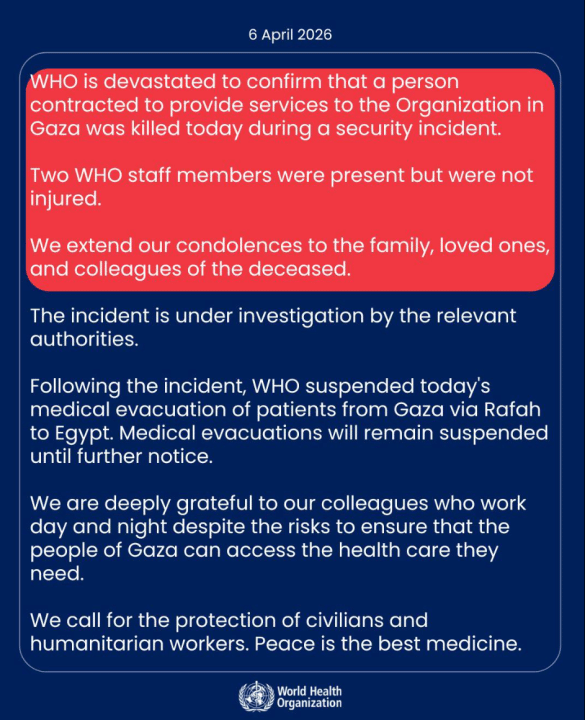
Medical evacuations suspended again after WHO worker, 54, shot in ‘security incident’
On 6 April, the crossing was re-closed after Israeli occupation forces opened fire on a UN vehicle traveling in Gaza.
Gaza’s Ministry of Health said the occupation targeted:
a vehicle rented for the World Health Organization (WHO) which was carrying several of its staff while they were carrying out a routine mission in areas classified as “green” in Khan Younis Governorate. This attack resulted in the killing of the vehicle’s driver.
Majdi Aslan, 54, the vehicle’s driver, was reportedly shot in the head. Following Aslan’s killing, the WHO has suspended medical evacuations of patients from Gaza until further notice. “Israel” then closed the crossing, yet again.

Speaking on the direct and deliberate targeting of health and humanitarian personnel without any justification, Gaza’s health ministry has said it:
reflects the continued policies of the occupation aimed at undermining the work of humanitarian institutions and imposing further restrictions on their operations.
Hamas has called on the international community and the UN to take urgent action. In a statement, it said “flimsy pretexts” were being used for the Rafah crossings closure that is preventing sick and wounded individuals from traveling abroad to receive vital medical treatment.
This action, Hamas claims, “constitutes a new crime against humanity”.
It reflects a fascist approach targeting our people as part of a systematic policy that violates all international humanitarian laws and conventions, in full view of the world.
Featured image via Ibrahim Mohareb
The Zionist regime, which calls itself a Jewish state, showed by attacking this site that it has a problem with all Iranians — it makes no distinction between Jews and Muslims.
These are the words of a Mehr News Agency presenter whilst reporting on the recent US-Israeli occupation missile attack on a Jewish synagogue in central Tehran.
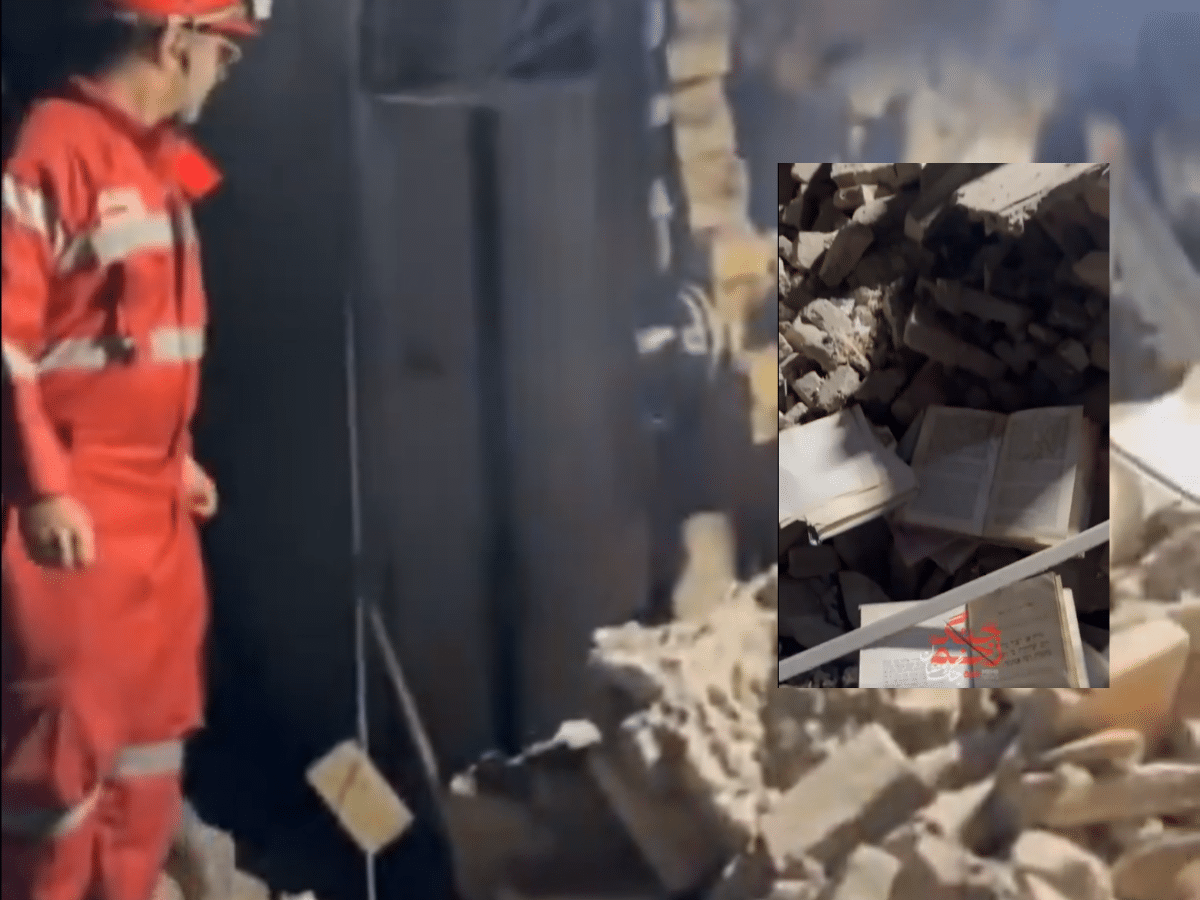
The Rafi Niya synagogue, located in a residential area near Palestine Square, was one of the oldest synagogues in Iran. It was totally destroyed in the targeted attack and nearby buildings were “severely damaged”.
Not even synagogues were spared in US–Israeli attacks: one in central Tehran was leveled to the ground
Iran is home to the second-largest Jewish population in West Asia, where they have lived in peace and harmony — at least until Israel attacked Iran pic.twitter.com/ToLaJfs3yi
— Press TV 🔻 (@PressTV) April 7, 2026
According to Homayoun Sameyeh Najafabadi, the Jewish community’s representative in the Iranian Parliament, the Torah scrolls that were kept in the synagogue have also been destroyed and “remain buried under the rubble”.
Iran synagogue hit during one of the holiest festivals
Talking about the criminal Zionist regime, Najafabadi said it targeted a synagogue belonging to the Iranian Jewish community during the days of Passover “in light of the community’s firm stance in condemning the regime’s actions and its anti-Zionist positions”.
Talking of the total absence of “Israel’s” religious and moral values, he added:
The Zionists merely use Judaism as a pretext to legitimise their actions. All Jews around the world are fully aware of this truth.
Another X user commented:
JUST IN 🇮🇷🇺🇸: U.S. and Israel Strike a Jewish Synagogue in Tehran, Iran
They Destroyed the Synagogue
Iran is home to the second-largest Jewish population in West Asia. Israel wants them to feel unsafe and go to Israel, despite being safe and protected in Iran. https://t.co/tYkBHysyIy pic.twitter.com/QVk36hpoLB
— Ryan Rozbiani (@RyanRozbiani) April 7, 2026
The US and Israeli occupation attacks on Iran have left a trail of destruction that includes not only military targets but also oil depots and infrastructure. The atmosphere in the capital was marked by smoke, blocked roads and widespread panic, with rescue teams scrambling to respond. These events triggered protests among Iranians who see the unlawful aggression against their sovereignty.
Unlawful aggression against Iran’s sovereignty
The attacks violate Article 2(4) of the UN Charter, which prohibits the use of force against the territorial integrity or political independence of another state. Because the attacks were not authorised by the UN Security Council, they are also acts of aggression.
The targeting of oil depots, nuclear facilities and residential areas also raises questions under international humanitarian law, especially when it comes to proportionality and the obligation to distinguish between military and civilian objects. The principle of proportionality prohibits attacks where civilian casualties and damage to civilian property are expected to be excessive in relation to the military advantage anticipated.
Although “Israel” and the US have framed their attacks on Iran as self-defence, they have ulterior motives. They have claimed Iran’s nuclear programme and missile capabilities posed an “existential threat” yet on 28 February — the day Omani mediators announced that Iran had not only agreed to allow International Atomic Energy Agency inspectors full access to its nuclear sites but also dramatically curbed its nuclear programme — their attacks began.
On 2 April, Iran’s president, Masoud Pezeshkian, called on the American people to reconsider their views of his country — one which, in modern history, has “consistently avoided aggression, expansionism, and domination”.
Iran has not started a war in more than two centuries unlike “Israel” or the US, who are the real terrorists.
Featured image via Press TV

The DEI war on dogs

McLaughlin: UNLV Schedule Favorable for Playoff Spot?

Sony teases its next-gen ‘True RGB’ Mini LED TV technology


-

 NewsBeat6 days ago
Steven Gerrard disagrees with Gary Neville over ‘shock’ Chelsea and Arsenal claim | Football
-

 Business5 days ago
No Jackpot Winner and $194 Million Prize Rolls Over
-

 Fashion5 days ago
Weekend Open Thread: Spanx – Corporette.com
-

 Crypto World7 days ago
Gold Price Prediction: Worst Month in 17 Years fo Save Haven Rock
-

 Business2 days ago
Three Gulf funds agree to back Paramount’s $81 billion takeover of Warner, WSJ reports
-

 Sports3 days ago
India men’s 4x400m and mixed 4x100m relay teams register big progress | Other Sports News
-

 Business4 days ago
Expert Picks for Every Need
-

 Business6 days ago
Login and Checkout Issues Spark Merchant Frustration
-

 Tech11 hours ago
How Long Can You Drive With Expired Registration? What Florida Law Says
-
Business3 days ago
No Jackpot Winner, Prize to Climb to $231 Million
-

 Tech6 days ago
Commonwealth Fusion Systems leans on magnets for near-term revenue
-

 Crypto World6 days ago
Ripple rolls out enterprise crypto treasury platform for corporates
-
 Tech7 days ago
Drawing Tablet Controls Laser In Real-Time
-

 Fashion2 days ago
Massimo Dutti Offers Inspiration for Your Summer Mood Board
-

 Fashion7 days ago
Debenhams Occasion Dresses for Girls 2026 Collection
-

 Crypto World7 days ago
Why It’s Partnering, Not Issuing
-
Politics5 days ago
Wings Over Scotland | The quality of mercy
-
 Sports7 days ago
Steal Gary Woodland’s subtle power move for longer drives
-

 Tech7 days ago
Battery Tester Outperforms Cheaper Options
-

 Sports7 days ago
Mohsin Naqvi-Led Pakistan Cricket Board Blasted By Younis Khan After 20 Million Rupees Fine On Naseem Shah
You must be logged in to post a comment Login