

Politics
Eurovision Announces UK Act For 2026 Song Contest


 Eurovision commentator Graham Norton
The experimental singer-songwriter Sam Battle – better known by the stage name Look Mum No Computer – will be representing the UK at Eurovision in 2026.
Look Mum No Computer will be performing on behalf of the United Kingdom in Vienna in May, where the annual Song Contest will return following JJ’s victory in last year’s live final.
His competing song will be unveiled at a later date.
It's official! LOOK MUM NO COMPUTER will represent the United Kingdom at the Eurovision Song Contest 2026
Learn more ➡️ https://t.co/ZcbBNWiPDjpic.twitter.com/CVmodB3qcp— BBC Press Office (@bbcpress) February 17, 2026
In an official statement on Tuesday morning, he said: “I find it completely bonkers to be jumping on this wonderful and wild journey. I have always been a massive Eurovision fan, and I love the magical joy it brings to millions of people every year, so getting to join that legacy and fly the flag for the UK is an absolute honour that I am taking very seriously.
“I’ve been working a long-time creating, writing, and producing my own visions from scratch, and documenting my process. I will be bringing every ounce of my creativity to my performances, and I can’t wait for everyone to hear and see what we’ve created. I hope Eurovision is ready to get synthesised!”
More to follow.


Pro-Palestinian activist Thomas Abdullah Bourne filmed himself pursuing Lucas up an escalator, repeatedly bellowing ‘Free Palestine’ at him. Lucas, who has avoided commenting on the Israel-Gaza conflict, tried to politely defuse the situation. It made no difference. Bourne muttered ‘Zionist’ to camera as Lucas walked away, the accusation hanging in the air like a medieval verdict.
Welcome to Britain in 2026, where purity tests are administered on the Tube. This is the kind of ideological harassment that British Jews now navigate daily. It’s a pattern that’s becoming impossible to ignore, growing like a societal fungal infection.
Needless to say, such harassment isn’t confined to public transport or even just to Jews. It’s coming to all of our doorsteps, too. Do you hate Jews enough? Some people want to check, and they could be knocking on your door next.
Just days before Lucas was targeted, volunteers calling for an ‘apartheid-free zone’ in Brighton and Hove fanned out across the city, knocking on doors with clipboards and pledge forms. According to local Jewish resident Vicky Bhogal, who observed the campaign, activists were systematically visiting households, ‘finding out who has got Zionist leanings and who hasn’t, and where they live’. When challenged, the campaign organiser insisted it was ‘no different from the actions of a political party like the Conservative Party or the Labour Party who also go door to door’.
This comparison is, of course, obscene. Political canvassers don’t demand ideological loyalty oaths. They don’t ask you to publicly renounce a foreign nation. They don’t create lists marking who passes the test and who fails.
Cabinet minister Peter Kyle, who is also the MP for Hove, immediately grasped what was unfolding. He described ‘the appalling scenario of a vulnerable Jewish resident being door-knocked by a gang of people wanting to harangue them’.
The door-knocking campaigns and Tube confrontations share the same DNA. Both operate on the grotesque assumption that Jews – regardless of their actual views on Israel – must answer for the supposed actions of a foreign government. And everyone else must publicly declare where they stand, too. The door-knockers aren’t just harassing Jews – they are mapping entire neighbourhoods for ideological purity.
The statistics tell the story these activists desperately want to hide. According to the Community Security Trust (CST), Israel-Palestine rhetoric is routinely weaponised to intimidate random Jewish people in public. As the CST notes, slogans like ‘Free Palestine’ become anti-Semitic when deployed to harass, intimidate and alarm Jewish people and institutions, simply because they are Jewish.
That’s what happened to Matt Lucas. He wasn’t challenged because of anything he had said or done. He was challenged because he had the temerity to exist as a Jew in public space.
The Brighton door-knockers predictably insist they’re ‘not anti-Semitic, but anti-Zionist’, as if the semantic gymnastics provide moral cover. But when your campaign involves compiling lists of residents based on their presumed views about the world’s only Jewish State, you’ve crossed a line that should horrify anyone with even a cursory understanding of 20th-century history. Similar ‘boycott’ campaigns in both Europe and the Middle East were followed by the wiping out of entire Jewish populations. It’s a familiar reality for Jews, so we recognise it when it arrives in British cities carrying clipboards.
It is chilling how institutions bend to these demands. Sussex Police initially saw no problem with activists compiling neighbourhood lists of suspected Zionists. They only reversed course after sustained pressure from Peter Kyle and others. Green MP Sian Berry wrung her hands about the tactic being ‘confrontational’, while rushing to assure everyone the door-knockers were ‘well intentioned’. Her colleague, Carla Denyer, Green MP for Bristol Central, dispensed with even that fig leaf. She joined a similar door-knocking campaign herself in Bristol, and proudly signed its pledge to boycott Israeli goods.
When elected officials participate in campaigns that leave Jewish constituents feeling unsafe in their own neighbourhoods, and police forces need to be arm-twisted into recognising obvious harassment, we’re witnessing the normalisation of something profoundly ugly. This is a worldview that demands public declarations of political allegiance as the price of acceptance. That sees Jews not as individuals but as collectively accountable to a righteous group of activists. When stripped of its ‘progressive’ veneer, it is indistinguishable from age-old anti-Jewish racism.
Matt Lucas kept his dignity on that escalator, but he shouldn’t have had to. No British Jew should have to navigate public transport wondering if they’ll be the next person filmed for an ideological litmus test. No Jewish family should open their door to find activists with clipboards asking them to renounce Israel.
This is what the new inquisition looks like. It comes with clipboards instead of torches, and the show trial now takes place on Instagram. But it’s the same question Jews have been asked for centuries: do you really belong with us? And in Britain in 2026, that question should have no place at all.
Alex Hearn is director of Labour Against Anti-Semitism.

Reality Check: Inside America’s Next Top Model has had viewers around the world on the edge of their seats this week, as it explores the complicated history of Tyra Banks’ iconic reality show and its many controversies.
The new Netflix documentary features a host of faces that Top Model fans will recognise, including Nigel Barker, Miss J Alexander and Jay Manuel.
However, there’s one big presence who is noticeably missing from the doc.
Many fans were surprised to see that Janice Dickinson was not part of Reality Check, after she served as a judge on four cycles of America’s Next Top Model between 2003 and 2006.
During her time on the show, the former supermodel caused controversy with her harsh critiques and frequent body-shaming comments towards the contestants.
However, her absence is apparently not due to a lack of production wanting the controversial and outspoken model to take part.
Reality Check: Inside America’s Next Top Model director Daniel Sivan recently told Tudum he would have loved to have interviewed Janice about her experiences on the modelling competition, but she was apparently tied up with commitments to another documentary.
However, he expects that everyone will soon find out what she thinks about Reality Check and its numerous shocking revelations.
“The beauty of social media today is [that] I am absolutely sure we’ll be hearing all of the sordid comments in the next few weeks,” he said. “So I personally am staying tuned.”
Miss J Alexander also had a word to say about Janice’s absence from the documentary, remarking: “Oh, she’s not going to be a part of the doc? Poor Janice D. Even though I would have loved to hear her retro takes on it as well.”
Janice is set to appear in a new E! docuseries, Dirty Rotten Scandals, where she will have her say on working with Tyra Banks.
The series, set to be released in March, will explore multiple hit shows from the 2000s, including The Dr. Phil Show and The Price Is Right.
In a clip posted on E!’s YouTube channel, the former model speaks her mind about working on the reality competition show, stating: “America’s Next Top Model really tortured these girls for Tyra Banks’ ego.”
Reality Check: Inside America’s Next Top Model is available to watch now on Netflix.

A Swiss Olympics commentator has done what no British counterpart will do – challenge why genocidal Israel is allowed to compete.
Stefan Renna, who works for Swiss Radio and Television (RTS), pointed out that bobsled racer Adam Edelman calls himself “Zionist to the core“. Edelman has also made numerous social media posts supporting Israel’s Gaza genocide. Renna even used the g-word – genocide – that terrifies UK corporate ‘journalists’, referring to the findings of the UN International Commission of Inquiry, adding:
I am familiar with this terminology. Edelman described Israel’s military intervention as the most moral and just war in history.
Renna reminded viewers that Ukrainian skeleton athlete Vladyslav Heraskevych had been banned from wearing a helmet featuring photos of those who died in the war in his country. And he even dared to point out the hypocrisy of the Olympics committee banning Russians who supported that country’s war in Ukraine – yet welcoming openly genocidal Israelis:
Renna’s point was well made, legally watertight, and morally flawless. So of course he has been viciously targeted by the Israel lobby for his ‘rant’. Oh for a fraction of his backbone among the cowardly and hypocritical UK ‘mainstream’ media.
Featured image via the Canary

Portugal has established itself as a frontrunner in sustainable tourism, blending its rich cultural heritage with eco-friendly practices. Many travellers appreciate the abundance of holiday villas in Portugal that align seamlessly with these initiatives, highlighting a commitment that sets a benchmark for other nations.
In recent years, Portugal has become synonymous with sustainable tourism, drawing visitors who value environmental stewardship. Enjoying Portugal villa holidays provides a way to protect the countries landscapes by engaging with responsible travel across various sectors. These holidays have gained popularity among those seeking an eco-conscious getaway. As you explore this picturesque country, you’ll discover how its green initiatives are transforming the travel experience while safeguarding its cherished ecosystems. For travellers seeking a villa in Portugal that embraces sustainability, the options continue to grow.
Why Portugal is a top holiday destination
Portugal consistently ranks as a top holiday destination due to its favourable climate, stunning coastline, rich gastronomy, and reputation for safety. The Algarve and Lisbon Coast are particularly renowned for their breathtaking beaches and vibrant cultural scenes. Additionally, the Portuguese countryside offers tranquil retreats with picturesque landscapes, making it ideal for travellers seeking both relaxation and adventure.
These regions provide diverse experiences that cater to different preferences, from exploring historic cities to enjoying outdoor activities like hiking and surfing. Portugal’s commitment to preserving its natural beauty while offering modern amenities enhances its appeal to tourists worldwide. This balance of tradition and innovation ensures that visitors can enjoy a memorable holiday experience in this captivating country. Booking holiday rentals in Portugal has become a preferred choice for those who appreciate both privacy and the chance to experience the local culture authentically.
Beyond its natural attractions, Portugal boasts a welcoming atmosphere that makes visitors feel at home from the moment they arrive. The Portuguese people are known for their warm hospitality and genuine friendliness, creating an inviting environment for international travellers. The country’s excellent infrastructure, including well-maintained roads, reliable public transportation, and modern airports, ensures seamless travel throughout the region. With its affordable cost of living compared to other Western European destinations, Portugal offers exceptional value without sacrificing quality, making it accessible to travellers with varying budgets.
Many visitors also opt for a holiday villa in Portugal when seeking more authentic experiences in smaller towns. Whether exploring coastal hotspots or venturing inland, a Villa holiday in Portugal provides exclusive comfort and opportunities for cultural immersion.
The benefits of holiday villas over hotels
Choosing a holiday villa in Portugal offers numerous advantages over traditional hotel stays. Villas provide more space, privacy, and flexibility, making them perfect for families and groups. Guests can enjoy private pools, expansive outdoor areas, and fully equipped kitchens, allowing for personalised experiences tailored to their needs.
Holiday villas also offer greater value by accommodating larger groups at a lower cost per person compared to hotels. This option allows travellers to enjoy luxurious amenities and scenic locations without compromising on budget. By opting for a Villa holiday in Portugal, visitors can immerse themselves in the local culture while enjoying the comforts of home.
Booking through specialists versus large platforms
Booking a holiday villa through trusted villa rental specialists in Portugal offers distinct advantages over using large platforms. Specialists provide personalised service and expert knowledge of the local area, ensuring guests find the perfect accommodation for their needs. They often manage professionally maintained villas, guaranteeing high standards of cleanliness and comfort. For travellers who prefer holiday villas in Portugal, specialized booking services frequently deliver unmatched value and peace of mind.
These specialists also offer exclusive access to unique properties and insider tips on local attractions and activities. By choosing a specialist, travellers benefit from a tailored experience that enhances their holiday, providing peace of mind and ensuring a memorable stay. Whether you seek a villa in Portugal near the coast or a quiet countryside retreat, these experts can match you with the ideal accommodation. This approach contrasts with the often impersonal experience of booking through large platforms, where customer service and local insights may be limited.
Portugal’s global leadership in sustainable tourism
Portugal’s comprehensive approach to sustainable tourism positions it as a global leader in balancing visitor satisfaction with environmental preservation. By integrating government policies with community-led initiatives, the country has created a blueprint for responsible travel that other nations can emulate. The success of Portugal villa holidays serves as a testament to the effectiveness of these strategies in attracting tourists while safeguarding natural resources.
The ongoing commitment to sustainability ensures that a holiday villa in Portugal remains an attractive option for discerning travellers who prioritise eco-friendly practices. As nations worldwide grapple with the challenges of balancing economic growth with environmental protection, Portugal stands out as an inspiring example of how thoughtful policies and community engagement can lead to lasting positive change.
Politics
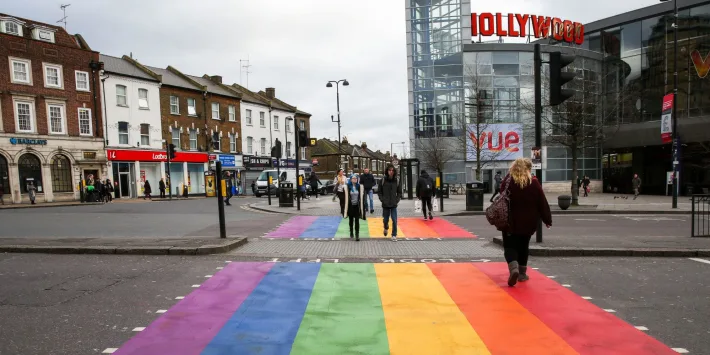
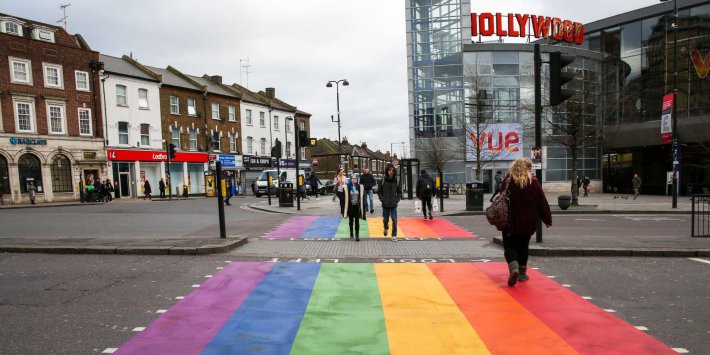
The House | LGBT History Month allows us to reflect on how far we’ve come, but hate crime is on the rise again

5 min read
It’s LGBT History month, and as Stonewall brings together parliamentarians, business leaders and civil society in the House of Commons for its inaugural Proud Foundations event, it feels the right time to mark how far we’ve come and look to the challenges we still face.
When I stood for Parliament in 1997 my Conservative Party opponent put out leaflets claiming local young people would be in danger if “bent Ben” won.
I had expected my opponents to exploit the fact I was gay. Homophobia was still rampant in much of the media. Chris Smith was the lone openly gay man in Parliament. Gay people were still subject to a raft of discriminatory laws.
This was the era of “Section 28”, the law passed by the Thatcher Government in 1988 banning the “promotion of homosexuality’. It originated from a backlash against the growing visibility of gay and lesbian people that followed the decriminalisation of homosexuality in 1967. Stonewall was founded to campaign to repeal Section 28 and to pursue LGBT rights more generally.
I had been lucky to enjoy an easy coming out for someone of my generation when I was 18. My family and friends were supportive, and I was convinced the public was further ahead on LGBT rights than the media or the political parties.
This seemed borne out when I won Exeter from the Conservatives with the biggest swing in southwest England and became the first person selected and elected to Parliament as openly gay.
This was a hopeful time for LGBT people. The new Labour Government had a modest but encouraging set of proposals for reform, including the repeal of Section 28.
By the end of its time in office, it had scrapped Section 28, equalised the age of consent, ended the ban on gays in the military, approved gay adoption, banned discrimination on the basis of sexual orientation, introduced Civil Partnerships and passed the Gender Recognition and Equality Acts.
All these reforms were hard fought, and the Government had to resort to the rarely used Parliament Act to force the equal age of consent through the House of Lords. Stonewall’s pragmatic but principled campaigning was key to achieving all these reforms.
Prejudice did not disappear overnight. I struggled for some time to get a parliamentary “spouses pass” for my husband, so we could have the occasional dinner together during late night sittings. Colleagues received invitations to events for their wives and husbands, while the gay MPs didn’t, and when the MPs’ expenses scandal broke, a newspaper carried a full page of outrage at the fact that MPs in same sex partnerships were subject to the same rules as straight ones.
But protection and equality under the law were preconditions for the rapid improvement in media and public attitudes. When I became the first Minister to have a civil partnership in 2006, there was hardly a ripple of hostility; instead, an outpouring of love and good wishes.
When David Cameron took up the cause of LGBT equality and then legislated for Equal Marriage, it seemed progress was secure and a broad political consensus had been achieved.
But, as we come together again to mark LGBT history month in 2026, it is clear that confidence was misplaced.
Hard-won rights are under threat of being rolled back and some already have been. The UK has fallen from the top position it enjoyed in the European LGBT Equality Index in 2015 years to 22nd today. Social media has often provided a platform for bigotry and abuse that we’d hoped had become a thing of the past.
The ban against conversion practices has been promised for seven years, by four Prime Ministers but has yet to materialise. This Government has promised time and time again; it will be delivered by the end of this parliamentary session.
Hate crime affecting LGBT people is rising again and trans people are feeling particularly vulnerable after last year’s Supreme Court ruling and the uncertainly that continues in its wake, as we await the statutory guidance from an EHRC that has deeply damaged its relationship with the public.
Many of the current tropes peddled about trans people remind me of those spread about gay people in the 1980s. That they are a “threat” to women or young people, or that giving them same rights as everyone else, simply to be themselves, diminishes everyone else’s rights.
The changes put forward this month by Government to change the law and put LGBTQ+ hate crime on an equal footing with racial and religious hate crime, although long overdue, is another step forward on the journey to equality that Stonewall has campaigned for relentlessly. An appropriate way to mark LGBT History month, it will be the first legislative change since Same Sex marriage was passed, and is another important step in the journey to LGBTQ+ equality.
Generations of queer people, like me, have benefitted from the work of Stonewall and other human rights and equality organisations. With our freedoms and protections under threat, it is now time to give something back.
That is why I am delighted to have joined the Stonewall Board. The arguments we thought we had had, need making afresh and winning again.
Stonewall’s task is to once again turn this tide of hate, defend our rights and secure those not yet won for the generations to come.
Sir Ben Bradshaw is a former Labour Minister and current Stonewall Trustee

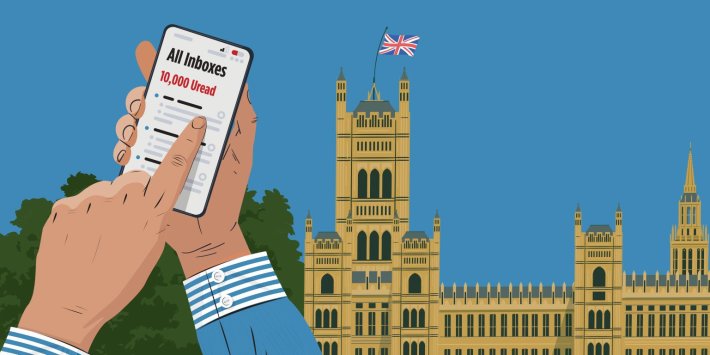
Illustration by: Tracy Worrall
12 min read
The inexorable growth in casework is stopping MPs from fulfilling their other roles. Alice Lilly sifts through the inbox looking for what might be done to relieve the pressure
None of this is new. Nearly two decades ago the Senior Salaries Review Body (SSRB) expressed concern that MPs’ “casework appears to be growing inexorably”.
At the time MPs’ offices were complaining that they were dealing with a few hundred letters a week, as well as phone calls and the occasional, still relatively novel, email. Today MPs routinely post casework figures on their social media that imply they are dealing with tens of thousands of cases a year.
Some of the drivers are well understood: public services in decline, the pandemic, and technology that eases communication. But also at the heart of the ever-expanding workload is a deep confusion over what MPs, shared in no little measure by the members themselves, are actually for.
The absence of reliable data on casework illustrates the point. Speak to somebody in an MP’s office and they can give you figures on their caseload, now usually drawn from the casework management software that many use.
But – because MPs are effectively treated like 650 small businesses – nobody sees it as their job to collect and collate this data. This makes it difficult to avoid over-generalising about their experiences, especially given that constituencies can vary considerably, as can MPs’ own approaches to their work: some still have earnings from employment outside of the Commons, although the nature of this work varies as well.
Necessary caveats aside, it is clear that many MPs, irrespective of party, are experiencing high workloads that have sharply increased even in the last few years.
When Hollie Wickens first began working for a Labour MP in the late 2010s, the office might expect to receive around 1,000 emails per month. Her current MP’s office, she says, can now receive double that. Ben Lake, the Plaid Cymru MP for Ceredigion Preseli, has likewise noticed an increase. In 2017, when he was first elected to Parliament, he might open 40 new cases per month – compared to 150 per month now. While numbers have been steadily on the rise for decades, “Covid changed everything,” says Lake. Initially, many MPs thought that the rise in casework during the pandemic would eventually subside. But it never has.
Demand has not only increased: it has done so more consistently across the year. The dips in casework that used to happen over the summer have faded, meaning that there is less chance to catch up. “We’re just keeping our noses above water most of the year,” says Charlotte Nichols, Labour MP for Warrington. Estelle Warhurst, an MP office manager with over 20 years’ experience, uses strikingly similar language: “There’s no downtime any more. No chance to catch up. We’re fighting to keep our head above water.”
Within these numbers are two main categories of correspondence: casework, and policy and campaign enquiries. Though they can entail different amounts of work, both are on the rise.
Policy and campaign enquiries – which can range from specific questions about an MP’s stance on a particular issue to mass-generated campaign emails – tend to make up a larger share of the inbox than casework.
Although casework may be a smaller part of the inbox, it usually entails more work. Some pieces of casework can be straightforward to deal with, while others are much more complicated. And it isn’t always easy to initially judge what work will be required. Warhurst points out that the issue a constituent presents with may only be the tip of the iceberg. One piece of casework could generate several email chains, as well as calls and meetings. And it can involve working with government departments, local councils, NHS trusts, or even private companies providing public services. Navigating this is a skill, and some MPs seek out staff with experience in addressing the kinds of issues that crop up time and again in their casework, for example SEND.
Because both casework and policy enquiries are growing so much, MPs must prioritise. Generally – and unsurprisingly – those wanting specific and sometimes urgent help tend to get dealt with first. When it comes to dealing with policy and campaign enquiries, approaches vary. Some MPs will try and write individual responses where they can, especially to specific policy enquiries (rather than mass campaign emails). Lizzi Collinge, who represents Morecambe and Lunesdale for Labour, points out that this is often a helpful way of thinking through policy issues. But, Collinge says, it takes time.
The trade-offs are often not understood by the public. This can drive frustration. Sometimes people assume that they’ve received a “boilerplate” response that has actually been specifically written for them.
Put together, all this can exert a toll on both MPs and staff – even if most will say it can be rewarding. In a 2025 staff survey, more than half agreed it could be “emotionally draining”. Laura Gherman, who previously worked for a senior Conservative MP, says burnout is a growing problem. “Nothing we do ever feels good enough,” adds Wickens. MPs are not immune to this either. It is “relentless”, to the extent that you can begin to question whether you’re doing a good enough job, says Nichols, who estimates that she can have 400 outstanding emails at any one time.
Then there is the nature of some of the work. Warhurst is aware that staff can sometimes find themselves dealing with constituents in the midst of severe mental health crises to the point of being suicidal. This is not the kind of thing that can simply be forgotten about at the end of the working day.
Beyond the impact on staff is the deeper issue of what this rising tide of work is doing to MPs’ abilities to do other work. Almost two decades ago, the SSRB fretted that casework “detracts from [MPs’] other roles of scrutinising legislation and holding the executive to account”. Scepticism about MPs’ roles as ‘super-councillors’ has persisted for years, but have we normalised something that should be aberrant?
Casework has “taken over MPs’ offices”, says Gherman, to the extent that it can make it hard to deal with anything else. Lake agrees that “MPs cannot be omnicompetent”, arguing that “we need more MPs with a bit of bandwidth to think” about legislation, as well as big policy challenges.
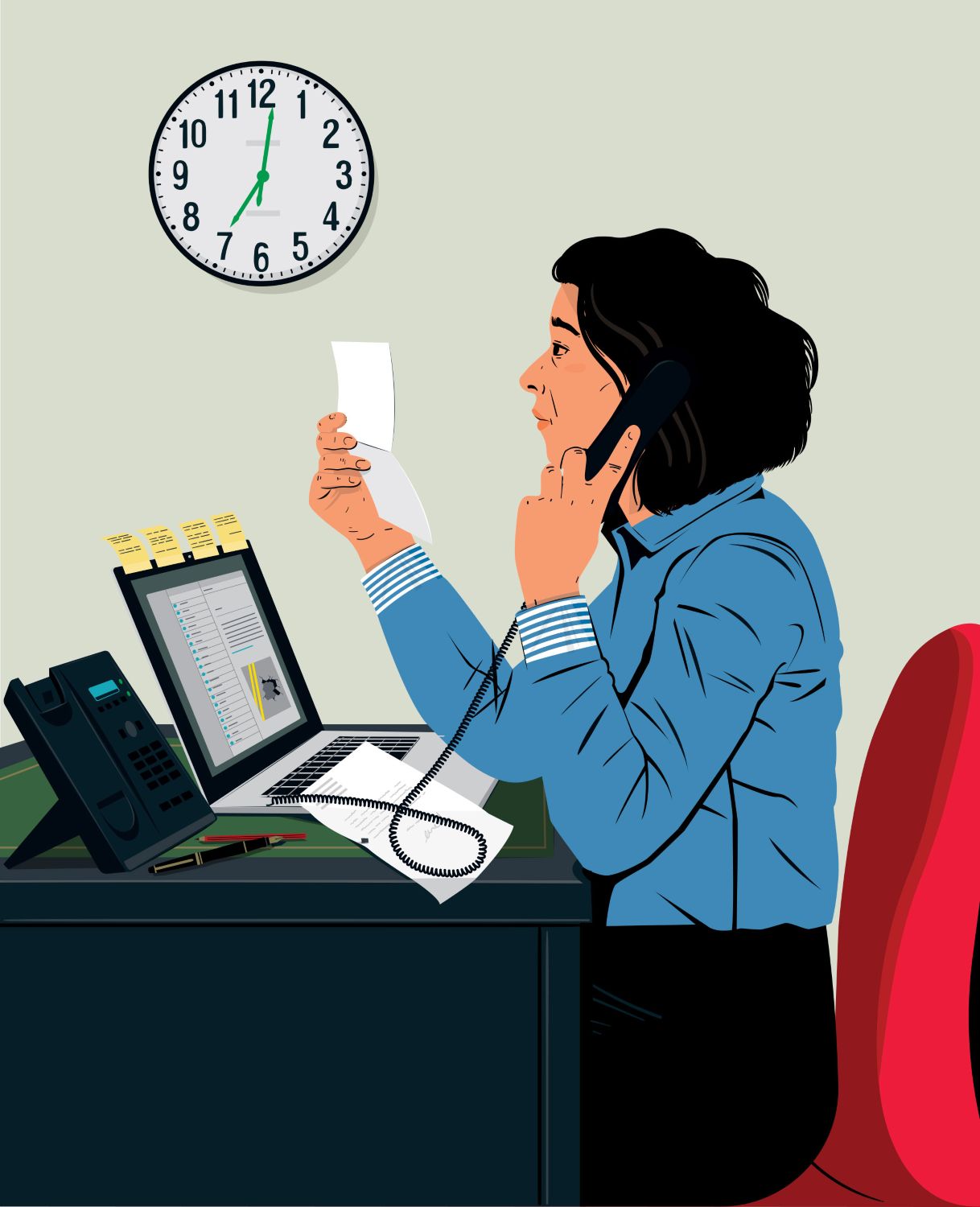
Government and public services are often a confusing patchwork… But everybody knows that they have an MP
The plain truth is that the way that many MPs perform their roles is shaped more by facts on the ground – in particular, rising casework – than by a broader society-wide debate about what the purpose of MPs is.
Marcial Boo, who headed Ipsa (Independent Parliamentary Standards Authority), for six years, says “every MP has their own view on what should change”. That no one body speaks for MPs makes it difficult to reach agreement – even if one was possible.
Some want more resource, others more flexibility. Others focus on increasing staff pay bands and giving more opportunities for progression in an effort to boost retention. AI might help to some degree – but even if MPs were able to agree on what steps to take, many of these things would only help to manage the growing caseload and its effects, rather than deal with the factors driving it. As Dr Rebecca McKee, an expert on MPs’ staffing arrangements, wrote in a 2019 report, changes “have offered relatively short-term solutions and the evolution of staff funding has lacked an explicit overarching vision of the role of an MP, what support they need, and how it can most effectively be delivered”. A more sustainable approach would be to ask some fundamental questions about what is driving rising caseloads and what this means for MPs.
A key driver of rising caseloads is what the mySociety researcher Alex Parsons calls “failure management”, in which MPs are increasingly first and last resort for constituents experiencing problems from across bits of the state. One MP echoed this, reflecting that their inbox indicates “everybody seems to be under an inordinate amount of pressure” and often deals with people “who have been badly let down” by other services, that are themselves overstretched.
This highlights another driver of ever-higher caseloads: confusion about which bits of the state do what, and where to go to get issues dealt with. Government and public services are often a confusing patchwork in the UK, meaning it is hard to know who has primary responsibility for a particular issue or the power to solve it. But everybody knows that they have an MP. Many of the issues that come up in inboxes, like potholes or planning, are somebody else’s responsibility.
Constituents can think that MPs have more power than they do. Hollie Wickens found when she first began working for an MP that “people think they are Batman and can go and solve any problem”.
These factors are underpinned by the incentives that many MPs face. Clearly, many parliamentarians have a strong incentive to try and help constituents because they went into politics to try and help people – and casework is a direct, tangible way of doing that. This incentive is even stronger given the very difficult situations that can arrive in the inbox. “MPs think they can do everything and want to do everything,” says Gherman.
Alex Parsons has another take on this. He suggests that the ability of the average backbencher to make policy or legislative change is constrained to the extent that it can be more rewarding for them to focus on helping individual constituents. Because there aren’t good mechanisms in place for many MPs to aggregate their casework and use it to bring about broader change, they instead pursue casework as a sort of “fragmented ombudsman” in which they “are poking the big state when it goes wrong, but not doing it in a joined up way”.
But there are also political incentives. Being regarded as a responsive and engaged MP that is active in the constituency can clearly have electoral benefits. The SSRB suggested as much in 2007, stating that “some MPs appear to welcome or accept [rising casework], at least in part because of the opportunity it offers for them to raise their profile with their constituents”. It is hardly surprising that MPs respond to this – but it goes to show once more how important public views and expectations are about what their elected representatives should do. As Lizzi Collinge puts it, an MP is likely “to receive more praise for spending an hour in a church hall than an hour in a select committee”.
There are no easy ways to unravel these problems. If it is hard to get agreement from MPs on practical steps to address the pressures many of them face, then it is likely to be even harder to reach a consensus on how to tackle the underlying causes of those pressures. That doesn’t mean that we shouldn’t try. And much of this is about more than the views of MPs and their staff, though those matter: it’s about what the public wants, expects and needs.
A recent experiment by Ipsa provides one potential starting point for these overdue public debates. In the autumn of 2025, Ipsa ran its first ever citizens’ forum on MPs’ pay and funding, bringing together 23 members of the public to hear from a range of experts about the workings of MPs and Parliament. At the end of the programme, members of the forum published a statement. “We were surprised to learn of the amount that goes on behind the scenes,” it read. “An important lesson… is that, for many people, what MPs do on a daily basis is not at all clear, and this needs to be the starting place for meaningful discussion on MPs’ role, pay and funding.” This was not the first attempt to understand what the public want from their representatives. Several years previously, in 2022, a citizens’ assembly on democracy, run by the Constitution Unit and Involve, recommended that Parliament play a stronger role in scrutinising government policy and legislation. It remains to be seen what effect, if any, these kinds of efforts will have. But both the citizens’ assembly on democracy and Ipsa’s citizens’ forum highlighted the way that better public awareness of what their elected representatives are doing can start to generate useful discussions.
None of this may feel much like a priority when there are so many other urgent challenges to deal with. But we have to question whether a system which often leaves the public frustrated, and is leaving many MPs and staff exhausted and struggling, is serving anybody in the way that they want. As Marcial Boo puts it, “We could carry on like this for decades. But should we?”
Calculating Casework
With the absence of any consistent data on workload, a more creative approach is required to find hard numbers. One way of getting a sense of the scale of the issue is to trawl MPs’ social media accounts, which many use to provide updates on casework.
At the end of 2025, for example, some MPs used Facebook posts to sum up their year in casework. Stuart Anderson, the Conservative MP for South Shropshire, posted that he had dealt with over 9,500 cases during 2025. Up in Halifax, Labour’s Kate Dearden wrote that she had resolved 8,925 cases and responded to 16,764 emails. Dearden’s colleague in Portsmouth South, Stephen Morgan, posted that he’d responded to 21,142 inquiries and handled 11,000 cases. Over in St Albans, the Lib Dems’ Daisy Cooper had resolved over 9,630 cases; Andrew Pakes, Labour (Co-op) MP for Peterborough, over 8,200; and the Conservative James Wild, in North West Norfolk, 6,825.
These were all figures for just one year. Over the course of an MPs’ time in office, the numbers can be eye watering: Luke Evans posted in February 2025 that he had dealt with over 32,500 enquiries since he was first elected Tory MP for Hinckley and Bosworth some 1,900 days before.
Alice Lilly is a senior researcher at The Institute for Government

As Wuthering Heights continues to dominate conversation, has anyone else found themselves listening to a certain 1978 Kate Bush hit on a near-constant loop?
Well, it turns out that Kate’s chart-topper was hard for the cast of Emerald Fennell’s new film to get out of their heads, too.
In fact, a new clip shows the movie’s lead Margot Robbie, who plays Cathy, recreating the British music legend’s iconic choreography while shooting on the very moors that inspired it.
Dialect coach William Conacher shared the behind-the-scenes footage of the Oscar nominee performing the moves on his Instagram page on Monday, to celebrate the new movie’s box office success, and has already racked up more than one million views.
Check out Margot in action below:
And, just for good measure, here’s Kate Bush performing her original choreography as we’re more used to seeing it in the late 1970s:
Margot’s co-star Jacob Elordi, who plays Heathcliff, previously teased to 10 News Sydney that the Barbie star “knows the whole dance top to bottom”, and claimed to have “16mm footage of her doing the dance on the moors”.
Wuthering Heights was Kate Bush’s debut single, and was inspired by the BBC’s adaptation of the Emily Brontë novel which first aired in 1970, starring Timothy Dalton as Heathcliff and Anna Calder-Marshall as Cathy.
The track became Kate’s first and only number one single – that is, until the fourth season of Stranger Things saw a surge in popularity for her track Running Up That Hill almost 40 years on from its original release.
Emerald Fennell’s spin on Wuthering Heights does not make use of Kate Bush’s signature song, instead featuring new music by Charli XCX inspired by her script.
Charli recently unveiled a companion album to go alongside the film, featuring the singles Chains Of Love and Wall Of Sound, as well as the previously-released John Cale collab House, which is used in the film’s opening sequence.
Wuthering Heights is in cinemas now.
(Alamy)
1 min read
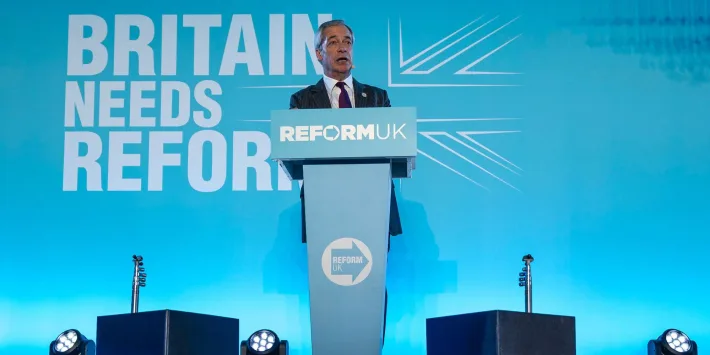
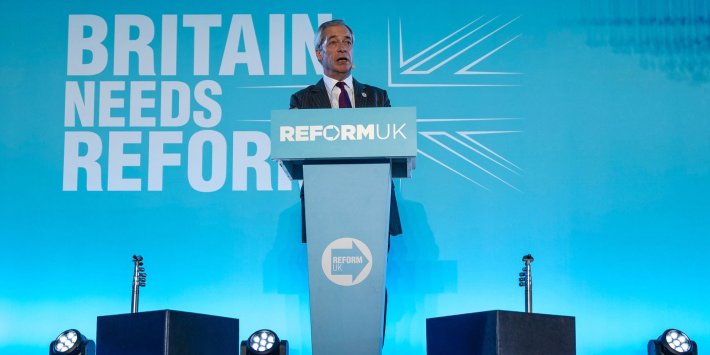
Nigel Farage has named his shadow cabinet and appointed Robert Jenrick as his shadow chancellor in an attempt to make the party more than a “one-man band” before May’s local elections.
The Reform leader unveiled four Reform figures for the “great offices of state” at a press conference in London.
Farage on Monday said he believed it was time to move away from the “potential criticism” that the party was just about him. Jenrick, a former minister, who defected to the party in January will be Farage’s economic spokesperson and will take charge of the Treasury if Reform win the next general election.
Zia Yusuf, Reform’s head of policy, was announced as the party’s shadow home secretary. He promised to stop the Channel crossings and derogate from any international treaty which frustrates or upends deportations.
Farage announced that Richard Tice will be deputy prime minister and secretary for business, trade and energy.
Suella Braverman was appointed Reform UK’s new shadow secretary of state for education and skills, completing his shadow cabinet appointments. Braverman will also be tasked on taking on the “world of DEI [diversity, equity, and inclusion]” in her new brief. Lee Anderson, who was the first Tory MP to defect to Reform, will remain as the party’s chief whip.
Reform MPs Danny Kruger, Andrew Rosindell, Sarah Pochin are yet to receive official roles.

Outrage is rightly growing at the decision of the UK government to award a huge NHS contract to genocide-collaborating US software firm Palantir. The company’s CEO Alex Karp is just one of its unhinged top executives – but he’s way (way, way, way) out there. And he’s perfectly prepared to say out loud that there are few, if any, tactics he’s not ready to resort to. Including spraying piss laced with a deadly drug onto journalists he doesn’t like:
Karp: “You need a higher purpose, and I think you often need a lower purpose.”
Andrew Sorkin: “What’s your lower purpose?”
Karp: “I love the idea of getting a drone and having light fentanyl-laced urine spraying on analysts that tried to screw us.”
Fentanyl is a deadly opioid drug 50-100 times stronger than heroin. US president Donald Trump uses fake claims of shipping it as an excuse to murder fishermen and kidnap Venezuela’s president – with the help of Karp’s company. Dealing in fentanyl is terrorism, according to Trump. Karp, however, wants to spray it on innocent critics – but clearly that’s ok because he’s a Trump backer.
It ought to be unbelievable, but isn’t, that this isn’t an aberration for Karp – or even his wildest comment. In 2025, he boasted of how his company kills people for profit. He is also a fan of genocide who has claimed that the hundreds of thousands of Palestinians Palantir helped Israel murder in Gaza are “mostly terrorists”:
Palantir shouldn’t be anywhere near the NHS. It should be banned altogether in the UK and in a sane world Karp should be on trial for genocide.
Featured image via the Canary
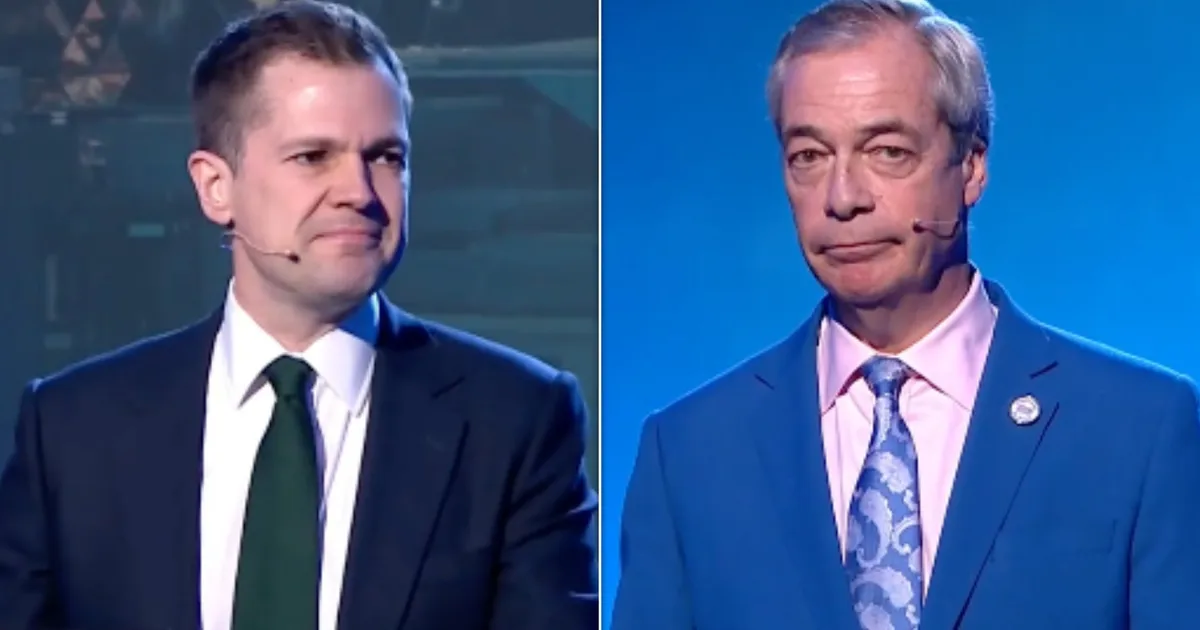
Nigel Farage has declared Robert Jenrick will be his de-facto “shadow chancellor” within Reform UK.
As Reform has promised major tax cuts, the MP for Newark will have to field intense scrutiny over just how their sums might add up without causing major upset to the markets.
Jenrick only defected to the party last month, having served as the official justice secretary for the Tories under Kemi Badenoch.
During the same press conference, Farage announced MP for Boston and Skegness, Richard Tice, had been appointed as the “shadow business, trade and energy secretary” along with the title of future “deputy prime minister”.
He vowed to crack down on “net stupid zero”.
Farage also gave Zia Yusuf – who is not an MP – the Home Office brief, meaning he is in charge of Reform’s plans to crack down on immigration with mass deportations.
Former Tory home secretary Suella Braverman, who defected just three weeks ago from the Conservatives, was appointed as Reform’s shadow education and skills secretary.
She pledged to ban all social and gender transitioning in schools if Reform were to win the next election.
Farage insisted that this was just the “beginning of the process” for Reform, suggesting more “shadow cabinet” appointments would be coming up in the future.
Reform is not the official opposition – that title belongs to the Tories, who have 116 MPs – and this does not mean anything in terms of the UK constitution.
One of Reform’s own MPs, Lee Anderson, even slammed speculation of what the shadow cabinet could look like just last month.
Responding to an X user who pointed out that early predictions did not include Anderson in the line-up for the senior team, Anderson said: “Thicko alert.
“We cannot possibly have a shadow cabinet, we have spokespersons. I was made DWP Spokesperson last year. Carry on being a useful idiot for the Tory party, but you won’t get that safe seat you want. They’re laughing at you.”
However, Labour has referred to the party as its main challenger, especially as Reform continue to lead in the polls.
The appointments will be a test of Reform’s ability to prove it’s not just a one-man band but a party ready for power.
There are currently nine Reform MPs, four of whom defected after being elected as Conservatives in the 2024 general election.
Twenty-seven former Tory MPs have joined the rising right-wing party overall.
How to save scum in Mewgenics

Score savings on the Garmin Venu 4, built to take on Apple’s Series 11

I tried Iceland’s Slimming World frozen meals and one was so disappointing


-

 Sports6 days ago
Big Tech enters cricket ecosystem as ICC partners Google ahead of T20 WC | T20 World Cup 2026
-

 Tech6 days ago
SpaceX’s mighty Starship rocket enters final testing for 12th flight
-

 Video21 hours ago
Bitcoin: We’re Entering The Most Dangerous Phase
-

 Tech2 days ago
Luxman Enters Its Second Century with the D-100 SACD Player and L-100 Integrated Amplifier
-

 Video4 days ago
The Final Warning: XRP Is Entering The Chaos Zone
-
 Tech9 hours ago
The Music Industry Enters Its Less-Is-More Era
-

 Crypto World7 days ago
Blockchain.com wins UK registration nearly four years after abandoning FCA process
-

 Crypto World3 days ago
Bhutan’s Bitcoin sales enter third straight week with $6.7M BTC offload
-
 Crypto World6 days ago
Pippin (PIPPIN) Enters Crypto’s Top 100 Club After Soaring 30% in a Day: More Room for Growth?
-

 Video5 days ago
Prepare: We Are Entering Phase 3 Of The Investing Cycle
-

 Crypto World3 hours ago
Can XRP Price Successfully Register a 33% Breakout Past $2?
-
 NewsBeat2 days ago
The strange Cambridgeshire cemetery that forbade church rectors from entering
-

 Sports10 hours ago
GB's semi-final hopes hang by thread after loss to Switzerland
-

 Business5 days ago
Barbeques Galore Enters Voluntary Administration
-

 Crypto World6 days ago
Crypto Speculation Era Ending As Institutions Enter Market
-

 Crypto World5 days ago
Ethereum Price Struggles Below $2,000 Despite Entering Buy Zone
-

 Politics7 days ago
Why was a dog-humping paedo treated like a saint?
-
 NewsBeat2 days ago
Man dies after entering floodwater during police pursuit
-
 Crypto World3 days ago
BlackRock Enters DeFi Via UniSwap, Bitcoin Stages Modest Recovery
-

 NewsBeat3 days ago
UK construction company enters administration, records show