
Politics
Trump Posts Ranking Of US Presidents, Guess Where He Put Himself

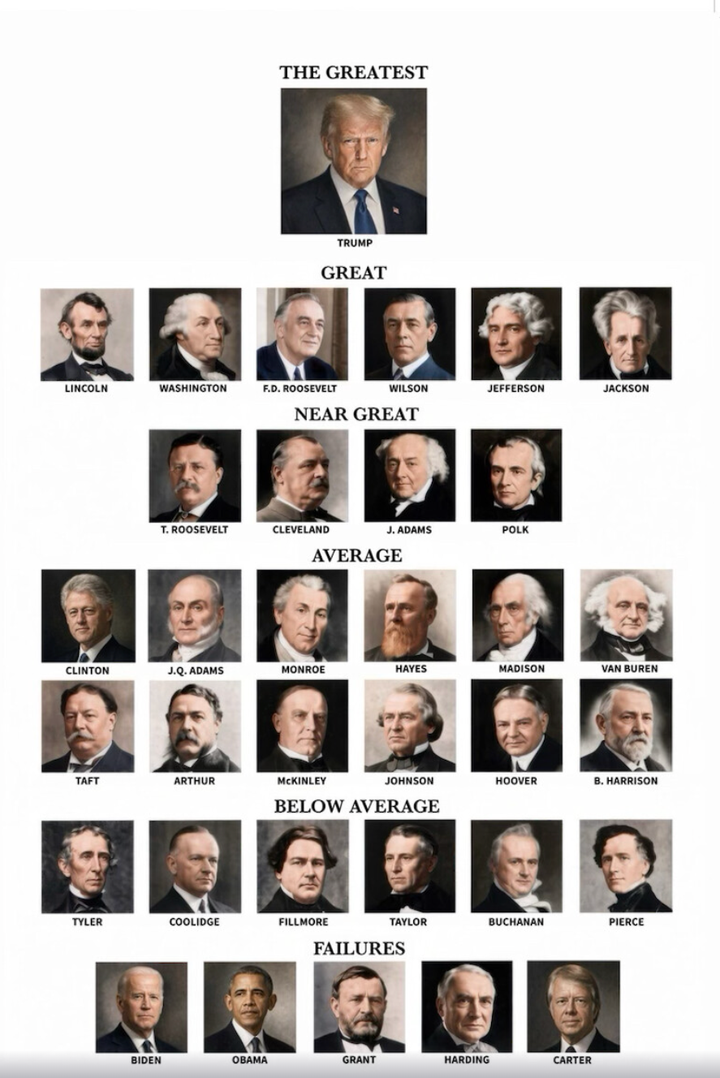
President Donald Trump posted a ranking of what he apparently believes are the greatest US presidents, and it’s no surprise where he ended up on the list.
The post, featuring portraits of 34 of the 45 individuals who have held the office, ranks them as “the greatest, great, near great, average, below average and failures.”
Trump, naturally, ranks himself as “the greatest” above such famed presidents as George Washington, Abraham Lincoln, Franklin D. Roosevelt and Thomas Jefferson, all of whom were listed in the “great” category.’
Other presidents in that category included Woodrow Wilson and Andrew Jackson.

The “near great” category included Theodore Roosevelt, Grover Cleveland, John Adams and James K. Polk.
The “average” category surprisingly included Bill Clinton, whom Trump has made a point of attacking over the years.
That category also included John Quincy Adams, James Monroe, Rutherford B. Hayes, James Madison, Martin Van Buren, William Howard Taft, Chester A. Arthur, William McKinley, Andrew Johnson, Herbert Hoover, and Benjamin Harrison.
The “below average” category included John Tyler, Calvin Coolidge, Millard Fillmore, Zachary Taylor, James Buchanan and Franklin Pierce.
To absolutely nobody’s surprise, Trump’s list dubbed Barack Obama and Joe Biden as “failures” along with Jimmy Carter, Ulysses S. Grant and Warren G. Harding.
The list excluded William Henry Harrison, James A. Garfield (both of whom died shortly after taking office), Harry S. Truman, Dwight D. Eisenhower, John F. Kennedy, Lyndon B. Johnson, Richard Nixon, Gerald Ford, Ronald Reagan, George H.W. Bush and George W. Bush.
Trump had posted the list along with a video from CNN’s Harry Enten, highlighting a poll showing Trump is more admired by Republicans than Lincoln and Reagan.

You know those days when you’re feeling lazy? Maybe you have a day of meetings, or you’re meeting a friend for a post-work drink, but the idea of putting on a full face of makeup feels like more work than your actual job. Hard relate.
While I’m wedded to a winged eyeliner and mascara look when I have the energy (and I’m not even a millennial!), most days I simply CBA to do anything to my face other than roll out of bed and do my skincare.
If I’m going to be in at least one situation where someone is looking directly at my face, though, I feel like the least I can do is to make it a somewhat pleasant experience for them.
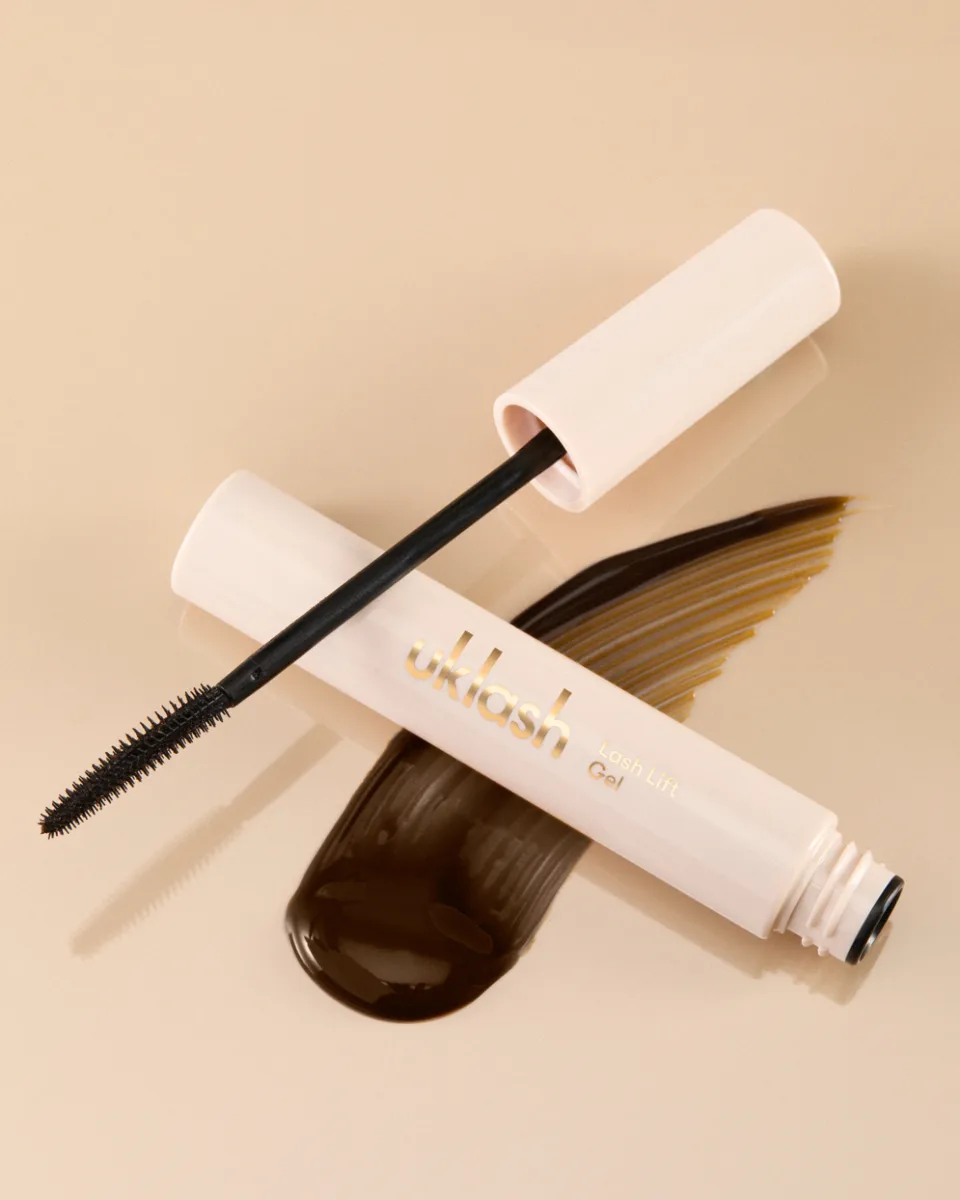
For some reason, mascara by itself makes me feel even more like a naked mole rat than not wearing any (like why even bother?) so when I heard about UK Lash’s new Lash Lift Serum, which claims to be like a lash lift in a bottle, I was intrigued to say the least.

The serum is tinted chestnut brown, and comes in a mascara bottle with a wand so it applies to make your lashes look instantly curled.
Loaded with Hexapeptide-1, vitamin E, and caramel, the serum is a hybrid formula that offers the same nourishment as a lash treatment with the grip of a primer.
And honestly, the difference is immediately noticeable – my lashes looked like they’d been professionally curled and lifted as soon as I put it on.
While the serum is designed to be worn under mascara (and it sits perfectly), it can also just be worn by itself. This has quickly become my go-to on days when I don’t feel like doing eyeliner, but still want to look more awake and put together.

Honey Jane Wyatt/HuffPost
I love when a product does more than provide a boost of serotonin in the moment, so I also love that this subtly lengthens your lashes over time, too.
I’ve been using it for nearly two weeks, and mine feel much stronger and longer even when I take it off in the evenings.
But personally, my favourite thing about the serum is that it’s the perfect in-between for no-makeup makeup days – because 2016 is making a comeback!
Now, readers, it’s not much of a secret that anyone who’s still supporting the SNP in the hopes that they’ll deliver Scottish independence is – and let’s put this as gently and kindly as possible – a bit thick.
From a membership high of 125,000 in the run-up to the 2021 Holyrood election, fully 60% have now wised up and left, and the 40% still left paying annual subscriptions to a party that’s stolen their money TWICE and spent it on pepper pots are pretty much by definition the dumbest of dum-dums.
But it looks like even they’re just about beginning to get it now.
Five more years and they might have just about woken up.
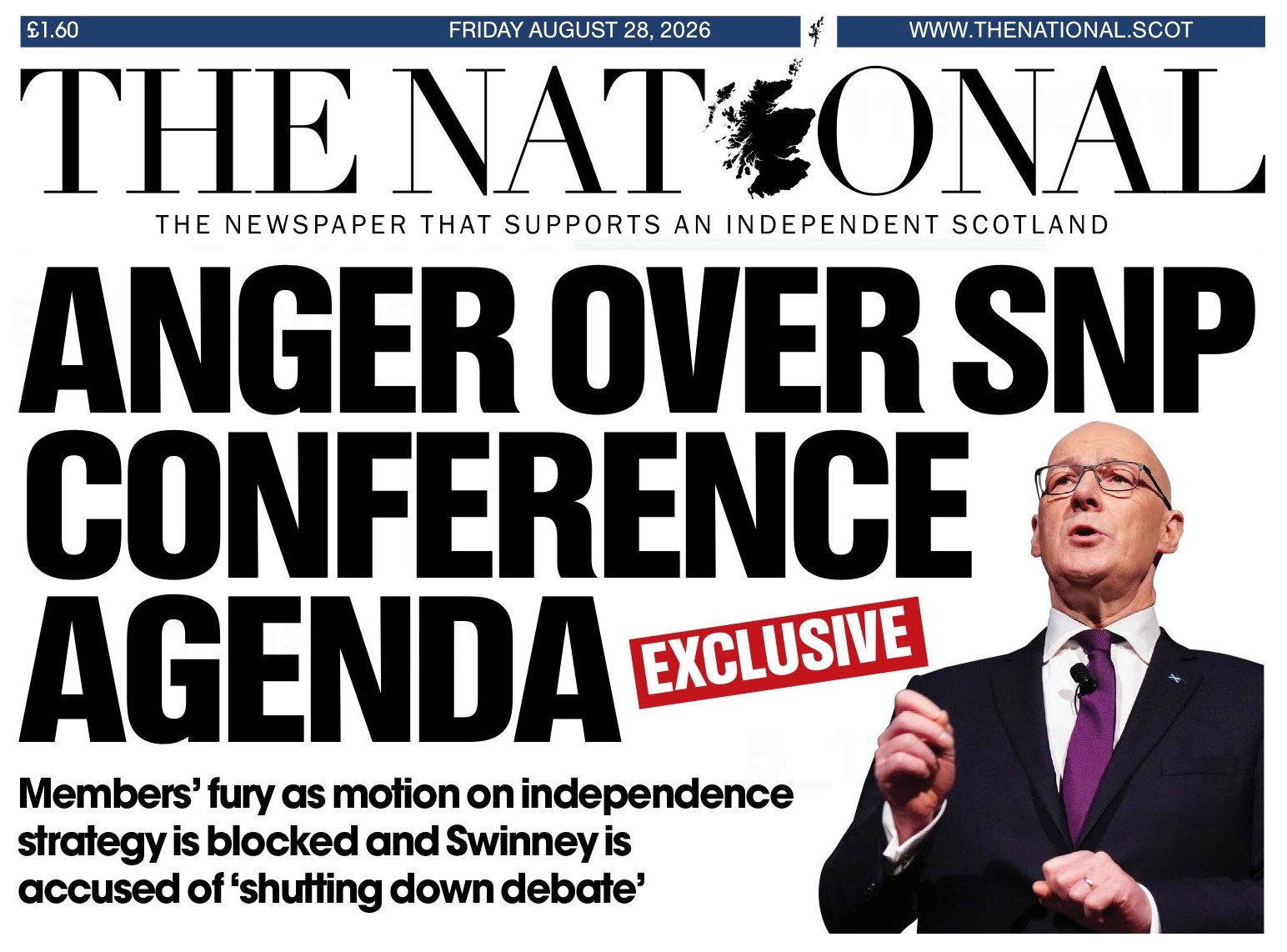
The National reports today that there’s a great disturbance in the Force over the SNP’s draft agenda for their national conference in a few weeks’ time, at which there will be no debate on independence strategy, despite the failure of John Swinney’s approach to this year’s Scottish Parliament election to produce the SNP majority that he promised would lead to a second indyref.

And, y’know, there should be a disturbance. The provisional agenda is a laughable, woke-obsessed embarrassment of a thing that harks back to the (cough) glory days of Nicola Sturgeon’s reign, which is now three-and-a-half years in the past. How time flies when you’re having fun, eh gang?
Wings has naturally obtained a copy of the full document, which you can peruse for yourself here. But allow us to present for you some highlights of what the SNP is prioritising above independence for the next 12 months.

The National Secretary spelling his own name wrongly in the very first section is an auspicious start. But this is a significant change to be sneaking in. It now provides a means for the party to expel anyone who disagrees not with its aims or policies, but with its general “direction”, or indeed for any “other activities” that the leadership might take umbrage at.
For a party where dissent is already locked down tighter than a drum and where a challenge to the leader has been made all but impossible, it’s a remarkable exercise in authoritarian paranoia.

Oh good, some more “white papers”. Those have been SUCH a success.
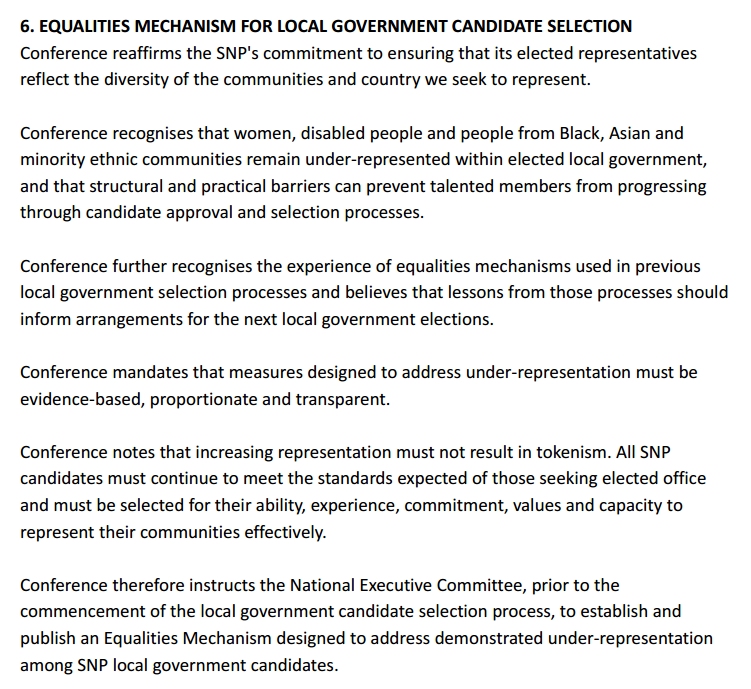
“What’s most important is that we have more black trans disabled vegan cooncillors, but this must not result in tokenism, even though tokenism is the only thing it can possibly result in, and it must be evidence-based, even though the entire point of it is to override all the available evidence (in the form of votes) about who members actually want as candidates.”
Interestingly the resolution calls for an increase in representation for “women”, but does not specify a definition of that term. It’s left to the reader’s imagination to ponder whether it includes blokes in frocks, but we all know where the smart money’s going.

And that’s the last clue we’re giving you.
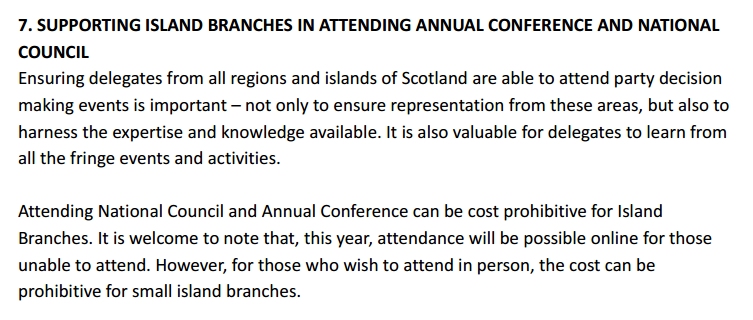
Hmm, tricky one. Has anyone considered building some ferries?

Oh come on now, what’s the worst that could happen if you don’t have any rules governing the work of the Financial Scrutiny, Audit and Risk Committee?

“We’re not very popular! Quick! Everyone to the echo chamber!”

“All the horses are gone! Lock that stable door!”


“YSI calls for conference to praise YSI.”
We’ll be candid with you here, readers, the “work in this area” done by Young Scots For Independence has escaped our notice. We’re unaware of their having produced “clear, accessible, evidence based resources” that have been “made widely available to members, activists and the wider Yes movement”.
We do remember someone who DID do that, some time ago.

But curiously the SNP don’t seem to be very interested in talking to them or seeking their advice.

“Conference demands to have its cake, and also to eat its cake.”
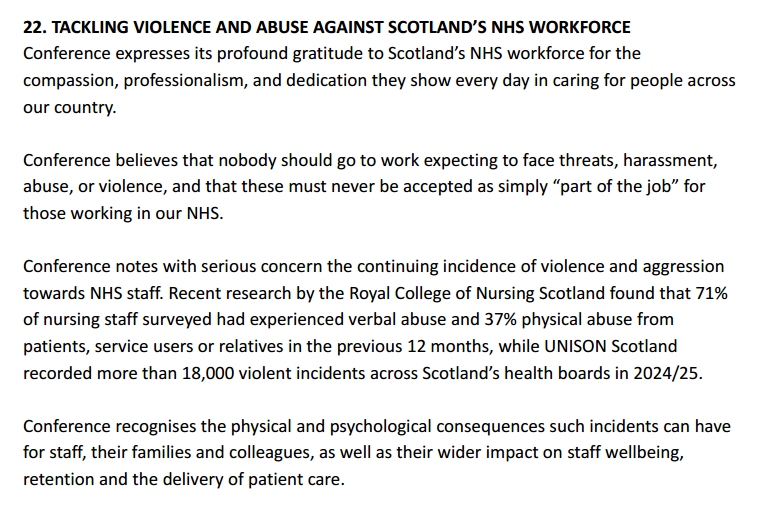
“Let us be bold and fearless in our discussions, so that we may bravely state without shying away from controversy, that people shouldn’t beat up nurses.”

[This is all pretty transphobic, can we delete? – NatSec.]
That leads us neatly into the “Social Justice” section.
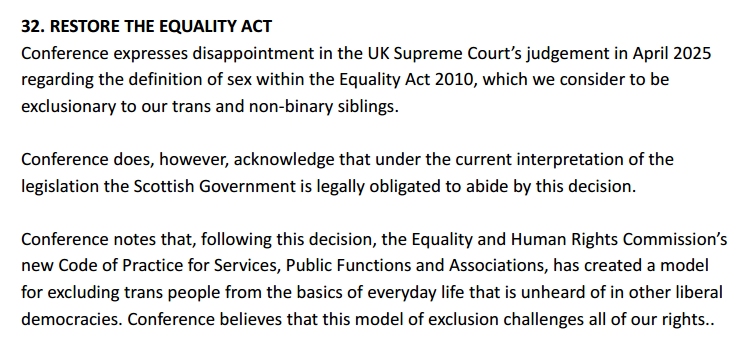

Short version:
You lost, lads. Cope.
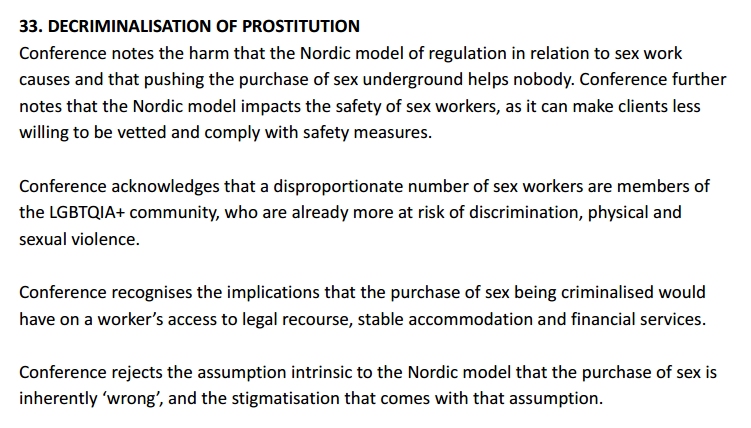
It has for many years been the official policy position of the Scottish Government that sex work is violence against women and girls (leaving aside the fact that it doesn’t know what women or girls are).

But it appears that the SNP’s controversy-dogged, sex-offender-infested “Out For Independence” affiliate, together with its equalities convener Sadie Matthews and disabled members convener Michael Gibbons (those being the movers of this resolution), wish to overturn that stance.


Between them, Matthews, Gibbons and OFI appear as resolution movers a whopping 27 times in the provisional agenda. (We’d show you a pic of the OFI’s convener too, but their identity is a secret. No, really.)
All three, unsurprisingly, also appear as movers of the next resolution on the agenda.

At this point we’ll direct you to our extensive previous coverage of this extremely dangerous legislation, otherwise we’ll be here all day.

We asked Grok for its best guess at the number of trees in Scotland.

At a figure of 2.5bn, the resolution would increase Scotland’s tree population by 0.0018%. That is, we think, ONE extra tree for every 55,555 existing trees in Scotland. Take THAT, climate change!
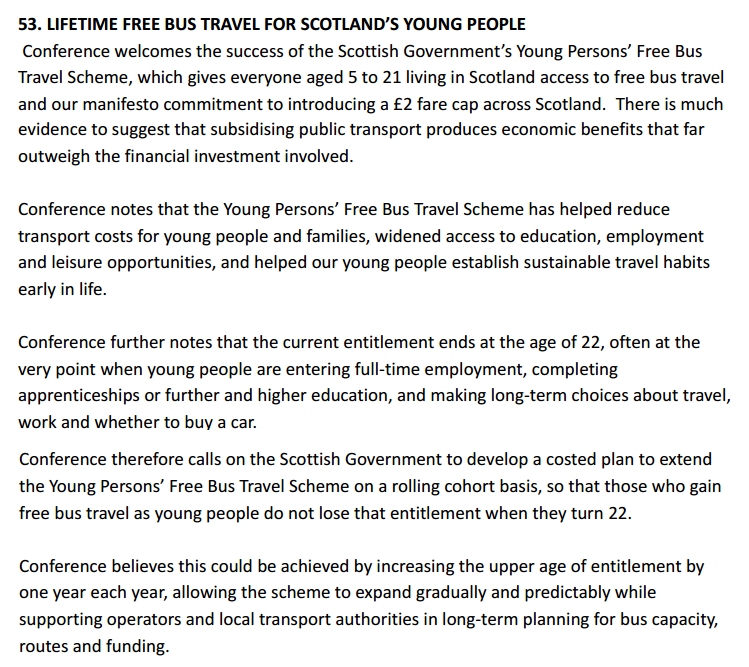
This is a curious bit of retail politics. Anyone who gets free bus travel now (a policy currently costing around £200m a year and rising fast) is to get it for life, whereas anyone NOT currently in receipt of it won’t get it until they’re 60. Rotten luck for anyone born in 2003 or earlier, there. But hey, the SNP sure knows its voter demographics.
(And yes, there’s a £5bn budget deficit looming, but we’ll just find all the extra money somewhere, right? Maybe somebody can drop Peter Murrell a line.)

“Sod independence, let’s spend conference debating things we have absolutely no power over and which are definitely not going to happen.”

We’re absolutely sure that “MOAR IMMIGRATION!” is what the hard-pressed communities of Easterhouse and Springburn are clamouring for above all else from their elected representatives.
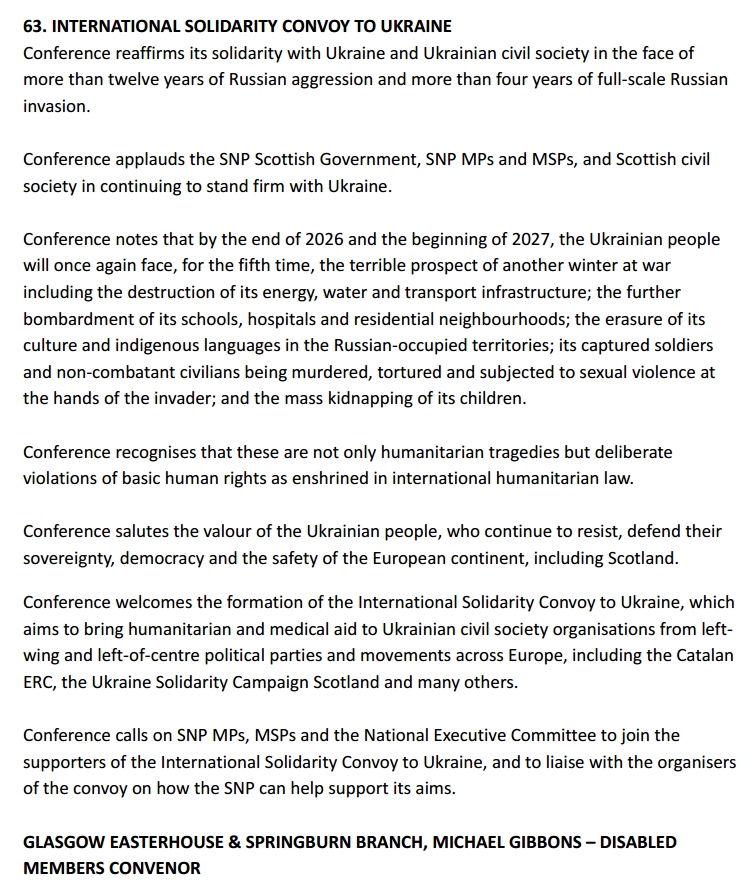
When they’re not fretting over Ukraine, obviously.
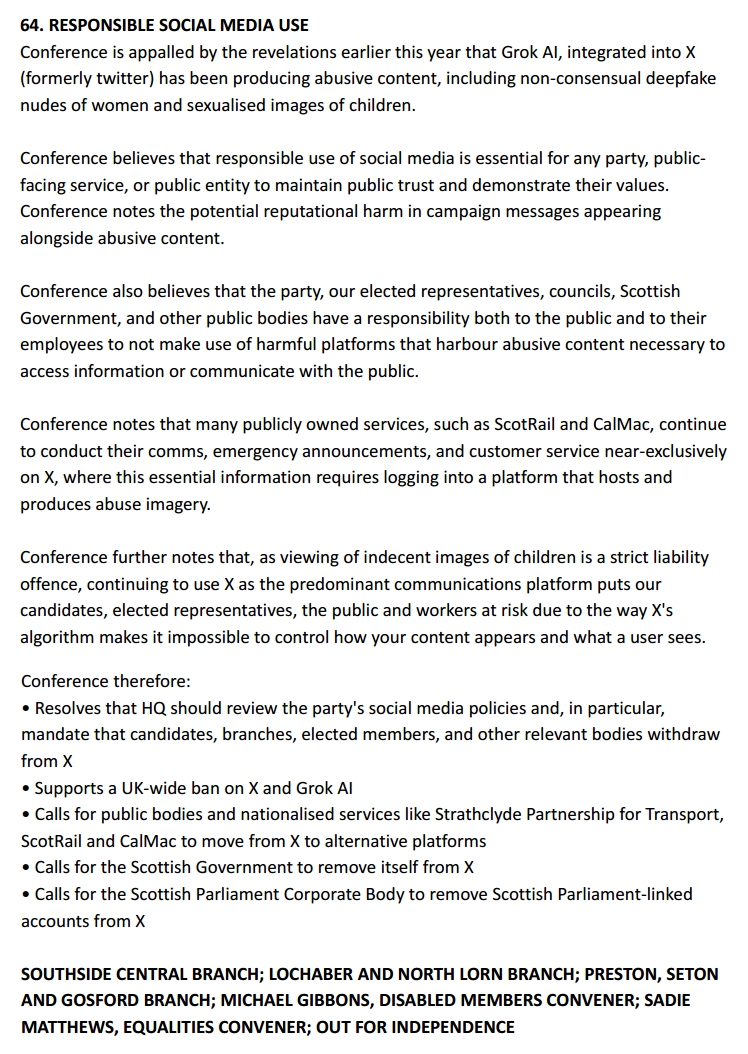
And with a second desperate plea to disassociate Scotland entirely from Satan (Elon Musk) and all his evil works (people disagreeing with you), it’s all over.
(X stopped Grok from creating deepfake nudes eight months ago, after about a week of people exploiting a loophole in its safeguards, whereas numerous other AI engines still allow it, but let’s not have pesky facts getting in the way of the witch-hunt against Mr Musk, who is after all basically Hitler but with electric cars and space rockets.)
It’ll be exciting to see which of the above survive to the final agenda. But even at this stage they tell you everything you need to know about what motivates the activist faction of the SNP membership, and how far down that list independence features.

We haven’t faked that screenshot. Go and look for yourself. We’d gone onto the Scottish Government website to look for the entirely performative new draft indyref bill, which doesn’t appear on the front page. We eventually found it nine items down the “Publications” page, below “Improving Gypsy Traveller Sites Guidance on minimum site standards”.


And even The National was a bit embarrassed by the move.

How much longer the people who still haven’t left the party yet will take to finally realise what the majority spotted some time ago is a question remaining to be answered.
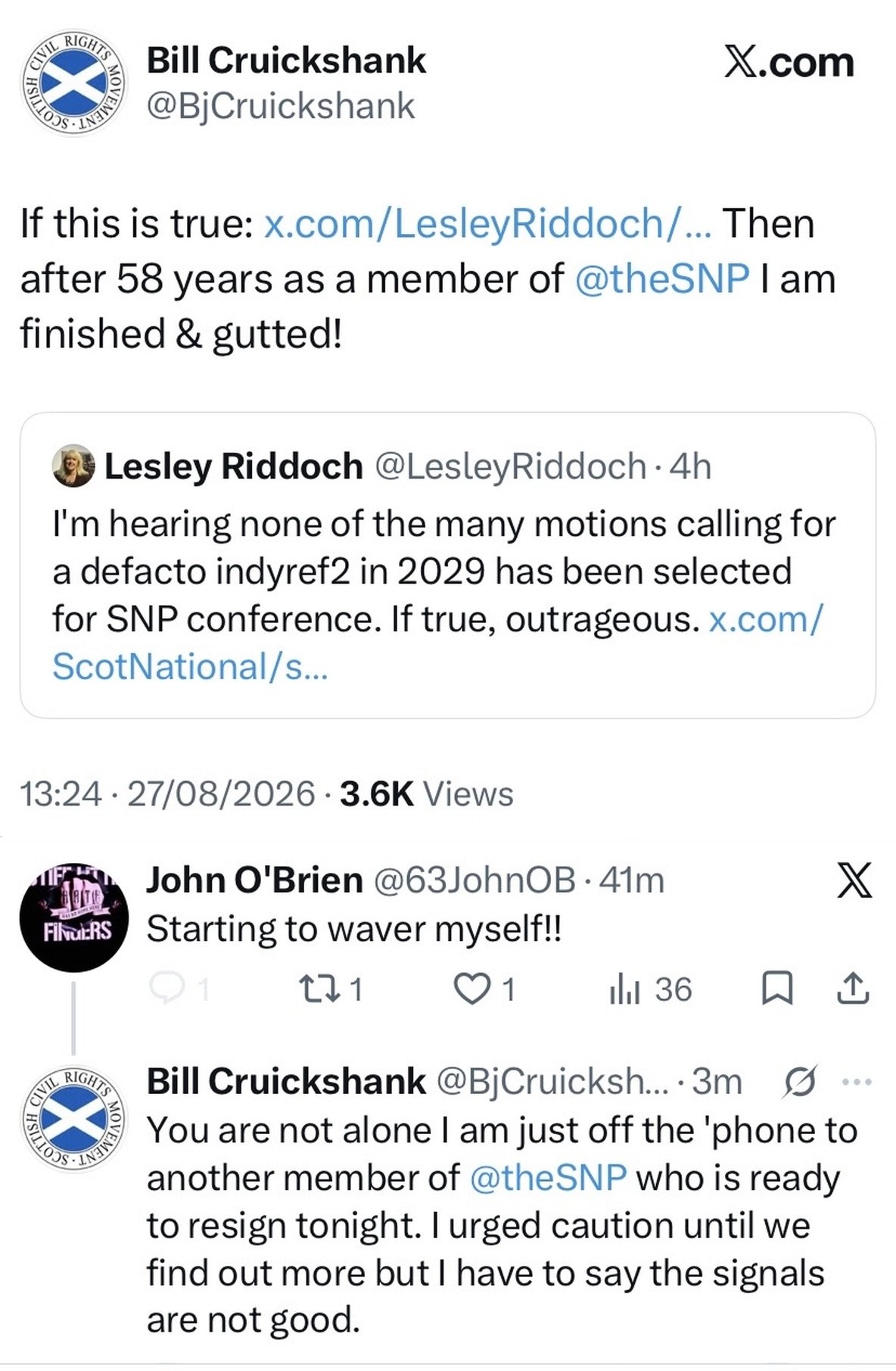
But if even “Hashtag” Bill Cruickshank – the most tigerishly loyal diehard of all the two-watt bulbs in the party’s ranks – has reached the end of his tether (and to be fair we’ve had false dawns on that front before), it looks like there might finally be a speck of light on the horizon.

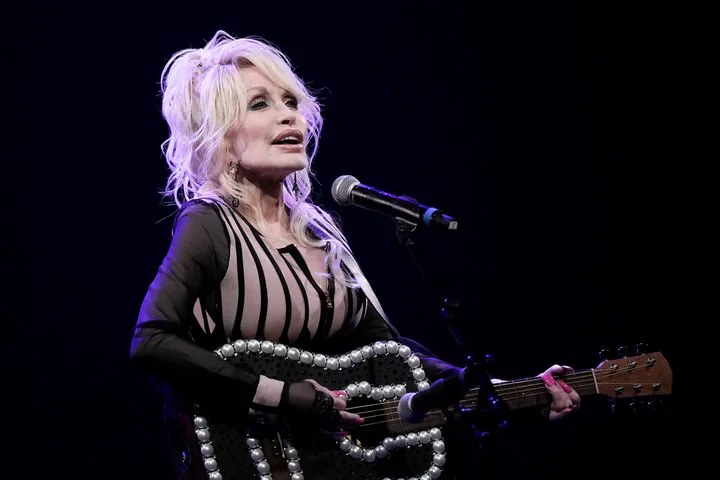
Following the news of Dolly Parton’s death at the age of 80, her fans all over the world have been reflecting on her life and legacy.
A major part of that was her almost-60-year marriage to Carl Dean, who ran a successful asphalt paving company in the couple’s home state of Tennessee.
During her hugely successful 60-year recording career, the Grammy winner wrote many songs inspired by her relationship with the man she described as the “love of my life” and the “star of my life story”.
This is the story of Dolly and Carl’s long-lasting union…
Dolly Parton met Carl Dean, the man who would become her husband, when she was just 18 years old
The story goes that Dolly moved to Nashville, Tennessee the day after she graduated high school – and met Carl outside a laundromat almost immediately.
“I met him the first day I got to Nashville, in 1964,” she once told Interview magazine. “I graduated on a Friday night, went to Nashville on a Saturday morning with dirty clothes and I went to a Laundromat looking for anything but love. I had just left two boyfriends back home and I wasn’t looking to get involved because I had gone to Nashville to really get started in the business.”
She explained: “We dated for two years before we got married. I often get myself in love trouble because I’m so passionate; I love so much and so deep. But Carl’s a special guy, I didn’t have any problems with him.”
In 2025, following Carl’s death, Dolly told her fans: “Carl and I fell in love when I was 18 and he was 23, and like all great love stories, they never end.”

Interestingly, the pair were rarely – if ever – seen in public together
Over the course of their 58-year marriage, Carl only accompanied his wife to one industry event.
“Carl has never been in the limelight at all, never wanted to be in it,” she told Apple Music in 2023. “He don’t like it.
“He went to one thing with me early on, when we first married, to a BMI Song of the Year [event]. He came out there taking off his tuxedo, his tie and all that and said, ‘Don’t ever ask me to go to another one of these damn things because I ain’t going.’ I never asked him and he never did.”
She previously joked to People magazine in 2018: “I always joke and laugh when people ask me what’s the key to my long marriage and lasting love’. I always say ‘Stay gone!’ and there’s a lot of truth to that.
“I travel a lot, but we really enjoy each other when we’re together and the little things we do.”
In 1981, she was quoted as saying: “[Carl] knows if he ever started doing interviews and if people started photographing him and all that, then he wouldn’t be able to go to the auto parts store or the ballgames and the places he wants to go without being bothered.”

During their marriage, Dolly said she and her late husband didn’t feel a ‘burning’ need to have children
Dolly told Saga magazine in 2023: “When you’re a young couple, you think you’re going to have kids, but it just wasn’t one of those burning things for me. I had my career and my music and I was travelling.”
“I’m almost glad I never had children,” she previously told Mojo magazine as she reflected on the state of the world, admitting that she worries “myself to death about my little nieces and nephews and grandnieces and grandnephews”.
Years earlier, in 1985, at the age of 38, Dolly underwent a partial hysterectomy, which meant she was unable to conceive children naturally.
“I can’t have children physically,” she told Today in 1987. “I love children. I don’t know that it also wasn’t God’s will, you know, for me not to have kids. I mean, I try to look at things in a way that I can put them in a proper place because somebody has to be out there doing something to entertain other people’s children.”
Before that, she also told Interview magazine: “I couldn’t have children, I tried to for years. I’ve never been pregnant in my life.”
“When I got married and wanted to have children I couldn’t have any,” she continued. “But I don’t miss it. I did for a while, but I realise that I am everybody’s mother.
“I’ve raised five of my younger brothers and sisters and now their kids call me Aunt Granny. I’m like the grandma and the aunt.”

Dolly Parton and her husband Carl Dean had something of an ‘open’ approach to marriage – although she also insisted that they were sexually monogamous
In the book Dolly On Dolly, the pioneering musician claimed: “Men are my weakness. Short, fat, bald or skinny – I’ve had crushes on some very unusual men but Carl knows I’ll always come home and I’m not having sex with these people – I’m just flirting and having fun.”
“He’s not jealous and I’m not jealous of him. He knows I flirt. He flirts too,” she claimed. “Yes, it’s an open relationship, but not sexually and I would kill him if I thought he was doing that. He would shoot me too.
“At the end of the day we love each other madly.”
In fact, she once disclosed that the song Jolene was inspired by witnessing a bank teller flirting with her husband – although the situation never escalated to anywhere close to what it did in her signature hit.
“She was working down at the bank and he was spending a little more time down there than he should. So I put a stop to that!” she joked.
“I wrote the song about Jolene and I did a lot of banking after that, but not with her bank.”
Dolly also once joked: “Every time I look at him sleeping over there in his La-Z-Boy, snoring, that hair turning grey at the temples, I wonder if Jolene is still around. I’ll call her up and say, ‘You come and get him now!’.”
In 2016, they renewed their wedding vows to commemorate their 50th anniversary

She told Rolling Stone at the time: “I got all dressed up in the most beautiful gown you’ve ever seen and dressed that husband of mine up. He looked like a handsome dude out of Hollywood.”
Dolly shared: “We had a few family and friends around. We didn’t plan anything big at all because we didn’t want any kind of strain, any kind of tension, any kind of commotion, so we planned it cleverly and carefully. We just had a simple little ceremony at our chapel at our place.”
“We just had fun with it,” she added.
Carl died in March 2025, just over a year before Dolly
“Carl and I spent many wonderful years together,” the I Will Always Love You singer said following the news that her husband had died.
“Words can’t do justice to the love we shared for over 60 years. Thank you for your prayers and sympathy.”
A cause of death was not given, but Carl had been living with Alzheimer’s disease since 2019.
“I’m at peace that he’s at peace,” she later told Knox News. “But that don’t keep me from missing and loving him.”
Dolly claimed that while there is now a “hole in my heart” left by the loss of her husband, she hopes to “fill that up with good stuff”
That way, she said, “he’ll still always be with me”.
Earlier this month, Dolly shared that she’d recently been “dealing with some health issues that I just didn’t pay attention to when I was watching over Carl”.
Following her husband’s death, Dolly Parton released a song inspired by their love story
One of Dolly’s final musical releases was the original song If You Hadn’t Been There.
“[Great love stories] live in memory and in song, and I dedicate this to him,” she wrote on Instagram, alongside a picture of the song’s cover art, which depicted them in the early years of their romance.
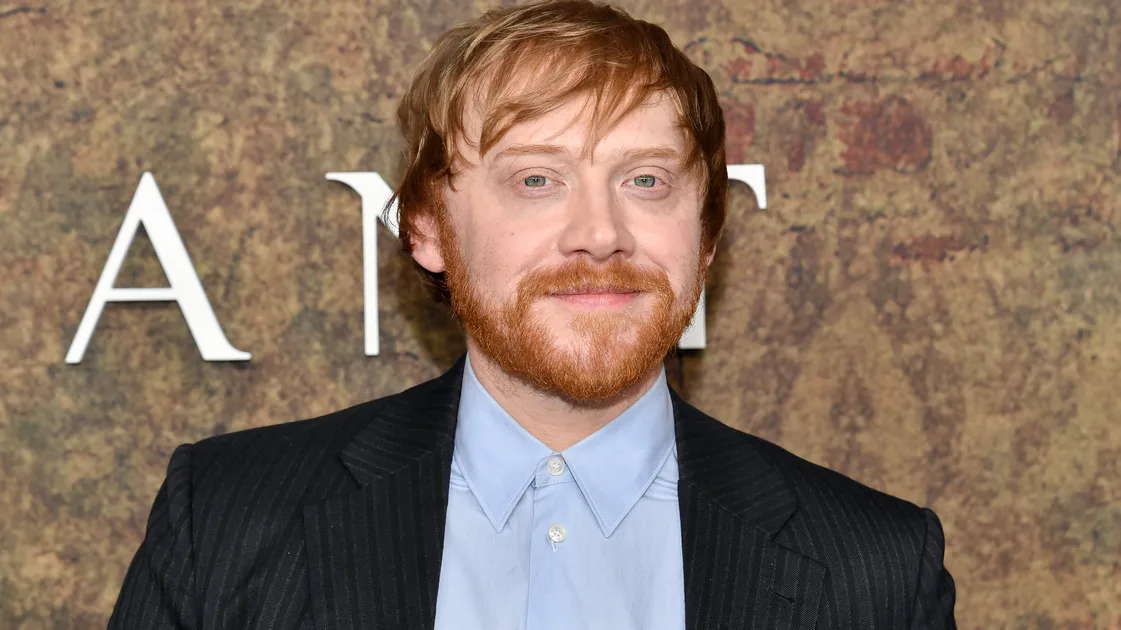
Rupert Grint’s announcement that he’s returning to the world of Harry Potter has received a mixed response among fans.
On Tuesday afternoon, the British actor announced that he’d be reprising his role as Ron Weasley in the Broadway production of the play Harry Potter And The Cursed Child, which is set two decades after the events of the final book in the wizarding novel series.
“Ron Weasley has been a part of me since I was 11 years old and I can’t wait to meet him again in this stage of life,” he said in a statement.
“There is something so full-circle and so special about stepping back into Ron’s shoes now when we are both fathers; it is somehow both very familiar and completely new. And the joy of being back on Broadway, this time in a role that defined so much of my life, is truly exciting.”
He added: “The first time I saw Cursed Child onstage, I was blown away and I can’t wait to set foot back on platform 9¾ and pick up where I left off. I am overjoyed to join this exceptional cast and crew at the Lyric Theatre this winter.”
Rupert will appear in a “limited” run beginning in February 2027, according to a post on the Broadway production’s socials.
Shortly after the announcement, though, many voiced their disappointment at Rupert’s return to the franchise, given the ongoing controversy surrounding its creator, JK Rowling.
In recent years, Rowling has become an increasingly divisive figure thanks to comments about, and actions relating to, the transgender community.
This has included – but is not limited to – repeatedly and intentionally misgendering transgender public figures, and tens of thousands of pounds to the campaign group which raised the initial legal challenge that led to the UK Supreme Court’s ruling last year that the legal definition of a woman should include only those who were assigned female at birth.
After the ruling was made, she posted a celebratory picture on X, depicting herself smoking a cigar on a yacht.
Because of this, Rupert’s involvement in the play has already sparked discourse on social media:
Rupert has previously distanced himself from the author’s views on the trans community.
“I firmly stand with the trans community and echo the sentiments expressed by many of my peers,” he said in 2020. “Trans women are women. Trans men are men.”
He added: “We should all be entitled to live with love and without judgment.”
“But she’s still my auntie,” he added at the time.
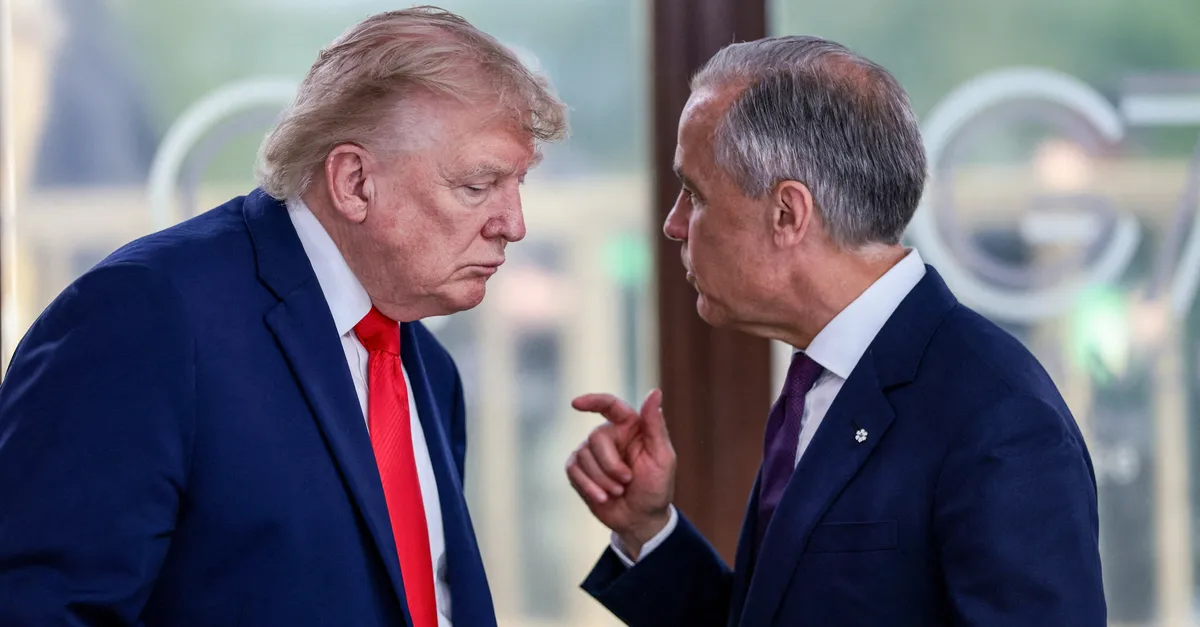
Six months after starting a real war he cannot figure out how to get out of, President Donald Trump has started another, potentially equally disastrous conflict: a trade war with America’s neighbour and second-largest partner.
And just as Iran is showing little interest in helping Trump out of his bind by agreeing to a face-saving deal that would let him claim victory, Canadian Prime Minister Mark Carney is uninterested in letting Trump back away from the fight he began within weeks of returning to office.
Indeed, when Trump declared that he would impose even more tariffs on Canadian goods starting in January – two months after the midterm elections – Carney upped the ante and said no: His retaliatory tariffs would begin the day after Labor Day, the traditional start of the fall election campaign season.
“You’re at war when you’re attacked, and we got attacked,” Carney said in a weekend press conference explaining why he broke off trade negotiations.
He then said out loud what many US allies have believed for two years: that the United States under Trump is no longer a trustworthy partner. “We recognise that sometimes its signature was written in pencil.”
Trump’s new tariffs on a hodgepodge of goods from Canada will raise prices for US consumers even further in the run-up to the November elections, while Canadian tariffs will hurt US exporters who count on that business. Trump has also upped his volume of insults against Canada, claiming, for example, that he will rename Lake Ontario as Lake America.
Scott Lincicome, a trade analyst at the Cato Institute, said Trump chose to tangle with someone whose country is fully behind him.
“He’s a smart guy and it helps a lot that Canadians overwhelmingly hate Trump and will endure significant trade war pain to fight him,” he said.
Carney is not the first leader to say no to Trump. Mexican president Claudia Sheinbaum has rejected Trump’s demand to let him use US troops against suspected drug dealers in Mexico, criticised the weapons pipeline that sees high-powered guns enter her nation illegally from the US and stood up for Cuba as Trump effectively imposed a blockade — but has done these things relatively quietly.
Danish prime minister Mette Frederiksen has similarly refused to countenance Trump’s demand that her nation turn over Greenland.
Italian prime minister Giorgia Meloni essentially called Trump a liar when he claimed she had begged to be photographed with him, while French president Emmanuel Macron chastised Trump for constantly saying contradictory things about Iran, even advising him to remain silent once in a while.
Carney ― whose doctorate in economics and former directorship at two central banks stand in stark contrast with Trump’s casino-bankrupting history in business ― is the first leader of a close ally to confront Trump head-on in a major dispute.
At that press conference, he pointed out a fact that has gotten glossed over in virtually all discussion of Trump’s tariffs against Canada since he retook office: they violate the 2020 congressionally-approved free trade update that Trump continually boasted about at the time.
“That’s the thing: We have a deal with the Americans. It’s called CUSMA,” he said, referring to what the US calls the United States-Mexico-Canada Agreement, essentially a renaming of the 1994 North American Free Trade Agreement.
“We have side letters that clarify behaviour in steel, in aluminum, in autos. All of those are being violated, day in, day out.”
Trump does not, in his public comments, explain how Canada is cheating the United States under a trade agreement that he himself negotiated and signed. His White House press office said he is permitted under the agreement to impose tariffs on Canada to address emergencies and national security concerns, although it is unclear how Canada is causing either.
As with so many other things, Trump’s decision to act against Canada is rooted in his profound ignorance, in this case his longstanding inability to understand how international trade works.
For decades, Trump has claimed, falsely, that countries that sell more products to the United States than buy from the US are “ripping off” Americans. He further conflates trade deficits with the US budget deficit.
Trump’s first-term national security adviser, John Bolton, who, like many of Trump’s critics, has been criminally prosecuted by Trump’s Department of Justice, said the true workings of trade and tariffs were explained to Trump by experts in his own administration. “Many times,” he said.
Trump nevertheless repeated his falsehood again on Wednesday in a podcast appearance.
“We lose $60 billion a year, and really more than that, $60 billion a year with Canada,” he told former Fox News host Glenn Beck.
That view ignores the reality that Americans use and benefit from lumber, aluminium, maple syrup and other products they pay for. The trade imbalance, according to economists, is as meaningful as a typical family’s “trade deficit” each year with their neighbourhood grocery store.
Carney, in his news conference, told reporters that even by that metric, Trump is wrong because he fails to include services provided to Canadians by US companies that generate a net trade surplus for the United States. He further pointed out that much of the imports coming from Canada are natural gas, electricity and the heavy crude needed by many Texas refineries.
“I don’t think they want us to stop sending any of that energy,” he said.
That Carney has emerged as Trump’s biggest antagonist among traditional allies is perhaps unsurprising, given that his Liberal Party unexpectedly retained power in 2025 thanks to anti-Trump backlash among the Canadian populace after he returned to office and began talking about annexing Canada as the 51st state.
Carney provided a hint of where he stood in his speech at the World Economic Forum in Davos, Switzerland, early this year.
“If great powers abandon even the pretense of rules and values for the unhindered pursuit of their power and interests, the gains from transactionalism will become harder to replicate,” he warned, clearly referring to the United States without ever mentioning Trump by name. “Hegemons cannot continually monetize their relationships.”
The end result of Trump’s tariff attacks and Carney’s retaliation is that residents in both countries will suffer, Bolton said.
“This is just going to hurt both economies. Trump raises taxes on Americans and Carney retaliates by raising taxes on Canadians,” he said.
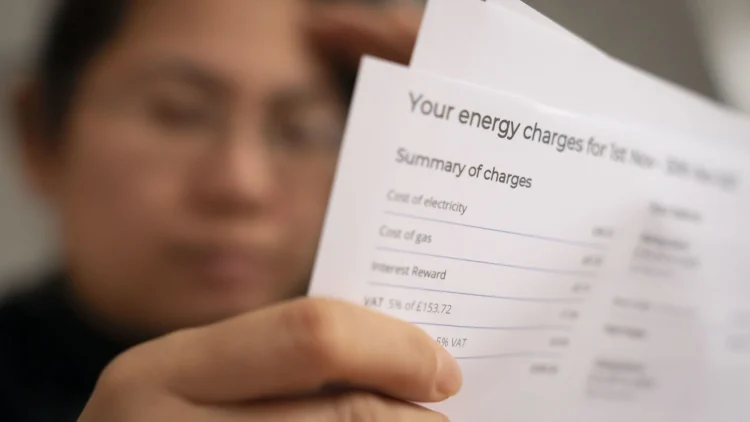
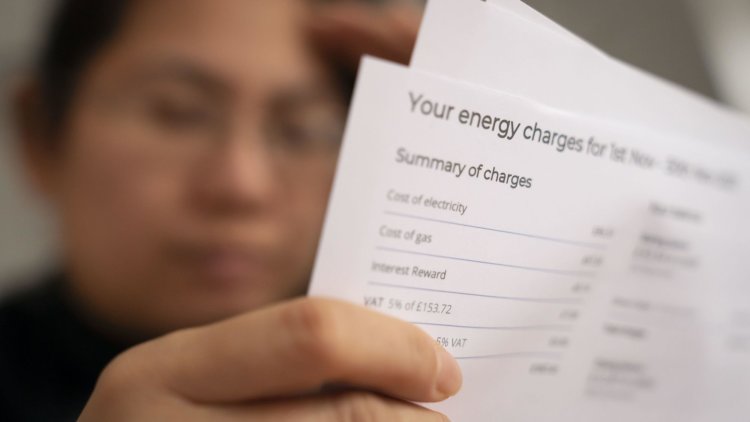
The average household’s energy bill will rise to the highest level in three years following Ofgem’s new price cap announcement. (Alamy)

4 min read
Ofgem announced this week that the energy price cap would increase to the highest level in three years as the war in Iran continues to drive up energy prices in the UK.
The energy regulator said the cap, which determines the maximum amount that a supplier can charge a consumer for energy per year, would rise by 4 per cent from £1,663 to £1,723 between October and December. Energy analysts Cornwall Insights have also predicted that the cap will reach around £1,872.15 in January-March.
Energy Secretary Miatta Fahnbulleh said “families will be understandably concerned” about the cost of energy “which is being driven up by the Iran war”.
“Energy is an everyday essential, and it needs to be affordable for everyone, which is why we have cut VAT on electricity bills from October to give families some breathing space,” she said.
“This has limited the rise in the price cap and follows the £150 in costs we removed from bills earlier this year, and we will keep looking at what more we can do to protect families from unaffordable bills.”
Prime Minister Andy Burnham announced a cut to VAT on household energy bills when he entered No 10 in July. The step, which was part of a wider cost-of-living package, was projected to remove around £45 a year from the average household bill.
However, the savings face being swallowed by higher prices, raising questions of what more the Labour government can do to support households with their bills.
Why are energy bills increasing?
Energy prices had started to stabilise following their 2022 peak triggered by Russia’s invasion of Ukraine. Around half of Europe’s natural gas came from Russia, meaning a breakdown in relations with Moscow led to a sharp fall in supply and a steep rise in global prices.
However, the decision by the US and Israel to attack Iran at the start of this year and resulting conflict has led to further disruption in the international energy markets.
Around 20 per cent of the world’s natural gas passes through the Strait of Hormuz, a vital shipping lane controlled by Iran and which Tehran has effectively shut down as a way of putting pressure on the Donald Trump administration. Iran is also responsible for a large portion of the world’s oil supply.
Responding to the cap rise announcement on Wednesday, Dr Craig Lowrey, principal consultant at Cornwall Insight, said: “What is frustrating is these rises, as we have seen time and again, have very little to do with what is happening in Britain.”
What further action could the government take?
The Budget on 28 October will be a key event for the question of further support.
In terms of what steps Chancellor John Healey might take in his first fiscal event since entering the Treasury, PoliticsHome understands he could roll out plans developed by the Keir Starmer government to expand eligibility for the Warm Homes Discount.
The Warm Homes Discount was introduced in 2011 by the coalition government to help low-income households with energy bills during the winter months through a one-off £150 annual discount.
PoliticsHome understands that it could be expanded to include more households facing cost-of-living pressures, such as recipients of Personal Independent Payments, and described as ‘Warm Homes Plus’.
The End Fuel Poverty coalition told PoliticsHome that while an expansion of the Warm Homes Discount would be welcome, the £150 discount is now worth significantly less than when it was introduced over a decade ago due to energy bill inflation. It is now estimated to cover 9 per cent of the average bill, compared with 14 per cent when it was first rolled out.
PoliticsHome also understands the government has shown interest in a Resolution Foundation idea to use HMRC data to target support at households earning below a certain threshold. The think tank has said that the scheme would provide an additional £175 to eligible households on average a year, costing the government £2bn.
Adam Berman, director of policy and advocacy at Energy UK, told PoliticsHome that “too many households continue to struggle with high energy bills” in the UK.
He added: “It’s imperative that the government introduces more targeted support for low-income households alongside bringing down electricity bills for everyone.”
With the first Budget of the Burnham government two months away, and the next price cap period not until early next year, further action on energy bills is not expected until after 28 October, when households will be preparing for the coldest period of the year.
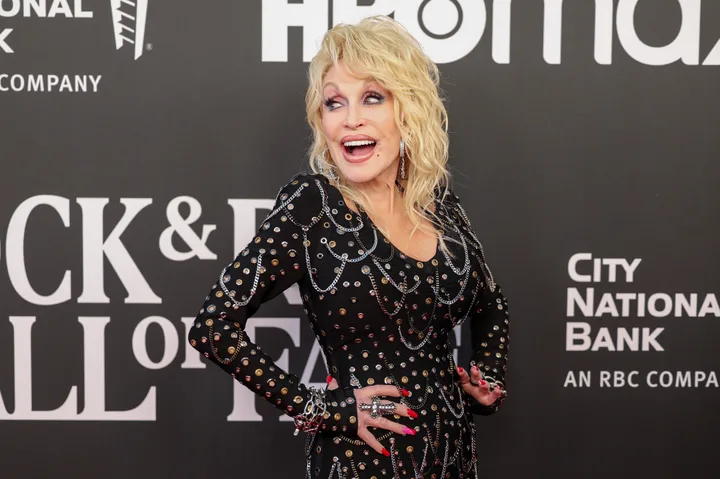
President Donald Trump reacted to news of Dolly Parton’s death by claiming that the country music icon secretly “really liked me” and that her death feels like losing “a member of the family.”
“I knew her a little bit, she wasn’t a very political person,” he said in an interview with Glenn Beck on Wednesday, a day after the “Jolene” singer-songwriter’s death sent shockwaves around the world.
“She really liked me, I will tell you,” he went on, while claiming she never expressed this publicly because she didn’t want to lose some of her fanbase.
“She was of the opinion, the 50%, who needs to lose?” he said. “I don’t think it’s 50, I think it’s probably 20% of the fans, OK, not 50. But she was a great person, just a nice person. I liked her a lot.”

Christopher Polk via Getty Images
In her memory, Trump ordered the nation’s flags to be flown at half mast for one week, one of the longest periods of national mourning ever issued for a private citizen.
“There has never been anyone like her, and never will,” he proclaimed in a social media post.
Parton had refused to publicly wade into politics, including by sharing her feelings about Trump. The businesswoman and philanthropist reasoned she didn’t want to offend anyone and divide her fans. She’d instead let her music ― and actions ― speak for her, she said.
“I know whatever I say, people are going to listen, and they’re going to make more of it than maybe what I meant. So I have to be careful. Of course I have my opinion, but I’m not an opinionated person as a rule,” she told People in 2021.
Some of the issues she did address and supported included equality for the LGBTQ+ community, children’s education and literacy, and vaccinations during the COVID-19 pandemic — with her having helped fund Moderna’s COVID-19 vaccine.

Erika Goldring via Getty Images
The Trump administration, in contrast, has increasingly advocated against vaccinations, with Trump appointing Robert F. Kennedy Jr., a long-time anti-vaxxer, to oversee the nation’s health department, leading to a historic rise in measles cases and unsupported claims that the shots may be linked to autism.
Trump also revoked executive orders and actions that called for nondiscrimination protections for LGBTQ+ individuals in federal agencies and in schools. His administration also carried out targeted campaigns against transgender individuals in schools, athletics and in the military.
“I think everybody should be treated with respect,” Dolly told CNN in 2016 when asked about a contentious anti-LGBTQ “Bathroom Bill” in North Carolina that imposed rules on bathroom and changing facilities based on one’s gender at birth.
“I don’t judge people. I try not to get too caught up in the controversy of things. I hope that everybody gets a chance to be who and what they are. I just know if I have to pee, I’m going to pee. I don’t care where it’s going to be,” she went on.
That same year, before elected into his first term, Trump said he agreed with trans individuals being allowed to use the bathroom of their choice. After being sworn in, his administration ended federal protections for transgender students.
Cody Butler is the former Chair of the One Nation Conservative Network, a grassroots organisation dedicated to advancing pragmatic and compassionate conservatism.
I am something of an outlier among Tories. To borrow from a Guardian journalist, I am no camp young fogey nursing a kitsch obsession with the Iron Lady. Quite the reverse: I am a wet to the core, with an ever-deepening fascination with Gilmour, Heseltine, Macmillan, Hailsham and that entire gallery of supposed traitors to the Party. I am a young graduate, a soon-to-be NEET, who wants a home one day, cares about the environment, and wants a better relationship with Europe and a good economy.
And yet, I have left the Tory Party.
The decision was not easy, but I have a point to make and I mean to stand upon it, even if my parents lament the choice as one more obstacle to graduate employment.
I am a One Nation Tory whose conservative disposition runs almost opposite to the Keminisation of the Party, and I think nuance is increasingly undervalued in our political culture. Enemies are preferred and convenient targets are often found: CCHQ one day, a faction the next, or some distant figure branded a liberal. The online attention economy rewards that which is punchy and immediate. So the old style of politics, to the dismay of the old Etonians, is hopelessly swallowed up by labels and that oh-so-misunderstood term, populism.
When I resigned, quite publicly and intentionally so, I confess I received a fair bit of negativity; not that I care much, because it was free publicity. The more they engaged, the more I will have the last laugh.
But it raises a broader question about double standards, political culture, and the choice my remaining wet, damp and dry friends have to make – the damp denoting the opportunistic class who trade only in ambiguity and convictionless power.
First, consider Jacob Rees-Mogg. He appeared at the Reform UK Conference in 2025 and even spoke at it. Contrast that with the treatment of Sir David Gauke, a man who has been criticised on this very site.
Secondly, look at the political language used by the leadership. Reform supporters are cast as a misguided flock of sheep, who have been led astray by malignant shepherds. Centrists, by comparison, are ignored, labelled deranged zealots, liberals or fake Conservatives, declared wrong about everything, and even held responsible for the 2024 defeat.
The rhetoric of unity and the invocation of an “existential threat” to justify heavy-handed measures in defence of “Toryism” is a thin veil. What it conceals is a one-sided arrangement: a single hard-line faction runs the Tory party, and you are now only allowed to conform to its direction.
Simply put, the party is an unwelcoming space for people of a ‘centrist temperament.’ The consequence is the slow eradication of political traditions from the party, the loss of voters who feel familiar with and reassured by moderates, and a sense that the Conservatives have abandoned them.
It is not even a stretch to conclude that Badenoch has implied, rhetorically, that ‘centrist ideas are no longer wanted.’ She has purged Gavin Barwell and Grant Shapps, might even reject Penny Mordaunt, and has consistently shown a willingness, sometimes even an encouragement, to let people leave.
It is worth caveating this by noting that the wets have typically been a minority within the Conservative Party. The 2005 leadership election illustrates this well: among Cameron’s parliamentary supporters, 51 were socially conservative against 22 socially liberal; 65 economically dry against 21 economically wet; and 78 Eurosceptic against just five Europhiles.
Yet the current direction risks losing centrist, liberal-leaning voters. Look at Lord Ashcroft’s 2005 election research: it showed that support for some Conservative policies did not translate into automatic support for the Conservatives because the party’s brand was tarnished, a problem that subsequently informed David Cameron’s modernisation efforts. These voters hold completely different political and psychological dispositions from the party membership and thus require a separate offering to coax them.
More in Common’s ‘Established Liberals’, for example, are socially liberal but economically right-leaning, and are characterised by institutional trust, optimism, compromise and internationalism. Onward’s Breaking Blue similarly identifies ‘Right Liberals’ as economically right-wing but culturally liberal, finding that Conservative support among them increased from 44 per cent in 2010 to 53 per cent in 2015, during a period in which the party pursued socially liberal policies such as same-sex marriage.
For them, feeling that a party is socially acceptable, moderate, liberal and respectful of people like themselves can be part of what makes it electorally acceptable in the first place. However, the well of reasons for these voters to support the Conservatives is running dry. Tax cuts will not compensate indefinitely for a perception that the party is morally or culturally objectionable.
The same applies to environmental policy and Europe. If the party defines environmental policy primarily through what it opposes, such as net zero, while failing to cultivate any positive association with environmental responsibility, it risks making itself increasingly unattractive to liberal-leaning voters for whom environmental concern is part of their broader political identity.
Likewise, if polling suggests that around 55 per cent of the electorate would now support rejoining the European Union, maintaining an increasingly binary position within the party will simply alienate those voters.
There is also a generational problem. NatCen’s 2024 analysis of British Social Attitudes data directly tested whether younger generations would “grow out of” their liberalism. It found that generations’ average attitudes change remarkably little as they age, with Gen Z and Millennials remaining more liberal than previous generations were at the same age. This cohort will only continue to grow.
This is becoming an increasingly potent question, and it is not just me saying this. In a recent Times article, several high-profile sources within the party expressed concern that no serious effort was being made to appeal to Labour or Liberal Democrat voters.
The consequence, if left unattended, is clear. If you institutionally remove representatives, create a culture of mocking and scapegoating, and design policies that appeal primarily to one wing of the electorate, you lose the moderates.
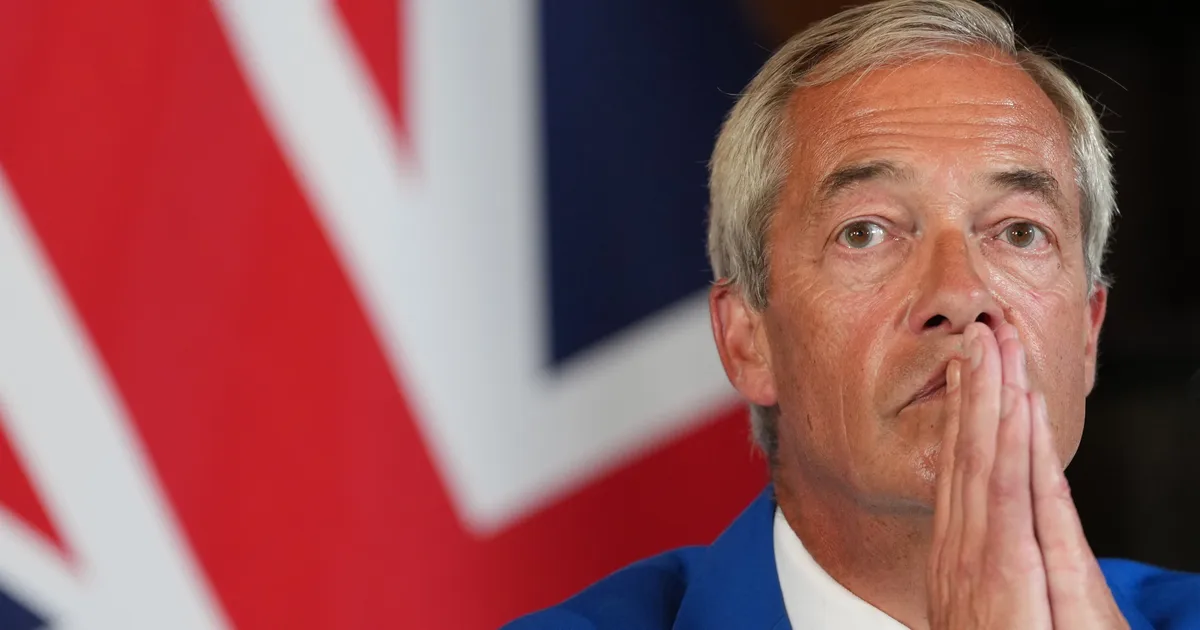
Nigel Farage could be blocked from ever becoming prime minister by the 43% of Brits “unhappy” with the idea of a Reform government, a survey has found.
The right-wing party is virtually neck-and-neck with Labour in the opinion polls, raising the prospect of Farage becoming prime minister at the next election.
But a report by anti-racism campaign group HOPE Not Hate has shown how tactical voting by nearly half the country could stop it from happening.
Based on polling by Focaldata, the report shows that there are more anti-Reform voters than supporters of the right-wing party.
Of the 43% who would be unhappy at Farage becoming PM, 69% would be prepared to vote tactically for whichever party is best-placed to stop a Reform candidate being elected in their constituency.
A constituency-level MRP projection by Survation found there are 95 “fragile Reform” seats across the country, where the party is three percentage points or less ahead of their nearest rival.
It also found there are 199 “anti-Reform jeopardy” seats where the party is currently projected to win only because opposition votes are split between two or more other parties.
Nick Lowles, chief executive at HOPE Not Hate, said: “Whether it’s the Burnham bounce or the Farage flop taking effect, Reform UK is doing worse in the polls now than they were last year.
“At the same time, millions of voters across Britain are ready to vote tactically against Reform.
“Even Reform enthusiasts like Tim Montgomerie are warning that Reform is only strong when its opposition is divided.
“Our research shows that Montgomerie is right to worry: Reform’s opposition can close ranks around election time.
“Our job is to guide anti-Reform voters to back a party that will deliver Reform defeat.”
Prominent Farage ally Tim Montgomerie was suspended from Reform last week after publicly criticising the party and its home affairs spokesperson Zia Yusuf.
A parliamentary sleaze probe is currently looking into Farage over a £5 million donation from a crypto-billionaire he failed to declare to parliament when he became an MP in 2024.
The Reform leader triggered a by-election in his constituency of Clacton earlier this year amid the heightened scrutiny over his finances.
However, all the other major parties refused to stand a candidate, describing the contest as a “stunt”, and Farage was re-elected.
Listen to Commons People, the podcast that makes politics easy. Every week, Kevin Schofield and Kate Nicholson unpack the week’s biggest stories to keep you informed. Join us for straightforward analysis of what’s going on at Westminster.
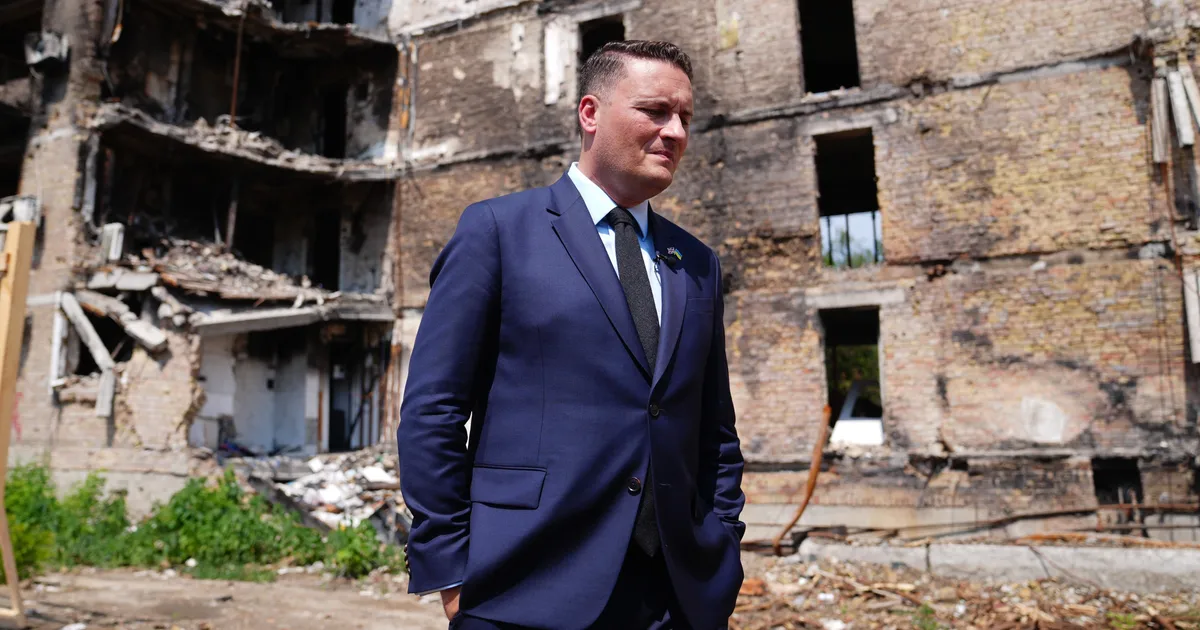
Wes Streeting has claimed “people cannot cope” with a gay man being defence secretary.
He said he had “experienced more online homophobia in the last three weeks than I have in my entire life”.
Streeting became the first openly gay man to be appointed to the role after Andy Burnham became prime minister last month.
In an interview with Iain Dale at the Edinburgh Fringe Festival, the former health secretary said he had been inundated with abuse since taking up the role.
He said: “I have experienced more online homophobia in the last three weeks than I have in my entire life.
“An unbelievable volume, because people cannot cope with the idea that a gay person might lead the armed forces of the United Kingdom.”
He said his sexuality “has been almost entirely unremarked upon in the media” since becoming defence secretary.
“I think, ‘great, here we are in the third decade of the 21st century it doesn’t matter, brilliant’,” Streeting said. “But of course online it matters to a lot of people.
“And I am proud of the fact that in my lifetime we’ve gone from gay people not being able to serve in the military to a gay defence secretary.”
However, Streeting said he had also been congratulated by people in the Ministry of Defence for being a symbol of progress.
He said: “In my first week, someone in the MoD said to me: ‘As a gay man, I’m really proud that we have our first gay defence secretary – It means a lot to many of us who remember the bad old days.’ I was quite touched by that.”
Listen to Commons People, the podcast that makes politics easy. Every week, Kevin Schofield and Kate Nicholson unpack the week’s biggest stories to keep you informed. Join us for straightforward analysis of what’s going on at Westminster.

GTA 6 will be a massive game and Rockstar’s longest yet, as the studio confirms it can take up to 80 hours to beat

Gatwick Airport suffers second water outage within a month | News UK

(VIDEO) Miss Virginia Justus Kelley Wins Miss USA 2026 in Miami, Becoming the Pageant’s First-Ever Mom to Win





-

 Fashion7 days ago
Weekend Open Thread: Madewell – Corporette.com
-

 Crypto World3 days ago
SpaceX stock could rise 75% to $240, JPMorgan says
-

 Business6 days ago
Musk’s Tesla, SpaceX Confirm $16.8 Billion ‘Terafab’ Chip Plant as World’s Largest Building in Texas
-

 Crypto World6 days ago
anatomy of crypto’s biggest liquidation event since 2021
-

 Crypto World4 days ago
A $30 Billion AI Fund Implodes, Now the SEC Is Investigating Wall Street’s Role
-

 Crypto World2 days ago
Warsh Jackson Hole keynote puts financial innovation first
-

 Politics6 days ago
6 months on, Irish renters crushed by effects of government housing bill
-

 Crypto World2 days ago
Did Trump Just Move SpaceX Stock With One Truth Social Post?
-

 Business5 days ago
Mystery AI Model ‘Ox Alpha’ Draws Developers With Free Access as Chinese Lab Origins Remain Debated
-
 NewsBeat6 days ago
The ‘Lucky Dip Gang’ causing carnage for clicks: After five thugs were killed speeding in the wrong direction on a motorway, GUY ADAMS investigates a sick new trend… and why police aren’t even allowed to pursue them
-

 Business13 hours ago
Salesforce Stock Soars 19% as Blowout Earnings and Agentforce AI Growth Silence Software Skeptics
-
 Crypto World7 days ago
Nvidia Stock Suffers Longest Losing Streak Since 2022: Will Q2 Earnings End It?
-

 Business2 days ago
Walmart takes aim at younger shoppers with new fashion brand
-

 Business4 days ago
Moderna CEO warns China is pouring state money into mRNA technology
-

 Business4 days ago
NVIDIA Stock Drops Nearly 2 Percent to $210 on Seventh Losing Day Ahead of Critical AI Earnings
-

 Business6 days ago
Will Tesla Stock Be Higher or Lower a Year From Now? Here’s What Wall Street Analysts Are Saying
-

 Business7 days ago
UK firms in critical financial distress rise 9% to 53,756
-

 Tech7 days ago
Unitree’s New Superman Robot Claims to Outjump and Outrun Every Human, Usain Bolt Included
-

 Sports5 days ago
Deshaun Watson fires back at Browns fans after being booed: ‘It’s a disrespectful thing’
-
 Crypto World4 days ago
$92 Billion Nvidia Earnings Could Make or Break the AI Trade
You must be logged in to post a comment Login