
Politics
Trump Tells Congress Iran War Hostilities Have ‘Terminated’


US President Donald Trump on Friday told Congress the Iran war has ended.
In letters to top Republicans in the House and Senate, Trump said a weekslong ceasefire remains in place and that there’s been no more fighting.
“There has been no exchange of fire between United States Forces and Iran since April 7, 2026. The hostilities that began on February 28, 2026, have terminated,” Trump said in letters to House Speaker Mike Johnson (R-La.) and Senate President Pro Tempore Chuck Grassley (R-Iowa).
At the same time, Trump said the US military “continues to update its force posture” in the region in response to Iranian threats. He told reporters on Friday the US Navy is maintaining a blockade of the Strait of Hormuz.
The letter is less about the war actually changing than the Trump administration trying to comply with the War Powers Resolution, a 1973 law that requires hostilities to cease within 60 days if Congress hasn’t authorised the use of force. Several Republicans in the House and Senate have warned about the 60-day deadline while voting against Democrats’ repeated attempts to end the war. Sen. Susan Collins (R-Maine) on Thursday became the second Senate Republican to vote for an antiwar resolution as the deadline approached.
Senate Democratic leader Chuck Schumer (D-N.Y.) on Friday called the letter “bullshit” in a post on social media.
“This is an illegal war and every day Republicans remain complicit and allow it to continue is another day lives are endangered, chaos erupts, and prices increase, all while Americans foot the bill,” Schumer said.
Trump’s main audience is likely Republicans. It’s unclear how his claim that the war has ended will go over if the US maintains a naval blockade. The president said earlier Friday that the blockade is still on.
“We’re on our way to another victory, a big victory, and I don’t think that it’s constitutional what they’re asking for,” Trump said, referring to lawmakers’ demands Trump consult Congress on the war.
“These are not patriotic people that are asking, you know, when they say— even the losers, even the ones that say all the wrong things, admit that it’s been amazing what we’ve done,” Trump told reporters on Friday. “The strait is totally shut down. It’s flawless. It’s totally 100% shut down now.”
Under international law, a naval blockade is an act of war.
Subscribe to Commons People, the podcast that makes politics easy. Every week, Kevin Schofield and Kate Nicholson unpack the week’s biggest stories to keep you informed. Join us for straightforward analysis of what’s going on at Westminster.

Whenever a story about domestic violence makes headlines, there is always a moment of shock, a cycle of coverage and then, eventually, silence ― until it happens again.
With each new headline, my body recalls a familiar set of emotions: rapid heart rate, short breaths, sweaty hands, and, in most cases, tears. For me, these are not just names on a screen; they are triggers for memories of parts of my childhood I’d rather forget.
In the last few weeks, the murders and attempted murders of several women have dominated the news. And in a recent horrifying incident, eight children were killed in what is being called a mass domestic incident. The focus has been on what happened in that moment, who was killed, how it happened, and where it took place. What is missing is what happens after, especially for the child who survived and for other children who grow up in environments shaped by violence long before it ever becomes visible to the outside world.
In the United States, a woman is killed by an intimate partner about every 8 hours. Although thankfully, my own mother survived, my heart is with the children of those whose mothers did not.
And although my mother did survive, I am also a survivor. Trauma often follows children into adulthood, shaping their lives in ways that are not always visible. For me, this included sleep disturbances, persistent nightmares, anxiety, aggressive behaviour and hypervigilance. Oftentimes, the cycle repeats, with a child of domestic violence engaging in the same acts themselves. All are signs of deep-seated trauma.
Trauma, as defined, is a deeply distressing or disturbing experience. It can be a one-time incident or something that happens over many years. It is a response to an event that psychologically overwhelms you, often resulting in shock, denial and changes in the body, mind and behaviour. Early in my therapy journey, I was diagnosed with post-traumatic stress disorder (PTSD).
PTSD is a psychiatric condition that may occur in people who have experienced or witnessed a traumatic event or series of traumatic events. The individual often experiences the event or events as emotionally or physically harmful or life-threatening.

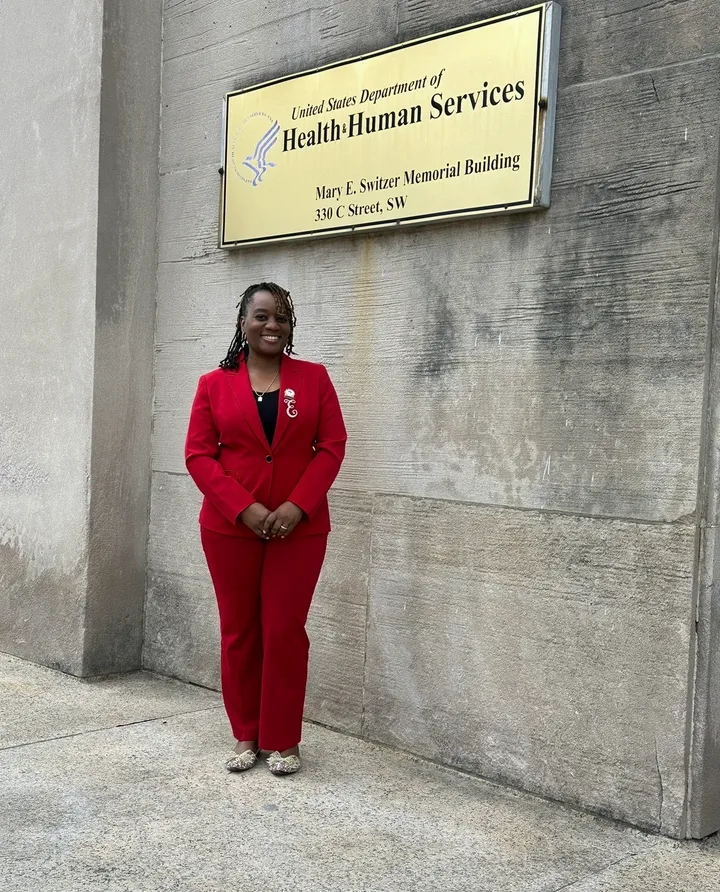
Photo Courtesy Of Eboni Delaney
When the body is constantly exposed to high levels of stress, it produces cortisol, the stress hormone. When those levels remain high over time, especially in children, they can affect brain development, emotional regulation, memory and stress management. I am now aware that many of the effects I have experienced are due to prolonged exposure to high levels of stress, producing exorbitant amounts of cortisol in my body.
Over the years, people have offered different suggestions for how I should deal with the effects of what I’ve experienced. Some told me to go to therapy, which I have done, in different ways, at different points in my life. Others told me to pray about it. I tried that too, but it left me sitting with questions I still do not have answers for. And then some said I should just get over it.
That expectation comes up often, but it does not reflect how trauma works. For many survivors of domestic violence, being told to move on happens long before the body has had a chance to process what it has lived through. It sounds simple, but it is not.
My body learned early that the world was not always safe. That kind of response does not disappear with time, positive thinking or good intentions. It stays, showing up in ways that are not always visible, and it takes far more than being told to move on for that to change, but I am trying.

Photo Courtesy Of Eboni Delaney
What I, and all survivors of any age, really need is the freedom to not get over it, because some people cannot. Learning to live with the reality of a thing and “getting over it” are not the same. I have learned to live with the aftereffects of growing up in a home with domestic violence, and, of course, I hope to “get over it,” but the mind is complicated.
There is always the possibility that these experiences have altered something in me that may never be the same again. This doesn’t mean I don’t daily strive for healing; it just means I choose no longer to wait for it. I choose to live today and make the most of my life, even in an “unhealed” state.
For the surviving children of these recent headlines, and the children who are currently living with domestic violence every day, my hope for them is that they will find peace wherever they can, that they will know it is OK to not to be OK, and that those around them will shower them with love and support in whatever way they need.
Eboni Delaney is a Public Voices Fellow of the OpEd Project in partnership with the National Black Child Development Institute.
Do you have a compelling personal story you’d like to see published on HuffPost? Find out what we’re looking for here and send us a pitch at pitch@huffpost.com.
Help and support:
If you, or someone you know, is in immediate danger, call 999 and ask for the police. If you are not in immediate danger, you can contact:
- The Freephone 24 hour National Domestic Abuse Helpline, run by Refuge: 0808 2000 247
- In Scotland, contact Scotland’s 24 hour Domestic Abuse and Forced Marriage Helpline: 0800 027 1234
- In Northern Ireland, contact the 24 hour Domestic & Sexual Violence Helpline: 0808 802 1414
- In Wales, contact the 24 hour Life Fear Free Helpline on 0808 80 10 800.
- National LGBT+ Domestic Abuse Helpline: 0800 999 5428
- Men’s Advice Line: 0808 801 0327
- Respect helpline (for anyone worried about their own behaviour): 0808 802 4040

The untimely deaths of actors Chadwick Boseman and James Van Der Beek, who both died of colorectal cancer in their 40s, have brought more awareness to the disease, which is impacting younger people at higher rates each year.
Colorectal cancer, which is the group name for colon and rectal cancer, is the leading cause of cancer deaths in adults under 50, and new research has found that rectal cancer deaths specifically are rising in adults in this age group — namely, millennials. According to NBC’s reporting, rectal cancer will be the top cause of cancer deaths in people under 50 by 2035 if the trend continues.
While rectal cancer is similar to colon cancer, the difference lies in where the cancer is located. “The rectum is considered a part of the colon … it is the end of the colon before the anus,” explained Dr. Jatin Roper, a gastroenterologist with Duke Health and associate professor of medicine at Duke University School of Medicine in North Carolina. “Because the tissue is biologically fairly similar, rectal cancer is often categorised with colon cancer under the name of ‘colorectal cancer.’”
“Rectal cancers are tumours that start in the rectum. They’re similar to colon tumours in many ways,” said Dr. Michael Foote, a gastrointestinal medical oncologist at Memorial Sloan Kettering Cancer Center in New York.
HuffPost spoke with doctors who pointed out the biggest warning signs of rectal cancer, along with guidance on what you can do to reduce your risk.
The most common signs of rectal cancer include bleeding and abdominal pain.
The most common symptom of rectal cancer is rectal bleeding. This red flag is particularly “much more common” in younger people with rectal cancer, Foote said. This could be blood in the stool or even maroon-coloured stools, according to Roper.
The blood can range in colour from bright red to dark red and can happen when you poop, or at random times throughout the day. The blood may appear in the poop itself or on the toilet paper when you wipe. This can cause some folks to confuse the bleeding for hemorrhoids or even menstruation.
Abdominal pain is also commonly reported. Additional symptoms include changes in bowel habits, constipation, thinner stool, fatigue and weight loss, Roper said. Anemia is also a sign of rectal cancer, he said.
Since rectal cancer happens at the end of the colon, it’s more likely that patients will experience thinner stools or blood in the stool, according to Roper.
“I think the key message is that any change in your gastrointestinal tract should not be ignored, and so any change in your GI function should be investigated by a doctor, and the most concerning signs that should prompt an investigation include any sign of blood in the stool,” Roper said.
In some people, though, rectal cancer has no symptoms, Roper said, which makes regular colorectal screenings even more crucial.

Rectal cancer rates are currently rising in younger adults in their 30s and 40s.
Recent research published by the American Cancer Society shows that while colorectal cancer rates are declining in people 65 and older, rates are increasing in younger adults.
“We know that young people getting cancer, most of it’s on either the left side of the colon or especially in the rectum,” Foote said.
“The rate of rectal cancer is rising more quickly than the rate of colon cancer. We don’t know why,” Roper said. Historically, colon and rectal cancer were considered diseases of older individuals, according to Roper, but “it is now recognised that rates of colon and rectal cancer are rising dramatically in younger people. Such that it is unfortunately becoming common to diagnose cancers in individuals under the age of 50.”
Foote stressed that colon and rectal cancer are still overall rare in younger adults. However, cases are increasing more steeply in younger generations, Roper explained. The rate of rectal cancer in people born in 2001 (Gen Z) is higher than for millennials born in 1991, which is, in turn, higher than for the oldest millennials, born in 1981.
“Even in a recent report at a conference that looked at rates of colorectal cancer in teenagers ― very young individuals ― while the absolute numbers are quite low, the rate of rise is just remarkable,” Roper said.
Research shows that the rates of colorectal cancer in adults under 50 has increased by 63% since 1988, according to Foote. Eight out of 100,000 adults under 50 had colorectal cancer in 1988, and now that number is 13 out of 100,000.
While the overall numbers seem low, the increase is concerning “because it raises the possibility that there’s something in our environment or in our diet that we haven’t pinpointed that is increasing this risk in people that are younger, and until we identify what that is, it’ll be very hard to address it,” Roper said.
While research is ongoing, there are a few things experts think could be behind the increase in rectal cancer rates.
Obesity is a risk factor for colorectal cancer in both younger adults and older adults, both experts told HuffPost. “But, most of the people that have young onset colorectal cancer are not obese,” Foote said. Diabetes is also a risk factor, Foote added, but most younger people with colorectal cancer are also not diabetic.
“The rise in colorectal cancer in younger people started sometime between probably 1950 and 1990 … and [rates have] been increasing at a greater rate since,” Foote said.
It’s thought that something changed in our environment during that time; experts don’t believe the rate increase is simply because people are being screened more.
“It’s associated with a Western diet … high animal fat, high carbohydrates, relatively lower vegetables, red and processed meat, and … refined grains and processed sugars,” Foote said.
According to Foote, from 1950 to 1990, our food landscape changed. Fast food popped up across the country, preservatives became more plentiful and even plastic food containers ― which contain microplastics ― became commonplace.
“Other possible causes can include changes in the gut microbiome, or the bacteria that live in our intestinal tract,” Roper suggested. “That microbiome can be changing due to changes in our dietary habits in the last few decades or change in exercise habits. It’s a little bit unclear.”
There are steps you can take to lower your rectal cancer risk.
While there is no one way to totally erase your risk of developing rectal cancer, there are actions you can do to reduce your risk. First, it’s important to get your routine colonoscopy or a stool-based test, which both screen for colon cancer and rectal cancer.
For people at average risk, these start at age 45. “If the 45th birthday is coming up, plan one year in advance to get scheduled for one of these tests with the doctor,” Roper suggested.
For folks who can’t make time for a colonoscopy or don’t have someone to pick them up after the procedure, stool-based tests such as Cologuard and faecal immunochemical tests (FIT) are good options.
“And a positive FIT test or a positive Cologuard test means that you should get a colonoscopy to follow up to investigate that positive test,” Roper explained.
Those with a first-degree family history of colon or rectal cancer (a parent or sibling who had it) may be eligible to get a screening test before 45.
Beyond screenings, Roper recommended following a Mediterranean diet, which is low in animal fats, especially red meat, and high in soluble fibres such as many types of beans, veggies, fruits, seeds and whole grains.
“Try to avoid sugar-sweetened beverages,” Foote suggested. It’s also a good idea to limit your alcohol consumption.
“People are trying to avoid plastic containers more — I think that’s not such a bad idea,” Foot said, who added the caveat that data linking microplastics to colorectal cancer is not as clear.
“If you do have obesity or diabetes, think about trying medications or trying a lifestyle change to reduce your risk there as well,” Foote said. “And then talk to your doctor, get established with a primary care doctor early. A lot of young people don’t have access to primary care. They don’t prioritise it.”
Having a doctor you regularly check in with and who knows your personal history is an important way to manage your health. Don’t ignore symptoms of rectal cancer symptoms, either.
“I think this is a change in how the medical community looks at these symptoms over the last …10 to 20 years, because the incidence of rectal and colon cancers [is] rising so dramatically in younger people,” Roper said, before adding that the symptoms mentioned above deserve investigation but aren’t always signs of rectal cancer.
“If you’re having symptoms, don’t just sit on them,” Foote said. And if your doctor doesn’t take your symptoms seriously, don’t be afraid to escalate the problem.
Politics
Secondary Breast Cancer Symptoms: Why My Persistent Arm Pain Was Misdiagnosed For 12 Months
You know your body better than anyone – but what happens when no one listens? Welcome to Ms Diagnosed: a HuffPost UK series uncovering the reality of medical gaslighting. With new stats showing that 8 in 10 of women have felt unheard by medical professionals, we’re sharing the stories of seven whose lives were nearly lost to the gap between their symptoms and a system that refused to listen. As the UK introduces Jess’s Rule – a new mandate for GPs to ‘rethink’ after a third visit – we’re exploring why the medical system is still failing women and how we can start to fix it.
The pain was absolutely unbearable.
By January 2024, the pain that had started in my forearm had spread to my neck; and it was agony.
On the way to pick my daughter up from school, I’d be in tears because it was so excruciating. As I approached the school gates, I’d think, ‘Just power through!’.
I’d been contacting my GP surgery for a year; but, while tendonitis and a nerve conduction test were floated, the real cause of my symptoms wasn’t picked up. And it really should have been; because I had a history of cancer.
Eventually, in February 2024, I was diagnosed with incurable secondary breast cancer, which had spread to my lungs, liver, lymph nodes and bones; among other areas.
And I can’t help wondering whether the cancer would have spread so much if it had been picked up earlier.
I was diagnosed with primary breast cancer in 2016; and it’s worth saying that my treatment, from my first appointment with my GP onwards, was fantastic. I had a lumpectomy, followed by three weeks of radiotherapy. Subsequent test results showed my chance of recurrence was low, so my oncologist said I didn’t have to have chemotherapy.
Fast forward to January 2022, and I started getting a deep, dull ache in my left forearm.
It was strange. I did go to the gym, but I hadn’t injured myself. At this point, I didn’t want to go to the doctor; it felt too embarrassing to go and say, ‘I’ve got armache’.
Now, of course, I’d advise anyone with these symptoms to go to the GP; no matter how trivial or embarrassing it may feel. But back then, I just didn’t know.
I remember saying to a friend, ‘What if it’s the cancer again?’ but they said, ‘No, it won’t be,’ – because, of course, no one knows ongoing, unexplained pain can be a symptom of secondary cancer. So I dismissed the thought.
But it got to the point where, if the pain came on when I was having a conversation, I couldn’t concentrate on what was being said; so I decided to go to my GP in January 2023. I specifically remember her saying to me, “It’s so weird that you haven’t done anything to cause it!” – but she just gave me some exercises for tendonitis.
I’m frustrated by the fact that she thought it was strange and yet didn’t look into it more; but I’m far more disappointed in the GP I saw next.
I tried the exercises, and I tried taking painkillers, too – but, obviously, none of that did anything.
Around a month or so later, the pain started spreading to my neck and shoulders. It got to a point where I couldn’t lift my left arm past my shoulder. I tried to hang from the bar in the gym in the hope it would stretch it out – I knew I was strong enough; but I physically couldn’t do it.
Now, I know there were so many tumours that they were causing an obstruction.
I was always in pain. My husband booked me a massage, and I thought, “Good, I’ll have that, and then I’ll feel all loose and relaxed”. But, of course, I didn’t; because the pain had nothing to do with the muscles.
I went back to the GP surgery in September 2023, and saw a different GP. I told him all about the unexplained neck and arm ache, and said the area above my collarbone was really tender.
He examined me – but throughout the appointment, his manner made me feel as though my symptoms weren’t worthy of his time.
He then suggested I should have a nerve conduction test, which he referred me for.
He’d warned me there’d be a wait for that test, so I started Googling, hoping to find ways to manage the pain in the meantime – and I read about how there are lymph nodes just above the collarbone, which was where I was getting the pain.
As soon as I saw that, alarm bells started ringing and I felt really scared. The pain was on the same side as my breast cancer; and I knew breast cancer and lymph nodes are often connected.
I used the NHS messaging service to contact that same GP, saying I’d realised the area I’d mentioned as being tender was where my lymph nodes were; and I mentioned having had breast cancer before. I was worried, and I wanted to let him know what I’d learned.
He replied saying he hadn’t found any lymphadenopathy (swelling of lymph nodes).
But roughly three weeks later, I noticed a pea-sized lump in the lymph node area. I wasn’t as worried as I should have been, because I’d been reassured by the GP that he hadn’t noticed anything of concern.
The pain was also getting increasingly unbearable, though, so I contacted the GP again – through the messaging service, because I didn’t want to waste their time with more appointments – and said the pain was constant. He replied saying I could make an appointment to explore pain relief options.
“He’s still thinking it’s not anything to worry about,” I thought, feeling reassured.
By January 2024, I couldn’t live with the pain any longer; so, even though I finally had a date for the nerve conduction test, I went back to the GP. This time, he found lumps in my lymph nodes; and he acted surprised, saying, “How long have you had these?!”.
“That’s the area I told you was really tender,” I said.
He referred me to the hospital; and from that point on, my care was wonderful. I had an ultrasound and a biopsy, and I felt fine during the tests, but whilst I waited with my husband to see the consultant and I was alone with my thoughts, I started to realise: “It’s the cancer, isn’t it?” I broke down in tears.
When I saw the consultant, she confirmed my fears. “I’m really sorry,” she said. “It does look like the cancer’s come back.”
The appointment where I received my official diagnosis was six days later, on my husband’s 40th birthday. ‘It is cancer, and the care is going to be palliative,’ said the consultant – and I couldn’t stop crying.
“I don’t mind what you do,” I insisted. “Cut off my arm; do whatever you have to do; but I can’t die. I can’t leave my husband or daughter.”
“I’m sorry,” she replied. “If it turns out there is any option for surgery we’ll do it, but because of where the cancer is, I don’t think it will be a possibility.”
At that time, I thought I’d only have months to live. My husband and I were both distraught and utterly overwhelmed.
Now I know that, thanks to incredible advances in cancer treatment, my prognosis is much more favourable.
But I can’t help wondering what could have been. I know you can’t cure secondary cancer; but if it had been picked up sooner, would it be so widespread now?
I’m constantly aching and have been unable to return to work. Without a pension or life insurance, this has had a huge impact on my family.
The hardest thing is, I’ll never know what effect being diagnosed so late has had on my prognosis.
I know GPs have an incredibly difficult job, but the symptoms I went in with are common symptoms of metastatic breast cancer. I want every GP to know the symptoms of secondary cancer; and I want primary breast cancer patients to be told, “Hopefully, it never comes back; but here are the symptoms to look out for”.
Because I just didn’t know.
Charli has been greatly helped and supported by Breast Cancer Now; in particular, by their ‘Younger Women Together’ events, which are opportunities for women aged 18-45 who are struggling with cancer to come together, share their experiences and support each other. Find out more here.

The last thing that most of us want to deal with is an angry person in our face. But chances are, sooner or later, it’s going to happen.
So what do we do? And, maybe more importantly, what shouldn’t we do?
Those are some of the questions that Raj Punjabi and Noah Michelson, the co-hosts of HuffPost’s “Am I Doing It Wrong?” podcast, recently posed to Ryan Martin, better know as the Anger Professor, to find out how to “do anger better.”
“You had a great tweet,” Michelson said during the conversation. “You said something like, ‘Never in the history of “calm downs’ has ‘calm down’ calmed down someone.’ So I’m guessing ‘calm down’ is not the thing you want to say.”
“I think ‘relax’ is even worse,” Punjabi added.
“No, ‘relax’ has never relaxed anyone,” agreed Martin, a psychology professor and an associate dean for the College of Arts, Humanities and Social Sciences at the University of Wisconsin-Green Bay.
“This is a case where … people are elevated and they’re not necessarily thinking as rationally, and they’re a little defensive. You’re not going to make as much progress with those sort of direct statements that you want to make,” he added. “Telling people to do things like ‘just breathe’ aren’t going to have much of an impact.”
Instead, modelling those actions yourself is going to be more effective.
“One of the things I think is funny is that often when people tell someone to ‘calm down,’ they yell it or they say it in a very loud, stern voice,” said Martin, the author of How To Deal With Angry People and Why We Get Mad: How To Use Your Anger for Positive Change.
“But if you actually back up a little bit and you start speaking softer than normal, you start to communicate in a little more gentle tone, people will sort of inherently match that. This also is rooted in our evolutionary history, that we tend to match the people around us in tone.”
This can help take the edge off the situation without using those triggering phrases, which tend to make us even more irritated.
“It’s, frankly, manipulative. … You’re actually decreasing that elevation,” Martin said. “So speaking in that more gentle voice, staying calm yourself, finding ways to ultimately, if they’re venting, [offer] some minimal encouragers to let them get through that.”
Once there’s less intensity, you’re more likely to have an opportunity to respond.
“I don’t think you want to agree with someone if you don’t agree with them,” said Martin. “But if you can frame a response that seems validating, to let them know ‘you’re obviously really upset about this, let’s talk through some solutions together’ — ways that you can validate their feelings without necessarily validating the cause of their feelings.”
We also discussed the three questions that you should ask yourself before you get angry, what you should do before you send an angry email, and much more.
For more from Ryan Martin, visit his website and Instagram.
Need some help with something you’ve been doing wrong? Email us at AmIDoingItWrong@HuffPost.com, and we might investigate the topic in an upcoming episode.

When you check into your hotel stay, you are expecting to start your vacation ― but it could also be where you start spreading germs and diseases.
That’s because hotels are full of high-touch surface areas that many people will regularly touch with a number of different unclean hands.
The problem is that you cannot trust your fellow travellers to practice good hand hygiene. “People just simply aren’t washing their hands properly in the first place, and then they’re washing them even less properly when they’re on vacation,” said microbiologist Jason Tetro aka “The Germ Guy,” citing faecal bacteria and Staphylococcus bacteria as two easily spreadable germs to watch out for.
“If you come into contact with any bacteria or virus, you pretty much have about a four-hour risk of getting exposed to it, if you happen to touch your face or put your fingers in your mouth,” Tetro explained.
And out of all the high-touch surfaces in a hotel, germ experts warn that elevator buttons for the first floor can be the biggest overlooked culprit.

Jackyenjoyphotography via Getty Images
“Everybody touches the first floor [elevator button] to get out,” said Chuck Gerba, a microbiologist at the University of Arizona. “I have to knuckle elevator buttons these days, because we’ve sampled enough of them.”
When Mary Spitzer was a researcher at the Mel and Enid Zuckerman College of Public Health at the University of Arizona, she led a study where she evaluated viral spread and infection risks in a hotel lobby and found that first-floor elevator buttons were the most frequently touched fomite, or object that helps transmit infectious diseases.
As part of this, she sat in a lobby and noted what surfaces were being touched by what people and in what order. “Pretty consistently, it’d be hotel button first, obviously, because they’re coming down into the lobby,” Spitzer said.
People don’t typically touch an elevator button for long, but even a quick press has spread potential, because viruses can stay alive for hours or days. Tetro said that flu and COVID viruses could live on elevator button surfaces for four to eight hours, for example.
Once someone coughs and sneezes onto an elevator button, just you pressing that button “for that very short period of time is enough for you to pick up enough virus from that residue that’s been there,” Tetro said.
Beyond hotel elevators, Tetro warned that other high-touch surface areas in hotels like doorknobs, remote controls, light switches, alarm clocks, telephones, and ice buckets in particular can be full of germs “because they probably never get washed or disinfected.”
The good news is that one simple solution for hotels is to clean high-touch surface areas more purposefully. In Spitzer’s study, targeted cleaning on high-touch surface areas like refrigerator handles and credit card readers led to a significant reduction in viral load.
And you can always take matters into your own hands ― pun intended ― by practicing good health hygiene.
When in doubt, wash your hands or immediately use hand sanitiser when you are using a communal hotel space. “Touching things is sort of unavoidable” in hotels, Spitzer said. After you touch that elevator button, “be mindful of where you’re then putting your hands,” Spitzer suggested. “Are you touching your face? Are you touching your kid’s face? Are you eating things?”
This way, your vacation doesn’t end sooner than it has to because you got yourself sick.
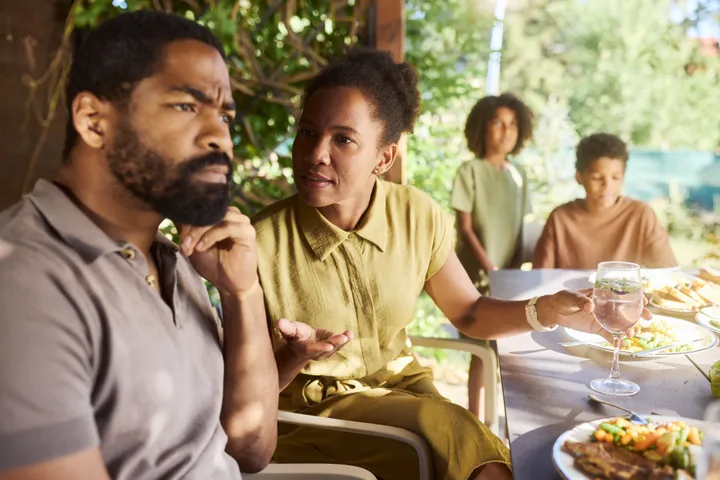
Have you ever checked the family group text, days after you shared something important/impressive/timely/hilarious/heartfelt, only to realise everyone’s response was… crickets?
If this is a constant in your communications, you may be dealing with a “low-effort family” – a type of often-invisible family dysfunction.
Low-effort families can fly under the radar because there are no yelling matches, explosive fights or even obvious conflict. From the outside, things might look great – even calmer than the average family.
But if, beneath the surface, there’s one person doing 95% of the emotional heavy lifting for a family of four (or an extended family of 15), something is definitely amiss.
Here’s what the experts say about this family dynamic – and how to cope in healthy ways (that aren’t just continuing to blow up the group chat).
What is a low-effort family?
“A ‘low-effort family’ is defined not by conflict, but by avoidance,” psychiatrist Maryellen Eller told HuffPost. “Healthy relationships require mutual investment, respect, and accountability.”
She noted that we ideally learn all of these skills in childhood as we’re observing adults communicate openly, set boundaries and make up after conflict. But kids from low-effort families, she said, “may miss out on learning these critical skills because hard conversations and the rupture-repair process is avoided.”
Conflict is a normal part of being in a family, and those who don’t learn the skills to deal with disagreement may well end up avoiding most contact.
Maybe they’re unresponsive in general; maybe they simply bow out when the conversation starts to feel less-than-light. But when one or two people end up carrying the weight of maintaining the entire family relationship, the members who make less of an effort are still getting bids for connection without providing any in return.

skynesher via Getty Images
“Typically, there is a generational reason why families function this way,” Ayla Fleming, a licensed clinical social worker and family therapist who specialises in setting boundaries in difficult family situations, told HuffPost. “It can be related to insecurity, depression, lack of trust, discomfort with emotional expression, toxicity (for example, if certain members are narcissistic), or just plain anxiety.”
Whatever the root cause, the outcome ends up the same: These family members are unwilling or incapable of putting in the emotional energy required to sustain a connection.
Margaret Sigel is a licensed marriage and family therapist who specialises in developmental trauma/C-PTSD and family-of-origin dynamics. She told HuffPost that the “low effort” family is usually born from a family system where everyone subconsciously agreed to the unequal distribution of effort a long time ago.
“One person often becomes the relational infrastructure: the one who remembers birthdays, initiates plans, checks in, and follows through,” Sigel said. “It’s not so much that the rest of the family opted out of caring; it’s more that they never had to practice, because someone else was already doing it.”
But if everyone opted into this system long ago, when did it truly begin? Usually, Sigel explains, the person carrying 95% of the emotional labor learned as a child that connection required maintenance.
“Love wasn’t something you could trust to just exist. It had to be earned,” she said. “This relational template got installed early, often in a home where a parent was emotionally unavailable or overwhelmed, and the child stepped in to hold things together.”
In this way, the frustration you may be feeling as the only responsive family member on the group text is really just the tip of the iceberg. “Underneath,” Sigel explains, “it is often a much older and more vulnerable fear: If I stop doing this, will anyone come looking for me?”

Alex Potemkin via Getty Images
Signs you’re dealing with a low-effort family — or something else.
Fleming explains that you can usually tell if you’re dealing with a low-effort family by the overall pattern of time, energy and reciprocity in the relationships. “It often looks like one person doing 80–90% of the emotional labor in multiple areas: reaching out, making plans, initiating conversations, repairing conflict, and trying to hold the relationship together,” she said.
Because we often experience a cultural pressure to tolerate family dynamics no matter what – along with fear-based messaging that you’ll “regret” distancing yourself – Fleming advises not relying on friends or other family members to assess whether your family is low-effort.
Instead, “a Family Systems therapist can be especially helpful here,” she advises. “Family Systems therapists are typically more careful about this and understand how easily people can get triangulated into family dysfunction.”
It’s not so much that the rest of the family opted out of caring; it’s more that they never had to practice, because someone else was already doing it.
– Margaret Sigel, licensed marriage and family therapist
All of this said, don’t jump to conclusions about your family, either. “It’s important to distinguish normal differences in communication style from pathology,” Eller cautioned. “Not everyone needs or wants the same level of connection. However, when you notice a pattern of avoidance has become the default — especially around important or uncomfortable conversations – it may be a signal of a deeper relational pattern.”
What you can do to take care of yourself.
Just “do less!” right? Easier said than done. The most common advice to the overfunctioning family member (hello, fellow eldest daughters) is usually something like, “just stop doing so much,” Sigel said.
But while that’s legit enough advice, “it treats a nervous system pattern like it’s a conscious decision,” she said.
In reality, the person who has been overfunctioning has learned at such a deep level that relationships survive only through their own effort.
“Stepping back often activates real fear, not just discomfort,” Sigel added. In order to break the cycle, you’ll likely have to work through real grief when you stop initiating and discover just how little comes back to you in return.
The most important thing when navigating low-effort family dynamics is focusing on what you can control (i.e., not other people). “There is nothing you can do to force others to change, but you can always choose how you show up,” Eller said.

Vladimir Vladimirov via Getty Images
Here are five steps Sigel, Eller, and Fleming recommend to start caring for you and stop spinning your wheels trying to drum up a family connection from unwilling participants.
-
Self-regulate.
Eller advised learning skills to effectively handle your own emotions and how you show up in difficult moments — whether that’s breathing exercises, grounding techniques or brief relaxation strategies.
“Find what works for you,” Eller said, “and practice those skills often.” Taking good care of yourself, she said, will shape not only how you navigate difficult dynamics but the quality of relationships that you build moving forward.
-
Get clear on your values.
Fleming said to ask yourself a few questions to look inward and determine what truly matters to you in relationships. You might ask yourself:
- How do I want to show up in relationships that feel unequal?
- Do I want to try to match others’ level of effort? Will that be healthier for me? Could I stop initiating everything and see what happens? (They may change, or they may not — but at least I can stop feeling “stuck.”)
- Is it healthier for me to avoid investing deeply in relationships that feel one-sided? Will that help me feel less resentful, instead of trying to get others to do what they don’t want to do — or may be incapable of doing?
- Can I accept someone’s limitations while still having a relationship with them? What would that look like? Does it mean I have less contact with them — and that that’s OK?
-
Set — and hold — boundaries.
When you do engage with low-effort family members, “be clear on your goal and your boundaries,” Eller said. “Know what you need, what you’re willing to tolerate, and what will guide your next step if those boundaries aren’t respected.”
Sigel suggests starting with just one small boundary, such as not being the one to respond to the group text within minutes. “Let the discomfort teach you,” she urged.
Remember: Boundaries aren’t about controlling the other person; they’re about defining your own limits and deciding what you will do to protect your well-being.
That might look like:
- Limiting how often you initiate contact
- Stepping back from conversations that become one-sided
- Naming your needs clearly, even if they aren’t met
- Following through on consequences if your boundaries aren’t respected.
Take some space.
If you’re feeling overwhelmed, anxious, angry, depressed, or questioning your own reality, “it may be helpful to take some distance from the family,” Fleming said. “There may be larger forces at play that have nothing to do with you (like denial, anxiety or mental health struggles), and continuing to push against that can keep you stuck in the system and pull you away from your own growth.”
Allow for nuance.
This is a bit of a “do unto others” moment; if it feels like someone is icing you out, that doesn’t necessarily mean you have to treat them the same.
“A lack of connection doesn’t always mean bad people,” Eller said. “It may reflect a mismatch [in] emotional capacity or relationship style. This is one of the reasons why building support outside the nuclear family is valuable. You may be a wonderful child and have wonderful parents and you may still be emotionally mismatched.”
Fleming said folks with low-effort families often find themselves deciding between total estrangement vs. constant relationship maintenance. But “there is often a third option,” she said. “If we can use healthy distance, perhaps we can stop abandoning our needs long enough to have some peace.”
She reiterates that if you’re continuously trying to fix, explain or carry the relationship, you’re overfunctioning. “And over time, unbalanced relationships,” Fleming said, “can lead to burnout, resentment, and even physical and emotional symptoms.”
Perhaps the most difficult — and ultimately most freeing—reframe is accepting that not all relationships are meant to meet all your emotional needs. But acknowledging that mismatch doesn’t mean giving up; it means expanding your definition of support.
The good news? “Healthy relationships can be created, not just inherited,” Eller said.
Because healing often requires both acceptance and expansion: accepting what is, while also creating space for what you need. You can build relationships with chosen family. You can practice showing up with emotional vulnerability. You can model the kind of engagement you wish you’d received.
That doesn’t mean forcing your family to change. It means choosing new priorities and a different way of relating — one that includes accountability, communication and mutual effort. Because even if your family doesn’t meet you where you need them to, you can still meet yourself there. And you’d never act “low-effort” toward yourself, would you?

The line-up for the second season of The Celebrity Traitors has been revealed.
On Saturday morning, the 21 celebrities heading to TV’s most iconic castle were unveiled, ahead of filming getting underway.
However, there were a few surprises in the mix, too.
Joining them will be model Jerry Hall, TV presenter Maya Jama, former EastEnders star Ross Kemp and chart-topping musician James Blunt.
Which stars are on the line-up of The Celebrity Traitors season 2?
The full list of famous contestants is as follows:
- Amol Rajan
- Bella Ramsey
- James Acaster
- James Blunt
- Jerry Hall
- Joanne McNally
- Joe Lycett
- Julie Hesmondhalgh
- Kenny Oghenovo “King Kenny” Ojuederie
- Leigh-Anne Pinnock
- Maya Jama
- Michael Sheen
- Miranda hart
- Myha’a
- Professor Hannah Fry
- Richard E Grant
- Rob Beckett
- Romesh Ranganathan
- Ross Kemp
- Sebastian Croft
- Sharon Rooney
The Celebrity Traitors is expected to return to our screens for its second outing in October, with the fifth iteration of the regular show due to air in early 2027.
Earlier this year, it was confirmed that both The Traitors and its celebrity counterpart had been renewed by the BBC until at least 2030.
The CEO of production company Studio Lambert, Stephen Lambert, enthused at the time of the announcement: “The Traitors has become a genuine television phenomenon across the world, but especially in the UK, and we’re thrilled to continue the journey with the BBC.
“It’s hugely exciting that audiences will have many more years of strategy, suspense and shocking twists still to come.”
The first run of The Celebrity Traitors is in the running for three awards at the upcoming TV Baftas, including Best Reality Show, Best Entertainment Performance for its host Claudia Winkleman and the Memorable Moment prize for Alan Carr’s dramatic victory.

Nigel Farage’s last-minute decision not to go on the BBC’s Sunday with Laura Kuenssberg has caused a stir among his critics.
While introducing her panel, the presenter noted all the major parties had sent representatives into the network’s flagship Sunday show – aside from Reform UK.
“Nigel Farage – who, as we told you last week, was fixed to be here – but his team told us he changed his mind,” Kuenssberg said.
The programme aired four days before voters across the country head to the ballot box for local elections in England and devolved elections in Wales and Scotland.
Labour’s transport secretary Heidi Alexander, Green leader Zack Polanski and Tory leader Kemi Badenoch were all in attendance, as the parties are out on the campaign trail.
The programme was also promoting Farage’s appearance on the show only on Saturday.
Reform’s decision not to put up any party representative sparked significant speculation on social media.
Farage’s absence came days after the Guardian revealed the Reform leader was given £5 million by a crypto billionaire shortly before he chose to stand as an MP in June 2024, and won the Clacton seat in July.
Parliamentary rules state any benefit taken up to 12 months before getting into office must be registered, depending on whether it was for political or personal reasons.
The rules add: “If there is any doubt, the benefit should be registered.”
Reform told HuffPost UK Farage is “campaigning in Clacton this weekend instead” ahead of the local elections.
The party did not explain why a different Reform representative was not put up in his place.
Subscribe to Commons People, the podcast that makes politics easy. Every week, Kevin Schofield and Kate Nicholson unpack the week’s biggest stories to keep you informed. Join us for straightforward analysis of what’s going on at Westminster.

The post Why we need more drunk MPs appeared first on spiked.

There is a peculiar kind of vanity that immunises its host against reality. Not the vain man who checks his reflection in shop windows, nor the narcissist who merely craves applause, but the man whose self-belief has calcified into something geological, impervious to rain, to wind, to the accumulated evidence of catastrophic misjudgement. Sir Keir Starmer is such a man.
Cast your mind back to Alec Guinness in The Man in the White Suit, that brilliant 1951 Ealing comedy in which a scientist invents an indestructible fabric and cannot understand why the world conspires to destroy him. He is not corrupt. He is not wicked. He simply cannot conceive that his invention might be the problem. Starmer inhabits precisely this world. Around him, the stains accumulate, the Lord Alli affair, the cronyism, the serial misjudgements of personnel, yet the suit, in his own estimation at least, remains spotless.
It was Jeremy Thorpe who skewered Harold Macmillan after the Night of the Long Knives in 1962, when a desperate prime minister sacked a third of his cabinet in a single afternoon to save his own skin. ‘Greater love hath no man than this’, Thorpe observed drily, ‘that he lay down his friends for his life’. The phrase has echoed across the decades as the definitive verdict on a certain kind of self-preserving leader. It fits Starmer with the precision of a bespoke suit – white, naturally, and apparently indestructible.
The past two weeks’ select committee evidence on the pressure Downing Street applied to civil servants to approve Peter Mandelson as US ambassador to is damning precisely because it is so legible. The prime minister told parliament one thing. The painstaking testimony tells us another. This is not a matter of interpretation or political spin – it is a question of whether the First Lord of the Treasury misled the House of Commons. In any previous era of British political life, such a charge would prompt at minimum a period of agonised contrition, possibly resignation. From Starmer, we receive serenity. He has told us on multiple occasions, with the earnest gravity of a man announcing a mathematical proof, that he is the only person qualified to lead Britain through its current difficulties. The evidence be damned.
This is not ordinary political resilience. Most politicians caught in a lie at least perform the theatre of accountability, the careful apology, the semi-withdrawal, the wounded dignity. Starmer skips the performance entirely. He speaks as if his own virtue is axiomatically beyond question. The trouble is that he appears to actually believe it.
Central to this delusion is his misreading of the July 2024 General Election. Starmer received one of the largest parliamentary majorities in modern British history and has apparently concluded that this was due to him, to his vision, his seriousness, his sheer qualification for office. This is a man mistaking the tide for his own swimming. That majority was not a monument built of his virtue. It was a thin-red veneer, a brittle carapace constructed from the rubble of Partygate, Truss, the slow decomposition of a Tory Party that had exhausted every ounce of public goodwill. The electorate did not choose Starmer – they evicted the Tories, and he happened to be standing in the hall. Any serious student of British political history, any of the senior figures who have served in governments that actually changed the national mood, could have told him this. Precedent, in fact, screams it.
Look at his appointments. The ministerial roster assembled with such confidence has proved a monument to misjudgement. The senior civil servants who have departed, some eased out, some broken on the wheel of Downing Street’s briefing operation, represent not a clearing of deadwood but a slaughter of institutional memory and independent voice. Macmillan at least understood he was gambling. Starmer does not appear to understand that he has made choices at all.
And so we ask the question that the opinion polls are already answering with brutal efficiency: is there a Labour praetorian guard capable of intervention? Some palace revolt of the sober and the serious that might rescue the party, and the country, from a premiership unravelling in slow motion? Walk the corridors of Westminster and you find not the suppressed fury of a parliamentary party coiling for action, but something more dispiriting: a grey, exhausted resignation, the shoulders-down quietism of people who have concluded that nothing they say will matter and that the risks of speaking outweigh any conceivable reward. MPs mutter privately. They do not act. They will not act. The culture that Starmer and his circle have cultivated in the parliamentary Labour Party is not one of candour and courage – it is one of servility, self-preservation and risk-aversion elevated to institutional religion. The praetorians have been domesticated into docility. They know the white suit is threadbare. They lack the nerve to say so aloud.
The polls tell their own story. The New Statesman‘s forecasting, drawing on Britain Elects data, is not merely bad for Labour, it is a portent of historical disgrace. The projection suggests Labour could fall from first to fifth in next week’s local elections, retaining just 616 council seats, a loss of around 1,941. Reform is forecast to triumph with over 1,500 seats, the Greens could surge past 1,000, and Labour, polling around 19 per cent nationally, looks unlikely to hold even a third of the seats it is defending. These are not the numbers of a party that has temporarily lost the room. These are the numbers of a party being dismantled ward by ward, borough by borough, in its own heartlands.
Will any of this dent the vanity? Here, one must be honest and reach for a pinch of salt. Starmer will note that expectations are low, that the results are ‘baked in’, that they reflect a ‘difficult inheritance’ from the last government, that the work of change takes time. He will find in the wreckage some green shoot, some London borough held against the odds, and declare the strategy vindicated.
The comparison with Liz Truss is instructive and, to Starmer’s supporters, ought to be sobering. Truss failed catastrophically, and she deserved her fate. But she failed while attempting something – a fiscal gamble that the markets destroyed in 45 days. She had, whatever else one says about her, the courage of her convictions.
What has Starmer risked for Britain? What has he staked his reputation on, beyond the preservation of his own reputation? The answer, surveying the wreckage of his first year, is: himself. The project is Starmer. The white suit must be kept clean. And if friends must be laid down for his life, if civil servants must be cast aside, if parliament must be misled, if the country must endure a government that governs for its own continuance rather than for any discernible national purpose, well, the suit remains white in his mirror, and that, it seems, is sufficient.
Macmillan, for all his faults, eventually understood when the game was up. The question is not whether the polls will tell Starmer the same thing. They already have, repeatedly and at volume. The question is whether a man who built a mountain out of another party’s failure, and called it his own genius, is constitutionally capable of reading them.
The white suit does not show any stains. That is precisely the problem.
Gawain Towler is a commentator and an elected board member of Reform UK. This is an edited version of an article that originally appeared on his Substack.

Butterfly Network: Valuation Ahead Of Execution

‘Chronicle’ Meets ‘Back to the Future’ in This Time Travel Sci-Fi Thriller Now Streaming for Free

The Hidden Reality For Domestic Violence Survivors Like Me

Manchester United reach agreement with Casemiro over contract clause amid transfer speculation

US brings back mandatory military draft registration

Steven Gerrard disagrees with Gary Neville over ‘shock’ Chelsea and Arsenal claim | Football
![Sick Luke - MONEY MACHINE (feat. Lazza & Tony Effe) [Official Visual]](https://wordupnews.com/wp-content/uploads/2026/02/1770843044_maxresdefault-80x80.jpg)

![J MONEY - NA NHA NOME [VIDEO OFICIAL]](https://wordupnews.com/wp-content/uploads/2026/05/1777799968_maxresdefault-80x80.jpg)
-

 Tech6 days ago
Register Renaming | Hackaday
-

 Politics6 days ago
Drax board avoid their own AGM, accused of greenwashing & environmental racism
-

 Tech6 days ago
Why Blue Badges Disappeared From Toyota Hybrids
-

 Tech6 days ago
Images of Samsung’s rumored smart glasses have leaked
-
 Sports7 days ago
IPL 2026: Ruturaj Gaikwad registers slowest fifty of the season, enters all-time unwanted list | Cricket News
-
 Tech2 days ago
Trump’s 25% EU auto tariff breaches Turnberry Agreement that also covers semiconductors and digital trade
-

 Fashion4 days ago
Kylie Jenner’s KHY Enters a New Era with ‘Born in LA’
-

 Business4 days ago
Most Commercial Energy Audits Miss the Real Losses
-

 Crypto World5 days ago
CFTC’s AI will review U.S. crypto registration applications, chairman tells CoinDesk
-

 Business6 days ago
(VIDEO) Charlize Theron Climbs Times Square Billboard to Promote New Netflix Thriller ‘Apex’
-

 Business4 days ago
Barclay Brothers Avoid Bankruptcy: HSBC Drops High Court Petitions After IVA Deal
-
 Sports2 days ago
Paul Scholes issues Marcus Rashford reality check as agreement emerges over Man United star
-
 Entertainment6 days ago
Alicia Keys Calls Out Music Industry ‘Boys Club’
-
 Business4 days ago
Tesla Officially Registers Elon Musk’s Stock: What Investors Need to Know
-

 Tech5 days ago
Get Ready for More Brain-Scanning Consumer Gadgets
-
 Tech7 days ago
Dyson Vacuums And The Curse Of Cooked Capacitors
-
 Crypto World5 days ago
Robinhood Phishing Scam Exploits Gmail Dot Feature to Bypass Security
-

 Crypto World7 days ago
Only 3% of traders drive Polymarket’s accuracy, not the crowd, study finds
-

 Entertainment6 days ago
Sister Wives: Janelle Posts New Scary Warning
-

 Crypto World5 days ago
Gmail Dot Trick Underpins Robinhood Phishing, Sending Real-Looking Emails
You must be logged in to post a comment Login