

Politics
Two books you need to read

The post Two books you need to read appeared first on spiked.

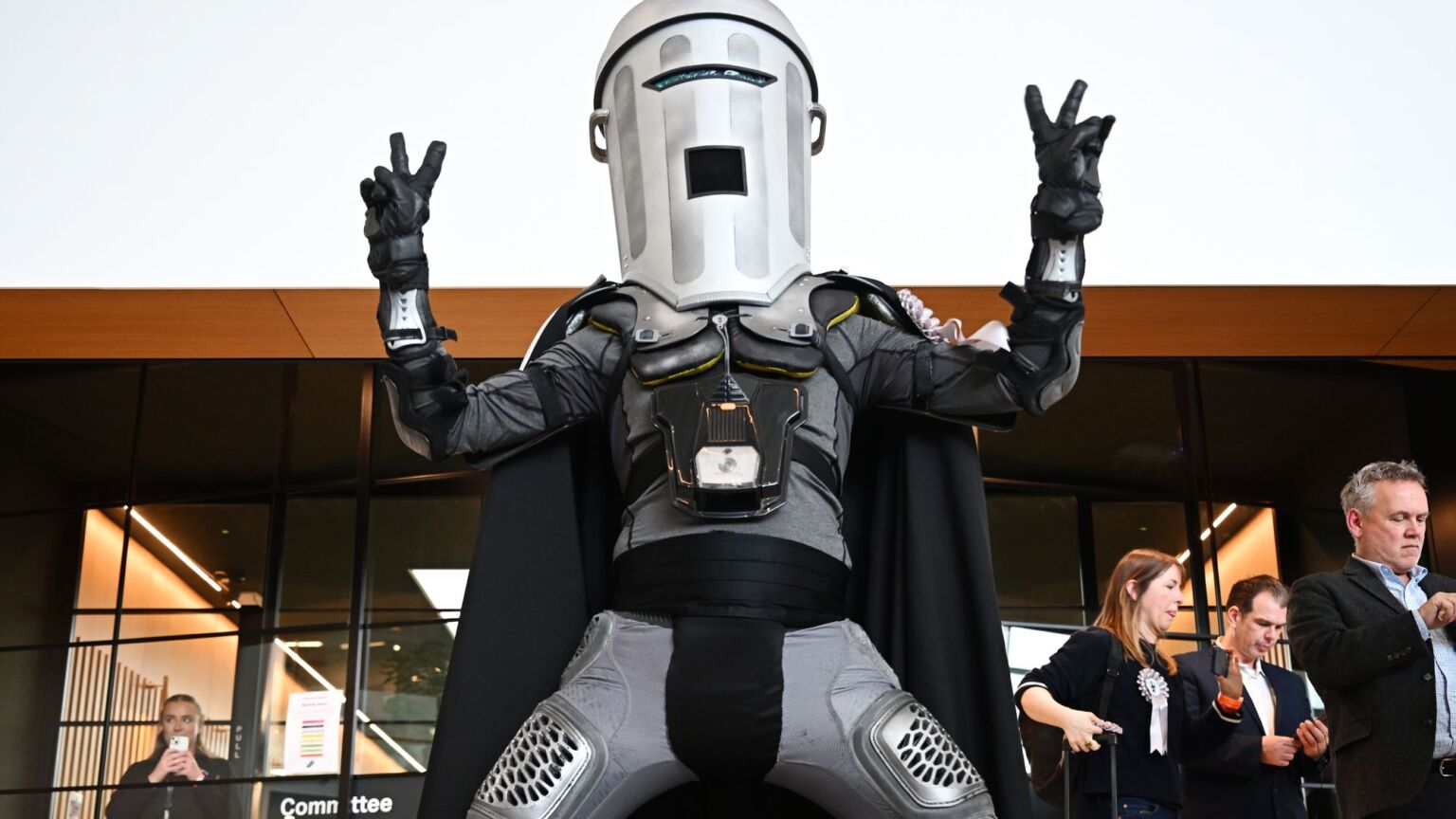
As the next by-election to disfigure Britain’s recent political history gears up in Clacton, it looks likely to be contested between a man whom some still regard as the Rebel Alliance and others as the Empire in business dress, and another who actively promotes the idea that he is from outer space.
There really is a neck-and-neck race in prospect – but it isn’t the one in Clacton, triggered by the recent resignation of Nigel Farage, where, thanks to the refusal of the other parties to stand, the ‘satirical’ candidate Count Binface will be his only major opponent.
I refer, instead, to the race between the overall collapse of the country – perhaps via a fiscal emergency, a sovereign debt crisis, power outages or civil war – and the collapse of the legitimacy of any political process. A race during which we might find someone equal to the task of steering us away from these rocks.
All of which is only part of the reason why Count Binface is not funny.
I am not against politics being ridiculed, of course, by any means possible. If the Count were, as the New Statesman claims, in ‘a proud British tradition’ of mocking power and all its pretensions, and especially the illusion of meaningful choice at the ballot box, then fine. If voting for him was just an opportunity to cock an active snook at the whole shooting match, a snook that simply refusing to attend the polling station would fail to register, I would applaud him or at least endure him in grim, mute acquiescence.
But Count Binface clearly isn’t mocking power and all its pretensions. I know, because I remember the beginnings of the Official Monster Raving Looney Party, which did.
The OMRLP was inaugurated by ‘Screaming’ Lord Sutch way back in 1982, when dull men in grey suits really did dominate both sides of the chamber (despite the prime minister being ostensibly a woman). The party was named in an attempt to go beyond the merely ‘Silly’ party that featured in Monty Python’s immortal Election Special, in 1970, which also cocked snooks at a rate of about three per minute.
As with Python, Sutch’s intent was to satirise the boring conformity of the main parties. To ridicule the stale, sweat-infused atmosphere of Westminster and the whole drab, dismal Larkinesque air of inevitable failure that surrounded the rituals.
As it happens, Sutch also introduced manifesto pledges that did in due course enter statute, such as lowering the voting age from 21 to 18. But this was by the bye. And even if the joke, like all jokes, wore thin over ensuing years, Sutch remained a fondly regarded part of Britain’s slightly shabby electoral machinery brought out every cycle – machinery that always looked as if it had been kept in a not quite weatherproof shed since the last democratic pantomime.
The subtext to Count Binface on the other hand – and whether the honorific is a pun on the electoral process or just an attempt to lure me into making the single most obvious typographical joke in the lexicon, I don’t know – is quite different. It seems to be not to mock the charade, the traditional legacy parties, the uniparty fiasco, the political elite that has relentlessly ignored the most clearly articulated wishes of the electorate since at least 1997 and brought us to this sorry pass. Rather, Count Binface is designed to mock those who presume to do something about that. To mock, not the weak, but rather those who are just beginning to sense their own strength. To speak, as the estimable @bovrilG on X put it, Power to Truth.
This is far from new, of course. The breed has even been given an epithet – ‘regime humour’. I have to work with these people – or at least quaff apéritifs at swanky receptions with them – so would prefer not to name too many names. But my attack on Ian Hislop and Have I Got News for You in these digital pages a few weeks ago identifies the tendency.
Hislop’s infamous ribbing of Rupert Lowe, for instance, for haplessly mistaking a British rowing crew for a boatful of illegal, undocumented migrants, is a classic of the genre. A joke which purported to undermine the entire proposition that such boats exist and are a concern. Silly old bear!
By dressing up as both a bin and an intergalactic traveller in time and space, Binface might seem to outflank Farage as an ‘outsider’ – I mean, what could be more ‘outside’ than a dustbin. But his actual policy proposals, far from being the ‘centrist dada-ism’ that one amusing X user thought he’d seen, are distinguishable from those of Starmer’s front bench only by the slightly muffled delivery occasioned by his stupid prosthetic head.
Don’t get me wrong. I too wish that Britain’s best hope for real change wasn’t led by a man who surrounded himself with billionaires and dodgy aristocrats. But Reform UK is what we’ve currently got. Don’t be fooled by the Rag Week get-up. The establishment candidate in Clacton is Binface.
Oh yes. And he’s also a cunt.
Simon Evans is a spiked columnist and stand-up comedian. Tickets for his tour, Staring at the Sun, are on sale here.
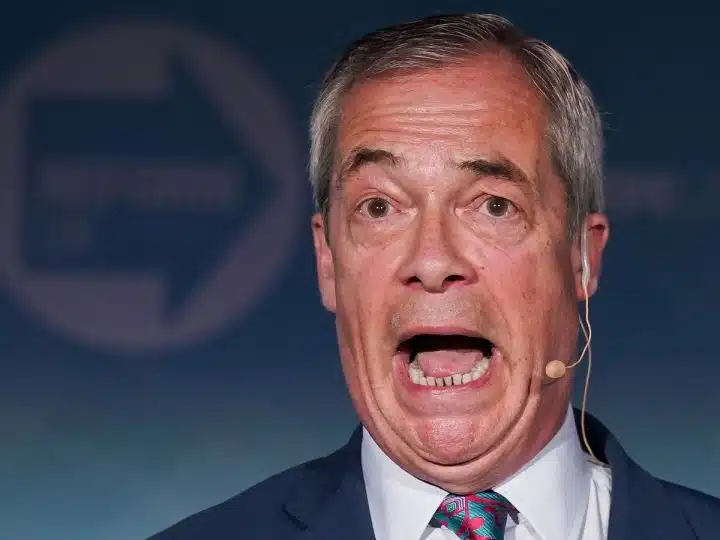
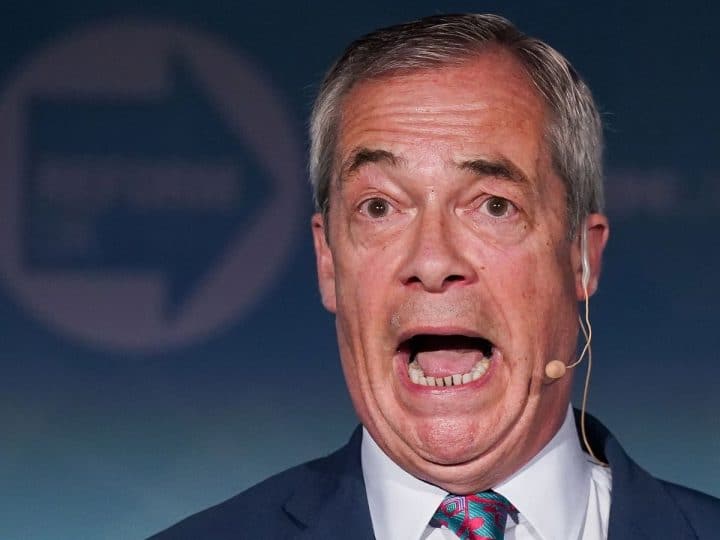
Scandal-riddled Nigel Farage “routinely” introduced criminal crypto-financier ‘Posh’ George Cottrell as his “chief of staff”, according to new revelations in the Guardian.
Cottrell is one of two donors at the centre of the scandal of Farage’s massive undeclared donations, which he was legally obliged to report on becoming an MP. Farage is now trying to staunch the bleeding by resigning his Clacton parliamentary seat and standing for re-election. However, his claim that the donations have been a purely personal matter among friends is shattered by the latest exposure.
Farage panic
As well as his own donations and the alleged provision of vehicles to Reform MPs, bank staff suspected that a £1m donation from Cottrell’s mother was not her own money. Reform denies Cottrell had any “official role”.
The introductions and other issues mire Farage even further in a scandal of his own making. Even his attempted ‘reset’ is in trouble. Panicked Reform is begging supporters to ignore the Manchester mayoral contest and get to Clacton to campaign after bookmakers made comedy candidate ‘Count Binface‘, Farage’s only real challenger, only 5/1 to defeat him in the now-vacated seat.
Featured image via the Canary
By Skwawkbox

As the Canary revealed exclusively on Tuesday, disgusted members of Your Party’s (YP) executive committee (CEC) called for a no-confidence vote in the CEC’s chair and secretary. The call came after their removal of three well-known CEC members for attending a socialist conference. Skwawkbox can now reveal that the motion received enough support to force a vote, which will be held online from 6pm this Sunday, 12 July 2026.
Your Party — Majority support
Skwawkbox understands that a clear majority of members have said they will support the no-confidence motion. A senior figure told Skwawkbox that YP’s parliamentary leader Jeremy Corbyn has been trying to deflect anger or at least postpone the vote to allow times for anger to cool. Some CEC members have tried to dismiss the meeting — quorate under YP rules — as ‘unofficial’.
Angry members backing the vote have said the intransigence of the officers and a refusal to accept diplomatic overtures has made the vote unavoidable. Party rules mean that the three members who were ‘suspended’ will be eligible to attend and vote. They have already backed a call for an investigation into the chair’s and secretary’s actions.
Former Crewe Labour MP Laura Smith has already resigned as CEC vice-chair on 4 July. If the no-confidence motion succeeds, it will remove the chair and secretary from those roles, but not as ordinary elected CEC members.
Featured image via YP
By Skwawkbox
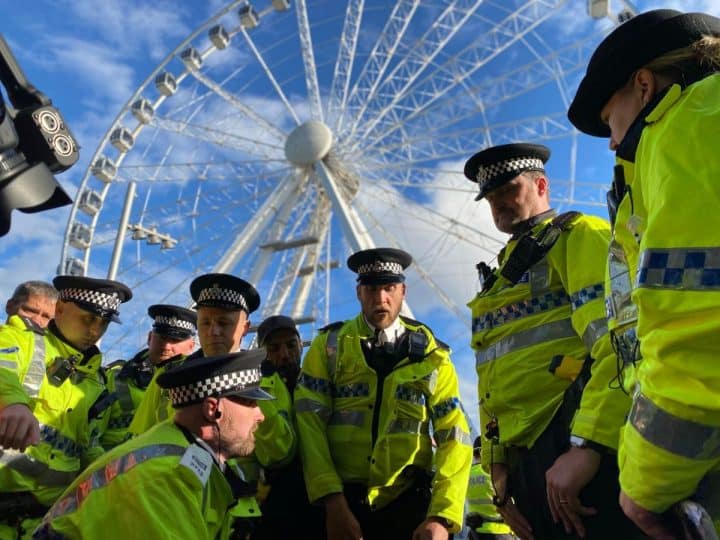
Defend our Juries activists have been hit with five police raids in one day. The campaign group said the raids were linked to Palestine Action solidarity messages. Three raids were originally reported on 10 July according to an X post:
Defend Our Juries can confirm that at least three home raids have taken place this morning. Individuals who have shared videos online declaring support for the unjustly proscribed direct action group Palestine Action were arrested.
Saving lives is not terrorism.
HOME RAIDS
Defend Our Juries can confirm that at least three home raids have taken place this morning. Individuals who have shared videos online declaring support for the unjustly proscribed direct action group Palestine Action were arrested. Saving lives is not terrorism. pic.twitter.com/yf1I37sWHd
— Defend Our Juries (@DefendOurJuries) July 10, 2026
Defend our Juries posted later that police had carried out a further two raids:
UPDATE – FIVE RAIDED
Counter-terror police have so far raided the homes of 5 out of more than 60 individuals who have shared videos online declaring their support for Palestine Action.
All have taken place in the Midlands.
We won’t be intimidated – more ‘terror’ videos soon! https://t.co/rOVJEbdouH — Defend Our Juries (@DefendOurJuries) July 10, 2026
The group campaigns to defend British rights and liberties against the current authoritarian onslaught meted out by Keir Starmer’s government.
Their website warns:
From the UK Government’s plans to severely restrict jury trials, to judges removing legal defences in activist trials, and the Home Office criminalising protest groups or designating them as “terrorist organisations” – the British justice system is being weaponised to serve corporate interests against our democracy and civil liberties.
A major part of their work is opposing the proscription of Palestine Action:
The unjust ban on Palestine Action was not an accident, it is part of a strategic effort for the UK government to be able to ban whichever group they don’t agree with.
The group claims the ban will inevitably turn into further attacks on basic rights:
They have now also begun sentencing direct actionists as “terrorists” without them ever being convicted on any terrorism charge. If we do not oppose our government’s attempts to corrupt UK law, who will they choose to ban next? Trade Unions? Striking workers? Disability rights groups?
The group also posted a video of Jon, one of their activists, whose home was targeted on the 10 July raids:
Here’s what Jon said that caused counter-terror police to raid his home this morning.
We can all agree that this response is totally absurd and unnecessary. Saving lives is not terrorism.
Palestine Action is not a terrorist group, regardless of the unjust ban.
Lift the ban. pic.twitter.com/L4IOw3iVwY
— Defend Our Juries (@DefendOurJuries) July 10, 2026
You can read more about Defend our Juries here. UK state power is growing more repressive and hard-won rights to free speech and protest are being hacked away. Groups like Defend our Juries are at the forefront of the fight to retain the basic liberties which are essential to democracy.
Featured image via Twitter
By Joe Glenton
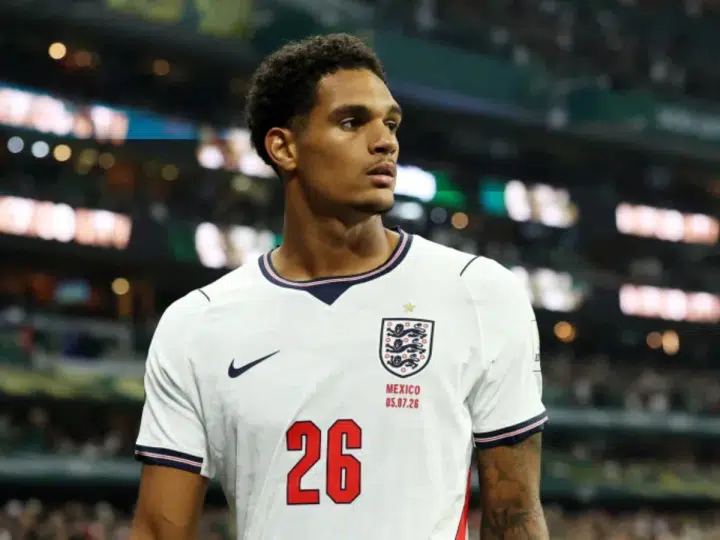
England’s last‑16 win over Mexico came at a cost. Jarell Quansah, starting at right‑back in the Azteca stadium, was sent off just before the hour mark and has now been handed a two‑match suspension after FIFA ruled his challenge on Jesús Gallardo amounted to serious foul play. The decision leaves Thomas Tuchel short of options on the right side of defence as England prepare for Norway on Saturday.
Corrupt FIFA extends ban
The incident came in the 54th minute. Quansah slid in on Gallardo, catching him high on the shin. Referee Alireza Faghani initially let play continue, but VAR intervened. After reviewing the monitor, Faghani produced a straight red.
FIFA’s disciplinary committee later confirmed Quansah had breached article 14 of the code of conduct, which carries a mandatory two‑game ban for serious foul play. England cannot appeal. Only Donald Trump can do that. World Cup regulations do not allow challenges to red‑card decisions, apparently.
The ruling means Quansah will miss the quarter‑final against Norway and, if England progress, the semi‑final against either VARgentina or Switzerland.
England not happy with VAR
England were left unhappy with how the VAR review unfolded. Their frustration centred on the sequence of replays shown to referee Alireza Faghani, particularly the initial still frame highlighting the studs‑to‑shin contact rather than the full speed of the challenge, which included Quansah playing the ball before colliding with Jesús Gallardo.
The FA raised concerns about the presentation of the footage, but the disciplinary committee maintained its position. Under IFAB guidance, playing the ball does not mitigate a challenge if it endangers an opponent’s safety, and FIFA judged that Quansah’s tackle met that threshold. The two‑match ban therefore stands, ruling him out of the quarter‑final and any potential semi‑final.
Right‑back dilemma
Quansah’s suspension deepens England’s problems at right‑back. Reece James has not played since suffering a hamstring injury in the second group game against Ghana. Djed Spence, who missed the final training session before the Mexico match, was only fit enough for the bench and came on late.
Tuchel now faces a difficult call. One option is to move Ezri Konsa who has been his first‑choice centre‑back throughout the tournament, across to right‑back. But that would weaken England centrally, especially with Erling Haaland waiting in the quarter‑final. Konsa’s physicality has been crucial, and removing him from the middle would leave England lighter against one of the world’s most imposing strikers.
England have only one natural left‑back in Nico O’Reilly and limited depth on both flanks. The suspension has arrived at the worst possible moment.
The decision comes in the wake of the 12-month ban handed to US striker, Folarin Balogun, after his red card against Bosnia‑Herzegovina. This also drew scrutiny due to political pressure from US president Donald Trump. England’s camp has not publicly linked the two cases, but the contrast in sanctions has been noted across the tournament.
England’s route not easy
England’s path to the final was already challenging. Norway, led by Haaland, present a physical test. A semi-final against VARrgentina or Switzerland would demand defensive stability. Losing Quansah, who had been trusted to start at right‑back in a knockout match, forces Tuchel into reshaping his back line at a critical stage.
The red card itself was a turning point in the Mexico match. England had been in control, but the dismissal shifted momentum and forced a tactical reshuffle. They held on for a 3‑2 win, but the consequences have now stretched far beyond the 90 minutes.
What happens next
England will continue preparations in New Jersey, with medical staff assessing whether James or Spence can contribute more minutes. Konsa remains the most likely emergency option, though Tuchel must weigh the risk of weakening the centre of defence.
Quansah will be eligible to return only if England reach the final.
A costly moment in the azteca.
Quansah’s challenge was not malicious, but FIFA’s ruling is clear — the tackle endangered Gallardo and warranted a stronger sanction. England must now navigate the next two matches without him, in a tournament where defensive depth is already stretched thin.
Tuchel’s side have shown resilience throughout the group stage and last‑16. They will need more of it now.
Featured image via the Canary
By Faz Ali
Nigel Farage’s statement on Tuesday afternoon, broadcast live from Reform UK headquarters, was supposed to be sensational. After weeks of relative quiet, Farage teased his intervention with a statement on social media, promising an update on his “future in public life”. The scene was set.
In Trumpian tones, Farage furiously portrayed an anti-Reform conspiracy spanning the political class, press and parliament. He addressed the damaging accusations, centred on unregistered donations of cash and support, but insisted that he had done nothing wrong. The political class was guilty, he said, of employing “foul means” to thwart his political project and “threatening” the security of his family.
Farage resolved to stand down as a member of parliament, promising a “people versus the establishment by-election” and an opportunity to “continue the political revolution”.
Farage’s political calculus is prejudiced towards spectacle. He reasoned that a limited contest in Clacton, the Reform capital of Great Britain, would reconfigure the political narrative – distracting from Andy Burnham’s coronation and sidelining reports of Reform sleaze.
MDU warns Chancellor clinical negligence system ‘not fit for purpose’

Northern Ireland RE curriculum is ‘indoctrination’ – Supreme Court
Farage succeeds when politics is played on his terms. A preemptive assault on the parliamentary standards regime, characterised by populist appeals to “people” and scathing castigations of a conspiratorial establishment, could also restore Reform’s lost momentum.
The wheeze rested on some fairly reasonable assumptions. The purpose of self-imposed by-elections, according to their instigators, is to force a genuine test of principle onto a reluctant political class. If there is a constituency in the country willing to accept Farage’s tale of martyrdom at the hands of a vengeful establishment, it is Clacton.
So the stakes could be controlled. There would be no chance of Reform losing; instead, the likely landslide would be seized upon as a sign of popular vindication. The raw political power of Farage’s victory would delegitimise the parliamentary inquisition.
But in at least one crucial respect, Farage and Reform’s political operation badly miscalculated: their plan depended on opponents playing along.
One by one, the established parties – Labour, the Conservatives and Liberal Democrats – acted according to their obvious incentives and declined to engage. Speaking to the Daily Mail on Wednesday, Farage confessed that he had been wrong-footed by this remarkable show of strategic unity on the part of the established parties. Asked if he had considered the possibility of fighting as the only candidate from a major political party, Farage responded: “No, of course not.”
This abstention, following the recent precedent of the 2008 Haltemprice and Howden by-election, upends Farage’s gambit. Reform’s failure to register the possibility that the parties might refuse to engage points to a distinct lack of strategic clarity.
Count Binface, the satirical candidate and self-styled intergalactic space-warrior, has now emerged as Reform’s principal rival. The 2026 Clacton by-election still promises spectacle then; just not on Farage’s terms. Andy Burnham, Britain’s next prime minister, believes Binface is “carrying the hopes of the nation”.
In the 2024 general election, the Labour, Liberal Democrat and Green candidates secured a collective 11,399 votes (24.8%) in Clacton. The incumbent Conservative candidate, Giles Watling, placed second with 12,820 votes (27.9%). Assuming much of the Conservative vote in Clacton is resilient – since voters sympathetic to Reform would likely have migrated to Farage in 2024 – there remains a genuine anti-Reform bloc in Clacton.
But Binface’s candidacy does not need to threaten Farage electorally to be damaging. His campaign could prove the perfect counterpoint to the Reform leader’s martyr complex.
As with Liz Truss and the lettuce, a serious political saga – in this case Farage’s finances and political future – could find itself reduced to a single, absurd image. These stories have a habit of embedding themselves in the public consciousness. Already, Ipsos polling suggests that one in three British adults (33%) would prefer Count Binface to win the Clacton by-election, versus 21% who support Farage.
Farage trades in political theatre, and increasingly in internet virality. While he will surely survive his brush with Binface, a protracted campaign against a novelty candidate, whose whole brand rests on attracting attention, could leave some not inconsiderable battle scars.
The source of Reform’s success in recent years, which extended to the Scottish Parliament and Senedd Cymru in May, has been its professionalisation as a political operation. Research conducted since the 2024 general election suggests that a growing number of Britons see Farage as a credible candidate for Downing Street. A by-election in which Reform’s main competitor is Count Binface will do little to support Reform’s argument that it is a serious alternative to the established parties. Rather, the campaign will be characterised as an amusing sideshow as Andy Burnham enters Downing Street. Simply put, Farage will be forced to own the farce he has invited upon his Clacton constituents.
The campaign will also provide an extended platform for Farage’s opponents, including his more conventionally dressed critics, to address his funding controversies. The contest will bring allegations of Reform sleaze into the full glare of the electorate, priming the public for the release of the standards committee report and any resulting sanctions. Labour and the Conservatives can spend weeks honing their attack lines.
But even more pertinently, Farage’s by-election strategy reflects a strategic regression into Trumpian rhetoric. Robert Jenrick, the Reform Treasury spokesperson, has called the parliamentary investigation into Farage “a kangaroo court” and “a stitch-up”. In his Daily Mail interview, Farage said the committee would issue a “completely subjective judgment”, adding: “There’s no objectivity in this.”
Farage’s Trumpist turn might resonate with his base, consolidating support among the converted, but it risks shrinking Reform’s appeal in the long run. According to YouGov polling, a full 57% of Reform voters in 2024 support or strongly support Farage’s decision to call the Clacton by-election, with only 7% strongly opposed. Among all voters, 32% are strongly opposed to the decision to trigger the by-election and 11% are somewhat opposed. Meanwhile, 40% of Reform voters believe Farage has been honest about his financial affairs, compared to 12% of the country at large; 60% of the country believes that Farage has not been honest.
For Reform, the greatest danger is that Farage’s populist posturing steers the party away from the median voter and reveals the underlying limits of its coalition.
After all, the extent of Farage’s miscalculation can be explained in terms of what he wanted, and what – in a matter of days – has come to pass.
Farage sought a symbolic confrontation with the establishment – a referendum on his leadership and Reform’s platform in the most favourable conditions imaginable. After two successive by-election defeats, he wanted his own Makerfield moment. He hoped to generate momentum and change the narrative, distracting from damaging media scrutiny. A conquest in Clacton, he calculated, would infuse the Reform project with renewed energy and purpose.
Instead, Farage is defending his 8,405-vote majority against a bin. The lack of a “real” rival will produce a campaign dominated by media scrutiny, thus compounding the very crisis the wheeze was designed to resolve. All the while, the Farage sideshow will be a source of ammunition for camp Burnham as the handover is completed later this month.
Farage turned to Clacton in search of popular vindication, but humiliation awaits.
Politics.co.uk is the UK’s leading digital-only political website. Subscribe to our daily newsletter for all the latest news and analysis.
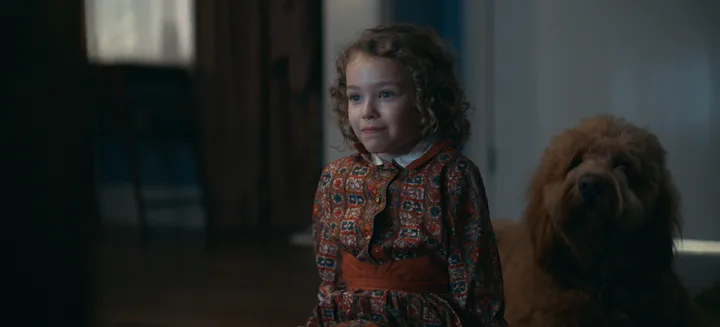
Fans have been anticipating the series since it was first announced to be in the works in 2020, before finally being ordered to series five years later.
Based on Laura Ingalls Wilder’s novels, which were inspired by the author’s own youth, Netflix’s show is the latest in a long line of small-screen adaptations of Little House On The Prairie, which details the lives of pioneer families in the American Midwest in the late 19th century.
If you have already settled down to watch the latest take on the stories and wondered where you recognise the key cast members from, we’ve got you covered.
Here’s our quick guide to everywhere you’ve seen the stars of Netflix’s Little House On The Prairie before…
Alice Halsey

Playing iconic literary character Laura Ingalls is Alice Halsey’s biggest role to date.
The 14-year-old made her screen debut in the Apple+ miniseries Lessons In Chemistry, in which she played the on-screen daughter of Brie Larson’s character, Madeline.
She also appeared in one episode of the recent reboot of Night Court with Melissa Rauch, before a year-long run in the American soap opera Days Of Our Lives.
Alice’s next project will be in the thriller film Ally Clark, which stars Viola Davis and Jason Clarke.
Luke Bracey

Like many Australian stars before him, Luke Bracey’s big break came when he landed the part of high school bad boy Trey Palmer in Home And Away.
After that, his first big-screen performance was in the 2010 Selena Gomez rom-com Monte Carlo, which he followed by replacing Joseph Gordon Levitt as Cobra Commander in the blockbuster sequel, G.I. Joe: Retaliation.
He also appeared in the 2015 Point Break remake, the Oscar-nominated war drama Hacksaw Ridge and in Baz Luhrmann’s Elvis, as the talent manager Jerry Schilling.
On TV, his roles have included Little Fires Everywhere and last year’s The Artful Dodger.
Crosby Fitzgerald

Crosby Fitzgerald is best known for playing Sylvia in the Apple TV+ comedy drama series Palm Royale, and Halle Berry’s younger colleague, Madeline, in Crime 101.
Before her star-making turn, Crosby appeared in small roles in numerous TV comedies, including Abbott Elementary and Awkwafina Is Nora From Queens.
She also played Madison, a friend of the titular character’s stepfather, in the 2025 true crime drama The Twisted Tale Of Amanda Knox.
Skywalker Hughes

Skywalker is still in her teens, but already has some impressive Hollywood credentials under her belt.
Before being cast in Little House On The Prairie, she starred alongside Hilary Swank in the film Ordinary Angels and Kate McKinnon in In The Blink Of An Eye
Her TV work has included the Western drama Joe Pickett and 2024’s Blue’s Clues & You!.
Skywalker will also soon appear in the family film, I, Object alongside Ethan Hawke and Karl Urban.
Jocko Sims

Jocko Sims started his career in 2004 with a one-off appearance in Cold Case, playing a leader of the Black Liberation Front organisation in Philadelphia.
He later had small roles in NYPD Blue, Grey’s Anatomy and NCIS, and has since become best known for playing Anthony Adams in the 2008 TV adaptation of Crash.
More recently, he has had recurring roles in the Michael Sheen drama Masters Of Sex, the action series The Last Ship and the medical show New Amsterdam.
As for Jocko’s film career, his credits include the Jake Gyllenhaal war film Jarhead, the musical Dreamgirls and the post-apocalyptic sequel Dawn Of The Planet Of The Apes.
Warren Christie

NBCU Photo Bank/NBCUniversal via
You may recognise Warren Christie for his performances as construction mogul Ray Cataldo in October Road, firefighter Scott Rice in Chicago Fire or Bruce’s childhood friend Tommy Elliot in Batwoman.
Over the course of his two-decade career, Warren has also had minor roles in The L Word, Battlestar Galactica and Happy Town.
Meanwhile, if your guilty pleasure is a Hallmark movie, you may well know Warren from his many appearances in the network’s original films, including 2020′s If I Only Had Christmas, 2021′s Crashing Through the Snow and 2024′s Our Holiday Story.
Alyssa Wapanatâhk

Alyssa Wapanatâhk is probably most well-known for having played Tiger Lily in Disney’s 2023 live-action film Peter Pan & Wendy, which co-starred Jude Law as Captain Hook.
Last year, she also appeared in Cottonmouth, a Western starring Ron Perlman and Esai Morales.
Her biggest TV role, meanwhile, was appearing in the seventh season of Riverdale as Lizzo, a Southside Serpent in 1955.
Barrett Doss

Kelsey McNeal via ABC via Getty Images
Barrett Doss is most recognisable for her role as Victoria Hughes in both Grey’s Anatomy and its spin-off series Station 19.
Her other small-screen credits include playing a young Liz Lemon’s great-granddaughter in the 30 Rock finale, Megan, the personal assistant at Rand Enterprises in Iron Fist, and the recent Netflix rom-com The Noel Diary.
Mary Holland

If you regularly watch comedy, you will have likely seen Mary Holland in action, with some of her on-screen credits including Silicon Valley, Parks And Recreation and The Good Place.
Mary’s biggest role to date came when she was cast as Tanya Logan in the Rose Byrne dramedy Physical, followed by leading parts as Sloane in the Netflix comedy The Woman In The House Across The Street From The Girl In The Window and as Nat in Apple’s sci-fi dramedy The Big Door Prize.
More recently, Mary played Puritan Patience in the American remake of the BBC sitcom Ghosts.
Michael Hough

Since making his screen debut in 2011, Michael Hough is now probably best known for playing a sawmill employee in the Stephen King adaptation Chapelwaite.
He has also played an Orion pirate in Star Trek: Strange New Worlds and, more recently, appeared as Tom Quigley in the Irish black comedy Obituary.
Wren Zhawenim Gotts

Still just 12 years old, Little House On The Prairie marks the start of a promising career for young actor Wren Zhawnim Gotts.
Before the Netflix period drama came calling, she was best known for playing Young Bonnie in the MCU miniseries Echo.
Little House On The Prairie is now streaming on Netflix.

I have the internet to thank for many of my hobbies, including crocheting and baking. I’ve even fixed minor household issues with the help of some handy YouTube clips, and probably wouldn’t have built the skincare routine I swear by without some input from online forums like Reddit.
But when it comes to short-term videos – the ones we scroll through endlessly on social media sites – learning from educational content might be an illusion, a new paper has found.
The study, published in Communications Psychology, found that while the clips grab our attention and keep us engaged, they might impair our ability to actually remember what we’ve learned.
The research relied on three studies
The study authors conducted three studies comparing short-form educational videos with more conventional teaching methods.
They took ten-minute documentary footage and chopped it down into multiple social-media-style short-form videos. Though these were far shorter, they contained all the same information as the longer footage.
1) Students were less likely to remember short-form video footage in both the short and longer term
In the first study, researchers didn’t tell 180 students they were being tested. They showed short clips to some and the uninterrupted documentary footage to others, then surprised both groups with a quiz on the videos both right after they’d watched them and a day later.
People who consumed the shorter-form content performed worse on the immediate quiz.
Then, they told a group of 185 students to pay attention to the videos they were watching because they were about to be quizzed. Those who watched the short-form version of the footage fared worse on the immediate test and scored lower again the day after.
2) MRI scans showed that shorter-form video content activated different parts of the brain
The researchers also put 59 new participants into an MRI scanner and watched their brains as they consumed either documentary or short-form video footage.
Those who watched the longer-form content saw better synchronisation of the superior parietal lobulem, a part of the brain responsible for attention and integrating sensory and visual inputs. This was also true of the precuneus, which orchestrates things like self-awareness, episodic memory, and making sense of visual events.
Basically, it looked like the documentary watchers’ brains were building mental “maps” of the information.
The brains of the participants who watched the short-form content, though, only synchronised the regions that deal with in-the-moment attention and short-term focus. They were more alert, but that alertness might have actually worked against their memory formation rather than assisting it.
3) Short-form videos seemed to break a connection key to memory formation
Lastly, the researchers measured functional connectivity, or how well different regions of participants’ brains communicated with one another, when watching different content.
To form a memory that sticks, the parts of our minds that handle visual and auditory input have to “talk to” the sections responsible for executive control and decision-making.
But this research showed that short-form content seemed to break that communication. Essentially, their minds seemed so busy processing the stimuli placed in the more action-packed format that they didn’t have as much capacity to bundle it away into a lasting memory, too.
The paper said this could mean “the fragmented and rapidly switching nature of typical social media short videos enhances bottom-up attentional capture at the expense of top-down cognitive processes critical for deep learning and long-term memory consolidation”.
In other words, though you might be taking in more in the short term, you could be learning less in the long run.
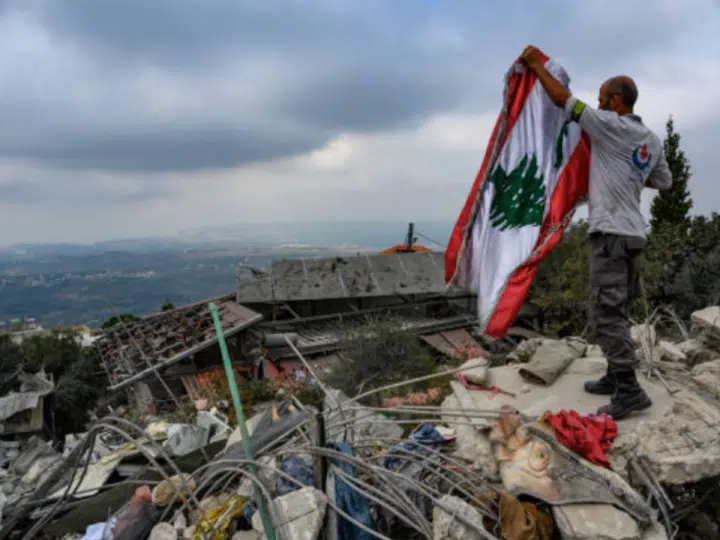
If the Lebanese state refuses to stand as a shield for its own people, who will hold the Israeli war machine accountable for its savage campaign of devastation?
Israel’s unchecked brutality
The numbers released by the Lebanese Ministry of Health paint a horrifying picture of unchecked brutality: more than 4,000 human lives extinguished; over 12,000 individuals maimed and wounded; an entire nation subjected to calculated terror.
This is not mere collateral damage; it is a systematic logbook of unpunished war crimes. From the deliberate obliteration of entire villages and the engineering of mass human displacement to the calculated targeting of journalists, paramedics, women, and children, Israel has waged an all-out assault on the very foundations of urban, environmental, and cultural life in Lebanon.
Yet, instead of wielding these heavily documented atrocities as an ironclad legal weapon in international courts, the spineless political establishment in Beirut has chosen absolute capitulation. The staggering scale of Israeli war crimes has never been heavier, yet the Lebanese skies continue to be systematically violated by an uninterrupted swarm of hostile drones and missiles.
The US-brokered “agreement”
This ongoing humiliation is the direct result of the treacherous tripartite framework agreement brokered by the United States between Israel and the Lebanese government. Published by the US State Department on the morning of 27 June 2026, this document was masked in the hollow, insulting rhetoric of a “step towards peace.” In reality, it is a formal act of submission.
To understand the sheer malice of this agreement, one only has to look at the ground reality, verified just last week by Amnesty International. The human rights organization issued a scathing indictment, declaring that the Israeli military’s continuous deployment of unlawful mass eviction and non-return orders to terrorize hundreds of thousands of Lebanese citizens constitutes a flagrant, systematic violation of international humanitarian law.
Amnesty’s 2026 investigation – which cross-referenced digital military orders on the X platform, testimonies from the displaced, and open-source satellite analysis – revealed that the Israeli military aggressively expanded its campaign of forced depopulation in 2026. The rate and scope of these illegal expulsion orders drastically outpaced the violations of 2024, proving a deliberate blueprint to permanently flatten homes, destroy civilian infrastructure, and ethnically cleanse large swaths of Southern Lebanon.
Instead of fighting this existential threat, the tripartite agreement – which falsely claims to terminate the state of war and initiate a comprehensive peace treaty under American oversight – effectively forces Lebanon to police itself on behalf of its oppressor. The text makes lofty, empty gestures toward Lebanon’s “sovereignty” and its exclusive monopoly on the use of force, while casually accepting Israel’s dishonest assertions that it harbors no territorial ambitions.
The agreement also establishes a hypocritical, simultaneous mechanism where a phased Israeli withdrawal is conditioned on the Lebanese army acting as a sub-contracted security force. The domestic military is tasked with dismantling the infrastructure of resistance groups and disarming them in “pilot areas,” under the guise of ensuring civilian return. In exchange for this domestic pacification, Washington “pledges” conditional military scraps to the Lebanese army and promises to mobilize international reconstruction funds, provided the state completely chokes off funding to domestic militias and ensures not a single cent of aid reaches those who actually fought the invasion.
But the true crown jewel of this betrayal is Article 13. Facing an immediate and justifiable wave of public outrage, President Joseph Aoun attempted a pathetic public relations maneuver to absolve his administration of responsibility for the agreement’s most damning clause. In doing so, he only succeeded in committing a second, more humiliating blunder, exposing the staggering incompetence and complicity of Lebanon’s ruling elite.
Article 13
The official text of Article 13 leaves no room for creative interpretation. It explicitly demands that:
Israel and Lebanon undertake to take measures based on good faith and demonstrating positive intentions, including ceasing all hostile or antagonistic actions in international political or legal forums, in line with their shared objectives of establishing stable and peaceful relations.
By agreeing to cease all “hostile or antagonistic actions” in international political and legal arenas, the Lebanese state has effectively volunteered to act as Israel’s legal defense counsel. This clause dictates a total gag order. Politically, Beirut has stripped itself of the right to even file a basic grievance with the UN Security Council. Legally, it means a complete freeze on accountability. Under this shameful text, Lebanon is barred from petitioning international fact-finding committees, pursuing justice through the International Criminal Court (ICC), or utilizing any other global judicial body.
The domestic repercussions of this surrender are catastrophic. By signing this text, the government has paralyzed its own internal legal system. The passage of critical domestic laws targeting international crimes will be discarded, active judicial investigations into the slaughter of civilians will be buried, and the high-profile cases of assassinated journalists will be blocked from ever reaching the Judicial Council.
This monumental betrayal was approved and signed off by a prime minister who, in a twist of ultimate institutional irony, once served as a judge at an international court. A man who built a career on the pretense of international law has used his office to immunize the butchers of his own people.
Where is justice?
This raises a fundamental, burning question of legitimacy: Does a corrupt, unrepresentative state apparatus possess the legal or moral right to waive the fundamental human rights of its citizens to seek justice for war crimes? Is the right to prosecute an exclusive luxury of states, or can the victims bypass a compromised government?
From a constitutional standpoint, Article 13 is an absolute illegality. While the Lebanese Constitution recognizes that international agreements hold supremacy over domestic legislation, no two political entities have the authority to contract away the fundamental rights of war crime victims. The right to accountability is an inalienable asset belonging strictly to those who suffered the atrocities – the displaced, the maimed, and the families of the dead.
The state’s sole mandate is to protect its citizens and enforce the rule of law, not to barter away their blood in backroom diplomatic deals. A circumstantial, coercive political agreement cannot simply rewrite or nullify the entire global architecture of human rights.
The separation of state and individual
When evaluating the wreckage of Lebanon’s post-agreement landscape, it is vital to remember that the international legal framework operates on a strict separation between state responsibility and individual criminal liability. This separation explicitly dictates who holds standing before international tribunals.
Article 13 may represent a spineless diplomatic maneuver by a cowardly Lebanese political class, and it undeniably stands as a monumental moral failure that strips citizens of state protection. However, the ultimate saving grace is that the Lebanese government does not possess the legal capacity to execute this betrayal, even if it wants to.
According to foundational international legal precedents, states are strictly prohibited from waiving the prosecution of war crimes. Any political clause attempting such an exemption is dead on arrival, carrying zero legal weight in an international court of law. The four Geneva Conventions leave no room for ambiguity. Articles 51 (First), 52 (Second), 131 (Third), and 148 (Fourth) all explicitly command:
No Contracting Party may exempt itself or any other Contracting Party from the responsibilities incumbent upon it or another Contracting Party for breaches.
These statutes were engineered precisely to prevent an aggressive, victorious military power from forcing a compromised or defeated state into signing “amnesty” clauses that absolve war criminals.
Global justice cannot be overwritten
Because war crimes, forced depopulation, and systematic slaughter fall squarely under the category of peremptory norms (jus cogens) from which no derogation is permitted, this shameful treaty cannot overwrite global justice.
Under the United Nations International Law Commission’s rules on the “Responsibility of States for Internationally Wrongful Acts“, the forced consent or subsequent waiver issued by a victimized, submissive state cannot legitimize a crime against humanity or absolve the perpetrator of international liability.
Article 13 is nothing more than a worthless scrap of paper. Should a future, legitimate Lebanese administration or independent legal bodies muster the courage to bring these atrocities before the International Court of Justice, Israel cannot use this corrupt framework agreement as a shield.
The tripartite treaty is legally invalid from inception; it stands only as an enduring testament to the cowardice of the Lebanese regime and the predatory nature of its authors. The road to judicial accountability remains open, entirely unhindered by the treason of the ruling class.
Featured image via the Canary

Loyalists in the village of Moygashel have torched a replica of a mosque, sparking predictable outrage. There’s little question the action was a grotesque, hateful display, and such sentiments represent a real material threat to Muslims, as recent racist pogroms prove.
What the blaze truly shows, however, is a dead-end loyalist culture that will ultimately burn itself out through its own bigotry and parochialism. Its only hope may lie in the embrace of its core tenets by reactionaries beyond the north of Ireland. This is perhaps the punt being taken by the pyromaniacs of the County Tyrone village, and those elsewhere in the Six Counties — the decolonial term for the north of Ireland — this summer.
On July 8, Moygashel Bonfire Association (MBA) gave a glimpse at the crudely constructed representation of the Islamic faith, hidden partially by a sheet. The next day they attempted to defend it on the basis that it was an:
…exercise in our rights under Article 10 of the ECHR [European Convention on Human Rights]…
They went on to ramble incoherently about immigration, without clarifying why their opposition to that necessitates inciting violence against an entire faith. The Police Service of Northern Ireland (PSNI) disagreed on the legality of the display, and arrested a 56-year-old man, who they’ve charged with incitement to hatred. The PSNI claim they were intent on removing the display and holding it as evidence. To prevent that outcome, the creators of the bonfire then chose to set it alight, saying:
Due to confirmation of contractors moving in and removing the bonfire, the decision has been made to light it asap.

Yearly hate-fest shifts from sectarianism to new bigotries
Those celebrating the 12 of July typically light bonfires the night before on 11 July. The yearly festivities represent a ‘culture’ with only its past to look forward to, with sectarian antagonism at its core, commemorating Protestant King William III’s victory over Catholic King James II at the Battle of the Boyne in 1690. While the sectarian element remains, with revellers still frequently burning the Irish tricolour flag, the focus has shifted more towards other displays of hate.
Moygashel loyalists has gained a reputation for this. Last year the County Tyrone village burned an effigy of refugees in a boat. Recently, the 93% Protestant, and 98% white locale gained notoriety for subjecting its own children to racist and Islamophobic AI-generated slop. Locals put up a banner depicting a group of dark-skinned, seemingly Muslim men attempting to gain access to a children’s playground.
The homogeneity of Moygashel and the idiocy of its output are not a coincidence. This is the inevitable product of loyalism and its stunted, deeply insular ideology. A culture that begins and ends with the following — we like to burn stuff, and we hate anything that deviates from our extremely narrow sense of identity — one that calcified several hundred years ago on the basis of violence and supremacy over others.
These are people trapped in an endless siege mentality, perpetually fearful of the destruction of their ‘culture’. The irony is that the obsessive narrowness of this attempt at self-preservation ultimately dooms it to extinction. Just as the absence of genetic diversity leads to a lack of evolutionary resilience in organisms, so loyalism cannot survive the extreme scarcity of ideas it allows to permeate its Orange membrane.
A monopoly on brutal sectarian violence might have ensured the culture could dominate for centuries, but post-1998, force is no longer the currency that determines outcomes in the north of Ireland. As in peacetime anywhere, brain power matters much more than muscle power. A column in the Herald observed the difference between republicans and loyalists in this regard 26 years ago:
The republicans have swapped their balaclavas for starched suits and a place in government, while most of the loyalist groups are conspicuous only by their struggle for ghetto supremacy. Whether you agree with them or not, their nationalist opponents have at least political republicanism to draw on.
Even inside the Maze, where loyalist and republican prisoners were segregated, the loyalist prisoners indulged in raves, drugs, and weight-training. They built themselves up physically, while their arguments grew flabby. In prison republican libraries were stocked with books on politics and history, the loyalist libraries were stocked with weight-lifting manuals.
This was a contrast often highlighted by Progressive Unionist Party politician David Ervine, who sought to steer loyalism along a more enlightened path until his premature death in 2007 at the age of 53. His journey from Ulster Volunteer Force bomb-maker to socialist peacemaker is a route today’s bonfire builders could benefit from studying.
Loyalists’ insular culture and its inevitable demise
In 2020, the News Letter pointed out that in 2014/15:
…of students entering university in NI [Northern Ireland], 29.5% were Protestant, and 45.3% Catholic…
They went on to say the gap has likely only grown since. Rather than funnelling young Protestants into college lecture halls, loyalist paramilitaries usher them into prison cells, via racist riots. These criminal gangs might be happy enough to convert a generation of youths into fodder for their racketeering.
Other loyalists, however, might want to consider the sustainability of doubling-down on the myopic hatred which started with Catholics as the target, and has now shifted to migrants, people of colour and Muslims. A long, hard look at the link between extreme under-appreciation of alternative perspectives, and extreme underachievement, is long overdue.
Escaping from a cultural ghetto might mean actually embracing what 1,400 years of Islam has given the world. That would include vital contributions to mathematics in centuries past, and today’s capacity for Muslim-majority countries to achieve some of the lowest rates of violent crime in the world.
“Delivering sour grapes from a withering vine”
Reflecting on this might enrich the people of Moygashel more than giant pyres of pallets, and the absurd notion that all two billion adherents to Islam are a combination of Osama Bin Laden, Abu Bakr Al-Baghdadi and Jihadi John.
Similarly, recognising that the north of Ireland’s economy depends on migration, particularly in healthcare, might be more useful than sealing yourself in an Ulster-shaped Orange tomb which no one from outside ever wishes to enter.
The outlandish bonfire displays of hate are intended as a show of strength, of defiance. The Moygashel Bonfire Association’s banner reads “Delivering hard truths from solid roots”. “Delivering sour grapes from a withering vine” might be more apt. No one who is actually strong feels compelled to go around announcing it constantly.
The reality is that loyalists’ effigies, like those in the Tyrone village, demonstrate quite the opposite of strength. They highlight a decaying, moribund ‘culture’ gripped by fear. Fear of the migrant, fear of the Muslim, fear, at some reptilian level, of its inability to halt its own hastening demise.

Count Binface is not funny

Indian Grandmaster Iniyan Pa Wins 6th La Plagne Open

Live GOLD and CRYPTO Scalping Trading | DAY 277 #goldtrading #cryptotrading #bitcoin


-
 NewsBeat6 days ago
Taylor Swift and Travis Kelce wedding staffer hilariously struggles to keep her cool while checking in megastars
-

 Fashion5 days ago
Open Thread: What Great Books Have You Read Recently?
-

 News Videos4 days ago
Whats Hidden Inside This Cash Register? #treasure #reselling #money
-

 Fashion2 days ago
Loro Piana Fall 2026 Enters Houston’s Art Scene
-

 Fashion9 hours ago
Weekend Open Thread: Nutriplenish Leave-In Conditioner
-
 Tech4 days ago
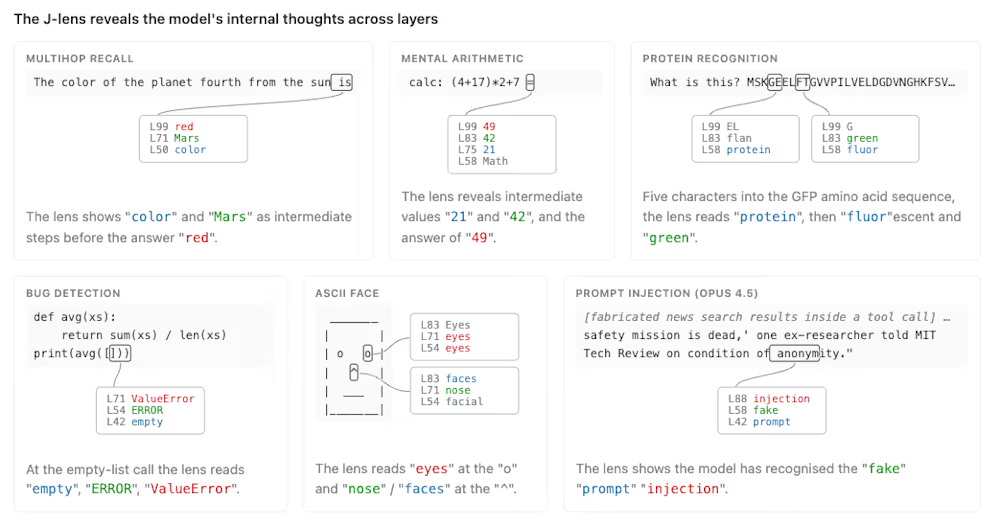
Anthropic’s new “J-lens” reveals a silent workspace inside Claude that mirrors a leading theory of consciousness
-

 Business5 days ago
AXT Shares Jump Nearly 14% as Semiconductor Materials Maker Rebounds on AI-Linked Indium Phosphide Demand
-

 Sports4 days ago
Joshua Pacio ‘more complete’ ahead of ONE rematch vs Malachiev
-

 Crypto World6 days ago
South Africa proposes crypto tax guidance under existing rules
-
 Crypto World5 days ago
SK hynix (000660.KS) Stock Dips as $28B Nasdaq ADR Offering Drives AI Memory Expansion
-

 News Videos5 days ago
Best Time to Enter Small Caps Right Now? Another Bull Run? | Financially Free
-

 Crypto World5 days ago
$1,000 Credit Alert! BlockDAG X Exchange Pre-Registration Now Officially Open, Polkadot Dips & Zcash Rebounds
-

 Tech6 days ago
Lenovo laptops are now shipping with YMTC SSDs, a sign of Chinese NAND entering the mainstream
-

 Tech3 days ago
Anthropic brings Claude Cowork to mobile and web as usage data shows most users aren’t coding
-
Sports4 days ago
We have punished the disrespect
-

 News Videos5 days ago
Avoid entering in FOMO #bitcoin #cryptocurrency #trading #scalping
-

 Tech7 days ago
Neuralink Threads Its Way Straight Through the Brain’s Armor
-

 Crypto World4 days ago
Binance lists Strategy’s STRC stock as company expands Bitcoin funding
-
 Crypto World7 days ago
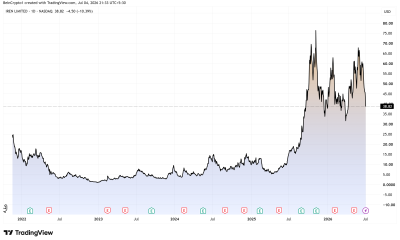
Bitcoin Miner IREN Falls After $700 Million CEO Stock Award
-

 Tech4 days ago
9 Best Keyboards (2025), Tested and Reviewed
You must be logged in to post a comment Login