
Politics
Union Berlin coach faces inevitable sexism


German coach Marie-Louise Eta quickly found herself embroiled in controversy just hours after being appointed head coach of Union Berlin, becoming the first woman to lead a team in Europe’s top five leagues. She was subjected to a barrage of sexist and abusive comments on social media.
The German club was quick to respond, issuing a firm statement on its official accounts, affirming that “the Union family stands behind its coach,” in a clear message rejecting any questioning of Etta’s competence based on her gender. The club emphasized that the criteria for employment within the team remain performance and technical ability, not background or gender.
Union Berlin head off ‘blatant sexism’
The criticism was particularly striking, with some users questioning the players’ ability to accept instructions from a female coach, while other comments went so far as to mock the idea of male coaches losing to her. The club described this as “blatant sexism,” emphasizing its complete rejection of such rhetoric.
Eta, who rose through the ranks at Union Berlin, possesses a wealth of experience, having previously managed the under-19 team and served as an assistant coach for the first team. This strengthens the management’s confidence in her ability to lead the team through this current phase.
The new coach’s first test will be against Wolfsburg in the Bundesliga, a match with implications far exceeding the three points. It presents Eta with a dual challenge: doing her job on the field and effectively silencing the criticisms circulating off the pitch.
Eta will take over temporarily until the end of the season, as Union Berlin strives to secure its Bundesliga status. The team currently occupies a mid-table position, relatively clear of the relegation zone. She will then transition to managing the women’s team, as per the pre-established plan.
The affair, which began with a historic appointment, has quickly transformed into a true test of European football’s capacity to embrace change, amidst persistent discrimination and institutional efforts to establish clear boundaries: competence first.
Featured image via the Canary

Politics
Politics Home | “We Can’t Be Going Backwards”: Tories Warn Party Against Local Elections Complacency
5 min read
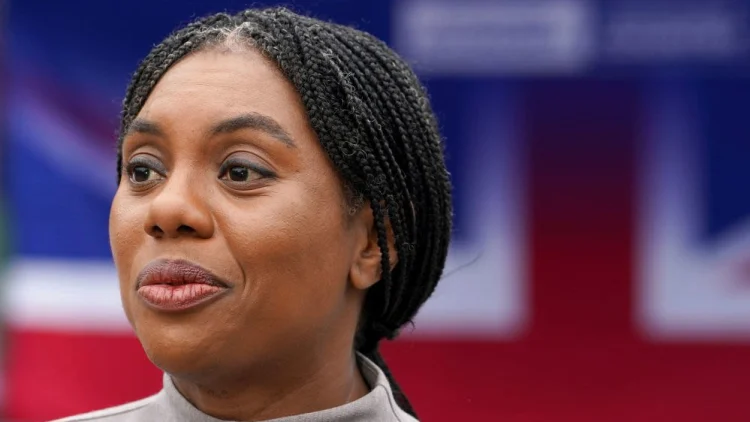
This week’s local elections will be painful for the two main parties. The scale of the Labour losses and the implications for Keir Starmer’s future mean the Conservatives will avoid being the main headline this weekend. However, there is concern among some Tories that their party is complacent about its own electoral situation.
“There is not a world in which these elections are not going to be tough in terms of numbers,” Conservative MP Jack Rankin told the most recent episode of PoliticsHome podcast The Rundown.
The MP for Windsor, widely seen as one of the party’s brightest talents, spoke frankly about what likely awaits the Tories when voters in England, Scotland and Wales go to the polls for a highly anticipated set of local elections on Thursday.
Two years on from their devastating general election defeat, the Conservatives are braced for more electoral discomfort later this week. Tory peer Lord Hayward recently predicted that the party would lose around 600 council seats on 7 May, losing votes to Nigel Farage’s Reform UK to its right and Ed Davey’s Liberal Democrats to its left. The party also faces dramatic collapses in support in Scotland and Wales.
In Westminster, Conservative MPs are generally in a more upbeat mood about the state of their party than they were a year or so ago, when there were questions over how long Kemi Badenoch would last as Leader Of The Opposition. There is now a belief that Badenoch is clearly growing into her role, particularly in her Prime Minister’s Questions performances, while her personal ratings have steadily improved in recent months. Appearing on The Rundown last week, Rankin described the mood as “buoyant but realistic”.
It’s partly for this reason that very few Conservatives believe that Badenoch’s position will be put at risk by the results of these local elections.
A senior Tory MP acknowledged that they are “going to be very bad” but said “there is nothing that can be done” given the situation the party is in, namely, still in the process of repairing its brand after being emphatically removed from office less than two years ago. “I see this as something we have got to live through to get to the other side,” they told PoliticsHome.
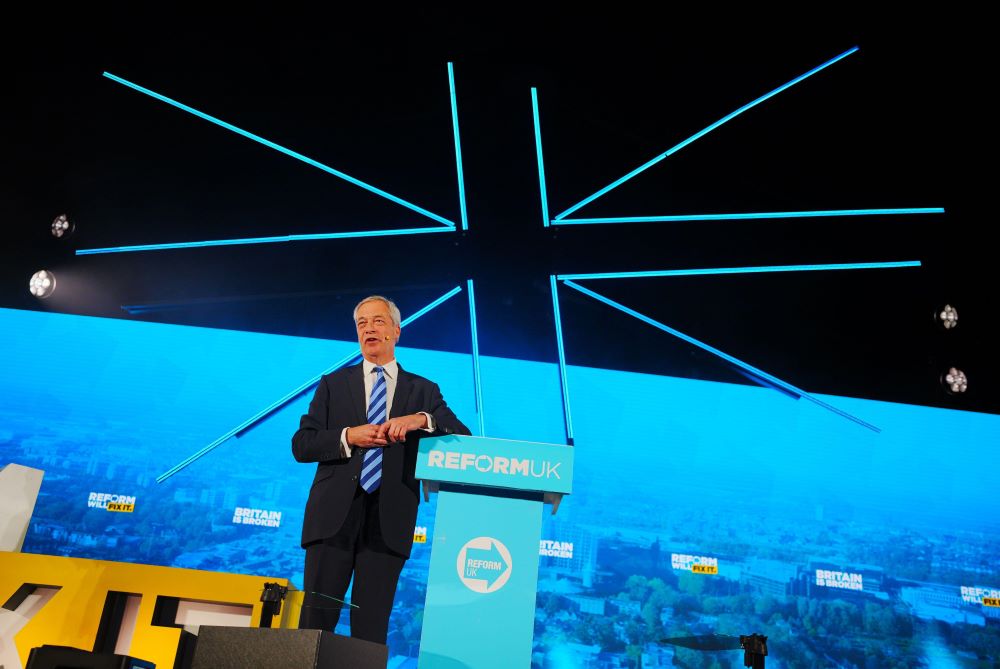
But there is some concern with this approach, particularly in parts of the country where the party is expected to suffer major losses on Thursday, like Essex, Hampshire, Norfolk and Suffolk. Conservative MPs in those areas make up more than a fifth of the total parliamentary party. “In reality, it’s highly likely we’ll lose control of all those councils,” said one Tory MP.
In Hampshire, the Conservatives currently have 50 of 78 council seats, having held overall control of the local authority since 1997. Seven of the county’s MPs are Tories. One of them told PoliticsHome that losing the council “would stop the small recovery that the party has made over the last nine months, and it would show that actually, we have a lot more work to do before we’re anywhere near winning the next election”.
There is a similar picture of Essex, where 49 of the council’s 79 councillors are Conservative. A more pessimistic Tory MP said “it could be a total wipeout” in Essex, where Reform, like in Hampshire, is eyeing significant gains. Speaking to PoliticsHome, Hayward pointed out that the county is home to “a string of Tory front benchers” including Badenoch herself.
There is nervousness in these areas that Tory losses on Thursday could resemble what happened in Kent at last year’s local elections, when the number of Conservative councillors was dramatically reduced from 62 to 5, with Farage’s party being the beneficiary.
Results that bad would “pose real questions over the party’s direction”, according to one Tory MP, who told PoliticsHome it would “cause a huge amount of soul searching in the party, especially as there is a feeling that there has been a lot of gain over the last year, with conference seen as the turning point”. Another Tory backbencher said: “If Reform does as well as in Kent, it’s obviously problematic for the Tory party and would be really bad news.”
A different Conservative MP stressed that losing councillors has “very serious” practical consequences, as it means a weakened “grassroots campaigning force”. They added: “[We] can’t be going backwards at this stage. We’re nearly halfway through the Parliament.”
Badenoch denied being “complacent” in conversation with The Times at the weekend, and insisted that the public was starting to listen to what the Tories have to say. In an interview with The House magazine in the run-up to last year’s Conservative Party conference, she said that she would be a leader who peaks in time for the next general election, rather than “on day one”.
However, speaking on the most recent episode of the Political Currency podcast, former Tory chancellor George Osborne said his party required an “ethical reset” before it can win again, arguing that it was yet to “really confront” the reason why it lost in such devastating fashion in July 2024.
He added that Badenoch had not yet answered the fundamental question of “what do the Conservatives offer, which is distinct and better for the country than Reform”.
While major losses later this week are unlikely to raise questions about Badenoch’s leadership, they could put her under more pressure to produce an answer.

And while there might be almost six months to go until spooky season, Heidi decided that Halloween should come early at the Met Gala on Monday night, giving us another of her jaw-dropping transformations to mark the occasion.
The dress code for the 2026 Met Ball was “Fashion Is Art”, which the Project Runway host took literally, metamorphosing into a marble statue for the evening.
Heidi’s custom look was put together by designer Mike Marino, taking inspiration from Roman statues by ancient Italian sculptors.
According to Variety, the “living sculpture” look was achieved using materials like spandex and latex to give the impression that the unrecognisable statue was a stone creation come to life.
The Met Gala is held each year on the first Monday in May as a star-studded fundraiser for New York’s Metropolitan Museum Of Art’s Costume Institute.
A-listers in attendance are asked to dress to a theme which usually corresponds to a new exhibit being showcased at the Costume Institute, with this year’s chairs including Oscar winner Nicole Kidman, tennis aficionado Venus Williams and music icon Beyoncé, alongside the event’s regular organiser, Vogue editor Anna Wintour.

!function(n){if(!window.cnx){window.cnx={},window.cnx.cmd=[];var t=n.createElement(‘iframe’);t.display=’none’,t.onload=function(){var n=t.contentWindow.document,c=n.createElement(‘script’);c.src=”//cd.connatix.com/connatix.player.js”,c.setAttribute(‘async’,’1′),c.setAttribute(‘type’,’text/javascript’),n.body.appendChild(c)},n.head.appendChild(t)}}(document);(new Image()).src=”https://capi.connatix.com/tr/si?token=19654b65-409c-4b38-90db-80cbdea02cf4″;cnx.cmd.push(function(){cnx({“playerId”:”19654b65-409c-4b38-90db-80cbdea02cf4″,”mediaId”:”d7a86e9f-90b7-49bb-a9e7-6358dc4a955f”}).render(“69f8c62ae4b0f658833cc97b”);});

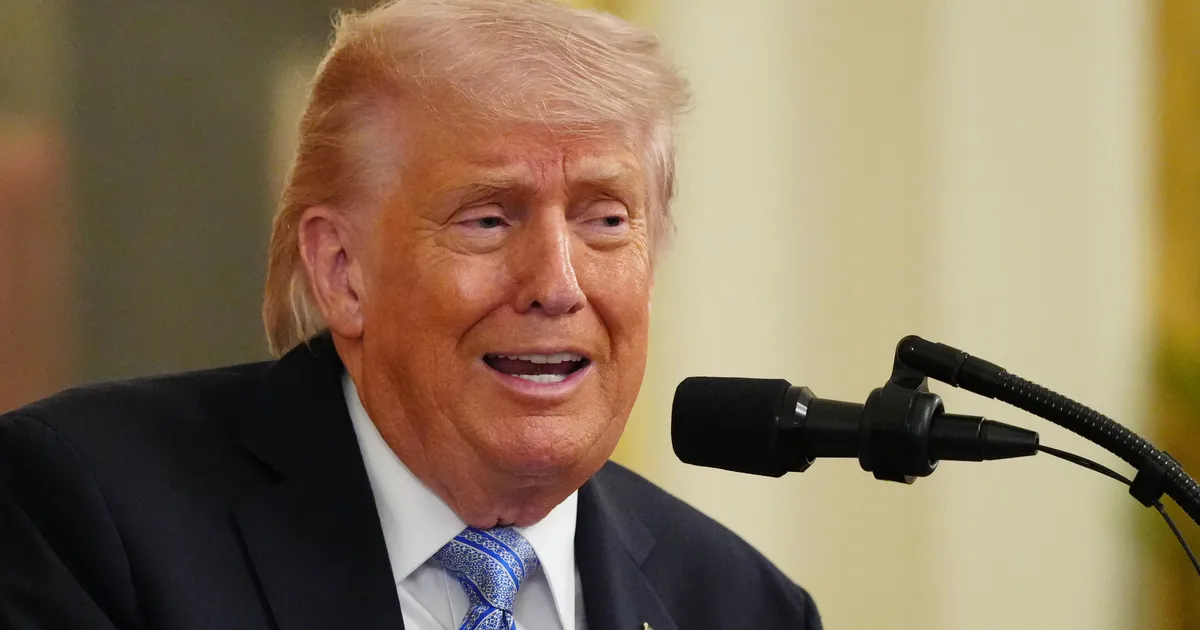
President Donald Trump went off-script on Monday to brag ― again ― about passing a test meant to detect cognitive decline linked to dementia.
“I’ve taken three,” he boasted. “No president, think of this, has ever taken one.”
Trump said he likes to take the test whenever someone calls him a moron.
However, the test he described ― the Montreal Cognitive Assessment (MoCA) ― is not an intelligence test. It’s a brief exam meant to detect the signs of cognitive decline associated with dementia. As such, its creator has said the assessment is intended to be easy for anyone of normal cognition.
It’s the same “person, woman, man, camera, TV” test he crowed about passing in 2020, during his first term ― except now, he’s admitted to taking it at least two more times since then.
Trump said the media only shows the first questions, which he admitted are “very easy,” and includes identifying common animals.
“By the time you get to the middle, they’re tough,” he insisted.
A typical “middle” question asks the subject to name words starting with a specific letter, and count backward from 100 by subtracting 7 each time (93, 86, 79, etc.).
Trump made similar comments on Friday when he spoke at a senior community in Florida, where he also bragged about passing three cognitive tests.
The fact that he’s taken an exam intended to check for a serious cognitive disorder not just once, but three times, had many asking the same question: Why?
Critics demanded answers ― and more ― on X:
President Donald Trump was speaking at a small business summit on Monday when he made a chilling prediction about when he plans to leave office.
″…And this way, when I get out of office, in, let’s say, eight or nine years from now, I’ll be able to use it myself,” Trump said about small business tax deductions.
Trump has frequently mentioned the idea of seeking a third term in office. Last year, he told NBC News that he was not “joking” about the prospect, saying “a lot of people want me to do it.”
“I’m not looking at that,” he told reporters on Air Force One in March 2025. “But I’ll tell you, I have had more people ask me to have a third term, which in a way is a fourth term because the other election, the 2020 election, was totally rigged, so it’s actually sort of a fourth term.”
While many Trump supporters have dismissed the idea as a joke, critics contend the public should take the president at his word.
“I fear that we will not have an election in 2028. I really mean that in the core of my soul − unless we wake up to the code red, what’s happening in this country, and we wake up soberly to how serious this moment is,” California Governor Gavin Newsom said last year.
Trump has even had “Trump 2028” merchandise made and prominently features it in his official Trump store.
Critics on social media were quick to sound off on Trump’s latest suggestion that he should not only serve a third term, but seemingly a fourth as well:


Two years after young voters swung to the right in 2024, helping return Republicans to unified control of Washington, economic concerns are pushing 18- to 34-year-olds back to the left for the midterms, according to a new national survey of more than 1,000 young Americans.
The poll from nonpartisan outfit Generation Lab, shared exclusively with POLITICO, amounts to a flashing warning sign for Republicans. It shows young Americans planning to vote Democratic in November by a margin of 52 percent to 19 percent. Broken down by party, the data indicates that the GOP has a significant base problem: Just 58 percent of young Republicans say they’ll vote GOP — with nearly a third selecting “neither” or “won’t vote.” By contrast, 85 percent of young Democrats intend to show up for their party at the ballot box.
Just as in 2024, deep discontent with the state of the economy is driving anger at the party in power. Now, 81 percent of young Americans rate U.S. economic conditions as bad or terrible — including 68 percent of Republicans. The younger the age bracket, the more optimism diminishes.
President Donald Trump shoulders most of the blame among respondents, with 41 percent who rate the economy negatively naming him as the top culprit, plus 9 percent who select congressional Republicans. But it’s not just the GOP: Another 31 percent finger corporate greed/large companies. Just 6 percent blame Joe Biden or congressional Democrats.
In many ways, the polling looks like an inverse of Democrats’ struggles in the 2024 cycle, when surveys showed that voters didn’t personally experience the positive economic image projected by the Biden administration.
“We tie this really closely to what people can see and feel and touch in terms of their own personal economic situation,” Cyrus Beschloss, Generation Lab’s founder and CEO, told POLITICO. “Saying that affordability is a ‘line of bullshit’ is definitely not helping — to the extent that young people are clued into that.”
But a caveat remains. “Young people are voting at just obscenely low rates,” Beschloss said. Insofar as this demographic might swing to or from Republicans, “their power’s a lot more concentrated in social force” — as cultural barometers and pace-setters — “than it is electoral force.”
Young people’s social force on GOP politics looks highly negative right now, and not just over concerns about inflation, housing, jobs and gas prices. The survey also finds mass blowback to the U.S.-Israel war with Iran: Seventy-seven percent of young Americans say the U.S. made the wrong decision in striking Iran, and 75 percent say they disapprove or strongly disapprove of Trump’s handling of the military action.
Republicans are keenly aware of voters’ cost-of-living and economic concerns — but they argue that they’re positioned to sway Americans here with a message focused on lower government spending, new tax breaks and blaming Democrats.
The GOP is also addressing bad economic feelings head on by telling voters that they’re cleaning up messes created by Democrats. And following on Trump’s 2024 strategy, Republicans have doubled down on TikTok and other social-media content/branding that reaches young people where they are. Candidates speaking to voters directly works well, the party has found, as does pro-America content that can go viral organically — think Artemis II or the semiquincentennial.
“After years of skyrocketing costs and economic uncertainty under Joe Biden and Democrats, combined with the left’s alienating, out-of-touch rhetoric, young Americans are fed up with empty promises,” said RNC national press secretary Kiersten Pels. “They want real results, and Republicans are speaking directly to them in a way that resonates.”
The strong GOP push could yet pay dividends. “I really … would not discount how much the Republican world has been focused on running a really tight operation in terms of not only getting more young men into their camp but keeping them there,” Beschloss said.
But Democrats have built out their own infrastructure to compete, including creator networks for candidates to work with and new resources devoted to communicating via YouTube, podcasts, social media, influencers and Substacks.
And the economic concerns are a lay-up for Democrats’ midterms messaging writ large, they say, which puts affordability front and center — the kind of laser-focused approach that scored the party big wins in 2025. “Young voters’ top concern is affordability, and we’ve been beating the drum on that issue all cycle,” said DCCC spokesperson Aidan Johnson. “Many don’t think they will ever be able to buy a home, or are graduating out of high school and college with not nearly the same kind of opportunities that their parents had.”
Looking beyond the midterms: The Generation Lab also asked young Americans about the 2028 presidential race — and at this early stage, name recognition seems to be paramount.
Democrats like Kamala Harris and Rep. Alexandria Ocasio-Cortez (D-N.Y.) best, at 31 and 23 percent respectively. Republicans pick Vice President JD Vance (25 percent) and then HHS Secretary Robert F. Kennedy Jr. (13 percent). And tied for seventh overall, at 4 percent each among all young Americans: Jon Stewart, Mark Cuban and Tucker Carlson.
Like this content? Consider signing up for POLITICO’s Playbook PM newsletter.
For a country that prides itself on hating the Tories, this is very odd.

And if you don’t see how, let us illustrate.

If you simply combined the Tory and Reform votes from the latest poll, the election would be on a knife-edge, with the right-wing alliance just three points behind the SNP on the constituency vote and six points AHEAD on the list. On that basis it would likely win the election as the biggest party, though it would need Labour and Lib Dem backing to form a government.
(It would be genuinely unpredictable and interesting to see who could win the vote to be First Minister in this scenario.)
This is the Devolved Elections projection, showing Reform edging it by a single seat over the SNP, with a comfortable Unionist majority of 21, compared to the 11-seat “pro-indy” majority projected by More In Common on the actual poll numbers:

The map would look like this, with the right-wing alliance sweeping the traditional strong Tory areas of the Borders and the north-east and encroaching towards the middle, with the Lib Dems taking a huge chunk of the Highlands and Islands and the SNP reduced to the Central Belt, with Labour clinging to their existing pockets.
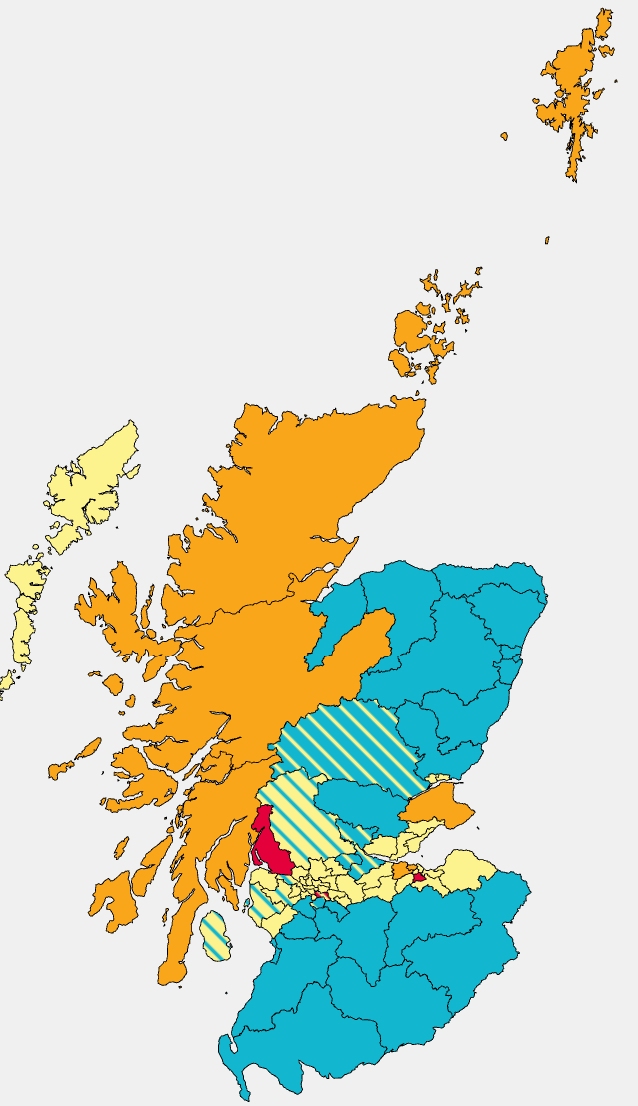
Considering that a right-wing party (the Unionist Party, forerunner of the modern Scottish Conservatives) last won an election in Scotland in 1955, that’s an extraordinary stat. If Tory voters switched en masse to Reform on Thursday, according to this poll there would be an earthquake of utterly transformative impact on Scottish politics which would make the SNP’s 2007 victory, and 2011 majority, seem like a fieldmouse farting by comparison.
(If you count the SNP, Labour and Greens as all representing various degrees of “the left”, with the Lib Dems on the soft right it’s close, about 53-45 in favour of the left.)
And there’s another thing. More In Common didn’t ask about independence, but a poll for the Sunday Times at the weekend put support at Yes 55 No 45. Yet just 37% of people voting in the election are going to vote for ostensibly pro-independence parties.
That means that one out of every three independence supporters is refusing to vote SNP or Green in order to try to achieve it, and more than two out of every five are refusing to vote SNP. Just 57% of indy supporters say they’ll vote SNP on Thursday, and another 10% will vote Green.
(We suspect that once turnout is factored in those numbers will fall further.)
It really is quite hard to overstate how surreal all this is. On just over 30% of the vote, the SNP look set to either win an absolute majority or come close to it, while a combined Tory/Reform vote of over 32% will get them less than a quarter of the seats in the chamber.
Despite John Swinney offering a “100% guarantee” of a second referendum if he gets that majority, barely more than half of indy supporters look like they’ll bother to go out and vote for his party to get it. Meanwhile Tory voters will pass up a no-brainer chance to kick the SNP out and definitively end any threat of independence for the foreseeable future, despite being by far the party most obsessed with the constitution.
(Labour voters at least have the excuse that their party is still clutching at the comically absurd notion that they can win the election themselves, and the Lib Dems just want to carve out a few more seats, but Tories know full well that they’re looking at an epic humiliation AND a thumping SNP win unless they decide to throw their lot in with Malcolm Offord’s motley crew at the last minute.)
This, then, is an election in which both indy supporters and Unionists seem to be locked on a suicidally self-destructive course, each doing their best to throw it. The SNP is urging Yessers to waste their second vote and maximise the number of Unionist MSPs, while the Unionist parties are so engrossed in fighting among themselves that they’re going to get 61% of the vote yet still find themselves sitting irrelevantly in an indy-majority Parliament for another five years.
(Neither side much cares, they’ll get the gravy either way.)
As for the voters, nobody expects even half of them to turn out at all, so scunnered at they at the rotten catalogue of options being presented to them.

Our wee country’s gotten itself in a right old pickle, folks.


Lately, it feels almost impossible to scroll through social media without coming across someone talking about the dangers of inflammation or the benefits of an anti-inflammatory diet.
But what is inflammation, how do we know if we have it, and what can we do about it?
That’s what we — Raj Punjabi-Johnson and Noah Michelson, co-hosts of HuffPost’s “Am I Doing It Wrong?” podcast — asked Tamiko Katsumoto, MD, a clinical associate professor in the division of immunology and rheumatology at Stanford University and a board-certified lifestyle medicine physician.
“I think the best way to define it is it represents the body’s response to a danger signal or to a damaging signal, and then it’s followed by a repair process,” Katsumoto told us. ”[It’s] this whole process by which our immune system is helping to defend us and it helps them to resolve that insult that we are faced with.”
That means that inflammation isn’t always a bad thing. Acute inflammation, which occurs when our bodies are trying to fight an infection or heal a wound, is short-term, beneficial and absolutely necessary to our health. It is a “knee-jerk response,” Katsumoto said, that involves a “very robust kind of activation of the immune system.”
“Without inflammation, we would be dead — it keeps us alive,” she emphasised.
However chronic inflammation is often “subtler.”
“Sometimes that flies a little bit below the radar, and we may not fully be aware that it’s happening,” Katsumoto said, but there is one symptom she hears in her client from her patients more than anything else: fatigue.
“People that say, oh, I’m just so tired. I have no energy.”
This kind of long-term inflammation, which can be caused by environmental exposures, our diets, and other lifestyle factors, is to blame for “a lot of the diseases that we’re dealing with in the Western world.”
“It’s little bit more insidious. It’s not as obvious. It’s not like when you have the flu, but it’s like some people kind of get more of a chronic ongoing low level of inflammation that can then lead to the development of a lot of these diseases,” Katsumoto noted.
Everything from Alzheimer’s to heart disease to depression can be caused by chronic inflammation.
“And then, of course, what I deal with in my clinic is maybe a higher level of that inflammation — things like rheumatoid arthritis, things like lupus, these are autoimmune conditions,” she said, adding that “the vast majority of our diseases are driven by inflammation, maybe like 80% or so.”
Katsumoto told us that those 80% of diseases caused by inflammation are believed to be “driven by lifestyle-related factors that we can have some control over.”
“We can’t control everything about what we’re exposed to, but we can control lifestyle factors that can be very, very protective of this inflammation and really can dampen it so that we don’t end up with a lot of these chronic diseases,” she said.
The first thing we should do to ward off harmful inflammation, according to Katsumoto, is ensure we have a healthy gut microbiome.
“It turns out that probably about 70% of our immune system resides in the gut,” she said. “To keep the microbiome happy, we’ve got to feed it fibre, and fibre, guess what? It’s only found in plants. Animal products do not have fibre. So we need to have plants to feed that gut … to create a very happy, healthy, diverse group of bugs that are going to keep what’s called immune homeostasis.”
Katsumoto noted that 95% of Americans are deficient in fiber, so we should concentrate on consuming 30 — the “magic number” for gut health — different kinds of plants each week, including fruits, vegetables, legumes, herbs and nuts.
“Fibre gets fermented by these microbes in our gut, and they produce these molecules that are called short-chain fatty acids. These short-chain fatty acids are really important in keeping our immune system in check and dampening it so it doesn’t overreact.”
Though Katsumoto tells her patients to avoid eating ultra-processed foods whenever possible because they can harm our gut microbiomes, she acknowledged that practicing moderation is our best bet.
“It’s really focusing on the whole food plants as much as possible, [but], you know, it doesn’t mean you have to be a saint,” she told us.
“I never draw lines in the sand. I think that’s not helpful … We don’t demonise anything. Yes, we all will eat some of those ultra-processed foods sometimes, and that’s okay,” Katsumoto said. “I think the bottom line is, if we can really try to keep our gut as happy as possible by really loading up with a lot of diverse plants, right? And, occasionally, some animal [products] are OK. But I just want to say, really, the plants are where the money is. And the plants are what are anti-inflammatory … and there’s been so much data suggesting that plants are super important for health and longevity.”
We also spoke with Katsumoto about other ways to fight chronic inflammation, the number one anti-inflammatory thing she is working on in her own life and much more, so click above to hear the full episode or listen wherever you get your podcasts.
Make sure to subscribe to “Am I Doing It Wrong?” on whatever podcast platform you prefer so you don’t miss a single episode from our brand-new third season. You can also watch the full episode on YouTube.
For more from Dr. Tamiko Katsumoto, head here.
Have a question or need some help with something you’ve been doing wrong? Email us at AmIDoingItWrong@HuffPost.com, and we might investigate the topic in an upcoming episode.
George Pickering is a researcher at the think tank Bright Blue. He holds a doctorate in Economic History from the University of Oxford.
“I am not a Nazi or an antisemite. I love Jewish people. … It’s not just me who ruins their entire life once a year despite taking meds every day and being told by the so-called best doctors in the world that I am not bipolar, but merely experiencing ‘symptoms of autism.’”
These touching words greeted readers of The Wall Street Journal earlier this year, in the form of a full-page apology by Kanye West for offensive remarks made between 2022 and 2025. However, the rapper’s heartfelt contrition was apparently not enough to spare him from recently being blocked from entering the UK, touching off widespread debate about whether the government ought to have such power over those whose opinions it finds intolerable.
This controversy could not have been better timed to draw attention to a recently drafted billwhich would enshrine free speech in UK law, similar to the First Amendment in the United States. The proposed Freedom of Speech Bill was described by one of its authors as being “designed to teach English politicians and English activists, listen, there is a way within your constitutional system that you can replicate American free speech protections … It gets the Government out of the business of policing the opinions of the British people.”
While it is not clear whether the proposed bill is likely to be introduced to Parliament soon, there is no denying the seriousness of the issue it is designed to address. Last year it was revealedthat police in England and Wales were making more than 30 arrests per day for social media posts and other messages which were deemed to have caused “annoyance,” “inconvenience” or “anxiety”. This heavy-handed and costly policing of online speech, alongside other high-profile cases such as the upcoming trial of a woman accused of silently praying near an abortion clinic, highlight the extensive powers the government already has to punish those whose opinions it deems unacceptable.
But would a Freedom of Speech Bill actually be able to prevent such overreach? The example of the First Amendment to the US Constitution does little to suggest the effectiveness of on-paper protections. Less than a decade after the First Amendment was ratified, congress passed the Sedition Act of 1798, which enabled the government of President John Adams to successfully convict leading opposition newspaper editors. Later, during the First World War, the US Supreme Court unanimously decided that Charles Schenck’s right to free speech had not been violated when he was arrested for distributing leaflets arguing against military conscription. And as recently as the 1960s, the comedian Lenny Bruce was routinely arrested for ‘obscene’ jokes which seem mild by today’s standards, including implying that some people are cross-dressers and using the Yiddish word “schmuck”.
How were US government officials able to curtail these forms of expression, despite the explicit protection of free speech by the supreme law of the land? Surprisingly, the answer to this question was provided more than two centuries before the founding of the United States, by an obscure, provincial French magistrate.
Étienne de la Boétie may be most widely remembered today as the subject of Michel de Montaigne’s famous writings on friendship.
However, in the mid-sixteenth century La Boétie wrote one of the most strikingly original and influential works in the history of political thought: The Discourse on Voluntary Servitude. The central argument of The Discourse was that even undemocratic governments require the consent — or at least the acquiescence — of the people, who always vastly outnumber their rulers. “He who thus domineers over you has only two eyes, only two hands, only one body … Where has he acquired enough eyes to spy upon you, if you do not provide them yourselves? How can he have so many arms to beat you with, if he does not borrow them from you?”
Violations of the First Amendment in the US would have been no mystery to La Boétie: officials were able to effectively break the law because they knew the public, at the time, lacked the will to insist that they be held to account. The same reasoning explains how the British government was able, for example, to enforce restrictions of uncertain legality during the COVID-19 pandemic.
Unfortunately, the British public simply does not value free speech.
A YouGov poll found last year that only 28 per cent of people believe that one should be able to speak one’s mind on social media, while 61 per cent felt it was more important that online abuse and threats should be prevented.
Until the public ceases to tolerate violations of free expression the government would continue to limit free speech, either directly or by pressuring private companies to do so, regardless of whether a Freedom of Speech Bill were passed.

Keir Starmer has alluded to his ongoing tensions with Donald Trump after the US president threatened to withdraw American troops from Europe.
The prime minister spoke his EU allies during a meeting with the European Political Community in Armenia about increasing defence spending.
Starmer announced that the UK is currently in discussions to be joining the EU’s £78 billion loan scheme for Ukraine.
The PM said the scheme will help increase jobs in the UK, improve UK-EU relations and help Ukraine as the war against Russia rumbles on.
Starmer is hoping to reset relations with the EU just as Trump continues to cause upset with his Nato allies.
The White House has decided to withdraw 5,000 US troops from Germany amid Trump’s ongoing feud with German chancellor Friedrich Merz.
The president has also attacked Starmer personally in recent months over the UK’s refusal to get involved with the Iran war.
The prime minister then gave a nod with this ongoing friction with Trump while discussing the new scheme with his European allies.
He said: “We cannot deny that some of the alliances that we have come to rely on are not in the place we would want them to be.
“There is more tension in the alliances than there should be, and it’s very important that we therefore face up to this.”
He urged Europe to spend more on defence because the continent has fallen “behind over many years” and so there must be a “stronger European element in Nato”.
But the PM also noted how the international conflicts – in Ukraine and Iran – are having a knock-on effect for Britons.
“In the United Kingdom, if you look at the economic forecast now and compare it to the economic forecast just three or four months ago, they are in materially different places,” he said.
A Downing Street spokesperson also said: “The prime minister met the president of France, Emmanuel Macron, and Nato secretary general, Mark Rutte, at the European Political Community Summit earlier today.
“The leaders reflected on their recent diplomatic discussions, including on the situation in Ukraine.
“On the situation in the Middle East and the need for an end to the war in Iran, the leaders agreed on the need to reopen of the Strait of Hormuz to restore freedom of navigation and the free flow of global trade.
“They discussed European support already positioned in the region to reinforce security, and welcomed the close coordination between European allies.”
Starmer sent King Charles on a state visit to Washington last week in the hope that the monarch could help patch up relations with Trump.
While the president seemed enamoured by the royals, and dropped all whisky tariffs on Scotland, he continued to take aim at the PM over Iran.
Subscribe to Commons People, the podcast that makes politics easy. Every week, Kevin Schofield and Kate Nicholson unpack the week’s biggest stories to keep you informed. Join us for straightforward analysis of what’s going on at Westminster.
Pep Guardiola sends title message to Arsenal after Man City draw with Everton | Football

Opinion: A taxing commerce environment

Aave seeks court relief to unfreeze ETH under restraining notice

Manchester United reach agreement with Casemiro over contract clause amid transfer speculation

US brings back mandatory military draft registration

Steven Gerrard disagrees with Gary Neville over ‘shock’ Chelsea and Arsenal claim | Football


-

 Business6 days ago
Most Commercial Energy Audits Miss the Real Losses
-

 Fashion6 days ago
Kylie Jenner’s KHY Enters a New Era with ‘Born in LA’
-

 NewsBeat2 days ago
Channel 5 – All Creatures Great and Small series 7 new post
-
 Tech3 days ago
Trump’s 25% EU auto tariff breaches Turnberry Agreement that also covers semiconductors and digital trade
-
 Sports3 days ago
Paul Scholes issues Marcus Rashford reality check as agreement emerges over Man United star
-

 Crypto World7 days ago
CFTC’s AI will review U.S. crypto registration applications, chairman tells CoinDesk
-

 Business6 days ago
Barclay Brothers Avoid Bankruptcy: HSBC Drops High Court Petitions After IVA Deal
-
 Business5 days ago
Tesla Officially Registers Elon Musk’s Stock: What Investors Need to Know
-
 Crypto World7 days ago
Robinhood Phishing Scam Exploits Gmail Dot Feature to Bypass Security
-

 Tech7 days ago
Get Ready for More Brain-Scanning Consumer Gadgets
-

 Business4 days ago
Two Powerball Tickets Split $143 Million Jackpot in Indiana and Kansas
-

 Tech5 days ago
Texas Instruments made a new flagship graphing calculator: the TI-84 Evo
-
 Crypto World4 days ago
CoreWeave (CRWV) Stock Climbs 8% Despite $45M Insider Share Dump
-
Business2 days ago
Winning Numbers Drawn as Jackpot Resets to $20 Million
-
Crypto World5 days ago
Securitize and Computershare Enable Tokenized Equity Issuance for Over 25,000 U.S.-Listed Stocks
-

 Crypto World5 days ago
Gibraltar Proposes Tokenized Funds Regulation to Bolster Compliance
-

 Fashion2 days ago
Mary J. Blige Vegas Residency Looks: Crystal-Embellished Fjolla Haxhismajli, Todd Fisher, and More!
-

 Tech5 days ago
Official SAP npm packages compromised to steal credentials
-
 Crypto World7 days ago
Bitcoin (BTC) Price Action: Analysts Project $85K Rally Despite Current Consolidation Near $77K
-

 Tech7 days ago
Acer Swift 16 AI (2026) Review: Where Do Your Hands Go?
You must be logged in to post a comment Login