
Politics
Unite escalates strike action against below-inflation pay for Scottish university workers



On 20 April, Unite the Union announced that more than 1,100 workers at five Scottish universities will stage a 24-hour strike. The industrial action is scheduled for 24 April to dispute an imposed real-terms pay cut.
Unite members at Glasgow, Strathclyde, Glasgow School of Art, Edinburgh Napier and Heriot Watt universities will take part.
At 12:30pm on the same day, 24 April, Unite will also hold a Pay and Fair Funding Rally. The assembly will take place at the top of Buchanan Street, next to the Concert Hall and Donald Dewar statue.
The announcement marks an escalation of previous Unite action at Glasgow, Strathclyde and Edinburgh Napier universities on 10 April. Likewise, staff members at Strathclyde also staged a strike from 16 to 22 March over proposed job cuts.
‘No option but to fight back’ says Unite
As the Canary previously reported, the higher education (HE) sector across the country has already suffered under 15 years of substandard pay awards. Compared to 2010, the below-inflation ‘rises’ have left most staff with a real-terms cut of around 30%.
The current dispute centers on the fact that the universities are imposing a pay offer of just 1.4% for 2025/26 on the Scottish workforce. For context, retail price index (RPI) inflation currently stands at 3.6%. However, it looks set to climb far higher due to the repercussions of Trump/Netanyahu’s illegal war on Iran.
Alison MacLean, Unite’s lead officer for higher education, said:
Thousands of Unite members working in higher education have faced years of real-terms pay cuts. Our members have no option but to fight back against repeated threats of compulsory redundancies, and cuts to their terms and conditions. This funding crisis has also come about as a result of gross financial mismanagement and incompetence at some universities.
The latest round of strikes is part of Unite’s campaign to ensure that higher education is fully funded, and its workers are fairly rewarded. We can no longer accept more cuts and derisory pay awards which is why our members are fighting back.
‘Workers are facing another cost of living crisis’
Trade unions across the HE sector are already engaged in negotiations for the 2026/27 pay award. The next meeting is scheduled for 13 May.
The unions are demanding either a pay offer of RPI + 3%, or a £3,000 increase – whichever is higher. On top of that, they’re also arguing for a £15/hr minimum basic pay. These changes would impact 138 higher education institutions across the UK.
Unite general secretary Sharon Graham said:
University workers deserve far better from higher education institutions. For years they have had real terms pay cuts imposed on them which is unacceptable. Inflation throughout this time has soared and now workers are facing another cost of living crisis.
Unite will fully support our higher education members. We won’t tolerate them having to face attack upon attack on their jobs, pay and conditions.
Time and again, we’ve watched as the lowest-paid in our society have been forced to absorb the greatest impacts of inflation and financial crisis.
The fact that UK universities are imposing yet another below-inflation pay offer, with full knowledge that worse is round the corner, is simply intolerable. However, as the escalation of industrial action at these five Scottish universities has shown, the workers will not take these imposed cuts without a fight.
Featured image via the Canary

Leicestershire – Narborough & Whetstone
Reform UK 1,033 (33.0 per cent, -9.3 on 2025) Conservatives 927 (29.6 per cent, +5.1) Green Party 884 (28.2 per cent, +13.4) Lib Dems 134 (4.3 per cent, -3.6) Labour 124 (4.0 per cent, -4.8) Advance UK 28 (0.9 per cent, +0.9)
Reform UK hold
Northumberland – Cramlington South West
Conservatives 278 (34.2 per cent, +9.0 on 2025) Reform UK 212 (26.1 per cent, -13.3) Labour 187 (23.0 per cent, -5.8) Green Party 116 (14.3 per cent, +14.3) Independent 13(1.6 per cent, +1.6) Lib Dems 7 (0.9 per cent, +0.9)
Conservatives gain from Reform UK
Forthcoming contests
April 22nd
- Salford – Barton and Winton. (Labour held)
April 23rd
- Cornwall – Newquay Porth & Tretherras. (Reform UK held)
April 30th
- Malvern Hills – Tenbury. (Conservative held)
May 21st
- Dorset – Bridport. (Lib Dems held)
- Fylde – Kirkham. (Independent held)
- Lancaster – Castle. (Green Party held)
- Malvern Hills – Alfrick, Leigh & Rushwick – (Malvern Hills Independent held)
June 25th
- Aberdeen – George St/Harbour. (Lib Dem held)

After Louis Theroux’s latest documentary sparked a whole lot of conversation (and concern) over the growing popularity of ideologies shared by certain manosphere influencers, a parent has opened up about the subtle signs she noticed her sons were being influenced by such views years ago.
For those who haven’t come across the term, the manosphere is “a collection of websites, social media accounts and forums dedicated to men’s issues, from health and fitness to dating and men’s rights”, according to Robert Lawson, associate professor in sociolinguistics at Birmingham City University.
Yet it’s increasingly become associated with more extreme views – particularly anti-women and anti-feminist sentiments, as seen in Theroux’s documentary.
The impact of this kind of content is concerning – and parents and teachers are seeing it trickle down to school-age children. Not only can it impact the mental health of boys and men, per UN Women, but it amplifies harmful sexist stereotypes, teaches dangerous social and dating behaviour, and makes both digital and real-life spaces more hostile for women and girls.
Mandy Hickson, a former fast jet pilot who is now a motivational speaker, began to notice subtle changes in her two sons, then in their mid-teens, seven years ago “before figures like Andrew Tate [a self-proclaimed misogynist influencer] were widely known”.

In an Instagram post, she noted their language, tone and the way they spoke about women gradually changed.
“We started to notice a shift in attitude rather than behaviour initially, with small comments that didn’t quite align with the values we’d brought them up with,” she tells HuffPost UK.
“For example, despite growing up in a home where both my husband and I worked equally and shared parenting responsibilities, they began questioning why I would ‘want’ to work at all.“
There were comments suggesting that a woman’s role should be at home, and that men should be the providers. This was particularly surprising given they had grown up seeing a strong female role model in me as a former fast jet pilot.”
At the same time, their views on success and self-worth were also shifting.
“They began making quite extreme statements about money and status,” says Hickson. “For example, suggesting that if they reached a certain age and didn’t have significant financial success or material markers like expensive cars, they would see themselves as failures.
“That kind of black and white thinking felt very out of character.”
What did she do to address this?
It wasn’t a case of simply shutting the conversation down. “It would have been easy to challenge or dismiss those views outright, but instead we tried to stay curious,” Hickson explains.
“We asked questions like ‘Where have you heard that?’ or ‘Why do you think that matters?’, creating space for discussion rather than confrontation.”
The couple also made a conscious effort to reinforce their own values – around respect, partnership, and the idea that success isn’t one dimensional – through everyday conversations. “It wasn’t about lecturing, but about consistently offering a broader perspective,” she adds.
Experts generally agree lecturing teenagers is not an effective strategy, and listening without judgment is often the key to getting them to open up.
Hickson notes she also began supporting her sons in develop critical thinking skills, particularly in terms of questioning the content they were consuming.
“Rather than banning platforms or individuals outright, we talked about how algorithms work, how certain voices can be amplified, and why extreme views often gain traction,” she says.
“That seemed to help them step back and question what they were seeing.”
She advises parents to look for small shifts in language and attitudes (some boys might start referring to girls as ‘females’, for example), not just behaviour.
- Stay open and curious rather than immediately critical.
- Keep communication lines open, even when what you’re hearing is uncomfortable.
- Help your children question what they’re consuming, rather than simply trying to control it.
- Model the values you want them to hold, because that consistency really matters over time.
“It’s not a quick fix, and I don’t think any parent gets it perfectly right, but staying engaged and present in those conversations is key,” she adds.
In her Instagram reel, she also suggested boys need to actively be shown positive male role models because otherwise “the algorithm will show them something else”.
“This isn’t about blaming boys, it’s about paying attention,” she ended. “Because I’ve seen how quickly it can happen and how quietly it can grow.”


In May this year, Tommy Robinson is holding a follow-up to his rancid ‘Unite the Kingdom’ rally. The first event saw speakers calling for the deportation of the UK’s entire Black and Brown population. This year will no doubt see the same, and in Robinson’s eyes, that represents a marketing opportunity:
I’ve honestly seen it all now.
If you still didn’t realise Tommy Robinson is nothing but a massive grifter, here he is today — trying to sell advertising space at his next racist march.
Boycott any business that’s stupid enough to take him up on the idea. pic.twitter.com/9YT5BH0WsY — Wokerati Marty (@WokeratiMarty) April 19, 2026
Remigration
Undercover recordings from the first Tommy Robinson Unite the Kingdom rally exposed protesters chanting with what can only be described as genocidal intent:
He did it again. @NikoOmilana went under cover on the far-right Tommy Robinson rally.
"Sink the boat and send them back… take the life jackets off as well.. why not just kill them on the beach?" pic.twitter.com/tqc37U9cxu
— Mukhtar (@I_amMukhtar) September 27, 2025
Honestly, ‘protesters’ doesn’t feel like the right word.
Much like with the Britain First rally which took place in Manchester on 18 April, a sizeable number of these people were absolutely shitfaced. ‘Revellers’ is a more accurate description, but the thing they’re revelling in is hatred.
Speakers at the first event included Generation Remigration. As we reported in September 2025:
Who are Generation Remigration, you might ask?
Well, they’re the leading proponents of ‘remigration’, which is the plan to mass deport migrants and their descendants from European countries. We’re not quite sure how that will work in Britain given the continuous influxes of populations we’ve experienced since the Roman Empire, except we are sure, obviously – they’re talking about deporting Black and brown people. Please feel free to explain to us how that isn’t racist, but maybe wait until tomorrow if you’re already ten beers in; you wouldn’t want to say something you regret.
Some of the attendees were clearly fantasists who hold a bleak and violent view of the world. This view is being amplified by grifters like Robinson who seek to profit from hatred:
Someone's nan was at the Tommy Robinson far-right march saying she hates Black people & was carrying 3 knives in her bag for the "Blacks." & she wants them all to get out of the country
This is what they say when they think they're chatting to white people. Big up @NikoOmilana pic.twitter.com/g2aeJAyCb6
— Mukhtar (@I_amMukhtar) September 27, 2025
And this year, ‘profit from hatred’ is clearly part of the Unite the Kingdom mission statement.
Put your ad here, says Tommy Robinson
In the video at the top, Tommy Robinson says:
Right, here’s an opportunity that I can’t believe people haven’t snapped up and we need you to snap it up because we need to put on a larger, bigger, more successful event than the 13th of September. That is advertisement.
We can believe no one has snapped it up, honestly, because most brands don’t hyper-target their products at racist shitheads.
Robinson continued:
We had 66 million people watch our last event in September. That’s just on our stream. Then we had 150 live streamers who were videoing every second of it as well. You have the opportunity to reach those people with your branding.
It’ difficult to think of a brand which would want to associate themselves with the scenes above.
Maybe Skittles could change their slogan to: ‘Skittles: Taste the Racism‘.
Probably not, right?
Failed Reform MP Matt Goodwin is still promoting his allegedly AI-written slop book – maybe he could take out an advert?
It's not "weird", mainly because Matt GPT's book isn't, and never has been, "the No.1 paperback in Britain" overall, but also because he's posing in front of a "New Books for 2026" hardback display while promoting his paperback, which isn't available in hardback.
The week that… https://t.co/7op5xdUjFL
— GET A GRIP (@docrussjackson) April 18, 2026
Back to Robinson:
Remember, we’ve shifted. People didn’t used to want to stand with us. Now we have politicians, we have celebrities, we have all different people. There’s been a mass shift. It’s now acceptable. Cancel culture has been defeated in this arena.
There was a period after Trump’s re-election when brands briefly pivoted towards racism. Most famously, the American company Target lost around 30% of its value after rolling back diversity initiatives.
Since all that, brands have avoided attaching themselves to mainstream right-wing politics. As such, they’ll definitely avoid pissed-up hate fests like Robinson’s festival of racism.
The ranks are revolting
As we reported on 19 April, some of Tommy Robinson’s minions are demanding that the upcoming Unite the Kingdom should be a more violent affair:
STOP WHAT YOU’RE DOING!
THE FASH BROMANCE OF THE CENTURY IS ON THE ROCKS! Remember I said after Danny ‘Temu Tommy’ Thomas tried to confront me (& ended up confessing to sexual exploitation Well tragically it’s got worse — . (@LouiseRawAuthor) April 18, 2026

 ), he was getting flack for being an embarrassment?
 pic.twitter.com/jIRRB2EmPT
Of course, it makes sense for a movement like Robinson’s to become violent. The guy is talking about banishing a sizeable portion of the population, after all – something which couldn’t be achieved without oppression.
The reason why Tommy Robinson wants to keep it non-violent is clear; it’s because he’s got ad space to sell.
Featured image via YouTube
By Willem Moore

Expert comment from Dr Amanda Shea, who holds a PhD in molecular biology and has contributed to ovarian cancer research and is the fractional chief science officer at period and cycle tracker app Clue.
This January, a menstrual leave petition asking the government to “introduce statutory paid menstrual leave of up to three days per month for people with conditions such as endometriosis and adenomyosis” was launched.
It has since passed 100,000 signatures, and so has met the threshold for parliamentary debate.
The topic will be debated in Westminster Hall. Menstrual leave already exists in countries like Spain, Portugal, Taiwan, Zambia, and Vietnam.
But in, e.g., Spain, the law has “hardly been used”, The Guardian reports.
HuffPost UK spoke to Dr Amanda Shea, who holds a PhD in molecular biology and has contributed to ovarian cancer research, about how to make laws like these more effective.
The broader culture needs to change
Menstrual leave policies like those introduced in Spain and Portugal “appear progressive” and “mark an important step in acknowledging menstrual and reproductive health at policy level,” Dr Shea said.
“Yet early reports suggest uptake has been low, likely due at least in part to persistent stigma, fears around job security, and concerns around being seen as unreliable or unproductive.
“This raises the question: are these policies truly helpful, or are they symbolic gestures that signal progressiveness without addressing the deeper cultural changes that are needed?”
That’s not to say that paid menstrual leave couldn’t be beneficial. As Dr Shea told us, “Menstrual pain and related symptoms can be genuinely debilitating and they deserve to be taken seriously. For some, menstrual symptoms can significantly affect their ability to work, and time off may be necessary, just as it would be for any other health condition”.
Her workplace, Clue, already uses paid menstrual leave. It’s not about discouraging laws which could make the lives of those suffering from painful conditions easier.
Sarah Ottawa, the chief people officer at the company, said that the policy has gone down well with employees, adding that her team “were very intentional about making the policy clear and stigma-free”.
But, Dr Shea said, more broadly. “The reality is that culture needs to evolve to match the intent of the policy. Many people still don’t feel safe disclosing menstrual pain, let alone using menstrual-specific leave. Without strong protections against discrimination, clear leadership support, and more open conversations about menstruation, these policies risk falling short.
“Importantly, supporting menstrual and reproductive health will require more than a single policy. It calls for systemic change that includes better health education, more research into female-prevalent conditions and treatment options, and improved access to quality care.”
Not all people with period conditions have a diagnosis, and not all women’s health issues take the form of period conditions
Then, there’s the fact that paid period leave would only cover those with diagnosed conditions. We know that women’s health issues remain disproportionately ignored and undiagnosed.
“Workplace policies are just one part of the bigger picture, and when they focus solely on leave, or apply only to a narrow set of symptoms or diagnoses, they risk excluding many people, reinforcing that pain should be endured in private, and missing the wider challenges people face in managing their health.”
Take, for instance, PMDD, which can leave people in serious distress and is period-related but often happens days before menses begins. “People with autoimmune diseases like lupus or rheumatoid arthritis, digestive conditions like IBS, or menstrual migraines often experience symptom flare-ups during certain phases of the cycle,” the expert added.
“It’s also important to dispel the myth that all menstruators need leave. Most don’t experience severe symptoms, and policies should reflect that menstrual experiences vary widely. Often, more flexible and inclusive solutions – like the ability to work from home, adjust hours, or take time for medical appointments – can be more effective.”
Those needs often extend beyond periods to fertility treatments, miscarriage recovery, postpartum support, and perimenopause care, too.
How can paid period policy be most effective?
As we’ve said, paid menstrual leave can be a great step forward.
But to make it most effective, Clue’s reproductive health specialist, Eve Lepage, said: “A thoughtful menstrual leave policy would be one that recognises menstruation as a spectrum of experiences, from regular, manageable cycles to severely debilitating symptoms due to conditions like endometriosis, adenomyosis, or PMDD.
“It would offer flexible, non-discriminatory support.”
- Leave it as an option, not a rule. People should be able to take time off when they need it, but it shouldn’t be assumed that everyone will or should.
- No requirement for proof or disclosure. Many people never receive formal diagnoses, often because of barriers in the healthcare system. Requiring a doctor’s note just to access support can leave people behind.
- Integration into broader wellness support. Menstrual leave should exist alongside things like flexible hours, remote work options, mental health days, and reproductive health leave, so it reflects the full range of cycle-related needs.
- Education to reduce stigma. Workplace education should accompany the policy to challenge outdated views of menstruation as shameful or disruptive.
- Inclusive language and design. Not all people who menstruate identify as women, and policies should reflect that.

Gen Zers and millennials may technically be neighbors on the generational timeline, but culturally, they sometimes feel a universe apart.
From communication styles to news consumption to how they show up on social media, the two generations often approach the world in very different ways. And those differences can sometimes cause friction.
We asked millennials to share the Gen Z behaviours that stress them out. Of course, habits vary from person to person, but certain patterns and tendencies still emerge.
1. Recycling Our Bad Fashion Choices
2. Misusing Therapy Speak And Self-Diagnosing
“I am a big fan of normalising mental health conversations and people having access to the help they need. In fact, I love that about Gen Z. But with access comes misusing and misinterpreting words, like ‘triggered’ or ‘narcissism,’ as well as a rise in self-diagnosis. As a psychiatrist, I regularly see people who think they have a condition because TikTok told them they do. I appreciate that they show up in my office and ask about it to learn more, because not everyone does that step, and that TikTok even informed them about a diagnosis that resonated to begin with ― but it can sometimes lead to hard conversations when I say, for example, that not all trouble concentrating is ADHD.” ― Dr. Jessi Gold, psychiatrist and chief wellness officer at the University of Tennessee System
3. The Gen Z Stare
“I have noticed that Gen Z struggles with basic in-person social skills and communication. They are digital natives and can struggle to translate those skills to in-person interactions. The term ‘Gen Z stare’ exists for a reason; it’s real.” ― political and news commentator Millennial Mia
4. Disregarding Their Surroundings
“Three words: choreography in public. Doing a full routine on the top of the Empire State Building? Airport acrobats? All of it makes me feel so uncomfortable! Also, has anyone else noticed an uptick in people crossing the street whenever they feel like it? I see people fully look up at a green light, then look me in the eyes sitting in my car and wave and then walk. Is there no fear?” ― Balsham
5. Excessive Trauma Posting
“I think that Gen Z can turn even a stressful or traumatic moment into a funny post on TikTok and IG. Us Millennials do that sometimes as well, but Gen Z has a very specific way about it. Their house could be burning down and they’d post on social media ‘first house fire kinda nervous.’ They are so unserious and I find that very entertaining, impressive and stressful all at once haha. (I’m obligated as a millennial to end every sentence with a haha or lol).” ― lifestyle content creator Shaunie Begley
“Social media makes so many of my patients feel like they have to tell their entire life story to be considered ‘authentic’ and to get likes and follows. Sometimes that means they trauma dump publicly, instead of trying it out with a therapist and psychiatrist to process it privately first. Telling your story isn’t as easy as just saying it out loud, especially when public confessions often lead others to tell you their stories, too, or you open yourself up to criticism and trolls. I love that they want to talk about all of these hard topics and break down the stigma of the silence of them, but I just wish they just shared when they were emotionally ready, and not because they thought they were supposed to!” ― Gold

6. Getting The Majority Of Their News From Social Media
“They love to speak about subjects that they have zero experience in and their information comes from entertainment. They quote TikToks and Reels not understanding that most of the information is clickbait and not backed in facts or actual research.” ― Greivy, lifestyle influencer
7. So Much Millennial Criticism
“Growing up, my generation got called ‘lazy’ a lot by the generations before us. Now, even the generation after us seems to enjoy actively critiquing millennials, especially online! All through TikTok I’ve learned that, according to Gen Z, we aren’t parting our hair ‘correctly,’ we rely too heavily on the French tuck and most recently I saw a video calling out the ‘millennial smile.’ I’ll be completely honest, I did start parting my hair down the middle a few years ago in response! But as I get older, I care less and simply find it amusing. The amount of time Gen Z seems to spend deconstructing millennial characteristics feels… unique.” ― Nausheen Farishta, travel expert and author
“My biggest pet peeve is when Gen Zers criticise or make fun of our ‘dated’ clothing. I don’t remember our generation doing that to Gen Xers when we were in our 20s. And I’m not talking about looking back and laughing at the styles in old photos ― I’m talking about real-time comments in 2026, like pointing out when someone wears ankle socks or still rocks skinny jeans. Honestly, maybe we just don’t want to spend $100 on new jeans every year to keep up with the latest trends. For a generation that claims to care about sustainability, secondhand shopping and reducing clothing waste, it feels a bit hypocritical to judge others for not constantly updating their wardrobes.” ― Nadine Sykora, travel vlogger
8. Entitlement
“One thing I genuinely admire about Gen Z is how intentional they are about work-life balance. Millennials definitely started pushing that conversation, but Gen Z is actually enforcing it. They’re clear about their boundaries, what they want, and what they’re not willing to compromise on ― and I respect that. On the flip side, if I’m being honest, that same confidence can sometimes come across as entitlement. There can be an expectation of flexibility, growth or reward without always putting in the same level of time or grind that previous generations were used to. It’s a shift ― and not always a bad one ― but definitely noticeable. Overall, though, I think Gen Z is challenging norms in a way that’s forcing everyone to rethink how we work, date, and show up in the world ― which is pretty powerful.” ― Erin C., content creator
“They can be easily be discouraged and distracted when working on anything that’s not their personal interest! Blaming others for their lack of skill and experience instead of seeing it as a learning curve. And they also tend to take everything personal ‘why bother if it doesn’t serve me’ mentality it drives me crazy!” ― Greivy
9. Posting Without Filters
“You’d think what stresses me out most is the recycling of 2000s fashion ― low-rise jeans, capris, platform sandals ― but it’s actually the casual posting with minimal curation. As millennials, perfectionism, overthinking and curation are basically in our DNA. The 2010 era was all about aesthetically cohesive feeds and matching Ludwig filters. I’ve gotten better at posting on the fly, but I genuinely admire Gen Z’s ability to post whatever they want, whenever they want.” ― Kate Steinberg, social media personality
10. Confusing Communication At Work
“As Gen Z establishes itself in the workplace, there’s a learning curve on all sides. As the first generation of ‘digital natives’, the way Gen Z communicates (or doesn’t) at work could prove not only annoying but also confusing to their colleagues. I’ve been brought in to lead workshops for Gen Z in corporate settings on what effective communication and executive presence look like on the road to success, while we also explore ways to stay true to themselves along the way.” ― Farishta
“Their communication style can be a bit confusing for millennials. They use completely different emojis, memes and online shorthand, which sometimes makes it hard to understand what they mean right away.” ― Valerie Melnikova, comedian
11. Constant Social Media Immersion
“I’d say their relationship with social media is… a lot. And that’s coming from someone in the influencer space. There’s a level of constant immersion that can feel overwhelming at times ― like, log off and go touch grass for a second.” ― Erin C.
“I feel a deep sadness for them that they have no idea what life was like before social media when you just lived life for yourself and the moment and didn’t need to have a discourse with friends about what to post or who is watching your stories. I don’t think a single Gen Zer has ever been to a beach without posting a picture of their knees. Never has a glass of rosé been drank that wasn’t photographed. An Aperol spritz in Italy has never gone unstoried. There’s something about this need for attention that is deeply stressful” ― Balsham
Answers have been edited and condensed for clarity.


It seems that the 2026 World Cup has decided to break an old rule: that referees are the highest authority on the pitch. But the irony this time is that this very authority requires “external intervention” from FIFA simply to overcome an obstacle that has nothing to do with the whistle or video technology… but with visas.
That it has come to requiring FIFA’s coordination to facilitate the entry of elite referees into the United States does not appear to be merely a routine administrative procedure, but rather an indication of the scale of complexity surrounding the upcoming tournament, where football extends beyond the white lines and enters the labyrinth of international bureaucracy with all its cumbersome details.
World Cup referees struggling with visas
Some selected World Cup referees from Arab and African countries faced visa delays, so FIFA intervened directly: it sent official correspondence and documents to the General Secretariat and provided the referees with special codes to expedite their visa applications. A scenario more akin to an “administrative clearance” process than to preparing an elite refereeing team for a tournament of the World Cup’s magnitude.
The irony here lies not in the procedure itself, but in its implications. The international federation, which imposes the highest standards of discipline on referees—from barring them from officiating friendly matches for participating national teams to strictly controlling their movements—finds itself, at the same time, compelled to intervene to overcome the most basic hurdle: entry into the host country.
This raises a question that goes beyond a mere visa crisis: to what extent have major tournaments become hostage to non-sporting politics? Is ‘preparing for the World Cup’ still solely about technical readiness, or has it transformed into a complex web of procedures, policies and coordination between institutions and nations?
Certainly, the 2026 World Cup, shared between the United States, Canada and Mexico, adds a new layer of complexity to modern football. A tournament managed on three fronts, subject to organisational, diplomatic and logistical considerations no less important than what happens on the pitch.
Ultimately, the visa crisis may not be a major event in itself, but it reveals a striking truth: even the World Cup referees, who are supposed to be the symbol of justice within football, now need ‘facilities of justice’ outside it… before the starting whistle has even blown.
Featured image via the Canary
By Alaa Shamali


Invest Northern Ireland (Invest NI), Stormont’s business development agency, has been ploughing funds into a software company making spying tools for Trump’s Immigration and Customs Enforcement (ICE) thugs.
An investigation by the Belfast Telegraph revealed how Belfast-based Nisos make a range of programmes that can potentially be used to violate human rights.
Nisos is a US-headquartered firm that claims to “help law enforcement bring those who lurk in the shadows to justice”.
Meanwhile, another US contractor, Amentum, which partners with ICE’s bosses, the Department of Homeland Security (DHS), advertised a job in which the successful candidate will be:
…comparing internal ICE-provided data against NISOS investigative results to identify discrepancies or corroborating evidence…
This implies the tech is being used to hunt down people ICE target in its brutal raids terrorising immigrant communities in the US.
Belfast Telegraph reporters spoke to a software engineer, who attended two job interviews at Nisos’s Urban HQ Belfast base.
The man was “deeply uneasy” by what he thought Nisos wanted him to do. He was told his job there would:
…involve using “automated intrusion systems” to vacuum up vast volumes of personal data from the internet.
As a result of what Nisos said, the man felt the technology was likely going to be used to spy on US citizens in an unethical or illegal way.
ICE thugs have deported over 450,000 people
ICE is a fundamentally lawless and unethical organisation. Trump’s murderous brownshirts have been rampaging across the US, killing, imprisoning and deporting vast numbers of people. The agency has kicked out “442,637 people between October 2024 and September 2025,” according to statistics cited by the Belfast Telegraph.
ICE is also known to routinely pick up the wrong people, so there are likely many among that number who have been unjustly ripped from their home. An Irish man with a valid work permit was held for five months.
Once imprisoned, detainees often have to endure squalid and overcrowded conditions.
There are other troubling aspects to Nisos’ work, including the fact they moved to Belfast “partly because it wanted to be close to MI5’s Holywood base”.
The Nisos CEO:
…asked Invest NI for advice on “the career decisions people make when departing MI5 in Palace Barracks”…
It is deeply troubling that a US company seeking to profit off of ICE criminality is looking to leverage MI5’s sinister past in Six Counties surveillance work. MI5 had a hand in all manner of abuses carried out by security forces in the region, including mass internment and murderous collusion with paramilitaries.
Nisos surveillance tech targets workers
Nisos tech also has worrying implications for workers’ rights. The Telegraph article describes how their software:
…was built to counter insider threats in large organisations, allowing companies to proactively spot leakage of commercially-sensitive information or threats to executives.
To do this:
…companies would upload their entire workforces to the platform, something meant to be covered in the small print of employees’ contracts. It would mean their employer could effectively spy on their private lives, monitoring personal social media accounts, financial information and other data to spot when they might become a potential threat.
A former employee said there is potential for this to be “vastly abused”. It could allow bosses spying on an employee to:
…identify that person’s home location, work location or their children’s school — the places they’re likely to be at some point each day.
Workers already enjoy minimal freedom in deeply hierarchical workplaces. Many effectively lose their right to free speech, as everything they say publicly is policed by their employer. This surveillance tech is just another means of corporate control over workers.
Nisos’ software also looks like it is potentially implicated in US violence abroad. It’s reported that they offer it for:
- Identification of foreign scientific research activity and development
- Tailored investigations into the activities of specific foreign military or paramilitary units
Corporate-state spying poses huge threat to basic freedoms
General use of this sort of technology by a corporate-state nexus presents a huge threat to individual freedom.
Prior to its arrival, the principle of public activity having limited expectations of privacy protection were reasonable. Perhaps a certain amount of CCTV outdoors in cities could be justified as one’s activities were in plain view already. Similarly, if you’d posted on social media for the world to see, it wasn’t valid to claim your privacy was violated if someone cited it to criticise you.
However, when there are cameras everywhere, tech companies that hoover up all social media content and AI to make sense of all this data, the calculation changes. The power attained from collating your cumulative public presence gives those who hold this information enormous power. It is this asymmetry of the state and corporations versus the individual that ICE is abusing.
Meanwhile, Invest NI finds itself with more questions to answer. The agency has also been funding the F-35 warplane programme, a killing machine used for the Gaza holocaust. Sinn Féin economy minister, Caoimhe Archibald, conducted a review that dishonestly attempted to whitewash this funding.
It would now seem appropriate to conduct a full review into all current Invest NI spending to see if further skeletons lurk in the closet. Alongside that, a revised ethics policy will ensure the north of Ireland public never again have their money pumped into criminal endeavours.
Featured image via the Canary
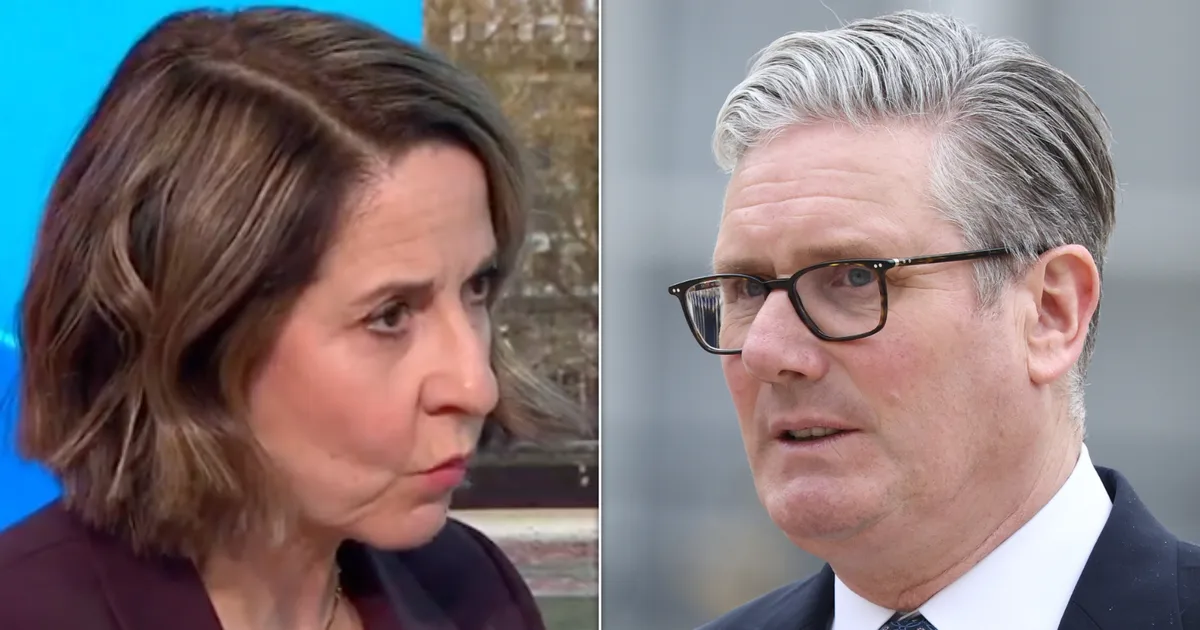
A cabinet minister has attracted online backlash after claiming Keir Starmer is a “man of honesty and integrity” amid the fallout of Peter Mandelson.
The prime minister’s judgement – and political future – is under question after it emerged this week that his pick to be the UK’s ambassador to the US failed security vetting, but still got the top job anyway.
Starmer insists that the Foreign Office kept him in the dark about the security risks around Mandelson.
Technology secretary Liz Kendall furiously defended the prime minister on Sky News on Sunday, telling presenter Trevor Phillips she had “100%” confidence in the prime minister, despite this scandal.
“He is a man of guts and strength and courage,” she said. “He does take responsibility.
“He is a man, when big decisions are facing the country, is making the right calls, on getting a grip of our public finances, on investing in our defence and NHS, of not getting involved in the war with no clear objective and no clear exit plan, who has focused on things that have mattered to me my entire life – getting kids out of poverty and tackling violence against women and girls.
“That is why I support the prime minister, because on the big judgements facing the country, he has made the right calls, no matter what pressure is put on him.”
On the Mandelson appointment, she continued to describe the prime minister as an “honest man” who acknowledges it was a “mistake” to promote the ex-Labour peer.
“He removed Peter Mandelson and I think that he is a man of honesty and integrity,” Kendall said.
“And you know what, Trevor, tomorrow in the House of Commons, he will face all of these issues and questions. He will lay all the facts before parliament.”
Kendall also claimed Starmer would not have appointed Mandelson if he knew he failed the security vetting.
She sent a warning to political opponents who might be trying to topple the prime minister, saying: “Any politician that focuses more on their future and their job, not people’s future sand their jobs, will lose the public support. That is why I back Keir Starmer.”
However, her comments sparked a strong reaction on X, where many online critics strongly disagreed with her support for Starmer…
Subscribe to Commons People, the podcast that makes politics easy. Every week, Kevin Schofield and Kate Nicholson unpack the week’s biggest stories to keep you informed. Join us for straightforward analysis of what’s going on at Westminster.
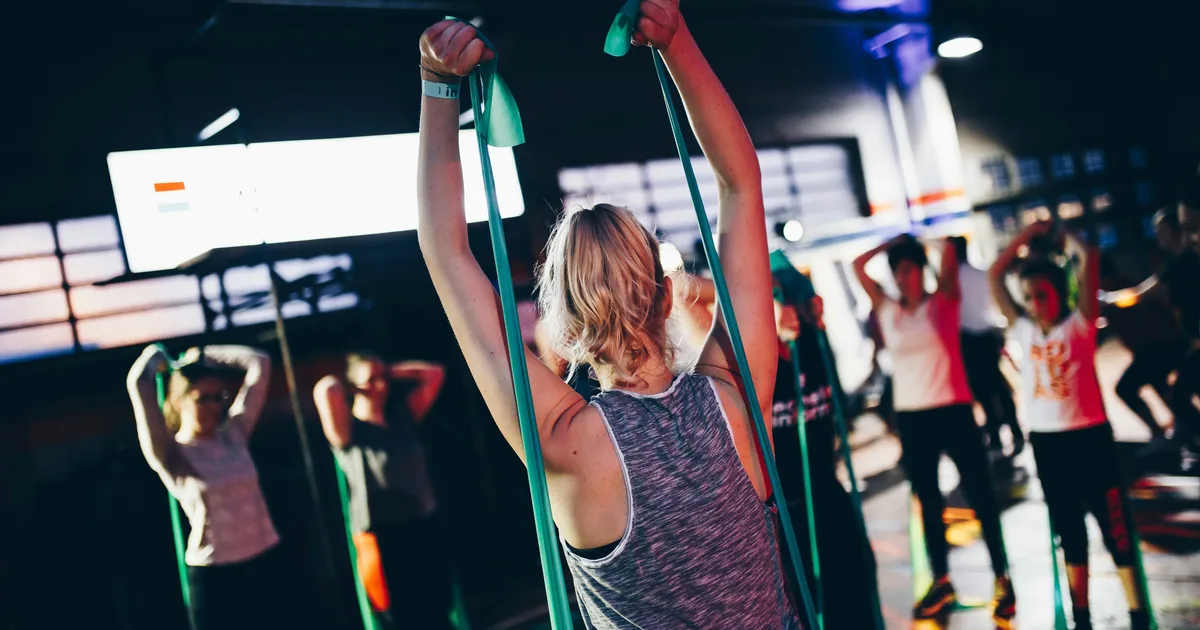
You might have heard of “chronotypes”, or a person’s natural body clock that determines whether they’re a night owl or an early bird.
That’s usually mentioned in relation to sleep. But a new randomised controlled trial suggests that it might impact our peak workout time, too.
Published in the BMJ journal OpenHeart, the research found that, “Aligning exercise timing with individual chronotype significantly enhances cardiometabolic and sleep-related outcomes in at-risk adults.”
What did the research show?
The scientists conducted a 12-week trial in which 150 sedentary participants, aged 40-60, had their chronotype assessed with a questionnaire.
They all had at least one cardiovascular risk factor.
The participants were split into groups, including a chronotype-aligned exercise (CAE) group, who worked out when best suited their chronotype, and a chronotype-misaligned exercise (CME) group, who exercised outside of their natural “best” time.
Participants completed five 40-minute moderate-intensity sessions a week for the duration of the trial. Researchers measured their blood pressure, heart rate variability, blood sugar, LDL cholesterol levels, sleep quality, and oxyegn use.
The reduction in blood pressure in the CAE group was “substantial and significantly greater than in the CME group,” the paper reads.
“Aligning exercise timing with individual chronotype significantly enhances cardiometabolic and sleep-related outcomes in at-risk adults.”
How should I plan my workouts according to my chronotype?
You likely already know whether you’re a night owl (late chronotype) or an early bird (early chronotype).
“Early chronotypes benefited more from morning exercise, while late chronotypes showed better results with evening sessions,” the study reads.
However, this research noted that all exercise, even that which is done outside of your chronotype, reduces the risk of heart health issues.
Dr Jeffrey Kelu, a research associate at King’s College London, told the Science Media Centre: “This is a useful and important study because it brings personalised medicine into a very practical context by asking not only what intervention to prescribe, but also when to prescribe it”.
They added, “Importantly, even the misaligned group improved, so the broader public-health message remains that any exercise is worthwhile, while timing it to biological preference may offer an additional benefit.”
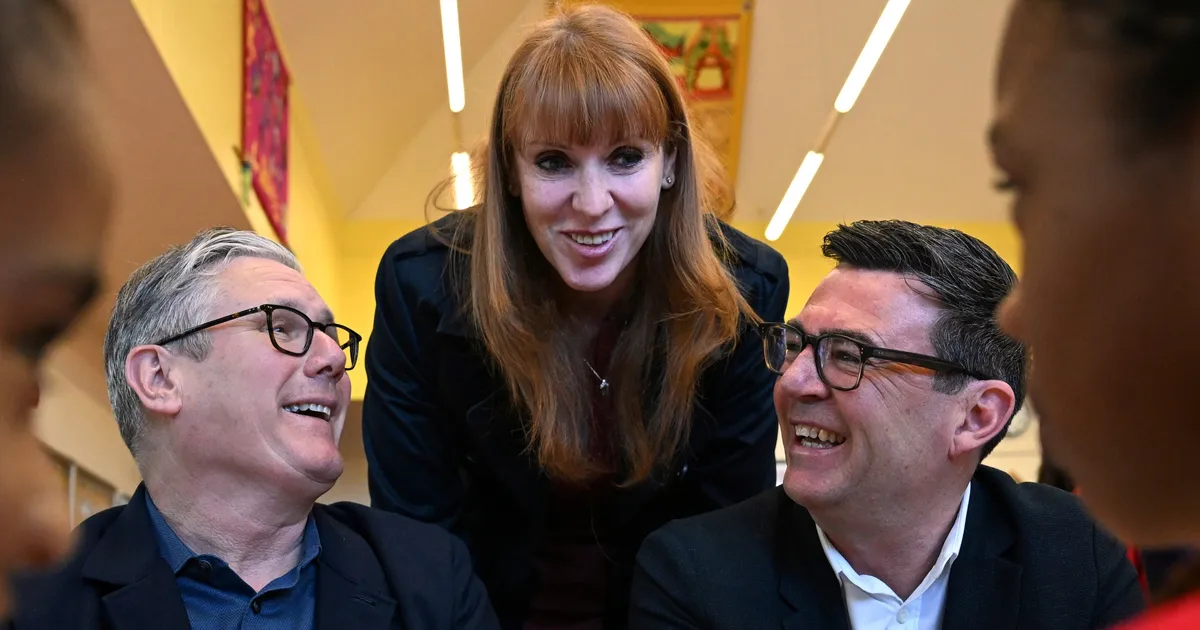
Angela Rayner had a secret meeting with Andy Burnham on Friday night, according to new reports.
The Sun on Sunday shared photos of the Greater Manchester mayor arriving at the former deputy prime minister’s constituency home in Ashton.
Their summit adds to mounting speculation the two soft-left Labour figures might be considering launching a joint coup.
Their encounter came hours after Keir Starmer furiously defended his premiership amid fresh developments in the Peter Mandelson scandal.
It was revealed by the Guardian this week that the ex-Labour peer failed security vetting, but still secured the top job as the UK’s ambassador to the US.
Starmer has since insisted that he was not told Mandelson had failed and only found out on Tuesday night.
He then sacked the chief of the Foreign Office, Olly Robbins, on Thursday night.
As scrutiny over Starmer’s judgement grows once again, technology secretary Liz Kendall sent a message to the PM’s potential opponents this morning.
She said: “Any politician that focuses more on their future and their job, not people’s future sand their jobs, will lose the public support. That is why I back Keir Starmer.”
Burnham was blocked by Labour’s executive body from running for parliament earlier this year amid fears he would try to overthrow Starmer once safely set up with a seat in the Commons.
Rayner is allegedly also considering a run at the top job, but may still be hampered from any power grab by the ongoing HMRC investigation into her tax affairs.
She had to step down from the cabinet last year after underpaying on stamp duty when buying an £800,000 property.
Labour is expected to endure major losses at the elections in May, when Holyrood and the Senedd are up for re-election along with hundreds of local authorities in England.
Insiders have told HuffPost UK any leadership challenge to Starmer will likely come after the elections so any successor can avoid taking responsibility for the bloodbath.
Subscribe to Commons People, the podcast that makes politics easy. Every week, Kevin Schofield and Kate Nicholson unpack the week’s biggest stories to keep you informed. Join us for straightforward analysis of what’s going on at Westminster.
Council by-election results from yesterday and forthcoming contests
“Love Boat” star reveals why she broke down in tears on set as a teen
![Strategi 1% rule: Kenapa simpan RM50 lebih baik dari berangan RM10k [Kewangan]](https://wordupnews.com/wp-content/uploads/2026/02/1770720522_maxresdefault-80x80.jpg)
Strategi 1% rule: Kenapa simpan RM50 lebih baik dari berangan RM10k [Kewangan]



-

 NewsBeat7 days ago
Trump and Pope Leo: Behind their disagreement over Iran war
-

 Fashion3 days ago
Weekend Open Thread: Theodora Dress
-

 News Videos6 days ago
Secure crypto trading starts with an FIU-registered
-

 Sports4 days ago
NWFL Suspends Two Players Over Post-Match Clash in Ado-Ekiti
-

 Crypto World7 days ago
SEC Proposes Certain Crypto Interfaces Don’t Need to Register as Brokers
-

 Business2 days ago
Powerball Result April 18, 2026: No Jackpot Winner in Powerball Draw: $75 Million Rolls Over
-

 Crypto World3 days ago
Russia Pushes Bill to Criminalize Unregistered Crypto Services
-

 Politics8 hours ago
Gary Stevenson delivers timely reminder to register to vote as deadline TODAY
-

 Politics3 days ago
Palestine barred from entering Canada for FIFA Congress
-
 Business4 days ago
Creo Medical agree sale of its manufacturing operation
-

 Politics2 days ago
Zack Polanski demands ‘council homes not luxury flats for foreign investors’
-

 Crypto World3 days ago
Russia Introduces Bill To Criminalize Unregistered Crypto Services
-

 Tech2 days ago
Auto Enthusiast Scores Running Tesla Model 3 for Two Grand and Turns It Into Bare-Bones Go-Kart
-

 Tech5 days ago
‘Avatar: Aang, The Last Airbender’ Leaked Online. Some Fans Say Paramount Deserves the Fallout
-

 Tech6 days ago
Microsoft adds Windows protections for malicious Remote Desktop files
-

 Crypto World6 days ago
X Launches New Cashtag Feature for Stocks and Crypto: X
-

 Sports7 days ago
Younger Than Sachin Tendulkar: Vaibhav Sooryavanshi Set To Make Historic India Debut
-

 Entertainment6 days ago
Prince Carter Brings Fans Front Row and Backstage at Boys 4 Life Tour
-
 Entertainment6 days ago
Dave Portnoy Slams Dianna Russini: ‘Makes Zero Sense’
-

 Sports5 days ago
British climbers complete new route in Swiss Alps
You must be logged in to post a comment Login