

Politics
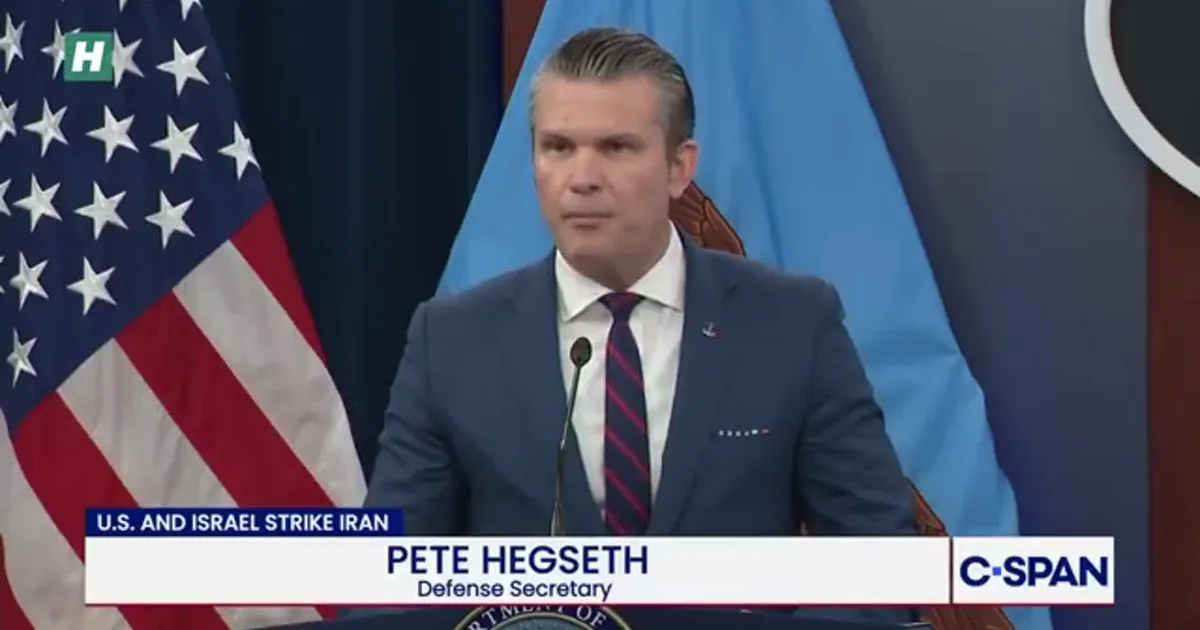
US-Israeli Strikes On Iran: Key Details You Must Know

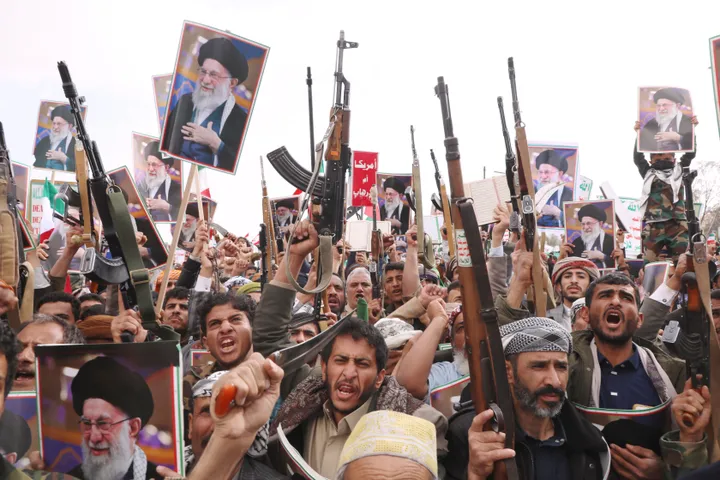
Donald Trump has sparked global chaos once again after giving the green lught to joint US and Israeli strikes on Iran over the weekend.
The attacks killed Iran’s Supreme Leader Ayatollah Ali Khamenei – a devastating moment for the Islamic Republic he has ruled for almost 40 years.
Iran retaliated by firing its own missiles at countries linked to US military operations across the Middle East, plunging the region into fresh turmoil.
As more countries get roped into the violence, here’s what we know so far.
How Did This Conflict Start?
The White House has been trying to force Iran to accept a new deal which would prevent the country from acquiring nuclear weapons.
Israel and the US have pointed to Iran’s extensive uranium enrichment programme as proof, as it has almost reached weapons-grade level.
Iran continues to reject their accusations, claiming its programme is for peaceful, civilian purposes.
Iran also terminated their previous nuclear agreement in June 2025, after the US and Israel waged a 12-day war against the country, hitting its nuclear and military sites.
During last week’s negotiations. Tehran’s leadership agreed to stop uranium stockpiling and allow full verification by the International Atomic Energy Agency – but the talks ended without a deal, and Trump said he was “not thrilled”.
The president has also been building up the largest US military presence in the region since the US-led invasion of Iraq in 2003.
At the same time, public protests in Iran against the oppressive regime have increased in recent months – and been brutally suppressed.
Trump and Israel have even encouraged demonstrators to rise up against the government, telling Iranians “this will be, probably, your only chance for generations”.
Then on Saturday, Israel launched so-called “pre-emptive” strikes on Iran and Trump accused Tehran of waging an “unending campaign of bloodshed and mass murder” targeting the US.
He claimed Iran had rejected every chance to renounce its nuclear programme and alleged it was developing long-range missiles that could threaten Europe, US troops overseas and even “soon reach the American homeland”.
What Is ‘Operation Epic Fury’?
The US announced it would be taking action against Iran with the so-called “Operation Epic Fury”, while Israel called its own offensive “Lion’s Roar”.
Trump has announced his plans to destroy Iran’s missile capabilities, target Iran’s navy, disrupt Iran-back armed groups in the Middle East and prohibit Iran from building any nuclear weapons.
Israel’s president Isaac Herzog told BBC Radio 4′s Today programme that they have a “huge amount of proof” to justify the attacks on Iran.
“We are in a historic juncture where the future of the Middle East dependso n the success of this operation,” Herzog said, calling the Islamic Republic the “empire of evil” which wants to “wipe us off the map”.
He said: “We have huge amount of proof which we are sharing of course with our British allies and every other allies.
“We want to make sure that there is a real change in the region.”
How Deadly Have The Strikes Been So Far?
Saturday’s strikes killed Iran’s Ali Khamenei who has ruled the country since 1989.
The missile strikes killed 148 people at a girls’ school in southern Iran, too, according to Iranian state media.
Iran’s retaliatory missiles also hit the Israeli city of Beit Shemesh, killing at least nine – the deadliest attack on Israel since this war started.
Three US service members have been killed in action as part of the American military operation, the US Central Command said non Sunday.
Trump warned on social media there would likely be more casualties to come, saying in a video posted last night: “That’s the way it is.”
The Iranian Red Crescent Society says 555 people have been killed in the country after the attacks hit more than 130 cities.
How Is Lebanon Involved?
Iran’s allies have leapt into action after the death of Khamenei, who controlled a range of militias across the region.
Lebanese Shia milita group Hezbollah – despite being depleted from a prolonged war with Israel 18 months ago – sent missiles and drones towards Israel on Saturday in retaliation.
Israel ordered the residents of 50 towns and villages to leave before striking the capital of Beirut and the south of the country, killing at least 31.
Lebanon’s prime minster Nawaf Salam has since stepped in to discourage any Lebanese groups from launching rockets towards Israel.
He said this was an “irresponsible and suspicious act” which “provides Israel with pretexts to continue its attacks”.
Meanwhile, the Israeli Defence Force (IDF) said Hezbollah would “pay a heavy price” for its strikes, which would continue with an increased “intensity”.
The Israeli military say its “offensive campaign” against the milita is likely to last several days.
What About The Rest Of The Middle East?
The United Arab Emirates (UAE) also reported that three people have been killed since Saturday in Iran’s retaliatory strikes.
Explosions have been heard in Bahrain, Jordan, the Iraqi city of Erbil, and Quatar’s capital of Doha.
Smoke has been seen near the US embassy in Kuwait, too.
Supporters of Khamenei’s regime have also taken to the streets in cities across the region.

How Is The UK Involved?
Britain has tried not to get directly involved with Trump’s strikes, with ministers citing the mistakes of the UK’s past interventions in the Iraq war.
But UK prime minister Keir Starmer said he had allowed the US to strike Iranian missile sites from British bases.
He said this was defensive action, and that the UK would “not join offensive action now”.
Hours after that announcement, a suspected drone strike hit RAF Akorotiri, a UK base in Cyprus, according to the UK’s Ministry of Defence, though there were no casualties.
British officials are also planning an unprecedented rescue operation for UK citizens in the Gulf.
There are more than 300,000 UK citizens in the region, and 102,000 of them have “registered their presence” with the British Foreign Office, according to foreign secretary Yvette Cooper.
How Could This Conflict Be Felt Around The World?
There are widespread fears of a global economic shock triggered by the attack.
It seems from cocerns the strait of Hormuz, essential to worldwide trade, could become inaccessible as it sits between Iran and the UAE.
Oil prices have already increased and the stock markets are struggling, with brent crude increasing by 13% during early trading hours on Monday.
Airlines are also having to grapple with new routes as countries across the Middle East closing their airspace.
Local authorities from New York City to LA say they are on high alert out of fears of a pending Iranian attack on the US mainland, too.
What Happens Next?
The US president said combat operations would continue in Iran “until all of our objectives are achieved”.
He justified the strikes by claiming “an Iranian regime armed with long range missiles and nuclear weapons would be a dire threat to every American”.
But Trump also tried to appeal to the Iranian soldiers, saying: “I once again urge the Revolutionary Guard, the Iranian military police, to lay down your arms and receive full immunity or face certain death.”
Trump claimed his attacks have already killed 48 Iranian leaders.
The president has also alleged that Iran’s new leadership wants to talk to him and that he has agreed.
However, Iran’s security chief, Ali Larijani, said “we will not negotiate with the United States” overnight.
Meanwhile, Trump’s domestic audience could put pressure on the president to slow down.
He was elected on a promise not to drag Americans into other unnecessary wars overseas, and on his famous “America First” pledge.
A Reuters/Ipsos poll found only 27% of Americans approve of the strikes, and a quarter of Republicans think Trump is too willing to use military force.


We hope you love the products we recommend! All of them were independently selected by our editors. Just so you know, HuffPost UK may collect a share of sales or other compensation from the links on this page if you decide to shop from them. Oh, and FYI – prices are accurate and items in stock as of time of publication.
For too long, people have been avoiding the water entirely when they’re menstruating.
After all, when your period hits, the last thing you want to have to deal with is accidental leaks ruining your outfit or your trip to the beach.
Thankfully, you can take the worry out of your swim routine with the help of the period pant pros over at Modibodi.

Modibodi
They’ve partnered with sports brand PUMA to bring us a range of swimwear full of built-in protection that absorbs up to 10 tampons (Super Absorbency).
For example, the Puma X Modibodi Swimwear Zip Front One Piece (£79.99) is practical, soft, and stretchy, and made from Modibodi’s signature recycled fabric. It comes in the colour combo they’re calling Black Orchid, which is black with very cute, retro-inspired teal and pink accents.
If you want something a little flirtier, the Puma X Modibodi Swimwear Hi-Leg Cheeky Bottom (£39.99) is also at the Super Absorbency level, and it matches the Puma X Modibodi Swimwear Scoop Bikini Top (£39.99) to complete the sporty look.

Modibodi
“At Modibodi, we believe performance shouldn’t pause for your period,” said Kerry Cusack, Executive Director at Modibodi. “With the next collection in our Seamfree range and the launch of our first swim collection with PUMA, we’re giving our community even more ways to move freely and confidently – wherever sport takes them.”
I’m something of a pilates princess myself, and nothing shatters the fantasy quite like feeling like you’ve got a diaper on underneath your flared leggings.

Modibodi
But you can also say goodbye to that annoying, bulky VPL with Modibodi’s new Seamfree active underwear range.
It includes buys like the Puma X Modibodi Seamfree Active Hi Waist Cheeky underwear (£22.99), which, at Moderate Absorbency, is super soft and protects you to the tune of up to 6 tampons.
And for days when your flow is light, there’s the versatile, comfortable Puma X Modibodi Seamfree Active Hi Waist Thong (£17.99), which comes in three colours and can absorb up to 4 tampons’ worth of blood.
Of course, there are times when you’ll just want to take it easy on your period. But for the days when you’re feeling up to it and don’t want to be held back, these period pants are there to back you up.

Modibodi

Tommy Birch is a behavioural scientist and Leadership Advisor at House of Birch, a local councillor and CPF Area Leader for Hertfordshire.
Britain’s housing debate is often a theatre of convenient myths. One of the most persistent is the idea that our country is cleanly divided into a righteous tribe of “Builders” and a selfish cohort of “Blockers”. In this narrative, the NIMBY is a fixed character: irrational, anti-growth, and fundamentally anti-young. It is a comforting story for politicians because it turns a complex national crisis into a simple moral binary of good versus greed.
It also happens to be wrong. As the party’s current CPF consultation paper on the Housing Crisis notes, the public is not uniformly opposed to building. Polling consistently reveals a far more awkward truth: support for new homes “in principle” often outweighs opposition. Yet, the moment a spade hits the ground, the silent majority vanishes and local resistance dominates the planning process. This is the great housing puzzle: if the majority accepts the need for development in theory, why does NIMBYism win in reality?
The answer is uncomfortable because it suggests that NIMBYism is more than a failure of information and planning law. It is a predictable response produced by the very architecture of human nature. If we are to achieve the national renewal we must first move beyond “better persuasion” and embrace a more sophisticated, biopsychosocial lens to solve what is, at its heart, a behavioural phenomenon.
To understand the NIMBY, we must first look at the biological layer of the problem. A human being is not primarily a truth-seeking machine; we are threat-reducing machines. For most of our evolutionary history, “change” in one’s immediate environment was rarely a harbinger of prosperity; it was usually a sign of danger.
When a large-scale development is proposed, it is not experienced as an abstract national project but as uncertainty landing on one’s own street. Uncertainty activates stress responses that narrow attention and increases risk aversion. In this state, people naturally prefer predictable problems to uncertain improvements. Academics like Helen Bao have explored this through the lens of “loss aversion,” but a biopsychosocial approach goes deeper, recognising that there is an underlying physiological defence mechanism. When the planning system triggers a threat and responds only with cold facts, it creates a misalignment that only hardens resistance.
The second mistake we make is a psychological one: misreading opposition as mere selfishness. Many opponents of development do not experience themselves as “blockers”, they feel they are defending something worthwhile: community, character, and standards. This is what psychologists often call “identity work”. People rarely defend a technical position on housing; they defend what that position protects: their sense of place and their self-image.
This is why the debate is so resistant to data. The conflict is not over numbers; it is over meaning. Once an issue becomes tied to identity, such as the perceived duty of a Conservative to “protect the green belt”, changing one’s mind is no longer a matter of accepting new facts, but of abandoning a deeply held sense of purpose. Katherine Einstein, who have written extensively on the matter, correctly identifies how “Neighbourhood Defenders” capture the planning process, however she often misses the psychological reality that for these residents, resistance is a form of stewardship, however poorly it may serve the national interest.
Finally, we must consider the social layer. Planning battles are not just private preferences expressed publicly; they are social contests. People watch each other, coalitions form, and status is conferred on those seen as protectors of the community. Research in social psychology suggests that when people engage within these like-minded groups, their opinions become more entrenched rather than more open.
The current planning system systematically rewards this socialised objection while penalising support. Those who oppose developments are highly motivated and visible, while the supportive majority stays silent. In this environment, local councillors respond rationally to the signals they receive. If the Right wants to build again, it must stop arguing with human nature and start designing a system that rewards different behaviours.
This is where the vision of Sir Simon Clarke and Build for Britain becomes so vital. By advocating for a pro-growth, pro-ownership agenda, they are seeking to restore the British dream of a property-owning democracy. But to achieve this, we must move from a strategy of “persuasion”, the endless leaflets and consultations that only provide a stage for opposition, to a strategy of design.
A strategy founded in biopsychosocial understanding of the issue means changing the sequence of engagement. We must reduce the perceived biological threat before we make the economic case. This means moving towards models like “Street Votes” or community-led design codes, ideas championed by Sir Simon, that give residents the agency of the “creator” rather than the victim. When people have a hand in the creation of beauty and the mitigation of impact, the threat-response is replaced by a sense of ownership.
Furthermore, we must change the framing. Development presented as “meeting targets” invites resistance, but development framed as strengthening a community invites cooperation. Language that emphasises continuity and stewardship lowers the psychological bar for acceptance.
The CPF consultation rightly asks how the party can address the challenges facing prospective homeowners. The answer lies in realising that home ownership is the greatest engine of social mobility we possess. Yet, for too long, the party has been caught between national necessity and local revolt.
Treating NIMBYism as a planning technicality is no longer tenable. It is a lived political crisis that is shaping the political allegiance of a generation. NIMBYism is not proof that the public is unreachable; it is proof that policy-makers have ignored a fundamental rule: if you want different behaviour, you need a different system.
Behavioural insight is not a “nice-to-have”; it is a fundamental part of the machinery of government. As Margaret Thatcher famously observed, “the facts of life are conservative”. If we are to build for Britain, we must start by taking human nature seriously. Our housing crisis will not be solved by louder arguments, but by a strategy that finally aligns the instincts of the individual with the renewal of the nation.

Ever since I’ve learned that some Italians add baking soda as well as sugar to tomato sauce to lessen its acidity, I’ve never gone back. The same goes for “salamoia Bolognese,” a herb mix that put my “Italian seasoning” to shame.
And while I’m very much on the pro-garlic side of Italy’s allicin divide, I’m pretty sold on the country’s subtler “aglio in camicia” approach in some dishes.
What does “in camicia” mean?
The technique, which literally translates to “in a shirt”, involves frying garlic with its skin still on.
Then, you remove the clove after it’s imparted the olive oil with its flavour.
It gives the cloves a “delicate, sweet and smoky flavour” (Iand saves you time), Roman chef Emiliano Amore shared on Instagram Reels.
In Italian food vlogger Ilaria’s TikTok video, meanwhile, a cook said, “The garlic is useless if you don’t put it with the skin. The skin has all the flavour”.
Because the flavour is gentler and less bitter, it can’t overwhelm dishes like seafood.
Chef David Rocco said it’s perfect for cooking garlic at higher temps, too.
Speaking to cookware company Ruffoni, he said the skin “covers the garlic so it doesn’t get burnt”, calling it “the best way to get that garlic flavour, but not that bitter… burnt flavour”.
Italian restaurant Angelini Osteria called the technique a “classic Italian cooking method”.
How can I make “aglio in camicia”?
Simply add garlic cloves to olive oil over medium heat (bash them first for extra flavour if you like) and cook for five minutes, until golden brown.
This can happen while you’re cooking meat for at least the amount of time it takes for the garlic to turn brown, too.
Some like to eat the insides of the cooked cloves separately. But for the dishes themselves, the flesh never becomes a part of the dish; garlic skin infuses the oil instead.
Which dishes suit “aglio in camicia”?
If you don’t want the flavour of garlic to overpower your food, the method is perfect.
That may be the case for seafood (Angelini Osteria uses the technique for an octopus dish), but it works for simpler dishes too.
It makes for a pretty great spaghetti dish, for instance. One recipe relies only on oil, a garlic clove, spaghetti, red peppers, and salt for a satisfying meal.
And because of that protective skin, it works when you’re searing meat, fish, or veggies, too.
4 min read
Whitehall should look to local government as a model for embracing AI.
The Ministry of Justice has sent a clear signal to the legal world: the era of the dusty ledger is over. The government is, rhetorically at least, leaning into the potential of technology to tackle the Crown Court backlog, as it has in other departments. As a founder who has spent years building tools to navigate these very challenges, I back the intent.
It’s a vision the Prime Minister feels strongly about.
He has publicly shared his frustration with the culture of paper files during his time running the Crown Prosecution Service. I’ve spoken with him directly about the truly transformational potential home grown technology has for public sector reform.
However, as any founder who has tried to sell a transformative idea to a government department will tell you, the “what” is often inspiring, but the “how” remains the bottleneck.
While Whitehall stumbles forward, there is revolution brewing in town halls. Local authorities across the UK are increasing spending on UK-born innovative technology at a rate that puts central departments to shame.
AI is increasingly being used by social care teams to create accurate, compliant social care documentation, saving over-stretched frontline workers over a day per week. Faced with the tightest budgets in a generation, councils have become the ultimate friends of innovation. Their fiscal constraints and little press coverage for their work show they don’t harness new technology to make a point or because it gives them a headline. They buy it because it secures them much-needed efficiencies, enhances their thin resources, and improves their services for the people they represent. It allows them to do more with less.
They are proving that harnessing tested and secure technology isn’t about replacing the soul of public service. It is about stripping away the administrative sludge that prevents human beings from doing their jobs.
My own experience with government procurement has been a mixed bag, which is a sentiment shared by many in the tech ecosystem. On one hand, there is a genuine desire to engage with SMEs. On the other, state machinery still favours the safe, the slow, and the scale of legacy providers.
The centre of government talks a good game about harnessing technology in its quest to bring services closer to people. In some areas, there’s been decent progress. The use of Claude in the gov.uk app is one. But there is a massive opportunity being missed by treating tech as a procurement exercise rather than a partnership. To truly reform public services, we must move beyond the buyer-vendor dynamic. We need a system that values the speed of a startup and the sovereignty of British-built AI, rather than one that bogs us down in eighteen-month tender cycles that risk outliving the technology itself.
This byzantine system is not only holding back government ambition. It also risks undermining the ambition of UK tech founders. Many of my fellow founders are ramping up focus on selling technology in the US, Europe and Australia, where it is already driving public service reform. It is somewhat absurd that UK tech is driving efficiencies in over a dozen countries around the world before Whitehall wakes up.
Political will is needed to demand change in the boiler room of Whitehall.
The whole of the UK tech ecosystem has ideas about how to jump this barrier, including changes to the procurement process so specialist startups can compete; increased risk tolerance, accepting that not every pilot will work, but the ones that do will save billions; and a call for buying in proven technologies to be considered on level pegging with building from scratch in-house.
Systemic change is needed, but the first step is in many ways far simpler. We need to ensure Whitehall allows a turbocharged AI-enabled reform of services, to be accompanied by a celebration of UK innovation. UK plc stands ready.
Alex Stephany is founder and CEO of Beam
Politics
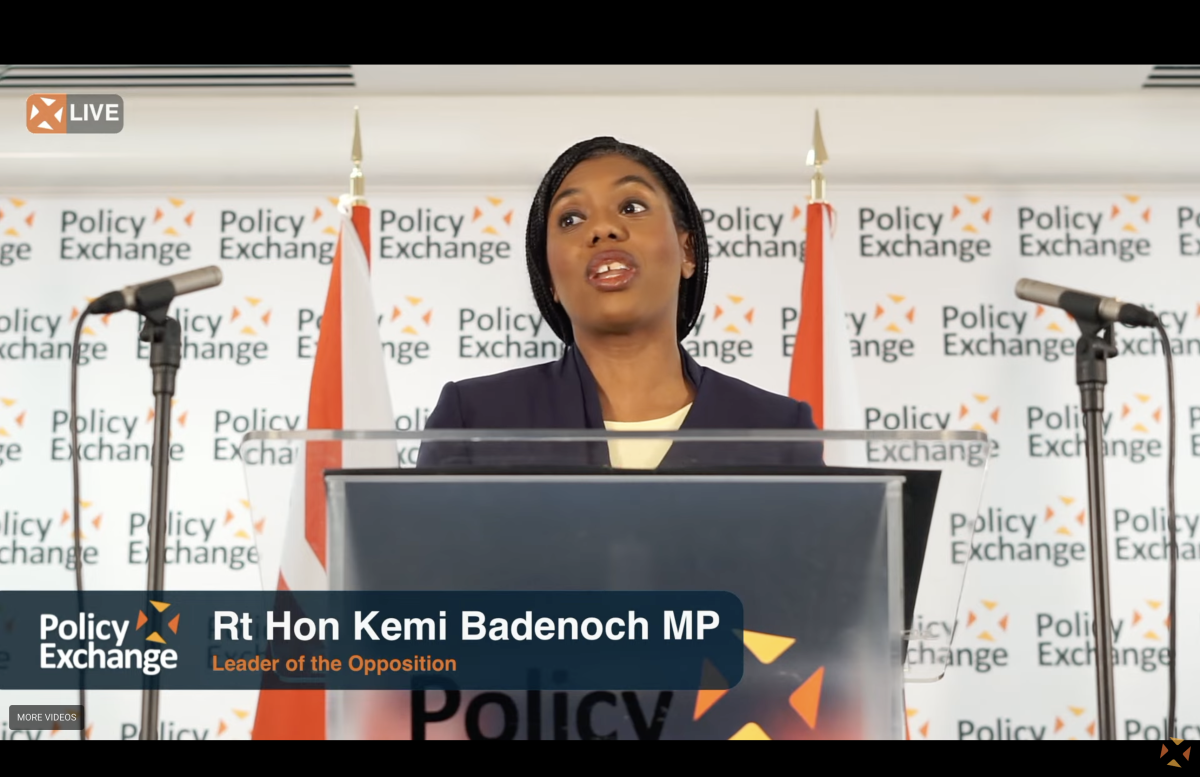
Kemi Badenoch: “Targeting voters on the basis of their ethnicity or religion is neither healthy or British”

Brit Award winner Jacob Alon made a display of solidarity with Palestine during Sharon Osbourne’s speech at this year’s ceremony.
On Saturday night, Jacob attended the 2026 Brits at Manchester’s Co-Op Live arena, after becoming the latest recipient of the coveted Critics’ Choice prize, recognising emerging British talent.
Towards the end of the ceremony, Sharon delivered a speech to honour her late husband Ozzy Osbourne, in commemoration of his posthumous Lifetime Achievement win.
During Sharon’s speech, the Brits’ cameras panned to Jacob in the audience, who was seen holding up a Palestinian keffiyeh at their table.

In recent years, both Sharon and Ozzy had repeatedly made headlines with their vocal pro-Israel stance.
Last year, months before his death, the Black Sabbath frontman and his wife were two of 200 public figures who co-signed an open letter calling for an investigation into supposed anti-Israel bias at the BBC.
Sharon, meanwhile, had previously voiced her belief that the Irish musical group Kneecap should have their US work visas revoked over remarks they made in support of Palestine at the Coachella music festival in 2025.
Jacob is a staunch supporter of Palestine, and as part of their performance at the Mercury Music Prize last year, they sang “Free Palestine” during a rendition of their song Fairy In A Bottle.
Meanwhile, earlier in the ceremony, many Brit Awards viewers voiced their upset on social media when the awards show appeared to censor an acceptance speech made by Geese musician Max Bassin, in which he said: “Free Palestine, fuck ICE, go Geese.”
It was later indicated to HuffPost UK that this censorship was due to Max’s strong language after his pro-Palestine message, rather than his speech’s political content.
!function(n){if(!window.cnx){window.cnx={},window.cnx.cmd=[];var t=n.createElement(‘iframe’);t.display=’none’,t.onload=function(){var n=t.contentWindow.document,c=n.createElement(‘script’);c.src=”//cd.connatix.com/connatix.player.js”,c.setAttribute(‘async’,’1′),c.setAttribute(‘type’,’text/javascript’),n.body.appendChild(c)},n.head.appendChild(t)}}(document);(new Image()).src=”https://capi.connatix.com/tr/si?token=19654b65-409c-4b38-90db-80cbdea02cf4″;cnx.cmd.push(function(){cnx({“playerId”:”19654b65-409c-4b38-90db-80cbdea02cf4″,”mediaId”:”0d2116b2-73ae-4559-bd30-a65a05490593″}).render(“69a59a55e4b0d383f5041e83”);});
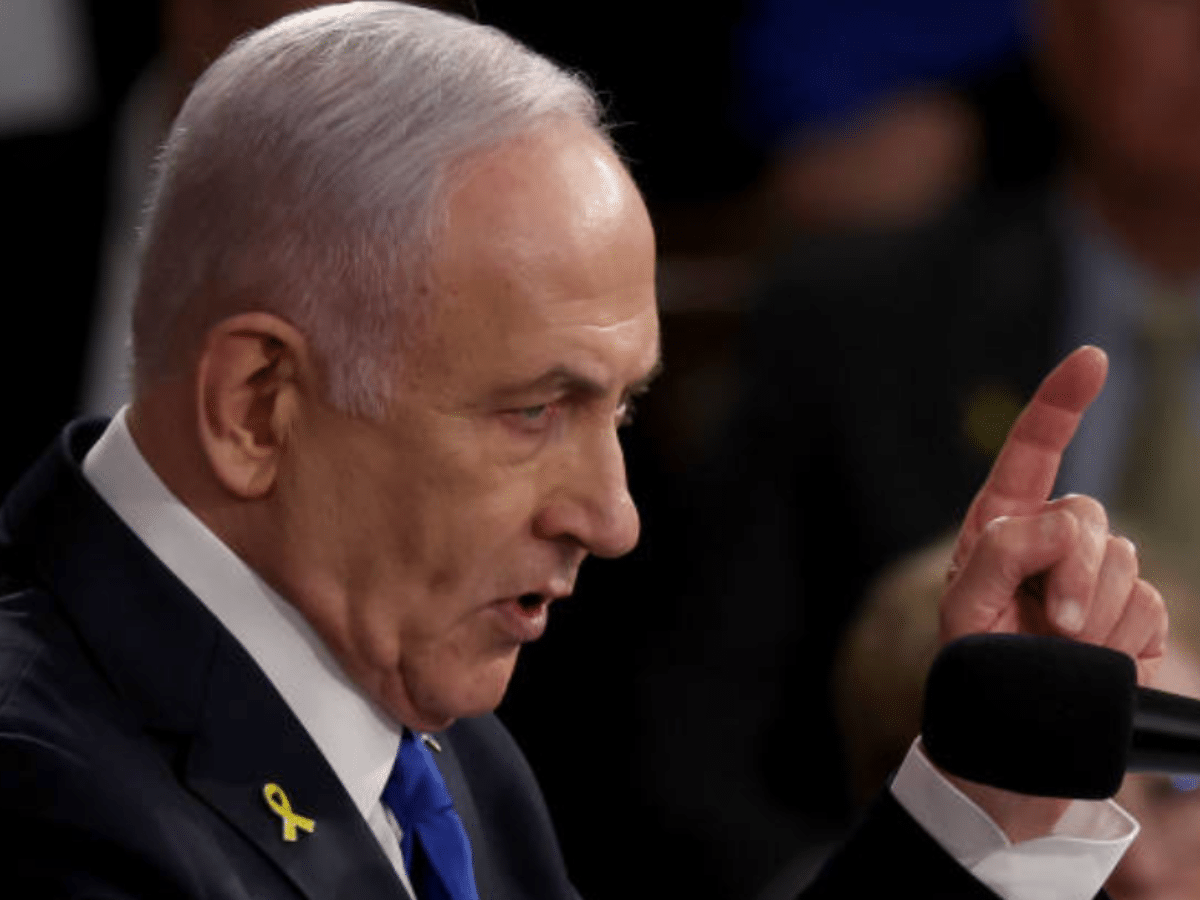
Iran says it has bombed wanted war criminal Benjamin Netanyahu’s office in Israel. The Islamic Revolutionary Guard Corps are also claiming that they have attacked the Israeli air force headquarters.
Palestine Chronicle reported that:
According to Tasnim News Agency, the Public Relations office of the Islamic Revolutionary Guard Corps announced that the office of Israeli Prime Minister Benjamin Netanyahu and the location of the commander of the Israeli air force were attacked in what it described as “targeted and surprise attacks.”
The Times of Israel has reported that:
Israel says there were no injuries in the strikes.
And, Netanyahu’s office have dismissed Iran’s claims that the “fate” of the Israeli PM is unclear. As yet, details remain entirely unclear – Iran’s assertions have not been verified, nor has Netanyahu’s location.
At the weekend, Netanyahu – along with various co-criminal Western leaders – crowed about the assassination of Iranian leader Ali Khamenei and his family. It’s hard to argue that turnabout is not fair play. However, it will be no surprise to see Keir Starmer and other ‘leaders’ condemn Iran for ‘disproportionately’ retaliating for what Israel did to it – just as Starmer did on 1 March after the US and Israel slaughtered Iranian schoolchildren and bombed hospitals.
Featured image via the Canary

Watching hacks tried a few questions on Mandelson, now out on bail, as he left his home and entered a waiting black cab. No dice…

The US military has admitted that its ally Kuwait shot down three US fighter jets that crashed in Kuwait in a so-called ‘friendly fire’ incident.
Footage of one of the fighters as it crashed also appeared to show pilots ejecting via parachute. The BBC reported that:
US Central Command has just now said three of its F-15 jets “flying in support of Operation Epic Fury” – the US operation against Iran – “went down over Kuwait due to an apparent friendly fire incident”.
All six crew ejected safely and have been recovered, it says.
The news is a massive embarrassment for the US, though it may suggest its other allies may have taken a leaf out of Israel’s book. The genocidal colony murdered hundreds of its own people on 7 October 2023 under its ‘Hannibal directive’. This was admitted by former Israeli defence secretary Yoav Gallant and has been common knowledge in Israel since a few weeks after it happened. Israel also killed the Bibas family, three escaping Israeli captives and numerous other Israelis in Gaza.
However, UK and other western media continue to ignore both facts.
Featured image via

Chinese banks freeze accounts over crypto memos

Cardi B’s Most Unforgettable Fashion Moments: 5 Iconic Outfits

Israel uses Iron Beam laser to shoot down rockets for first time | News World


-

 Sports7 days ago
Women’s college basketball rankings: Iowa reenters top 10, Auriemma makes history
-

 Politics7 days ago
Nick Reiner Enters Plea In Deaths Of Parents Rob And Michele
-

 Fashion3 days ago
Weekend Open Thread: Iris Top
-

 Business6 days ago
True Citrus debuts functional drink mix collection
-

 Politics4 days ago
ITV enters Gaza with IDF amid ongoing genocide
-

 Tech1 day ago
Unihertz’s Titan 2 Elite Arrives Just as Physical Keyboards Refuse to Fade Away
-
Sports2 days ago
The Vikings Need a Duck
-

 Crypto World6 days ago
XRP price enters “dead zone” as Binance leverage hits lows
-

 NewsBeat5 days ago
Cuba says its forces have killed four on US-registered speedboat | World News
-
 NewsBeat2 days ago
Dubai flights cancelled as Brit told airspace closed ’10 minutes after boarding’
-

 Tech6 days ago
Unsurprisingly, Apple's board gets what it wants in 2026 shareholder meeting
-
 NewsBeat5 days ago
Manchester Central Mosque issues statement as it imposes new measures ‘with immediate effect’ after armed men enter
-
 NewsBeat2 days ago
The empty pub on busy Cambridge road that has been boarded up for years
-

 NewsBeat1 day ago
‘Significant’ damage to boarded-up Horden house after fire
-

 NewsBeat2 days ago
Abusive parents will now be treated like sex offenders and placed on a ‘child cruelty register’ | News UK
-
 NewsBeat6 days ago
Police latest as search for missing woman enters day nine
-

 Entertainment7 hours ago
Baby Gear Guide: Strollers, Car Seats
-

 Business4 days ago
Discord Pushes Implementation of Global Age Checks to Second Half of 2026
-

 Business4 days ago
Only 4% of women globally reside in countries that offer almost complete legal equality
-
 Tech3 days ago
NASA Reveals Identity of Astronaut Who Suffered Medical Incident Aboard ISS