
Politics
Using Dating Apps As An HIV Positive Person

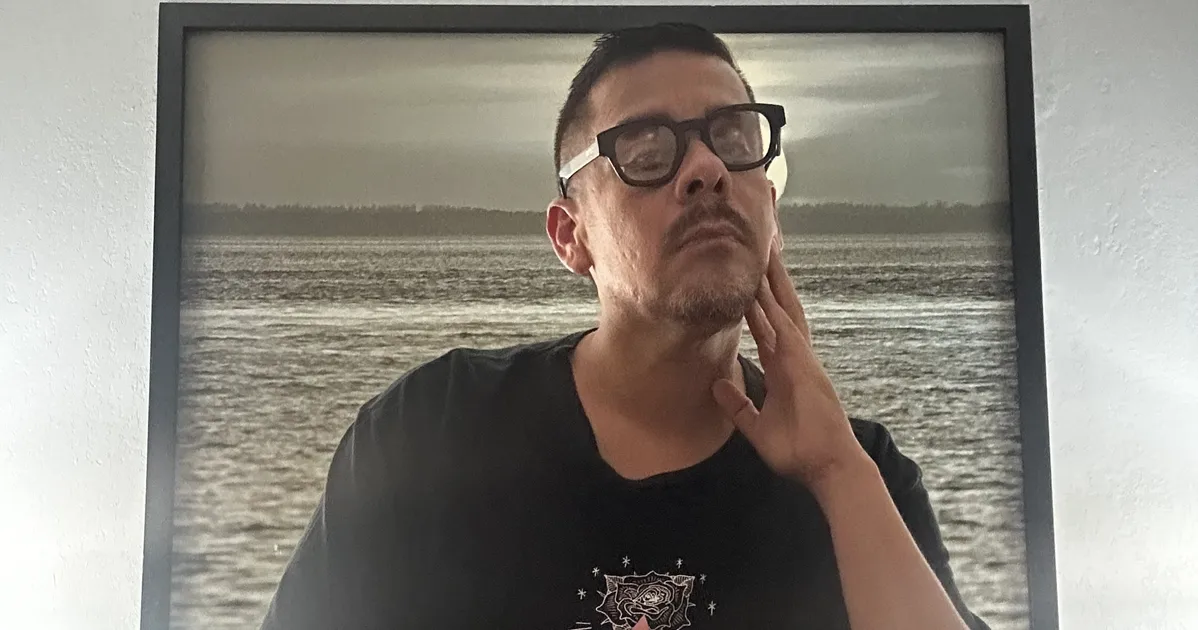
I vividly remember the day I was diagnosed HIV positive. For months, I had been having trouble breathing, didn’t feel like eating and was extremely tired. The doctor thought I might have pneumonia, but she asked me to take a HIV test.
When the test results came back, my heart sank. Turning away from the doctor who had just delivered the news, I was stunned by the gorgeous day outside. She told me I would have to take medication for the rest of my life, but I could still live a happy, normal life.
I was numb from hearing the results, but one worry was consuming my heart. Who would love me now?
But within a year after my diagnosis, I felt healthier than ever. Once I was HIV undetectable, meaning I could not transmit HIV through sexual contact, I only thought about my status for 10 seconds a day, when I popped my pill before I went to bed.
That is, until I decided to post a profile on a dating app.
I had not gone on a date since I was diagnosed, but I was finally ready to get back out there and give love a try. I didn’t know where to start, so I created a profile on Tinder, which I knew was very popular. As I filled out various fields, I was nervous, wondering how I’d be perceived. Then I came to check boxes for race, religion and HIV status ― Wait, I had to check a box for that?
In that instant, I flashed back to when I first got my diagnosis at the hospital. The day I was discharged, the nurse warned me that I would have to tell all my future lovers about my status because if I didn’t, it could be a criminal offense. It made me feel like a sick criminal with a deep, shameful secret in my body.
This check box’s attempt to reduce me to one label instantly brought up the same deep shame in my body. I chose not to disclose my status upfront – it was my choice and I’d do it when I was ready – but it didn’t help much, because there were many profiles where a man would write things like the following in his main bio line.
“My HIV status is negative and so should yours!” or―
“Please be clean. If you’re not, then don’t bother to reach out to me.” Another said―
“When was your last test? If there is no proof, you will be blocked.”
Reading sentiments like those felt like a knife to my heart. I felt defeated and heartbroken because I thought: What’s the opposite of clean? I suppose that’s me; I’m dirty.
This is why sex educators caution against using the term “clean” to refer to STI status. Referring to people as clean if they test negative implies that they’re dirty if they test positive. This places a moral value on STI status and sexual behaviour in general, and not only does it affect the self-worth of those living with STIs, but it also spreads shame and stigma that deters people from getting tested.
It helped me to listen to HIV advocates like the award-winning author, George M. Johnson, who also has HIV. In one interview, he said, “People don’t fear HIV; they fear the stigma. Stigma is born from non-communication, and the burden is only on the person with HIV. There should be a community effort also with people who are HIV negative to lift the heavy burden with those already with HIV.” Johnson is a Black queer author I greatly admire, and after hearing him say this, I felt less alone.
It can be a heavy burden to live with HIV, and there were times when I resented having this disease. But I wasn’t ready to give up on love. Some of my friends said to forget Tinder and try a different app.
I created a profile on Bumble, where I got a like from a gentleman who was very handsome with dark eyes, a sharp jawline and a beautiful smile to match. We messaged each other back and forth. Then we exchanged phone numbers, which led to texting, and we worked our way up to phone calls.
In one of our calls, he said, “I have to tell you something, I have HIV, and if that bothers you, then let’s not waste each other’s time.”
I felt this weight lifted off my shoulders, let out a huge sigh, and said, “Thank you for sharing that with me, because I have HIV, too.” It felt good to be honest, and after that exchange, I started fantasising about our future together. That old fear – I will be alone with HIV. I won’t have anyone to love me – began to dissipate, and we began to make plans to meet.
He lived an hour away. He had a vehicle, but it was a rental. He seemed a little demanding when he said, “Listen, I can’t put too many miles on the car, so you would have to come and see me.” I was willing to drive the hour to see him and drive the hour back home when the time came. But for now, we were still getting to know one another over texts and calls.
We both sent each other photos of our dogs. Here was another thing we had in common: we were both proud “Dog Dads.” His photos with his chihuahua scored him extra points in my mind! I was imagining us Dog Dad Dating, going to the park with our pets and having a picnic, tossing Frisbees, and stopping at a dog-friendly coffee shop, where our dogs could cuddle up at our feet as we made eyes at one another.
But then one day, he wrote, “Hey, send me a picture of your penis?”
We hadn’t even seen each other in person yet. Don’t get me wrong, I had sent dick pics to many guys in the past, but this just didn’t fit my vision of where we were in our relationship. He insisted, “You have to work with me here. If you can’t send me a photo, then this isn’t going to work.” That made me very uncomfortable, but I sent the photo to avoid losing my fantasy of our future together.
A few days later, I sent him a cute picture of me and my dog. He responded, “He is so cute! Not as cute as you, because you are ugly.” I felt a shot through my heart. Maybe he intended it as a joke, but I did not find it remotely funny. I told him that he hurt my feelings, hoping he’d comfort me, but he responded, “I was just joking! Get over yourself!”
I had been willing to drive a long distance to see him. I had compromised and sent him an X-rated photo. But I wasn’t going to put up with someone who couldn’t acknowledge my feelings and make amends. I gave him several chances to offer a simple apology, but when it didn’t come, I removed him from my phone and we never had the chance to meet.
Looking back, I ignored the red flags and was willing to make concessions just because I didn’t want to be alone. This thought still scares me. Trying to find love brought me back to some of the earliest dark days of living with HIV.
Sadly, I had to put my dog down a few weeks ago, so I have lost my best friend. Thankfully, I have my family and friends to keep me company and check up on me. At the moment, I am focused on loving myself and my body, getting in touch with my feelings and needs, and accepting my HIV status.
Every morning, after brushing my teeth, I look in the mirror and smile to myself. After I take a shower, I look at my naked body and say I love this body. Daily practices that are vital for my self-love. If something bothers me, I address it right away instead of avoiding or ignoring it.
When I reenter the dating space, I will be truthful with myself and willing to have the honest, uncomfortable conversation with my dates that I have HIV, and you can take it or you can leave it.
I still yearn for touch, company and the joy of being with someone, but not just anyone. I want a man with whom time and the world can stop. Living with this infectious disease may make it more challenging to find, but I still believe in this vision of Mr. Right, and I don’t think it’s out of reach.
Just as I am working to unlearn self-stigma around my diagnosis, the more we can all work to reduce societal stigma and use neutral language around STI status, the closer in reach that vision will be.
This piece was previously published on HuffPost and is being shared again now as part of HuffPost Personal’s “Best Of” series.
Do you have a compelling personal story you’d like to see published on HuffPost? Find out what we’re looking for here and send us a pitch at pitch@huffpost.com.

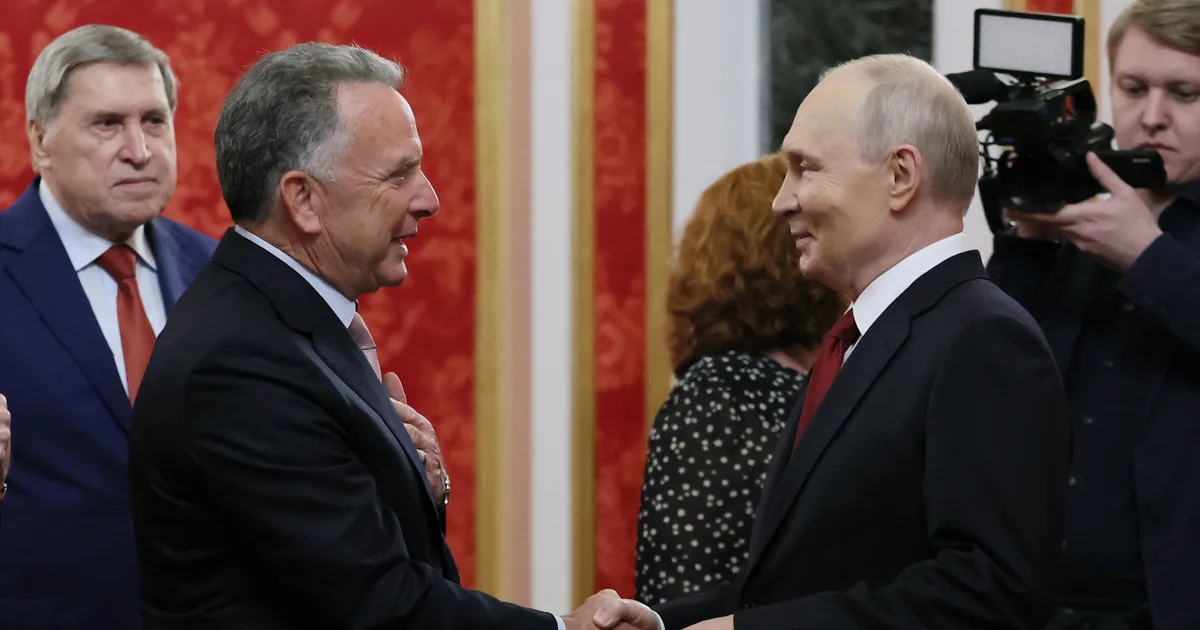
Donald Trump’s special envoy for peace has sparked concern after he gushed over Vladimir Putin during a trip to Moscow.
Steve Witkoff headed to the Kremlin this week for talks on ending the Ukraine war.
He went with Trump’s son-in-law, Jared Kushner, amid heightened efforts to conclude the conflict – but began his crucial diplomatic visit by sucking up to the Russian autocrat.
According to readout shared on the Kremlin website, Putin welcomed the delegation by acknowledging the situation they have to sort out is a “difficult one”.
He then began flattering the US team, saying: “And here, of course, the quality of mediation and trust in those who are engaged in it are very important.
“I’d like to tell you that we find it comfortable to work with you, and, of course, we have a very high level of trust during this work.”
Witkoff replied: “So, first of all, President Putin, thank you so much for having us.
“We were sitting outside just now, me, Jared and Kirill, and then Yury joined us, and we were all talking about when we retire, we’ll have all these incredible stories and incredible memories, and yours will be right at the top of it all.”
Special envoy Kirill Dmitriev and adviser Yuri Ushakov are two senior figures very close to Putin.
Apparently the US delegation discussed “substantive plans for next steps” with Putin on Saturday, according to the White House, though the details remain unclear.
An announcement is expected in the coming weeks.
But it was Witkoff’s remarks, not the promise of a potential peace deal, which sparked a stir online…
According to the Kremlin, the talks were useful, but there was no clear sign of a breakthrough in talks.
The US president once vowed to end the Ukraine war within the first 24 hours of his return to office in January 2025 – but the conflict continues to rage.
Even so, Trump still seems optimistic he can be the man to find a resolution.
“I just want to see that end. I think we’ll get it,” the US president told GB News earlier this week.
The Ukrainian president Volodymr Zelenskyy said the US delegation was going to head to Kyiv for talks after the Moscow trip.
Witkoff and Kushner are hoping for “equally productive meetings” in Ukraine.
It will be their first trip to Ukraine’s capital.
Both Ukraine and Russia agreed to halt strikes on one another’s capitals for three days while the US delegation is in the area.
Listen to Commons People, the podcast that makes politics easy. Every week, Kevin Schofield and Kate Nicholson unpack the week’s biggest stories to keep you informed. Join us for straightforward analysis of what’s going on at Westminster.
 lead image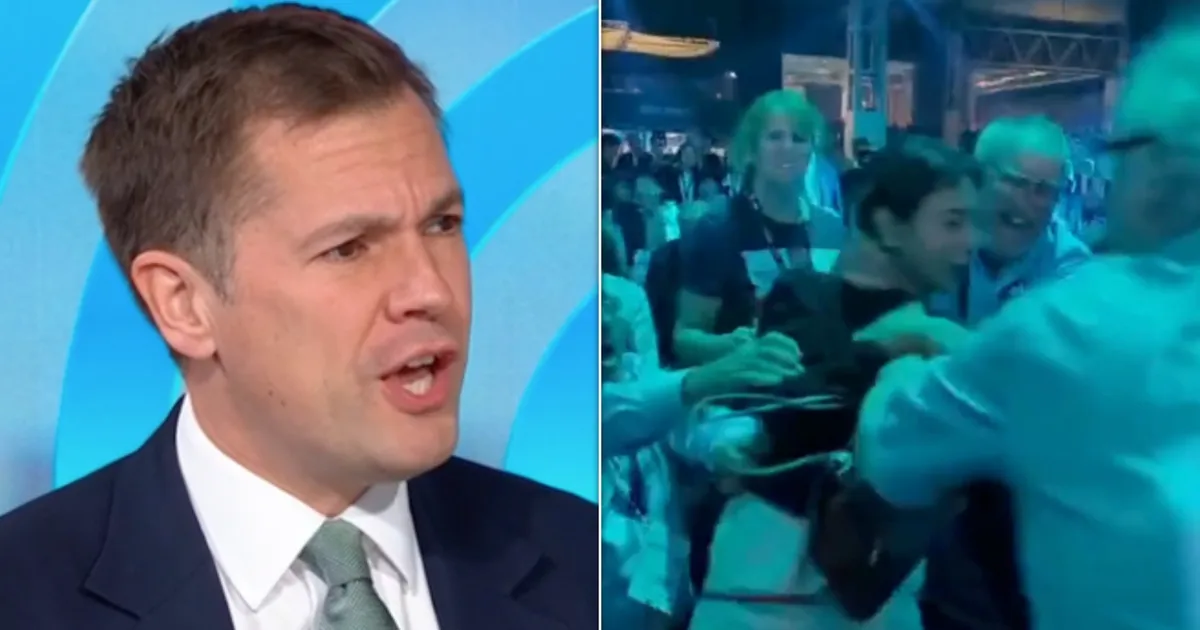
Robert Jenrick showed no sympathy for the protester who was attacked after disrupting Nigel Farage’s keynote speech at Reform conference.
The party leader’s address was interrupted on Friday by multiple demonstrators, reportedly from activist group Climate Resistance, all of whom were quickly removed by security while Farage shouted: “Boring!”
Footage from people in the crowd later showed that at least one female protester had been physically attacked by attendees, as she had her hair pulled and head grabbed.
West Midlands Police said in a statement: “We’re aware of a video circulating from the Reform UK Conference showing an incident with a protester. We haven’t received a complaint but would ask the woman involved to come forward and contact us so we can carry out enquiries.”
When asked by guest presenter Jon Sopel on Sky News for his response to this violence, Jenrick – Reform’s Treasury spokesperson – was very dismissive.
Jenrick interrupted Sopel while he was describing the attack to say: “Oh, boo-hoo. If you try and wreck someone’s speech at party conference –”
Sopel looked shocked, before cutting in: “Heckle. Political history is full of heckles –”
“Come off it, I’m not afraid of hecklers, I’ve had plenty of them in my time,” the Newark MP replied. “You take your chances at party conference if you try and mess it up.”
After the clip played, Jenrick said: “We’re now in a country where, whatever she is, a far-left protester, goes into party conference, tries to wreck the leader’s speech and cries foul if a pensioner knocks her over the head with a zimmer frame.
“I mean, come on, get a life.
This person knew what they were doing, they were trying to cause trouble and they probably got more publicity out of it as a result of what happened.”
His remarks come after Farage was also dismissive of the attack on protesters.
He told broadcasters: “It’s all one way, isn’t it? I can have milkshakes chucked in my face, be bashed over the head with placards and that’s all fine. That’s absolutely fine.
“Yet, well, we have a big event that people have paid a lot of money to come to and we get people there trying to disrupt it and we remove them. Suddenly we’re in the wrong. Utter nonsense.”
He added: “This is just also one sided. It is ridiculous. There were people there trying to disrupt our conference. We always have them. We always have them and we remove them quickly and expeditiously.”
Meanwhile, Reform UK’s home affairs spokesperson Zia Yusuf said: “On the question of whether I condemn people punching people, yes, I condemn people punching people.”
Farage’s speech had already been delayed by an hour before the protests began.
His team claimed Counter-Terrorism Police had prevented the party leader from going on stage, but the official force later denied it had any involvement with the conference.
The entire conference was overshadowed by the publication of sting operation which accused senior Reform aides of accepting foreign donations for the party.
Listen to Commons People, the podcast that makes politics easy. Every week, Kevin Schofield and Kate Nicholson unpack the week’s biggest stories to keep you informed. Join us for straightforward analysis of what’s going on at Westminster.

When he was 5, my son went through a phase where he would climb up onto the couch where I was sitting, plop himself on my lap and punch my breasts, squish them in his hands, then try to pinch my nipples. I’d push his arms down and pull away, saying, “Ouch! That hurts, buddy. Please, don’t poke me there.”
My daughter, then an inquisitive 6-year-old, was more likely to ask pointed questions. A conversation might start like this: “Mom, why do women have breasts but not men?”
We talked about how men do have breast tissue and nipples but that women’s breasts look different – bigger, bouncier – because they serve a different function.
And then, “Did you breastfeed us, Mom?”
She knew the answer, but she asked anyway.
“No, I didn’t breastfeed you, sweetie,” I replied. “ I fed you formula from a bottle,” I reminded her, adding, “and because of that, Daddy got to help feed you, too!”
Curiously, the question she hadn’t asked, until recently, was why.
Thirteen years ago, when I was 30 years old, I underwent a prophylactic bilateral mastectomy with reconstruction – that is, I opted to have my healthy breast tissue scraped clean from my skin, removed and replaced with silicone substitutes.
In my family, breast cancer is like puberty; if you are a woman, you wait for it, prepare for it, wondering when – not if – breast cancer will strike. My mom’s grandmother died of breast cancer when she was in her early 50s; my mom’s aunt died of breast cancer at age 35; my mom’s mother was diagnosed with breast cancer the year I was born, but had a mastectomy, and is still alive today at 96 years old.
Of my mom’s four sisters, three – plus my mom – developed breast cancer, two in their 30s and two right around age 50. The two who developed cancer earlier in life have since died, as has one of the other two, despite undergoing a bilateral mastectomy. The one sister who hasn’t developed breast cancer is also the only sister who tested negative for a deleterious BRCA2 mutation.
Like my mother and three of her four sisters, I carry a potent BRCA2 genetic mutation that, before surgery, put my lifetime risk of developing breast cancer pre-surgery at 55-69%. A prophylactic bilateral mastectomy has reduced that risk by 90%. (Risk cannot be completely eliminated because even the most experienced surgeon cannot remove all breast tissue.)
I continue to undergo annual screenings: manual exams by my gynaecologist, primary care physician and breast surgeon. As the risk of my implants rupturing rises the longer they are in place, last year I had a breast ultrasound followed by an MRI with contrast to survey the integrity of my implants as well as to screen for cancer.
With such vigilance, I am confident that, should a malignancy arise, the tumour would be caught early and my prognosis would be better than it was for previous generations of women in my family.
That said, when I decided to remove my breasts, I did not intend to have children. Now, I have children, and those children are no longer infants. They are not toddlers. They are school-aged: curious and observant. They have questions. How do I answer?
According to Talking About BRCA in Your Family Tree, a comprehensive online resource published by the National Society of Genetic Counselors, the question of when and how to discuss hereditary cancer with children is dependent on a constellation of factors that each family must consider when weighing the decision.
For example, a caregiver’s understanding of the facts about BRCA mutations as well as his or her comfort level in discussing the topic will in part dictate the timing of the conversation. Likewise, a child’s readiness to receive and comprehend the information determined by their age and emotional and developmental maturity will play a role in when and what details to share.
In my case, the topic of cancer arose organically when my children were very young. Conversations about Grandma Joan began early because of her absence. They know she died of ovarian cancer when I was 23 years old – all grown up, in their minds – and they know she would have loved them immensely, and that her love for them lives on through me.
They also know that Grandma Joan’s sister, Aunt Carol, died of cancer because they were alive when it happened. They met Aunt Carol, spent the night at her farmhouse once when my son was an infant and my daughter was a toddler. My daughter still carries the plush purple blanket Aunt Carol gifted her on that visit, a reminder, again, of a lineage of women who have loved her.
Cancer is not a foreign word in our home, but it is also not omnipresent. I myself am not sick. The concept for them is still relatively abstract, which is why our conversations, when the topic of cancer comes up, are brief. They focus less on specifics and more on preserving the memory of our loved ones.
The burden of hereditary cancer, especially with a family history like ours, is heavy, and I don’t want to instill fear – fear for their own lives or fear of losing me.
However, I do want to acknowledge the women who shaped me, and I want to engage my children’s curiosity with tenderness and honesty. I want them to feel that their questions are valid and that they can come to me when they want answers, even if I am not always sure of what answer to give.
As a hereditary cancer previvor, I have attended conferences, participated in research and volunteered with Facing Our Risk of Cancer Empowered (FORCE), a national nonprofit dedicated to improving the lives of people affected by hereditary cancer.
As a parent, I feel prepared to talk about hereditary cancer with my kids – as they are ready. For now, that will likely take the form of short, general conversations, answering their questions as they arise.

Photo Courtesy Of Cole Rose Land
In time, there will be circumstances that demand more detail – for example, when I have surgery to replace my implants. Even then, however, I intend to keep the topic light, to eschew complicated facts about genetics and focus instead on the proactive choices I make for my health.
This, too, was my mother’s way. She shared our family history with me as the events in our lives called for it, beginning with her sister Nancy’s breast cancer diagnosis when I was 5 or 6 years old.
As a result, the dawning of my own awareness of hereditary cancer happened over time, as I asked questions and my mom answered honestly, to the best of her knowledge. I suspect it will be the same with my own children.
More recently, my daughter sat on the toilet one evening while I brushed her teeth before bed. She asked, “Have you ever had surgery before?”
“Yes, silly! When I had you and your brother!” I responded playfully, referring to the back-to-back caesarean sections that brought them into this world.
“So that’s two times,” she counted.
“Two times, but I also had my ovaries and uterus removed when you and your brother were babies,” I corrected her.
“Three times then,” she said.
“Well, I had one other surgery, too.” I paused as I considered sharing a part of my story that I had not previously disclosed to my girl. At 7 years old, she was inquisitive and adept at observing details that others, including me, often missed.
“Years before you were born, I had my breasts removed to reduce my chances of getting breast cancer.”
She just kept counting. “Four times.”
The electronic toothbrush hummed a tune denoting the final thirty seconds of brushing. “So your breasts don’t make milk anymore,” she continued. “That’s why you couldn’t breastfeed us.”
“You’re right, sweetie. That’s why.”
“Do some women breastfeed their babies?” she asked.
I removed the toothbrush from her mouth and motioned her to the sink to rinse. She grabbed the blue plastic cup on the glass shelf above the sink and filled it with water.
“Of course!” I reply. “Your aunt breastfed your two older cousins, but then she had her breasts removed, too, so when her son was born she fed him with a bottle, just like I did you and your brother.”
She swished and spat, white foam oozing down the side of the white porcelain basin. We retreated to her bedroom to read a story before bedtime, and the conversation ended as our attention transitioned to the routine dimming of lights, the switching on of the white noise machine and the settling down side by side to snuggle and read until we fell asleep.
![“In the end,” the author writes, “it is my hope that the story I pass on to them [my children] about their risk of hereditary cancer is one that posits them in a line of family-devoted, loving, courageous women who did what they could to survive.”](https://img.huffingtonpost.com/asset/6a96f112170000c4f2d442b6.jpg?ops=scalefit_1440&format=webp)
Photo Courtesy Of Cole Rose Land
I get up from writing and stand in front of the bathroom mirror to observe my scars. The truth is, I haven’t looked at them closely in years. Where I remember seeing swollen, red skin, I see white – pale baby-white, whiter than the skin surrounding the lumpy line of tissue that, after 13 years, is almost easier to palpate than to see.
I do not have to have all the answers now. I can be open and I can be honest with my children’s questions as they arise. And when the time comes to go deeper, I have the resources to guide me through those conversations, too.
In the end, it is my hope that the story I pass on to them about their risk of hereditary cancer is one that posits them in a line of family-devoted, loving, courageous women who did what they could to live. I hope it is a story that empowers them with the knowledge that even if they someday test positive for a BRCA mutation, like me, they will have risk-management options that those women didn’t. And that I used the options available to me to do my best to survive.
Do you have a compelling personal story you’d like to see published on HuffPost? Find out what we’re looking for here and send us a pitch at pitch@huffpost.com.
Politics
The House | Malcolm Offord: Scotland Can’t Afford Free University For Half Of School Leavers
(PA Images/Alamy)

11 min read
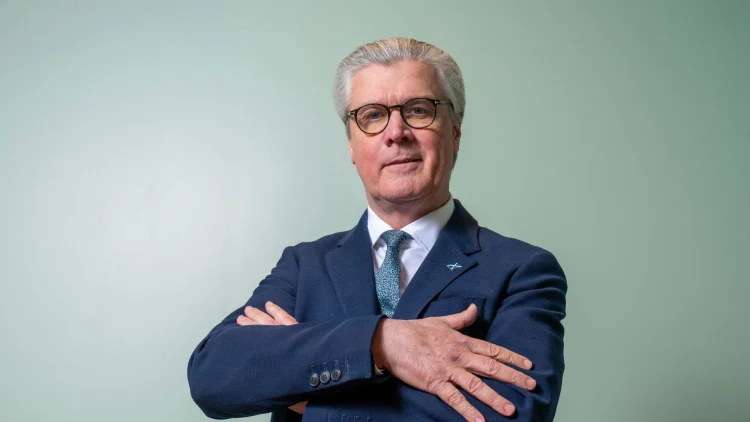
Reform’s Scottish leader, Malcolm Offord, talks to Noah Vickers about his political journey, how to tackle climate change, and why his nation may have to limit free prescriptions and university places
Malcolm Offord has been having a wonderful summer. When he speaks to The House, the multi-millionaire leader of Reform UK Scotland has recently returned from Cowes Week on the Isle of Wight – where he keeps one of his six homes and where he raced one of his six boats, Braveheart.
“We did fine,” says the 62-year-old MSP for West Scotland. “We were up against a very competitive class but, that’s good, that’s what you want.”
Offord enjoyed this “tremendous occasion” – the regatta’s 200th anniversary – while Holyrood is on summer recess.
“I’ve got a bit of a break and obviously beautiful weather. Global warming is good for Scotland,” he cheerfully declares. The House promises to return to that claim, but first asks about his political history.
The former peer is one among several ex-Tories over the last couple of years to have jumped ship to Reform. As a minister under Boris Johnson, Liz Truss and Rishi Sunak, he served first in the Scotland Office and later as minister for exports in the Department for Business and Trade (DBT), as it then was.
Offord, who made his wealth in asset management and private equity, had also donated almost £150,000 to the Conservatives prior to being made a peer by Johnson. Was it difficult leaving a party to which he had devoted so much?
“Of course it was difficult, but I’m not a tribal Tory,” he says. “I’d donated to the party for 15 years before I was ever a member… I only joined the Conservative Party in 2020 and went into the government in 2021.”
Offord remains proud of his time in that government, the record of which has been attacked relentlessly by his new party. He insists that both his departments “did a good job”, as Alister Jack and Kemi Badenoch were “exceptional” secretaries of state.
Under Badenoch’s leadership, DBT was “probably the only department in Whitehall which tried to make a success of Brexit”, he claims. Does Offord still find her an impressive politician?
“Oh, very. I supported her as leader for the Conservative Party,” he says, adding that she and her husband Hamish are “a very strong political couple”.
While Reform leader Nigel Farage has mocked her performance as a politician, Offord praises Badenoch for sticking with her principles.
“Kemi is a visceral conservative,” he says. “If you ask her a question, Kemi will tell you what she thinks, rather than what you want to hear. That’s not the issue. The issue is that no one’s listening to the Conservative Party – nor can they or should they.”
Offord began to lose heart with the Tories after Badenoch appointed him shadow energy minister. In this role, he says he was “shocked” to discover how little parliamentary debate there had been when Theresa May’s administration passed the Climate Change Act, which legally enshrined the UK’s 2050 net-zero target – an “extraordinary act of self harm, where our energy prices are now four times more than America”.
The Scottish Conservatives, he argues, had meanwhile become a one-policy party with little to offer beyond their staunch opposition to Scottish independence.
But the MSP reveals it was East Wiltshire MP Danny Kruger, rather than Farage, who ultimately convinced him to defect in December 2025.
“He’s a philosopher, and we need philosophers in politics. He’s a deep thinker and he is a tribal Tory,” says Offord of Kruger. “The fact he felt cast adrift told me there was something wrong.”
Offord now leads a 17-strong group of Reform MSPs, tied with Labour as the joint-largest opposition to John Swinney’s minority SNP government.
It was an impressive performance in May’s election, but nonetheless followed the trend of Farage’s political outfits – be they Ukip, the Brexit Party or Reform – doing noticeably less well in Scotland than in England or Wales. Does Reform have more work to do in showing Scottish voters it is not just a party of middle and deprived England?
“For sure. That’s absolutely my challenge. I take that head on,” he says. “Over the next five years, I have to demonstrate Reform Scotland has its own voice.”
The Scottish party, he stresses, has “autonomy over our devolved matters” and will take policy decisions on the basis of whether they benefit Scotland specifically.
“We’ve got ourselves in a mess over the last 25 years with so much liberalism, so much progressivism, that we’ve lost our way as a country,” he says of Scotland and the UK more widely.
Yet there are some progressive policies in Scotland about which Reform’s Holyrood manifesto had little to say. One of them is university tuition fees.
Scottish students continue to enjoy free university courses north of the border, subsidised by Holyrood to the tune of roughly £900m per year, while English students take on loans. Would a Scottish Reform government maintain that unequal status quo?
Offord suggests there are advantages to England’s model, as there is more incentive on students to think carefully about whether their course will help them get a well-paid career.
The MSP, who studied law at Edinburgh, says “a lot” of Scottish students nowadays are completing “meaningless degrees” rather than vocational or technical qualifications that would be a better use of their time.
“The difference between England and Scotland is that, in England, it’s the marketplace that is now making this decision for young people, who are now saying, ‘This is not worth the money’.”
In 2024/25, about 42 per cent of Scottish school leavers went on to university, while 26 per cent went into further education and 22 per cent straight into employment.
Offord stresses that his “instinct” is to “hold on to as much free education as possible” in Scotland, but says Holyrood should narrow the number of free university places it funds.
“We can afford maybe to pay for 20 per cent of kids to go to university – maybe – but not 50 per cent. Maybe that’s the way to do it. Maybe we should be saying to people, ‘You should be going to [vocational] colleges and getting better jobs at the end of it’.”
Prescription charges, abolished in Scotland since 2011, are another point of difference with England on which Reform’s manifesto was silent.
Offord faced questions during his Holyrood campaign, however, over a 2025 Centre for Policy
Studies report he edited and co-authored, which called for a “dialogue” with the Scottish public “about the acceptability of user charges for some [healthcare] services up to an annual ceiling, as in Sweden and Germany, and the removal of free prescriptions for certain categories of medication, e.g. over-the-counter pain relief medicines, given the increasing annual cost associated with prescriptions for these medications”.
“It’s our job to reinvigorate Scots… They’re scunnered and fed up”
Asked whether he is still calling for that dialogue, the MSP points out that in England 89 per cent of prescriptions are dispensed free of charge to exempted groups like the elderly.
Regarding Scotland’s policy, he says: “Those who need them most will always be looked after, but perhaps [for] those who don’t need free prescriptions [we] might need to look again, I don’t know.
“To me, it’s something we should talk about with the medical profession, as a complete review of our health system.”
The House soon returns to net-zero, where Offord has been on something of a journey.
“Some say that the UK has a limited role to play in climate change as we account for only one per cent of world emissions,” he said in his 2022 maiden speech to the House of Lords.
“Yet COP 26 proves that our leadership still counts, because we can demonstrate that it is possible simultaneously to grow our economy while cutting our emissions.”
Offord, who in that same speech praised Scotland for combatting the “climate emergency”, now rails against the “madness” and “sheer disaster” of net-zero policies.
But with wildfires destroying homes and record temperatures causing almost 3,000 excess deaths across the UK in May and June, is there not an imperative to work with our international allies to significantly cut carbon emissions, even if – as Offord acknowledged – we make little difference individually?
“We’ve got to stop seeing this as a conflict between net-zero and/or oil and gas. I think we just have to grow up a little bit on this conversation,” he replies, arguing that a more “pragmatic” approach is needed to stop Britain “impoverishing” itself with high energy costs while importing most of its gas from elsewhere.
“Why on earth would we import from Norway, when we can create our own?” he asks. “By creating our own, we can create our own domestic gas supply, get our prices right down, and that can actually give us the cheaper energy to make renewables merchant viable.
“The whole of Scotland is covered in turbines – not a single blade is made in Scotland. We can’t manufacture anything, because our energy’s so expensive. These things are interconnected…
“Gas is our transition fuel – let’s be sensible about that – and then we can create a much more environmentally-friendly energy system.”
As UK energy prices are dictated by international markets, experts agree that further drilling in the North Sea would have a negligible impact on that price. Research from the University of Oxford earlier this year showed that if all the UK’s remaining North Sea resources were maximally exploited and the government used the extra tax revenues solely to lower bills, households would save somewhere between £16 and £82 a year.
As to whether there is a climate “emergency”, Offord says: “We need to stop using that word. It’s not an emergency. The planet heats up and cools down, many times and many cycles.
“We do have warming. I’ve been to the Arctic, I’ve seen the ice-flows melting – I’ve seen that with my own eyes. I’m not a climate change denier, but I’m pragmatic about how we deal with it.”
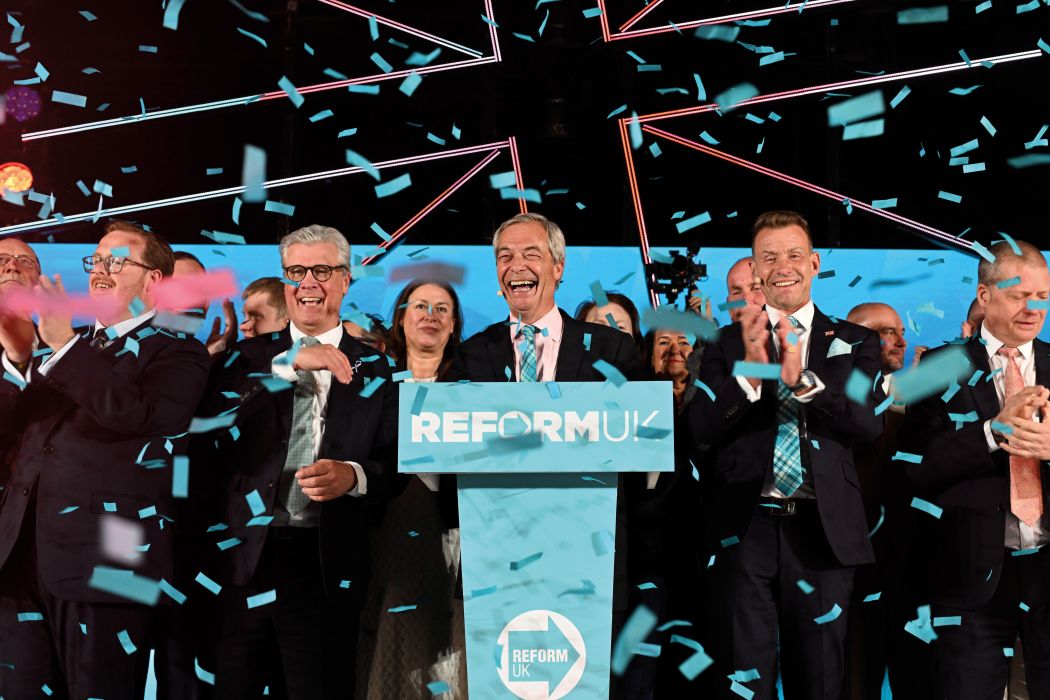
Offord speaks to The House soon after Farage’s victory against Count Binface in Clacton. He confesses to not visiting Essex during the five-week campaign – part of which was occupied by Cowes Week – but says Farage’s “outstanding” result “proved his point that he’s got a true mandate in Clacton”.
Beyond confirming the Reform leader’s popularity with his own constituents, did the by-election prove anything new? The result has no bearing on the investigation being conducted by the parliamentary standards commissioner, Daniel Greenberg, into whether Farage should have declared his £5m donation from crypto billionaire Christopher Harborne.
“That investigation – you have to ask yourself how objective that is,” replies Offord. “And is it politically motivated or not?”
Where is Offord’s evidence that Greenberg is in any way politically motivated?
“It’s the committee members around it. I believe the committee members on that are from other parties, aren’t they?”
Yet Greenberg will be the person writing the memorandum on which the standards committee would deliberate – if he does conclude that Farage has breached the code of conduct and that the breach was serious enough to merit referral to them.
“Yeah, yeah, so again, the question is whether he will be influenced or not – I don’t know. I assume, we hope, we expect, all these people to be independent, don’t we? So we expect an independent result.
“I’ve not been privy to the conversations, but obviously he [Farage] felt that he wasn’t getting a fair hearing. He may or may not be right or wrong, but that’s what he felt.”
Offord, and Reform, still have a long road ahead of them. How confident is he that by 2031 he will be first minister of Scotland, serving alongside prime minister Farage?
“I’m only in it to win it. There’s no point without being committed to winning and I believe we’ve got a roadmap through the council elections [in 2027], then Westminster and then Holyrood. There is a roadmap for us. There is a strong amount of apathy amongst people, especially in Scotland, and it’s our job to reinvigorate Scots who have traditionally always been politically motivated. They’re scunnered and fed up. It’s our job to motivate them and put something in front of them which will appeal to them.”
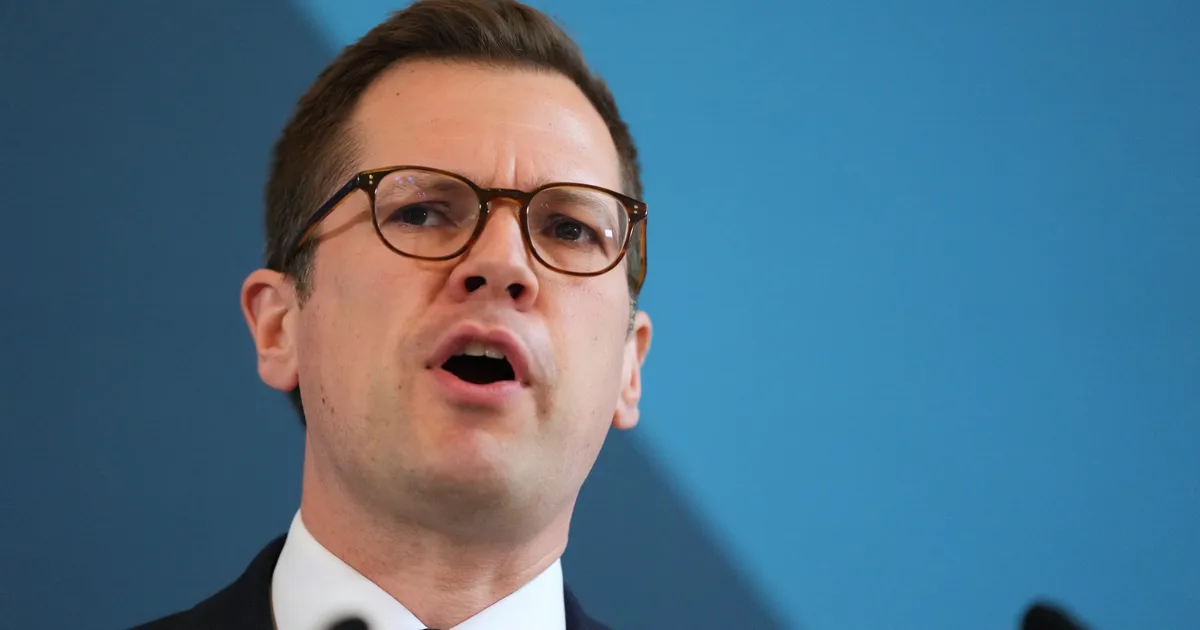
Robert Jenrick announced he would resign as chancellor on Saturday if he did not deliver on his promises.
The only problem is, Jenrick is not the chancellor. The Newark MP is Reform’s Treasury spokesperson.
He prefers to use the title of shadow chancellor, though only the Conservatives are entitled to call themselves the shadow cabinet as the second largest party in the Commons and the official opposition to the government.
Jenrick was on the Conservative front bench as the shadow justice secretary until he was sacked for plotting to defect to Reform.
In a statement released during Reform’s chaotic party conference, the Newark MP said that if his party were elected to government, he would cut taxes for 40 million British taxpayers.
He said his plan to increase tax-free Personal Allowance to £15,000 in his first Budget would take 2.9 million people out of income tax altogether.
He said this would stop State Pension from being taxed and it would be worth almost £1,000 to an average working couple.
He claimed: “This isn’t an aspiration, nor is it an aim. It is a promise. It is a promise I made to thousands of party members in Birmingham – and millions of voters across the country – live and on camera. And it is a promise I plan to keep.
“If I do not deliver it, I should not remain chancellor. Please consider this my letter of resignation.”
Jenrick said: “The British people are sick and tired of chancellors – and governments – failing to deliver on their promises.”
His bizarre promise came after his party faced intense scrutiny after an undercover sting operation – conducted by investigative group Verbatim and published in a Channel 4 News documentary – accused two top party aides of accepting US funds for the party.
It is illegal under British electoral law to accept political donations by someone not eligible to vote in the UK or a UK-registered company.
The scandal overshadowed the entire conference, even though the party were hoping to draw a line under the ongoing parliamentary probe into the £5 million donation Farage failed to declare when he became an MP.
Reform has lost its dominant lead in the opinion polls too, even falling behind Labour and the Tories in a survey from More in Common this week.
Listen to Commons People, the podcast that makes politics easy. Every week, Kevin Schofield and Kate Nicholson unpack the week’s biggest stories to keep you informed. Join us for straightforward analysis of what’s going on at Westminster.
Reform UK wanted this year’s annual conference in Birmingham to be about “making Britain fall in love with Nigel Farage again”.
But that plan to woo voters and consolidate their base by presenting a strategy for their first 100 days in power fell apart before it had even begun.
Channel 4 News broadcast an undercover sting operation from investigative group Verbatim on Thursday evening, shortly before delegates arrived.
The footage accused Reform of taking funds from a US company to commission three supposedly independent polls at £32,500 earlier this year, research which was then shared with the media.
Reform’s head of policy James Orr and Farage’s close aide Dan Jukes organised the donation. They were unaware the donors were actually undercover reporters.
British electoral law says political donations can only be made by someone eligible to vote in the UK or a UK-registered company.
But Jukes appeared to propose a work-around so that an American businessman could donate £500,000 to the party through his British son.
Reform initially called the documentary a “hoax”, and said it was guilty of no wrongdoing.
It then launched an internal investigation and both Jukes and Orr stepped down from their roles.
Farage, who was seen in some of the footage engaging with the undercover journalists when they were presented as donors, told the BBC: “I frankly wasn’t even listening.”
The Metropolitan Police and the Electoral Commission are now assessing reports into the donations.
Unsurprisingly, the conference ended up being a far-cry from the plan to look more professional.
Here’s some of the strangest moments may have missed.
1. Farage’s Reaction After Losing 2 Aides
Jukes has worked with Farage for years and their relationship has been compared to father and son.
Orr was the policy brain of the party, and his attendance at a conference set to be a policy-blitz was crucial.
But Farage distanced himself significantly, calling them “contractors” who were only guilty of “loose pub talk”.
There was also significant confusion over whether they would ever be able to return, even though Reform’s internal investigation is yet to conclude.
Reform’s chair Lee Anderson told broadcasters they were not coming back, while other party officials said it was too early to say.
2. Richard Tice’s Speech Overshadowed By A Banner
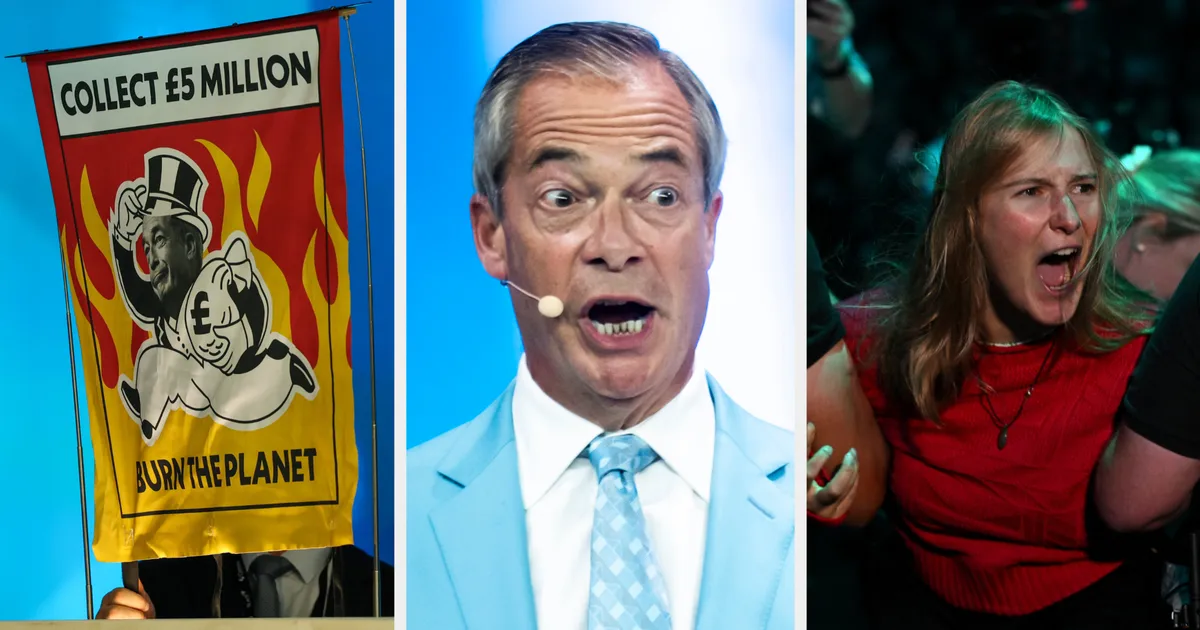
A small sign depicting Farage as the Monopoly Man running off with a bag of cash amid a sea of flames appeared behind the deputy party leader during his speech.
It had the caption, “Collect £5 million, burn the planet,” in reference to the ongoing parliamentary probe into the undeclared lump sum Farage received before he became an MP.
The sign, unfurled by Greenpeace, was swiftly removed.
3. Farage’s Stage Delay
After the banner incident, Farage’s subsequent keynote speech was delayed by more than an hour.
Reform sources claimed it was due to a warning from Counter-Terror Police who “wouldn’t let him on stage yet”.
However, West Midlands Police said: “We can confirm that Counter Terrorism Policing have had no involvement in the delivery of the Reform UK Party Conference 2026.”
4. Protesters Disrupt Farage’s Speech
Multiple demonstrators were thrown out once the keynote speech got going.
Farage tried to downplay the disruptions, telling the crowd: “We’ve got a screamer. Oh dear.”
He added: “That poor young girl, she looked like she was going to do herself an injury.”
He then said: “Boring, boring, boring.”
Activist group Climate Resistance claimed responsibility for the protest.
5. The Violent Reaction To One Demonstrator
One woman was removed by security guards, only for members of the crowd to apparently grab at her face and hair, hitting her with a walking stick.
She told LBC: “Yesterday I was hit and grabbed by the hair and by my jaw by attendees at the Reform UK conference after calling out Nigel Farage for being a conman during his keynote speech.”
She added: “Nigel Farage himself, as well as members of the audience, are inciting this violence by celebrating assaults like the one I experienced.”
West Midlands Police said in a statement they are aware of the video circulating online. They are yet to receive a complaint from the woman involved but urged anyone with information to come forward.
Reform UK’s home affairs spokesperson Zia Yusuf later said: “On the question of whether I condemn people punching people, yes, I condemn people punching people.”
6. A Toe-Curling Interview With Nadine Dorries
Nadine Dorries, formerly the Conservative culture secretary under Boris Johnson, defected to Reform after stepping down as an MP in 2024.
She tried furiously to defend Farage over the documentary, accusing it of being “very heavily edited”.
7. Another Toe-Curling Interview
Reform’s candidate to be London mayor, Laila Cunningham, admitted to BBC Newsnight she had not watched the whole documentary.
Presenter Matt Chorley was stunned, replying: “What? Laila, you are a senior member of Reform UK, standing for election to be London mayor next year.
“This is the only story coming out of the Reform UK, serious allegations, which has got the Metropolitan Police and Electoral Commission assessing. And you’re coming on here to tell me everything is fine, no rules have been broken, and you’re telling me you haven’t watched the footage?”
8. Robert Jenrick’s Defence Of Farage
The Reform MP furiously defended his party leader after Channel 4’s documentary showed the Reform UK leader saying “thank you” to the fictitious donors.
He told Times Radio: “You can’t criticise a leader for saying thank you over lunch to someone. I know a lot of slings and arrows are thrown at Nigel Frage, but being polite is not a crime these days.”
9. Jenrick Offers To Resign (From A Job He Doesn’t Have)
Jenrick, Reform’s Treasury spokesperson, announced his plan to resign as chancellor if he did not deliver on his promises to cut taxes once in power.
However, the party is not in government. It is not even the shadow cabinet, because that name belongs to the second largest party in the Commons, the Conservatives.
10. Farage Reveals His Family Told Him To Get Out Of Politics
The party leader said his relatives urged him to quit over the summer amid safety concerns.
He told the BBC: “For the first time, really, in my political career, I haven’t got my family’s support. They would rather I packed it up and walked away. So yes it’s been difficult.”
11. Richard Tice Tops It All Off With A Strange Celebration
Despite all of this chaos, the deputy party leader posted some jubilant photos on Saturday showing him jumping for joy on stage…
Listen to Commons People, the podcast that makes politics easy. Every week, Kevin Schofield and Kate Nicholson unpack the week’s biggest stories to keep you informed. Join us for straightforward analysis of what’s going on at Westminster.
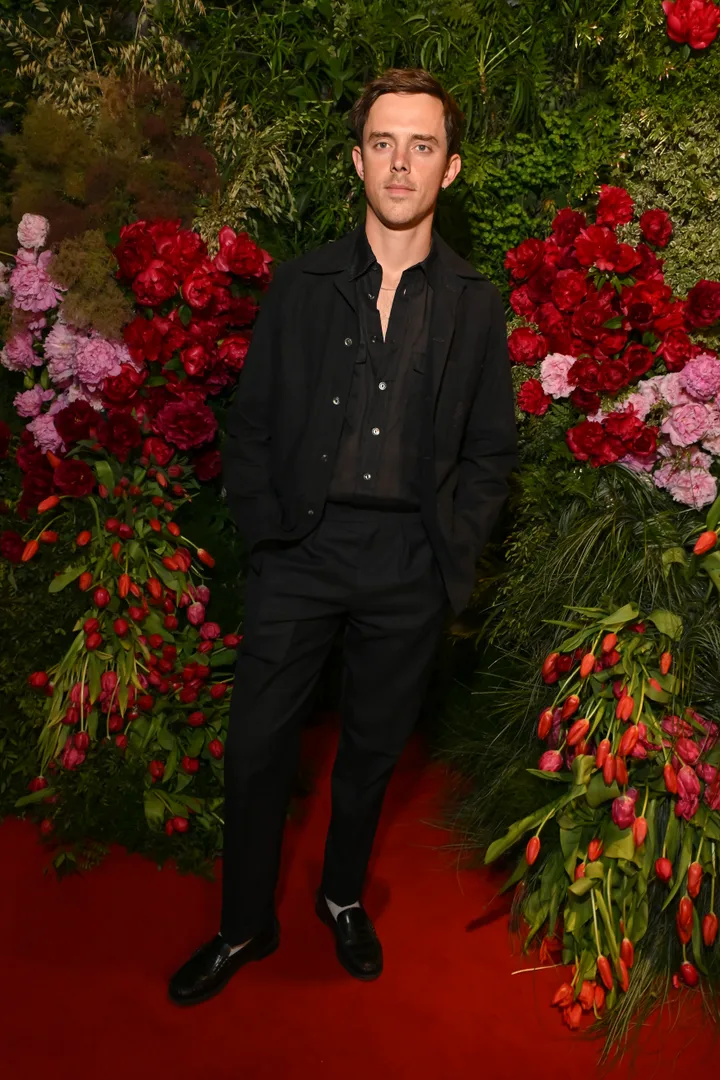
After years of speculation, the race to cast the next James Bond is getting serious.
Last week, a new batch of actors was reported to be among the frontrunners to land the role of 007, including Jacob Elordi, Jack Lowden and Paul Mescal.
But one of them in particular is reportedly the new favourite to become Daniel Craig’s successor.
Jack Barton might not be a household name just yet, but he is rumoured to have impressed casting director Nina Gold so much that Page Six named him as “The One”.
With that in mind, here is everything you need to know about Jack Barton’s career – and why he could well make the perfect James Bond…
First of all, Jack Barton fits the rumoured James Bond casting brief perfectly

Sam Simpson/Dave Benett/Getty Images
Producer Amy Pascal recently opened up to Deadline about the qualities the team behind the franchise are looking for in their next 007.
“It’s got to be something really different that is… stirring and exciting and different,” she claimed.
Despite actors like Harris Dickinson, Idris Elba and James Norton being attached to the role in recent years, long-time Bond casting director Debbie McWilliams also told The Independent in June that she believes the lead in the long-awaited 26th 007 movie should be a “total enigma”.
“I don’t want to see any of [the rumoured stars] as Bond because we now know so much about them,” Debbie told the outlet.
“We want to know as little about them personally as possible, because that’s what spies are. We don’t need to know where he goes shopping or who his parents are, or where he lives.”
Jack Barton’s first role was in a Netflix fantasy drama
Graduating from the Oxford School of Drama in 2018, Jack’s first role was in Netflix’s coming-of-age fantasy The Letter For The King.
Adapted from the classic 1962 Dutch novel of the same name by Tonke Dragt, the show followed a young, aspiring knight embarking on a dangerous mission to deliver a secret letter to the king.
Jack played Foldo, a swordsman who travelled with Amir Wilson’s young knight on the journey through the Great Mountains.

He also appeared in an Emma Stone film
Interestingly, until recently, Jack had only one movie credit to his name, but it was a Hollywood project made by one of the coolest filmmakers, Yorgos Lanthimos, and featuring an Oscar-winning Emma Stone performance.
Jack had a minor role in Poor Things, which follows Emma Stone’s Bella, who is brought back to life when an unorthodox scientist plants the brain of an infant into her adult body.
He is credited as Fop 1, which is another word for a gentleman concerned with his appearance. Jack can be seen in a blink-and-you’ll-miss-it moment, sitting down watching the scientific experiments.
The quirky drama was a huge hit, winning four Oscars, two Golden Globes and five Baftas and making numerous Best Of 2023 lists.
There’s every chance you’ve seen Jack Barton before in one of his many TV credits, which includes a big-budget BBC drama
After making his TV debut in The Letter For The King, Jack went on to have minor roles in Grantchester and The Pursuit Of Love.
When the BBC adapted HG Wells’ science fiction epic War Of The Worlds for the small screen, Jack landed a recurring role in its third season as Hiram.
More recently, in 2025, he had a minor role in the Anne Rice adaptation Talamasca: The Secret Order, where he played law associate Osterhaus.
Heartstopper fans will definitely recognise Jack Barton

Jack’s breakout role came when he was cast as David Nelson, Nick’s older brother, in five episodes of the popular Netflix series, Heartstopper.
His character takes pleasure in bullying his brother, played by Kit Connor, and prying into Nick’s private business.
But the character also has hidden depths, as it is revealed that some of his nasty traits stem from seeking validation from his absent father.
He reprised this role in this year’s Netflix movie, Heartstopper Forever, and which allowed him to showcase some of his more serious acting abilities.
While he played an antagonist, Jack called the role a “real privilege” thanks to the positive feedback he received from Heartstopper fans.
“Even as the detestable older brother I received countless messages about how it had helped people and how much it meant to them,” he told The Real Magazine in January 2025.
Jack Barton’s biggest role to date is in SAS: Rogue Heroes

If Jack Barton is Bond, it’s likely his appearance in BBC drama SAS: Rogue Heroes that caught the Bond’s casting team’s eye.
The actor played Lieutenant John Eliot Tonkin in season two of the Steven Knight-created and penned show – and it’s probably worth noting that Steven is also writing the new Bond film.
Based on the real-life origins of the British Army Special Air Service (SAS) during World War II, Jack’s character had to make a dramatic escape after being captured by the Nazis and receiving an execution order.
This role more than proves that Jack can handle the dramatic acting and the physical skills required to play Ian Fleming’s famous spy character.
Jack has previously joked about playing Bond
When speaking about what he was looking forward to doing in the future as recently as January 2025, he told Numero Netherlands that he’d “go wherever the wind takes me”.
And then he gave an answer which either meant he had an inkling about his future… or has fantastic clairvoyance powers.
“Right now, this is a lovely little wave I’m riding but who knows where life goes next. That’s all part of the adventure. But if you’re looking for a short answer – I hear Bond is up for grabs…?” he joked.
He also opened up about exactly what draws him into a project, hinting at his future in the industry.
“I think I have to read the script to really know,” he said. “It’s also about taste, I think – I love film, TV, and art, so as I grow, I get a better sense of my taste. That helps me decide on projects.”
Speaking to The Real, he admitted there was pressure now that he had started to make a name for himself.
“There’s a bit of added pressure knowing that lots of people are waiting to see what’s next… and hopefully we managed to keep them interested,” he said last year.

Jeff Spicer/Getty Images for Netflix
When will we find out if Jack Barton has actually been cast as the next James Bond?
Producer Amy Pascal recently revealed that the role will be announced sometime in the next five months.
“I would say the end of the year is a good bet,” she hinted to Deadline last month, acknowledging that she and her team are having to be “really, really methodical” given that “Daniel Craig is a hard act to follow”.
Politics
Trump Ripped Apart For ‘Absolutely Horrible’ Comments About Iran War Being ‘Small Potatoes’

Comments made by US President Donald Trump calling the Iran war “small potatoes” are being widely condemned by lawmakers and critics alike, largely due to the president appearing to dismiss the 18 US service members killed since the conflict began.
The remarks came after Trump was asked by ABC’s Rachel Scott in the Oval Office on Friday about Vice President JD Vance’s claim that the conflict in Iran was not a war.
“I’ll tell you what, a lot of people don’t call it a war,” Trump said. “I call it a military conflict because it’s small potatoes for us. It’s not a big thing. We did Venezuela, and we did this. In Venezuela, we lost nobody, and this we lost 18 people. In Vietnam you lost a 100 thousand people, and in other conflicts you lost tens of thousands of people.”
Scott quickly offered a retort to Trump, pointing out the service members killed in the war so far.
“It certainly doesn’t feel like small potatoes, Mr. President. Eighteen people have died in this,” Scott said.
Trump responded by continuing to compare Iran to the Vietnam War and asking Scott if she knew how long that conflict lasted.
“How long were we in Vietnam?” Trump said. “We’re in five months now. And you know what we did in five months? They’re not going to have a nuclear weapon. That’s what we did. Iran will not have a nuclear weapon because if they did, you probably wouldn’t be standing here very long.”
Many Democratic lawmakers, including several who served in the military, sounded off on Trump’s seemingly cavalier attitude towards the service members who have been killed.
As of Friday, 18 service members have been killed and more than 750 wounded since the US and Israel launched the war in late February.
See reactions to Trump’s comments on Friday here:
Listen to Commons People, the podcast that makes politics easy. Every week, Kevin Schofield and Kate Nicholson unpack the week’s biggest stories to keep you informed. Join us for straightforward analysis of what’s going on at Westminster.
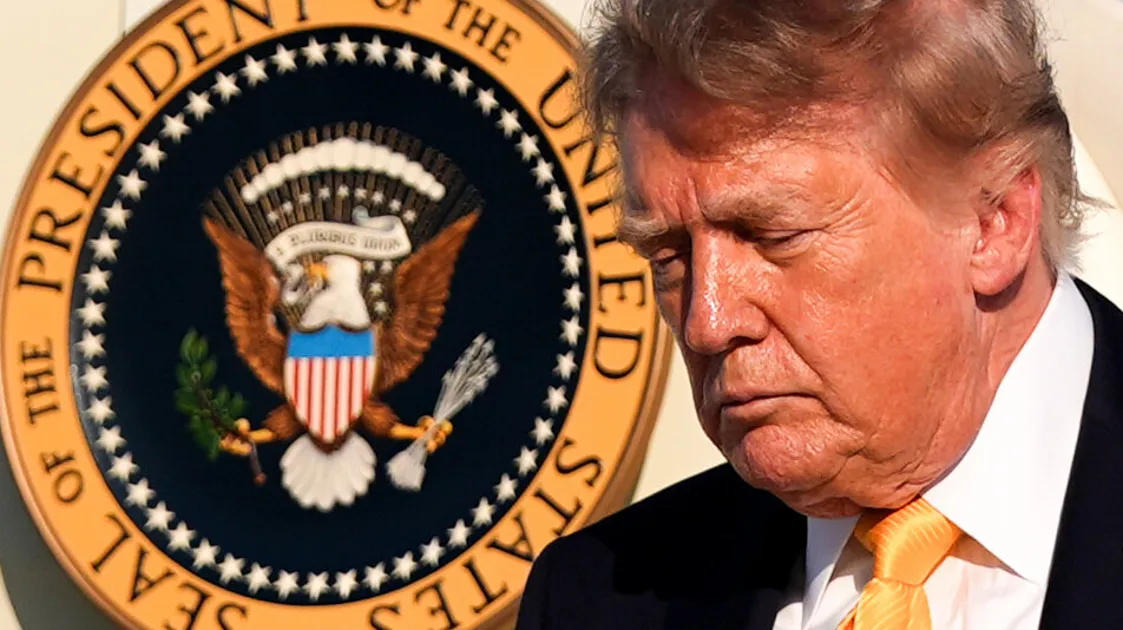
US First lady Melania Trump will reportedly not attend next week’s Republican Party midterm convention in Dallas, adding to a growing list of prominent figures also expected to be skipping the event.
A White House official told The Independent on Friday that the first lady is not expected to appear at the two-day event, aimed at bolstering the Republican Party’s chances in the midterm elections.
The news was first reported by the Washington Examiner, and the White House did not immediately respond to HuffPost’s request for comment.
Reports of the first lady’s absence follow 45 Republican lawmakers telling Politico they will skip the convention. Many of them cited “prior obligations” or told the outlet they’d be campaigning in their districts.
An unnamed Republican lawmaker called the convention a “waste of time.”
“You shouldn’t be having to rally your base at this point. You should be trying to convince independents,” the lawmaker told Politico.
Others said they did not want to be closely associated with President Donald Trump as his approval rating continues to hover in the low 30s.
“I can’t control what the president’s going to say at the convention, but I can control where I’m at, what I’m doing,” Rep. Tom Barrett (R-Mich.) told Politico.
Those lawmakers expected to attend the event include Senate Majority Leader John Thune (R-S.D.), House Speaker Mike Johnson (R-La.) and Sen. Ted Cruz (R-Texas), according to Politico.
Candidates in key battleground states will also be attending the convention, including former Rep. Mike Rogers (R-Mich.) and Sen. Jon Husted (R-Ohio).
Trump is expected to deliver speeches during both nights of the convention.
Listen to Commons People, the podcast that makes politics easy. Every week, Kevin Schofield and Kate Nicholson unpack the week’s biggest stories to keep you informed. Join us for straightforward analysis of what’s going on at Westminster.

Are salaries in France too low? #france #french #finance #livingabroad #money #expat #learnfrench

Concerns for welfare of a girl who disappeared from Ferryhill

Crocodile Handler Dies A Day After Being Mauled At Papua New Guinea Wildlife Park In Port Moresby

Weekend Open Thread – Corporette.com

Weekend Open Thread: Brooks Brothers

London Mayor Sadiq Khan handed a peerage by Keir Starmer alongside 15 other Labour figures… just days before the PM leaves No10
Are salaries in France too low? #france #french #finance #livingabroad #money #expat #learnfrench

POV: You stopped chasing money and started building freedom. #forextrading #motivation #money #fyp

Crypto Investors Need To Watch This IMMEDIATELY
-
 Fashion2 days ago
Weekend Open Thread: Beyond Yoga
-
 Crypto World2 days ago
Bitcoin price stalls near $82K as key resistance holds
-

 Politics2 days ago
Best Gaming Laptops, CPUs, TVs, And Keyboards To Upgrade Your Set Up For GTA VI
-
 Tech2 days ago
The Birds Outside, Drawn For You Automatically
-

 Crypto World2 days ago
IMF Says El Salvador’s Post-Review Bitcoin Purchases Used No Public Funds
-
 Crypto World2 days ago
U.S. added stronger than expected 162,000 jobs in August as labor market bounced back
-
 Sports2 days ago
Alexandre Pato consortium’s Northampton Town investment approved
-

 Sports2 days ago
Commanders’ Chig Okonkwo is a top breakout fantasy football candidate
-
 Sports2 days ago
Golden Eaglets Drawn in Group B for 2026 WAFU B U17 Championship
-
 Crypto World2 days ago
XRP price breaks falling channel as bulls target $1.53
-
 Politics2 days ago
A new European chapter for Gibraltar
-

 Politics2 days ago
How To Avoid Winter Colds: 4 Everyday Habits That Spread Germs, Says Pharmacist
-
 Politics2 days ago
The House | Bin the lectures, bring gossip and be ready to banter: how the new PM should prepare for his Trump encounter
-

 Crypto World2 days ago
From warning to listing: UK’s largest retail investment platform opens access to crypto ETNs
-

 Crypto World2 days ago
FinCEN flags $12.7B tied to Southeast Asia crypto investment scams
-

 Tech2 days ago
A Worthy Android Ereader, With Some Tradeoffs
-

 Crypto World2 days ago
Trezor Data Breach Impacts 67,000 More US Customers
-

 Tech2 days ago
How To Edit Claude’s Memory
-
 Politics2 days ago
33 Cosy Autumn Home Decor Ideas: Blankets, Pumpkin Decorations, And Candles
-
 Sports2 days ago
Seven wickets in 21 balls: Sri Lanka’s Chamari Athapaththu scripts history with record-breaking spell
You must be logged in to post a comment Login