
Politics
What Has Jack Lowden Said About Playing James Bond Amid 007 Rumours?

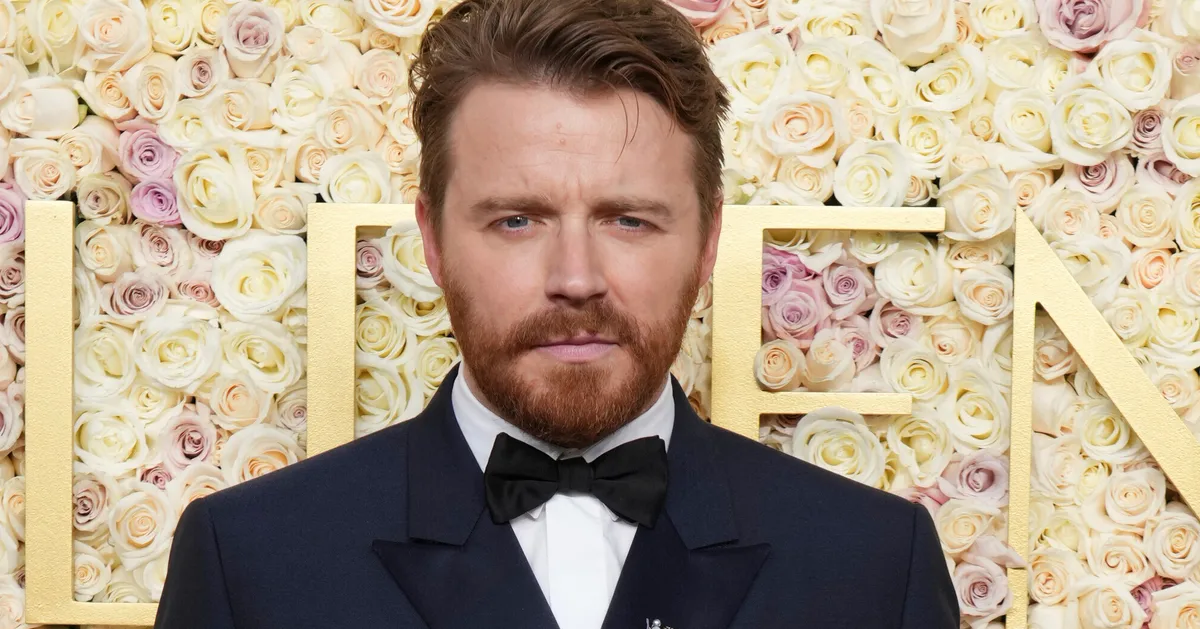
If rumours are to be believed, we’re not far off hearing which actor has been picked to replace Daniel Craig at the helm of the James Bond franchise.
Just over a week ago, it was reported in the US media that 007 bosses had narrowed their search down to just six actors.
Jack Lowden is currently best known for his Emmy-nominated work in the Apple TV+ spy drama Slow Horses, but he’s also starred in everything from The Gold and Wolf Hall to Christopher Nolan’s war epic Dunkirk.
In fact, rumours about Jack taking over as 007 date back to the very first season of Slow Horses in 2022.
During a joint interview with Gary Oldman, his Slow Horses co-star teased him about the speculation, to which Jack told AP that while it was “lovely” to be even be thought of as a potential fit for James Bond, he wasn’t sure how valid the claims actually were.
“I think everybody who runs around with a serious face – and runs well – [is named in the press as a rumoured James Bond],” he insisted.
Since then, Jack has kept schtum about the rumours, but one person who’s been a bit more vocal is his wife, fellow actor Saoirse Ronan.
The Oscar nominee has previously been vocal about her hopes to be cast as a new Bond villain, telling Empire: “I think it would be really interesting, having a young female villain.
“Especially for girls and women, to see someone who can just take all that pent-up anger and direct it somewhere, there’s something interesting in that dramatically. So I would love to do more of that.”
However, when asked on the podcast Happy Sad Confused if she’d rather see Jack as Bond or herself as a new villain in the franchise, she admitted: “He should be Bond. If it’s a choice between the two.”
“Isn’t it nice that I’ve done that?” she quipped.
Meanwhile, during a recent interview on Canadian TV, Gary Oldman also gave his co-star his personal seal of approval in the 007 race, before claiming that bosses had already made their decision, and it would be announced imminently.

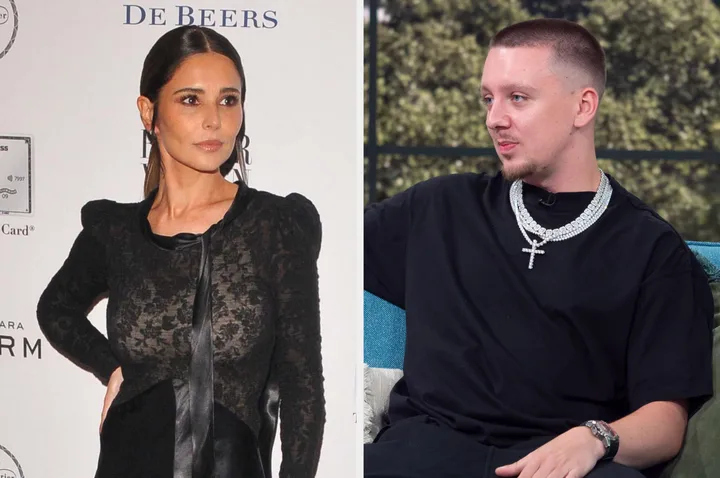
The Voice UK’s judging panel is apparently getting quite the revamp ahead of its new run.
For the last few weeks, it’s been heavily rumoured that former X Factor star Cheryl Tweedy will be staging a return to our screens as a new coach on The Voice UK.
According to The Sun, Cheryl will be taking over the seat previously occupied by Sir Tom Jones, while former I’m A Celebrity star and rapper Aitch will replace McFly stars Danny Jones and Tom Fletcher, who are also leaving.
Fans of Sir Tom needn’t worry, though, as the legendary crooner is expected to remain with the show, albeit in a new role created just for him.
A show source said: “ITV absolutely loves working with Sir Tom. They are in talks with him and are hopeful he will return to the series.”

Can Nguyen/Shutterstock/Ken McKay/ITV
Cheryl and Aitch will join Kelly Rowland and Will.i.am, the latter being the only member of The Voice UK’s on-screen team who has been with the show since its inception.
Meanwhile, Stacey Solomon and Alesha Dixon are rumoured to be the show’s new co-hosts, taking over from Emma Willis, who is now gearing up for her first season at the helm of Strictly Come Dancing.

If these rumours do turn out to be true, it will mark the first time that The Voice UK has showcased a panel with an equal number of male and female coaches.
Since it launched, the talent search has featured a coaching team made up of only one woman, alongside three (and, in some cases, four) men.
Besides her chart-topping pop career, Cheryl does know a thing or two about talent show judging.
The former Girls Aloud star’s profile blew up even further when she was added to the X Factor panel in 2008, serving for three seasons before eventually returning in 2014 and 2015.
More recently, she also judged on another Simon Cowell project, the short-lived BBC dance series The Greatest Dancer.

4 min read
For months, those of us campaigning for Britain’s hospices have asked what is going to happen.
Then we watched what happened.
Hospice beds remained closed. Services were reduced. Hospices consulted on further cuts. Families found that the care they desperately wanted for someone they loved simply was not available.
And this week the i Paper put the consequence on its front page in terms nobody in Westminster should be able to ignore: vulnerable people left to die in hospital corridors and busy hospital wards when hospice care was unavailable.
We cannot keep wondering what happens next. Now we have to make something happen.
I am not a palliative-care expert. I do not run a hospice and I do not pretend to have all the answers. I became involved because when I see something profoundly unfair happening to some of the most vulnerable people in our country, I find it very difficult simply to stand by and watch.
Hospice care offers something extraordinarily precious: dignity, comfort, specialist care and time for families at one of the hardest moments they will ever experience. Yet too much of that care still depends on charities continually raising the money required simply to keep services operating.
Hospice UK is asking the Government for an immediate £112.5 million intervention. That is their figure, not one invented by me. My role has simply been to help amplify the voices asking Government to hear it.
Those voices are becoming increasingly difficult to dismiss.
More than 60,000 people have now signed the Every Hospice Matters petition. Around 19,000 have shared it. Almost 300 MPs and Peers have previously supported the wider call for fair and sustainable hospice funding, representing an extraordinary breadth of political opinion.
Their words show how little disagreement now remains about the principle. Lord Blunkett has urged the Prime Minister to “find the money” for end-of-life care. Senior Conservative, Liberal Democrat, Labour and crossbench voices have all made the same essential point in different ways: hospice care is not a luxury, and the present position is not sustainable.
Lord Blunkett’s intervention is especially powerful because it is personal. He has spoken movingly about two of his longest-standing friends, husband and wife, who entered St Luke’s Hospice in Sheffield together earlier this year and were subsequently buried together. Hospice care, he said, made their final weeks as comfortable, supported and dignified as possible.
That is ultimately what all the statistics, funding formulas and parliamentary arguments are about: real people.
One petition supporter wrote that she had been told she might make it to Christmas. Another described how her mother begged for a hospice bed while only seven of 21 beds were available because of cuts.
Nobody approaching the end of their life should have to wonder whether the compassionate care they need will be available because the money is not. And no family should discover the answer only when they desperately need that care.
The Government is developing longer-term reforms to palliative and end-of-life care. That matters, and sustainable reform is essential. But a longer-term framework cannot become a reason to watch hospices struggle in the meantime.
Hospice chief executives have bills and wages to pay now. Beds are needed now. Families need help now. People are dying now.
That is why I believe Westminster has reached an important moment.
We have moved beyond needing to establish whether there is a problem. We have moved beyond asking whether the public cares. We have moved beyond wondering whether this can command cross-party support. It already has.
The question now is whether all of that agreement can be converted into action.
This week I have asked around 400 Parliamentarians to help do precisely that: through questions, debates, public interventions or whatever Parliamentary opportunity is available to them.
And I have asked them to put one very simple question to the Prime Minister:
“Prime Minister, will you personally receive this national hospice petition and make sustainable hospice funding a national priority?”
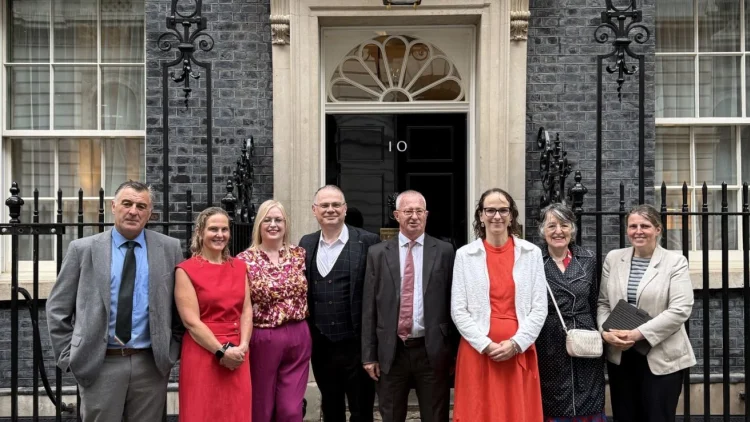
We will shortly take those tens of thousands of voices to Downing Street. I believe the Prime Minister should receive the petition in person as soon as possible.
Personally receiving it would not solve the funding crisis by itself. But it would demonstrate that the Prime Minister has heard the patients, families, hospice staff, volunteers, more than 60,000 members of the public and the remarkable coalition across Parliament asking him to act.
Then comes the more important question: what will Government do? There are moments in politics when another sympathetic statement, another consultation or another promise of future reform simply is not enough. For Britain’s hospices, I believe this is one of them.
We have wondered what would happen. We have watched what is happening. Now we need to make something happen.
Because for somebody approaching the end of their life, another week is not simply another week in the political calendar.
Every day matters. This is the time. Now is the moment.
Corin Dalby is Chief Executive of Box Power CIC and founder of the independent Every Hospice Matters campaign.
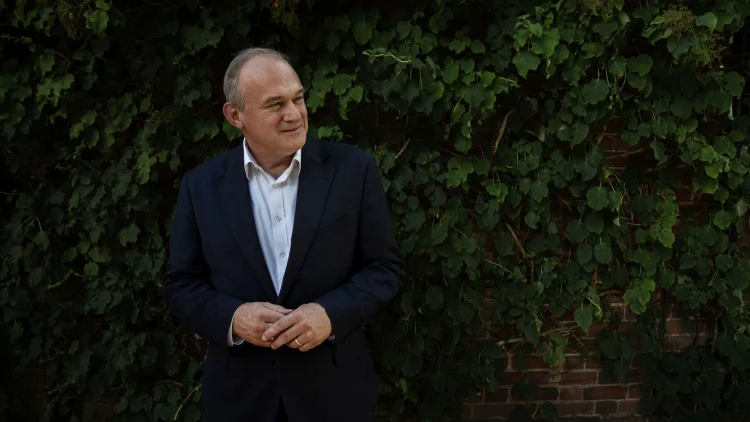
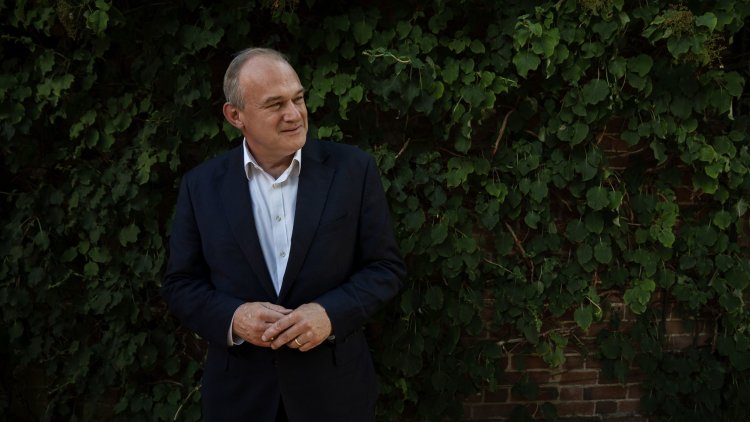
(Tom Pilston)

12 min read
Ed Davey thinks his party is better placed than ever before to exploit Britain’s fractured politics. The Lib Dem leader tells Zoe Crowther his party is ready for power
Ed Davey listens to BBC Radio 2, doesn’t subscribe to any music or streaming service, and CDs still line the shelves with tiles like Music for Lovers, a medley of classical versions of romantic ballads.
“I’m so old-fashioned, aren’t I?” he asks. It is, clearly, a rhetorical question.
David Cameron once taunted Gordon Brown that he was an analogue politician in a digital age. But their contemporary, 60-year-old Davey, has outlasted both at the frontline and leads a party at its electoral zenith, so might be entitled to say modernity is an overrated virtue.
And yet the Liberal Democrat leader meets The House in his Surbiton home at the end of a summer of, if not discontent, then rumbling unease. Some of his MPs fret that the party, lacking a national identity, risks being marooned by changing tides.
A senior Lib Dem MP complains of “a frustration” in the party that “it feels like we’ve been talking about the same things – social care and rivers – and that just felt like we weren’t really moving forward”.
Davey’s response might be described as akin to the warm embrace of an affable python. When criticisms from his own MPs and activists are put to him, his reply is consistent: he smiles, nods, and says he agrees with them.
What does he say to critics who think the party could take a stronger line on being an anti-racist party? “I strongly agree with them – I want to lead on it!”
What does he think of some of his MPs and activists saying the party must communicate better and do more to win northern and urban seats? “I strongly agree with that. The strategy debate is one that I welcome and embrace being part of. And indeed, growing in the North is something I’m extremely keen on.”
It would be a mistake to think, however, that Davey is for turning. One small but telling example is of a recent meeting at which some Lib Dem MPs thought that he had agreed to stop the ‘stunts’.
The series of photo-opportunities in which Davey sent himself up won coverage during the general election, but many fear they have run their course and risk merely highlighting the vacuity of the party’s policy offer.
Asked about them, however, it becomes clear that there has been a misunderstanding. Davey intends to continue with the stunts – or, as he prefers to dub them, ‘visuals’ – including at the party’s upcoming autumn conference, but merely agrees that they should be more effectively tied to a policy “purpose”.
“I don’t think we’d have as many MPs, frankly, as we do if we hadn’t done the visuals that we did last election… So, we’ll continue to do the visuals.”
As for the local elections, where some see stagnation, he sees progress. He insists the results showed his party is “coming back in areas that I thought we wouldn’t come back in”, for example winning overall control of Southport council, securing the first Lib Dem leader of Birmingham city council in a coalition with the Green Party, becoming the biggest party on Newcastle council, and making gains in the London borough of Ealing.
“The message I took from the local elections was that not only were we consolidating where we were in the general election, but we were expanding,” Davey says.
With the two-party system under strain, more seats are being won on a smaller percentage of the vote and, according to Davey, “the prize goes to those parties who are well-organised, can get their ground game out, can get their votes out”.
Lib Dem MP for Harrogate and Knaresborough Tom Gordon is less sanguine; he has argued that the Lib Dems failing to make sweeping gains across the country was a “warning sign” that the party has been operating in “a very cautious way” so far.
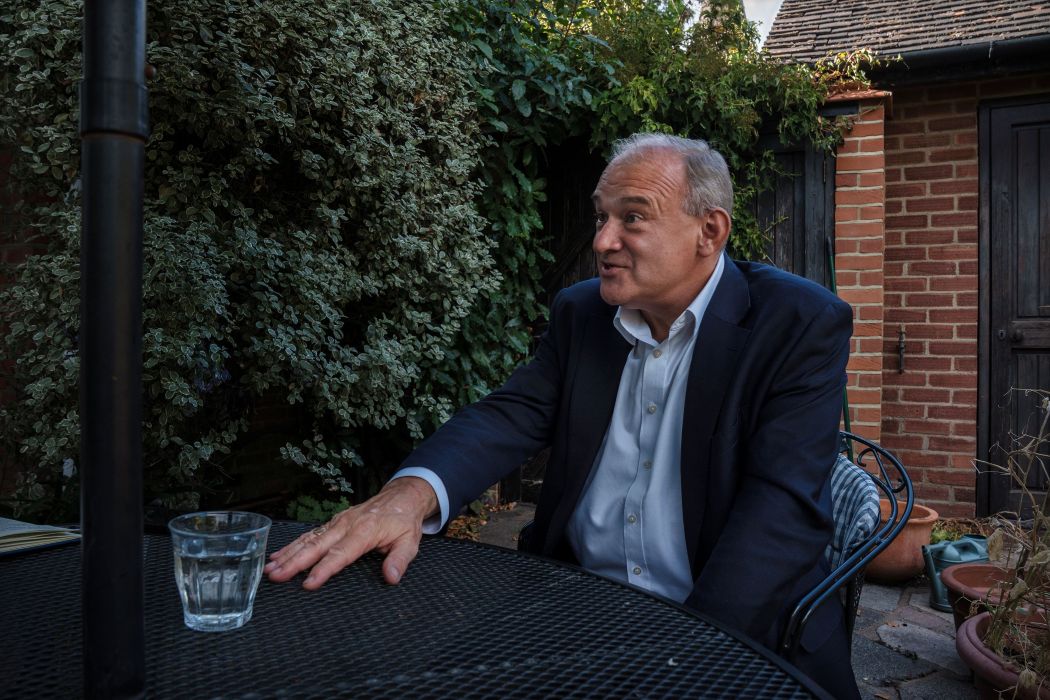
The Lib Dem leader, speaking from the garden of his large family home in south-west London, does not appear to be rattled but instead radiates domestic content.
Laundry hangs from the line; his 12-year-old daughter’s cello leans haphazardly on an old green sofa. A cushion cover reads, “We stay together for the sake of the cat.”
Davey insists that his party is the “most united party in Westminster” and praises critics like Gordon, unprompted: “You build up grassroots, you build that trust, and whether it’s what Tom Gordon’s done in Harrogate, what our colleagues have done in Hull, our colleagues have done in Sheffield, I can see that community politics delivering in quite significant parts of the North.”
Gordon has also been asked by Davey to chair a review of the party’s electoral strategy in the North of England, where the party has only four MPs but hopes to grow further and add to its 2024 record of 72 seats.
“We need to ensure that we’re covering issues that matter, and I would point to issues like transport in the North,” Davey says.
“When I talk to my colleagues, whether it’s in Manchester or Liverpool or Sheffield or Hull or Leeds, they say that the thing we have lacked and people have talked about but never delivered is a proper transport strategy, which means that people can get around.
“If you go back to George Osborne, who talked about this, he didn’t deliver on it. Boris Johnson talked about it, didn’t deliver on it, and they haven’t really grasped that. We need to show that we have thought through that and that will be really, really important.”
Lib Dem MP and party president Josh Babarinde has been leading consultations with members that will result in a once-in-a-parliament strategy review at the party conference in September. Babarinde said a new strategy was needed “to meet this new moment” of rising populism on the left and right.
Babarinde has warned, however, that the review must not stray into areas which are the leader’s purview – a message aimed at ensuring it does not turn into a public, damaging attack on Davey.
The leader believes the Lib Dems are in their “strongest position in over a century” and wants to turn his party’s gaze not inwards but towards the opportunities opening up for it – and the value of having an experienced leader at the helm.
Davey is often asked what exactly the Lib Dems are for in this new era of multi-party politics, with the Greens squeezing Labour to the left and Reform UK outperforming the Tories in the polls on the right. His answer is that the Lib Dems are there to stop Reform getting into government, either by itself or in a right-wing coalition with the Conservatives.
“If we do really well, as I think we will do against the Tories and Reform, that stops a Reform government and it stops a Tory-Reform government, and it makes the chances of a hung parliament extremely likely.
“The chances of a hung parliament are larger than I have known… and in that I’d be the most experienced leader. I’ve been around a little while, I’ve been in government, I’ve been a junior minister, I’ve been a Cabinet minister, seen those types of upfront discussions in a balanced parliament, and I’d be the most experienced party leader, and so for me, that’s quite exciting.”
Davey shrugs off a question about whether he thinks being too associated with the previous Coalition government would do more harm than good, insisting that public opinion of the Coalition years might be “changing”.
He refuses to draw any red lines on what the Lib Dems might compromise on to enter a coalition with Labour or any other party.
Despite his insistence that he wants to expand the party’s northern reach, he admits most of his targets are Tory-facing seats.
“I can’t deny the facts; that the vast bulk of seats that we can take at the next election are off the Conservatives, and if we don’t take them, Reform will take them,” he explains.
“If you look at all the projections that I see, we are likely to more than hold our own, and I think we’re being underestimated.
“That Tory-Reform axis is truly frightening, and we need to show that there’s a party that is true to British values – whether it’s on the economy, whether it’s on defence – who will defend those British values and can win.”
“That Tory-Reform axis is truly frightening”
Reflecting on where his party has had the most cut through with voters during his time as leader, Davey reckons it has been for appearing the most anti-Trump.
“We’ve been the ones leading that by a country mile,” he says, accusing other political leaders of “appeasing” the US President.
Davey also wants the Lib Dems to lead on being an anti-racist party, describing the level of racial hatred in the UK as “disgusting and depressing”. “We just have to call people out more,” he says.
He accuses Reform UK activists of racially harassing a friend, a young British woman living in the South East of England with a family background in India, claiming they told the woman they would take her passport and revoke her citizenship when they got to power.
“When people are coming to people’s doors and saying that outright, that is disgusting, and I never thought we’d get to that position,” he says.
“But we have a political party whose activists are doing that and they have to be beaten, and they have to be challenged. Certainly, the moral responsibility I’ve talked about beating Reform is about beating that racist element that we’re seeing in our politics.”
In response, a Reform spokesperson said: “Ed Davey should either name the activists involved, provide evidence of this alleged incident or withdraw this baseless claim.
“Reform has never proposed seizing passports or revoking the citizenship of British citizens. This smear is the last refuge of a party with absolutely nothing to say and whose leader is flatlining in the polls.”
At this year’s conference, taxation will be firmly on Davey’s agenda, alongside his existing top priorities of health and social care, EU relations and electoral reform.
“I don’t think you can tackle the cost of living crisis unless you address the fact that we are so overtaxed in our country now,” Davey says. “If you can’t come through with a credible policy to help people, I think you’re not answering the core requirement of government. You are going to have to look at that.”
The Lib Dem leader would not be drawn on which specific tax policies will be announced at conference.
Speaking to The House in 2024 following the general election, Davey said he wanted the NHS to be more like the Danish health system, with better health outcomes and higher patient satisfaction.
Denmark places a higher tax burden on its citizens than the UK government does, however. According to the OECD, an average single worker faces a ‘labour tax wedge’ of approximately 36 per cent in Denmark compared with around 29 per cent in the UK.
Davey insists that there is “a whole series of really practical ways you can start reforming the care system that aren’t going to cost the earth” and would, “over a relatively short period”, start saving money in the NHS. The Lib Dems’ proposals include integrating health and social care to reduce delayed discharges and hospital pressures and expand community care, all while taxing banks more heavily, closing tax avoidance loopholes and reforming taxes on wealth and capital rather than increasing taxes on ordinary earnings. However, this plan would still require significant initial investment in social care.
“I start by saying we need to grow the economy. And while I’m sure every political party will say that, the challenge to political parties is, ‘What’s your plan?’” Davey says.
“I see no plan from Labour, and Burnham has not talked about growth, as far as I can see, other than suggesting that a whole set of new mayors would somehow magically deliver growth. I don’t think they would.”
The leader insists the Lib Dems are the “only party with a growth strategy” for the whole country and refers to new Prime Minister Andy Burnham as “Avanti Andy”.
“He talks about London and Manchester. What about all the other areas we need to grow? The rural areas, the coastal towns, the small market towns. We’ve got to grow a whole economy, so I don’t see a growth strategy from Labour. I just see nothing from the Conservatives… And most of Reform’s policies would actually hurt growth.”
Davey has often said of former prime minister Keir Starmer that he is a “decent guy”. He now uses similar faint praise for Burnham. “We’ll see if the new Prime Minister is able to get rid of the chaos,” Davey says. “If he does, that’s a disaster for the extremists because it means we can start debating the real issues in a practical way, putting forward our ideas, and we will flourish in that environment.”
Davey has previously described his former boss and Liberal Democrat leader Paddy Ashdown as his political hero, saying he admired his version of “gritty liberalism”.
So, how does Davey think he is “gritty” himself? Gritty, he says, “means that you keep fighting, even in difficult circumstances, because you believe in your values and you want to triumph. I’ve obviously got a very different life story to Paddy, but I’ve had a few challenges”.
Davey lost his dad when he was four, then was a carer for his mum before she died when he was 15. He went on to become the father and carer to his disabled son, John, who is now 18 years old.
“If you’re a gritty fighter, you take on adversity, you learn from that, and I like to think I’m quite an empathetic person, having had that experience as a carer,” Davey continues.
“And when I apply that to ideology and policy, it means that I want us to be seen as a party that really cares about people and that caring is missing from our political dialogue at the moment. It never used to be.”
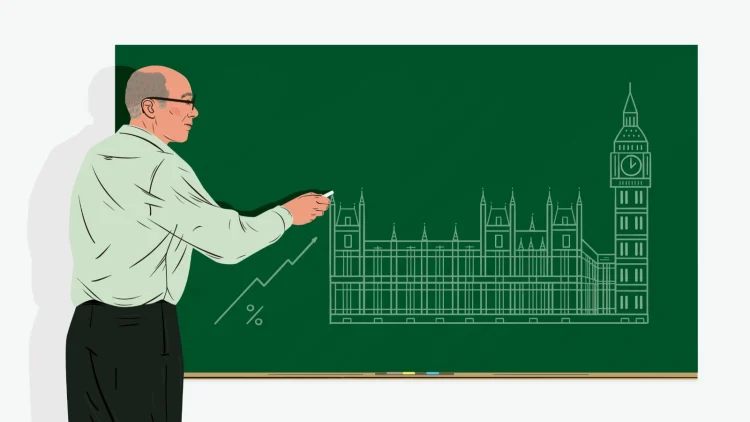

Illustration by Tracy Worrall
4 min read
Lessons in political science. This week: defenestration
Whenever there’s discussion of a potential leadership challenge – which in the last decade has meant most of the time – you cannot move for explainers in the media about how it all works: the various stages, the nomination thresholds, the details of the franchise. No complaints from me; explaining this stuff is good for trade.
The need for explanation is made more urgent by some of the rules being in almost constant flux. Reading a fascinating new study of the history of Conservative leadership contests, Coronations and Defenestrations by Lee Evans, it is striking how the party has changed its rules after almost every contest. To take just one example from the book: since 1965, the number of nominees a Conservative candidate has needed to stand for the leadership has varied from two to 100 MPs. Labour is just as bad.
I have spent a worryingly large amount of my life memorising and understanding these rules, but increasingly I wonder whether I should have bothered. Because it is also striking how many leadership contests, especially those involving incumbents, don’t run neatly along the tramlines set by the rules. Take, for example, the one we have just had. There was, in the end, no formal challenge to Keir Starmer; he resigned in the face of political reality and Andy Burnham replaced him in an unopposed election. Not a single vote was cast. The same was true in 2022 for Rishi Sunak. Squint and we could be back in the 1950s.
Indeed, the last six mid-term changes in prime minister have come about when the incumbent has seen the writing on the wall rather than because any formal leadership process has been initiated. Both Theresa May and Boris Johnson even successfully survived formal votes of no confidence from their MPs, only to jump ship pretty soon afterwards.
Evans refers to the immunity from challenge these votes supposedly gave as a “paper shield”.
The last Conservative Party leader to be voted out of the leadership was Iain Duncan Smith in 2003; the last one in government was Margaret Thatcher in 1990, and even she announced her resignation mid-contest.
It’s almost always more about raw political power than anything else
For Labour, I think you can make a case that the last comparable example would be JR Clynes, over a century ago, and it’s never happened to a Labour PM.
This isn’t to say that any of these contests went against the rules (parties have processes for what happens when a leader resigns and when there is just one candidate). Nor is it to say that the rules don’t matter: they are obviously there in the background, helping to structure the pressure the leader is under, and explaining why sometimes people jump before being pushed. But still, surveying the downfall of prime ministers, it’s difficult to avoid the conclusion that it’s almost always more about raw political power than anything else.
Another example: in January, the (then) PM was powerful enough to block the (current) PM from standing in a by-election. By May, and following some terrible election results, suddenly he wasn’t – with all the consequences that followed. Once it became clear (to many) that he couldn’t stay on, so his power drained away.
Measuring power has been causing headaches for political scientists ever since Robert Dahl’s The Concept of Power in 1957 and his famous definition that “A has power over B to the extent that he can get B to do something that B would not otherwise do”. Since then, both its definition and its correct measurement have been much argued over. Yet just because it’s tricky to pin down doesn’t mean we shouldn’t realise its importance – and that it trumps the rule book every time.
Postscript: I was at university with someone who, when they first encountered Dahl, wondered (unfortunately out loud) how he’d managed to produce such a detailed study of the political process in New Haven, Connecticut and write all those children’s books. He never lived that down.
Further reading: L D Evans, Coronations and Defenestrations (2026); R Dahl, The concept of power, Behavioural Science (1957)
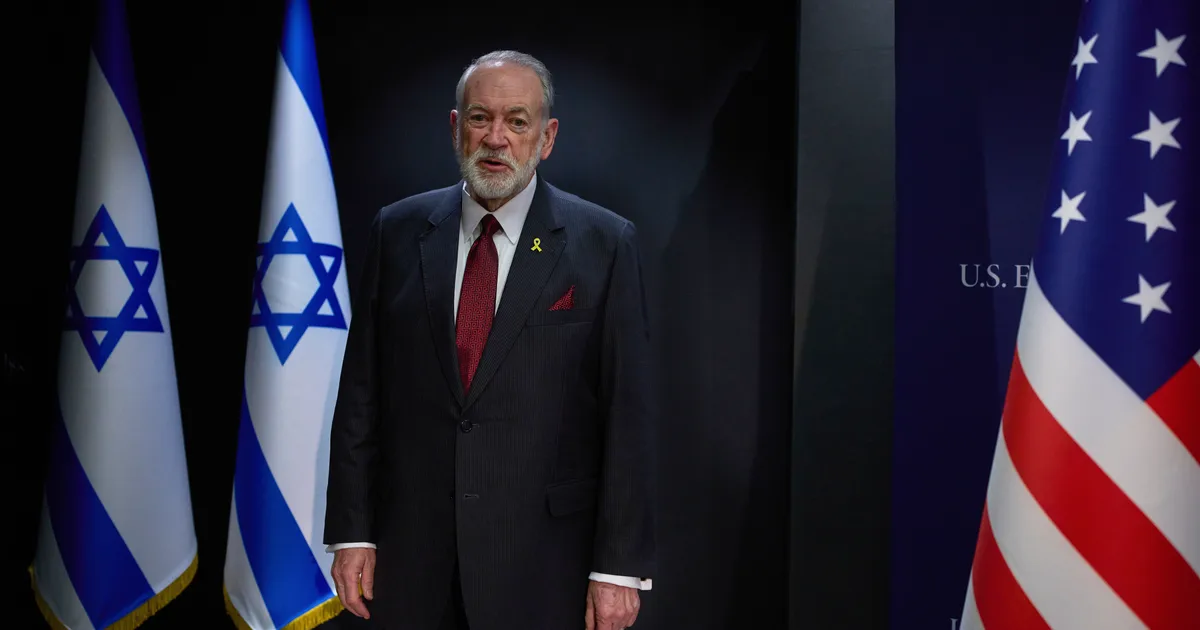
A key ally of Donald Trump has accused the British government of “discrimination against the Jewish people” over plans to impose sanctions on Israeli settlements in the West Bank.
Mike Huckabee, the US ambassador to Israel, spoke out as foreign secretary Ed Miliband will unveil the controversial policy in a statement to MPs on Tuesday.
Goods coming out of the illegal settlements in the West Bank, a Palestinian territory, will subject to trade restrictions as part of a “reset” of Britain’s relationship with Israel.
Tensions in the West Bank have flared in recent months, with Israeli settlers involved in violent disputes with Palestinians.
Huckabee accused the UK government of “Jew hate” at the weekend after the Foreign Office published a video of Miliban condemning the “horrific” situation in Gaza.
That led to a condemnation of his remarks by prime minister Andy Burnham’s official spokesman.
But Huckabee reignited the war of words on Radio 4’s Today programme on Tuesday.
He said the UK government has not thought through the “implications” of the sanctions plan, which could see some US states, such as Florida, ban all trade with Britain.
Huckabee said he was aware that Miliband is Jewish, but said: “There are some of Americans who don’t like America very much. They march in the streets and burn our flag, doesn’t mean they love America just because they live there.
“You go by what people do, not just by what they say or who they’re related to.
“This is an irrational action, that’s what I’m saying. I don’t understand what it’s supposed to achieve. If the UK is really interested in dealing with issues they feel are wrong, where are the sanctions against North Korea, China, Russia. Where are the sanctions against many other nations in the world?”
He added: “I feel it is a discrimination against the Israeli government, it’s a discrimination against the Jewish people, and I don’t understand the rationale of it.
“I don’t know if they have thought [this] through. It’s like throwing a stone and not knowing where it’s going to land.”
Earlier on the same programme, Labour MP Peter Prinsley had warned that Miliband’s plan could put British Jews at risk.
He said: “My fear is that opponents of Israel won’t distinguish between Israeli government policy, Zionistic political philosophy and British Jews.
“As far as they’re concerned, the whole thing’s the same. It carries a real risk of increased chances of attacks on the British Jewish community.”
Listen to Commons People, the podcast that makes politics easy. Every week, Kevin Schofield and Kate Nicholson unpack the week’s biggest stories to keep you informed. Join us for straightforward analysis of what’s going on at Westminster.
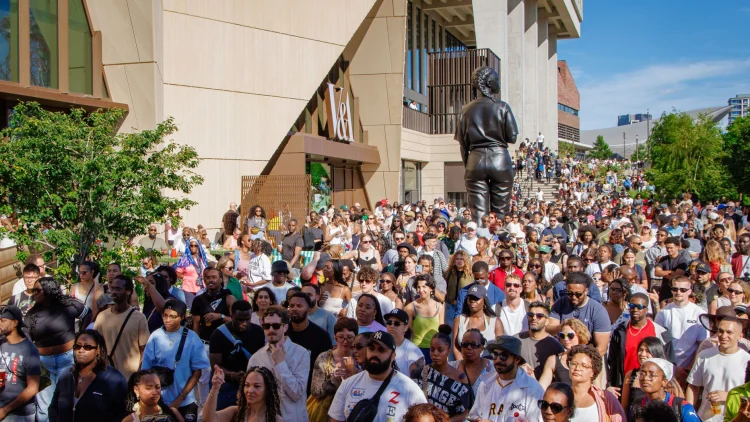

East Bank’s first joint, free public festival in Summer 2026, The Music is Black Festival (Image credit: Rahil Verma)
Investing in cultural and creative collaboration is a route to renewal
This article has been funded by Sadler’s Wells; London College of Fashion, UAL; and University College London on behalf of East Bank
East Bank is unique. Situated at the heart of Queen Elizabeth Olympic Park, the UK’s newest cultural and education quarter is an experiment in creative collaboration which is already having an effect. It is contributing 2,500 jobs and £1.5bn for the local economy and bringing an additional 1.5 million visitors to the park and four local Growth Boroughs each year; offering an evolving model of inclusive growth for local economies and communities across the UK.
What sets East Bank apart is the collaboration between government and world-leading cultural institutions, and between those global institutions and local communities. This enables a creative environment where researchers and students can in turn collaborate with dancers, designers, broadcasters and community groups to solve shared problems.
London 2012 inspired investment at a scale and ambition not matched since: £600m from City Hall enabling a £1.1bn project in development with additional support from central government to the local economy. This enabled five complementary organisations – BBC Music Studios; London College of Fashion, UAL; Sadler’s Wells; University College London (UCL); and the V&A – to commit to new homes and a new association with each other.
Shared trust between government and cultural institutions in taking this leap together has made tangible impact today, not just in terms of the statistics above but in the vibrancy of east London itself.
A commitment to the local area was as vital to East Bank’s founding as the Olympics. It did not arrive on empty ground; East Bank is part of a much longer story of making and remaking, building on local relationships developed over time. With stark challenges to social cohesion across the UK and disillusion especially felt by the young, an investment in one of the youngest and most diverse areas of the country needed to deliver for east London.
And deliver it has.
Building on more than 100 years of shaping lives through fashion, London College of Fashion, UAL’s new state-of-the-art facilities are nurturing pioneering creative talent and opening up opportunities for connection.
The UCL East campus is accelerating breakthroughs in robotics, AI, ecology, sustainable cities, green manufacturing, decarbonised transport, assistive technologies, fair finance, and global health.
Sadler’s Wells East is home to world-class dance, artist development, a new choreographic school and free participation. For the first time in the UK, young people can study a Level 3 qualification in Hip-Hop theatre through Academy Breakin’ Convention.
V&A East Storehouse and Museum provide unprecedented access to collections and ideas, demonstrating creativity’s power to drive change. BBC Music Studios will perform, record and broadcast live music across a full range of genres to the widest possible audiences.
With London’s cultural and creative industries contributing £64bn to the UK economy each year, the benefits from this public investment are far reaching.
Exciting new cross-collaborations are emerging, particularly through East Bank’s work with young people. East Ed, established by London Legacy Development Corporation, supports teachers, inspires young people and creates pathways into creative careers. Over 9,000 young people have taken part in East Summer School and East Careers Week, expanding access to industry, building skills and confidence across courses from fashion design to engineering and skateboarding. The Good Growth Hub’s STEP programme also offers paid traineeships with East Bank partners.
The most exciting test of East Bank’s collaborative potential is still under way. The Music is Black Festival welcomed 12,000 people for a free celebration of sound, culture and community in its first weekend alone. Developed in dialogue with prominent Black British musicians and academics, it offers a culturally significant programme free to the public.
The inspiration of East Bank’s founding, its model of creative collaboration and its promise to local people is a route to renewal anywhere. Our door is open and, as it says in neon over the entrance to Sadler’s Wells East, you are welcome.
Find out more by visiting www.queenelizabetholympicpark.co.uk/east-bank

UK government sanctions on Israeli settlements in the West Bank would increase the threat of attacks on British Jews, a Labour MP has warned.
Foreign secretary Ed Miliband will announce the move in a statement to MPs on Tuesday as part of a “reset” of Britain’s relations with Israel.
Goods coming out of the illegal settlements in the West Bank, a Palestinian territory, will subject to trade restrictions as part of the changes.
Tensions in the West Bank have flared in recent months, with Israeli settlers involved in violent disputes with Palestinians.
Miliband’s announcement is expected to trigger an angry response from the Trump administration, as well as from some Labour MPs.
Downing Street hit back on Monday after Mike Huckabee, the US ambassador to Israel, accused the UK government of “Jew hate”.
On Radio 4’s Today programme this morning, Labour MP Peter Prinsley – who is vice-chair of Labour Friends of Israel – said he had already earned Miliband in person about the possible consequences of the British sanctions.
He said: “My fear is that opponents of Israel won’t distinguish between Israeli government policy, Zionistic political philosophy and British Jews.
“As far as they’re concerned, the whole thing’s the same. It carries a real risk of increased chances of attacks on the British Jewish community. That is exactly what I said to Ed Miliband when I was asked to see him two or three nights ago.”
He added: “I think the timing is terrible. I think we need to wait for the result of the Israeli election and then we need another think.”
Israel has already threatened to retaliate if the UK imposes sanctions over the potential expansion of settlements in the West Bank, with foreign minister Gideon Saar warning: “If Britain acts against Israel, Israel will act against Britain.”
Prinsley’s comments echoed those of Jonathan Hall, the independent reviewer of terrorism legislation, who said the government risked “painting a target” on the backs of British Jews.
He told BBC 2’s Newsnight programme: “There is a risk that if you stir the pot by making Israel a pariah state, then that will bring that flame up again.
“I’ve been very worried about delegitimising anyone who’s Israeli certainly and Jews, many of whom support Israel, and painting a bit of a target on their back.”
Listen to Commons People, the podcast that makes politics easy. Every week, Kevin Schofield and Kate Nicholson unpack the week’s biggest stories to keep you informed. Join us for straightforward analysis of what’s going on at Westminster.

Teens are extremely efficient at coming up with insults, whether they’re calling you mid, referring to someone as Ohio, or branding you a celebrity’s choppelganger.
And if they mention that you – or someone they know – has a “skill issue”. Well, you can bet it’s not a compliment.
What does ‘skill issue’ mean?
The term – which has been knocking around online since the early 2020s – actually derives from online gaming and is a popular way for gamers to ridicule struggling players.
Typically, if someone remarks it’s a “skill issue”, they’re implying that the reason that player lost the game or couldn’t get past a certain level is because of their lack of ability or skill. And the gaming phrase is being applied to real-life scenarios, too.
Failed an exam? Skill issue. Dropped and smashed your phone? Skill issue.
Know Your Meme (KYM) notes it’s also sometimes used ironically as a comment on situations where skill has nothing to do with a person’s loss. For example, a bug or glitch in the game led to someone losing.

Maria Korneeva via Getty Images
Unsurprisingly, the phrase has the ability to rub people up the wrong way. Sharing a post on Reddit’s r/PetPeeves, one user asked others to “stop regurgitating” it.
In response, one Redditor admitted they use it at work “all the time” as it’s a “polite way of saying you’re bad”.
Another said: “Sometimes it’s all there is to say. It is rude though. In a vacuum when no other response has been given, it is definitely dismissive and rude, doesn’t really add anything.
“But if you’ve already explained everything, and whoever you are speaking with continues to give excuses beyond simple frustrations, then at times it is all that there is left to say…”
Among the youngest generations though, the meaning has evolved from pure snide to being a playful and good-natured way for them to make fun of someone.
Parents.com gave the example of if you were on a long drive and your car broke down, “your teen might quip ‘skill issue’”.
Ultimately, what they want it to mean will depend on the context and their tone. But if your teen uses it regularly and you can see it’s rubbing people up the wrong way, it’s worth a quick chat about the impact of their words and importance of kindness towards others.
Politics
Lord Ashcroft: Should we keep the triple lock, should (and will) taxes rise in the Budget, will Burnham try to rejoin the EU, what do we think of No10 North ?
Lord Ashcroft KCMG PC is an international businessman, philanthropist, author and pollster. For more information on his work, visit lordashcroft.com
My latest poll looks in detail at the characters of the main parties and their leaders, whether people’s front doors are open, ajar or closed to each one, what they think of Number 10 North, the pensions triple lock, what they expect in next month’s Budget and whether they think Andy Burnham will try to rejoin the EU.
What have people noticed – and who noticed what?
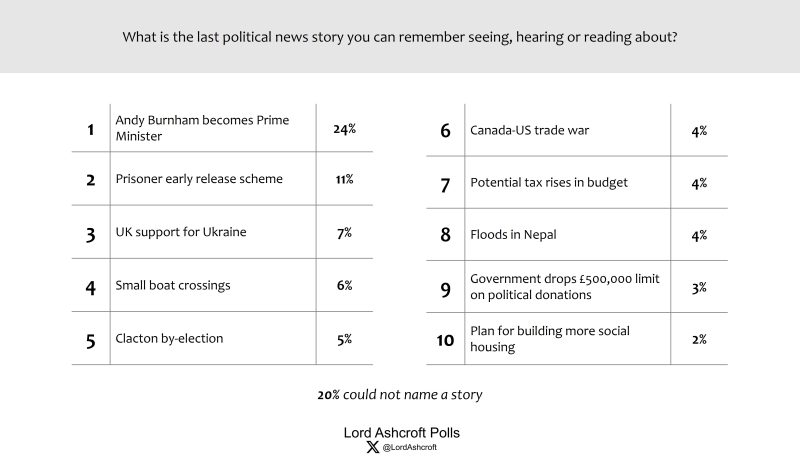
Beyond Burnham becoming prime minister, the prisoner early release scheme was the political news story spontaneously recalled in our poll. This was followed by British support for Ukraine, small boat crossings, and the Clacton by-election.
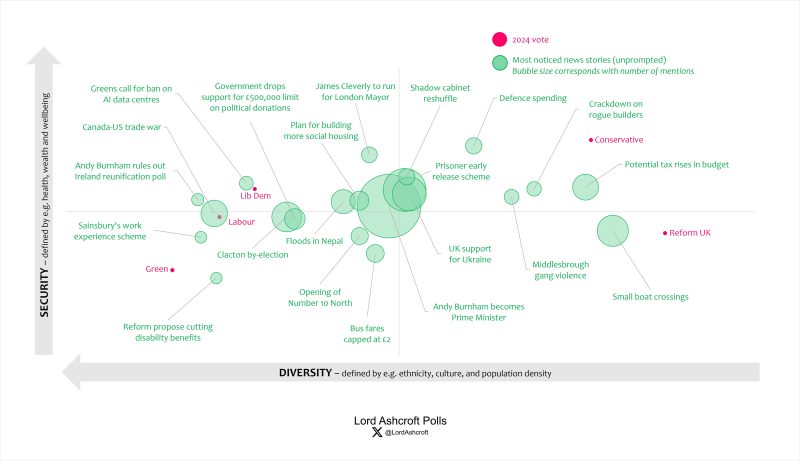
Our political map shows which kinds of voters were most likely to mention which stories. Burnham becoming PM, prisoner early release and Ukraine were all close to the centre of the map, showing that they were recalled fairly evenly throughout the population. Stories about small boat crossings, gang violence, Budget tax rises and defence spending were more likely to be mentioned on the Conservative or Reform-leaning right-hand side of the map. News about the Clacton by-election, US-Canada trade and benefit cuts were more likely to be mentioned in Labour, Lib Dem and Green-voting territory.
What has the Labour government done?
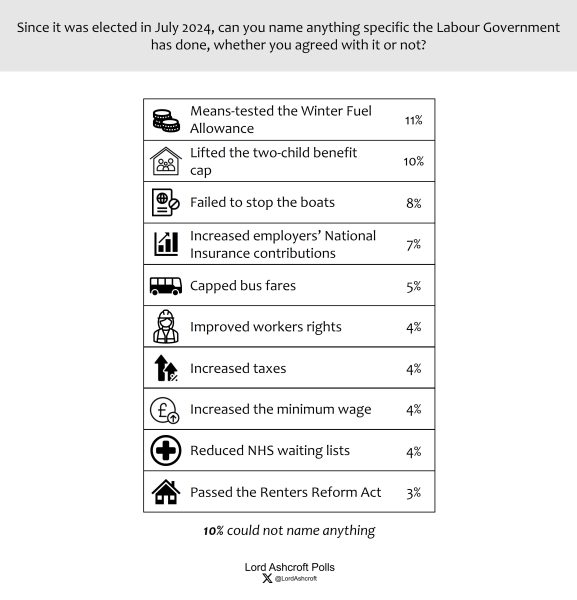
When we asked people to name specific things the Labour government had done since it was elected in 2024, only one – capping bus fares, the fifth most-mentioned item – dated from Burnham’s time in office. Starmer-era issues like the winter fuel allowance, lifting the two-child benefit cap, small boats and Employers’ National Insurance were again more likely to be named.
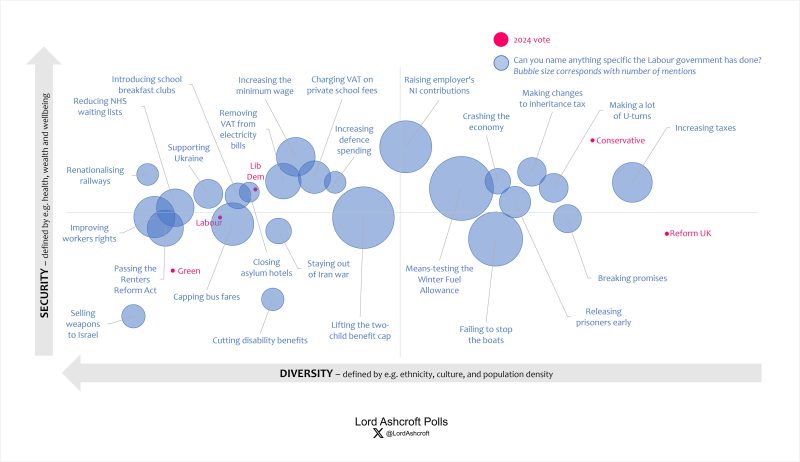
Our political map shows that tax rises, U-turns, early prisoner release and lack of action on small boats were most likely to be mentioned in Conservative and Reform-leaning territory, while benefit cuts, weapons sales to Israel, the Renters Reform Act, school breakfast clubs, raising the minimum wage and removing VAT from electricity bills were more often recalled on the left. Employers’ National Insurance, the two-child benefit cap and the winter fuel allowance were more universally mentioned.
Parties and leaders
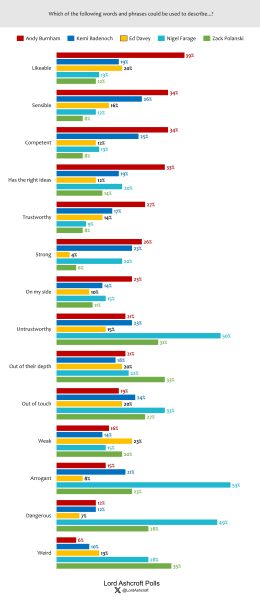
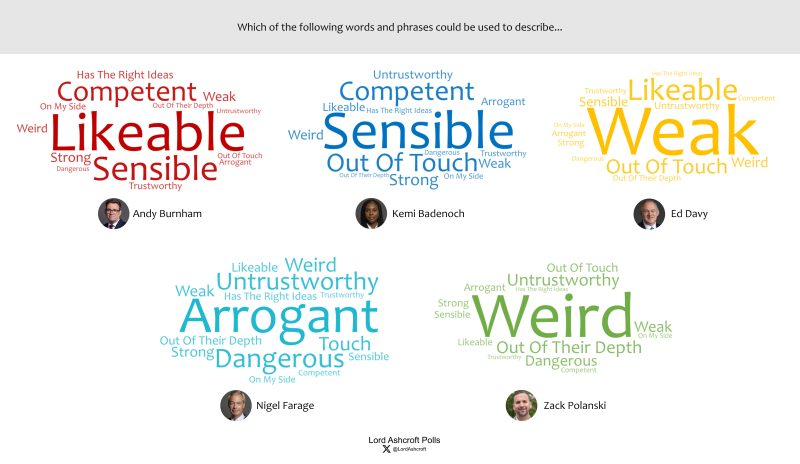
The seven most frequently chosen words and phrases for Andy Burnham were all positive: “likeable”, “competent”, “sensible”, “has the right ideas”, “trustworthy”, “strong”, and “on my side”. “Out of their depth” and “untrustworthy” were the most frequent negative choices. “Sensible” and “competent” were the two most frequent choices for Kemi Badenoch, though this was followed closely by “out of touch”.
The top six choices for Nigel Farage were negative: “arrogant”, “untrustworthy”, “dangerous”, “out of touch”, “weird” and “out of their depth”. “Strong” was the most frequent positive choice. All seven negative words and phrases were chosen for Zack Polanski (especially “weird” and “out of their depth”) before any of the positive ones (the most frequently selected one of which was “has the right ideas”). “Weak” was the most frequently chosen word for Ed Davey, with “likeable” in second place.
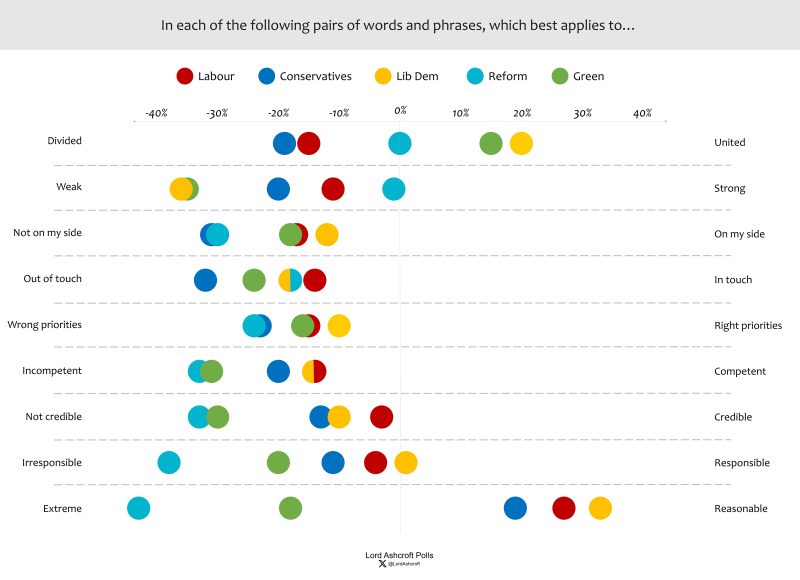
We offered respondents opposing pairs of words and phrases and asked which most applied to each party. Reform were more likely than the Conservatives to be seen as united, strong and in touch. The Conservatives were more likely than Reform to be seen as competent, credible, responsible and reasonable. Labour were ahead of the Conservatives on all positive attributes. Labour were more likely than Reform to be seen as on my side, having the right priorities, competent, responsible and reasonable.
The Budget
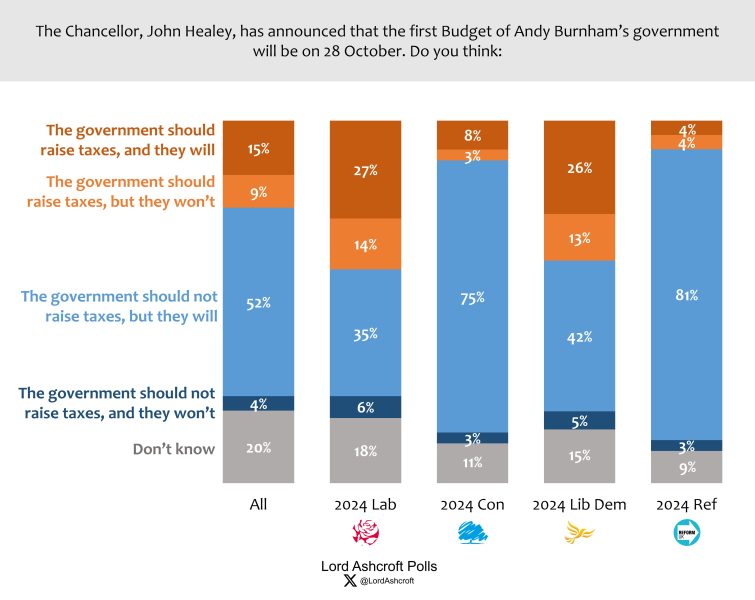
Two thirds of voters said they expected taxes to rise in the Budget, including a majority who said the government should not raise taxes, but they will. More than six in ten 2024 Labour voters expected taxes to rise, including 35 per cent who said they shouldn’t rise but would.
The pension triple lock
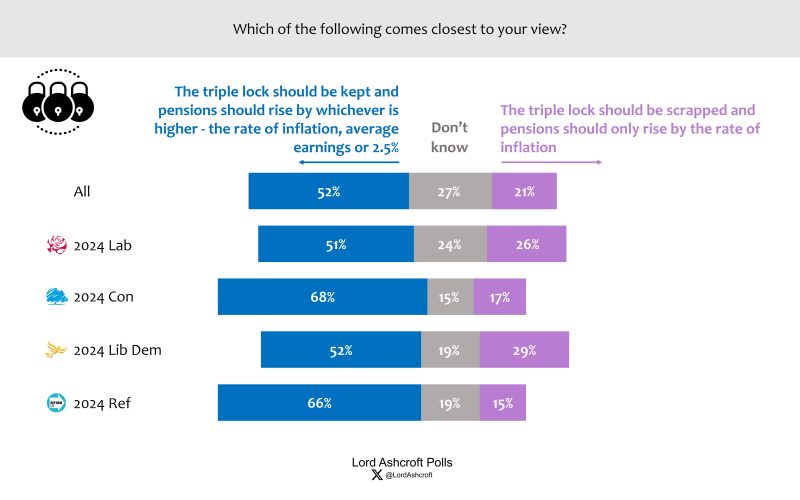
Just over half, including more than two thirds of 2024 Conservative and Reform voters said the pensions triple lock should be kept. Only just over one in five said the lock should be scrapped and pensions should rise only by the rate of inflation. Just under a quarter of 18-24 year-olds said it should be kept, compared to more than six in ten of those aged 50-64 and 80 per cent of those aged 65 or over.
Number 10 North

Voters overall were divided as to whether Number 10 North was a good idea worth trying or a potentially expensive gimmick. Majorities of Labour and Lib Dem voters said it was a good idea, while bigger majorities of Conservative and Reform voters said the opposite.
Rejoining the EU
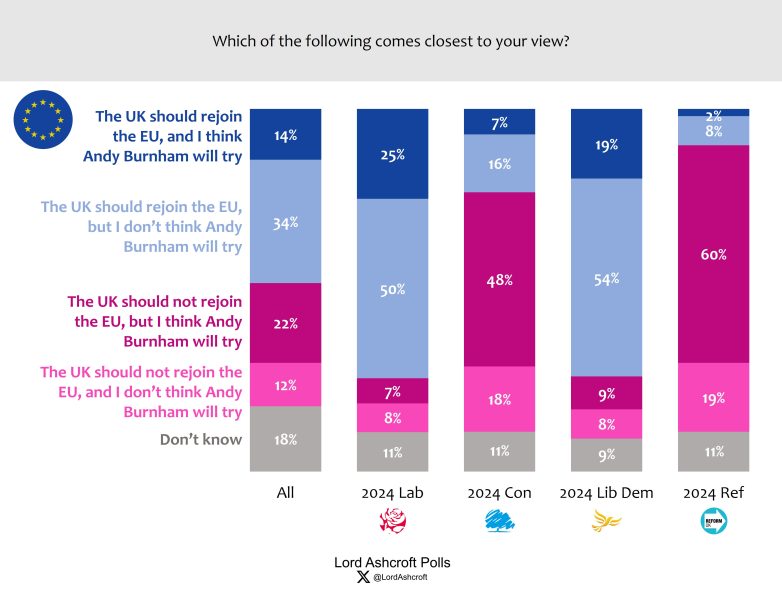
Overall, 48 per cent (including around three quarters of 2024 Labour and Lib Dem voters) said Britain should rejoin the EU, whether or not they thought Andy Burnham would try to do so. Thirty-six per cent thought Burnham would try to rejoin the EU, whether or not they thought that would be a good idea. Just under a quarter (23%) of 2024 Conservatives said they thought the UK should rejoin.
Russian threats
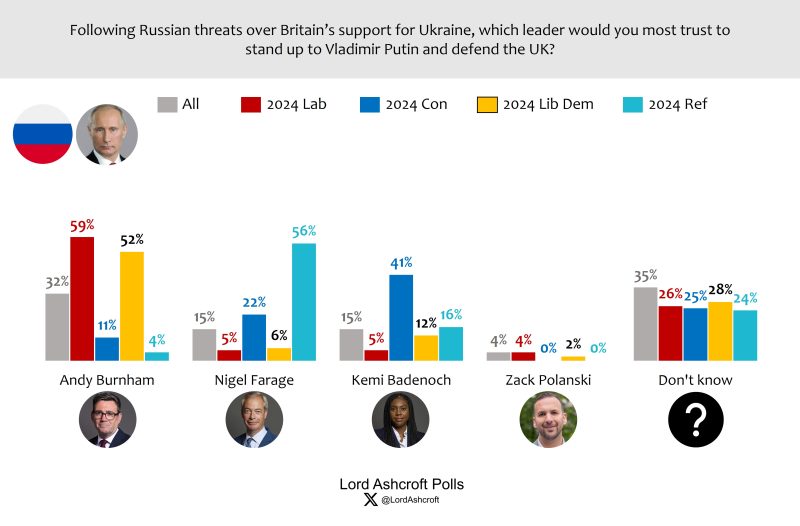
Andy Burnham was the leader most trusted to stand up to Putin and defend the UK, chosen by 32 per cent. Badenoch and Farage were equal second, named by 15 per cent each.
Best and most likely prime minister
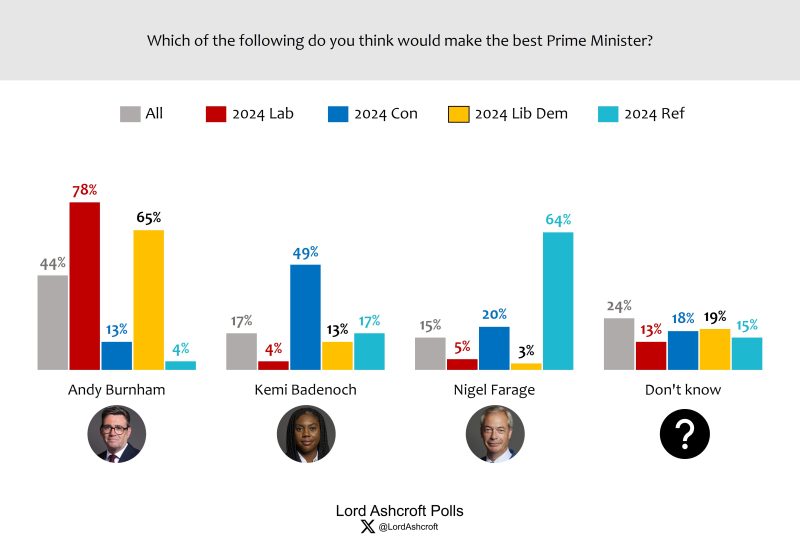
Offered a choice between Burnham, Badenoch and Farage, voters chose Starmer over Badenoch by a 27-point margin, with Farage third on 15 per cent – all unchanged from last month. Just under eight in ten 2024 Labour voters preferred Burnham, compared to 65 per cent who preferred Starmer in June.
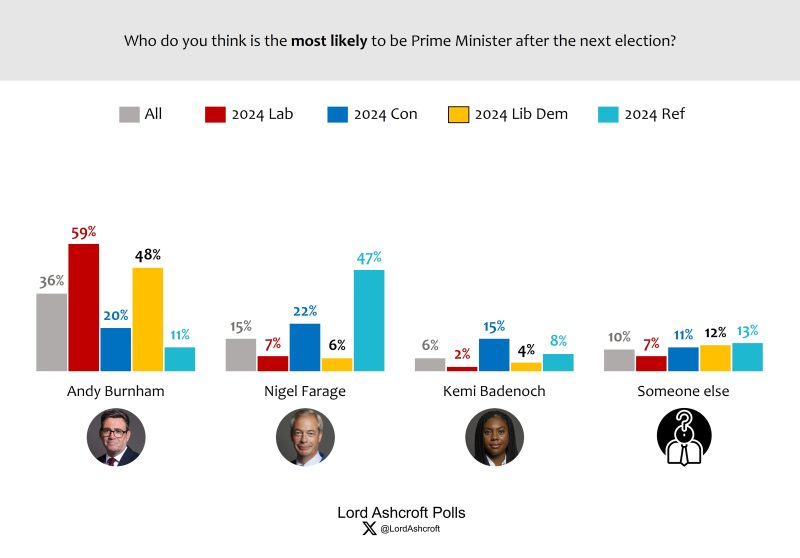
Andy Burnham remains the leader voters consider most likely to be PM after the next general election, named by 36 per cent. Fifteen per cent named Farage. Just over six in ten of those currently intending to vote Reform thought Farage would be PM, while 77 per cent of Labour leaners expect Burnham to be PM.
The political map
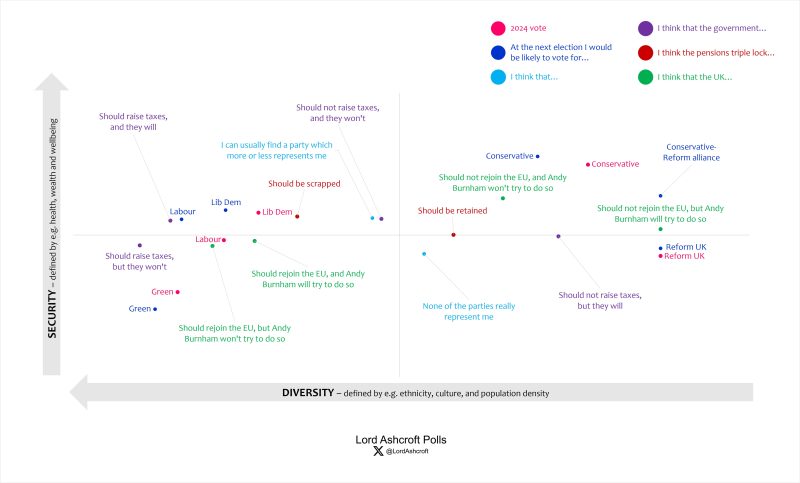
As above, our political map shows how different issues, attributes, personalities and opinions interact with one another. Each point shows where we are most likely to find people with that characteristic or opinion; the closer the plot points are to each other the more closely related they are. Here we see what different kinds of voters want and expect from the Budget and Burnham’s approach to the EU, and their views about the pension triple lock.
The next election
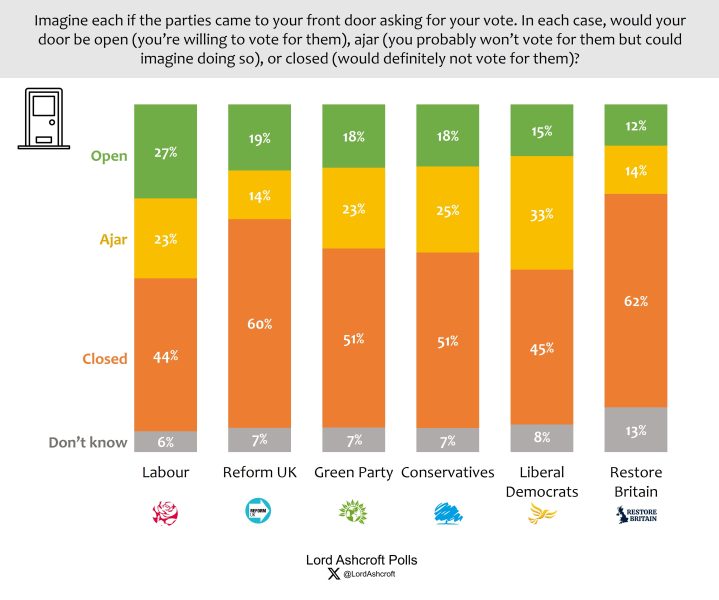
Voters were most open to considering Labour: 27 per cent said their door was open, 23 per cent ajar and 44 per cent closed. The Lib Dems had the largest “ajar” constituency. Just over half said they were closed to the Conservatives and Greens, and 60 per cent to Reform UK – only just under the proportion saying they were closed to Restore Britain.
Half of those currently leading towards the Conservative said they were open or ajar to Reform, and nearly two-thirds of Reform voters to the Conservatives, but only one in ten Reform voters would consider Labour. On the other side, two-thirds of current Labour voters said they would consider the Greens and three-quarters the Lib Dems, and vice versa. Reform voters were more likely to say they were open or ajar to Restore Britain (68%) than to the Conservatives (64%).
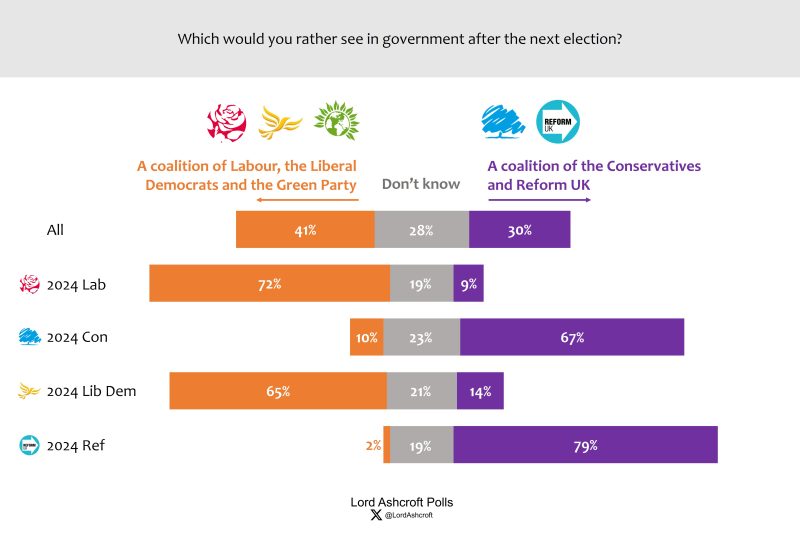
Just over four in ten (41 per cent) said they would prefer to see a coalition between Labour, the Lib Dems and the Greens after the next election, while 30 per cent chose a Conservative-Reform coalition. Only two thirds of 2024 Tories leaners said they would prefer a Conservative-Reform government (with nearly a quarter saying “don’t know”), compared to nearly 8 in 10 Reform voters.
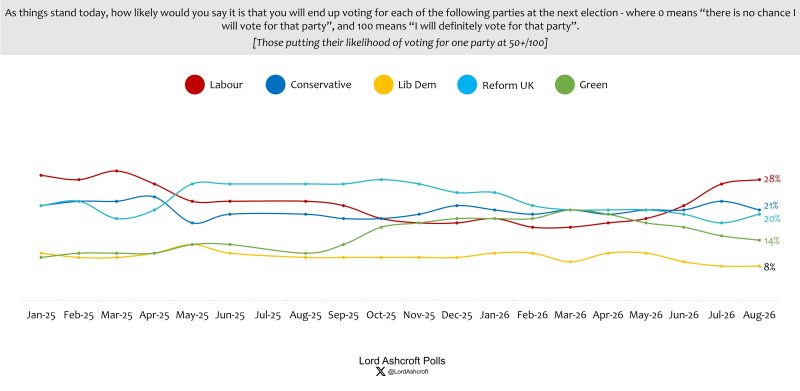
Unlike most pollsters, I ask how likely people think they are to vote for each party at the next election on a scale from zero to one hundred, rather than which they would pick in a hypothetical election tomorrow. Taking those who put their chances of voting for one party at 50+ out of 100, and weighted by likelihood to turn out and vote, we find vote shares of Labour 28 per cent, Conservative 21 per cent, Reform UK 20 per cent, Green 14 per cent, Lib Dems 8 per cent, Others 9 per cent.
Full data tables are at LordAshcroftPolls.com
The post Lord Ashcroft: Should we keep the triple lock, should (and will) taxes rise in the Budget, will Burnham try to rejoin the EU, what do we think of No10 North ? appeared first on Conservative Home.

In three and a half decades working in policing, I have seen the landscape of child abuse change many times.
I have watched technology transform both the scale of the threat and the complexity of the response. I have sat with survivors and with their families, and I know and understand too well what this harm does.
And I have rarely seen anything escalate as fast as this.
The online sexual abuse of children is, in the most clinical and precise sense of the word, a pandemic.
The Global Child Safety Institute at the University of Edinburgh – conducting the first global estimate of its kind – found that 300 million young people are victims of technology-facilitated sexual abuse and exploitation every 12 months.
Those numbers are not projections. They are what is happening to children right now, in every country, in every community.
And AI is accelerating it, exponentially. The Internet Watch Foundation recorded a 26,000% rise in AI-generated child sexual abuse videos between 2024 and 2025. There are hundreds of millions of child sexual abuse images in circulation, and AI is fuelling the numbers as well as the demand.
What once required physical access to a child can now be generated from a photograph – perhaps a photo taken at sports day, or published by a school on its website or social media channels, with nothing but pride and good intention.
And this makes schools the latest and most troubling frontier in this crisis.
Without knowing it, without doing anything wrong, schools have become a target and a source. Every publicly accessible image of a child is now potential raw material for criminals.
The technology to exploit it is freely available, requires no expertise and costs nothing. The only thing standing between a child’s school photograph and its misuse is whether anyone has thought to protect it.
New national research published today lays bare the scale of what is happening. The In Plain Sight report from Aidos, which polled 500 UK headteachers, has found that almost one in two (49%) say their school has already experienced an incident involving pupil image misuse, manipulation or a blackmail attempt.
More than half (54%) say they have personal concerns that their school’s published images are vulnerable, and 45% say their school has already received a direct complaint from a parent about image misuse.
What makes the findings even more alarming is the gap between what schools know and what they are prepared to do about it. The majority of headteachers are aware that AI criminals are targeting school photographs, yet fewer than half – just 43% – would feel very confident knowing what steps to take if their school received a ransom demand involving manipulated pupil images tomorrow.
But schools that publish images are not doing anything wrong. They are doing what schools have always done: celebrating their children and communicating with their communities. In doing so, they are creating an opportunity they had no reason to anticipate.
The threat is anonymous, arrives without warning and its potential to cause severe and lasting trauma to children, their parents, and the staff who care for them is profound. School leaders are only now beginning to understand what they are dealing with, and are understandably struggling to know exactly what to do.
Every time AI generates a new image from a publicly available photograph, another child enters a cycle of harm they did not consent to and cannot escape. They are images of real children, and the psychological consequences for those children and their families, when they discover what has been done with their image, are devastating.
So, what can schools do? They have a duty of care to protect the children in their charge and that duty now extends to every image they publish online. That might mean reviewing what images are currently publicly accessible and for how long.
It also means ensuring safeguarding policies address the risk of pupils using nudification apps and creating deepfakes of their peers, and it means considering tools that can anonymise children’s identities in published photographs, so those images can never be misused, no matter who finds them or what technology they have access to.
This school year, I am asking every headteacher, every governor, every parent and every policymaker to take this seriously. Not next term, not when a case hits closer to home, but now.
The frameworks we have relied on to protect children were not built for this threat. That is not a criticism, it is the sad reality we are faced with, and the only responsible response to reality is to act on it.
The numbers are extraordinary, but behind every number is a child – and that is the only number that matters.
Simon Bailey served for 35 years in UK policing, including as National Policing Lead for Child Protection. He now also advises Aidos, the UK’s first AI safeguarding platform that makes pupils in school photographs permanently unidentifiable before they are shared online.

‘Quite appalling’: The UK’s WORST airport revealed – with two-hour queues, nowhere to sit and ‘excessive’ walking distances

IFCI shares slide 7% after stellar 30% monthly surge amid NSE IPO buzz

Bitcoin (BTC) Slumps Below $79,000 Amid Renewed Rate Hike Concerns





-
 Fashion4 days ago
Weekend Open Thread: Beyond Yoga
-
 Crypto World4 days ago
Bitcoin price stalls near $82K as key resistance holds
-

 Politics4 days ago
Best Gaming Laptops, CPUs, TVs, And Keyboards To Upgrade Your Set Up For GTA VI
-
 Tech4 days ago
The Birds Outside, Drawn For You Automatically
-

 Crypto World4 days ago
IMF Says El Salvador’s Post-Review Bitcoin Purchases Used No Public Funds
-
 Crypto World4 days ago
U.S. added stronger than expected 162,000 jobs in August as labor market bounced back
-
 Sports4 days ago
Alexandre Pato consortium’s Northampton Town investment approved
-

 Sports4 days ago
Commanders’ Chig Okonkwo is a top breakout fantasy football candidate
-

 Sports4 days ago
Golden Eaglets Drawn in Group B for 2026 WAFU B U17 Championship
-
 Crypto World4 days ago
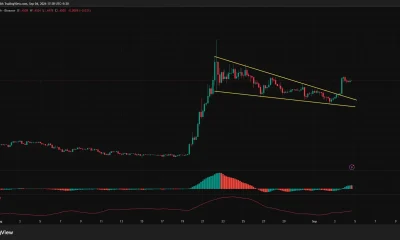
XRP price breaks falling channel as bulls target $1.53
-
 Politics4 days ago
A new European chapter for Gibraltar
-

 Politics4 days ago
How To Avoid Winter Colds: 4 Everyday Habits That Spread Germs, Says Pharmacist
-
 Politics4 days ago
The House | Bin the lectures, bring gossip and be ready to banter: how the new PM should prepare for his Trump encounter
-

 Crypto World4 days ago
From warning to listing: UK’s largest retail investment platform opens access to crypto ETNs
-

 Crypto World4 days ago
FinCEN flags $12.7B tied to Southeast Asia crypto investment scams
-

 Tech4 days ago
A Worthy Android Ereader, With Some Tradeoffs
-

 Crypto World4 days ago
Trezor Data Breach Impacts 67,000 More US Customers
-

 Tech4 days ago
How To Edit Claude’s Memory
-

 Politics4 days ago
33 Cosy Autumn Home Decor Ideas: Blankets, Pumpkin Decorations, And Candles
-
 Tech4 days ago
beyerdynamic AVENTHO Y Debuts at IFA 2026 and Makes Wireless Headphones Less Disposable
You must be logged in to post a comment Login