
Politics
What’s Making Teenagers Anxious? Therapists Share Their Thoughts


What Kids Are Carrying is a HuffPost UK series focusing on how the nation’s youngest generation is *really* feeling right now – and how parents and caregivers can support them.
Anxiety is one of the most common issues young children and teenagers are bringing to therapy, according to therapists.
Just like there are myriad reasons why young children are increasingly anxious – from over-exposure to screens, to neurodivergence, to absorbing anxiety of ‘grown-up problems’ like money worries – for teens, there are a number of factors driving their anxiety. But therapists are witnessing some key trends.
“Adolescence is a challenging time, and the move towards increased independence while still only having recently left an era of play and imagination can bring with it increased anxiety,” said therapist and BACP member Amanda MacDonald.
“Teens will be aware of exams coming up, and other factors surrounding their immediate world, together with an awareness of global concerns such as conflicts and the environment.
“All this is going on at a time when they are working out who they are, and forming friendships based on this developing sense of identity.”
A 2025 survey by BBC Radio 5 Live and BBC Bitesize, which polled 2,000 kids aged 13-18, found two-thirds (69%) of all participants reported feeling anxious at least some of the time. Pressure around exams and grades was the biggest worry.
Counselling Directory member Debbie Keenan suggests teen anxiety is often driven by a mix of developmental pressure, expectations and uncertainty.
“Recurring themes include academic performance, social comparison, questioning identity/sexuality and fear of failure,” she noted.
Therapists also noticed the Covid-19 pandemic seems to have “significantly amplified” anxiety as teens experienced disrupted routines, isolation, and a prolonged sense of threat. Keenan noted this may have “sensitised their nervous systems and reduced their capacity to cope with stress”.
How parents can support anxious teens
When your child is struggling, you probably want to jump in and solve all their problems for them, but experts suggest the best way parents can support is to simply be there, be curious and listen without judgement.
Connection is key. “Check in with them to see how they are doing, and get a sense of what is happening in their life,” advised MacDonald. Sometimes it can help to do these check-ins while you’re doing something else together – gaming, shopping or driving in the car, for instance.
Joseph Conway, psychotherapist and mental health trainer at Vita Health Group, previously suggested that “side-by-side talking” can help teens, especially boys, feel comfortable enough to open up.
“Pick an activity they enjoy, such as football, baking, crafting, or gaming, to create a safe-space for conversation,” he said.
“Shared activities give boys room to open up without feeling scrutinised, or having the intensity of eye contact.”
Another helpful tip from Keenan is to explore your teen’s “window of tolerance”.
“The window of tolerance is the range in which a person can think, feel, and learn effectively,” she explained.
“When anxiety pushes them outside this window, they may become hyperaroused (panic, avoidance, irritability) or hypoaroused (shutdown, numbness).”
Support starts with helping teens recognise these states and teaching regulation skills. This might look like slow breathing, grounding, mindfulness or co-regulation exercises “to bring them back into their window of tolerance”, Keenan said.
What not to do when supporting your teen with anxiety
Counselling Directory member Bella Hird stressed that it’s key for parents to resist all urges to tell their teen “there is nothing to worry about”.
“Never in the history of mankind has anyone ever calmed down when told to ‘calm down’,” she said.
Counselling Directory member Mandi Simons agrees that teens benefit more from being listened to without judgement or minimisation.
Discussing what to do instead of saying “there’s nothing to worry about”, Hird suggested the internal narrative of “I am not worried about this but I want to understand your worry” can be helpful for parents to take on board.
“The experience of not being heard or understood is only going to add to the experience of anxiety,” she explained. “If you can show them you are willing to truly understand their anxiety and sit with them in it, you will be modelling that anxiety is not something to be feared and just simply our minds and bodies picking up on data that something is amiss.”
She added that sometimes, studying the “data” may throw to light an understanding that can be really helpful, for example a belief that might be challenged or a “worse case scenario” that isn’t that bad after all.
“Once you have allowed space to explore the anxiety you can together find ways to support,” she added.
Of course, if your teenager is no longer getting involved with the things they enjoy, or seems to have low or irritable moods that go on for longer, making contact with a mental health professional can help.
When anxiety fuels school avoidance
Therapists are noticing there are a growing number of children struggling to attend school because of anxiety, particularly since the Covid-19 pandemic.
A survey by youth mental health charity stem4 found more than one-quarter (28%) of 12- to 18-year-olds hadn’t attended school in 2023-24 because of it, according to the Guardian.
If your teen is struggling with anxiety and it’s preventing them from going to school, Hird suggested that open communication with the school is important, “but make sure that the goal remains the wellbeing of the child and that you don’t fall into the trap of becoming anxious that you won’t find a suitable solution”.
“You will,” she added. “This is where counselling or coaching can be particularly useful for a parent.”
Charity Young Minds recommends for parents to tell their teenager’s school about the specific things they are finding difficult and also asking their teacher(s) about anything they’ve noticed. Getting a note from your child’s GP, CAMHS or another mental health professional can also be helpful to show why your child isn’t at school.
“If you and your child have already identified some things that might help, ask for specific changes,” adds the charity. “If you’re not sure where to start, ask what changes the school can offer…” You can also ask for these changes to be formalised in an Individual Education Plan. It might also be helpful to schedule check-ins with the school so you can assess how your child is getting on.
Keenan noted that some of the effective strategies she uses, in collaboration with parents/caregivers, include: reassurance, gradual and gentle exposure back to school, validating anxiety without reinforcing avoidance, addressing underlying learning or social issues, and strengthening coping skills so teens feel safer tolerating distress rather than escaping it.
Macdonald acknowledges that while it can feel very concerning for parents who may feel worried for their child’s future, “for some young people this may pass, and they may just need a bit of time to have some adjustments made”.
For other young people, when attending school feels impossible, compassion is key.
“Your teen is in distress, and it may be at that time they need more space than a day or two at home will provide,” she concluded.
“There are young people who have taken paths other than traditional ‘bricks and mortar’ education, and who thrive in a different setting.”
Help and support:
- Mind, open Monday to Friday, 9am-6pm on 0300 123 3393.
- Samaritans offers a listening service which is open 24 hours a day, on 116 123 (UK and ROI – this number is FREE to call and will not appear on your phone bill).
- CALM (the Campaign Against Living Miserably) offer a helpline open 5pm-midnight, 365 days a year, on 0800 58 58 58, and a webchat service.
- The Mix is a free support service for people under 25. Call 0808 808 4994 or email help@themix.org.uk
- Rethink Mental Illness offers practical help through its advice line which can be reached on 0808 801 0525 (Monday to Friday 10am-4pm). More info can be found on rethink.org.


Donald Trump has called on the UK to “go get your own oil” from the Strait of Hormuz in a new social media post.
The US president has tried and failed to get western allies including the UK to support him in his offensive against Iran.
After the US-Israeli strikes last month, Iran’s forces effectively closed the Strait of Hormuz, which transports a fifth of the world’s oil supply.
The subsequent squeeze on fuel has caused a significant economic shock – and Trump has been trying to force Iran to negotiate as the global cost of living rises.
Writing on TruthSocial, he said the UK should either buy jet fuel from the US or “build up some delayed courage, go to the Strait and just TAKE IT”.
He said: “You’ve have to start learning how to fight for yourself, the USA won’t be there to help you anymore, just like you weren’t there for us.”
The UK government has insisted it is not concerned about oil shortages right now though there are worries about an energy crisis later in the year.
Trump’s attack on Britain comes after Keir Starmer refused US requests to use British military bases for premptive strikes on Iran last month, before allowing American troops to use UK sites for “limited and defensive” strikes.
The president also claimed: “Iran has been, essentially, decimated. The hard part is done. Go get your own oil!”
Read Trump’s full TruthSocial post below:
All of those countries that can’t get jet fuel because of the Strait of Hormuz, like the United Kingdom, which refused to get involved in the decapitation of Iran, I have a suggestion for you: Number 1, buy from the U.S., we have plenty, and Number 2, build up some delayed courage, go to the Strait, and just TAKE IT. You’ll have to start learning how to fight for yourself, the U.S.A. won’t be there to help you anymore, just like you weren’t there for us. Iran has been, essentially, decimated. The hard part is done. Go get your own oil! President DJT
The US president also lashed out at France, claiming it will not allow planes headed to Israel, “loaded with military supplies” fly over French land.
“France has been VERY UNHELPFUL with respect to the ‘Butcher of Iran’ who has been successfully eliminated! The USA will REMEMBER!” Trump wrote.

Banking giant JP Morgan has gone on a capital strike (withholding investment). Following this, Labour has been quick to offer an 100% discount on the bank’s business rates, spread out over “a period of years”.
At the same time, doctors have been on a workers’ strike for pay restoration and job security. It appears that, when it comes to workers, Labour suddenly find the will to say no.
The Capital party?
If ‘Labour’ rebranded as ‘Capital’, we probably wouldn’t consider it an April Fool’s Day joke. As well as JP Morgan, pharmaceutical giants have been demanding that the NHS pay them more, or they will withhold investment. Labour agreed to a 25% increase in payments for essential drugs in December 2025.
Meanwhile, resident doctors are asking for real-terms pay restoration to 2008 levels, at 21%. The government is offering a 7.1% increase partly because it disputes the doctors’ use of the Retail Price Index (RPI) to calculate inflation. Apparently, RPI is good enough for calculating increases in student debt, rent and corporate pricing. However, it isn’t sufficient for a doctor’s pay.
Another part of the dispute is specialist doctor posts in the NHS. The government is proposing to increase them from 1,000 to around 4,000. The thing is, the number of specialist applications is projected to exceed 40,000 this year.
Overall, the UK is low on doctors per 1,000 people at 3.2. Some of the highest per capita doctor levels are in Austria (5.48) and Germany (4.53).
48-hour deadline (not for JP Morgan, of course)
Labour has given resident doctors 48 hours to accept the deal. The British Medical Association (BMA) rejected the offer without putting it to a member vote.
The chair of the BMA’s resident doctors committee, Dr Jack Fletcher, has said:
We’ve been willing and have been talking constructively for the last two months and at the very last minute the government has shifted the goalposts of the pay offer. I am very happy and willing to sit down and talk constructively once again.
He further responded to withholding a members vote on the pay and jobs offer:
We discussed this with our committee who are elected to represent our members. Their representatives have considered this offer. We don’t think it goes far enough on pay so we decided not to put this to our members.
While members should decide if they accept the offer, the government goes far too easy on capital like JP Morgan compared to workers. That’s an affront to how the Labour party was founded.
Featured image via the Canary
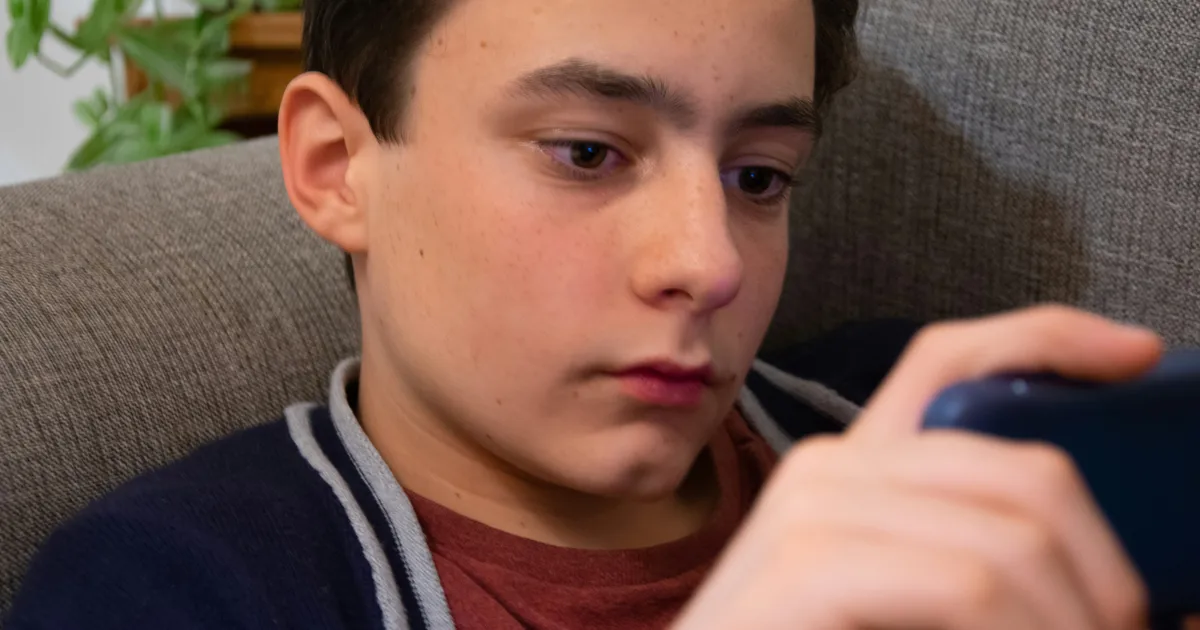
Children chat about a lot of pretty odd stuff (remember Ballerina Cappuccina?) – however if you’ve heard them mention ‘gooning’ in conversation with their mates, or during gaming, it’s certainly worth pulling them up on it.
While you might consider ‘gooning’ as messing around or even goofing about (that’s what first came to my mind), per Mashable, it actually means “masturbating for a prolonged period of time, usually hours, without ever climaxing”.
In online spaces, it can also refer to zoning out as a result of intense sexual arousal, which Gabb (a company providing child-safe phones and tech) notes is “most often in the context of pornography”.
The issue is, if tweens and teens are using this terminology, chances are they are coming across pornography or inappropriate content online.
It’s not uncommon – over one-quarter (27%) of kids have come across pornography by age 11, according to a survey by the Children’s Commissioner.
While children shouldn’t be easily coming across porn due to stricter regulation as part of the Online Safety Act, they may still find ways to access it.
When talking about ‘gooning’ is a red flag
If your tween or teen is talking about gooning, even if it’s just joking with friends, it’s definitely worth asking them about it.
If they are getting involved in this activity, Fiona Yassin, a family psychotherapist, told HuffPost UK: “There’s a real neurodevelopmental risk here. During adolescence, the brain is still under construction – very much a work in progress – and when it’s repeatedly flooded with high-intensity sexual content, it drives spikes in dopamine that can create a pathway towards compulsive cycles.
“Over time, young people may need more and more intensity to achieve the same effect, which mirrors the mechanisms we see in other forms of addiction. That’s particularly concerning in a developing brain.”
Yassin, who is the founder and clinical director of The Wave Clinic, also warned that it can impact social development (zoning out in front of a screen might increase isolation, anxiety and low mood) and attachment, particularly as far as sexual relationships are concerned.
“This can disrupt the development of healthy attachment, increasing impulsivity, risk-taking, and a disregard for personal and relational safety,” she explained.
Teens who are exposed to this kind of content can also begin to develop unrealistic expectations of themselves and others, particularly as far as sex and relationships are concerned.
“It can encourage objectification, a sense of disposability in relationships, and a reduced capacity for genuine intimacy – building, sustaining, and nurturing connection,” said Yassin.
Ultimately, she warned, “it can shift how young people see others, which can lead to the oversexualisation of what would otherwise be non-sexual interactions”.
“That has wide-reaching implications for how they relate, connect, and develop into adulthood.”
Talk to your kids if they mention gooning
Some children might use the word without fully understanding where it comes from and the potential impact on others. So, the key here is to be curious about where they’ve heard the term and what they think it means – which can help steer your conversations going forward.
“Rather than reacting with frustration or alarm, the most effective starting point for parents is to stay calm and curious,” said Yassin.
“Parents may ask: ‘What does this word mean to you?’ or ‘What do you think someone else might hear or feel when that word is used?’. Like many aspects of child and adolescent mental health, this situation offers a valuable teaching and learning opportunity.”
If they do know the full meaning, the therapist urges parents to seize the opportunity for age-appropriate honesty. “Teens, in particular, are more likely to engage when they feel respected, rather than lectured,” she added.
“Parents can gently widen the conversation to the bigger picture, which might include the consequences of the word, how pornography can shape expectations, impact mental health, and, in some cases, lead to more compulsive patterns of behaviour.”
Action for Children has a few helpful pointers for talking to kids about porn, but ultimately it advises parents to reassure kids it’s OK to feel curious about sex, while also explaining that “porn is unrealistic” and it “can be harmful for them to watch it”.
!function(n){if(!window.cnx){window.cnx={},window.cnx.cmd=[];var t=n.createElement(‘iframe’);t.display=’none’,t.onload=function(){var n=t.contentWindow.document,c=n.createElement(‘script’);c.src=”//cd.connatix.com/connatix.player.js”,c.setAttribute(‘async’,’1′),c.setAttribute(‘type’,’text/javascript’),n.body.appendChild(c)},n.head.appendChild(t)}}(document);(new Image()).src=”https://capi.connatix.com/tr/si?token=19654b65-409c-4b38-90db-80cbdea02cf4″;cnx.cmd.push(function(){cnx({“playerId”:”19654b65-409c-4b38-90db-80cbdea02cf4″,”mediaId”:”d0c0715d-b6f4-4c5b-a7be-52b728918d0f”}).render(“69cbbadce4b010178ee70322”);});

You probably already know that strength training and calcium can help to keep your bones healthy and strong as you age.
But some factors – like getting enough vitamin D, which helps to absorb calcium, and avoiding smoking, which raises your risk of osteoporosis and is linked to a 30-40% higher risk of broken hips – are less obvious.
And in one study, prunes, which are high in anti-inflammatory polyphenols and calcium-balancing vitamin K, appeared to preserve bone density and strength at weight-bearing parts of the hip for post-menopausal women.
What did the research show?
The researchers followed a group of 235 postmenopausal women, who are at greater risk of bone loss, over a year.
They told one group to eat 50g (about five to six prunes) a day during the trial, and another group to eat 100g a day. A third group didn’t eat any prunes at all.
Though both prune levels were beneficial, the first group (50g) were more likely to stick to the habit, which meant they tended to get better results.
Professor Mary Jane De Souza, the study’s lead author, said: “Consuming five to six prunes a day for 12 months resulted in preservation of bone at the hip, a finding that was observable at six months and persisted through month 12.”
Postmenopausal women who didn’t consume any prunes saw a 1.1% bone loss in the same time period, while for those in the study, it stayed the same.
That benefit could lead to fewer bone breaks.
It could have benefits for bone quality, too
The same group of women were part of another study looking at how prunes seemed to affect the structure and estimated strength of their tibia.
“This is the first randomised controlled trial to look at three-dimensional bone outcomes with respect to bone structure, geometry and estimated strength,” Professor De Souza said.
“In our study, we saw that daily prune consumption impacted factors related to fracture risk. That’s clinically invaluable.”
She added that prunes may help to reduce the risk of osteoporosis, but more research is needed.

!function(n){if(!window.cnx){window.cnx={},window.cnx.cmd=[];var t=n.createElement(‘iframe’);t.display=’none’,t.onload=function(){var n=t.contentWindow.document,c=n.createElement(‘script’);c.src=”//cd.connatix.com/connatix.player.js”,c.setAttribute(‘async’,’1′),c.setAttribute(‘type’,’text/javascript’),n.body.appendChild(c)},n.head.appendChild(t)}}(document);(new Image()).src=”https://capi.connatix.com/tr/si?token=19654b65-409c-4b38-90db-80cbdea02cf4″;cnx.cmd.push(function(){cnx({“playerId”:”19654b65-409c-4b38-90db-80cbdea02cf4″,”mediaId”:”52ca7643-7998-446c-a20e-9db25b6fd9b7″}).render(“69cbd726e4b039d10fc6df5a”);});

Labour MP Karl Turner has had the party whip suspended after rebelling against the government over its plans to scrap most jury trials.
It is understood the MP for Kingston upon Hull East was informed by the chief whip Jonathan Reynolds today that he had the whip suspended following his recent conduct.
This decision will be reviewed at a later date, HuffPost UK understands.
However the MP has suggested he was not told of the party’s decision before the media announced it.
Turner wrote on X: “I am being told that I have had the whip suspended but I have not had any notification from the whips about this. It seems journalists have been told but I have not.”
He issued a full statement hours later, saying he was “disappointed” to be suspended without prior verbal communication.
Ministers have been pushing to end jury trials in cases that carry a likely sentence of less than three years, which would instead be heard in front of a lone judge.
The government argues that this is needed to clear the huge backlog of cases within the system, but critics like Turner say jury trials are a fundamental right.
Turner also told HuffPost UK less than a fortnight ago that a “revolt” by the Parliamentary Labour Party is just weeks away unless Starmer turns around the government’s fortunes ahead of the May elections.
He voiced his support for former deputy prime minister Angela Rayner after she warned the government was “running out of time” to deliver the change voters were promised.
The MP said: “It is refreshing to see a senior Labour politician come out and speak clearly to the situation we find ourselves in.”
He claimed there is “a great deal of discontent on the Labour benches”.
Turner said he still supports the prime minister’s leadership but urged him to up his game as Labour trails in the polls.
And he said the elections for the Scottish Parliament, Welsh Senedd and English councils on May 7 were D-Day for his premiership.
He said: “The PM needs to listen hard to what his PLP are saying. We cannot be treated with contempt.”
Meanwhile the Guardian reported that Turner’s suspension was related to an interview the MP gave to Jody McIntyre, a campaign who previously stood at the 2024 elections against Labour’s Jess Phillips.

!function(n){if(!window.cnx){window.cnx={},window.cnx.cmd=[];var t=n.createElement(‘iframe’);t.display=’none’,t.onload=function(){var n=t.contentWindow.document,c=n.createElement(‘script’);c.src=”//cd.connatix.com/connatix.player.js”,c.setAttribute(‘async’,’1′),c.setAttribute(‘type’,’text/javascript’),n.body.appendChild(c)},n.head.appendChild(t)}}(document);(new Image()).src=”https://capi.connatix.com/tr/si?token=19654b65-409c-4b38-90db-80cbdea02cf4″;cnx.cmd.push(function(){cnx({“playerId”:”19654b65-409c-4b38-90db-80cbdea02cf4″,”mediaId”:”2d686915-cc19-4a2a-8708-d3aeb1a20580″}).render(“69cbd725e4b0bb388b875d05”);});

A government report has raised concerns about people being referred to the ‘Prevent’ counter-terrorism program, not because of genuine concerns about radicalisation, but to speed up access to the UK’s crumbling mental health services.
However, given the biases and bigotries rife in both the program and mental health services themselves, this tactic is likely to be extremely risky for any Muslim, Black, and Brown people it affects.
‘Badly twisted approach’ ends up with Prevent
Whilst the government’s report was internal and never intended for public scrutiny, the Financial Times stated that it has seen the document. It was submitted in evidence for an inquiry into teenager Axel Rudakubana’s murder of three children in Southport in 2024.
However, the Financial Times doesn’t go far enough in its article.
We’ve known for a long time now about the use of health professionals to surveil patients for Prevent. We know Prevent has a massive bias against Muslim, Black, and Brown people. And, of course, we know mental health services themselves have a bias against Black and Brown individuals and Muslims.
As such, this referral tactic is likely to have severe consequences for many of the people it was ostensibly intended to help. As highlighted by Sarah St Vincent of campaign group Rights and Security International, health professionals are:
so desperate to get help for their patients that they’re referring them to a secretive policing programme that could impact them for the rest of their lives.
If that’s not a sign of a badly twisted approach in Westminster to people’s welfare, I don’t know what is.
Crumbling system
This desperation, if not the approach, is fully understandable. The waiting list for mental health services in England includes more than half a million young people. According to the Royal College of Psychiatrists, over half of them have been waiting over a year. For over a third, the wait has lasted two years or more.
For childhood autism diagnoses alone, NHS data places the median waiting time as 19 months. However, guidance states that people who are referred to mental health services through Prevent should be seen within a week.
Psychologists working within counter-terrorism programs like Prevent have previously suggested that autistic people make up around 13% of their caseloads. For comparison, autistic people make up around 1% of the population.
The leaked Home Office report states that:
sometimes practitioners made referrals to Prevent to try to expedite mental health and neurodiversity support and diagnosis.
Similarly, it also claimed that evidence suggests:
that the limited capacity of mental health resources has a notable impact on Prevent thresholds. Separately, waiting lists for neurodivergence assessments reportedly impact the support available to them.
Racism within mental health support
However, once referred to Prevent – with its accompanying stigma – outcomes are likely to be far from positive for Muslim or Black and Brown people.
Prevent itself is well-known for disregarding the mental health needs of the individuals referred to it. Research from health work campaign group Medact highlighted the intertwined biases of Prevent and mental health ‘support’:
Racism is highly significant to both mental health and policing, especially ‘pre-crime’ areas such as Prevent, and the hubs stand at the intersection of these two fields.
A racialised Muslim is at least 23 times more likely to be referred to a mental health hub for ‘Islamism’ than a white British individual is for ‘Far Right extremism’
Likewise, with regard to combined policing/mental health ‘support hubs’, Medact highlighted the reciprocity between the two sectors:
A high proportion of patients referred to each hub were already in contact with NHS mental health services and many were actually referred into Prevent from the health sector, underlining the circularity and duplication the
hubs create
Even regardless of the Prevent element, racist treatment is rife within mental health and neurodiversity services themselves. For example, Black children face 3-year delays for autism diagnoses.
Black people are also four times more likely to be restrained or sectioned by mental health services than their white counterparts, and are more likely to be diagnosed with schizophrenia.
The disconnect
A Home Office spokesperson told the Financial Times that there was no link between radicalisation and neurodivergence or mental health needs. They stated that:
We understand that people referred to Prevent may have a range of vulnerabilities, and we take our safeguarding responsibilities extremely seriously. That is why we continue to strengthen Prevent’s approach to mental health and neurodiversity.
However, this somebody apparently forget to tell Prevent itself. 2025 Prevent Duty guidance from Ofsted states that:
Children and young people with Autism are at increased risk of being susceptible to extremism. This is because they are more likely to develop special interests. […C]hildren with autism are more likely to experience social isolation and so use the internet to find friends. They trust the information they read and the “friends” that they find online and so can be drawn into extremism.
Lasting consequences of Prevent referrals
The massive underfunding of mental health support by the UK government is making some health workers reliant on Prevent as a workaround for referral and diagnosis.
However, contact with Prevent can have a lasting impact and stigma attached to it – particularly for Muslims and Black and Brown individuals. Research, like Medact’s landmark study, has shown the level of reciprocity within mental health ‘care’ and Prevent – with both serving to create a web of surveillance.
Meanwhile, neurodivergence is being targeted by Prevent as a cause and indicator of radicalisation. Making Prevent referals in order to expedite diagnosis can only serve to entrench this view.
Whatever the intentions of the clinicians passing kids off to Prevent, their actions could have severe and lasting consequences for the vulnerable children they purport to protect.
Featured image via the Canary
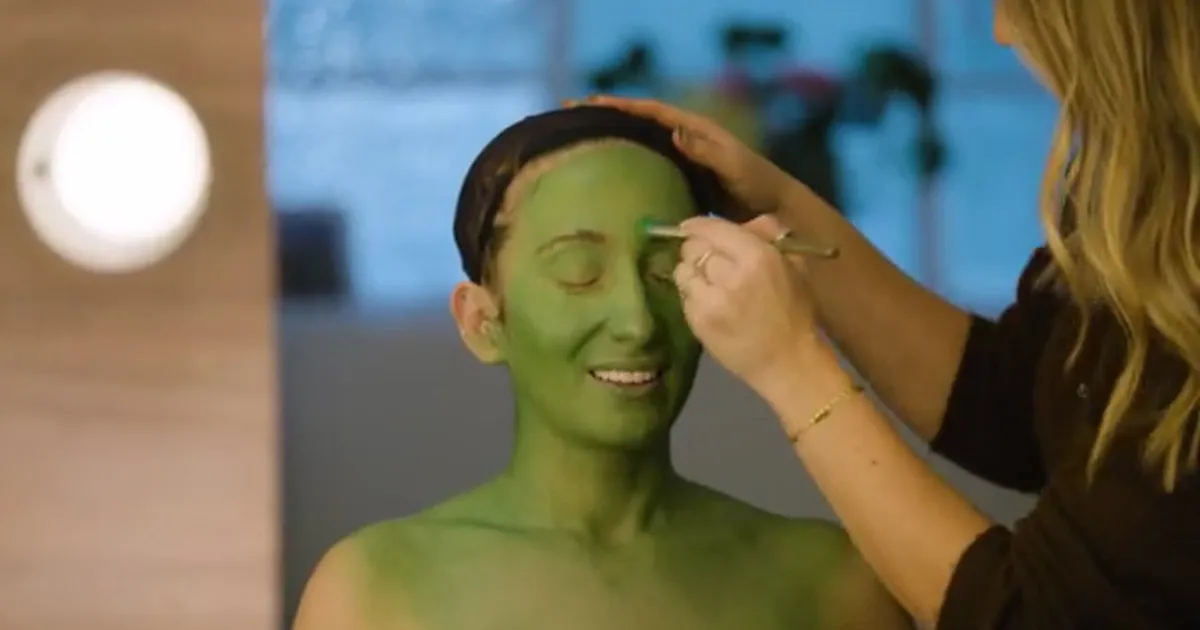
We got green-ified with Wicked West End Elphaba, Emma Kingston, and Head of Wigs, Heather-Jay Ross! Join us as we chat about London’s ever-Popular stage production of Wicked, including everything from what it’s like being painted green, to how it feels performing Defying Gravity every night.

Drift Protocol Warns of Potential Cybersecurity Exploit

Trump Says UK Should ‘Just Take’ Oil From Strait Of Hormuz

Terence Crawford predicts Errol Spence Jr’s reported comeback fight against Tim Tszyu


-

 News Videos7 days ago
Parliament publishes latest register of MPs’ financial interests
-

 Business6 days ago
Instagram, YouTube Found Responsible for Teen’s Mental Health Struggle in Historic Ruling
-
 Tech6 days ago
Intercom’s new post-trained Fin Apex 1.0 beats GPT-5.4 and Claude Sonnet 4.6 at customer service resolutions
-

 NewsBeat5 days ago
The Story hosts event on Durham’s historic registers
-

 Sports5 days ago
Sweet Sixteen Game Thread: Tide vs Michigan
-
Entertainment2 days ago
Fans slam 'heartbreaking' Barbie Dream Fest convention debacle with 'cardboard cutout' experience
-
 Entertainment4 days ago
Lana Del Rey Celebrates Her Husband’s 51st Birthday In New Post
-
Crypto World1 day ago
Dems press CFTC, ethics board on prediction-market insider trades
-

 Tech3 days ago
The Pixel 10a doesn’t have a camera bump, and it’s great
-

 Sports1 day ago
Tallest college basketball player ever, standing at 7-foot-9, entering transfer portal
-

 Crypto World3 hours ago
Gold Price Prediction: Worst Month in 17 Years fo Save Haven Rock
-

 Tech2 days ago
EE TV is using AI to help you find something to watch
-

 Entertainment7 days ago
HBO’s Harry Potter Series Will Definitely Fail For One Big Reason, And It’s Not J.K. Rowling Or Snape
-

 Tech2 days ago
Apple will hide your email address from apps and websites, but not cops
-

 Tech2 days ago
How to back up your iPhone & iPad to your Mac before something goes wrong
-

 Tech2 days ago
Flipsnack and the shift toward motion-first business content with living visuals
-

 Fashion6 days ago
En Vogue in Brown Leather and Tailored Neutrals by Atelier Savoir, Styled by J Bolin
-

 Politics2 days ago
Should Trump Be Scared Strait?
-

 Crypto World2 days ago
U.S. rule change may open trillions in 401(k) funds to crypto
-

 Fashion5 days ago
Weekly News Update, 3.27.26 – Corporette.com
You must be logged in to post a comment Login