

Politics
Why are they swapping Churchill for a hedgehog on our banknotes?

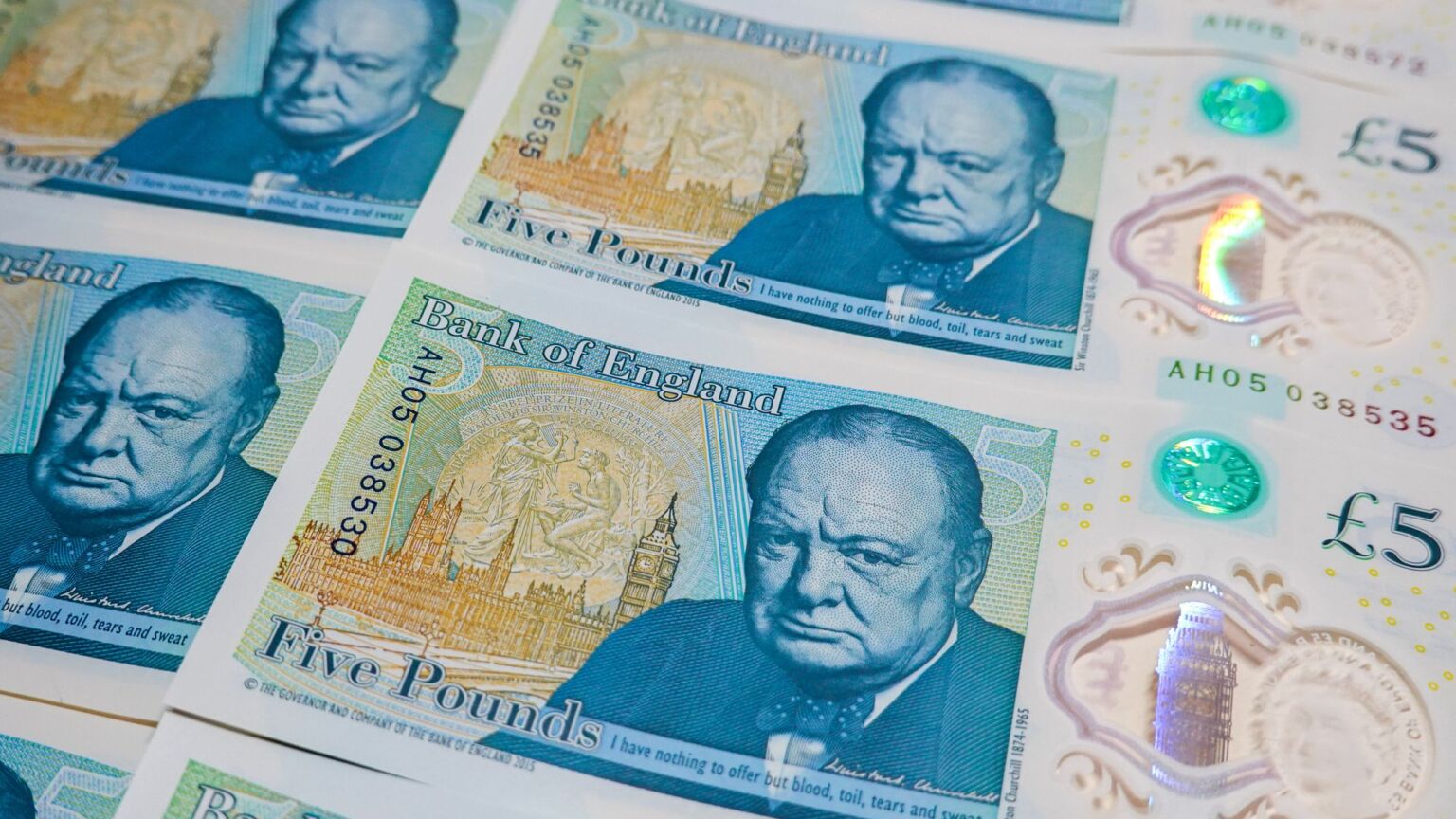
British banknotes are getting a facelift. In fact, the only human face remaining on them will belong to the king. The backs of the notes have long been home to portraits of national figures of historical importance – Dickens, Alan Turing, Jane Austen, etc. Now those old fuddy-duddies are to be replaced by voles, badgers and beavers. In essence, we are swapping Winston Churchill for a hedgehog.
Apparently, it keeps wicked counterfeiters on their toes to switch the design every decade or so. The thinking is that just as the dastardly forger has got George Stephenson off to a tee, he suddenly has to master Su Pollard.
Like you I’m sure, I haven’t used cash very much for a very long time. Though I have my doubts about the wisdom of virtual money replacing folding green, I haven’t been too sad about this – rattling about with heavy pockets full of change could make one feel like a piece of human percussion. It’s something of a surprise to those of us who’ve never known any different that the heroes of history only appeared for the first time on British currency in 1970, an innovation to tie in with decimalisation. Before that, the backs of notes were occupied by symbols like Britannia or a British lion. Despite the comparative brevity of the custom, the change still feels a bit of a wrench.
Of course, the Bank of England getting to this decision has taken an endless series of meetings, consultations, reviews, processes, reviews of processes, processes of reviews, and committees and panels. Quite why somebody in charge couldn’t just turn to an artist and say, ‘Right, I dunno… er… Tales of the Riverbank, get on with it’, is anybody’s guess. And we still don’t really know why the national treasures had to be abandoned in the first place (though we can have a good guess – old, white, pre-Windrush, get rid).
The BofE’s consultation set out the criteria for what would make a good new ‘theme’ for pounds sterling. These included, a) it symbolises the UK; b) It ‘resonates’ with the public; and c) it is not ‘divisive’. This last requirement is worth dwelling on. The bank explains further: ‘The theme should not involve imagery that would reasonably be offensive to, or exclude, any groups.’
Groups, eh? What ‘groups’ in particular – Coldplay? The Nolan Sisters? Showaddywaddy? As we all know but must never say, ‘groups’, like ‘communities’, is lanyardese for Muslims and transvestites, because the powers-that-be are terrified of both. Also, what about people who hate squirrels? Aren’t they a group, with rights?
The panel who decided on the new theme replaced another panel, the Banknote Character Advisory Committee, which was charged with managing ‘the selection of individuals to appear on new notes’. The terms of reference for that erstwhile committee say that ‘the bank seeks to celebrate individuals that have shaped British thought, innovation, leadership, values and society. The bank represents on its notes a person or small group of individuals whose accomplishments or contributions have been recognised widely at the time, or judged subsequently to have been of lasting benefit to the United Kingdom.’ This brings up the vexed question of significant but deceased historical figures who annoy the progressive establishment. In fact, one begins to suspect that the chucking off of the old theme in its entirety is merely a means to avoid having to put the first female prime minister on the notes.
Now we have a new panel – of wildlife experts, selecting the animals the British public can choose from. Imagine the fraught, 12 Angry Men-style scenes of their sequestered debates. ‘So help me, the newt is going on the shortlist!’ ‘Godammit, the Eurasian shrew stays or I walk out that door!’
One of this team, wildlife broadcaster Nadeem Perera (no, me neither), has said of the change:
‘The wildlife of the UK is not separate from our culture. It sits in our football crests, our folklore, our coastlines and our childhoods. Giving it space on something as symbolic as our currency feels both overdue and significant.’
How can people spout this tripe? Was anybody out there really furrowing their brow and tapping their watch, fuming: ‘WHEN, OH, WHEN will there be an otter on a fiver?’
I’m sorry for quoting at length, but this corporate waffle has to be savoured in its entirety for full effect. Talking of which, here’s Victoria Cleland, chief cashier at the Bank of England:
‘I was delighted by the level of public engagement during our banknote-theme consultation last year. The response underlines how important banknotes remain to people. The key driver for introducing a new banknote series is always to increase counterfeit resilience, but it also provides an opportunity to celebrate different aspects of the UK. Nature is a great choice from a banknote-authentication perspective and means we can showcase the UK’s rich and varied wildlife on the next series of banknotes. I look forward to hearing about the public’s favourite wildlife during our forthcoming summer consultation.’
What a laughing riot the Cleland household must be. Still, at least nobody involved has used the word ‘iconic’. Yet.
And let’s face it, it could have been a lot worse. Knowing the lanyard class, we could’ve had India Willoughby, Paddington and Shamima Begum.
The news has sparked predictable outrage and counter-outrage. Actually, that’s not fair; the progressive counter-reaction has been more of the ‘Why do you care?’ variety. But this won’t wash. Either it matters who or what appears on our banknotes, or it doesn’t matter. If it didn’t matter, nobody would have been bothered enough to make the switch in the first place. And somebody clearly was.
What does the incident reveal? Obviously, coming as it has done in these fraught times, it carries an extra unspoken significance, of an erased and rewritten national history. Everybody knows why they’ve really done it, and we know that they know that we know that they know. But, as always with these progressive rebrands, noticing it and objecting is part of the process, to mark out people who get narked as low status and nasty. Though this may have misfired. Even Lib Dem leader Ed Davey is fuming about the Churchill / squirrel exchange, which suggests the BofE may have misread its suppliants.
Anyway, my suggestion for when and if a Reform UK government gets in is for Chancellor Jenrick – purely for banter reasons – to immediately junk the whimsical fauna for lovingly rendered portraits of Jim ‘Nick Nick’ Davidson, JK Rowling and Jeremy Clarkson. See how much it ‘doesn’t matter’ then.
Gareth Roberts is a screenwriter, author and novelist, best known for his work on Doctor Who. The above is an edited extract from Gareth’s new book, Middle Class Holes: A Guide to the Worst Semi-Posh People in Britain Today.

Politics
Bernard Argente: Why on earth for the sake of the country and his own party won’t Starmer just go
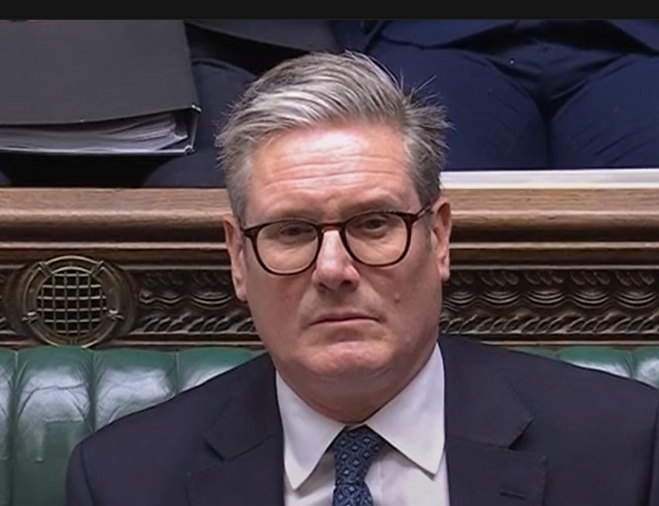
Bernard Argente writer, student, and parliamentary researcher who assisted Richard Tice and his staff.
“It was the best of times, and it was the worst of times” is the opening line of Charles Dickens’ A Tale of Two Cities.
Similarly, the Labour Party appears to be a tale of two Keirs; Keir Hardie founded the Labour Party and Keir Starmer desolated it.
Regarding a comparatively minor scandal to Peter Mandelson and Matthew Doyle, especially with the release of documents that show the PM knew, the Beergate investigation “risks looking like hypocrisy,” Henry Hill posited on GB News three years ago. Now, the Prime Minister has inebriated himself with hypocrisy, and because he lacks the humility to resign or perhaps because he is so intoxicated by hypocrisy that he is unable to effectuate his resignation, his party is going through a political exodus of support.
To have your then chief of staff, Morgan McSweeney, who bore a resemblance to Augustus’ political adviser Maecenas, ‘resign’—yes, with quotation marks—is a clear indication of a desperate attempt to save one’s skin.
McSweeney, the figurative ventriloquist that makes puppets speak, had said, “I take full responsibility” regarding the appointment of Lord Mandelson as ambassador to the United States. The mastermind who pioneered the machination to bring Starmer in has become a sacrificial lamb. Sir Chris Wormald, former cabinet secretary, had also been “thrown under the bus,” conceivably because the prime minister had binge-watched Yes Minister and was taking on the persona of Jim Hacker, treating Sir Humphrey Appleby as a scanty prosopopoeia for Wormald.
To put this aside, how does Starmer’s party view the economy? And would Labour’s economic prism be enough to save him?
Well, it is a misnomer to classify Labour’s economic policy as right-wing. Not only would Adam Smith, Friedrich Hayek, and Milton Friedman all be rolling in their graves hearing that, but Starmer has not shifted the Overton window at all. Keir Hardie’s left-wing politics and pacifism made him so unpopular that the British people, sometimes his own constituents in Merthyr Tydfil, sang the national anthem in protest against his stance on the First World War. This clearly wasn’t optimal for the Labour leader. Nevertheless, Keir Hardie founded the party. Keir Starmer, on the other hand, has adopted a radical centrist stance compatible with Liberal Democrat leader Ed Davey’s philosophy that aligns with the obsolete Tory doctrine, “one-nation conservatism,” which believes the state has a noblesse oblige to support its people. So, it is understandable how one can misconstrue Keir Starmer’s policy as being right-wing when Starmer could potentially be viewed as an aspirant one-nation Tory, certainly now when his actions mirror those of the old Conservative Prime Minister Sir Anthony Eden, as both refused to resign.
Former Prime Minister Anthony Eden, a centre-right Tory whom the Liberal Democrats likely idolise off the record, faced a severe backlash from the United Kingdom and its people for mismanaging the Suez Crisis in 1956. In spite of this humiliating failure, Eden refused to resign at first and finally resigned on 9 January 1957, when the United States threatened to cripple the pound. Eden did not claim the reason for his resignation was because of the United States; instead, he said it was because of health issues from traveling to Jamaica.
If it were not obvious already, this is comparable to Keir Starmer’s current issue. The 58th Prime Minister has a track record of U-turns, notably his U-turn on Chagos after President Donald Trump called it “a great act of stupidity.” and then refused to let America use the same base, before U-turning on that. So, this begs the question: if President Trump puts pressure on Starmer to resign in the way Eden was pressured, would he follow suit?
Keir Starmer’s unwillingness to resign could be due to his own vanity. During Prime Minister’s Questions, when the Prime Minister and the Leader of the Opposition are vis-à-vis, both loom over their designated dispatch box and signal authority. Could it be that Keir Starmer has a feeling of antipathy toward Kemi Badenoch’s authority and that compels him not to resign?
It appears that Starmer takes on the role of a pugnacious lecturer in PMQs when speaking to Badenoch, ridiculing her for the substance of her questions rather than answering them. He constantly reminds her of his time as Leader of the Opposition and how he would ask questions to former Prime Minister Boris Johnson. By somewhat underestimating the Leader of the Opposition, he leaves himself open to attack. Mistaking kindness for weakness is what the Greeks at first did to Hector in the Iliad, and Badenoch has dismantled Starmer’s party piece by piece, spotting their flaws from Angela Rayner to Mandelson. Spotting hypocrisy is the Conservative Party ideal, similar to how they criticised Lord Prescott, the former deputy prime minister, for stating he had ‘failed in life’ if in five years there were not fewer journeys by car yet owning two Jaguars for transport.
Starmer may not be able to stand Badenoch asking better questions than he did as Leader of the Opposition. Kemi Badenoch at the despatch box quintessentially embodies the quote from Lady Macbeth in the play Macbeth by William Shakespeare: “Look like the innocent flower, but be the serpent under’t.”
The Conservative Party points out the irony of the Labour Party, which Labour loathes. Keir Starmer, like Sir Anthony Eden, will have to accept Kemi Badenoch as his emblematic executioner, and if not, he risks taking his entire party down with him, though there is scarcely any party left to bring down after the Mandelson appointment faux pas. A spokesperson for 10 Downing Street attempted to dispel any thought of Starmer wavering about staying at the highest office, and yet even a layman not au fait with British politics would question if that would be a sign of pride or imprudence.
It is fair to say Starmer should resign of his own accord instead of losing it all, as Sir Anthony Eden did. Whether the pressure comes from Kemi Badenoch or an external force like America, he must exit his comfort bubble and make the “tough decisions” as he promised to do, and resign. His resignation would be the most definitive action he could take after all his broken promises to the British people.
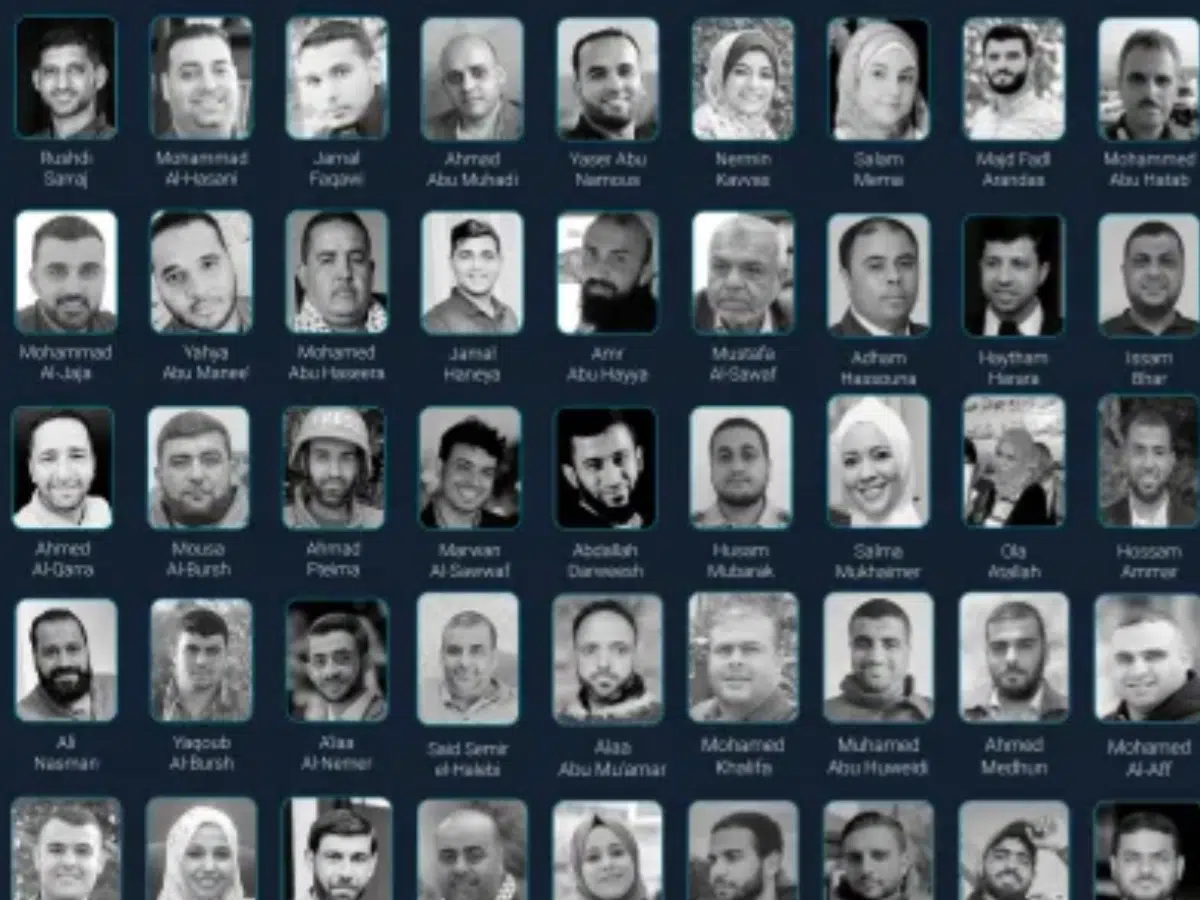
The Freedoms Committee of the Palestinian Journalist’s Syndicate documented 122 crimes by the Israeli occupation against Palestinian journalists and media institutions throughout February 2026.
Relentless attacks on journalists
According to the Committee, media crews are “systematically targeted” by the Zionist regime, which, as they noted:
prevents field coverage, and fires live ammunition as well as tear gas and sound grenades towards them.
Arrests, court orders, and various punitive measures continue to be used to obstruct the truth and restrict media freedoms.
There are 52 documented instances showing journalists being prevented from covering stories or detained, particularly in the context of military raids or settler attacks. In February alone, 17 cases were recorded showing journalists being arbitrarily banned from entering the Al-Aqsa Mosque complex. This is part of a broader policy to restrict media coverage in Jerusalem and at Al-Aqsa.
The report also details 8 incidents where tear gas and sound grenades were fired towards journalists. There were also six cases of direct gunfire at press crews during field coverage.
The Freedoms Committee claims arbitrary legal procedures are being used as a tool to pressure journalists and restrict their work. It also documented the arrest of seven journalists, the court appearances of six, and summons and interrogation of six others.
Blockading truth
Since the start of the month, Israeli occupation forces have raided the homes of five journalists and blocked five more online news sites.
There were also four cases of journalistic equipment being confiscated or destroyed, three instances of physical assault, two journalists fined, and one reportedly banned from travel.
The work of journalists is essential for pulling back the curtain on Israeli crimes, which would otherwise remain out of public view.
In the occupied Palestinian territory, “Israel” intentionally targets journalists, in an attempt to prevent the documentation of its many atrocities to the world, so its crimes of genocide, forced displacement and ethnic cleansing may continue unabated, without any accountability. These violations are occurring amid the continued policies of restriction and direct targeting of journalistic work.
Targeting journalists is a violation of international humanitarian law, and international conventions that guarantee freedom of journalistic work and protection of journalists when working.
According to the Freedoms Committee, these documented figures:
Reflect a dangerous escalation in the pace of violations against Palestinian journalists.
As the situation intensifies, the international community must take decisive action to protect Palestinian journalists. Their lives are no less valuable than those of their counterparts in London or Washington. Words only affect change when backed by action — the time to act is now.
Featured image via the Canary
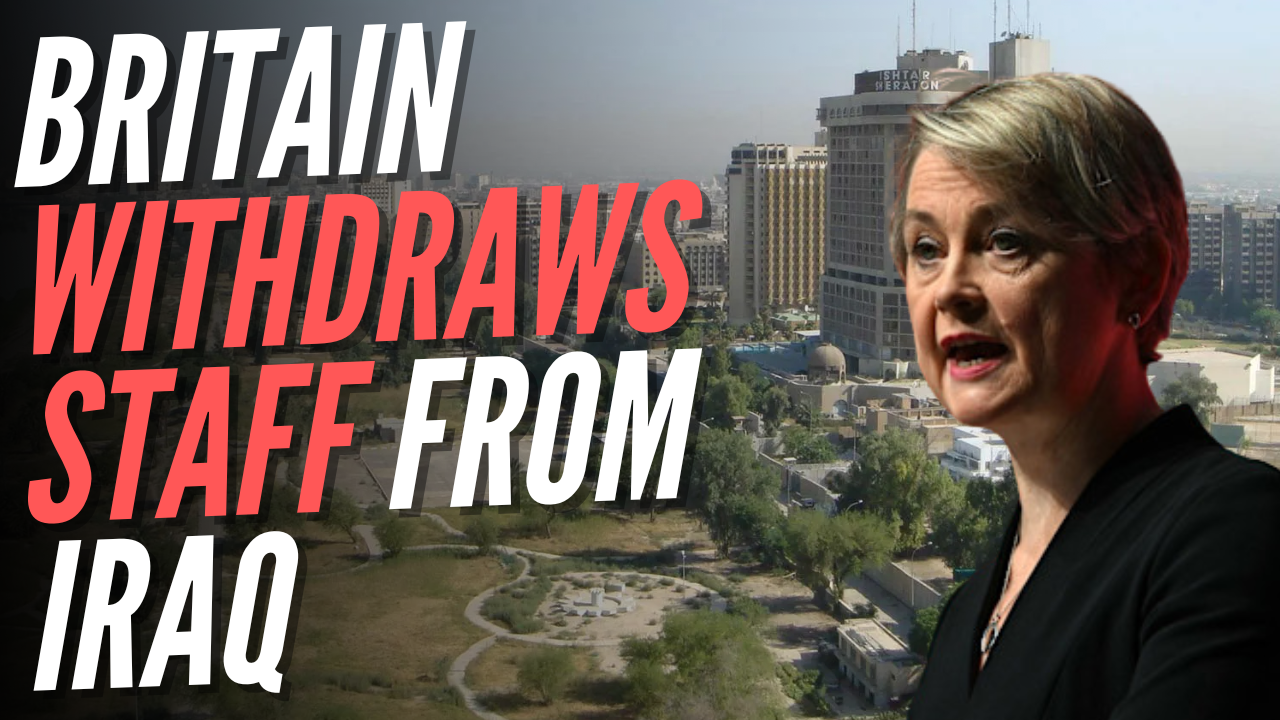
The UK claims “some staff” will be withdrawn from Iraq “as a precautionary measure.” Escalations…
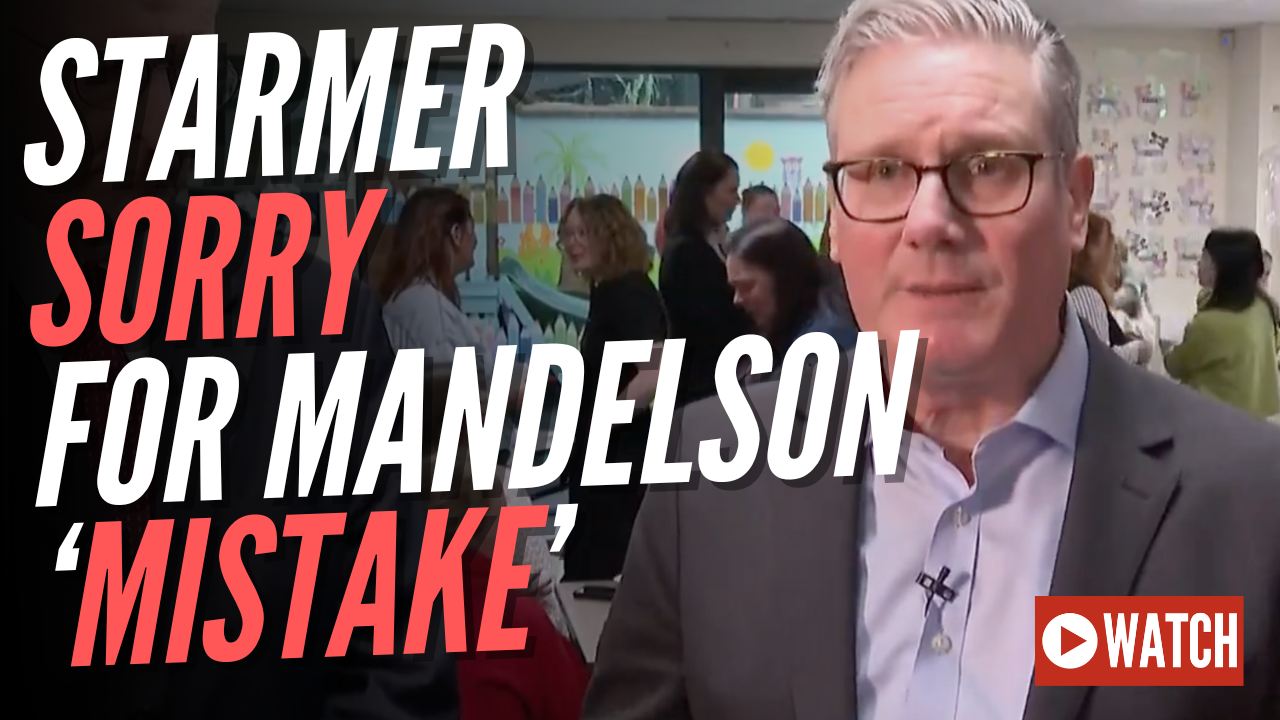
Featuring Hilary Benn staring at the floor wishing the ground would swallow him up…
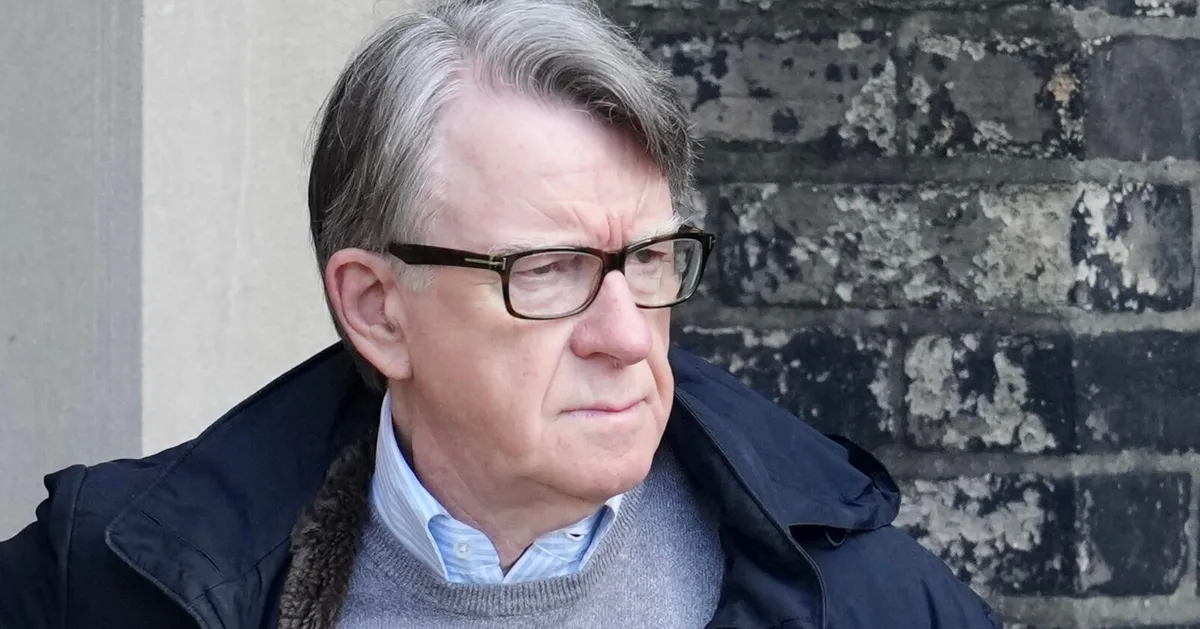
Keir Starmer’s spokesperson has rejected accusations of a “cover-up” over the Peter Mandelson files.
The government released the first tranche of its documents relating to the former Labour peer’s appointment as a US ambassador on Wednesday.
Ministers were forced to publish the files amid wider questions over how much No.10 knew about Mandelson’s friendship with paedophile Jeffrey Epstein when offering him the top job in December 2024.
The official due diligence documents sent to the prime minister did not include any comments from Starmer and the boxes meant for his input were left blank.
That sparked claims prime minister’s remarks had been “redacted”.
While speaking to reporters on Thursday, the spokesperson said: “I refute the suggestion of a cover-up. The government’s complied fully. I just don’t accept that it’s the case at all.
“There are a range of different ways in which the prime minister’s senior team responds to advice.”
The representative added: “The prime minister did read the advice, but clearly there are lessons to be learned on the wider appointment processes, and the processes that led up to them.”
The response comes after Tory leader Kemi Badenoch suggested key details were missing in this set of files.
She told PA: “I’ve been a minister and a secretary of state, the comments which Keir Starmer would have put on the box notes – those are the cover notes where you explain what you want to happen – are missing.
“They have been removed. We need the full details of what the prime minister did. There is still a cover-up going on.”
The documents are being released in batches to avoiding prejudicing the ongoing police probe into allegations of misconduct in public office against Mandelson.
Mandelson has denied any allegations of wrongdoing.
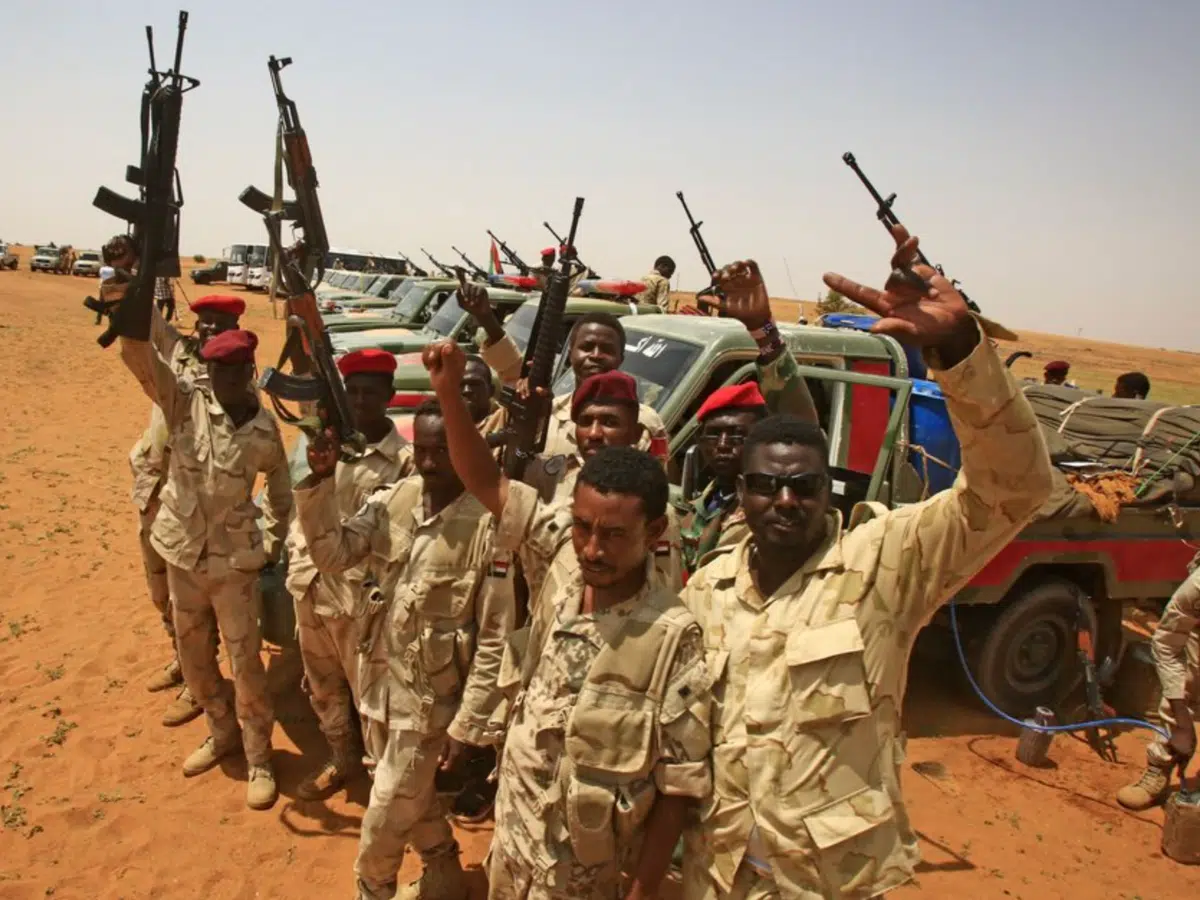
Iran’s retaliatory strikes on Israel and the United Arab Emirates (UAE) are reportedly contributing to a rapid collapse of the genocidal so-called ‘Rapid Support Forces’ (RSF) in Sudan.
UAE-backed RSF militia feel the sting of war
The RSF, funded and armed by the UAE and Israel, had been making gains up to February 2026. It has murdered hundreds of thousands of people in Sudan. Rapes, sexual torture and executions have been common and almost 400,000 people are in starvation.
However, Sudanese government forces have achieved a string of military victories that appear to be turning into a rout.
With UAE shipments rerouted from the Hormuz Straight and the UAE to Saudi Arabia due to Iran’s counterattacks of shipping, the UAE economy, and it’s global financiers, have been dealt a major blow.
Meanwhile, Sudanese forces are targeting RSF arms and supply depots, crippling front-line RSF troops by cutting off ammunition, fuel, and essentials.
Iran dismantling UAEs economy is also starving the RSF and freeing Sudan. https://t.co/TkNVOrnbW0
— Ashok Kumar | 🇵🇸 (@broseph_stalin) March 11, 2026
Featured image via the Canary

Numerous babies were crying during Starmer’s short speech to mothers in Belfast. This is Starmer’s first public appearance since the Mandelson Files dropped. One was so distressed it had to be taken out of the room…

In a video published by Al Jazeera, a reporter confronts President Trump about a New York Times report revealing U.S. responsibility for the missile strike on a girls’ school in Minab, Iran – to which Trump responds:
I don’t know about it.
President Trump denied knowledge of a US military investigation that has reportedly found the US responsible for the deadly strike on the Minab girls’ school in Iran. pic.twitter.com/4a3uT8NKPG
— Al Jazeera English (@AJEnglish) March 12, 2026
The strike killed around 175 primary school children in southern Iran on February 28th.
Trump does know about it
The Guardian reported that, according to the New York Times, the US military investigation has found that the strike on the elementary school building was the result of a targeting mistake by US military planners. The Guardian said:
According to the New York Times, quoting unnamed US officials and others familiar with the initial findings, the investigation has concluded that the strike on 28 February on the Shajarah Tayyebeh elementary school building was the result of a targeting mistake by the US military planners.
According to the report, the inquiry – which has yet to be completed – has found that officers at US Central Command created the target coordinates for the strike using obsolete data provided by the Defense Intelligence Agency.
US Congresswoman Rashida Tlaib responded forcefully to the confirmation of U.S. culpability, calling for Trump’s impeachment.
After lying about it, the Trump Administration confirmed that they bombed a school in Iran—killing 175 people, mostly girls.
Trump should be impeached. Hegseth should be fired. And the Administration must be held accountable in international courts for their heinous war crimes. pic.twitter.com/AqsNhPprEq
— Congresswoman Rashida Tlaib (@RepRashida) March 11, 2026
UK culpability
🚨Breaking: A preliminary inquiry has found the US at fault for the strike on an Iranian school, killing over 150 children.
It was a “deadly Tomahawk missile strike”, the inquiry said.
A factory in Scotland produces key parts for Tomahawk missiles.
👉https://t.co/UYl3D5GgMj pic.twitter.com/K12V3v9Y4a— Declassified UK (@declassifiedUK) March 11, 2026
Campaign Against Arms Trade also tore into the UK’s complicity:
On 28th February, the United States bombed Shajareh Tayyebeh school in southern Iran and killed at least 180 people – mostly children.
It is likely they used Tomahawk missiles to bomb 3 times.
Components of the missiles are made in Raytheon’s factory in Glenrothes, Scotland. pic.twitter.com/NRnC9gBGWr
— Campaign Against Arms Trade (@CAATuk) March 10, 2026
For the children of Minab, for their families, for anyone watching: in the unaccountable US regime, run by the Epstein class, accountability seems far away while the habitual liar Trump will probably move on to his next falsehood.
Featured image via the Canary
Jack Rankin is the Member of Parliament for Windsor.
As I write this, bombs are flying over the Middle East. War is raging in Eastern Europe. An increasingly revanchist China is threatening its neighbours. And across the world, national governments are realigning their geopolitical stances to adapt to this new world we find ourselves in after decades of relative peace.
Britain should be doing the same.
Our departure from the European Union saw an opportunity to rethink Britain’s place in the world – now, the increased unpredictability of our relationship with a United States, presents another challenge. We should use these opportunities to strengthen relationships with countries that share our institutions, our outlook, and out strategic interests. Canada, Australia, and New Zealand are the obvious places to begin – with the goal being a new bloc with the four nations named CANZUK.
As the Member of Parliament for Windsor, the home of our shared monarchy, I am constantly reminded of the close ties Britain holds with Canada, Australia, and New Zealand. His Majesty is one symbol of those ties, with shared institutions and culture being others. Our close relationships were proven last week, when the Conservative Friends of CANZUK (of which I am vice-President) hosted Pierre Poilievre, leader of the Conservative Party of Canada, for a CANZUK drinks reception. The following day at the Centre for Policy Studies’ Annual Thatcher Lecture, Mr Poilievre expanded on his particular CANZUK vision.
But this phenomenon doesn’t just exist on the Centre-Right though. Britain appointed Mark Carney – a Centre-Left figure in Canada – as Governor of the Bank of England. How many countries would accept a foreigner as governor of their national bank? Not many I’d wager – but we don’t really see Canadians are foreigners, do we? It is unlikely that Brits would have approved a non-Brit holding this position unless they came from a country with such deep ties to Britain as someone from a CANZUK nation.
With the Canadian Leader of the Opposition was in London, the very same Mark Carney, now Canadian Prime Minster was signing a new critical minerals agreement with his Australian counterpart. That is not nostalgia – that is very real twenty-first century geopolitics. In New Zealand, the Minister of Foreign Affairs has been calling for CANZUK for almost a decade.
The foundations of CANZUK are historical as well as strategic. Our ties are deeper than being purely diplomatic. In the First World War, British forces fought on the Somme, Canadian identity was being forged at Vimy Ridge, and Australians and New Zealanders at Gallipoli. Our armed forces have fought alongside each other for more than a century. Constitutional traditions across the nations are closely related, with legal systems all rooted in English common law. English is our common language, and we share a Head of State. These factors already mean we have a lot more in common with CANZUK nations than the vast majority of European nations, making a deeper partnership all the more sensible.
Defence is at the core of today’s political debate. The world is becoming a more dangerous place, and the assumptions that Britain previously worked on are becoming increasingly invalid. Britain and Australia already work together through the AUKUS security partnership alongside the United States. Canada plays a key role in defending the Arctic and the North Atlantic. Britain remains a maritime power with global responsibilities. We should commit to recognising and enforcing Canadian sovereignty over their internal waters in the Northwest Passage. A deeper CANZUK partnership would ensure that Britain’s areas of strategic interest are better defended.
And what about the economy? The combined GDP of CANZUK stands at approximately $6.5 trillion, making it the third largest in the world only behind China and the United States. Unburdened by the self-imposed regulatory barriers of the European Union, CANZUK nations have massive growth potential which would only see the bloc strengthened in the future. Australian lithium, British tungsten, and Canadian uranium could supply a wave of reindustrialisation that the West is crying out for. A skilled mobility framework – which works for the benefit of the people of each member state rather than big corporations – would boost labour productivity across the bloc and deepen our cultural ties. The potential economic benefits of CANZUK are plentiful and only require each nation’s leadership to grasp the opportunities at hand.
As Kemi Badenoch is now arguing: “Our four nations have shared strengths in goods, services, and defence. By working more closely together, we can combine these collective strengths to boost our economic growth and our national security.” The British Conservative Party joining our brothers in the Canadian is under-appreciated strategic news, a key campaign win for Conservative Friends of CANZUK.
CANZUK will now be in our manifesto, and it will be at the top of our agenda when we are next in government. This is a monumental moment in post-Brexit foreign policy. Since 2016, EU-nostalgic politicians have been unable to mask their contempt for Brexit, and our foreign policy has been hindered as a result. Under new leadership, the Conservative Party has finally broken itself free from these figures, and if in Government, would take serious steps to ensure CANZUK becomes more than just an idea.
In an increasingly uncertain world, we need to stand with our closest allies. It is time for CANZUK.
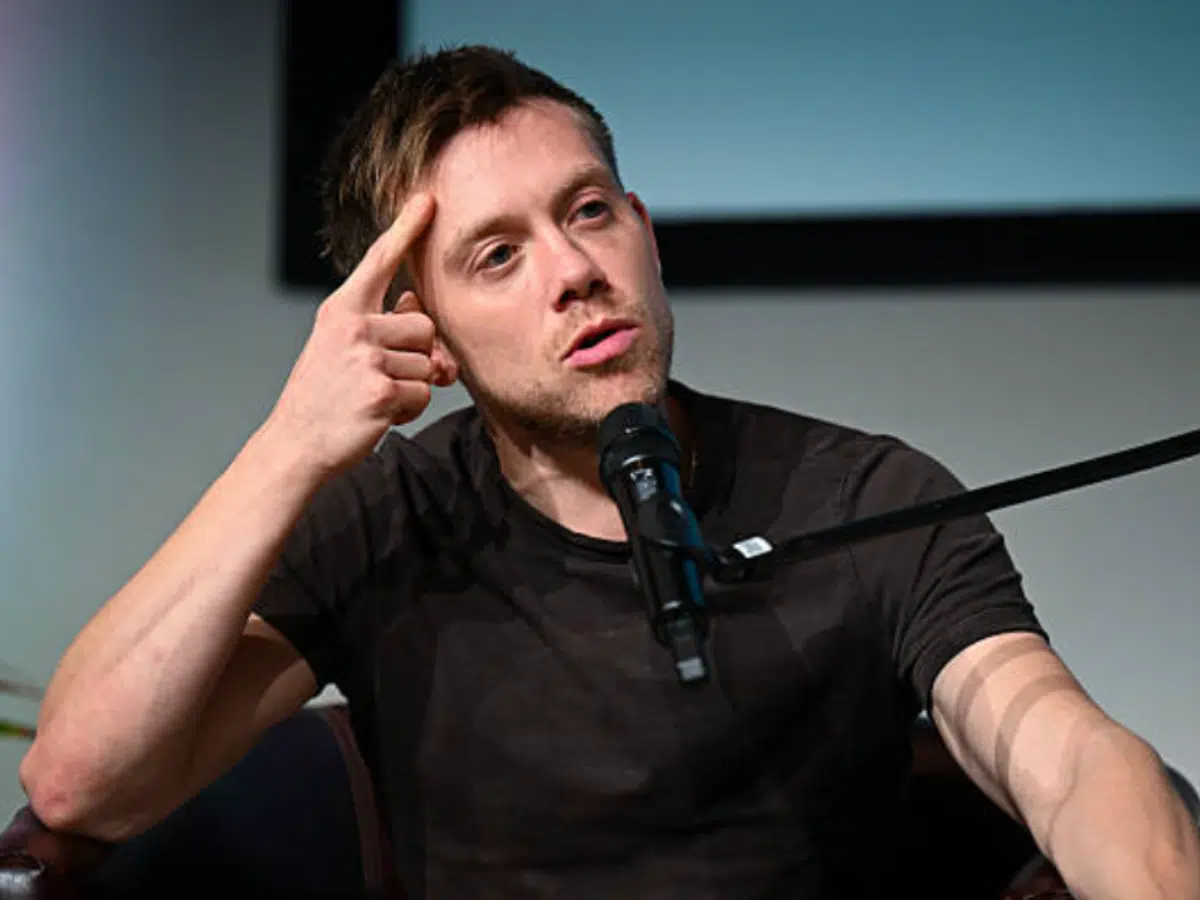
Journalist Owen Jones has scored a major victory in his legal fight against BBC editor and Israel fanatic Raffi Berg. Berg was suing Jones for libel after Jones accused Berg and the BBC of bias against Palestinians in coverage of Israel’s Gaza genocide.
Berg, who has gushed about an award from Israeli PM Benjamin Netanyahu, has been accused of collaborating with the CIA and Israeli intelligence. The BBC has deleted documentary evidence of Israel’s crimes and their impact on Palestinians. The corporation routinely downplays the murder of Palestinians and parrots Israeli propaganda. But Berg took exception and launched legal action for damage to his “professional reputation as a journalist and editor”, to the delight of Israel lobbyists.
But today, 12 March, the High Court has ruled against Berg on key issues in his legal action, judging that Jones was expressing an honest opinion based on stated evidence – one of the key defences against libel action.
Owen Jones said:
I am delighted that the High Court has ruled in my favour on the key issues in the libel case brought by Raffi Berg. The court rejected the claimant’s interpretation of the article and ruled that it expressed an opinion based on stated material.
I stand by my journalism and, if Mr Berg decides to continue the libel claim, I look forward to defending my article in court. I would like to thank my legal team at RPC Legal, my barrister Aidan Eardley KC, and Drop Site News, which published the article and has stood by my journalism throughout.
Berg now has to decide whether to continue the case, but his lawyers may well advise him to drop it as the risk of losing – and of a costs award against him – is now much higher.
Featured image via the Canary

Jack Osbourne Welcomes New Daughter With Nod To Late Father

Jeremy Clarkson responds to AI video of him attacking Keir Starmer

Chris Jackman, Attorney of Washington State, on Scaling a Mission-Driven Law Firm Without Losing the Personal Touch

Smart energy pays enters the US market, targeting scalable financial infrastructure

Why Israel is blocking foreign journalists from entering

Bitcoin: We’re Entering The Most Dangerous Phase

Is She Right About What’s Happening Right Now And Crypto’s Future….. *MUST WATCH*

MASSIVE Bitcoin Buying Opportunity RIGHT NOW! Bitcoin RALLYING As Stocks CRASH!

Emas vs RDPU – Mana lebih bagus? #tipskeuangan #finance #shorts
-
Business6 days ago
Form 8K Entergy Mississippi LLC For: 6 March
-

 News Videos3 days ago
10th Algebra | Financial Planning | Question Bank Solution | Board Exam 2026
-

 Fashion6 days ago
Weekend Open Thread: Ann Taylor
-

 Crypto World3 days ago
Paradigm, a16z, Winklevoss Capital, Balaji Srinivasan among investors in ZODL
-
 Tech1 day ago
A 1,300-Pound NASA Spacecraft To Re-Enter Earth’s Atmosphere
-
 Sports7 days ago
499 runs and 34 sixes later, India beat England to enter T20 World Cup final | Cricket News
-

 Politics6 days ago
Top Mamdani aide takes progressive project to the UK
-

 Tech2 days ago
ChatGPT will now generate interactive visuals to help you with math and science concepts
-

 Business2 days ago
ExxonMobil seeks to move corporate registration from New Jersey to Texas
-

 Sports5 days ago
Three share 2-shot lead entering final round in Hong Kong
-

 Sports4 days ago
Braveheart Lakshya downs Lai in epic battle to enter All England Open final | Other Sports News
-

 NewsBeat21 hours ago
Residents reaction as Shildon murder probe enters second day
-

 NewsBeat7 days ago
Piccadilly Circus just unveiled ‘London’s newest tourist attraction’ and it only costs 80p to enter
-

 Entertainment6 days ago
Hailey Bieber Poses For Sexy Selfies In New Luscious Lip Thirst Traps
-

 Business4 days ago
Search for Nancy Guthrie Enters 37th Day as FBI Probes Wi-Fi Jammer Theory
-

 Business1 day ago
Search Enters Sixth Week With New Leads in Tucson Abduction Case
-
 NewsBeat3 days ago
Pagazzi Lighting enters administration as 70 jobs lost and 11 stores close across Scotland
-

 Tech3 days ago
Despite challenges, Ireland sixth in EU for board gender diversity
-

 Business3 days ago
Search Enters 39th Day with FBI Tip Line Developments and No Major Breakthroughs
-

 NewsBeat1 day ago
I Entered The Manosphere. Nothing Could Prepare Me For What I Found.