

Politics
Why Islamists and progressives have so much in common

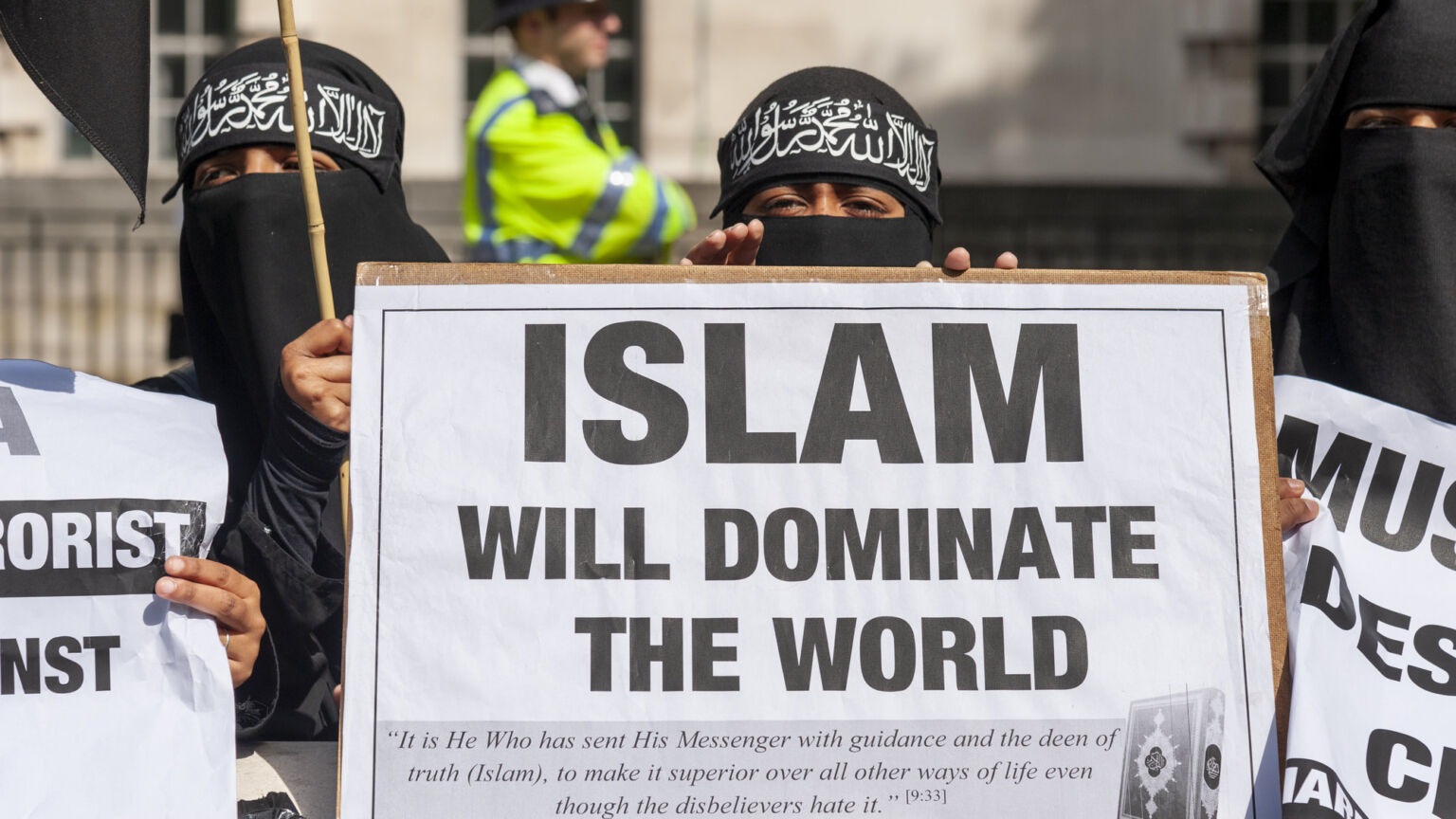
At a time when political language is routinely muddled, there can be few topics more confused than that of Islam and Islamism. The failure to make a clear distinction between the two – an error across the political spectrum – makes it harder to understand the true dynamics of Islamist movements, and particularly their relationship with the left. Indeed, those ‘progressives’ who align themselves with Islamists are often described as ‘useful idiots’ or cowardly ‘appeasers’. But when Islamism is properly understood, it becomes clearer why the left has such an affinity with it.
Although the term is often used in public debate, the precise meaning of Islamism is typically unclear. It is not synonymous with more observant or fundamentalist Muslims. Its true character was well summarised by Bassam Tibi, a Syrian-German political scientist, who said: ‘Islamism is about political order, not faith.’ Nonetheless, it is not mere politics, but religionised politics, that is at its core. Essentially, Islamism is best seen as a form of politics in a religious wrapping.
Islamism first emerged against the backdrop of anti-colonial struggles in the wake of the First World War. But unlike the radical nationalist movements that initially gained power in the Arab world, like that led by Egyptian president Gamal Abdel Nasser, Islamists did not aspire to embrace the benefits of modernity for those living in poorer parts of the world. On the contrary, Islamist movements were implacably hostile to cultural modernity, democracy and liberal values. They were also extremely sceptical of the nation state, if not outright hostile to it. Instead, they aspired to some kind of nizam Islami, or new Islamic order, transcending national boundaries in the name of a shared theocratic vision.
As Tim Black has noted on spiked, the first Islamist movement was the Muslim Brotherhood, founded in Egypt in 1928. Many of today’s Islamist groups, including Hamas, are offshoots of the Muslim Brotherhood. The first Islamist movement in the Indian sub-continent was Jamaat-i-Islami, founded in 1941. It too has many contemporary offshoots, including Islamist organisations in Bangladesh, India and Pakistan. Iran and Turkey both have Islamist governments, and Islamist movements are also prevalent in north Africa. Many of these groups have affiliated networks which operate within Muslim communities in the West, particularly the UK.
Although Islamism is routinely described as ‘medieval’, many key Islamist doctrines were developed in the 20th century, not the 7th. The idea of Sharia as an immutable Islamic legal system is a prime example. Although a concept of Sharia law did develop in the Middle Ages, it was seen at the time as being of human origin, and so open to dispute. In contrast, for Islamists, Sharia is a divinely ordained political order. It cannot, from their perspective, be modified or secularised.
Violent anti-Semitism as a central element of Islamism is also, despite appearances, a modern development. It is true that Islam has often adopted discriminatory practices against Jews. The Ottoman Empire’s branding of Jews and Christians as dhimmis, subjecting them to an inferior legal status and extra taxes, is a well-known example. But modern Islamism goes a lot further. It holds that Jews are a force for Satanic evil, which must be purged from the world.
Hamas’s founding covenant from 1988 makes this all too clear. Its Jew hate is not influenced by the Koran, but by the Protocols of the Elders of Zion, a notorious anti-Semitic forgery originating from Tsarist Russia at the beginning of the 20th century. Among other things, Hamas argues that Jews ‘were behind the First World War, when they were able to destroy the Islamic Caliphate, making financial gains and controlling resources’.
‘They obtained the Balfour Declaration [and] formed the League of Nations through which they could rule the world. They were behind the Second World War, through which they made huge financial gains by trading in armaments, and paved the way for the establishment of their state. It was they who instigated the replacement of the League of Nations with the United Nations and the Security Council to enable them to rule the world through them. There is no war going on anywhere, without having their finger in it.’
Clearly, none of these events or institutions could have been described in the Koran or the Hadith. The ideas in the passage were adopted from the racial thinking embodied in modern European anti-Semitism.
The violent language of Hamas reflects the ascent of a particular strain of Islamism, namely jihad. The jihadis are those Islamists who are openly willing to engage in violence. These people can be distinguished from what are sometimes called institutional or ‘participationist Islamists’ – those who support the use of violence, but do not practise it themselves.
Islamists typically operate covertly, within front organisations, including student organisations and charities. They are hard to identify with certainty as they deliberately try to blend in with broader Muslim communities. Islamists typically see themselves as true Muslims and take a derisive view of any co-religionists who do not share their politics.
Given this, it is hardly a surprise that Islamism and progressivism have such an affinity for one another. They have an awful lot in common: an aversion to modernity, hostility to democracy, cynicism towards the nation state and intolerance towards alternative views. Despite differences on some questions – most notably in relation to gay rights – the overlap is considerable.
There is also a particular affinity between mainstream identity politics and Westernised Muslims. As French political scientist Olivier Roy has noted, many Muslims in the West do not identify with the nations in which they live. For some of them, Islam is not so much a religion but a form of identity, one that precludes any attachment to a secular country. Such individuals are often attracted to Islamist ideas and networks. In effect, they embody a particular variant of the anti-nationhood trend that dominates identity politics in the West.
The progressive indulgence of Islamism is not primarily driven by cowardice or a propensity for appeasement – although that is certainly a factor. Neither is it solely a case of, as the hackneyed phrase goes, ‘turkeys voting for Christmas’. It is because progressives and Islamists agree on so much that they march arm in arm together.
The fundamental problem is not only that an extreme strain of Islam is corrupting an otherwise healthy body politic in the West. It is also that Islamism and progressivism share so much in common. The modern Western left offers fertile ground for Islamism to flourish on.
Daniel Ben-Ami is an author and journalist. He runs Radicalism of Fools, a website dedicated to rethinking anti-Semitism.

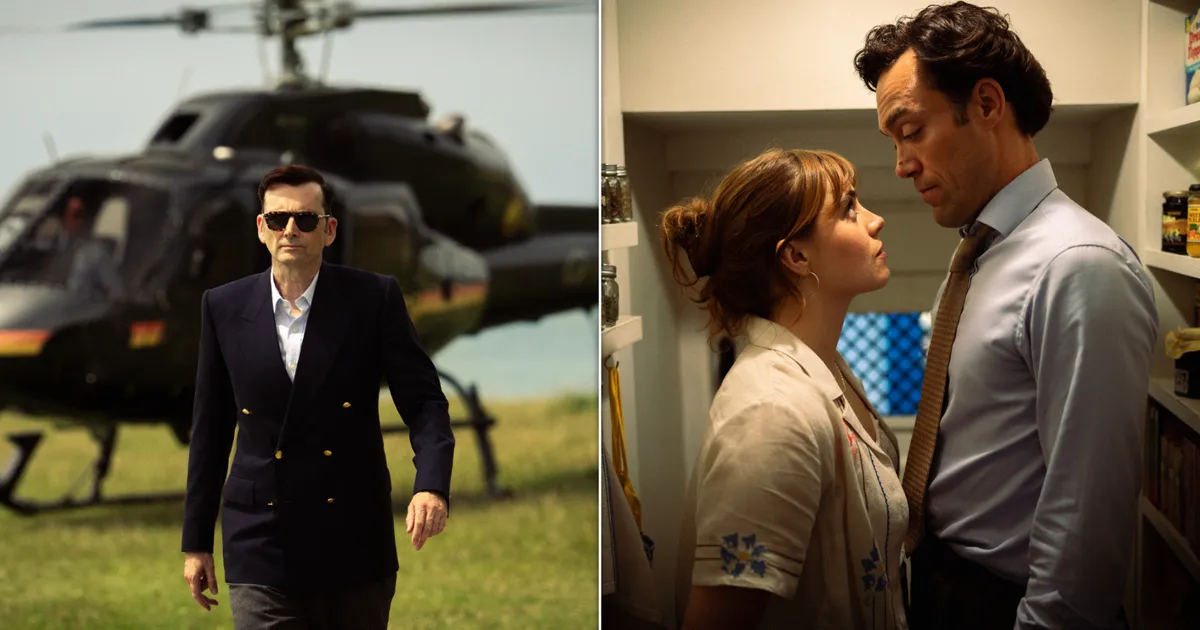
Electoral stress, public scandal, news broadcasters in crisis, class tension – no we’re not talking about 2026. The time has come to jump back to 1980s Rutshire and slide between the sheets for another romp with Disney+’s Rivals.
Yes, after a two-year wait that’s left us as full of yearning as Freddie and Lizzie’s slow-burn romance, Jilly Cooper’s iconic bonkbuster is about to hit our screens for a second season – and fortunately, it’s a repeat performance worth shouting about.
To catch you up: when we last left Rutshire, David Tennant’s baddie Tony Baddingham was lying bleeding out after a whack to the head by his ex-mistress Cameron Cook (Nafessa Williams). Meanwhile, the only Tory we’ve ever fancied, Rupert Campbell-Black (Alex Hassell), was confessing his love to Taggie, Freddie Jones and Lizzie (Danny Dyer and Katherine Parkinson) finally took their affair to a much-needed climax and Aidan Turner’s Declan O’Hara won the IBA’s franchise bid, but lost his wife Maud (Victoria Smurfit) in the process.
And after being left on a cliffhanger for two years, I can confidently say that despite the huge build-up, the second season hasn’t lost its stride… or stamina.
Having seen the first three episodes, if season one of Rivals was all about “will they, won’t they”, season two is the aftermath packed full of “holy shit, what happens now?” moments.
The plot continues with the Corinium versus Venturer, with David Tennant returning as a recovering – and out for revenge – Tony Baddingham (hey, it’s not a spoiler if it’s in the trailer). Danny Dyer continues to give the performance of his career as moustached class-climber Freddie Jones, while Alex Hassell’s lothario Rupert finds that his past has well and truly caught up with him as Rutshire goes to the polls.
Aidan Turner delivers another broody performance as Declan O’Hara (you aren’t ready for his shower scene) and there are also inklings of a bigger storyline on the horizon for Luca Pasqualino’s Bas. Plus, of course, there’s a whole lot of white jodhpur-clad polo.
However, it’s the women of Rivals who really take the reins in season two.
Emily Atack is the stand-out of the season – thanks to her character’s much-more-developed story arc and, as a result, screentime, Sarah Stratton is a powerhouse mix of comedy, devastation and drama in season two. We won’t spoil it for you, but there’s a dinner party that’s a real slapstick comedy masterclass.
Claire Rushbrook’s Monica Baddingham finally finds her backbone and get to play the part of a woman scorned (“you make yourself very easy to beat” is a putdown that will have you wincing), while Bella Maclean’s lovesick Taggie continues to be the ensemble’s most consistent moral compass of the entire show.
Cameron Cook, Maud O’Hara and Lizzie Vereker) also all decide that enough is enough in their own ways, making for an amazing “fuck you” to the more misogynistic storylines weaved throughout the series.
As for the rest of the characters (including one truly unexpected cameo that will be an extra treat for Eastenders fans), well we’ve not even touched the surface – you’ll just need to wait patiently for Friday.
And in case you’re worried that Rivals’ libido has begun to wane, please remember this is a Jilly Cooper adaptation. No, it certainly doesn’t take a dip (it takes exactly eight minutes and 23 seconds into the first episode before you see your first willy – two, in fact) and there are plenty of sudden Cooper-tastic sex scenes that will have you feigning shock to mask your utter delight. Just don’t say we didn’t warn you that the phrase “mole in the hole” will make you cringe for weeks.
We’re in the depths of a TV landscape filled with harrowing true crime documentaries, gritty police dramas and news broadcasts that routinely remind us the world is on fire. What Rivals offers is something outrageously needed – FUN.
Do we need to really acknowledge that the characters of Rivals are all morally bankrupt? No. Do we need the absolute chaos of a naked Rupert Campbel- Black getting smacked with a riding crop mid-coitus by a woman he doesn’t actually love, because of course he’s busy lusting after his business partner’s daughter? Absolutely.
Backed by a soundtrack of 80s bangers, the new series delivers exactly what we need in a week of grim headlines: pure, unadulterated escapism.
Its unique blend of utter silliness, seriousness and chaos makes us glad that Rivals is so much more than an illicit affair, it’s a long term relationship we want to keep far beyond the morning after.
Rivals season 2 is available 15 May on Disney+

Samsung has hit back at allegations made by Dua Lipa and her legal team claiming that the brand used her likeness in its packaging without permission.
Last week, the electronics company found itself at the centre of a $15 million (around £11 million) lawsuit filed by Dua, claiming that it had used a copyrighted image of the Grammy winner in the packaging of its TV sets.
The Future Nostalgia singer accused Samsung of using her assumed endorsement as a way of marketing their products, for which she was seeking millions in damages.
Her lawyers also claimed that Dua had previously contacted Samsung to complain about the packaging as far back as June 2025, requesting that they stop, to no avail.
On Tuesday, Samsung issued a statement denying that they did not have permission to feature Dua in the packaging of its products.
“Ms. Lipa’s image was used in 2025 to reflect the content of our third-party partners that are available on Samsung TVs and was originally provided by a content partner for our free streaming service Samsung TV Plus,” they said in a statement (as reported by Deadline).
“The image was used only after receiving explicit assurance from the content partner that permission had been secured, including for the retail boxes. Given this assurance, we deny any allegations of intentional misuse.
“Samsung has great respect for Ms. Lipa and the intellectual property of all artists. We have actively sought and remain open to a constructive resolution with Ms. Lipa’s team.”

The image in question is of Dua backstage at the Austin City Limits musical festival, where she performed live in 2024.
Dua’s team previously claimed that she is the sole owner of the photo and that she had not granted permission for its use.
HuffPost UK has contacted Dua Lipa for additional comment.


Recent assaults on railway workers at the busy London Liverpool Street station have prompted action by local RMT representatives, to curb the dangers faced by staff.
Two serious attacks have taken place recently, following the union’s high profile day of action against assaults at the end of April.
RMT regional organiser Kathy Mazur has convened a meeting of local British Transport Police and management to address issues of concern, around safe staffing, police presence and an end to lone working.
She said:
Greater Anglia management must take this situation seriously and act in the best interests of our members who are fearing going into work due to the threat of assault and abuse.
Our campaign for action against assaults and for safer workplaces for railway workers will continue until we see drastic improvements to the current status quo.
If management fail to make tangible progress, we are prepared for a sustained campaign where we cannot rule out industrial action.
Speaking previously about the Action Against Assaults campaign, RMT general secretary Eddie Dempsey said:
This campaign is one of the most important the union has ever undertaken and we require significant action to improve the day to day lives of our members who fear being assaulted at work.
Public transport must be a space where passengers feel welcome and our members feel safe.
That needs enforcement both legally and through proper resourcing of authorities like the British Transport Police with safe staffing levels on the transport network.
I have had reports of our members being seriously assaulted, all for just doing their jobs professionally and being of significant help to passengers during extremely busy travel environments.
Featured image via the Canary
By The Canary
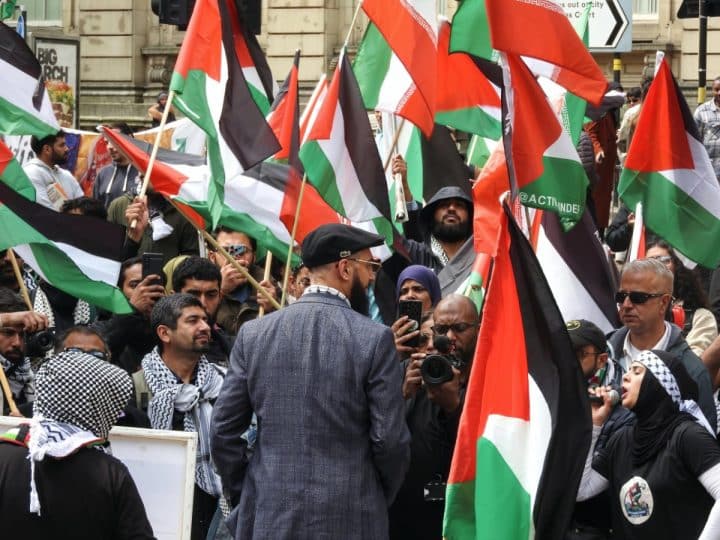

The jury had not signed up for a fourth week, but here we were. In the trial of Majid Freeman, also known as Majid Novsarka, Judge Andrew Smith KC continued to remind the jurors that they were under no time pressure. But the impasse had now continued for days.
Judge refuses to alter his instructions
After the court clerk had been sworn in once more on Monday morning and the jury had left the room to continue their deliberations, the prosecution asked the judge if he would consider altering his instructions to the jury.
He asked the judge whether he’d allowing them to consider the lesser charge of “expressing support for a proscribed organisation (Hamas)”, rather than the more significant charge of “inviting support” that they had originally sought.
With considerable time and resource already expended by the Crown on the trial, there were signs of growing pressure to secure a conviction.
But the judge was unmoved. He was “extremely uncomfortable” with the prospect of making such a change, he responded, having already given them detailed and precise guidance on the route to deciding on the charges before deliberations had commenced.
Reduced jury
Even with the provision of time, the jury was now reduced from its original 12 to 10.
One juror had been discharged during the trial for personal reasons, whilst a second left at the end of the agreed-upon three weeks. Now, a third juror informed the judge that he would have to leave by Wednesday.
With nine jurors stipulated as the minimum for a conviction, this would render a unanimous decision the only possible route to a verdict.
No conviction
By mid-morning, the jury returned. They had not managed to break the deadlock. They simply could not agree. Novsarka would be free to go, for now.
A hung jury was declared. The prosecution immediately sought a retrial, which the judge set for September 2027. The charges, and a maximum of fifteen years in prison, remain on the table. But Novsarka would be returning to his family.
On the steps outside Birmingham Crown Court, Novsarka addressed the crowd of supporters that had continued to show. He thanked:
every single person who stood with me, who came to court … who refused to let this case be ignored.
Freeman defiant
Novsarka portrayed the result in a positive light, pointing out that:
after almost a month, a jury of my peers could not agree that I am guilty of any crime.
He also struck a defiant tone at the prospect of returning to the stand in 16 months, saying that he would:
face [the] retrial with the same clarity, the same conscience, and the same conviction I have carried from the very beginning.
Hind Rajab’s name mentioned in court
It is possible that this trial marked the first time Hind Rajab’s name was uttered in a British courtroom.
Hind would have turned eight last week. Instead, she was brutally murdered as a five year-old girl, alongside six members of her family and two paramedics coming to her rescue, by the Israeli military in Gaza. The phone call between Hind and the Palestinian emergency services had been played in court:
I’m so scared, please come. Come take me. Please, will you come?
No trials for war criminals
At the end of April, the Metropolitan Police confirmed that they would not open an investigation into ten British nationals accused of crimes against humanity through their participation in the Gaza genocide.
It is inevitable that any new jury in the Majid Freeman case will have to relive the horrors of that genocide once more. The defendant said outside Birmingham Crown Court on Monday:
I welcome the opportunity of a retrial, because it means the evidence of what Israel has done to Gaza, the brutality, the systematic destruction of an entire people, will once again be placed before a jury of the British public. Let them see it again. Let the world be reminded again.
Featured image via 5 Pillars
By The Canary
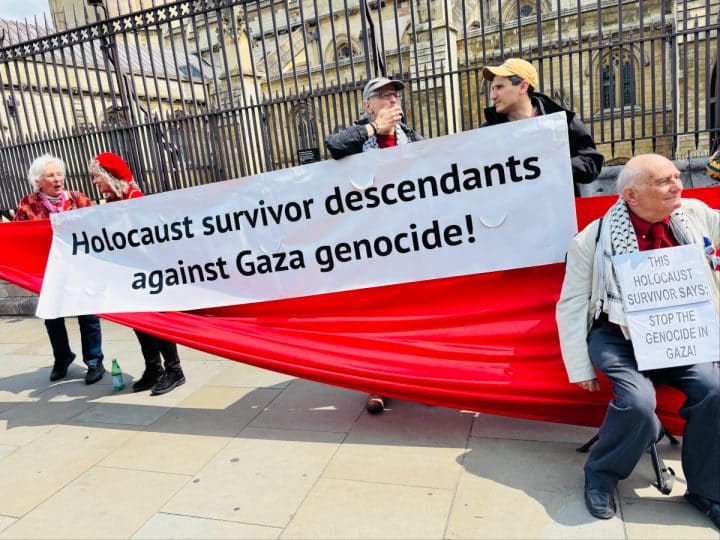

More than 40 Holocaust survivors and their descendants have sent an open letter to lame-duck PM Keir Starmer. The letter condemns him for linking attacks on Jews with pro-Palestine marches. It also demands action to put right his smear and end his promotion of the antisemitic idea that all Jews support genocidal Israel.
The letter also addresses his soon-to-be-former home secretary, Shabana Mahmood, and shameless Met Police commissioner Mark Rowley. It deplores Starmer’s weaponisation of Jewish fears and safety to attack UK freedoms – a tactic likely to increase antisemitism. It reads:
Dear Prime Minister,
We are writing to you as Jewish survivors and descendants of survivors of the Holocaust.
We have noted that you have expressed support for the banning of pro-Palestine marches and protests following the recent attacks on Jewish people and property. Your statements have given the impression that you agree with those who call these marches “hate marches” and who claim that they are a source of antisemitism and an incitement to violence against Jews.
The Home Secretary and the Metropolitan Police Commissioner have made similar statements and we are copying this letter to them.
While we condemn the attacks that have taken place against Jewish people and property, we reject the notion that these attacks result from demonstrations in support of the Palestinian people and in protest against the crimes of the Israeli government and its armed forces.
We and numerous other Holocaust survivor descendants have participated in almost every one of the national marches for Palestine. We have stood under the banner “Holocaust Survivor Descendants against Gaza Genocide” and we have individually worn placards that clearly identified us as Holocaust survivors or descendants of survivors.
Never once have we experienced the slightest hostility from the hundreds of thousands of demonstrators who have marched past us. On the contrary, just like the thousand or more Jews who march as part of the Jewish Bloc, we have been shown nothing but solidarity and even poignant displays of affection.
The only hostility we have experienced has been from the small but over-amplified pro-Israel counter-demonstrations, whose participants have clearly resented our presence. Yet their offensive and even racist language has largely been without consequence.
We therefore strongly oppose any attempt to instrumentalise the attacks on Jewish people in order to further restrict the right to protest, in particular in relation to Palestine. Not only would this be a further assault on all our freedoms, but it could also lead to resentment against Jews if it appears that this repression is happening because of a disingenuous and opportunistic exploitation of concerns for Jewish safety and prioritising this over the safety of other groups who also suffer violent attacks.
The Jewish community is not one homogeneous bloc. Many Jews, including those in our group, condemn Israel’s crimes in Gaza and elsewhere. We resent that you should even consider preventing us from expressing that condemnation, even as Jews and as Holocaust survivors and descendants of Holocaust survivors.
There is a real danger that the anger caused by Israel’s crimes against the Palestinian people and others in the region leads in some cases to wholly inexcusable attacks on Jewish people in the UK. If you genuinely wish to reduce the danger of this occurring, then further restricting the right to protest against these crimes is not the answer. Instead, we urge you to publicly acknowledge that Israel is not acting on behalf of all Jews and that its crimes are condemned by many Jewish people in Britain and around the world.
Yours sincerely,
Holocaust Survivors
Doctor Agnes Kory, Child survivor of the Holocaust in Hungary
Stephen Kapos, Child survivor of the Holocaust in Hungary
Descendants of Holocaust Survivors
Mark Etkind, Son of a Holocaust survivor from Poland
Carolyn Gelenter, Daughter of a Holocaust survivor from Poland
Professor Emerita Miriam David, Daughter of Holocaust survivors from Germany and Hungary
Ann Jungmann, Daughter of Holocaust survivors from Germany
Daniel Vulliamy, Son of a Holocaust survivor from Austria
Professor Emeritus Richard Wistreich, Son of a Holocaust survivor from Poland
Rachel Richardson, Granddaughter of a Holocaust survivor from Germany
Professor Emeritus Robert Reiner, Son of Holocaust survivors from Hungary
Erica Levy, Daughter of a Holocaust survivor from Germany
Miranda Pinch, Daughter of a Holocaust survivor from Czechoslovakia
Professor Yosefa Loshitzky, Daughter of survivors of the Holocaust in Poland
A M Poppy, Daughter of a Holocaust survivor from the Netherlands
Colonel (Retd) Christopher Romberg, Son of a Holocaust survivor from Austria
Peter Frankental, Son of a Holocaust survivor from Poland
Charlotte Reynolds, Daughter of a Holocaust survivor from Austria
Sylvia Finzi, Daughter of Holocaust survivors from Italy and Germany
Professor William Schabas, Son of a Holocaust survivor from Poland
Elizabeth Morley, Daughter of a Holocaust survivor from Hungary
Sonja Linden, Daughter of a Holocaust survivor from Germany
Vicky Moller, Daughter of a Holocaust survivor from Czechoslovakia
Talora Leigh, Great-granddaughter of a Holocaust survivor from Poland
Tony Whiteson, Son of a Holocaust survivor from Poland
Karel Michael Schling, Son of a Holocaust survivor from Czechoslovakia
Eva Turner, Daughter of a Holocaust survivor from Czechoslovakia
Perdita Heller, Daughter of a Holocaust survivor from Austria
Professor Anne Karpf, Daughter of Holocaust survivors from Poland
Helen Martins, Daughter of Holocaust survivors from Germany
Anthony Gimpel, Son of Holocaust survivors from Germany and Austria
Oliver Rakocevic, Son of a Holocaust survivor from Poland
Mike Brecher, Son of a Holocaust survivor from Germany
Andrew Feinstein, Son of a Holocaust survivor from Austria
Amanda Sebestyen, Granddaughter of a Holocaust survivor from Hungary
Glenn Bassett, Grandson of Holocaust survivors from Austria
Peter Perrett, Son of a Holocaust survivor from Austria
Caroline Hearst, Daughter of Holocaust survivors from Germany
Peter Hall, Son of Holocaust survivors from Austria
Doctor Mark Smith, Son of a Holocaust survivor from Germany
Charlotte Monro, Daughter of a Holocaust survivor from Czechoslovakia
Helen Marks, Daughter of a Holocaust survivor from Poland
Angie Eden, Daughter of a Holocaust survivor from Austria
Doctor Diana Warner, Daughter of a Holocaust survivor from Germany
Lola Karpf, Granddaughter of Holocaust survivors from Poland
“Zionist without qualification” Starmer will, of course, have no interest in acting. Given today’s resignations and calls for Starmer to quit, he is unlikely to be in a position to do so. He hasn’t even had the spine yet to sack Mahmood despite her call for him to step down.
Featured image via Wikipedia
By Skwawkbox
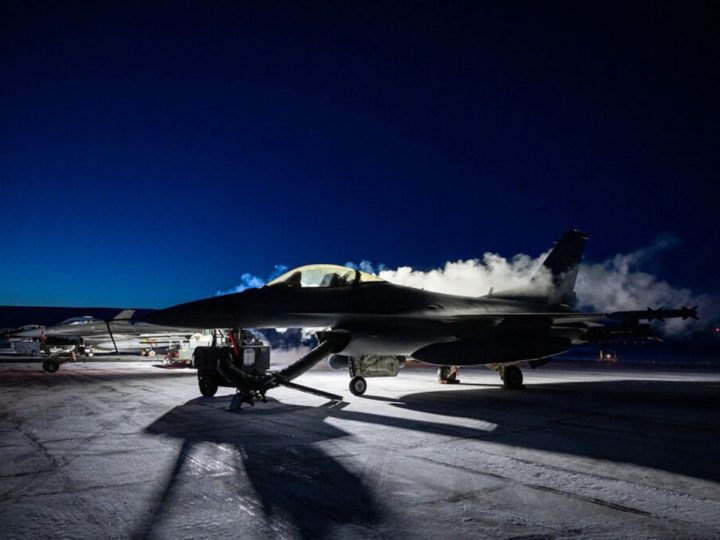

Far-right US president Donald Trump had a busy mid-January 2026. US special forces had just kidnapped Venezuelan president Nicolas Maduro. Canada, Mexico, Cuba and other nations were also on the agenda if Trump was to be believed. And so was Greenland…
Trump officially backed down on annexing the arctic island – a semi-autonomous Danish territory (or a colony, for short) – at the World Economic Forum (WEF) summit in Davos. That was on 21 January 2026. By late February, Israel had led Trump into a disastrous war with Iran. Greenland seemed forgotten…
Today, 12 May, it has been revealed that NATO ally Denmark and the US have actually been negotiating a deal for three US bases in Greenland “since mid-January”.
The talks have been kept quiet, but the BBC has now reported:
The US has been holding regular negotiations with Denmark to expand its military presence in Greenland, according to multiple officials familiar with the discussions, with talks between both sides progressing in recent months.
US officials are seeking to open three new bases in the south of the territory, a semi-autonomous part of Denmark, as they work to resolve a diplomatic crisis sparked by President Donald Trump when he threatened to seize Greenland by force.
It does beg questions… What was all the fuss about? Why has Denmark conceded quietly? And what are the implications of giving the bullying Trump what he wants?
Danish and US agreements
Both the White House and Denmark have confirmed talks are under way. Negotiating teams have met five times since January. A tight-lipped Danish official said:
There is an ongoing diplomatic track with the United States. The Ministry of Foreign Affairs will not go into further details at this time.
The BBC said:
The bases would be in southern Greenland and primarily focus on surveillance of potential Russian and Chinese maritime activity in an area of the northern Atlantic between Greenland, Iceland and the United Kingdom known as the GIUK Gap.
Trump’s imperial plan, the November 2025 National Security Strategy (NSS), had a strong focus on ‘hemispheric control’ over the Americas. Here’s the Canary write-up of some of its white-supremacist framing.
The NSS said the US would step away from hostility to China and Russia – and be less involved military in the Middle East. Trump’s more isolationist vision was quickly derailed after Israel led the fumbling US president into a poorly planned attack on Iran.
At the time, Trump may also have been over-confident after military success in the Venezuela raid. And he was under severe pressure over revelations about his links to the late paedophile financier Jeffrey Epstein.
The BBC reported:
The two sides have not formally agreed to anything yet and the final number of bases could change, the sources said. One of the new bases would likely be located in Narsarsuaq, on the site of a former US military base that housed a small airport.
Any other new military bases would likely also be located on sites in Greenland that have existing infrastructure such as airfields or ports, which could be upgraded at a lower cost than building new facilities, analysts said.
The outlet also reported that talk of the US annexing or seizing Greenland by force had not come up in the negotiations. It said the talks had been a “delicate diplomatic effort” led by Michael Needham, a senior state department official.
Greenland PM Jens-Frederik Nielsen said Tuesday 12 May at a meeting in Copenhagen that the US had:
taken some steps in the right direction.
Why fight when you can negotiate?
The BBC pointed out that Greenland was once home to many US bases:
The US currently has one military base in Greenland, down from approximately 17 military facilities during the height of the Cold War. Pituffik Space Base is located in northwestern Greenland – it monitors missiles for NORAD but is not configured to conduct maritime surveillance.
It seems Trump’s plan for hemispheric control is proceeding after all. It is very much Trump’s blustering style to bully those who oppose him in a bid for a better deal. That clearly failed with Iran. But with Denmark, it has had some effect. In Venezuela, where the post-Maduro regime has proven to be much more pliable, Trump’s belligerence has also paid off.
One former US defence official said:
Why threaten an ally with a military operation or invasion when what you want is something that could be negotiated quite easily?
While retired US general Glen VanHerck, who once led Northern Command (Northcom), said:
Wherever the US and our allies leave a vacuum, that vacuum is often filled by China and Russia.
This kind of view is not uncommon in US strategic circles. The (rather arrogant) suggestion is that anywhere where the US is not dominant, nothing exists but a ‘vacuum’. This kind of arrogance colours US foreign policy even under Democratic presidencies – though it has taken a severe beating in regard to Iran.
The problem for Denmark – and NATO – is that having gained ground through threats, Trump is prone to demanding more. The fact that Greenland is effectively a Danish colonial possession, whose indigenous people were subject to centuries of dispossession, is also unresolved here. And, unlike the negotiations the negative environmental, political and social impact of US overseas bases is no secret.
Featured image via the Canary
By Joe Glenton
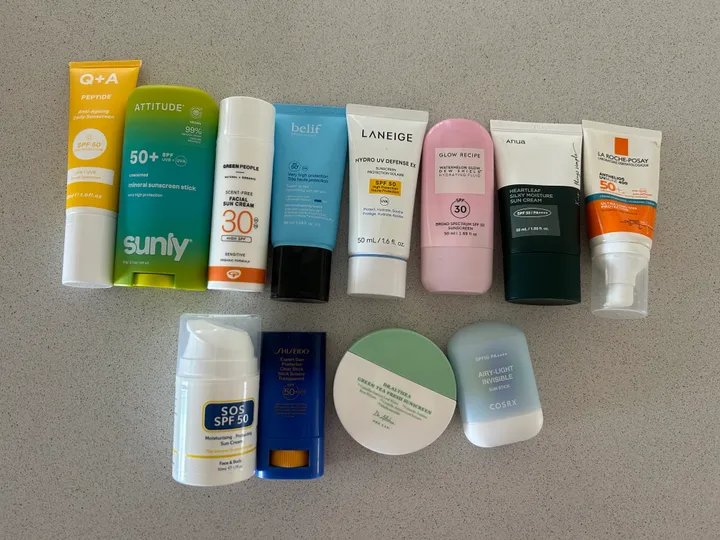
We hope you love the products we recommend! All of them were independently selected by our editors. Just so you know, HuffPost UK may collect a share of sales or other compensation from the links on this page if you decide to shop from them. Oh, and FYI — prices are accurate and items in stock as of time of publication.
If you’re not counting down to sunnier days all year, you’re lying to yourself. There’s something electric about the summer: it means freedom, holidays, frolicking, and picnics.
It’s pretty much perfect, aside from of course the impending doom of hayfever and the fact you need to find the right sunscreen to wear.
Should you be unfortunate enough to be afflicted by sensitive skin like me, you’ll know the struggle of trying to find an SPF that sufficiently protects you from the sun, is easy to apply, won’t pill, or break you out into hives and blemishes every time you use it.
It’s enough to ruin the thrill of sitting in the sun, but this year I was determined to not let a few pesky rays ruin my fun.
To save all of the sensitive skin sufferers out there, I made it my mission to find the best sensitive skin face sunscreens on the market right now.
And good news: I found a range of options from high street to K-beauty, which come in between £5 and £26.
How I tested the best sensitive skin face sunscreens

With some of the sunniest days ahead of us, I tried out 15 of the best face sunscreens for sensitive skin.
To make sure they were up to the mark, I tested them multiple ways, including: on top of my usual skincare, without any skincare at all (à la post-swim skin), underneath makeup, on top of makeup, and as a top up half way through the day.
I also wore them while inside, on my commute, on a long hike, and when going swimming to see if they’d break me out or leave a white cast.
For each sunscreen, I considered value for money, formula, UVA and UVB protection, active ingredients like green tea and hyaluronic acid, bottle type, and volume.
My 15 favourites are outlined below.
The 15 best face sunscreens for sensitive skin to shop now

Should the sun add insult to injury for your dry skin, this Eucerin sunscreen will keep you plenty moisturised under its glare. It’s loaded with hyaluronic acid, which helps to keep your face looking plump and fresh, and won’t leave a white cast. It’s a little thicker than other options, though, so it’s not ideal for those with skin on the oilier side.
Rating:4/5.

Like the Eucerin formula, this scent-free sunscreen applies fairly thick, but it melts into your skin almost immediately. Unlike other pump bottles, this one doesn’t get stuck and has no problem dosing out the perfect amount. As well as being vegan and cruelty-free – and of course filtering out UVA and UVB rays – Green People’s formula also contains key antioxidants to support your skin texture.
Rating:4/5.

As someone who often gets a rash on her face, I’m a big fan of SOS’ face and body serum for cooling and soothing my skin. This sunscreen feels just as gentle on the face, and while it’s quite oily-feeling on first application, it is barely noticeable on the skin within seconds.
Rating: 4.5/5.

Fresh pharmacy brand Avène has been my go-to for dry, rash-prone skin for most of my life. Shoutout to its Cicalfate range for getting me through some rough years of extremely visible neck eczema. So it’s no surprise, really, that this sunscreen leaves your skin feeling nourished and doesn’t break you out. Be warned, though, some reviewers say it has a slight tinted tinge on darker skin tones.
Rating: 4/5.

Honestly, I’m a sucker for anything cute. I love this round pink packaging, which homes a sweet-smelling watermelon sunscreen. Admittedly, it’s not for everyone, and I was at first suspicious of using a scented sunscreen on sensitive skin, but I haven’t had any problems with it. In fact, it leaves my skin looking glowy (as the brand name suggests) and it’s easy to pick up and chuck in my bag.
Rating: 4.5/5.

This tiny stick is in the running for my favourite sunscreen on the list. Not only is it minuscule – it’s only slightly bigger than an AirPods case – but it’s so invisible, you can barely tell you’ve applied something to your face. While that might be a little offputting for some users, I love that I can just do a quick swipe while I’m out and about without having to think about getting my dirty hands all up in my face. I find that it even mattifies my skin a little, which is much needed when I start sweating profusely the second a hint of moisture hits the air. TBC on how much the product stretches, but I’ll definitely be repurchasing.
Rating: 5/5.

If you’re not sure about whether you want a thick or a light formula, this Q&A option is the perfect in between. The pump bottle is small enough to fit in your hand luggage, and it delivers a non-greasy sunscreen that is suitable for combination, oily, and dry skin alike. Should you feel dubious towards face moisturisers that claim to contain SPF, this is an ideal formula to wear under makeup as it also hydrates your face and (supposedly) boost collagen, so you look plump and fresh.
Rating: 4.5/5.

When they say silky, they mean silky. There’s really no other way to describe the texture of this cream, which slips and slides over your skin when it’s first applied, before drying to feel glossy and somehow matte. It won’t pill or leave a white cast, making it great to wearing under makeup. You might end up feeling shiny half way through the day, though.
Rating: 4/5.

Forking out £20 on a face sunscreen isn’t everyone’s prerogative, and that’s okay. I’ve relied on this Boots number to keep me burn-free on holidays for years. It has a nice sheen to it, is small enough to fit in your carry-on and, more importantly, won’t break you out.
Rating:3.5/5.

“Years ago, I went to a dermatologist to find out once and for all which products could save my “problem” skin. She recommended La Roche-Posay’s Anthelios SPF 50, which I’ve never parted from since. It’s super-lightweight, it doesn’t make me break out, it sinks in quickly, and (most importantly) it consistently safeguards my very sun-sensitive skin. Its fragrance-free formula and broad-spectrum coverage means it’s ideal for anyone who wants high-strength protection with zero irritation — and who doesn’t?“ – HuffPost lifestyle writer, Amy Glover.
Rating: 5/5.

For even more of a budget option, this Superdrug ‘face fluid’ is half the price of the Boots formula, for the same volume. It’s slightly more greasy when it hits your skin, but sinks in quickly. It does pill quite easily, though, so may be best reserved for when you’re bare-faced on a beach.
Rating: 3/5.

Call me vain, but I love how my skin looks with this sunscreen on. Plump, hydrated, and glowy as hell. The formula feels creamy when you put it on, so you know the areas you’ve applied it to (that’s none of my business to remember off the top of my head). Fine, K beauty knows its stuff.
Rating: 5/5.

Yet another example of K beauty killing it, this spreadable formula is almost completely transparent. If you tend to get any unwanted redness with SPF, that’ll completely disappear with this sunscreen, which is packed with green tea extract to reduce just that. It’s also blended with PDRN (AKA salmon DNA) to improve your skin elasticity and centella to soothe irritation. Once again, full marks.
Rating: 5/5.

Unfortunately after testing these products I’m going to have to take back my initial suspicion of Korean skincare. This dewy serum is designed to sit under moisturiser, and truly makes my skin look like I’ve had some kind of injectable done immediately after putting it on. Of all the formulas on this list, this one makes the best combo for face makeup.
Rating: 4.5/5.

Maybe I’m lazy, but anything that comes in a stick formula is automatically irresistible. Or maybe it’s just that every time I think about trying to put sunscreen on at the beach, I have a full-body reaction. Attitude has created a mineral sunscreen stick that would be great for kids and adults alike, thanks to providing UVB and UVA protection and going on in less than a few seconds. It feels a little waxy on the skin, but not in an awful way, and it means you can trust it’s there.
Rating: 4.5/5.


Muslim footballer Lamine Yamal raising the Palestinian flag during celebrations after Barcelona won the Spanish league title has sparked a wave of outrage and incitement in the Israeli media.
Yamal, 18, stole the spotlight during Barcelona’s La Liga victory parade on an open-top bus after he appeared waving the Palestine flag.
However, Israeli media outlets, as well as politicians and activists, were quick to attack the Spanish player, claiming that his display of the Palestinian flag carried “political messages” during a sporting event.
Lamine Yamal condemns ignorance and racism
Israel’s Channel 12 said that Yamal “exploited the soccer event to express his political stance”. He highlighted how Barcelona players celebrated with the club’s scarves while the young player chose to celebrate with the Palestinian flag.
Daily newspaper, Yedioth Ahronoth, noted that this is not the first time Yamal has expressed his support for Palestine. He made remarks following a match between Egypt and Spain, when he criticised chants from fans that the newspaper described as “offensive to Muslims”.
Yamal had said at the time:
Praise be to God, I am a Muslim, and I believe that using religion for mockery on soccer fields is a sign of ignorance and racism because soccer was created for enjoyment and empathy, not to hurt people because of their beliefs.
The Hebrew website, Walla, adopted the same narrative, arguing that the player “exploited the sporting event to express a political stance”. Meanwhile, the sports website, Sport 5, merely noted that Yamal is Muslim and of Moroccan descent.
In contrast, the Hebrew website ICE went further, stating that the player “chose to oppose Israel when he raised the Palestinian flag in front of the world”, describing the moment as “one of the most controversial scenes in Barcelona’s celebrations”.
Israeli minister attacks Yamal
The campaign of attacks extended to politics after Israel’s national security minister, Itamar Ben-Gvir, launched a sharp attack on the Barcelona star.
He said:
Someone needs to explain to soccer player Lamine Yamal that he is raising the flag of a non-existent entity.
Then added:
Anyone who chooses to identify with the flag of terrorism should not be surprised by Israelis’ hatred toward him.
The attack was not limited to Ben-Gvir, as Israeli journalists and activists joined the campaign of criticism against the teenage player. Some comments even wished for him to get injured and miss the 2026 World Cup.
Despite the controversy, Yamal continued celebrating with Barcelona fans, emphasising during the parade the importance of the bond between the team and its supporters.
He said:
It’s unbelievable. The fans are always with us on important days and difficult days — this is the club of our lives.
The young star also stressed the need to appreciate every title the team wins, before expressing his dream of winning the Champions League and celebrating it with fans in the streets of Barcelona.
Winning isn’t easy. We’ve gone through tough years, but now we’re enjoying the moment.
Featured image via Josep Lago/ AFP
By Alaa Shamali
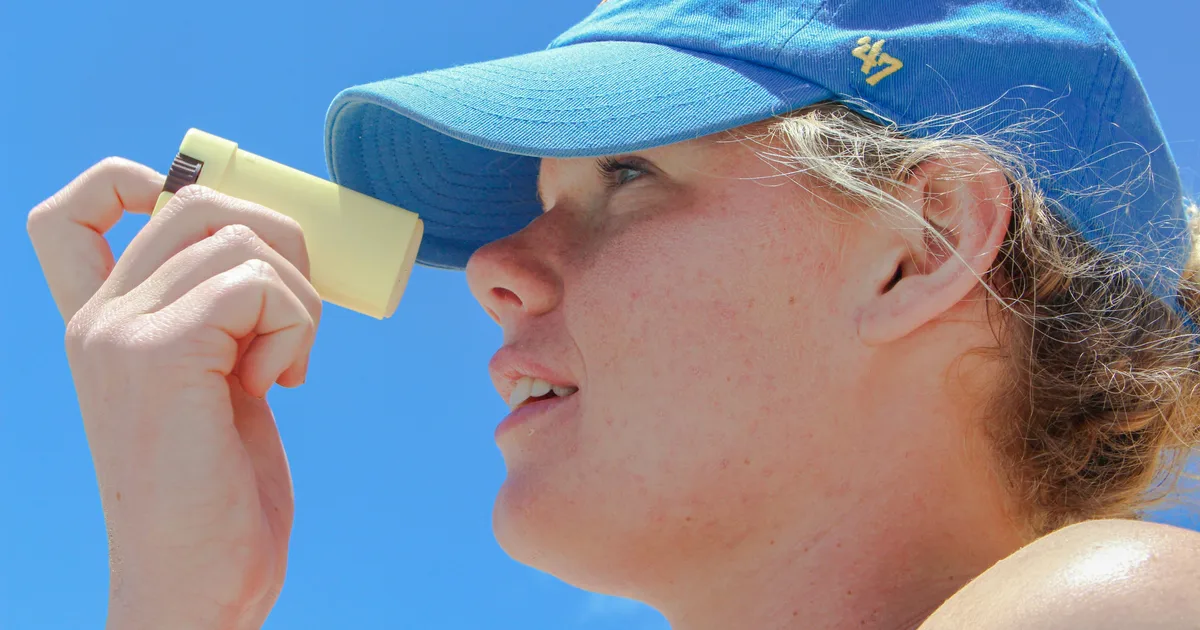
I’m pretty diligent about applying sunscreen; I reckon I hit the NHS-recommended seven teaspoons for your entire body most times I hit the beach.
But to be honest, I don’t sunbathe often. I burn easily, so I prefer to get a tan from a can if possible.
According to Melanie Brownlow, founder of self-tanning company St Moriz, however, combining some self-tanners with sunscreen might not be ideal.
She said, “As summer approaches, many will be looking to pull back on their makeup and focus more on using bronzing products for a sun-kissed complexion. However,”
Don’t mix self-tanning products with SPF
Brownlow said: “When it comes to bronzing drops, or any self-tan products for the face, this is safe to mix in with your go-to moisturiser. However, when it comes to sunscreen, never mix any tanning products directly into this.”
This is because an active ingredient in the bronzing items can interfere with how effective your SPF is.
“The active ingredient – DHA – in self-tanning products interferes with sun protection products, diluting the SPF and reducing its effectiveness against sun damage,” she explained.
She’s not alone in sharing concerns. Dermatologist Dr Janelle Vega told L’Oréal Paris, “In general, it’s best not to mix any other products into sunscreen because it can change the measured sun protection factor”.
It means that the concentration of SPF carefully titrated by the manufacturer of your suncream changes, so you don’t know for sure how much protection your sunscreen offers anymore.
How should I apply sunscreen if I use self-tanning products?
“I would recommend using your tanning drops in the evening, allowing it to develop overnight, and just keep to your SPF and any cosmetic products in the day,” Brownlow advised.
(Psst – that “SPF foundation” you’ve been using probably isn’t doing as good a job as you think).
“The same principle applies to using tanning products and sunscreen on the body, because no, having fake tan does not prevent you from burning from sun exposure,” the self-tan expert added.
“To avoid any risk, apply your self-tan to your body in the evening, allowing this to develop for at least 12 hours before you apply sun protection. The tan should be properly rinsed off as any remaining DHA on the skin can degrade SPF.”
The NHS recommends using a sunscreen with at least an SPF 30 and at least 4-star UVA protection.
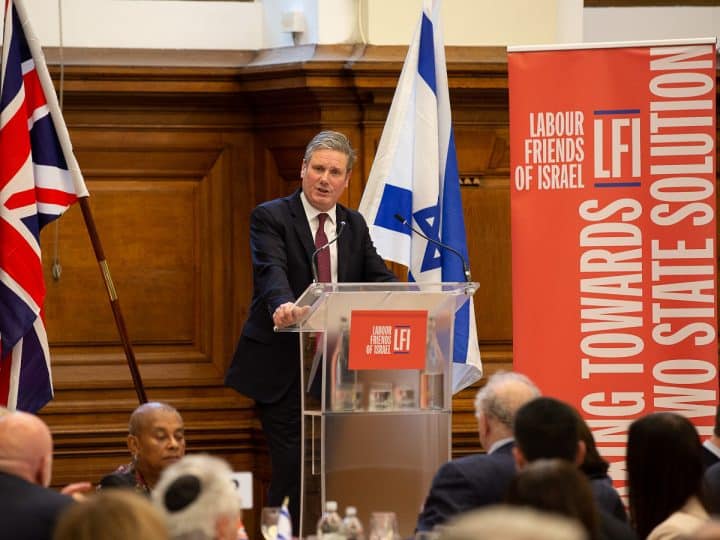

Labour want to make defending international law a criminal offence, as they appear set to criminalise any criticism of Israel’s actions. Bearing in mind that Zionist Israel has long been conducting a genocide of Palestinians, escalated further since October 7th 2023, the continuation of this blatant politicisation of the UK’s criminal justice system should terrify us all.
Frankly, this move by Labour would be pretty similar to making criticism of the Nazi regime in 1930s Germany a criminal offence in the UK. Nevertheless, it would hardly be surprising if people at the time made efforts to push exactly that outcome, given that the Daily Mail openly aligned itself with Hitler’s camp and has been an enthusiastic supporter of antisemitism generally.
But the Holocaust showed the world where that path leads, and the thought of British leaders enforcing this kind of draconian authoritarianism back then should send shivers down the spine.
As a result, no one should play naive to lawfare at the behest of a hostile state committing genocide against Palestinian men, women and children.
Deranged.
The claim here is that it's antisemitic to accuse Labour of complicity in genocide.
It's clear where this is heading:
They want to make it illegal to criticise Israel's crimes. pic.twitter.com/nTVQoacBs7 — Owen Jones (@owenjonesjourno) May 11, 2026
Ignoring international law has consequences
Alex Hearn, member of the campaign group ‘Labour against Antisemitism’, has seen fit to push the electoral commission to investigate alleged antisemitism in campaign material from the local elections. The offending material is a flyer quoting Keir Starmer’s enabling, and legally ignorant, statement, which he made when Israel was escalating its military aggression and illegal siege on Gaza.
During this siege, Israel cut off access to food, water and medicine to Palestinians, leaving them bombarded, deprived, displaced, and completely without the resources they desperately needed to survive.
However, according to ‘Labour against Antisemitism’, exposing this complicity in the actions and words of the UK PM amounts to antisemitism. Once again, we are watching Zionists continue their attempt to criminalise the defence of international law.
In response, Owen Jones has posted on X:
Deranged.
The claim here is that it’s antisemitic to accuse Labour of complicity in genocide.
It’s clear where this is heading:
They want to make it illegal to criticise Israel’s crimes.
Protecting Zionist Israel is what the British government do
This isn’t the first time that the UK government has sought to shield Israel from legal accountability.
Discussing the intimidation and threats made by then-foreign secretary David Cameron, our own Skwawkbox wrote:
A Freedom of Information Act (FOI) request has forced the Foreign Office (FCDO) to admit – finally – that then-foreign secretary David Cameron called International Criminal Court (ICC) chief prosecutor Karim Khan to threaten him and the ICC, and demand the withdrawal of an arrest warrant for Israeli war criminal Benjamin Netanyahu.
The FOI was filed last month by ‘Unredacted’ a University of Westminster research unit focusing on national security.
Unredacted asked the FCDO to confirm who was present on the 23 April 2024 call to Khan. It confirmed that David Cameron was the only one. Karim Khan confirmed last month that a “senior British official” had threatened to withdraw the UK from the ICC if Khan’s application for warrants for Netanyahu and former defence minister Yoav Gallant was not withdrawn.
Furthermore, the next Foreign Secretary then worked to construct pro-Israel propaganda to seek to ‘justify’ the genocide of Palestinians.
Exclusive: The UK gave an Israeli government-aligned project £90,000 to produce a report claiming sexual violence on and after 7 October was "systematic", a thinly-evidenced claim neither the UN nor Amnesty has been able to verify.
The Dinah Project's UK-backed report was… pic.twitter.com/HrTy4XM0Ov — Novara Media (@novaramedia) March 2, 2026
Foreign Secretary David Lammy awarded 90% of the Foreign, Commonwealth and Development Office’s (FCDO) entire annual budget to the Dinah Report. The authors of this highly questionable report were explicitly instructed to conclude that Hamas used sexual violence as a weapon of war on October 7th, 2023.
We wrote at the time:
This blatant bias and conflict of interest should come as little to no surprise. Ever since October 7th, we have seen a concerted push by Israel and its lobby groups to manipulate data, grief and material facts in their own interest. All whilst conveniently and simultaneously demonising Palestinian resistance. If we have learned anything through this horrific 2.5 years, it is the reminder that every life matters and civilians should not pay the price for the sins of the powerful.
Going further, we have also learned in the most disgusting way that the saying ‘lies, damn lies and statistics’ applies all the more in times of conflict. Especially when we consider Israeli and western tactics to manufacture consent for what has been one of the most brutal bombing campaigns the world has ever seen. On the backs of the lack of condemnation afforded by the UK government for crimes against Palestinians, our governments complicity in Israel’s crimes cannot be ignored.
No evidence, no crime – apparently
Recently, we also learned that the FCDO was closing its ‘war crime monitoring unit’, a move which conveniently enables the British government to avoid documenting evidence of the egregious crimes being inflicted on Palestinian civilians.
Exposing this serious threat to international law and the rule of law itself, we wrote:
The closure also means the government is losing access to a database of at least 26,000 verified incidents involving Israel and its military in occupied Palestine and Lebanon, committed since the start of Israel’s Gaza genocide in October 2023. The ‘lost’ evidence includes videos, photographs, satellite imagery and other media – all mapped to the locations in which the atrocities were perpetrated.
‘Losing’, of course, may not be the correct word. The Starmer government has shown less than zero interest in holding Israel to account for its crimes. Starmer’s previous gig as head of the Crown Prosecution Service was also marked by conveniently disappearing evidence relating to notorious crimes and his involvement in decisions not to prosecute.
Certainly this ‘loss’ is very convenient for a UK police state all too eager to continue collaborating in Israel’s genocide, crimes against humanity, land theft and illegal wars of aggression. Human Rights Watch director Yasmine Ahmed described the decision to throw away evidence of Israel’s crimes as “damning”.
Lawfare at play to protect Zionists
Zionist and pro-Israel groups have long been using lawfare to shut down dissent against the genocidal state. The European Legal Support Center has catalogued these sinister attempts to subvert law in their database, suitably named ‘Britain’s Index of Repression’.
Subsequently, this apparent move to make ‘calling a spade a spade’ a criminal offence, whilst speeding up the prosecution of hate crimes, is deeply terrifying. After all, authorities will clearly use it to shut down and criminalise anti-Zionists, while continuing to ignore genuine antisemitism among Reform UK councillors and Nigel Farage himself.
British people must wake up sharpish and stop this before it is too late.
Featured image via the Canary

Zendaya Was ‘Buried Up To Her Neck’ For Dramatic Euphoria Season 3 Stunt

MOSH raises $13 million

Labor Groups Sound Alarm: Crypto Legislation Threatens Worker Retirement Funds

Manchester United reach agreement with Casemiro over contract clause amid transfer speculation

US brings back mandatory military draft registration

Steven Gerrard disagrees with Gary Neville over ‘shock’ Chelsea and Arsenal claim | Football


-
 Crypto World4 days ago
HarrisX Poll Found 52% of Registered Voters Support the CLARITY Act
-

 Fashion4 days ago
Weekend Open Thread: Marianne Dress
-

 Crypto World5 days ago
Upbit adds B3 Korean won pair as Base token gains Korea access
-
 NewsBeat5 days ago
NCP car park operator enters administration putting 340 UK sites at risk of closure
-

 Fashion21 hours ago
Coffee Break: Travel Steam Iron
-

 Fashion2 days ago
What to Know Before Buying a Curling Wand or Curling Iron
-

 Tech2 days ago
Auto Enthusiast Carves Functional Two-Stroke Engine from Solid Metal
-

 Politics17 hours ago
What to expect when you’re expecting a budget
-

 Politics3 days ago
Politics Home Article | Starmer Enters The Danger Zone
-
 Business3 days ago
Ignore market noise, India’s long-term story intact, say D-Street bulls Ramesh Damani and Sunil Singhania
-

 Tech1 day ago
GM Agrees To Pay $12.75 Million To Settle California Lawsuit Over Misuse Of Customers’ Driving Data
-

 Crypto World6 days ago
BlackRock CEO Larry Fink Discusses a New Asset Class
-

 Entertainment5 days ago
Sarah Paulson Called Out For Met Gala ‘Hypocrisy’
-
 Sports6 days ago
NBA playoff winners and losers: Austin Reaves is not loving Lakers vs. Thunder matchup, but Chet Holmgren is
-

 Entertainment6 days ago
Bold and Beautiful Early Spoilers May 11-15: Steffy Revolted & Liam Overjoyed!
-

 Entertainment5 days ago
General Hospital: Ric & Ava Bombshell – Ric’s Massive Secret Exposed!
-

 Crypto World5 days ago
Robinhood says Wall Street is building onchain
-

 Politics5 days ago
Simon Cowell Says He Was ‘Horrible’ To Susan Boyle During BGT Audition
-

 Sports5 days ago
UEFA Champions League final schedule, teams, venue, live time and streaming | Football News
-

 Tech7 days ago
Apple and Samsung are dominating smartphone sales so thoroughly that only one other company makes the top 10
You must be logged in to post a comment Login