
Politics
Why the world is staying silent as healthcare collapses


Gaza is dying every day. Its hospitals are collapsing, its doctors are overwhelmed, and the world remains largely silent.
Children are dying for lack of medicine. Patients are left untreated. Doctors are forced to decide who might live and who must be left to die. All of this is happening in full view of the United Nations and powerful states that respond with words instead of action.
This silence is not neutral. It is a profound moral failure.
Healthcare in Gaza has been reduced to survival triage. Hospitals have become places of delayed death. Essential medicines are running out. Electricity is repeatedly cut. Medical staff work under siege, exhaustion, and constant threat. Civilians are trapped between occupation on one side and international neglect on the other.
World is silent on Gaza
Why does the world remain silent? Because political alliances and economic interests are prioritised over civilian lives. Because Gaza is treated as a distant crisis rather than a humanitarian emergency unfolding in real time.
Every day without intervention becomes another day of systematic death. Doctors in Gaza face impossible conditions. They work through destruction, shortages, and trauma, while international support is delayed or blocked. Pressure on the occupying power remains minimal or symbolic.
This silence is not just political weakness. It is an insult to the idea of a global conscience.
The collapse of Gaza’s healthcare system is not a natural disaster. It is a political and humanitarian crime carried out in plain sight. Every hour without medical supplies costs lives. Every day without action deepens impunity.
Gaza is not just a besieged enclave. It is a mirror held up to the world.
It asks a simple question of those who claim to defend human rights: why is the mass suffering of civilians tolerated while the world looks away?
The blood of Gaza is already answering. History will not measure morality by statements or sympathy, but by action. Every delay is another failure. Every silence is another verdict on humanity itself.
Featured image via AFP


This article contains spoilers for the latest season of The Comeback.
It turns out Lisa Kudrow found inspiration in some unlikely places while putting together the third and final season of her Emmy-nominated comedy The Comeback.
While promoting the latest iteration of The Comeback, Lisa previously disclosed that one episode would see her character taking part in a fictitious series of The Traitors US, alongside RuPaul’s Drag Race alum Trixie Mattel.
During the latest episode, this scene finally aired, with Valerie struggling every bit as much to hide the fact she was a Traitor as you might expect.
However, during an interview on Traitors UK host Claudia Winkleman’s talk show before this episode aired, Lisa disclosed that watching Linda on the infamous third season of the British reality show had given her the idea for how Valerie’s stint in the castle would pan out.
“Linda was the person who, when I said, ‘Traitors you’ll meet each other later’, looked at me and nodded,” Claudia reminded viewers, before asking Lisa: “There was a bit of Linda in [your performance], wasn’t there?”
“A bit?!” the Friends alum responded. “Oh my god! Yeah, we had Valerie going, ‘oh I can tell you 100% he’s a Faithful’, ‘how do you know?’, ‘just… I have a feeling’.”
Claudia then surprised Lisa with a visit from the woman herself, with Linda admitting it was “absolutely crazy” to have inspired a scene in The Comeback.

“On our show, she was voted out that night,” Lisa pointed out. “What was wrong with your group?! They took a very long time!”
Watch the moment for yourself in the video below:
The third season of The Comeback comes more than a decade after the second instalment.
In the years since, viewers have so far seen Valerie trying her hand at playing Roxie Hart on Broadway and half-heartedly taking part in the 2023 Hollywood strikes, while future episodes will see her grappling with the surge of AI in the entertainment industry and promoting a project on Hot Ones.

We hope you love the products we recommend! All of them were independently selected by our editors. Just so you know, HuffPost UK may collect a share of sales or other compensation from the links on this page if you decide to shop from them. Oh, and FYI — prices are accurate and items in stock as of time of publication.
If you have a period, you’ll know the struggle. You wait all year for summer, craving that first refreshing dip. And then the dreaded thing happens: that time of the month rolls around. End scene on all hopes of being cute and care-free by the pool.
As someone who seems to somehow always have her period on holiday, I’ve shouldered the hard truth that I’ll have to spend the rest of my menstruating life thinking about being near a toilet and asking for hourly tampon string checks when I should be relaxing.
Add to that the fact that all my pedantically-picked bikinis end up blood-stained, and it’s no wonder I’ve developed an avoidance of being near a body of water.
I’m not the only one plagued by this predicament: a survey by WUKA found that 71% of women have taken a contraceptive pill before jumping on a plane in efforts to avoid having their period on holiday.
I’m not stranger to these kinds of attempts myself. Many an evening has seen me thinking there must be a way around the holiday period blues, and attempting to restrict or put off my flow (read: gulping down as much water as humanly possible).
So, naturally, when I heard about WUKA’s period swimwear line, a ray of hope shone over my conscience. Formed of an aquaphobic outer layer and an absorbent inner gusset, the collection is designed to keep water out and your flow in. Need we mention they’re made from recycled nylon so they’re eco-friendly, and UV50+ resistant, too?
While splashing out on period-specific swimwear might seem like a lot, the peace of mind is, in my opinion, priceless. With 20% off all swimwear until 13 April (repeat: this is not a drill) and 20% off select pieces from 14 April, it’s time to be out with the old, in with the new: goodbye tampon strings, hello contained flow.

As Keir Starmer takes the Labour Party further and further right, a group of councillors in the London borough of Hackney finally left in May 2024. They became Hackney Independent Socialists. And almost two years later, they’re actively collaborating with the local Green Party to defeat Labour and the far right in May’s local elections.
The Canary spoke to Heather Mendick and Claudia Turbet-Delof from the Hackney Independent Socialist Collective (HISC) to find out more about their campaign alongside the Greens, which Mendick said:
should be a model for red-green collaboration all across the country
Excitement in Hackney as “people power” grows outside Labour
Hackney councillor Turbet-Delof said that seeing an increase in “anti-migrant rhetoric” from Starmer’s Labour meant she had “one foot out” of the party already. It felt like an “irreversible” shift. And then, Labour’s position on Israel’s genocide in Gaza “really clarified things”, as the party suspended her and others for backing ceasefire calls.
For Turbet-Delof, leaving Labour was about staying true to her principles. And HISC is unapologetic about where it stands. Mendick added that there’s a lot in common between HISC and the Greens, but the differences are still important:
The possibility of having a different agenda that’s explicitly socialist, and that comes from a small group that’s very locally based, I think is really powerful.
HISC is very much about “people power”, Mendick stressed, with huge turnouts among the membership for meetings. There’s a lot of interest and “nearly everyone is doing something”.
The fact that HISC councillors have scrutinised the council effectively and “brought things to light”, Turbet-Delof said, has helped to make “headline news”. And this in turn got residents’ attention and support, because:
they now finally feel that there is an alternative
“Making history” with a Green–Independent alliance
HISC members’ positive relationships with Greens on the council and in local campaigns have helped to foster organic collaboration. Turbet-Delof says they were “really keen to work together” in the local election campaign as a result:
it is something that benefits both, and it’s something that residents also like to hear, that it’s a collaboration.
And as Mendick insisted, this isn’t just about a “non-aggression pact”, but an “active collaboration” with “joint canvassing”. She explained that:
We have leaflets, posters, calling cards, all with two logos on…
We’re doing something new… and people are super enthusiastic. When you say to people, look, we’re making history in Hackney, here are two logos on the same piece of literature, people are like ‘wow’…
I don’t think anywhere in the country is doing what we’re doing.
At its heart, Mendick said, HISC wants to help:
to get the left working constructively together as far as that is possible
Turbet-Delof agreed, adding:
We have to stand and speak and respect one another.
Thanks to everyone who’s put up our ❤️💚 posters in Homerton #localelections pic.twitter.com/zLRfsvcG9y
— Hackney Independent Socialist Collective (@HackneyIndSG) March 22, 2026
Your Party has also reached out to HISC with an invitation to collaborate. HISC members will make a “collective decision” about that.
Green-HISC councillors will try to ‘shift the power relationship’
Turbet-Delof believes “a lot of councillors” in Hackney are currently “quite detached” from community work. And on some big local estates, she said, some people have told her:
no one has ever knocked on my door. It’s the first time I’ve seen a councillor.
Mendick added:
The question I ask on doorsteps is… what do you want to change in Hackney? …
We’ve learned from knocking on doors and talking to people, and our positions have changed in response to that.
And this is a key way HISC wants the council to change. As Mendick explained:
We want to shift that power relationship between residents and the council. And we’ve got a very explicit commitment that, if we are in power with the Greens, you can’t simply do a consultation and then just be like, ‘tick the box, then we’ll go on and do what we were planning to do anyway’. If you have an engagement process, whatever comes out of it, you have to commit to implementing it.
This is important, she stressed, because:
If you really want to build a movement, you have to start with that stuff. You have to make a difference in people’s lives. You have to show that the damp on their wall can get sorted, that their light can work again, that their lift can work again.
As HISC’s manifesto says, it is already:
collaborating with residents and campaign groups, by:
Holding regular People’s Forums where we can learn from residents about the issues that matter to them.
And both Turbet-Delof and Mendick asserted that this connection with the community will continue after the election.
HISC candidates in Hackney’s local election
Alongside all the Green candidates in Hackney, the HISC candidates in the joint campaign will be:
- Fliss Premru (standing for re-election in Clissold Ward).
- Claudia Turbet-Delof and Penny Wrout (both standing for re-election in Victoria Ward).
- Alana Heaney and Heather Mendick (standing for the first time in Homerton).
- Sarah Byrne (standing for the first time in London Fields).
You can see HISC’s campaign videos here and manifesto here. The nine areas of focus in the manifesto are:
- Democracy and Workers’ Rights
- Community Wealth Building
- Human Rights and International Solidarity
- A Cultural and Creative Hackney
- Young People’s Mental Health and Wellbeing
- Transport
- Low-cost Safe Secure Housing for All
- Migrants’ Rights and Anti-racism
- Ageing and Living Well
New candidate photo for @HackneyIndSG and @hackneygreens in Homerton ward. pic.twitter.com/FWWFy8nz9L
— Heather Mendick (@helensclegel) March 15, 2026
All six of our council candidates have signed the pledge for Palestine 🇵🇸 pic.twitter.com/XVEE8FLUYO
— Hackney Independent Socialist Collective (@HackneyIndSG) March 19, 2026
Some photos from our three canvassing sessions yesterday ❤️💚
🙏🙏🏾 to everyone who took the time for a chat when we knocked on your door pic.twitter.com/8XNidaezPF— Hackney Independent Socialist Collective (@HackneyIndSG) February 23, 2026
Featured image via the Canary

Veteran star of the silver screen Kim Novak is evidently not a fan of the decision to have Sydney Sweeney play her in a new movie.
Last year, it was announced that a biopic about Kim’s romance with Sammy Davis Jr was in the works, with the White Lotus actor and David Jonsson in the lead roles, while fellow Euphoria alum Colman Domingo was attached to direct.
During a new interview with The Times, the Vertigo star made it clear that she’d “never” have approved the decision for Sydney to play her on screen.
“[She] sticks out so much above the waist,” Kim suggested, before voicing her concern that the film would focus too much on sex rather than the fact she and Sammy Davis Jr had “so much in common”, which was the basis of their relationship.
“There’s no way it wouldn’t be a sexual relationship because Sydney Sweeney looks sexy all the time,” she added. “She was totally wrong to play me.”

In The Times’ piece, it was suggested that progress on the movie had “stalled” in recent history.
Back in October, Sydney told People magazine: “I’m incredibly honored to be bringing Kim to life. I mean, she is such an amazing actress.
“I think her story is still very relevant today in that she dealt with Hollywood and scrutiny with her relationships and her own private life and the control of her image. And I think that for me, I relate to it in a lot of different ways.”
Around this time, Sydney was gearing up for the release of another biopic, Christy, in which the two-time Emmy nominee played boxing legend Christy Martin.
The film bombed at the box office, with its release coming after a string of controversies involving its lead actor, most notably reports that she had registered as a Republican in the lead-up to the 2024 presidential election and an ill-fated jeans ad for the US fashion brand American Eagle.

Natalie Brooks is the founder of Dyslexia in Adults, and author of Dyslexia Unlocked (available 23 April 2026).
After making the same mistake twice in relatively quick succession at my former workplace, a manager said to me “are you lazy, or are you stupid?”. The mistake itself was small. I had sent a quote in pounds instead of dollars. But it happened twice, and what my manager saw as carelessness, was actually my dyslexia.
I didn’t admit this to my manager, because like many adults with dyslexia, I had learned to cope with it – and hide it. Until situations like this continued to crop up, which triggered a spiral of fear that people would notice how much by dyslexia impacted me.
For years, I had also been told that dyslexia is a superpower. It’s a phrase that appears with neurodivergence narratives a lot – in workplaces, motivational talks, even on LinkedIn posts. I understand the intention is positive, to empower people with dyslexia. But it never matched my reality, and I suspect I’m not alone. If dyslexia is a superpower, why does it so often feel like we’re working twice as hard just to keep up?
What tends to get lost in these superpower narratives is the effort involved. While I do not doubt that my dyslexia brings me an amazing set of strengths, skills and ways of thinking, the day-to-day lived experience of dyslexia is often far less glamorous.
What’s more, these supposed strengths or ‘superpowers’ can feel vague and hard to recognise in real life. Terms like ‘big-picture thinking’ and ‘creativity’ sound impressive, but are difficult to translate into everyday situations. The list of struggles can feel far longer than the moments where the supposed ‘gift’ shows up. Too often we often gloss over the reality of how little support people are given to access strengths or support challenges. I remember calling my partner after a tough conversation with my manager about a small error. Trying to comfort me, he said “But it really is a gift”. I snapped back: “how the hell is big-picture thinking helping me with my emails?!”
One of the most common challenges for dyslexic adults is working memory, which is the ability to hold and manipulate information in your mind. Imagine trying to follow instructions while holding several pieces of information at once – for some people this might be an okay thing to do, but for me it feels like trying to juggle too many balls in the air at once, and to make it worse, knowing that if one drops, people may think you’re not paying attention, or worse, can’t do your job.
I often describe dyslexia as carrying a backpack full of bricks. Everyone else may be walking the same path, but you’re carrying extra weight – working memory challenges, organisation difficulties, constant misunderstandings and, over time, a loss of confidence. The journey might look the same from the outside, but the load is very different.
It’s not just a few of us with this heavy load, dyslexia is common. Around 1 in 5 people (20%) are dyslexic, making it the largest neurodiversity group globally, and approximately 25-40 per cent of individuals with dyslexia also meet diagnostic criteria for ADHD. Many of the adults I work with are professionals, managers, business owners and parents. The common thread isn’t a lack of ability, it’s frustration. They know they are capable, but they lack the tools or understanding that would help them work with their brains rather than against them.
One client once told me that when she decided to break up with her boyfriend, she was so worried she wouldn’t be able to articulate her thoughts clearly that she wrote everything out first, filmed herself saying it, and watched it back repeatedly to make sure it made sense.
This is the kind of invisible effort that many dyslexic and neurodivergent adults put in everyday, not because they lack intelligence, but because we care about getting it right.
I learned those lessons early. The only way to cope was to work harder, constantly, and often without support.
When I was choosing my school subjects, every teacher told me the same thing: “Natalie, you’re smart, but this subject isn’t for you.” History involved too much reading. Science meant spelling complicated words. Maths was difficult because of my dyscalculia. Room after room, teacher after teacher, I heard the same message. Eventually I realised it wasn’t the subjects that were the problem, it was that no one wanted the dyslexic kid in their classroom.
The truth is, this stayed with me for years. It taught me that my dyslexia was something to hide, something people tolerated rather than supported.
The emotional toll of dyslexia is rarely talked about, while most think about it affecting reading and writing, but it can also shape how you see yourself. When mistakes are misunderstood as lazy or a lack of ability, these messages or judgement can internalise and ruminate. There have been periods where I’ve felt disorganised, careless or simply not good enough, and it’s awful.
I’ve worked with adults who have avoided promotions because they were afraid, they wouldn’t be able to keep up with the demands of the role. Others have stayed silent in meetings despite having brilliant ideas, because they worry they won’t be able to explain them clearly enough. Many, including myself, spent years feeling like they are constantly failing at things that seem to be easy for everyone else.
Dyslexia doesn’t need to be romanticised to be understood. What it needs is practical support.
Dyslexia doesn’t disappear when you leave school. But support often does. Many adults are left navigating their careers believing their struggles are personal failures, rather than the result of systems that were never designed with neurodivergent minds in mind.
We don’t need more inspirational posts telling us dyslexia is a superpower. What we need is understanding, practical tools and workplaces that recognise how differently our brains work.
Because when the weight of those “bricks” is lifted, something remarkable happens. The energy that once went into simply keeping up can finally be used to move forward.
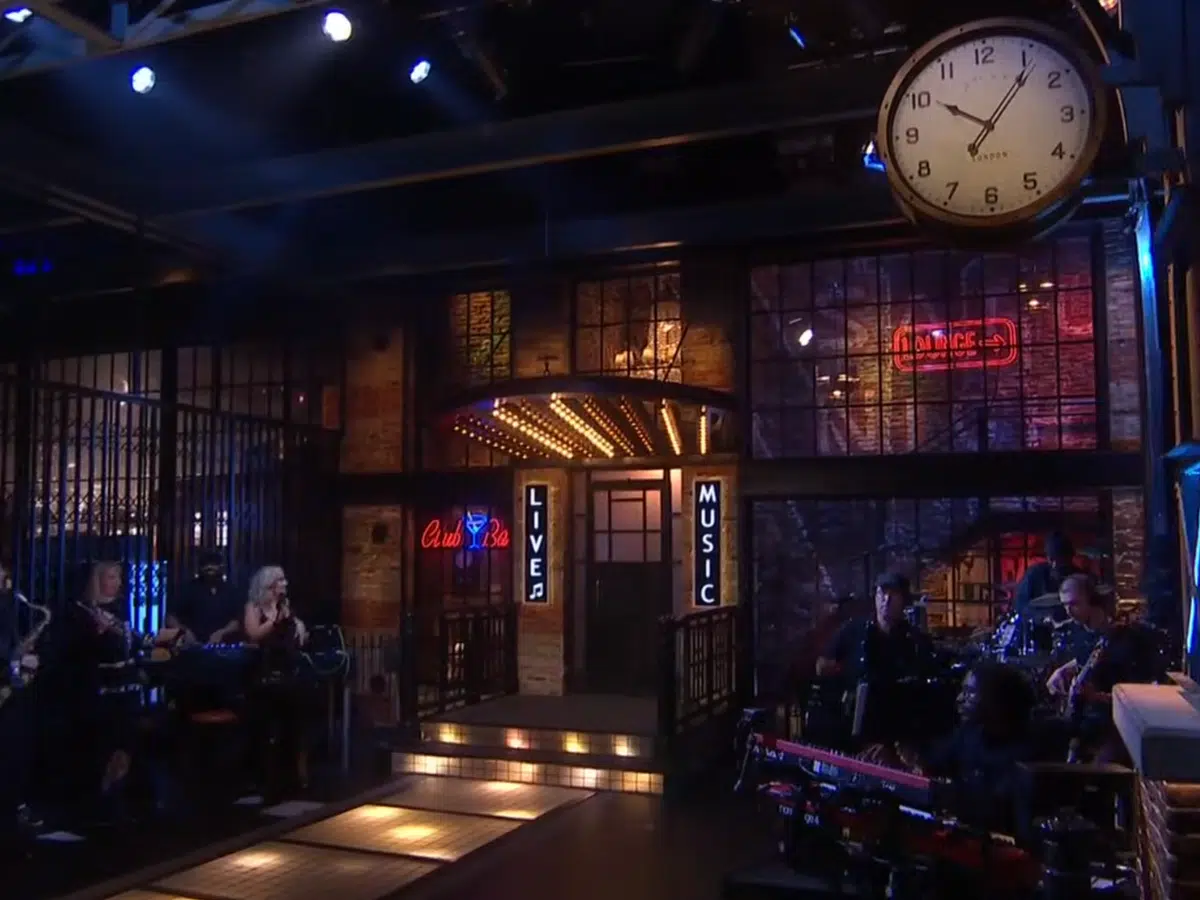
Hello and welcome back to Canary Catch Up, your one-stop shop for must-watch TV. That’s along with a healthy dose of hate watching and my favourite thing – gossip about people I don’t actually care about.
I’m fully refreshed after a weekend in the Scottish Highlands, where I watched zero tv. But I have been getting stuck into the Fourth Wing book series. I tore through the first book, and I’m fully immersed in Iron Flame now. If you’re looking for a book series with incredible disability representation, this is the one for you.
Anyway, on to the telly!
SNL UK is actually good
When SNL UK was announced, there was a collective, country-wide eye roll. ‘We don’t need that American excuse for comedy over here’, we all cried. But boy, were we fucking wrong. SNL UK is sharp, witty and most importantly, silly. We’ve only had two episodes so far, but we’ve already seen sketches that will be quoted and sung for years. Jack Shep’s Diana impression will be one for the ages, along with George Fouracres’ What Kind of Irish is Your Grandad? song.
It turns out, when you give comedians who haven’t been plastered all over panel shows free rein with good writing and let them play, it’s actually funny. Who knew?!
MomTok might not actually survive this
The wheels have fallen off The Secret Lives of Mormon Wives. In the last couple of weeks, Momtok and Dadtok have been embroiled in many a scandal. Now I’m not going to get into the abuse allegations and Taylor and Dakota. But one thing I will say is that the incident is literally in the first series of the show. It’s only after it’s all come out in the press that producers cancelled filming, ABC have axed her series of The Bachelorette, sponsors have pulled out, and her co-stars are denouncing her.
This really says a lot about how much those involved in reality TV are willing to ignore, as long as it makes them money.
Not wanting to miss out on the limelight, Jessi’s cunt of a husband, Jordan, publicly filed for divorce. Sick of the little controlling weasel blaming their marriage troubles on her, Jessi went on the podcast Call Her Daddy and fully exposed him. THEN when we thought that was enough Momtok drama, it turns out Jessi went and snogged Miranda’s ex Chase, who’s also been with Taylor and Layla. And I might be too obsessed with these people’s lives to be honest.
A charming slice of Regency escapism
One thing you need to know about me is that I am a slag for a Pride and Prejudice reimagining. The same story but told via a YouTube series, yes! With zombies? Gobbling that up. And now there’s another brilliant adaptation to add to the fold. The Other Bennet Sister tells the story from the often-forgotten Mary’s POV.
Mary is the ‘bookish’ sister who doesn’t give a shit about marriage, who has always been portrayed as boring, but she’s so much more, as the series shows. This absolutely charming 10-part piece of Regency escapism is just what we need at the minute.
Strictly pro dancers are dropping like flies
This time of year, there are usually a few rumours around who will stay on and who will leave Strictly Come Dancing. But this year, it seemed every single fucking pro has been rumoured to be leaving. But there’s something to be said for leaving a sinking ship, as apparently a lot of them were right. So far Karen, who’s been with the show the longest, Luba and Nadiya have all been confirmed by the BBC.
Last year, Karen was paired with Harry and his incredible dancing pecs. My favourite moment of Nadiya’s last year was when she said pro men usually can’t lift her, dead in the face of her ex Kai.
However, one of the newer pros, Michelle, has been speaking out to the press about being axed. In fairness, Michelle isn’t exactly memorable and has only had one celeb partner in four years on the show. But if my show was facing brand new hosts and a raft of pros leaving, I’d be clinging onto any dancers I could keep.
Now, if you don’t mind, the second half of The Other Bennet Sister has just dropped on iPlayer!
Featured image via YouTube/SNL UK

A protest has been scheduled outside Westminster Magistrates’ Court on Wednesday 1 April at 9am. Supporters are expecting to hear the verdict in the trial of two leaders of the Palestine movement.
Ben Jamal, director of Palestine Solidarity Campaign (PSC), and Chris Nineham, vice chair of Stop the War Coalition (SWC), were both charged with public order offences in 2025.
A test case for new police powers
The charges relate to a protest organised outside BBC Portland Place on 18 January 2025. It was scheduled to be the 22nd march for Palestine after 15 months of sustained demonstrations. All of the previous protests had be peaceful and lawful.
The march to BBC Portland Place was no exception. Demonstrators intended to lay flowers outside the building in memory of those killed in Gaza or, if stopped by police, to lay flowers at their feet.
Police originally allowed the protest to take place, after making a request to postpone it, which the organisers agreed too. However, following complaints submitted by various representatives within the Jewish community – including the Jewish Leadership Council (JLC), Central London Synagogue and the Chief Rabbi – permission was withdrawn on the grounds of ‘cumulative disruption’.
The use of such powers was not formalised by the government until October 2025. Nevertheless, they were tested haphazardly on those marching that day.
The Metropolitan Police alleged the breach of protest conditions was ‘coordinated’ and deliberate. The Canary previously reported on various ‘inaccuracies’ in the Met’s version of events.
‘Ludicrous’ criminalisation
During Jamal and Nineham’s trial, which spanned three weeks, the court heard all about the chaotic policing operation on the day of the protest. This included the claim that police officers on the ground had no knowledge that a small delegation wanted to walk to the BBC to lay flowers.
The defence argued that there was no case to answer, but this rejected by the judge without giving reasons. The defence barrister described the Crown’s case as a
ludicrous invitation to criminalise legitimate protected political speech about the misuse of state power against people’s civil liberties.
As Jamal and Nineham await the verdict in their case, Stop the War Coalition are now inviting supporters to gather outside the court. Speakers at the protest on Wednesday include RMT union general secretary Eddie Dempsey, PCS union president Martin Cavanagh and Holocaust survivor Stephen Kapos.
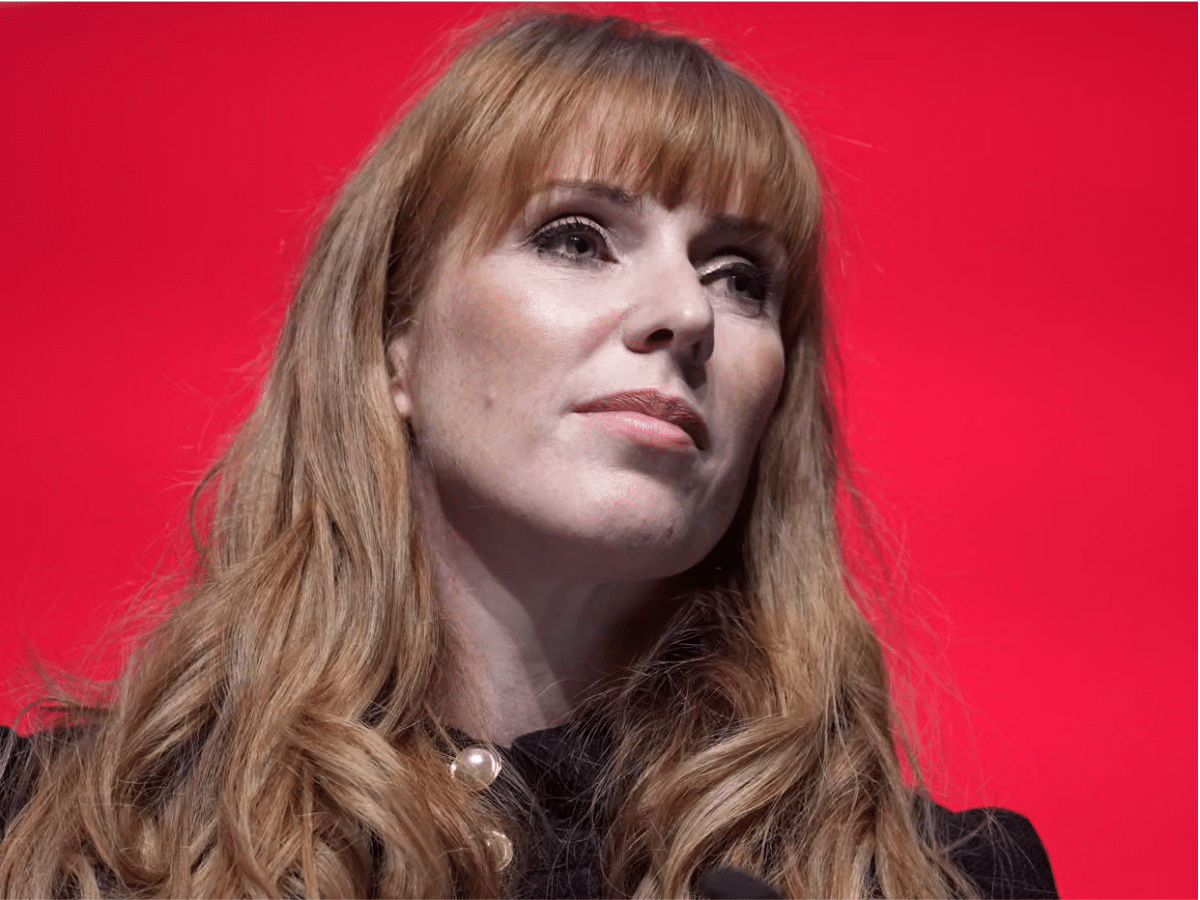
Labour’s Angela Rayner seems to be preparing for a leadership race once Keir Starmer’s gone and she apparently thinks she can emulate Green Party leader Zack Polanski’s successes. But if she really wanted to convince left-wingers to stop leaving Labour, she really shouldn’t have prioritised a chat with far-right racist Michael Gove.
As political editor at the Times, Steven Swinford, explained:
Angela Rayner is preparing to launch a podcast called Beyond the Bubble as she seeks to broaden her appeal before a potential Labour leadership contest.
The former deputy prime minister has interviewed Lord [Michael] Gove, the former Tory cabinet minister, as the star guest on the pilot, which is focused on housing.
The two apparently “get on well”, Swinford said.
Rayner: “I need to replicate the success that Zack has seen creating and contributing to the left wing media ecosphere, reaching out to voters rather than the establishment.”
also Rayner: “My first guest will be Michael Gove.” https://t.co/0AMfz0IwRX
— Gareth Dennis (@GarethDennis) March 27, 2026
Gove is editor at the Spectator and a proud Zionist, who has repeatedly denied Israel’s genocide against Palestinians in Gaza. He’s said that Israeli influence in Britain should grow even further, despite the significant influence the pro-Israel lobby wields over UK politics.
This guy? https://t.co/XRYwoJ2oWb pic.twitter.com/IC3KM0vG3O
— Barry Malone (@malonebarry) March 26, 2026
The Spectator has long been a dishonest, racist, far-right rag and has openly normalised hate.
In particular, the hateful, divisive magazine reserves a special disdain for Muslim communities. Indeed, it has been a leading media source for Islamophobic content. And its racist propaganda regularly gives Nazi media a run for its money.
It might seem like a strange choice for Rayner to have Gove as her first guest if she’s trying to get left-wing votes, but it makes complete sense when you consider just how comfortable Rayner is with the political and economic establishment.
Angela Rayner offers more of the same right-wing Labour decay
Labour Together — the shady right-wing group with millionaire backers that helped undermine Jeremy Corbyn and crown Keir Starmer as his successor — knows Starmer’s time is up. It sees Rayner as a potential successor.
The influence of Labour Together in the current Labour government is massive. Rayner is very much a part of its network of influence, so she’s clearly comfortable getting corporate money while pretending in public to be progressive.
Her voting record, meanwhile, shows how happy she is to play along and vote against ordinary people’s interests.
Despite everything Keir Starmer’s government has put the country through since 2024, Rayner has stuck by him and called for party unity, insisting:
The Prime Minister has my full support in leading us to that end.
And despite reality, she repeatedly tried to convince people ahead of the recent Gorton and Denton by-election that “only Labour” could stop Reform. After Labour predictably didn’t beat Reform, she said:
It’s time to really listen – and to reflect.
She just didn’t say how she was going to reflect and who she was going to listen to: one of the most influential hate-mongers in the UK.
That is unfortunately completely typical for the right-wing forces dominating Labour today and it should serve as a clear reminder that Rayner just offers more of the same.
Featured image via Getty Images/ Christopher Furlong

In the UK, the clocks have just sprung forward (meaning it feels like we’ve lost an hour’s sleep).
That shift has consequences. It’s been linked to higher heart attack risk, “social jet lag”, and misaligned body clocks. The British Sleep Society has previously called for clock changes to be dismissed altogether because of how much they mess up our circadian rhythms, which can take weeks to reset.
And no matter what time of year it happens, longer-lasting “chronic circadian misalignment” is linked to a higher risk of diabetes and heart disease.
But some research has found that “zeitgebers” can help to get your body clock back on track.
What are “zeitgebers”?
The term comes from two German words: “Zeit,” meaning “time,” and “geber,” meaning “giver”.
It’s any part of your environment, be it morning light or mealtimes, that acts as a way to “set” or give cues to your body clock.
These are important because our natural circadian rhythm doesn’t run on an exact 24-hour schedule. We need zeitgebers to help match our body clocks to the demands of our social and professional schedules, and to prevent “social jet lag” and other body clock misalignments.
Why do zeitgebers help with our circadian rhythm?
One paper found that mealtimes, physical activity, and light exposure seemed to influence our body clocks the most.
Those who got up later (after 6:30-7:45am) and saw later light (after 11pm), as well as eating later (having their first meal after 7:45-9:45am and last meal after 8-9pm) tended to go to bed anywhere from half an hour to about an hour and 20 minutes later.
And those who didn’t get outside light until after 9:30am seemed to sleep about half an hour longer.
Meanwhile, those who did over a third of their physical activity in the morning tended to fall asleep and wake up earlier. That stood regardless of how much physical activity people did.
This might suggest that doing your workout in the mornings, getting some morning light, and having your latest meal before 8pm could make the post-clock change period (which demands earlier wake-ups) a little easier to manage.


Republicans hope the Make America Healthy Again movement becomes a permanent fixture of a big GOP tent. But the party can’t count on its support heading into midterm elections this November.
New results from The POLITICO Poll show both broad frustration and dissatisfaction with the Trump administration on health priorities and opportunities for Democrats to make inroads with Health Secretary Robert F. Kennedy Jr.’s MAHA supporters.
A majority of Americans associate MAHA with the Republican Party, but not overwhelmingly, and most believe the Trump administration has not done enough to “Make America Healthy Again” — including a 41 percent plurality of Trump’s own 2024 voters.
The burgeoning political movement that officials in both parties credit with helping President Donald Trump win in 2024 has already begun to reshape how the GOP approaches health policy — driving everything from a redesign of the food pyramid to a rollback in vaccine recommendations.
At the same time, however, many poll respondents view Democrats as better positioned on the movement’s key health priorities. They were more likely, for example, to say the Democratic Party can be trusted to make the country healthier and are more eager to improve health in America, while fewer said the same of Republicans. The GOP, on the other hand, is seen as more likely to be influenced than Democrats by lobbyists for the food and pesticide industries, who rank among the MAHA movement’s top enemies.
These views could have real consequences in a midterm election year when razor-thin differences in turnout could determine control of Congress. And Democrats are bullish about channeling voters’ frustration with the Trump administration’s policies into a blue wave this cycle.
“The MAHA movement in the [2024] campaign cycle started with a lot of energy, and did create more energy for these types of issues that previously wouldn’t have been associated with the GOP,” said Abby McCloskey, a GOP policy adviser who has warned that Republicans are “squandering their MAHA moment.”
“Since then, I think the energy has trickled off from the perspective of, what is the federal government going to do about this?” she said.
Overall, 47 percent of poll respondents say they support the MAHA movement, including roughly a third of voters who backed former Vice President Kamala Harris in 2024 and about a third of Americans who plan to vote for Democrats this November. By comparison, 70 percent of Trump 2024 voters say they support the MAHA movement.
However, Americans don’t consider the nation’s health a top issue; It saw the same level of prioritization as “wokeism” and opioid abuse. When asked to choose between priorities for the U.S. government, a majority placed improving Americans’ health above stopping illegal immigration or cutting down on crime — but below affordability and concerns with cost of living.
And there are still widespread misconceptions about what MAHA is and what it does — even among people who self-identify with the movement. Just a third of Americans say they have heard of the MAHA movement and could explain what it is. Another third say they have heard of MAHA but could not explain it, including 31 percent of people who identify as part of the movement. One in four Americans had not heard of the movement at all.
The poll points to an opening for Democrats if they can effectively speak to the movement’s most popular issues and highlights that Republicans’ advantage with MAHA is far from guaranteed.
“People that we would call a ‘MAHA’ voter, they’re not partisans. They really are up for grabs,” Rep. Lauren Underwood (D-Ill.) told reporters on a recent call organized by the progressive advocacy group 314 Action, which is working to elect people with a health and science background to public office. “[Republicans] have really taken actions to alienate those folks, to break the promises that they made. They are no longer focusing on the core tenets of that Make America Healthy Again platform in order to continue to please Donald Trump, and also to advance their policy agenda.”
The Trump administration has largely pushed a deregulatory agenda, despite pressure from its MAHA supporters to crack down on pesticide companies, food manufacturers and drugmakers. Its recent choice to make it easier for Bayer to increase production of its weed killer Roundup has especially enraged MAHA supporters, who have said the move made it harder for them to continue supporting GOP candidates in the November midterms.
Kennedy’s own allies have warned Republicans that they cannot take MAHA voters for granted heading into November. Tony Lyons, the president of the MAHA Action, a political advocacy group that supports Kennedy’s agenda, said last month in a memo obtained by POLITICO that the GOP is merely “renting MAHA voters” but hasn’t been able to “purchase” them.
The POLITICO Poll also finds that the issues self-identified MAHA supporters rank as most important are ones Democrats have championed more often than Republicans, such as halting the spread of infectious diseases, stricter regulation of “forever chemicals,” and expanding access to reproductive health care.
This is not necessarily surprising, since many voters who support MAHA’s goals have typically been Democrats, said Rodney Whitlock, a longtime GOP congressional aide turned health care strategist.
Some of the policies less popular among MAHA respondents, meanwhile, are ones the GOP has embraced: restricting abortion access and reducing the number of vaccines Americans receive.
Yet the movement still lines up with, and supports, some Republican food policies and initiatives. For example, 80 percent of MAHA respondents support removing artificial dyes from food and 72 percent support restricting junk food purchases in federal nutrition programs, both priorities the Trump administration has tackled.
Lyons has urged Republicans to talk more about Kennedy’s policy goals, including discouraging Americans from eating ultraprocessed food, on the campaign trail. If they fail to do so and disgruntled MAHA voters peel off or stay home in November, he has warned, Democrats could take control of Congress, subject Kennedy to oversight hearings, and block his policy and regulatory efforts from going forward.
Lyons did not respond to a request for comment for this story.
The POLITICO Poll results — along with other recent polling showing declining trust in the Trump administration’s health recommendations — reveal a potential vulnerability for Republicans.
House Majority Forward, a nonprofit allied with House Democratic leadership, surveyed voters in February and March across several battleground districts the party is hoping to flip this fall. The group’s polls, shared first with POLITICO, found that more voters in Colorado, Iowa, New Jersey and Pennsylvania disapprove of Kennedy and his performance as health secretary than view him favorably.
“There’s this opportunity for Democrats to just start talking about making foods healthier and reducing the chemicals in the food that we’re giving them, … you know, limiting pesticide use, getting physical activity, removing artificial dyes,” said Carly Cooperman, a Democratic pollster and CEO of Schoen Cooperman Research.
A growing number of House and Senate Democrats — challengers and incumbents — are taking this advice to heart.
They’re beginning by focusing on pesticide use, which has become a political tension point for Trump’s GOP coalition, pitting the MAHA movement against powerful farm industry interests that have long been loyal to Republicans and hold significant sway with the administration.
Democratic lawmakers have railed against the Trump administration in social media posts, floor speeches and hearings for signing an executive order boosting domestic production of the pesticide glyphosate and siding with Bayer in a case pending before the Supreme Court that could shield the company from liability for the health impacts of its products. Democratic lawmakers, joined by a handful of Republicans, are also introducing bills and amendments that would undo or overturn these actions.
The POLITICO Poll found that limiting pesticide use is broadly popular, with more than two-thirds of respondents in support of doing so. And MAHA’s dissatisfaction with the Trump administration’s stance has led to some leaders within the movement threatening to primary farm-state Republicans as early as August of last year — yet another opportunity Democrats can exploit.
“We’re not even sure that we even have a path forward in this administration when it comes to pesticides, because it’s very clear that they are entirely owned by Bayer and the chemical companies,” said Kelly Ryerson, a MAHA influencer who goes by the moniker Glyphosate Girl online and has publicly backed Kennedy.
Progressive advocates also say Democrats would be wise to seize on MAHA voters’ simmering frustration.
“There is a genuine concern that there is unhealthy food in our food supply, and this administration is making it worse,” said 314 Action President Shaughnessy Naughton, whose group is backing Democratic challengers around the country.
Yet even as a segment of MAHA appears to sour on the GOP — and Kennedy — some of his agenda garnered widespread support among poll respondents, from removing artificial food dyes to offering whole milk in schools. Though MAHA respondents didn’t rank Kennedy’s stances on vaccines high on their list of importance, a notable chunk of Americans are highly skeptical of existing requirements.
The POLITICO Poll found that 41 percent of respondents across party lines support reducing how many vaccines Americans receive, with Republicans significantly more likely to hold that view. Fifty-eight percent of Trump 2024 voters support reducing how many vaccines Americans receive, compared to 29 percent of Harris 2024 voters.
Broad support for some of the key positions of MAHA — especially among Trump 2024 voters — and approval of some of the administration’s actions on health, suggest that Republicans may still be able to leverage the popular elements of the platform to win over voters in November.
Because health ranks so far down the list of Americans’ concerns, it’s unlikely to be a decisive factor in how they vote this midterm. Still, that doesn’t mean Republicans should be complacent and assume MAHA priorities won’t matter at all, Republican strategist Whitlock warned.
“Republicans have to be working from the perspective of ‘everything matters,’” he said. “To do differently is political suicide.”

Bianca Jagger hits out at plan for new 24/7 gambling arcade in Earl’s Court

Fogarty merges wine interests with Victorian billionaire

XRP price outlook: relief bounce driven by Ripple CEO optimism


-
 NewsBeat5 days ago
Manchester United reach agreement with Casemiro over contract clause amid transfer speculation
-

 News Videos4 days ago
Parliament publishes latest register of MPs’ financial interests
-

 Sports7 days ago
Gary Kirsten Accuses Pakistan Cricket Board Of ‘Interference’, Mohsin Naqvi Responds
-

 Sports7 days ago
Remo Stars and Kano Pillars Strengthen Survival Hopes in NPFL
-

 NewsBeat3 days ago
The Story hosts event on Durham’s historic registers
-

 Business4 days ago
Instagram, YouTube Found Responsible for Teen’s Mental Health Struggle in Historic Ruling
-

 News Videos7 days ago
Ch 9 Financial Management Part 1 | Detailed One Shot | Class 12 Business Studies Boards 2026
-
 NewsBeat5 days ago
Tesco is selling new Cadbury Dairy Milk bar and people can’t wait to try it
-
 Entertainment7 days ago
Cynthia Bailey Dishes on ‘RHOA’ Season 17, Discusses Kandi
-

 Tech7 days ago
Samsung will soon let you control smart home devices from your car’s dashboard
-
 Entertainment2 days ago
Lana Del Rey Celebrates Her Husband’s 51st Birthday In New Post
-

 Fashion6 days ago
Does It Matter What You Wear When You’re Laid Off and Looking?
-
 NewsBeat7 days ago
Colombian military plane with 110 soldiers onboard crashes following takeoff
-

 Business6 days ago
More women enter wealth management, but few in advisory roles: study
-

 Fashion7 days ago
Fringe Bags for the Season
-

 NewsBeat6 days ago
Entrepreneurs Forum survey reveals optimism in North East
-
 NewsBeat6 days ago
NASA Artemis II Astronauts enter 14-Day quarantine as moon rocket reaches launchpad
-
 Business6 days ago
Late-paying firms face multimillion-pound fines under new crackdown
-

 Politics7 days ago
How Media Platforms Balance Performance and Accessibility in Image Delivery
-

 Crypto World6 days ago
BTC gives up $70,000 level as markets mull higher interest rates
You must be logged in to post a comment Login